Results by title
1441 books match the query 'World' and 107 start with c
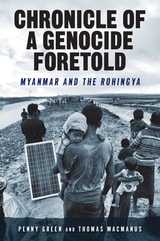
Chronicle of a Genocide Foretold
Myanmar and the RohingyaPenny Green
Rutgers University Press, 2027
Chronicle of a Genocide Foretold is a powerful account of one of the most devastating human crises of the 21st century. Drawing on firsthand research conducted in Burma (Myanmar) and neighboring countries, the book uncovers how the Rohingya Muslims have been systematically isolated, impoverished, and targeted in a state-led genocidal campaign. Through more than 150 interviews with survivors, local officials, religious leaders, and international actors, the authors reveal how discrimination, mass displacement, and organized brutality have created conditions that meet the legal, criminological, and moral definition of genocide. The book also challenges the silence and complicity of the international community. Accessible and grounded in rigorous research, this book speaks to scholars, activists, policymakers, and anyone concerned with justice, human rights, and the global failure to prevent genocide.

Cinema Today
A Conversation with Thirty-nine Filmmakers from around the WorldOumano, Elena
Rutgers University Press, 2011
Can't spare the time from work or class? Travel expense too great? What? You can't even find such a collaborative event?
Then imagine curling up with a good book, maybe a shot of espresso in hand, and becoming engrossed in the exciting and informative conversation that Elena Oumano has ingeniously crafted from her personal and individual interviews with these artists. Straying far from the usual choppy question-and-answer format, Cinema Today saves you from plowing through another tedious read, in which the same topics and issues are directed to each subject, over and over-an experience that is like being trapped in a revolving door.
Oumano stops that revolving door by following a lively symposium-in-print format, with the filmmakers' words and thoughts grouped together under various key cinema topics. It is as though these experts are speaking to each other and you are their audience--collectively they reflect on and explore issues and concerns of modern filmmaking, from the practical to the aesthetic, including the process, cinematic rhythm and structure, and the many aspects of the media: business, the viewer, and cinema's place in society. Whether you are a movie lover, a serious student of cinema, or simply interested in how we communicate in today's global village through films that so profoundly affect the world, Cinema Today is for you.
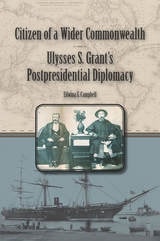
Citizen of a Wider Commonwealth
Ulysses S. Grant's Postpresidential DiplomacyEdwina S. Campbell
Southern Illinois University Press, 2012
Traveling commercially and on U.S. Navy warships, Grant visited ports of call throughout the British Empire, Europe, and Asia, including Britain, France, Egypt, the Ottoman Empire, Greece, Italy, the Netherlands, Germany, Scandinavia, Russia, Spain, Portugal, Gibraltar, Ireland, India, Singapore, Hong Kong, China, and Japan. Along the way, he met with monarchs, ministers, and average citizens, creating the model for the summitry and public diplomacy practiced by future American presidents and articulating concepts of national self-determination, international organization, and the peaceful settlement of international disputes decades before Elihu Root’s advocacy of binding international arbitration and Woodrow Wilson’s proposal for the League of Nations.
Campbell reveals Grant to be a skillful envoy who brought to his travels the deep interest in foreign policy issues he had shown during his administration. Grant confirmed the United States’ commitment to Anglo-American cooperation, demonstrated America’s interest in the territorial integrity of China, affirmed American faith in universal (male) suffrage as the basis for governmental legitimacy, and asserted the importance of an international order based on equality and justice for all states and their citizens. Grant’s efforts shaped not only John Hay’s Open Door policy in 1899–1900 but also the broader American approach to twentieth-century international relations. Throughout the trip, Julia Grant proved essential to the success of her husband’s mission, and Campbell tells how the couple impressed people around the world with an enduring image of an American president and first lady.
By illuminating the significance of Grant’s often overlooked postpresidential travels, Citizen of a Wider Commonwealth establishes the eighteenth president as a key diplomat whose work strongly influenced the direction of future U.S. foreign policy and contributes substantially to the study of American international relations.
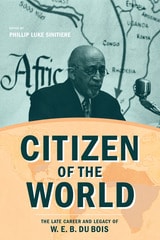
Citizen of the World
The Late Career and Legacy of W. E. B. Du BoisEdited by Phillip Luke Sinitiere
Northwestern University Press, 2019
From his birth in 1868 until his death in 1963, Du Bois sought the liberation of black people in the United States and across the world through intellectual and political labor. His tireless efforts documented and demonstrated connections between freedom for African-descended people abroad and black freedom at home.
In concert with growing scholarship on his twilight years, the essays in this volume assert the fundamental importance of considering Du Bois’s later decades not as a life in decline that descended into blind ideological allegiance to socialism and communism but as the life of a productive, generative intellectual who responded rationally, imaginatively, and radically to massive mid-century changes around the world, and who remained committed to freedom’s realization until his final hour.
Citizens of Everywhere
Searching for Identity in the Age of BrexitPeter Gumbel
Haus Publishing, 2020
Drawing on one family’s migration stories, Citizens of Everywhere explores the nature of belonging amid cycles of pluralism and nationalism. In an increasingly global world, nativist and diasporic impulses pull many people in contradictory directions that can be difficult to even understand. In Citizens of Everywhere, Gumbel grapples with this complexity through his own family history, revealing the personal costs of Britain’s recent isolationist retreat. Along the way, he laments the decline of British pluralism at the worst possible moment—as it rejects the European project and engages in an ill-fated struggle against an ever more interconnected world.
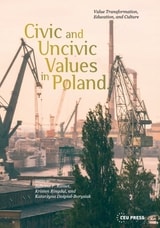
Civic and Uncivic Values in Poland
Value Transformation, Education, and CultureSabrina P. Ramet
Central European University Press, 2019
Civil Service Reform in Brazil
Principles Versus PracticeBy Lawrence S. Graham
University of Texas Press, 1968
In the 1930s, during the authoritarian government of Getúlio Vargas, the Brazilian civil service reform movement began. Thirty-five years later, the actual administrative practices of the country did not adequately reflect the philosophy underlying this movement, a philosophy drawn from the reform experience and public administration theories of the United States and Western Europe. This book examines why these ideas, when transplanted to another cultural setting, did not take root and, further, why they unexpectedly proved to be most applicable in Brazil during periods of autocratic rule.
These questions are highly relevant not only to Brazil, but equally to other developing countries struggling to create more effective national administrative systems. For this reason, and in order to evaluate the Brazilian reform experience within its total context (social, economic, and political), Lawrence S. Graham develops a broad conceptual framework. His focus is on the years between 1945 and 1964, a period which allowed a relatively free play of political forces but, ironically, produced a diminution in the success of the reform efforts when compared with the authoritarian governments which preceded and followed it. After a comparative consideration of the public administration theories behind the reform movement, Graham examines this period in terms of the political environment, the functions of political patronage, and the influences of a nascent national party. Finally, he juxtaposes the conditions and course of the Brazilian reform experience with those of the United States and Great Britain.
Graham’s study of the Brazilian example, which does not pass judgment on the prevailing public personnel system, reveals the importance of understanding the total cultural context within which administrative principles are put into practice. Such an approach, wider than generally held in the field of public administration, may prove to be the most vital factor in the future of the civil service in Brazil and several other countries facing the same problems.
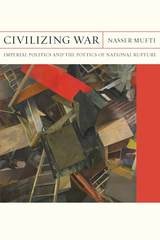
Civilizing War
Imperial Politics and the Poetics of National RuptureNasser Mufti
Northwestern University Press, 2018
Honorable Mention for the 2019 Sonya Rudikoff Prize, awarded by the Northeast Victorian Studies Association
Civilizing War traces the historical transformation of civil war from a civil affair into an uncivil crisis. Civil war is today synonymous with the global refugee crisis, often serving as grounds for liberal-humanitarian intervention and nationalist protectionism.
In Civilizing War, Nasser Mufti situates this contemporary conjuncture in the long history of British imperialism, demonstrating how civil war has been and continues to be integral to the politics of empire. Through comparative readings of literature, criticism, historiography, and social analysis, Civilizing War shows how writers and intellectuals of Britain’s Anglophone empire articulated a “poetics of national rupture” that defined the metropolitan nation and its colonial others.
Mufti’s tour de force marshals a wealth of examples as diverse as Thomas Carlyle, Benjamin Disraeli, Friedrich Engels, Arthur Conan Doyle, Rudyard Kipling, Joseph Conrad, V. S. Naipaul, Nadine Gordimer, and Michael Ondaatje to examine the variety of forms this poetics takes—metaphors, figures, tropes, puns, and plot—all of which have played a central role in Britain’s civilizing mission and its afterlife. In doing so, Civilizing War shifts the terms of Edward Said’s influential Orientalism to suggest that imperialism was not only organized around the norms of civility but also around narratives of civil war.
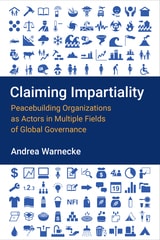
Claiming Impartiality
Peacebuilding Organizations as Actors in Multiple Fields of Global GovernanceAndrea Warnecke
University of Michigan Press, 2026
Drawing on and expanding a Bourdieusian field perspective, the book examines international organizations as actors in multiple fields of global governance. Using the case studies of Bosnia and Herzegovina and Timor-Leste, it traces the emergence and transformation of peacebuilding practices by leading international and bilateral organizations during the first two decades of the field’s existence. The organizational lens highlights the tensions that exist between the objectives of simultaneously acting as a peacebuilding organization and as a peacekeeping, humanitarian, or development organization whose practices are to varying degrees committed to observing the twin principles of impartiality and neutrality. By thinking through these sometimes contradictory roles, the book offers new insights into how these organizations sideline questions of political agency in favor of expanding their influence into related fields of global governance. Claiming Impartiality discusses the future of peacebuilding and explores avenues for addressing political challenges to peace itself.

Class Forces
Youth and Labor in the Making of the Egyptian Uprising of 2011Nada Matta
University of Michigan Press, 2027
Class Forces offers a new political economy explanation of the forces behind Egypt’s 2011 uprising. How did movements that had long struggled to challenge an authoritarian regime suddenly help generate a mass uprising capable of bringing down President Hosni Mubarak—and why did that uprising ultimately fail? Moving beyond explanations centered on economic grievances and political repression, the book shows how transformations in capitalism and changing class relations created new opportunities for labor, democratic, and youth movements to mobilize. It traces how the evolving relationship between business and the regime indirectly helped open political space and strengthen movements whose organizational capacities had remained limited.
Nada Matta argues that class dynamics were central to the extraordinary mass mobilization that filled Tahrir Square during the uprising. By focusing on class linkages rather than the more static concept of cross-class coalitions, Matta offers a dynamic account of class relations that also identifies the limits of associational capacities and durable cross-class alliances and helps explain why democratic forces failed to consolidate political gains after President Hosni Mubarak’s ouster. Class Forces illuminates the sources of movement power and vulnerability under contemporary capitalism for social movement practitioners.
Coalition Politics and Cabinet Decision Making
A Comparative Analysis of Foreign Policy ChoicesJuliet Kaarbo
University of Michigan Press, 2013
Every day, coalition cabinets make policy decisions critical to international politics. Juliet Kaarbo examines the dynamics of these multiparty cabinets in parliamentary democracies in order to assess both the quality of coalition decision making and the degree to which coalitions tend to favor peaceful or military solutions. Are coalition cabinets so riddled by conflict that they cannot make foreign policy effectively, or do the multiple voices represented in the cabinet create more legitimate and imaginative responses to the international system? Do political and institutional constraints inherent to coalition cabinets lead to nonaggressive policies? Or do institutional and political forces precipitate more belligerent behavior?
Employing theory from security studies and political psychology as well as a combination of quantitative cross-national analyses and twelve qualitative comparative case studies of foreign policy made by coalition cabinets in Japan, the Netherlands, and Turkey, Kaarbo identifies the factors that generate highly aggressive policies, inconsistency, and other policy outcomes. Her findings have implications not merely for foreign policy but for all types of decision making and policy-making by coalition governments.
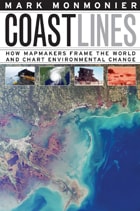
Coast Lines
How Mapmakers Frame the World and Chart Environmental ChangeMark Monmonier
University of Chicago Press, 2008
Whether for sailing charts or property maps, Monmonier shows, coastlines challenge mapmakers to capture on paper a highly irregular land-water boundary perturbed by tides and storms and complicated by rocks, wrecks, and shoals. Coast Lines is peppered with captivating anecdotes about the frustrating effort to expunge fictitious islands from nautical charts, the tricky measurement of a coastline’s length, and the contentious notions of beachfront property and public access.
Combing maritime history and the history of technology, Coast Lines charts the historical progression from offshore sketches to satellite images and explores the societal impact of coastal cartography on everything from global warming to homeland security. Returning to the form of his celebrated Air Apparent, Monmonier ably renders the topic of coastal cartography accessible to both general readers and historians of science, technology, and maritime studies. In the post-Katrina era, when the map of entire regions can be redrawn by a single natural event, the issues he raises are more important than ever.
Coffee Is Not Forever
A Global History of the Coffee Leaf RustStuart McCook
Ohio University Press, 2019
The global coffee industry, which fuels the livelihoods of farmers, entrepreneurs, and consumers around the world, rests on fragile ecological foundations. In Coffee Is Not Forever, Stuart McCook explores the transnational story of this essential crop through a history of one of its most devastating diseases, the coffee leaf rust. He deftly synthesizes agricultural, social, and economic histories with plant genetics and plant pathology to investigate the increasing interdependence of the world’s coffee-producing zones. In the process, he illuminates the progress and prognosis of the challenges—especially climate change—that pose an existential threat to a crop that global consumers often take for granted. And finally, in putting a tropical plant disease at the forefront, he has crafted the first truly global environmental history of coffee, pushing its study and the discipline in bold new directions.
Cognition and Work
A Study concerning the Value and Limits of the Pragmatic Motifs in the Cognition of the WorldMax Scheler; Translated from the German by Zachary Davis
Northwestern University Press, 2021
Max Scheler’s Cognition and Work (Erkenntnis und Arbeit) first appeared in German in 1926, just two years before his death. The first part of the book offers one of the earliest critical analyses of American pragmatism, an analysis that would come to have a significant impact on the reception of pragmatism in Germany and western Europe. The second part of the work contains Scheler’s phenomenological account of perception and the experience of reality, an account that is as original as both Husserl’s and Merleau-Ponty’s phenomenologies of perception. Scheler aims to show that the modern mechanistic view of nature fails to account for the dynamic relation that not only the human being but all living beings have to the environment they inhabit.
Available in English translation for the first time, Cognition and Work pushes the boundaries of phenomenology as it is traditionally understood and offers insight into Scheler’s distinct metaphysics. This book is essential reading for those interested in phenomenology, pragmatism, perception, and living beings in their relation to the natural world.
Commons and Lords
A Short Anthropology of ParliamentEmma Crewe
Haus Publishing, 2015
Based on fieldwork within both Houses, this volume in the Haus Curiosities series provides a surprising twist in how relationships in each play out. The high social status of peers in the House of Lords gives the impression of hierarchy and, more specifically, patriarchy. In contrast, the House of Commons conjures impressions of equality and fairness between members. But actual observation reveals the opposite: while the House of Lords has an egalitarian and cooperative ethos that is also supportive of female members, the competitive and aggressive House of Commons is a far less comfortable place for women. Offering many surprises and secrets, this book exposes the sheer oddity of the British parliament system.
Communication and Empire
Media, Markets, and Globalization, 1860-1930Dwayne R. Winseck and Robert M. Pike
Duke University Press, 2007
Drawing on extensive research in corporate and government archives, Winseck and Pike illuminate the actions of companies and cartels during the late nineteenth century and early twentieth, in many different parts of the globe, including Africa, Asia, and Central and South America as well as Europe and North America. The complex history they relate shows how cable companies exploited or transcended national policies in the creation of the global cable network, how private corporations and government agencies interacted, and how individual reformers fought to eliminate cartels and harmonize the regulation of world communications. In Communication and Empire, the multinational conglomerates, regulations, and the politics of imperialism and anti-imperialism as well as the cries for reform of the late nineteenth century and early twentieth emerge as the obvious forerunners of today’s global media.
Communism in Mexico
A Study in Political FrustrationBy Karl M. Schmitt
University of Texas Press, 1965
The ease with which Cuba slipped into its relationship with Communism revived in the United States its recurring nightmare in which other Latin American countries, particularly Mexico, become satellites of Russia or Red China. But such an occurrence is most unlikely in Mexico, according to Karl Schmitt, former intelligence research analyst with the United States Department of State.
Communism in Mexico traces efforts during the early twentieth century to create a Soviet-style society in one of the largest and most strategically situated of the Latin American countries. Schmitt writes authoritatively of the Mexican Communist movement, tracing its development from an early and potentially powerful political-economic base to the increasingly fragmented and weakened collection of parties and front groups of the 1960s. He follows the various schisms and factional divisions to the mid-1950s, when the process of disintegration became most noticeable, and explores and analyzes in detail Communist attempts since then to establish unity among the many quarreling and frustrated groups of the now-splintered movement.
Three Communist parties in Mexico, a score of front groups, and numerous infiltration cells in non-Communist organizations such as student and labor groups, all recognize in a broad way a common and ultimate goal: the creation of a Soviet-style society. But their attempts at unity have consistently led only to further bickering and frustration. This period is subjected to a thorough study and analysis in an effort to understand and explain the Communists' lack of success. Schmitt presciently concludes that Communism's future in Mexico will be as cloudy as its past, and that the accelerating economy and improving social conditions there will serve to weaken the movement still further.

Communism, Religion, and Revolt in Banten in the Early Twentieth Century
Mis Sea#86Michael Williams
Ohio University Press, 1990
Twice in this century popular revolts against colonial rule have occured in the Banten district of West Java. These revolts, conducted largely under an Islamic leadership, also proclaimed themselves Communist. Islamic Communism is seemingly a paradox. This is especially the case when one considers that probably no religion has proved more resistant to Communist ideology than Islam.
Michael Williams here details the complicated history of the Bantenese revolts in the twentieth century and probes the ideological riddle of Islamic Communism. Modern history is replete with examples of regions with a long history of organizing themselves politically to resist intrusion on their territory, resources, and people. This book establishes that in Indonesia, the Bantenese were among the most practiced exponents of resistance.
Communities of Work
Rural Restructuring in Local and Global ContextsWilliam W. Falk
Ohio University Press, 2003
The image of rural America portrayed in this illuminating study is one that is vibrant, regionally varied, and sometimes heroic. Communities of Work focuses on the ways in which rural people and places are affected by political, social, and economic forces far outside their control and how they sustain themselves and their communities in response.
Bringing together the two fundamental concepts of community—where the relationships and practices of daily life occur—and work, in which an elementary exchange occurs, Communities of Work bridges several fields of study. Presented here is the contextual and embedded nature of social relations and the complexity involved in understanding them. Through the use of multiple case studies, the authors apply diverse theories and methods in seeking an integrated outcome, one captured by “communities of work.”
Beginning with a description of the broad changes in work and economic activities across the United States, ranging from the Ohio River Valley to a western boomtown, the book shifts its focus to the interplay of work, family, and local networks in time and place. Activities range from fishing in the Mississippi Delta to farming and family life in the Midwest. The authors then highlight how rural people and places respond to extra-local, increasingly global forces in settings as diverse as rural South Carolina and Wisconsin.
A certain communitarian theme runs through Communities of Work. It is about people and communities not merely reacting, but instead responding in ways that reflect their local culture, while being cognizant of the larger world within which they live.
Complex Rivalry
The Dynamics of India-Pakistan ConflictSurinder Mohan
University of Michigan Press, 2022
While a substantial body of research explains how the conflict between India and Pakistan originated and developed over time, a systematic and multivariate inquiry cutting across different IR paradigms to understand this rivalry is rare or limited. Surinder Mohan contributes to the understanding of India and Pakistan’s rivalry by presenting a new type of framework, also known as complex rivalry model. This comprehensive model, by not limiting its theoretical tool-kit to any single paradigm, is unique in its approach and better positioned to debate and answer baffling questions that the single-paradigm-based studies address rather inadequately and in isolation.
This book, through an examination of fifty-seven militarized disputes between 1947 and 2021, explains the life cycle of India-Pakistan rivalry in four phases: initiation; development; maintenance; and a possible transformation/termination. Mohan delineates five specific conditions that evolved the subcontinental conflict into a complex rivalry: first, its survival in spite of the Bangladesh War and the end of the Cold War; second, its linkage with other rivalries; third, the inclusion of nuclear factor; fourth, the dyadic stability in the militarized disputes and hostility level despite changes in the regime type; and fifth, the dyad’s involvement in a multilayered conflict pattern. To break this deadlock and mitigate their longstanding differences, Mohan proposes that India and Pakistan must reframe their national priorities and political goals so that the new situation or combinations of conditions would assist their peace strategists to downgrade the dyadic hostility and implement risky policies to make headway to a promising transformation.
Complicities
The Intellectual and ApartheidMark Sanders
Duke University Press, 2002
Sanders gives detailed analyses of widely divergent thinkers: Afrikaner nationalist poet N. P. van Wyk Louw, Drum writer Bloke Modisane, Xhosa novelist A. C. Jordan, Afrikaner dissident Breyten Breytenbach, and Black Consciousness leader Steve Biko. Drawing on theorists including Derrida, Sartre, and Fanon, and paying particular attention to the linguistic intricacy of the literary and political texts considered, Sanders shows how complicity emerges as a predicament for intellectuals across the ideological and social spectrum. Through discussions of the colonial intellectuals Olive Schreiner and Sol T. Plaatje and of post-apartheid feminist critiques of the Truth and Reconciliation Commission, Complicities reveals how sexual difference joins with race to further complicate issues of collusion.
Complicities sheds new light on the history and literature of twentieth-century South Africa as it weighs into debates about the role of the intellectual in public life.
Compound Containment
A Reigning Power's Military-Economic Countermeasures against a Challenging PowerDong Jung Kim
University of Michigan Press, 2022
When does a reigning great power of the international system supplement military containment of a challenging power by restricting its economic exchanges with that state? Scholars of great power politics have traditionally focused on examining a reigning power’s military containment of a challenging power. In direct contrast, Compound Containment demonstrates that these conventional studies are flawed without a sound understanding of the multilayered aspects of containment strategy in great power politics. Since economic capacity and military power are intimately linked to one another, countering a challenging power requires addressing both economic and military dimensions. Nonetheless, this nexus of security and economy in a reigning power’s response to a challenging power cannot be explained by traditional theories that dominate research in international security. Author Dong Jung Kim fills a gap in the scholarship on great power competition by investigating when a reigning power will make its military containment of a challenging power “compound” by simultaneously employing restrictive economic measures. Its main theoretical claims are corroborated by an analysis of key historical cases of reigning power-challenging power competition. This book also offers policy prescriptions for the United States by examining whether the United States is in a position to complement military containment of China with restrictive economic measures.
Concepts of the World
The French Avant-Garde and the Idea of the International, 1910–1940Effie Rentzou
Northwestern University Press, 2022
The writers and artists of the French avant-garde aspired to reach a global audience that would be wholly transformed by their work. In this study, Effie Rentzou delves deep into their depictions of the interwar world as an international and modern landscape, one marked by a varied cosmopolitanism. The avant-garde’s conceptualization of the world paralleled, rejected, or expanded prevailing notions of the global sphere.
The historical avant garde—which encompassed movements like futurism, Dada, and surrealism—was self-consciously international, operating across global networks and developed with the whole world as its horizon and its public. In the heady period between the end of the Belle Époque and the tumult of World War II, both individual artists (including Guillaume Apollinaire, Blaise Cendrars, Francis Picabia, Louis Aragon, Leonora Carrington, and Nicolas Calas) and collective endeavors (such as surrealist magazines and exhibitions) grappled with contemporary anxieties about economic growth, imperialism, and colonialism, as well as various universalist, cosmopolitan, and internationalist visions. By probing these works, Concepts of the World offers an alternative narrative of globalization, one that integrates the avant-garde’s enthusiasm for, as well as resistance to, the process. Rentzou identifies within the avant-garde a powerful political language that expressed the ambivalence of living and creating in an increasingly globalized world—a language that profoundly shaped the way the world has been conceptualized and is experienced today.
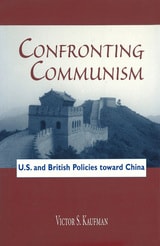
Confronting Communism
U.S. and British Policies toward ChinaVictor S. Kaufman
University of Missouri Press, 2001
In Confronting Communism, Victor S. Kaufman examines how the United States and Great Britain were able to overcome serious disagreements over their respective approaches toward Communist China. Providing new insight into the workings of alliance politics, specifically the politics of the Anglo- American alliance, the book covers the period from 1948—a year before China became an area of contention between London and Washington—through twenty years of division to the gradual resolution of Anglo-American divergences over the People's Republic of China beginning in the mid-1960s. It ends in 1972, the year of President Richard Nixon's historic visit to the People's Republic, and also the year that Kaufman sees as bringing an end to the Anglo-American differences over China.
Kaufman traces the intricate and subtle pressures each ally faced in determining how to approach Beijing. The British aspect is of particular interest because Britain viewed itself as being within "three circles": Western Europe, the Atlantic alliance, and the Commonwealth. Important as well to British policy with respect to China was the concern about being dragged into another Korean-style conflict. The impact of decisions on these "circles," as well as the fear of another war, appeared time and again in Britain's decision making.
Kaufman shows how the alliance avoided division over China largely because Britain did the majority of the compromising. Reliant upon the United States militarily and financially, most U.K. officials made concessions to their Washington counterparts. Readers of Confronting Communism will come away with a better understanding of alliance politics. They will learn that such decision making, for both Great Britain and the United States, was a highly complex process, one that posed serious challenges to the Anglo-American alliance. Despite those challenges, accord between London and Washington prevailed.
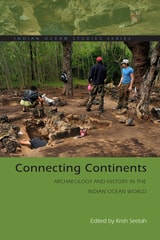
Connecting Continents
Archaeology and History in the Indian Ocean WorldKrish Seetah
Ohio University Press, 2018
Winner, Society for American Archaeology Book Award
In recent decades, the vast and culturally diverse Indian Ocean region has increasingly attracted the attention of anthropologists, historians, political scientists, sociologists, and other researchers. Largely missing from this growing body of scholarship, however, are significant contributions by archaeologists and consciously interdisciplinary approaches to studying the region’s past and present.
Connecting Continents addresses two important issues: how best to promote collaborative research on the Indian Ocean world, and how to shape the research agenda for a region that has only recently begun to attract serious interest from historical archaeologists. The archaeologists, historians, and other scholars who have contributed to this volume tackle important topics such as the nature and dynamics of migration, colonization, and cultural syncretism that are central to understanding the human experience in the Indian Ocean basin.
This groundbreaking work also deepens our understanding of topics of increasing scholarly and popular interest, such as the ways in which people construct and understand their heritage and can make use of exciting new technologies like DNA and environmental analysis. Because it adopts such an explicitly comparative approach to the Indian Ocean, Connecting Continents provides a compelling model for multidisciplinary approaches to studying other parts of the globe.
Contributors: Richard B. Allen, Edward A. Alpers, Atholl Anderson, Nicole Boivin, Diego Calaon, Aaron Camens, Saša Čaval, Geoffrey Clark, Alison Crowther, Corinne Forest, Simon Haberle, Diana Heise, Mark Horton, Paul Lane, Martin Mhando, and Alistair Patterson.
Consequences of Peace
The Versailles Settlement - Aftermath and LegacyAlan Sharp
Haus Publishing, 2010
Conservative Thought in Twentieth Century Latin America
The Ideas of Laureano GomezJames D. Henderson
Ohio University Press, 1988
Laureano Gómez was president of Colombia in the early 1950s until overthrown by a military coup. He was also, for some fifty years, the leading exponent of Latin American conservatism, a political philosophy with roots in both nineteenth–century politics and religion. Focusing on Gómez, and other prominent conservative politicians, Henderson traces the evolution of Latin American conservatism and demonstrates the scope of its influence throughout the continent.
While much has been written about particular Marxist movements and right–wing regimes in contemporary Latin America, little attention has been devoted, in recent years, to the more moderate political institutions and individuals which dominate twentieth–century Latin America. This first account of Latin American conservatism should be of interest to all students of the history and politics of the region.
Constitutions and the Dialectics of Human Rights in Malawi and Kenya
Eunice N. Sahle
University of Wisconsin Press, 2026
As in many other countries, the protection of human rights and other practices of constitutionalism remains uneven in Malawi and Kenya. In this book, Eunice N. Sahle argues that the adoption in 1994 and 2010 in Malawi and Kenya, respectively, of new constitutional frameworks, which have the markings of “critical constitutional events,” provided significant openings for the promotion of human rights. Nonetheless, the emergence of such opportunities does not mean that the protection of human rights is automatic. Sahle zeroes in on the tension between the possibilities of human rights promotion on one hand, and the historical and contemporary factors influencing that process on the other. In that regard, her analysis shows the importance and limits of transformative constitutional frameworks as tools for social change. Further, by focusing on the promotion of human rights by a diverse range of social actors—individuals, civil society, organizations, and public institutions—she demonstrates the need to broaden who “counts” as an agent of human rights and to go beyond a strictly state-centric approach.
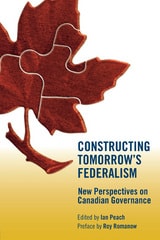
Constructing Tomorrow's Federalism
New Perspectives on Canadian GovernanceIan Peach
University of Manitoba Press, 2007
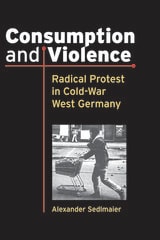
Consumption and Violence
Radical Protest in Cold-War West GermanyAlexander Sedlmaier
University of Michigan Press, 2014
Contagions
Nationalism, Populism, and the Pandemic at Europe’s EdgeJosip Glaurdic
Central European University Press, 2026
Contemplation Of The World
Figures of Community StyleMichel Maffesoli
University of Minnesota Press, 1996
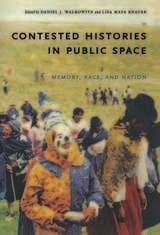
Contested Histories in Public Space
Memory, Race, and NationDaniel J. Walkowitz and Lisa Maya Knauer, eds.
Duke University Press, 2009
Several contributors examine how the experiences of indigenous groups and the imperial past are incorporated into public histories in British Commonwealth nations: in Te Papa, New Zealand’s national museum; in the First Peoples’ Hall at the Canadian Museum of Civilization; and, more broadly, in late-twentieth-century Australian culture. Still others focus on the role of governments in mediating contested racialized histories: for example, the post-apartheid history of South Africa’s Voortrekker Monument, originally designed as a tribute to the Voortrekkers who colonized the country’s interior. Among several essays describing how national narratives have been challenged are pieces on a dispute over how to represent Nepali history and identity, on representations of Afrocuban religions in contemporary Cuba, and on the installation in the French Pantheon in Paris of a plaque honoring Louis Delgrès, a leader of Guadeloupean resistance to French colonialism.
Contributors. Paul Amar, Paul Ashton, O. Hugo Benavides, Laurent Dubois, Richard Flores, Durba Ghosh, Albert Grundlingh, Paula Hamilton, Lisa Maya Knauer, Charlotte Macdonald, Mark Salber Phillips, Ruth B. Phillips, Deborah Poole, Anne M. Rademacher, Daniel J. Walkowitz
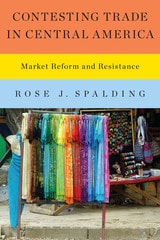
Contesting Trade in Central America
Market Reform and ResistanceBy Rose J. Spalding
University of Texas Press, 2014
In 2004, the United States, five Central American countries, and the Dominican Republic signed the Central American Free Trade Agreement (CAFTA), signaling the region’s commitment to a neoliberal economic model. For many, however, neoliberalism had lost its luster as the new century dawned, and resistance movements began to gather force. Contesting Trade in Central America is the first book-length study of the debate over CAFTA, tracing the agreement’s drafting, its passage, and its aftermath across Central America.
Rose J. Spalding draws on nearly two hundred interviews with representatives from government, business, civil society, and social movements to analyze the relationship between the advance of free market reform in Central America and the parallel rise of resistance movements. She views this dynamic through the lens of Karl Polanyi’s “double movement” theory, which posits that significant shifts toward market economics will trigger oppositional, self-protective social countermovements. Examining the negotiations, political dynamics, and agents involved in the passage of CAFTA in Costa Rica, El Salvador, and Nicaragua, Spalding argues that CAFTA served as a high-profile symbol against which Central American oppositions could rally. Ultimately, she writes, post-neoliberal reform “involves not just the design of appropriate policy mixes and sequences, but also the hard work of building sustainable and inclusive political coalitions, ones that prioritize the quality of social bonds over raw economic freedom.”
Contours of Israeli Politics
Jewish Ethnicity, Religious Nationalism, and DemocracyHannah M. Ridge
Temple University Press, 2025
The timely Contours of Israeli Politics focuses on the socio-political ramifications of this hierarchy within the upper stratum of Israeli society. Using public opinion studies and qualitative data, Hannah Ridge examines the effects of this social hierarchy to address attitudes on Israeli ethnicity and religious majoritarianism, support for Israeli democracy, and preference for an expanded territorial state and peace with its neighbors.
As various Jewish ethnic groups face greater pressure to assert their in-group membership (their Jewishness), they are more likely to protect the status privileges of that group. This can strengthen their ideas about identity, nationalism, democratic values, and conflict attitudes. Ridge’s findings reveal the ways in which Jewish ethnicity continues to influence the politics of Israel, a Jewish ethno-religious state.
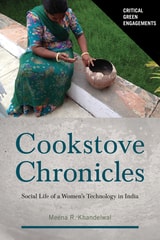
Cookstove Chronicles
Social Life of a Women’s Technology in IndiaMeena R. Khandelwal
University of Arizona Press, 2024
Based on anthropological research in Rajasthan, Cookstove Chronicles argues that the supposedly obsolete chulha persists because it offers women control over the tools needed to feed their families. Their continued use of old stoves alongside the new is not a failure to embrace new technologies but instead a strategy to maximize flexibility and autonomy. The chulha is neither the villain nor hero of this story. It produces particulate matter that harms people’s bodies, leaves soot on utensils and walls, and accelerates glacial melting and atmospheric warming. Yet it also depends on renewable biomass fuel and supports women’s autonomy as a local, do-it-yourself technology.
Meena Khandelwal, a feminist anthropologist, describes her collaboration with engineers, archaeologists, and others. She employs critical social theory and reflections from fieldwork to bring together research from a range of fields, including history, geography, anthropology, energy and environmental studies, public health, and science and technology studies (STS). In so doing she not only demystifies multidisciplinary research but also highlights the messy reality of actual behavior.
Cookstove Chronicles critically examines why, despite extensive development efforts, use of the chulha persists. It offers an important new framework for looking at development, technology, environmental change, and human behavior.
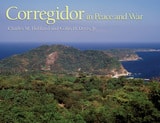
Corregidor in Peace and War
Charles M. Hubbard & Collis H. Davis, Jr.
University of Missouri Press, 2007
A picturesque island strategically located at the entrance of Manila Bay, Corregidor has had military significance since the days of the Spanish galleon trade. Although its dramatic role in the defense of the Philippines during World War II is well documented, relatively little is known about its history apart from military involvement. This richly illustrated book tells the story of the island and sheds new light on the geopolitical forces that shaped its destiny.
Corregidor in Peace and War is a biography of a mysterious island known simply as “the Rock.” It traces the buildup of armaments and fortifications on the island after the American occupation of the Philippines in 1898, then chronicles clandestine military preparations for an expected war with Imperial Japan. It vividly documents aspects of island life before World War II—including the enviable lifestyle of the American officer corps stationed there, the development of the island’s rail system using imported American streetcars, and the creation of the Philippine Scouts coastal artillery units—and then records its loss and recapture during the struggle with Japan. The final chapter reviews the island’s history since the war.
More than 150 illustrations include maps and photos from both the Spanish and American periods up to the present day—some photographs published more than a century ago and impeccably restored, many never before seen in print. Interweaving new and old photos with informative text, Charles Hubbard and Collis Davis, Jr., provide a guided tour that captures the natural beauty of an island once enjoyed by early residents but subsequently decimated by cannon fire and aerial bombardment. Brilliant color images evoke a place where flora and wildlife coexist alongside abandoned fortifications, documenting stark reminders from times of war. Other photographs show the majestic “suicide cliffs” where Japanese soldiers are said to have jumped to their deaths rather than become prisoners.
Now a tourist destination and historic monument, Corregidor remains a formidable island worthy of its nickname. Corregidor in Peace and War uncovers its many unknown facets and singularly reflects the experiences of both a place and a people that deserve a prominent place in history.
Corruption in Cuba
Castro and BeyondBy Sergio Díaz-Briquets and Jorge Pérez-López
University of Texas Press, 2006
While Fidel Castro maintained his longtime grip on Cuba, revolutionary scholars and policy analysts turned their attention from how Castro succeeded (and failed), to how Castro himself would be succeeded—by a new government. Among the many questions to be answered was how the new government would deal with the corruption that has become endemic in Cuba. Even though combating corruption cannot be the central aim of post-Castro policy, Sergio Díaz-Briquets and Jorge Pérez-López suggest that, without a strong plan to thwart it, corruption will undermine the new economy, erode support for the new government, and encourage organized crime. In short, unless measures are taken to stem corruption, the new Cuba could be as messy as the old Cuba.
Fidel Castro did not bring corruption to Cuba; he merely institutionalized it. Official corruption has crippled Cuba since the colonial period, but Castro's state-run monopolies, cronyism, and lack of accountability have made Cuba one of the world's most corrupt states. The former communist countries in Eastern Europe were also extremely corrupt, and analyses of their transitional periods suggest that those who have taken measures to control corruption have had more successful transitions, regardless of whether the leadership tilted toward socialism or democracy. To that end, Díaz-Briquets and Pérez-López, both Cuban Americans, do not advocate any particular system for Cuba's next government, but instead prescribe uniquely Cuban policies to minimize corruption whatever direction the country takes after Castro. As their work makes clear, averting corruption may be the most critical obstacle in creating a healthy new Cuba.
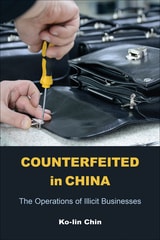
Counterfeited in China
The Operations of Illicit BusinessesKo-lin Chin
Temple University Press, 2025
In his illuminating study, Counterfeited in China, Ko-lin Chin investigates this lucrative industry and its emergence in China. His face-to-face interviews with counterfeiters — business owners, workers, facilitators, and key informants — in the hub of Guangzhou, China reveal how businesses that design, produce, and distribute fake and unauthorized luxury goods manage the risks inherent in their business.
Counterfeited in China examines the individual and group characteristics of counterfeiters and their relationships with organized crime; analyzes the economic aspects of counterfeiting; assesses the relationships among counterfeiting, violence, and corruption; and seeks to understand the demand for counterfeit goods. Chin also discusses the role of Chinese authorities and other parties in the war against counterfeiting.
Assessing the state of the industry and its future, Chin provides fascinating new insights into the modus operandi of counterfeiters.
Cracks in the Wall
Beyond Apartheid in Palestine/IsraelBen White
Pluto Press, 2018
But while the situation on the ground is bleak, Ben White argues that there are widening cracks in Israel's traditional pillars of support. Opposition to Israeli policies and even critiques of Zionism are growing in Jewish communities, as well as amongst Western progressives. The election of Donald Trump has served as a catalyst for these processes, including the transformation of Israel from a partisan issue into one that divides the US establishment. Meanwhile, the Palestinian-led boycott campaign is gathering momentum, prompting a desperate backlash by Israel and its allies.
With sharp analysis, Ben White says now is the time to plot a course that avoids the mistakes of the past - a way forward beyond apartheid in Palestine. The solution is not partition and ethnic separation, but equality and self-determination - for all.

Creating a World on Paper
Harry Fenn's Career in ArtSue Rainey
University of Massachusetts Press, 2013
Arriving in New York from London in 1857 as a young wood engraver, Fenn soon forged a career in illustration. His tiny black-and-white wood engravings for Whittier's Snow-Bound (1868) surprised critics with their power, and his bold, innovative compositions for Picturesque America (1872–74) were enormously popular and expanded the field for illustrators and publishers. In the 1880s and '90s, his illustrations appeared in many of the finest magazines and newspapers, depicting the places and events that interested the public—from post–Civil War national reconciliation to the World's Columbian Exposition in 1893 to the beginnings of imperialism in the Spanish-American War.
This handsomely designed volume documents Fenn's prolific career from the 1860s until his death in 1911. Sue Rainey also recounts his adventurous sketching trips in the western United States, Europe, and the Middle East, which enhanced his reputation for depicting far-flung places at a time when the nation was taking a more prominent role on the world stage.

Creative Spaces
Urban Culture and Marginality in Latin AmericaEdited by Niall Geraghty and Adriana Laura Massidda
University of London Press, 2019
Cross-Cultural Exchange and the Colonial Imaginary
Global Encounters via Southeast AsiaEdited by H. Hazel Hahn
National University of Singapore Press, 2019
Crossing Empires
Taking U.S. History into Transimperial TerrainKristin L. Hoganson and Jay Sexton, editors
Duke University Press, 2020
Contributors. Ikuko Asaka, Oliver Charbonneau, Genevieve Clutario, Anne L. Foster, Julian Go, Michel Gobat, Julie Greene, Kristin L. Hoganson, Margaret D. Jacobs, Moon-Ho Jung, Marc-William Palen, Nicole M. Phelps, Jay Sexton, John Soluri, Stephen Tuffnell
Cuba and the Politics of Passion
By Damián J. Fernández
University of Texas Press, 2000
Cuban politics has long been remarkable for its passionate intensity, and yet few scholars have explored the effect of emotions on political attitudes and action in Cuba or elsewhere. This book thus offers an important new approach by bringing feelings back into the study of politics and showing how the politics of passion and affection have interacted to shape Cuban history throughout the twentieth century.
Damián Fernández characterizes the politics of passion as the pursuit of a moral absolute for the nation as a whole. While such a pursuit rallied the Cuban people around charismatic leaders such as Fidel Castro, Fernández finds that it also set the stage for disaffection and disconnection when the grand goal never fully materialized. At the same time, he reveals how the politics of affection-taking care of family and friends outside the formal structures of government-has paradoxically both undermined state regimes and helped them remain in power by creating an informal survival network that provides what the state cannot or will not.

Culinary Herbs and Spices of the World
Ben-Erik van Wyk
University of Chicago Press, 2014
Cultivating the Colonies
Colonial States and their Environmental LegaciesChristina Folke Ax
Ohio University Press, 2011
The essays collected in Cultivating the Colonies demonstrate how the relationship between colonial power and nature revealsthe nature of power. Each essay explores how colonial governments translated ideas about the management of exoticnature and foreign people into practice, and how they literally “got their hands dirty” in the business of empire.
The eleven essays include studies of animal husbandry in the Philippines, farming in Indochina, and indigenous medicine in India. They are global in scope, ranging from the Russian North to Mozambique, examining the consequences of colonialismon nature, including its impact on animals, fisheries, farmlands, medical practices, and even the diets of indigenouspeople.
Cultivating the Colonies establishes beyond all possible doubt the importance of the environment as a locus for studyingthe power of the colonial state.
Cultural Histories of the Material World
Peter N. Miller, Editor
University of Michigan Press, 2013
All across the humanities fields there is a new interest in materials and materiality. This is the first book to capture and study the “material turn” in the humanities from all its varied perspectives. Cultural Histories of the Material World brings together top scholars from all these different fields—from Art History, Anthropology, Archaeology, Classics, Folklore, History, History of Science, Literature, Philosophy—to offer their vision of what cultural history of the material world looks like and attempt to show how attention to materiality can contribute to a more precise historical understanding of specific times, places, ways, and means. The result is a spectacular kaleidoscope of future possibilities and new perspectives.
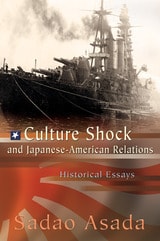
Culture Shock and Japanese-American Relations
Historical EssaysSadao Asada
University of Missouri Press, 2007
Ever since Commodore Perry sailed into Uraga Channel, relations between the United States and Japan have been characterized by culture shock. Now a distinguished Japanese historian critically analyzes contemporary thought, public opinion, and behavior in the two countries over the course of the twentieth century, offering a binational perspective on culture shock as it has affected their relations.
In these essays, Sadao Asada examines the historical interaction between these two countries from 1890 to 2006, focusing on naval strategy, transpacific racism, and the atomic bomb controversy. For each topic, he offers a rigorous analysis of both American and Japanese perceptions, showing how cultural relations and the interchange of ideas have been complex—and occasionally destructive.
Culture Shock and Japanese-American Relations contains insightful essays on the influence of Alfred Mahan on the Japanese navy and on American images of Japan during the 1920s. Other essays consider the progressive breakdown of relations between the two countries and the origins of the Pacific War from the viewpoint of the Japanese navy, then tackle the ultimate shock of the atomic bomb and Japan’s surrender, tracing changing perceptions of the decision to use the bomb on both sides of the Pacific over the course of sixty years. In discussing these subjects, Asada draws on Japanese sources largely inaccessible to Western scholars to provide a host of eye-opening insights for non-Japanese readers.
After studying in America for nine years and receiving degrees from both Carleton College and Yale University, Asada returned to Japan to face his own reverse culture shock. His insights raise important questions of why people on opposite sides of the Pacific see things differently and adapt their perceptions to different purposes. This book marks a major effort toward reconstructing and understanding the conflicted course of Japanese-American relations during the first half of the twentieth century.
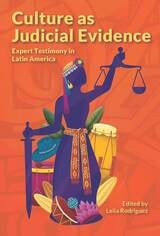
Culture as Judicial Evidence
Expert Testimony in Latin AmericaEdited by Leila Rodriguez
University of Minnesota Press, 2020
Culture as Judicial Evidence in Latin America summarizes the current state of this work in six countries: Mexico, Costa Rica, Peru, Chile, Colombia, and Uruguay, and lays out the challenges and dilemmas involved in the creation and use of cultural expert testimony. Organized into three sections, the book advances a framework for the use of cultural evidence, and presents readers with nine case studies based on trials in six individual countries. These countries have implemented legal reform, constitutional amendments and the adoption of international legislation to create the legal frameworks that enable this new form of legal evidence to be admissible in Latin American courts. The contributing authors are cultural anthropologists with vast experience researching the impact of cultural expert witness testimony. A forward-looking final section examines the dilemmas and challenges of this work that remain to be solved.