Results by title
18293 books match the query 'United States' and 1260 start with c
Cultural Considerations
Essays on Readers, Writers, and Musicians in Postwar AmericaJoan Shelley Rubin
University of Massachusetts Press, 2013
Focusing on aspects of American literary and musical culture in the decades after World War II, Rubin examines the contests between critics and their readers over the authority to make aesthetic judgments; the effort of academics to extend the university outward by bringing the humanities to a wide public; the politics of setting poetic texts to music; the role of ideology in the practice of commissioning and performing choral works; and the uses of reading in the service of both individualism and community. Specific topics include the 1957 attack by the critic John Ciardi on the poetry of Anne Morrow Lindbergh in the Saturday Review; the radio broadcasts of the classicist Gilbert Highet; Dwight Macdonald's vitriolic depiction of the novelist James Gould Cozzens as a pernicious middlebrow; the composition and reception of Howard Hanson's "Song of Democracy"; the varied career of musician Gunther Schuller; the liberal humanism of America's foremost twentieth-century choral conductor, Robert Shaw; and the place of books in the student and women's movements of the 1960s.
What unites these essays is the author's ongoing concern with cultural boundaries, mediation, and ideology--and the contradictions they frequently entail.
Cultural Democracy
The Arts, Community, and the Public PurposeJames Bau Graves
University of Illinois Press, 2004
Drawing upon a range of scholarship and illustrative anecdotes from his own experiences with cultural programs in ethnically diverse communities, Graves explains in convincing detail the dynamics of how traditional and grassroots cultures may survive and thrive--or not--and what we can do to provide them opportunities equal to those of mainstream, Eurocentric culture.
Cultural Dilemmas of Progressive Politics
Styles of Engagement among Grassroots ActivistsStephen Hart
University of Chicago Press, 2001
Through case studies of grassroots movements—particularly the economic justice work carried on by congregation-based community organizing and the pursuit of human rights by local members of Amnesty International—Hart shows how these groups develop distinctive ways of talking about politics and create characteristic stories, ceremonies, and practices. According to Hart, the way people engage in politics matters just as much as the content of their ideas: when activists make the moral basis for their activism clear, engage issues with passion, and articulate a unified social vision, they challenge the recent ascendancy of conservative discourse.
On the basis of these case studies, Hart addresses currently debated topics such as individualism in America and whether strains of political thought strongly informed by religion and moral values are compatible with tolerance and liberty.
Cultural Divides
Understanding and Overcoming Group ConflictDeborah Prentice
Russell Sage Foundation, 1999

Cultural Erotics in Cuban America
Ricardo L. Ortíz
University of Minnesota Press, 2006
In this wide-ranging work Ortíz argues for the authentically diasporic quality of postrevolutionary, off-island Cuban experience. Highlighting various forms of cultural expression, Cultural Erotics in Cuban America traces underrepresented communities’ responses to the threat of cultural disappearance in an overwhelming and hegemonic U.S. culture. Ortíz shows how the work of Cuban-American writers and artists challenges the heteronormativity of both home and host culture. Focusing on artists who have had an ambivalent, indirect, or nonexistent connection to Miami, he presents close readings of such novelists as Reinaldo Arenas, Roberto G. Fernández, Achy Obejas, and Cristina García, the playwright Eduardo Machado, the poet Rafael Campo, and musical performers Albita Rodríguez and Celia Cruz.
Ortíz charts the legacies of sexism and homophobia in patriarchal Cuban culture, as well as their influence on Cuban-revolutionary and Cuban-exile ideologies. Moving beyond the outdated cultural terms of the Cold War, he looks forward to envision queer futures for Cuban-American culture free from the ties to restrictive—indeed, oppressive—constructions of nation, place, language, and desire.
Ricardo L. Ortíz is associate professor of English at Georgetown University.
Cultural Excursions
Marketing Appetites and Cultural Tastes in Modern AmericaNeil Harris
University of Chicago Press, 1990
The essays fall into three general sections: the first treats the history of cultural institutions, highlighting the role of museums; the second section focuses on some literary, artistic, and entrepreneurial responses to the new mass culture; and the final group of essays explores the social history of art and architecture. Throughout Harris's diverse writings certain themes recur—the redefining of boundaries between high art and popular culture, the relationship between public taste and technological change, and the very notion of what constitutes a shared social experience. Harris's pioneering work has broadened the field of cultural history and encouraged whole new areas of inquiry. Cultural Excursions will be useful for those in American and culture studies, as well as for the general reader trying to make sense of the culture in which we live.
Cultural Humility
David A. Hurley, Sarah R. Kostelecky, and Lori Townsend
American Library Association, 2022
Cultural humility is emerging as a preferred approach to diversity, equity, and inclusion (DEI) efforts within librarianship. At a time when library workers are critically examining their professional practices, cultural humility offers a potentially transformative framework of compassionate accountability; it asks us to recognize the limits to our knowledge, reckon with our ongoing fallibility, educate ourselves about the power imbalances in our organizations, and commit to making change. This Special Report introduces the concept and outlines its core tenets. As relevant to those currently studying librarianship as it is to long-time professionals, and applicable across multiple settings including archives and museums, from this book readers will
- learn why cultural humility offers an ideal approach for navigating the spontaneous interpersonal interactions in libraries, whether between patrons and staff or amongst staff members themselves;
- understand how it intersects with cultural competence models and critical race theory;
- see the ways in which cultural humility’s awareness of and commitment to challenging inequitable structures of power can act as a powerful catalyst for community engagement;
- come to recognize how a culturally humble approach supports DEI work by acknowledging the need for mindfulness in day-to-day interactions;
- reflect upon cultural humility’s limitations and the criticisms that some have leveled against it; and
- take away concrete tools for undertaking and continuing such work with patience and hope.
Cultural Melancholy
Readings of Race, Impossible Mourning, and African American RitualJermaine Singleton
University of Illinois Press, 2015
Singleton develops the concept of "cultural melancholy" as a response to scholarship that calls for the separation of critical race studies and psychoanalysis, excludes queer theoretical approaches from readings of African American literatures and cultures, and overlooks the status of racialized performance culture as a site of serious academic theorization. In doing so, he weaves critical race studies, psychoanalysis, queer theory, and performance studies into conversation to uncover a host of hidden dialogues—psychic and social, personal and political, individual and collective—for the purpose of promoting a culture of racial grieving, critical race consciousness, and collective agency.
Wide-ranging and theoretically bold, Cultural Melancholy counteracts the racial legacy effects that plague our twenty-first century multiculture.
Cultural Misunderstandings
The French-American ExperienceRaymonde Carroll
University of Chicago Press, 1990
Raymonde Carroll presents an intriguing and thoughtful analysis of the many ways French and Americans—and indeed any members of different cultures—can misinterpret each other, even when ostensibly speaking the same language.Cultural misunderstandings, Carroll points out, can arise even where we least expect them—in our closest relationships. The revealing vignettes that Carroll relates, and her perceptive comments, bring to light some fundamental differences in French and American presuppositions about love, friendship, and raising children, as well as such everyday activities as using the telephone or asking for information.
Cultural Pluralism, Identity Politics, and the Law
Austin Sarat and Thomas R. Kearns, Editors
University of Michigan Press, 2001

Cultural Programming For Libraries
Deborah A. Robertson
American Library Association, 2005
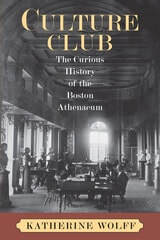
Culture Club
The Curious History of the Boston AthenaeumKatherine Wolff
University of Massachusetts Press, 2009
Yet from the outset, Katherine Wolff shows, the Boston Athenaeum was more than a library; it was also a breeding ground for evolving notions of cultural authority and American identity. Though governed by the Boston elite, who promoted it as a way of strengthening their own clout in the city, the early Athenaeum reflected conflicting and at times contradictory aims and motives on the part of its membership. On the one hand, by drawing on European aesthetic models to reinforce an exalted sense of mission, Athenaeum leaders sought to establish themselves as guardians of a nascent American culture. On the other, they struggled to balance their goals with their concerns about an increasingly democratic urban populace. As the Boston Athenaeum opened its doors to women as well as men outside its inner circle, it eventually began to define itself against a more accessible literary institution, the Boston Public Library.
Told through a series of provocative episodes and generously illustrated, Culture Club offers a more complete picture than previously available of the cultural politics behind the making of a quintessentially American institution.
Culture Concept
Writing and Difference in the Age of RealismMichael A. Elliott
University of Minnesota Press, 2002
Examines the prehistory of the American struggle to address cultural difference.
"Culture" is a term we commonly use to explain the differences in our ways of living. In this book Michael A. Elliott returns to the moment this usage was first articulated, tracing the concept of culture to the writings-folktales, dialect literature, local color sketches, and ethnographies-that provided its intellectual underpinnings in turn-of-the-century America.
The Culture Concept explains how this now-familiar definition of "culture" emerged during the late nineteenth century through the intersection of two separate endeavors that shared a commitment to recording group-based difference-American literary realism and scientific ethnography. Elliott looks at early works of cultural studies as diverse as the conjure tales of Charles Chesnutt, the Ghost Dance ethnography of James Mooney, and the prose narrative of the Omaha anthropologist-turned-author Francis La Flesche. His reading of these works-which struggle to find appropriate theoretical and textual tools for articulating a less chauvinistic understanding of human difference-is at once a recovery of a lost connection between American literary realism and ethnography and a productive inquiry into the usefulness of the culture concept as a critical tool in our time and times to come.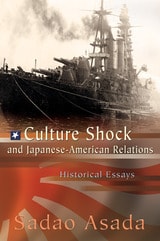
Culture Shock and Japanese-American Relations
Historical EssaysSadao Asada
University of Missouri Press, 2007
Ever since Commodore Perry sailed into Uraga Channel, relations between the United States and Japan have been characterized by culture shock. Now a distinguished Japanese historian critically analyzes contemporary thought, public opinion, and behavior in the two countries over the course of the twentieth century, offering a binational perspective on culture shock as it has affected their relations.
In these essays, Sadao Asada examines the historical interaction between these two countries from 1890 to 2006, focusing on naval strategy, transpacific racism, and the atomic bomb controversy. For each topic, he offers a rigorous analysis of both American and Japanese perceptions, showing how cultural relations and the interchange of ideas have been complex—and occasionally destructive.
Culture Shock and Japanese-American Relations contains insightful essays on the influence of Alfred Mahan on the Japanese navy and on American images of Japan during the 1920s. Other essays consider the progressive breakdown of relations between the two countries and the origins of the Pacific War from the viewpoint of the Japanese navy, then tackle the ultimate shock of the atomic bomb and Japan’s surrender, tracing changing perceptions of the decision to use the bomb on both sides of the Pacific over the course of sixty years. In discussing these subjects, Asada draws on Japanese sources largely inaccessible to Western scholars to provide a host of eye-opening insights for non-Japanese readers.
After studying in America for nine years and receiving degrees from both Carleton College and Yale University, Asada returned to Japan to face his own reverse culture shock. His insights raise important questions of why people on opposite sides of the Pacific see things differently and adapt their perceptions to different purposes. This book marks a major effort toward reconstructing and understanding the conflicted course of Japanese-American relations during the first half of the twentieth century.
Culture Wars and Enduring American Dilemmas
Irene Taviss Thomson
University of Michigan Press, 2010
"Irene Taviss Thomson gives us a nuanced portrait of American social politics that helps explain both why we are drawn to the idea of a 'culture war' and why that misrepresents what is actually going on."
---Rhys H. Williams, Professor and Chair, Department of Sociology, Loyola University Chicago
"An important work showing---beneath surface conflict---a deep consensus on a number of ideals by social elites."
---John H. Evans, Department of Sociology, University of California, San Diego
The idea of a culture war, or wars, has existed in America since the 1960s---an underlying ideological schism in our country that is responsible for the polarizing debates on everything from the separation of church and state, to abortion, to gay marriage, to affirmative action. Irene Taviss Thomson explores this notion by analyzing hundreds of articles addressing hot-button issues over two decades from four magazines: National Review, Time, The New Republic, and The Nation, as well as a wide array of other writings and statements from a substantial number of public intellectuals.
What Thomson finds might surprise you: based on her research, there is no single cultural divide or cultural source that can account for the positions that have been adopted. While issues such as religion, homosexuality, sexual conduct, and abortion have figured prominently in public discussion, in fact there is no single thread that unifies responses to each of these cultural dilemmas for any of the writers.
Irene Taviss Thomson is Professor Emeritus of Sociology, having taught in the Department of Social Sciences and History at Fairleigh Dickinson University for more than 30 years. Previously, she taught in the Department of Sociology at Harvard University.

Culture Wars
School and Society in the Conservative RestorationIra Shor
University of Chicago Press, 1992
"An outstanding work of educational theory and history."—John Coatsworth, University of Chicago
Culture across Borders
Mexican Immigration and Popular CultureEdited by David R. Maciel and María Herrera-Sobek
University of Arizona Press, 1998
Culture and Agriculture
An Anthropological Study of a Corn Belt CountyHorace Miner
University of Michigan Press, 1949
Culture of Empire
American Writers, Mexico, and Mexican Immigrants, 1880–1930By Gilbert G. González
University of Texas Press, 2003
A history of the Chicano community cannot be complete without taking into account the United States' domination of the Mexican economy beginning in the late nineteenth and early twentieth centuries, writes Gilbert G. González. For that economic conquest inspired U.S. writers to create a "culture of empire" that legitimated American dominance by portraying Mexicans and Mexican immigrants as childlike "peons" in need of foreign tutelage, incapable of modernizing without Americanizing, that is, submitting to the control of U.S. capital. So powerful was and is the culture of empire that its messages about Mexicans shaped U.S. public policy, particularly in education, throughout the twentieth century and even into the twenty-first.
In this stimulating history, Gilbert G. González traces the development of the culture of empire and its effects on U.S. attitudes and policies toward Mexican immigrants. Following a discussion of the United States' economic conquest of the Mexican economy, González examines several hundred pieces of writing by American missionaries, diplomats, business people, journalists, academics, travelers, and others who together created the stereotype of the Mexican peon and the perception of a "Mexican problem." He then fully and insightfully discusses how this misinformation has shaped decades of U.S. public policy toward Mexican immigrants and the Chicano (now Latino) community, especially in terms of the way university training of school superintendents, teachers, and counselors drew on this literature in forming the educational practices that have long been applied to the Mexican immigrant community.
Culture, Class, and Politics in Modern Appalachia
Essays in Honor of Ronald L. LewisEdited by Jennifer Egolf, Ken Fones-Wolf, and Louis C. Martin
West Virginia University Press, 2009
Culture, Class, and Politics in Modern Appalachia takes stock of the field of Appalachian studies as it explores issues still at the center of its scholarship: culture, industrialization, the labor movement, and twentieth-century economic and political failure and their social impact. A new generation of scholars continues the work of Appalachian studies’ pioneers, exploring the diversity and complexity of the region and its people. Labor migrations from around the world transformed the region during its critical period of economic growth. Collective struggles over occupational health and safety, the environment, equal rights, and civil rights challenged longstanding stereotypes. Investigations of political and economic power and the role of social actors and social movements in Appalachian history add to the foundational work that demonstrates a dynamic and diverse region.
Culture, Genre, and Literary Vocation
Selected Essays on American LiteratureMichael Davitt Bell
University of Chicago Press, 2000
Throughout, Bell revisits issues of genre with an eye toward the unexpected details of authors' lives, and invites us to reconsider the hidden functions that terms such as "romanticism" and "realism" served for authors and their critics. Whether tracing the demands of the market or the expectations of readers, Bell examines the intimate relationship between literary production and culture; each essay closely links the milieu in which American writers worked with the trajectory of their storied careers.
Culture
A Problem That Cannot Be SolvedCharles W. Nuckolls
University of Wisconsin Press, 1998
French historian Alexis de Tocqueville observed that the conflict between the ideals of individualism and community defines American culture. In this groundbreaking new work, anthropologist Charles Nuckolls discovers that every culture consists of such paradoxes, thus making culture a problem that cannot be solved. He does, however, find much creative tension in these unresolvable opposites.
Nuckolls presents three fascinating case studies that demonstrate how values often are expressed in the organization of social roles. First he treats the Micronesian Ifaluks’ opposition between cooperation and self-gratification by examining the nature versus nurture debate. Nuckolls then shifts to the values of community and individual adventure by looking at the conflicts in the identities of public figures in Oklahoma. Finally, he investigates the cultural significance in the diagnostic system and practices of psychiatry in the United States. Nuckolls asserts that psychiatry treats genders differently, assigning dependence to women and independence to men and, in some cases, diagnoses the extreme forms of these values as disorders.
Nuckolls elaborates on the theory of culture that he introduced in his previous book, The Cultural Dialectics of Knowledge and Desire, which proposed that the desire to resolve conflicts is central to cultural knowledge. In Culture: A Problem that Cannot Be Solved, Nuckolls restores the neglected social science concept of values, which addresses both knowledge and motivation. As a result, he brings together cognition and psychoanalysis, as well as sociology and psychology, in his study of cultural processes.
Cultures Colliding
American Missionaries, Chinese Resistance, and the Rise of Modern Institutions in ChinaJohn R. Haddad
Temple University Press, 2023
As incredible as it may seem, the American missionaries who journeyed to China in 1860 planning solely to spread the Gospel ultimately reinvented their entire enterprise. By 1900, they were modernizing China with schools, colleges, hospitals, museums, and even YMCA chapters. In Cultures Colliding, John R. Haddad nimbly recounts this transformative institution-building—how and why it happened—and its consequences.
When missionaries first traveled to rural towns atop mules, they confronted populations with entrenched systems of belief that embraced Confucius and rejected Christ. Conflict ensued as these Chinese viewed missionaries as unwanted disruptors. So how did this failing movement eventually change minds and win hearts? Many missionaries chose to innovate. They built hospitals and established educational institutions offering science and math. A second wave of missionaries opened YMCA chapters, coached sports, and taught college. Crucially, missionaries also started listening to Chinese citizens, who exerted surprising influence over the preaching, teaching, and caregiving, eventually running some organizations themselves. They embraced new American ideals while remaining thoroughly Chinese.
In Cultures Colliding, Haddad recounts the unexpected origins and rapid rise of American institutions in China by telling the stories of the Americans who established these institutions and the Chinese who changed them from within. Today, the impact of this untold history continues to resonate in China.
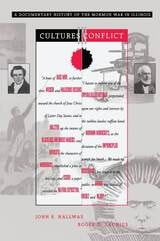
Cultures In Conflict
A Documentary History of the Mormon War in IllinoisJohn Hallwas and Roger Launius
Utah State University Press, 1999
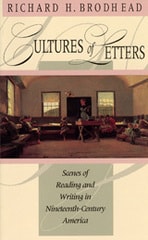
Cultures of Letters
Scenes of Reading and Writing in Nineteenth-Century AmericaRichard H. Brodhead
University of Chicago Press, 1993
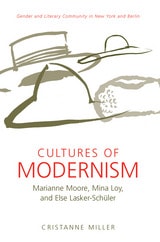
Cultures of Modernism
Marianne Moore, Mina Loy, and Else Lasker-SchulerCristanne Miller
University of Michigan Press, 2005
Cultures of Modernism explores how the structure and location of literary communities significantly influence who writes, what they write about, and their openness to formal experimentation. These influences particularly affect women writers. Author Cristanne Miller notes striking patterns of similarity in the concerns and lives of women living in geographically distant centers of modernist production. She looks at three significant poets---the American Marianne Moore, the British expatriate Mina Loy, and the German Else Lasker-Schüler---in the context of cultural, national, and local elements to argue that location significantly affected their performances of subjectivity, gender, race, and religion. The first book of its kind, Cultures of Modernism breaks new ground while it contributes to the ongoing reconception of the modernist period.
"A fascinating, provocative, and genuinely original study of a 'different' modernism in poetry---namely, the Modernism of women poets."
---Marjorie Perloff, Stanford University
"An important and ambitious work that makes major contributions to the fields of gender studies and modernist studies, and to the study of modernist poetry."
---Robin Schulze, Pennsylvania State University
"Offers a welcome corrective to the unreflective critical tendency . . . to make broad claims about the historical experiences and cultural conundrums of 'women,' and particularly 'women writers.' Miller offers tour-de-force comparative readings . . . threading together the world-historical with the personal, poetics with the political, and wielding the instruments of scansion as deftly as a surgeon."
---Modernism/modernity, The Official Journal of the Modernist Studies Association
Cristanne Miller is Edward H. Butler Professor of English and Chair of the English Department at the University of Buffalo, State University of New York.
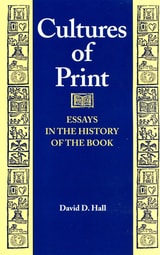
Cultures of Print
Essays in the History of the BookDavid D. Hall
University of Massachusetts Press, 1996
David D. Hall examines the interchange between popular and learned cultures and the practices of reading and writing. His writings deal with change and continuity, exploring the possibility of a reading revolution and arguing for the long duration of a Protestant vernacular tradition. A newly written essay on book culture in the early Chesapeake describes a system of scribal publication. The pieces reflect Hall's belief that the better we understand the production and consumption of books, the closer we come to a social history of culture.

Cultures of United States Imperialism
Amy Kaplan and Donald Pease, editors
Duke University Press, 1994
Drawing on a broad range of interpretive practices, these essays range across American history, from European representations of the New World to the mass media spectacle of the Persian Gulf War. The volume breaks down the boundary between the study of foreign relations and American culture to examine imperialism as an internal process of cultural appropriation and as an external struggle over international power. The contributors explore how the politics of continental and international expansion, conquest, and resistance have shaped the history of American culture just as much as the cultures of those it has dominated. By uncovering the dialectical relationship between American cultures and international relations, this collection demonstrates the necessity of analyzing imperialism as a political or economic process inseparable from the social relations and cultural representations of gender, race, ethnicity, and class at home.
Contributors. Lynda Boose, Mary Yoko Brannen, Bill Brown, William Cain, Eric Cheyfitz, Vicente Diaz, Frederick Errington, Kevin Gaines, Deborah Gewertz, Donna Haraway, Susan Jeffords, Myra Jehlen, Amy Kaplan, Eric Lott, Walter Benn Michaels, Donald E. Pease, Vicente Rafael, Michael Rogin, José David Saldívar, Richard Slotkin, Doris Sommer, Gauri Viswanathan, Priscilla Wald, Kenneth Warren, Christopher P. Wilson
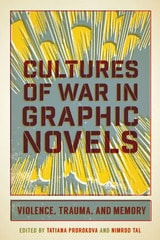
Cultures of War in Graphic Novels
Violence, Trauma, and MemoryProrokova, Tatiana
Rutgers University Press, 2018
Cultures of War in Graphic Novels examines the representation of small-scale and often less acknowledged conflicts from around the world and throughout history. The contributors look at an array of graphic novels about conflicts such as the Boxer Rebellion (1899-1901), the Irish struggle for national independence (1916-1998), the Falkland War (1982), the Bosnian War (1992-1995), the Rwandan genocide (1994), the Israel-Lebanon War (2006), and the War on Terror (2001-). The book explores the multi-layered relation between the graphic novel as a popular medium and war as a pivotal recurring experience in human history. The focus on largely overlooked small-scale conflicts contributes not only to advance our understanding of graphic novels about war and the cultural aspects of war as reflected in graphic novels, but also our sense of the early twenty-first century, in which popular media and limited conflicts have become closely interrelated.
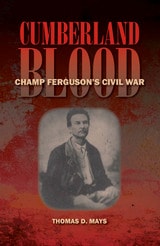
Cumberland Blood
Champ Ferguson's Civil WarThomas D. Mays
Southern Illinois University Press, 2008
By the end of the Civil War, Champ Ferguson had become a notorious criminal whose likeness covered the front pages of Harper’s Weekly, Leslie’s Illustrated, and other newspapers across the country. His crime? Using the war as an excuse to steal, plunder, and murder Union civilians and soldiers.
Cumberland Blood: Champ Ferguson’s Civil War offers insights into Ferguson's lawless brutality and a lesser-known aspect of the Civil War, the bitter guerrilla conflict in the Appalachian highlands, extending from the Carolinas through Tennessee, Kentucky, Virginia, and West Virginia. This compelling volume delves into the violent story of Champ Ferguson, who acted independently of the Confederate army in a personal war that eventually garnered the censure of Confederate officials.
Author Thomas D. Mays traces Ferguson's life in the Cumberland highlands of southern Kentucky, where—even before the Civil War began—he had a reputation as a vicious killer.
Ferguson, a rising slave owner, sided with the Confederacy while many of his neighbors and family members took up arms for the Union. For Ferguson and others in the highlands, the war would not be decided on the distant fields of Shiloh or Gettysburg: it would be local—and personal.
Cumberland Blood describes how Unionists drove Ferguson from his home in Kentucky into Tennessee, where he banded together with other like-minded Southerners to drive the Unionists from the region. Northern sympathizers responded, and a full-scale guerrilla war erupted along the border in 1862. Mays notes that Ferguson's status in the army was never clear, and he skillfully details how raiders picked up Ferguson's gang to work as guides and scouts. In 1864, Ferguson and his gang were incorporated into the Confederate army, but the rogue soldier continued operating as an outlaw, murdering captured Union prisoners after the Battle of Saltville, Virginia.
Cumberland Blood, enhanced by twenty-one illustrations, is an illuminating assessment of one of the Civil War's most ruthless men.
Ferguson's arrest, trial, and execution after the war captured the attention of the nation in
1865, but his story has been largely forgotten. Cumberland Blood: Champ Ferguson's Civil War returns the story of Ferguson's private civil war to its place in history.
Cupboards of Curiosity
Women, Recollection, and Film HistoryAmelie Hastie
Duke University Press, 2007
Hastie pays particular attention to the actresses Colleen Moore and Louise Brooks and Hollywood’s first female director, Alice Guy-Blaché. From the beginning of her career, Moore worked intently to preserve a lasting place for herself as a Hollywood star, amassing collections of photos, souvenirs, and clippings as well as a dollhouse so elaborate that it drew extensive public attention. Brooks’s short essays reveal how she participated in the creation of her image as Lulu and later emerged as a critic of film stardom. The recovery of Blaché’s role in film history by feminist critics in the 1970s and 1980s was made possible by the existence of the director’s own autobiographical history. Broadening her analytical framework to include contemporary celebrities, Hastie turns to how-to manuals authored by female stars, from Zasu Pitts’s cookbook Candy Hits to Christy Turlington’s Living Yoga. She discusses how these assertions of celebrity expertise in realms seemingly unrelated to film and visual culture allow fans to prolong their experience of stardom.
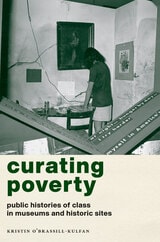
Curating Poverty
Public Histories of Class in Museums and Historic SitesKristin O'Brassill-Kulfan
University of Massachusetts Press, 2027
Asking how Americans’ fraught relationship with class has played out in public history
In 1966, a Smithsonian curator proposed recreating a “slum” dwelling inside the Museum of History and Technology, complete with rats in the walls, synthesized smells, and heat in summer and cold in winter. The public was not pleased. One editorialist called it “preserving a very insignificant aspect of civilization.” A Life magazine reporter worried that schoolchildren on field trips might find the exhibit’s horrors “pretty tame compared to their own homes.” The proposal was shelved. But the debate it ignited over whether poverty could or should be presented in museums cast a long shadow in US public history.
In Curating Poverty, Kristin O’Brassill-Kulfan examines how public historians have curated, preserved, and interpreted the experiences of people living in poverty—and how different publics have responded to these efforts. Poverty and economic inequality have shaped the lives of millions of Americans since the colonial period. For most of the nation’s history, welfare institutions such as almshouses and poor farms could be found in nearly every county in the United States. Yet explicit interpretation of poverty, welfare, and inequality remains an outlier in public history.
Documenting attempts to incorporate histories of poverty and class into exhibitions from the 1930s to the present, O’Brassill-Kulfan interrogates institutions of varying sizes and missions, paying particular attention to museums within the Smithsonian network. She traces how communities and public historians have remembered, neglected, erased, and sometimes reclaimed the surviving landscapes of poverty relief—from preserved almshouses and poor farm cemeteries to tenement museums and public housing sites. By placing poverty at the center of public history, Curating Poverty reveals how Americans have constructed, contested, and obscured histories of class and inequality and what it might look like to finally tell those stories honestly.
Curating the American Past
A Memoir of a Quarter Century at the Smithsonian National Museum of American HistoryPete Daniel
University of Arkansas Press, 2022
“As is well known, Pete is an outstanding storyteller, and this book is no exception."
—Claire Strom, Journal of Southern History
In addition to chronicling significant exhibit work at the Smithsonian National Museum of American History, Curating the American Past, captures the excitement inherent in researching and writing history and Pete Daniel’s efforts to prevent diluted celebratory stories from replacing the red meat of the American past.
In Curating the American Past, Pete Daniel reveals how curators collect objects, plan exhibits, and bring alive the country’s complex and exciting history. In vivid detail, Daniel recounts the exhilaration of innovative research, the joys of collaboration, and the rewards of mentoring new generations of historians. In a career distinguished by prize-winning publications and pathbreaking exhibitions, Daniel also confronted the challenges of serving as a public historian tasked with protecting a definitive American museum from the erosion of scholarly standards. Curating the American Past offers a wealth of museum wisdom, illuminating the crucial role that dedicated historians and curators serve within our most important repositories of cultural memory.
Curators and Culture
The Museum Movement in America, 1740-1870Joel J. Orosz
University of Alabama Press, 1990
Tracing the birth of American museums and the curators who shaped a nation’s cultural identity.
As they formed their pioneer museums, these men were guided not so much by European examples, but rather by the imperatives of the American democratic culture, including the Enlightenment, the simultaneous decline of the respectability and rise of the middle classes, the Age of Egalitarianism, and the advent of professionalism in the sciences. Thus the pre-1870 American museum was neither the frivolous sideshow some critics have imagined, nor the enclave for elitists that others have charged. Instead, the proprietors displayed serious motives and egalitarian aspirations.
The conflicting demands for popular education on the one hand and professionalism on the other were a continuing source of tension in American museums after about 1835, but by 1870 the two claims had synthesized into a rough parity. This synthesis, the "American Compromise," has remained the basic model of museums in America down to the present. Thus, by 1870, the form of the modern American museum as an institution which simultaneously provides popular education and promotes scholarly research was completely developed.
Curious New England
The Unconventional Traveler’s Guide to Eccentric DestinationsJoseph E. Citro and Diane E. Foulds
University Press of New England, 2004
Curly Lambeau
Building the Green Bay PackersStuart Stotts
Wisconsin Historical Society Press, 2007
When Earl "Curly" Lambeau was a young boy growing up in Green Bay in the early 1900s, he and his friends didn't have money for a football. Instead, they kicked around a salt sack filled with sand, leaves, and pebbles. That humble beginning produced a single-minded drive for the figure whose name now graces the Green Bay Packers' stadium.
This title in the Badger Biographies series charts the course of Curly Lambeau's career as a flamboyant player and coach, which paralleled the rise of professional football in this country. Lambeau revolutionized the way football is played by legitimizing passing in a game that had previously centered on running. His dedication to popularizing football in Green Bay and in the state helped build the Packer organization into the institution it has become. Yet, he was not without flaws, and this biography presents a full picture of a man whose ambitions complicated his legacy.

Curriculum Materials Collections and Centers
Legacies from the Past, Visions of the FutureRita Kohrman
Assoc of College & Research Libraries, 2012
Curriculum as Conversation
Transforming Traditions of Teaching and LearningArthur N. Applebee
University of Chicago Press, 1996
“Applebee's central point, the need to teach 'knowledge in context,' is absolutely crucial for the hopes of any reformed curriculum. His experience and knowledge give his voice an authority that makes many of the current proposals on both the left and right seem shallow by comparison.”—Gerald Graff, University of Chicago
Curriculum or Craftsmanship
Elementary School Teachers in a Bureaucratic SystemHarry L. Gracey
University of Chicago Press, 1972
The majority of teachers are "production" oriented. They believe that their job is to see that the children in their charge complete as much of the standardized grade level curriculum as possible during the school year. They do achieve some success in preparing children for life in a society where bureaucracy is the dominant form of social organization.
The other significant type of teaching orientation is that of the "craftsmen." These instructors see their goal as the development of each individual's learning potential, with the curriculum built upon the specific needs and interests of each child. Bureaucratic school structures do nothing to promote this kind of teaching.
Any ideas that are at variance with the school's organizational structure will fail. The craftsman teachers do not have the time to communicate the standardized programs desired by the school board and also to make use of their own individualistic techniques. Further, the continued use of the former cancels the effects of the craftsman approach.
In delineating his conclusions, Professor Gracey includes his observations on the community and educational setting of the study, the two types of teachers, the administration, the parents, and the children's response to educational organization.
This study is unique in approaching its educational subject matter from a sociological point of view; Professor Gracey intended it as a study of behavior in organizations. It should also serve educational goals, however, and will therefore interest educators and concerned citizens as well as sociologists.
Curtain Calls
British and American Women and the Theater, 1660–1820Mary A. Schofield
Ohio University Press, 1991
“I here and there o’heard a Coxcomb cry,
Ah, rot—’tis a Woman’s Comedy.”
Thus Aphra Behn ushers in a new era for women in the British Theatre (Sir Patient Fancy, 1678). In the hundred years that were to follow—and exactly those years that Curtain Calls examines—women truly took the theater world by storm.
For each woman who chose a career in the theater world of the eighteenth century, there is a unique tale of struggle, insult, success, good or bad fortune, disaster, seduction, or fame. Whether acting, writing, reviewing, or stage managing, women played a major, if frequently unacknowledged, role in the history of the theater from the late seventeenth through the early nineteenth centuries. From Alpha Behn’s earliest plays through the glorious celebrity of Sara Siddons, women molded the taste of the age and carved out in the theater one of the few available opportunities for independence and renown.
Not all the women who tried succeeded, of course, and even the best faced opposition as they challenged the male stronghold of playwriting and theater managing. Curtain Calls maps the new territory as these pioneering women staked it for their own; it chronicles their lives, their triumphs, and their losses.
We begin with Aphra Behn, whose first play was staged in 1670, and conclude in the early decades of the nineteenth century with Inchbald and Siddons. The one hundred and fifty years encompassed by their lives contain the careers of dozens of lesser–known women, a network, as Dr. Johnson would have it, encompassing both talent and tribulation.
Contributors include: Edward Langhans, Linda R. Payne, Pat Rogers, Maureen e. Mulvihill, Deborah Payne, Betty Rizzo, Ellen Donkin, Frances M. Kavenik, Jessica Munns, nancy Cotton, Edna L. Steevs, Doreen Saar, Jean B. Kern, Katherine M. Rogers, Constance Clark, William J. Burling, Judith Phillips Stanton, Douglas Butler, Rose Zimbardo, and the editors.
Curtains?
The Future of the Arts in AmericaMichael M. Kaiser
Brandeis University Press, 2015
Curved Thought and Textual Wandering
Gertrude Stein's PostmodernismEllen E. Berry
University of Michigan Press, 1992
Custer's Last Stand
The Unfinished ManuscriptNorman Maclean
University of Chicago Press, 2008
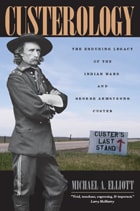
Custerology
The Enduring Legacy of the Indian Wars and George Armstrong CusterMichael A. Elliott
University of Chicago Press, 2007
It’s easy to understand why this tremendous defeat shocked the American public at the time. But with Custerology, Michael A. Elliott tackles the far more complicated question of why the battle still haunts the American imagination today. Weaving vivid historical accounts of Custer at Little Bighorn with contemporary commemorations that range from battle reenactments to the unfinished Crazy Horse memorial, Elliott reveals a Custer and a West whose legacies are still vigorously contested. He takes readers to each of the important places of Custer’s life, from his Civil War home in Michigan to the site of his famous demise, and introduces us to Native American activists, Park Service rangers, and devoted history buffs along the way. Elliott shows how Custer and the Indian Wars continue to be both a powerful symbol of America’s bloody past and a crucial key to understanding the nation’s multicultural present.
“[Elliott] is an approachable guide as he takes readers to battlefields where Custer fought American Indians . . . to the Michigan town of Monroe that Custer called home after he moved there at age 10 . . . to the Black Hills of South Dakota where Custer led an expedition that gave birth to a gold rush."—Steve Weinberg, Atlanta Journal-Constitution
“By ‘Custerology,’ Elliott means the historical interpretation and commemoration of Custer and the Indian Wars in which he fought not only by those who honor Custer but by those who celebrate the Native American resistance that defeated him. The purpose of this book is to show how Custer and the Little Bighorn can be and have been commemorated for such contradictory purposes.”—Library Journal
Customer-Based Collection Development
An OverviewKarl Bridges
American Library Association, 2014
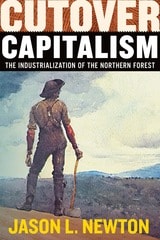
Cutover Capitalism
The Industrialization of the Northern ForestJason L. Newton
West Virginia University Press, 2024
2024 George Perkins Marsh Prize Runner-up
What happened to the loggers of America’s past when lumbermen moved west and south in the late nineteenth and early twentieth centuries? How did these communities continue to create value and meaning in these marginal lands? Cutover Capitalism: The Industrialization of the Northern Forest provides a new perspective on the process of industrialization in America through the study of rural workers in a cutover landscape.
Back when resources started running scarce, the environment of the forest and bodies of workers became the natural resources from which mills and landowners extracted. Bodies and cutover landscapes were mobilized in new ways to increase the scale and efficiency of production—a brutal process for workers, human and animal alike. In the Northern Forest, an industrial working class formed in relation to the unique ways that workers' bodies were used to produce value and in relation to the seasonal cycles of the forest environment.
Cutover Capitalism is an innovative historical study that combines methodological approaches from labor history, environmental history, and the new history of capitalism. The book tells a character-driven yet theoretically sophisticated story about what it was like to live through this process of industrialization.
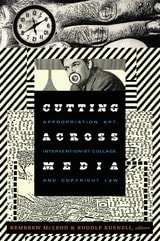
Cutting Across Media
Appropriation Art, Interventionist Collage, and Copyright LawKembrew McLeod and Rudolf Kuenzli, eds.
Duke University Press, 2011
Contributors. Craig Baldwin, David Banash, Marcus Boon, Jeff Chang, Joshua Clover, Lorraine Morales Cox, Lloyd Dunn, Philo T. Farnsworth, Pierre Joris, Douglas Kahn, Rudolf Kuenzli, Rob Latham, Jonathan Lethem, Carrie McLaren, Kembrew McLeod, Negativland, Davis Schneiderman, David Tetzlaff, Gábor Vályi, Warner Special Products, Eva Hemmungs Wirtén
Cutting Life Short
A Second Look at Life SentencesDan Fetsco
University of Wyoming Press, 2026
Cutting Life Short challenges the idea that people who commit murder or other serious crimes are incapable of rehabilitation. The book tracks the growing population of people serving life in Wyoming and the US and explores research that indicates that much of the public, including victims of violent crime, support second chances for people who are serving excessive sentences.
Just over 200,000 Americans are now serving life sentences—more than the entire US prison population in 1970—in a cruel and fiscally irresponsible system, even though many inmates have demonstrated sustained rehabilitation over decades. Through individual case studies of Wyoming inmates, ranging from those who deserve release to rare cases like Matthew Shepard’s killer, who should remain imprisoned, the book explores themes of punishment, redemption, and justice reform while examining issues like prosecutorial misconduct, three-strike penalties, and restorative justice programs. Cases include the stories of Darla Rouse (one of Wyoming’s few commutation recipients), Russell Harrison (who claims he had an early release deal), and James Koester (whose investigating detective became his advocate). Drawing from a decade of experience on the Wyoming parole board, where he witnessed hundreds of rehabilitated inmates denied release despite widespread support from corrections officials and sometimes even victims, author Daniel Fetsco advocates creating systematic review processes for lengthy sentences that remove elected officials from clemency decisions, alongside broader reforms like restoring voting rights for former felons and promoting responsible crime reporting over fear-mongering sensationalism.
This forward-looking book argues that most of the people sentenced to life in prison can be, and should have been, safely released into the community and offers recommendations to help alleviate the problems associated with life sentences in Wyoming and across the US criminal justice system. It is of significance to students, scholars, professionals, and the general public invested in law, criminal justice and social justice.
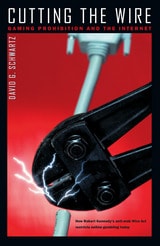
Cutting The Wire
Gaming Prohibition And The InternetDavid G. Schwartz
University of Nevada Press, 2005
The story of the Wire Act and how Robert Kennedy’s crusade against the Mob is creating a new generation of Internet gaming outlaws.
Gambling has been part of American life since long before the existence of the nation, but Americans have always been ambivalent about it. What David Schwartz calls the “pell-mell history of legal gaming in the United States” is a testament to our paradoxical desire both to gamble and to control gambling. It is in this context that Schwartz examines the history of the Wire Act, passed in 1961 as part of Attorney General Robert F. Kennedy’s crusade against organized crime and given new life in recent efforts to control Internet gambling. Cutting the Wire presents the story of how this law first developed, how it helped fight a war against organized crime, and how it is being used today. The Wire Act achieved new significance with the development of the Internet in the early 1990s and the growing popularity of online wagering through offshore facilities. The United States government has invoked the Wire Act in a vain effort to control gambling within its borders, at a time when online sports betting is soaring in popularity. By placing the Wire Act into the larger context of Americans’ continuing ambivalence about gambling, Schwartz has produced a provocative analysis of a national habit and the vexing predicaments that derive from it. In America today, 48 of 50 states currently permit some kind of legal gambling. Schwartz’s historical unraveling of the Wire Act exposes the illogic of an outdated law intended to stifle organized crime being used to set national policy on Internet gaming. Cutting the Wire carefully dissects two centuries of American attempts to balance public interest with the technology of gambling. Available in hardcover and paperback.
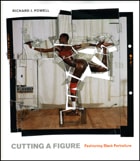
Cutting a Figure
Fashioning Black PortraitureRichard J. Powell
University of Chicago Press, 2009
Powell forcefully supports this argument with evidence drawn from a survey of nineteenth-century portraits, in-depth case studies of the postwar fashion model Donyale Luna and the contemporary portraitist Barkley L. Hendricks, and insightful analyses of images created since the late 1970s. Along the way, he discusses major artists—such as Frédéric Bazille, John Singer Sargent, James Van Der Zee, and David Hammons—alongside such overlooked producers of black visual culture as the Tonka and Nike corporations. Combining previously unpublished images with scrupulous archival research, Cutting a Figure illuminates the ideological nature of the genre and the centrality of race and cultural identity in understanding modern and contemporary portraiture.