Results by title
28167 books match the query 'History' and 1913 start with c
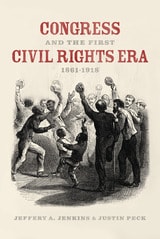
Congress and the First Civil Rights Era, 1861-1918
Jeffery A. Jenkins and Justin Peck
University of Chicago Press, 2021
The authors examine in detail how the Republican Party slowly withdrew its support for a meaningful civil rights agenda, as well as how Democrats and Republicans worked together to keep civil rights off the legislative agenda at various points. In doing so, Jenkins and Peck show how legal institutions can be used both to liberate and protect oppressed minorities and to assert the power of the white majority against those same minority groups.
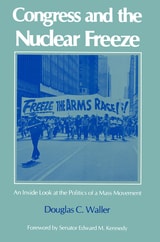
Congress and the Nuclear Freeze
An Inside Look at the Politics of a Mass MovementDouglas Waller
University of Massachusetts Press, 1987
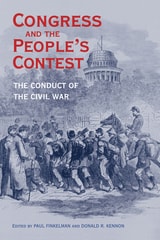
Congress and the People’s Contest
The Conduct of the Civil WarPaul Finkelman
Ohio University Press, 2018
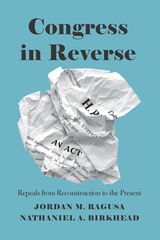
Congress in Reverse
Repeals from Reconstruction to the PresentJordan M. Ragusa and Nathaniel A. Birkhead
University of Chicago Press, 2020
Congress in Reverse is the first book to attempt to answer these questions. Jordan M. Ragusa and Nathaniel A. Birkhead examine when and why existing statutes are successfully “undone,” arguing that repeals are most common when the parties are united on the issue—which was not the case when it came to Obamacare for the Republican Party—and the majority party wins control of Congress after a long stint in the minority. By shifting focus from the making of laws to their un-making, Congress in Reverse opens up a new arena for studying legislative activity in Congress.
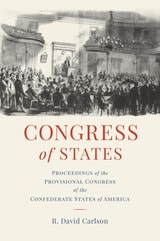
Congress of States
Proceedings of the Provisional Congress of the Confederate States of AmericaR. David Carlson
University of Alabama Press, 2023
A landmark publication of public reports that reveal the founding of the Confederate government
Past publications of the proceedings of the Confederate Congress have focused on the public sessions of the Regular Confederate States Congress that met in Richmond, Virginia from February 1862 to March 1865. Omitted were the formative early sessions of the Montgomery, Alabama and Richmond, Virginia Provisional Congresses of 1861 and 1862. In Congress of States, David Carlson reveals these critical early meetings.
To illuminate this pivot point in American and Southern history, Carlson has drawn on detailed and often verbatim minutes reported in Richmond, Montgomery, Charleston, New Orleans, Savannah, and Augusta newspapers, assembling here a unique set of transcriptions that reveal the birth of the Confederate government.
Congress of States provides an introduction to the Provisional Confederate Congress and the purpose of this work relative to the Southern Historical Society’s landmark 1923 publication “Proceedings of the Confederate Congress,” which detailed the 1862–1865 Regular Confederate Congress. He also includes a chronology outlining the major events of the secession crisis, annotated minutes for the Provisional Confederate Congress’s five sessions, appendices featuring the leadership and committees of the Provisional Congress, and fascinating examples of the proposed Confederate emblem and flags debated by the delegates.
A key set of primary sources that scholars, historians, librarians, and political scientists will value for years to come, Congress of States will also be essential reading for the general reader interested in American and Southern history, the Antebellum South, and the Civil War.
Congressional Realignment, 1925-1978
By Barbara Sinclair
University of Texas Press, 1982
Ronald Reagan's election in 1980 brought with it a major shift in the composition of the U.S. Congress for the first time in several decades. The subsequent introduction of an enormous amount of new legislation sparked debate among many political observers that a new coalition was being built in American politics and that a significant change in the issues on the agenda before Congress heralded a Republican realignment.
Barbara Sinclair's study is a major contribution to our understanding of realignment politics in the House of Representatives. It also provides important insight into the changes in American political life in the late twentieth century.
Congressional Realignment poses three basic, related questions: What are the sources of agenda change? What determines congressional voting alignments and alignment change? Under what conditions are the barriers to major policy change overcome? Sinclair's answers are impressive both in their scholarship and in the depth and intelligence of her insights.
Conifers of the New England–Acadian Forest
A Cultural HistorySteve Keating
University of Massachusetts Press, 2024
Why did white pine help spark the American Revolution? How did balsam aid the development of germ theory? What does hemlock have to do with making leather? In Conifers of the New England–Acadian Forest, microbiologist Steve Keating explores how conifers influenced the course of human history, writing in a style that is both scientific and accessible.
Keating’s study focuses on one of the most forested and wild ecoregions in North America, which extends into New York, New England, and Canada and includes Acadia National Park. Here, spruces, firs, and cedars of the northern boreal forest mix with hemlocks and pines of more temperate climates. This combination helps create the appearance, aroma, and ecology of the region, and the trees’ unique botanical traits have been ingeniously utilized by numerous peoples including the Iroquois, French explorers, beer brewers, and shipbuilders. Keating concludes with identification guides for the conifers and where they can be found in Acadia National Park.
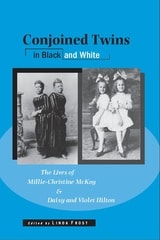
Conjoined Twins in Black and White
The Lives of Millie-Christine McKoy and Daisy and Violet HiltonEdited by Linda Frost
University of Wisconsin Press, 2009
Conjoined Twins in Black and White provides contemporary readers with the twins’ autobiographies, the first two “show histories” to be republished since their original appearance, a previously unpublished novella, and a nineteenth-century medical examination, each of which attempts to define these women and reveal the issues of race, gender, and the body prompted by the twins themselves. The McKoys, born slaves, were kidnapped and taken to Britain, where they worked as entertainers until they were reunited with their mother in an emotional chance encounter. The Hiltons, cast away by their horrified mother at birth, worked the carnival circuit as vaudeville performers until the WWII economy forced them to the burlesque stage. The hardships, along with the triumphs, experienced by these very different sister sets lend insight into our fascination with conjoined twins.
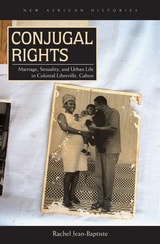
Conjugal Rights
Marriage, Sexuality, and Urban Life in Colonial Libreville, GabonRachel Jean-Baptiste
Ohio University Press, 2014
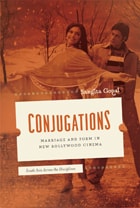
Conjugations
Marriage and Form in New Bollywood CinemaSangita Gopal
University of Chicago Press, 2011
Bollywood movies have been long known for their colorful song-and-dance numbers and knack for combining drama, comedy, action-adventure, and music. But when India entered the global marketplace in the early 1990s, its film industry transformed radically. Production and distribution of films became regulated, advertising and marketing created a largely middle-class audience, and films began to fit into genres like science fiction and horror. In this bold study of what she names New Bollywood, Sangita Gopal contends that the key to understanding these changes is to analyze films’ evolving treatment of romantic relationships.
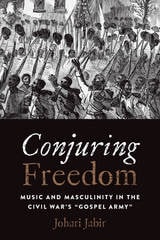
Conjuring Freedom
Music and Masculinity in the Civil War's “Gospel Army”Johari Jabir
The Ohio State University Press, 2017
Reflecting the structure of the ring shout—the counterclockwise song, dance, drum, and story in African American history and culture—Conjuring Freedom offers three new concepts to cultural studies in order to describe the practices, techniques, and implications of the troop’s performance: (1) Black Communal Conservatories, borrowing from Robert Farris Thompson’s “invisible academies” to describe the structural but spontaneous quality of black music-making, (2) Listening Hermeneutics, which accounts for the generative and material affects of sound on meaning-making, and (3) Sonic Politics, which points to the political implications of music’s use in contemporary representations of race and history.

Conjuring Hitler
How Britain and America Made the Third ReichGuido Giacomo Preparata
Pluto Press, 2005
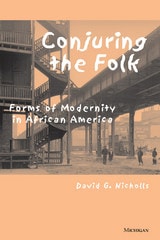
Conjuring the Folk
Forms of Modernity in African AmericaDavid G. Nicholls
University of Michigan Press, 2000
In a series of revisionary readings, Nicholls studies how the "folk" is shaped by the ideology of form. He examines the presence of a spectral "folk" in Toomer's modernist pastiche, Cane. He explores how Hurston presents folklore as a contemporary language of resistance in her ethnography, Mules and Men. In Claude McKay's naturalistic romance, Banana Bottom, Nicholls discovers the figuration of an alternative modernity in the heroine's recovery of her lost "folk" identity. He unearths the individualist ethos of Booker T. Washington in two novels by George Wylie Henderson. And he reveals how Richard Wright's photo-documentary history, 12 Million BlackVoices, places the "folk" in a Marxian narrative of modernization toward class-consciousness.
A provocative rereading of the cultural politics of the Harlem Renaissance, Conjuring the Folk offers a new way of understanding literary responses to migration, modernization, and the concept of the "folk" itself.
David G. Nicholls is a post-doctoral fellow in the Center for the Study of Race, Politics, and Culture, University of Chicago.
Connected by the Ear
The Media, Pedagogy, and Politics of the Romantic LectureSean Franzel
Northwestern University Press, 2013
In this innovative new study, Sean Franzel charts the concurrent emergence of German Romantic pedagogy, the modern research university, and modern visions of the politically engaged scholar. At the heart of the pedagogy of Immanuel Kant, Johann Gottlieb Fichte, K. P. Moritz, A. W. Schlegel, Adam Müller, and others was the lecture, with its ability to attract listeners and to model an ideal discursive community, reflecting an era of revolution, reform, and literary, philosophical, and scientific innovation.
Along with exploring the striking preoccupation of Romantic thinkers with the lecture and with its reverberations in print, Franzel argues that accounts of scholarly speech from this period have had a lasting impact on how the pedagogy, institutions, and medial manifestations of modern scholarship continue to be understood.
"Sean Franzel’s archaeology illuminates both the bourgeois public sphere and discourse network 1800 by showing the romantic lecture to be the key cultural form in a pivotal moment of German intellectual history, a history long obsessed with the mediation of oral discourse and written text."—John Durham Peters, author of Speaking into the Air

Connecting Alaskans
Telecommunications in Alaska from Telegraph to BroadbandHeather E. Hudson
University of Alaska Press, 2015
Connecting Alaskans tells the unique history of providing radio, television, phone, and Internet services to more than six hundred thousand square miles. It is a history of a place where military needs often trumped civilian ones, where ham radios offered better connections than telephone lines, and where television shows aired an entire day later than in the rest of the country.
Heather E. Hudson covers more than a century of successes while clearly explaining the connection problems still faced by remote communities today. Her comprehensive history is perfect for anyone interested in telecommunications technology and history, and she provides an important template for policy makers, rural communities, and developing countries struggling to develop their own twenty-first-century infrastructure.
Connecting Continents
Archaeology and History in the Indian Ocean WorldKrish Seetah
Ohio University Press, 2018
Winner, Society for American Archaeology Book Award
In recent decades, the vast and culturally diverse Indian Ocean region has increasingly attracted the attention of anthropologists, historians, political scientists, sociologists, and other researchers. Largely missing from this growing body of scholarship, however, are significant contributions by archaeologists and consciously interdisciplinary approaches to studying the region’s past and present.
Connecting Continents addresses two important issues: how best to promote collaborative research on the Indian Ocean world, and how to shape the research agenda for a region that has only recently begun to attract serious interest from historical archaeologists. The archaeologists, historians, and other scholars who have contributed to this volume tackle important topics such as the nature and dynamics of migration, colonization, and cultural syncretism that are central to understanding the human experience in the Indian Ocean basin.
This groundbreaking work also deepens our understanding of topics of increasing scholarly and popular interest, such as the ways in which people construct and understand their heritage and can make use of exciting new technologies like DNA and environmental analysis. Because it adopts such an explicitly comparative approach to the Indian Ocean, Connecting Continents provides a compelling model for multidisciplinary approaches to studying other parts of the globe.
Contributors: Richard B. Allen, Edward A. Alpers, Atholl Anderson, Nicole Boivin, Diego Calaon, Aaron Camens, Saša Čaval, Geoffrey Clark, Alison Crowther, Corinne Forest, Simon Haberle, Diana Heise, Mark Horton, Paul Lane, Martin Mhando, and Alistair Patterson.
Connecting the West
Historic Railroad Stops and Stage Stations in Elko County, NevadaShawn Hall
University of Nevada Press, 2002
Shawn Hall's immensely popular guidebooks to Nevada ghost towns have become essential resources for backcountry explorers and scholars alike. Now Hall returns to Elko County to survey the county's railroad and stage stations, as well as other sites not included in his earlier survey of this colorful section of the state. As in his earlier volumes, Hall includes a history of each site he lists, along with period and contemporary photographs, directions for locating the sites, and an assessment of their present condition. His historical accounts, based on a wide range of primary and secondary sources, are both scholarly and engaging, rich in anecdotes and personalities, and in the fascinating minutia of history often ignored by more academic writers. Shawn Hall's dedication to documenting Nevada's thousands of historic sites has enriched our knowledge of the state's relatively brief but very eventful past. Connecting the West is a worthy addition to Hall's remarkable efforts to preserve the state's history.

Connecting with the Enemy
A Century of Palestinian-Israeli Joint NonviolenceBy Sheila H. Katz
University of Texas Press, 2016
Thousands of ordinary people in Israel and Palestine have engaged in a dazzling array of daring and visionary joint nonviolent initiatives for more than a century. They have endured despite condemnation by their own societies, repetitive failures of diplomacy, harsh inequalities, and endemic cycles of violence.
Connecting with the Enemy presents the first comprehensive history of unprecedented grassroots efforts to forge nonviolent alternatives to the lethal collision of the two national movements. Bringing to light the work of over five hundred groups, Sheila H. Katz describes how Arabs and Jews, children and elders, artists and activists, educators and students, garage mechanics and physicists, and lawyers and prisoners have spoken truth to power, protected the environment, demonstrated peacefully, mourned together, stood in resistance and solidarity, and advocated for justice and security. She also critiques and assesses the significance of their work and explores why these good-will efforts have not yet managed to end the conflict or occupation. This previously untold story of Palestinian-Israeli joint nonviolence will challenge the mainstream narratives of terror and despair, monsters and heroes, that help to perpetuate the conflict. It will also inspire and encourage anyone grappling with social change, peace and war, oppression and inequality, and grassroots activism anywhere in the world.
Connections after Colonialism
Europe and Latin America in the 1820sEdited by Mathew Brown and Gabriel Pacquette
University of Alabama Press, 2013
Contributing to the historiography of transnational and global transmission of ideas, Connections after Colonialism examines relations between Europe and Latin America during the tumultuous 1820s.
In the Atlantic World, the 1820s was a decade marked by the rupture of colonial relations, the independence of Latin America, and the ever-widening chasm between the Old World and the New. Connections after Colonialism, edited by Matthew Brown and Gabriel Paquette, builds upon recent advances in the history of colonialism and imperialism by studying former colonies and metropoles through the same analytical lens, as part of an attempt to understand the complex connections—political, economic, intellectual, and cultural—between Europe and Latin America that survived the demise of empire.
Historians are increasingly aware of the persistence of robust links between Europe and the new Latin American nations. This book focuses on connections both during the events culminating with independence and in subsequent years, a period strangely neglected in European and Latin American scholarship. Bringing together distinguished historians of both Europe and America, the volume reveals a new cast of characters and relationships including unrepentant American monarchists; compromise-seeking liberals in Lisbon and Madrid who envisioned transatlantic federations; British merchants in the River Plate who saw opportunity where others saw risk; public moralists whose audiences spanned from Paris to Santiago de Chile; and plantation owners in eastern Cuba who feared that slave rebellions elsewhere in the Caribbean would spread to their island.
Contributors
Matthew Brown / Will Fowler / Josep M. Fradera / Carrie Gibson / Brian Hamnett / Maurizio Isabella / Iona Macintyre / Scarlett O’Phelan Godoy / Gabriel Paquette / David Rock / Christopher Schmidt-Nowara / Jay Sexton / Reuben Zahler
Connexions
Histories of Race and Sex in North AmericaEdited by Jennifer Brier, Jim Downs, and Jennifer L. Morgan
University of Illinois Press, 2016
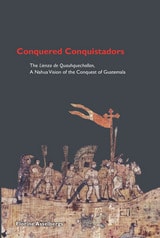
Conquered Conquistadors
The <i>Lienzo de Quauhquechollan,</i> A Nahua Vision of the Conquest of GuatemalaFlorine Asselbergs
University Press of Colorado, 2004
The people of the Nahua community of Quauhquechollan (present-day San Martín Huaquechula), in central Mexico, allied with Cortés during the Spanish-Aztec War and were assigned to the Spanish conquistador Jorge de Alvarado. De Alvarado and his allies, including the Quauhquecholteca and thousands of other indigenous warriors, set off for Guatemala in 1527 to start a campaign against the Maya. The few Quauhquecholteca who lived to tell the story recorded their travels and eventual victory on the huge cloth map, the Lienzo de Quauhquechollan.
Conquered Conquistadors, published in a European edition in 2004, overturned conventional views of the European conquest of indigenous cultures. American historians and anthropologists will relish this new edition and Asselbergs's astute analysis, which includes context, interpretation, and comparison with other pictographic accounts of the "Spanish" conquest. This heavily illustrated edition includes an insert reproduction of the Lienzo de Quauhquechollan.

Conquering Heroines
How Women Fought Sex Bias at Michigan and Paved the Way for Title IXSara Fitzgerald
University of Michigan Press, 2020
Galvanized by their shared experiences with sex discrimination, the Ann Arbor women organized a group called FOCUS on Equal Employment for Women, led by activist Jean Ledwith King. Working with Bernice Sandler of the Women’s Equity Action League, they developed a strategy to unleash the power of another powerful institution—the federal government—to demand change at U-M and, they hoped, across the world of higher education. Prompted by a complaint filed by FOCUS, the U.S. Department of Health, Education, and Welfare soon documented egregious examples of discrimination in Michigan’s practices toward women and threatened to withhold millions of dollars in contracts unless the school adopted remedies. Among the hundreds of similar complaints filed against U.S. colleges in 1970–1971, the one brought by the Michigan women achieved the breakthrough that provided the historic template for settlements with other institutions.
Drawing on oral histories from archives as well as new interviews with living participants, Conquering Heroines chronicles this pivotal period in the histories of the University of Michigan and the women’s movement. An incredible story of grassroots activism and courageous women, the book highlights the kind of relentless effort that has helped make inclusivity an ongoing goal at U-M.
Conquering the American Wilderness
The Triumph of European Warfare in the Colonial NortheastGuy Chet
University of Massachusetts Press, 2003
A study of military tactics and strategy before the War of Independence, this book reexamines the conquest of the North American wilderness and its native peoples by colonial settlers. Historians have long believed that the peculiar conditions of the New World, coupled with the success of Indians tactics, forced the colonists to abandon traditional European methods of warfare and to develop a new “American” style of combat. By combining firearms with guerrilla-like native tactics, colonial commanders were able not only to subdue their Indian adversaries but eventually to prevail against more conventionally trained British forces during the American Revolution. Yet upon closer scrutiny, this common understanding of early American warfare turns out to be more myth than reality.
As Guy Chet reveals, clashes between colonial and Indian forces during the seventeenth and eighteenth centuries did not lead to a reevaluation and transformation of conventional military doctrine. On the contrary, the poor performance of the settlers during King Philip's War (1675–76) and King William's War (1689–1697) prompted colonial magistrates to address the shortcomings of their military forces through a greater reliance on British troops and imperial administrators. Thus, as the eighteenth century wore on, growing military success in the New England colonies reflected an increasing degree of British planning, administration, participation, and command. The colonies' military and political leadership, Chet argues, never rejected the time-tested principles of European warfare, and even during the American War of Independence, the republic's military leadership looked to Europe for guidance in the art of combat.
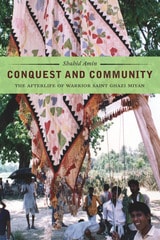
Conquest and Community
The Afterlife of Warrior Saint Ghazi MiyanShahid Amin
University of Chicago Press, 2016
Conquest and Community is Shahid Amin's answer. Covering more than eight hundred years of history, the book centers on the enduringly popular saint Ghazi Miyan, a youthful soldier of Islam whose shrines are found all over India. Amin details the warrior saint’s legendary exploits, then tracks the many ways he has been commemorated in the centuries since. The intriguing stories, ballads, and proverbs that grew up around Ghazi Miyan were, Amin shows, a way of domesticating the conquest—recognizing past conflicts and differences but nevertheless bringing diverse groups together into a community of devotees. What seems at first glance to be the story of one mythical figure becomes an allegory for the history of Hindu-Muslim relations over an astonishingly long period of time, and a timely contribution to current political and historical debates.
Conquest
Sexual Violence and American Indian GenocideAndrea Smith
Duke University Press, 2005
Conquistador in Chains
Cabeza de Vaca and the Indians of the AmericasDavid A. Howard
University of Alabama Press, 1996
Unlike many Spanish conquistadores who brought to the Americas a wave of disease, destruction, and oppression, Cabeza de Vaca’s stated intention was to pursue a different kind of conquest—one that would be just and humane, true to Spanish religion and law, and one that safeguarded liberty and justice for the indigenous peoples of the New World.
Bringing to South America skills and experiences earned with native peoples in North America, however, Cabeza de Vaca both failed to understand the indigenous peoples in the south and alienated many Spanish settlers in the Rio de la Plata Province, whose economic interests he threatened. Eventually the Spanish colonists formed a conspiracy to remove him from power and return him to Spain in chains.
That Cabeza de Vaca was overthrown is not surprising. His ideas and policies opposed the self-interest of most of the first Spaniards who had come to America, although he inspired the support of many even after his humiliating return to Spain. In Conquistador in Spain, historian David Howard provides a fascinating account of the rise and fall of this colonial idealist.

Conscience and Memory
Meditations in a Museum of the HolocaustHarold Kaplan
University of Chicago Press, 1994
Kaplan simulates the response to a long visit to the new Holocaust museum in Washington, D.C., which, crucially for Kaplan, is sited in direct view of the Jefferson and Lincoln monuments, powerful symbols of humanist democracy. He insists the Holocaust be viewed not only in terms of personal ethics but modern political ethics as well: for Kaplan the affirmative legacy of the Holocaust is its focus on the dangers of nationalism, racism, and all forms of separatist group identities. It challenges the historicism, cults of power, and scientistic politics of modernity. And it challenges the moral passivity and relativism of mass politics in Western and Eastern societies.
The opening of the Holocaust museum has sparked a debate that reflects a larger debate over the Holocaust's "meaning," its translatability for ordinary understanding. Some deny any possible response except that of overwhelming grief and horror. For others, the "lesson" of the Holocaust implies, in the words of Robert Nozick, that "mankind has fallen. . . . Humanity has lost its claim to continue." The moral life and political institutions will remain endlessly tormented by the Holocaust. That, Kaplan tells us, is the ultimate content of its "meaning," and is what makes the discussion of "meaning" much more than a mourner's symposium.
The Museum itself, according to Kaplan, has become an impressive memorial to the principle of humanism, instructing the collective memory of this democracy and that of nations everywhere which aspire to civil existence. Out of its awful darkness the Holocaust throws the light of conscience for those capable of receiving it.
Conscripts of Modernity
The Tragedy of Colonial EnlightenmentDavid Scott
Duke University Press, 2004
Scott explores the political and epistemological implications of how the past is conceived in relation to the present and future through a reconsideration of C. L. R. James’s masterpiece of anticolonial history, The Black Jacobins, first published in 1938. In that book, James told the story of Toussaint L’Ouverture and the making of the Haitian Revolution as one of romantic vindication. In the second edition, published in the United States in 1963, James inserted new material suggesting that that story might usefully be told as tragedy. Scott uses James’s recasting of The Black Jacobins to compare the relative yields of romance and tragedy. In an epilogue, he juxtaposes James’s thinking about tragedy, history, and revolution with Hannah Arendt’s in On Revolution. He contrasts their uses of tragedy as a means of situating the past in relation to the present in order to derive a politics for a possible future.
Consensual Policy-making in the Nordic World
Peter Munk Christiansen
University of Wisconsin Press, 2023
The preconditions for these policies are strong civil societies, that is, strong capacities for collective mobilization and collective action among groups, relatively strong unitary states, and high levels of generalized trust. The institutional apparatus of these consensual policies has been labeled corporatism. Scandinavian corporatism has implied consent to a norm of affected interests. Groups that are supposedly affected by state policies have access to the processes leading up to political decision-making and are involved in the implementation of policies. This access often has public commissions or committees charged with preparing political decisions and delivering advice, as well as policy implementation committees.
Corporatist and consensual policymaking come at a price. The exchange between interest groups (in pursuit of policy influence) and state actors (in pursuit of information and political support from groups) tends to be time-consuming and confined to solutions that are accepted by all actors. Corporatist policies are consequently not very conducive to more radical reforms. After the heyday of corporatist policymaking in the 1970s, all the Scandinavian countries have loosened their corporatist structures to pave the way for reforms.
Consequences of Peace
The Versailles Settlement - Aftermath and LegacyAlan Sharp
Haus Publishing, 2010

Conservation Fallout
Nuclear Protest At Diablo CanyonJohn Wills
University of Nevada Press, 2012
An unprecedented look at nuclear politics in California Vehement, widespread opposition accompanied the rise of the U.S. nuclear industry during the 1960s and 1970s. In Conservation Fallout, John Wills examines one of the most controversial atomic projects of the period: Pacific Gas and Electric Company’s decision to build its premier nuclear power plant at Diablo Canyon, a relatively unsettled, biologically rich, and especially scenic part of the central California coastline. Two competing visions of California emerged while the plant underwent construction. Environmentalists used Diablo as a symbol of impending ecological doomsday, while PG&E envisioned it as the model that would usher in a new age of energy production. The Sierra Club almost disbanded over whether to condone or protest the reactor project. Divisions also emerged in the local community as residents and politicians, enticed by the promise of cheap electricity and lucrative tax revenues, found themselves pitted against others who feared the dangers of radiation in their own backyards. The controversy intensified when a fault line was discovered within three miles of the plant. Grassroots groups The Mothers for Peace, a local women’s group, and The Abalone Alliance, a statewide nonviolent direct-action organization, did their utmost to stop the plant from going on-line. In 1979, an Alliance rally in San Francisco attracted 25,000 people, while 40,000 others gathered in San Luis Obispo. During a two-week-long blockade of the Diablo plant in 1981, over 1,900 activists were jailed, the largest arrest in the history of American antinuclear protest. Despite its significance in the history of twentieth-century environmental issues and the continuing debate over the safety of nuclear power, the full story of Diablo Canyon has not been told until now. Wills bases his account on extensive interviews with the individuals involved, as well as on the archives of the Sierra Club, several protest organizations, public agencies, PG&E, and others. The result is an engaging, balanced examination of nuclear politics in California. By focusing on one of the last wild places in the state and its transformation into a major technological center, and on the evolution and strategies of the little-studied grassroots protest groups determined to protect California and resist the spread of nuclear technology, Wills has made a major contribution to our understanding of America’s nuclear age.
Conservatism and Southern Intellectuals, 1789-1861
Liberty, Tradition, and the Good SocietyAdam L. Tate
University of Missouri Press, 2005
Conservative Counterrevolution
Challenging Liberalism in 1950s MilwaukeeTula A. Connell
University of Illinois Press, 2016
Conservative Ideology in the Making
Ivan Zoltan Denes
Central European University Press, 2009
Conservative Innovators
How States Are Challenging Federal PowerBen Merriman
University of Chicago Press, 2019
Conservative Innovators traces the activity of far-right conservatives in Kansas who have in the past decade used the powers of state-level offices to fight federal regulation on a range of topics from gun control to voting processes to Medicaid. Telling their story, Ben Merriman then expands the scope of the book to look at the tactics used by conservative state governments across the country to resist federal regulations, including coordinated lawsuits by state attorneys general, refusals to accept federal funds and spending mandates, and the creation of programs designed to restrict voting rights. Through this combination of state-initiated lawsuits and new administrative practices, these state officials weakened or halted major parts of the Obama Administration’s healthcare, environmental protection, and immigration agendas and eroded federal voting rights protections. Conservative Innovators argues that American federalism is entering a new, conflict-ridden era that will make state governments more important in American life than they have been at any time in the past century.

Conservative Thought in Twentieth Century Latin America
The Ideas of Laureano GomezJames D. Henderson
Ohio University Press, 1988
Laureano Gómez was president of Colombia in the early 1950s until overthrown by a military coup. He was also, for some fifty years, the leading exponent of Latin American conservatism, a political philosophy with roots in both nineteenth–century politics and religion. Focusing on Gómez, and other prominent conservative politicians, Henderson traces the evolution of Latin American conservatism and demonstrates the scope of its influence throughout the continent.
While much has been written about particular Marxist movements and right–wing regimes in contemporary Latin America, little attention has been devoted, in recent years, to the more moderate political institutions and individuals which dominate twentieth–century Latin America. This first account of Latin American conservatism should be of interest to all students of the history and politics of the region.
Conserving Culture
A NEW DISCOURSE ON HERITAGEEdited by Mary Hufford
University of Illinois Press, 1994
heritage protection in the United States and how it has been implemented in
specific cases. Contributors challenge the division of heritage into nature,
the built environment, and culture. They describe cultural conservation as an
integrated process for resource planning and recommend supplanting the current
prescriptive approach with one that is more responsive to grass-roots cultural
concerns.
Consolation to Stagirius
Robert G.T. St. John Chrysostom
Catholic University of America Press, 2025

Console and Classify
The French Psychiatric Profession in the Nineteenth CenturyJan E. Goldstein
University of Chicago Press, 2001
"Goldstein has raised our understanding of the politics of psychiatric professionalization on to a new plane."—Roy Porter, Times Higher Education Supplement
"[A]n historiographical tour de force, quite simply the most insightful work on the subject in English or any other language. . . . [A] work of distinctive originality. . . . It is written with lucidity and elegance, even a certain confident scholarly panache, that make it a pleasure to read."—Toby Gelfand, Social History
"Exhaustively researched, elegantly written, and persuasively argued, Console and Classify is an excellent example of the . . . sociologically informed intellectual history, stimulated by Kuhn and Foucault."—Robert Alun Jones, American Journal of Sociology

Conspiracies in Broad Daylight?
Conspiracism, Fascism, and the Radical RightMarco Bresciani
Central European University Press, 2027
Conspiracies in Broad Daylight?
Conspiracism, Fascism, and the Radical RightMarco Bresciani
Central European University Press, 2027
Conspiracies of Conspiracies
How Delusions Have Overrun AmericaThomas Milan Konda
University of Chicago Press, 2019
In this sweeping book, Thomas Milan Konda traces the country’s obsession with conspiratorial thought from the early days of the republic to our own anxious moment. Conspiracies of Conspiracies details centuries of sinister speculations—from antisemitism and anti-Catholicism to UFOs and reptilian humanoids—and their often incendiary outcomes. Rather than simply rehashing the surface eccentricities of such theories, Konda draws from his unprecedented assemblage of conspiratorial writing to crack open the mindsets that lead people toward these self-sealing worlds of denial. What is distinctively American about these theories, he argues, is not simply our country’s homegrown obsession with them but their ongoing prevalence and virulence. Konda proves that conspiracy theories are no harmless sideshow. They are instead the dark and secret heart of American political history—one that is poisoning the bloodstream of an increasingly sick body politic.
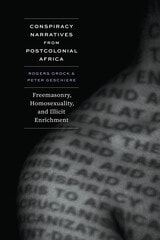
Conspiracy Narratives from Postcolonial Africa
Freemasonry, Homosexuality, and Illicit EnrichmentRogers Orock and Peter Geschiere
University of Chicago Press, 2024
In this book, anthropologists Rogers Orock and Peter Geschiere examine the moral panic over a perceived rise in homosexuality that engulfed Cameroon and Gabon beginning in the early twenty-first century. As they uncover the origins of the conspiratorial narratives that fed this obsession, they argue that the public’s fears were grounded in historically situated assumptions about the entanglement of same-sex practices, Freemasonry, and illicit enrichment.
This specific panic in postcolonial Central Africa fixated on high-ranking Masonic figures thought to lure younger men into sex in exchange for professional advancement. The authors’ thorough account shows how attacks on elites as homosexual predators corrupting the nation became a powerful outlet for mounting populist anger against the excesses and corruption of the national regimes. Unraveling these tensions, Orock and Geschiere present a genealogy of Freemasonry, taking readers from London through Paris to francophone Africa and revealing along the way how the colonial past shapes present-day anxieties linking same-sex practices to enrichment.
Conspiracy Narratives in Roman History
By Victoria Emma Pagán
University of Texas Press, 2005
Conspiracy is a thread that runs throughout the tapestry of Roman history. From the earliest days of the Republic to the waning of the Empire, conspiracies and intrigues created shadow worlds that undermined the openness of Rome's representational government. To expose these dark corners and restore a sense of order and safety, Roman historians frequently wrote about famous conspiracies and about how their secret plots were detected and the perpetrators punished. These accounts reassured readers that the conspiracy was a rare exception that would not happen again—if everyone remained vigilant.
In this first book-length treatment of conspiracy in Roman history, Victoria Pagán examines the narrative strategies that five prominent historians used to disclose events that had been deliberately shrouded in secrecy and silence. She compares how Sallust, Livy, and Tacitus constructed their accounts of the betrayed Catilinarian, Bacchanalian, and Pisonian conspiracies. Her analysis reveals how a historical account of a secret event depends upon the transmittal of sensitive information from a private setting to the public sphere—and why women and slaves often proved to be ideal transmitters of secrets. Pagán then turns to Josephus's and Appian's accounts of the assassinations of Caligula and Julius Caesar to explore how the two historians maintained suspense throughout their narratives, despite readers' prior knowledge of the outcomes.

Conspiracy Theories
Secrecy and Power in American CultureMark Fenster
University of Minnesota Press, 2001
Conspiracy Theories
Secrecy and Power in American CultureMark Fenster
University of Minnesota Press, 2008
In this new edition of the landmark work, and the first in-depth look at the conspiracy communities that formed to debunk the 9/11 Commission Report, Fenster shows that conspiracy theories play an important role in U.S. democracy. Examining how and why they circulate through mass culture, he contends, helps us better understand society as a whole. Ranging from The Da Vinci Codeto the intellectual history of Richard Hofstadter, he argues that dismissing conspiracy theories as pathological or marginal flattens contemporary politics and culture because they are—contrary to popular portrayal—an intense articulation of populism and, at their essence, are strident calls for a better, more transparent government. Fenster has demonstrated once again that the people who claim someone’s after us are, at least, worth hearing.
Conspiracy Theory in America
By Lance deHaven-Smith
University of Texas Press, 2013
Ever since the Warren Commission concluded that a lone gunman assassinated President John F. Kennedy, people who doubt that finding have been widely dismissed as conspiracy theorists, despite credible evidence that right-wing elements in the CIA, FBI, and Secret Service—and possibly even senior government officials—were also involved. Why has suspicion of criminal wrongdoing at the highest levels of government been rejected out-of-hand as paranoid thinking akin to superstition?
Conspiracy Theory in America investigates how the Founders’ hard-nosed realism about the likelihood of elite political misconduct—articulated in the Declaration of Independence—has been replaced by today’s blanket condemnation of conspiracy beliefs as ludicrous by definition. Lance deHaven-Smith reveals that the term “conspiracy theory” entered the American lexicon of political speech to deflect criticism of the Warren Commission and traces it back to a CIA propaganda campaign to discredit doubters of the commission’s report. He asks tough questions and connects the dots among five decades’ worth of suspicious events, including the assassinations of John and Robert Kennedy, the attempted assassinations of George Wallace and Ronald Reagan, the crimes of Watergate, the Iran-Contra arms-for-hostages deal, the disputed presidential elections of 2000 and 2004, the major defense failure of 9/11, and the subsequent anthrax letter attacks.
Sure to spark intense debate about the truthfulness and trustworthiness of our government, Conspiracy Theory in America offers a powerful reminder that a suspicious, even radically suspicious, attitude toward government is crucial to maintaining our democracy.
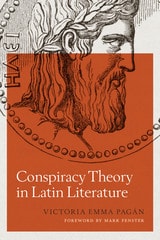
Conspiracy Theory in Latin Literature
By Victoria Emma Pagán
University of Texas Press, 2012
Conspiracy theory as a theoretical framework has emerged only in the last twenty years; commentators are finding it a productive way to explain the actions and thoughts of individuals and societies. In this compelling exploration of Latin literature, Pagán uses conspiracy theory to illuminate the ways that elite Romans invoked conspiracy as they navigated the hierarchies, divisions, and inequalities in their society. By seeming to uncover conspiracy everywhere, Romans could find the need to crush slave revolts, punish rivals with death or exile, dismiss women, denigrate foreigners, or view their emperors with deep suspicion. Expanding on her earlier Conspiracy Narratives in Roman History, Pagán here interprets the works of poets, satirists, historians, and orators—Juvenal, Tacitus, Suetonius, Terence, and Cicero, among others—to reveal how each writer gave voice to fictional or real actors who were engaged in intrigue and motivated by a calculating worldview.
Delving into multiple genres, Pagán offers a powerful critique of how conspiracy and conspiracy theory can take hold and thrive when rumor, fear, and secrecy become routine methods of interpreting (and often distorting) past and current events. In Roman society, where knowledge about others was often lacking and stereotypes dominated, conspiracy theory explained how the world worked. The persistence of conspiracy theory, from antiquity to the present day, attests to its potency as a mechanism for confronting the frailties of the human condition.

Conspiring Toward Utopia
Jersey Homesteads and the Jewish New DealDaniel S. Palmer
Rutgers University Press, 2027
During the 1930s, the United States government founded the Jersey Homesteads community (now known as Roosevelt, New Jersey) to help a group of pioneering Jewish immigrants create a new and ambitious cooperative experiment. Two hundred urban garment worker families moved from New York City to rural New Jersey to develop an intentional community with a focus and reliance upon both agriculture and craft. The community worked to unite the Jewish cooperative agricultural movement with the New Deal priorities of back-to-the-land rural resettlement. Notably, the town also embraced modernist aesthetics through homes designed by Louis Kahn and Alfred Kastner, and a public mural by Ben Shahn depicting the community’s creation.
This book tells the inspiring yet under-appreciated history of the town’s establishment, revealing its historical utopian commune precursors and detailing how such an unconventional project could only have been possible at its precise moment because of President Franklin D. Roosevelt’s progressive New Deal government support. The Jersey Homesteads project brought together the forces of community, identity, and art as a unified force for betterment in the brave new world of New Deal America. It is a story about a specific time and place with significant lessons for our understanding of American modernism and Jewish identity during the 1930s and beyond.
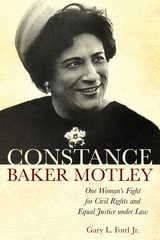
Constance Baker Motley
One Woman's Fight for Civil Rights and Equal Justice under LawGary L. Ford Jr.
University of Alabama Press, 2017
The story of NAACP’s sole female attorney. She shaped civil rights history as lead strategist and litigator from 1946–1964, arguing landmark desegregation cases and defending Martin Luther King Jr. and countless freedom fighters.
Constance Baker Motley was an African American woman; the daughter of immigrants from Nevis, British West Indies; a wife; and a mother who became a pioneer and trailblazer in the legal profession. She broke down barriers, overcame gender constraints, and operated outside the boundaries placed on black women by society and the civil rights movement. In Constance Baker Motley: One Woman’s Fight for Civil Rights and Equal Justice under Law, Gary L. Ford Jr. explores the key role Motley played in the legal fight to desegregate public schools as well as colleges, universities, housing, transportation, lunch counters, museums, libraries, parks, and other public accommodations.
The only female attorney at the NAACP Legal Defense and Educational Fund, Inc., Motley was also the only woman who argued desegregation cases in court during much of the civil rights movement. From 1946 through 1964, she was a key litigator and legal strategist for landmark civil rights cases including the Montgomery Bus Boycott and represented Martin Luther King Jr. as well as other protesters arrested and jailed as a result of their participation in sit-ins, marches, and freedom rides.
Motley was a leader who exhibited a leadership style that reflected her personality traits, skills, and strengths. She was a visionary who formed alliances and inspired local counsel to work with her to achieve the goals of the civil rights movement. As a leader and agent of change, she was committed to the cause of justice and she performed important work in the trenches in the South and behind the scene in courts that helped make the civil rights movement successful.
"Highly recommended."
—CHOICE