Results by title
8113 books match the query 'Literary Criticism' and 522 start with c
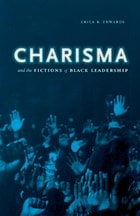
Charisma and the Fictions of Black Leadership
Erica R. Edwards
University of Minnesota Press, 2012
Social and political change is impossible in the absence of gifted male charismatic leadership—this is the fiction that shaped African American culture throughout the twentieth century. If we understand this, Erica R. Edwards tells us, we will better appreciate the dramatic variations within both the modern black freedom struggle and the black literary tradition.
By considering leaders such as Marcus Garvey, Martin Luther King Jr., Malcolm X, and Barack Obama as both historical personages and narrative inventions of contemporary American culture, Edwards brings to the study of black politics the tools of intertextual narrative analysis as well as deconstruction and close reading. Examining a number of literary restagings of black leadership in African American fiction by W. E. B. Du Bois, George Schuyler, Zora Neale Hurston, William Melvin Kelley, Paul Beatty, and Toni Morrison, Edwards demonstrates how African American literature has contested charisma as a structuring fiction of modern black politics.
Though recent scholarship has challenged top-down accounts of historical change, the presumption that history is made by gifted men continues to hold sway in American letters and life. This may be, Edwards shows us, because while charisma is a transformative historical phenomenon, it carries an even stronger seductive narrative power that obscures the people and methods that have created social and political shifts.
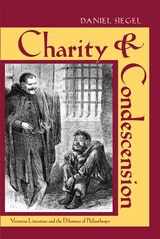
Charity and Condescension
Victorian Literature and the Dilemmas of PhilanthropyDaniel Siegel
Ohio University Press, 2012
Charity and Condescension explores how condescension, a traditional English virtue, went sour in the nineteenth century, and considers how the failure of condescension influenced Victorian efforts to reform philanthropy and to construct new narrative models of social conciliation. In the literary work of authors like Dickens, Eliot, and Tennyson, and in the writing of reformers like Octavia Hill and Samuel Barnett, condescension—once a sign of the power and value of charity—became an emblem of charity’s limitations.
This book argues that, despite Victorian charity’s reputation for idealistic self-assurance, it frequently doubted its own operations and was driven by creative self-critique. Through sophisticated and original close readings of important Victorian texts, Daniel Siegel shows how these important ideas developed even as England struggled to deal with its growing underclass and an expanding notion of the state’s responsibility to its poor.
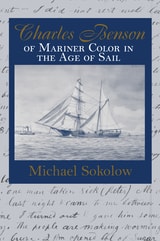
Charles Benson
Mariner of Color in the Age of SailMichael Sokolow
University of Massachusetts Press, 2009
In this volume, Michael Sokolow uncovers the inner world of this remarkable individual. Raised in a small town in Massachusetts, Benson was the great-great-grandson of slaves, the great-grandson of a rare eighteenth-century intermarriage between a black man and a white woman, and the grandson of a veteran of the American Revolution. His own life had been marked by economic struggle, marital conflict, and the social ambiguities of mixed race heritage.
In his personal writings, Benson reflected on both the man he was and the man he wanted to be. Living in a culture that prized "self-made" individuals, he sought to forge his own identity even as he labored under strictures that severely limited opportunities for blacks. From his youth in rural Middlesex County, Massachusetts, to his subsequent adult life in the bustling port city of Salem, Benson measured himself against the mores of white, middle-class America. Undeterred by early failures in both marriage and finance, he held fast to his personal vision and became a respectable husband, provider, worker, and member of the black community.
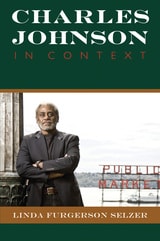
Charles Johnson in Context
Linda Furgerson Selzer
University of Massachusetts Press, 2009
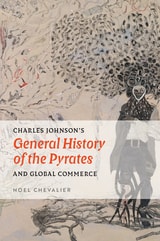
Charles Johnson's "General History of the Pyrates" and Global Commerce
Noel Chevalier
Bucknell University Press, 2025
This study explores how General History of the Pyrates was at the heart of early eighteenth-century British debates about commerce, colonialism, and law. Examining how pirates are depicted as both monsters and Great Men, Noel Chevalier untangles the contradictions within a Britain emerging as a colonial superpower, where ruthlessness and ambition were both feared and praised. Traveling the high seas to plunder treasure from foreign lands, pirates were not so different from the British capitalists who built fortunes from resource extraction, the plantation economy, and the transatlantic slave trade. Connecting the work to later books like Gulliver’s Travels and The Beggar’s Opera that satirized the era and its power-hungry prime minister Robert Walpole, Chevalier shows how the pirate became an iconic figure in 1720s Britain, a time of cold-hearted capitalism and rapacious colonial expansion.
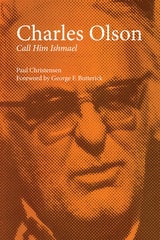
Charles Olson
Call Him IshmaelBy Paul Christensen
University of Texas Press, 1979
Charles Olson was an important force behind the raucous, explicit, jaunty style of much of twentieth-century poetry in America. This study makes a major contribution to our understanding of his life and work.
Paul Christensen draws upon a wide variety of source materials—from letters, unpublished essays, and fragments and sketches from the Olson Archives to the full range of Olson's published prose and poetry. Under Christensen's critical examination, Olson emerges as a stunning theorist and poet, whose erratic and often unfinished writings obscured his provocative intellect and the coherence of his perspective on the arts.
Soon after World War II, Olson emerged as one of America's leading poets with his revolutionary document on poetics, "Projective Verse," and his now-classic poem, "The Kingfishers," both of which declared a new set of techniques for verse composition. Throughout the 1950s Olson wrote many polemical essays on literature, history, aesthetics, and philosophy that outlined a new stance to experience he called objectism.
A firm advocate of spontaneous self-expression in the arts, Olson regarded the poet's return to an intense declaration of individuality as a force to combat the decade's insistence on conformity. Throughout his life Olson fought against the depersonalization of the artist in the modern age; his resources, raw verve and unedited tumultuous lyricism, were weapons he used against generalized life and identity.
This volume begins with an overview of Olson's life from his early years as a student at Harvard through his short-lived political career, his rectorship at Black Mountain College, and his retirement to Gloucester to finish writing the Maximus poems. Christensen provides a systematic review of Olson's prose works, including a close examination of his brilliant monograph on Melville, Call Me Ishmael.
Considerable attention is devoted to Olson's theory of projectivism, the themes and techniques of his short poems, and the strategies and content of his major work, the Maximus series. In addition, there is a critical survey of the works of Robert Creeley, Robert Duncan, Denise Levertov, Paul Blackburn, and other poets who show Olson's influence in their own innovative, self-exploratory poetry.
Charlotte Brontë's World of Death
By Robert Keefe
University of Texas Press, 1979
By the age of eight, Charlotte Brontë had lost first her mother and then her two older sisters. Later, in a second wave of deaths, her brother and two younger sisters died, leaving her a sole survivor.
With subtlety and imagination, Robert Keefe examines Brontë’s works as the creative response to these losses, particularly the loss of her mother. Terrified and yet fascinated by death, struggling with guilt, remorse, and a deep sense of rejection, Charlotte Brontë found in art a way to come to terms with death through its symbolic reenactment. In her earlier writings she created a fictional world marked by devices that allow her to control or deny death. In her later works these mechanisms evolved into mature expressions of a profound psychological reality.
Brontë’s preoccupation with death is seen in her fiction in the recurring patterns of separation and exile. Keefe traces the development of these motifs in the juvenilia and the four novels: The Professor, Jane Eyre, Shirley, and Villette.
Unique in its emphasis on the maternal relationships in Brontë’s life and art, this study also explores certain aspects of her life that have often puzzled biographers.
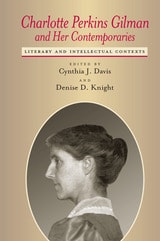
Charlotte Perkins Gilman and Her Contemporaries
Literary and Intellectual ContextsEdited by Cynthia J. Davis and Denise D. Knight
University of Alabama Press, 2004
Considers Gilman’s place in American literary and social history by examining her relationships to other prominent intellectuals of her era
By placing Charlotte Perkins Gilman in the company of her contemporaries, this collection seeks to correct misunderstandings of the feminist writer and lecturer as an isolated radical. Gilman believed and preached that no life is ever led in isolation; indeed, the cornerstone of her philosophy was the idea that “humanity is a relation.”Gilman's highly public and combative stances as a critic and social activist brought her into contact and conflict with many of the major thinkers and writers of the period, including Mary Austin, Margaret Sanger, Ambrose Bierce, Grace Ellery Channing, Lester Ward, Inez Haynes Gillmore, William Randolph Hearst, Karen Horney, William Dean Howells, Catharine Beecher, George Bernard Shaw, and Owen Wister. Gilman wrote on subjects as wide ranging as birth control, eugenics, race, women's rights and suffrage, psychology, Marxism, and literary aesthetics. Her many contributions to social, intellectual, and literary life at the turn of the 20th century raised the bar for future discourse, but at great personal and professional cost.
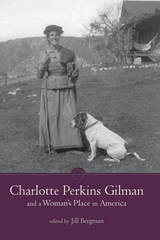
Charlotte Perkins Gilman and a Woman's Place in America
Edited by Jill Bergman
University of Alabama Press, 2017
Charlotte Perkins Gilman and a Woman’s Place in America is a pioneering collection that probes how depictions of space, confinement, and liberation establish both the difficulty and necessity of female empowerment. Turning Victorian notions of propriety and a woman’s place on its ear, this finely crafted essay collection studies Gilman’s writings and the manner in which they push back against societal norms and reject male-dominated confines of space.
The contributors present fascinating and innovative readings of some of Gilman’s most significant works. By examining the settings in “The Yellow Wallpaper” and Herland, for example, the volume analyzes Gilman’s construction of place, her representations of male dominance and female subjugation, and her analysis of the rules and obligations that women feel in conforming to their assigned place: the home.
Additionally, this volume delineates female resistance to this conformity. Contributors highlight how Gilman’s narrators often choose resistance over obedient captivity, breaking free of the spaces imposed upon them in order to seek or create their own habitats. Through biographical interpretations of Gilman’s work that focus on the author’s own renouncement of her “natural” role of wife and mother, contributors trace her relocation to the American West in an attempt to appropriate the masculinized spaces of work and social organization.
Engaging, well-researched, and deftly written, the essays in this collection will appeal to scholars of Gilman, literature, and gender issues alike.
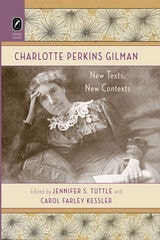
Charlotte Perkins Gilman
New Texts, New ContextsJennifer S. Tuttle and Carol Farley Kessler
The Ohio State University Press, 2011
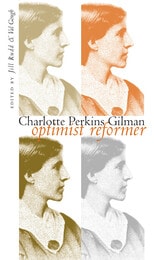
Charlotte Perkins Gilman
Optimist ReformerJill Rudd
University of Iowa Press, 1999
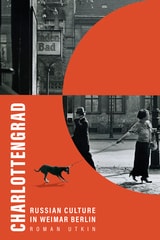
Charlottengrad
Russian Culture in Weimar BerlinRoman Utkin
University of Wisconsin Press, 2023
By closely examining the intellectual output of Charlottengrad, Roman Utkin explores how community members balanced their sense of Russianness with their position in a modern Western city charged with artistic, philosophical, and sexual freedom. He highlights how Russian authors abroad engaged with Weimar-era cultural energies while sustaining a distinctly Russian perspective on modernist expression, and follows queer Russian artists and writers who, with their German counterparts, charted a continuous evolution in political and cultural attitudes toward both the Weimar and Soviet states.
Utkin provides insight into the exile community in Berlin, which, following the collapse of the tsarist government, was one of the earliest to face and collectively process the peculiarly modern problem of statelessness. Charlottengrad analyzes the cultural praxis of “Russia Abroad” in a dynamic Berlin, investigating how these Russian émigrés and exiles navigated what it meant to be Russian—culturally, politically, and institutionally—when the Russia they knew no longer existed.
Chasing the Pearl-Manuscript
Speculation, Shapes, DelightArthur Bahr
University of Chicago Press, 2025
In this book, Arthur Bahr takes a fresh look at the four poems and twelve illustrations of the so-called “Pearl-Manuscript,” the only surviving medieval copy of two of the best-known Middle English poems: Pearl and Sir Gawain and the Green Knight. In Chasing the Pearl-Manuscript, Bahr explores how the physical manuscript itself enhances our perception of the poetry, drawing on recent technological advances (such as spectroscopic analysis) to show the Pearl-Manuscript to be a more complex piece of material, visual, and textual art than previously understood. By connecting the manuscript’s construction to the intricate language in the texts, Bahr suggests new ways to understand both what poetry is and what poetry can do.
Chasing the White Whale
The Moby-Dick Marathon; or, What Melville Means TodayDavid Dowling
University of Iowa Press, 2010
The experimental artist Peter Fischli once observed, “There’s certainly a subversive pleasure in occupying yourself with something for an unreasonable length of time.” In this same spirit, David Dowling takes it upon himself to attend and report on the all-consuming annual Moby-Dick Marathon reading at the New Bedford Whaling Museum.
The twenty-five-hour nonstop reading of Melville’s titanic epic has inspired this fresh look at Moby-Dick in light of its most devoted followers at the moment of their high holy day, January 3, 2009. With some trepidation, Dowling joined the ranks of the Melvillians, among the world’s most obsessive literary aficionados, to participate in the event for its full length, from “Call Me Ishmael” to the destruction of the Pequod. Dowling not only survived to tell his tale, but does so with erudition, humor, and a keen sense for the passions of his fellow whalers.
The obsession of participants at the marathon reading is startling, providing evidence of Ishmael’s remark that “all men live enveloped in whale-lines. All are born with halters round their necks; but it is only when caught in the swift, sudden turn of death, that mortals realize the silent, subtle, ever-present perils of life.” Dowling organizes his savvy analysis of the novel from its romantic departure to its sledge-hammering seas, detailing the culture of the top brass to the common crew and scrutinizing the inscrutable in and through Melville’s great novel.
Chasing the White Whale offers a case study of the reading as a barometer of how Melville lives today among his most passionate and enthusiastic disciples, who include waterfront workers, professors, naval officers, tattooed teens, and even a member of Congress. Dowling unearths Moby-Dick’s central role in these lives, and by going within the local culture he explains how the novel could have developed such an ardent following and ubiquitous presence in popular culture within our technology-obsessed, quick-fix contemporary world.
Chateaubriand Across Empires
Fabienne Moore
Bucknell University Press, 0
What happens when the liberty of ancient nobility collides with the revolutionary ideals of equality? This groundbreaking study explores how the American, French, Haitian, and Greek Revolutions redefined freedom—and how French Romantic figure Chateaubriand grappled with that transformation. Tracing his travels across England, North America, and the Mediterranean, this book uncovers Chateaubriand’s seductive visions of “paradises lost,” which were taken up, challenged, and reimagined by Anglophone and Hispanic writers.
From Charlotte Brontë to Harriet Beecher Stowe, from Byron to Bolaño authors found in Chateaubriand a conflicted but powerful voice at the crossroads of liberty, race, religion, and empire. This is the first comprehensive study to situate Chateaubriand within the histories of colonialism and global revolution, revealing a literary legacy that remains startlingly relevant in today’s struggles over equality.
Published by Bucknell University Press. Distributed worldwide by Rutgers University Press.
Chaucer and the Subject of History
Lee Patterson
University of Wisconsin Press, 1991
Renowned scholar of medieval literature, Lee Patterson, presents a compelling vision of the shape and direction of Geoffrey Chaucer’s entire career in Chaucer and the Subject of History.
Chaucer's interest in individuality was strikingly modern. At the same time he was profoundly aware of the pressures on individuality exerted by the past and by society—by history. This tension between the subject and history is Patterson's topic. He begins by showing how Chaucer’s understanding of history as a subject for poetry—a world to be represented and a cultural force affecting human action—began to take shape in his poems on classical themes, especially in Troilus and Criseyde. Patterson's extended analysis of this profound yet deeply conflicted exploration of the relationship between "history" and "the subject" provides the basis for understanding Chaucer's shift to his contemporary world in the Canterbury Tales. There, in the shrewdest and most wide-ranging analysis of late medieval society we possess, Chaucer investigated not just the idea of history but the historical world intimately related to his own political and literary career.
Patterson's chapters on individual tales clarify and confirm his provocative arguments. He shows, for example, how the Knight's Tale represents the contemporary crisis of governance in terms of a crisis in chivalric identity itself; how the Miller’s Tale reflects the social pressures and rhetoric of peasant movements generally and the Rising of 1381 in particular; and how the tales of the Merchant and Shipman register the paradoxical placement of a bourgeois class lacking class identity. And Patterson's brilliant readings of the Wife of Bath’s Tale—"the triumph of the subject"—and the Pardoner’s Tale —"the subject of confession"—reveal how Chaucer reworked traditional materials to accomplish stunning innovations that make visible unmistakably social meanings. Chaucer and the Subject of History is a landmark book, one that will shape the way that Chaucer is read for years to come.
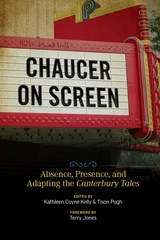
Chaucer on Screen
Absence, Presence, and Adapting the Canterbury TalesEdited by Kathleen Coyne Kelly and Tison Pugh
The Ohio State University Press, 2016
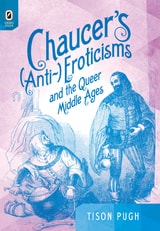
Chaucer's (Anti-)Eroticisms and the Queer Middle Ages
Tison Pugh
The Ohio State University Press, 2014
For Chaucer, erotic pursuits establish the thrust and tenor of many of his narratives, as they also expose the frustrations inherent in pursuing desires frowned upon by the religious foundations of Western medieval culture. One cannot love freely within an ideological framework that polices sexuality and privileges the anti-erotic Christian ideals of virginity and chastity, yet loving queerly creates escapes from social structures inimical to amour and its expressions in the medieval period. Thus Chaucer is not just England’s foundational love poet, he is also England’s foundational queer poet.
Chaucer's Italian Tradition
Warren Ginsberg
University of Michigan Press, 2002
Because divergent political, municipal, and literary histories would have made the Italian cities--Genoa, Florence, and Milan--unfamiliar to an English poet from medieval London, Ginsberg argues that we must consider what Chaucer overlooked and mistook from his Italian models alongside the material he did appropriate. To make sense of premises in texts like Dante's Comedy that were peculiarly Italian, Chaucer would look to Boccaccio as a gloss; by reading these authors in conjunction with one another, Chaucer generates an "Italian tradition" that translates into the terms of his English experience works already mediated by a prior stage of transposition.
Ginsberg explores Chaucer's relationship to Italian poets not in terms of the interaction of individual talents with accredited authorities (Chaucer and Dante, Boccaccio and Petrarch, etc.). Rather, he focuses on the shifts in tension that occur when the civic engagements and disengagements of Florence's poets are brought into contact with Chaucer's growing metropolitanism and increasing reluctance to make London the locus of his poetic art.
Beyond its appeal to medievalists and those who study the Renaissance, Chaucer's Italian Tradition will be welcomed by readers interested in theoretical questions about translation and the development of tradition, including individuals who study history, literature, and the nature of the humanities.
Warren Ginsberg is Professor of English, University of Oregon.
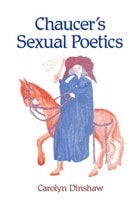
Chaucer's Sexual Poetics
Carolyn Dinshaw
University of Wisconsin Press, 1990
Through an analysis of the poems Chaucers wordes Unto Adam, His Owne Scriveyn, Troilus and Criseyde, the Legend of Good Women, the Man of Law’s Tale, the Wife of Bath’s Tale and its Prologue, the Clerk’s Tale, and the Pardoner’s Tale, Carolyn Dinshaw offers a provocative argument on medieval sexual constructs and Chaucer’s role in shaping them. Operating under the assumption that people read and write certain ways based upon society’s demands, Dinshaw examines gender identity and the effects of a patriarchal society. The focal point of Dinshaw’s argument is the idea that the literary text can be seen as the female body while any literary activities upon the text are decidedly male. Through a series of six provocative essays, Dinshaw argues that Chaucer was not only aware that gender is a social construction, but that he self-consciously worked to oppose the dominance of masculinity that a patriarchal society places on texts by creating works in which gender identity and hierarchy were more fluid.
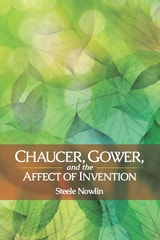
Chaucer, Gower, and the Affect of Invention
Steele Nowlin
The Ohio State University Press, 2016
Chaucer, Gower, and the Affect of Invention thus formulates a definition of affect that differs from most work in the recent “turn to affect” in medieval studies, focusing not on the representation of emotion or desire, or efforts to engage medieval alterity, but on the movement and emergence that precede emotional experience. It likewise argues for a broader understanding of invention in late medieval literature beyond analyses of rhetorical poetics and authorial politics by recuperating the dynamism and sense of potential that characterize inventional activity. Finally, its close readings of Chaucer’s and Gower’s poetry provide new insights into how these poets represent invention in order to engage the pervasive social and cultural discourses their poetry addresses.
Chaucer’s Fame in Britannia 1641–1700
Jackson C. Boswell
Arizona Center for Medieval and Renaissance Studies, 2021
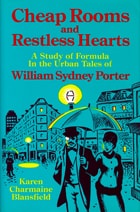
Cheap Rooms and Restless Hearts
A Study of Formula in the Urban Tales of William Sydney PorterKaren Charmaine Blansfield
University of Wisconsin Press, 1988
Chekhov and Russian Religious Culture
Poetics of the Marian ParadigmJulie de Sherbinin
Northwestern University Press, 1997
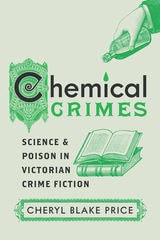
Chemical Crimes
Science and Poison in Victorian Crime FictionCheryl Blake Price
The Ohio State University Press, 2019
From the Newgate and Silver Fork novels of the 1830s to the emergent genres of science and detective fiction of the 1890s, Price advocates for the classification of a new type of poisoner, one who combined crime with methodical scientific know-how: the chemical criminal. Chemical Crimes shows how authors used the subversiveness of chemical crimes to challenge the supposed disciplinary force of forensic detection and suggests that generic developments were inspired as much by criminal scientific innovation as they were by the rise of the detective–scientist. By focusing on chemical crime’s appearance at significant moments, this book traces how reactions to Victorian science inspired change in nineteenth-century crime fiction.
Chernyshevskii's "What is to Be Done"
A ReevaluationAndrew Drozd
Northwestern University Press, 2012
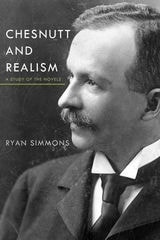
Chesnutt and Realism
A Study of the NovelsRyan Simmons
University of Alabama Press, 2006
Provides an important examination of Charles Chesnutt as a practitioner of realism
Although Chesnutt is typically acknowledged as the most prominent African American writer of the realist period, scholars have paid little attention to the central question of this study: what does it mean to call Chesnutt a realist? As a writer whose career was restricted by the dismal racial politics of his era, Chesnutt refused to conform to literary conventions for depicting race. Nor did he use his imaginative skills to evade the realities he and other African Americans faced. Rather, he experimented with ways of portraying reality that could elicit an appropriate, proportionate response to it, as Ryan Simmons demonstrates in extended readings of each of Chesnutt’s novels, including important unpublished works overlooked by previous critics.
In addition, Chesnutt and Realism addresses a curiously neglected subject in American literary studies—the relationship between American literary realism and race. By taking Chesnutt seriously as a contributor to realism, this book articulates the strategies by which one African American intellectual helped to define the discourses that influenced his fate.
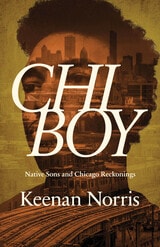
Chi Boy
Native Sons and Chicago ReckoningsKeenan Norris
The Ohio State University Press, 2022
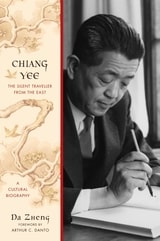
Chiang Yee
The Silent Traveller from the East--A Cultural BiographyZheng, Da
Rutgers University Press, 2010
This biography is more than a recounting of extraordinary accomplishments. It also embraces the transatlantic life experience of Yee who traveled from China to England and then on to the United States, where he taught at Columbia University, to his return to China in 1975, after a forty-two year absence. Interwoven is the history of the communist revolution in China; the battle to save England during World War II; the United States during the McCarthy red scare era; and, eventually, thawing Sino-American relations in the 1970s. Da Zheng uncovers Yee's encounters with racial exclusion and immigration laws, displacement, exile, and the pain and losses he endured hidden behind a popular public image.
Chic Ironic Bitterness
R. Jay Magill, Jr.
University of Michigan Press, 2009
A brilliant and timely reflection on irony in contemporary American culture
“This book is a powerful and persuasive defense of sophisticated irony and subtle humor that contributes to the possibility of a genuine civic trust and democratic life. R. Jay Magill deserves our congratulations for a superb job!”
—Cornel West, University Professor, Princeton University
“A well-written, well-argued assessment of the importance of irony in contemporary American social life, along with the nature of recent misguided attacks and, happily, a deep conviction that irony is too important in our lives to succumb. The book reflects wide reading, varied experience, and real analytical prowess.”
—Peter Stearns, Provost, George Mason University
“Somehow, Americans—a pragmatic and colloquial lot, for the most part—are now supposed to speak the Word, without ironic embellishment, in order to rebuild the civic culture. So irony’s critics decide it has become ‘worthy of moral condemnation.’ Magill pushes back against this new conventional wisdom, eloquently defending a much livelier American sensibility than the many apologists for a somber ‘civic culture’ could ever acknowledge."
—William Chaloupka, Chair and Professor, Department of Political Science, Colorado State University
The events of 9/11 had many pundits on the left and right scrambling to declare an end to the Age of Irony. But six years on, we're as ironic as ever. From The Simpsons and Borat to The Daily Show and The Colbert Report, the ironic worldview measures out a certain cosmopolitan distance, keeping hypocrisy and threats to personal integrity at bay.
Chic Ironic Bitterness is a defense of this detachment, an attitude that helps us preserve values such as authenticity, sincerity, and seriousness that might otherwise be lost in a world filled with spin, marketing, and jargon. And it is an effective counterweight to the prevailing conservative view that irony is the first step toward cynicism and the breakdown of Western culture.
R. Jay Magill, Jr., is a writer and illustrator whose work has appeared in American Prospect, American Interest, Atlantic Monthly, Foreign Policy, International Herald Tribune, New York Times, Wall Street Journal, and Print, amongother periodicals and books. A former Harvard Teaching Fellow and Executive Editor of DoubleTake, he holds a Ph.D. in American Studies from the University of Hamburg in Germany. This is his first book.
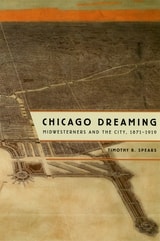
Chicago Dreaming
Midwesterners and the City, 1871-1919Timothy B. Spears
University of Chicago Press, 2005
Through innovative readings of Theodore Dreiser, Willa Cather, and Richard Wright, Spears argues that the migratory perspective was crucial to the rise of Chicago's emerging literary culture. In following the paths of several well-known migrants, including Jane Addams, cartoonist John T. McCutcheon, and businessman John Glessner, Spears also shows how the view from the hinterland permeated urban culture and informed the development of key Chicago institutions. Further exploring the notion of dreaming, he brings to light the internal desires that lured Midwestern migrants to the city as well as the nostalgia that led them to dream of the homes they left behind.
With this fascinating new take on the rise of Chicago, Chicago Dreaming blurs the line between country and city to reveal the provincial character of modern urban culture.

Chicago Poems
Carl Sandburg
University of Illinois Press, 1992
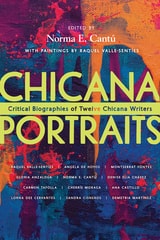
Chicana Portraits
Critical Biographies of Twelve Chicana WritersEdited by Norma E. Cantú; With paintings by Raquel Valle-Sentíes
University of Arizona Press, 2023
Artist Raquel Valle-Sentíes’s portraits bring visual dimension, while essays delve deeply into the authors’ lives for details that inform their literary, artistic, feminist, and political trajectories and sensibilities. The collection brilliantly intersects artistic visual and literary cultural productions, allowing complex themes to emerge, such as the fragility of life, sexism and misogyny, Chicana agency and forging one’s own path, the struggles of becoming a writer and battling self-doubt, economic instability, and political engagement and activism.
Arranged chronologically by birth order of the authors, the book can be read cover to cover for a genealogical overview, or scholars and general readers can easily jump in at any point and read about an individual author, regardless of the chronology.
Biographies included in this work include Raquel Valle-Sentíes, Angela de Hoyos, Montserrat Fontes, Gloria E. Anzaldúa, Norma E. Cantú, Denise Elia Chávez, Carmen Tafolla, Cherríe Moraga, Ana Castillo, Lorna Dee Cervantes, Sandra Cisneros, and Demetria Martínez.
Contributors
Cordelia E. Barrera
Mary Pat Brady
Norma E. Cantú
María Jesus Castro Dopacio
Carlos Nicolás Flores
Myrriah Gómez
Maria Magdalena Guerra de Charur
Gabriella Gutiérrez y Muhs
Georgina Guzmán
Cristina Herrera
María Esther Quintana
Eliza Rodríguez y Gibson
Meagan Solomon
Lourdes Torres
Raquel Valle-Sentíes
Jen Yáñez-Alaniz
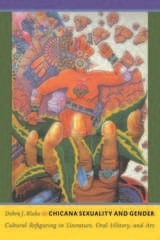
Chicana Sexuality and Gender
Cultural Refiguring in Literature, Oral History, and ArtDebra J. Blake
Duke University Press, 2008
Blake looks at how the Chicana professional intellectuals and the U.S. Mexicana women refigure confining and demeaning constructions of female gender roles and racial, ethnic, and sexual identities. She organizes her analysis around re-imaginings of La Virgen de Guadalupe, La Llorona, indigenous Mexica goddesses, and La Malinche, the indigenous interpreter for Hernán Cortés during the Spanish conquest. In doing so, Blake reveals how the professional intellectuals and the working-class and semiprofessional women rework or invoke the female icons to confront the repression of female sexuality, limiting gender roles, inequality in male and female relationships, and violence against women. While the representational strategies of the two groups of women are significantly different and the U.S. Mexicanas would not necessarily call themselves feminists, Blake nonetheless illuminates a continuum of Chicana feminist thinking, showing how both groups of women expand lifestyle choices and promote the health and well-being of women of Mexican origin or descent.
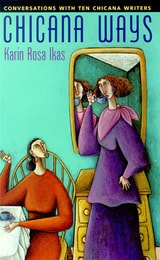
Chicana Ways
Conversations With Ten Chicana WritersKarin Rosa Ikas
University of Nevada Press, 2001
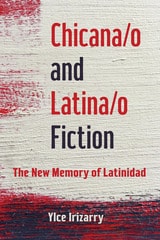
Chicana/o and Latina/o Fiction
The New Memory of LatinidadYlce Irizarry
University of Illinois Press, 2016
Irizarry establishes four dominant categories of narrative--loss, reclamation, fracture, and new memory--that address immigration, gender and sexuality, cultural nationalisms, and neocolonialism. As she shows, narrative concerns have moved away from the weathered notions of arrival and assimilation. Contemporary Chicana/o and Latina/o literatures instead tell stories that have little, if anything, to do with integration into the Anglo-American world. The result is the creation of new memory. This reformulation of cultural membership unmasks the neocolonial story and charts the conscious engagement of cultural memory. It outlines the ways contemporary Chicana/o and Latina/o communities create belonging and memory of their ethnic origins.
An engaging contribution to an important literary tradition, Chicana/o and Latina/o Fiction privileges the stories Chicanas/os and Latinas/os remember about themselves rather than the stories of those subjugating them.
NACCS Book Award, National Association for Chicana and Chicano Studies, 2018; MLA Prize in United States Latina and Latino and Chicana and Chicano Literary and Cultural Studies, Modern Language Association, 2017
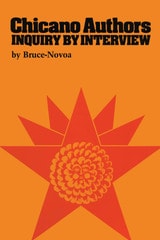
Chicano Authors
Inquiry by InterviewBy Bruce-Novoa
University of Texas Press, 1980
The need for this book became apparent to Bruce-Novoa when he first taught a Chicano culture course in 1970. His students could find no source to satisfy their curiosity about Chicano writers' backgrounds, opinions, and attitudes. Chicano Authors: Inquiry by Interview provides that information.
Fourteen leading Chicano authors respond to questions about their personal and educational backgrounds, their perception of the role of the Chicano writer, and their evaluation of the literary, linguistic, and sociocultural significance of Chicano literature. The authors included are José Antonio Villarreal, Rolando Hinojosa, Sergio Elizondo, Miguel Méndez M., Abelardo Delgado, José Montoya, Tomás Rivera, Estela Portillo, Rudolfo A. Anaya, Bernice Zamora, Ricardo Sánchez, Ron Arias, Tino Villanueva, and Alurista.
Each interview is preceded by a brief introductory note which locates the author in the context of Chicano literature and provides a sense of his or her writing. Also included are a general introduction to Chicano literature, a chronological chart of publications by genre, and a selected bibliography. The volume will be an essential research tool for the student of Chicano literature and culture and a useful introduction for the general reader.
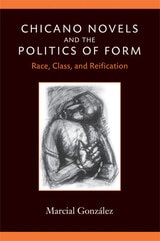
Chicano Novels and the Politics of Form
Race, Class, and ReificationMarcial González
University of Michigan Press, 2008
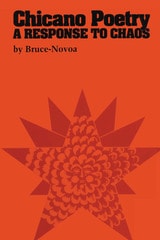
Chicano Poetry
A Response to ChaosBy Bruce-Novoa
University of Texas Press, 1982
Alurista. Gary Soto. Bernice Zamora. José Montoya. These names, luminous to some, remain unknown to those who have not yet discovered the rich variety of late twentieth century Chicano poetry.
With the flowering of the Chicano Movement in the mid-1960s came not only increased political awareness for many Mexican Americans but also a body of fine creative writing. Now the major voices of Chicano literature have begun to reach the wider audience they deserve. Bruce-Novoa's Chicano Poetry: A Response to Chaos—the first booklength critical study of Chicano poetry—examines the most significant works of a body of literature that has grown dramatically in size and importance in less than two decades.
Here are insightful new readings of the major writings of Abelardo Delgado, Sergio Elizondo, Rodolfo Gonzales, Miguel Méndez, J. L. Navarro, Raúl Salinas, Ricardo Sánchez, and Tino Villanueva, as well as Alurista, Soto, Zamora, and Montoya. Close textual analyses of such important works as I Am Joaquín, Restless Serpents, and Floricanto en Aztlán enrich and deepen our understanding of their imagery, themes, structure, and meaning.
Bruce-Novoa argues that Chicano poetry responds to the threat of loss, whether of hero, barrio, family, or tradition. Thus José Montoya elegizes a dead Pachuco in "El Louie," and Raúl Salinas laments the disappearance of a barrio in "A Trip through the Mind Jail." But this elegy at the heart of Chicano poetry is both lament and celebration, for it expresses the group's continuing vitality and strength.
Common to twentieth-century poetry is the preoccupation with time, death, and alienation, and the work of Chicano poets—sometimes seen as outside the traditions of world literature—shares these concerns. Bruce-Novoa brilliantly defines both the unique and the universal in Chicano poetry.
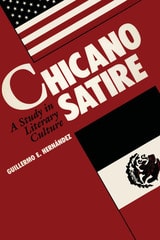
Chicano Satire
A Study in Literary CultureBy Guillermo E. Hernández
University of Texas Press, 1991
Geographically close to Mexico, but surrounded by Anglo-American culture in the United States, Chicanos experience many cultural tensions and contradictions. Their lifeways are no longer identical with Mexican norms, nor are they fully assimilated to Anglo-American patterns. Coping with these tensions—knowing how much to let go of, how much to keep—is a common concern of Chicano writers, who frequently use satire as a means of testing norms and deviations from acceptable community standards. In this groundbreaking study, Guillermo Hernández focuses on the uses of satire in the works of three authors—Luis Valdez, Rolando Hinojosa, and José Montoya—and on the larger context of Chicano culture in which satire operates.
Hernández looks specifically at the figures of the pocho (the assimilated Chicano) and the pachuco (the zoot-suiter, or urbanized youth). He shows how changes in their literary treatment—from simple ridicule to more understanding and respect—reflect the culture's changes in attitude toward the process of assimilation.
Hernández also offers many important insights into the process of cultural definition that engaged Chicano writers during the 1960s and 1970s. He shows how the writers imaginatively and syncretically formed new norms for the Chicano experience, based on elements from both Mexican and United States culture but congruent with the historical reality of Chicanos.
With its emphasis on culture change and creation, Chicano Satire will be of interest across a range of human sciences.
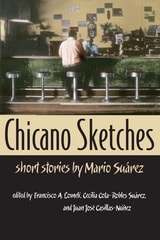
Chicano Sketches
Short Stories by Mario SuárezMario Suárez; Edited by Francisco A. Lomelí, Cecilia Cota-Robles Suárez, and Juan Casillas-Núñez
University of Arizona Press, 2004
A key figure in the foundation of Chicano literature, Mario Suárez (1923–1998) was among the first writers to focus not only on Chicano characters but also on the multicultural space in which they live, whether a Tucson barbershop or a Manhattan boxing ring. Many of his stories have received wide acclaim through publication in periodicals and anthologies; this book presents those eleven previously published stories along with eight others from the archive of his unpublished work. It also includes a biographical introduction and a critical analysis of the stories that will broaden readers’ appreciation for his place in Chicano literature.
In most of his stories, Suárez sought to portray people he knew from Tucson’s El Hoyo barrio, a place usually thought of as urban wasteland when it is thought of at all. Suárez set out to fictionalize this place of ignored men and women because he believed their human stories were worth telling, and he hoped that through his depictions American literature would recognize their existence. By seeking to record the so-called underside of America, Suárez was inspired to pay close attention to people’s mannerisms, language, and aspirations. And by focusing on these barrio characters he also crafted a unique, mild-mannered realism overflowing with humor and pathos.
Along with Fray Angélico Chávez, Suárez stands as arguably the mid-twentieth century’s most important short story writer of Mexican descent. Chicano Sketches reclaims Suárez as a major figure of the genre and offers lovers of fine fiction a chance to rediscover this major talent.
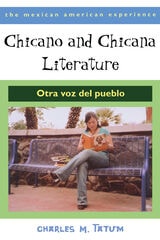
Chicano and Chicana Literature
Otra voz del puebloCharles M. Tatum
University of Arizona Press, 2006
In this comprehensive examination of Chicano and Chicana literature, Charles M. Tatum brings a new and refreshing perspective to the ethnic identity of Mexican Americans. From the earliest sixteenth-century chronicles of the Spanish Period, to the poetry and narrative fiction of the second half of the nineteenth century and the first half of the twentieth century, and then to the flowering of all literary genres in the post–Chicano Movement years, Chicano/a literature amply reflects the hopes and aspirations as well as the frustrations and disillusionments of an often marginalized population.
Exploring the work of Rudolfo Anaya, Sandra Cisneros, Luis Alberto Urrea, and many more, Tatum examines the important social, historical, and cultural contexts in which the writing evolved, paying special attention to the Chicano Movement and the flourishing of literary texts during the 1960s and early 1970s. Chapters provide an overview of the most important theoretical and critical approaches employed by scholars over the past forty years and survey the major trends and themes in contemporary autobiography, memoir, fiction, and poetry.
The most complete and up-to-date introduction to Chicana/o literature available, this book will be an ideal reference for scholars of Hispanic and American literature. Discussion questions and suggested reading included at the end of each chapter are especially suited for classroom use.
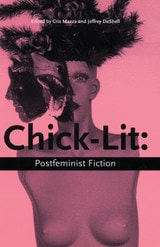
Chick Lit Postfeminist Fiction
Cris Mazza
University of Alabama Press, 2000
A provocative critique of chick lit’s glossy narratives and their complex relationship with postfeminist ideals.
Chick-Lit: Postfeminist Fiction is the fourth volume in “On the Edge: New Women’s Fiction,” FC2’s ongoing effort to discover new and innovative voices in women’s fiction. Determined to contradict the myth that “women don't write experimental fiction,” Chick-Lit discovers women writers with a fresh and irreverent wit and honesty, but no less powerful in their rendering of human experience.
Chick-Lit collects the original fiction of newly discovered writers, but also the award winning work of notable writers like Carole Maso, Jonis Agee, Stacy Levinne and Carolyn Banks. Marked by innovations in form and point-of-view, the writers in this collection are not satisfied with the terrain commonly referred to as “women’s writing.” Insane asylum sex, board games that control people’s lives, a masochistic pedophile humiliated by his victim, an obese woman paying nickels and quarters for attention from teenage girls, a deranged hair stylist and her disloyal dog, a men's impotence therapy group, a surreal landscape constantly producing the body of a woman's mother: this is writing that shouts, yes, there is such a thing as postfeminist fiction.
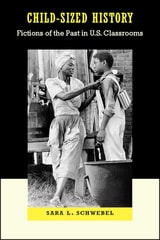
Child-Sized History
Fictions of the Past in U.S. ClassroomsSara L. Schwebel
Vanderbilt University Press, 2011
Books like Johnny Tremain, The Witch of Blackbird Pond, Island of the Blue Dolphins, and Roll of Thunder, Hear My Cry stimulate children's imagination, transporting them into the American past and projecting them into an American future. As works of historical interpretation, however, many are startlingly out of step with current historiography and social sensibilities, especially with regard to race. Unlike textbooks, which are replaced on regular cycles and subjected to public tugs-of-war between the left and right, historical novels have simply--and quietly--endured. Taken individually, many present troubling interpretations of the American past. But embraced collectively, this classroom canon provides a rare pedagogical opportunity: it captures a range of interpretive voices across time and place, a kind of "people's history" far removed from today's state-sanctioned textbooks.
Teachers who employ historical novels in the classroom can help students recognize and interpret historical narrative as the product of research, analytical perspective, and the politics of the time. In doing so, they sensitize students to the ways in which the past is put to moral and ideological uses in the present.
Featuring separate chapters on American Indians, war, and slavery, Child-Sized History tracks the changes in how young readers are taught to conceptualize history and the American nation.
Childhood
Nathalie Sarraute
University of Chicago Press, 2013
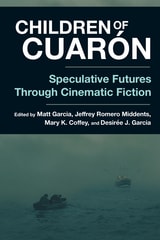
Children of Cuarón
Speculative Futures Through Cinematic FictionMatt Garcia
Rutgers University Press, 2027
Alfonso Cuarón’s Children of Men thrusts readers into a gripping near-future world where environmental collapse and global infertility have fortified borders and torn apart the fabric of society. Its stark depictions of mass deportation, lawless border zones, and the desperate fight for survival echo powerfully through Octavia Butler’s prophetic novels Parable of the Sower and Parable of the Talents, where environmental breakdown, migration, childbirth, and the resilience of women’s bodies form the core of her visionary storytelling. Remarkably, the futures imagined in these works are no longer distant—Butler’s 2024 has arrived, and Cuarón’s 2027 is nearly here. Children of Cuarón: Speculative Futures Through Cinematic Fiction ignites bold, necessary conversations about borders, immigration, and the urgent political, environmental, and social challenges facing our world today. By examining how speculative fiction dares to imagine what comes next, this book invites readers to confront the realities of our present—and the possibilities of our future—with fresh eyes and uncompromising clarity.
Children's Literature in the Nordic World
Charlotte Appel and NIna Christensen
University of Wisconsin Press, 2021
The emergence of a dedicated market for children’s books in the Global North coincided with national school reforms, when Luther’s Small Catechism started to be supplemented—or replaced—by new books published for and about young readers, learners, and citizens. Children’s use of books and media is closely related to adults’ wishes to influence the present and future of a child through instruction, entertainment, or play. Chapters point to strong continuities as well as remarkable changes in the relationships between child readers and adult authors, artists, publishers, teachers, librarians, and parents through the centuries.
Focusing on children as the central users and producers of texts, this interdisciplinary and transnational history shows how children’s exposure to and use of media impacted the Nordic welfare state, and vice versa. As narratives for young audiences are continuously rewritten, republished, and adapted into new forms, this pithy synthesis brings forward new knowledge about the material and social history of books, literature, and childhood.
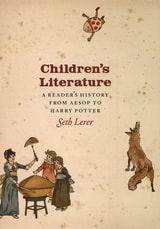
Children's Literature
A Reader's History, from Aesop to Harry PotterSeth Lerer
University of Chicago Press, 2008
Ever since children have learned to read, there has been children’s literature. Children’s Literature charts the makings of the Western literary imagination from Aesop’s fables to Mother Goose, from Alice's Adventures in Wonderland to Peter Pan, from Where the Wild Things Are to Harry Potter.
The only single-volume work to capture the rich and diverse history of children’s literature in its full panorama, this extraordinary book reveals why J. R. R. Tolkien, Dr. Seuss, Laura Ingalls Wilder, Beatrix Potter, and many others, despite their divergent styles and subject matter, have all resonated with generations of readers. Children’s Literature is an exhilarating quest across centuries, continents, and genres to discover how, and why, we first fall in love with the written word.
“Lerer has accomplished something magical. Unlike the many handbooks to children’s literature that synopsize, evaluate, or otherwise guide adults in the selection of materials for children, this work presents a true critical history of the genre. . . . Scholarly, erudite, and all but exhaustive, it is also entertaining and accessible. Lerer takes his subject seriously without making it dull.”—Library Journal (starred review)
“Lerer’s history reminds us of the wealth of literature written during the past 2,600 years. . . . With his vast and multidimensional knowledge of literature, he underscores the vital role it plays in forming a child’s imagination. We are made, he suggests, by the books we read.”—San Francisco Chronicle
“There are dazzling chapters on John Locke and Empire, and nonsense, and Darwin, but Lerer’s most interesting chapter focuses on girls’ fiction. . . . A brilliant series of readings.”—Diane Purkiss, Times Literary Supplement
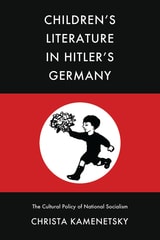
Children’s Literature in Hitler’s Germany
The Cultural Policy of National SocialismChrista Kamenetsky
Ohio University Press, 1984
Between 1933 and 1945, National Socialists enacted a focused effort to propagandize children’s literature by distorting existing German values and traditions with the aim of creating a homogenous “folk community.” A vast censorship committee in Berlin oversaw the publication, revision, and distribution of books and textbooks for young readers, exercising its control over library and bookstore content as well as over new manuscripts, so as to redirect the cultural consumption of the nation’s children. In particular, the Nazis emphasized Nordic myths and legends with a focus on the fighting spirit of the saga heroes, their community loyalty, and a fierce spirit of revenge—elements that were then applied to the concepts of loyalty to and sacrifice for the Führer and the fatherland. They also tolerated select popular series, even though these were meant to be replaced by modern Hitler Youth camping stories.
In this important book, first published in 1984 and now back in print, Christa Kamenetsky demonstrates how Nazis used children’s literature to selectively shape a “Nordic Germanic” worldview that was intended to strengthen the German folk community, the Führer, and the fatherland by imposing a racial perspective on mankind. Their efforts corroded the last remnants of the Weimar Republic’s liberal education, while promoting an enthusiastic following for Hitler.
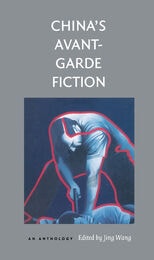
China's Avant-Garde Fiction
An AnthologyJing Wang, ed.
Duke University Press, 1998
Jing Wang has selected provocative examples of this new school of writing, which gained prominence in the late 1980s. Contradicting many long-cherished beliefs about Chinese writers—including the alleged tradition of writing as a political act against authoritarianism—these stories make a dramatic break from conventions of modern Chinese literature by demonstrating an irreverence toward history and culture and by celebrating the artificiality of storytelling. Enriched by the work of a distinguished group of translators, this collection presents an aesthetic experience that may have outraged many revolutionary-minded readers in China, but one that also occupies an important place in the canon of Chinese literature. China’s Avant-Garde Fiction brings together a group of exceptional writers (including Raise the Red Lantern author Su Tong) to the attention of an English-speaking audience.
This book will be enjoyed by those interested in Chinese literature, culture, and society—particularly readers of contemporary fiction.
Contributors. Bei Cun, Can Xue, Gei Fei, Ma Yuan, Su Tong, Sun Ganlu, Yu Hua
Translators. Eva Shan Chou, Michael S. Duke, Howard Goldblatt, Ronald R. Janssen, Andrew F. Jones, Denis C. Mair, Victor H. Mair, Caroline Mason, Beatrice Spade, Kristina M. Torgeson, Jian Zhang, Zhu Hong