Results by title
4127 books match the query 'Science' and 251 start with c
Citizen Science in the Digital Age
Rhetoric, Science, and Public EngagementJames Wynn
University of Alabama Press, 2016
James Wynn’s timely investigation highlights scientific studies grounded in publicly gathered data and probes the rhetoric these studies employ. Many of these endeavors, such as the widely used SETI@home project, simply draw on the processing power of participants’ home computers; others, like the protein-folding game FoldIt, ask users to take a more active role in solving scientific problems. In Citizen Science in the Digital Age: Rhetoric, Science, and Public Engagement, Wynn analyzes the discourse that enables these scientific ventures, as well as the difficulties that arise in communication between scientists and lay people and the potential for misuse of publicly gathered data.
Wynn puzzles out the intricacies of these exciting new research developments by focusing on various case studies. He explores the Safecast project, which originated from crowd-sourced mapping for Fukushima radiation dispersal, arguing that evolving technologies enable public volunteers to make concrete, sound, science-based arguments. Additionally, he considers the potential use of citizen science as a method of increasing the public’s identification with the scientific community, and contemplates how more collaborative rhetoric might deepen these opportunities for interaction and alignment. Furthermore, he examines ways in which the lived experience of volunteers may be integrated with expert scientific knowledge, and also how this same personal involvement can be used to further policy agendas.
Precious few texts explore the intersection of rhetoric, science, and the Internet. Citizen Science in the Digital Age fills this gap, offering a clear, intelligent overview of the topic intended for rhetoric and communication scholars as well as practitioners and administrators in a number of science-based disciplines. With the expanded availability of once inaccessible technologies and computing power to laypeople, the practice of citizen science will only continue to grow. This study offers insight into how—given prudent application and the clear articulation of common goals—citizen science might strengthen the relationships between scientists and laypeople.
Citizen Science
Innovation in Open Science, Society and PolicyEdited by Susanne Hecker, Muki Haklay, Anne Bowser, Zen Makuch, Johannes Vogel, and Aletta Bonn
University College London, 2018
This book identifies and explains the role of citizen science within innovation in science and society, and as a vibrant and productive science-policy interface. The scope of this volume is global, geared towards identifying solutions and lessons to be applied across science, practice and policy. The chapters consider the role of citizen science in the context of the wider agenda of open science and open innovation and discuss progress towards responsible research and innovation, two of the most critical aspects of science today.

Citizen Voices
Performing Public Participation in Science and Environment CommunicationEdited by Louise Phillips, Anabela Carvalho, and Julie Doyle
Intellect Books, 2012

Citizens of Worlds
Open-Air Toolkits for Environmental StruggleJennifer Gabrys
University of Minnesota Press, 2022
An unparalleled how-to guide to citizen-sensing practices that monitor air pollution
Modern environments are awash with pollutants churning through the air, from toxic gases and intensifying carbon to carcinogenic particles and novel viruses. The effects on our bodies and our planet are perilous. Citizens of Worlds is the first thorough study of the increasingly widespread use of digital technologies to monitor and respond to air pollution. It presents practice-based research on working with communities and making sensor toolkits to detect pollution while examining the political subjects, relations, and worlds these technologies generate.
Drawing on data from the Citizen Sense research group, which worked with communities in the United States and the United Kingdom to develop digital-sensor toolkits, Jennifer Gabrys argues that citizen-oriented technologies promise positive change but then collide with entrenched and inequitable power structures. She asks: Who or what constitutes a “citizen” in citizen sensing? How do digital sensing technologies enable or constrain environmental citizenship?
Spanning three project areas, this study describes collaborations to monitor air pollution from fracking infrastructure, to document emissions in urban environments, and to create air-quality gardens. As these projects show, how people respond to, care for, and struggle to transform environmental conditions informs the political subjects and collectives they become as they strive for more breathable worlds.
Citizens, Cops, and Power
Recognizing the Limits of CommunitySteve Herbert
University of Chicago Press, 2006
That strategy seems to make sense, but in Citizens, Cops, and Power, Steve Herbert reveals the reasons why it rarely, if ever, works. Drawing on data he collected in diverse Seattle neighborhoods from interviews with residents, observation of police officers, and attendance at community-police meetings, Herbert identifies the many obstacles that make effective collaboration between city dwellers and the police so unlikely to succeed. At the same time, he shows that residents’ pragmatic ideas about the role of community differ dramatically from those held by social theorists.
Surprising and provocative, Citizens, Cops, and Power provides a critical perspective not only on the future of community policing, but on the nature of state-society relations as well.
Citizens, Experts, and the Environment
The Politics of Local KnowledgeFrank Fischer
Duke University Press, 2000
Where information ideologues see the modern increase in information as capable of making everyone smarter, others see the emergence of a society divided between those with and those without knowledge. Suggesting realistic strategies to bridge this divide, Fischer calls for meaningful nonexpert involvement in policymaking and shows how the deliberations of ordinary citizens can help solve complex social and environmental problems by contributing local contextual knowledge to the professionals’ expertise. While incorporating theoretical critiques of positivism and methodology, he also offers hard evidence to demonstrate that the ordinary citizen is capable of a great deal more participation than is generally recognized. Popular epidemiology in the United States, the Danish consensus conference, and participatory resource mapping in India serve as examples of the type of inquiry he proposes, showing how the local knowledge of citizens is invaluable to policy formation. In his conclusion Fischer examines the implications of the approach for participatory democracy and the democratization of contemporary deliberative structures.
This study will interest political scientists, public policy practitioners, sociologists, scientists, environmentalists, political activists, urban planners, and public administrators along with those interested in understanding the relationship between democracy and science in a modern technological society.
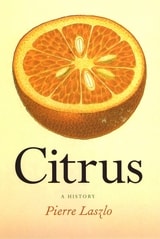
Citrus
A HistoryPierre Laszlo
University of Chicago Press, 2007
“Laszlo . . . has approached the lore of citrus fruit with the élan of a master chef (the man is French, after all), mixing history, economics, biology and chemistry to produce a book that will bring a smile to readers of every taste.”—Natural History
“Altogether charming, eccentric, erudite, and definitely worth the price.”—Times Higher Education Supplement
“Stimulating. . . . Laszlo shows that the citrus fruit ‘is a treasure trove of chemicals that are highly useful to humankind’—which also happens to taste wonderful.”—Sunday Times (UK)
“Did you know there are a billion citrus trees under cultivation, or that grapefruit juice may potentiate the effects of Viagra? Citrus mines over two millennia of history to explore the spread of these fruits out of Asia, their commercialization in the United States, and enduring symbolism the world over.”—New Scientist
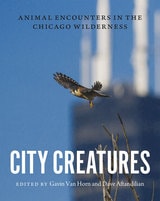
City Creatures
Animal Encounters in the Chicago WildernessEdited by Gavin Van Horn and Dave Aftandilian
University of Chicago Press, 2015
We usually think of cities as the domain of humans—but we are just one of thousands of species that call the urban landscape home. Chicago residents knowingly move among familiar creatures like squirrels, pigeons, and dogs, but might be surprised to learn about all the leafhoppers and water bears, black-crowned night herons and bison, beavers and massasauga rattlesnakes that are living alongside them. City Creatures introduces readers to an astonishing diversity of urban wildlife with a unique and accessible mix of essays, poetry, paintings, and photographs.
The contributors bring a story-based approach to this urban safari, taking readers on birding expeditions to the Magic Hedge at Montrose Harbor on the North Side, canoe trips down the South Fork of the Chicago River (better known as Bubbly Creek), and insect-collecting forays or restoration work days in the suburban forest preserves.
The book is organized into six sections, each highlighting one type of place in which people might encounter animals in the city and suburbs. For example, schoolyard chickens and warrior wasps populate “Backyard Diversity,” live giraffes loom at the zoo and taxidermy-in-progress pheasants fascinate museum-goers in “Animals on Display,” and a chorus of deep-freeze frogs awaits in “Water Worlds.” Although the book is rooted in Chicago’s landscape, nature lovers from cities around the globe will find a wealth of urban animal encounters that will open their senses to a new world that has been there all along. Its powerful combination of insightful narratives, numinous poetry, and full-color art throughout will help readers see the city—and the creatures who share it with us—in an entirely new light.
City and Environment
Christopher G. Boone and Ali Modarres
Temple University Press, 2006
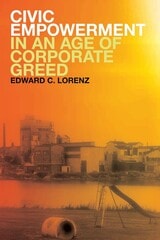
Civic Empowerment in an Age of Corporate Greed
Edward C. Lorenz
Michigan State University Press, 2012
A thought-provoking investigation of an urgent issue facing American communities today, Edward C. Lorenz’s book examines the intersection of corporate irresponsibility and civic engagement. At the heart of this case study is a group of firms responsible for seven of the most contaminated Superfund sites in the United States, the largest food contamination accident in U.S. history, stunning stock and financial manipulations, and a massive shift of jobs off shore. In the face of these egregious environmental, employee, and investor abuses, several communities impacted by these firms organized to confront and combat failures in corporate and bureaucratic leadership, winning notable victories over major financiers, lobbyists, and indifferent or ineffective government agencies. A critical analysis of public and private leadership, business and economic ethics, and civic life, this book concludes with a stirring blueprint for other communities facing similarly overwhelming opposition.
Civil War Weather in Virginia
Robert K. Krick
University of Alabama Press, 2007
Civilizing Natures
Race, Resources, and Modernity in Colonial South IndiaPhilip, Kavita
Rutgers University Press, 2003
Science was a central pillar of colonialism, but the converse holds true as well: colonialism profoundly shaped the character of nineteenth-century science. Civilizing Natures unravels unexpected relationships between science, technology, and administrative systems in colonial India from the 1850s to the 1930s, deepening our perspective on continuing conflicts over race, resources, and empire.
Botanists, anthropologists, and foresters had their most important sources of data—nature and natives—located at colonial sites. In the hilly, forested regions of Madras Presidency, tribal populations were studied by ethnographers, managed by revenue officials, recruited by plantation contractors, and modernized by missionaries. Racial constructions of nature and modernity helped criminalize and domesticate unruly natives. This is a story about the construction of nature in southern India that is deeply local and irreducibly global.
Through detailed case studies, Kavita Philip shows how race and nature are fundamental to understanding colonial modernities. Through its insightful combination of methodologies from both the humanities and the social sciences, Civilizing Natures complicates our understandings of the relationships between science and religion, pre-modern and civilized, environment and society.
Clashing Convictions
Science and Religion in American FictionAlbert H. Tricomi
The Ohio State University Press, 2016
With chapters on James Lane Allen’s The Reign of Law, Harold Frederic’s The Damnation of Theron Ware, William Dean Howells’s The Leatherwood God, Sinclair Lewis’s Arrowsmith and Elmer Gantry, Jerome Lawrence and Robert E. Lee’s Inherit the Wind, and James Scott Bell’s The Darwin Conspiracy, Tricomi offers new readings emphasizing how this canon represents science and religion as in deep, if not irreconcilable, conflict. Tricomi’s sweeping study, with its emphasis on the twentieth century, thus reveals from several directions the processes of secularism even as it identifies the emergence of what some have come to describe as the current “postsecular” moment in America.
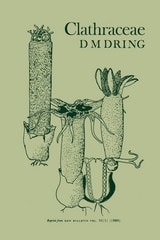
Clathraceae
D. M. Dring
Royal Botanic Gardens, Kew, 1980
Reprinted from Kew Bulletin Vol. 35 (1).
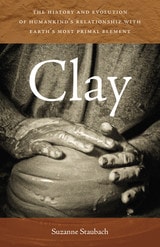
Clay
The History and Evolution of Humankind’s Relationship with Earth’s Most Primal ElementSuzanne Staubach
University Press of New England, 2013
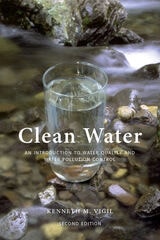
Clean Water, 2nd ed
An Introduction to Water Quality and Water Pollution ControlKenneth M. Vigil
Oregon State University Press, 2003
Most other books on water quality and pollution control are highly technical and very specific, and are aimed at engineers, scientists, or attorneys. Clean Water, on the other hand, is a comprehensive discussion of the subject intended for a wider audience of science students, educators, and the general public.
Vigil avoids the use of technical jargon and uses many photos and diagrams to illustrate and explain concepts. He provides sufficient detail to educate readers about many broad topics and includes additional references at the end of each chapter for exploring specific topics in more detail.
Clean Water summarizes the basic fundamentals of water chemistry and microbiology and outlines important water quality rules and regulations, all in concise, understandable prose. It describes the basic scientific principles behind water pollution control and the broader approach of addressing water pollution problems through watershed management. There are sections on drinking water and on citizen involvement in water pollution control efforts at home and in the community.
Climate Bridge
An International Perspective on How to Enact Climate Action at the Government Public InterfaceWolfram Höfer
Rutgers University Press, 2025
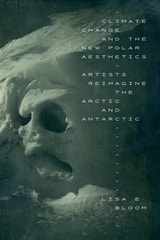
Climate Change and the New Polar Aesthetics
Artists Reimagine the Arctic and AntarcticLisa E. Bloom
Duke University Press, 2022
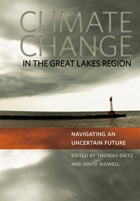
Climate Change in the Great Lakes Region
Navigating an Uncertain FutureThomas Dietz
Michigan State University Press, 2012
People living in the Great Lakes region are already feeling the effects of a changing climate. Shifts in seasonal temperatures and precipitation patterns could have dramatic impacts on the economy, ecology, and quality of life. In this illuminating and thorough volume, leading scholars address the challenge of preparing for climate change in the region, where decision makers from various sectors—government, agriculture, recreation, and tourism—must increasingly be aware of the need to incorporate climate change into their short- and long-term planning. The chapters in this revealing book, written by some of the foremost climate change scholars in North America, outline the major trends in the climate of the Great Lakes region, how humans might cope with the uncertainty of climate change impacts, and examples of on-the-ground projects that have addressed these issues.
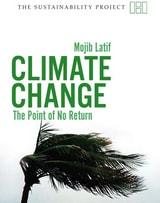
Climate Change
The Point of No ReturnMojib Latif
Haus Publishing, 2009
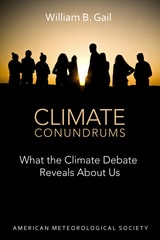
Climate Conundrums
What the Climate Debate Reveals About UsWilliam B. Gail
American Meteorological Society, 2014
Climate Conundrums is a journey through how we as humans think, individually and collectively, about the debate. It eschews rhetoric or fist-pounding conclusions and instead explores our ongoing attempts to reach a societal understanding about climate change and how we should respond to it. The essays throughout are broadly organized around our relationship with nature, the challenges facing human society, and the path ahead for civilization. Each begins with a question—Can we make nature better? Could science and religion reconcile?—and from there follows an introspective path through all sides of the debates. Some are longstanding issues, such as whether humans are growing increasingly distant from nature. Others are brought on by recent developments, such as whether technology can eventually solve all of society’s needs.
While no final answers are given, the insights that come from reflecting on these questions can help us better find our way and better connect with each other across the climate divide.
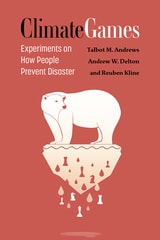
Climate Games
Experiments on How People Prevent DisasterTalbot M. Andrews, Andrew W. Delton, and Reuben Kline
University of Michigan Press, 2024
Yet real climate change is a complex social dilemma involving the world’s nearly eight billion inhabitants. In the real world, the worst effects of climate change are likely to be felt by developing countries, while most of the decisions will be made by rich, industrialized countries. And while the world as a whole would be better off if all nations reduced their greenhouse gas emissions, any given nation could decide it would be even better off if it continued emitting and let other nations take care of the problem. These disaster experiments test how real people respond to climate change’s unique constellation of challenges and deliver a positive message: People will prevent disaster.
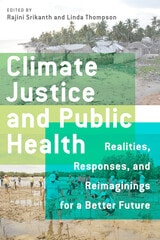
Climate Justice and Public Health
Realities, Responses, and Reimaginings for a Better FutureEdited by Rajini Srikanth and Linda Thompson
University of Massachusetts Press, 2024
When climate disasters like hurricanes, heatwaves, and tsunamis strike, they reveal the inequities of our social, political, and economic structures. They also lay bare the negative impacts of these structures on the health and safety of all people, and particularly socioeconomically vulnerable groups. With original contributions from scholars from a wide range of diverse fields—including environmental studies, public health, legal studies, urban planning, literary studies, and nursing—Climate Justice and Public Health examines this nexus of climate change, which has become impossible to ignore in the twenty-first century.
Expanding the climate and health equity discussions to populations all over the globe, the contributors in this volume address an impressive and broad range of topics that include Indigenous health and cultural practices, mental and emotional health, senior health, and impacts on African American communities. Collectively, they present radical new ways of confronting these issues and propose holistic solutions.
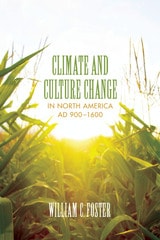
Climate and Culture Change in North America AD 900–1600
By William C. Foster
University of Texas Press, 2012
Climate change is today’s news, but it isn’t a new phenomenon. Centuries-long cycles of heating and cooling are well documented for Europe and the North Atlantic. These variations in climate, including the Medieval Warm Period (MWP), AD 900 to 1300, and the early centuries of the Little Ice Age (LIA), AD 1300 to 1600, had a substantial impact on the cultural history of Europe. In this pathfinding volume, William C. Foster marshals extensive evidence that the heating and cooling of the MWP and LIA also occurred in North America and significantly affected the cultural history of Native peoples of the American Southwest, Southern Plains, and Southeast.
Correlating climate change data with studies of archaeological sites across the Southwest, Southern Plains, and Southeast, Foster presents the first comprehensive overview of how Native American societies responded to climate variations over seven centuries. He describes how, as in Europe, the MWP ushered in a cultural renaissance, during which population levels surged and Native peoples substantially intensified agriculture, constructed monumental architecture, and produced sophisticated works of art. Foster follows the rise of three dominant cultural centers—Chaco Canyon in New Mexico, Cahokia on the middle Mississippi River, and Casas Grandes in northwestern Chihuahua, Mexico—that reached population levels comparable to those of London and Paris. Then he shows how the LIA reversed the gains of the MWP as population levels and agricultural production sharply declined; Chaco Canyon, Cahokia, and Casas Grandes collapsed; and dozens of smaller villages also collapsed or became fortresses.
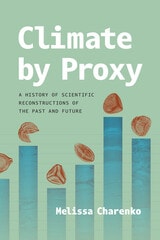
Climate by Proxy
A History of Scientific Reconstructions of the Past and FutureMelissa Charenko
University of Chicago Press, 2025
Unlike our daily reckoning with the weather, our experience of climate must be mediated through methods that measure the ebb and flow of climate, such as computer models, instruments like thermometers, and organic and inorganic remains known as “proxies.” Climate by Proxy by Melissa Charenko explores how scientists read the record of past climates and how their readings have engendered particular understandings of climate. Charenko focuses on the twentieth century, a period when scientists in Europe and North America began to believe that climate had a dynamic history worth studying. Scientists in this period developed several techniques to infer past climate from fossil pollen, tree rings, pieces of vegetation, and other organic remains imprinted upon by former climates. Climate by Proxy examines how these techniques helped shape notions of climate itself.
Charenko also shows how these varied interpretations of climate played an outsized role in explanations of human history and destiny. Geologists, botanists, ecologists, and other scientists interested in climate over long timescales routinely discussed how climate influenced plants, animals, and, notably, people. By following the scientists who reconstructed climate using natural archives, Climate by Proxy demonstrates how material objects worked with scientists’ perceptions of human groups to compel, constrain, and reinforce their understandings of climate, history, and the future.
Climate in Motion
Science, Empire, and the Problem of ScaleDeborah R. Coen
University of Chicago Press, 2018
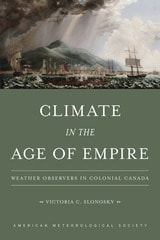
Climate in the Age of Empire
Weather Observers in Colonial CanadaVictoria C. Slonosky
American Meteorological Society, 2018
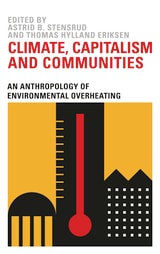
Climate, Capitalism and Communities
An Anthropology of Environmental OverheatingAstrid B. Stensrud
Pluto Press, 2019
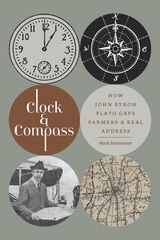
Clock and Compass
How John Byron Plato Gave Farmers a Real AddressMark Monmonier
University of Iowa Press, 2022
Plato’s solution was a map-and-directory combo that used direction and distance from a local business center to give farmers a real address, just like city dwellers. He patented his invention called the “Clock System” and tried to sell it to the Post Office Department. What follows is a tale of persistence and failure as rural farming declined and technology and capitalism overtook John Byron Plato’s chances at geographic immortality.
Cloud Ethics
Algorithms and the Attributes of Ourselves and OthersLouise Amoore
Duke University Press, 2020
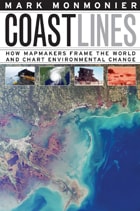
Coast Lines
How Mapmakers Frame the World and Chart Environmental ChangeMark Monmonier
University of Chicago Press, 2008
Whether for sailing charts or property maps, Monmonier shows, coastlines challenge mapmakers to capture on paper a highly irregular land-water boundary perturbed by tides and storms and complicated by rocks, wrecks, and shoals. Coast Lines is peppered with captivating anecdotes about the frustrating effort to expunge fictitious islands from nautical charts, the tricky measurement of a coastline’s length, and the contentious notions of beachfront property and public access.
Combing maritime history and the history of technology, Coast Lines charts the historical progression from offshore sketches to satellite images and explores the societal impact of coastal cartography on everything from global warming to homeland security. Returning to the form of his celebrated Air Apparent, Monmonier ably renders the topic of coastal cartography accessible to both general readers and historians of science, technology, and maritime studies. In the post-Katrina era, when the map of entire regions can be redrawn by a single natural event, the issues he raises are more important than ever.

Cocoon Cultures
The Entanglement of Silk and Biology in JapanLisa Onaga
Duke University Press, 2027

Code
From Information Theory to French TheoryBernard Dionysius Geoghegan
Duke University Press, 2022
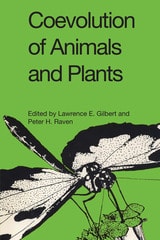
Coevolution of Animals and Plants
Symposium V, First International Congress of Systematic and Evolutionary Biology, 1973Edited by Lawrence E. Gilbert and Peter H. Raven
University of Texas Press, 1975
It has long been recognized that plants and animals profoundly affect one another’s characteristics during the course of evolution. However, the importance of coevolution as a dynamic process involving such diverse factors as chemical communication, population structure and dynamics, energetics, and the evolution, structure, and functioning of ecosystems has been widely recognized for a comparatively short time. Coevolution represents a point of view about the structure of nature that only began to be fully explored in the late twentieth century. The papers presented here herald its emergence as an important and promising field of biological research.
Coevolution of Animals and Plants is the first book to focus on the dynamic aspects of animal-plant coevolution. It covers, as broadly as possible, all the ways in which plants interact with animals. Thus, it includes discussions of leaf-feeding animals and their impact on plant evolution as well as of predator-prey relationships involving the seeds of angiosperms. Several papers deal with the most familiar aspect of mutualistic plant-animal interactions—pollination relationships. The interactions of orchids and bees, ants and plants, and butterflies and plants are discussed. One article provides a fascinating example of more indirect relationships centered around the role of carotenoids, which are produced by plants but play a fundamental part in the visual systems of both plants and animals.
Coevolution of Animals and Plants provides a general conceptual framework for studies on animal-plant interaction. The papers are written from a theoretical, rather than a speculative, standpoint, stressing patterns that can be applied in a broader sense to relationships within ecosystems.
Contributors to the volume include Paul Feeny, Miriam Rothschild, Christopher Smith, Brian Hocking, Lawrence Gilbert, Calaway Dodson, Herbert Baker, Bernd Heinrich, Doyle McKey, and Gordon Frankie.
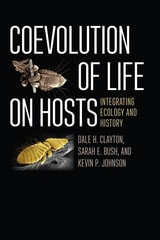
Coevolution of Life on Hosts
Integrating Ecology and HistoryDale H. Clayton, Sarah E. Bush, and Kevin P. Johnson
University of Chicago Press, 2015
Following an introduction to coevolutionary concepts, the authors combine experimental and comparative host-parasite approaches for testing coevolutionary hypotheses to explore the influence of ecological interactions and coadaptation on patterns of diversification and codiversification among interacting species. Ectoparasites—a diverse assemblage of organisms that ranges from herbivorous insects on plants, to monogenean flatworms on fish, and feather lice on birds—are powerful models for the study of coevolution because they are easy to observe, mark, and count. As lice on birds and mammals are permanent parasites that spend their entire lifecycles on the bodies of their hosts, they are ideally suited to generating a synthetic overview of coevolution—and, thereby, offer an exciting framework for integrating the concepts of coadaptation and codiversification.

Coffee Atlas of Ethiopia
Aaron Davis et al.
Royal Botanic Gardens, Kew, 2018
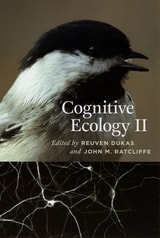
Cognitive Ecology II
Edited by Reuven Dukas and John M. Ratcliffe
University of Chicago Press, 2009
Merging evolutionary ecology and cognitive science, cognitive ecology investigates how animal interactions with natural habitats shape cognitive systems, and how constraints on nervous systems limit or bias animal behavior. Research in cognitive ecology has expanded rapidly in the past decade, and this second volume builds on the foundations laid out in the first, published in 1998.
Cognitive Ecology II integrates numerous scientific disciplines to analyze the ecology and evolution of animal cognition. The contributors cover the mechanisms, ecology, and evolution of learning and memory, including detailed analyses of bee neurobiology, bird song, and spatial learning. They also explore decision making, with mechanistic analyses of reproductive behavior in voles, escape hatching by frog embryos, and predation in the auditory domain of bats and eared insects. Finally, they consider social cognition, focusing on alarm calls and the factors determining social learning strategies of corvids, fish, and mammals.
With cognitive ecology ascending to its rightful place in behavioral and evolutionary research, this volume captures the promise that has been realized in the past decade and looks forward to new research prospects.
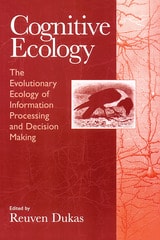
Cognitive Ecology
The Evolutionary Ecology of Information Processing and Decision MakingEdited by Reuven Dukas
University of Chicago Press, 1998
Individual chapters consider such issues as the evolution of learning and its influence on behavior; the effects of cognitive mechanisms on the evolution of signaling behavior; how neurobiological and evolutionary processes have shaped navigational activities; functional and mechanical explanations for altered behaviors in response to changing environments; how foragers make decisions and how these decisions are influenced by the risks of predation; and how cognitive mechanisms affect partner choice.
Cognitive Ecology will encourage biologists to consider how animal cognition affects behavior, and will also interest comparative psychologists and cognitive scientists.
Cognitive Models of Science
Ronald Giere
University of Minnesota Press, 1992

Cold Running River
David N. Cassuto
University of Michigan Press, 1994
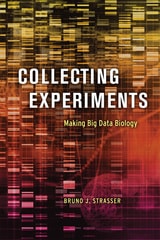
Collecting Experiments
Making Big Data BiologyBruno J. Strasser
University of Chicago Press, 2019
Every scientist working today draws on databases to produce scientific knowledge. Databases have become more common than microscopes, voltmeters, and test tubes, and the increasing amount of data has led to major changes in research practices and profound reflections on the proper professional roles of data producers, collectors, curators, and analysts.
Collecting Experiments traces the development and use of data collections, especially in the experimental life sciences, from the early twentieth century to the present. It shows that the current revolution is best understood as the coming together of two older ways of knowing—collecting and experimenting, the museum and the laboratory. Ultimately, Bruno J. Strasser argues that by serving as knowledge repositories, as well as indispensable tools for producing new knowledge, these databases function as digital museums for the twenty-first century.
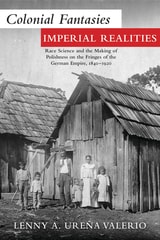
Colonial Fantasies, Imperial Realities
Race Science and the Making of Polishness on the Fringes of the German Empire, 1840–1920Lenny A. Ureña Valerio
Ohio University Press, 2019
In Colonial Fantasies, Imperial Realities, Lenny Ureña Valerio offers a transnational approach to Polish-German relations and nineteenth-century colonial subjectivities. She investigates key cultural dynamics in the history of medicine, colonialism, and migration that bring Germany and Prussian Poland closer to the colonial and postcolonial worlds in Africa and Latin America. She also analyzes how Poles in the German Empire positioned themselves in relation to Germans and native populations in overseas colonies. She thus recasts Polish perspectives and experiences, allowing new insights into identity formation and nationalist movements within the German Empire.
Crucially, Ureña Valerio also studies the medical projects and scientific ideas that traveled from colonies to the German metropole, and vice versa, which were influential not only in the racialization of Slavic populations, but also in bringing scientific conceptions of race to the everydayness of the German Empire. As a whole, Colonial Fantasies, Imperial Realities illuminates nested imperial and colonial relations using sources that range from medical texts and state documents to travel literature and fiction. By studying these scientific and political debates, Ureña Valerio uncovers novel ways to connect medicine, migration, and colonialism and provides an invigorating model for the analysis of Polish history from a global perspective.
Colonialism and Science
Saint Domingue and the Old RegimeJames E. McClellan III
University of Chicago Press, 2010
How was the character of science shaped by the colonial experience? In turn, how might we make sense of how science contributed to colonialism? Saint Domingue (now Haiti) was the world’s richest colony in the eighteenth century and home to an active society of science—one of only three in the world, at that time. In this deeply researched and pathbreaking study of the colony, James E. McClellan III first raised his incisive questions about the relationship between science and society that historians of the colonial experience are still grappling with today. Long considered rare, the book is now back in print in an English-language edition, accompanied by a new foreword by Vertus Saint-Louis, a native of Haiti and a widely-acknowledged expert on colonialism. Frequently cited as the crucial starting point in understanding the Haitian revolution, Colonialism and Science will be welcomed by students and scholars alike.
“By deftly weaving together imperialism and science in the story of French colonialism, [McClellan] . . . brings to light the history of an almost forgotten colony.”—Journal of Modern History
“McClellan has produced an impressive case study offering excellent surveys of Saint Domingue’s colonial history and its history of science.”—Isis

Coloniality in the Cliff Swallow
The Effect of Group Size on Social BehaviorCharles R. Brown and Mary Bomberger Brown
University of Chicago Press, 1996
Drawing on their twelve-year study of a population of cliff swallows in Nebraska, the Browns investigate twenty-six social and ecological costs and benefits of coloniality, many never before addressed in a systematic way for any species. They explore how these costs and benefits are reflected in reproductive success and survivorship, and speculate on the evolution of cliff swallow coloniality.
This work, the most comprehensive and detailed study of vertebrate coloniality to date, will be of interest to all who study social animals, including behavioral ecologists, population biologists, ornithologists, and parasitologists. Its focus on the evolution of coloniality will also appeal to evolutionary biologists and to psychologists studying decision making in animals.
Colorado Flora
Eastern Slope, Fourth Edition <br>A Field Guide to the Vascular PlantsWilliam A. Weber
University Press of Colorado, 2011
The revised and updated editions reflect current taxonomic knowledge. The authors describe botanical features of this unparalleled biohistorical region and its mountain ranges, basins, and plains and discuss plant geography, giving detailed notes on habitat, ecology, and range. The keys recount interesting anecdotes and introductions for each plant family. The book is rounded out with historical background of botanical work in the state, suggested readings, glossary, index to scientific and common names, references, and hundreds of illustrations. The books also contain a new contribution from Donald R. Farrar and Steve J. Popovich on moonworts. The fourth editions of both Colorado Flora: Eastern Slope and Colorado Flora: Western Slope are ideal for both student and scientist and essential for readers interested in Colorado's plant life.

Colorado Gem Trails
And Mineral GuideRichard M. Pearl
Ohio University Press, 1972
Detailed directions are given for reaching the noted as well as the little-known localities in all sections of this great mineral-producing state. Included are numerous mileage logs never before published, and many sketch maps made especially for this book. A unique system arranges the localities along segments of the main highways.
Latest information is given on local travel and collecting conditions and land ownership, so much desired by collectors who want to make the best use of their time. Gem and mineral societies that welcome visitors — museums that display outstanding collections — are all described. Official maps and references to the literature are listed.
Coloring the Universe
An Insider's Look at Making Spectacular Images of SpaceTravis Rector, Kimberly Arcand, and Megan Watzke
University of Alaska Press, 2015
Coloring the Universe uses accessible language to describe how these giant telescopes work, what scientists learn with them, and how they are used to make color images. It talks about how otherwise un-seeable rays, such as radio waves, infrared light, X-rays, and gamma rays, are turned into recognizable colors. And it is filled with fantastic images taken in far-away pockets of the universe. Informative and beautiful, Coloring the Universe will give space fans of all levels an insider’s look at how scientists bring deep space into brilliant focus.
Columnar Cacti and Their Mutualists
Evolution, Ecology, and ConservationEdited by Theodore H. Fleming and Alfonso Valiente-Banuet
University of Arizona Press, 2002
This book summarizes our current knowledge about the ecology, evolution, and conservation of columnar cacti and their vertebrate mutualists to show that the very survival of these cacti depends on animals who pollinate them and disperse their seeds. Contributors from the United States, Mexico, Venezuela, and Colombia explore aspects of geology and evolution that have forged this relationship, review findings in anatomy and physiology, and discuss recent research in population and community ecology as well as conservation issues. Ranging from the Sonoran Desert to the northern Andes, these studies reflect recent progress in understanding how abiotic and biotic factors interact to influence the evolution, distribution, and abundance of cacti and mutualists alike.
In addition, this book examines the ways in which humans, through the process of domestication, have modified these plants for economic benefit. The contributors also review phylogenetic relationships between cacti and nectar-feeding bats in an effort to understand how bat-plant interactions have influenced the evolution of diversity and ecological specialization of both. Because of the number of migratory pollinators feeding on columnar cacti, the authors make conservation recommendations aimed at preserving fully functional ecosystems in arid portions of the New World tropics and subtropics.
No other book treats the pollination ecology of cacti in such depth or offers such a wealth of up-to-date material on the nectar-feeding bats of the New World. As scientists become increasingly concerned with the need to protect biotic interactions, Columnar Cacti and Their Mutualists provides a benchmark for both conservation efforts and future research.
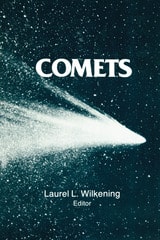
Comets
Laurel L. Wilkening
University of Arizona Press, 1982
"The volume is highly recommended to all interested in comets and the Solar System."—Journal of the British Astronomical Association
"A good representation of the studies that are currently being done on comets, and it is an extremely good source of information on a wide variety of topics."—International Comet Quarterly
"Extremely well-written and informative. . . . A must for library collections."—The Observatory

Comets
Laurel L. Wilkening
University of Arizona Press, 1982
"The volume is highly recommended to all interested in comets and the Solar System."—Journal of the British Astronomical Association
"A good representation of the studies that are currently being done on comets, and it is an extremely good source of information on a wide variety of topics."—International Comet Quarterly
"Extremely well-written and informative. . . . A must for library collections."—The Observatory