Results by title
4413 books match the query 'Anthropology' and 377 start with c
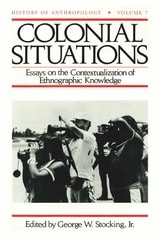
Colonial Situations
Essays on the Contextualization of Ethnographic KnowledgeEdited by George W. Stocking, Jr.
University of Wisconsin Press, 1993
As European colonies in Asia and Africa became independent nations, as the United States engaged in war in Southeast Asia and in covert operations in South America, anthropologists questioned their interactions with their subjects and worried about the political consequences of government-supported research. By 1970, some spoke of anthropology as “the child of Western imperialism” and as “scientific colonialism.” Ironically, as the link between anthropology and colonialism became more widely accepted within the discipline, serious interest in examining the history of anthropology in colonial contexts diminished.
This volume is an effort to initiate a critical historical consideration of the varying “colonial situations” in which (and out of which) ethnographic knowledge essential to anthropology has been produced. The essays comment on ethnographic work from the middle of the nineteenth century to nearly the end of the twentieth, in regions from Oceania through southeast Asia, the Andaman Islands, and southern Africa to North and South America.
The “colonial situations” also cover a broad range, from first contact through the establishment of colonial power, from District Officer administrations through white settler regimes, from internal colonialism to international mandates, from early “pacification” to wars of colonial liberation, from the expropriation of land to the defense of ecology. The motivations and responses of the anthropologists discussed are equally varied: the romantic resistance of Maclay and the complicity of Kubary in early colonialism; Malinowski’s salesmanship of academic anthropology; Speck’s advocacy of Indian land rights; Schneider’s grappling with the ambiguities of rapport; and Turner’s facilitation of Kaiapo cinematic activism.
“Provides fresh insights for those who care about the history of science in general and that of anthropology in particular, and a valuable reference for professionals and graduate students.”—Choice
“Among the most distinguished publications in anthropology, as well as in the history of social sciences.”—George Marcus, Anthropologica
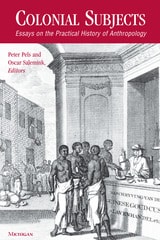
Colonial Subjects
Essays on the Practical History of AnthropologyPeter Pels and Oscar Salemink, Editors
University of Michigan Press, 2000
The essays in this volume share the assumption that "ethnography," far from being the unique purview of anthropology, is a broader field of practice out of which and alongside which anthropology attempted to distinguish itself as a scientific discipline. They explore a variety of situations in colonial South and Southeast Asia and Africa and in the treatment of the indigenous inhabitants of North America and Australia to provide genealogies of present-day anthropological practices, tracing them back to the subjects of colonial ethnography.
This book introduces into the history of anthropology many of the insights developed in recent studies in history, cultural studies, and the anthropology of colonialism. It can serve as a course book in the history of anthropology and the anthropology of colonialism, while at the same time addressing a much larger audience of students of colonial history, of the history of science and modernity, and of globalization.
Peter Pels is Lecturer in Anthropology, University of Amsterdam. Oscar Salemink is Program Officer for Social Sciences and Humanities, The Ford Foundation-Vietnam.
Colonial Transactions
Imaginaries, Bodies, and Histories in GabonFlorence Bernault
Duke University Press, 2019

Colonial Transformations in Venezuela
Anthropology, Archaeology, and History, Volume 47Berta E. Pérez, ed.
Duke University Press, 0
"Colonial Transformations in Venezuela" also provides a much-needed ethnohistorical approach to tropical Amazonia in general. In light of current debates over the nature of the colonial occupation and the ecological potential of the tropical forest as a site for human complexity and development, the papers gathered in this special issue bring new kinds of arguments and important new data to these issues. The articles also indicate important new lines of research for the understanding of native histories in a modern age of global connections.
Contributors include Rodrigo Navarrete, H. Dieter Heinen. Alvaro Garcia-Castro, Rafael A. Gassón, Silvia M. Vidal, Lilliam Arvelo, Franz Scaramelli, Kay Tarble, and Nelly Arvelo-Jiménez
Colonialism Experienced
Vietnamese Writings on Colonialism, 1900-1931Truong Buu Lam
University of Michigan Press, 2000
Colonialism and Culture
Nicholas B. Dirks, Editor
University of Michigan Press, 1992

Colonizing Trick
National Culture And Imperial Citizenship In Early AmericaDavid Kazanjian
University of Minnesota Press, 2003
An illuminating look at the concepts of race, nation, and equality in eighteenth- and nineteenth-century America
The idea that “all men are created equal” is as close to a universal tenet as exists in American history. In this hard-hitting book, David Kazanjian interrogates this tenet, exploring transformative flash points in early America when the belief in equality came into contact with seemingly contrary ideas about race and nation. The Colonizing Trick depicts early America as a white settler colony in the process of becoming an empire-—one deeply integrated with Euro-American political economy, imperial ventures in North America and Africa, and pan-American racial formations.
Kazanjian traces tensions between universal equality and racial or national particularity through theoretically informed critical readings of a wide range of texts: the political writings of David Walker and Maria Stewart, the narratives of black mariners, economic treatises, the personal letters of Thomas Jefferson and Phillis Wheatley, Charles Brockden Brown’s fiction, congressional tariff debates, international treaties, and popular novelettes about the U.S.–Mexico War and the Yucatán’s Caste War. Kazanjian shows how emergent racial and national formations do not contradict universalist egalitarianism; rather, they rearticulate it, making equality at once restricted, formal, abstract, and materially embodied.
Color in the Ancestral Pueblo Southwest
Edited by Marit K. Munson and Kelley Hays-Gilpin
University of Utah Press, 2019
Beginning with the technical and practical concerns of acquiring pigments and using them to create paints, the authors explore how connections to landscapes and sacred places are embodied by many colorful materials. Contributors examine the development of polychromes and their juxtaposition with black-on-white vessels; document how color was used in rock paintings and architecture; and consider the inherent properties of materials, arguing that shell, minerals, and stone were valued not only for color but for other visual properties as well. The book concludes by considering the technological, economic, social, and ideological factors at play and demonstrates the significant role color played in aesthetic choices.

Comb Ridge and Its People
The Ethnohistory of a RockRobert McPherson
Utah State University Press, 2009
West of the Four Corners and east of the Colorado River, in southeastern Utah, a unique one-hundred-mile-long, two-hundred-foot-high, serrated cliff cuts the sky. Whether viewed as barrier wall or sheltering sanctuary, Comb Ridge has helped define life and culture in this region for thousands of years. Today, the area it crosses is still relatively remote, though an important part of a scenic complex of popular tourist destinations that includes Natural Bridges National Monument and Grand Gulch just to the west, Glen Canyon National Recreation Area and Lake Powell a bit farther west, Canyonlands National Park to the north, Hovenweep National Monument to the east, and the San Juan River and Monument Valley to the south. Prehistorically Comb Ridge split an intensively used Ancient Puebloan homeland. It later had similar cultural—both spiritual and practical—significance to Utes, Paiutes, and Navajos and played a crucial role in the history of European American settlement. To tell the story of this rock that is unlike any other rock in the world and the diverse people whose lives it has affected, Robert S. McPherson, author of multiple books on Navajos and on the Four Corners region, draws on the findings of a major, federally funded project to research the cultural history of Comb Ridge. He carries the story forward to contention over present and future uses of Comb Ridge and the spectacular country surrounding it.
The book is the winner of the 2009 Utah Book Award for Nonfiction.
Coming of Age in Macholand
Masculinity, Patriarchy, and the Search for Freedom in Indian PunjabHarjant S. Gill
University of Chicago Press, 2026
Through Punjabi men’s struggles to marry, migrate, love, and escape, Coming of Age in Macholand reveals what patriarchy costs the men it promises to empower.
In 2019, Sandeep, a twenty-seven-year-old from a Punjabi family, killed five relatives and himself after a date was set for his wedding. His suicide note described feeling trapped by social expectations and condemned to a life he had not chosen. Harjant S. Gill recognized something unsettling in his story. Gill grew up in Punjab as the eldest grandson of a Sikh patriarch before immigrating to California as a teenager. Although he built an openly gay life in Washington, DC, he returned to the closet for safety while researching in India, even as his grandfather sought a “suitable” bride for him. Gill could refuse marriage and return to America, but many men he met had no easy exit. What happens when patriarchy promises men power while denying them the freedom to choose who they will become?
Coming of Age in Macholand explores how young men respond to patriarchy—submitting, rebelling, escaping, and sometimes coming undone. Drawing on research spanning a decade, Gill enters the worlds of Punjabi boys learning to become men, where masculinity is shaped through violence yet sustained by emotional bonds. Amid political upheaval, a faltering agrarian economy, and migration hollowing out Punjab’s villages, this book portrays men struggling for power while losing intimacy and control over their lives. Blending memoir, ethnography, and social investigation, Gill exposes a system that brutalizes women and queer people while constricting the men it claims to serve. At a moment when men feel angry, lonely, and adrift, this book asks what they must relinquish—and reclaim—to become truly free.

Coming through the Fire
Surviving Race and Place in AmericaC. Eric Lincoln
Duke University Press, 1996
Coming through the Fire, with its fiercely intelligent, passionate, and clear-eyed view of race and class conflict, makes a major contribution to understanding—and thereby healing—the terrible rift that has opened up in the heart of America. Lincoln explores the nature of biracial relationships, the issue of transracial adoption, violence—particularly black-on-black violence—the “endangered” black male, racism as power, the relationship between Blacks and Jews, our multicultural melting pot, and Minister Louis Farrakhan.Without sidestepping painful issues, or sacrificing a righteous anger, the author argues for “no-fault reconciliation,” for mutual recognition of the human endowment we share regardless of race, preparing us as a nation for the true multiculture tomorrow will demand.
Readers familiar with Lincoln’s earlier groundbreaking work on the Black Muslims and on the black church will be eagerly awaiting the publication of Coming through the Fire. Others will simply find C. Eric Lincoln’s personal story and his exploration of survival and race in America to be absorbing and compelling reading.

Commemorating Hell
The Public Memory of Mittelbau-DoraGretchen Schafft and Gerhard Zeidler
University of Illinois Press, 2011
Prisoners at Mittelbau-Dora built the V-1 and V-2 missiles, some of them coming into direct contact with Wernher von Braun and Arthur Rudolph, who later became leading engineers in the U.S. space program. Through the continuing story of Mittelbau-Dora, from its operation as a labor camp to its social construction as a monument, Schafft and Zeidler reflect an abiding interest in the memory and commemoration of notorious national events. In extending the analysis of Mittelbau-Dora into post-war and present-day Germany, Commemorating Hell uncovers the intricate relationship between the politics of memory and broader state and global politics, revealing insights about the camp's relationship to the American space pioneers and the fate of the nearby city of Nordhausen.
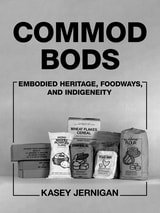
Commod Bods
Embodied Heritage, Foodways, and IndigeneityKasey Jernigan
University of Arizona Press, 2026
The term “commod bod” is used with humor and affection. It also offers a critical way to describe bodies shaped by long-term reliance on U.S. federal commodity food programs.
In Commod Bods, Kasey Jernigan shares her ongoing collaborative research with Choctaw women and describes the ways that shifting patterns of participation in food and nutrition assistance programs (commodity foods) have shaped foodways; how these foodways are linked to bodies and health, particularly “obesity” and related conditions; and how foodways and bodies are intertwined with settler colonialism and experiences of structural violence, identity making, and heritage in the Choctaw Nation of Oklahoma.
Organized thematically, the book moves from a critical history of obesity and health in Indian Country to narratives of Choctaw women navigating food, memory, and belonging. Chapters such as “Food and Fellowship” and “Heritage, Embodied” center personal stories that show how food is not only sustenance but also a site of connection, resistance, and meaning making.
Food is critical to cultural survival and affirmation. For Choctaw people, the intentional demise of traditional foodways and dependence on federal food programs are specific experiences that inform part of what it means to be Choctaw today.

Common Ground
Democracy and Collectivity in an Age of IndividualismJeremy Gilbert
Pluto Press, 2013
Common Ground explores the philosophical relationship between collectivity, individuality, affect and agency in the neoliberal era. Jeremy Gilbert argues that individualism is forced upon us by neoliberal culture, fatally limiting our capacity to escape the current crisis of democratic politics.
The book asks how forces and ideas opposed to neoliberal hegemony, and to the individualist tradition in Western thought, might serve to protect some form of communality, and how far we must accept assumptions about the nature of individuality and collectivity which are the legacy of an elitist tradition. Along the way it examines different ideas and practices of collectivity, from conservative notions of hierarchical and patriarchal communities to the politics of ‘horizontality’ and ‘the commons’ which are at the heart of radical movements today.
Exploring this fundamental faultline in contemporary political struggle, Common Ground proposes a radically non-individualist mode of imagining social life, collective creativity and democratic possibility.

Communicating with Brazilians
When "Yes" Means "No"By Tracy Novinger
University of Texas Press, 2004
Brazilians are gracious, friendly, fun-loving people, which makes their country a very inviting place to visit for pleasure or business. So great is their cordiality that Brazilians will say "yes" to almost any request—even when they actually mean "no"—which can be quite confusing for U.S. visitors who are used to a more direct style of communication. In fact, as Americans spend time in Brazil, they discover a number of cultural differences that can hamper their communication with Brazilians. To overcome these barriers, this book analyzes Brazilian culture and modes of communication and compares them with their American counterparts to help Americans learn to communicate successfully with Brazilians and vice versa.
To aid Americans in understanding the Brazilian perspective, Tracy Novinger presents a portrait of Brazil's history, racial fusion, economy, and contemporary lifestyles. She focuses in on many aspects of Brazilian culture, such as social organization and ranking systems; preconceptions, worldviews, and values; sexual behaviors and eating customs; thought patterns; nonverbal communication such as the use of time, space, gestures, touch, eye contact, rituals, etc.; and differences in Brazilian and American point-making styles when negotiating, persuading, and conversing. For quick reference, she concludes the book with a summary and checklist of the leading Brazilian cultural characteristics, as well as eight recommendations for enhancing intercultural communication.
Communicating with the Spirits
Gábor Klaniczay
Central European University Press, 2005
Communication Culture in a Digital Age
Being Seriously RelationalCristian Mendoza
St. Augustine's Press, 2023
Mendoza and Clavell's treatment of this topic renders an important philosophical conversation about digital realities and how they can actually make human life more human. This book provides a framework for using human attraction to information and communication tech for human benefit. It can be done! The authors apply the work of old and new masters to help open the new horizons of communication technology wherein human beings can flourish.
Community, Cosmopolitanism and the Problem of Human Commonality
Vered Amit and Nigel Rapport
Pluto Press, 2012
In this follow up to their widely read earlier volume, The Trouble with Community, Vered Amit and Nigel Rapport ask: 'Do notions of community remain central to our sense of who we are, in the dislocating context of globalization, or can we see beyond community closures to a human whole?'
This volume explores the variable nature of contemporary sociality. It focuses on the ethical, organizational and emotional claims and opportunities sought or fashioned for mobilizing and evading social collectivities in a world of mobile subjects. Here is an examination of the tensions and interactions between everyday forms of fluid fellowship, culturally normative claims to identity, and opportunities for realizing a universal humanity.
The book offers a new perspective on human commonality through a dialogue between two eminent anthropologists who come from distinct, but complementary positions.
Community-Engaged Research for Resilience and Health, Volume 4
Edited by Kelli E. Canada and Clark M. Peters
University of Minnesota Press, 2022
The fourth volume in the Interdisciplinary Community-Engaged Research for Health series departs from the traditional view of resilience driven by individuals and reconstructs it to hinge on the community of context. Editors Kelli E. Canada and Clark Peters identified six scholar-practitioner teams who worked to promote resilience in communities across the nation facing health crises and other structural barriers to health, such as low socioeconomic positions, structural racism, and discrimination. This research is part of a two-pronged approach to public health, intending to increase resilience and communities’ internal support while simultaneously reducing barriers to health care access.
The efforts featured in Community-Engaged Research for Resilience and Health highlight community-based solutions, points of strength, and sources of resilience to help communities that are struggling to survive and thrive in the face of adversity. Whether these communities are facing opioid addiction or other substance abuse issues, domestic violence, armed conflict, trauma, or cultural discrimination, the editors and contributors in this volume share examples of Community-Based Participatory Research (CBPR) practices where through a collaborative partnership, the community actively participates in every aspect of the alongside the interdisciplinary research team. What transpires demonstrates how researchers and communities come together to turn adversity into improved health through resilience-focused programs and interventions.
Companion Spirits
More-Than-Secular Journeys in More-Than-Human WorldsMayanthi L. Fernando
Duke University Press, 2027
Comparative Arawakan Histories
Rethinking Language Family and Culture Area in AmazoniaEdited by Jonathan D. Hill and Fernando Santos-Granero
University of Illinois Press, 2002
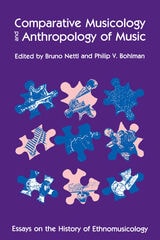
Comparative Musicology and Anthropology of Music
Essays on the History of EthnomusicologyEdited by Bruno Nettl and Philip V. Bohlman
University of Chicago Press, 1991
"This is a useful and enriching collection of articles of interest to musicologists and ethnomusicologists. . . . The authors manage to cover much ground, presenting fascinating insights into the history of the discipline while also exploring new directions in both theory and analysis. . . . the most sweeping work of this kind to be published since the 1960s."—L. D. Loeb, University of Utah, for Choice
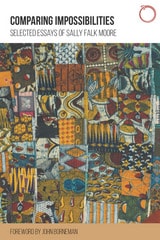
Comparing Impossibilities
Selected Essays of Sally Falk MooreSally Falk Moore
HAU, 2016
The essays range from studies of myths of incest and sexuality to those of economic development projects, from South America to Africa. The result is an astonishing assortment of works from one of the most respected legal anthropologists in the field, one who brought together disparate places and ideas in enriching comparisons that showcase the possibilities—and impossibilities—of anthropology.

Comparing Jewish Societies
Todd M. Endelman, Editor
University of Michigan Press, 1997
Comparing Muslim Societies
Knowledge and the State in a World CivilizationJuan R. I. Cole, Editor
University of Michigan Press, 1992
Competing Norms
State Regulations and Local Praxis in sub-Saharan AfricaEdited by Mamadou Diawara and Ute Röschenthaler
Campus Verlag, 2016
Competing Responsibilities
The Ethics and Politics of Contemporary LifeSusanna Trnka and Catherine Trundle, editors
Duke University Press, 2017
Contributors
Barry D. Adam, Elizabeth Anne Davis, Filippa Lentzos, Jessica Robbins-Ruszkowski, Nikolas Rose, Rosalind Shaw, Cris Shore, Jessica M. Smith, Susanna Trnka, Catherine Trundle, Jarrett Zigon
Complexities
Beyond Nature and NurtureEdited by Susan McKinnon and Sydel Silverman
University of Chicago Press, 2005
Complexities mobilizes experts from several fields of anthropology—cultural , archaeological, linguistic, and biological—to offer a compelling challenge to the resurgence of reductive theories of human biological and social life. This book presents evidence to contest such theories and to provide a multifaceted account of the complexity and variability of the human condition. Charting a course that moves beyond any simple opposition between nature and nurture, Complexities argues that a nonreductive perspective has important implications for how we understand and develop human potential.
Composing Violence
The Limits of Exposure and the Making of MinoritiesMoyukh Chatterjee
Duke University Press, 2023
Comprehending Drug Use
Ethnographic Research at the Social MarginsPage, J. Bryan
Rutgers University Press, 2010
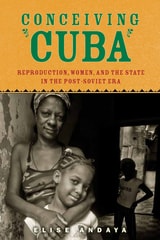
Conceiving Cuba
Reproduction, Women, and the State in the Post-Soviet EraAndaya, Elise
Rutgers University Press, 2014
Winner of the Adele E. Clarke Book Award from ReproNetwork
After Cuba’s 1959 revolution, the Castro government sought to instill a new social order. Hoping to achieve a new and egalitarian society, the state invested in policies designed to promote the well-being of women and children. Yet once the Soviet Union fell and Cuba’s economic troubles worsened, these programs began to collapse, with serious results for Cuban families.
Conceiving Cuba offers an intimate look at how, with the island’s political and economic future in question, reproduction has become the subject of heated public debates and agonizing private decisions. Drawing from several years of first-hand observations and interviews, anthropologist Elise Andaya takes us inside Cuba’s households and medical systems. Along the way, she introduces us to the women who wrestle with the difficult question of whether they can afford a child, as well as the doctors who, with only meager resources at their disposal, struggle to balance the needs of their patients with the mandates of the state.
Andaya’s groundbreaking research considers not only how socialist policies have profoundly affected the ways Cuban families imagine the future, but also how the current crisis in reproduction has deeply influenced ordinary Cubans’ views on socialism and the future of the revolution. Casting a sympathetic eye upon a troubled state, Conceiving Cuba gives new life to the notion that the personal is always political.
Conceiving Cultures
Reproducing People and Places on Nuakata, Papua New GuineaShelley Mallett
University of Michigan Press, 2003
Shelley Mallett is Research Fellow at the Key Centre for Women's Health in Society at Melbourne University.
Conceptualising "Home"
The Question of Belonging among Turkish Families in GermanyEsin Bozkurt
Campus Verlag, 2009
Concrete Dreams
Practice, Value, and Built Environments in Post-Crisis Buenos AiresNicholas D'Avella
Duke University Press, 2019
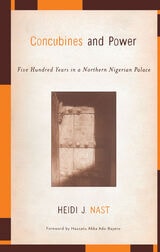
Concubines And Power
Five Hundred Years In A Northern Nigerian PalaceHeidi J. Nast
University of Minnesota Press, 2004
African Studies Association Women’s Caucus’s Aidoo-Snyder Book Prize winner
A Choice Outstanding Academic Title
The monumental palace of Kano, Nigeria, was built circa 1500 and is today inhabited by more than one thousand persons. Historically, its secluded interior housed hundreds of concubines whose role in the politics, economics, and culture of Kano city-state has been largely overlooked. In this pioneering work, Heidi J. Nast demonstrates how human-geographical methods can tell us much about a site like the palace, a place bereft of archaeological work or relevant primary sources.
Drawing on extensive ethnographic work and mapping data, Concubines and Power presents new evidence that palace concubines controlled the production of indigo-dyed cloth centuries before men did. The women were also key players in the assessment and collection of the state's earliest grain taxes, forming a complex and powerful administrative hierarchy that used the taxes for palace community needs. In addition, royal concubines served as representatives of their places of origin, their freeborn children providing the king with additional human capital to cement territorial alliances through marriage.
Social forces undoubtedly shaped and changed concubinage for hundreds of years, but Nast shows how the women’s reach extended far beyond the palace walls to the formation of the state itself.
Confronting Margaret Mead
Scholarship, Empire, and the South Pacificedited by Lenora Foerstel and Angela Gilliam
Temple University Press, 1994

Confronting Theory
The Psychology of Cultural StudiesPhilip Bell
Intellect Books, 2010
Confronting Theory presents a critique of what has come to be known as theory in cross-disciplinary humanities education. Rather than dismissing theory writing as pretentious and abstract, Confronting Theory examines its principal concepts from the perspective of academic psychology and shows that although many of these analyses sound like revolutionary psychological theory, few, if any, have empirical implications that students can evaluate. By considering the educational implications of cultural theory, Confronting Theory will empower students with arguments, not just opinions, about the increasingly idealist and irrelevant anti-realist curricula they confront in their humanities education in today’s universities.
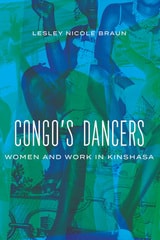
Congo's Dancers
Women and Work in KinshasaLesley Nicole Braun
University of Wisconsin Press, 2023
In Congo’s Dancers, Lesley Nicole Braun uses the prism of the Congolese danseuse to examine the politics of control and the ways in which notions of visibility, virtue, and socio-economic opportunity are interlinked in this urban African context. The work of the danseuse highlights the fact that public visibility is necessary to build the social networks required for economic independence, even as this visibility invites social opprobrium for women. The concert dancer therefore exemplifies many of the challenges that women face in Kinshasa as they navigate the public sphere, and she illustrates the gendered differences of local patronage politics that shape public morality. As an ethnographer, Braun had unusual access to the world she documents, having been invited to participate as a concert dancer herself.
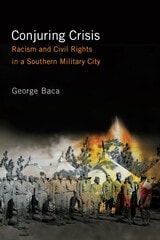
Conjuring Crisis
Racism and Civil Rights in a Southern Military CityBaca, George
Rutgers University Press, 2010
In the 1990s at Fort Bragg and Fayetteville, North Carolina, the city's dominant political coalition of white civic and business leaders had lost control of the city council. Amid accusations of racism in the police department, two white council members joined black colleagues in support of the NAACP's demand for an investigation. George Baca's ethnographic research reveals how residents and politicians transformed an ordinary conflict into a "crisis" that raised the specter of chaos and disaster. He explores new territory by focusing on the broader intersection of militarization, urban politics, and civil rights.

Conjuring Science
Scientific Symbols and Cultural Meanings in American LifeToumey, Christopher P.
Rutgers University Press, 1996
What are the implications for Americans when actors who play doctors on television endorse medical products, or when an entire town in the Midwest prepares for an earthquake based on the specious advice of a zoologist? These are just two of the many questions Christopher Toumey asks in his investigation of the role of science in American culture. Toumey focuses on the ways in which the symbols of science are employed to signify scientific authority in a variety of cases, from the selling of medical products to the making of public policy about AIDS/HIV––a practice he calls "conjuring" science. It is this "conjuring" of the images and symbols of scientific authority that troubles Toumey and leads him to reflect on the history of public understanding and perceptions of science in the United States. He argues that while most Americans invest a great deal of authority in science, there is a vacuum of understanding about scientific knowledge. This gap between belief and understanding greatly influences public policy decisions and democratic processes.
Toumey argues that instead of comprehending scientific knowledge, methods, or standards, most Americans know science only in terms of symbols that stand for science and that stand between people and scientific understanding. He breaks this paradox down into three questions. First, what are the historical conditions that have caused the culture of science to be so estranged from other parts of American culture? Second, how does science fit into American democratic culture today? And third, if the symbols of science are being used to endorse or legitimize certain values and meanings, but not the values and meanings of science, then to what do they refer?
In witty, readable prose, Toumey investigates these questions by presenting five episodes of science in American life: the fluoridation controversies; the 1986 California referendum on AIDS/HIV policy; the cold fusion controversy; the anti-evolution of creationism; and the mad- scientist stories of fiction and film.

Connective Tissue
Factory Accidents and Reconstructive Plastic Surgery in South IndiaLily N. Shapiro
Rutgers University Press, 2025
Connective Tissue revisits scholarship on factory labor by analyzing the accident as constitutive of the experience of work itself, and it refines existing conversations about the body, trauma, and care by introducing an analysis informed by theories of labor and production. Author Lily N. Shapiro argues that care does not happen in spite of or on the margins of capitalism, but rather that capitalism happens in and through care and caring relations. These experiences are intersected by identities of caste, class, and gender, and entangled in state discourse about labor rights, welfare, and industrial law.

Conquistadores de la Calle
Child Street Labor in Guatemala CityBy Thomas A. Offit
University of Texas Press, 2008
The first comprehensive, book-length study of its kind, Conquistadores de la Calle presents the findings of nearly two years of ethnographic research on the streets of Guatemala City, toppling conventional wisdom that the region's youth workers are solely victims, or that their labor situations are entirely the result of poverty and family breakdown.
Documenting the voices and experiences of the city's working children, this fascinating study reveals counterintuitive motivations for those who choose to abandon schooling in favor of participating more fully in their families' economies. The processes of developing skills and planning for their social and economic futures are covered in depth, presenting evidence that many members of this population operate well above survival level and are decidedly not marginalized or members of an underclass. Conquistadores de la Calle also makes important distinctions between these young workers—a generation of Maya and Ladino boys and girls—and the homeless children or gang youth who have been so much more widely studied.
Contextualizing a variety of data, ranging from detailed ethnographic portraits of the children's lives and the monthly income of children engaged in common street vocations (such as shining shoes or serving as porters) to educational histories and socialization activities, Thomas Offit has produced a rich trove of findings in a significant segment of urban economics that is tremendously important for anthropologists, Latin Americanists, and those interested in the lives and labors of children in the cities of the developing world.

Conservation Is Our Government Now
The Politics of Ecology in Papua New GuineaPaige West
Duke University Press, 2006
West reveals how every aspect of the Crater Mountain Wildlife Management Area—including ideas of space, place, environment, and society—was socially produced, created by changing configurations of ideas, actions, and material relations not only in Papua New Guinea but also in other locations around the world. Complicating many of the assumptions about nature, culture, and development underlying contemporary conservation efforts, Conservation Is Our Government Now demonstrates the unique capacity of ethnography to illuminate the relationship between the global and the local, between transnational processes and individual lives.
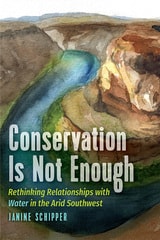
Conservation is not Enough
Rethinking Relationships with Water in the Arid SouthwestJanine Schipper
University of Wyoming Press, 2025
Using an exploratory and qualitative approach, the book draws on more than ninety-five interviews conducted over three years, revealing the complex relationships people have with water in the Southwest, and prominently features the voices of participants, effectively illustrating multiple perspectives and diverse ways of thinking about and relating to water. Schipper highlights various perspectives—including a water manager making conservation decisions, a Hopi elder emphasizing our connection to the water cycle, and a ski instructor reflecting on human-made snow—and interweaves personal experiences and reflections on her own relationship with water and conservation efforts.
Conservation Is Not Enough encourages readers to reflect on their personal connections to water and consider new possibilities, and it also urges readers to think beyond conventional conservation approaches. This book helps to transform the collective approach to water and cultivate fresh ways of engaging with and relating to water and is of great interest to scholars, students, and residents concerned with water issues in the Colorado River Basin.

Consoling Ghosts
Stories of Medicine and Mourning from Southeast Asians in ExileJean M. Langford
University of Minnesota Press, 2013
In conversation with emigrants from Laos and Cambodia, Jean M. Langford repeatedly met with spirits: the wandering souls of the seriously ill, dangerous ghosts of those who died by violence, restless ancestors displaced from their homes. For these emigrants, the dead not only appear in memories, safely ensconced in the past, but also erupt with a physical force into the daily life and dreams of the present.
Inspired by these conversations, Consoling Ghosts is a sustained contemplation of relationships with the dying and the dead. At their heart, as Langford’s work reveals, emigrants’ stories are parables not of cultural difference but rather of life and death. Langford inquires how and why spirits become implicated in remembering and responding to violence, whether the bloody violence of war or the more structural violence of social marginalization and poverty. What is at stake, she asks, when spirits break out of their usual confinement as symbolic figures for history, heritage, or trauma to haunt the corridors of hospitals and funeral homes? Emigrants’ theories and stories of ghosts, Langford suggests, inherently question the metaphorical status of spirits, in the process challenging both contemporary bioethics of dying and dominant styles of mourning. Consoling Ghosts explores the possibilities opened up by a more literal existence of ghosts, from the confrontation of shades of past violence through bodily ritual to rites of mourning that unfold in acts of material care for the dead instead of memorialization.
Ultimately the book invites us to consider alternate ways of facing death, conducting relationships with the dead and dying, and addressing the effects of violence that continue to reverberate in bodies and social worlds.
Conspiracy Narratives from Postcolonial Africa
Freemasonry, Homosexuality, and Illicit EnrichmentRogers Orock and Peter Geschiere
University of Chicago Press, 2024
In this book, anthropologists Rogers Orock and Peter Geschiere examine the moral panic over a perceived rise in homosexuality that engulfed Cameroon and Gabon beginning in the early twenty-first century. As they uncover the origins of the conspiratorial narratives that fed this obsession, they argue that the public’s fears were grounded in historically situated assumptions about the entanglement of same-sex practices, Freemasonry, and illicit enrichment.
This specific panic in postcolonial Central Africa fixated on high-ranking Masonic figures thought to lure younger men into sex in exchange for professional advancement. The authors’ thorough account shows how attacks on elites as homosexual predators corrupting the nation became a powerful outlet for mounting populist anger against the excesses and corruption of the national regimes. Unraveling these tensions, Orock and Geschiere present a genealogy of Freemasonry, taking readers from London through Paris to francophone Africa and revealing along the way how the colonial past shapes present-day anxieties linking same-sex practices to enrichment.
Conspiracy/Theory
Joseph Masco and Lisa Wedeen, editors
Duke University Press, 2024
Contributors. Nadia Abu El-Haj, Hussein Ali Agrama, Kathleen Belew, Elizabeth Anne Davis, Joseph Dumit, Faith Hillis, Lochlann Jain, Demetra Kasimis, Susan Lepselter, Darryl Li, Louisa Lombard, Joseph Masco, Robert Meister, Timothy Melley, Rosalind C. Morris, George Shulman, Lisa Wedeen
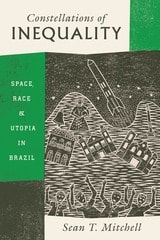
Constellations of Inequality
Space, Race, and Utopia in BrazilSean T. Mitchell
University of Chicago Press, 2017
In 1982, the Brazilian Air Force arrived on the Alcântara peninsula to build a state-of-the-art satellite launch facility. They displaced some 1,500 Afro-Brazilians from coastal land to inadequate inland villages, leaving many more threatened with displacement. Completed in 1990, this vast undertaking in one of Brazil’s poorest regions has provoked decades of conflict and controversy.
Constellations of Inequality tells this story of technological aspiration and the stark dynamics of inequality it laid bare. Sean T. Mitchell analyzes conflicts over land, ethnoracial identity, mobilization among descendants of escaped slaves, military-civilian competition in the launch program, and international intrigue. Throughout, he illuminates Brazil’s changing politics of inequality and examines how such inequality is made, reproduced, and challenged. How people conceptualize and act on the unequal conditions in which they find themselves, he shows, is as much a cultural and historical matter as a material one. Deftly broadening our understanding of race, technology, development, and political consciousness on local, national, and global levels, Constellations of Inequality paints a portrait of contemporary Brazil that will interest a broad spectrum of readers.
Constructing Culture and Power in Latin America
Daniel H. Levine, Editor
University of Michigan Press, 1993
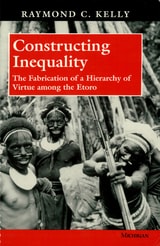
Constructing Inequality
The Fabrication of a Hierarchy of Virtue among the EtoroRaymond C. Kelly
University of Michigan Press, 1993