Results by title
5159 books match the query 'Biography' and 258 start with c
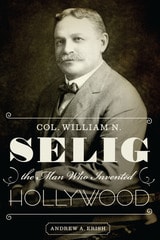
Col. William N. Selig, the Man Who Invented Hollywood
By Andrew A. Erish
University of Texas Press, 2012
All histories of Hollywood are wrong. Why? Two words: Colonel Selig. This early pioneer laid the foundation for the movie industry that we know today. Active from 1896 to 1938, William N. Selig was responsible for an amazing series of firsts, including the first two-reel narrative film and the first two-hour narrative feature made in America; the first American movie serial with cliffhanger endings; the first westerns filmed in the West with real cowboys and Indians; the creation of the jungle-adventure genre; the first horror film in America; the first successful American newsreel (made in partnership with William Randolph Hearst); and the first permanent film studio in Los Angeles. Selig was also among the first to cultivate extensive international exhibition of American films, which created a worldwide audience and contributed to American domination of the medium.
In this book, Andrew Erish delves into the virtually untouched Selig archive at the Academy of Motion Picture Arts and Sciences Library to tell the fascinating story of this unjustly forgotten film pioneer. He traces Selig’s career from his early work as a traveling magician in the Midwest, to his founding of the first movie studio in Los Angeles in 1909, to his landmark series of innovations that still influence the film industry. As Erish recounts the many accomplishments of the man who first recognized that Southern California is the perfect place for moviemaking, he convincingly demonstrates that while others have been credited with inventing Hollywood, Colonel Selig is actually the one who most deserves that honor.
Cold Comfort
Life at the Top of the MapBarton Sutter
University of Minnesota Press, 2000
A whimsical look at the pleasures and challenges of living in the far north-now in paperback!
A whimsical look at the pleasures and challenges of living in the far north-now in paperback!
"Sutter knows Duluth and the hinterlands to the North the way Garrison Keillor knows Lake Wobegon and the prairies. With a nimble wit and a roving eye for detail, Sutter goes beneath the veneer of the North Country to expose its attraction, its quirks, and its characters. There isn’t a clinker in the collection, and even if you’ve lived your entire life in Duluth or the North Country, you’ll see your home place with new insight after reading Cold Comfort." Duluth News-Tribune"Mostly whimsical, sometimes meditative, but most often warmhearted, these essays explore Lake Superior, its neighboring rivers and streams, duck hunting, cross-country skiing, bridges, cider-pressing parties, and camping out in the family car. Sutter’s prose is clean, straightforward, and sometimes mirthful." Chicago New City "An oddly brilliant and lovely little book. . . . Resonant, evocative, and splendidly written." Jim HarrisonTemperatures that dive to forty degrees below zero are only part of life in northern Minnesota, according to award-winning writer Barton Sutter. Cold Comfort is his temperamental tribute to the city of Duluth, Minnesota, where bears wander the streets and canoe racks are standard equipment. Winner of a 1998 Northeast Minnesota Book AwardWinner of a 1998 Minnesota Book Award for Creative Nonfiction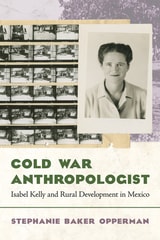
Cold War Anthropologist
Isabel Kelly and Rural Development in MexicoStephanie Baker Opperman
University of Arizona Press, 2024
Kelly’s transition from a prominent archaeologist to a key figure in applied anthropology is meticulously chronicled, unveiling her pivotal role in shaping rural development strategies in Mexico amidst the geopolitical context of the Cold War. Through an extensive examination of her correspondence, archival material, and scholarly output, Kelly’s evolving viewpoints offer profound insights into the intricate dynamics of U.S.-Mexico relations and the challenges encountered by female academics during this era.
Organized chronologically, each chapter of this work delves into distinct facets of Kelly’s international journey, with a particular emphasis on her involvement in cooperative programs aimed at fostering diplomatic relations with Mexico. Through this narrative framework, readers are immersed in a compelling exploration of Kelly’s enduring impact on both the field of anthropology and the realm of international diplomacy.
This book is indispensable for historians, anthropologists, and individuals intrigued by the nuanced complexities of Cold War politics, presenting pioneering research at the intersection of history and anthropology. Opperman skillfully brings to light the previously untold narratives of Isabel Kelly, unveiling her influence on mid-twentieth-century Mexico.
Cold War Exile
The Unclosed Case of Maurice HalperinDon S. Kirschner
University of Missouri Press, 1995
In 1953 Maurice Halperin was called before the Senate Internal Security Subcommittee to defend himself on charges of espionage. He was accused of having supplied Soviet sources with classified material from the Office of Strategic Services while he was an employee during World War II.
The Cold War was in full force. McCarthyism was at its peak. Caught up in the rapids of history, Maurice Halperin's life spun out of control. Denying the charges but knowing he could never fully clear his name, Halperin fled to Mexico and then, to avoid extradition, to Moscow. Among the friends he made there were British spy Donald MacLean and Cuban revolutionary leader Che Guevara. Disenchanted with socialism in the Soviet Union, he accepted Guevara's invitation to come to Havana in 1962. There he worked for Castro's government for five years before political tension forced him to leave for Vancouver, Canada, where he now resides.
Was Halperin a spy or a scapegoat? Was he a victim of Red- baiting or a onetime Communist espionage agent who eventually lost faith in Communism? Halperin's accuser was Elizabeth Bentley, a confessed Soviet courier who accused more than one hundred Americans of spying. Yet Bentley had no proof, and Halperin continues to maintain his innocence. One of them was lying. As Kirschner unravels the engrossing facts of the case--utilizing FBI files and dozens of interviews, including extensive interviews with Halperin himself--the reader becomes the investigator in a riveting real-life spy mystery. Along the way Kirschner offers new material on the OSS and further disturbing information about J. Edgar Hoover's use of his considerable power.
Maurice Halperin has lived a life like few Americans in our century. A left-wing American exile, he experienced two socialist worlds from the inside. In recounting the unclosed case of Maurice Halperin, Cold War Exile is both a gripping account of that remarkable life and a significant contribution to our understanding of a fascinating and controversial era in American political history.
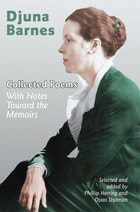
Collected Poems
With Notes Toward the MemoirsDjuna Barnes; selected and edited by Phillip Herrring and Osias Stutman
University of Wisconsin Press, 2005
This groundbreaking edition compiles many of the late unpublished works of American writer Djuna Barnes (1892–1982). Because she published only seven poems and a play during the last forty years of her life, scholars believed Barnes wrote almost nothing during this period. But at the time of her death her apartment was filled with multiple drafts of unpublished poetry and notes toward her memoirs, both included here for the first time. Best known for her tragic lesbian novel Nightwood, Barnes has always been considered a crucial modernist. Her later poetry will only enhance this reputation as it shows her remarkable evolution from a competent young writer to a deeply intellectual poet in the metaphysical tradition. With the full force of her biting wit and dramatic flair, Barnes’s autobiographical notes describe the expatriate scene in Paris during the 1920s, including her interactions with James Joyce and Gertrude Stein and her intimate recollections of T. S. Eliot. These memoirs provide a rare opportunity to experience the intense personality of this complex and fascinating poet.
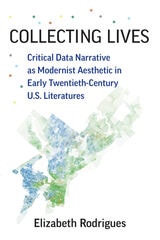
Collecting Lives
Critical Data Narrative as Modernist Aesthetic in Early Twentieth-Century U.S. LiteraturesElizabeth Rodrigues
University of Michigan Press, 2022
On a near-daily basis, data is being used to narrate our lives. Categorizing algorithms draw from amassed personal data to assign narrative destinies to individuals at crucial junctures, simultaneously predicting and shaping the paths of our lives. Data is commonly assumed to bring us closer to objectivity, but the narrative paths these algorithms assign seem, more often than not, to replicate biases about who an individual is and could become.
While the social effects of such algorithmic logics seem new and newly urgent to consider, Collecting Lives looks to the late nineteenth and early twentieth century US to provide an instructive prehistory to the underlying question of the relationship between data, life, and narrative. Rodrigues contextualizes the application of data collection to human selfhood in the late nineteenth and early twentieth century US in order to uncover a modernist aesthetic of data that offers an alternative to the algorithmic logic pervading our sense of data’s revelatory potential. Examining the work of W. E. B. Du Bois, Henry Adams, Gertrude Stein, and Ida B. Wells-Barnett, Rodrigues asks how each of these authors draw from their work in sociology, history, psychology, and journalism to formulate a critical data aesthetic as they attempt to answer questions of identity around race, gender, and nation both in their research and their life writing. These data-driven modernists not only tell different life stories with data, they tell life stories differently because of data.
Collections of Nothing
William Davies King
University of Chicago Press, 2008
Nearly everyone collects something, even those who don’t think of themselves as collectors. William Davies King, on the other hand, has devoted decades to collecting nothing—and a lot of it. With Collections of Nothing, he takes a hard look at this habitual hoarding to see what truths it can reveal about the impulse to accumulate.
Part memoir, part reflection on the mania of acquisition, Collections of Nothing begins with the stamp collection that King was given as a boy. In the following years, rather than rarity or pedigree, he found himself searching out the lowly and the lost, the cast-off and the undesired: objects that, merely by gathering and retaining them, he could imbue with meaning, even value. As he relates the story of his burgeoning collections, King also offers a fascinating meditation on the human urge to collect. This wry, funny, even touching appreciation and dissection of the collector’s art as seen through the life of a most unusual specimen will appeal to anyone who has ever felt the unappeasable power of that acquisitive fever.
"What makes this book, bred of a midlife crisis, extraordinary is the way King weaves his autobiography into the account of his collection, deftly demonstrating that the two stories are essentially one. . . . His hard-won self-awareness gives his disclosures an intensity that will likely resonate with all readers, even those whose collections of nothing contain nothing at all."—New Yorker
"King's extraordinary book is a memoir served up on the backs of all things he collects. . . . His story starts out sounding odd and singular—who is this guy?—but by the end, you recognize yourself in a lot of what he does."—Julia Keller, Chicago Tribune
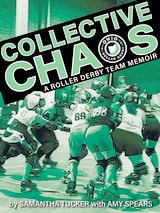
Collective Chaos
A Roller Derby Team MemoirSamantha Tucker
Ohio University Press, 2023
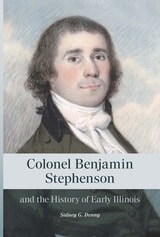
Colonel Benjamin Stephenson and the History of Early Illinois
Sidney G. Denny, with a foreword by Jason Stacy
Southern Illinois University Press, 2025
WINNER, Certificate of Excellence in “Scholarly Publications” from the Illinois State Historical Society’s 2026 Best of Illinois History Awards!
Rediscovering a forgotten Illinois founding father
In early 2024, the Director of the Colonel Benjamin Stephenson House in Edwardsville, Illinois, discovered an unpublished manuscript among the files of Sidney G. Denny, a longtime Friends of the Colonel Benjamin Stephenson House Board member who had passed away just months before. The manuscript compiled the materials from a decade’s worth of articles Denny had written for the House’s newsletter, the Spectator, on the history of the House, Benjamin Stephenson, and early Illinois—history that, without Denny, would have been lost to time.
Colonel Benjamin Stephenson, a founding father of both the city of Edwardsville and the state of Illinois, played a crucial role in the emergence of Illinois from a territory into the nation’s twenty-first state in 1818. Informed by a treasure trove of primary sources, Colonel Benjamin Stephenson and the History of Early Illinois traces Stephenson from his childhood in 18th-century Pennsylvania to his experiences on the Illinois frontier and, eventually, to his final residence, which is now a museum of his life and times in Edwardsville. The volume also provides a detailed chronicle that connects early Illinois history to the history of westward settlement and to the American Revolution itself.
Denny explores the rich history of Madison County and delves into the complexities of early Illinois and its pioneering leaders, weaving together the lives of various families to reveal the interconnected nature of early Illinois society. His meticulously researched work showcases how the impact of those early days is still visible today.

Colonel Sanders and the American Dream
By Josh Ozersky
University of Texas Press, 2012
From Aunt Jemima and Uncle Ben to the Jolly Green Giant and Ronald McDonald, corporate icons sell billions of dollars’ worth of products. But only one of them was ever a real person—Colonel Sanders of Kentucky Fried Chicken/KFC. From a 1930s roadside café in Corbin, Kentucky, Harland Sanders launched a fried chicken business that now circles the globe, serving “finger lickin’ good” chicken to more than twelve million people every day. But to get there, he had to give up control of his company and even his own image, becoming a mere symbol to people today who don’t know that Colonel Sanders was a very real human being. This book tells his story—the story of a dirt-poor striver with unlimited ambition who personified the American Dream.
Acclaimed cultural historian Josh Ozersky defines the American Dream as being able to transcend your roots and create yourself as you see fit. Harland Sanders did exactly that. Forced at age ten to go to work to help support his widowed mother and sisters, he failed at job after job until he went into business for himself as a gas station/café/motel owner and finally achieved a comfortable, middle-class life. But then the interstate bypassed his business and, at sixty-five, Sanders went broke again. Packing his car with a pressure cooker and his secret blend of eleven herbs and spices, he began peddling the recipe for “Colonel Sanders’ Kentucky Fried Chicken” to small-town diners in exchange for a nickel for each chicken they sold. Ozersky traces the rise of Kentucky Fried Chicken from this unlikely beginning, telling the dramatic story of Sanders’ self-transformation into “The Colonel,” his truculent relationship with KFC management as their often-disregarded goodwill ambassador, and his equally turbulent afterlife as the world’s most recognizable commercial icon.
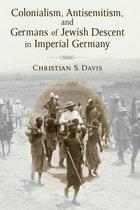
Colonialism, Antisemitism, and Germans of Jewish Descent in Imperial Germany
Christian S. Davis
University of Michigan Press, 2012
Colonialism, Antisemitism, and Germans of Jewish Descent in Imperial Germany examines the relationship between the colonial and antisemitic movements of modern Germany from 1871 to 1918, examining the complicated ways in which German antisemitism and colonialism fed off of and into each other in the decades before the First World War. Author Christian S. Davis studies the significant involvement with and investment in German colonialism by the major antisemitic political parties and extra-parliamentary organizations of the day, while also investigating the prominent participation in the colonial movement of Jews and Germans of Jewish descent and their tense relationship with procolonial antisemites.
Working from the premise that the rise and propagation of racial antisemitism in late-nineteenth-century Germany cannot be separated from the context of colonial empire, Colonialism, Antisemitism, and Germans of Jewish Descent in Imperial Germany is the first work to study the dynamic and evolving interrelationship of the colonial and antisemitic movements of the Kaiserreich era. It shows how individuals and organizations who originated what would later become the ideological core of National Socialism---racial antisemitism---both influenced and perceived the development of a German colonial empire predicated on racial subjugation. It also examines how colonialism affected the contemporaneous German antisemitic movement, dividing it over whether participation in the nationalist project of empire building could furnish patriotic credentials to even Germans of Jewish descent. The book builds upon the recent upsurge of interest among historians of modern Germany in the domestic impact and character of German colonialism, and on the continuing fascination with the racialization of the German sense of self that became so important to German history in the twentieth century.
Colorado Profiles
Men and Women Who Shaped the Centennial StateJohn H. Monnett
University Press of Colorado, 1996
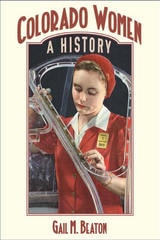
Colorado Women
A HistoryGail M. Beaton
University Press of Colorado, 2012
The experiences of Colorado women differed greatly across economic, ethnic, and racial backgrounds. Marital status, religious affiliation, and sexual orientation colored their worlds and others' perceptions and expectations of them. Each chapter addresses the everyday lives of women in a certain period, placing them in historical context, and is followed by vignettes on women's organizations and notable individuals of the time.
Native American, Hispanic, African American, Asian and Anglo women's stories hail from across the state--from the Eastern Plains to the Front Range to the Western Slope--and in their telling a more complete history of Colorado emerges. Colorado Women makes a significant contribution to the discussion of women's presence in Colorado that will be of interest to historians, students, and the general reader interested in Colorado, women's and western history.
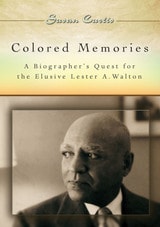
Colored Memories
A Biographer's Quest for the Elusive Lester A. WaltonSusan Curtis
University of Missouri Press, 2008
Lester A. Walton was a well-known public figure in his day. An African American journalist, cultural critic, diplomat, and political activist, he was an adviser to presidents and industrialists in a career that spanned the first six decades of the twentieth century. He was a steadfast champion of democracy and lived to see the passage of major civil rights legislation. But one word best describes Walton today: forgotten.
Exploring the contours of this extraordinary life, Susan Curtis seeks to discover why our collective memory of Walton has failed. In a unique narrative of historical research, she recounts a fifteen-year journey, from the streets of Harlem and “The Ville” in St. Louis to scattered archives and obscure public records, as she uncovers the mysterious circumstances surrounding Walton’s disappearance from national consciousness. And despite numerous roadblocks and dead ends in her quest, she tells how she came to know this emblematic citizen of the American Century in surprising ways.
In this unconventional book—a postmodern ghost story, an unprecedented experiment in life-writing—Curtis shares her discoveries as a researcher. Relating her frustrating search through long-overlooked documents to discover this forgotten man, she offers insight into how America’s obsession with race has made Walton’s story unwelcome. She explores the treachery, duplicity, and archival accidents that transformed a man dedicated to the fulfillment of American democracy into a shadowy figure.
Combining anecdotal memories with the investigative instincts of the historian, Curtis embraces the subjectivity of her research to show that what a society forgets or suppresses is just as important as what it includes in its history. Colored Memories is a highly original work that not only introduces readers to a once-influential figure but also invites us to reconsider how we view, understand, and preserve the past.
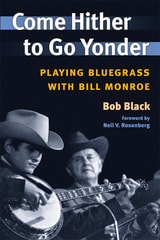
Come Hither to Go Yonder
Playing Bluegrass with Bill MonroeBob Black
University of Illinois Press, 2005
Bob Black was a member of Bill Monroe's Blue Grass Boys in the 1970s. Black's memoir of his time with the man he called the Chief offers the unique vantage point of a man who traveled and performed extensively with the Father of Bluegrass at a time when the music had opened up to new audiences--and Monroe had become a living legend.
Both role model and taskmaster, Monroe exerted a profound influence on Black and the musicians who have carried on the bluegrass tradition. In addition to Black's one-of-a-kind story, Come Hither to Go Yonder includes complete listing of Black's appearances with Monroe, recollections of the memorable experiences they shared while working together, descriptions of other important musicians and bands, and suggestions for further reading and listening.
Offering a rare perspective on the creative forces that drove one of America's greatest composers and musical innovators, Come Hither to Go Yonder rewards fans of Bill Monroe and bluegrass while offering an insider's view of a crucial time in the music's history.
Comic Shop
The Retail Mavericks Who Gave Us a New Geek CultureDan Gearino
Ohio University Press, 2019
The modern comic book shop was born in the early 1970s. Its rise was due in large part to Phil Seuling, the entrepreneur whose direct market model allowed shops to get comics straight from the publishers. Stores could then better customize their offerings and independent publishers could access national distribution. Shops opened up a space for quirky ideas to gain an audience and helped transform small-press series, from Teenage Mutant Ninja Turtles to Bone, into media giants.
Comic Shop is the first book to trace the history of these cultural icons. Dan Gearino brings us from their origins to the present-day, when the rise of digital platforms and a changing retail landscape have the industry at a crossroads. When the book was first published in 2017, Gearino had spent a year with stores around the country, following how they navigated the business. For this updated and expanded paperback edition, he covers the wild retail landscape of 2017 and 2018, a time that was brutal for stores and rich for comics as an art form.
Along the way he interviews pioneers of comics retailing and other important players, including many women; top creators; and those who continue to push the business in new directions. A revised guide to dozens of the most interesting shops around the United States and Canada is a bonus for fans.

Comin' Right at Ya
How a Jewish Yankee Hippie Went Country, or, the Often Outrageous History of Asleep at the WheelBy Ray Benson, and David Menconi
University of Texas Press, 2015
A who’s who of American popular music fills this lively memoir, in which Ray Benson recalls how a Philadelphia Jewish hippie and his bandmates in Asleep at the Wheel turned on generations of rock and country fans to Bob Wills–style Western swing.
A six-foot-seven-inch Jewish hippie from Philadelphia starts a Western swing band in 1970, when country fans hate hippies and Western swing. It sounds like a joke but—more than forty years, twenty-five albums, and ten Grammy Awards later—Asleep at the Wheel is still drawing crowds around the world. The roster of musicians who’ve shared a stage with the Wheel is a who’s who of American popular music—Van Morrison, Willie Nelson, Dolly Parton, Emmylou Harris, George Strait, Vince Gill, Lyle Lovett, and so many more. And the bandleader who’s brought them all together is the hippie that claimed Bob Wills’s boots: Ray Benson.
In this hugely entertaining memoir, Benson looks back over his life and wild ride with Asleep at the Wheel from the band’s beginning in Paw Paw, West Virginia, through its many years as a Texas institution. He vividly recalls spending decades in a touring band, with all the inevitable ups and downs and changes in personnel, and describes the making of classic albums such as Willie and the Wheel and Tribute to the Music of Bob Wills and the Texas Playboys. The ultimate music industry insider, Benson explains better than anyone else how the Wheel got rock hipsters and die-hard country fans to love groovy new-old Western swing. Decades later, they still do.

Coming Home to China
Yi-Fu Tuan
University of Minnesota Press, 2007
In the summer of 2005, distinguished geographer Yi-Fu Tuan ventured to China to speak at an international architectural conference, returning for the first time to the place he had left as a child sixty-four years before. He traveled from Beijing to Shanghai, addressing college audiences, floating down the Yangtze River on a riverboat, and visiting his former home in Chongqing.
In this enchanting volume, Tuan’s childhood memories and musings on the places encountered during this homecoming are interspersed with new lectures, engaging overarching principles of human geography as well as the changing Chinese landscape. Throughout, Tuan’s interactions with his hosts, with his colleague’s children, and even with a garrulous tour guide, offer insights into one who has spent his life studying place, culture, and self.
At the beginning of his trip, Tuan wondered if he would be a stranger among people who looked like him. By its end, he reevaluates his own self-definition as a hyphenated American and sheds new light on human identity’s complex roots in history, geography, and language.
Yi-Fu Tuan is author of Cosmos and Hearth, Dear Colleague, and Space and Place, all from Minnesota. He retired from the University of Wisconsin-Madison in 1998.
Coming Out Swiss
In Search of Heidi, Chocolate, and My Other LifeAnne Herrmann
University of Wisconsin Press, 2014
In a work that is part memoir, part history and travelogue, Herrmann explores all our Swiss clichés (chocolate, secret bank accounts, Heidi, Nazi gold, neutrality, mountains, Swiss Family Robinson) and also scrutinizes topics that may surprise (the “invention” of the Alps, the English Colony in Davos, Switzerland’s role during World War II, women students at the University of Zurich in the 1870s). She ponders, as well, marks of Swissness that have lost their identity in the diaspora (Sutter Home, Helvetica, Dadaism) and the enduring Swiss American community of New Glarus, Wisconsin. Coming Out Swiss will appeal not just to the Swiss diaspora but also to those drawn to multi-genre writing that blurs boundaries between the personal and the historical.
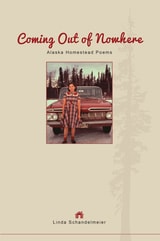
Coming Out of Nowhere
Alaska Homestead PoemsLinda Schandelmeier
University of Alaska Press, 2018
Homestead life is often romanticized as a valiant, resilient family persisting in the clean isolation of pristine wilderness, living off the land and depending only on each other. But there can be a darker side to this existence.
Linda Schandelmeier was raised on a family homestead six miles south of the fledgling town of Anchorage, Alaska in the 1950s and ’60s. But hers is not a typical homestead story. In this book, part poetic memoir and part historical document, a young girl comes of age in a family fractured by divorce and abuse. Schandelmeier does not shy away from these details of her family history, but she also recognizes her childhood as one that was unique and nurturing, and many of her poems celebrate homestead life. Her words hint at her way of surviving and even transcending the remoteness by suggesting a deeper level of human experience beyond the daily grind of homestead life; a place in which the trees and mountains are almost members of the family. These are poems grounded in the wilds that shimmer with a mythic quality. Schandelmeier’s vivid descriptions of homesteading will draw in readers from all types of lives.
Coming of Age with the New Republic, 1938-1950
Merrill D. Peterson
University of Missouri Press, 1999
In this absorbing memoir, Merrill D. Peterson traces his progress from a young Kansas Republican to a "Left Liberal," Democrat by reconstructing how the New Republic singularly influenced his intellectual development and academic career during some of the most turbulent years in American history—the final years of the Great Depression through World War II and the beginnings of the Cold War. Peterson recalls how, as a young man, he was guided to intellectual maturity by such extraordinary individuals as Max Lerner, Archibald MacLeish, Vincent Sheean, Alfred Kazin, Lewis Mumford, and Malcolm Cowley—all contributors to this important magazine. We look back, with Peterson, and see how their views are inextricably reflected in his own developing worldview.
Peterson was introduced to this liberal weekly by one of his teachers during his senior year of high school (1938-1939). For the next ten years, the magazine served as his principal guide to the politics and culture of the times. Now, at seventy-eight years of age, Peterson revisits the magazine that he read so eagerly during those early, impressionable years. With considerable skill and charm, Peterson weaves together the fresh reading, the history of the country during the 1940s, and his own personal history to give us the heart of the book. In addition, he includes brief essays on Vernon L. Parrington, Lewis Mumford, and Max Lerner, the three American writers and intellectuals he believes had the most influence on him.
Peterson discusses several turning points in his young life, but he focuses primarily on his education and the role the magazine played in it. The book concludes when Peterson, with a Ph.D. in the history of American civilization, accepts his first academic appointment, at Brandeis University, and approaches the publication of his first book. Thus, a critical chapter in his life comes to a close.

Coming through the Fire
Surviving Race and Place in AmericaC. Eric Lincoln
Duke University Press, 1996
Coming through the Fire, with its fiercely intelligent, passionate, and clear-eyed view of race and class conflict, makes a major contribution to understanding—and thereby healing—the terrible rift that has opened up in the heart of America. Lincoln explores the nature of biracial relationships, the issue of transracial adoption, violence—particularly black-on-black violence—the “endangered” black male, racism as power, the relationship between Blacks and Jews, our multicultural melting pot, and Minister Louis Farrakhan.Without sidestepping painful issues, or sacrificing a righteous anger, the author argues for “no-fault reconciliation,” for mutual recognition of the human endowment we share regardless of race, preparing us as a nation for the true multiculture tomorrow will demand.
Readers familiar with Lincoln’s earlier groundbreaking work on the Black Muslims and on the black church will be eagerly awaiting the publication of Coming through the Fire. Others will simply find C. Eric Lincoln’s personal story and his exploration of survival and race in America to be absorbing and compelling reading.
Coming to My Senses
One Woman's Cochlear Implant JourneyClaire H. Blatchford
Gallaudet University Press, 2014
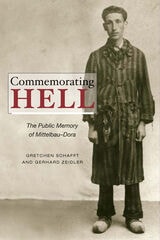
Commemorating Hell
The Public Memory of Mittelbau-DoraGretchen Schafft and Gerhard Zeidler
University of Illinois Press, 2011
Prisoners at Mittelbau-Dora built the V-1 and V-2 missiles, some of them coming into direct contact with Wernher von Braun and Arthur Rudolph, who later became leading engineers in the U.S. space program. Through the continuing story of Mittelbau-Dora, from its operation as a labor camp to its social construction as a monument, Schafft and Zeidler reflect an abiding interest in the memory and commemoration of notorious national events. In extending the analysis of Mittelbau-Dora into post-war and present-day Germany, Commemorating Hell uncovers the intricate relationship between the politics of memory and broader state and global politics, revealing insights about the camp's relationship to the American space pioneers and the fate of the nearby city of Nordhausen.
Communication and the Human Condition
W. Barnett Pearce
Southern Illinois University Press, 1989
Starting with the premise that we live in communication (rather than standing outside communication and using it for secondary purposes), Pearce claims that people who live in various cultures and historical epochs not only communicate differently but experience different ways of being human because they communicate differently.
This century, he notes, ushered in the "communication revolution," the discovery that communication is far more important and central to the human condition than ever before realized. Essential to the communication revolution is the recognition that multiple forms of discourse exist in contemporary human society. Further, these forms of discourse are not benign; they comprise alternative ways of being human.
Thus communication theory must encompass all that it "means to live a life, the shape of social institutions and cultural traditions, the pragmatics of social action, and the poetics of social order."
Community and Solitude
New Essays on Johnson’s CircleLee, Anthony W
Bucknell University Press, 2019
Contributors: Christopher Catanese, James Caudle, Marilyn Francus, Christine Jackson-Holzberg, Claudia Thomas Kairoff, Elizabeth Lambert, Anthony W. Lee, James E. May, John Radner, and Lance Wilcox.
Published by Bucknell University Press. Distributed worldwide by Rutgers University Press.
Complex Sorrow
Reflections on Cancer and an Abbreviated LifeMarianne Paget
Temple University Press, 1993
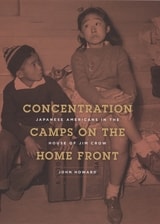
Concentration Camps on the Home Front
Japanese Americans in the House of Jim CrowJohn Howard
University of Chicago Press, 2008
While the basic facts of Japanese-American incarceration are well known, John Howard’s extensive research gives voice to those whose stories have been forgotten or ignored. He highlights the roles of women, first-generation immigrants, and those who forcefully resisted their incarceration by speaking out against dangerous working conditions and white racism. In addition to this overlooked history of dissent, Howard also exposes the government’s aggressive campaign to Americanize the inmates and even convert them to Christianity. After the war ended, this movement culminated in the dispersal of the prisoners across the nation in a calculated effort to break up ethnic enclaves.
Howard’s re-creation of life in the camps is powerful, provocative, and disturbing. Concentration Camps on the Home Front rewrites a notorious chapter in American history—a shameful story that nonetheless speaks to the strength of human resilience in the face of even the most grievous injustices.
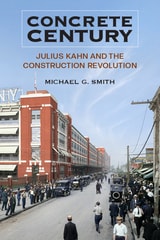
Concrete Century
Julius Kahn and the Construction RevolutionMichael G. Smith
University of Michigan Press, 2024
Drawing upon Kahn’s personal correspondence, architectural drawings, company records, and contemporary news and journal articles, Michael G. Smith reveals how this man—whose family had immigrated to the US to escape antisemitism in Germany—played an important role in the rise of concrete. Concrete not only turned the tide against widespread destruction of buildings by fire, it also paved the way for our modern economy. Concrete Century will delight readers intrigued by architecture and construction technology alike with the true origin story of modern concrete buildings.
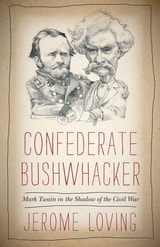
Confederate Bushwhacker
Mark Twain in the Shadow of the Civil WarJerome Loving
University Press of New England, 2013
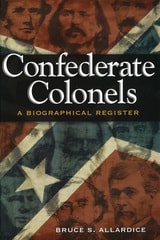
Confederate Colonels
A Biographical RegisterBruce S. Allardice
University of Missouri Press, 2008
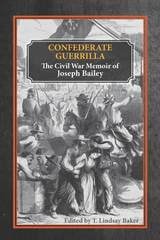
Confederate Guerrilla
The Civil War Memoir of Joseph M. BaileyT. Lindsay Baker
University of Arkansas Press, 2007
Joseph M. Bailey’s memoir, Confederate Guerrilla, provides a unique perspective on the fighting that took place behind Union lines in Federal-occupied northwest Arkansas during and after the Civil War. This story—now published for the first time—will appeal to modern readers interested in the grassroots history of the Trans-Mississippi war. Bailey participated in the Battle of Pea Ridge and the siege of Port Hudson, eventually escaping to northwest Arkansas where he fought as a guerrilla against Federal troops and civilian unionists. After Federal forces gained control of the area, Bailey rejoined the Confederate army and continued in regular service in northeast Texas until the end of the war.
Historians will find the descriptions of military campaigns and the observations on guerrilla war especially valuable. According to Bailey, Southern guerrillas were motivated less by a sense of loyalty to either the Confederate or Union side than by a determination to protect their families and neighbors from the “Mountain Federals.” This partisan war waged between the rebel guerrillas and Southern Unionists was essentially a “struggle for supremacy and revenge.”
Comprehensive annotations are provided by editor T. Lindsay Baker to illuminate the clarity and reliability of Bailey’s late-life memoir.

Confederate Navy Chief
Stephen R. MalloryJoseph T. Durkin
University of Alabama Press, 2005
The book tells of Stephen R. Mallory's support of naval inventions, strategy, and ideas. It also sheds light on the the successes and failures of Jefferson Davis. Durkin gives a well-balanced biography of Mallory and his life in the Confederate navy.

Confession of a Serial Killer
The Untold Story of Dennis Rader, the BTK KillerKatherine Ramsland
University Press of New England, 2017
Confessions of Joan the Tall
Joan Cusack Handler
CavanKerry Press, 2012
Confessions of a Gay Priest
A Memoir of Sex, Love, Abuse, and Scandal in the Catholic SeminaryTom Rastrelli
University of Iowa Press, 2020
Tom Rastrelli is a survivor of clergy-perpetrated sexual abuse who then became a priest in the early days of the Catholic Church’s ongoing scandals. Confessions of a Gay Priest divulges the clandestine inner workings of the seminary, providing an intimate and unapologetic look into the psychosexual and spiritual dynamics of celibacy and lays bare the “formation” system that perpetuates the cycle of abuse and cover-up that continues today.
Under the guidance of a charismatic college campus minister, Rastrelli sought to reconcile his homosexuality and childhood sexual abuse. When he felt called to the priesthood, Rastrelli began the process of “priestly discernment.” Priests welcomed him into a confusing clerical culture where public displays of piety, celibacy, and homophobia masked a closeted underworld in which elder priests preyed upon young recruits.
From there he ventured deeper into the seminary system seeking healing, hoping to help others, and striving not to live a double life. Trained to treat sexuality like an addiction, he and his brother seminarians lived in a world of cliques, competition, self-loathing, alcohol, hidden crushes, and closeted sex. Ultimately, the “formation” intended to make Rastrelli a compliant priest helped to liberate him.
Confessions of a Horseshoer
Ron Tatum
University of North Texas Press, 2012
Confessions of a Left-Handed Man
An Artist's MemoirPeter Selgin
University of Iowa Press, 2011
Peter Selgin was cursed/blessed with an unusual childhood. The son of Italian immigrants—his father an electronics inventor and a mother so good looking UPS drivers swerved off their routes to see her—Selgin spent his formative years scrambling among the hat factory ruins of a small Connecticut town, visiting doting—and dotty—relatives in the “old world,” watching mental giants clash at Mensa gatherings, enduring Pavlovian training sessions with a grandmother bent on “curing” his left-handedness, and competing savagely with his right-handed twin.
Confessions of a Presidential Speechwriter
Craig R. Smith
Michigan State University Press, 2014

Confessions of an Iyeska
Viola Burnette
University of Utah Press, 2018
The Fort Laramie treaties of 1851 and 1868 changed everything for the Sioux. When Burnette was born on the Rosebud Indian Reservation in the late 1930s, her people were still striving to make sense of how to live under the impoverished conditions created by the imposed land restrictions. Like most Native children at that time, she was forced by federal law to attend boarding school and assimilate into white culture. Her story reveals the resulting internal conflict that she and her people faced in embracing their own identity in a world where those in authority taught that speaking Lakota and being Indian were wrong. After a difficult jump into adulthood, Burnette emerged from an abusive marriage and, while raising four children, enrolled in junior college in her thirties and law school in her forties. She went on to become an advocate for women subjected to domestic violence and the first attorney general for the Rosebud Sioux Tribe.
Borne out under the far-reaching effects of the government-enforced restructuring of her people, Burnette’s inspiring narrative of strength and determination makes clear the importance of understanding history from a Native standpoint.
“I am an Iyeska and I am assimilated, but on my own terms. I choose when, where, and how I use the knowledge and skills I have learned. As long as we continue to teach our children and grandchildren the language, values, and traditions of the Lakota people, we will survive.”—from the book
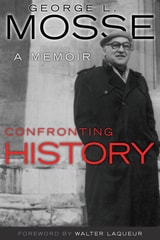
Confronting History
A MemoirGeorge L. Mosse; Foreword by Walter Laqueur
University of Wisconsin Press, 2000
Confronting History describes Mosse's opulent childhood in Weimar Berlin; his exile in Paris and England, including boarding school and study at Cambridge University; his second exile in the U.S. at Haverford, Harvard, Iowa, and Wisconsin; and his extended stays in London and Jerusalem. Mosse discusses being a Jew and his attachment to Israel and Zionism, and he addresses his gayness, his coming out, and his growing scholarly interest in issues of sexuality. This touching memoir—told with the clarity, passion, and verve that entranced thousands of Mosse's students—is guided in part by his belief that "what man is, only history tells" and, most of all, by the importance of finding one's self through the pursuit of truth and through an honest and unflinching analysis of one's place in the context of the times.
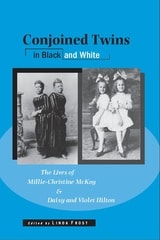
Conjoined Twins in Black and White
The Lives of Millie-Christine McKoy and Daisy and Violet HiltonEdited by Linda Frost
University of Wisconsin Press, 2009
Conjoined Twins in Black and White provides contemporary readers with the twins’ autobiographies, the first two “show histories” to be republished since their original appearance, a previously unpublished novella, and a nineteenth-century medical examination, each of which attempts to define these women and reveal the issues of race, gender, and the body prompted by the twins themselves. The McKoys, born slaves, were kidnapped and taken to Britain, where they worked as entertainers until they were reunited with their mother in an emotional chance encounter. The Hiltons, cast away by their horrified mother at birth, worked the carnival circuit as vaudeville performers until the WWII economy forced them to the burlesque stage. The hardships, along with the triumphs, experienced by these very different sister sets lend insight into our fascination with conjoined twins.
Conquest and Community
The Afterlife of Warrior Saint Ghazi MiyanShahid Amin
University of Chicago Press, 2016
Conquest and Community is Shahid Amin's answer. Covering more than eight hundred years of history, the book centers on the enduringly popular saint Ghazi Miyan, a youthful soldier of Islam whose shrines are found all over India. Amin details the warrior saint’s legendary exploits, then tracks the many ways he has been commemorated in the centuries since. The intriguing stories, ballads, and proverbs that grew up around Ghazi Miyan were, Amin shows, a way of domesticating the conquest—recognizing past conflicts and differences but nevertheless bringing diverse groups together into a community of devotees. What seems at first glance to be the story of one mythical figure becomes an allegory for the history of Hindu-Muslim relations over an astonishingly long period of time, and a timely contribution to current political and historical debates.
Conquistador in Chains
Cabeza de Vaca and the Indians of the AmericasDavid A. Howard
University of Alabama Press, 1996
Unlike many Spanish conquistadores who brought to the Americas a wave of disease, destruction, and oppression, Cabeza de Vaca’s stated intention was to pursue a different kind of conquest—one that would be just and humane, true to Spanish religion and law, and one that safeguarded liberty and justice for the indigenous peoples of the New World.
Bringing to South America skills and experiences earned with native peoples in North America, however, Cabeza de Vaca both failed to understand the indigenous peoples in the south and alienated many Spanish settlers in the Rio de la Plata Province, whose economic interests he threatened. Eventually the Spanish colonists formed a conspiracy to remove him from power and return him to Spain in chains.
That Cabeza de Vaca was overthrown is not surprising. His ideas and policies opposed the self-interest of most of the first Spaniards who had come to America, although he inspired the support of many even after his humiliating return to Spain. In Conquistador in Spain, historian David Howard provides a fascinating account of the rise and fall of this colonial idealist.
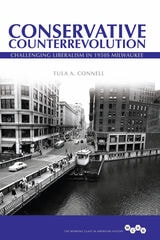
Conservative Counterrevolution
Challenging Liberalism in 1950s MilwaukeeTula A. Connell
University of Illinois Press, 2016
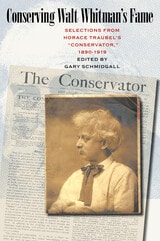
Conserving Walt Whitman's Fame
Selections from Horace Traubel's Conservator, 1890-1919Schmidgall, Gary
University of Iowa Press, 2006
Considering Emma Goldman
Feminist Political Ambivalence and the Imaginative ArchiveClare Hemmings
Duke University Press, 2018
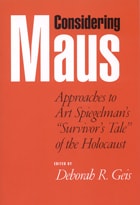
Considering Maus
Approaches to Art Spiegelman's "Survivor's Tale" of the HolocaustDeborah R. Geis
University of Alabama Press, 2007
The first collection of critical essays on Maus, the searing account of one Holocaust survivor's experiences rendered in comic book form.
In 1992, Art Spiegelmans two-volume illustrated work Maus: A Survivor’s Tale was awarded a special-category Pulitzer Prize. In a comic book form, Spiegelman tells the gripping, heart-rending story of his father's experiences in the Holocaust. The book renders in stark clarity the trials Spiegelman's father endured as a Jewish refugee in the ghettos and concentration camps of Poland during World War II, his American life following his immigration to New York, and the author's own troubled sense of self as he grapples with his father's history. Mixing autobiography, biography, and oral history in the comic form, Maus has been hailed as a daring work of postmodern narration and as a vivid example of the power of the graphic narrative.
Now, for the first time in one collection, prominent scholars in a variety of fields take on Spiegelman's text and offer it the critical and artistic scrutiny it deserves. They explore many aspects of the work, including Spiegelman’s use of animal characters, the influence of other "comix" artists, the role of the mother and its relation to gender issues, the use of repeating images such as smoke and blood, Maus's position among Holocaust testimonials, its appropriation of cinematic technique, its use of language and styles of dialect, and the implications of the work’s critical and commercial success.
Informed readers in many areas of study, from popular culture and graphic arts to psychoanalysis and oral history, will value this first substantial collection of criticism on a revered work of literature.
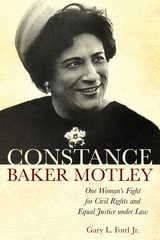
Constance Baker Motley
One Woman's Fight for Civil Rights and Equal Justice under LawGary L. Ford Jr.
University of Alabama Press, 2017
The story of NAACP’s sole female attorney. She shaped civil rights history as lead strategist and litigator from 1946–1964, arguing landmark desegregation cases and defending Martin Luther King Jr. and countless freedom fighters.
Constance Baker Motley was an African American woman; the daughter of immigrants from Nevis, British West Indies; a wife; and a mother who became a pioneer and trailblazer in the legal profession. She broke down barriers, overcame gender constraints, and operated outside the boundaries placed on black women by society and the civil rights movement. In Constance Baker Motley: One Woman’s Fight for Civil Rights and Equal Justice under Law, Gary L. Ford Jr. explores the key role Motley played in the legal fight to desegregate public schools as well as colleges, universities, housing, transportation, lunch counters, museums, libraries, parks, and other public accommodations.
The only female attorney at the NAACP Legal Defense and Educational Fund, Inc., Motley was also the only woman who argued desegregation cases in court during much of the civil rights movement. From 1946 through 1964, she was a key litigator and legal strategist for landmark civil rights cases including the Montgomery Bus Boycott and represented Martin Luther King Jr. as well as other protesters arrested and jailed as a result of their participation in sit-ins, marches, and freedom rides.
Motley was a leader who exhibited a leadership style that reflected her personality traits, skills, and strengths. She was a visionary who formed alliances and inspired local counsel to work with her to achieve the goals of the civil rights movement. As a leader and agent of change, she was committed to the cause of justice and she performed important work in the trenches in the South and behind the scene in courts that helped make the civil rights movement successful.
"Highly recommended."
—CHOICE

Constance Pascal (1877–1937)
Authority, Femininity and Feminism in French PsychiatryFelicia Gordon
University of London Press, 2014