Results by title
5550 books match the query 'Biography & Autobiography' and 288 start with c
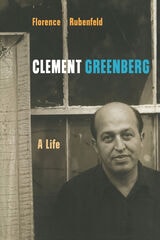
Clement Greenberg
A LifeFlorence Rubenfeld
University of Minnesota Press, 2004
The only book-length biography of this controversial critic, now in paperback for the first time!
Love him or hate him, admire him or revile him, there is no doubt that Clement Greenberg was the most influential critic of modern art in the second half of the twentieth century. His championing of abstract expressionist painters such as Jackson Pollock, Barnett Newman, and David Smith put the United States on the international art map. His support for color-field painters Morris Louis and Kenneth Noland dramatically accelerated their careers. The intellectual power of his polemical essays helped bring about the midcentury shift in which New York replaced Paris as the art capital of the Western world; his aggressive personality and fierce involvement in the New York art scene triggered a backlash so potent that one critic termed it a “patricide.”
Cleopatra
Prudence Jones
Haus Publishing, 2006
Clogs and Shawls
Mormons, Moorlands, and the Search for ZionAnn Chamberlin
University of Utah Press, 2019
Chamberlin interviewed her grandmother and six of her surviving great-aunts for Clogs and Shawls, the relatives who had made their way to Mormon Zion. She weaves novelistic passages with their first-person narratives to create a singular work of oral immigrant family history that is both lively and revealing.

Close Formation
My Friendship with James SalterWilliam Benton
University of Iowa Press, 2027
Closing Arguments
Clarence Darrow on Religion, Law, and SocietyClarence Darrow
Ohio University Press, 2005
Clarence Darrow, son of a village undertaker and coffinmaker, rose to become one of America’s greatest attorneys—and surely its most famous. The Ohio native gained renown for his central role in momentous trials, including his 1924 defense of Leopold and Loeb and his defense of Darwinian principles in the 1925 Scopes “Monkey Trial.” Some have traced Darrow’s lifelong campaign against capital punishment to his boyhood terror at seeing a Civil War soldier buried—and no client of Darrow’s was ever executed, not even black men who were accused of murder for killing members of a white mob.
Closing Arguments: Clarence Darrow on Religion, Law, and Society collects, for the first time, Darrow’s thoughts on his three main preoccupations, revealing a carefully conceived philosophy expressed with delightful pungency and clarity. His thoughts on social issues, especially on the dangers of religious fundamentalism, are uncannily prescient. A dry humor infuses his essays, and his reflections on himself and his philosophy reveal a quiet dignity at the core of a man better known for provoking Americans during an era of unprecedented tumult. From the wry “Is the Human Race Getting Anywhere?” to the scornful “Patriotism” and his elegiac summing up, “At Seventy-two,” Darrow’s writing still stimulates, pleases and challenges.
A rebel who always sided intellectually and emotionally with the minority, Darrow remains a figure to contend with sixty-seven years after his death. “Inside every lawyer is the wreck of a poet,” Darrow once said. Closing Arguments demonstrates that, in his case, that statement is true.
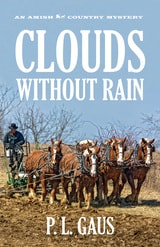
Clouds Without Rain
An Amish Country MysteryP. L. Gaus
Ohio University Press, 2001
Written in the tradition of Tony Hillerman, in Clouds without Rain, P. L. Gaus once again provides compelling intrigue and insight into Amish culture and tradition alongside contemporary American life.
In the wake of a fatal accident involving an Amish buggy and an eighteen-wheeler, Professor Michael Branden, working with the Holmes County Sheriff’s Department, becomes suspicious about the true nature of the crash. His suspicions only grow when the trustee of the dead man’s estate disappears a few days later.
Faced with Amish teenagers in goat masks robbing buggies on dusty lanes, land swindles involving out-of-town developers, several mysterious deaths, and the disappearance of a bank official, Branden realizes that there is far more to the story than a buggy crash on a sleepy country road.
This new edition of Clouds without Rain features an exclusive interview with the author, reading group materials, and a detailed map and driving guide to Holmes County, Ohio with everything one needs to visit the iconic scenes depicted in the story.
Clutch
An Education at WorkLinda Pawlenty
The Ohio State University Press, 2025

Co. Aytch, or a Side Show of the Big Show
A New Edition Introduced and Annotated by Philip LeighSam Watkins
Westholme Publishing, 2013
Co. Aytch, or a Side Show of the Big Show is perhaps the finest memoir of an ordinary Confederate soldier. According to Margaret Mitchell, “a better book there never was.” Sam Watkins served in Company H of the First Tennessee Infantry for the duration of the Civil War. Remarkably, he survived some of the most intense battles of the war, including Shiloh, Chickamauga, Kennesaw Mountain, Atlanta, and Franklin. He was one of only seven of the original members of Company H when it surrendered in April 1865. Watkins’s memoir was written in the winter of 1882–83. The humor and depth of writing at times rises to a level resembling Mark Twain; thus, twenty-first-century readers can still discover the everlasting treasures of Private Sam Watkins’s story just as it was. It is this reason that excerpts were featured frequently in Ken Burns’s documentary on the Civil War. However, since most of Sam’s original readers—or some of their family members—actually lived through the Civil War, much of the context for the narrative was common knowledge. But what was once received history has gradually disappeared, and presently only specialists can fully understand and appreciate Sam’s tale.
The chief aim for this new annotated edition of Co. Aytch—the first of its kind—is to amplify the experience for today’s readers by providing the missing context. Over 240 annotations clarify the situational backgrounds, personalities, and terminology that might not be familiar to most readers. The annotations also identify and explain errors mostly resulting from Sam’s occasionally faulty memory or limited perspective. Similarly, twentyfour battlefield and war theater maps enable readers to track Sam’s combat participation as well as his journeys while marching with the army. Finally fifteen photographs and prints illustrate some of the battles, people, towns, buildings, tools of war, and ruins that Sam witnessed. As someone once cleverly observed, “It’s not an adventure until something goes wrong.” If nothing else, Sam’s memoir is a foot soldier’s view of the resulting horrors, heroics, and healing humor when war planning routinely goes awry.
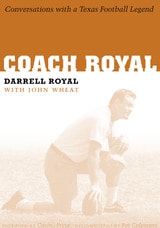
Coach Royal
Conversations with a Texas Football LegendBy Darrell Royal, with John Wheat
University of Texas Press, 2005
Many legendary men have been associated with University of Texas football, but for most fans one man will always be "Coach"—Darrell K Royal. One of the most successful coaches in college football, Royal led the Longhorns to three national championships and eleven Southwest Conference titles during his twenty years (1956-1976) as UT's head coach. He coached some of the Horns' best players, including future Heisman Trophy winner Earl Campbell, and was named NCAA Coach of the Year three times. In 1969, an ABC-TV poll of sportswriters called Royal the Coach of the Decade. In 1996 UT recognized his unrivalled contribution to Longhorn football when it designated Memorial Stadium the Darrell K Royal-Texas Memorial Stadium in his honor.
Now, for the first time, Darrell Royal tells his life story in his own words. He remembers growing up poor in Hollis, Oklahoma, during the Great Depression, and describes playing college football for the University of Oklahoma and then coaching a succession of college teams and one pro team before settling in at UT for the rest of his career. He gives a fascinating, behind-the-scenes look at Longhorn football during his time-recruiting strategies, coaching techniques, the famous wishbone offense, unforgettable wins and losses, and his impressions of rival teams and coaches, including Bear Bryant of Texas A&M and Alabama and Frank Broyles of Arkansas.
Proving that he's still the same straight shooter as always, Darrell Royal even discusses some of the controversies he's dealt with, including early charges of racism in the UT football program, the impact of Title IX on college athletics, his association with Jim Bob Moffett and the Freeport-MacMoRan Corporation, his longtime friendship with Willie Nelson, and his decision to retire from coaching. But whether he's describing the tough times he's faced professionally and personally or the rewards of being UT's most beloved coach and goodwill ambassador, Royal maintains the same plainspoken honesty and sense of honor that—as much as the winning seasons—have made him a legend to so many people.
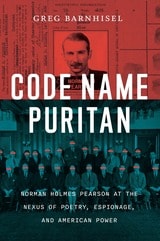
Code Name Puritan
Norman Holmes Pearson at the Nexus of Poetry, Espionage, and American PowerGreg Barnhisel
University of Chicago Press, 2024
Although his impact on twentieth-century American cultural life was profound, few people know the story of Norman Holmes Pearson. Pearson’s life embodied the Cold War alliances among US artists, scholars, and the national-security state that coalesced after World War II. As a Yale professor and editor, he helped legitimize the study of American culture and shaped the public’s understanding of literary modernism—significantly, the work of women poets such as Hilda Doolittle and Gertrude Stein. At the same time, as a spy, recruiter, and cultural diplomat, he connected the academy, the State Department, and even the CIA.
In Code Name Puritan, Greg Barnhisel maps Pearson’s life, from his childhood injury that led to a visible, permanent disability to his wartime counterespionage work neutralizing the Nazis’ spy network to his powerful role in the cultural and political heyday sometimes called the American Century. Written with clarity and informed by meticulous research, Barnhisel’s revelatory portrait of Pearson details how his unique experiences shaped his beliefs about the American character, from the Puritans onward.
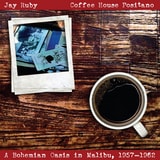
Coffee House Positano
A Bohemian Oasis in Malibu, 1957–1962Jay Ruby
University Press of Colorado, 2013
As an ethnographer analyzing his own culture, author Jay Ruby uses a unique ethnographic method known as “studying sideways.” He combines the exploration of self and others with the theoretical framework of anthropology to provide deep insight into the counterculture of late 1950s and early 1960s America. He shares his connection to Positano, where he lived and worked from 1957 to 1959 and again in 1963, and reflects on Positano in the context of US counterculture and the greater role of countercultures in society.
This intimate and significant work will be of interest to anthropologists as well as scholars and the general reader interested in California history, Beat culture, and countercultural movements.
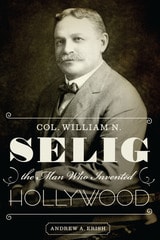
Col. William N. Selig, the Man Who Invented Hollywood
By Andrew A. Erish
University of Texas Press, 2012
All histories of Hollywood are wrong. Why? Two words: Colonel Selig. This early pioneer laid the foundation for the movie industry that we know today. Active from 1896 to 1938, William N. Selig was responsible for an amazing series of firsts, including the first two-reel narrative film and the first two-hour narrative feature made in America; the first American movie serial with cliffhanger endings; the first westerns filmed in the West with real cowboys and Indians; the creation of the jungle-adventure genre; the first horror film in America; the first successful American newsreel (made in partnership with William Randolph Hearst); and the first permanent film studio in Los Angeles. Selig was also among the first to cultivate extensive international exhibition of American films, which created a worldwide audience and contributed to American domination of the medium.
In this book, Andrew Erish delves into the virtually untouched Selig archive at the Academy of Motion Picture Arts and Sciences Library to tell the fascinating story of this unjustly forgotten film pioneer. He traces Selig’s career from his early work as a traveling magician in the Midwest, to his founding of the first movie studio in Los Angeles in 1909, to his landmark series of innovations that still influence the film industry. As Erish recounts the many accomplishments of the man who first recognized that Southern California is the perfect place for moviemaking, he convincingly demonstrates that while others have been credited with inventing Hollywood, Colonel Selig is actually the one who most deserves that honor.
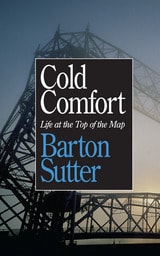
Cold Comfort
Life at the Top of the MapBarton Sutter
University of Minnesota Press, 2000
A whimsical look at the pleasures and challenges of living in the far north-now in paperback!
A whimsical look at the pleasures and challenges of living in the far north-now in paperback!
"Sutter knows Duluth and the hinterlands to the North the way Garrison Keillor knows Lake Wobegon and the prairies. With a nimble wit and a roving eye for detail, Sutter goes beneath the veneer of the North Country to expose its attraction, its quirks, and its characters. There isn’t a clinker in the collection, and even if you’ve lived your entire life in Duluth or the North Country, you’ll see your home place with new insight after reading Cold Comfort." Duluth News-Tribune"Mostly whimsical, sometimes meditative, but most often warmhearted, these essays explore Lake Superior, its neighboring rivers and streams, duck hunting, cross-country skiing, bridges, cider-pressing parties, and camping out in the family car. Sutter’s prose is clean, straightforward, and sometimes mirthful." Chicago New City "An oddly brilliant and lovely little book. . . . Resonant, evocative, and splendidly written." Jim HarrisonTemperatures that dive to forty degrees below zero are only part of life in northern Minnesota, according to award-winning writer Barton Sutter. Cold Comfort is his temperamental tribute to the city of Duluth, Minnesota, where bears wander the streets and canoe racks are standard equipment. Winner of a 1998 Northeast Minnesota Book AwardWinner of a 1998 Minnesota Book Award for Creative Nonfiction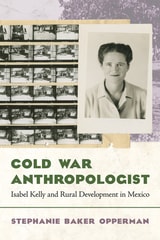
Cold War Anthropologist
Isabel Kelly and Rural Development in MexicoStephanie Baker Opperman
University of Arizona Press, 2024
Kelly’s transition from a prominent archaeologist to a key figure in applied anthropology is meticulously chronicled, unveiling her pivotal role in shaping rural development strategies in Mexico amidst the geopolitical context of the Cold War. Through an extensive examination of her correspondence, archival material, and scholarly output, Kelly’s evolving viewpoints offer profound insights into the intricate dynamics of U.S.-Mexico relations and the challenges encountered by female academics during this era.
Organized chronologically, each chapter of this work delves into distinct facets of Kelly’s international journey, with a particular emphasis on her involvement in cooperative programs aimed at fostering diplomatic relations with Mexico. Through this narrative framework, readers are immersed in a compelling exploration of Kelly’s enduring impact on both the field of anthropology and the realm of international diplomacy.
This book is indispensable for historians, anthropologists, and individuals intrigued by the nuanced complexities of Cold War politics, presenting pioneering research at the intersection of history and anthropology. Opperman skillfully brings to light the previously untold narratives of Isabel Kelly, unveiling her influence on mid-twentieth-century Mexico.
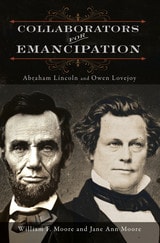
Collaborators for Emancipation
Abraham Lincoln and Owen LovejoyWilliam F. Moore and Jane Ann Moore
University of Illinois Press, 2019
In Collaborators for Emancipation: Abraham Lincoln and Owen Lovejoy, the authors examine the thorny issue of the pragmatism typically ascribed to Lincoln versus the radicalism of Lovejoy, and the role each played in ending slavery. Exploring the men's politics, personal traits, and religious convictions, the book traces their separate paths in life as well as their frequent interactions. Collaborators for Emancipation shows how Lincoln and Lovejoy influenced one another and analyzes the strategies and systems of belief each brought to the epic controversies of slavery versus abolition and union versus disunion.
Moore and Moore, editors of a previous volume of Lovejoy's writings, use their deep knowledge of his words and life to move beyond mere politics to a nuanced perspective on the fabric of religion and personal background that underlay the minister's worldview. Their multifaceted work of history and biography reveals how Lincoln embraced the radical idea of emancipation, and how Lovejoy shaped his own radicalism to wield the pragmatic political tools needed to reach that ultimate goal.
Collected Poems
With Notes Toward the MemoirsDjuna Barnes; selected and edited by Phillip Herrring and Osias Stutman
University of Wisconsin Press, 2005
This groundbreaking edition compiles many of the late unpublished works of American writer Djuna Barnes (1892–1982). Because she published only seven poems and a play during the last forty years of her life, scholars believed Barnes wrote almost nothing during this period. But at the time of her death her apartment was filled with multiple drafts of unpublished poetry and notes toward her memoirs, both included here for the first time. Best known for her tragic lesbian novel Nightwood, Barnes has always been considered a crucial modernist. Her later poetry will only enhance this reputation as it shows her remarkable evolution from a competent young writer to a deeply intellectual poet in the metaphysical tradition. With the full force of her biting wit and dramatic flair, Barnes’s autobiographical notes describe the expatriate scene in Paris during the 1920s, including her interactions with James Joyce and Gertrude Stein and her intimate recollections of T. S. Eliot. These memoirs provide a rare opportunity to experience the intense personality of this complex and fascinating poet.
Collective Chaos
A Roller Derby Team MemoirSamantha Tucker
Ohio University Press, 2023
Collisions With History
Latin American Fiction and Social Science from “El Boom” to the New World OrderFrederick M. Nunn
Ohio University Press, 2001
Latin American intellectuals have traditionally debated their region’s history, never with so much agreement as in the fiction, commentary, and scholarship of the late twentieth century. Collisions with History shows how “fictional histories” of discovery and conquest, independence and early nationhood, and the recent authoritarian past were purposeful revisionist collisions with received national versions. These collisions occurred only because of El Boom, thus making Latin America’s greatest literary movement a historical phenomenon as well. Frederick M. Nunn discusses the cataclysmic view of history conveyed in Boom novels and examines the thought and self-perception of selected authors whose political activism enhanced the appeal of their works—historical and otherwise: Alejo Carpentier, Carlos Fuentes, Gabriel García Márquez, and Augusto Roa Bastos; Julio Cortázar, Isabel Allende, Mario Vargas Llosa, and Darcy Ribeiro.
Collisions with History demonstrates how their commentary on history, literature, politics, and international affairs reveals a conscious sense of purpose. From between the lines of their nonfiction emerges a consensus that outside forces have defined as well as controlled Latin America’s history.
Professor Nunn also suggests that, with novelists now no longer very interested in colliding with history, it may fall to social scientists to speak for what remains of the region’s past in the New World Order.
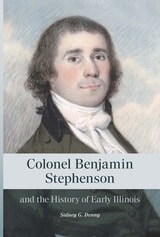
Colonel Benjamin Stephenson and the History of Early Illinois
Sidney G. Denny, with a foreword by Jason Stacy
Southern Illinois University Press, 2025
WINNER, Certificate of Excellence in “Scholarly Publications” from the Illinois State Historical Society’s 2026 Best of Illinois History Awards!
Rediscovering a forgotten Illinois founding father
In early 2024, the Director of the Colonel Benjamin Stephenson House in Edwardsville, Illinois, discovered an unpublished manuscript among the files of Sidney G. Denny, a longtime Friends of the Colonel Benjamin Stephenson House Board member who had passed away just months before. The manuscript compiled the materials from a decade’s worth of articles Denny had written for the House’s newsletter, the Spectator, on the history of the House, Benjamin Stephenson, and early Illinois—history that, without Denny, would have been lost to time.
Colonel Benjamin Stephenson, a founding father of both the city of Edwardsville and the state of Illinois, played a crucial role in the emergence of Illinois from a territory into the nation’s twenty-first state in 1818. Informed by a treasure trove of primary sources, Colonel Benjamin Stephenson and the History of Early Illinois traces Stephenson from his childhood in 18th-century Pennsylvania to his experiences on the Illinois frontier and, eventually, to his final residence, which is now a museum of his life and times in Edwardsville. The volume also provides a detailed chronicle that connects early Illinois history to the history of westward settlement and to the American Revolution itself.
Denny explores the rich history of Madison County and delves into the complexities of early Illinois and its pioneering leaders, weaving together the lives of various families to reveal the interconnected nature of early Illinois society. His meticulously researched work showcases how the impact of those early days is still visible today.
Colonel Greene and the Copper Skyrocket
The Spectacular Rise and Fall of William Cornell Greene: Copper King, Cattle Baron, and Promoter Extraordinary in Mexico, the American Southwest, and the New York Financial DistrictC. L. Sonnichsen
University of Arizona Press, 1974
"A solid account of a southwestern 'character' who has flitted in and out of frontier and economic history."—American Historical Review
"A creditable work on a fascinating individual. In delightful writing style he has reconstructed Greene's life, explaining the ambitions as well as the frailties of this extraordinary entrepreneur."—History
"A rewarding study of the later days of mining."—Arizona and the West
Colonel Sanders and the American Dream
By Josh Ozersky
University of Texas Press, 2012
From Aunt Jemima and Uncle Ben to the Jolly Green Giant and Ronald McDonald, corporate icons sell billions of dollars’ worth of products. But only one of them was ever a real person—Colonel Sanders of Kentucky Fried Chicken/KFC. From a 1930s roadside café in Corbin, Kentucky, Harland Sanders launched a fried chicken business that now circles the globe, serving “finger lickin’ good” chicken to more than twelve million people every day. But to get there, he had to give up control of his company and even his own image, becoming a mere symbol to people today who don’t know that Colonel Sanders was a very real human being. This book tells his story—the story of a dirt-poor striver with unlimited ambition who personified the American Dream.
Acclaimed cultural historian Josh Ozersky defines the American Dream as being able to transcend your roots and create yourself as you see fit. Harland Sanders did exactly that. Forced at age ten to go to work to help support his widowed mother and sisters, he failed at job after job until he went into business for himself as a gas station/café/motel owner and finally achieved a comfortable, middle-class life. But then the interstate bypassed his business and, at sixty-five, Sanders went broke again. Packing his car with a pressure cooker and his secret blend of eleven herbs and spices, he began peddling the recipe for “Colonel Sanders’ Kentucky Fried Chicken” to small-town diners in exchange for a nickel for each chicken they sold. Ozersky traces the rise of Kentucky Fried Chicken from this unlikely beginning, telling the dramatic story of Sanders’ self-transformation into “The Colonel,” his truculent relationship with KFC management as their often-disregarded goodwill ambassador, and his equally turbulent afterlife as the world’s most recognizable commercial icon.
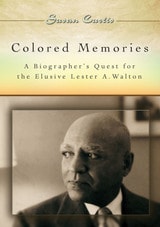
Colored Memories
A Biographer's Quest for the Elusive Lester A. WaltonSusan Curtis
University of Missouri Press, 2008
Lester A. Walton was a well-known public figure in his day. An African American journalist, cultural critic, diplomat, and political activist, he was an adviser to presidents and industrialists in a career that spanned the first six decades of the twentieth century. He was a steadfast champion of democracy and lived to see the passage of major civil rights legislation. But one word best describes Walton today: forgotten.
Exploring the contours of this extraordinary life, Susan Curtis seeks to discover why our collective memory of Walton has failed. In a unique narrative of historical research, she recounts a fifteen-year journey, from the streets of Harlem and “The Ville” in St. Louis to scattered archives and obscure public records, as she uncovers the mysterious circumstances surrounding Walton’s disappearance from national consciousness. And despite numerous roadblocks and dead ends in her quest, she tells how she came to know this emblematic citizen of the American Century in surprising ways.
In this unconventional book—a postmodern ghost story, an unprecedented experiment in life-writing—Curtis shares her discoveries as a researcher. Relating her frustrating search through long-overlooked documents to discover this forgotten man, she offers insight into how America’s obsession with race has made Walton’s story unwelcome. She explores the treachery, duplicity, and archival accidents that transformed a man dedicated to the fulfillment of American democracy into a shadowy figure.
Combining anecdotal memories with the investigative instincts of the historian, Curtis embraces the subjectivity of her research to show that what a society forgets or suppresses is just as important as what it includes in its history. Colored Memories is a highly original work that not only introduces readers to a once-influential figure but also invites us to reconsider how we view, understand, and preserve the past.
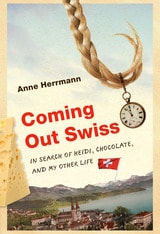
Coming Out Swiss
In Search of Heidi, Chocolate, and My Other LifeAnne Herrmann
University of Wisconsin Press, 2014
In a work that is part memoir, part history and travelogue, Herrmann explores all our Swiss clichés (chocolate, secret bank accounts, Heidi, Nazi gold, neutrality, mountains, Swiss Family Robinson) and also scrutinizes topics that may surprise (the “invention” of the Alps, the English Colony in Davos, Switzerland’s role during World War II, women students at the University of Zurich in the 1870s). She ponders, as well, marks of Swissness that have lost their identity in the diaspora (Sutter Home, Helvetica, Dadaism) and the enduring Swiss American community of New Glarus, Wisconsin. Coming Out Swiss will appeal not just to the Swiss diaspora but also to those drawn to multi-genre writing that blurs boundaries between the personal and the historical.

Coming Out of My Skin
Jean-Baptiste Phou
Seagull Books, 2023
Born to Chinese-Cambodian parents in France, Jean-Baptiste Phou has pursued a diverse artistic career since 2008. Through his public views and artistic works, he has focused mainly on the experiences of Asians in France. Up until now, he’s always been careful not to raise issues of sexuality—in particular, his homosexuality.
In this searing memoir, Phou faces his fears and shame to examine the role his ethnic origin has played in the construction of his sexual identity and his romantic relationships in a predominantly white environment. An astute observer of the various ways in which his body has been perceived, Phou explores how these perceptions have shaped his relationship with himself and others. How does a marginalized person develop emotionally and build, reclaim, and express their sexuality? Drawing on various works of history, sociology, gender studies, literature, and popular culture, Phou sensitively examines various strategies developed in response to this question.
Being gay in a largely straight world is difficult but being Asian within this sexual minority can be a doubly oppressive experience. Coming Out of My Skin deftly tackles this challenge and aspires for a reconciliation that can empower people of sexual and racial minorities to joyfully inhabit their bodies.
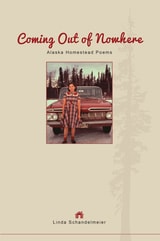
Coming Out of Nowhere
Alaska Homestead PoemsLinda Schandelmeier
University of Alaska Press, 2018
Homestead life is often romanticized as a valiant, resilient family persisting in the clean isolation of pristine wilderness, living off the land and depending only on each other. But there can be a darker side to this existence.
Linda Schandelmeier was raised on a family homestead six miles south of the fledgling town of Anchorage, Alaska in the 1950s and ’60s. But hers is not a typical homestead story. In this book, part poetic memoir and part historical document, a young girl comes of age in a family fractured by divorce and abuse. Schandelmeier does not shy away from these details of her family history, but she also recognizes her childhood as one that was unique and nurturing, and many of her poems celebrate homestead life. Her words hint at her way of surviving and even transcending the remoteness by suggesting a deeper level of human experience beyond the daily grind of homestead life; a place in which the trees and mountains are almost members of the family. These are poems grounded in the wilds that shimmer with a mythic quality. Schandelmeier’s vivid descriptions of homesteading will draw in readers from all types of lives.
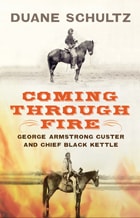
Coming Through Fire
George Armstrong Custer and Chief Black KettleDuane Schultz
Westholme Publishing, 2012
The cold dawn of November 27, 1868, was the moment George Armstrong Custer had longed for ever since the Civil War ended three years before. It was also the moment Black Kettle of the Cheyenne nation had feared ever since he had survived the deadly attack on his people at Sand Creek, Colorado Territory. Custer, who gloried in battle, was no longer the national hero, the celebrity he had been in wartime. He was a forgotten man who had failed in his first Indian campaign the year before. He needed a resounding victory to resurrect the attention he craved, and the sleepy Cheyenne village along the banks of the Washita River—ironically near present-day Cheyenne, Oklahoma—proved irresistible. Custer led his 7th U.S. Cavalry in an early morning charge that wiped out the encampment, killing those who resisted and some of those who fled. Black Kettle’s Cheyenne had signed documents of peace with the U.S. Government as they had done before Sand Creek, but once again that did not protect them. Custer ordered his troops to capture women and children and traveled with these prisoners as a way to shield his column from a retaliatory strike on their way back to their post. Called both a massacre and a battle, the action at the Washita River returned Custer to national prominence as the “greatest Indian fighter of all.”
Coming Through Fire: George Armstrong Custer and Chief Black Kettle tells the converging stories of a Civil War hero and a native warrior who met along the Washita River. Black Kettle had given up fighting—he had “come through the fire”— and made his mark on treaty after treaty to try to save the Cheyenne and their way of life from the encroachments of the U.S. government and white settlers. He watched the government breach the terms of each treaty, yet he continued to work for a compromise, knowing that negotiations were the only way his people could survive. But the flood of wagon trains and settlements, the killing of the great buffalo herds, the new diseases and broken promises, political ambition, naked greed, and continuing restrictions on land, food, and shelter persisted. As the U.S. Army, including Custer, continued to attack and forceably move Indians to reservations despite treaties indicating otherwise, Black Kettle’s dreams of peace were shattered. He ended his life face down in the freezing waters of the Washita River, shot by one of Custer’s troopers. The “greatest Indian fighter” would not survive the Indian Wars either, cut down near the Little Big Horn River, in part for his actions against Black Kettle and the Cheyenne.
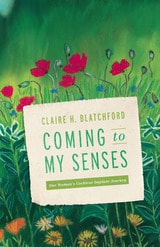
Coming to My Senses
One Woman's Cochlear Implant JourneyClaire H. Blatchford
Gallaudet University Press, 2014
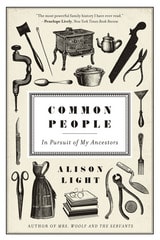
Common People
In Pursuit of My AncestorsAlison Light
University of Chicago Press, 2015
Most of us, however, give up a few generations back. We run into a gap, get embarrassed by a ne’er-do-well, or simply find our ancestors are less glamorous than we’d hoped. That didn’t stop Alison Light: in the last weeks of her father’s life, she embarked on an attempt to trace the history of her family as far back as she could reasonably go. The result is a clear-eyed, fascinating, frequently moving account of the lives of everyday people, of the tough decisions and hard work, the good luck and bad breaks, that chart the course of a life. Light’s forebears—servants, sailors, farm workers—were among the poorest, traveling the country looking for work; they left few lasting marks on the world. But through her painstaking work in archives, and her ability to make the people and struggles of the past come alive, Light reminds us that “every life, even glimpsed through the chinks of the census, has its surprises and secrets.”
What she did for the servants of Bloomsbury in her celebrated Mrs. Woolf and the Servants Light does here for her own ancestors, and, by extension, everyone’s: draws their experiences from the shadows of the past and helps us understand their lives, estranged from us by time yet inextricably interwoven with our own. Family history, in her hands, becomes a new kind of public history.

Community In-Between / Urur Dhex Dhexad Ah
Portraits of Somali-Americans in ColumbusQorsho Hassan and Ruth M. Smith
The Ohio State University Press, 2017
A combination of storytelling and research connect each narrative to another, creating a strong framework for capturing the roles of young Somali Americans in community building through innovative initiatives such as designing a mixer bottle, beginning charitable programs, and educating the Somali community on voter rights. Two community artists help to capture the participants in their natural spaces, and their journey, aided by their empowering mentor, Riya Jama, bridges the gap of Somali females and their access to photography.
The portraits, stories, and artifacts throughout the book create a modicum of belonging. This new generation resiliently overcomes challenges such as racism, xenophobia, and Islamophobia while still maintaining their hope in the future. Community In-Between captures their spirit and unwavering faith.
The portraits, stories, and artifacts throughout the book create a modicum of belonging. This new generation resiliently overcomes challenges such as racism, xenophobia, and Islamophobia while still maintaining their hope in the future. Community In-Between captures their spirit and unwavering faith.
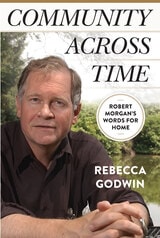
Community across Time
Robert Morgan’s Words for HomeRebecca Godwin
West Virginia University Press, 2023
One of the first book-length considerations of the Appalachian writer Robert Morgan.
One of the first book-length studies of Robert Morgan, Community across Time considers the Appalachian writer’s explorations of memory, family history, and landscape. It provides a study of all of Morgan’s fiction to date, as well as a chapter on his poetry and some reference, where appropriate, to his nonfiction. Rebecca Godwin examines the family history that informs much of this body of work, offering an extended biographical essay that ties characters and plot details to Morgan’s ancestors’ lives and to his own experiences growing up in the Blue Ridge Mountains.
Religious rifts, economic hardships, class conflicts, the place of women and Indigenous peoples, and the failure of humans to recognize the divinity of the natural world are among the motifs centering Morgan’s writing. Community across Time explores those themes as it looks to Morgan’s relationship to the Appalachian South.
Community and Solitude
New Essays on Johnson’s CircleLee, Anthony W
Bucknell University Press, 2019
Contributors: Christopher Catanese, James Caudle, Marilyn Francus, Christine Jackson-Holzberg, Claudia Thomas Kairoff, Elizabeth Lambert, Anthony W. Lee, James E. May, John Radner, and Lance Wilcox.
Published by Bucknell University Press. Distributed worldwide by Rutgers University Press.
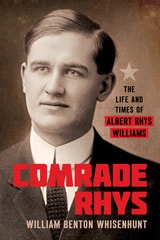
Comrade Rhys
The Life and Times of Albert Rhys WilliamsWilliam Benton Whisenhunt
University of Illinois Press, 2026
William Benton Whisenhunt draws on the largely untapped archive of Williams’s papers to provide a first-ever biography of the dedicated radical writer. Williams spent nearly ten years living and traveling in the USSR, where he observed the Soviet system and reported on it with unusual nuance in numerous books, articles, and speeches. Whisenhunt follows Williams from his early life as a lumberyard worker and preacher through his participation in the Revolution and his long career as a radical writer. Able to see socialism as flawed, Williams’s nonetheless defended it as an alternative to capitalism with such vigor that correspondents often addressed him as Comrade Rhys.
Astute and richly detailed, Comrade Rhys reveals the life and work of an overlooked radical thinker.
Con Thien
The Hill of AngelsJames P. Coan
University of Alabama Press, 2007
Holding the Hill of Angels: A Marine’s Fight for Survival at the DMZ.
Throughout much of 1967, a remote United States Marine firebase only two miles from the demilitarized zone (DMZ) captured the attention of the world’s media. That artillery-scarred outpost was the linchpin of the so-called McNamara Line intended to deter incursions into South Vietnam by the North Vietnamese Army. As such, the fighting along this territory was particularly intense and bloody, and the body count rose daily.
Con Thien combines James P. Coan’s personal experiences with information taken from archives, interviews with battle participants, and official documents to construct a powerful story of the daily life and combat on the red clay bulls-eye known as "The Hill of Angels." As a tank platoon leader in Alpha Company, 3d Tank Battalion, 3d Marine Division, Coan was stationed at Con Thien for eight months during his 1967-68 service in Vietnam and witnessed much of the carnage.
Con Thien was heavily bombarded by enemy artillery with impunity because it was located in politically sensitive territory and the U.S. government would not permit direct armed response from Marine tanks. Coan, like many other soldiers, began to feel as though the government was as much the enemy as the NVA, yet he continued to fight for his country with all that he had. In his riveting memoir, Coan depicts the hardships of life in the DMZ and the ineffectiveness of much of the U.S. military effort in Vietnam.
Concordance to the French Poetry and Prose of John Gower
R. F. Yeager
Michigan State University Press, 1997
That the poet John Gower was a major literary figure in England at the close of the fourteenth century is no longer in question. Scholarly attention paid to him and to his work over the past twenty- five years has redeemed him from an undeserved obscurity imposed by the preceding two hundred. The facts of his life and career are now documented, and recent critical assessment has placed his achievement most accurately alongside Chaucer's, Langland's, and the Gawain- poet's.
Unique among his contemporaries, all of whom undoubtedly read and used French in some measure, Gower alone has left us a significant body of verse and prose in Anglo-Norman; chiefly, the twelve-stanza poem Mirour de l-Omme, the Cinkante Balades, and the Traitié pour les amantz marietz. We are offered in this concordance of his Anglo- Norman work a unique opportunity to view a poetic language as it was written and read in England until Gower's death in 1408 and beyond.
Concrete Century
Julius Kahn and the Construction RevolutionMichael G. Smith
University of Michigan Press, 2024
Drawing upon Kahn’s personal correspondence, architectural drawings, company records, and contemporary news and journal articles, Michael G. Smith reveals how this man—whose family had immigrated to the US to escape antisemitism in Germany—played an important role in the rise of concrete. Concrete not only turned the tide against widespread destruction of buildings by fire, it also paved the way for our modern economy. Concrete Century will delight readers intrigued by architecture and construction technology alike with the true origin story of modern concrete buildings.
Confederate Bushwhacker
Mark Twain in the Shadow of the Civil WarJerome Loving
University Press of New England, 2013
Confederate Colonels
A Biographical RegisterBruce S. Allardice
University of Missouri Press, 2008
Confederate Navy Chief
Stephen R. MalloryJoseph T. Durkin
University of Alabama Press, 2005
The book tells of Stephen R. Mallory's support of naval inventions, strategy, and ideas. It also sheds light on the the successes and failures of Jefferson Davis. Durkin gives a well-balanced biography of Mallory and his life in the Confederate navy.
Confessions of Joan the Tall
Joan Cusack Handler
CavanKerry Press, 2012
Confessions of a Gay Priest
A Memoir of Sex, Love, Abuse, and Scandal in the Catholic SeminaryTom Rastrelli
University of Iowa Press, 2020
Tom Rastrelli is a survivor of clergy-perpetrated sexual abuse who then became a priest in the early days of the Catholic Church’s ongoing scandals. Confessions of a Gay Priest divulges the clandestine inner workings of the seminary, providing an intimate and unapologetic look into the psychosexual and spiritual dynamics of celibacy and lays bare the “formation” system that perpetuates the cycle of abuse and cover-up that continues today.
Under the guidance of a charismatic college campus minister, Rastrelli sought to reconcile his homosexuality and childhood sexual abuse. When he felt called to the priesthood, Rastrelli began the process of “priestly discernment.” Priests welcomed him into a confusing clerical culture where public displays of piety, celibacy, and homophobia masked a closeted underworld in which elder priests preyed upon young recruits.
From there he ventured deeper into the seminary system seeking healing, hoping to help others, and striving not to live a double life. Trained to treat sexuality like an addiction, he and his brother seminarians lived in a world of cliques, competition, self-loathing, alcohol, hidden crushes, and closeted sex. Ultimately, the “formation” intended to make Rastrelli a compliant priest helped to liberate him.
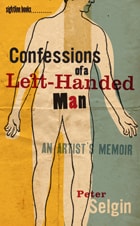
Confessions of a Left-Handed Man
An Artist's MemoirPeter Selgin
University of Iowa Press, 2011
Peter Selgin was cursed/blessed with an unusual childhood. The son of Italian immigrants—his father an electronics inventor and a mother so good looking UPS drivers swerved off their routes to see her—Selgin spent his formative years scrambling among the hat factory ruins of a small Connecticut town, visiting doting—and dotty—relatives in the “old world,” watching mental giants clash at Mensa gatherings, enduring Pavlovian training sessions with a grandmother bent on “curing” his left-handedness, and competing savagely with his right-handed twin.
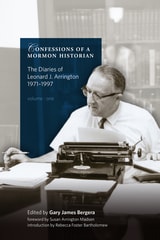
Confessions of a Mormon Historian
The Diaries of Leonard J. Arrington, 1971-1997: Volume 1, Church Historian, 1971-75Gary James Bergera
Signature Books, 2018
Leonard Arrington (1917–99) was born an Idaho chicken rancher whose early interests seemed not to extend much beyond the American west. Throughout his life, he tended to project a folksy persona, although nothing was farther from the truth.
He was, in fact, an intellectually oriented, academically driven young man, determined to explore the historical, economic, cultural, and religious issues of his time. After distinguishing himself at the University of North Carolina (Chapel Hill) and serving in the army during World War II in North Africa and Italy, Arrington accepted a professorship at Utah State University. In 1972 he was called as the LDS Church Historian—an office he held for ten years until, following a stormy tenure full of controversy over whether the “New Mormon History” he championed was appropriate for the church, he was quietly released and transferred, along with the entire Church History Division, to Brigham Young University. It was hoped that this would remove the impression in people’s minds that his writings were church-approved.
His personal diaries reveal a man who was firmly committed to his church, as well as to rigorous historical scholarship. His eye for detail made him an important observer of “church headquarters culture.”
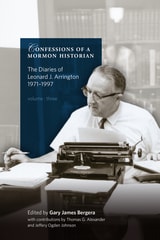
Confessions of a Mormon Historian
The Diaries of Leonard J. Arrington, 1971-1997: Volume 3, Exile, 1980-97Gary James Bergera
Signature Books, 2018
Leonard Arrington (1917–99) was born an Idaho chicken rancher whose early interests seemed not to extend much beyond the American west. Throughout his life, he tended to project a folksy persona, although nothing was farther from the truth.
He was, in fact, an intellectually oriented, academically driven young man, determined to explore the historical, economic, cultural, and religious issues of his time. After distinguishing himself at the University of North Carolina (Chapel Hill) and serving in the army during World War II in North Africa and Italy, Arrington accepted a professorship at Utah State University. In 1972 he was called as the LDS Church Historian—an office he held for ten years until, following a stormy tenure full of controversy over whether the “New Mormon History” he championed was appropriate for the church, he was quietly released and transferred, along with the entire Church History Division, to Brigham Young University. It was hoped that this would remove the impression in people’s minds that his writings were church-approved.
His personal diaries reveal a man who was firmly committed to his church, as well as to rigorous historical scholarship. His eye for detail made him an important observer of “church headquarters culture.”
Confessions of a Presidential Speechwriter
Craig R. Smith
Michigan State University Press, 2014

Confessions of an American Scholar
Simon O’Toole
University of Minnesota Press, 1970
Confessions of an American Scholar was first published in 1970. Minnesota Archive Editions uses digital technology to make long-unavailable books once again accessible, and are published unaltered from the original University of Minnesota Press editions.
Professor O'Toole, a well-known American literary scholar (Simon O'Toole is a pseudonym), gives us a candid, amusing, and, on the whole, frightening look at what really goes on in academic life. He has taught at black and white colleges, private and public colleges, Ivy Leagues and brick colleges; and over the years he has found himself transformed from a good teacher and no scholar into a prolific scholar and a tired teacher. Along the way he fought Joe McCarthy and told his students to burn their draft cards. At the conclusion of his tale he makes some serious proposals for a solution to what he calls the mess of American education. At the core of his suggestions is the opinion that America needs less education instead of more, an idea that seems certain to evoke cries of treason from many of his academic brethren.

Confessions of an Iyeska
Viola Burnette
University of Utah Press, 2018
The Fort Laramie treaties of 1851 and 1868 changed everything for the Sioux. When Burnette was born on the Rosebud Indian Reservation in the late 1930s, her people were still striving to make sense of how to live under the impoverished conditions created by the imposed land restrictions. Like most Native children at that time, she was forced by federal law to attend boarding school and assimilate into white culture. Her story reveals the resulting internal conflict that she and her people faced in embracing their own identity in a world where those in authority taught that speaking Lakota and being Indian were wrong. After a difficult jump into adulthood, Burnette emerged from an abusive marriage and, while raising four children, enrolled in junior college in her thirties and law school in her forties. She went on to become an advocate for women subjected to domestic violence and the first attorney general for the Rosebud Sioux Tribe.
Borne out under the far-reaching effects of the government-enforced restructuring of her people, Burnette’s inspiring narrative of strength and determination makes clear the importance of understanding history from a Native standpoint.
“I am an Iyeska and I am assimilated, but on my own terms. I choose when, where, and how I use the knowledge and skills I have learned. As long as we continue to teach our children and grandchildren the language, values, and traditions of the Lakota people, we will survive.”—from the book
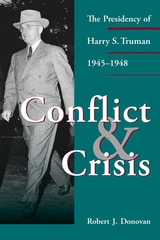
Conflict and Crisis
The Presidency of Harry S. Truman, 1945-1948Robert J. Donovan
University of Missouri Press, 1996
“It was a quiet on the second floor. The vice-president walked solemnly into Mrs. Roosevelt’s sitting room, where she waited, grave and calm. With her was her daughter, Mrs. Anna Roosevelt Boettiger, her husband, Colonel John Boettiger, and Stephan Early. Truman knew at a glance that his premonition had been true. Mrs. Roosevelt came forward directly and put her arm on his shoulder.
‘Harry, the President is dead.’”
Robert J. Donovan’s Conflict and Crisis presents a detailed account of Harry S. Truman’s presidency from 1945-1948.
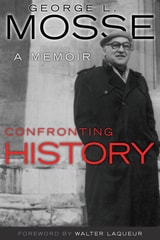
Confronting History
A MemoirGeorge L. Mosse; Foreword by Walter Laqueur
University of Wisconsin Press, 2000
Confronting History describes Mosse's opulent childhood in Weimar Berlin; his exile in Paris and England, including boarding school and study at Cambridge University; his second exile in the U.S. at Haverford, Harvard, Iowa, and Wisconsin; and his extended stays in London and Jerusalem. Mosse discusses being a Jew and his attachment to Israel and Zionism, and he addresses his gayness, his coming out, and his growing scholarly interest in issues of sexuality. This touching memoir—told with the clarity, passion, and verve that entranced thousands of Mosse's students—is guided in part by his belief that "what man is, only history tells" and, most of all, by the importance of finding one's self through the pursuit of truth and through an honest and unflinching analysis of one's place in the context of the times.
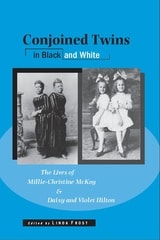
Conjoined Twins in Black and White
The Lives of Millie-Christine McKoy and Daisy and Violet HiltonEdited by Linda Frost
University of Wisconsin Press, 2009
Conjoined Twins in Black and White provides contemporary readers with the twins’ autobiographies, the first two “show histories” to be republished since their original appearance, a previously unpublished novella, and a nineteenth-century medical examination, each of which attempts to define these women and reveal the issues of race, gender, and the body prompted by the twins themselves. The McKoys, born slaves, were kidnapped and taken to Britain, where they worked as entertainers until they were reunited with their mother in an emotional chance encounter. The Hiltons, cast away by their horrified mother at birth, worked the carnival circuit as vaudeville performers until the WWII economy forced them to the burlesque stage. The hardships, along with the triumphs, experienced by these very different sister sets lend insight into our fascination with conjoined twins.
Conquistador in Chains
Cabeza de Vaca and the Indians of the AmericasDavid A. Howard
University of Alabama Press, 1996
Unlike many Spanish conquistadores who brought to the Americas a wave of disease, destruction, and oppression, Cabeza de Vaca’s stated intention was to pursue a different kind of conquest—one that would be just and humane, true to Spanish religion and law, and one that safeguarded liberty and justice for the indigenous peoples of the New World.
Bringing to South America skills and experiences earned with native peoples in North America, however, Cabeza de Vaca both failed to understand the indigenous peoples in the south and alienated many Spanish settlers in the Rio de la Plata Province, whose economic interests he threatened. Eventually the Spanish colonists formed a conspiracy to remove him from power and return him to Spain in chains.
That Cabeza de Vaca was overthrown is not surprising. His ideas and policies opposed the self-interest of most of the first Spaniards who had come to America, although he inspired the support of many even after his humiliating return to Spain. In Conquistador in Spain, historian David Howard provides a fascinating account of the rise and fall of this colonial idealist.