Results by title
2018 books match the query 'Political aspects' and 167 start with c

Crossing Borders, Drawing Boundaries
The Rhetoric of Lines across AmericaBarbara Couture
Utah State University Press, 2016
With growing anxiety about American identity fueling debates about the nation’s borders, ethnicities, and languages, Crossing Borders, Drawing Boundaries provides a timely and important rhetorical exploration of divisionary bounds that divide an Us from a Them. The concept of “border” calls for attention, and the authors in this collection respond by describing it, challenging it, confounding it, and, at times, erasing it.
Motivating us to see anew the many lines that unite, divide, and define us, the essays in this volume highlight how discourse at borders and boundaries can create or thwart conditions for establishing identity and admitting difference. Each chapter analyzes how public discourse at the site of physical or metaphorical borders presents or confounds these conditions and, consequently, effective participation—a key criterion for a modern democracy. The settings are various, encompassing vast public spaces such as cities and areas within them; the rhetorical spaces of history books, museum displays, activist events, and media outlets; and the intimate settings of community and classroom conversations.
Crossing Borders, Drawing Boundaries shows how rich communication can be when diverse cultures intersect and create new opportunities for human connection, even while different populations, cultures, age groups, and political parties adopt irreconcilable positions. It will be of interest to scholars in rhetoric and literacy studies and students in rhetorical analysis and public discourse.
Contributors include Andrea Alden, Cori Brewster, Robert Brooke, Randolph Cauthen, Jennifer Clifton, Barbara Couture, Vanessa Cozza, Anita C. Hernández, Roberta J. Herter, Judy Holiday, Elenore Long, José A. Montelongo, Karen P. Peirce, Jonathan P. Rossing, Susan A. Schiller, Christopher Schroeder, Tricia C. Serviss, Mónica Torres, Kathryn Valentine, Victor Villanueva, and Patti Wojahn.
Crossing Empires
Taking U.S. History into Transimperial TerrainKristin L. Hoganson and Jay Sexton, editors
Duke University Press, 2020
Contributors. Ikuko Asaka, Oliver Charbonneau, Genevieve Clutario, Anne L. Foster, Julian Go, Michel Gobat, Julie Greene, Kristin L. Hoganson, Margaret D. Jacobs, Moon-Ho Jung, Marc-William Palen, Nicole M. Phelps, Jay Sexton, John Soluri, Stephen Tuffnell
Crosstalk
Citizens, Candidates, and the Media in a Presidential CampaignMarion R. Just, Ann N. Crigler, Dean E. Alger, Timothy E. Cook, Montague Kern, a
University of Chicago Press, 1996
Examining political advertisements, news coverage, ad watches, and talk shows in Los Angeles, Boston, Winston-Salem, and Fargo/Moorhead, the authors chart the impact of different information environments on citizens and show how people developed images of candidates over the course of the campaign. Crosstalk presents persuasive evidence that campaigns do matter, that citizens are active participants in the campaign process, and their perceptions of a candidate's character is the central factor in the voting process.
This innovative study contributes significantly to our understanding of the 1992 presidential campaign and of campaigns in general, and shows how election campaigns can play an important role in the long-term vitality of democracy.
Cuba Represent!
Cuban Arts, State Power, and the Making of New Revolutionary CulturesSujatha Fernandes
Duke University Press, 2006
Combining textual analyses of films, rap songs, and visual artworks; ethnographic material collected in Cuba; and insights into the nation’s history and political economy, Fernandes details the new forms of engagement with official institutions that have opened up as a result of changing relationships between state and society in the post-Soviet period. She demonstrates that in a moment of extreme hardship and uncertainty, the Cuban state has moved to a more permeable model of power. Artists and other members of the public are collaborating with government actors to partially incorporate critical cultural expressions into official discourse. The Cuban leadership has come to recognize the benefits of supporting artists: rappers offer a link to increasingly frustrated black youth in Cuba; visual artists are an important source of international prestige and hard currency; and films help unify Cubans through community discourse about the nation. Cuba Represent! reveals that part of the socialist government’s resilience stems from its ability to absorb oppositional ideas and values.
Cuban Underground Hip Hop
Black Thoughts, Black Revolution, Black ModernityBy Tanya L. Saunders
University of Texas Press, 2015
Honorable Mention, Barbara T. Christian Literary Award, Caribbean Studies Association, 2017
In the wake of the 1959 Cuban Revolution, a key state ideology developed: racism was a systemic cultural issue that ceased to exist after the Revolution, and any racism that did persist was a result of contained cases of individual prejudice perpetuated by US influence. Even after the state officially pronounced the end of racism within its borders, social inequalities tied to racism, sexism, and homophobia endured, and, during the economic liberalization of the 1990s, widespread economic disparities began to reemerge.
Cuban Underground Hip Hop focuses on a group of self-described antiracist, revolutionary youth who initiated a social movement (1996–2006) to educate and fight against these inequalities through the use of arts-based political activism intended to spur debate and enact social change. Their “revolution” was manifest in altering individual and collective consciousness by critiquing nearly all aspects of social and economic life tied to colonial legacies. Using over a decade of research and interviews with those directly involved, Tanya L. Saunders traces the history of the movement from its inception and the national and international debates that it spawned to the exodus of these activists/artists from Cuba and the creative vacuum they left behind. Shedding light on identity politics, race, sexuality, and gender in Cuba and the Americas, Cuban Underground Hip Hop is a valuable case study of a social movement that is a part of Cuba’s longer historical process of decolonization.
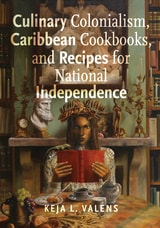
Culinary Colonialism, Caribbean Cookbooks, and Recipes for National Independence
Keja L. Valens
Rutgers University Press, 2024

Cultivating Development
An Ethnography of Aid Policy and PracticeDavid Mosse
Pluto Press, 2005
Development agencies and researchers are preoccupied with policy; with exerting influence over policy, linking research to policy and with implementing policy around the world.
But what if development practice is not driven by policy? Suppose that the things that make for 'good policy' - policy that legitimises and mobilises political support - in reality make it impossible to implement?
By focusing in detail on the unfolding activities of a development project in western India over more than ten years, as it falls under different policy regimes, this book takes a close look at the relationship between policy and practice in development.
David Mosse shows how the actions of development workers are shaped by the exigencies of organisations and the need to maintain relationships rather than by policy; but also that development actors work hardest of all to maintain coherent representations of their actions as instances of authorised policy. Raising unfamiliar questions, Mosse provides a rare self-critical reflection on practice, while refusing to endorse current post-modern dismissal of development.
Cultural Politics
edited by Marcy Darnovsky, Barbara Epstein and Richard Flacks
Temple University Press, 1995
Bridging the worlds of activism and academia-social movement theory informed with the real experiences of activists-this volume of accessible essays brings together insights from European New Social Movement theorists, U.S. scholars of social movements, and activists involved in social movements from the 1960s to the 1990s.
Contributors: Alice Echols, Barbara Epstein, Richard A. Cloward, Marcy Darnovsky, Jeffrey Escoffier, Ilene Rose Feinman, Richard Flacks, Cynthia Hamilton, Allen Hunter, L. A. Kauffman, Rebecca E. Klatch, Margit Mayer, Alberto Melucci, Bronislaw Misztal, Osha Neumann, Frances Fox Piven, Craig Reinarman, Roland Roth, Arlene Stein, Mindy Spatt, Andrew Szasz, Noél Sturgeon, Howard Winant.
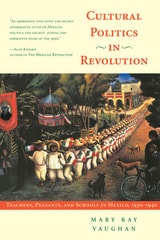
Cultural Politics in Revolution
Teachers, Peasants, and Schools in Mexico, 1930-1940Mary Kay Vaughan
University of Arizona Press, 1997
To show the significance of this facet of the Revolution, Mary Kay Vaughan analyzes the educational effort of the state during the 1930s, locating it within the broader sweep of Mexican history to illustrate how the government sought to nationalize and modernize rural society. Vaughan focuses on activities in rural schools, where central state policy makers, teachers, and people of the countryside came together to forge a national culture. She examines the cultural politics of schooling in four rural societies in the states of Sonora and Puebla that are representative of the peasant societies in revolutionary Mexico, and she shows how the state's program of socialist education became an arena for intense negotiations over power, culture, knowledge, rights, and gender practices. The real cultural revolution, Vaughan observes, lay not in the state's efforts at socialist education but in the dialogue between state and society that took place around this program. In the 1930s, rural communities carved out a space to preserve their local identities while the state succeeded in nurturing a multi-ethnic nationalism based on its promise of social justice and development.
Vaughan brings to her analysis a comparative understanding of peasant politics and educational history, extensive interviews, and a detailed examination of national, regional, and local archives to create an evocative and informative study of Mexican politics and society during modern Mexico's formative years. Cultural Politics in Revolution clearly shows that only by expanding the social arena in which culture was constructed and contested can we understand the Mexican Revolution's real achievements.
Culturally Speaking
The Rhetoric of Voice and Identity in a Mediated CultureAmanda Nell Edgar
The Ohio State University Press, 2019
Recent pieces by NPR, the BBC, and Forbes have called attention to the power of voice—positing that “your voice is the secret to getting hired” and that “voice can accelerate or hold back a career.” While it has become clearer that such things as pitch and intonation can be tied to assumptions about one’s gender, race/ethnicity, and class, studying voice as a socially constructed artifact carries with it unique challenges. In response, Culturally Speaking: The Rhetoric of Voice and Identity in a Mediated Culture presents an innovative approach to studying the spoken voice in media, showing how racial and gendered oppression bubble beneath the surface of American culture’s most recognized speaking voices, spreading invisible messages about which kinds of vocal identities are privileged and which kinds should be silenced.
Through her analysis of prominent voices in American culture—including Morgan Freeman, Tina Fey, Barack Obama, Adele, Dave Chappelle, Richard Pryor, and George Lopez—Amanda Nell Edgar argues that voices carry a residue of the particular cultural environments in which they are formed, and that these environments can be traced and analyzed to add a sonic dimension to our understanding of race and gender as rhetorically situated identities—pushing back against the often-unnoticed systems of sound-based discrimination.

Culture Wars
School and Society in the Conservative RestorationIra Shor
University of Chicago Press, 1992
"An outstanding work of educational theory and history."—John Coatsworth, University of Chicago
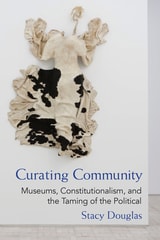
Curating Community
Museums, Constitutionalism, and the Taming of the PoliticalStacy Douglas
University of Michigan Press, 2017
Curating Community is a book for academics, artists, curators, and constitutional designers interested in legacies of violence, transitional justice, and democracy.
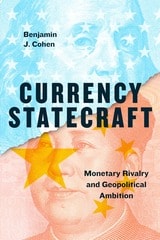
Currency Statecraft
Monetary Rivalry and Geopolitical AmbitionBenjamin J. Cohen
University of Chicago Press, 2018
In a comprehensive review that ranges from World War II to the present, Cohen convincingly argues that one goal stands out as the primary motivation for currency statecraft: the extent of a country’s geopolitical ambition, or how driven it is to build or sustain a prominent place in the international community. When a currency becomes internationalized, it generally increases the power of the nation that produces it. In the persistent contestation that characterizes global politics, that extra edge can matter greatly, making monetary rivalry an integral component of geopolitics. Today, the major example of monetary rivalry is the emerging confrontation between the US dollar and the Chinese renminbi. Cohen describes how China has vigorously promoted the international standing of its currency in recent years, even at the risk of exacerbating relations with the United States, and explains how the outcome could play a major role in shaping the broader geopolitical engagement between the two superpowers.
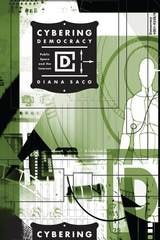
Cybering Democracy
Public Space And The InternetDiana Saco
University of Minnesota Press, 2002
Reconceptualizes the relationship between participatory democracy, technology, and space
The Internet has been billed by some proponents as an "electronic agora" ushering in a "new Athenian age of democracy." That assertion assumes that cyberspace’s virtual environment is compatible with democratic practice. But the anonymous sociality that is intrinsic to the Internet seems at odds with theories of democracy that presuppose the possibility, at least, of face-to-face meetings among citizens. The Internet, then, raises provocative questions about democratic participation: Must the public sphere exist as a physical space? Does citizenship require a bodily presence?
In Cybering Democracy, Diana Saco boldly reconceptualizes the relationship between democratic participation and spatial realities both actual and virtual. She argues that cyberspace must be viewed as a produced social space, one that fruitfully confounds the ordering conventions of our physical spaces. Within this innovative framework, Saco investigates recent and ongoing debates over cryptography, hacking, privacy, national security, information control, and Internet culture, focusing on how different online practices have shaped this particular social space. In the process, she highlights fundamental issues about the significance of corporeality in the development of civic-mindedness, the exercise of citizenship, and the politics of collective action.
Cyberlibertarianism
The Right-Wing Politics of Digital TechnologyDavid Golumbia
University of Minnesota Press, 2024
An urgent reckoning with digital technology’s fundamentally right-wing legal and economic underpinnings
In a timely challenge to the potent political role of digital technology, Cyberlibertarianism argues that right-wing ideology was built into both the technical and social construction of the digital world from the start. Leveraging more than a decade of research, David Golumbia traces how digital evangelism has driven the worldwide shift toward the political right, concealing inequality, xenophobia, dishonesty, and massive corporate concentrations of wealth and power beneath the utopian presumption of digital technology as an inherent social good.
Providing an incisive critique of the push for open access and open-source software and the legal battles over online censorship and net neutrality, Cyberlibertarianism details how the purportedly democratic internet has been employed as an organizing tool for terror and hate groups and political disinformation campaigns. As he unpacks our naively utopian conception of the digital world, Golumbia highlights technology’s role in the advancement of hyperindividualist and antigovernment agendas, demonstrating how Silicon Valley corporations and right-wing economists; antiestablishment figures such as Julian Assange, Elon Musk, Peter Thiel, Edward Snowden, and Mark Zuckerberg; and seemingly positive voices such as John Perry Barlow, Cory Doctorow, the Electronic Freedom Foundation, and Wikipedia all have worked to hamper regulation and weaken legal safeguards against exploitation.
Drawing from a wide range of thought in digital theory, economics, law, and political philosophy as well as detailed research and Golumbia’s own experience as a software developer, Cyberlibertarianism serves as a clarion call to reevaluate the fraught politics of the internet. In the hope of providing a way of working toward a more genuinely democratic and egalitarian future for digital technology, this magisterial work insists that we must first understand the veiled dogmas from which it has been constructed.
Retail e-book files for this title are screen-reader friendly.
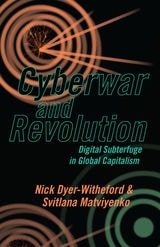
Cyberwar and Revolution
Digital Subterfuge in Global CapitalismNick Dyer-Witheford
University of Minnesota Press, 2019
Uncovering the class conflicts, geopolitical dynamics, and aggressive capitalism propelling the militarization of the internet
Global surveillance, computational propaganda, online espionage, virtual recruiting, massive data breaches, hacked nuclear centrifuges and power grids—concerns about cyberwar have been mounting, rising to a fever pitch after the alleged Russian hacking of the U.S. presidential election and the Cambridge Analytica scandal. Although cyberwar is widely discussed, few accounts undertake a deep, critical view of its roots and consequences.
Analyzing the new militarization of the internet, Cyberwar and Revolution argues that digital warfare is not a bug in the logic of global capitalism but rather a feature of its chaotic, disorderly unconscious. Urgently confronting the concept of cyberwar through the lens of both Marxist critical theory and psychoanalysis, Nick Dyer-Witheford and Svitlana Matviyenko provide a wide-ranging examination of the class conflicts and geopolitical dynamics propelling war across digital networks.
Investigating the subjectivities that cyberwar mobilizes, exploits, and bewilders, and revealing how it permeates the fabric of everyday life and implicates us all in its design, this book also highlights the critical importance of the emergent resistance to this digital militarism—hacktivism, digital worker dissent, and off-the-grid activism—for effecting different, better futures.
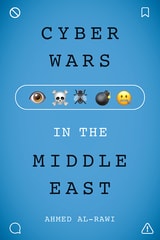
Cyberwars in the Middle East
Ahmed Al-Rawi
Rutgers University Press, 2021
On the one hand, nation-states as well as their affiliated hacking groups like cyber warriors employ hacking as offensive and defensive tools in connection to the cyber activity or inactivity of other nation-states, such as the role of Russian Trolls disseminating disinformation on social media during the US 2016 presidential election. This is regarded as a horizontal flow of political disruption. Sometimes, nation-states, like the UAE, Saudi Arabia, and Bahrain, use hacking and surveillance tactics as a vertical flow (top-bottom) form of online political disruption by targeting their own citizens due to their oppositional or activists’ political views. On the other hand, regular hackers who are often politically independent practice a form of bottom-top political disruption to address issues related to the internal politics of their respective nation-states such as the case of a number of Iraqi, Saudi, and Algerian hackers. In some cases, other hackers target ordinary citizens to express opposition to their political or ideological views which is regarded as a horizontal form of online political disruption. This book is the first of its kind to shine a light on many ways that governments and hackers are perpetrating cyber attacks in the Middle East and beyond, and to show the ripple effect of these attacks.