Results by title
4127 books match the query 'Science' and 251 start with c
Comets II
Edited by M. C. Festou, H. U. Keller, and H. A. Weaver
University of Arizona Press, 2004
Comets II situates comet science in the global context of astrophysics for the first time by beginning with a series of chapters that describe the connection between stars and planets. It continues with a presentation of the formation and evolution of planetary systems, enabling the reader to clearly see the key role played in our own solar system by the icy planetesimals that were the seeds of the giant planets and transneptunian objects.
The book presents the key results obtained during the 1990s, in particular those collected during the apparition of the exceptional comets C/Hyakutake and C/Hale-Bopp in 1996-1997. The latest results obtained from the in situ exploration of comets P/Borrelly and P/Wild 2 are also discussed in detail.
Each topic of is designed to be accessible to students or young researchers looking for basic, yet detailed, complete and accurate, information on comet science. With its emphasis on the origin of theories and the future of research, Comets II will enable scientists to make connections across disciplinary boundaries and will set the stage for discovery and new understanding in the coming years.
Comets III
Karen J. Meech, Michael R. Combi, Dominique Bockelée-Morvan, Sean N. Raymond, and Michael E. Zolensky
University of Arizona Press, 2024
With the contributions of more than eighty authors spanning twenty-five chapters, Comets III investigates the early solar system origins of comets and the clues provided by the composition and distribution of their present population for their long-term dynamical evolution and interrelations with other members of the solar system. Organized thematically, each section is designed to enable connections across disciplinary boundaries in both planetary science and planetary formation astrophysics.
This comprehensive volume explores recent advancements in space missions, telescopic observations, and robotic surveys, providing new understandings of the origins and dynamics of comets. Intended for both researchers and students, Comets III offers insights into unresolved questions and sets the stage for future advancements.

Coming Home to China
Yi-Fu Tuan
University of Minnesota Press, 2007
In the summer of 2005, distinguished geographer Yi-Fu Tuan ventured to China to speak at an international architectural conference, returning for the first time to the place he had left as a child sixty-four years before. He traveled from Beijing to Shanghai, addressing college audiences, floating down the Yangtze River on a riverboat, and visiting his former home in Chongqing.
In this enchanting volume, Tuan’s childhood memories and musings on the places encountered during this homecoming are interspersed with new lectures, engaging overarching principles of human geography as well as the changing Chinese landscape. Throughout, Tuan’s interactions with his hosts, with his colleague’s children, and even with a garrulous tour guide, offer insights into one who has spent his life studying place, culture, and self.
At the beginning of his trip, Tuan wondered if he would be a stranger among people who looked like him. By its end, he reevaluates his own self-definition as a hyphenated American and sheds new light on human identity’s complex roots in history, geography, and language.
Yi-Fu Tuan is author of Cosmos and Hearth, Dear Colleague, and Space and Place, all from Minnesota. He retired from the University of Wisconsin-Madison in 1998.
Commercial Visions
Science, Trade, and Visual Culture in the Dutch Golden AgeDániel Margócsy
University of Chicago Press, 2014
Margócsy introduces a number of natural historians, physicians, and curiosi in Amsterdam, London, St. Petersburg, and Paris who, in their efforts to boost their trade, developed modern taxonomy, invented color printing and anatomical preparation techniques, and contributed to philosophical debates on topics ranging from human anatomy to Newtonian optics. These scientific practitioners, including Frederik Ruysch and Albertus Seba, were out to do business: they produced and sold exotic curiosities, anatomical prints, preserved specimens, and atlases of natural history to customers all around the world. Margócsy reveals how their entrepreneurial rivalries transformed the scholarly world of the Republic of Letters into a competitive marketplace.
Margócsy’s highly readable and engaging book will be warmly welcomed by anyone interested in early modern science, global trade, art, and culture.
Common Ground
Encounters with Nature at the Edges of LifeRob Cowen
University of Chicago Press, 2016
That’s what Rob Cowen discovered after moving to a new home in northern England. After ten years in London he was suddenly adrift, searching for a sense of connection. He found himself drawn to a square-mile patch of waste ground at the edge of town. Scrappy, weed-filled, this heart-shaped tangle of land was the very definition of overlooked—a thoroughly in-between place that capitalism no longer had any use for, leaving nature to take its course. Wandering its meadows, woods, hedges, and fields, Cowen found it was also a magical, mysterious place, haunted and haunting, abandoned but wildly alive—and he fell in fascinated love.
Common Ground is a true account of that place and Cowen’s transformative journey through its layers and lives, but it’s much more too. As the land’s stories intertwine with events in his own life—and he learns he is to become a father for the first time—the divisions between human and nature begin to blur and shift. The place turns out to be a mirror, revealing what we are, what we’re not and how those two things are ultimately inseparable.
This is a book about discovering a new world, a forgotten world on the fringes of our daily lives, and the richness that comes from uncovering the stories and lives—animal and human—contained within. It is an unforgettable piece of nature writing, part of a brilliant tradition that stretches from Gilbert White to Robert Macfarlane and Helen Macdonald.
“I am dreaming of the edge-land again,” Cowen writes. Read Common Ground, and you, too, will be dreaming of the spaces in between, and what—including us—thrives there.
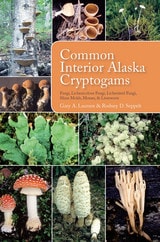
Common Interior Alaska Cryptogams
Fungi, Lichenicolous Fungi, Lichenized Fungi, Slime Molds, Mosses, and LiverwortsGary A. Laursen and Rodney D. Seppelt
University of Alaska Press, 2009
With Common Interior Alaska Cryptogams, Gary A. Laursen and Rodney Seppelt offer the first field guide to cryptogams of the Denali National Park and Preserve. Useful to both lay and professional investigators, this fully illustrated compendium covers mushroom fungi, lichenized fungi, lichenicolous fungi, slime molds, mosses, and liverworts. This field guide to commonly seen cryptogams will provide a basis for understanding their vast diversity of taxa, speciation, edibility, relative abundance, and utility, as well as the ecological roles played by these organisms.
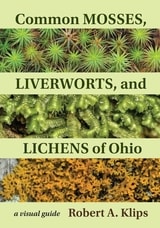
Common Mosses, Liverworts, and Lichens of Ohio
A Visual GuideRobert Klips
Ohio University Press, 2022
This engaging illustrated guidebook reveals the fascinating mosses and lichens that homeowners, outdoorspeople, and nature lovers encounter every day in Ohio and the Midwest.
In this guide to the most common and distinctive moss, liverwort, and lichen species in Ohio, readers will find concise physical descriptions, facts about natural history and ecology, and tips to distinguish look-alike species, all presented in a friendly, conversational tone.
Featuring detailed photographs of the plant and plantlike species in their natural settings, the book covers 106 mosses, thirty liverworts, and one hundred lichens and offers several avenues to match a specimen to its description page. “Where They Grow” chapters spotlight species commonly encountered on field outings, and field keys to help readers quickly identify unfamiliar samples.
While designed primarily as an identification tool, this guide also frames moss and lichen spotting in a scientific context. The two main sections—bryophytes and lichens—detail their respective taxonomic kingdoms, explain their life cycles and means of reproduction, and illustrate variation in the traits used for identification. The book is an introduction to the biology of these intriguing but too-often-overlooked organisms and a means to enjoy, identify, and catalog the biodiversity all around us.

Communicating the Infinite
The Emergence of the Habad SchoolNaftali Loewenthal
University of Chicago Press, 1990
Beginning with the different levels of communication in the teachings of the Baal Shem Tov and the Maggid and his disciples, Naftali Loewenthal traces the unfolding of the dialectic between the urge to transmit esoteric ideas and a powerful inner restraint. Gradually R. Shneur Zalman came to the fore as the prime exponent of the communication ethos. Loewenthal follows the development of his discourses up to the time of his death, when R. Dov Ber and R. Aaron Halevi Horowitz formed their respective "Lubavitch" and "Staroselye" schools. The author continues with a detailed examination of the teachings of R. Dov Ber, an inspired mystic. Central in his thought was the esoteric concept of self-abnegation, bitul, yet this combined with the quest to communicate hasidic teachings to every level of society, including women.
From the late eighteenth century onwards, the main problem for the Jewish world was posed by the fall of the walls of the social and political ghetto. Generally, the response was either to secularize, or abandon altogether, traditional Judaism or to retreat from the threatening modern world into enclave religiosity; by stressing communication, the Habad school opened the way for a middle range response that was neither a retreat into elitism nor an abandonment of tradition. Based on years of research from Hebrew and Yiddish primary source materials, Communicating the Infinite is a work of importance not only to specialists of Judaic studies but also to historians and sociologists.
Communication
Paula Bialski
University of Minnesota Press, 2018
On contemporary communication in its various human and nonhuman forms
Contemporary communication puts us not only in conversation with one another but also with our machinery. Machine communication—to communicate not just via but also with machines—is therefore the focus of this volume. Diving into digital communications history, Finn Brunton brings to the fore the alienness of computational communication by looking at network timekeeping, automated trolling, and early attempts at communication with extraterrestrial life. Picking up this fascination with inhuman communication, Mercedes Bunz then performs a close reading of interaction design and interfaces to show how technology addresses humans (as very young children). Finally, Paula Bialski shares her findings from a field study of software development, analyzing the communicative forms that occur when code is written by separate people. Today, communication unfolds merely between two or more conscious entities but often includes an invisible third party. Inspired by this drastic shift, this volume uncovers new meanings of what it means “to communicate.”
Companion to A Sand County Almanac
Interpretive and Critical EssaysJ. Baird Callicott
University of Wisconsin Press, 1987
Comparative Climatology of Terrestrial Planets
Edited by Stephen J. Mackwell, Amy A. Simon-Miller, Jerald W. Harder, and Mark A. Bullock
University of Arizona Press, 2014
Deducing the initial conditions for these diverse worlds and unraveling how and why they diverged to their current climates is a challenge at the forefront of planetary science. Through the contributions of more than sixty leading experts in the field, Comparative Climatology of Terrestrial Planets sets forth the foundations for this emerging new science and brings the reader to the forefront of our current understanding of atmospheric formation and climate evolution. Particular emphasis is given to surface-atmosphere interactions, evolving stellar flux, mantle processes, photochemistry, and interactions with the interplanetary environment, all of which influence the climatology of terrestrial planets. From this cornerstone, both current professionals and most especially new students are brought to the threshold, enabling the next generation of new advances in our own solar system and beyond.
Contents
Jim Hansen
Mark Bullock
Scot Rafkin
Caitlin Griffith
Shawn Domagal-Goldman and Antigona Segura
Kevin Zahnle
Part II: The Greenhouse Effect and Atmospheric Dynamics
Curt Covey
G. Schubert and J. Mitchell
Tim Dowling
Francois Forget and Sebastien Lebonnois
Vladimir Krasnopolsky
Adam Showman
Part III: Clouds, Hazes, and Precipitation
Larry Esposito
A. Määttänen, K. Pérot, F. Montmessin, and A. Hauchecorne
Nilton Renno
Zibi Turtle
Mark Marley
Part IV: Surface-Atmosphere Interactions
Colin Goldblatt
Teresa Segura et al.
John Grotzinger
Adrian Lenardic
D. A. Brain, F. Leblanc, J. G. Luhmann, T. E. Moore, and F. Tian
Part V: Solar Influences on Planetary Climate
Aaron Zent
Jerry Harder
F. Tian, E. Chassefiere, F. Leblanc, and D. Brain
David Des Marais
Compendium of Information on Seed Storage Behaviour, Volume 2 (I–Z)
T. D. Hong, S. Linington, and R. H. Ellis
Royal Botanic Gardens, Kew, 1998
Complexity
Life at the Edge of ChaosRoger Lewin
University of Chicago Press, 2000
"[Complexity] is that curious mix of complication and organization that we find throughout the natural and human worlds: the workings of a cell, the structure of the brain, the behavior of the stock market, the shifts of political power. . . . It is time science . . . thinks about meaning as well as counting information. . . . This is the core of the complexity manifesto. Read it, think about it . . . but don't ignore it."—Ian Stewart, Nature
This second edition has been brought up to date with an essay entitled "On the Edge in the Business World" and an interview with John Holland, author of Emergence: From Chaos to Order.
Composition and the Rhetoric of Science
Engaging the Dominant DiscourseMichael J. Zerbe
Southern Illinois University Press, 2007
Composting Utopia
Experimental Infrastructures for Organics Recycling in New York CityGuy Schaffer
University of Massachusetts Press, 2023
New Yorkers generate millions of tons of trash annually, which, through the magic of infrastructure and one of the largest waste management systems in the world, disappears from city sidewalks each night. Under pressure from environmentalists, activists, policymakers, and industry, the New York City Department of Sanitation started exploring ways to divert organic material from the waste stream, and in 2013, launched its composting pilot program.
Drawing on three years of ethnographic fieldwork with community composters and microhaulers in New York City, alongside the rollout of the city’s curbside organics collection system, Composting Utopia describes how local, grassroots organizations intervened in the city’s waste system, enacting change and presenting an alternative vision of the composting city. As Guy Shaffer argues, movement-driven infrastructure projects develop new tools for organizing the world, give communities agency over urban design, and promote just sustainability.

Computational Electromagnetics for Metamaterial Modelling
Toru Uno
The Institution of Engineering and Technology, 2027
Concepts and the Social Order
Robert K. Merton and the Future of SociologyAndras Szigeti
Central European University Press, 2011

Concepts, Theories, and the Mind-Body Problem
Herbert Feigl, Michael Scriven, and Grover Maxwell, Editors
University of Minnesota Press, 1958
Concepts, Theories, and the Mind-Body Problem was first published in 1958. Minnesota Archive Editions uses digital technology to make long-unavailable books once again accessible, and are published unaltered from the original University of Minnesota Press editions.
This is Volume II of the Minnesota Studies in the Philosophy of Science, a series published in cooperation with the Minnesota Center for Philosophy of Science at the University of Minnesota. The series editors are Herbert Feigl and Grover Maxwell, who are also co-editors, with Michael Scriven, of this volume.
The ten papers by eleven authors which make up the content of this volume are the result of collaborative research of the Center in philosophical and methodological problems of science in general and psychology in particular. The contributors are Paul Oppenheim, Hilary Putnam, Carl G. Hempel, Michael Scriven, Arthur Pap, Wilfrid Sellars,
H. Gavin Alexander, P.F. Strawson, Karl Zener, Herbert Feigl, and Paul E. Meehl. In addition, an extensive discussion of "Internationality and the Mental" by Wilfrid Sellars and Roderick Chisholm is presented in an appendix.In a review of this volume the journal Psychiatric Quarterly commented: "These essays will not prove easy for the layman to read, but he can hardly fail to find his effort rewarded if he is persistent. For the professional behavioral scientist increased awareness and caution—in his use of scientific language, and thinking about scientific theory—should result."
One of the papers in this volume, "The 'Mental' and the 'Physical'" by Herbert Feigl, has been published by the University of Minnesota Press with further discussion by Dr. Feigl as a separate book, The "Mental" and the "Physical": The Essay and a Postscript.
Concrete Revolution
Large Dams, Cold War Geopolitics, and the US Bureau of ReclamationChristopher Sneddon
University of Chicago Press, 2015
Founded in 1902, the Bureau became enmeshed in the US State Department’s push for geopolitical power following World War II, a response to the Soviet Union’s increasing global sway. By offering technical and water resource management advice to the world’s underdeveloped regions, the Bureau found that it could not only provide them with economic assistance and the United States with investment opportunities, but also forge alliances and shore up a country’s global standing in the face of burgeoning communist influence. Drawing on a number of international case studies—from the Bureau’s early forays into overseas development and the launch of its Foreign Activities Office in 1950 to the Blue Nile investigation in Ethiopia—Concrete Revolution offers insights into this historic damming boom, with vital implications for the present. If, Sneddon argues, we can understand dams as both technical and political objects rather than instruments of impartial science, we can better participate in current debates about large dams and river basin planning.
Conifers of the New England–Acadian Forest
A Cultural HistorySteve Keating
University of Massachusetts Press, 2024
Why did white pine help spark the American Revolution? How did balsam aid the development of germ theory? What does hemlock have to do with making leather? In Conifers of the New England–Acadian Forest, microbiologist Steve Keating explores how conifers influenced the course of human history, writing in a style that is both scientific and accessible.
Keating’s study focuses on one of the most forested and wild ecoregions in North America, which extends into New York, New England, and Canada and includes Acadia National Park. Here, spruces, firs, and cedars of the northern boreal forest mix with hemlocks and pines of more temperate climates. This combination helps create the appearance, aroma, and ecology of the region, and the trees’ unique botanical traits have been ingeniously utilized by numerous peoples including the Iroquois, French explorers, beer brewers, and shipbuilders. Keating concludes with identification guides for the conifers and where they can be found in Acadia National Park.
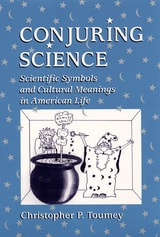
Conjuring Science
Scientific Symbols and Cultural Meanings in American LifeToumey, Christopher P.
Rutgers University Press, 1996
What are the implications for Americans when actors who play doctors on television endorse medical products, or when an entire town in the Midwest prepares for an earthquake based on the specious advice of a zoologist? These are just two of the many questions Christopher Toumey asks in his investigation of the role of science in American culture. Toumey focuses on the ways in which the symbols of science are employed to signify scientific authority in a variety of cases, from the selling of medical products to the making of public policy about AIDS/HIV––a practice he calls "conjuring" science. It is this "conjuring" of the images and symbols of scientific authority that troubles Toumey and leads him to reflect on the history of public understanding and perceptions of science in the United States. He argues that while most Americans invest a great deal of authority in science, there is a vacuum of understanding about scientific knowledge. This gap between belief and understanding greatly influences public policy decisions and democratic processes.
Toumey argues that instead of comprehending scientific knowledge, methods, or standards, most Americans know science only in terms of symbols that stand for science and that stand between people and scientific understanding. He breaks this paradox down into three questions. First, what are the historical conditions that have caused the culture of science to be so estranged from other parts of American culture? Second, how does science fit into American democratic culture today? And third, if the symbols of science are being used to endorse or legitimize certain values and meanings, but not the values and meanings of science, then to what do they refer?
In witty, readable prose, Toumey investigates these questions by presenting five episodes of science in American life: the fluoridation controversies; the 1986 California referendum on AIDS/HIV policy; the cold fusion controversy; the anti-evolution of creationism; and the mad- scientist stories of fiction and film.
Conquest of Abundance
A Tale of Abstraction versus the Richness of BeingPaul Feyerabend
University of Chicago Press, 1999
Prepared from drafts of the manuscript left at his death, working notes, and lectures and articles Feyerabend wrote while the larger work was in progress, Conquest of Abundance offers up rich exploration and startling insights with the charm, lucidity, and sense of mischief that are his hallmarks. Feyerabend is fascinated by how we attempt to explain and predict the mysteries of the natural world, and he looks at the ways in which we abstract experience, explain anomalies, and reduce wonder to formulas and equations. Through his exploration of the positive and negative consequences of these efforts, Feyerabend reveals the "conquest of abundance" as an integral part of the history and character of Western civilization.
"Paul Feyerabend . . . was the Norman Mailer of philosophy. . . . brilliant, brave, adventurous, original and quirky."—Richard Rorty, New Republic
"As much a smudged icon as a philosophical position holder, [Feyerabend] was alluring and erotic, a torch singer for philosophical anarchy."—Nancy Maull, New York Times Book Review
"[A] kind of final testament of Feyerabend's thought . . . Conquest of Abundance is as much the product of a brilliant, scintillating style as of an immense erudition and culture. . . . This book is as abundant and rich as the world it envisions."—Arkady Plotnitsky, Chicago Tribune
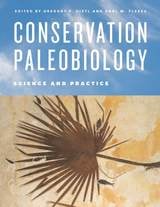
Conservation Paleobiology
Science and PracticeEdited by Gregory P. Dietl and Karl W. Flessa
University of Chicago Press, 2017
Studying endangered species is difficult. They are by definition rare, some exist only in captivity, and for those still in their native habitats any experimentation can potentially have a negative effect on survival. Moreover, a lack of long-term data makes it challenging to anticipate biotic responses to environmental conditions that are outside of our immediate experience. But in the fossil and prefossil records—from natural accumulations such as reefs, shell beds, and caves to human-made deposits like kitchen middens and archaeological sites—enlightening parallels to the Anthropocene can be found that might serve as a primer for present-day predicaments. Offering both deep-time and near-time perspectives and exploring a range of ecological and evolutionary dynamics and taxa from terrestrial as well as aquatic habitats, Conservation Paleobiology is a sterling demonstration of how the past can be used to manage for the future, giving new hope for the creation and implementation of successful conservation programs.
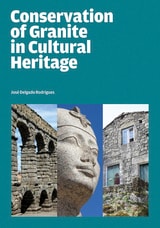
Conservation of Granite in Cultural Heritage
José Delgado Rodrigues
J. Paul Getty Trust, The, 2025
The field of stone conservation has long needed a holistic perspective that embraces the needs of conservation professionals and provides scientific support to enable them to better analyze preservation issues and implement efficient, long-lasting treatments. Conservation of Granite in Cultural Heritage offers such a perspective by bridging scholarly research on the available literature related to granite decay and best practices from conservators working in the field and laboratory.
First offering an overview of granitic rocks and their natural weathering, this volume then outlines the issues that arise when removing granite from quarries and incorporating it into what eventually becomes built heritage. Case studies are presented alongside guidelines for assessing conservation problems. This book will serve as a fundamental manual for students, conservation scientists, conservators, and restorers alike.
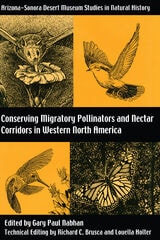
Conserving Migratory Pollinators and Nectar Corridors in Western North America
Gary Paul Nabhan
University of Arizona Press, 2004
This book, a unique work of comparative zoogeography and conservation biology, is the first to bring together studies of these important migratory pollinators and of what we must do to conserve them. It considers the similarities and differences among the behavior and habitat requirements of several species of migratory pollinators and seed dispersers in the West—primarily rufous hummingbirds, white-winged doves, lesser long-nosed bats, and monarch butterflies. It examines the population dynamics of these four species in flyways that extend from the Pacific Ocean to the continental backbone of the Sierra Madre Oriental and Rocky Mountains, and it investigates their foraging and roosting behaviors as they journey from the Tropic of Cancer in western Mexico into the deserts, grasslands, and thornscrub of the U.S.-Mexico borderlands. The four pollinators whose journeys are traced here differ dramatically from one another in foraging strategies and stopover fidelities, but all challenge many of the truisms that have emerged regarding the status of migratory species in general. The rufous hummingbird makes the longest known avian migration in relation to body size and is a key to identifying nectar corridors running through northwestern Mexico to the United States. And there is new evidence to challenge the long-supposed separation of eastern and western monarch butterfly populations by the Rocky Mountains as these insects migrate.
Conserving Migratory Pollinators and Nectar Corridors in Western North America demonstrates new efforts to understand migratory species and to determine whether their densities, survival rates, and health are changing in response to changes in the distribution and abundance of nectar plants found within their ranges. Representing collaborative efforts that bridge field ecology and conservation biology in both theory and practice, it is dedicated to safeguarding dynamic interactions among plants and pollinators that are only now being identified.
Conspiracy Theories and the Failure of Intellectual Critique
Kurtis Hagen
University of Michigan Press, 2022
Conspiracy Theories and the Failure of Intellectual Critique argues that conspiracy theories, including those that conflict with official accounts and suggest that prominent people in Western democracies have engaged in appalling behavior, should be taken seriously and judged on their merits and problems on a case-by-case basis. It builds on the philosophical work on this topic that has developed over the past quarter century, challenging some of it, but affirming the emerging consensus: each conspiracy theory ought to be judged on its particular merits and faults.
The philosophical consensus contrasts starkly with what one finds in the social science literature. Kurtis Hagen argues that significant aspects of that literature, especially the psychological study of conspiracy theorists, has turned out to be flawed and misleading. Those flaws are not randomly directed; rather, they consistently serve to disparage conspiracy theorists unfairly. This suggests that there may be a bias against conspiracy theorists in the academy, skewing “scientific” results. Conspiracy Theories and the Failure of Intellectual Critique argues that social scientists who study conspiracy theories and/or conspiracy theorists would do well to better absorb the implications of the philosophical literature.
Constitutions of Matter
Mathematically Modeling the Most Everyday of Physical PhenomenaMartin H. Krieger
University of Chicago Press, 1996
Krieger's lucid discussions will help readers to appreciate the larger physical issues behind the mathematical detail of modern physics and gain deeper insights into how theoretical physicists work. Constitutions of Matter is a rare, behind-the-scenes glimpse into the world of modern physics.
"[Krieger] provides students of physics and applied mathematics with a view of the physical forest behind the mathematical trees, historians and philosophers of science with insights into how theoretical physicists go about their work, and technically advanced general readers with a glimpse into the discipline."—Scitech Book News
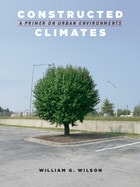
Constructed Climates
A Primer on Urban EnvironmentsWilliam G. Wilson
University of Chicago Press, 2011
As our world becomes increasingly urbanized, an understanding of the context, mechanisms, and consequences of city and suburban environments becomes more critical. Without a sense of what open spaces such as parks and gardens contribute, it’s difficult to argue for their creation and maintenance: in the face of schools needing resources, roads and sewers needing maintenance, and people suffering at the hands of others, why should cities and counties spend scarce dollars planting trees and preserving parks?
In Constructed Climates, ecologist William G. Wilson demonstrates the value of urban green. Focusing specifically on the role of vegetation and trees, Wilson shows the costs and benefits reaped from urban open spaces, from cooler temperatures to better quality ground water—and why it all matters. While Constructed Climates is a work of science, it does not ignore the social component. Wilson looks at low-income areas that have poor vegetation, and shows how enhancing these areas through the planting of community gardens and trees can alleviate social ills. This book will be essential reading for environmentalists and anyone making decisions for the nature and well-being of our cities and citizens.
Constructing Modern Chemistry
J. B. Dumas and the French AtomAlan J. Rocke
University of Chicago Press, 0
A history of chemical atomic theory that centers on France and Jean-Baptiste Dumas, yielding new perspectives on the origins of modern chemistry.
Constructing Modern Chemistry examines the early history of the chemical atomic theory, focusing on France. Rather than beginning with John Dalton and the theory of the atom, skipping right to the periodic system, and rushing headlong into the discovery of subatomic particles, Alan J. Rocke traces relevant ideas and practices from their origins in Britain shortly after 1800 to their early reception in France. Then he addresses their history, especially among French and Francophone chemists (including connections to Britain, Sweden, and the German-speaking lands), up until about 1860. The major figure in the book is the curiously understudied but extraordinarily influential Jean-Baptiste Dumas (1800–1884).
The atomic theory is to the history of chemistry what Copernican cosmology is to the history of astronomy, what Newtonian mechanics is to the history of physics, and what evolution is to the history of biology: each of these ideas structures the very nature of scientific thought within its field. Constructing Modern Chemistry explores the changing nature of chemical theory, and of scientific theory in general, during the nineteenth century. Rocke sets out to show that the early history of chemical atomism provides important insight into theoretical patterns that became characteristic of the modern science of chemistry.
But while Rocke’s work will appeal to philosophers and others who value his analysis of theory and its workings, he places equal emphasis on social context: personal backstories, interpersonal relations, cultural and scientific institutions, and contingent events. The history that emerges is rich with insight into the origins of chemistry and its practices as we know it.
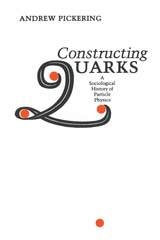
Constructing Quarks
A Sociological History of Particle PhysicsAndrew Pickering
University of Chicago Press, 1984
"A prodigious piece of scholarship that I can heartily recommend."—Michael Riordan, New Scientist
"An admirable history. . . . Detailed and so accurate."—Hugh N. Pendleton, Physics Today
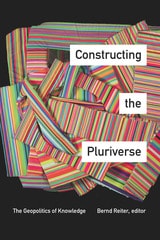
Constructing the Pluriverse
The Geopolitics of KnowledgeBernd Reiter, editor
Duke University Press, 2018
Contributors. Zaid Ahmad, Manuela Boatcă, Hans-Jürgen Burchardt, Raewyn Connell, Arturo Escobar, Sandra Harding, Ehsan Kashfi, Venu Mehta, Walter D. Mignolo, Ulrich Oslender, Issiaka Ouattara, Bernd Reiter, Manu Samnotra, Catherine E. Walsh, Aram Ziai
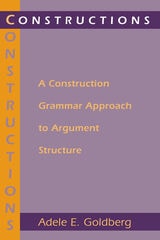
Constructions
A Construction Grammar Approach to Argument StructureAdele E. Goldberg
University of Chicago Press, 1995
Goldberg provides a comprehensive account of the relation between verbs and constructions, offering ways to relate verb and constructional meaning, and to capture relations among constructions and generalizations over constructions. Prototypes, frame semantics, and metaphor are shown to play crucial roles. In addition, Goldberg presents specific analyses of several constructions, including the ditransitive and the resultative constructions, revealing systematic semantic generalizations.
Through a comparison with other current approaches to argument structure phenomena, this book narrows the gap between generative and cognitive theories of language.
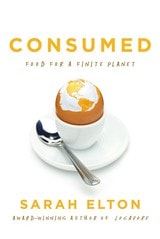
Consumed
Food for a Finite PlanetSarah Elton
University of Chicago Press, 2013
Contemporary Physics and the Limits of Knowledge
Tavel, Morton
Rutgers University Press, 2002
Contested Medicine
Cancer Research and the MilitaryGerald Kutcher
University of Chicago Press, 2009
In the 1960s University of Cincinnati radiologist Eugene Saenger infamously conducted human experiments on patients with advanced cancer to examine how total body radiation could treat the disease. But, under contract with the Department of Defense, Saenger also used those same patients as proxies for soldiers to answer questions about combat effectiveness on a nuclear battlefield.
Using the Saenger case as a means to reconsider cold war medical trials, Contested Medicine examines the inherent tensions at the heart of clinical studies of the time. Emphasizing the deeply intertwined and mutually supportive relationship between cancer therapy with radiation and military medicine, Gerald Kutcher explores post–World War II cancer trials, the efforts of the government to manage clinical ethics, and the important role of military investigations in the development of an effective treatment for childhood leukemia. Whereas most histories of human experimentation judge research such as Saenger’s against idealized practices, Contested Medicine eschews such an approach and considers why Saenger’s peers and later critics had so much difficulty reaching an unambiguous ethical assessment. Kutcher’s engaging investigation offers an approach to clinical ethics and research imperatives that lays bare many of the conflicts and tensions of the postwar period.
Contesting Leviathan
Activists, Hunters, and State Power in the Makah Whaling ConflictLes Beldo
University of Chicago Press, 2019
In Contesting Leviathan, anthropologist Les Beldo describes the complex judicial and political climate for whale conservation in the United States, and the limits of the current framework in which whales are treated as “large fish” managed by the National Marine Fisheries Service. Emphasizing the moral dimension of the conflict between the Makah, the US government, and antiwhaling activists, Beldo brings to light the lived ethics of human-animal interaction, as well as how different groups claim to speak for the whale—the only silent party in this conflict. A timely and sensitive study of a complicated issue, this book calls into question anthropological expectations regarding who benefits from the exercise of state power in environmental conflicts, especially where indigenous groups are involved. Vividly told and rigorously argued, Contesting Leviathan will appeal to anthropologists, scholars of indigenous culture, animal activists, and any reader interested in the place of animals in contemporary life.
Contesting Medical Confidentiality
Origins of the Debate in the United States, Britain, and GermanyAndreas-Holger Maehle
University of Chicago Press, 2016
In Contesting Medical Confidentiality, Andreas-Holger Maehle travels back to the origins of this increasingly relevant issue. He offers the first comparative analysis of professional and public debates on medical confidentiality in the United States, Britain, and Germany during the late nineteenth and early twentieth centuries, when traditional medical secrecy first came under pressure from demands of disclosure in the name of public health. Maehle structures his study around three representative questions of the time that remain salient today: Do physicians have a privilege to refuse court orders to reveal confidential patient details? Is there a medical duty to report illegal procedures to the authorities? Should doctors breach confidentiality in order to prevent the spread of disease? Considering these debates through a unique historical perspective, Contesting Medical Confidentiality illuminates the ethical issues and potentially grave consequences that continue to stir up public debate.
Contingency Across the Life Sciences
How Accidents Can Be ConsequentialEdited by Alison K McConwell, Roberta L. Millstein, Michael R. Dietrich, and John Beatty
University of Chicago Press, 0
With perspectives from biology, history, and philosophy, an investigation of the meaning and importance of contingency in the life sciences.
Were the outcomes of evolution, humans included, inevitable? In his 1989 book Wonderful Life, Stephen Jay Gould invited his readers to replay “life’s tape”—“You press the rewind button and, making sure you thoroughly erase everything that actually happened, go back to any time and place in the past—say, to the seas of the Burgess Shale. Then let the tape run again.” If the outcomes of evolution truly depend on historical contingencies, you might not get anything at all like the same trajectory—maybe no humans or anything human-like. In the first book of its kind, Contingency Across the Life Sciences brings together scientists, philosophers, and historians to explore when historical contingency really matters for our understanding of the biological past and our place within it.
Using Darwin’s and Gould’s views on chance and contingency as a starting point, the chapters clarify the many different meanings of contingency and show how biologists have moved beyond the tape of life metaphor to find contingency in a range of ecological, evolutionary, and developmental processes, including experiments with contingency in actual populations. The collection ends with a set of reflections on how historical contingency can change the ways we see ourselves as biological and moral agents in a world that could have been otherwise.
Contributions to the History of Science
Part I. Robert of Chester's Latin Translation of the Algebra of Al-KhowarizmiWith an introduction, critical notes, and an English version by Louis Charles Karpinski
University of Michigan Press, 1915
Contributions to the History of Science
Part II. Prodromus of Nicolaus Steno's Dissertation Concerning a Solid Enclosed by Process of Nature within a SolidAn English version with an introduction and explanatory notes by John Garrett Winter
University of Michigan Press, 1916

Controversies in Science and Technology
From Maize to MenopauseEdited by Daniel Lee Kleinman, Abby J. Kinchy, and Jo Handelsman
University of Wisconsin Press, 2005
* Antibiotics and Resistance: the science, the policy debates, and perspectives from a microbiologist, a veterinarian, and an M.D.
* Genetically Modified Maize and Gene Flow: the science of genetic modification, protecting genetic diversity, agricultural biotech vesus the environment, corporate patents versus farmers' rights
* Hormone Replacement Theory and Menopause: overview of the Women's Health Initiative, history of hormone replacement therapy, the medicalization of menopause, hormone replacement therapy and clinical trials
* Smallpox: historical and medical overview of smallpox, government policies for public health, the Emergency Health Powers Act, public resistance vs. cooperation.
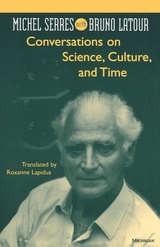
Conversations on Science, Culture, and Time
Michel Serres with Bruno LatourMichel Serres
University of Michigan Press, 1995
Conversion Factors
S. I. Units and Many OthersColin J. Pennycuick
University of Chicago Press, 1988
Cookstove Chronicles
Social Life of a Women’s Technology in IndiaMeena R. Khandelwal
University of Arizona Press, 2024
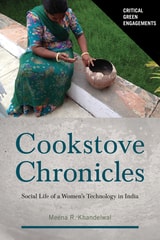
Based on anthropological research in Rajasthan, Cookstove Chronicles argues that the supposedly obsolete chulha persists because it offers women control over the tools needed to feed their families. Their continued use of old stoves alongside the new is not a failure to embrace new technologies but instead a strategy to maximize flexibility and autonomy. The chulha is neither the villain nor hero of this story. It produces particulate matter that harms people’s bodies, leaves soot on utensils and walls, and accelerates glacial melting and atmospheric warming. Yet it also depends on renewable biomass fuel and supports women’s autonomy as a local, do-it-yourself technology.
Meena Khandelwal, a feminist anthropologist, describes her collaboration with engineers, archaeologists, and others. She employs critical social theory and reflections from fieldwork to bring together research from a range of fields, including history, geography, anthropology, energy and environmental studies, public health, and science and technology studies (STS). In so doing she not only demystifies multidisciplinary research but also highlights the messy reality of actual behavior.
Cookstove Chronicles critically examines why, despite extensive development efforts, use of the chulha persists. It offers an important new framework for looking at development, technology, environmental change, and human behavior.
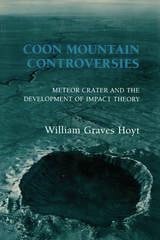
Coon Mountain Controversies
Meteor Crater and the Development of Impact TheoryWilliam Graves Hoyt
University of Arizona Press, 1987
"This meticulously prepared and lucidly written work will surely prove the definitive account of one of the most stimulating intellectual confrontations in the whole history of the earth and planetary sciences. I can recommend it without reservation."—William A. S. Sarjeant,Geoscience Canada
"An important book by an extraordinary author, of interest to anyone fascinated by the ways in which unorthodox science becomes part of conventional wisdom."—Earth Sciences History
Cooperation and Collective Action
Archaeological PerspectivesDavid M. Carballo
University Press of Colorado, 2013
Disentangling the motivations and institutions that foster group cooperation among competitive individuals remains one of the few great conundrums within evolutionary theory. The breadth and material focus of archaeology provide a much needed complement to existing research on cooperation and collective action, which thus far has relied largely on game-theoretic modeling, surveys of college students from affluent countries, brief ethnographic experiments, and limited historic cases. In Cooperation and Collective Action, diverse case studies address the evolution of the emergence of norms, institutions, and symbols of complex societies through the last 10,000 years. This book is an important contribution to the literature on cooperation in human societies that will appeal to archaeologists and other scholars interested in cooperation research.
Cooperatives, Grassroots Development, and Social Change
Experiences from Rural Latin AmericaEdited by Marcela Vásquez-León, Brian J. Burke, and Timothy J. Finan
University of Arizona Press, 0
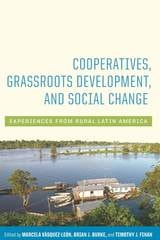
Cooperatives, Grassroots Development, and Social Change presents examples from Paraguay, Brazil, and Colombia, examining what is necessary for smallholder agricultural cooperatives to support holistic community-based development in peasant communities. Reporting on successes and failures of these cooperative efforts, the contributors offer analyses and strategies for supporting collective grassroots interests. Illustrating how poverty and inequality affect rural people, they reveal how cooperative organizations can support grassroots development strategies while negotiating local contexts of inequality amid the broader context of international markets and global competition.
The contributors explain the key desirable goals from cooperative efforts among smallholder producers. They are to provide access to more secure livelihoods, expand control over basic resources and commodity chains, improve quality of life in rural areas, support community infrastructure, and offer social spaces wherein small farmers can engage politically in transforming their own communities.
The stories in Cooperatives, Grassroots Development, and Social Change reveal immense opportunities and challenges. Although cooperatives have often been framed as alternatives to the global capitalist system, they are neither a panacea nor the hegemonic extension of neoliberal capitalism. Through one of the most thorough cross-country comparisons of cooperatives to date, this volume shows the unfiltered reality of cooperative development in highly stratified societies, with case studies selected specifically because they offer important lessons regarding struggles and strategies for adapting to a changing social, economic, and natural environment.
Contributors:
Luis Barros
Brian J. Burke
Charles Cox
Luis Alberto Cuéllar Gómez
Miguel Ricardo Dávila Ladrón de Guevara
Elisa Echagüe
Timothy J. Finan
Andrés González Aguilera
Sonia Carolina López Cerón
Joana Laura Marinho Nogueira
João Nicédio Alves Nogueira
Jessica Piekielek
María Isabel Ramírez Anaya
Rodrigo F. Rentería-Valencia
Lilliana Andrea Ruiz Marín
Marcela Vásquez-León

Coordinated Science Laboratory
75 Years of Multidisciplinary ExcellenceCoordinated Science Laboratory
University of Illinois Press, 2026
Published in honor of CSL’s seventy-fifth anniversary, this book reveals how the institution evolved into a rich research ecosystem that pursues a wide range of diverse projects. CSL’s work to date has given rise to dozens of startups, thousands of careers, and countless innovations in communications, robotics, computing, and other areas of science and technology. As the stories in this book show, CSL brings together diverse minds from across disciplines to solve some of the world’s most complex challenges. Indeed, the institution’s history is interwoven with the histories of industry, national security, and the familiar everyday technologies that connect and empower our world.
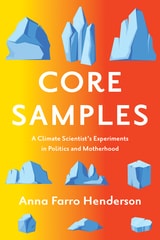
Core Samples
A Climate Scientist's Experiments in Politics and MotherhoodAnna Farro Henderson
University of Minnesota Press, 2024
People live by their stories—how can we use them to accelerate action on climate change?
Climate scientist and policy expert Anna Farro Henderson embarks on a remarkable narrative journey in Core Samples, exploring how science is done, discussed, legislated, and imagined. Through stories both raucous and poignant—of far-flung expeditions, finding artistic inspiration in research, and traversing the systemic barriers women and mothers face in science and politics—she brings readers into the daily rhythms and intimacies of scientific research and political negotiation.
Grounded in her experiences as a climate scientist, an environmental policy advisor to Minnesota Senator Al Franken and Governor Mark Dayton, and a constant juggler of the many roles and responsibilities of professional moms, Henderson’s eclectic, unconventional essays range from observations, confessions, and meditations on lab and fieldwork to a packing list for a trip to the State Capitol and a lactation diary. Readers are invited on voyages as far afield as the Trinity nuclear test site in New Mexico, the Juneau Icefield in Alaska, and a meteor crater in Ghana—and as close to home as a town hall meeting in America’s corn belt.
A love letter to science and a bracing (and sometimes hilarious) portrait of the many obstacles women, mothers, and people digging for truth navigate, Core Samples illuminates the messy, contradictory humanity of our scientific and political institutions. Bringing us behind the closed doors of discovery and debate, Henderson exposes the flaws in research institutions, the halls of government, and the role of science in policy, yet she shows how each crack is also an invitation for camaraderie, creativity, and change.
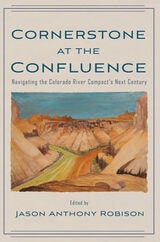
Cornerstone at the Confluence
Navigating the Colorado River Compact's Next CenturyEdited by Jason Anthony Robison
University of Arizona Press, 2022
No fewer than forty million people have come to rely on the Colorado River system in modern times—a river system immersed in an unprecedented, unrelenting megadrought for more than two decades. Attempting to navigate this “new normal,” policymakers are in the midst of negotiating new management rules for the river system, a process coinciding with the compact’s centennial that must be completed by 2026.
Animated by this remarkable confluence of events, Cornerstone at the Confluence leverages the centennial year to reflect on the compact and broader “Law of the River” to envision the future. It is a volume inviting dialogue about how the Colorado River system’s flows should be apportioned given climate change, what should be done about environmental issues such as ecosystem restoration and biodiversity protection, and how long-standing issues of water justice facing Native American communities should be addressed.
In one form or another, all these topics touch on the concept of “equity” embedded within the compact—a concept that tees up what is perhaps the foundational question confronted by Cornerstone at the Confluence: Who should have a seat at the table of Colorado River governance?