Results by title
18284 books match the query 'United States' and 1260 start with c
Cast in Deathless Bronze
Andrew Rowan, the Spanish-American War, and the Origins of American EmpireDonald Tunnicliff Rice
West Virginia University Press, 2016
Donald Tunnicliff Rice reveals the facts behind the story of “A Message to García” while using Rowan’s biography as a window into the history of the Spanish-American War, the Philippine War, and the Moro Rebellion. The result is a compellingly written narrative containing many details never before published in any form, and also an accessible perspective on American diplomatic and military history in the late nineteenth and early twentieth centuries.
Caste and Class in a Southern Town
John Dollard
University of Wisconsin Press, 1989
An extraordinary powerful exposition of social patterns in a small town, Caste and Class in a Southern Town has become a benchmark in social science methodology and a classic in American studies. Now fifty years after its original publication, John Dollard’s most famous work offers timeless insights and remains essential to those interested in race-related social issues.
In 1937, W. E. B. Du Bois observed, "Dr. Dollard’s study is one of the most interesting and penetrating that has been made concerning the South and is marked by courage and real insight. . . . Dr. Dollard’s book marks a distinct advance in the study of the Southern scene."
Castle Valley America
Hard Land, Hard-won HomeNancy Taniguchi
Utah State University Press, 2004
This is American history told through the stories of an atypical, for Utah, region. Castle Valley is roughly conterminous with two counties, Carbon and Emery, which together formed a rural, industrial enclave in a mostly desert environment behind the mountain range that borders Utah's principal corridor of settlement. In Castle Valley, coal mining and the railroad attracted diverse, multiethnic communities and a fair share of historic characters, from Butch Cassidy, who stole its largest payroll, to Mother Jones, who helped organize its workers against its mining companies. Among the last major segments of the state to be settled, it was also a generally poor region that stretched the capabilities of people to scratch a living from a harsh landscape.
The people of Castle Valley experienced complex, unusual combinations of both social cohesion and conflict, but they struggled through poverty, labor disputes, major mining disasters, and other challenges to build communities whose stories reflected the historical course of the nation as a whole. In order to convey her subject's both unique and representative qualities, Nancy Taniguchi has written an epic history that is not just local history, but American history written locally.
Nancy J. Taniguchi, who lived for thirteen years in Castle Valley and was previously on the faculty of the College of Eastern Utah in Price, is professor of history at California State University, Stanislaus. She is the author of numerous published articles in mining, legal, women's, western, and Utah history and of one book, Necessary Fraud: Progressive Reform
and Utah Coal.
Cataclysm
General Hap Arnold and the Defeat of JapanHerman S. Wolk
University of North Texas Press, 2010

Cataloging Correctly for Kids
Michele Zwierski, Marilyn McCroskey, and Joanna F. Fountain
American Library Association, 2021
Cataloging library materials for children in the internet age has never been as challenging or as important. RDA: Resource Description and Access is now the descriptive standard, there are new ways to find materials using classifications, and subject heading access has been greatly enhanced by the keyword capabilities of today’s online catalogs. It’s the perfect moment to present a completely overhauled edition of this acclaimed bestseller. The new sixth edition guides catalogers, children’s librarians, and LIS students in taking an effective approach towards materials intended for children and young adults. Informed by recent studies of how children search, this handbook’s top-to-bottom revisions address areas such as
- how RDA applies to a variety of children’s materials, with examples provided;
- authority control, bibliographic description, subject access, and linked data;
- electronic resources and other non-book materials; and
- cataloging for non-English-speaking and preliterate children.

Cataloging Correctly for Kids
An Introduction to the ToolsSheila S. Intner
American Library Association, 2011
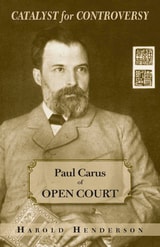
Catalyst for Controversy
Paul Carus of Open CourtHarold Henderson
Southern Illinois University Press, 2009
"I am not a common atheist; I am an atheist who loves God."—Paul Carus, "The God of Science," 1904
In the summer of 1880, while teaching at the military academy of the Royal Corps of Cadets of Saxony in Dresden, Paul Carus published a brief pamphlet denying the literal truth of scripture and describing the Bible as a great literary work comparable to the Odyssey.
This unremarkable document was Carus’s first step in a wide-ranging intellectual voyage in which he traversed philosophy, science, religion, mathematics, history, music, literature, and social and political issues. The Royal Corps, Carus later reported, found his published views "not in harmony with the Christian spirit, in accordance with which the training and education of the Corps of Cadets should be conducted." And so the corps offered the young teacher the choice of asking "most humbly for forgiveness for daring to have an opinion of my own and to express it, perhaps even promise to publish nothing more on religious matters, or to give up my post. I chose the latter. . . . There was thus no other choice for me but to emigrate and, trusting in my own powers, to establish for myself a new home." His resignation was effective on Easter Sunday, 1881.
Carus toured the Rhine, lived briefly in Belgium, and taught in a military college in England to learn English well enough to "thrive in the United States." By late 1884 or early 1885 he was on his way to the New World. Thriving in the United States proved more difficult than it had in England, but before 1885 ended he had published his first philosophical work in English, Monism and Meliorism. The book was not widely read, but it did reach Edward C. Hegeler, a La Salle, Illinois, zinc processor who became his father-in-law as well as his ideological and financial backer.
Established in La Salle, Carus began the work that would place him among the prominent American philosophers of his day and make the Open Court Publishing Company a leading publisher of philosophical, scientific, and religious books. He edited The Open Court and The Monist, offering the finest view of Oriental thought and religion then available in the West, and sought unsuccessfully to bring about a second World Parliament of Religions. He befriended physicist-philosopher Ernst Mach. For eleven years he employed D. T. Suzuki, who later became a great Zen Buddhist teacher. He published more articles by Charles S. Peirce, now viewed as one of the great world philosophers, in The Monist than appeared in any other publication.
Biographer Harold Henderson concludes his study of this remarkable man: "Whenever anyone is so fired with an idea that he or she can’t wait to write it down, there the spirit of Paul Carus remains, as he would have wished, active in the world."
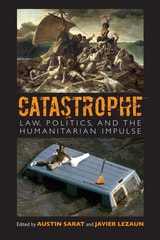
Catastrophe
Law, Politics, and the Humanitarian ImpulseAustin Sarat
University of Massachusetts Press, 2009
At a time when societies are directing an unprecedented level of resources and ingenuity to anticipating and mitigating catastrophic events, Catastrophe: Law, Politics, and the Humanitarian Impulse examines the tests that catastrophe poses to politics and humanitarianism as well as to the law. It explores legal, political, and humanitarian responses during times when the sudden, discontinuous, and disastrous event has become, perhaps paradoxically, a structural component of our political imagination. It asks whether law, politics, and humanitarianism live up to the tests posed by disaster, and the role all of them play in creating a more resilient world.
Taken together the essays in this book ask us to see through and beyond the myths that surround catastrophe and our responses to it. They ask us to rethink our understanding of catastrophe and to imagine new legal, political, and humanitarian responses.
In addition to the editors, contributors include Thomas Birkland, Michele Landis Dauber, Kim Fortun, Edward Rackley, Peter Redfield, Peter H. Schuck, and Susan Sterett.
Catastrophic Diseases
Who Decides What?Jay Katz
Russell Sage Foundation, 1975
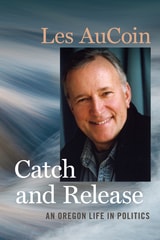
Catch and Release
An Oregon Life in PoliticsLes AuCoin
Oregon State University Press, 2019
In this compelling collection of life stories, AuCoin traces his unlikely rise from a fatherless childhood in Central Oregon to the top ranks of national power. Then came a painful defeat in one of the most controversial races in US Senate history, against incumbent Bob Packwood.
A fly fisher, AuCoin uses “catch and release” as a metaphor for succeeding and letting go of loss with dignity and equanimity. His memories are in turn funny, suspenseful, and revealing. AuCoin takes us to the Kremlin, pre-industrial China, the Arctic National Wildlife Refuge, and into the tortuous politics of the Northwest spotted owl crisis. He interacted with world figures like Mikhail Gorbachev, Ronald Reagan, House Speakers Tip O’Neill and Jim Wright, and Oregon legends Tom McCall and Mark Hatfield. Closer to home, AuCoin allied himself with activists like Sidney Lasseigne of the Newport Fishermen’s Wives.
Catch and Release offers readers a revealing glimpse behind the scenes of congressional life, as lived by the 535 souls who inhabit the US House and Senate—including the author, who assesses his own strengths and foibles with humility and candor.
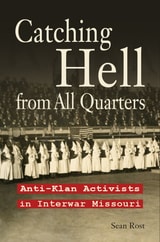
Catching Hell from All Quarters
Anti-Klan Activists in Interwar MissouriSean Rost
University of Missouri Press, 2025
Although anit-Klan activism was nation-wide, Missouri provides an excellent case study for the rise and fall of the second Klan as the organization gained a large membership and obtained a notable level of political power in some parts of the Show-Me State. Significantly, despite membership totals comparable to that of neighboring states, the Missouri Klan did not translate its recruiting success into substantial influence and political power due to significant local opposition from anti-Klan activists.
Catching Hell from All Quarters addresses key questions about the legacy of the Klan, both in Missouri and nationwide. Traditional scholarship on the second Klan stops at the hooded order’s decline at the start of the Great Depression, thus neatly splitting that era’s Klan from the Civil Rights Movement era Klan of the 1950s and 1960s. This book, however, draws direct connections between both eras by highlighting continued anti-Klan activism as well as several far-right, fascist, and white supremacist organizations that found support among Klan members (both active and former) during the 1930s and 1940s and aided not only in the Klan’s re-emergence after World War II but also influenced present-day hate groups.

Categorically Unequal
The American Stratification SystemDouglas S. Massey
Russell Sage Foundation, 2007
Category 5
The Story of Camille, Lessons Unlearned from America's Most Violent HurricaneErnest Zebrowski and Judith A. Howard
University of Michigan Press, 2005
"This highly readable account aimed at a general audience excels at telling the plight of the victims and how local political authorities reacted. The saddest lesson is how little the public and the government learned from Camille. Highly recommended for all public libraries, especially those on the Gulf and East coasts."
—Library Journal online
As the unsettled social and political weather of summer 1969 played itself out amid the heat of antiwar marches and the battle for civil rights, three regions of the rural South were devastated by the horrifying force of Category 5 Hurricane Camille.
Camille's nearly 200 mile per hour winds and 28-foot storm surge swept away thousands of homes and businesses along the Gulf Coast of Louisiana and Mississippi. Twenty-four oceangoing ships sank or were beached; six offshore drilling platforms collapsed; 198 people drowned. Two days later, Camille dropped 108 billion tons of moisture drawn from the Gulf onto the rural communities of Nelson County, Virginia-nearly three feet of rain in 24 hours. Mountainsides were washed away; quiet brooks became raging torrents; homes and whole communities were simply washed off the face of the earth.
In this gripping account, Ernest Zebrowski and Judith Howard tell the heroic story of America's forgotten rural underclass coping with immense adversity and inconceivable tragedy.
Category 5 shows, through the riveting stories of Camille's victims and survivors, the disproportionate impact of natural disasters on the nation's poorest communities. It is, ultimately, a story of the lessons learned-and, in some cases, tragically unlearned-from that storm: hard lessons that were driven home once again in the awful wake of Hurricane Katrina.
"Emergency responses to Katrina were uncoordinated, slow, and--at least in the early days--woefully inadequate. Politicians argued about whether there had been one disaster or two, as if that mattered. And before the last survivors were even evacuated, a flurry of finger-pointing had begun. The question most neglected was: What is the shelf life of a historical lesson?"
Ernest Zebrowski is founder of the doctoral program in science and math education at Southern University, a historically black university in Baton Rouge, Louisiana, and Professor of Physics at Pennsylvania State University's Pennsylvania College of Technology. His previous books include Perils of a Restless Planet: Scientific Perspectives on Natural Disasters. Judith Howard earned her Ph.D. in clinical social work from UCLA, and writes a regular political column for the Ruston, Louisiana, Morning Paper.
"Category 5 examines with sensitivity the overwhelming challenges presented by the human and physical impacts from a catastrophic disaster and the value of emergency management to sound decisions and sustainability."
--John C. Pine, Chair, Department of Geography & Anthropology and Director of Disaster Science & Management, Louisiana State University
Catfish, Fiddles, Mules, and More
Missouri's State SymbolsJohn C. Fisher
University of Missouri Press, 2003
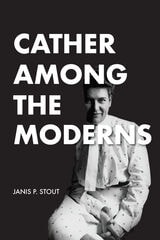
Cather Among the Moderns
Janis P. Stout
University of Alabama Press, 2019
A masterful study by a preeminent scholar that situates Cather as a visionary practitioner of literary modernism
Willa Cather is often pegged as a regionalist, a feminine and domestic writer, or a social realist. In Cather Among the Moderns, Janis P. Stout firmly situates Cather as a visionary practitioner of literary modernism, something other scholars have hinted at but rarely affirmed. Stout presents Cather on a large, dramatic stage among a sizable cast of characters and against a brightly lit social and historical backdrop, invoking numerous figures and instances from the broad movement in the arts and culture that we call modernism.
Early on, Stout addresses the matter of gender. The term “cross-dresser” has often been applied to Cather, but Stout sees Cather’s identity as fractured or ambiguous, a reading that links her firmly to early twentieth-century modernity. Later chapters take up topics of significance both to Cather and to twentieth-century American modernists, including shifting gender roles, World War I’s devastation of social and artistic norms, and strains in racial relations. She explores Cather’s links to a small group of modernists who, after the war, embraced life in New Mexico, a destination of choice for many artists, and which led to two of Cather’s most fully realized modernist novels, The Professor’s House and Death Comes for the Archbishop.
The last chapter addresses Cather’s place within modernism. Stout first places her in relation to Ezra Pound and T. S. Eliot with their shared ties to tradition even while making, sometimes startling, innovations in literary form, then showing parallels with William Faulkner with respect to economic disparity and social injustice.
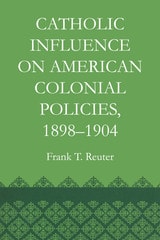
Catholic Influence on American Colonial Policies, 1898-1904
By Frank T. Reuter
University of Texas Press, 1967
At the close of the Spanish-American War the United States found itself in possession of a colonial empire. The role played by the American Catholic Church in influencing administrative policy for the new, and predominately Catholic, dependencies is the subject of this incisive study by Frank T. Reuter.
Reuter discusses the centuries-old intricate involvement of the Spanish crown and the native Roman Catholic Church in the civil, social, and charitable institutions of Cuba, Puerto Rico, Guam, and the Philippines. He explores the attempts of United States officials to apply the traditional doctrine of separation of church and state in resolving the problems of a Church-run school system, the alleged desecration of native Catholic churches by American forces in the Philippines, the native antagonism toward the Spanish friars, and the disposition of Church property in dependencies with a deeply rooted correlation between the Catholic Church and the state.
Recounting the development of the Catholic Church in America, which felt responsible for maintaining the islands’ religious structure after Spanish control was removed, Reuter sees the reaction of the Church to the war with Spain and to colonial policy in the early postwar period as voiced not by a monolithic political force, but by diverse spokesmen—in particular the unofficial voice of the Catholic press. He traces the growth of the Church in the United States from a disparate group of dioceses clinging to European backgrounds, disunited by a divided hierarchy, and attacked by the wave of the anti-Catholic, nativistic sentiments of the last two decades of the nineteenth century, to a church body unified by the problems in the colonies. Catholic opinion, although not utilized to its full political potential, achieved a common focus through the formation of the Federation of American Catholic Societies and the debate in Congress over the Philippine Government Bill.
This study of American and native Catholic attitudes toward the formulation of United States policy in the insular dependencies and the attitude of the United States government toward the Catholic interests in the dependencies details the interplay of personalities and organizations: Presidents William McKinley and Theodore Roosevelt; William Howard Taft, civil governor of the Philippines; James Cardinal Gibbons, moderator between Catholic factions and official spokesman of the hierarchy to the Papacy and the United States government; Archbishop Placide L. Chapelle, apostolic delegate of the Vatican to the Philippines; Archbishop John Ireland, friend of President McKinley; the Philippine Commissions; and the Taft Mission to the Vatican in 1902.
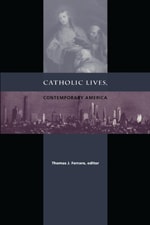
Catholic Lives, Contemporary America
Thomas J. Ferraro, ed.
Duke University Press, 1997
Edited and with an introduction by Thomas J. Ferraro, Catholic Lives, Contemporary America offers a banquet of essays and interviews, at once subtle and accessible, treating American Catholic lives and legacies with compassion and flair.
Contributors. Patrick Allitt, Paul Crowley, Thomas J. Ferraro, James T. Fisher, Paul Giles, Mary Gordon, Stanley Hauerwas, Frank Lentricchia, Robert A. Orsi, Camille Paglia, David Plante, Richard Rodriguez, Kathy Rudy, Andrew Sullivan, Mary Jo Weaver
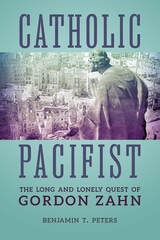
Catholic Pacifist
The Long and Lonely Quest of Gordon ZahnBenjamin Peters
Catholic University of America Press, 2026
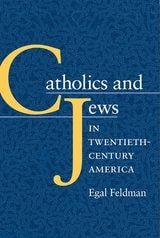
Catholics and Jews in Twentieth-Century America
Egal Feldman
University of Illinois Press, 2006
Focusing primarily on the Catholic doctrinal view of the Jews and its ramifications, Egal Feldman traces the historicalroots of anti-Semitism, examining tenacious Catholic beliefsincluding the idea that the Jews lost their place as the chosen people with the coming of Christianity, deicide, and the conviction that their purported responsibility for the Crucifixion justified subsequent Jewish misery.
A new era of Catholic-Jewish relations opened in 1962 with Vatican II’s Declaration on the Jews, reversing the theology of contempt. Feldman explores the strides made in improving relations, such as the Vatican’s diplomatic recognition of the Jewish state, as well as a number of recent issues.
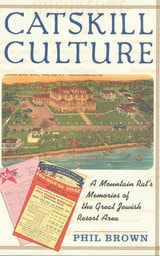
Catskill Culture
A Mountain Rat'S Memories OfPhil Brown
Temple University Press, 2003
Born to a small hotel-owning family who worked for decades in hotels after losing their own, Phil Brown tells a story of the many elements of this magical environment. His own waiter's tales, his mother's culinary exploits as a chef, and his father's jobs as maitre d' and coffee shop operator offer a backdrop to the vital life of Catskills summers. Catskill Culture recounts the life of guests, staff, resort owners,entertainers, and local residents through the author's memories and archival research and the memories of 120 others.
The Catskills resorts shaped American Jewish culture, enabling Jews to become more American while at the same time introducing the American public to immigrant Jewish culture. Catskills entertainment provided the nation with a rich supply of comedians, musicians, and singers. Legions of young men and women used the Catskills as a springboard to successful careers and marriages.
A decline for the resort area beginning in the 1970s has led to many changes. Today most of the hotels and bungalow colonies are gone or in ruins, while other communities, notably those of the Hasidim, have appeared. The author includes an appendix listing over 900 hotels he has been able to document and invites readers to contact him with additional entries.
Cattle In The Cold Desert, Expanded Edition
James A. Young
University of Nevada Press, 2002
A sophisticated ecological analysis of ranching in northern Nevada featuring a new chapter and new epilogue by the authors.First published in 1985, Cattle in the Cold Desert has become a classic in the environmental history of the Great Basin, brilliantly combining a lively account of the development of the Great Basin grazing industry with a detailed scientific discussion of the ecology of its sagebrush/grassland plant communities. The volume traces the history of white settlement in the Great Basin from about 1860, along with the arrival of herds of cattle and sheep to exploit the forage resources of a pristine environment and, through the history of John Sparks, a pioneer cattleman, illustrates how the herdsmen interacted with the sagebrush/grasslands of the cold desert West. As the story unfolds on two levels—that of the herdsmen adapting their livelihood to the challenging conditions of the Great Basin's scanty forage, aridity, and fierce winters, and that of the fragile ecology of the desert plant communities responding to the presence of huge herds of livestock—we see the results of a grand experiment initiated by men willing to venture beyond the limits of accepted environmental potential to settle the Great Basin, as well as the often ruinous consequences of the introduction of domestic livestock into the plant communities of the region. The result is a remarkably balanced and insightful discussion of the grazing industry in the Intermountain West. This new paperback edition includes an additional chapter that addresses the impact of wild mustangs on the Great Basin rangelands, and an epilogue that discusses changes in rangeland management and in rangeland conditions, especially the impact of recent wildfires. As concern over the future of the Great Basin's unique rangeland environment and its principal agricultural industry grows, Cattle in the Cold Desert remains essential reading for everyone who cares about this underappreciated region of the American West.
Cattle in the Cotton Fields
A History of Cattle Raising in AlabamaBrooks Blevins
University of Alabama Press, 2013
Cattle raising today is the most widely practiced form of agriculture in Alabama and ranks second only to the poultry industry in terms of revenue. Brooks Blevins not only relates the development and importance of the industry to agricultural practices but also presents it as an integral component of southern history, inextricably linked to issues of sectional politics, progressivism, race and class struggles, and rural depopulation. Most historians believe cattle were first introduced by the Spanish explorers and missionaries during the early decades of the 16th century. Native Americans quickly took up cattle raising, and the practice was reinforced with the arrival of the French and the British. By 1819--after massive immigration of Anglo-American herders, farmers, and planters--cattle played an integral role in the territory's agriculture and economy. Despite the dominance of the cotton industry during the antebellum period, cattle herding continued to grow and to become identified as an important part of the region's agriculture.
In the early decades of the 20th century, the boll weevil drove many planters out of the cotton business. These planters adopted a midwestern model of cattle raising consisting of purebred English breeds, enclosed pastures, scientific breeding and feeding practices, and intimate cooperation among cattlemen, government agents, and business interests. This model of farming gradually replaced the open range herding tradition.

Cattle on a Thousand Hills
A History of the Cattle Industry in ArkansasC.J. Brown
University of Arkansas Press, 1996
Católicos
Resistance and Affirmation in Chicano Catholic HistoryBy Mario T. García
University of Texas Press, 2008
Chicano Catholicism—both as a popular religion and a foundation for community organizing—has, over the past century, inspired Chicano resistance to external forces of oppression and discrimination including from other non-Mexican Catholics and even the institutionalized church. Chicano Catholics have also used their faith to assert their particular identity and establish a kind of cultural citizenship.
Based exclusively on original research and sources, Mario T. García here offers the first major historical study to explore the various dimensions of the role of Catholicism in Chicano history in the twentieth century. This is also one of the first significant studies in the still limited field of Chicano religious history.
Topics range from how early Chicano Catholic intellectuals and civil rights leaders were influenced by Catholic Social Doctrine, to the role that popular religion has played in the lives of ordinary men and women in both rural and urban areas. García also examines faith-based Chicano community movements like Católicos Por La Raza in the 1960s and the Sanctuary movement in Los Angeles in the 1980s.
While Latino/a history and culture has been, for the most part, inextricably linked with the tenets and practices of Catholicism, there has been very little written, until recently, about Chicano Catholic history. García helps to fill that void and explore the impact—both positive and negative—that the Catholic experience has had on the Chicano community.
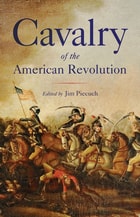
Cavalry of the American Revolution
Jim Piecuch
Westholme Publishing, 2012
Nine Historians and Writers Investigate the Role of Cavalry in the War for Independence
From the bitterly contested no-man’s-land between American and British lines in New York and New Jersey to the scorching pine forests of the South, the cavalry of both armies fought valiantly throughout the American Revolution. This volume explores several aspects of cavalry’s role in the war, which has often been overlooked in general histories. The topics covered include the development of the Continental Army’s cavalry arm, European influences on American cavalry training and tactics, accounts of several important cavalry raids and battles, and histories of mounted units such as the Continental Light Dragoons, American rangers in the South Carolina backcountry, and the British army’s Queen’s Rangers and “Black Dragoons,” the latter force composed entirely of former slaves. The essays also examine the roles of important commanders, including Brigadier General Francis “Swamp Fox” Marion, Lieutenant Colonel William Washington, and Colonel Anthony Walton White of the American army, and British cavalry leaders Banastre “Bloody Ban” Tarleton and John Graves Simcoe, as well as the American prisoners of war who switched sides and served in the “British Legion.” The authors of the essays include acclaimed military historians Gregory J. W. Urwin and Lawrence E. Babits. Readers with a general interest in military history, as well as those with more specific interests in the American Revolution or the history of the cavalry arm, and anyone who wishes to undertake further study of these subjects, will find the essays fresh, engaging, and informative.
@font-face { font-family: "Times New Roman";}@font-face { font-family: "HelveticaNeue-LightCond";}p.MsoNormal, li.MsoNormal, div.MsoNormal { margin: 0in 0in 0.0001pt; font-size: 12pt; font-family: "Times New Roman"; }table.MsoNormalTable { font-size: 10pt; font-family: "Times New Roman"; }div.Section1 { page: Section1; }
Contents
Gregory J. W. Urwin: The Continental Light Dragoons, 1776-1783
Lee F. McGee: European Influences on Continental Cavalry
John M. Hutchins: Cavalry Action at Poundridge, New York
Donald J. Gara: Cavalry Battles in New York and New Jersey
Scott A. Miskimon: Anthony Walton White: A Revolutionary Dragoon
Michael C. Scoggins: South Carolina’s Backcountry Rangers
Lawrence E. Babits and Joshua B. Howard: Continentals in Tarleton’s
British Legion
Charles F. Price: Cavalry Operations at Eutaw Springs
Jim Piecuch: The “Black Dragoons”
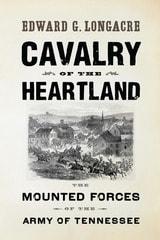
Cavalry of the Heartland
The Mounted Forces of the Army of TennesseeEdward G. Longacre
Westholme Publishing, 2009
A History of the Finest and Most Flamboyant Cavalry Arm of the Civil War
While Robert E. Lee’s Army of Northern Virginia prosecuted the war in the East for the Confederacy, the Army of Tennessee fought in the West, ranging over a tremendous expanse during the course of the Civil War, from southern Ohio and eastern Kentucky all the way to Georgia and the Carolinas. Unlike Lee’s army, however, the Army of Tennessee suffered at the hands of a series of uninspired commanders and had few impressive victories. It did have, however, arguably the best cavalry of any army in the war in terms of numbers and leadership. Led by some of the most colorful officers of the Civil War—the brilliant, passionate Nathan Bedford Forrest, the flamboyant but erratic John Hunt Morgan, and the quietly competent “Fightin’ Joe” Wheeler—and grabbing headlines for daring raids, such as Morgan’s foray into Ohio, the mounted forces of the Army of Tennessee developed a strategy of a highly mobile fighting unit that could be deployed rapidly in strength to strike deep behind enemy lines and maneuver at a moment’s notice during a battle, tactics that were to have the most impact on military operations in the future.
As distinguished historian Edward G. Longacre chronicles in Cavalry of the Heartland: The Mounted Forces of the Army of Tennessee, the army’s top generals failed to recognize the battle-winning potential of their cavalry and instead sent them off on sideshow operations rather than deploying them consistently to assist the main body’s efforts. Based on a wide array of research materials, Cavalry of the Heartland is the only book-length study of the strategy and tactics of the Army of Tennessee’s mounted forces from its inception in the spring of 1861 to its final bow at Bentonville, North Carolina, four years later. Throughout, numerous campaigns and battles are described in full detail, including Fort Donelson, Shiloh, Perryville, Murfreesboro (Stones River), Tullahoma, Chickamauga, Chattanooga, Atlanta, Nashville, and the Carolinas.
Cave Hollow, An Ozark Bluff-Dweller Site
Horace Miner
University of Michigan Press, 1950

Cave Rock
Climbers, Courts, and a Washoe Indian Sacred PlaceMatthew S. Makley
University of Nevada Press, 2010

Cedar
The Life and Music of Cedar WaltonBen Markley
University of North Texas Press, 2023
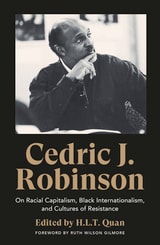
Cedric J. Robinson
On Racial Capitalism, Black Internationalism, and Cultures of ResistanceCedric J. Robinson
Pluto Press, 2019
"Like W. E. B. Du Bois, Michel Foucault, Sylvia Wynter, and Edward Said, Robinson was that rare polymath capable of seeing the whole....He left behind a body of work to which we must return constantly and urgently"—Robin D. G. Kelley, author of Freedom Dreams
Cedric J. Robinson is one of the doyens of Black Studies and a pioneer in study of the Black Radical Tradition. His works have been essential texts, deconstructing racial capitalism and inspiring insurgent movements from Ferguson, Missouri to the West Bank. For the first time, Robinson's essays come together, spanning over four decades and reflective of his diverse interests in the interconnections between culture and politics, radical social theory, and classic and modern political philosophy.
Themes explored include Africa and Black internationalism, World politics, race and US Foreign Policy, representations of blackness in popular culture, and reflections on popular resistance to racial capitalism, white supremacy and more. Essays here include:
*The Black Detective and American Memory
*Slavery and the Platonic Origins of Anti-Democracy
*Africa: In Hock to History and the Banks
*Blaxploitation and the Misrepresentation of Liberalism
*The Mulatta on Film
*Race, Capitalism, and Anti-democracy
*The Killing in Ferguson
*And much more!
Accompanied by an introduction by H. L. T. Quan and a foreword by Ruth Wilson Gilmore, this collection, which includes previously unpublished materials, extends the many contributions by a giant in Black radical thought.
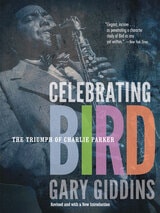
Celebrating Bird
The Triumph of Charlie ParkerGary Giddins
University of Minnesota Press, 2013
Within days of Charlie “Bird” Parker’s death at the age of thirty-four, a scrawled legend began appearing on walls around New York City: Bird Lives. Gone was one of the most outstanding jazz musicians of any era, the troubled genius who brought modernism to jazz and became a defining cultural force for musicians, writers, and artists of every stripe. Arguably the most significant musician in the country at the time of his death, Parker set the standard many musicians strove to reach—though he never enjoyed the same popular success that greeted many of his imitators. Today, the power of Parker’s inventions resonates undiminished; and his influence continues to expand.
Celebrating Bird is the groundbreaking and award-winning account of the life and legend of Charlie Parker from renowned biographer and critic Gary Giddins, whom Esquire called “the best jazz writer in America today.” Richly illustrated and drawing primarily from original sources, Giddins overturns many of the myths that have grown up around Parker. He cuts a fascinating portrait of the period, from Parker’s apprentice days in the 1930s in his hometown of Kansas City to the often difficult years playing clubs in New York and Los Angeles, and reveals how Parker came to embody not only musical innovation and brilliance but the rage and exhilaration of an entire generation.
Fully revised and with a new introduction by the author, Celebrating Bird is a classic of jazz writing that the Village Voice heralded as “a celebration of the highest order”—a portrayal of a jazz virtuoso whose gargantuan talent was haunted by his excesses and a view into the ravishing art of one of jazz’s most commanding and remarkable figures.
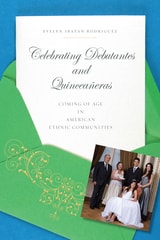
Celebrating Debutantes and Quinceañeras
Coming of Age in American Ethnic CommunitiesEvelyn Ibatan Rodriguez
Temple University Press, 2013
Drawing on over fifty in-depth interviews with members of these fast-growing American Asian and Latino populations, Rodriguez shows how these communal celebrations of daughters have been adapted by immigrant families to assert their cultural pride and affirm their American belonging. Celebrating Debutantes and Quinceañeras provides an intimate and compelling portrait of the various ways immigrants and their children are purposefully, strategically, and creatively employing Filipino American debutantes and Mexican American quinceañeras to simultaneously challenge and assimilate into U.S. culture and forge new understandings of what it means to be "Mexican," "Filipino," and "American."
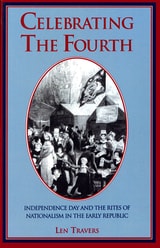
Celebrating the Fourth
Independence Day and the Rites of Nationalism in the Early RepublicLen Travers
University of Massachusetts Press, 1997
A CHOICE Outstanding Academic Book
Public rituals have always held a vital place in American culture. By far the noisiest and most popular of these to emerge in the nation's early years was Independence Day. After a decade of fitful starts, the Fourth of July eclipsed local and regional patriotic observances to become the premier “American Jubilee.” Celebrating the Fourth provides a history of this holiday and explores its role in shaping a national identity and consciousness in three cities—Boston, Charleston, and Philadelphia—during the first fifty years of the American republic. Independence Day celebrations justified, validated, and helped maintain nationalism among people unused to offering political allegiance beyond their own state borders. As the observances became increasingly popular and symbolically important, political partisans competed hotly for the right to control the meaning of the festivals.
Celebrity And Power
Fame and Contemporary CultureP. David Marshall
University of Minnesota Press, 1997

Celibacies
American Modernism and Sexual LifeBenjamin Kahan
Duke University Press, 2013
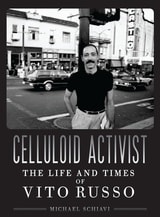
Celluloid Activist
The Life and Times of Vito RussoMichael Schiavi
University of Wisconsin Press, 2011
“Schiavi tells a compelling story in this biography—from his re-creation of life on the streets of East Harlem and in Greenwich Village of the 1960s and 1970s to the way he conveys Russo’s excitement about his film research and popular education to his account of the AIDS years in New York City.”—John D’Emilio, Italian American Review
“In [Schiavi’s] hands Russo’s life is both fascinating in its own right and a window into a larger milieu of activism during two critical decades.”—Italian American Review
Best Books for General Audiences, selected by the Public Library Reviewers
Finalist, Gay Memoir/Biography, Lambda Literary Awards
Finalist, Over the Rainbow Selection, American Library Association
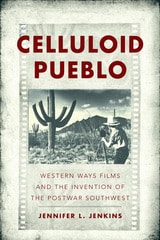
Celluloid Pueblo
Western Ways Films and the Invention of the Postwar SouthwestJennifer L. Jenkins
University of Arizona Press, 2016
Celluloid Pueblo tells the story of Western Ways Features and its role in the invention of the Southwest of the imagination. Active during a thirty-year period of profound growth and transformation, the Herberts created a dynamic visual record of the region, and their archival films now serve as a time capsule of the Sunbelt in the mid-twentieth century. Drawing upon a ten-year career with Fox, Western Ways owner-operator Charles Herbert brought a newshound’s sensibility and acute skill at in-camera editing to his southwestern subjects. The Western Ways films provided counternarratives to Hollywood representations of the West and established the regional identity of Tucson and the borderlands.
Jennifer L. Jenkins’s broad-sweeping book examines the Herberts’ work on some of the first sound films in the Arizona borderlands and their ongoing promotion of the Southwest. The book covers the filmic representation of Native and Mexican lifeways, Anglo ranching and leisure, Mexican missions and tourism, and postwar borderlands prosperity and progressivism. The story of Western Ways closely follows the boom-and-bust arc of the midcentury Southwest and the constantly evolving representations of an exotic—but safe and domesticated—frontier.
Cemeteries Gravemarkers
Richard Meyer
Utah State University Press, 1992
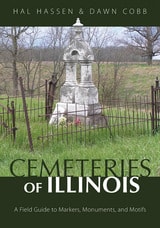
Cemeteries of Illinois
A Field Guide to Markers, Monuments, and MotifsHal Hassen
University of Illinois Press, 2017
- the ways different materials used as gravestones and markers reflect historical trends;
- how to understanding the changes in the use of iconographic images;
- the story behind architectural features like fencing, roads, and gates;
- what enthusiasts can do to preserve local cemeteries for future generations.
Cenizas
PoemsCynthia Guardado
University of Arizona Press, 2022
Guardado crafted the poems in Cenizas over a ten-year period, often traveling to El Salvador for research and to conduct interviews. The Salvadoran Civil War haunts the pages of this collection as it unflinchingly explores war, its aftermath, and the bittersweet legacies that are passed down from one generation to the next. The poems mourn those who were lost and honor the strength of the speaker’s ancestors. “All my people have been born from the ashes of volcanoes,” she writes, invoking a family lineage that has endured the atrocities committed against them. Even so, El Salvador keeps pulling the speaker back—and despite warnings of danger, she still manages to find beauty among the ruins.
Censorship and Selection
Issues and Answers for SchoolsHenry Reichman
American Library Association, 2001
Centering Student Activism
Feminist Rhetorical Interruptions of Sexual Assault CultureShari J. Stenberg
Utah State University Press, 2026
Centering Student Activism is a deep exploration of institutional responses to sexual assault. It addresses critical issues facing campuses today, examining how students navigate institutional dynamics and utilize the power of new and traditional rhetorical strategies to effect change. In doing so, it provides a profound understanding of the mechanisms by which coalitions can transform educational environments.
Centering Student Activism features a national interview-based study of contemporary student activists who deploy rhetorical strategies and tactics—old and new, embodied and digital—with agility and awareness. They aim their strategies and tactics of “intersectional rhetorical feminism” to interrupt and transform a sedimented culture. The students’ activism highlights not only the harms experienced by survivors in the aftermath of their assaults but also how their efforts to communicate those harms are often stymied or silenced by official responses and practices. These student activists pair interruption with rhetorical transformation as they seek to create a survivor-centric culture. In so doing they spotlight the systemic roots of sexual violence and respond to sexual assault through intersectional, coalition-based work.
Through detailed analysis and compelling narratives, Shari J. Stenberg underscores the importance of community care and mutual support in advocacy efforts. Centering Student Activism is an essential work for navigating institutional dynamics, providing an important resource to students, educators, and administrators who seek to understand how universities silence survivors and how students create ways to speak back and transform institutional culture.
Central American Counterpoetics
Diaspora and RememoryKarina Alma
University of Arizona Press, 2024
Author Karina Alma offers a systemic method and artistic mode for unpacking social and political memory formation that resists dominant histories. Central American Counterpoetics responds to political repression through acts of creativity that prioritize the well-being of anticolonial communities. Building on Toni Morrison’s theory of rememory, the volume examines the concept as an embodied experience of a sensory place and time lived in the here and now. By employing primary sources of image and word, interviews of creatives, and a critical self-reflection as a Salvadoran immigrant woman in academia, Alma’s research breaks ground in subject matter and methods by considering cultural and historical ties across countries, regions, and traditions. The diverse creatives included explore critical perspectives on topics such as immigration, forced assimilation, maternal love, gender violence, community arts, and decolonization.
Central American Women in Diaspora
Testimonios of the GenerationsEdited by Karina Alma and Ester E. Hernández
University of Arizona Press, 2026
This collection centers Central American women’s voices within the growing narrative of the Central American diaspora. It provides a tapestry of testimonios—from grandmothers, mothers, daughters, and sisters—who explore what it means to be Central American women in the United States.
Through the practice of testimonio, contributors create intergenerational dialogues between mothers and daughters, engage with Indigenous oral traditions, and reflect on the violent histories of war in Guatemala, El Salvador, Honduras, and Nicaragua. The volume is organized around five themes: political histories, migration, gender and sexuality, navigating institutions, and healing. Within each theme contributors tackle a range of issues, including Central American political histories, healing, grief, Indigenous knowledge, memory, trauma, post-traumatic growth, organizing, creativity, and agency.
This anthology spans genres such as poetry, essay, and visual art to present diverse perspectives, including Indigenous, Afro-Indigenous, queer, and working-class voices. An intervention that centers gendered experiences and challenges oppressive structures, this volume celebrates the solidarity, cultural memory, and healing found within transnational ties.
Contributors
Leisy J. Abrego
Margoth Abrego
Bella
Juanita Cabrera López
Jennifer A. Cárcamo
Sandra Castro
Karla Cativo
Kency Cornejo
Gabriela Corona Valencia
Carolina Rivera Escamilla
Rafael Escamilla
Mildred Fuentes-Chung
Diana Gamez
Joanna Beltrán Girón
Ruth Girón
Victoria Gonzalez-Rivera
Claudia D. Hernández
Jessica Hernandez
Leticia Hernández-Linares
Leigh-Anna Hidalgo
Andrea Nikté Juarez Mendoza
Amanda Macal
Carla Macal
Patricia Veliz Macal
Kiara Aileen Machado
Beatriz Maldonado
Jacqueline Munguía
Joanna B. Pérez
Rossana Pérez
Katy Pinto
Claudia A. Portillo
Suyapa Portillo Villeda
Nalya Rodriguez
Jessica Saravia
Andrea Zelaya
Century of Difference
How America Changed in the Last One Hundred YearsClaude S. Fischer
Russell Sage Foundation, 1976
Ceremonial Time
Fifteen Thousand Years on One Square MileJohn Hanson Mitchell
University Press of New England, 2013
Certain Concealments
Poe, Hawthorne, and Early Nineteenth-Century AbortionDana Medoro
University of Massachusetts Press, 2022
Antebellum America saw a great upsurge in abortion, driven in part by the rise of the pharmaceutical industry. Unsurprisingly, the practice became increasingly visible in the popular culture and literature of the era, appearing openly in advertisements, popular fiction, and newspaper reports. One figure would come to dominate national headlines from the 1840s onward: Madame Restell. Facing public condemnation and mob attacks at her home for her dogged support of women’s reproductive rights, Restell built an empire selling her powders, pills, and services along the Eastern Seaboard.
Edgar Allan Poe and Nathaniel Hawthorne undoubtedly knew of Restell’s work and would go on to depict the incompatibility of abortion and nationalism in their writings. Through the thwarted plotlines, genealogical interruptions, and terminated ideas of Poe’s Dupin trilogy and Hawthorne’s The Scarlet Letter, The House of Seven Gables, and The Blithedale Romance, these authors consider new concepts around race, reproduction, and American exceptionalism. Dana Medoro demonstrates that their work can be usefully read in the context of debates on fetal life and personhood that circulated in the era.
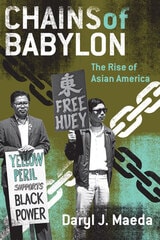
Chains of Babylon
The Rise of Asian AmericaDaryl J. Maeda
University of Minnesota Press, 2009
In Chains of Babylon, Daryl J. Maeda presents a cultural history of Asian American activism in the late 1960s and early 1970s, showing how the movement created the category of "Asian American" to join Asians of many ethnicities in racial solidarity. Drawing on the Black Power and antiwar movements, Asian American radicals argued that all Asians in the United States should resist assimilation and band together to oppose racism within the country and imperialism abroad.
As revealed in Maeda's in-depth work, the Asian American movement contended that people of all Asian ethnicities in the United States shared a common relationship to oppression and exploitation with each other and with other nonwhite peoples. In the early stages of the civil rights era, the possibility of assimilation was held out to Asian Americans under a model minority myth. Maeda insists that it was only in the disruption of that myth for both African Americans and Asian Americans in the 1960s and 1970s that the full Asian American culture and movement he describes could emerge. Maeda challenges accounts of the post-1968 era as hopelessly divisive by examining how racial and cultural identity enabled Asian Americans to see eye-to-eye with and support other groups of color in their campaigns for social justice.
Asian American opposition to the war in Vietnam, unlike that of the broader antiwar movement, was predicated on understanding it as a racial, specifically anti-Asian genocide. Throughout he argues that cultural critiques of racism and imperialism, the twin "chains of Babylon" of the title, informed the construction of a multiethnic Asian American identity committed to interracial and transnational solidarity.
Chains of Command
The Rise and Cruel Reign of the Franchise EconomyBrian Callaci
University of Chicago Press, 2026
A surprising look at the big business of owning small businesses and what America’s franchise economy means for its workers.
Walk into a McDonald’s anywhere in the United States, and it will be identical to every other McDonald’s in the country. Yet, that particular store is almost certainly owned and operated by an “independent” franchisee. While McDonald’s presents an image of centralized uniformity to the consumer, it shows a different face to the small business owners operating its stores under its control and the workers preparing its product to its standards. How then does McDonald’s—and its big business peers—manage to be two things at once?
In this revelatory work, economist Brian Callaci shows how franchisors have altered the legal treatment of corporations in their favor through a decades-long crusade of lobbying and litigation. Their efforts subsequently unleashed a slew of legal and economic sins upon the US economy and labor force, allowing multinational corporations to control continent-spanning empires while outsourcing employment and scapegoating legal responsibilities onto small businesses. The result: the unfettered growth of some of America’s most recognizable businesses, at the aggregate expense of America’s workers.
Remarkable in both its scale and synthesis, Callaci’s story is the first chronicle of this business movement—initially resisted by US courts before experiencing a dramatic reversal of fortune after decades of campaigning by some of America’s most established entrepreneurs. An urgent and erudite history, Chains of Command reveals how the US labor market was tamed one small business at a time.
Chainsaws, Slackers, and Spy Kids
Thirty Years of Filmmaking in Austin, TexasBy Alison Macor
University of Texas Press, 2010
Winner, Peter C. Rollins Book Award, Southwest Texas Popular Culture Association/American Culture Association, 2011
During the 1990s, Austin achieved "overnight" success and celebrity as a vital place for independent filmmaking. Directors Richard Linklater and Robert Rodriguez proved that locally made films with regional themes such as Slacker and El Mariachi could capture a national audience. Their success helped transform Austin's homegrown film community into a professional film industry staffed with talented, experienced filmmakers and equipped with state-of-the art-production facilities. Today, Austin struggles to balance the growth and expansion of its film community with an ongoing commitment to nurture the next generation of independent filmmakers.
Chainsaws, Slackers, and Spy Kids chronicles the evolution of this struggle by re-creating Austin's colorful movie history. Based on revealing interviews with Richard Linklater, Robert Rodriguez, Mike Judge, Quentin Tarantino, Matthew McConaughey, George Lucas, and more than one hundred other players in the local and national film industries, Alison Macor explores how Austin has become a proving ground for contemporary independent cinema. She begins in the early 1970s with Tobe Hooper's horror classic, The Texas Chainsaw Massacre, and follows the development of the Austin film scene through 2001 with the production and release of Rodriguez's $100-million blockbuster, Spy Kids. Each chapter explores the behind-the-scenes story of a specific movie, such as Linklater's Dazed and Confused and Judge's Office Space, against the backdrop of Austin's ever-expanding film community.