Results by title
28167 books match the query 'History' and 1913 start with c
Catastrophizing
Materialism and the Making of DisasterGerard Passannante
University of Chicago Press, 2019
Reaching back to the time between the Renaissance and the Enlightenment, Passannante traces a history of catastrophizing through literary and philosophical encounters with materialism—the view that the world is composed of nothing but matter. As artists, poets, philosophers, and scholars pondered the physical causes and material stuff of the cosmos, they conjured up disasters out of thin air and responded as though to events that were befalling them. From Leonardo da Vinci’s imaginative experiments with nature’s destructive forces to the fevered fantasies of doomsday astrologers, from the self-fulfilling prophecies of Shakespeare’s tragic characters to the mental earthquakes that guided Kant toward his theory of the sublime, Passannante shows how and why the early moderns reached for disaster when they ventured beyond the limits of the sensible. He goes on to explore both the danger and the critical potential of thinking catastrophically in our own time.
Catawba Valley Mississippian
Ceramics, Chronology, and Catawba IndiansDavid G. Moore
University of Alabama Press, 2002
By the 18th century, the modern Catawba Indians were living along the river and throughout the valley that bears their name near the present North Carolina-South Carolina border, but little was known of their history and origins. With this elegant study, David Moore proposes a model that bridges the archaeological record of the protohistoric Catawba Valley with written accounts of the Catawba Indians from the 17th, 18th, and 19th centuries, thus providing an ethnogenesis theory for these Native Americans.
Because the Catawba Confederacy had a long tradition of pottery making, dating ceramics and using them for temporal control was central to establishing a regional cultural chronology. Moore accomplishes this with a careful, thorough review and analysis of disparate data from the whole valley. His archaeological discoveries support documentary evidence of 16th century Spaniards in the region interacting with the resident Indians. By tracking the Spanish routes through the Catawba River valley and comparing their reported interactions with the native population with known archaeological sites and artifacts, he provides a firm chronological and spatial framework for Catawba Indian prehistory.
With excellent artifact photographs and data-rich appendixes, this book is a model study that induces us to contemplate a Catawba genesis and homeland more significant than traditionally supposed. It will appeal to professional archaeologists concerned with many topics—Mississippian, Lamar, early historic Indians, de Soto, Pardo, and chiefdom studies—as well as to the broader public interested in the archaeology of the Carolinas.
Catching Hell from All Quarters
Anti-Klan Activists in Interwar MissouriSean Rost
University of Missouri Press, 2025
Although anit-Klan activism was nation-wide, Missouri provides an excellent case study for the rise and fall of the second Klan as the organization gained a large membership and obtained a notable level of political power in some parts of the Show-Me State. Significantly, despite membership totals comparable to that of neighboring states, the Missouri Klan did not translate its recruiting success into substantial influence and political power due to significant local opposition from anti-Klan activists.
Catching Hell from All Quarters addresses key questions about the legacy of the Klan, both in Missouri and nationwide. Traditional scholarship on the second Klan stops at the hooded order’s decline at the start of the Great Depression, thus neatly splitting that era’s Klan from the Civil Rights Movement era Klan of the 1950s and 1960s. This book, however, draws direct connections between both eras by highlighting continued anti-Klan activism as well as several far-right, fascist, and white supremacist organizations that found support among Klan members (both active and former) during the 1930s and 1940s and aided not only in the Klan’s re-emergence after World War II but also influenced present-day hate groups.
Catching Nature in the Act
Réaumur and the Practice of Natural History in the Eighteenth CenturyMary Terrall
University of Chicago Press, 2014
At the center of Terrall’s study is René-Antoine Ferchault de Réaumur (1683–1757)—the definitive authority on natural history in the middle decades of the eighteenth century—and his many correspondents, assistants, and collaborators. Through a close examination of Réaumur’s publications, papers, and letters, Terrall reconstructs the working relationships among these naturalists and shows how observing, collecting, and experimenting fit into their daily lives. Essential reading for historians of science and early modern Europe, Catching Nature in the Act defines and excavates a dynamic field of francophone natural history that has been inadequately mined and understood to date.
Catching Stories
A Practical Guide to Oral HistoryDonna M. DeBlasio
Ohio University Press, 2009
In neighborhoods, schools, community centers, and workplaces, people are using oral history to capture and collect the kinds of stories that the history books and the media tend to overlook: stories of personal struggle and hope, of war and peace, of family and friends, of beliefs, traditions, and values—the stories of our lives.
Catching Stories: A Practical Guide to Oral History is a clear and comprehensive introduction for those with little or no experience in planning or undertaking oral history projects. Opening with the key question, “Why do oral history?” the guide outlines the stages of a project from idea to final product—planning and research, the interviewing process, basic technical principles, and audio and video recording techniques. The guide covers interview transcribing, ethical and legal issues, archiving, funding sources, and sharing oral history with audiences.
Intended for teachers, students, librarians, local historians, and volunteers as well as individuals, Catching Stories is the place to start for anyone who wants to document the memories and collect the stories of community or family.
Categories
Historical and Systematic Essays (Studies in Philosophy and the History of Philosophy, Volume 41)Michael Gorman
Catholic University of America Press, 2004
Category 5
The Story of Camille, Lessons Unlearned from America's Most Violent HurricaneErnest Zebrowski and Judith A. Howard
University of Michigan Press, 2005
"This highly readable account aimed at a general audience excels at telling the plight of the victims and how local political authorities reacted. The saddest lesson is how little the public and the government learned from Camille. Highly recommended for all public libraries, especially those on the Gulf and East coasts."
—Library Journal online
As the unsettled social and political weather of summer 1969 played itself out amid the heat of antiwar marches and the battle for civil rights, three regions of the rural South were devastated by the horrifying force of Category 5 Hurricane Camille.
Camille's nearly 200 mile per hour winds and 28-foot storm surge swept away thousands of homes and businesses along the Gulf Coast of Louisiana and Mississippi. Twenty-four oceangoing ships sank or were beached; six offshore drilling platforms collapsed; 198 people drowned. Two days later, Camille dropped 108 billion tons of moisture drawn from the Gulf onto the rural communities of Nelson County, Virginia-nearly three feet of rain in 24 hours. Mountainsides were washed away; quiet brooks became raging torrents; homes and whole communities were simply washed off the face of the earth.
In this gripping account, Ernest Zebrowski and Judith Howard tell the heroic story of America's forgotten rural underclass coping with immense adversity and inconceivable tragedy.
Category 5 shows, through the riveting stories of Camille's victims and survivors, the disproportionate impact of natural disasters on the nation's poorest communities. It is, ultimately, a story of the lessons learned-and, in some cases, tragically unlearned-from that storm: hard lessons that were driven home once again in the awful wake of Hurricane Katrina.
"Emergency responses to Katrina were uncoordinated, slow, and--at least in the early days--woefully inadequate. Politicians argued about whether there had been one disaster or two, as if that mattered. And before the last survivors were even evacuated, a flurry of finger-pointing had begun. The question most neglected was: What is the shelf life of a historical lesson?"
Ernest Zebrowski is founder of the doctoral program in science and math education at Southern University, a historically black university in Baton Rouge, Louisiana, and Professor of Physics at Pennsylvania State University's Pennsylvania College of Technology. His previous books include Perils of a Restless Planet: Scientific Perspectives on Natural Disasters. Judith Howard earned her Ph.D. in clinical social work from UCLA, and writes a regular political column for the Ruston, Louisiana, Morning Paper.
"Category 5 examines with sensitivity the overwhelming challenges presented by the human and physical impacts from a catastrophic disaster and the value of emergency management to sound decisions and sustainability."
--John C. Pine, Chair, Department of Geography & Anthropology and Director of Disaster Science & Management, Louisiana State University
Catfish, Fiddles, Mules, and More
Missouri's State SymbolsJohn C. Fisher
University of Missouri Press, 2003
Catharsis
On the Art of MedicineAndrzej Szczeklik
University of Chicago Press, 2005
The process of diagnosis, for instance, belongs to a world of magic and metaphor; the physician must embrace it like a poem or painting, with particular alertness and keen receptivity. Speculation on ways to slow aging through genetics, meanwhile, draws directly on the dream of immortality that artists and poets have nourished through the ages. And the concept of catharsis itself has made its way from the writings of Aristotle to today's growing interest in the benefits of music to health, especially in newborns. As Szczeklik explores such subjects as the mysteries of the heart rhythm, the secret history of pain relief, the enigmatic logic of epidemics, near-death or out-of-body experiences, and many more, he skillfully weaves together classical literature, the history of medicine, and moving anecdotes from his own clinical experiences. The result is a life-affirming book that will enrich the healing work of patients and doctors alike and make an invaluable contribution to our still-expanding vision of the art of medicine.
Catholic Influence on American Colonial Policies, 1898-1904
By Frank T. Reuter
University of Texas Press, 1967
At the close of the Spanish-American War the United States found itself in possession of a colonial empire. The role played by the American Catholic Church in influencing administrative policy for the new, and predominately Catholic, dependencies is the subject of this incisive study by Frank T. Reuter.
Reuter discusses the centuries-old intricate involvement of the Spanish crown and the native Roman Catholic Church in the civil, social, and charitable institutions of Cuba, Puerto Rico, Guam, and the Philippines. He explores the attempts of United States officials to apply the traditional doctrine of separation of church and state in resolving the problems of a Church-run school system, the alleged desecration of native Catholic churches by American forces in the Philippines, the native antagonism toward the Spanish friars, and the disposition of Church property in dependencies with a deeply rooted correlation between the Catholic Church and the state.
Recounting the development of the Catholic Church in America, which felt responsible for maintaining the islands’ religious structure after Spanish control was removed, Reuter sees the reaction of the Church to the war with Spain and to colonial policy in the early postwar period as voiced not by a monolithic political force, but by diverse spokesmen—in particular the unofficial voice of the Catholic press. He traces the growth of the Church in the United States from a disparate group of dioceses clinging to European backgrounds, disunited by a divided hierarchy, and attacked by the wave of the anti-Catholic, nativistic sentiments of the last two decades of the nineteenth century, to a church body unified by the problems in the colonies. Catholic opinion, although not utilized to its full political potential, achieved a common focus through the formation of the Federation of American Catholic Societies and the debate in Congress over the Philippine Government Bill.
This study of American and native Catholic attitudes toward the formulation of United States policy in the insular dependencies and the attitude of the United States government toward the Catholic interests in the dependencies details the interplay of personalities and organizations: Presidents William McKinley and Theodore Roosevelt; William Howard Taft, civil governor of the Philippines; James Cardinal Gibbons, moderator between Catholic factions and official spokesman of the hierarchy to the Papacy and the United States government; Archbishop Placide L. Chapelle, apostolic delegate of the Vatican to the Philippines; Archbishop John Ireland, friend of President McKinley; the Philippine Commissions; and the Taft Mission to the Vatican in 1902.
Catholic Labor Movements in Europe
Paul Misner
Catholic University of America Press, 2015
Catholic Lives, Contemporary America
Thomas J. Ferraro, ed.
Duke University Press, 1997
Edited and with an introduction by Thomas J. Ferraro, Catholic Lives, Contemporary America offers a banquet of essays and interviews, at once subtle and accessible, treating American Catholic lives and legacies with compassion and flair.
Contributors. Patrick Allitt, Paul Crowley, Thomas J. Ferraro, James T. Fisher, Paul Giles, Mary Gordon, Stanley Hauerwas, Frank Lentricchia, Robert A. Orsi, Camille Paglia, David Plante, Richard Rodriguez, Kathy Rudy, Andrew Sullivan, Mary Jo Weaver
Catholic Modernism and the Irish "Avant-Garde
" The Achievement of Brian Coffey, Denis Devlin, and Thomas MacGreeveyJames Matthew Wilson
Catholic University of America Press, 2023
Catholic Pacifist
The Long and Lonely Quest of Gordon ZahnBenjamin Peters
Catholic University of America Press, 2026
Catholicism and Politics in Communist Societies
Pedro Ramet, ed.
Duke University Press, 1990
Catholicism has, on the one hand, traditionally regarded earthly life as of secondary importance—as an instrument of spiritual transformation—and, on the other, has ascribed great value to the early institutions of the church, taking great interest in temporal matters that affects its institutional concerns. Against the backdrop of this duality, the church has changed over the centuries, adapting to local and national conditions. Catholicism and Politics in Communist Societies surveys these local and national adaptations in their historical contexts, linking the past experience of the church to its present circumstances. Organized around themes of tradition vs. modernity, hierarchy vs. lower clergy, and institutional structure vs. grass-roots organization, this comprehensive volume presents a detailed, country-by-country portrait of the political and social status of the church today in communist and socialist settings.
Contributors. Pedro Ramet, Arthur F. McGovern, Roman Solchanyk, Ivan Hvat, Robert F. Goeckel, C. Chrypinski, Milan J. Reban, Leslie Laszlo, Janice Broun, Eric O. Hanson, Stephen Denney, Thomas E. Quigley, Humberto Belli, Hansjakob Stehle, George H. Williams
Catholicism, Race and Empire
Eugenics in Portugal, 1900-1950Richard Cleminson
Central European University Press, 2014
Catholics and Jews in Twentieth-Century America
Egal Feldman
University of Illinois Press, 2006
Focusing primarily on the Catholic doctrinal view of the Jews and its ramifications, Egal Feldman traces the historicalroots of anti-Semitism, examining tenacious Catholic beliefsincluding the idea that the Jews lost their place as the chosen people with the coming of Christianity, deicide, and the conviction that their purported responsibility for the Crucifixion justified subsequent Jewish misery.
A new era of Catholic-Jewish relations opened in 1962 with Vatican II’s Declaration on the Jews, reversing the theology of contempt. Feldman explores the strides made in improving relations, such as the Vatican’s diplomatic recognition of the Jewish state, as well as a number of recent issues.

Catholics, Anglicans, and Puritans
Seventeenth-Century EssaysHugh Trevor-Roper
University of Chicago Press, 1988
The opening essay, a skillful work of historical detection, investigates the strange career of Nicholas Hill. In "Laudianism and Political Power," Trevor-Roper returns to the subject of his first, now classic, book. He analyzes the real significance of the ecclesiastical movement associated with Archbishop Laud and speculates on what might have happened if the Stuarts had not abandoned it. "James Ussher, Archbishop of Armagh" deals with a key figure in the intellectual and religious life of his time. A long essay on "The Great Tew Circle" reinstates Lord Falkland as an important influence on the continuity of ideas through the English revolution. The final essay reassesses the political ideology of Milton.
English intellectual history, as Trevor-Roper constructs it here for the seventeenth century, is conditioned by its social and political context. Always engaging and fresh, these essays deal with currently interesting historical topics and up-to-date controversies.
Catiline, The Monster of Rome
An Ancient Case of Political AssassinationFrancis Galassi
Westholme Publishing, 2014
In 62 BC, Roman Senator Lucius Sergius Catiline lay dead on a battlefield in Tuscany. He was slain along with his soldiers after his conspiracy to overthrow the Roman Republic had been exposed by his adversary Cicero. It was an ignominious end for a man described at the time as a perverted, insane monster who had attempted to return his family to fortune and social standing. Chroniclers were not kind to Catiline, and his name over the centuries was synonymous with treachery. Recently, scholars have been reappraising the life and influence of this ancient Roman. In Catiline, The Monster of Rome: An Ancient Case of Political Assassination, economic historian Francis Galassi provides the first book-length account of Catiline in more than a generation.
Rome first achieved a status as an empire during Catiline’s lifetime. The republic was, however, constantly at war with foreign powers and occasionally its own allies, and the disparity between the wealthy and the poor threatened to destabilize society. Catiline was from an aristocratic but impoverished family and first served as an officer with Cornelius Sulla during that general’s purges against Gaius Marius, the supposed champion of the oppressed masses. Catiline’s goal was to serve Sulla and then use that as a springboard to public office where he could recover his family’s former wealth and honor. However, the senatorial elite became suspicious if not threatened by the upstart Catiline and blocked his ambitions. Catiline was dogged by trumped-up charges, including raping a Vestal virgin and murdering his brother-in-law; he was acquitted each time, but his political life was ruined. With citizens demanding land and agrarian reform, Catiline genuinely embraced their dissatisfaction, and realizing that the elite would stop his attempt to gain status through elections, he organized a conspiracy to take control of Roman government through arms. Once his actions had been made public, many of his supporters and co-conspirators left him; but honoring the course he had chosen, he and his remaining soldiers fought a Roman army to their deaths. Rather than the “monster” as portrayed by his contemporaries, the author contends that Catiline was compelled to act for the benefit of common Romans to save Rome even if it meant overthrowing the government. As Galassi notes, Catiline’s contemporary, the slave Spartacus, has been a symbol of social reform for centuries, but it was actually Catiline, not Spartacus, who attempted to change Rome.
Catina’s Haircut
A Novel in StoriesPaola Corso
University of Wisconsin Press, 2010
Catina’s Haircut: A Novel in Stories spans four generations of a peasant family in the brutal poverty of post-Unification southern Italy and in an immigrant’s United States. The women in these tales dare to cross boundaries by discovering magical leaps inherent in the landscape, in themselves, and in the stories they tell and retell of family tragedy at a time of political unrest. Through an oral tradition embedded in the stone of memory and the flow of its reinvention, their passionate tale of resistance and transformation courses forward into new generations in a new world.
A woman threatens to join the land reform struggle in her Calabrian hill town, against her husband’s will, during a call for revolution in 1919. A brother and sister turn to the village sorceress in Fascist Italy to bring rain to their father’s drought-stricken farm. In Pittsburgh, new immigrants witness a miraculous rescue during the Great Flood of 1936. A young girl courageously dives into the Allegheny River to save her grandfather’s only memento of the old country. With only broken English to guide her, a widow hops a bus in search of live chickens to cook for Easter dinner in her husband’s memory. An aging woman in the title story is on a quest to cut the ankle-length hair as hard as the rocky soil of Calabria in a drought. A lonely woman who survived World War II bombings in her close-knit village, struggles to find community as a recent immigrant. A daughter visits her mother’s hill town to try and fulfill a wish for her to see the Fata Morgana. These haunting images permeate Corso’s linked stories of loss, hope, struggle, and freedom.
An official selection of The Sons of Italy® Book Club
Best Books for General Audiences, selected by the Public Library Association
Cato the Censor and the Beginnings of Latin Prose
From Poetic Translation to Elite TranscriptionEnrica Sciarrino
The Ohio State University Press, 2011
Cato's Tears and the Making of Anglo-American Emotion
Julie Ellison
University of Chicago Press, 1999
Early popular dramas of this time, Ellison shows, linked male stoicism with sentimentality through portrayals of stoic figures whose civic sacrifices bring other men to tears. Later works develop a different model of sensibility, drawing their objects of sympathy from other races and classes—Native Americans, African slaves, servants. Only by examining these texts in light of the complex masculine tradition of stoic sentimentality, Ellison argues, can one interpret women's roles in the culture of sensibility.
In her conclusion, Ellison offers "a short history of liberal guilt," exploring the enduring link between male stoicism and male sensibility in political and cultural life from the late seventeenth century to today.
Cattle In The Cold Desert, Expanded Edition
James A. Young
University of Nevada Press, 2002
A sophisticated ecological analysis of ranching in northern Nevada featuring a new chapter and new epilogue by the authors.First published in 1985, Cattle in the Cold Desert has become a classic in the environmental history of the Great Basin, brilliantly combining a lively account of the development of the Great Basin grazing industry with a detailed scientific discussion of the ecology of its sagebrush/grassland plant communities. The volume traces the history of white settlement in the Great Basin from about 1860, along with the arrival of herds of cattle and sheep to exploit the forage resources of a pristine environment and, through the history of John Sparks, a pioneer cattleman, illustrates how the herdsmen interacted with the sagebrush/grasslands of the cold desert West. As the story unfolds on two levels—that of the herdsmen adapting their livelihood to the challenging conditions of the Great Basin's scanty forage, aridity, and fierce winters, and that of the fragile ecology of the desert plant communities responding to the presence of huge herds of livestock—we see the results of a grand experiment initiated by men willing to venture beyond the limits of accepted environmental potential to settle the Great Basin, as well as the often ruinous consequences of the introduction of domestic livestock into the plant communities of the region. The result is a remarkably balanced and insightful discussion of the grazing industry in the Intermountain West. This new paperback edition includes an additional chapter that addresses the impact of wild mustangs on the Great Basin rangelands, and an epilogue that discusses changes in rangeland management and in rangeland conditions, especially the impact of recent wildfires. As concern over the future of the Great Basin's unique rangeland environment and its principal agricultural industry grows, Cattle in the Cold Desert remains essential reading for everyone who cares about this underappreciated region of the American West.
Cattle in the Backlands
Mato Grosso and the Evolution of Ranching in the Brazilian TropicsBy Robert W. Wilcox
University of Texas Press, 2017
Henry A. Wallace Award, The Agricultural History Society, 2018
Brazil has the second-largest cattle herd in the world and is a major exporter of beef. While ranching in the Amazon—and its destructive environmental consequences—receives attention from both the media and scholars, the states of Mato Grosso and Mato Grosso do Sul actually host the most cattle. A significant beef producer in Brazil beginning in the late nineteenth century, the region served as a laboratory for raising cattle in the tropics, where temperate zone ranching practices do not work. Mato Grosso ranchers and cowboys transformed ranching’s relationship with the environment, including the introduction of an exotic cattle breed—the Zebu—that now dominates Latin American tropical ranching.
Cattle in the Backlands presents a comprehensive history of ranching in Mato Grosso. Using extensive primary sources, Robert W. Wilcox explores three key aspects: the economic transformation of a remote frontier region through modern technical inputs; the resulting social changes, especially in labor structures and land tenure; and environmental factors, including the long-term impact of ranching on ecosystems, which, he contends, was not as detrimental as might be assumed. Wilcox demonstrates that ranching practices in Mato Grosso set the parameters for tropical beef production in Brazil and throughout Latin America. As the region was incorporated into national and international economic structures, its ranching industry experienced the entry of foreign investment, the introduction of capitalized processing facilities, and nascent discussions of ecological impacts—developments that later affected many sectors of the Brazilian economy.
Cattle in the Cotton Fields
A History of Cattle Raising in AlabamaBrooks Blevins
University of Alabama Press, 2013
Cattle raising today is the most widely practiced form of agriculture in Alabama and ranks second only to the poultry industry in terms of revenue. Brooks Blevins not only relates the development and importance of the industry to agricultural practices but also presents it as an integral component of southern history, inextricably linked to issues of sectional politics, progressivism, race and class struggles, and rural depopulation. Most historians believe cattle were first introduced by the Spanish explorers and missionaries during the early decades of the 16th century. Native Americans quickly took up cattle raising, and the practice was reinforced with the arrival of the French and the British. By 1819--after massive immigration of Anglo-American herders, farmers, and planters--cattle played an integral role in the territory's agriculture and economy. Despite the dominance of the cotton industry during the antebellum period, cattle herding continued to grow and to become identified as an important part of the region's agriculture.
In the early decades of the 20th century, the boll weevil drove many planters out of the cotton business. These planters adopted a midwestern model of cattle raising consisting of purebred English breeds, enclosed pastures, scientific breeding and feeding practices, and intimate cooperation among cattlemen, government agents, and business interests. This model of farming gradually replaced the open range herding tradition.

Cattle on a Thousand Hills
A History of the Cattle Industry in ArkansasC.J. Brown
University of Arkansas Press, 1996
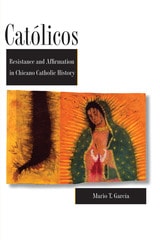
Católicos
Resistance and Affirmation in Chicano Catholic HistoryBy Mario T. García
University of Texas Press, 2008
Chicano Catholicism—both as a popular religion and a foundation for community organizing—has, over the past century, inspired Chicano resistance to external forces of oppression and discrimination including from other non-Mexican Catholics and even the institutionalized church. Chicano Catholics have also used their faith to assert their particular identity and establish a kind of cultural citizenship.
Based exclusively on original research and sources, Mario T. García here offers the first major historical study to explore the various dimensions of the role of Catholicism in Chicano history in the twentieth century. This is also one of the first significant studies in the still limited field of Chicano religious history.
Topics range from how early Chicano Catholic intellectuals and civil rights leaders were influenced by Catholic Social Doctrine, to the role that popular religion has played in the lives of ordinary men and women in both rural and urban areas. García also examines faith-based Chicano community movements like Católicos Por La Raza in the 1960s and the Sanctuary movement in Los Angeles in the 1980s.
While Latino/a history and culture has been, for the most part, inextricably linked with the tenets and practices of Catholicism, there has been very little written, until recently, about Chicano Catholic history. García helps to fill that void and explore the impact—both positive and negative—that the Catholic experience has had on the Chicano community.
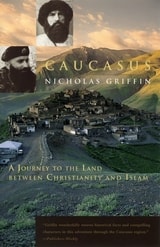
Caucasus
A Journey to the Land between Christianity and IslamNicholas Griffin
University of Chicago Press, 2004
Delving deep into the Caucasus, Griffin transcends the headlines trumpeting Chechen insurgency to give the land and its conflicts dimension: evoking the weather, terrain, and geography alongside national traditions, religious affiliations, and personal legends as barriers to peaceful co-existence. In focusing his tale on Shamil while retracing his steps, Griffin compellingly demonstrates the way history repeats itself.
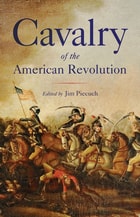
Cavalry of the American Revolution
Jim Piecuch
Westholme Publishing, 2012
Nine Historians and Writers Investigate the Role of Cavalry in the War for Independence
From the bitterly contested no-man’s-land between American and British lines in New York and New Jersey to the scorching pine forests of the South, the cavalry of both armies fought valiantly throughout the American Revolution. This volume explores several aspects of cavalry’s role in the war, which has often been overlooked in general histories. The topics covered include the development of the Continental Army’s cavalry arm, European influences on American cavalry training and tactics, accounts of several important cavalry raids and battles, and histories of mounted units such as the Continental Light Dragoons, American rangers in the South Carolina backcountry, and the British army’s Queen’s Rangers and “Black Dragoons,” the latter force composed entirely of former slaves. The essays also examine the roles of important commanders, including Brigadier General Francis “Swamp Fox” Marion, Lieutenant Colonel William Washington, and Colonel Anthony Walton White of the American army, and British cavalry leaders Banastre “Bloody Ban” Tarleton and John Graves Simcoe, as well as the American prisoners of war who switched sides and served in the “British Legion.” The authors of the essays include acclaimed military historians Gregory J. W. Urwin and Lawrence E. Babits. Readers with a general interest in military history, as well as those with more specific interests in the American Revolution or the history of the cavalry arm, and anyone who wishes to undertake further study of these subjects, will find the essays fresh, engaging, and informative.
@font-face { font-family: "Times New Roman";}@font-face { font-family: "HelveticaNeue-LightCond";}p.MsoNormal, li.MsoNormal, div.MsoNormal { margin: 0in 0in 0.0001pt; font-size: 12pt; font-family: "Times New Roman"; }table.MsoNormalTable { font-size: 10pt; font-family: "Times New Roman"; }div.Section1 { page: Section1; }
Contents
Gregory J. W. Urwin: The Continental Light Dragoons, 1776-1783
Lee F. McGee: European Influences on Continental Cavalry
John M. Hutchins: Cavalry Action at Poundridge, New York
Donald J. Gara: Cavalry Battles in New York and New Jersey
Scott A. Miskimon: Anthony Walton White: A Revolutionary Dragoon
Michael C. Scoggins: South Carolina’s Backcountry Rangers
Lawrence E. Babits and Joshua B. Howard: Continentals in Tarleton’s
British Legion
Charles F. Price: Cavalry Operations at Eutaw Springs
Jim Piecuch: The “Black Dragoons”
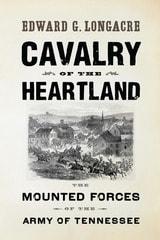
Cavalry of the Heartland
The Mounted Forces of the Army of TennesseeEdward G. Longacre
Westholme Publishing, 2009
A History of the Finest and Most Flamboyant Cavalry Arm of the Civil War
While Robert E. Lee’s Army of Northern Virginia prosecuted the war in the East for the Confederacy, the Army of Tennessee fought in the West, ranging over a tremendous expanse during the course of the Civil War, from southern Ohio and eastern Kentucky all the way to Georgia and the Carolinas. Unlike Lee’s army, however, the Army of Tennessee suffered at the hands of a series of uninspired commanders and had few impressive victories. It did have, however, arguably the best cavalry of any army in the war in terms of numbers and leadership. Led by some of the most colorful officers of the Civil War—the brilliant, passionate Nathan Bedford Forrest, the flamboyant but erratic John Hunt Morgan, and the quietly competent “Fightin’ Joe” Wheeler—and grabbing headlines for daring raids, such as Morgan’s foray into Ohio, the mounted forces of the Army of Tennessee developed a strategy of a highly mobile fighting unit that could be deployed rapidly in strength to strike deep behind enemy lines and maneuver at a moment’s notice during a battle, tactics that were to have the most impact on military operations in the future.
As distinguished historian Edward G. Longacre chronicles in Cavalry of the Heartland: The Mounted Forces of the Army of Tennessee, the army’s top generals failed to recognize the battle-winning potential of their cavalry and instead sent them off on sideshow operations rather than deploying them consistently to assist the main body’s efforts. Based on a wide array of research materials, Cavalry of the Heartland is the only book-length study of the strategy and tactics of the Army of Tennessee’s mounted forces from its inception in the spring of 1861 to its final bow at Bentonville, North Carolina, four years later. Throughout, numerous campaigns and battles are described in full detail, including Fort Donelson, Shiloh, Perryville, Murfreesboro (Stones River), Tullahoma, Chickamauga, Chattanooga, Atlanta, Nashville, and the Carolinas.
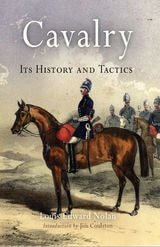
Cavalry
Its History and TacticsLouis Edward Nolan
Westholme Publishing, 2020
A New Edition of One of the Great Military Treatises of the Nineteenth Century
First published in 1853, Cavalry: Its History and Tactics had a major impact on military theorists and officers for decades—it was reprinted as a manual during the American Civil War—and its influence on European cavalry performance can be traced into World War I. It is an intelligent work which discusses the history and development of cavalry over the ages, advocates a program of reform for Britain’s horsed troops, and covers many aspects of equipment, training, drill, organization, formation, and battlefield tactics. The author, an experienced and gifted cavalryman, first served in the Austrian army, then joined the British army’s 15th Hussars in 1839, fought in India, and became the regimental riding master. Captain Nolan’s 1852 tour of European armies, wide reading in many languages, and service in Europe and India makes Cavalry an extraordinary statement on mid-nineteenth-century theory and practice.
As historian Jon Coulston explains in his introduction, Nolan was writing at the cusp of technological change, drawing upon the experiences of the Napoleonic Wars, continental suppression of the 1848 Revolutions, and Britain’s wars in India, but with an eye to firepower developments on the eve of the Crimean War. In 1854, at the Battle of Balaklava, Nolan rode with the written order which unleashed the Charge of the Light Brigade, an action in which he lost his life. Presented here as the first modern reprint, complete with a new introduction and further reading, Nolan’s Cavalry remains a hallmark of military history.
Cave Hollow, An Ozark Bluff-Dweller Site
Horace Miner
University of Michigan Press, 1950

Cave Rock
Climbers, Courts, and a Washoe Indian Sacred PlaceMatthew S. Makley
University of Nevada Press, 2010
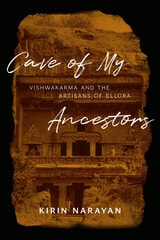
Cave of My Ancestors
Vishwakarma and the Artisans of ElloraKirin Narayan
University of Chicago Press, 2024
As a young girl in Bombay, Kirin Narayan was enthralled by her father’s stories about how their ancestors had made the ancient rock-cut cave temples at Ellora. Recalling those stories as an adult, she was inspired to learn more about the caves, especially the Buddhist worship hall known as the “Vishwakarma cave.” Immersing herself in family history, oral traditions, and works by archaeologists, art historians, scholars of Buddhism, Indologists, and Sanskritists, Narayan set out to answer the question of how this cave came to be venerated as the home of Vishwakarma, the god of making in Hindu and Buddhist traditions.
Cave of My Ancestors represents the perfect blend of Narayan’s skills as a researcher and writer. Her quest to trace her family’s stories took her to Ellora; through libraries, archives, and museums around the world; and across disciplinary borders. Equal parts scholarship, detective story, and memoir, Narayan’s book ably leads readers through centuries of history, offering a sensitive meditation on devotion, wonder, and all that connects us to place, family, the past, and the divine.
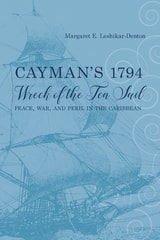
Cayman's 1794 Wreck of the Ten Sail
Peace, War, and Peril in the CaribbeanMargaret E. Leshikar-Denton
University of Alabama Press, 2020
The story has been passed through generations for more than two centuries. Details vary depending on who is doing the telling, but all refer to this momentous maritime event as the Wreck of the Ten Sail. Sometimes misunderstood as the loss of a single ship, it was in fact the wreck of ten vessels at once, comprising one of the most dramatic maritime disasters in all of Caribbean naval history. Surviving historical documents and the remains of the wrecked ships in the sea confirm that the narrative is more than folklore. It is a legend based on a historical event in which HMS Convert, formerly L’Inconstante, a recent prize from the French, and 9 of her 58-ship merchant convoy sailing from Jamaica to Britain, wrecked on the jagged eastern reefs of Grand Cayman in 1794.
The incident has historical significance far beyond the boundaries of the Cayman Islands. It is tied to British and French history during the French Revolution, when these and other European nations were competing for military and commercial dominance around the globe. The Wreck of the Ten Sail attests to the worldwide distribution of European war and trade at the close of the eighteenth century.
In Cayman’s 1794 Wreck of the Ten Sail: Peace, War, and Peril in the Caribbean, Margaret E. Leshikar-Denton focuses on the ships, the people, and the wreck itself to define their place in Caymanian, Caribbean, and European history. This well-researched volume weaves together rich oral folklore accounts, invaluable supporting documents found in archives in the United Kingdom, Jamaica, and France, and tangible evidence of the disaster from archaeological sites on the reefs of the East End.
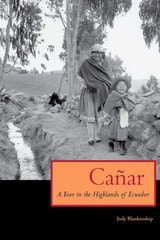
Cañar
A Year in the Highlands of EcuadorBy Judy Blankenship
University of Texas Press, 2005
Once isolated from the modern world in the heights of the Andean mountains, the indigenous communities of Ecuador now send migrants to New York City as readily as they celebrate festivals whose roots reach back to the pre-Columbian past. Fascinated by this blending of old and new and eager to make a record of traditional customs and rituals before they disappear entirely, photographer-journalist Judy Blankenship spent several years in Cañar, Ecuador, photographing the local people in their daily lives and conducting photography workshops to enable them to preserve their own visions of their culture. In this engaging book, Blankenship combines her sensitively observed photographs with an inviting text to tell the story of the most recent year she and her husband Michael spent living and working among the people of Cañar.
Very much a personal account of a community undergoing change, Cañar documents such activities as plantings and harvests, religious processions, a traditional wedding, healing ceremonies, a death and funeral, and a home birth with a native midwife. Along the way, Blankenship describes how she and Michael went from being outsiders only warily accepted in the community to becoming neighbors and even godparents to some of the local children. She also explains how outside forces, from Ecuador's failing economy to globalization, are disrupting the traditional lifeways of the Cañari as economic migration virtually empties highland communities of young people. Blankenship's words and photographs create a moving, intimate portrait of a people trying to balance the demands of the twenty-first century with the traditions that have formed their identity for centuries.
Cecilia Reclaimed
Feminist Perspectives on Gender and MusicEdited by Susan C. Cook and Judy S. Tsou
University of Illinois Press, 1994
Celebrating 100 Years of the Texas Folklore Society, 1909-2009
Kenneth L. Untiedt
University of North Texas Press, 2009
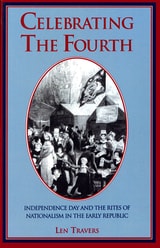
Celebrating the Fourth
Independence Day and the Rites of Nationalism in the Early RepublicLen Travers
University of Massachusetts Press, 1997
A CHOICE Outstanding Academic Book
Public rituals have always held a vital place in American culture. By far the noisiest and most popular of these to emerge in the nation's early years was Independence Day. After a decade of fitful starts, the Fourth of July eclipsed local and regional patriotic observances to become the premier “American Jubilee.” Celebrating the Fourth provides a history of this holiday and explores its role in shaping a national identity and consciousness in three cities—Boston, Charleston, and Philadelphia—during the first fifty years of the American republic. Independence Day celebrations justified, validated, and helped maintain nationalism among people unused to offering political allegiance beyond their own state borders. As the observances became increasingly popular and symbolically important, political partisans competed hotly for the right to control the meaning of the festivals.
Celebrity And Power
Fame and Contemporary CultureP. David Marshall
University of Minnesota Press, 1997
Celia in the Revolution
Elena Fortún
Swan Isle Press, 2023
Set during the Spanish Civil War (1936–39), Celia in the Revolution is the last in a series of young adult novels written by Encarnación Aragoneses, known by the pen name Elena Fortún, one of the most prolific and popular Spanish authors of the mid-twentieth century.
In a series of more than twenty novels, Fortún’s protagonist is Celia Gálvez de Montalbán, a precocious and rebellious girl from an affluent family who’s not afraid to question authority and dream, and that often gets her into trouble. Readers watch her grow from age seven through adolescence to the threshold of womanhood at seventeen, which is her age in this dark, inspiring novel about the war that changed Spain.
In this last narrative in the legendary series, Celia has an awakening that not even her lively imagination could have anticipated. The once carefree, innocent child prone to playful fantasies must suddenly confront a world that’s utterly changed, finding herself amid a bloody conflict, la Guerra Civil. Celia, now a madrecita, a little mother to her two younger sisters since the death of their mother, is forced into a life of hardship, a world of hunger, witness to violence, executions, bombing raids, and death. With Celia’s sorrows come her courageous and profound compassion, consoling and caring for virtually every war victim that crosses her path, no matter their political inclinations, and no matter all that Celia must contend with herself. Celia, despite all her travails, manages to survive with determination, defiance, and dignity.
Written immediately after the war, Celia in the Revolution was not published during Elena Fortún’s lifetime, until after the death of the dictator, Francisco Franco, due to censorship. This first major English translation by eminent scholar and Hispanist Michael Ugarte captures the narrative and nuances of Celia’s voice and others in this character-rich novel, and fellow eminent scholar and Hispanist Nuria Capdevila-Arguëlles’s preface brings powerful insights into this remarkable work by Elena Fortún that transcends young adult literature.
Celibacies
American Modernism and Sexual LifeBenjamin Kahan
Duke University Press, 2013
Celluloid Activist
The Life and Times of Vito RussoMichael Schiavi
University of Wisconsin Press, 2011
“Schiavi tells a compelling story in this biography—from his re-creation of life on the streets of East Harlem and in Greenwich Village of the 1960s and 1970s to the way he conveys Russo’s excitement about his film research and popular education to his account of the AIDS years in New York City.”—John D’Emilio, Italian American Review
“In [Schiavi’s] hands Russo’s life is both fascinating in its own right and a window into a larger milieu of activism during two critical decades.”—Italian American Review
Best Books for General Audiences, selected by the Public Library Reviewers
Finalist, Gay Memoir/Biography, Lambda Literary Awards
Finalist, Over the Rainbow Selection, American Library Association
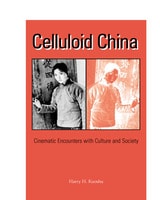
Celluloid China
Cinematic Encounters with Culture and SocietyHarry H. Kuoshu
Southern Illinois University Press, 2002
Celluloid China: Cinematic Encounters with Culture and Society by Harry H. Kuoshu is a lucid introduction to the cinema of mainland China from the early 1930s to the early 1990s. Emphasizing both film contexts and film texts, this study invites film scholars and students to a broad cinematic analysis that includes investigations of cultural, cross-cultural, intellectual, social, ethnic, and political issues. Such a holistic evaluation allows for a better understanding of both the genesis of a special kind of film art from the People’s Republic of China and the culture exemplified in those films.
The fifteen films include: Two Stage Sisters; Hibiscus Town; Farewell My Concubine; Street Angel; Three Women; Human, Woman, Demon; Judou; Girl from Hunan; Sacrificed Youth; Horse Thief; Yellow Earth; Old Well; Red Sorghum; Black Cannon Incident; and Good Morning, Beijing. Discussions of each film have an introduction, passages from the director’s own notes whenever available, and a scholarly article. Discussion questions are found in an appendix. Within its complete bibliography, the book also features a suggested reading list for Chinese film classes. Celluloid China is the first book to provide such an exhaustive study of the art and cultural context of Chinese cinema.
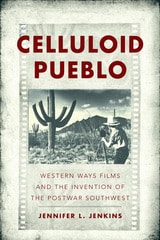
Celluloid Pueblo
Western Ways Films and the Invention of the Postwar SouthwestJennifer L. Jenkins
University of Arizona Press, 2016
Celluloid Pueblo tells the story of Western Ways Features and its role in the invention of the Southwest of the imagination. Active during a thirty-year period of profound growth and transformation, the Herberts created a dynamic visual record of the region, and their archival films now serve as a time capsule of the Sunbelt in the mid-twentieth century. Drawing upon a ten-year career with Fox, Western Ways owner-operator Charles Herbert brought a newshound’s sensibility and acute skill at in-camera editing to his southwestern subjects. The Western Ways films provided counternarratives to Hollywood representations of the West and established the regional identity of Tucson and the borderlands.
Jennifer L. Jenkins’s broad-sweeping book examines the Herberts’ work on some of the first sound films in the Arizona borderlands and their ongoing promotion of the Southwest. The book covers the filmic representation of Native and Mexican lifeways, Anglo ranching and leisure, Mexican missions and tourism, and postwar borderlands prosperity and progressivism. The story of Western Ways closely follows the boom-and-bust arc of the midcentury Southwest and the constantly evolving representations of an exotic—but safe and domesticated—frontier.
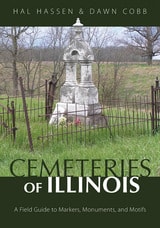
Cemeteries of Illinois
A Field Guide to Markers, Monuments, and MotifsHal Hassen
University of Illinois Press, 2017
- the ways different materials used as gravestones and markers reflect historical trends;
- how to understanding the changes in the use of iconographic images;
- the story behind architectural features like fencing, roads, and gates;
- what enthusiasts can do to preserve local cemeteries for future generations.
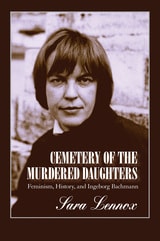
Cemetery of the Murdered Daughters
Feminism, History, and Ingeborg BachmannSara Lennox
University of Massachusetts Press, 2006
Although Austrian writer Ingeborg Bachmann (1926–1973) is widely regarded as one of the most important twentieth-century authors writing in German, her novels and stories have sometimes been viewed narrowly as portraits of women as victims. In this innovative study, Sara Lennox provides a much broader perspective on Bachmann's work, at the same time undertaking an experiment in feminist methodology. Lennox examines Bachmann's poetry and prose in historical context, arguing that the varied feminist interpretations of her writings are the result of shifts in theoretical emphases over a period of more than three decades. Lennox then places her own essays on Bachmann in similar perspective, showing how each piece reflects the historical moment in which it was written. Making use of recent interdisciplinary approaches—Foucauldian theories of sexuality, post-colonial theory, materialist feminism—she explores the extent to which each of her earlier readings was shaped by the methods employed, the questions asked, and the political issues that seemed most germane at the time. Out of this analysis comes a new understanding of the significance of Bachmann's work and new insight into the theory and practice of feminist criticism.
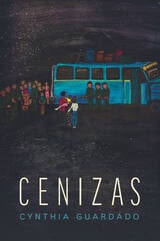
Cenizas
PoemsCynthia Guardado
University of Arizona Press, 2022
Guardado crafted the poems in Cenizas over a ten-year period, often traveling to El Salvador for research and to conduct interviews. The Salvadoran Civil War haunts the pages of this collection as it unflinchingly explores war, its aftermath, and the bittersweet legacies that are passed down from one generation to the next. The poems mourn those who were lost and honor the strength of the speaker’s ancestors. “All my people have been born from the ashes of volcanoes,” she writes, invoking a family lineage that has endured the atrocities committed against them. Even so, El Salvador keeps pulling the speaker back—and despite warnings of danger, she still manages to find beauty among the ruins.
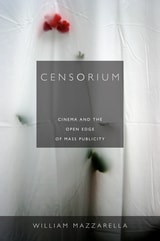
Censorium
Cinema and the Open Edge of Mass PublicityWilliam Mazzarella
Duke University Press, 2013
At the intersection of anthropology, media studies, and critical theory, Censorium is a pathbreaking analysis of Indian film censorship. The book encompasses two moments of moral panic: the consolidation of the cinema in the 1910s and 1920s, and the global avalanche of images unleashed by liberalization since the early 1990s. Exploring breaks and continuities in film censorship across colonial and postcolonial moments, William Mazzarella argues that the censors' obsessive focus on the unacceptable content of certain images and the unruly behavior of particular audiences displaces a problem that they constantly confront yet cannot directly acknowledge: the volatile relation between mass affect and collective meaning. Grounded in a close analysis of cinema regulation in the world's largest democracy, Censorium ultimately brings light to the elusive foundations of political and cultural sovereignty in mass-mediated societies.
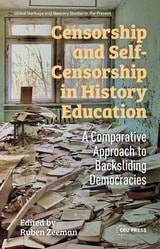
Censorship and Self-Censorship in History Education
A Comparative Approach to Backsliding DemocraciesRuben Zeeman
Central European University Press, 2026