Results by title
8812 books match the query 'Political Science' and 698 start with c
Climate Change Solutions
Beyond the Capital-Climate ContradictionDiana Stuart, Ryan Gunderson, and Brian Petersen
University of Michigan Press, 2020
Climate Change and the Future of Cities
Eric Klinenberg, special issue editor
Duke University Press, 0
We live in the age of extremes, a period punctuated by significant disasters that have changed the way we understand risk, vulnerability, and the future of communities. Violent ecological events such as Superstorm Sandy attest to the urgent need to analyze what cities around the world are doing to reduce carbon emissions, develop new energy systems, and build structures to enhance preparedness for catastrophe. The essays in this issue illustrate that the best techniques for safeguarding cities and critical infrastructure systems from threats related to climate change have multiple benefits, strengthening networks that promote health and prosperity during ordinary times as well as mitigating damage during disasters. The contributors provide a truly global perspective on topics such as the toxic effects of fracking, water rights in the Los Angeles region, wind energy in southern Mexico, and water scarcity from Brazil to the Arabian Peninsula.
Contributors: Nina Berman, Dominic Boyer, Daniel Aldana Cohen, Gökçe Günel, Cymene Howe, Colin Jerolmack, Eric Klinenberg, Liz Koslov, Andrew Lakoff, Valeria Procupez, Jerome Whitington, Austin Zeiderman
Climate Change in the Great Lakes Region
Navigating an Uncertain FutureThomas Dietz
Michigan State University Press, 2012
People living in the Great Lakes region are already feeling the effects of a changing climate. Shifts in seasonal temperatures and precipitation patterns could have dramatic impacts on the economy, ecology, and quality of life. In this illuminating and thorough volume, leading scholars address the challenge of preparing for climate change in the region, where decision makers from various sectors—government, agriculture, recreation, and tourism—must increasingly be aware of the need to incorporate climate change into their short- and long-term planning. The chapters in this revealing book, written by some of the foremost climate change scholars in North America, outline the major trends in the climate of the Great Lakes region, how humans might cope with the uncertainty of climate change impacts, and examples of on-the-ground projects that have addressed these issues.

Climate Games
Experiments on How People Prevent DisasterTalbot M. Andrews, Andrew W. Delton, and Reuben Kline
University of Michigan Press, 2024
Yet real climate change is a complex social dilemma involving the world’s nearly eight billion inhabitants. In the real world, the worst effects of climate change are likely to be felt by developing countries, while most of the decisions will be made by rich, industrialized countries. And while the world as a whole would be better off if all nations reduced their greenhouse gas emissions, any given nation could decide it would be even better off if it continued emitting and let other nations take care of the problem. These disaster experiments test how real people respond to climate change’s unique constellation of challenges and deliver a positive message: People will prevent disaster.
Climate Machines, Fascist Drives, and Truth
William E. Connolly
Duke University Press, 2019
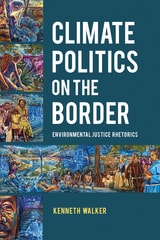
Climate Politics on the Border
Environmental Justice RhetoricsKenneth Walker
University of Alabama Press, 2022
Explores the ways climate change and extreme weather are negotiated politically in a border community
As a borderland city with generations of slow violence and extreme weather events like flash flooding and intense heat waves, San Antonio, Texas, speaks directly to global issues in climate politics. In Climate Politics on the Border: Environmental Justice Rhetorics, Kenneth Walker takes a place-based approach to his study of San Antonio to explore how extreme weather events and responses to them shape local places, publics, and politics, with an eye toward a future characterized by severe climate breakdown.
Attending to the local histories and micropolitics of San Antonio, Walker examines the effects of extreme weather events as they are experienced across radically inequitable social categories. These local histories serve as a guide, not just for future climates, which stand to be unprecedented, but for the necessary public and political responses to them. He shows how extreme weather events in the past have reinforced colonial social orders that weaken democratic goals of pluralism and equity. Conversely, he also shows how diverse coalitions have resisted and responded to these forces.
Walker examines the ethics of Latinx and Anglo relations within state-sponsored productions of racial inequity and environmental degradation, the coalitional capacities of environmental activists and second-wave Chicana/o organizations to protect clean water and transform local political representation, the obligations of place-keeping in Latinx urban design and ecological restoration, and the need to foster pluriversal worlds in city-level climate action and adaptation plans. Collectively these chapters rethink tropes of adaptation, resilience, and coalition as rhetorical and ecological capacities for public and political responses to extractivism.
Based on years of archival work and fieldwork, Climate Politics on the Border demonstrates vividly why ecological and anticolonial approaches to rhetoric are essential for grappling with climate politics. Overall, this is a timely study of how environmental degradation, pollution, and climate change are disputed and negotiated at the local political level in a borderland community.
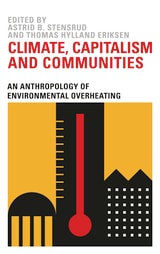
Climate, Capitalism and Communities
An Anthropology of Environmental OverheatingAstrid B. Stensrud
Pluto Press, 2019
Clipped Coins, Abused Words, and Civil Government
John Locke’s Philosophy of MoneyGeorge Caffentzis
Pluto Press, 2021
This book situates John Locke’s philosophy of knowledge and his political theory within his engagement in British monetary debates of the 17th and 18th century.
Anchored in extensive archival research, George Caffentzis offers the most expansive reading of Locke’s economic thought to date, contextualizing it within the expansion of capitalist accumulation on a world scale and the universality of money as a medium of exchange.
Updated with a new introduction by Paul Rekret, a new foreword by Harry Cleaver and new material by the author, Clipped Coins, Abused Words, and Civil Government continues to make a significant intervention in contemporary debates around the history of capitalism, colonialism and philosophy.
Closed Doors, Opportunities Lost
The Continuing Costs of Housing DiscriminationJohn Yinger
Russell Sage Foundation, 1995

Clowns to the Left of Me, Jokers to the Right
American Life in ColumnsMichael A. Smerconish
Temple University Press, 2020
Opinionated talk show host and columnist Michael Smerconish has been chronicling local, state, and national events for the Philadelphia Daily News and the Philadelphia Inquirer for more than 15 years. He has sounded off on topics as diverse as the hunt for Osama bin Laden and what the color of your Christmas lights says about you. In this collection of 100 of his most memorable columns, Smerconish reflects on American political life with his characteristic feistiness. A new Afterword for each column provides updates on both facts and feelings, indicating how the author has evolved over the years, moving from a reliable Republican voter to a political Independent.
Clowns to the Left of Me, Jokers to the Right covers the post-9/11 years, Barack Obama’s ascension, and the rise of Donald Trump. Smerconish describes meeting Ronald Reagan, having dinner with Fidel Castro, barbequing with the band YES in his backyard, spending the same night with Pete Rose and Ted Nugent, drinking champagne from the Stanley Cup, and conducting Bill Cosby’s only pretrial interview. He also writes about local Philadelphia culture, from Sid Mark to the Rizzo statue.
Smerconish’s outlook as expressed in these impassioned opinion pieces goes beyond “liberal” or “conservative.” His thought process continues to evolve and change, and as it does, he aims to provoke readers to do the same.
All author proceeds benefit the Children’s Crisis Treatment Center, a Philadelphia- based, private, nonprofit agency that provides behavioral health services to children and their families.
Co-Motion
Re-Thinking Power, Subjects, and Feminist and Queer AlliancesPaola Bacchetta
Duke University Press, 2026
Co-designing Infrastructures
Community Collaboration for Liveable CitiesSarah Bell, Charlotte Johnson, Kat Austen, Gemma Moore, and Tse-Hui Teh
University College London, 2023
Co-designing Infrastructures tells the story of a research program designed to bring the power of engineering and technology into the hands of grassroots community groups in order to create bottom-up solutions to global crises. The authors examine in detail four projects in London in detail that exemplify collaboration with engineers, designers, and scientists to enact urban change. The projects at the heart of the book are grounded in specific settings that face challenges familiar to urban communities throughout the world. This place-based approach to infrastructure is of international relevance as a foundation for urban resilience and sustainability. The authors document the tools used to deliver this work, providing guidance for others who are working to deliver local technical solutions to complex social and environmental problems around the world.
Co-production of Knowledge in Action
Emancipatory Strategies for Urban EqualityEdited by Cassidy Johnson, Vanesa Castán Broto, Wilbard Kombe, Catalina Ortiz, Barbara Lipietz, Emmanuel Osuteye, and Caren Levy
University College London, 2025
In urban development, co-production refers to a strategy that prioritizes collaboration across multiple institutions and with citizens, aiming to enable conflict resolution and transformative change. However, critics contend that these theoretical ambitions often have limited practical impact. Co-production of Knowledge in Action examines how co-production is articulated and deployed in cities such as Lima, Freetown, Kampala, Dar es Salaam, and Delhi. It engages with ongoing experiences of co-production-inspired action, mapping the different aspirations that inform co-production practices and their impacts on urban communities. Critiquing co-production strategies for urban development in relation to practical experiences in these cities, this volume adopts a postcolonial approach to knowledge production as a means to transform urban planning practices.
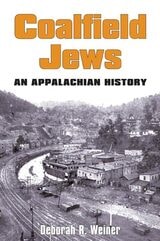
Coalfield Jews
An Appalachian HistoryDeborah R. Weiner
University of Illinois Press, 2006
The stories of vibrant eastern European Jewish communities in the Appalachian coalfields
Coalfield Jews explores the intersection of two simultaneous historic events: central Appalachia’s transformative coal boom (1880s-1920), and the mass migration of eastern European Jews to America. Traveling to southern West Virginia, eastern Kentucky, and southwestern Virginia to investigate the coal boom’s opportunities, some Jewish immigrants found success as retailers and established numerous small but flourishing Jewish communities.
Deborah R. Weiner’s Coalfield Jews provides the first extended study of Jews in Appalachia, exploring where they settled, how they made their place within a surprisingly receptive dominant culture, how they competed with coal company stores, interacted with their non-Jewish neighbors, and maintained a strong Jewish identity deep in the heart of the Appalachian mountains. To tell this story, Weiner draws on a wide range of primary sources in social, cultural, religious, labor, economic, and regional history. She also includes moving personal statements, from oral histories as well as archival sources, to create a holistic portrayal of Jewish life that will challenge commonly held views of Appalachia as well as the American Jewish experience.

Coalition Politics and Cabinet Decision Making
A Comparative Analysis of Foreign Policy ChoicesJuliet Kaarbo
University of Michigan Press, 2013
Every day, coalition cabinets make policy decisions critical to international politics. Juliet Kaarbo examines the dynamics of these multiparty cabinets in parliamentary democracies in order to assess both the quality of coalition decision making and the degree to which coalitions tend to favor peaceful or military solutions. Are coalition cabinets so riddled by conflict that they cannot make foreign policy effectively, or do the multiple voices represented in the cabinet create more legitimate and imaginative responses to the international system? Do political and institutional constraints inherent to coalition cabinets lead to nonaggressive policies? Or do institutional and political forces precipitate more belligerent behavior?
Employing theory from security studies and political psychology as well as a combination of quantitative cross-national analyses and twelve qualitative comparative case studies of foreign policy made by coalition cabinets in Japan, the Netherlands, and Turkey, Kaarbo identifies the factors that generate highly aggressive policies, inconsistency, and other policy outcomes. Her findings have implications not merely for foreign policy but for all types of decision making and policy-making by coalition governments.
Coalition Strategies of Marxist Parties
Trond Gilberg, ed.
Duke University Press, 1988
Coalition of the unWilling and unAble
European Realignment and the Future of American GeopoliticsJohn R. Deni
University of Michigan Press, 2022
Why does the United States need European allies, and why is it getting more difficult for those allies to partner with Washington in standing up to China, pushing back against Russia, and pursuing other common interests around the world? This book addresses the economic, demographic, political, and military trends that are fundamentally upending the ability and willingness of European allies to work with Washington. Brexit and its impact on Britain’s economy and its military, Germany’s seemingly relentless economic and political rise, France’s continuing economic malaise, Italy’s aging population and its withdrawal from major overseas operations, and Poland’s demographic decline and single-minded obsession with Russia will combine to make partnership with Washington nearly impossible. In short, the constellation of allies and partners the United States has relied on since 9/11 will look very different a decade from now. How should Washington respond? It doesn’t hold all the cards, but this book offers an array of practical recommendations for American leaders. By leveraging these proposals, U.S. policy-makers can avoid the worst-case scenarios and make the most of limited opportunities.

Coastal Hazard Management
Lessons and Future Directions from New JerseyPsuty, Norbert P.
Rutgers University Press, 2002
As with most shorelines around the world, New Jersey beaches are slowly, but inexorably, being eroded, threatening coastal structures and development. In some years more sand is deposited than removed, but all of the state’s monitoring devices show that sea level is gradually rising and pushing the New Jersey shoreline inland. The shore is a valuable resource, and its natural, cultural, and economic attractions draw a multitude of permanent and temporary residents each year, extending housing and commercial development onto areas that were once swampland. Not surprisingly, development at the water’s edge has been accompanied by an increasing exposure to the natural hazards of the coastal zone--erosion, flooding, and wind damage.
In this book, Norbert Psuty and Douglas Ofiara incorporate perspectives from the areas of coastal sciences, economics, public policy, and land-use planning in creating a systematic plan for coastal management and protection. It has been more than a decade since New Jersey developed the nation’s first state shore protection plan, and this volume provides a timely evaluation of its achievements and future challenges. This self-contained book provides all of the relevant theories, models, and examples so the reader will not need to refer to any other literature to gain an understanding of the issues and policies surrounding shore protection. It is the authoritative handbook for practitioners and policy makers in many fields, including coastal science and management and engineering, as well as public policy and economics.
Coastal Lives
Nature, Capital, and the Struggle for Artisanal Fisheries in PeruMaximilian Viatori and Héctor Bombiella
University of Arizona Press, 2019
In Coastal Lives, Maximilian Viatori and Héctor Bombiella argue that this has not made Peru’s fisheries more sustainable. Through a fine-grained ethnographic and historical account of Lima’s fisheries, the authors reveal that new government regimes of entrepreneurial agency have placed overwhelming burdens on the city’s impoverished artisanal fishers to demonstrate that they are responsible producers and have created failures that can be used to justify closing these fishers’ traditional use areas and to deny their historically sanctioned rights. The result is a critical examination of how neoliberalized visions of nature and individual responsibility work to normalize the dispossessions that have enabled ongoing capital accumulation at the cost of growing social dislocations and ecological degradation.
The authors’ innovative approach to the politics of constructing and degrading coastal lives will interest a wide range of scholars in cultural anthropology, environmental humanities, and Latin American studies, as well as policymakers and anyone concerned with inequality, global food systems, and multispecies ecologies.
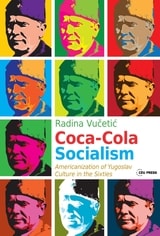
Coca-Cola Socialism
Americanization of Yugoslav Culture in the SixtiesRadina Vucetic
Central European University Press, 2018
This book is about the Americanization of Yugoslav culture and everyday life during the nineteen-sixties. After falling out with the Eastern bloc, Tito turned to the United States for support and inspiration. In the political sphere the distance between the two countries was carefully maintained, yet in the realms of culture and consumption the Yugoslav regime was definitely much more receptive to the American model. For Titoist Yugoslavia this tactic turned out to be beneficial, stabilising the regime internally and providing an image of openness in foreign policy.
Coca-Cola Socialism addresses the link between cultural diplomacy, culture, consumer society and politics. Its main argument is that both culture and everyday life modelled on the American way were a major source of legitimacy for the Yugoslav Communist Party, and a powerful weapon for both USA and Yugoslavia in the Cold War battle for hearts and minds.
Radina Vučetić explores how the Party used American culture in order to promote its own values and what life in this socialist and capitalist hybrid system looked like for ordinary people who lived in a country with communist ideology in a capitalist wrapping. Her book offers a careful reevaluation of the limits of appropriating the American dream and questions both an uncritical celebration of Yugoslavia’s openness and an exaggerated depiction of its authoritarianism.

Code of Peace
Ethics and Security in the World of the Warlord StatesDorothy V. Jones
University of Chicago Press, 1991
Jones focuses on the progressive development of international law to disclose an underlying code of ethics that enjoys broad support in the world community. Unlike studies that concentrate on what others think that states ought to do, Code of Peace analyzes what states themselves consider proper behavior. Using history as both narrative and argument, Jones shows how the existing ethical code has evolved cumulatively since World War I from a complex interplay between theory and practice. More than an abstract treatise or a merely technical analysis, Jones's study is grounded in the circumstances of war and peace in this century. Treaties and agreements, she argues, are forging a consensus on such principles as human rights, self-determination, and cooperation between states. Jones shows how leaders and representatives of nations, drawing on a rich heritage of philosophical thoughts as well as on their own experiences in a violent world of self-interested conflict, have shaped their thought to the taming of that world in the cause of peace. That is the striking thing about this code: states whose relations are marked by so frequent a recourse to war that they can fairly be called "warlords" have created and pledged themselves to a code of peace.
The implications of Code of Peace for establishing a normative foundation for peace are profound. Historically sound and timely, impeccably researched and elegantly written, the book will be of immediate and lasting value to anyone concerned with the stability of the modern world.
Coethnicity
Diversity and the Dilemmas of Collective ActionJames Habyarimana
Russell Sage Foundation, 2009

Coexistence in the Aftermath of Mass Violence
Imagination, Empathy, and ResilienceEdited by Eve Monique Zucker and Laura McGrew
University of Michigan Press, 2020
Coexistence in the Aftermath of Mass Violence demonstrates how imagination, empathy, and resilience contribute to the processes of social repair after ethnic and political violence. Adding to the literature on transitional justice, peacebuilding, and the anthropology of violence and social repair, the authors show how these conceptual pathways--imagination, empathy and resilience--enhance recovery, coexistence and sustainable peace. Coexistence (or reconciliation) is the underlying goal or condition desired after mass violence, enabling survivors to move forward with their lives. Imagination allows these survivors--victims, perpetrators, bystanders--to draw guidance and inspiration from their social and cultural imaginaries, to develop empathy, and to envision a future of peace and coexistence. Resilience emerges through periods of violence and its aftermaths through acts of survival, compassion, modes of rebuilding social worlds, and the establishment of a peaceful society.
Focusing on society at the grass roots level, the authors discuss the myriad and little understood processes of social repair that allow ruptured societies and communities to move toward a peaceful and stable future. The volume also illustrates some of the ways in which imagination, empathy, and resilience may contribute to the prevention of future violence and the authors conclude with a number of practical and policy recommendations. The cases include Cambodia, Rwanda, Sierra Leone, Somaliland, Columbia, the Southern Cone, Iraq, and Bosnia.

Coffee and Conflict in Colombia, 1886-1910
Charles W. Bergquist
Duke University Press, 1978

Cold War Broadcasting
Impact on the Soviet Union and Eastern EuropeR. Eugene Parta
Central European University Press, 2010

Cold War Games
Propaganda, the Olympics, and U.S. Foreign PolicyToby C Rider
University of Illinois Press, 2016
Drawing on newly declassified materials and archives, Toby C. Rider chronicles how the U.S. government used the Olympics to promote democracy and its own policy aims during the tense early phase of the Cold War. Rider shows how the government, though constrained by traditions against interference in the Games, eluded detection by cooperating with private groups, including secretly funded émigré organizations bent on liberating their home countries from Soviet control. At the same time, the United States utilized Olympic host cities as launching pads for hyping the American economic and political system. Behind the scenes, meanwhile, the government attempted clandestine manipulation of the International Olympic Committee. Rider also details the campaigns that sent propaganda materials around the globe as the United States mobilized culture in general, and sports in particular, to fight the communist threat.
Deeply researched and boldly argued, Cold War Games recovers an essential chapter in Olympic and postwar history.
Cold War Progressives
Women's Interracial Organizing for Peace and FreedomJacqueline Castledine
University of Illinois Press, 2012
Cold War University
Madison and the New Left in the SixtiesMatthew Levin
University of Wisconsin Press, 2013
Cold War and Decolonisation
Australia's Policy towards Britain's End of Empire in Southeast AsiaAndrea Benvenuti
National University of Singapore Press, 2017
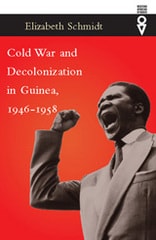
Cold War and Decolonization in Guinea, 1946–1958
Elizabeth Schmidt
Ohio University Press, 2007
In September 1958, Guinea claimed its independence, rejecting a constitution that would have relegated it to junior partnership in the French Community. In all the French empire, Guinea was the only territory to vote “No.” Orchestrating the “No” vote was the Guinean branch of the Rassemblement Démocratique Africain (RDA), an alliance of political parties with affiliates in French West and Equatorial Africa and the United Nations trusts of Togo and Cameroon. Although Guinea’s stance vis-à-vis the 1958 constitution has been recognized as unique, until now the historical roots of this phenomenon have not been adequately explained.
Clearly written and free of jargon, Cold War and Decolonization in Guinea argues that Guinea’s vote for independence was the culmination of a decade-long struggle between local militants and political leaders for control of the political agenda. Since 1950, when RDA representatives in the French parliament severed their ties to the French Communist Party, conservative elements had dominated the RDA. In Guinea, local cadres had opposed the break. Victimized by the administration and sidelined by their own leaders, they quietly rebuilt the party from the base. Leftist militants, their voices muted throughout most of the decade, gained preeminence in 1958, when trade unionists, students, the party’s women’s and youth wings, and other grassroots actors pushed the Guinean RDA to endorse a “No” vote. Thus, Guinea’s rejection of the proposed constitution in favor of immediate independence was not an isolated aberration. Rather, it was the outcome of years of political mobilization by activists who, despite Cold War repression, ultimately pushed the Guinean RDA to the left.
The significance of this highly original book, based on previously unexamined archival records and oral interviews with grassroots activists, extends far beyond its primary subject. In illuminating the Guinean case, Elizabeth Schmidt helps us understand the dynamics of decolonization and its legacy for postindependence nation-building in many parts of the developing world.
Examining Guinean history from the bottom up, Schmidt considers local politics within the larger context of the Cold War, making her book suitable for courses in African history and politics, diplomatic history, and Cold War history.

Cold War on the Airwaves
The Radio Propaganda War against East GermanyNicholas J. Schlosser
University of Illinois Press, 2015
Nicholas J. Schlosser draws on broadcast transcripts, internal memoranda, listener letters, and surveys by the U.S. Information Agency to profile RIAS. Its mission: to undermine the German Democratic Republic with propaganda that, ironically, gained in potency by obeying the rules of objective journalism. Throughout, Schlosser examines the friction inherent in such a contradictory project and propaganda's role in shaping political culture. He also portrays how RIAS's primarily German staff influenced its outlook and how the organization both competed against its rivals in the GDR and pushed communist officials to alter their methods in order to keep listeners.
From the occupation of Berlin through the airlift to the construction of the Berlin Wall, Cold War on the Airwaves offers an absorbing view of how public diplomacy played out at a flashpoint of East-West tension.
Collaborating for Change
A Participatory Action Research CasebookSusan D. Greenbaum
Rutgers University Press, 2020

Collards
A Southern Tradition from Seed to TableEdward H. Davis and John T. Morgan
University of Alabama Press, 2015
The definitive survey of collards, an iconic southern food.
Food is essential to southern culture, and collard greens play a central role in the South’s culinary traditions. A feast to the famished, a reward to the strong, and a comfort to the weary, collards have long been held dear in the food-loving southern heart. In Collards: A Southern Tradition from Seed to Table, Edward H. Davis and John T. Morgan provide this emblematic and beloved vegetable the full-length survey its fascinating and complex history merits.
The book begins with collards’ obscure origins. Like a good detective story, the search for collards’ home country leads the authors both to Europe and West Africa, where they unravel a tale as surprising and complex as that of southern people themselves. Crossing back over the Atlantic, the authors traverse miles of American back roads, from Arkansas to Florida and from Virginia to Louisiana. They vividly recount visits to homes, gardens, grocers, farms, and restaurants where the many varieties of collards are honored, from the familiar green collards to the yellow cabbage collard and rare purple cultivars.
In uncovering the secrets of growing collards, the authors locate prize-winning patches of the plant, interview “seed savers,” and provide useful tips for kitchen gardeners. They also describe how collards made the leap from kitchen garden staple to highly valued commercial crop.
Collards captures the tastes, smells, and prize-winning recipes from the South’s premier collards festivals. They find collards at the homes of farmers, jazz musicians, governors, and steel workers. Kin to cabbage and broccoli but superior to both in nutritional value, collard greens transcend human divisions of black and white, rich and poor, sophisticated and rustic, and urban and rural.
Food trends may come and go, but collards are a tradition that southerners return to again and again. Richly illustrated in color, Collards demonstrates the abiding centrality of this green leafy vegetable to the foodways of the American South. In it, readers will rediscover an old friend.

Collared
Politics and Personalities in Oregon's Wolf CountryAimee Lyn Eaton
Oregon State University Press, 2013
Teeming with the tension and passion that accompany one of North America’s most controversial apex predators, Collared tracks the events that unfolded when wolves from the reintroduced population of the northern Rocky Mountains dispersed west across state lines into Oregon.
In a forthright and personal style, Aimee Lyn Eaton takes readers from meeting rooms in the state capitol to ranching communities in the rural northeast corner of the state. Using on-the-ground inquiry, field interviews, and in-depth research, she shares the story of how wolves returned to Oregon and the repercussions of their presence in the state.
Collared: Politics and Personalities in Oregon’s Wolf Country introduces readers to the biologists, ranchers, conservationists, state employees, and lawyers on the front lines, encouraging a deeper, multifaceted understanding of the controversial and storied presence of wolves in Oregon.
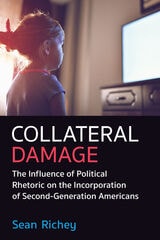
Collateral Damage
The Influence of Political Rhetoric on the Incorporation of Second-Generation AmericansSean Richey
University of Michigan Press, 2023
Collateral Damage provides an overview of how political communication influences the process of incorporation with the broad society as well as its political parties. Sean Richey shows that how politicians talk about immigrants affects how their children perceive America and their feelings about the nation. These perceptions and feelings in turn greatly influence the children’s desire to incorporate into American political society. He also shows that regardless of a speaker’s intended outcome, what is said can still have a deleterious effect on incorporation desire, a communicative process that he terms “collateral damage.” Richey uses new experimental and survey evidence, as well as the rhetoric of Donald Trump as a test case, to examine how anti-immigration communication influences the incorporation of the children of immigrants.

Collective Action and the Civil Rights Movement
Dennis Chong
University of Chicago Press, 1991

Collective Action
A Bad Subjects AnthologyEdited by Megan Shaw Prelinger and Joel Schalit
Pluto Press, 2004
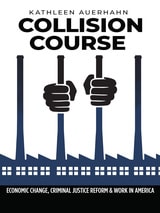
Collision Course
Economic Change, Criminal Justice Reform, and Work in AmericaKathleen Auerhahn
Rutgers University Press, 2022
Recently, a widespread consensus has emerged that the era of “mass incarceration” is at an end, reflected in a declining prison population. Criminal justice reforms such as diversion and problem-solving courts, a renewed focus on reentry, and drug policy reform have as their goal keeping more individuals with justice system involvement out of prisons, in the community and subsequently in the labor force, which lacks the capacity to accommodate these additional would-be workers. This poses significant problems for criminal justice practice, which relies heavily on employment as a signal of offenders’ intentions to live a law-abiding lifestyle. The diminished capacity of the economy to utilize the labor of all who have historically been expected to work presents significant challenges for American society. Work, in the American ethos is the marker of success, masculinity and how one “contributes to society.” What are the consequences of ignoring these converging structural trends? This book examines these potential consequences, the meaning of work in American society, and suggests alternative redistributive and policy solutions to avert the collision course of these economic and criminal justice policy trends.
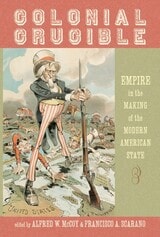
Colonial Crucible
Empire in the Making of the Modern American StateEdited by Alfred W. McCoy and Francisco A. Scarano
University of Wisconsin Press, 2009
Moving well beyond theory, this volume takes the next step, adding a fine-grained, empirical texture to the study of U.S. imperialism by analyzing its specific consequences. Across a broad range of institutions—policing and prisons, education, race relations, public health, law, the military, and environmental management—this formative experience left a lasting institutional imprint. With each essay distilling years, sometimes decades, of scholarship into a concise argument, Colonial Crucible reveals the roots of a legacy evident, most recently, in Washington’s misadventures in the Middle East.
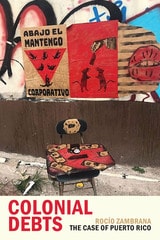
Colonial Debts
The Case of Puerto RicoRocío Zambrana
Duke University Press, 2021
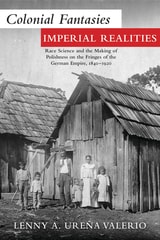
Colonial Fantasies, Imperial Realities
Race Science and the Making of Polishness on the Fringes of the German Empire, 1840–1920Lenny A. Ureña Valerio
Ohio University Press, 2019
In Colonial Fantasies, Imperial Realities, Lenny Ureña Valerio offers a transnational approach to Polish-German relations and nineteenth-century colonial subjectivities. She investigates key cultural dynamics in the history of medicine, colonialism, and migration that bring Germany and Prussian Poland closer to the colonial and postcolonial worlds in Africa and Latin America. She also analyzes how Poles in the German Empire positioned themselves in relation to Germans and native populations in overseas colonies. She thus recasts Polish perspectives and experiences, allowing new insights into identity formation and nationalist movements within the German Empire.
Crucially, Ureña Valerio also studies the medical projects and scientific ideas that traveled from colonies to the German metropole, and vice versa, which were influential not only in the racialization of Slavic populations, but also in bringing scientific conceptions of race to the everydayness of the German Empire. As a whole, Colonial Fantasies, Imperial Realities illuminates nested imperial and colonial relations using sources that range from medical texts and state documents to travel literature and fiction. By studying these scientific and political debates, Ureña Valerio uncovers novel ways to connect medicine, migration, and colonialism and provides an invigorating model for the analysis of Polish history from a global perspective.
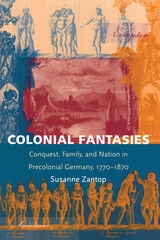
Colonial Fantasies
Conquest, Family, and Nation in Precolonial Germany, 1770-1870Susanne Zantop
Duke University Press, 1997
From as early as the sixteenth century, Germans preoccupied themselves with an imaginary drive for colonial conquest and possession that eventually grew into a collective obsession. Zantop illustrates the gendered character of Germany’s colonial imagination through critical readings of popular novels, plays, and travel literature that imagine sexual conquest and surrender in colonial territory—or love and blissful domestic relations between colonizer and colonized. She looks at scientific articles, philosophical essays, and political pamphlets that helped create a racist colonial discourse and demonstrates that from its earliest manifestations, the German colonial imagination contained ideas about a specifically German national identity, different from, if not superior to, most others.
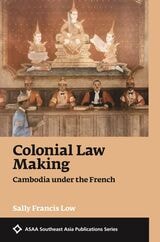
Colonial Law Making
Cambodia under the FrenchSally Frances Low
National University of Singapore Press, 2023
Covering a previously neglected area of Cambodian history, Colonial Law Making explores the structural forces and contingent exchanges that shaped colonial law in Cambodia and examines its post-independence colonial legacy.
The court of King Norodom and the temples of Angkor Wat became orientalist icons in the French colonial imagination, perpetuating an image of the Protectorate (1863–1953) as special and worthy of preservation. This contributed to exceptionalism in the way the Kingdom was colonized, including through law. Drawing on previously unexamined archival material, Sally Low presents a comparative case study of French approaches to colonial law, jurisdiction, and protection. Although the voices of non-elite Cambodians are largely absent from the archives, their influence on colonial law is evident as they resisted efforts to regulate their lives and their land. Low argues that the result was a set of state legal institutions and an indigenous jurisdiction that blended Cambodian and French notions of patronage and royal power as the source and authority for law.
This work is a case study of colonial law as an instrument of control and administration in an indirectly ruled colony. It adds depth to our understanding of the impact of European colonial law and the significance of different forms of colonial rule—direct, indirect, and unofficial. It is easily accessible for non-lawyers and is a must-read for those interested in the recent past of Southeast Asia and the countries that were previously colonized as French Indochina.
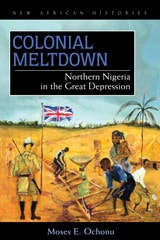
Colonial Meltdown
Northern Nigeria in the Great DepressionMoses E. Ochonu
Ohio University Press, 2009
Historians of colonial Africa have largely regarded the decade of the Great Depression as a period of intense exploitation and colonial inactivity. In Colonial Meltdown, Moses E. Ochonu challenges this conventional interpretation by mapping the determined, at times violent, yet instructive responses of Northern Nigeria’s chiefs, farmers, laborers, artisans, women, traders, and embryonic elites to the British colonial mismanagement of the Great Depression. Colonial Meltdown explores the unraveling of British colonial power at a moment of global economic crisis.
Ochonu shows that the economic downturn made colonial exploitation all but impossible and that this dearth of profits and surpluses frustrated the colonial administration which then authorized a brutal regime of grassroots exactions and invasive intrusions. The outcomes were as harsh for Northern Nigerians as those of colonial exploitation in boom years.
Northern Nigerians confronted colonial economic recovery measures and their agents with a variety of strategies. Colonial Meltdown analyzes how farmers, women, laborers, laid-off tin miners, and NorthernNigeria’s emergent elite challenged and rebelled against colonial economic recovery schemes with evasive trickery, defiance, strategic acts of revenge, and criminal self-help and, in the process, exposed the weak underbelly of the colonial system.
Combined with the economic and political paralysis of colonial bureaucrats in the face of crisis, these African responses underlined the fundamental weakness of the colonial state, the brittleness of its economicmission, and the limits of colonial coercion and violence. This atmosphere of colonial collapse emboldened critics of colonial policies who went on to craft the rhetorical terms on which the anticolonial struggle of the post–World War II period was fought out.
In the current climate of global economic anxieties, Ochonu’s analysis will enrich discussions on the transnational ramifications of economic downturns. It will also challenge the pervasive narrative of imperial economic success.
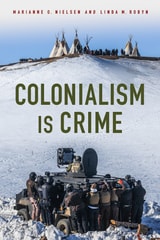
Colonialism Is Crime
Marianne Nielsen
Rutgers University Press, 2019
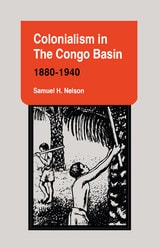
Colonialism in the Congo Basin, 1880–1940
Samuel H. Nelson
Ohio University Press, 1993
Colonias and Public Policy in Texas and Mexico
Urbanization by StealthBy Peter M. Ward
University of Texas Press, 1999
Today in Texas, over 1500 colonias in the counties along the Mexican border are home to some 400,000 people. Often lacking basic services, such as electricity, water and sewerage, fire protection, policing, schools, and health care, these "irregular" subdivisions offer the only low-cost housing available to the mostly Hispanic working poor.
This book presents the results of a major study of colonias in three transborder metropolitan areas and uncovers the reasons why colonias are spreading so rapidly. Peter Ward compares Texas colonias with their Mexican counterparts, many of which have developed into fully integrated working-class urban communities. He describes how Mexican governments have worked with colonia residents to make physical improvements and upgrade services-a model that Texas policymakers can learn from, Ward asserts. Finally, he concludes with a hard-hitting checklist of public policy initiatives that need to be considered as colonia housing policy enters its second decade in Texas.
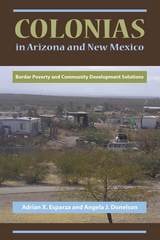
Colonias in Arizona and New Mexico
Border Poverty and Community Development SolutionsAdrian X. Esparza and Angela J. Donelson
University of Arizona Press, 2008
Beginning with an examination of the origins of border region settlement and the emergence of colonias in southern Arizona and New Mexico in the late 1800s, the book then turns to an assessment of current social, economic, and housing conditions. The authors also examine how Mexico’s recent economic crises and U.S. immigration and border security policies have shaped the quality of life in colonias, and they evaluate recent community development initiatives. By examining the challenges and successes of these recent efforts, the authors are able to provide a generalized plan for community development. Balancing analyses of these communities with a review of the positive steps taken to improve the quality of life of their inhabitants, Colonias in Arizona and New Mexico is an indispensable tool for anyone interested in public policy or immigration issues.

Color Lines
Affirmative Action, Immigration, and Civil Rights Options for AmericaJohn David Skrentny
University of Chicago Press, 2001
Contributors:
Erik Bleich
Lawrence D. Bobo
Frank Dobbin
John Aubrey Douglass
Hugh Davis Graham
Kyra R. Greene
Erin Kelly
George R. La Noue
Jennifer Lee
Michael Lichter
Deborah C. Malamud
Sunita Parikh
John C. Sullivan
Thomas J. Sugrue
Carol M. Swain
Steven M. Teles
Roger Waldinger
Christine Min Wotipka
Combat Zoning
Military Land-Use Planning In NevadaDavid Loomis
University of Nevada Press, 1993
Loomis provides a clear and disturbing picture of military land-use planning and how it has affected residents in Nevada. He contends that a lack of citizen participation in the development of land-use plans is a weakness in the planning process and that both the military and the citizenry should take an active role to avoid future conflicts.