Results by title
22279 books match the query 'Social Science' and 1700 start with c
Challenging Perspectives on Street-Based Sex Work
Katie Hail-Jares
Temple University Press, 2017
Are sex workers victims, criminals, or just trying to make a living? Over the last five years, public policy and academic discourse have moved from criminalization of sex workers to victim-based understanding, shaped by human trafficking. While most research focuses on macro-level policies and theories, less is known about the on-the-ground perspectives of people whose lives are impacted by sex work, including attorneys, social workers, police officers, probation officers, and sex workers themselves.
Challenging Perspectives on Street-Based Sex Work brings the voices of lower-echelon sex workers and those individuals charged with policy development and enforcement into conversation with one another. Chapters highlight some of the current approaches to sex work, such as diversion courts, trafficking task forces, law enforcement assisted diversion and decriminalization. It also examines how sex workers navigate seldom-discussed social phenomenon like gentrification, pregnancy, imperialism, and being subjects of research. Through dialogue, our authors reveal the complex reality of engaging in and regulating sex work in the United States and through American aid abroad.
Contributors include: Aneesa A. Baboolal, Marie Bailey-Kloch, Mira Baylson, Nachale “Hua” Boonyapisomparn, Belinda Carter, Jennifer Cobbina, Ruby Corado, Eileen Corcoran, Kate D’Adamo, Edith Kinney, Margot Le Neveu, Martin A. Monto, Linda Muraresku, Erin O’Brien, Sharon Oselin. Catherine Paquette, Dan Steele, Chase Strangio, Signy Toquinto, and the editors.
Challenging Social Inequality
The Landless Rural Workers Movement and Agrarian Reform in BrazilMiguel Carter, editor
Duke University Press, 2012
Contributors. José Batista Gonçalves Afonso, Sonia Maria P..P. Bergamasco, Sue Branford, Elena Calvo-González, Miguel Carter, Horacio Martins de Carvalho, Guilherme Costa Delgado, Bernardo Mançano Fernandes, Leonilde Sérvolo de Medeiros, George Mészáros, Luiz Antonio Norder, Gabriel Ondetti, Ivo Poletto, Marcelo Carvalho Rosa, Lygia Maria Sigaud, Emmanuel Wambergue, Wendy Wolford

Challenging U.S. Apartheid
Atlanta and Black Struggles for Human Rights, 1960–1977Winston A. Grady-Willis
Duke University Press, 2006
Grady-Willis describes Black activism within a framework of human rights rather than in terms of civil rights. As he demonstrates, civil rights were only one part of a larger struggle for self-determination, a fight to dismantle a system of inequalities that he conceptualizes as “apartheid structures.” Drawing on archival research and interviews with activists of the 1960s and 1970s, he illuminates a wide range of activities, organizations, and achievements, including the neighborhood-based efforts of Atlanta’s Black working poor, clandestine associations such as the African American women’s group Sojourner South, and the establishment of autonomous Black intellectual institutions such as the Institute of the Black World. Grady-Willis’s chronicle of the politics within the Black freedom movement in Atlanta brings to light overlapping ideologies, gender and class tensions, and conflicts over divergent policies, strategies, and tactics. It also highlights the work of grassroots activists, who take center stage alongside well-known figures in Challenging U.S. Apartheid. Women, who played central roles in the human rights struggle in Atlanta, are at the foreground of this history.

Challenging Uneven Development
An Urban Agenda for the 1990sNyden, Philip
Rutgers University Press, 1991
The editors and contributors to this volume are not willing to accept what is known as uneven development, where some cities win and some lose. They look at two practical consequences of urban growth: the change in residence patterns as neighborhoods gentrify, and the change in employment patterns, as factory workers lose jobs and white-collar workers gain jobs. The editors' goal is to highlight the alternatives to uneven development and to the growth ideology. They outline and advocate specific policies, including affordable housing, changes in taxation, and direct community participation in planning and zoning decisions.
Challenging Uneven Development begins with a rousing discussion of the pervasiveness of the community redevelopment ideology. The growth machine defines the language of the debate. The next group of chapters examine residence patterns--how communities have organized to fight gentrification, why residential integration is essential for good planning as well as morality, and what strategies can be used to achieve racial diversity. Another chapter emphasizes the role of lenders in regulating the flow of credit within communities. Disinvestment by credit providers causes decline, and opens the way for gentrification, which displaces local residents. The impact of taxes in stimulating the growth machine is also explained.
Later chapters move beyond gentrification issues to examine other problems of economic restructuring. They look at how blacks, Latinos, and women have been affected by the growth of service sector jobs. The final chapter serves as a strategic guide to those who wish to establish a progressive agenda for community-based economic development. The authors call for social change, not unimaginative reform.
The contributors to this volume are leaders or researchers from community organizations, civic groups, government agencies, and universities. In addition to the editors, they are Mel King, Teresa Cordova, Daniel Lauber, Jena Pogge, David Flax-Hatch, Arthur Lyons, Wendy Wintermute, Charles Hicklin, Jeffrey D. Reckinger, David Mosena, Charlotte Chun, Raymndo Flores, Luther Snow, Deborah Bennett, John Betancur, and Patricia Wright. They have presented "state-of-the-art" progressive policy solutions for urban problems.
Challenging the Chip
Labor Rights and Environmental Justice in the Global Electronics Industryedited by Ted Smith, David A. Sonnenfeld and David Naguib Pellow, foreword by Jim Hightower
Temple University Press, 2006
Challenging the Dichotomy
The Licit and the Illicit in Archaeological and Heritage DiscoursesEdited by Les Field, Cristóbal Gnecco, and Joe Watkins
University of Arizona Press, 2016
Utilizing both ethnographic and archaeological examples, contributors ask big questions vital to anyone working in cultural heritage. What are the issues surrounding private versus museum collections? What is considered looting? Is archaeology still a form of colonialization? The contributors discuss this vis-à-vis a global variety of contexts and cultures from the United States, South Africa, Argentina, New Zealand, Honduras, Colombia, Palestine, Greece, Canada, and from the Nasa, Choctaw, and Maori nations.
Challenging the Dichotomy underscores how dichotomies—such as licit/illicit, state/nonstate, public/private, scientific/nonscientific—have been constructed and how they are now being challenged by multiple forces. Throughout the eleven chapters, contributors provide examples of hegemonic relationships of power between nations and institutions. Scholars also reflect on exchanges between Western and non-Western epistemologies and ontologies.
The book’s contributions are significant, timely, and inclusive. Challenging the Dichotomy examines the scale and scope of “illicit” forms of excavation, as well as the demands from minority and indigenous subaltern peoples to decolonize anthropological and archaeological research.
Challenging the Prison-Industrial Complex
Activism, Arts, and Educational AlternativesEdited by Stephen John Hartnett
University of Illinois Press, 2011
Champa and the Archaeology of M? So'n (Vietnam)
Edited by Andrew Hardy, Mauro Cucarzi, and Patrizia Zolese
National University of Singapore Press, 2009

Champagne Charlie and Pretty Jemima
Variety Theater in the Nineteenth CenturyGillian Rodger
University of Illinois Press, 2010
In this rich, imaginative survey of variety musical theater, Gillian M. Rodger masterfully chronicles the social history and class dynamics of the robust, nineteenth-century American theatrical phenomenon that gave way to twentieth-century entertainment forms such as vaudeville and comedy on radio and television. Fresh, bawdy, and unabashedly aimed at the working class, variety honed in on its audience's fascinations, emerging in the 1840s as a vehicle to accentuate class divisions and stoke curiosity about gender and sexuality. Cross-dressing acts were a regular feature of these entertainments, and Rodger profiles key male impersonators Annie Hindle and Ella Wesner while examining how both gender and sexuality gave shape to variety. By the last two decades of the nineteenth century, variety theater developed into a platform for ideas about race and whiteness.
As some in the working class moved up into the middling classes, they took their affinity for variety with them, transforming and broadening middle-class values. Champagne Charlie and Pretty Jemima places the saloon keepers, managers, male impersonators, minstrels, acrobats, singers, and dancers of the variety era within economic and social contexts by examining the business models of variety shows and their primarily white, working-class urban audiences. Rodger traces the transformation of variety from sexualized entertainment to more family-friendly fare, a domestication that mirrored efforts to regulate the industry, as well as the adoption of aspects of middle-class culture and values by the shows' performers, managers, and consumers.
Champassak Royalty and Sovereignty
Within and between Nation-States in Mainland Southeast AsiaIan G. Baird
University of Wisconsin Press, 2024
In re-creating this story, Baird draws not only on a dazzling variety of primary sources in English, French, Lao, and Thai but also on many years spent in conversation with members of the Na Champassak family, who are now spread across a wide geographical area, from Laos and Thailand to France and the United States. Each chapter treats one historical period, identifying the Champassak approach to sovereignty during that time. Through this deep history, Baird shows how sovereign power, even within one case, takes a wide range of forms, always contingent, contested, and uneven across space and time.

Champions of Buddhism
Weikza Cults in Contemporary BurmaEdited by Bénédicte Brac de la Perrière, Guillaume Rozenberg, and Alicia Turner
National University of Singapore Press, 2014
Chandragupta Maurya
The Creation of a National Hero in IndiaSushma Jansari
University College London, 2023
The writing and reception of history fundamentally influence how we engage with the past, and nowhere is that more clear than in the rise from obscurity of Chandragupta Maurya (350–295 BCE), the first emperor of the Mauryan Empire. The key moment in the transformation of Chandragupta into a contemporary national icon was a peace-making meeting between Chandragupta and Seleucus, founder of the Seleucid empire and one of Alexander the Great’s generals. But no reliable account exists in early sources, and it is not even clear which ruler was victorious in battle. That uncertainty enabled British and Indian historians of the nineteenth and twentieth centuries to interpret the sources in radically different ways. With Chandragupta representing India and Seleucus standing in for Britain, British scholars argued that Seleucus defeated Chandragupta, while Indian academics contended the opposite. In India, the image of Chandragupta as an idealized hero who vanquished the foreign invader has prevailed and found expression in contemporary popular culture. In plays, films, television series, comic books, and historical novels, Chandragupta is the powerful and virtuous Hindu ruler par excellence. Sushma Jansari shows how that transformation came about and points out the lessons we can learn from it for understanding other historical figures.
Chang Ch’un-ch’iao and Shanghai’s January Revolution
Andrew G. Walder
University of Michigan Press, 1977
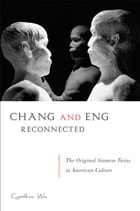
Chang and Eng Reconnected
The Original Siamese Twins in American CultureCynthia Wu
Temple University Press, 2012
Conjoined twins Chang and Eng Bunker have fascinated the world since the nineteenth century. In her captivating book, Chang and Eng Reconnected, Cynthia Wu traces the “Original Siamese Twins” through the terrain of American culture, showing how their inseparability underscored tensions between individuality and collectivity in the American popular imagination.
Using letters, medical documents and exhibits, literature, art, film, and family lore, Wu provides a trans-historical analysis that presents the Bunkers as both a material presence and as metaphor. She also shows how the twins figure in representations of race, disability, and science in fictional narratives about nation building.
As astute entrepreneurs, the twins managed their own lives; nonetheless, as Chang and Eng Reconnected shows, American culture has always viewed them through the multiple lenses of difference.

Change and Continuity in Minangkabau
Local, Regional, and Historical Perspectives on West SumatraLynn L. Thomas
Ohio University Press, 1985
Focusing on Minangkabau proper, and treating several adjacent areas as well, this collection examines the resilience and adaptability of the Minangkabau in the face of outside political and economic pressures and of distortions in social science and legal theory. Individual studies address issues of kinship and other forms of social organization, ideology, and political and economic life. Together, they emphasize the integrity of Minangkabau social forms while revealing fascinating patterns of continuity and change in Minangkabau culture.
This collection will be of particular interest to anthropologists specializing in Southeast Asia, but it will also be important reading for those concerned with the issue of change and continuity in the third world generally.
Change the World Without Taking Power
The Meaning of Revolution TodayJohn Holloway
Pluto Press, 2019
After a century of failed attempts by radical projects, the concept of revolution itself is in crisis. By asking the deepest questions about the nature of humanity, work, capitalism, organisation and resistance, John Holloway looks sharply at modern protest movements and provides tools for creating new strategies.
First published in 2002, this book marked a shift in the understanding of Autonomism, Anarchism and Marxism, addressing the doubts activists had in their own political history and work, and helped form the perspectives of a new generation who are today changing the world.

Changes in Care
Aging, Migration, and Social Class in West AfricaCati Coe
Rutgers University Press, 2022
There is a short film that accompanies the book, “Making Happiness: Older People Organize Themselves” (2020), an 11-minute film by Cati Coe. Available at: https://doi.org/doi:10.7282/t3-thke-hp15

Changes in the Landscape
Humans and Nature in Nineteenth-Century Latin AmericaEdited by Jennifer L. French
Vanderbilt University Press, 2024
Ranging from the immediate aftermath of the Spanish‑American Wars of Independence (1810–1826) to the early twentieth century (1925), the volume’s essays cover a wide variety of genres and forms of cultural production, from José Hernández’s epic poem Martín Fierro to prose fiction, painting and photography, and the personal albums compiled by Spanish-American women. Individually and collectively, the essays engage with scientific writing as both a discourse of power and a source of potentially significant, even revelatory information about human and nonhuman nature. Changes in the Landscape enables readers to more fully understand the transition from colonial regimes to the ecocidal extractivism of the export boom (1870–1930) by drawing out and analyzing some of the cognitive resources and rhetorical strategies that were available to imagine, protest, or enact new norms and expectations regarding the relations between human and nonhuman life, be it the life of wildflowers, waterfalls, or Cuba’s Ciénaga de Zapata.

Changing Channels
Television and the Struggle for Power in RussiaEllen Mickiewicz
Duke University Press, 1999
Revised and expanded
During the tumultuous 1990s, as Russia struggled to shed the trappings of the Soviet empire, television viewing emerged as an enormous influence on Russian life. The number of viewers who routinely watch the nightly news in Russia matches the number of Americans who tune in to the Super Bowl, thus making TV coverage the prized asset for which political leaders intensely—and sometimes violently—compete. In this revised and expanded edition of Changing Channels, Ellen Mickiewicz provides many fascinating insights, describing the knowing ways in which ordinary Russians watch the news, skeptically analyze information, and develop strategies for dealing with news bias.
Covering the period from the state-controlled television broadcasts at the end of the Soviet Union through the attempted coup against Gorbachev, the war in Chechnya, the presidential election of 1996, and the economic collapse of 1998, Mickiewicz draws on firsthand research, public opinion surveys, and many interviews with key players, including Gorbachev himself. By examining the role that television has played in the struggle to create political pluralism in Russia, she reveals how this struggle is both helped and hindered by the barrage of information, advertisements, and media-created personalities that populate the airwaves. Perhaps most significantly, she shows how television has emerged as the sole emblem of legitimate authority and has provided a rare and much-needed connection from one area of this huge, crisis-laden country to the next.
This new edition of Changing Channels will be valued by those interested in Russian studies, politics, media and communications, and cultural studies, as well as general readers who desire an up-to-date view of crucial developments in Russia at the end of the twentieth century.

Changing Corporate America from Inside Out
Lesbian and Gay Workplace RightsNicole C. Raeburn
University of Minnesota Press, 2004
Investigates how gays, lesbians, and bisexuals have succeeded in securing equitable benefits
Despite the backlash against lesbian and gay rights occurring in cities and states across the country, a growing number of corporations are actually expanding protections and benefits for their gay and lesbian employees. Why this should be, and why some corporations are increasingly open to inclusive policies while others are determinedly not, is what Nicole C. Raeburn seeks to explain in Changing Corporate America from Inside Out.
A long-overdue study of the workplace movement, Raeburn’s analysis focuses on the mobilization of lesbian, gay, and bisexual employee networks over the past fifteen years to win domestic partner benefits in Fortune 1000 companies. Drawing on surveys of nearly one hundred corporations with and without gay networks, intensive interviews with human resources executives and gay employee activists, as well as a number of case studies, Raeburn reveals the impact of the larger social and political environment on corporations’s openness to gay-inclusive policies, the effects of industry and corporate characteristics on companies’s willingness to adopt such policies, and what strategies have been most effective in transforming corporate policies and practices to support equitable benefits for all workers.
Changing Differences
Women and the Shaping of American Foreign Policy, 1917-1994Jeffreys-Jones, Rhodri
Rutgers University Press, 1995
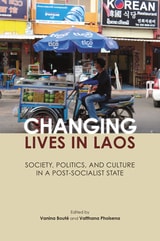
Changing Lives in Laos
Society, Politics, and Culture in a Post-Socialist StateEdited by Vanina Bouté and Vatthana Pholsena
National University of Singapore Press, 2017
Changing Lives
Delinquency Prevention as Crime-Control PolicyPeter W. Greenwood
University of Chicago Press, 2005
Peter W. Greenwood here demonstrates here that as crimes rates have fallen, researchers have identified more connections between specific risk factors and criminal behavior, while program developers have discovered a wide array of innovative interventions. The result of all this activity, he reveals, has been the revelation of a few prevention models that reduce crime much more cost-effectively than popular approaches such as tougher sentencing, D.A.R.E., boot camps, and "scared straight" programs. Changing Lives expertly presents the most promising of these prevention programs, their histories, the quality of evidence to support their effectiveness, the public policy programs involved in bringing them into wider use, and the potential for investments and developmental research to increase the range and quality of programs.
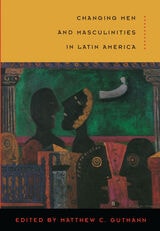
Changing Men and Masculinities in Latin America
Matthew C. Gutmann ed.
Duke University Press, 2003
The contributors look at Mexico, Argentina, Ecuador, Brazil, Colombia, Peru, Venezuela, Chile, and the United States. They bring to bear a number of disciplines—anthropology, history, literature, public health, and sociology—and a variety of methodologies including ethnography, literary criticism, and statistical analysis. Whether analyzing rape legislation in Argentina, the unique space for candid discussions of masculinity created in an Alcoholics Anonymous group in Mexico, the role of shame in shaping Chicana and Chicano identities and gender relations, or homosexuality in Brazil, Changing Men and Masculinities highlights the complex distinctions between normative conceptions of masculinity in Latin America and the actual experiences and thoughts of particular men and women.
Contributors. Xavier Andrade, Daniel Balderston, Peter Beattie, Stanley Brandes, Héctor Carrillo, Miguel Díaz Barriga, Agustín Escobar, Francisco Ferrándiz, Claudia Fonseca, Norma Fuller, Matthew C. Gutmann, Donna Guy, Florencia Mallon, José Olavarría, Richard Parker, Mara Viveros

Changing Minds or Changing Channels?
Partisan News in an Age of ChoiceKevin Arceneaux and Martin Johnson
University of Chicago Press, 2013
Changing Minds
Social Movements’ Cultural ImpactsFrancesca Polletta
Russell Sage Foundation, 2025
Polletta and Amenta examine the trajectories of U.S. social movements, including the old-age pension movements of the 1930s and 1940s, the Black rights movement of the 1950s and 1960s, the women’s movement of the 1970s, right-wing movements in the 1980s and 1990s, and the environmental movement up to the present, to determine when, why, and how social movements change culture. They find that influential movements are featured in the news, but not only in the news. Movement perspectives may appear also in opinion and commentary outlets, on television talk shows and dramas, in movies, stand-up comedy, and viral memes. Popular culture producers remake movement messages as they transmit them, sometimes in ways that make those messages compelling. For example, while the news largely ignored feminists’ challenge to inequality in the home, popular cultural outlets turned “liberation” into a resonant demand for women’s right to self-fulfillment outside the home and within it. Widespread attention to the movement may lead people to change their minds individually. But more substantial change is likely when companies, schools, and other organizations outside government strive to get out in front of a newly legitimate issue, whether environmental sustainability or racial equity, by adopting movement-supportive norms and practices. Eventually, ideas associated with a movement may become a new common sense—though not always the ideas that the movement intended.
Throughout Changing Minds, Polletta and Amenta provide activists with strategies for getting their message heard and acted on. They suggest how movement actors can get into the news as political players or experts rather than lawbreakers or zealots. They show when it makes sense for activists to work with popular cultural producers and when they should create their own cultural outlets. They explain why the routes to cultural influence have changed and why urging people to take one easy step to save the planet can do more harm than good.
Changing Minds is a fascinating exploration of why and how some social movements have caused profound shifts in society.

Changing Order
Replication and Induction in Scientific PracticeHarry Collins
University of Chicago Press, 1992
"In his superb book, Collins shows why the quest for certainty is disappointed. He shows that standards of replication are, of course, social, and that there is consequently no outside standard, no Archimedean point beyond society from which we can lever the intellects of our fellows."—Donald M. McCloskey, Journal of Economic Psychology
"Collins is one of the genuine innovators of the sociology of scientific knowledge. . . . Changing Order is a rich and entertaining book."—Isis
"The book gives a vivid sense of the contingent nature of research and is generally a good read."—Augustine Brannigan, Nature
"This provocative book is a review of [Collins's] work, and an attempt to explain how scientists fit experimental results into pictures of the world. . . . A promising start for new explorations of our image of science, too often presented as infallibly authoritative."—Jon Turney, New Scientist

Changing Our Minds with Gloria Anzaldúa
Archival Practices and Discoveriesedited by Suzanne Bost, AnaLouise Keating, Amelia María de la luz Montes, Kelli D. Zaytoun
University of Texas Press, 2026
A collection of essays using Gloria Anzaldúa’s archival works to further explore and reassess the meaning of her legacy.
In the 1980s, Gloria Anzaldúa’s pioneering Borderlands/La Frontera and This Bridge Called My Back created new and durable trajectories for feminist, queer, Latinx, and postcolonial thought. Still, much of her writing was never published. Drawing on Anzaldúa’s impressive archive—manuscript drafts, personal memorabilia, correspondence, and drawings held at the Benson Collection at the University of Texas, Austin—this volume explores what we are still learning from a pathbreaking scholar more than twenty years after her death.
Changing Our Minds with Gloria Anzaldúa gathers essays from eleven writers working in diverse fields, including philosophy, literature, geography, performance studies, and visual arts. All have been powerfully influenced by Anzaldúa, and after examining her archives, all came to know her work anew. Each chapter relates discoveries among the unpublished materials, illuminating Anzaldúa’s celebrated texts and raising novel questions. A meditation, as well, on archivalism itself, Changing Our Minds reckons with the power of dusty papers to motivate new generations of readers outside the geographies and academic departments in which Anzaldúa has long been a fixture.
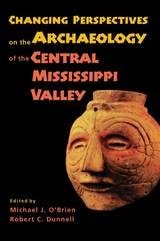
Changing Perspectives on the Archaeology of the Central Mississippi Valley
Michael J. O'Brien
University of Alabama Press, 1998
Fourteen experts examine the current state of Central Valley prehistoric research and provide an important touchstone for future archaeological study of the region
The Mississippi Valley region has long played a critical role in the development of American archaeology and continues to be widely known for the major research of the early 1950s. To bring the archaeological record up to date, fourteen Central Valley experts address diverse topics including the distribution of artifacts across the landscape, internal configurations of large fortified settlements, human-bone chemistry, and ceramic technology.
The authors demonstrate that much is to be learned from the rich and varied archaeological record of the region and that the methods and techniques used to study the record have changed dramatically over the past half century. Operating at the cutting edge of current research strategies, these archaeologists provide a fresh look at old problems in central Mississippi Valley research.
Changing Poverty, Changing Policies
Maria Cancian
Russell Sage Foundation, 2009

Changing Sex
Transsexualism, Technology, and the Idea of GenderBernice L. Hausman
Duke University Press, 1994
Hausman’s inquiry into the development of endocrinology and plastic surgery shows how advances in medical knowledge were central to the establishment of the material and discursive conditions necessary to produce the demand for sex change—that is, to both "make" and "think" the transsexual. She also retraces the hidden history of the concept of gender, demonstrating that the semantic distinction between "natural" sex and "social" gender has its roots in the development of medical treatment practices for intersexuality—the condition of having physical characteristics of both sexes— in the 1950s. Her research reveals the medical institution’s desire to make heterosexual subjects out of intersexuals and indicates how gender operates semiotically to maintain heterosexuality as the norm of the human body. In critically examining medical discourses, popularizations of medical theories, and transsexual autobiographies, Hausman details the elaboration of "gender narratives" that not only support the emergence of transsexualism, but also regulate the lives of all contemporary Western subjects. Changing Sex will change the ways we think about the relation between sex and gender, the body and sexual identity, and medical technology and the idea of the human.
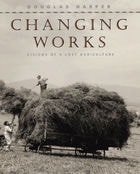
Changing Works
Visions of a Lost AgricultureDouglas Harper
University of Chicago Press, 2001
Changing Works combines Harper's pictures with classic images by photographers such as Gordon Parks, Sol Libsohn, and Charlotte Brooks-men and women whose work during the 1940s documented the mechanization and automation of agricultural practices. Part social history and part analysis of the drive to mass production, Changing Works examines how we farmed a half century ago versus how we do today through pictures new and old and through discussions with elderly farmers who witnessed the makeover. Ultimately, Harper challenges timely ecological and social questions about contemporary agriculture. He shows us how the dissolution of cooperative dairy farming has diminished the safety of the practice, degraded the way we relate to our natural environment, and splintered the once tight-knit communities of rural farmers. Mindful, then, of the advantages of preindustrial agriculture, and heeding the alarming spread of mad cow and foot-and-mouth disease, Changing Works harks back to the benefits of an older system.
Changing on the Fly
Hockey through the Voices of South Asian CanadiansCourtney Szto
Rutgers University Press, 2021
Hockey and multiculturalism are often noted as defining features of Canadian culture; yet, rarely are we forced to question the relationship and tensions between these two social constructs. This book examines the growing significance of hockey in Canada’s South Asian communities. The Hockey Night in Canada Punjabi broadcast serves as an entry point for a broader consideration of South Asian experiences in hockey culture based on field work and interviews conducted with hockey players, parents, and coaches in the Lower Mainland of British Columbia. This book seeks to inject more “color” into hockey’s historically white dominated narratives and representations by returning hockey culture to its multicultural roots. It encourages alternative and multiple narratives about hockey and cultural citizenship by asking which citizens are able to contribute to the webs of meaning that form the nation’s cultural fabric.
Changing the Culture of Academic Medicine
Perspectives of Women FacultyLinda H. Pololi
Dartmouth College Press, 2010
Changing the Game
Women at Work in Las Vegas, 1940-1990Joanne L. Goodwin
University of Nevada Press, 2014
Their experiences anticipated major trends in post-World War II labor history: the national migration of workers during and after the war, the growing proportion of women in the labor force, balancing work with family life, the unionization of service workers, and, above all, the desegregation of the labor force by sex and race. These narratives show women in Las Vegas resisting preassigned roles, seeing their work as a testimony of skill, a measure of independence, and a fulfillment of needs. Overall, these stories of women who lived and worked in Las Vegas in the last half of the twentieth century reveal much about the broader transitions for women in America between 1940 and 1990.
Changing the Subject
Feminist and Queer Politics in Neoliberal IndiaSrila Roy
Duke University Press, 2022
Channeling Knowledges
Water and Afro-Diasporic Spirits in Latinx and Caribbean WorldsRebeca L. Hey-Colón
University of Texas Press, 2023
2024 Honorable Mention, Isis Duarte Book Prize, Haiti/ Dominican Republic section, Latin American Studies Association
How water enables Caribbean and Latinx writers to reconnect to their pasts, presents, and futures.
Water is often tasked with upholding division through the imposition of geopolitical borders. We see this in the construction of the Rio Grande/Río Bravo on the US-Mexico border, as well as in how the Caribbean Sea and the Pacific Ocean are used to delineate the limits of US territory. In stark contrast to this divisive view, Afro-diasporic religions conceive of water as a place of connection; it is where spiritual entities and ancestors reside, and where knowledge awaits.
Departing from the premise that water encourages confluence through the sustainment of contradiction, Channeling Knowledges fathoms water’s depth and breadth in the work of Latinx and Caribbean creators such as Mayra Santos-Febres, Rita Indiana, Gloria Evangelina Anzaldúa, and the Border of Lights collective. Combining methodologies from literary studies, anthropology, history, and religious studies, Rebeca L. Hey-Colón’s interdisciplinary study traces how Latinx and Caribbean cultural production draws on systems of Afro-diasporic worship—Haitian Vodou, La 21 División (Dominican Vodou), and Santería/Regla de Ocha—to channel the power of water, both salty and sweet, in sustaining connections between past, present, and not-yet-imagined futures.

Channeling the Past
Politicizing History in Postwar AmericaErik Christiansen
University of Wisconsin Press, 2013
With insight and wit, Erik Christiansen uncovers in Channeling the Past the ways that powerful corporations rewrote history to strengthen the postwar corporate state, while progressives, communists, and other leftists vied to make their own versions of the past more popular. Christiansen looks closely at several notable initiatives—CBS’s flashback You Are There program; the Smithsonian Museum of American History, constructed in the late 1950s; the Cavalcade of America program sponsored by the Du Pont Company; the History Book Club; and the Freedom Train, a museum on rails that traveled the country from 1947 to 1949 exhibiting historic documents and flags, including original copies of the U.S. Constitution and the Magna Carta.
It is often said that history is written by the victors, but Christiansen offers a more nuanced perspective: history is constantly remade to suit the objectives of those with the resources to do it. He provides dramatic evidence of sophisticated calculations that influenced both public opinion and historical memory, and shows that Americans’ relationships with the past changed as a result.
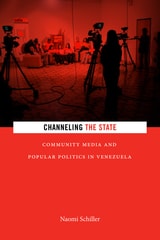
Channeling the State
Community Media and Popular Politics in VenezuelaNaomi Schiller
Duke University Press, 2018

Chanting Down Babylon
Nathaniel Samuel Murrell
Temple University Press, 1998
Probing into Rastafari's still evolving belief system, political goals, and cultural expression, the contributors to this volume emphasize the importance of Africana history and the Caribbean context. "Long before the term 'Afrocentricity' came into popular use in the United States, Jamaican Rastafarians had embraced the concept as the most important recipe for naming their reality and reclaiming their black heritage in the African diaspora."

Chaos Theory in the Social Sciences
Foundations and ApplicationsL. Douglas Kiel and Euel Elliott, Editors
University of Michigan Press, 1997
Chaos and Governance in the Modern World System
Giovanni Arrighi
University of Minnesota Press, 1999

Chaos of Disciplines
Andrew Abbott
University of Chicago Press, 2000
Chaos of Disciplines uses fractals to explain the patterns of disciplines, and then applies them to key debates that surround the social sciences. Abbott argues that knowledge in different disciplines is organized by common oppositions that function at any level of theoretical or methodological scale. Opposing perspectives of thought and method, then, in fields ranging from history, sociology, and literature, are to the contrary, radically similar; much like fractals, they are each mutual reflections of their own distinctions.
Character Disturbance
the phenomenon of our ageGeorge K. Simon
Parkhurst Brothers, Inc., 2011
Modern permissiveness and the new culture of entitlement allows disturbed people to reach adulthood without proper socialization. In a book meant both for the general public and for professionals, bestselling author and psychologist George Simon explains in plain English:
•How most disturbed characters think.•The habitual behaviors the disturbed use to avoid responsibility and to manipulate, deceive, and exploit others.
•Why victims in relationships with disturbed characters do not get help they need from traditional therapies.
•A straightforward guide to recognizing and understanding all relevant personality types, especially those most likely to undermine relationships.
•A new framework for making sense of the crazy world many find themselves in when there's a disturbed character in their lives.
•Concrete principles that promote responsibility and positive change when engaging disturbed characters.
•Tactics (for both lay persons and therapists) to lessen the chances for victimization and empower those who would otherwise be victims in their relationships with many types of disturbed characters.

Character Is Destiny
The Autobiography of Alice SalomonAndrew Lees, Editor
University of Michigan Press, 2004

Charcoal and Blood
Italian Immigrants in Eureka, Nevada, and the Fish Creek MassacreSilvio Manno
University of Nevada Press, 2016
Through meticulous research on the event, relying on such primary sources as newspaper articles, author Silvio Manno provides the only comprehensive account of Eureka’s charcoal crisis and what came to be known as the Fish Creek Massacre. This is a well-documented narrative history of an important instance of class and ethnic conflict in the West. Readers interested in Nevada history, Italian American history, frontier trade unionism, and mining in the West will find this book a unique examination of an incident that occurred almost a century and a half ago and that has, until now, been largely overlooked.

Charisma and the Fictions of Black Leadership
Erica R. Edwards
University of Minnesota Press, 2012
Social and political change is impossible in the absence of gifted male charismatic leadership—this is the fiction that shaped African American culture throughout the twentieth century. If we understand this, Erica R. Edwards tells us, we will better appreciate the dramatic variations within both the modern black freedom struggle and the black literary tradition.
By considering leaders such as Marcus Garvey, Martin Luther King Jr., Malcolm X, and Barack Obama as both historical personages and narrative inventions of contemporary American culture, Edwards brings to the study of black politics the tools of intertextual narrative analysis as well as deconstruction and close reading. Examining a number of literary restagings of black leadership in African American fiction by W. E. B. Du Bois, George Schuyler, Zora Neale Hurston, William Melvin Kelley, Paul Beatty, and Toni Morrison, Edwards demonstrates how African American literature has contested charisma as a structuring fiction of modern black politics.
Though recent scholarship has challenged top-down accounts of historical change, the presumption that history is made by gifted men continues to hold sway in American letters and life. This may be, Edwards shows us, because while charisma is a transformative historical phenomenon, it carries an even stronger seductive narrative power that obscures the people and methods that have created social and political shifts.

Charismatic Capitalism
Direct Selling Organizations in AmericaNicole Woolsey Biggart
University of Chicago Press, 1990
The first full-scale study of this industry, Charismatic Capitalism, revises the standard contention that the rationalization of social institutions is an inevitable consequence of advanced capitalism. Nicole Woolsey Biggart argues instead that less rational organizations built on social networks may actually be more economically viable.
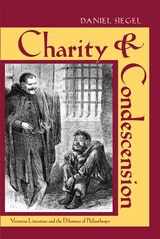
Charity and Condescension
Victorian Literature and the Dilemmas of PhilanthropyDaniel Siegel
Ohio University Press, 2012
Charity and Condescension explores how condescension, a traditional English virtue, went sour in the nineteenth century, and considers how the failure of condescension influenced Victorian efforts to reform philanthropy and to construct new narrative models of social conciliation. In the literary work of authors like Dickens, Eliot, and Tennyson, and in the writing of reformers like Octavia Hill and Samuel Barnett, condescension—once a sign of the power and value of charity—became an emblem of charity’s limitations.
This book argues that, despite Victorian charity’s reputation for idealistic self-assurance, it frequently doubted its own operations and was driven by creative self-critique. Through sophisticated and original close readings of important Victorian texts, Daniel Siegel shows how these important ideas developed even as England struggled to deal with its growing underclass and an expanding notion of the state’s responsibility to its poor.

Charles A. Lindbergh and the American Dilemma
The Conflict of Technology and Human ValuesSusan M. Gray
University of Wisconsin Press, 1988