Results by title
313 books match the query 'Administration' and 16 start with d

Death and Dying in Colonial Spanish America
Edited by Martina Will de Chaparro and Miruna Achim
University of Arizona Press, 2011
The variety of sources uncovered in the authors’ original archival research suggests the wide diversity of topics and approaches they employ: Nahua annals, Spanish chronicles, Inquisition case records, documents on land disputes, sermons, images, and death registers. Geographically, the range of research focuses on the viceroyalties of New Spain, Peru, and New Granada.
The resulting records—both documentary and archaeological—offer us a variety of vantage points from which to view each of these cultural groups as they came into contact with others. Much less tied to modern national boundaries or old imperial ones, the many facets of the new historical research exploring the topic of death demonstrate that no attitudes or practices can be considered either “Western” or universal.
Defining, Locating, and Addressing Bullying in the WPA Workplace
Cristyn L. Elder
Utah State University Press, 2018
Contributors of varying status in different types of programs across many kinds of institutions describe various forms of bullying, including microaggressions, incivility, mobbing, and emotional abuse. They define bullying as institutional racism, “academic systemic incivility,” a crisis of insularity, and faculty fundamentalism. They locate bullying in institutional contexts, including research institutions, small liberal arts colleges, community colleges, and writing programs and writing centers. These locations are used as points of departure to further theorize bullying and to provide clear advice about agentive responses.
A culture of silence discourages discussions of this behavior, making it difficult to address abuse. This silence also normalizes patterns and cultivates the perception that bullying arises naturally. Defining, Locating, and Addressing Bullying in the WPA Workplace helps the field to name these patterns of behaviors as bullying and resist ideologies of normalcy, encouraging and empowering readers to take an active role in defining, locating, and addressing bullying in their own workplaces.
Contributors: Sarah Allen, Andrea Dardello, Harry Denny, Dawn Fels, Bre Garrett, W. Gary Griswold, Amy C. Heckathorn, Aurora Matzke, Staci Perryman-Clark, Sherry Rankins-Robertson, Erec Smith
Demanding Medical Excellence
Doctors and Accountability in the Information AgeMichael L. Millenson
University of Chicago Press, 2000
"If you read only one book this year, read Demanding Medical Excellence. It's that good, and the revolution it describes is that important."—Health Affairs
"Millenson has done yeoman's work in amassing and understanding that avalanche of data that lies beneath most of the managed-care headlines. . . . What he finds is both important and well-explained: inconsistency, overlap, and inattention to quality measures in medical treatment cost more and are more dangerous than most cost-cutting measures. . . . [This book] elevates the healthcare debate to a new level and deserves a wide readership."—Library Journal
"An involving, human narrative explaining how we got to where we are today and what lies ahead."—Mark Taylor, Philadelphia Inquirer
"Read this book. It will entertain you, challenge, and strengthen you in your quest for better accountability in health care."—Alex R. Rodriguez, M.D., American Journal of Medical Quality
"Finally, a health-care book that doesn't wring its hands over the decline of medicine at the hands of money-grubbing corporations. . . . This is a readable account of what Millenson calls a 'quiet revolution' in health care, and his optimism makes for a refreshing change."—Publishers Weekly
"With meticulous detail, historical accuracy, and an uncommon understanding of the clinical field, Millenson documents our struggle to reach accountability."—Saty Satya-Murti, M.D., Journal of the American Medical Association
Democracy and Higher Education
Traditions and Stories of Civic EngagementScott J. Peters
Michigan State University Press, 2010
How are we to understand the nature and value of higher education's public purposes, mission, and work in a democratic society? How do-and how should-academic professionals contribute to and participate in civic life in their practices as scholars, scientists, and educators?
Democracy and Higher Education addresses these questions by combining an examination of several normative traditions of civic engagement in American higher education with the presentation and interpretation of a dozen oral history profiles of contemporary practitioners. In his analysis of these profiles, Scott Peters reveals and interprets a democratic-minded civic professionalism that includes and interweaves expert, social critic, responsive service, and proactive leadership roles.
Democracy and Higher Education contributes to a new line of research on the critically important task of strengthening and defending higher education's positive roles in and for a democratic society.

Difficult Decisions Closing An D Merging Academic Libraries
Sara Holder
Assoc of College & Research Libraries, 2015
Difficult Decisions
Closing and Merging Academic LibrariesSara Holder
Assoc of College & Research Libraries, 2015
Disability Services in Higher Education
An Insider's GuideKirsten T. Behling, Eileen H. Bellemore, Lisa B. Bibeau, Andrew S. Cioffi, and Bridget A. McNamee
Temple University Press, 2023
This volume provides an overview of the responsibilities of a Disabilities Service professional through an examination of relevant literature, laws and regulatory language, case law, and narrative on established practices. It also offers resources that current professionals can modify for use in their day-to-day practice immediately. The authors explore the complexities of accessibility, paying careful attention to the nuances of disability evaluation, accommodation decisions, management of a disability service office, advocating for resources and collaboration within and outside of higher education institutions.
This practitioner-friendly book will help newcomers and seasoned professionals explore and evaluate best practices in the field through questions, examples, and functional job aids available for immediate use.
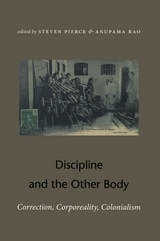
Discipline and the Other Body
Correction, Corporeality, ColonialismSteven Pierce and Anupama Rao, eds.
Duke University Press, 2006
The contributors, who include both historians and anthropologists, address instances of colonial violence from the early modern period to the twentieth century and from Asia to Africa to North America. They consider diverse topics, from the interactions of race, law, and violence in colonial Louisiana to British attempts to regulate sex and marriage in the Indian army in the early nineteenth century. They examine the political dilemmas raised by the extensive use of torture in colonial India and the ways that British colonizers flogged Nigerians based on beliefs that different ethnic and religious affiliations corresponded to different degrees of social evolution and levels of susceptibility to physical pain. An essay on how contemporary Sufi healers deploy bodily violence to maintain sexual and religious hierarchies in postcolonial northern Nigeria makes it clear that the state is not the only enforcer of disciplinary regimes based on ideas of difference.
Contributors. Laura Bear, Yvette Christiansë, Shannon Lee Dawdy, Dorothy Ko, Isaac Land, Susan O’Brien, Douglas M. Peers, Steven Pierce, Anupama Rao, Kerry Ward
Discord And Direction
The Postmodern Writing Program Administratoredited by Sharon James McGee & Carolyn Handa
Utah State University Press, 2005
Postmodernism's central moves include questioning hierarchy, valuing paratactic associations, and rejecting grand narratives, and the work of a Writing Program Administrator, most days, includes those moves as well. The argument of this collection is that the cultural and intellectual legacies of postmodernism impinge, significantly and daily, on the practice of the Writing Program Administrator. WPAs work in spaces where they must assume responsibility for a multifaceted program, a diverse curriculum, instructors with varying pedagogies and technological expertise—and where they must position their program in relation to a university with its own conflicted mission, and a state with its unpredictable views of accountability and assessment.
The collection further argues that postmodernism offers a useful lens through which to understand the work of WPAs and to examine the discordant cultural and institutional issues that shape their work. Each chapter tackles a problem local to its author's writing program or experience as a WPA, and each responds to existing discord in creative ways that move toward rebuilding and redirection.
It is a given that accepting the role of WPA will land you squarely in the bind between modernism and postmodernism: while composition studies as a field arguably still reflects a modernist ethos, the WPA must grapple daily with postmodern habits of thought and ways of being. The effort to live in this role may or may not mean that a WPA will adopt a postmodern stance; it does mean, however, that being a WPA requires dealing with the postmodern.
Disrupting the Center
A Partnership Approach to Writing Across the UniversityRebecca Hallman Martini
Utah State University Press, 2021
Using on-site research and critical ethnographic study from one university writing center, Rebecca Hallman Martini establishes an innovative, cross-disciplinary partnership approach to writing instruction in which peer tutoring plays an integral curricular role. Case studies detail three partnerships that respond directly to existing or potential disruptive innovations in higher education and showcase important concepts: mapping mutual benefit and stakeholder engagement in an online studio/hybrid first-year writing program partnership in response to online education, creating negotiated space to work through ethical issues involved when working with a public-private partnership to develop a required extracurricular portfolio project in a business school, and building transformational partnerships through establishing a writing-in-the-professions curriculum in the College of Engineering in response to career readiness initiatives.
Disrupting the Center uses interviews, observations, focus groups, analysis of consultations, meetings, and shared documents such as annual reports, budgets, assessment data, assignments, and syllabi to generate a wide view of how systems work. Writing centers are flexible university-wide service spaces where students go for one-on-one and group writing support that can become dynamic spaces for writing pedagogy by disrupting, revitalizing, and reinventing the epistemic foundations of current rhetoric and composition landscapes and traditional approaches to writing.
Disruptive Stories
Amplifying Voices from the Writing Center MarginsElizabeth Kleinfeld
Utah State University Press, 2024
While US tenure-track writing center administrators (WCAs) do not make up the majority of those who hold WCA positions in writing centers, they are more likely to be the storytellers of the writing center grand narrative. They publish more, present more conference papers, edit more journals, and participate more in organizational leadership. This collection complicates that narrative by adding marginalized voices and experiences in three thematic categories: structural marginalization, globalization and marginalization, and embodied marginalization.
Disruptive Stories spurs further conversations about ways to improve the review process in writing center scholarship so that it more accurately reflects the growing diversity of its administrators and practitioners.
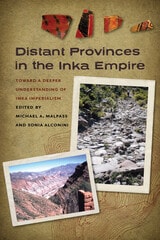
Distant Provinces in the Inka Empire
Toward a Deeper Understanding of Inka ImperialismMichael A. Malpass
University of Iowa Press, 2010
Who was in charge of the widespread provinces of the great Inka Empire of the fifteenth and sixteenth centuries: Inka from the imperial heartland or local leaders who took on the trappings of their conquerors, either by coercion or acceptance? By focusing on provinces far from the capital of Cuzco, the essays in this multidisciplinary volume provide up-to-date information on the strategies of domination asserted by the Inka across the provinces far from their capital and the equally broad range of responses adopted by their conquered peoples.
Contributors to this cutting-edge volume incorporate the interaction of archaeological and ethnohistorical research with archaeobotany, biometrics, architecture, and mining engineering, among other fields. The geographical scope of the chapters—which cover the Inka provinces in Bolivia, in southeast Argentina, in southern Chile, along the central and north coast of Peru, and in Ecuador—build upon the many different ways in which conqueror and conquered interacted. Competing factors such as the kinds of resources available in the provinces, the degree of cooperation or resistance manifested by local leaders, the existing levels of political organization convenient to the imperial administration, and how recently a region had been conquered provide a wealth of information on regions previously understudied. Using detailed contextual analyses of Inka and elite residences and settlements in the distant provinces, the essayists evaluate the impact of the empire on the leadership strategies of conquered populations, whether they were Inka by privilege, local leaders acculturated to Inka norms, or foreign mid-level administrators from trusted ethnicities.
By exploring the critical interface between local elites and their Inka overlords, Distant Provinces in the Inka Empire builds upon Malpass’s 1993 Provincial Inca: Archaeological and Ethnohistorical Assessment of the Impact of the Inca State to support the conclusions that Inka strategies of control were tailored to the particular situations faced in different regions. By contributing to our understanding of what it means to be marginal in the Inka Empire, this book details how the Inka attended to their political and economic goals in their interactions with their conquered peoples and how their subjects responded, producing a richly textured view of the reality that was the Inka Empire.
Divided Conversations
Identities, Leadership, and Change in Public Higher EducationKristin G. Esterberg
Vanderbilt University Press, 2013
Many faculty believe that one of their own who becomes an administrator has gone over to "the dark side." One provost recalled going for a beer with a faculty colleague and hearing the colleague complain about the latest memo "from the administration." He had to remind his friend of many years that he was the author of the offending document. Now he was "the administration." He realized that former colleagues now appeared in his office wearing suits and ties and referring to him by his title rather than his first name.
The disciplines serve as the tribes into which individual scholars are organized; the discipline is where a faculty member finds his community and identity. Administrators, on the other hand, identify with each other in trying to get the tribes to work together. Though most administrators came from the faculty ranks, their career paths take a different shape, especially in terms of mobility to another institution. It's not surprising that the two groups talk past each other.
A chapter is devoted to chairs of departments, who occupy an interesting middle ground. To their faculty, they can come across as a nurturing parent or a petty bureaucrat. The authors recommend training for chairs and administrative internships offered by the American Council on Education and other organizations.
The men and women on the campuses of the public universities described in the book make clear the challenges that universities face in terms of budgets, legislative politics, collective bargaining, rankings, and control of academic programs. If public institutions are truly to serve a public purpose, faculty and administrators must find ways to engage each other in shared conversation and management and find ways of engaging the university with the community.

Dockside Reading
Hydrocolonialism and the Custom HouseIsabel Hofmeyr
Duke University Press, 2022
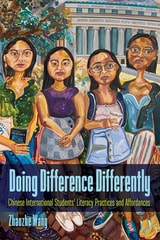
Doing Difference Differently
Chinese International Students’ Literacy Practices and AffordancesZhaozhe Wang
Utah State University Press, 2024
Doing Difference Differently provides an in-depth, nuanced understanding of the multifaceted literate lives of this often-marginalized cultural group, highlighting their diverse aspirations, personas, communities, challenges, and strategies. The book reconceptualizes the linguistic and cultural differences of Chinese international students as active processes of embracing, performing, resisting, negotiating, and redefining the identities that institutions impose on them through everyday literacy practices. Wang offers an analytical heuristic for researchers and educators to better understand these students’ backgrounds and to more effectively and ethically support and advocate for them. This case study critically engages broad and interconnected concepts that are essential to educators’ collective understanding of Generation Z students brought up in cultural and educational contexts outside of the European-American sphere.
This book appeals to scholars, researchers, teachers, and administrators working in North American higher education and English-speaking countries, particularly those in the fields of writing studies, second language studies, applied linguistics, multilingual education, literacy studies, and international education. Educators across disciplines seeking to better understand the growing population of Chinese international students in North America will likewise benefit.

Dynamic Youth Services through Outcome-Based Planning and Evaluation
Eliza T. Dresang
American Library Association, 2006