1566 books match the query 'Christianity' and 49 start with d
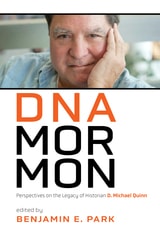
cover of DNA Mormon: Perspectives on the Legacy of Historian D. Michael Quinn

DNA Mormon

Perspectives on the Legacy of Historian D. Michael Quinn

Benjamin E. Park

Signature Books, 2022

Few lives have been as consequential for modern Mormonism as D. Michael Quinn. The son of a Mexican immigrant father and a California Mormon mother, Quinn became an influential participant in the New Mormon History movement. Much of his scholarly work remains classic in the field. Yet while he was publicly celebrated for his award-winning books and articles, he privately struggled to reconcile his sexuality with his faith. Eventually, his revisionist scholarship and homosexuality placed him in the crosshairs of church leaders, and he was excommunicated as one of the September Six in 1993. 

This compilation is a rigorous and riveting assessment of Quinn’s legacy. In this volume, scholars examine him as a historical figure who helps us better understand modern Mormonism. They also probe his role as a historiographical titan. These essays enable us to analyze his influence on scholarship that both preceded and followed him. More than an investigation into his life and work, DNA Mormon uncovers the world in which he lived.
[more]
cover of Danish, But Not Lutheran: The Impact of Mormonism on Danish Cultural Identity, 1850–1920

Danish, But Not Lutheran

The Impact of Mormonism on Danish Cultural Identity, 1850–1920

Julie K. Allen

University of Utah Press, 2017

The Danish-Mormon migration to Utah in the nineteenth century was, relative to population size, one of the largest European religious out-migrations in history. Hundreds of thousands of Americans can trace their ancestry to Danish Mormons, but few know about the social and cultural ramifications of their ancestors’ conversion to Mormonism. This book tells that exciting and complex story for the first time.

In 1849, after nearly a thousand years of state- controlled religion, Denmark’s first democratic constitution granted religious freedom. One year later, the arrival of three Mormon missionaries in Denmark and their rapid success at winning converts to their faith caused a crisis in Danish society over the existential question: "How could someone be Danish but not Lutheran?" Over the next half-century nearly thirty thousand Danes joined the LDS Church, more than eighteen thousand of whom emigrated to join their fellow Mormons  in Utah. This volume explores the range of Danish public reactions to Mormonism over a seventy-year period—from theological concerns articulated by Søren and Peter Christian Kierkegaard in the 1850s to fear-mongering about polygamy and white slavery in silent films of the 1910s and 1920s—and looks at the personal histories of converts. 

Honorable Mention for Best International Book from the Mormon History Association.
[more]
cover of Dante's Interpretive Journey

Dante's Interpretive Journey

William Franke

University of Chicago Press, 1996

Critically engaging the thought of Heidegger, Gadamer, and others, William Franke contributes both to the criticism of Dante's Divine Comedy and to the theory of interpretation.

Reading the poem through the lens of hermeneutical theory, Franke focuses particularly on Dante's address to the reader as the site of a disclosure of truth. The event of the poem for its reader becomes potentially an experience of truth both human and divine. While contemporary criticism has concentrated on the historical character of Dante's poem, often insisting on it as undermining the poem's claims to transcendence, Franke argues that precisely the poem's historicity forms the ground for its mediation of a religious revelation. Dante's dramatization, on an epic scale, of the act of interpretation itself participates in the self-manifestation of the Word in poetic form.

Dante's Interpretive Journey is an indispensable addition to the field of Dante studies and offers rich insights for philosophy and theology as well.

[more]
cover of Dante’s Volume from Alpha to Omega

Dante’s Volume from Alpha to Omega

Edited by Christiana Purdy Moudarres and Carol Chiodo

Arizona Center for Medieval and Renaissance Studies, 2020
Dante’s Volume from Alpha to Omega brings together essays written by internationally recognized scholars to explore the poet’s encyclopedic impulse in light of our own frenzied information age. This comprehensive collection of essays, coedited by Carol Chiodo and Christiana Purdy Moudarres, examines how Dante’s spiritual quest is powered by an encyclopedic one, which has for more than seven centuries drawn a readership as diverse as the knowledge his work contains. The essays investigate both the intellectual and spiritual pleasures that Dante’s Commedia affords, underscoring how, through the sheer breadth of its knowledge, the poem demands collective and collaborative inquiry. Rather than isolating the poetic or theological strands of the Commedia, the book acts as a bridge across disciplines, braiding together the well-worn strands of poetry and theology with those of philosophy, the sciences, and the arts. The wide range of entries within Dante’s poetic summa yield multiple opportunities to reflect on their points of intersection, and the urgency of the convergence of the poem’s aesthetic, intellectual, and affective aims. 
[more]
cover of Dark Passages of the Bible

Dark Passages of the Bible

Matthew J. Ramage

Catholic University of America Press, 2013
Following the lead of Pope Benedict XVI, in Dark Passages of the Bible Matthew Ramage weds the historical-critical approach with a theological reading of Scripture based in the patristic-medieval tradition. Whereas these two approaches are often viewed as mutually exclusive or even contradictory, Ramage insists that the two are mutually enriching and necessary for doing justice to the Bible’s most challenging texts.
[more]
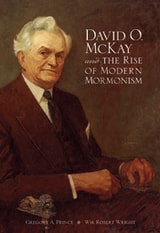
cover of David O. McKay and the Rise of Modern Mormonism

David O. McKay and the Rise of Modern Mormonism

Gregory A Prince

University of Utah Press, 2005

Ordained as an apostle in 1906, David O. McKay served as president of the Church of Jesus Christ of Latter-day Saints from 1951 until his death in 1970. Under his leadership, the church experienced unparalleled growth—nearly tripling in total membership—and becoming a significant presence throughout the world.

The first book to draw upon the David O. McKay Papers at the J. Willard Marriott Library at the University of Utah, in addition to some two hundred interviews conducted by the authors, David O. McKay and the Rise of Modern Mormonism focuses primarily on the years of McKay's presidency. During some of the most turbulent times in American and world history, McKay navigated the church through uncharted waters as it faced the challenges of worldwide growth in an age of communism, the civil rights movement, and ecumenism. Gregory Prince and Robert Wright have compiled a thorough history of the presidency of a much-loved prophet who left a lasting legacy within the LDS Church.

Winner of the Evans Handcart Award. 
Winner of the Mormon History Association Turner-Bergera Best Biography Award. 
[more]
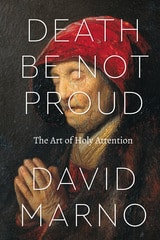
cover of Death Be Not Proud: The Art of Holy Attention

Death Be Not Proud

The Art of Holy Attention

David Marno

University of Chicago Press, 2016

The seventeenth-century French philosopher Nicolas Malebranche thought that philosophy could learn a valuable lesson from prayer, which teaches us how to attend, wait, and be open for what might happen next. Death Be Not Proud explores the precedents of Malebranche’s advice by reading John Donne’s poetic prayers in the context of what David Marno calls the “art of holy attention.”

If, in Malebranche’s view, attention is a hidden bond between religion and philosophy, devotional poetry is the area where this bond becomes visible. Marno shows that in works like “Death be not proud,” Donne’s most triumphant poem about the resurrection, the goal is to allow the poem’s speaker to experience a given doctrine as his own thought, as an idea occurring to him. But while the thought must feel like an unexpected event for the speaker, the poem itself is a careful preparation for it. And the key to this preparation is attention, the only state in which the speaker can perceive the doctrine as a cognitive gift. Along the way, Marno illuminates why attention is required in Christian devotion in the first place and uncovers a tradition of battling distraction that spans from ascetic thinkers and Church Fathers to Catholic spiritual exercises and Protestant prayer manuals.
[more]
cover of Death with Dignity: Ethical and Practical Considerations for Caregivers of the Terminally Ill

Death with Dignity

Ethical and Practical Considerations for Caregivers of the Terminally Ill

Peter A. Clark, S.J

University of Scranton Press, 2010

End-of-life issues and questions are complex and frequently cause confusion and anxiety.  In Death with Dignity,theologian, medical ethicist, and pastoral caregiver Peter A. Clark examines numerous issues that are pertinent to patients, family members, and health care professionals, including physiology, consciousness, the definition of death, the distinction between extraordinary and ordinary means, medical futility, “Do Not Resuscitate” orders, living wills, power of attorney, pain assessment and pain management, palliative and hospice care, the role of spirituality in end-of-life care, and physicians’ communication with terminal patients. Patients, family members, medical students, and health care professionals will find in Death with Dignity thepractical and ethical knowledge they need to capably and confidently cope with end-of-life challenges.
[more]
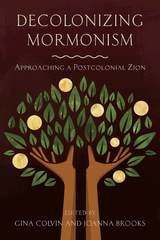
cover of Decolonizing Mormonism: Approaching a Postcolonial Zion

Decolonizing Mormonism

Approaching a Postcolonial Zion

Edited by Gina Colvin and Joanna Brooks

University of Utah Press, 2018

This volume seeks nothing less than to shift the focus of Mormon studies from its historic North American, Euro-American “center” to the critical questions being raised by Mormons living at the movement’s cultural and geographic margins.

As a social institution, Mormonism is shaped around cultural notions, systems, and ideas that have currency in the United States but make less sense beyond the land of its genesis. Even as an avowedly international religion some 183 years out from its inception, it makes few allowances for diverse international contexts, with Salt Lake City prescribing programs, policies, curricula, leadership, and edicts for the church’s international regions. While Mormonism’s greatest strength is its organizational coherence, there is also a cost paid for those at the church’s peripheries.
 
Decolonizing Mormonism brings together the work of 15 scholars from around the globe who critically reflect on global Mormon experiences and American-Mormon cultural imperialism. Indigenous, minority, and Global South Mormons ask in unison: what is the relationship between Mormonism and imperialism and where must the Mormon movement go in order to achieve its long-cherished dream of equality for all in Zion? Their stories are both heartbreaking and heartening and provide a rich resource for thinking about the future of Mormon missiology and the possibilities inherent in the work of Mormon contextual theology.
[more]
cover of Deconstruction, Feminist Theology, and the Problem of Difference: Subverting the Race/Gender Divide

Deconstruction, Feminist Theology, and the Problem of Difference

Subverting the Race/Gender Divide

Ellen T. Armour

University of Chicago Press, 1999

The term "feminism" conjures up the promise of resistance to the various forms of oppression women face. But feminism's ability to fulfill this promise has been undermined by its failure to deal adequately with the difference that race makes for gender. In this book, Ellen T. Armour forges an alliance between deconstruction and feminist theology and theory by demonstrating deconstruction's usefulness in addressing feminism's trouble with race.

Armour shows how the writings of Jacques Derrida and Luce Irigaray can be used to uncover feminism's white presumptions so that race and gender can be thought of differently. In clear, concise terms she explores the possibilities and limitations for feminist theology of Derrida's conception of "woman" and Irigaray's "multiple woman," as well as Derrida's thinking on race and Irigaray's work on religion. Armour then points a way beyond the race/gender divide with the help of African-American theorists such as bell hooks, Hortense Spillers, and Patricia Hill Collins.
[more]
cover of Denial and Repression of Anti-Semitism: Post-Communist Rehabilitation of the Serbian Bishop Nikolaj Velimirovic

Denial and Repression of Anti-Semitism

Post-Communist Rehabilitation of the Serbian Bishop Nikolaj Velimirovic

Jovan Byford

Central European University Press, 2008

Bishop Nikolaj Velimirovic (1881–1956) is arguably one the most controversial figures in contemporary Serbian national culture. Having been vilified by the former Yugoslav Communist authorities as a fascist and an antisemite, this Orthodox Christian thinker has over the past two decades come to be regarded in Serbian society as the most important religious person since medieval times and an embodiment of the authentic Serbian national spirit. Velimirovic was formally canonised by the Serbian Orthodox Church in 2003. In this book, Jovan Byford charts the posthumous transformation of Velimirovic from 'traitor' to 'saint' and examines the dynamics of repression and denial that were used to divert public attention from the controversies surrounding the bishop's life, the most important of which is his antisemitism. Byford offers the first detailed examination of the way in which an Eastern Orthodox Church manages controversy surrounding the presence of antisemitism within its ranks and he considers the implications of the continuing reverence of Nikolaj Velimirovic for the persistence of antisemitism in Serbian Orthodox culture and in Serbian society as a whole. This book is based on a detailed examination of the changing representation of Bishop Nikolaj Velimirovic in the Serbian media and in commemorative discourse devoted to him. The book also makes extensive use of exclusive interviews with a number of Serbian public figures who have been actively involved in the bishop’s rehabilitation over the past two decades.
[more]
cover of Desert Birthright: A Midwife's Memoir

Desert Birthright

A Midwife's Memoir

Lori Wrankle

University of Utah Press, 2025

The coming-of-age memoir of a homebirth midwife in the Southwest

Lori Wrankle was sixteen when she helped deliver her first baby. “I witnessed the entire universe unfold at my feet,” she writes in Desert Birthright. Later, working as a hospital doula, Wrankle observed firsthand the suffering inflicted upon birthing women by male-dominated Western childbirth practices, from casual racism to unnecessary and nonconsensual procedures, including the dreaded “husband stitch.” After a traumatic labor and delivery of her own, she decided to take back woman-centered childbirth and start a homebirth midwifery practice.
 
Desert Birthright traverses twenty-five years of midwifery, often in fundamentalist polygamist circles, weaving together birth stories with childhood memories as Wrankle grapples with her shifting Mormon faith. Her poetic voice shines—a placenta becomes the tree of life, the folds in a baby’s arm layers of sand in the desert. Desert Birthright is a deeply personal story of life, death, and modern womanhood in the rural Southwest, and of one midwife’s journey of faith, self-discovery, and liberation in the face of adversity.
[more]
cover of Desire Work: Ex-Gay and Pentecostal Masculinity in South Africa

Desire Work

Ex-Gay and Pentecostal Masculinity in South Africa

Melissa Hackman

Duke University Press, 2018
In postapartheid Cape Town—Africa's gay capital—many Pentecostal men turned to "ex-gay" ministries in hopes of “curing” their homosexuality in order to conform to conservative Christian values and African social norms. In Desire Work Melissa Hackman traces the experiences of predominantly white ex-gay men as they attempt to forge a heterosexual masculinity and enter into heterosexual marriage through emotional, bodily, and religious work. These men subjected themselves to daily self-surveillance and followed prescribed behaviors such as changing how they talked and walked. Ex-gay men also saw themselves as participating in the redemption of the nation, because South African society was perceived as suffering from a crisis of masculinity in which the country lacked enough moral heterosexual men. By tying the experience of ex-gay men to the convergence of social movements and public debates surrounding race, violence, religion, and masculinity in South Africa, Hackman offers insights into the construction of personal identities in the context of sexuality and spirituality.
[more]
cover of Desiring Theology

Desiring Theology

Charles E. Winquist

University of Chicago Press, 1994

One of the foremost scholars exploring the intersection of theology and continental philosophy, Charles E. Winquist argues for the possibility of theological thinking in a postmodern secular milieu. Moving beyond the now familiar reiteration of postmodernity's losses—the death of God, the displacement of the self, the end of history, the closure of the Book—Winquist equates a desire to think theologically with a desire, amidst postmodernity's disappointments, for a thinking that does not disappoint. To desire theology in this sense is to desire to know an "other" in and of language that can be valued in the forming of personal and communal identity. In this book, "desiring theology" carries another sense as well, for Winquist argues that, in the wake of psychoanalysis, theology must elaborate the meaning and importance of desire in its own discourse.

Winquist's work is tactical as well as theoretical, showing what kind of work theology can do in a postmodern age. He suggests that theology is closely akin to what Gilles Deleuze and Felix Guattari refer to as a minor intensive use of a major language. The minor intensive theological use of language, Winquist argues, pressures the ordinary weave of discourse and opens it to desire. Thus theology becomes a work against "the disappointment of thinking." Deeply engaged with the work of Nietzsche, Derrida, Tillich, Robert P. Scharlemann, and Mark C. Taylor, among others, this book is a significant addition to contemporary theology.

[more]
cover of Deus: The Fall of Pompeii and the Rise of Christianity

Deus

The Fall of Pompeii and the Rise of Christianity

Gabriel Zuchtriegel

University of Chicago Press, 2027

Amid the city’s ruins, the director of the Pompeii Archaeological Park seeks signs of profound religious and cultural transformation to come. 

Recent excavations in Pompeii have unearthed stunning discoveries and a new understanding of how people really lived, revealing a city simmering with tension in an age of great upheaval. From the author of The Buried City comes a riveting account of religious and ritual engagement in and around Pompeii at the time of its destruction in 79 CE, a moment when Christianity was just beginning to gain footing in the Roman world.

Drawing on ancient artifacts and the latest findings from Pompeii, Gabriel Zuchtriegel, director of the Pompeii Archaeological Park, considers how such a momentous transformation might have come to pass. Each chapter takes a different deity as its starting point, exploring the place of the ancient gods in the life of the city and its people. Inviting readers behind the scenes to experience discoveries through the eyes of the excavation team, Zuchtriegel shares insights about Pompeii’s red-light district, where archaeologists have found graffiti that may refer to Christians; excavations in several of the city’s sanctuaries and in nearby Longola, a Bronze and Early Iron Age precursor of Pompeii; a top-secret dig in the House of the Thiasus that has yielded wall paintings as provocative as those of the famous Villa of the Mysteries; and much more. With intimate detail, this book brings to life a raw and often brutal society, capturing beauty and humanity in places both expected and surprising.
[more]
cover of Development in Spirit: Religious Transformation and Everyday Politics in Vietnam’s Highlands

Development in Spirit

Religious Transformation and Everyday Politics in Vietnam’s Highlands

Seb Rumsby

University of Wisconsin Press, 2023

As state economic policies promote integration under a single logic of modernist development, many impoverished groups remain on the margins. Development in Spirit explores the practices employed by communities on the fringes of such nation-building projects. Using an everyday political economy lens, Seb Rumsby demonstrates how seemingly powerless actors actively engage with larger forces, shaping their experience of development in ways that are underexamined but have far-reaching consequences. 

Following state-led market reforms in the 1980s, Vietnam experienced stunning economic transformation. But for the Hmong communities of the country’s north and central highlands, the benefits proved elusive. Instead, the Hmong people have pursued their own alternative paths to development. Rumsby shows how mass conversion to Christianity led to a case of “unplanned development” that put the Hmong on a trajectory of simultaneous integration into the market economy and resistance to state authority. 

Many of the strategies community members employ are tied to the Christianization of everyday life. Religious actors play complex and often contradictory roles in facilitating networks of exchange, challenging or enforcing gender norms, promoting communalism and enforcing discipline, and shaping local ideas about progress. They are influenced by national and transnational religious networks, especially US-produced radio broadcasts by Hmong American Christians and local converts.

This compelling account provides fresh theoretical and empirical insights into the interplay of religion, neoliberal development, and marketization across the world. 
[more]
cover of Devotion in Motion: Pilgrimage in Modern Mexico

Devotion in Motion

Pilgrimage in Modern Mexico

Edward Wright-Ríos

University of Chicago Press, 2025

A study of contemporary pilgrimage through the elastic history of a shrine in Oaxaca, Mexico.
 
For many, pilgrimage conjures ideas about ancient traditions and somber journeys of self-discovery—an escape from modern life. In Devotion in Motion, Edward Wright-Ríos argues that we misunderstand pilgrimage (past and present) if we ignore its dynamic relationship with the rhythms of daily life and community.

Through the story of a centuries-old, ever-changing Catholic shrine to Our Lady of Juquila in Oaxaca, Mexico, Wright-Ríos reveals how tradition, innovation, marketing, and devotion coexist and interact in pilgrimage. Devotees, he shows, are not dissuaded by the embeddedness of the sacred site in the complexities, hierarchies, or conflicts of their lives. In fact, the truckers, accountants, and health-care workers we meet in this book actively seek new resources (including social media) to aid and share their devotion. Part microhistory, part ethnography, Devotion in Motion is a celebration of pilgrimage as a living experience in every generation.
[more]
cover of Devotion: Three Inquiries in Religion, Literature, and Political Imagination

Devotion

Three Inquiries in Religion, Literature, and Political Imagination

Constance M. Furey, Sarah Hammerschlag, and Amy Hollywood

University of Chicago Press, 2021

Three scholars of religion explore literature and the literary as sites of critical transformation.

We are living in a time of radical uncertainty, faced with serious political, ecological, economic, epidemiological, and social problems. Scholars of religion Constance M. Furey, Sarah Hammerschlag, and Amy Hollywood come together in this volume with a shared conviction that what and how we read opens new ways of imagining our political futures and our lives.

Each essay in this book suggests different ways to characterize the object of devotion and the stance of the devout subject before it. Furey writes about devotion in terms of vivification, energy, and artifice; Hammerschlag in terms of commentary, mimicry, and fetishism; and Hollywood in terms of anarchy, antinomianism, and atopia. They are interested in literature not as providing models for ethical, political, or religious life, but as creating the site in which the possible—and the impossible—transport the reader, enabling new forms of thought, habits of mind, and ways of life. Ranging from German theologian Martin Luther to French-Jewish philosopher Sarah Kofman to American poet Susan Howe, this volume is not just a reflection on forms of devotion and their critical and creative import but also a powerful enactment of devotion itself.
[more]
cover of Devotional Activism: Public Religion, Innovation and Culture in the Nineteenth-Century

Devotional Activism

Public Religion, Innovation and Culture in the Nineteenth-Century

Richard Schaefer

St. Augustine's Press, 2023

Modern history has not been neutral in telling the story of religion. Since it presumes the centrality of human motives and machinations as the one and only means of explicating the unfolding of ‘events’, it has helped set the terms for what counts as a viable motive and what does not, and this is evident in the systematic unmasking of religion as only really ever about ‘something else’. By distilling more substantive/primary economic, political or other kinds of motives from the detritus of ‘religion’, the latter is thus consigned to the past as the primitive husk of more substantive and rational ways of thinking and acting. As a set of historical case studies, the essays collected here forgo that tendency, and suggest different possibilities for conceptualizing the fate of religion in the modern world. They chart a different course, one of faith and self-assertion.

The essays take up a variety of episodes from modern European and American history and explore, from various angles, three interrelated themes: 'public religion', and the role of Catholicism as a determined critic of modernity; religion as an impetus for innovation; and the tendency to reduce religion to culture.
[more]
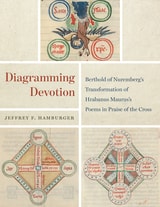
cover of Diagramming Devotion: Berthold of Nuremberg’s Transformation of Hrabanus Maurus’s Poems in Praise of the Cross

Diagramming Devotion

Berthold of Nuremberg’s Transformation of Hrabanus Maurus’s Poems in Praise of the Cross

Jeffrey F. Hamburger

University of Chicago Press, 2020
During the European Middle Ages, diagrams provided a critical tool of analysis in cosmological and theological debates. In addition to drawing relationships among diverse areas of human knowledge and experience, diagrams themselves generated such knowledge in the first place. In Diagramming Devotion, Jeffrey F. Hamburger examines two monumental works that are diagrammatic to their core: a famous set of picture poems of unrivaled complexity by the Carolingian monk Hrabanus Maurus, devoted to the praise of the cross, and a virtually unknown commentary on Hrabanus’s work composed almost five hundred years later by the Dominican friar Berthold of Nuremberg. Berthold’s profusely illustrated elaboration of Hrabnus translated his predecessor’s poems into a series of almost one hundred diagrams. By examining Berthold of Nuremberg’s transformation of a Carolingian classic, Hamburger brings modern and medieval visual culture into dialogue, traces important changes in medieval visual culture, and introduces new ways of thinking about diagrams as an enduring visual and conceptual model.
[more]
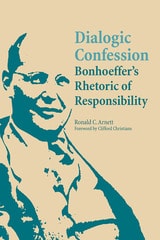
cover of Dialogic Confession: Bonhoeffer's Rhetoric of Responsibility

Dialogic Confession

Bonhoeffer's Rhetoric of Responsibility

Ronald C. Arnett. Foreword by Clifford Christians

Southern Illinois University Press, 2005

In this landmark volume of contemporary communication theory, Ronald C. Arnett applies the metaphor of dialogic confession—which enables historical moments to be addressed from a confessed standpoint and through a communicative lens—to the works of German theologian Dietrich Bonhoeffer, who pointed to an era of postmodern difference with his notion of "a world come of age." Arnett’s interpretations of Bonhoeffer’s life and scholarship in contention with Nazi dominance offer implications for a dialogic confession that engages the complexity of postmodern narrative contention.

Rooted in classical theory, the field of communication ethics is abstract and arguably outmoded. In Dialogic Confession: Bonhoeffer’s Rhetoric of Responsibility, Arnett locates cross-cultural and comparative anchors that not only bring legitimacy and relevance to the field but also develop a conceptual framework that will advance and inspire future scholarship.
[more]
cover of Dialogue with Trypho (Selections from the Fathers of the Church, Volume 3)

Dialogue with Trypho (Selections from the Fathers of the Church, Volume 3)

Saint Justin Martyr

Catholic University of America Press, 2003
No description available
[more]
cover of Dialogues

Dialogues

Saint Gregory the Great

Catholic University of America Press, 1959
No description available
[more]
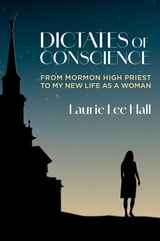
cover of Dictates of Conscience: From Mormon High Priest to My New Life as a Woman

Dictates of Conscience

From Mormon High Priest to My New Life as a Woman

Laurie Lee Hall

Signature Books, 2024

Laurie Lee Hall’s growing-up years were defined by the conflict between her physical condition as a boy and her inherent identity as a girl. Unable to explain or resolve her gender dysphoria, she committed to living her adult life as a male. She joined the Church of Jesus Christ of Latter-day Saints, eventually becoming chief architect of its temples and an ecclesiastical leader. In her church and community, rigid adherence to gender roles is not only the norm, but the defining issue of a faith that doctrinally declares one’s gender as an “eternal identity.” Against this traditional backdrop, Hall finally received spiritual confirmation and personally accepted that she was transgender and always had been. In this remarkable memoir, Laurie Lee details how she risked everything to live true to her long-suppressed gender identity.

Through the power of lived experience, Laurie Lee’s story affirms the reality of gender identity and the strength and joy of self-acceptance.
[more]
cover of Dictates of Conscience: From Mormon High Priest to My New Life as a Woman

Dictates of Conscience

From Mormon High Priest to My New Life as a Woman

Laurie Lee Hall

Signature Books, 2026

Laurie Lee Hall’s growing-up years were defined by the conflict between her physical condition as a boy and her inherent identity as a girl. Unable to explain or resolve her gender dysphoria, she committed to living her adult life as a male. She joined the Church of Jesus Christ of Latter-day Saints, eventually becoming chief architect of its temples and an ecclesiastical leader. In her church and community, rigid adherence to gender roles is not only the norm, but the defining issue of a faith that doctrinally declares one’s gender as an “eternal identity.” Against this traditional backdrop, Hall finally received spiritual confirmation and personally accepted that she was transgender and always had been. In this remarkable memoir, Laurie Lee details how she risked everything to live true to her long-suppressed gender identity.

Through the power of lived experience, Laurie Lee’s story affirms the reality of gender identity and the strength and joy of self-acceptance.

[more]
cover of Differing Visions: DISSENTERS IN MORMON HISTORY

Differing Visions

DISSENTERS IN MORMON HISTORY

Edited by Roger D. Launius and Linda Thatcher: Foreword by Leonard J. Arrington

University of Illinois Press, 1994

This exciting volume uses closeup looks at nineteen Mormon dissenters to focus on the variety of religious sentiment within the Mormon church and to explore how it has encouraged divergent ideas from the early 1800s through modern times.
"An absolute necessity for anyone interested in the history/direction of the Latter Day Saint Movement." -- Gerald John Kloss, Latter Day Saint History
"Well done. . . . Respectful and professional." -- Lynn D. Wardle, BYU Studies
"Makes a valuable contribution to our improved understanding of the rich heritage and faith of Mormonism." -- Milan D. Smith Jr., Sunstone
"An important and thought-provoking book." -- Lola Van Wagenen, Utah Historical Quarterly
"A splendid collection. . . . Essential reading for anyone interested even slightly in the Restoration movement." -- Paul Shupe, The John Whitmer Historical Association Journal
[more]
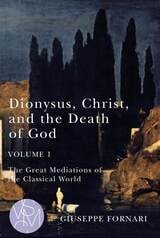
cover of Dionysus, Christ, and the Death of God, Volume 1: The Great Mediations of the Classical World

Dionysus, Christ, and the Death of God, Volume 1

The Great Mediations of the Classical World

Giuseppe Fornari

Michigan State University Press, 2020
This magisterial reflection on the history and destiny of the West compares Greco-Roman civilization and the Judeo-Christian tradition in order to understand what both unites and divides them. Mediation, understood as a collective, symbolic experience, gives society unity and meaning, putting human beings in contact with a universal object known as the world or reality. But unity has a price: the very force that enables peaceful coexistence also makes us prone to conflict. As a result, in order to find a common point of convergence—of at-one-ment—someone must be sacrificed. Sacrifice, then, is the historical pillar of mediation. It was endorsed in a cosmic-religious sense in antiquity and rejected for ethical reasons in modernity, where the Judeo-Christian tradition plays an intermediate role in condemning sacrificial violence as such, while accepting sacrifice as a voluntary act offered to save other human beings. Today, as we face the collapse of all shared mediations, this intermediating solution offers a way out of our moral and cultural plight.
[more]
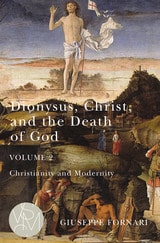
cover of Dionysus, Christ, and the Death of God, Volume 2: Christianity and Modernity

Dionysus, Christ, and the Death of God, Volume 2

Christianity and Modernity

Giuseppe Fornari

Michigan State University Press, 2020
This magisterial reflection on the history and destiny of the West compares Greco-Roman civilization and the Judeo-Christian tradition in order to understand what both unites and divides them. Mediation, understood as a collective, symbolic experience, gives society unity and meaning, putting human beings in contact with a universal object known as the world or reality. But unity has a price: the very force that enables peaceful coexistence also makes us prone to conflict. As a result, in order to find a common point of convergence—of at-one-ment—someone must be sacrificed. Sacrifice, then, is the historical pillar of mediation. It was endorsed in a cosmic-religious sense in antiquity and rejected for ethical reasons in modernity, where the Judeo-Christian tradition plays an intermediate role in condemning sacrificial violence as such, while accepting sacrifice as a voluntary act offered to save other human beings. Today, as we face the collapse of all shared mediations, this intermediating solution offers a way out of our moral and cultural plight.
[more]
cover of Directions for Mormon Studies in the Twenty-First Century

Directions for Mormon Studies in the Twenty-First Century

Edited by Patrick Q. Mason

University of Utah Press, 2016

A new and exciting era in Mormon studies has emerged from a confluence of factors: an academy more attuned to the significance of religion, the increased public prominence of Mormons and Mormonism, and an increasing number of scholars applying ever-more sophisticated methods to the study of Mormonism. Directions for Mormon Studies in the Twenty-First Century captures this fruitful time by bringing together some of the most influential voices across the generations of Mormon studies. Neither a survey of the field nor a mere recapitulation of dominant themes, this volume charts out areas for exploration and modes of inquiry that reflect the maturation of the field and help set the agenda for the next generation of Mormon studies scholarship.

In previously unpublished essays, the volume’s distinguished authors offer new insights on a number of essential themes: a (re)assessment of twentieth-century Mormonism; the dynamic interplay of Mormonism’s American roots with its international expansion and encounter with global diversity; the ways Mormonism has shaped and been shaped by modern theories and discourses of race; new modes of thinking about the individual Mormon subject; and reflections on theory and method in Mormon studies. These essays display Mormon studies in its emergent interdisciplinarity, with contributions from religious studies, history, economics, literary criticism, sociology, and anthropology. Simultaneously erudite and accessible, the collection will help readers ask new questions and discover new answers.
[more]
cover of Disarming Manhood: Roots of Ethical Resistance

Disarming Manhood

Roots of Ethical Resistance

David A.J. Richards

Ohio University Press, 2005
Masculine codes of honor and dominance often are expressed in acts of violence, including war and terrorism. In Disarming Manhood: Roots of Ethical Resistance, David A.J. Richards examines the lives of five famous men—great leaders and crusaders—who actively resisted violence and presented their causes with more humane alternatives.Richards argues that Winston Churchill, William Lloyd Garrison, Mohandas Gandhi, Martin Luther King, and Leo Tolstoy shared a psychology whose nonviolent roots were deeply influenced by a loving, maternalistic ethos deeply influenced by the teachings of Jesus of Nazareth. Drawing upon psychology, history, political theory, and literature, Richards threads a connection between these leaders and the maternal figures who profoundly shaped their responses to conflict. Their lives and work underscore how the outlook of maternal care givers and women enables some men to resist the violent responses characteristic of traditional manhood. The voice of nonviolent masculinity has empowered important democratic movements of ethical transformation, including civil disobedience in South Africa, India, and the United States. Disarming Manhood demonstrates that as Churchill, Garrison, Gandhi, King, and Tolstoy carried out their various missions they were galvanized by teachings whose ethical foundations rejected unjust violence and favored peaceful alternatives. Accessibly written and free of jargon, Disarming Manhood's exploration of human nature and maternal bonds will interest a wide audience as it furthers the understanding of human nature itself and contributes to the fields of developmental psychology and feminist scholarship.
[more]
cover of Discourse on the State and Grandeurs of Jesus: The Ineffable Union of the Diety with Humanity

Discourse on the State and Grandeurs of Jesus

The Ineffable Union of the Diety with Humanity

Pierre de Bérulle

Catholic University of America Press, 2023
Pierre de Bérulle (1575–1629) is one of the foremost personalities of early modern Catholicism. As the founder of the “French school” of spirituality, he has exercised a profound influence on the Church from the seventeenth century to the present day. Until now, however, very little of Bérulle’s writings have been available in English. This volume provides the first complete English translation of his best-known work, first printed in Paris in 1623 and titled Discourses on the State and Grandeurs of Jesus, by the Ineffable Union of the Deity with Humanity, and the Submission and Servitude that Is Due Him and His Most Holy Mother in Response to This Wondrous State. Composed in his maturity, this work expresses Bérulle’s theology of the Man-God, whose self-emptying has enabled us to become “capable” of God. In contrast to other spiritual writers who taught that mystical union with God follows the extinction of all sensory and conceptual awareness and all activity of willing, Bérulle’s focus is on the faithful soul’s participation in what he calls Jesus’ “states,” or inner dispositions. The state that Bérulle describes and honors supremely in this text is Jesus’ state of self-emptying in the mystery of the Incarnation. In the hypostatic union, our humanity in Christ is lifted up to heaven, and Christ is the first fruit of humanity-made-divine, the “firstborn among many brothers.” Through him we become children of God by adoption, participants in God’s divine being. This is an outstanding translation, conveying not only the meaning but also the beauty and rhetorical features of the original. The Discourses will repay reading as a poignant source of personal devotion, a primary text of the Catholic Reformation, and a classic of spiritual theology.
[more]
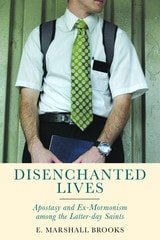
cover of Disenchanted Lives: Apostasy and Ex-Mormonism among the Latter-day Saints

Disenchanted Lives

Apostasy and Ex-Mormonism among the Latter-day Saints

Brooks, E. Marshall

Rutgers University Press, 2018
The Church of Jesus Christ of Latter-day Saints (LDS or Mormons), often heralded as the fastest growing religion in American history, is facing a crisis of apostasy. Rather than strengthening their faith, the study of church history and scriptures by many members pushes them away from Mormonism and into a growing community of secular ex-Mormons. In Disenchanted Lives, E. Marshall Brooks provides an intimate, in-depth ethnography of religious disenchantment among ex-Mormons in Utah. Showing that former church members were once deeply embedded in their religious life, Brooks argues that disenchantment unfolds as a struggle to overcome the spiritual, social, and ideological devotion ex-Mormons had to the religious community and not out of a lack of dedication as prominently portrayed in religious and scholarly writing on apostasy.  
[more]
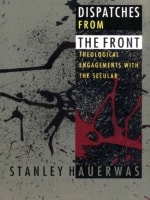
cover of Dispatches from the Front: Theological Engagements with the Secular

Dispatches from the Front

Theological Engagements with the Secular

Stanley Hauerwas

Duke University Press, 1994

God knows it is hard to make God boring, Stanley Hauerwas writes, but American Christians, aided and abetted by theologians, have accomplished that feat. Whatever might be said about Hauerwas—and there is plenty—no one has ever accused him of being boring, and in this book he delivers another jolt to all those who think that Christian theology is a matter of indifference to our secular society.
At once Christian theology and social criticism, this book aims to show that the two cannot be separated. In this spirit, Hauerwas mounts a forceful attack on current sentimentalities about the significance of democracy, the importance of the family, and compassion, which appears here as a literally fatal virtue. In this time of the decline of religious knowledge, when knowing a little about a religion tends to do more harm than good, Hauerwas offers direction to those who would make Christian discourse both useful and truthful. Animated by a deep commitment, his essays exhibit the difference that Christian theology can make in the shaping of lives and the world.
[more]
cover of Disturbers of the Twentieth Century: Catholic Social Critics in Modern Britain

Disturbers of the Twentieth Century

Catholic Social Critics in Modern Britain

Adam Schwartz

Catholic University of America Press, 2026
Building on his acclaimed The Third Spring, Adam Schwartz presents a pioneering analysis of the social commentary of G. K. Chesterton, Graham Greene, Christopher Dawson, and David Jones. These four converts were exemplars of the Catholic literary revival as a “counter-politics” that provided a radical, supernaturalist alternative to predominant secularist social ideologies and systems from a distinctly Roman Catholic standpoint.  Disturbers of the Twentieth Century explores this facet of each writer’s work more thoroughly than earlier studies have done, and does so in comparison to his counterparts’ thought.  The Catholic literary revival hence emerges as a vital, yet largely neglected, voice in historical and sociological discussions of the relationship between religion and politics in the modern era. In the process, Schwartz uniquely situates these Catholic authors in broader heritages of British and Western protest thought dating to the Romantics, showing how their shared resistance to industrial technocracy (and its socio-political effects) and growing secularization was defined distinctively by Roman Catholicism.  The converts’ challenge was bolder than post-Reformation British Catholics had usually uttered in an often-hostile political culture.  Nonetheless this quartet’s criticism was always constructive, as they eschewed nostalgia and endeavored consciously to engage twentieth century society in its particular genres and discrete conditions to transform it into an “alternative modernity” governed by Roman Catholic principles. Schwartz therefore recasts understanding of movements like Chesterton’s distributism while elucidating originally other counterstatements, such as Dawson’s Christian corporatism, and deploying newly discovered and published material, including poetry and prose by Jones and letters and journalism by Greene.  Schwartz in turn interrogates misconstruals of the authors’ relationships to totalitarian ideologies, even as he confronts forthrightly controversial subjects such as antisemitism.  Disturbers of the Twentieth Century is thus an accurate, textured account of the “public doctrine” these trenchant Catholics proposed as the source of social renewal and cultural regeneration for a “century of bones.”
[more]
cover of Divergent Paths of the Restoration: An Encyclopedia of the Smith–Rigdon Movement

Divergent Paths of the Restoration

An Encyclopedia of the Smith–Rigdon Movement

Steven L. Shields

Signature Books, 2021
When Joseph Smith founded the Church of Christ in 1830, he declared it to be God’s restoration of true Christianity, the Kingdom of God on earth. Although he foresaw opposition to such bold claims, he could not fathom that time and unforeseen circumstances would help to spawn hundreds of off-shoots and competing denominations—all claiming their origins in a movement born and sustained originally by Smith and Sidney Rigdon. Many of these groups have endured and boast multiple congregations of believers in many countries; others came and went quickly and have long since been forgotten. Some have survived but have only appealed to a handful of believers. Steven L Shields has for decades chronicled the various origins and paths of all known Restoration movements. This fifth edition of his encyclopedic study, offered as an ebook, includes recent groups born as internet communities. That so many groups and individuals have been unsatisfied with the more mainstream Mormon churches, yet cling to tenets of the Smith–Rigdon movement, speaks to the strengths of the restoration concept and the naïve view that one denomination can successfully meet all the needs of believers. 
[more]
cover of Divergent Paths of the Restoration: An Encyclopedia of the Smith–Rigdon Movement, Volume 1: Sections 1–4

Divergent Paths of the Restoration

An Encyclopedia of the Smith–Rigdon Movement, Volume 1: Sections 1–4

Steven L. Shields

Signature Books, 2022
When Joseph Smith founded the Church of Christ in 1830, he declared it to be God’s restoration of true Christianity, the Kingdom of God on earth. Although he foresaw opposition to such bold claims, he could not fathom that time and unforeseen circumstances would help to spawn hundreds of off-shoots and competing denominations—all claiming their origins in a movement born and sustained originally by Smith and Sidney Rigdon. Many of these groups have endured and boast multiple congregations of believers in many countries; others came and went quickly and have long since been forgotten. Some have survived but have only appealed to a handful of believers. Steven L Shields has for decades chronicled the various origins and paths of all known Restoration movements. This fifth edition of his encyclopedic study, offered as an ebook, includes recent groups born as internet communities. That so many groups and individuals have been unsatisfied with the more mainstream Mormon churches, yet cling to tenets of the Smith–Rigdon movement, speaks to the strengths of the restoration concept and the naïve view that one denomination can successfully meet all the needs of believers. 
[more]
cover of Divergent Paths of the Restoration: An Encyclopedia of the Smith–Rigdon Movement, Volume 2: Sections 5–12 & Appendices

Divergent Paths of the Restoration

An Encyclopedia of the Smith–Rigdon Movement, Volume 2: Sections 5–12 & Appendices

Steven L. Shields

Signature Books, 2022

When Joseph Smith founded the Church of Christ in 1830, he declared it to be God’s restoration of true Christianity, the Kingdom of God on earth. Although he foresaw opposition to such bold claims, he could not fathom that time and unforeseen circumstances would help to spawn hundreds of off-shoots and competing denominations—all claiming their origins in a movement born and sustained originally by Smith and Sidney Rigdon. Many of these groups have endured and boast multiple congregations of believers in many countries; others came and went quickly and have long since been forgotten. Some have survived but have only appealed to a handful of believers. Steven L Shields has for decades chronicled the various origins and paths of all known Restoration movements. This fifth edition of his encyclopedic study, offered as an ebook, includes recent groups born as internet communities. That so many groups and individuals have been unsatisfied with the more mainstream Mormon churches, yet cling to tenets of the Smith–Rigdon movement, speaks to the strengths of the restoration concept and the naïve view that one denomination can successfully meet all the needs of believers. 
[more]
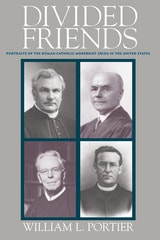
cover of Divided Friends

Divided Friends

William L. Portier

Catholic University of America Press, 2013
In two sets of intertwined biographical portraits, spanning two generations, Divided Friends dramatizes the theological issues of the modernist crisis, highlighting their personal dimensions and extensively reinterpreting their long-range effects. The four protagonists are Bishop Denis J. O?Connell, Josephite founder John R. Slattery, together with the Paulists William L. Sullivan and Joseph McSorley. Their lives span the decades from the Americanist crisis of the 1890s right up to the eve of Vatican II. In each set, one leaves the church and one stays. The two who leave come to see their former companions as fundamentally dishonest. Divided Friends entails a reinterpretation of the intellectual fallout from the modernist crisis and a reframing of the 20th century debate about Catholic intellectual life.
[more]
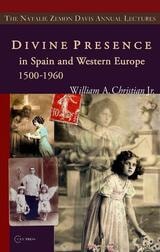
cover of Divine Presence in Spain and Western Europe 1500–1960: Visions, Religious Images and Photographs

Divine Presence in Spain and Western Europe 1500–1960

Visions, Religious Images and Photographs

William A. Christian Jr.

Central European University Press, 2012
This study addresses the relation of people to divine beings in contemporary and historical communities, as exemplified in three strands. One is a long tradition of visions of mysterious wayfarers in rural Spain who bring otherworldly news and help, including recent examples. Another treats the seeming vivification of religious images—statues, paintings, engravings, and photographs apparently exuding blood, sweat and tears in Spanish homes and churches  in the early modern period and the revival of the phenomenon throughout Europe in the twentieth century.  Of special interest is the third strand of the book: the transposition of medieval and early modern representations of the relations between humans and the divine into the modern art of photography. Christian presents a pictorial examination of the phenomenon with a large number of religious images, commercial postcards and family photographs from the first half of past century Europe.
[more]
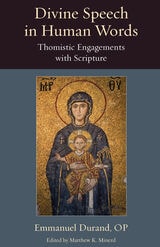
cover of Divine Speech in Human Words: Thomistic Engagements with Scripture

Divine Speech in Human Words

Thomistic Engagements with Scripture

Emmanuel Durand, OP

Catholic University of America Press, 2022
Is the portrait of God revealed in Scripture fundamentally intelligible? The biblical accounts of God reveal seemingly contradictory themes: God’s holiness and narratives telling of his anger; the Divine Omnipotence faced with the Impossible; the suffering Christ upon the Cross and the transcendent Trinity of Persons in God; the unique Savior and the universality of God’s salvific will; and so forth. How are we to hold together all of this data without denying any aspect of the mystery of God? Must we give into our ambient culture’s sense that the biblical God cannot be taken seriously by truly discerning and rational minds when they try to understand “the Divine”? Or, in the midst of this apparent contradiction, can we find the lines of harmony in the revealed mysteries? In Divine Speech in Human Words, Fr. Emmanuel Durand unties some of the knots that face us when we reflect on the God of biblical Revelation. In each of the essays gathered here, Fr. Durand sympathetically articulates the tensions and apparent contradictions experienced by contemporary minds as they strive to understand the revealed truth of God. A whole host of topics are covered in this volume: the Cross and the revelation of the Trinity; God’s holiness and transcendence; divine immutability and the sorrow of a loving God; Divine Providence and human prayer; the fatherhood of God and eschatology; Christ’s way of life; and many others. Drawing philosophical insights from the Thomistic tradition as his intellectual tools, Fr. Durand nonetheless emphasizes the importance of a properly theological mode of reflection, allowing these issues to be illuminated by the revealed truth of Sacred Scripture. Thus, for each of these difficult topics, he shows that a vital theological response must not limit itself to mere logical rigor but, rather, requires metaphysical insight and, above all, sapiential appreciation of God’s revealed word. With such instruments in hand, each essay approaches the tensions of biblical revelation with an eager readiness to show how a thoughtful Thomistic practice of biblical theology can guide faith as it seeks an understanding of both contemporary and perennial theological problems.
[more]
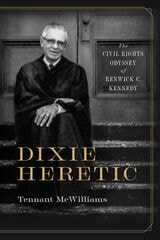
cover of Dixie Heretic: The Civil Rights Odyssey of Renwick C. Kennedy

Dixie Heretic

The Civil Rights Odyssey of Renwick C. Kennedy

Tennant McWilliams

University of Alabama Press, 2023

A life-and-times biography of the minister and social reformer Renwick C. Kennedy

Drawn from some 5,000 letters, six decades of daily-diary writings, and extensive interviews, Dixie Heretic: The Civil Rights Odyssey of Renwick C. Kennedy offers a life-and-times biography of the Alabama Black Belt minister, Renwick C. Kennedy (1900–1985). Here, Tennant McWilliams gives an unvarnished account of Kennedy’s tortuous efforts to make his congregants and other southern whites “better Christians.”

Kennedy came from “upcountry” South Carolina, a place rife with Scotch-Irish Associate Reformed Presbyterians—people of biblical infallibility and individual piety and salvation. In 1927, after a life-changing theology education at Princeton, he moved to Camden, Alabama, county seat of Wilcox County. There, he came to believe that God had a mandate for him: to change the “Half Christian” conservative, and the often violent, racial behaviors around him. As a neo-orthodox Protestant, Kennedy never rejected literal approaches to the Bible. Still, out of the “Full Christian” Social Gospel, he urged changed racial behavior. Ultimately this led him to publish confrontational short stories and essays in Christian Century and New Republic—most set in fictitious “Yaupon County.”

In World War II, Kennedy served as a chaplain with the famed 102nd Evacuation Hospital. He came home hoping the Allied victory would spur Americans to fight racial segregation just as they had fought racial fascism in Europe. The 1948 Dixiecrat movement dashed these hopes, turning much of his neo-orthodox optimism to cynicism. His hope found fleeting resurgence in the civil rights movement, and saw Kennedy quietly leading desegregation of Troy University, where he was an administrator. But the era’s assassinations, combined with George Wallace and the rise of southern white Republicans, regularly returned him to the frustrated hopes of 1948 and fostered a pessimism about truly changed hearts that he took to his grave in 1985.
 

[more]
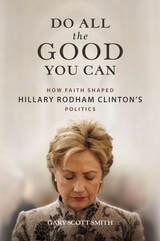
cover of Do All the Good You Can: How Faith Shaped Hillary Rodham Clinton’s Politics

Do All the Good You Can

How Faith Shaped Hillary Rodham Clinton’s Politics

Gary Scott Smith

University of Illinois Press, 2023

Methodism in the public and private lives of the politician

After more than forty contentious years in the public eye, Hillary Rodham Clinton is one of the best-known political figures in the nation. Yet the strong religious faith at the heart of her politics and personal life often remains confounding, if not mysterious, to longtime observers. Even many of her admirers would be surprised to hear Clinton state that her Methodist outlook has “been a huge part of who I am and how I have seen the world, and what I believe in, and what I have tried to do in my life.” 

Gary Scott Smith’s biography of Clinton’s journey in faith begins with her Methodist upbringing in Park Ridge, Illinois, where she faithfully attended worship services, Sunday school, and youth group meetings. Like many mainline Protestants, Clinton’s spiritual commitment developed gradually throughout childhood, while her combination of missionary zeal and impressive personal talents has informed her career from the time of her pro bono work at Yale on behalf of children to the present.

Her Methodist faith has been very important to many of Clinton’s high-profile endeavors and in helping her cope with the prominent travails brought on by two presidential campaigns, never-ending conservative rancor, and her husband’s infidelity. Smith’s account examines Clinton’s faith in the context of work ranging from her 1990s pursuit of healthcare reform to a “Hillary doctrine” of foreign policy focused on her longtime goal of providing basic human rights for children and women--a project she saw as essential to United States security. The result is an enlightening reconsideration of an extraordinary political figure who has defied private doubts and public controversy to live by John Wesley’s dictum: “Do all the good you can, by all the means you can, in all the ways you can, in all the places you can, at all the times you can, to all the people you can, as long as ever you can.”
[more]
cover of Doctrinal Sermons on the Catechism of the Catholic Church

Doctrinal Sermons on the Catechism of the Catholic Church

Kenneth Baker

St. Augustine's Press, 2012
[more]
cover of Doctrine and Race: African American Evangelicals and Fundamentalism between the Wars

Doctrine and Race

African American Evangelicals and Fundamentalism between the Wars

Mary Beth Swetnam Mathews

University of Alabama Press, 2017

Doctrine and Race examines the history of African American Baptists and Methodists of the early twentieth century and their struggle for equality in the context of white Protestant fundamentalism.

By presenting African American Protestantism in the context of white Protestant fundamentalism, Doctrine and Race: African American Evangelicals and Fundamentalism between the Wars demonstrates that African American Protestants were acutely aware of the manner in which white Christianity operated and how they could use that knowledge to justify social change. Mary Beth Swetnam Mathews’s study scrutinizes how white fundamentalists wrote blacks out of their definition of fundamentalism and how blacks constructed a definition of Christianity that had, at its core, an intrinsic belief in racial equality. In doing so, this volume challenges the prevailing scholarly argument that fundamentalism was either a doctrinal debate or an antimodernist force. Instead, it was a constantly shifting set of priorities for different groups at different times.
 
A number of African American theologians and clergy identified with many of the doctrinal tenets of the fundamentalism of their white counterparts, but African Americans were excluded from full fellowship with the fundamentalists because of their race. Moreover, these scholars and pastors did not limit themselves to traditional evangelical doctrine but embraced progressive theological concepts, such as the Social Gospel, to help them achieve racial equality. Nonetheless, they identified other forward-looking theological views, such as modernism, as threats to “true” Christianity.
 
Mathews demonstrates that, although traditional portraits of “the black church” have provided the illusion of a singular unified organization, black evangelical leaders debated passionately among themselves as they sought to preserve select aspects of the culture around them while rejecting others. The picture that emerges from this research creates a richer, more profound understanding of African American denominations as they struggled to contend with a white American society that saw them as inferior.
 
Doctrine and Race melds American religious history and race studies in innovative and compelling ways, highlighting the remarkable and rich complexity that attended to the development of African American Protestant movements.
[more]
cover of Domestic Frontiers: Gender, Reform, and American Interventions in the Ottoman Balkans and the Near East

Domestic Frontiers

Gender, Reform, and American Interventions in the Ottoman Balkans and the Near East

Barbara Reeves-Ellington

University of Massachusetts Press, 2013

During the nineteenth and early twentieth centuries, American Protestant missionaries attempted to export their religious beliefs and cultural ideals to the Ottoman Empire. Seeking to attract Orthodox Christians and even Muslims to their faith, they promoted the paradigm of the “Christian home” as the foundation of national progress. Yet the missionaries' efforts not only failed to win many converts but also produced some unexpected results.

Drawing on a broad range of sources—Ottoman, Bulgarian, Russian, French, and English—Barbara Reeves-Ellington tracks the transnational history of this little-known episode of American cultural expansion. She shows how issues of gender and race influenced the missionaries' efforts as well as the complex responses of Ottoman subjects to American intrusions into their everyday lives. Women missionaries—married and single—employed the language of Christian domesticity and female moral authority to challenge the male-dominated hierarchy of missionary society and to forge bonds of feminist internationalism. At the same time, Orthodox Christians adapted the missionaries' ideology to their own purposes in developing a new strain of nationalism that undermined Ottoman efforts to stem growing sectarianism within their empire. By the beginning of the twentieth century, as some missionaries began to promote international understanding rather than Protestantism, they also paved the way for future expansion of American political and commercial interests.
[more]
cover of Dreaming in Christianity and Islam: Culture, Conflict, and Creativity

Dreaming in Christianity and Islam

Culture, Conflict, and Creativity

Edited and with an Introduction by Kelly Bulkeley, Kate Adams, and Patricia M. Davis

Rutgers University Press, 2009

Throughout history to the present day, religion has ideologically fueled wars, conquests, and persecutions. Christianity and Islam, the world's largest and geopolitically powerful faiths, are often positioned as mortal enemies locked in an apocalyptic "clash of civilizations." Rarely are similarities addressed.

Dreaming in Christianity and Islam, the first book to explore dreaming in these religions through original essays, fills this void. The editors reach a plateau by focusing on how studying dreams reveals new aspects of social and political reality. International scholars document the impact of dreams on sacred texts, mystical experiences, therapeutic practices, and doctrinal controversies.
[more]
cover of Drudgery Divine: On the Comparison of Early Christianities and the Religions of Late Antiquity

Drudgery Divine

On the Comparison of Early Christianities and the Religions of Late Antiquity

Jonathan Z. Smith

University of Chicago Press, 1990

In this major theoretical and methodological statement on the history of religions, Jonathan Z. Smith shows how convert apologetic agendas can dictate the course of comparative religious studies. As his example, Smith reviews four centuries of scholarship comparing early Christianities with religions of late Antiquity (especially the so-called mystery cults) and shows how this scholarship has been based upon an underlying Protestant-Catholic polemic. The result is a devastating critique of traditional New Testament scholarship, a redescription of early Christianities as religious traditions amenable to comparison, and a milestone in Smith's controversial approach to comparative religious studies.

"An important book, and certainly one of the most significant in the career of Jonathan Z. Smith, whom one may venture to call the greatest pathologist in the history of religions. As in many precedent cases, Smith follows a standard procedure: he carefully selects his victim, and then dissects with artistic finesse and unequaled acumen. The operation is always necessary, and a deconstructor of Smith's caliber is hard to find."—Ioan P. Coulianu, Journal of Religion
[more]
cover of Duane Jeffery: A Mormon Evolutionist

Duane Jeffery

A Mormon Evolutionist

Steven L. Peck

University of Illinois Press, 2026

Controversy and strong official disfavor failed to shake Duane Jeffery’s tenacious efforts to fit the theory of evolution into the doctrines of the Church of Jesus Christ of Latter-day Saints. Steven L. Peck traces Jeffery’s life from his rural upbringing and training as a geneticist through a career marked by conflict around his dedication to bring science into classrooms at Brigham Young University. As Peck shows, Jeffery met resistance from Church leaders with a patient, years-long campaign to build understanding. He corrected misinformation within Church culture and educational systems and defended science’s place in education and faith. Jeffery’s commitment to honesty, intellectual curiosity, and openness encouraged and smoothed often tense conversations about the union of scientific evidence and religious faith. At the same time, his work gave Brigham Young credibility as a research university while his writing and mentorship inspired later generations to continue the dialogue.

An overdue look at a singular figure, Duane Jeffery tells the story of the scientist whose work reshaped how many Church members understand evolution.
[more]
cover of Dwelling in the Splendor of Truth: Catholic Moral Theology in Light of <i>Veritatis splendor</i>

Dwelling in the Splendor of Truth

Catholic Moral Theology in Light of <i>Veritatis splendor</i>

James W. Stroud

Catholic University of America Press, 2026

On August 6, 1993, Pope John Paul II promulgated the long-awaited encyclical on moral theology entitled Veritatis splendor. In this landmark encyclical, directed principally toward bishops, Pope John Paul II sought a reset of the discipline of Catholic moral theology after the Second Vatican Council in response to the theological dissent that had called into question the foundations of Catholic morality. More than thirty years after the promulgation of Veritatis splendor, the essays in this edited volume consider the major themes and topics of this encyclical as it seeks to contribute to the revitalization of moral theology today. These themes and topics include: the rich young man and the renewal of moral theology, freedom, nature, and law, conscience, intrinsically evil acts, the state of revisionism, the moral object, martyrdom and morality, evangelization, the role of the moral theologian, and the role of scripture in moral theology. Contributors include: William C. Mattison, III, Irene Alexander, Matthew Levering, Matthew Dugandzic, James W. Stroud, Stephen L. Brock, Patrick Clark, Timothy P. O’Malley, Jana Marguerite Bennet, John Grabowski, with a foreword by Archbishop of Sydney Anthony Fisher, OP.
[more]