Results by title
718 books match the query 'Civil rights' and 30 start with d
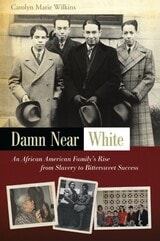
Damn Near White
An African American Family's Rise from Slavery to Bittersweet SuccessCarolyn Marie Wilkins
University of Missouri Press, 2010
Carolyn Wilkins grew up defending her racial identity. Because of her light complexion and wavy hair, she spent years struggling to convince others that she was black. Her family’s prominence set Carolyn’s experiences even further apart from those of the average African American. Her father and uncle were well-known lawyers who had graduated from Harvard Law School. Another uncle had been a child prodigy and protégé of Albert Einstein. And her grandfather had been America's first black assistant secretary of labor.
Carolyn's parents insisted she follow the color-conscious rituals of Chicago's elite black bourgeoisie—experiences Carolyn recalls as some of the most miserable of her entire life. Only in the company of her mischievous Aunt Marjory, a woman who refused to let the conventions of “proper” black society limit her, does Carolyn feel a true connection to her family's African American heritage.
When Aunt Marjory passes away, Carolyn inherits ten bulging scrapbooks filled with family history and memories. What she finds in these photo albums inspires her to discover the truth about her ancestors—a quest that will eventually involve years of research, thousands of miles of travel, and much soul-searching.
Carolyn learns that her great-grandfather John Bird Wilkins was born into slavery and went on to become a teacher, inventor, newspaperman, renegade Baptist minister, and a bigamist who abandoned five children. And when she discovers that her grandfather J. Ernest Wilkins may have been forced to resign from his labor department post by members of the Eisenhower administration, Carolyn must confront the bittersweet fruits of her family's generations-long quest for status and approval.
Damn Near White is an insider’s portrait of an unusual American family. Readers will be drawn into Carolyn’s journey as she struggles to redefine herself in light of the long-buried secrets she uncovers. Tackling issues of class, color, and caste, Wilkins reflects on the changes of African American life in U.S. history through her dedicated search to discover her family’s powerful story.
Dangerous Friendship
Stanley Levison, Martin Luther King Jr., and the Kennedy BrothersBen Kamin
Michigan State University Press, 2014
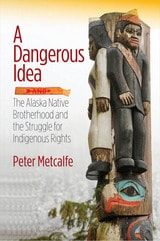
Dangerous Idea
The Alaska Native Brotherhood and the Struggle for Indigenous RightsPeter Metcalfe
University of Alaska Press, 2014
A Dangerous Idea tells an overlooked but powerful story of Alaska Natives fighting for their rights under American law and details one of the rare successes for Native Americans in their nearly two-hundred-year effort to define and protect their rights.

Daughter, Mother, Grandmother, and Whore
The Story of a Woman Who Decided to be a PutaGabriela Leite
Duke University Press, 2024
Deaf Empowerment
Emergence, Struggle, and RhetoricKathy Jankowski
Gallaudet University Press, 1997
Central to Deaf Empowerment is the struggle between the dominant hearing society and Deaf people over the best means of communication, with the educational setting as the constant battleground. This evocative work first tracks the history of interaction between these two factions, highlighting the speaking majority’s desire to compel Deaf people to conform to “the human sciences” conventionality by learning speech. Then, it sharply focuses on the development of the Deaf social movement's ideology to seek general recognition of sign language as a valid cultural variation. Also, the influence of social movements of the 60s and 70s is examined in relation to the changing context and perception of the Deaf movement, as well as to its rhetorical refinement.
Deaf Empowerment delineates the apex of effective Deaf rhetoric in describing the success of the Deaf President Now! protest at Gallaudet University in 1988, its aftermath, and ensuing strategies. It concludes with an assessment of the goal of a multicultural society and offers suggestions for community building through a new humanitarianism. Scholars of social movements and Deaf studies will find it to be a uniquely provocative addition to their libraries and classrooms.
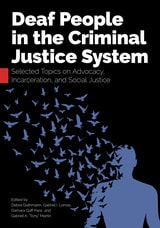
Deaf People in the Criminal Justice System
Selected Topics on Advocacy, Incarceration, and Social JusticeDebra Guthmann
Gallaudet University Press, 2021
The contributors address issues such as accessibility needs; gaps regarding data collection and the need for more research; additional training for attorneys, court personnel, and prison staff; the need for more qualified sign language interpreters, including Certified Deaf Interpreters who provide services in court, prison, and juvenile facilities; substance use disorders; the school to prison nexus; and the need for advocacy. Students in training programs, researchers, attorneys, mental health professionals, sign language interpreters, family members, and advocates will be empowered by this much-needed resource to improve the experiences and outcomes for deaf people in the criminal justice system.
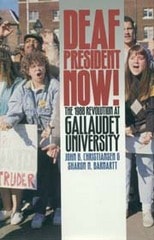
Deaf President Now!
The 1988 Revolution at Gallaudet UniversityJohn B. Christiansen
Gallaudet University Press, 1995
Deaf President Now! reveals the groundswell leading up to the history-making week in 1988 when the students at Gallaudet University seized the campus and closed it down until their demands were met. To research this probing study, the authors interviewed in-depth more than 50 of the principal players.
This telling book reveals the critical role played by a little-known group called the "Ducks," a tight-knit band of six alumni determined to see a deaf president at Gallaudet. Deaf President Now! details how they urged the student leaders to ultimate success, including an analysis of the reasons for their achievement in light of the failure of many other student movements. This fascinating study also scrutinizes the lasting effects of this remarkable episode in "the civil rights movement of the deaf." Deaf President Now! tells the full story of the insurrection at Gallaudet University, an exciting study of how deaf people won social change for themselves and all disabled people everywhere through a peaceful revolution.
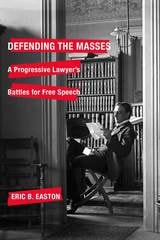
Defending the Masses
A Progressive Lawyer's Battles for Free SpeechEric B. Easton
University of Wisconsin Press, 2018
Roe was the principal trial lawyer of the Free Speech League—a precursor of the American Civil Liberties Union. His cases involved such activists as Emma Goldman, Lincoln Steffens, Margaret Sanger, Max Eastman, Upton Sinclair, John Reed, and Eugene Debs, as well as the socialist magazine The Masses and the New York City Teachers Union. A friend of Wisconsin's progressive senator Robert La Follette since their law partnership as young men, Roe defended "Fighting Bob" when the Senate tried to expel him for opposing America's entry into World War I.
In articulating and upholding Americans' fundamental right to free expression against charges of obscenity, libel, espionage, sedition, or conspiracy during turbulent times, Roe was rarely successful in the courts. But his battles illuminate the evolution of free speech doctrine and practice in an era when it was under heavy assault. His greatest victory, including the 1917 decision by Judge Learned Hand in The Masses Publishing Co. v. Patten, is still influential today.
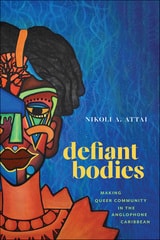
Defiant Bodies
Making Queer Community in the Anglophone CaribbeanNikoli A. Attai
Rutgers University Press, 2023
Departing from Deviance
A History of Homosexual Rights and Emancipatory Science in AmericaHenry L. Minton
University of Chicago Press, 2001

Desert Rose
The Life and Legacy of Coretta Scott KingEdythe Scott Bagley with Joe Hilley
University of Alabama Press, 2012
An intimate biography illuminating the life, leadership, and legacy of Coretta Scott King within the American Civil Rights Movement.
Coretta Scott King—noted author, human rights activist, and wife and partner of famed Civil Rights Movement leader Martin Luther King Jr.—grew up in the rural Alabama Black Belt with her older sister, Edythe Scott Bagley. Bagley chronicles the sisters’ early education together at the Crossroads School and later at the progressive Lincoln School in Marion. She describes Coretta’s burgeoning talent for singing and her devotion to musical studies, and the sisters’ experiences matriculating at Antioch College, an all-white college far from the rural South. Bagley provides vivid insights into Coretta’s early passion for racial and economic justice, which lead to her involvement in the Peace Movement and the National Association for the Advancement of Colored People.
As Coretta’s older sister, Edythe shared in almost all of Coretta’s many trials and tribulations. Desert Rose charts Coretta’s hesitance about her romance with Martin Luther King and the prospect of having to sacrifice her dream of a career in music to become a minister’s wife. Ultimately, Coretta chose to utilize her artistic gifts and singing voice for the Movement through the development and performance of Freedom Concerts. This book also charts Coretta’s own commitment and dedication, in the years that followed King’s death, to the causes of international civil rights, the antiapartheid movement, and the establishment of the King Center in Atlanta and the national King Holiday. Coretta’s devotion to activism, motherhood, and the movement led by her husband, and her courageous assumption of the legacy left in the wake of King’s untimely assassination, are wonderfully detailed in this intimate biography.

Detroit's Cold War
The Origins of Postwar ConservatismColleen Doody
University of Illinois Press, 2017

Digital Rights at the Periphery
Making Brazil's Marco CivilGuy T. Hoskins
University of Illinois Press, 2025
Signed into law in 2014, the Marco Civil da Internet (Brazilian Civil Rights Framework for the Internet) appeared to offer pioneering legislation for a digital bill of rights that addressed issues like network neutrality and privacy. Guy T. Hoskins chronicles the Marco Civil’s development and its failure to confront the greatest concentration of power in the digital age: informational capitalism. Combining interviews with discourse and political-economic analysis, Hoskins reveals why the legislation fell short while examining the implications of its emergence in Brazil, which remains on the margins of the global system of informational capitalism. Hoskins places collectivist and public service principles at the core of any framework’s effectiveness. He also shows why we must create systems sensitive to the sociocultural and political-economic contexts that will shape digital rights and their usefulness.
Compelling and contrarian, Digital Rights at the Periphery looks at communications policy and internet governance in the Global South and the lessons they provide for the rest of the world.
Disability Protests
Contentious Politics, 1970 - 1999Sharon N. Barnartt
Gallaudet University Press, 2001
Disability Rights Movement
From Charity to ConfrontationDoris Fleischer
Temple University Press, 2000
Referring to the Americans with Disabilities Act as "every American's insurance policy," the authors recount the genesis of this civil rights approach to disability, from the almost forgotten disability activism of the 1930s to the independent living movement of the 1970s to the call for disability pride of the 1990s. Like other civil rights struggles, the disability rights movement took place in the streets and in the courts as activists fought for change in the schools, the workplace, and in the legal system. They continue to fight for effective access to the necessities of everyday life -- to telephones, buses, planes, public buildings, restaurants, and toilets.
The history of disability rights mirrors the history of the country. Both World Wars sparked changes in disability policy and changes in medical technology as veterans without without limbs and with other disabilities return home. The empowerment of people with disabilities has become another chapter in the struggles over identity politics that began in the 1960s. Today, with the expanding ability of people with disabilities to enter the workforce, and a growing elderly population increasingly significant at a time when HMOs are trying to contain healthcare expenditures.
Disability, Civil Rights, and Public Policy
The Politics of ImplementationStephen L. Percy
University of Alabama Press, 1989
Following on the heels of other Civil Rights movements, disability rights laws emerged in the late 1960s and early 1970s. Often these laws were more symbolic than precise in terms of objectives and strategies to guide the implementation of antidiscrimination policies. Policy refinement, the process of translating legislative mandates into strategies and procedures to govern administrative action, is both dynamic and controversial.
The premise of Disability, Civil Rights, and Public Policy is that implementation policies in these areas evolved through protracted political struggles among a variety of persons and groups affected by disability rights laws. Efforts to influence policies extended far beyond the process of legislative enactment and resulted in struggles that were played out in the courts and in the executive branch. Included within this examination of federal disability rights laws are the role of symbolic politics, the strengths and weaknesses of contemporary models used for the study of policy implementation, and the politics of administrative policymaking.
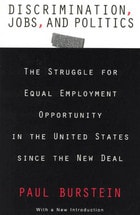
Discrimination, Jobs, and Politics
The Struggle for Equal Employment Opportunity in the United States since the New DealPaul Burstein
University of Chicago Press, 1985
"This is an important, well-researched book. . . . Burstein has had the courage to break through narrow specializations within sociology . . . and even to address the types of acceptable questions usually associated with three different disciplines (political science, sociology, and economics). . . . This book should be read by all professionals interested in political sociology and social movements."—Donald Tomaskovic-Devey, Social Forces
"Discrimination, Jobs and Politics [is] satisfying because it tells a more complete story . . . than does most sociological research. . . . I find myself returning to it when I'm studying the U.S. women's movement and recommending it to students struggling to do coherent research."—Rachel Rosenfeld, Contemporary Sociology
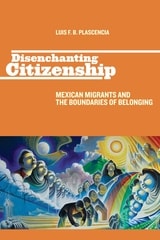
Disenchanting Citizenship
Mexican Migrants and the Boundaries of BelongingLuis F. B. Plascencia
Rutgers University Press, 2012
The book explores the meaning of U.S. citizenship through the experience of a unique group of Mexican migrants who were granted Temporary Status under the “legalization” provisions of the 1986 IRCA, attained Lawful Permanent Residency, and later became U.S. citizens. Plascencia integrates an extensive and multifaceted collection of interviews, ethnographic fieldwork, ethno-historical research, and public policy analysis in examining efforts that promote the acquisition of citizenship, the teaching of citizenship classes, and naturalization ceremonies. Ultimately, he unearths citizenship’s root as a Janus-faced construct that encompasses a simultaneous process of inclusion and exclusion. This notion of citizenship is mapped on to the migrant experience, arguing that the acquisition of citizenship can lead to disenchantment with the very status desired. In the end, Plascencia expands our understanding of the dynamics of U.S. citizenship as a form of membership and belonging.
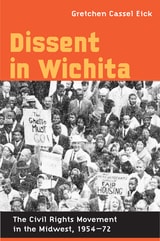
Dissent in Wichita
The Civil Rights Movement in the Midwest, 1954-72Gretchen Cassel Eick
University of Illinois Press, 2001
Winner of the Richard L. Wentworth Prize in American History, Byron Caldwell Smith Book Prize, and the William Rockhill Nelson Award
On a hot summer evening in 1958, a group of African American students in Wichita, Kansas, quietly entered Dockum's Drug Store and sat down at the whites-only lunch counter. This was the beginning of the first sustained, successful student sit-in of the modern civil rights movement, instigated in violation of the national NAACP's instructions.
Dissent in Wichita traces the contours of race relations and black activism in this unexpected locus of the civil rights movement. Based on interviews with more than eighty participants in and observers of Wichita's civil rights struggles, this powerful study hones in on the work of black and white local activists, setting their efforts in the context of anticommunism, FBI operations against black nationalists, and the civil rights policies of administrations from Eisenhower through Nixon.
Through her close study of events in Wichita, Eick reveals the civil rights movement as a national, not a southern, phenomenon. She focuses particularly on Chester I. Lewis, Jr., a key figure in the local as well as the national NAACP. Lewis initiated one of the earliest investigations of de facto school desegregation by the Department of Health, Education, and Welfare and successfully challenged employment discrimination in the nation's largest aircraft industries.
Dissent in Wichita offers a moving account of the efforts of Lewis, Vivian Parks, Anna Jane Michener, and other courageous individuals to fight segregation and discrimination in employment, public accommodations, housing, and schools. This volume also offers the first extended examination of the Young Turks, a radical movement to democratize and broaden the agenda of the NAACP for which Lewis provided critical leadership.
Through a close study of personalities and local politics in Wichita over two decades, Eick demonstrates how the tenor of black activism and white response changed as economic disparities increased and divisions within the black community intensified. Her analysis, enriched by the words and experiences of men and women who were there, offers new insights into the civil rights movement as a whole and into the complex interplay between local and national events.
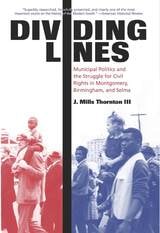
Dividing Lines
Municipal Politics and the Struggle for Civil Rights in Montgomery, Birmingham, and SelmaJ. Mills Thornton, III
University of Alabama Press, 2006
Presents the story of the civil rights movement from the perspective of community-municipal history at the grassroots level
Thornton demonstrates that the movement had powerful local sources in its three birth cities—Montgomery, Birmingham, and Selma. There, the arcane mechanisms of state and city governance and the missteps of municipal politicians and civic leaders—independent of emerging national trends in racial mores—led to the great swell of energy for change that became the civil rights movement.
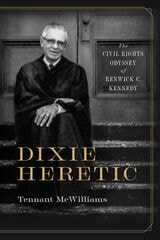
Dixie Heretic
The Civil Rights Odyssey of Renwick C. KennedyTennant McWilliams
University of Alabama Press, 2023
A life-and-times biography of the minister and social reformer Renwick C. Kennedy
Drawn from some 5,000 letters, six decades of daily-diary writings, and extensive interviews, Dixie Heretic: The Civil Rights Odyssey of Renwick C. Kennedy offers a life-and-times biography of the Alabama Black Belt minister, Renwick C. Kennedy (1900–1985). Here, Tennant McWilliams gives an unvarnished account of Kennedy’s tortuous efforts to make his congregants and other southern whites “better Christians.”
Kennedy came from “upcountry” South Carolina, a place rife with Scotch-Irish Associate Reformed Presbyterians—people of biblical infallibility and individual piety and salvation. In 1927, after a life-changing theology education at Princeton, he moved to Camden, Alabama, county seat of Wilcox County. There, he came to believe that God had a mandate for him: to change the “Half Christian” conservative, and the often violent, racial behaviors around him. As a neo-orthodox Protestant, Kennedy never rejected literal approaches to the Bible. Still, out of the “Full Christian” Social Gospel, he urged changed racial behavior. Ultimately this led him to publish confrontational short stories and essays in Christian Century and New Republic—most set in fictitious “Yaupon County.”
In World War II, Kennedy served as a chaplain with the famed 102nd Evacuation Hospital. He came home hoping the Allied victory would spur Americans to fight racial segregation just as they had fought racial fascism in Europe. The 1948 Dixiecrat movement dashed these hopes, turning much of his neo-orthodox optimism to cynicism. His hope found fleeting resurgence in the civil rights movement, and saw Kennedy quietly leading desegregation of Troy University, where he was an administrator. But the era’s assassinations, combined with George Wallace and the rise of southern white Republicans, regularly returned him to the frustrated hopes of 1948 and fostered a pessimism about truly changed hearts that he took to his grave in 1985.
Dixiecrats and Democrats
Alabama PoliticsWilliam D. Barnard
University of Alabama Press, 1984
A pivotal in the study of history and politics, not only in Alabama but in the other states of the South
Barnard’s account is elegantly concise, the labor of conspicuous scholarship. In an effort to analyze Alabama’s political bedrock, the author has tapped virtually every source. What results is a cogent and harmonious theme.
Domestic Intelligence
Monitoring Dissent in AmericaBy Richard E. Morgan
University of Texas Press, 1980
The 1970s revealed a number of infamous and sometimes illegal practices used by federal law enforcement agencies to monitor political dissent in the United States. In the aftermath of Watergate the revelation of serious abuses created distrust of virtually all domestic intelligence operations and led to vigorous efforts at reform.
Richard E. Morgan emphasizes the importance of guarding against an overreaction to the disclosures of the mid-1970s. While acknowledging the need for many of the recent reforms that seek to establish accountability, guarantee privacy, and protect dissent, he cautions against limitations on domestic intelligence gathering that could seriously hamper government's ability to prevent crime, particularly terrorism.
Domestic Intelligence has several major objectives: to trace the way in which government agencies became involved with domestic intelligence gathering; to review the controversies and abuses associated with these agencies, especially the FBI, the CIA, and the NSA; to discuss the constitutionality of domestic intelligence collection; to review intelligence reforms adopted; and to suggest additional reforms.
This volume is concerned with the tension between the need to protect privacy and political dissent and the need for the government to protect the community. Morgan concludes that intelligence operations aimed at anticipating criminal activity are necessary in a complex, highly vulnerable society, and that these operations can be conducted responsibly with proper guidelines and oversight mechanisms.
Double V
The Civil Rights Struggle of the Tuskegee AirmenLawrence P. Scott
Michigan State University Press, 1994
On April 12, 1945, the United States Army Air Force arrested 101 of its African American officers. They were charged with disobeying a direct order from a superior officer—a charge that could carry the death penalty upon conviction. They were accused of refusing to sign an order that would have placed them in segregated housing and recreational facilities. Their plight was virtually ignored by the press at the time, and books written about the subject did not detail the struggle these aviators underwent to win recognition of their civil rights.
The central theme of Double V is the promise held out to African American military personnel that service in World War II would deliver to them a double victory—a "double V"—over tyranny abroad and racial prejudice at home. The book's authors, Lawrence P. Scott and William M. Womack Sr., chronicle for the first time, in detail, one of America's most dramatic failures to deliver on that promise. In the course of their narrative, the authors demonstrate how the Tuskegee airmen suffered as second-class citizens while risking their lives to serve their country. Among the contributions made by this work is a detailed examination of how 101 Tuskegee airmen, by refusing to live in segregated quarters, triggered one of the most significant judicial proceedings in U.S. military history. Double V uses oral accounts and heretofore unused government documents to portray this little-known struggle by one of America's most celebrated flying units.
In addition to providing background material about African American aviators before World War II. the authors also demonstrate how the Tuskegee airmen's struggle foretold dilemmas faced by the civil rights movement in the second half of the 20th century. Double V is destined to become an important contribution in the rapidly growing body of civil rights literature.
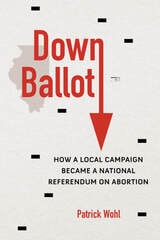
Down Ballot
How a Local Campaign Became a National Referendum on AbortionPatrick Wohl
University of Illinois Press, 2024
In 1990, a suburban Chicago race for the Republican Party nomination for state representative unexpectedly became a national proxy battle over abortion in the United States. But the hard-fought primary also illustrated the overlooked importance of down-ballot contests in America’s culture wars. Patrick Wohl offers the dramatic account of a rollercoaster campaign that, after attracting political celebrities and a media circus, came down to thirty-one votes, a coin toss to determine the winner, and a recount fight that set a precedent for how to count dimpled chads. As the story unfolds, Wohl provides a rare nuts-and-bolts look at an election for state office from its first days through the Illinois Supreme Court decision that decided the winner--and set the stage for a decisive 1992 rematch.
A compelling political page-turner, Down Ballot takes readers behind the scenes of a legendary Illinois election.
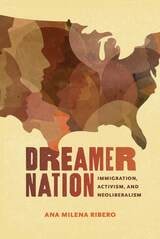
Dreamer Nation
Immigration, Activism, and NeoliberalismAna Milena Ribero
University of Alabama Press, 2023
Dreamer Nation tells the story of how Dreamers in the Obama era creatively confronted a complex sociopolitical landscape to advocate for immigrant rights and empower undocumented youth to proudly represent their lives and identities, all while under the ever-present threat of detention and deportation. Contributing to rhetorical studies of social movements, immigration, and minoritized rhetorics, Ribero argues that even though Dreamer rhetorics were reflective of the discursive limits of the neoliberal milieu, they also worked to disrupt neoliberal constraints through activism that troubled the primacy of the nation-state and citizenship, refused to adhere to respectability politics, forwarded embodied identity and transnational belonging, and looked for liberation in community—not solely in legislative action.
Each chapter presents a different rhetorical situation within the US “crisis” of immigration and the rhetoric that Dreamers used to respond to it. Organized chronologically, the chapters document Dreamer activism during the Obama presidency, from the 2010 hunger strikes advocating for the DREAM Act to undocuqueer “artivism” responding to Trump’s presidential campaign. The author draws not only on the methods and theories of rhetorical studies but also on women of color feminisms, ethnic studies, critical theory, and queer theory. In this way, the book looks across disciplines to illustrate the rhetorical savvy of one of the most important US social movements of our time.
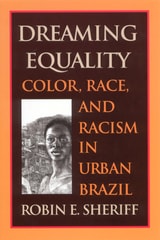
Dreaming Equality
Color, Race, and Racism in Urban BrazilSheriff, Robin E.
Rutgers University Press, 2001
This myth contrasts starkly with the realities of a pernicious racial inequality that permeates every aspect of Brazilian life. To study the grip of this myth on African Brazilians’ views of themselves and their nation, Robin E. Sheriff spent twenty months in a primarily black shantytown in Rio de Janeiro, studying the inhabitants’s views of race and racism. How, she asks, do poor African Brazilians experience and interpret racism in a country where its very existence tends to be publicly denied? How is racism talked about privately in the family and publicly in the community—or is it talked about at all?
Sheriff’s analysis is particularly important because most Brazilians live in urban settings, and her examination of their views of race and racism sheds light on common but underarticulated racial attitudes. This book is the first to demonstrate that urban African Brazilians do not subscribe to the racial democracy myth and recognize racism as a central factor shaping their lives.
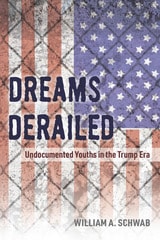
Dreams Derailed
Undocumented Youths in the Trump EraWilliam A. Schwab
University of Arkansas Press, 2018
During the 2016 presidential campaign millions of voters, concerned about the economic impact of illegal immigration, rallied behind the notion of a border wall between the United States and Mexico. Well into the Trump presidency, immigration endures as a hotly contested issue in United States politics.
In Dreams Derailed sociologist William A. Schwab shares the stories of immigration reform advocates and follows up on stories told in his 2013 book Right to DREAM, which argued in favor of the DREAM Act that would have provided conditional residency for undocumented youth brought to the United States as children, a version of which was later enacted by executive order and referred to as DACA (Deferred Action for Childhood Arrivals).
Taking as its focal point the Trump administration’s decision to rescind Obama-era DACA protection, Dreams Derailed delves into the economic, political, and social factors that inform the public conversation about immigration, making a clear case for the many benefits of inclusive policies and the protection of undocumented youths. Schwab also takes a close look at the factors that carried Donald Trump to the White House, demonstrates how economic upheaval and the issue of immigration influenced the 2016 presidential election, analyzes current immigration laws, and suggests next steps for reform.
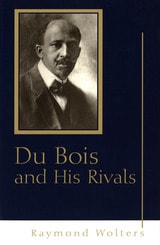
Du Bois and His Rivals
Raymond Wolters
University of Missouri Press, 2002
In Du Bois and His Rivals, Raymond Wolters provides a distinctive biography of this great pioneer of the American civil rights movement. Readers are able to follow the outline of Du Bois’s life, but the book’s main emphasis is on discrete scenes in his life, especially the controversies that pitted Du Bois against his principal black rivals. He challenged Booker T. Washington because he could not abide Washington’s conciliatory approach toward powerful whites. At the same time, Du Bois’s pluralism led him to oppose the leading separatists and integrationists of his day. He berated Marcus Garvey for giving up on America and urging blacks to pursue a separate destiny. He also rejected Walter White’s insistence that integration was the best way to promote the advancement of black people.
Du Bois felt that American blacks should be full-fledged Americans, with all the rights of other American citizens. However, he believed that they should also preserve and develop enough racial distinctiveness to enable them to maintain and foster a sense of racial identity, community, and pride. Du Bois and His Rivals shows that Du Bois stood for much more than protest against racial oppression. He was also committed to pluralism, and his pluralism emphasized the importance of traditional standards and of internal cooperation within the black community. Anyone interested in the civil rights movement, black history, or the history of the United States during the early twentieth century will find this book valuable.
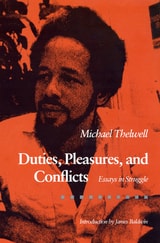
Duties, Pleasures, and Conflicts
Essays in StruggleMichael M. Thelwell
University of Massachusetts Press, 1987
This powerful collection of essays and short stories provides a unique perspective on the black civil rights movement over the past twenty-five years. A long-time activist, Michael Thelwell was a member of the Student Non-Violent Coordinating Committee (SNCC) and the Mississippi Freedom Democratic Party in the early 1960s, a founder of the W.E.B. Du Bois Department of Afro-American Studies at the University of Massachusetts in 1970, author of the widely praised novel The Harder They Come published in 1980, and an organizer for Jesse Jackson's presidential campaign in 1984. Thelwell is a writer of rare grace, integrity, and strong political convictions.
The collection begins with three stories. Set in the Mississippi Delta in the 1960s, the stories explore how individuals manage to preserve their dignity in a world of racism and violence. The next six essays, also written in the 1960s, are historical and journalistic. They discuss the March on Washington for Jobs and Freedom, the situation in the South as seen by SNCC workers, the political challenges in Mississippi, the articulation of the Black Power movement, the causes of the black student revolt at Cornell, and the need for Black Studies as the intellectual offensive in the struggle for black liberation.
The section that follows is composed of literary pieces: two appreciative essays on James Baldwin, two critical reviews of William Styron and his treatment of Nat Turner, an excoriating assessment of V. S. Naipaul, a profile of Amos Tutuola, and a thoughtful analysis of the social responsibility of the black writer.
The final essay examines the history of Jesse Jackson's presidential campaign and comments on the political climate of the 1980s.