Results by title
2728 books match the query 'Education' and 139 start with d

DJing in New York
Learning Processes of Underground Club DJsEva J. Egolf
Intellect Books, 2025
DJing in New York offers a rare, behind-the-scenes look at how underground Electronic Dance Music DJs in New York learn their craft, build careers, and navigate the ever-shifting world of nightlife.
Through immersive research, Eva J. Egolf reveals how DJing is more than a technical skill—it’s a deeply social process, rooted in friendships, enculturation, and access to professional networks. From honing beatmatching techniques to navigating the politics of club culture, these DJs rely on community as much as individual talent. Situating DJ learning within broader conversations on race, gender, and LGBTQ+ identities, this book expands our understanding of popular music education and the role of electronic music in shaping urban cultural history. It will be an illuminating resource for music educators, scholars of EDM and club culture, and those fascinated by the intersection of music, identity, and underground nightlife.
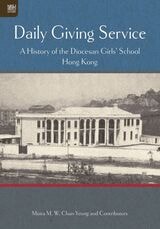
Daily Giving Service
A History of the Diocesan Girls’ SchoolMoira M. W. Chan-Yeung
Hong Kong University Press, 2022
The Diocesan Girls’ School is one of Hong Kong’s oldest girls’ schools, founded during British rule in 1860. As an alumna of the school’s Class of 1955, Professor Moira Chan-Yeung traces the history of her alma mater from its establishment through its development over the last 150 years in Daily Giving Service. Having grown alongside Hong Kong as it expanded from a small city to a global metropolitan center, Diocesan has become one of the most prominent girl’s schools in the city and serves a significant role in the history of education and growth in the region. With contributions from other alumni, this book recounts various aspects of school life throughout different eras, illustrating the connection between the socioeconomic development of Hong Kong and this cornerstone of regional education.
Dancing At The Crossroads
Stories and Activities for At-Risk Youth ProgrammingLorna Czarnota
Parkhurst Brothers, Inc., 2014
Dancing at the Crossroads: Stories for Mentoring At-Risk Youth, Caregiver’s Guidebook and Practitioner’s Guidebook are packed with the lessons of fifteen years in the field working with at-risk populations in runaway shelters, group homes, residential treatment facilities and one-on one with youth and parents. Out of a real understanding of these young people and their needs, and a passion for helping guide them into the adult circle, Lorna MacDonald Czarnota has compiled a collection of time-tested stories with activities, advice and information for parents and families, and a series of programs that storytellers, mental health workers, counselors, therapists, and others can utilize with groups of their own.
Dancing Bahia
Essays on Afro-Brazilian Dance, Education, Memory, and RaceEdited by Lucia M. Suarez, Amélia Conrado and Yvonne Daniel
Intellect Books, 2018
Dancing Bahia is an edited collection that draws together the work of leading scholars, artists, and dance activists from Brazil, Canada, and the United States to examine the particular ways in which dance has responded to socio-political notions of race and community, resisting stereotypes, and redefining African Diaspora and Afro-Brazilian traditions.
Using the Brazilian city of Salvador da Bahia as its focal point, this volume brings to the fore questions of citizenship, human rights, and community building. The essays within are informed by both theory and practice, as well as black activism that inspires and grounds the research, teaching, and creative output of dance professionals from, or deeply connected to, Bahia.
Dancing at the Crossroads
A Guide for Caregivers in At-Risk Youth ProgramsLorna Czarnota
Parkhurst Brothers, Inc., 2014
The books Dancing at the Crossroads: Stories for Mentoring At-Risk Youth, Practitioner’s Guidebook and Caregiver’s Guidebook are packed with the lessons of fifteen years in the field working with at-risk populations in runaway shelters, group homes, residential treatment facilities and one-on one with youth and parents. Out of a real understanding of these young people and their needs, and a passion for helping guide them into the adult circle, Lorna MacDonald Czarnota has compiled a collection of time-tested stories with activities, advice and information for parents and families, and a series of programs that storytellers, mental health workers, counselors, therapists, and others can utilize with groups of their own.
Dancing at the Crossroads
A Guide for Practitioners in At-Risk Youth ProgramsLorna Czarnota
Parkhurst Brothers, Inc., 2014
The books Dancing at the Crossroads: Stories for Mentoring At-Risk Youth, Practitioner’s Guidebook and Caregiver’s Guidebook are packed with the lessons of fifteen years in the field working with at-risk populations in runaway shelters, group homes, residential treatment facilities and one-on one with youth and parents. Out of a real understanding of these young people and their needs, and a passion for helping guide them into the adult circle, Lorna MacDonald Czarnota has compiled a collection of time-tested stories with activities, advice and information for parents and families, and a series of programs that storytellers, mental health workers, counselors, therapists, and others can utilize with groups of their own.

Dangerous Donations
Northern Philanthropy and Southern Black Education, 1902-1930Eric Anderson & Alfred A. Moss, Jr.
University of Missouri Press, 1999
Eric Anderson and Alfred A. Moss, Jr., offer a new examination of the impact of northern philanthropy on southern black education, giving special attention to the "Ogden movement," the General Education Board, the Rosenwald Fund, and the Episcopal American Church Institute for Negroes. Anderson and Moss present significant reinterpretations of key figures in African American education, including Booker T. Washington, William H. Baldwin, Jr., George Foster Peabody, and Thomas Jesse Jones.
Dangerous Donations explores both the great influence of the philanthropic foundations and the important limitations on their power. White racial radicals were suspicious that the northern agencies sought to undermine the southern system of race relations, "training negroes in the vain hope of social equality with whites." This criticism forced the philanthropists and their agents to move cautiously, seeking white southern cooperation whenever possible. Despite repeated compromises, northern philanthropists maintained a vision of race relations and black potential significantly different from that held by the South’s white majority.
Blacks challenged the foundations, expressing their own educational agendas in a variety of ways, including demands for black teachers, resistance to any distinctive racial curricula, and, in some cases, support for independent black schools. The millions of dollars in self-help philanthropy contributed by African Americans also indicated their refusal to give complete control of their schools to either the white South or distant philanthropists in the North.
No other scholars, according to Louis R. Harlan, "have examined the controversial role of philanthropy with the same coolness, analytical skill, and persistent search for the truth as Eric Anderson and Alfred Moss... [they] have made an outstanding contribution to the history of education for both races in the segregated South of 1900 to 1930."

Dangerous Ideas on Campus
Sex, Conspiracy, and Academic Freedom in the Age of JFKMatthew C. Ehrlich
University of Illinois Press, 2021
In 1960, University of Illinois professor Leo Koch wrote a public letter condoning premarital sex. He was fired. Four years later, a professor named Revilo Oliver made white supremacist remarks and claimed there was a massive communist conspiracy. He kept his job.
Matthew Ehrlich revisits the Koch and Oliver cases to look at free speech, the legacy of the 1960s, and debates over sex and politics on campus. The different treatment of the two men marked a fundamental shift in the understanding of academic freedom. Their cases also embodied the stark divide over beliefs and values--a divide that remains today. Ehrlich delves into the issues behind these academic controversies and places the events in the context of a time rarely associated with dissent, but in fact a harbinger of the social and political upheavals to come.
An enlightening and entertaining history, Dangerous Ideas on Campus illuminates how the university became a battleground for debating America's hot-button issues.
Dangerous Professors
Academic Freedom and the National Security CampusMalini Johar Schueller and Ashley Dawson, Editors
University of Michigan Press, 2009
Dangerous Writing
Understanding the Political Economy of CompositionTony Scott
Utah State University Press, 2009
Since the 1980s and the “social turn” in composition studies and other disciplines, scholars in this field have conceived writing in college as explicitly embedded in socio-rhetorical situations beyond the classroom. From this conviction develops a commitment to teach writing with an emphasis on analyzing the social and political dimensions of rhetoric.
Ironically, though a leftist himself, Tony Scott’s analysis finds the academic left complicit with the forces in American culture that tend, in his view, to compromise education. By focusing on the structures of labor and of institutions that enforce those structures, Scott finds teachers and administrators are too easily swept along with the inertia of a hyper-commodified society in which students---especially working class students---are often positioned as commodities, themselves. Dangerous Writing, then, is a critique of the field as much as it is a critique of capitalism. Ultimately, Scott’s eye is on the institution and its structures, and it is these that he finds most in need of transformation.

Dare the School Build a New Social Order?
George S. Counts. Preface by Wayne J. Urban
Southern Illinois University Press, 1978
George S. Counts was amajor figure in American education for almost fifty years. Republication of this early (1932) work draws special attention to Counts’s role as a social and political activist. Three particular themes make the book noteworthy because of their importance in Counts’s plan for change as well as for their continuing contemporary importance: (1)Counts’s criticism of child-centered progressives; (2) the role Counts assigns to teachers in achieving educational and social reform; and (3) Counts’s idea for the reform of the American economy.

Dark Academia
How Universities DiePeter Fleming
Pluto Press, 2021
“Fleming's books are sparklingly sardonic and hilariously angry”—Guardian
“An excellent and important book''—Journal of Education, Innovation, and Communication
To Professor Peter Fleming, there is a strong link between the neo-liberalization of higher education over the last 20 years and the psychological hell now endured by its staff and students. He believes that impersonal and unforgiving management hierarchies have supplanted academic judgement, collegiality, and professional common sense. He bemoans the modern system of higher education and shines a spotlight on what’s gone wrong and why.
While academia was once thought of as the best job in the world, one that fosters autonomy, craft, intrinsic job satisfaction, and vocational zeal, you would be hard-pressed to find a lecturer who believes that now.
Fleming delves into this new metrics-obsessed, overly hierarchical world to bring out the hidden underbelly of what he terms the 'zombie university'. He examines:
*Commercialization
*Mental illness and self-harm
*The rise of managerialism
*Students as consumers and evaluators
*The competitive individualism which casts a dark sheen of alienation over departments
*And much more!
Arguing that time has almost run out to reverse this decline, this book shows how academics and students need to act now if they are to begin to fix this broken system.

Dartmouth Song Book
Paul R. Zeller
Dartmouth College Press, 2002
Data Literacy in the Real World
Conversations & Case StudiesEdited by Kristin Fontichiaro, Amy Lennex, Tyler Hoff, Kelly Hovinga, Jo Angela Oehrli
Michigan Publishing Services, 2017

Deaf Children in China
Alison Callaway
Gallaudet University Press, 1999
Deaf Children in Public Schools
Placement, Context, and ConsequencesClaire L. Ramsey
Gallaudet University Press, 1997
Ramsey points out that these deaf children were placed in two different environments, with the general population of hearing students, and separately with other deaf and hard of hearing children. Her incisive study reveals that although both settings were ostensibly educational, inclusion in the general population was done to comply with the law, not to establish specific goals for the deaf children. In contrast, self-contained classes for deaf and hard of hearing children were designed especially to concentrate upon their particular learning needs. Deaf Children in Public Schools also demonstrates that the key educational element of language development cannot be achieved in a social vacuum, which deaf children face in the real isolation of the mainstream classroom.
Based upon these insights, Deaf Children in Public Schools follows the deaf students in school to consider three questions regarding the merit of language study without social interaction or cultural access, the meaning of context in relation to their educational success, and the benefits of the perception of the setting as the context rather than as a place. The intricate answers found in this cohesive book offer educators, scholars, and parents a remarkable stage for assessing and enhancing the educational context for the deaf children within their purview.
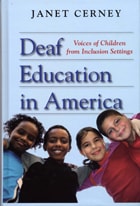
Deaf Education in America
Voices of Children from Inclusion SettingsJanet Cerney
Gallaudet University Press, 2007
Deaf Education in America: Voices of Children from Inclusion Settings provides a detailed examination of the complex issues surrounding the integration of deaf students into the general classroom. Author Janet Cerney begins her comprehensive work by stressing to parents, educators, and policymakers the importance of learning the circumstances in which mainstreaming and inclusion can be successful for deaf students. This process requires stakeholders to identify and evaluate the perceived benefits and risks before making placement and implementation decisions. The influences of the quality of communication and the relationships built by and with the students are of paramount importance in leading to success.
In conjunction with these principles, this thorough study examines the theory and history behind inclusion, including the effects of the No Child Left Behind education act. Cerney incorporates this knowledge with interviews of the deaf students themselves as well as with their interpreters and teachers. To ensure complete candidness, the students were surveyed in their homes, and the interpreters and educators were questioned separately. Through these exchanges, Cerney could determine what worked well for the deaf students, what barriers interfered with their access to communication, and what support structures were needed to eliminate those barriers. As a result, Deaf Education in America offers concrete information on steps that can be taken to ensure success in an inclusion setting, results that reverberate through the voices of the deaf students.
Deaf Epistemologies, Identity, and Learning
A Comparative PerspectiveGoedele A. M. De Clerck
Gallaudet University Press, 2016
Deaf Epistemologies, Identity, and Learning argues for an inclusive approach to the intrinsic human diversity in society, education, and scholarship, and shows how emotions of hope, frustration, and humiliation contribute to the construction of identity and community. De Clerck also considers global to local dynamics in deaf identity, deaf culture, deaf education, and deaf empowerment. She presents empirical research through case studies of the emancipation processes for deaf people in Flanders (a region of Belgium), the United States (specifically, at Gallaudet University in Washington, DC), and the West African nation of Cameroon. These three settings illuminate different phases of emancipation in different contexts, and the research findings are integrated into a broader literature review and subjected to theoretical reflection.
De Clerck’s anthropology of deaf flourishing draws from her critical application of the empowerment paradigm in settings of daily life, research, leadership, and community work, as she explores identity and well-being through an interdisciplinary lens. This work is centered around practices of signed storytelling and posits learning as the primary access and pathway to culture, identity, values, and change. Change driven by the learning process is considered an awakening—and through this awakening, the deaf community can gain hope, empowerment, and full citizenship. In this way, deaf people are allowed to shape their histories, and the result is the elevation of all aspects of deaf lives around the world.
Deaf Epistemologies
Multiple Perspectives on the Acquisition of KnowledgePeter V. Paul
Gallaudet University Press, 2012
Epistemology is the study of how “knowledge” is formed. Standard epistemology isolates the “known” from the “knowers,” thereby defining “knowledge” as objectively constant. Multiple epistemologies suggest that individuals learn in different ways shaped by life factors such as education, family, ethnicity, history, and regional beliefs. In this groundbreaking volume, editors Peter V. Paul and Donald F. Moores call on ten other noted scholars and researchers to join them in examining the many ways that deaf people see and acquire deaf knowledge.
This collection considers three major groups of deaf knowledge perspectives: sociological and anthropological, historical/psychological and literary, and educational and philosophical. The first explores the adoption of a naturalized, critical epistemological stance in evaluating research; the epistemology of a positive deaf identity; how personal epistemologies can help form deaf education policies; and valuing deaf indigenous knowledge in research. The next part considers dueling epistemologies in educating deaf learners; reforms in deaf education; the role of deaf children of hearing parents in creating Deaf epistemologies; and the benefit of reading literature with deaf characters for all students. The final part explores the application of the Qualitative-Similarity Hypothesis to deaf students’ acquisition of knowledge; a metaparadigm for literacy instruction in bilingual-bicultural education; collaborative knowledge-building to access academia; and examination of the benefits and disadvantages of being deaf.

Deaf Identity and Social Images in Nineteenth-Century France
Anne T. Quartararo
Gallaudet University Press, 2008
Since the French Revolution in1789, Deaf French people have struggled to preserve their cultural heritage, to win full civil rights, and to gain access to society through their sign language. Anne T. Quartararo depicts this struggle in her new book Deaf Identity and Social Images in Nineteenth-Century France. In it, she portrays the genesis of the French Deaf community, examines its identity as a minority culture, and analyzes how deaf people developed their cultural heritage, a deaf patrimonie that has been historically connected to the preservation of French sign language.
Quartararo begins by describing how Abbé de l’Epée promoted the education of deaf students with sign language, an approach supported by the French revolutionary government, which formally established the Paris Deaf Institute in 1791. In the early part of the nineteenth century, the school’s hearing director, Roch-Ambroise-Auguste Bébian, advocated the use of sign language even while the institute’s physician Dr. Jean-Marc-Gaspard Itard worked to discredit signing.
In this meticulous study, Quartararo details the many variations in deaf education from 1830 to1930. She describes the banquet movement in the 1830s led by Ferdinand Berthier, Alponse Lenoir, and Claudius Forestier, which celebrated sign language and fostered the deaf association known as the Société Centrale. Quartararo also recounts how hearing educators at the Milan Congress in 1880 universally adopted oralism as the way to defeat deafness, and prohibited sign language in deaf schools. French deaf people refused to submit to this attack upon their cultural heritage, however, and an explosion of social activity among deaf people between 1880 and 1900 created a host of active deaf groups in all corners of the country. Deaf Identity and Social Images paints a unique, rich tapestry of the resilience of French deaf people in defending their culture through the most trying century in their history.
Deaf Learners
Developments in Curriculum and InstructionDonald F. Moores
Gallaudet University Press, 2006
Deaf People Around the World
Educational and Social PerspectivesDonald F. Moores
Gallaudet University Press, 2009
In Deaf People Around the World: Educational and Social Perspectives, the leading researchers in 30 nations describe the shared developmental, social, and educational issues facing deaf people filtered through the prism of unique national, regional, ethnic, and racial realities. Editors Donald F. Moores and Margery S. Miller have organized this remarkable collection in five major sections: Asia/Pacific, the Middle East and Africa, Europe, North and South America, and International Developments, which includes the International Committee on Sports for the Deaf and the World Federation of the Deaf.
More than 50 internationally recognized scholars provide a historical view of the education and treatment of deaf people in their respective countries. They examine a wide range of issues, including current academic placement; communication modes used in schools; the recognition of sign languages; the curricula of the deaf schools versus that of regular schools; for secondary and postsecondary opportunities; the status of deaf adults; deaf teachers; special laws if any; the preparation of teachers, psychologists, therapists, and other special personnel who work with deaf clients; and current trends and developments in their countries.
Deaf People Around the World reveals that deaf people generally have gained a sense of confidence, empowerment, and global awareness of their shared experience. Many have seen significant improvement in their lives from greater educational and professional opportunities. Finally, more deaf leaders argue that the pathological model of deafness must be abandoned to continue this marked progress for deaf people around the world.

Deaf People in the Criminal Justice System
Selected Topics on Advocacy, Incarceration, and Social JusticeDebra Guthmann
Gallaudet University Press, 2021
The contributors address issues such as accessibility needs; gaps regarding data collection and the need for more research; additional training for attorneys, court personnel, and prison staff; the need for more qualified sign language interpreters, including Certified Deaf Interpreters who provide services in court, prison, and juvenile facilities; substance use disorders; the school to prison nexus; and the need for advocacy. Students in training programs, researchers, attorneys, mental health professionals, sign language interpreters, family members, and advocates will be empowered by this much-needed resource to improve the experiences and outcomes for deaf people in the criminal justice system.
Deaf Students and the Qualitative Similarity Hypothesis
Understanding Language and Literacy DevelopmentPeter V. Paul
Gallaudet University Press, 2013
The difficulty that deaf and hard of hearing students have in attaining language and literacy skills has led to postulations that attribute their struggle to a developmental deficit. Recent research reveals, however, that deaf students acquire language structures, produce errors, and employ strategies in the same fashion as younger hearing students, though at later ages. The ability of all students to learn language and literacy skills in a similar manner at different stages forms the foundation of the Qualitative Similarity Hypothesis (QSH).
This volume describes the theoretical underpinnings and research findings of the QSH. It presents the educational implications for deaf and hard of hearing children and offers reason-based practices for improving their English language and literacy development. This collection also stresses the critical importance of exposing educators to the larger fields of literacy and second-language learning. Providing this background information expands the possibility of differentiating instruction to meet the needs of deaf students. Deaf Students and the Qualitative Similarity Hypothesis includes commentary on the QSH for both first- and second-language English learners and reflects on how the QSH can effect a better future for all language students.
Deaf Studies for Educators
Onudeah D. Nicolarakis
Gallaudet University Press, 2025
This is the second volume in the Early Papers in Deaf Studies series, which consists of reissued works originally published by the Gallaudet University College for Continuing Education but long out of print. The aim of this series is to restore these foundational papers to the scholarly community. Deaf Studies for Educators is available in both print and open digital formats, ensuring broad access to this important contribution to the literature.
Deaf and Disability Studies
Interdisciplinary PerspectivesSusan Burch
Gallaudet University Press, 2010
This collection presents 14 essays by renowned scholars on Deaf people, Deafhood, Deaf histories, and Deaf identity, but from different points of view on the Deaf/Disability compass. Editors Susan Burch and Alison Kafer have divided these works around three themes. The first, Identities and Locations, explores Deaf identity in different contexts. Topics range from a history of activism shaped by the ableism of Deaf elites in the United States from 1880–1920, to a discussion of the roles that economics, location, race, and culture play in the experiences of a Deaf woman from northern Nigeria now living in Washington, D.C.
Alliances and Activism showcases activism organized across differences. Studies include a feminist analysis of how deaf and hearing women working together share responsibility, and an examination of how intra-cultural variations in New York City and Quebec affect deaf-focus HIV/AIDS programs. The third theme, Boundaries and Overlaps, explicitly addresses the relationships between Deaf Studies and Disability Studies. Interviews with scholars from both disciplines help define these relationships. Another contributor calls for hearing/not-deaf people with disabilities to support their Deaf peers in gaining langue access to the United Nations. Deaf and Disability Studies: Interdisciplinary Perspectives reveals that different questions often lead to contrary conclusions among their authors, who still recognize that they all have a stake in this partnership.
Deaf and Hard of Hearing Learners with Disabilities
Foundations, Strategies, and ResourcesCaroline Guardino
Gallaudet University Press, 2021
The disabilities covered in this volume include developmental delays, autism spectrum disorder, intellectual and learning disabilities, deafblindness, emotional and behavioral disorders, attention deficit hyperactivity disorder, and a variety of high incidence syndromes. Contributors share best practices using an open-minded, asset-based approach. They examine the literature within each disability category, as well as demographics/characteristics, intervention/identification, placement, communication/language, psychosocial issues, assistive technologies/accommodations, assessments, and transition/post-secondary outcomes. Each chapter begins with learning objectives and concludes with a list of resources and discussion questions. A supplemental instructor’s manual provides valuable material for each chapter, including: (a) sample answers to the discussion questions, (b) investigation activities with grading rubrics, (c) quiz banks, (d) interpreted and captioned summary videos, and (e) PowerPoint slides. Deaf and Hard of Hearing Learners with Disabilities is an essential book for courses at the undergraduate and graduate level, and in workshops and webinars for in-service teachers, professionals, and families.

Dear Charles Dickens, Love, South LA
Literature, Place, and BelongingJacqueline Jean Barrios
University of Iowa Press, 2026
Jacqueline Jean Barrios confronts the cultural challenges that big canonical books pose to new generations of readers. Instead of erasing the differences between Dickens’s implied audiences and his current ones, Barrios demonstrates how youth can serve as the visionaries who bridge the gap. By placing literature in everyday surroundings, students at any school and in any location can learn from the embodied and the poetic and even question the universalism that masks unexamined reverence for the Western canon.

Debates in the Digital Humanities
Matthew K. Gold
University of Minnesota Press, 2012
Encompassing new technologies, research methods, and opportunities for collaborative scholarship and open-source peer review, as well as innovative ways of sharing knowledge and teaching, the digital humanities promises to transform the liberal arts—and perhaps the university itself. Indeed, at a time when many academic institutions are facing austerity budgets, digital humanities programs have been able to hire new faculty, establish new centers and initiatives, and attract multimillion-dollar grants.
Clearly the digital humanities has reached a significant moment in its brief history. But what sort of moment is it? Debates in the Digital Humanities brings together leading figures in the field to explore its theories, methods, and practices and to clarify its multiple possibilities and tensions. From defining what a digital humanist is and determining whether the field has (or needs) theoretical grounding, to discussions of coding as scholarship and trends in data-driven research, this cutting-edge volume delineates the current state of the digital humanities and envisions potential futures and challenges. At the same time, several essays aim pointed critiques at the field for its lack of attention to race, gender, class, and sexuality; the inadequate level of diversity among its practitioners; its absence of political commitment; and its preference for research over teaching.
Together, the essays in Debates in the Digital Humanities—which will be published both as a printed book and later as an ongoing, open-access website—suggest that the digital humanities is uniquely positioned to contribute to the revival of the humanities and academic life.
Contributors: Bryan Alexander, National Institute for Technology in Liberal Education; Rafael Alvarado, U of Virginia; Jamie “Skye” Bianco, U of Pittsburgh; Ian Bogost, Georgia Institute of Technology; Stephen Brier, CUNY Graduate Center; Daniel J. Cohen, George Mason U; Cathy N. Davidson, Duke U; Rebecca Frost Davis, National Institute for Technology in Liberal Education; Johanna Drucker, U of California, Los Angeles; Amy E. Earhart, Texas A&M U; Charlie Edwards; Kathleen Fitzpatrick, Pomona College; Julia Flanders, Brown U; Neil Fraistat, U of Maryland; Paul Fyfe, Florida State U; Michael Gavin, Rice U; David Greetham, CUNY Graduate Center; Jim Groom, U of Mary Washington; Gary Hall, Coventry U, UK; Mills Kelly, George Mason U; Matthew Kirschenbaum, U of Maryland; Alan Liu, U of California, Santa Barbara; Elizabeth Losh, U of California, San Diego; Lev Manovich, U of California, San Diego; Willard McCarty, King’s College London; Tara McPherson, U of Southern California; Bethany Nowviskie, U of Virginia; Trevor Owens, Library of Congress; William Pannapacker, Hope College; Dave Parry, U of Texas at Dallas; Stephen Ramsay, U of Nebraska, Lincoln; Alexander Reid, SUNY at Buffalo; Geoffrey Rockwell, Canadian Institute for Research Computing in the Arts; Mark L. Sample, George Mason U; Tom Scheinfeldt, George Mason U; Kathleen Marie Smith; Lisa Spiro, National Institute for Technology in Liberal Education; Patrik Svensson, Umeå U; Luke Waltzer, Baruch College; Matthew Wilkens, U of Notre Dame; George H. Williams, U of South Carolina Upstate; Michael Witmore, Folger Shakespeare Library.
Debates in the Digital Humanities 2016
Matthew K. Gold
University of Minnesota Press, 2016
Pairing full-length scholarly essays with shorter pieces drawn from scholarly blogs and conference presentations, as well as commissioned interviews and position statements, Debates in the Digital Humanities 2016 reveals a dynamic view of a field in negotiation with its identity, methods, and reach. Pieces in the book explore how DH can and must change in response to social justice movements and events like #Ferguson; how DH alters and is altered by community college classrooms; and how scholars applying DH approaches to feminist studies, queer studies, and black studies might reframe the commitments of DH analysts. Numerous contributors examine the movement of interdisciplinary DH work into areas such as history, art history, and archaeology, and a special forum on large-scale text mining brings together position statements on a fast-growing area of DH research. In the multivalent aspects of its arguments, progressing across a range of platforms and environments, Debates in the Digital Humanities 2016 offers a vision of DH as an expanded field—new possibilities, differently structured.
Published simultaneously in print, e-book, and interactive webtext formats, each DH annual will be a book-length publication highlighting the particular debates that have shaped the discipline in a given year. By identifying key issues as they unfold, and by providing a hybrid model of open-access publication, these volumes and the Debates in the Digital Humanities series will articulate the present contours of the field and help forge its future.
Contributors: Moya Bailey, Northeastern U; Fiona Barnett; Matthew Battles, Harvard U; Jeffrey M. Binder; Zach Blas, U of London; Cameron Blevins, Rutgers U; Sheila A. Brennan, George Mason U; Timothy Burke, Swarthmore College; Rachel Sagner Buurma, Swarthmore College; Micha Cárdenas, U of Washington–Bothell; Wendy Hui Kyong Chun, Brown U; Tanya E. Clement, U of Texas–Austin; Anne Cong-Huyen, Whittier College; Ryan Cordell, Northeastern U; Tressie McMillan Cottom, Virginia Commonwealth U; Amy E. Earhart, Texas A&M U; Domenico Fiormonte, U of Roma Tre; Paul Fyfe, North Carolina State U; Jacob Gaboury, Stony Brook U; Kim Gallon, Purdue U; Alex Gil, Columbia U; Brian Greenspan, Carleton U; Richard Grusin, U of Wisconsin, Milwaukee; Michael Hancher, U of Minnesota; Molly O’Hagan Hardy; David L. Hoover, New York U; Wendy F. Hsu; Patrick Jagoda, U of Chicago; Jessica Marie Johnson, Michigan State U; Steven E. Jones, Loyola U; Margaret Linley, Simon Fraser U; Alan Liu, U of California, Santa Barbara; Elizabeth Losh, U of California, San Diego; Alexis Lothian, U of Maryland; Michael Maizels, Wellesley College; Mark C. Marino, U of Southern California; Anne B. McGrail, Lane Community College; Bethany Nowviskie, U of Virginia; Julianne Nyhan, U College London; Amanda Phillips, U of California, Davis; Miriam Posner, U of California, Los Angeles; Rita Raley, U of California, Santa Barbara; Stephen Ramsay, U of Nebraska–Lincoln; Margaret Rhee, U of Oregon; Lisa Marie Rhody, Graduate Center, CUNY; Roopika Risam, Salem State U; Stephen Robertson, George Mason U; Mark Sample, Davidson College; Jentery Sayers, U of Victoria; Benjamin M. Schmidt, Northeastern U; Scott Selisker, U of Arizona; Jonathan Senchyne, U of Wisconsin, Madison; Andrew Stauffer, U of Virginia; Joanna Swafford, SUNY New Paltz; Toniesha L. Taylor, Prairie View A&M U; Dennis Tenen; Melissa Terras, U College London; Anna Tione; Ted Underwood, U of Illinois, Urbana–Champaign; Ethan Watrall, Michigan State U; Jacqueline Wernimont, Arizona State U; Laura Wexler, Yale U; Hong-An Wu, U of Illinois, Urbana–Champaign.
Debates in the Digital Humanities 2019
Matthew K. Gold
University of Minnesota Press, 2019
The latest installment of a digital humanities bellwether
Contending with recent developments like the shocking 2016 U.S. Presidential election, the radical transformation of the social web, and passionate debates about the future of data in higher education, Debates in the Digital Humanities 2019 brings together a broad array of important, thought-provoking perspectives on the field’s many sides. With a wide range of subjects including gender-based assumptions made by algorithms, the place of the digital humanities within art history, data-based methods for exhuming forgotten histories, video games, three-dimensional printing, and decolonial work, this book assembles a who’s who of the field in more than thirty impactful essays.
Contributors: Rafael Alvarado, U of Virginia; Taylor Arnold, U of Richmond; James Baker, U of Sussex; Kathi Inman Berens, Portland State U; David M. Berry, U of Sussex; Claire Bishop, The Graduate Center, CUNY; James Coltrain, U of Nebraska–Lincoln; Crunk Feminist Collective; Johanna Drucker, U of California–Los Angeles; Jennifer Edmond, Trinity College; Marta Effinger-Crichlow, New York City College of Technology–CUNY; M. Beatrice Fazi, U of Sussex; Kevin L. Ferguson, Queens College–CUNY; Curtis Fletcher, U of Southern California; Neil Fraistat, U of Maryland; Radhika Gajjala, Bowling Green State U; Michael Gavin, U of South Carolina; Andrew Goldstone, Rutgers U; Andrew Gomez, U of Puget Sound; Elyse Graham, Stony Brook U; Brian Greenspan, Carleton U; John Hunter, Bucknell U; Steven J. Jackson, Cornell U; Collin Jennings, Miami U; Lauren Kersey, Saint Louis U; Kari Kraus, U of Maryland; Seth Long, U of Nebraska, Kearney; Laura Mandell, Texas A&M U; Rachel Mann, U of South Carolina; Jason Mittell, Middlebury College; Lincoln A. Mullen, George Mason U; Trevor Muñoz, U of Maryland; Safiya Umoja Noble, U of Southern California; Jack Norton, Normandale Community College; Bethany Nowviskie, U of Virginia; Élika Ortega, Northeastern U; Marisa Parham, Amherst College; Jussi Parikka, U of Southampton; Kyle Parry, U of California, Santa Cruz; Brad Pasanek, U of Virginia; Stephen Ramsay, U of Nebraska–Lincoln; Matt Ratto, U of Toronto; Katie Rawson, U of Pennsylvania; Ben Roberts, U of Sussex; David S. Roh, U of Utah; Mark Sample, Davidson College; Moacir P. de Sá Pereira, New York U; Tim Sherratt, U of Canberra; Bobby L. Smiley, Vanderbilt U; Lauren Tilton, U of Richmond; Ted Underwood, U of Illinois, Urbana-Champaign; Megan Ward, Oregon State U; Claire Warwick, Durham U; Alban Webb, U of Sussex; Adrian S. Wisnicki, U of Nebraska–Lincoln.
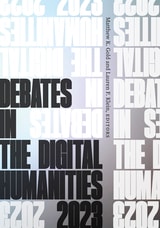
Debates in the Digital Humanities 2023
Matthew K. Gold
University of Minnesota Press, 2023
A cutting-edge view of the digital humanities at a time of global pandemic, catastrophe, and uncertainty
Where do the digital humanities stand in 2023? Debates in the Digital Humanities 2023 presents a state-of-the-field vision of digital humanities amid rising social, political, economic, and environmental crises; a global pandemic; and the deepening of austerity regimes in U.S. higher education. Providing a look not just at where DH stands but also where it is going, this fourth volume in the Debates in the Digital Humanities series features both established scholars and emerging voices pushing the field’s boundaries, asking thorny questions, and providing space for practitioners to bring to the fore their research and their hopes for future directions in the field. Carrying forward the themes of political and social engagement present in the series throughout, it includes crucial contributions to the field—from a vital forum centered on the voices of Black women scholars, manifestos from feminist and Latinx perspectives on data and DH, and a consideration of Indigenous data and artificial intelligence, to essays that range across topics such as the relation of DH to critical race theory, capital, and accessibility.
Contributors: Harmony Bench, Ohio State U; Christina Boyles, Michigan State U; Megan R. Brett, George Mason U; Michelle Lee Brown, Washington State U; Patrick J. Burns, New York U; Kent K. Chang, U of California, Berkeley; Rico Devara Chapman, Clark Atlanta U; Marika Cifor, U of Washington; María Eugenia Cotera, U of Texas; T. L. Cowan, U of Toronto; Marlene L. Daut, U of Virginia; Quinn Dombrowski, Stanford U; Kate Elswit, U of London; Nishani Frazier, U of Kansas; Kim Gallon, Brown U; Patricia Garcia, U of Michigan; Lorena Gauthereau, U of Houston; Masoud Ghorbaninejad, University of Victoria; Abraham Gibson, U of Texas at San Antonio; Nathan P. Gibson, Ludwig-Maximilians-Universität, Munich; Kaiama L. Glover, Barnard College; Hilary N. Green, Davidson College; Jo Guldi, Southern Methodist U; Matthew N. Hannah, Purdue U Libraries; Jeanelle Horcasitas, DigitalOcean; Christy Hyman, Mississippi State U; Arun Jacob, U of Toronto; Jessica Marie Johnson, Johns Hopkins U and Harvard U; Martha S. Jones, Johns Hopkins U; Annette K. Joseph-Gabriel, Duke U; Mills Kelly, George Mason U; Spencer D. C. Keralis, Digital Frontiers; Zoe LeBlanc, U of Illinois at Urbana-Champaign; Jason Edward Lewis, Concordia U; James Malazita, Rensselaer Polytechnic Institute; Alison Martin, Dartmouth College; Linda García Merchant, U of Houston Libraries; Rafia Mirza, Southern Methodist U; Mame-Fatou Niang, Carnegie Mellon U; Jessica Marie Otis, George Mason U; Marisa Parham, U of Maryland; Andrew Boyles Petersen, Michigan State U Libraries; Emily Pugh, Getty Research Institute; Olivia Quintanilla, UC Santa Barbara; Jasmine Rault, U of Toronto Scarborough; Anastasia Salter, U of Central Florida; Maura Seale, U of Michigan; Celeste Tường Vy Sharpe, Normandale Community College; Astrid J. Smith, Stanford U Libraries; Maboula Soumahoro, U of Tours; Mel Stanfill, U of Central Florida; Tonia Sutherland, U of Hawaiʻi at Mānoa; Gabriela Baeza Ventura, U of Houston; Carolina Villarroel, U of Houston; Melanie Walsh, U of Washington; Hēmi Whaanga, U of Waikato; Bridget Whearty, Binghamton U; Jeri Wieringa, U of Alabama; David Joseph Wrisley, NYU Abu Dhabi.
Cover alt text: A text-based cover with the main title repeating right-side up and upside down. The leftmost iteration appears in black ink; all others are white.

Debating Moral Education
Rethinking the Role of the Modern UniversityElizabeth Kiss and J. Peter Euben, eds.
Duke University Press, 2009
Editors Elizabeth Kiss and J. Peter Euben survey the history of ethics in higher education, then engage with provocative recent writings by Stanley Fish in which he argues that universities should not be involved in moral education. Stanley Hauerwas responds, offering a theological perspective on the university’s purpose. Contributors look at the place of politics in moral education; suggest that increasingly diverse, multicultural student bodies are resources for the teaching of ethics; and show how the debate over civic education in public grade-schools provides valuable lessons for higher education. Others reflect on the virtues and character traits that a moral education should foster in students—such as honesty, tolerance, and integrity—and the ways that ethical training formally and informally happens on campuses today, from the classroom to the basketball court. Debating Moral Education is a critical contribution to the ongoing discussion of the role and evolution of ethics education in the modern liberal arts university.
Contributors. Lawrence Blum, Romand Coles, J. Peter Euben, Stanley Fish, Michael Allen Gillespie, Ruth W. Grant, Stanley Hauerwas, David A. Hoekema, Elizabeth Kiss, Patchen Markell, Susan Jane McWilliams, Wilson Carey McWilliams, J. Donald Moon, James Bernard Murphy, Noah Pickus, Julie A. Reuben, George Shulman, Elizabeth V. Spelman
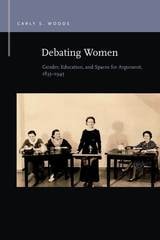
Debating Women
Gender, Education, and Spaces for Argument, 1835-1945Carly S. Woods
Michigan State University Press, 2018
Decentering Advocacy in English Language Teaching
Global Perspectives and Local PracticesKate Mastruserio Reynolds, Grazzia Maria Mendoza Chirinos, Debra Suarez, Okon Effiong, and Georgios Kormpas
University of Michigan Press, 2024
In each chapter, an ELT advocate describes the need for their project, the steps they took, the challenges they faced in their particular context, the parameters they needed to work within, and how they worked within these constraints to achieve their goals. These stories offer insight into classroom and school focused efforts as well as social projects, and touch upon contexts in which educators may feel that they cannot engage in overt advocacy movements. With chapters focused on Africa, East Asia, the Middle East, and Latin America, the volume contributors identify patterns based on what has worked well transculturally and in sociopolitically constrained contexts to develop effective principles and practices. By bringing many different advocacy efforts and the latest advocacy research together, Decentering Advocacy in English Language Teaching identifies recognizable standards that can take the onus off of individual advocates to reinvent the wheel.
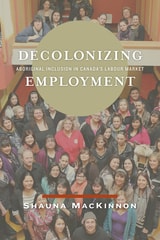
Decolonizing Employment
Aboriginal Inclusion in Canada's Labour MarketShauna MacKinnon
University of Manitoba Press, 2015
Decolonizing the University
Edited by Gurminder K. Bhambra, Kerem Nisancioglu and Dalia Gebrial
Pluto Press, 2018
In 2015, students at the University of Cape Town demanded the removal of a statue of Cecil Rhodes, the imperialist, racist business magnate, from their campus. Their battle cry, #RhodesMustFall, sparked an international movement calling for the decolonization of universities all over the world.
Today, as the movement develops beyond the picket line, how might it go on to radically transform the terms upon which universities exist? In this book, students, activists, and scholars discuss the possibilities and the pitfalls of doing decolonial work in the heart of the establishment. Subverting curricula, demanding diversity, and destroying old boundaries, this is a radical call for a new era of education. Chapters include:
*Rhodes Must Fall: Oxford and Movements for Change (Dalia Febrial)
*Race and the Neoliberal University ((John Holmwood)
*Black/Academia (Robbie Shilliam)
*The Challenge for Black Studies in the Neoliberal University (Kehinde Andrews)
*Open Initiatives for Decolonising the Curriculum (Pat Lockley)
*Decolonising Education: A Pedagogic Intervention (Carol Azumah Dennis)
*Understanding Eurocentrism as a Structural Problem of Undone Science (William Jamal Richardson)
As the book’s insightful Introduction states, "Taking colonialism as a global project as a starting point, it becomes difficult to turn away from the Western university as a key site through which colonialism—and colonial knowledge in particular—is produced, consecrated, institutionalized and naturalized." Offering resources for students and academics to challenge and resist colonialism inside and outside the classroom, Decolonizing the University provides the tools for radical change in educational disciplines, pedagogies, and institutions.

Deconstruction
An American InstitutionGregory Jones-Katz
University of Chicago Press, 2021
Deconstruction begins well before Jacques Derrida’s initial American presentation of his deconstructive work in a famed lecture at Johns Hopkins University in 1966 and continues through several decades of theoretic growth and tumult. While much of the subsequent story remains focused, inevitably, on Yale University and the personalities and curriculum that came to be lumped under the “Yale school” umbrella, Deconstruction makes clear how crucial feminism, queer theory, and gender studies also were to the lifeblood of this mode of thought. Ultimately, Jones-Katz shows that deconstruction in the United States—so often caricatured as a French infection—was truly an American phenomenon, rooted in our preexisting political and intellectual tensions, that eventually came to influence unexpected corners of scholarship, politics, and culture.
Defending Diversity
Affirmative Action at the University of MichiganPatricia Gurin, Jeffrey S. Lehman, and Earl Lewis, with Eric L. Dey, Gerald Gurin, and Sylvia Hurtado
University of Michigan Press, 2004
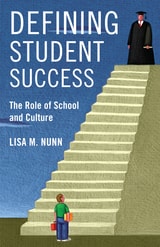
Defining Student Success
The Role of School and CultureLisa M. Nunn
Rutgers University Press, 2014
The key to success, our culture tells us, is a combination of talent and hard work. Why then, do high schools that supposedly subscribe to this view send students to college at such dramatically different rates? Why do students from one school succeed while students from another struggle? To the usual answer—an imbalance in resources—this book adds a far more subtle and complicated explanation. Defining Student Success shows how different schools foster dissimilar and sometimes conflicting ideas about what it takes to succeed—ideas that do more to preserve the status quo than to promote upward mobility.
Lisa Nunn’s study of three public high schools reveals how students’ beliefs about their own success are shaped by their particular school environment and reinforced by curriculum and teaching practices. While American culture broadly defines success as a product of hard work or talent (at school, intelligence is the talent that matters most), Nunn shows that each school refines and adapts this American cultural wisdom in its own distinct way—reflecting the sensibilities and concerns of the people who inhabit each school. While one school fosters the belief that effort is all it takes to succeed, another fosters the belief that hard work will only get you so far because you have to be smart enough to master course concepts. Ultimately, Nunn argues that these school-level adaptations of cultural ideas about success become invisible advantages and disadvantages for students’ college-going futures. Some schools’ definitions of success match seamlessly with elite college admissions’ definition of the ideal college applicant, while others more closely align with the expectations of middle or low-tier institutions of higher education.
With its insights into the transmission of ideas of success from society to school to student, this provocative work should prompt a reevaluation of the culture of secondary education. Only with a thorough understanding of this process will we ever find more consistent means of inculcating success, by any measure.
Degrees of Difference
Reflections of Women of Color on Graduate SchoolEdited by Kimberly D. McKee and Denise A. Delgado
University of Illinois Press, 2020
In Degrees of Difference, women of color from diverse backgrounds give frank, unapologetic accounts of their battles—both internal and external—to navigate grad school and fulfill their ambitions. At the same time, the authors offer strategies for surviving the grind via stories of their own hard-won successes with self-care, building supportive communities, finding like-minded mentors, and resisting racism and unsupportive faculty and colleagues.
Contributors: Aeriel A. Ashlee, Denise A. Delgado, Nwadiogo I. Ejiogu, Delia Fernández, Regina Emily Idoate, Karen J. Leong, Kimberly D. McKee, Délice Mugabo, Carrie Sampson, Arianna Taboada, Jenny Heijun Wills, and Soha Youssef

Degrees of Risk
Navigating Insecurity and Inequality in Public Higher EducationBlake R. Silver
University of Chicago Press, 2024
Institutions of higher education are often described as “ivory towers,” places of privilege where students exist in a “campus bubble,” insulated from the trials of the outside world. These metaphors reveal a widespread belief that college provides young people with stability and keeps insecurity at bay. But for many students, that’s simply not the case.
Degrees of Risk reveals how insecurity permeates every facet of college life for students at public universities. Sociologist Blake Silver dissects how these institutions play a direct role in perpetuating uncertainty, instability, individualism, and anxiety about the future. Silver examined interviews with more than one hundred students who described the risks that surrounded every decision: which major to choose, whether to take online classes, and how to find funding. He expertly identified the ways the college experience played out differently for students from different backgrounds. For students from financially secure families with knowledge of how college works, all the choices and flexibility of college felt like an adventure or a wealth of opportunities. But for many others, especially low-income, first-generation students, their personal and family circumstances meant that that flexibility felt like murkiness and precarity. In addition, he discovered that students managed insecurity in very different ways, intensifying inequality at the intersections of socioeconomic status, race, gender, and other sociodemographic dimensions. Drawing from these firsthand accounts, Degrees of Risk presents a model for a better university, one that fosters success and confidence for a diverse range of students.
Degrees of Risk
Navigating Insecurity and Inequality in Public Higher EducationBlake R. Silver
University of Chicago Press, 2024
An ethnographic analysis of how insecurity is at the heart of contemporary higher education.
Institutions of higher education are often described as “ivory towers,” places of privilege where students exist in a “campus bubble,” insulated from the trials of the outside world. These metaphors reveal a widespread belief that college provides young people with stability and keeps insecurity at bay. But for many students, that’s simply not the case.
Degrees of Risk reveals how insecurity permeates every facet of college life for students at public universities. Sociologist Blake Silver dissects how these institutions play a direct role in perpetuating uncertainty, instability, individualism, and anxiety about the future. Silver examined interviews with more than one hundred students who described the risks that surrounded every decision: which major to choose, whether to take online classes, and how to find funding. He expertly identified the ways the college experience played out differently for students from different backgrounds. For students from financially secure families with knowledge of how college works, all the choices and flexibility of college felt like an adventure or a wealth of opportunities. But for many others, especially low-income, first-generation students, their personal and family circumstances meant that that flexibility felt like murkiness and precarity. In addition, he discovered that students managed insecurity in very different ways, intensifying inequality at the intersections of socioeconomic status, race, gender, and other sociodemographic dimensions. Drawing from these firsthand accounts, Degrees of Risk presents a model for a better university, one that fosters success and confidence for a diverse range of students.
Del Otro Lado
Literacy and Migration across the U.S.-Mexico BorderSusan V. Meyers
Southern Illinois University Press, 2014
In Del OtroLado: Literacy and Migration across the U.S.-Mexico Border, author Susan V. Meyers draws on her year-long ethnographic study in Mexico and the United States to analyze the literacy practices of Mexican-origin students on both sides of the border.
Meyers begins by taking readers through the historical development of the rural Mexican town of Villachuato. Through a series of case studies spanning the decades between the Mexican Revolution and the modern-day village, Meyers explores the ever-widening gulf between the priorities of students and the ideals of the public education system. As more and more of Villachuato’s families migrate in an effort to find work in the wake of shifting transnational economic policies like NAFTA, the town’s public school teachers find themselves frustrated by spiraling drop-out rates. Meyers discovers that students often consider the current curriculum irrelevant and reject the established value systems of Mexico’s public schools. Meyers debunks the longstanding myth that literacy is tied to economic development, arguing that a “literacy contract” model, in which students participate in public education in exchange for access to increased earning potential, better illustrates the situation in rural Mexico.
Meyers next explores literacy on the other side of the border, traveling to Marshalltown, Iowa, where many former citizens of Villachuato have come to reside because of the availability of jobs for unskilled workers at the huge Swift meat-packing plant there. Here she discovers that Mexican-origin families in the United States often consider education a desirable end in itself rather than a means to an end. She argues that migration has a catalyzing effect on literacy, particularly as Mexican migrant families tend to view education as a desirable form of prestige.
Meyers reveals the history and policies that have shaped the literacy practices of Mexican-origin students, and she raises important questions about not only the obligation of the United States to educate migrant students, but also those students’ educational struggles and ways in which these difficulties can be overcome. This transnational study is essential reading for scholars, students, educators and lawmakers interested in shaping the future of educational policy.
Delhi's Education Revolution
Teachers, Agency and InclusionKusha Anand and Marie Lall
University College London, 2022
In 2015, the Aam Aadmi Party (AAP) was elected to govern Delhi promising to improve public services, including education through government schools that would be equal to private-school provisions. Media reports, along with the party’s re-election in 2020, suggest strong public confidence that the AAP is delivering on that promise, but this success has little evidence in the schools themselves. Delhi’s Education Revolution offers a critical evaluation of the AAP’s education reforms by exploring policy and practice through the eyes of a key group: the government-school teachers tasked with making the AAP’s pledge a reality. Drawing on 110 interviews, this volume uses first-hand accounts from teachers to explain how reforms have changed their profession and practice, and whether education really has improved for children of all backgrounds. This study paints a more qualified picture of success than suggested elsewhere and makes a valuable contribution to the understanding of education reforms in India, especially in Delhi.
Deliberative Pedagogy
Teaching and Learning for Democratic EngagementTimothy J. Shaffer
Michigan State University Press, 2017
Democracy and Higher Education
Traditions and Stories of Civic EngagementScott J. Peters
Michigan State University Press, 2010
How are we to understand the nature and value of higher education's public purposes, mission, and work in a democratic society? How do-and how should-academic professionals contribute to and participate in civic life in their practices as scholars, scientists, and educators?
Democracy and Higher Education addresses these questions by combining an examination of several normative traditions of civic engagement in American higher education with the presentation and interpretation of a dozen oral history profiles of contemporary practitioners. In his analysis of these profiles, Scott Peters reveals and interprets a democratic-minded civic professionalism that includes and interweaves expert, social critic, responsive service, and proactive leadership roles.
Democracy and Higher Education contributes to a new line of research on the critically important task of strengthening and defending higher education's positive roles in and for a democratic society.
Democracy's Education
Public Work, Citizenship, and the Future of Colleges and UniversitiesHarry C. Boyte
Vanderbilt University Press, 2015
Democracy's Education grows from the American Commonwealth Partnership, a year-long project to revitalize the democratic narrative of higher education that began with an invitation to Harry Boyte from the White House to put together a coalition aimed at strengthening higher education as a public good. The project was launched at the beginning of 2012 to mark the 150th anniversary of the Morrill Act, which created land grant colleges.
Beginning with an essay by Harry C. Boyte, "Reinventing Citizenship as Public Work," which challenges educators and their partners to claim their power to shape the story of higher education and the civic careers of students, the collection brings world-famous scholars, senior government officials, and university presidents together with faculty, students, staff, community organizers, and intellectuals from across the United States and South Africa and Japan. Contributors describe many constructive responses to change already taking place in different kinds of institutions, and present cutting-edge ideas like "civic science," "civic studies," "citizen professionalism," and "citizen alumni." Authors detail practical approaches to making change, from new faculty and student roles to changes in curriculum and student life and strategies for everyday citizen empowerment. Overall, the work develops a democratic story of education urgently needed to address today's challenges, from climate change to growing inequality.
Department and Discipline
Chicago Sociology at One HundredAndrew Abbott
University of Chicago Press, 1999
Abbott analyzes the shifts in social scientific inquiry and discloses the intellectual rivalry and faculty politics that characterized different stages of the Chicago School. Along the way, he traces the rich history of the discipline's main journal, the American Journal of Sociology.
Embedded in this analysis of the school and its practices is a broader theoretical argument, which Abbott uses to redefine social objects as a sequence of interconnected events rather than as fixed entities. Abbott's theories grow directly out of the Chicago School's insistence that social life be located in time and place, a tradition that has been at the heart of the school since its founding one hundred years ago.

Dependent States
The Child's Part in Nineteenth-Century American CultureKaren Sánchez-Eppler
University of Chicago Press, 2005
Dependent States examines the ties between children's literacy training and the growing cultural prestige of the novel; the way children functioned rhetorically in reform literature to enforce social norms; the way the risks of death to children shored up emotional power in the home; how Sunday schools socialized children into racial, religious, and national identities; and how class identity was produced, not only in terms of work, but also in the way children played. For Sánchez-Eppler, nineteenth-century childhoods were nothing less than vehicles for national reform. Dependent on adults for their care, children did not conform to the ideals of enfranchisement and agency that we usually associate with historical actors. Yet through meticulously researched examples, Sánchez-Eppler reveals that children participated in the making of social meaning. Her focus on childhood as a dependent state thus offers a rewarding corrective to our notions of autonomous individualism and a new perspective on American culture itself.