Results by title
3745 books match the query 'Europe' and 117 start with d
D-Day Through French Eyes
Normandy 1944Mary Louise Roberts
University of Chicago Press, 2014
Silent parachutes dotting the night sky—that’s how one woman in Normandy in June 1944 learned that the D-Day invasion was underway. Though they yearned for liberation, the people of Normandy steeled themselves for further warfare, knowing that their homes, land, and fellow citizens would have to bear the brunt of the attack. In D-Day through French Eyes, Mary Louise Roberts resets our view of the usual stories of that momentous operation, taking readers across the Channel to view the invasion anew. Roberts builds her history from an impressive range of gripping first-person accounts from French citizens, reinvigorating a story we thought we knew. The result is a fresh perspective on the heroism, sacrifice, and achievement of D-Day.

DH Lawrence in Italy
Richard Owen
Haus Publishing, 2014
In DH Lawrence in Italy, Owen reconstructs the drama leading up to the creation of one of the most controversial novels of all time by drawing on the unpublished letters and diaries of Rina Secker, the Anglo-Italian wife of Lawrence’s publisher. In addition to telling the story of the origins of Lady Chatterley, DH Lawrence in Italy explores Lawrence’s passion for all things Italian, tracking his path to the Riviera from Lake Garda to Lerici, Abruzzo, Capri, Sicily, and Sardinia.
Daily Life in Johnson's London
Richard B. Schwartz
University of Wisconsin Press, 1983
"Outstanding. . . . The author packs a remarkable quantity of detail into a small space, even including a discussion of price and wage figures that will be intelligible to Americans [today]. . . . His prose is lucid, graceful, lively. Generously illustrated, the book also includes an extensive bibliography."—Choice
"An excellent source for English Literature and history students studying this period or Samuel Johnson."—Booklist
Daily Life in Portugal in the Late Middle Ages
A.H. de Oliviera Marques; Translated by S.S. Wyatt
University of Wisconsin Press, 1971
Daily Living in the Twelfth Century
Urban Tigner Holmes, Jr.
University of Wisconsin Press, 1962
Dancing on Violent Ground
Utopia as Dispossession in Euro-American Theater DanceArabella Stanger
Northwestern University Press, 2021
Developing a new theory of choreographic space, Arabella Stanger shows how embodied forms of hope promised in ballet and progressive dance modernisms conceal and depend on spatial operations of imperial, colonial, and racial subjection. Stanger unearths dance’s violent ground by interrogating the expansionist fantasies of Marius Petipa’s imperial ballet, settler colonial and corporate land practices in the modern dance of Martha Graham and George Balanchine, reactionary discourses of the human in Rudolf von Laban’s and Oskar Schlemmer’s movement geometries; Merce Cunningham’s experimentalism as a white settler fantasy of the land of the free, and the imperial amnesia of Boris Charmatz’s interventions into metropolitan museums. Drawing on materialist thought, critical race theory, and indigenous studies, Stanger ultimately advocates for dance studies to adopt a position of “critical negativity,” an analytical attitude attuned to how dance’s exuberant modeling of certain forms of life might provide cover for life-negating practices. Bold in its arguments and rigorous in its critique, Dancing on Violent Ground asks how performance scholars can develop a practice of thinking hopefully, without expunging history from their site of analysis.
Dancing with the Modernist City
Metropolitan Dance Texts around 1900Wesley Lim
University of Michigan Press, 2024
Drawing on cultural, literary, dance, performance, and queer studies, Dancing with the Modernist City analyzes an array of material from 1896 to 1914—essays, novels, short stories, poetry, newspaper articles, photographs, posters, drawings, and early film. It argues that these writers and artists created a genre called the metropolitan dance text, which depicts dancing figures not on a traditional stage, but with the streets, advertising pillars, theaters, cafes, squares, and even hospitals of an urban setting. Breaking away from the historically male, heteronormative view, this posthumanist mode of writing highlights the visual and episodic unexpectedness of urban encounters. These literary depictions question traditional conceptualizations of space and performance by making the protagonist and the reader feel like they embody the dancer and the movement. In doing so, they upset the conventional depictions of performance and urban spaces in ways paralleling modern dance.
Dandyism in the Age of Revolution
The Art of the CutElizabeth Amann
University of Chicago Press, 2014
In Dandyism in the Age of Revolution, Elizabeth Amann shows that in France, England, and Spain, daring dress became a way of taking a stance toward the social and political upheaval of the period. France is the centerpiece of the story, not just because of the significance of the Revolution but also because of the speed with which its politics and fashions shifted. Dandyism in France represented an attempt to recover a political center after the extremism of the Terror, while in England and Spain it offered a way to reflect upon the turmoil across the Channel and Pyrenees. From the Hair Powder Act, which required users of the product to purchase a permit, to the political implications of the feather in Yankee Doodle’s hat, Amann aims to revise our understanding of the origins of modern dandyism and to recover the political context from which it emerged.
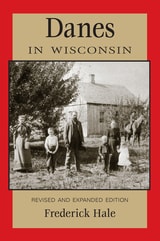
Danes in Wisconsin
Revised and Expanded EditionFrederick Hale
Wisconsin Historical Society Press, 2005
Wisconsin Territory's first Dane arrived in 1829, and by 1860 the state's Danish-born population had reached 1,150. Yet these newcomers remained only a small segment of Wisconsin's increasingly complex cultural mosaic, and the challenges of adapting to life in this new land shaped the Danish experience in the state. In this popular book, now revised and expanded with additional historical photos and documents, Frederick Hale offers a concise introduction to Wisconsin's Danish settlers, exploring their reasons for leaving their homeland, describing their difficult journeys, and examining their adjustments to life on Wisconsin soil.
New to this edition are the selected letters of Danish immigrant Andrew Frederickson. These compelling documents, written over a 40-year span, capture the personal observations of one Dane as he made a new life in Wisconsin.
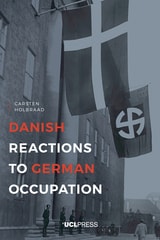
Danish Reactions to German Occupation
History and HistoriographyCarsten Holbraad
University College London, 2017
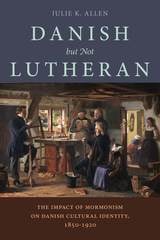
Danish, But Not Lutheran
The Impact of Mormonism on Danish Cultural Identity, 1850–1920Julie K. Allen
University of Utah Press, 2017
The Danish-Mormon migration to Utah in the nineteenth century was, relative to population size, one of the largest European religious out-migrations in history. Hundreds of thousands of Americans can trace their ancestry to Danish Mormons, but few know about the social and cultural ramifications of their ancestors’ conversion to Mormonism. This book tells that exciting and complex story for the first time.
In 1849, after nearly a thousand years of state- controlled religion, Denmark’s first democratic constitution granted religious freedom. One year later, the arrival of three Mormon missionaries in Denmark and their rapid success at winning converts to their faith caused a crisis in Danish society over the existential question: "How could someone be Danish but not Lutheran?" Over the next half-century nearly thirty thousand Danes joined the LDS Church, more than eighteen thousand of whom emigrated to join their fellow Mormons in Utah. This volume explores the range of Danish public reactions to Mormonism over a seventy-year period—from theological concerns articulated by Søren and Peter Christian Kierkegaard in the 1850s to fear-mongering about polygamy and white slavery in silent films of the 1910s and 1920s—and looks at the personal histories of converts.
Honorable Mention for Best International Book from the Mormon History Association.
Dante's Aesthetics of Being
Warren Ginsberg
University of Michigan Press, 1999
Despite the absence of tracts about beauty and art, aesthetic issues did command the attention of people in the Middle Ages. Whenever poets or philosophers turned their thoughts to the order of the heavens, whenever they delighted in music or art, they contemplated how the pleasure they took in the artistry of the universe was related to the God who created it. For Dante, aesthetics was the discourse of being and could not be narrowly defined. The aesthetic became the domain in which he considered not only form and proportion, but questions of love, identity, and perfection of the self.
Warren Ginsberg expertly guides us through Dante's work. He distinguishes between early texts such as the Vita Nuova, in which the aesthetic offers only a form of knowledge between sensation and reason, and the Comedy, in which the aesthetic is transformed into a language of existence. Among other subjects, Dante's Aesthetics of Being treats poeticism, literary history, language theory, the relation of philosophy to poetry, and of course, aesthetics. Its readers will include not only experts in Dante and medievalists in general, but literary critics of all periods. Indeed, anyone interested in poetic theory, the philosophy of beauty, or interdisciplinary studies will profit from reading Ginsberg's thoughtful offering.
Warren Ginsberg is Professor of English, University at Albany, State University of New York. He is author of The Cast of Character: The Representation of Personality in Ancient and Medieval Literature and editor of two Middle English poems, Wynnere and Wastoure and The Parlement of the Thre Ages.
Dante's Epistle to Cangrande
Robert Hollander
University of Michigan Press, 1994
In Dante's Epistle to Cangrande Robert Hollander commandingly marshals new evidence to demonstrate that the epistle should be considered authentically Dantean. He further provides enlightening discussion of the nature of tragedy and comedy in the Divine Comedy. The author draws authoritatively on the extensive array of medieval and modern commentaries stored in electronic form by the Dartmouth Dante Project, of which he is the director.
Dante's Epistle to Cangrande makes a signal contribution to Dante studies. Naturally of interest to students of Dante's work, it will also be important reading for those concerned with literary critical questions such as authorial intent, programmatic statements, and allegorical interpretations of literature.

Dark December
The Full Account of the Battle of the BulgeRobert E. Merriam
Westholme Publishing, 2011
One of the Most Important Histories of the Greatest Battle on the Western Front in World War II
“Dark December occupies a distinguished place among war books. Every paragraph is based upon evidence, not flimsy wartime rumors. Technical enough for the professional, accurate enough for the historian (in fact, it is history of the best), it is lucid and understandable for the general reader.”—New York Herald Tribune
“If other veterans of the Army’s historical division can maintain Mr. Merriam’s high standard of stimulating, critical and painstaking work, we will be fortunate. Dark December can be heartily recommended to anyone faintly interested in the war.”—New York Times
“The book explodes a number of myths which have been winning their improper way into general belief.” —Arthur Schlesinger, Jr., Booklist
The massive German counteroffensive through Belgium’s Ardennes forest in December 1944 took the American and British armies by surprise and changed the outcome of the war. With whole divisions destroyed and decimated, the American army scrambled to contain the German threat, while also trying to determine how such an attack had gone undetected. The Americans succeeded in winning the month-long battle, commonly known as the Battle of the Bulge, through the tenacity of several pockets of troops, notably those in the Belgian town of Bastogne, and the remarkable rapid movement of Patton’s Third Army to seal the breech in the American lines. The battle stalled the British and American advances and lengthened the war with the result that the Soviet Union was able to make greater gains in Europe than previously anticipated. Dark December is a thorough and engrossing examination of the Battle of the Bulge by a historian who had the opportunity to prepare notes as the battle was occurring and consult classified American as well as German records. Notably, the book contains unique and critical information, including details gleaned from interviews conducted by the author with commanding officers on both sides, some of which are the only reports gathered from these sources. Originally published in 1947, this the first paperback edition with the complete original text and maps.
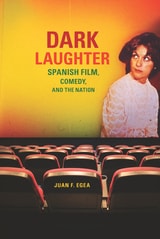
Dark Laughter
Spanish Film, Comedy, and the NationJuan F. Egea
University of Wisconsin Press, 2013
Egea begins his analysis with General Franco's dictatorship in the 1960s—a regime that opened the country to new economic forces while maintaining its repressive nature—exploring key works by Luis García Berlanga, Marco Ferreri, Fernando Fernán-Gómez, and Luis Buñuel. Dark Laughter then moves to the first films of Pedro Almodóvar in the early 1980s during the Spanish political transition to democracy before examining Alex de la Iglesia and the new dark comedies of the 1990s. Analyzing this younger generation of filmmakers, Egea traces dark comedy to Spain's displays of ultramodernity such as the Universal Exposition in Seville and the Barcelona Olympic Games.
At its core, Dark Laughter is a substantial inquiry into the epistemology of comedy, the intricacies of visual modernity, and the relationship between cinema and a wider framework of representational practices.
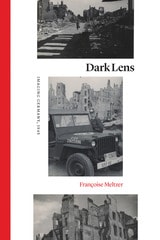
Dark Lens
Imaging Germany, 1945Françoise Meltzer
University of Chicago Press, 2019
The ruins of war have long held the power to stupefy and appall. Can such ruins ever be persuasively depicted and comprehended? Can images of ruins force us to identify with the suffering of the enemy and raise uncomfortable questions about forgiveness and revenge?
Françoise Meltzer explores these questions in Dark Lens, which uses the images of war ruins in Nazi Germany to investigate problems of aestheticization and the representation of catastrophe. Through texts that give accounts of bombed-out towns in Germany in the last years of the war, painters’ attempts to depict the destruction, and her own mother’s photographs taken in 1945, Meltzer asks if any medium offers a direct experience of war ruins for the viewer. Refreshingly accessible and deeply personal, Dark Lens is a compelling look at the role images play in constructing memory.
Dark Side of the Light
Slavery and the French EnlightenmentLouis Sala-Molins
University of Minnesota Press, 2006
Translated into English for the first time, Dark Side of the Light scrutinizes Condorcet’s Reflections on NegroSlavery and the works of Montesquieu, Rousseau, and Diderot side by side with the Code Noir (the royal document that codified the rules of French Caribbean slavery) in order to uncover attempts to uphold the humanist project of the Enlightenment while simultaneously justifying slavery. Wielding the pen of both the ironist and the moralist, Sala-Molins demonstrates the flawed nature of these attempts and the reasons given for this denial of rights, from the imperatives of public order to the incomplete humanity of the slave (and thus the need for his progressive humanization through slavery), to the economic prosperity that depended on his labor. At the same time, Sala-Molins uses the techniques of literature to give equal weight to the perspective of the “barefooted, the starving, and the slaves” through expository prose and scenes between slave and philosopher, giving moral agency and flesh-and-blood dimensions to issues most often treated as abstractions.
Both an urgent critique and a measured analysis, Dark Side of the Light reveals the moral paradoxes of Enlightenment philosophies and their world-changing consequences.
Louis Sala-Molins is a moral and political philosopher and emeritus professor at the University of Toulouse. He is the author of many books, including Le Code Noir, ou Le calvaire de Canaan and L’Afrique aux Amériques.
John Conteh-Morgan is associate professor of French and Francophone, African-American, and African studies at Ohio State University. He is the author of Theatre and Drama in Francophone Africa: A Critical Introduction.
Darwin Deleted
Imagining a World without DarwinPeter J. Bowler
University of Chicago Press, 2013
In Darwin Deleted, Bowler argues that no one else, not even Wallace, was in a position to duplicate Darwin’s complete theory of evolution by natural selection. Evolutionary biology would almost certainly have emerged, but through alternative theories, which were frequently promoted by scientists, religious thinkers, and moralists who feared the implications of natural selection. Because non-Darwinian elements of evolutionism flourished for a time in the real world, it is possible to plausibly imagine how they might have developed, particularly if the theory of natural selection had not emerged until decades after the acceptance of the basic idea of evolution. Bowler’s unique approach enables him to clearly explain the non-Darwinian tradition—and in doing so, he reveals how the reception of Darwinism was historically contingent. By taking Darwin out of the equation, Bowler is able to fully elucidate the ideas of other scientists, such as Richard Owen and Thomas Huxley, whose work has often been misunderstood because of their distinctive responses to Darwin.
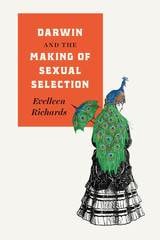
Darwin and the Making of Sexual Selection
Evelleen Richards
University of Chicago Press, 2017
Only now, with Darwin and the Making of Sexual Selection, do we have a comprehensive and meticulously researched account of Darwin’s path to its formulation—one that shows the man, rather than the myth, and examines both the social and intellectual roots of Darwin’s theory. Drawing on the minutiae of his unpublished notes, annotations in his personal library, and his extensive correspondence, Evelleen Richards offers a richly detailed, multilayered history. Her fine-grained analysis comprehends the extraordinarily wide range of Darwin’s sources and disentangles the complexity of theory, practice, and analogy that went into the making of sexual selection. Richards deftly explores the narrative strands of this history and vividly brings to life the chief characters involved. A true milestone in the history of science, Darwin and the Making of Sexual Selection illuminates the social and cultural contingencies of the shaping of an important—if controversial—biological concept that is back in play in current evolutionary theory.
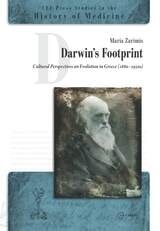
Darwin's Footprint
Cultural Perspectives on Evolution in Greece (1880–1930s)Maria Zarimis
Central European University Press, 2015
Darwin’s Footprint examines the impact of Darwinism in Greece, investigating how it has shaped Greece in terms of its cultural and intellectual history, and in particular its literature.
The book demonstrates that in the late 19th to early 20th centuries Darwinism and associated science strongly influenced celebrated Greek literary writers and other influential intellectuals, which fueled debate in various areas such as ‘man’s place in nature’, eugenics, the nature-nurture controversy, religion, as well as class, race and gender.
In addition, the study reveals that many of these individuals were also considering alternative approaches to these issues based on Darwinian and associated biological post-Darwinian ideas. Their concerns included the Greek “race” or nation, its culture, language and identity; also politics and gender equality.
Zarimis’s monograph devotes considerable space to Xenopoulos (1867-1951), notable novelist, journalist and playwright.
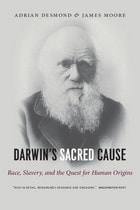
Darwin's Sacred Cause
Race, Slavery and the Quest for Human OriginsAdrian Desmond and James Moore
University of Chicago Press, 2011
There has always been a mystery surrounding Darwin: How did this quiet, respectable gentleman come to beget one of the most radical ideas in the history of human thought? It is difficult to overstate what Darwin was risking in publishing his theory of evolution. So it must have been something very powerful—a moral fire, as Desmond and Moore put it—that helped propel him. That moral fire, they argue, was a passionate hatred of slavery.
In opposition to the apologists for slavery who argued that blacks and whites had originated as separate species, Darwin believed the races belonged to the same human family. Slavery was a “sin,” and abolishing it became his “sacred cause.” By extending the abolitionists’ idea of human brotherhood to all life, Darwin developed our modern view of evolution.
Drawing on a wealth of fresh manuscripts, family letters, diaries, and even ships’ logs, Desmond and Moore argue that only by acknowledging Darwin’s abolitionist heritage can we fully understand the development of his groundbreaking ideas.
David Lloyd George
Great BritainAlan Sharp
Haus Publishing, 2010
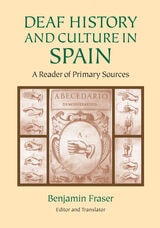
Deaf History and Culture in Spain
A Reader of Primary DocumentsBenjamin Fraser
Gallaudet University Press, 2009
In this landmark reader, Benjamin Fraser offers in five parts 44 Spanish documents dating from 1417 to the present, translated for the first time to trace the turbulent history of Deaf culture in Spain. Part I: The Birth of Oralism and Deafness as Metaphor illustrates the predominant impression of deafness as isolation, exemplified by Teresa de Cartagena writings in 1455-60 about deafness as an island. Part II: The Return to Deaf Education highlights writers who wished to restore “the Spanish ‘Art’” of educating deaf students. Lorenzo Hervás y Panduro wrote The Spanish School of Deafmutes, or Method of Teaching Them to Write and Speak the Spanish Language in 1795. Yet, Madrid’s Royal School for Deaf-Mutes, which opened in 1805, taught deaf students using methodical signs adopted from France’s Abbé de l’Epée.
Readings in Part III :The Contemporary Deaf Experience reveal considerations from the 1970s to the ‘90s of Deaf culture and linguistics similar to those in the United States, typified by the works of Inés Polo and Félix-Jesús Pinedo Peydró. The fourth part, The Recognition of Deaf Language and Culture, marks the expansion of academic research in Spain. María Angeles Rodríguez González spearheaded Spanish Sign Language (LSE) linguistics in 1992 with her publication Sign Language. The final part, A Selection of Deaf Poetry, concludes these documents with verse in Spanish spoken dialects rather than LSE, indicating that the evolution of the Deaf experience in Spain continues on its own path today.
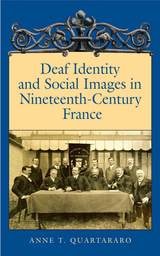
Deaf Identity and Social Images in Nineteenth-Century France
Anne T. Quartararo
Gallaudet University Press, 2008
Since the French Revolution in1789, Deaf French people have struggled to preserve their cultural heritage, to win full civil rights, and to gain access to society through their sign language. Anne T. Quartararo depicts this struggle in her new book Deaf Identity and Social Images in Nineteenth-Century France. In it, she portrays the genesis of the French Deaf community, examines its identity as a minority culture, and analyzes how deaf people developed their cultural heritage, a deaf patrimonie that has been historically connected to the preservation of French sign language.
Quartararo begins by describing how Abbé de l’Epée promoted the education of deaf students with sign language, an approach supported by the French revolutionary government, which formally established the Paris Deaf Institute in 1791. In the early part of the nineteenth century, the school’s hearing director, Roch-Ambroise-Auguste Bébian, advocated the use of sign language even while the institute’s physician Dr. Jean-Marc-Gaspard Itard worked to discredit signing.
In this meticulous study, Quartararo details the many variations in deaf education from 1830 to1930. She describes the banquet movement in the 1830s led by Ferdinand Berthier, Alponse Lenoir, and Claudius Forestier, which celebrated sign language and fostered the deaf association known as the Société Centrale. Quartararo also recounts how hearing educators at the Milan Congress in 1880 universally adopted oralism as the way to defeat deafness, and prohibited sign language in deaf schools. French deaf people refused to submit to this attack upon their cultural heritage, however, and an explosion of social activity among deaf people between 1880 and 1900 created a host of active deaf groups in all corners of the country. Deaf Identity and Social Images paints a unique, rich tapestry of the resilience of French deaf people in defending their culture through the most trying century in their history.
Deaf People in Hitler's Europe
Donna F. Ryan
Gallaudet University Press, 2002
Inspired by the conference “Deaf People in Hitler’s Europe, 1933–1945,” hosted jointly by Gallaudet University and the United States Holocaust Memorial Museum in 1998, this extraordinary collection, organized into three parts, integrates key presentations and important postconference research.
Henry Friedlander begins “Part I: Racial Hygiene” by analyzing the assault on deaf people and people with disabilities as an integral element in the Nazi attempt to implement their theories of racial hygiene. Robert Proctor documents the role of medical professionals in deciding who should be sterilized or forbidden to marry, and whom the Nazi authorities would murder. In an essay written especially for this volume, Patricia Heberer details how Nazi manipulation of eugenics theory and practice facilitated the justification for the murder of those considered socially undesirable.
“Part II: The German Experience” commences with Jochen Muhs’s interviews of deaf Berliners who lived under Nazi rule, both those who suffered abuse and those who, as members of the Nazi Party, persecuted others, especially deaf Jews. John S. Schuchman describes the remarkable 1932 film Misjudged People, which so successfully portrayed the German deaf community as a vibrant contributor to society that the Nazis banned its showing when they came to power. Horst Biesold’s contribution confirms the complicity of teachers who denounced their own students, labeling them hereditarily deaf and thus exposing them to compulsory sterilization. The section also includes the reprint of a chilling 1934 article entitled “The Place of the School for the Deaf in the New Reich,” in which author Kurt Lietz rued the expense of educating deaf students, who could not become soldiers or bear “healthy children.”
In “Part III: The Jewish Deaf Experience,” John S. Schuchman discusses the plight of deaf Jews in Hungary. His historical analysis is complemented by a chapter containing excerpts from the testimony of six deaf Jewish survivors who describe their personal ordeals. Peter Black’s reflections on the need for more research conclude this vital study of a little-known chapter of the Holocaust.
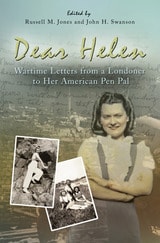
Dear Helen
Wartime Letters from a Londoner to Her American Pen PalEdited by Russell M. Jones & John H. Swanson
University of Missouri Press, 2009

Death and Life in the Tenth Century
Eleanor Shipley Duckett
University of Michigan Press, 1989
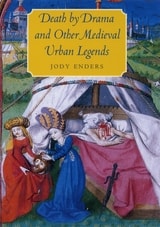
Death by Drama and Other Medieval Urban Legends
Jody Enders
University of Chicago Press, 2002
Was a convicted criminal executed on stage during a beheading scene? Was an unfortunate actor driven insane while playing a madman? Did a theatrical enactment of a crucifixion result in a real one? Did an androgynous young man seduce a priest when portraying a female saint? Enders answers these and other questions while presenting a treasure trove of tales that have long seemed true but are actually medieval urban legends. On topics ranging through politics, religion, marriage, class, and law, these tales, Enders argues, do the cultural work of all urban legends: they disclose the hopes, fears, and anxieties of their tellers. Each one represents a medieval meditation created or dramatized by the theater with its power to blur the line between fiction and reality, engaging anyone who watches, performs, or is represented by it. Each one also raises pressing questions about the medieval and modern world on the eve of the Reformation, when Europe had never engaged more anxiously and fervently in the great debate about what was real, what was pretend, and what was pretense.
Written with elegance and flair, and meticulously researched, Death by Drama and Other Medieval Urban Legends will interest scholars of medieval and Renaissance literature, history, theater, performance studies, and anyone curious about urban legends.

Death in England
An Illustrated HistoryEdited by Peter C. Jupp and Clare Gittings
Rutgers University Press, 2000
Death in England provides the first ever social history of death-from the earliest times to Diana, Princess of Wales. As we discard the taboos surrounding death, this book charts the fascinating story of how people have coped with this fundamental aspect of their daily lives.
Peter C. Jupp and Clare Gittings reveal how attitudes, practices, and beliefs about death have undergone constant change, as well as how, why, and at what ages people died. Examining how death touches all aspects of society, they cover topics such as plagues and violence; wills and deathbeds; funerals and memorials; and beliefs and bereavement. This wide-ranging analysis is lavishly illustrated with photographs and drawings, their diversity reflecting the breadth of issues and periods covered.
The contributors are all specialists in their own fields, including archaeology, history, and sociology. The ten chapters cover: earliest times to the Bronze Age; the Iron and Roman Ages; the Early Middle Ages; from the advent of Purgatory to the Black Death; the Later Middle Ages and the Reformation; from Elizabeth I to the Civil War; the "Age of Decency"; the Enlightenment; the Victorian era; and the twentieth century.
With the pervasive depiction of death through the media and the ensuing public awareness of this topic, Death in England will be of interest not only to the general reader but also to students of archaeology, art, history, medicine, and sociology.
Debate of the Romance of the Rose
Christine de Pizan
University of Chicago Press, 2010
In 1401, Christine de Pizan (1365–1430?), one of the most renowned and prolific woman writers of the Middle Ages, wrote a letter to the provost of Lille criticizing the highly popular and widely read Romance of the Rose for its blatant and unwarranted misogynistic depictions of women. The debate that ensued, over not only the merits of the treatise but also of the place of women in society, started Europe on the long path to gender parity. Pizan’s criticism sparked a continent-wide discussion of issues that is still alive today in disputes about art and morality, especially the civic responsibility of a writer or artist for the works he or she produces.
In Debate of the “Romance of the Rose,” David Hult collects, along with the debate documents themselves, letters, sermons, and excerpts from other works of Pizan, including one from City of Ladies—her major defense of women and their rights—that give context to this debate. Here, Pizan’s supporters and detractors are heard alongside her own formidable, protofeminist voice. The resulting volume affords a rare look at the way people read and thought about literature in the period immediately preceding the era of print.
Debating Darwin
Robert J. Richards and Michael Ruse
University of Chicago Press, 2016
Examining key disagreements about Darwin that continue to confound even committed Darwinists, Richards and Ruse offer divergent views on the origins and nature of Darwin and his ideas. Ruse argues that Darwin was quintessentially British and that the roots of his thought can be traced back to the eighteenth century, particularly to the Industrial Revolution and thinkers such as Adam Smith and Thomas Robert Malthus. Ruse argues that when these influences are appreciated, we can see how Darwin’s work in biology is an extension of their theories. In contrast, Richards presents Darwin as a more cosmopolitan, self-educated man, influenced as much by French and particularly German thinkers. Above all, argues Richards, it was Alexander von Humboldt who both inspired Darwin and gave him the conceptual tools that he needed to find and formulate his evolutionary hypotheses. Together, the authors show how the reverberations of the contrasting views on Darwin’s influences can be felt in theories about the nature of natural selection, the role of metaphor in science, and the place of God in Darwin’s thought.
Revealing how much there still is to investigate and interrogate about Darwin’s ideas, Debating Darwin contributes to our understanding of evolution itself. The book concludes with a jointly authored chapter that brings this debate into the present, focusing on human evolution, consciousness, religion, and morality. This will be powerful, essential reading for anyone seeking a comprehensive understanding of modern-day evolutionary science and philosophy.
Debating Moderate Islam
The Geopolitics of Islam and the WestM A Muqtedar Khan
University of Utah Press, 2007
After 9/11, many Americans took the view that the attacks on the World Trade Center and the Pentagon were the leading edge of a new war: Islam versus the West. Yet the attacks were also part of the current struggle within Islam between fundamentalist and moderate approaches and were staged for maximum effect in the Muslim world.
This book is based on a special-topic issue of the American Journal of Islamic Social Sciences (Fall 2005), and brings together prominent Muslim voices from the policy and academic communities to debate the nature of moderate Islam and what moderation means in both a theological and a geopolitical sense. Participants reflect on the future of political Islam, its role in Muslim politics, western policies in the Muslim world, and the future of American-Muslim relations. This book and the debate it presents are vital to understanding these complex issues.
Debating the Past
Modern Bulgarian Historiography—From Stambolov to ZhivkovRoumen Daskalov
Central European University Press, 2011
Decay and Afterlife
Form, Time, and the Textuality of Ruins, 1100 to 1900Aleksandra Prica
University of Chicago Press, 2022
Western ruins have long been understood as objects riddled with temporal contradictions, whether they appear in baroque poetry and drama, Romanticism’s nostalgic view of history, eighteenth-century paintings of classical subjects, or even recent photographic histories of the ruins of postindustrial Detroit. Decay and Afterlife pivots away from our immediate, visual fascination with ruins, focusing instead on the textuality of ruins in works about disintegration and survival. Combining an impressive array of literary, philosophical, and historiographical works both canonical and neglected, and encompassing Latin, Italian, French, German, and English sources, Aleksandra Prica addresses ruins as textual forms, examining them in their extraordinary geographical and temporal breadth, highlighting their variability and reflexivity, and uncovering new lines of aesthetic and intellectual affinity. Through close readings, she traverses eight hundred years of intellectual and literary history, from Seneca and Petrarch to Hegel, Goethe, and Georg Simmel. She tracks European discourses on ruins as they metamorphose over time, identifying surprising resemblances and resonances, ignored contrasts and tensions, as well as the shared apprehensions and ideas that come to light in the excavation of these discourses.

Decent Capitalism
A Blueprint for Reforming our EconomiesSebastian Dullien, Hansjorg Herr, and Christian Kellermann
Pluto Press, 2011
The recent crisis, created by finance capitalism, has brought us to the economic abyss. The excessive freedom of international markets has rapidly transformed into international panic, with states struggling to rescue and bail out a globalised financial sector. Reform is promised by our leaders, but in governments dominated by financial interests there is little hope of meaningful change.
Decent Capitalism argues for a response that addresses capitalism’s systemic tendency towards crisis, a tendency which is completely absent from the mainstream debate. The authors develop a concept of a moderated capitalism that keeps its core strengths intact while reducing its inherent destructive political force in our societies. This book argues that reforming the capitalist system will have to be far more radical than the current political discourse suggests.
Decent Capitalism is a concept and a slogan that will inspire political activists, trade unionists and policy makers to get behind a package of reforms that finally allows the majority to master capitalism.
Decolonizing German and European History at the Museum
Katrin Sieg
University of Michigan Press, 2021
Decolonizing German and European History at the Museum examines efforts by European museums to investigate colonialism as part of an unprocessed past, confront its presence, and urge repair. A flurry of exhibitions and the overhaul of numerous large museums in the last decade signal that an emergent colonial memory culture is now reaching broader publics. Exhibitions pose the question of what Europeans owe to those they colonized.
Decolonizing German and European History at the Museum shows how museums can help visitors mourn historic violence and identify the contemporary agents, beneficiaries, victims, survivors, and resisters of colonial presence. At the same time, the book treats the museum as part of the racialized power relations that activists, academics, and artists have long protested against. This book asks whether museums have made the dream of activists, academics, and artists to build equitable futures more acceptable and more durable—or whether in packaging that dream for general audiences they curtail it. Confronting colonial violence, this book argues, pushes Europeans to face the histories of racism and urges them to envision antiracism at the global scale.
Decolonizing the Republic
African and Caribbean Migrants in Postwar Paris, 1946–1974Félix F. Germain
Michigan State University Press, 2016
Deeds of the Saxons
Catholic University of America Press, 2014
Deep Mapping the Literary Lake District
A Geographical Text AnalysisJoanna E. Taylor
Bucknell University Press, 2022

Deepening Divides
How Physical Borders and Social Boundaries Delineate our WorldDidier Fassin
Pluto Press, 2019
Defeat Is the Only Bad News
Rwanda under Musinga, 1896–1931Alison Des Forges
University of Wisconsin Press, 2011
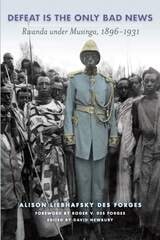
A Rwandan proverb says “Defeat is the only bad news.” For Rwandans living under colonial rule, winning called not only for armed confrontation, but also for a battle of wits—and not only with foreigners, but also with each other. In Defeat Is the Only Bad News Alison Des Forges recounts the ambitions, strategies, and intrigues of an African royal court under Yuhi Musinga, the Rwandan ruler from 1896 to 1931. These were turbulent years for Rwanda, when first Germany and then Belgium pursued an aggressive plan of colonization there. At the time of the Europeans’ arrival, Rwanda was also engaged in a succession dispute after the death of one of its most famous kings. Against this backdrop, the Rwandan court became the stage for a drama of Shakespearean proportions, filled with deceit, shrewd calculation, ruthless betrayal, and sometimes murder.

Defending Nazis in Postwar Czechoslovakia
Life of K. Resler, Defense Councel Ex Officio of K. H. FrankJakub Drápal
Karolinum Press, 2018

Deficit and Debt in Transition
The Political Economy of Public Finances in Central and Eastern EuropeIstvan Benczes
Central European University Press, 2014
Defining Dominion
The Discourses of Magic and Witchcraft in Early Modern France and GermanyGerhild Scholz Williams
University of Michigan Press, 1999
". . . Williams has done an exemplary job of analyzing the intersection of the discourses of magic (as related to women and witchcraft), discovery, and religious diversity/dissidence to explain how the confluence of these discourses eventually 'determined who occupied society's center and who was forced to move to, or remain at, its margins.' . . . Gerhild Scholz Williams is no dilettante grazing in the greener pastures of other disciplines. She has been laboring assiduously in these neighboring fields for years now, and it is breathtaking to see how all of her disparate projects have come together so elegantly articulated in this one volume." --Susan L. Cocalis, German Studies Review
Gerhild Scholz Williams is Professor of German and Comparative Literature, Washington University, St. Louis.

Defining Latvia
Recent Explorations in History, Culture, and PoliticsMatthew Kott
Central European University Press, 2022
In just over a century, Latvia has transitioned from imperial periphery to nation-state, then Soviet republic, and finally following the collapse of the Soviet Union to an independent republic. Defining Latvia brings together the latest research on the multiple social, political, and cultural contexts of Latvia throughout this turbulent period. Its ten chapters are written by leading political scientists, historians, and area studies specialists from across Europe and North America.
The volume moves beyond an exclusively political context to incorporate a variety of social and cultural perspectives, ranging from the experiences of Latvian mapmakers in the Russian Empire, to the participation of Latvians in the Wehrmacht and Red Army during World War II, Latvian national communism, and the development of extremist politics following Latvia’s accession to the European Union. Other chapters address developing trends in the fields of history and political science, including the history of antisemitism, memory, language politics, photography, and political extremism.
Based on the book’s temporal span from the nineteenth century to the present, the authors and editors of Defining Latvia understand the construction of Latvian identity as a continuous and interconnected process across significant political and ideological ruptures.
Defining Nature's Limits
The Roman Inquisition and the Boundaries of ScienceNeil Tarrant
University of Chicago Press, 2022
Neil Tarrant challenges conventional thinking by looking at the longer history of censorship, considering a five-hundred-year continuity of goals and methods stretching from the late eleventh century to well into the sixteenth.
Unlike earlier studies, Defining Nature’s Limits engages the history of both learned and popular magic. Tarrant explains how the church developed a program that sought to codify what was proper belief through confession, inquisition, and punishment and prosecuted what they considered superstition or heresy that stretched beyond the boundaries of religion. These efforts were continued by the Roman Inquisition, established in 1542. Although it was designed primarily to combat Protestantism, from the outset the new institution investigated both practitioners of “illicit” magic and inquiries into natural philosophy, delegitimizing certain practices and thus shaping the development of early modern science. Describing the dynamics of censorship that continued well into the post-Reformation era, Defining Nature's Limits is revisionist history that will interest scholars of the history science, the history of magic, and the history of the church alike.

Defoe's Britain
jeremy black
St. Augustine's Press, 2023
Defoe was an outsider, a man of many interests whom Black asserts evades too precise a portrait or coherent description of character and career. But he is a traveler, in the literal and imaginative senses, and in his engagement with life and its issues and willingness to associate with 'low-life' prefigures later literary giants like Smollett and Fielding. More than the establishment of genre, Defoe created the writer "whose business is observation." Black's account of this parcel of the British past is impeccable because it is in fact an account that the past, in Defoe, gives of itself. "As a writer, Defoe brought together a reality usually presented as, and endorsed by, history, with the imaginative focus of storytelling, and the direction of, variously, propaganda, analysis, and exemplary tale."
Democracy Fatigue
An East European EpidemyCarlos García-Rivero
Central European University Press, 2023
Over the early 21st century, democracy worldwide has deteriorated significantly. At the same time, new populist forces have appeared that challenge democracies through legal reforms. The stark contrast between Eastern and Western Europe in this respect is the focus of this collection of essays.
The authors consider the 2008-2012 economic crisis to be at the root of the success of the populist parties and the rise of cultural backlash against liberal values. In turn, European governments’ responses to the crisis—mainly austerity measures demanded by IMF and the EU— help explain desenchantment with the European Union. These policies made the wider public feel that they were being left out of politics, and populist parties promised to return power to them.
The contributors argue that polarization of the electorate can set in motion a radicalization that strengthens authoritarians at the expense of democrats. They also demonstrate that Eastern and Western Europe differ in their attitudes to the decline in quality of democracy. The studies consider how satisfied people are with the political changes they witness, and argue that seemingly more authoritarian attitudes in the East explain why people feel more satisfied with a defective democracy that empowers the populist-authoritarian political actors that they support.

Democracy Needs Dispute
The Debate on the European ConstitutionEdited by Cornelia Brüll, Monika Mokre, and Markus Pausch
Campus Verlag, 2009
In 2005 hopes for closer European integration were dealt a potentially fatal blow when French and Dutch voters rejected the proposed new European Union constitution. Going beyond the instant analysis of journalists, which placed blame for the failed vote on the two nations’ internal politics, Democracy Needs Dispute examines a collection of media accounts of European policy debates to argue that the problem with the EU is its relative lack of vibrant political conflict. Democracy Needs Dispute offers both up-to-date analysis and a rich theoretical understanding of the problems facing further efforts at European integration.

Democratising History
Modern British History Inside and OutEdited by Laura Carter, Freddy Foks, and Philip Harling
University of London Press, 2025
Democratising History inspects how democracy has reshaped modern Britain and how its history is taught, providing a new perspective on the evolving relationship between historical scholarship and education. Collectively, this volume responds to the scholarly and professional contributions of Peter Mandler, whose sensitive readings of cultural discourses and their social reach have inspired a generation of modern British historians. Through nine research-led chapters, the book explores the development of democratic ideals from the early nineteenth century to the present, addressing themes such as empire and culture. These historical investigations are interwoven with six stimulating interludes that critically assess the state of UK higher education and the professional field of modern British history, elucidating the shifting forces shaping historical research and policy today.
The authors examine in detail how democratic ideals have shaped British society in both expected and surprising ways—whether through museum collections, the art world, mass observation, or the study of race relations. Integrating historical analysis with reflections on contemporary academic practice, this work subverts traditional narratives and opens new avenues for understanding Britain’s past and its implications for the present.