Results by title
56 books match the query 'Faculty' and 4 start with d

D. Michael Quinn
Mormon HistorianGary Topping
Signature Books, 2022

Dark Academia
How Universities DiePeter Fleming
Pluto Press, 2021
“Fleming's books are sparklingly sardonic and hilariously angry”—Guardian
“An excellent and important book''—Journal of Education, Innovation, and Communication
To Professor Peter Fleming, there is a strong link between the neo-liberalization of higher education over the last 20 years and the psychological hell now endured by its staff and students. He believes that impersonal and unforgiving management hierarchies have supplanted academic judgement, collegiality, and professional common sense. He bemoans the modern system of higher education and shines a spotlight on what’s gone wrong and why.
While academia was once thought of as the best job in the world, one that fosters autonomy, craft, intrinsic job satisfaction, and vocational zeal, you would be hard-pressed to find a lecturer who believes that now.
Fleming delves into this new metrics-obsessed, overly hierarchical world to bring out the hidden underbelly of what he terms the 'zombie university'. He examines:
*Commercialization
*Mental illness and self-harm
*The rise of managerialism
*Students as consumers and evaluators
*The competitive individualism which casts a dark sheen of alienation over departments
*And much more!
Arguing that time has almost run out to reverse this decline, this book shows how academics and students need to act now if they are to begin to fix this broken system.
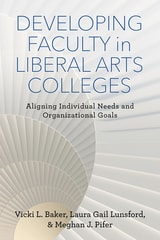
Developing Faculty in Liberal Arts Colleges
Aligning Individual Needs and Organizational GoalsBaker, Vicki L.
Rutgers University Press, 2017
Drawing on research conducted at the thirteen institutions of the Great Lakes Colleges Association, Vicki L. Baker, Laura Gail Lunsford, and Meghan J. Pifer propose a compelling Alignment Framework for Faculty Development in Liberal Arts Colleges to show how these colleges succeed—or sometimes fail—in providing their faculties with the right support to be successful.
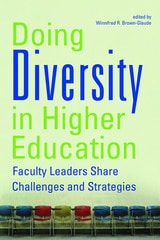
Doing Diversity in Higher Education
Faculty Leaders Share Challenges and StrategiesBrown-Glaude, Winnifred R
Rutgers University Press, 2008
The rich variety of colleges and universities included provides a wide array of models that faculty can draw upon to inspire institutional change.