Results by title
479 books match the query 'Methodology' and 21 start with d

Dangerous Supplements
Resistance and Renewal in JurisprudencePeter Fitzpatrick, ed.
Duke University Press, 1991
Taking as a point of departure H. L. A. Hart’s The Concept of the Law, Peter Fitzgerald shows how Hart adopted Wittgenstein’s linguistic theory to overthrow J. L. Austin’s “simple” conception of rules and habits in law, only to jettison this theory in order to locate the essence of law in its evolution from a “primal scene.” Other chapters examine the way in which the setting of English law above social relations has masked an imperial mission; how the philosophies of Hayek and Marx, as well as the discourses of liberalism, feminism, semiotics, and poststructuralism, have been assiduously marginalized and rendered inessential to jurisprudence.
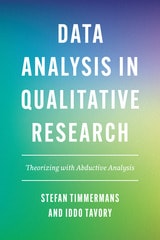
Data Analysis in Qualitative Research
Theorizing with Abductive AnalysisStefan Timmermans and Iddo Tavory
University of Chicago Press, 2022
In Data Analysis in Qualitative Research, Iddo Tavory and Stefan Timmermans provide a how-to guide filled with tricks of the trade for researchers who hope to take excellent qualitative data and transform it into powerful scholarship. In their previous book, Abductive Analysis: Theorizing Qualitative Research, Timmermans and Tavory offered a toolkit for innovative theorizing in the social sciences. In this companion, they go one step further to show how to uncover the surprising revelations that lie waiting in qualitative data—in sociology and beyond.
In this book, they lay out a series of tools designed to help both novice and expert scholars see and understand their data in surprising ways. Timmermans and Tavory show researchers how to “stack the deck” of qualitative research in favor of locating surprising findings that may lead to theoretical breakthroughs, whether by engaging with theory, discussing research strategies, or walking the reader through the process of coding data. From beginning to end of a research project, Data Analysis in Qualitative Research helps social scientists pinpoint the most promising paths to take in their approach.
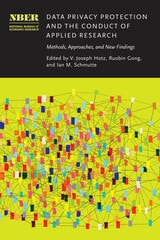
Data Privacy Protection and the Conduct of Applied Research
Methods, Approaches, and New FindingsEdited by V. Joseph Hotz, Ruobin Gong, and Ian M. Schmutte
University of Chicago Press, 2026
A necessary exploration into the mechanics of data privacy protections within empirical social science research.
The explosion of computational power and data availability has revolutionized empirical social science research, but it has also created unprecedented challenges for protecting the privacy of individuals and businesses. As computational tools make it increasingly possible to breach data anonymity in government surveys by combining the survey data with additional information from external sources, statistical agencies face mounting pressure to develop new privacy protection methods while maintaining data quality essential for research and policymaking. This volume explores how innovations in data privacy protection, including differential privacy and synthetic data methods, affect the conduct of empirical analysis in economics, computer science, and statistics. Contributors explore critical questions about the trade-offs between privacy and data usability: How do new protection methods impact statistical inference and parameter estimation? What standards should data providers adopt? The chapters examine frameworks for characterizing privacy protection, disclosure limitation challenges for survey data, methodological innovations for privacy-preserving statistical analysis, regulatory considerations in modern data governance, and strategies for balancing confidentiality with research access.
This volume provides researchers, statistical agencies, and policymakers with essential guidance for navigating the complex landscape where data protection meets scientific inquiry.
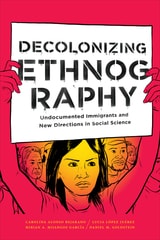
Decolonizing Ethnography
Undocumented Immigrants and New Directions in Social ScienceCarolina Alonso-Bejarano, Lucia López Juárez, Mirian A. Mijangos García, and Daniel M. Goldstein
Duke University Press, 2019
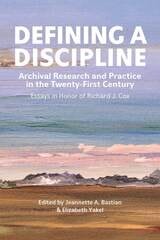
Defining a Discipline
Archival Research and Practice in the 21st Century: Essays in Honor of Richard J. CoxJeannette A. Bastian
Society of American Archivists, 2020

Design Thinking
Rachel Ivy Clarke
American Library Association, 2020
Designing Experimental Research in Archaeology
Examining Technology through Production and UseJeffrey R. Ferguson
University Press of Colorado, 2010
Each chapter addresses a particular classification of material culture-ceramics, stone tools, perishable materials, composite hunting technology, butchering practices and bone tools, and experimental zooarchaeology-detailing issues that must be considered in the development of experimental archaeology projects and discussing potential pitfalls. The experiments follow coherent and consistent research designs and procedures and are placed in a theoretical context, and contributors outline methods that will serve as a guide in future experiments. This degree of standardization is uncommon in traditional archaeological research but is essential to experimental archaeology.
The field has long been in need of a guide that focuses on methodology and design. This book fills that need not only for undergraduate and graduate students but for any archaeologist looking to begin an experimental research project.
Designing Experiments in Education and the Social Sciences
Larry V. Hedges
Russell Sage Foundation, 2026
Randomized experiments—often referred to as the gold standard of research design—are generally accepted as the type of studies that provide the strongest evidence about cause and effect. There has been a wide adoption of experimental methods in agriculture, medicine, industrial design, and laboratory social sciences, such as experimental psychology, where conditions can be controlled. Since then, there has been an increase in the use of field experiments to provide evidence of cause and effect beyond the laboratory. However, the social settings in which these studies take place complicate the design and evaluation of experiments because their social contexts must be taken into account in order for the experiment to provide useful and unambiguous results. In Designing Experiments in Education and the Social Sciences, statistician Larry V. Hedges details how to design educational and social science field experiments that are sensitive enough to provide clear-cut evidence on the effects of social interventions.
Hedges draws on one hundred years of statistical theory and classic experimental design in Designing Experiments in Education and the Social Sciences. Highlighting the social-structural information embedded in field experiments, he links this history with contemporary statistical methods in the social sciences to explain how to design social experiments that are adequately sensitive to determine the influence of an intervention. He covers the four basic research designs—and 39 elaborations of those designs—that are used most often in social experiments while also introducing additional, more complex, designs. He brings together, in the same notation, work on experimental design, design sensitivity, and optimal design of experiments for the most frequently used research designs in education and the social sciences, emphasizing their conceptual consistency. Hedges also discusses the practical problems of how to recruit and maintain a sample throughout the duration of an experiment.
Designing Experiments in Education and the Social Sciences is an essential resource for researchers planning educational and social field experiments and graduate students.
Designs for an Anthropology of the Contemporary
Paul Rabinow, George E. Marcus with James D. Faubion and Tobias Rees
Duke University Press, 2008
Both Rabinow and Marcus participated in the milestone collection Writing Culture: The Poetics and Politics of Ethnography. Published in 1986, Writing Culture catalyzed a reassessment of how ethnographers encountered, studied, and wrote about their subjects. In the opening conversations of Designs for an Anthropology of the Contemporary, Rabinow and Marcus take stock of anthropology’s recent past by discussing the intellectual scene in which Writing Culture intervened, the book’s contributions, and its conceptual limitations. Considering how the field has developed since the publication of that volume, they address topics including ethnography’s self-reflexive turn, scholars’ increased focus on questions of identity, the Public Culture project, science and technology studies, and the changing interests and goals of students. Designs for an Anthropology of the Contemporary allows readers to eavesdrop on lively conversations between anthropologists who have helped to shape their field’s recent past and are deeply invested in its future.
Designs on the Contemporary
Anthropological TestsPaul Rabinow and Anthony Stavrianakis
University of Chicago Press, 2014
The authors continue their prior explorations of the contemporary in past works: How to conceptualize, test, and give form to breakdowns of truth and conduct, as well as how to open up possibilities for the remediation of such breakdowns. They offer a surprising and contrasting pair of case studies of two figures who engaged with contemporary breakdowns: Salman Rushdie and Gerhard Richter. Approaching Richter’s artistic struggles with form and technique in the long wake of modernism and Rushdie’s struggles to find a narrative form—as well as a form for living—to respond to the Iranian fatwa issued against him, they show how both men formulated different new approaches to anthropology for the twenty-first century.
Detours
Travel and the Ethics of Research in the Global SouthEdited by M. Bianet Castellanos
University of Arizona Press, 2019
Influenced by the works of anthropologists Ruth Behar and Renato Rosaldo, the scholars and journalists in this volume consider how first encounters—those initial, awkward attempts to learn about a culture and a people—evolved into enduring and critical engagements. Contemplating the ethics and racial politics of traveling and doing research abroad, they call attention to the power and privilege that permit researchers to enter people’s lives, ask intimate questions, and publish those disclosures. Focusing on Latin America and the Caribbean, they ask, Why this place? What keeps us coming back? And what role do we play in producing narratives of inequality, uneven development, and global spectacle?
The book examines the “politics of return”—the experiences made possible by revisiting a field site over extended periods of time—of scholars and journalists who have spent decades working in and writing about Latin America and the Caribbean. Contributors aren’t telling a story of enlightenment and goodwill; they focus instead on the slippages and conundrums that marked them and raised questions of their own intentions and intellectual commitments.
Speaking from the intersection of race, class, and gender, the contributors explore the hubris and nostalgia that motivate returning again and again to a particular place. Through personal stories, they examine their changing ideas of Latin America and the Caribbean and how those places have shaped the people they’ve become, as writers, as teachers, and as activists.
Diagnosing America
Anthropology and Public EngagementShepard Forman, Editor
University of Michigan Press, 1995
Debunking the notion of anthropology as a "value-free" science, the authors argue forcefully for an anthropology expressly committed to cultural pluralism and democratic participation.
At the same time, individual essays demonstrate the applicability of standard anthropological methods to the study of contemporary U.S. society and culture as they investigate contested values, community politics, middle-class economics, and workplace culture or describe the psychophysiological stress effects of exclusion on African- Americans and the coping mechanisms of Mexican-Americans along the border.
Diagnosing America and the challenging "Statement to the Profession" that concludes it call for anthropologists to reach beyond the parochialism of their own discipline and to engage history, economics, sociology, and the policy sciences. It will be of interest to scholars in each of these fields who are concerned with the study and resolution of contemporary social problems in the United States and to students of American culture in this country and abroad.
Shepard Forman is Director of the International Affairs Program of the Ford Foundation and a former Professor of Anthropology, University of Michigan.

Digging into Popular Culture
Theories and Methodologies in Archeology, Anthropology, and Other FieldsPat Browne
University of Wisconsin Press, 1991
This volume presents archeological studies in conjunction with cultural anthropological studies as a means to enhance popular culture studies. Scholar Malcolm K. Shuman points out that the study of archeology must be careful to chart the total human content of an artifact, because archeology “is a profoundly human (and humanizing) endeavor that cannot be divorced from the matrix of human life.” The other ten essays cover aspects of archeology and cultural anthropology, and the authors are meticulous in studying their subject in context.
Digital Ethnography
Anthropology, Narrative, and New MediaBy Natalie M. Underberg and Elayne Zorn
University of Texas Press, 2013
Digital ethnography can be understood as a method for representing real-life cultures through storytelling in digital media. Enabling audiences to go beyond absorbing facts, computer-based storytelling allows for immersion in the experience of another culture. A guide for anyone in the social sciences who seeks to enrich ethnographic techniques, Digital Ethnography offers a groundbreaking approach that utilizes interactive components to simulate cultural narratives.
Integrating insights from cultural anthropology, folklore, digital humanities, and digital heritage studies, this work brims with case studies that provide in-depth discussions of applied projects. Web links to multimedia examples are included as well, including projects, design documents, and other relevant materials related to the planning and execution of digital ethnography projects. In addition, new media tools such as database development and XML coding are explored and explained, bridging the literature on cyber-ethnography with inspiring examples such as blending cultural heritage with computer games.
One of the few books in its field to address the digital divide among researchers, Digital Ethnography guides readers through the extraordinary potential for enrichment offered by technological resources, far from restricting research to quantitative methods usually associated with technology. The authors powerfully remind us that the study of culture is as much about affective traits of feeling and sensing as it is about cognition—an approach facilitated (not hindered) by the digital age.
Disease Maps
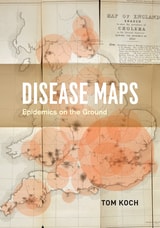
Epidemics on the GroundTom Koch
University of Chicago Press, 2011
In the seventeenth century, a map of the plague suggested a radical idea—that the disease was carried and spread by humans. In the nineteenth century, maps of cholera cases were used to prove its waterborne nature. More recently, maps charting the swine flu pandemic caused worldwide panic and sent shockwaves through the medical community. In Disease Maps, Tom Koch contends that to understand epidemics and their history we need to think about maps of varying scale, from the individual body to shared symptoms evidenced across cities, nations, and the world.
Disease Maps begins with a brief review of epidemic mapping today and a detailed example of its power. Koch then traces the early history of medical cartography, including pandemics such as European plague and yellow fever, and the advancements in anatomy, printing, and world atlases that paved the way for their mapping. Moving on to the scourge of the nineteenth century—cholera—Koch considers the many choleras argued into existence by the maps of the day, including a new perspective on John Snow’s science and legacy. Finally, Koch addresses contemporary outbreaks such as AIDS, cancer, and H1N1, and reaches into the future, toward the coming epidemics. Ultimately, Disease Maps redefines conventional medical history with new surgical precision, revealing that only in maps do patterns emerge that allow disease theories to be proposed, hypotheses tested, and treatments advanced.

Distant Horizons
Digital Evidence and Literary ChangeTed Underwood
University of Chicago Press, 2019
Distant Readings of Disciplinarity
Knowing and Doing in Composition/Rhetoric Dissertationsby Benjamin Miller
Utah State University Press, 2022
Writing studies has long been marked by a multitude of methods and interlocking purposes, partaking of not just humanities approaches but also social scientific ones, with data drawn from interviews and surveys alongside historical and philosophical arguments and with corpus analytics in large-scale collections jostling against small-scale case studies of individuals. These areas of study aren’t always cleanly separable; shifting modes mark the discipline as open and welcoming to many different angles of research. The field needs to embrace that vantage point and generate new degrees of familiarity with methods beyond those of any individual scholar.
Not only a training genre and not only a knowledge-making genre, the dissertation is also a discipline-producing genre. Illustrating what the field has been studying, and how, Distant Readings of Disciplinarity supports more fruitful collaborations within and across research areas and methods.
Diversity in Open-Air Site Structure across the Pleistocene/Holocene Boundary
Kristen A. Carlson
University Press of Colorado, 2021
Open-air sites are difficult for researchers to locate and, because of depositional processes, often more difficult to interpret; they contain many superimposed events but often show evidence of only the most recent. Working to overcome the limitations of data and poor preservation, using decades of prior research and new analytical tools, and diverging from a one-size-fits-all mode of interpretation, the contributors to this volume offer fresh insight into the formation and taphonomy of open-air sites.
Contributors: Douglas B. Bamforth, Ian Buvit, Brian J. Carter, Robin Cordero, Robert Dello-Russo, George C. Frison, Kelly E. Graf, Bruce B. Huckell, Michael A. Jochim, Joshua D. Kapp, Robert L. Kelly, Aleksander V. Konstantinov, Banks Leonard, Madeline E. Mackie, Christopher W. Merriman, Matthew J. O’Brien, Spencer Pelton, Neil N. Puckett, Beth Shapiro, Todd A. Surovell, Karisa Terry, Steve Teteak, Robert Yohe

Documents
Artifacts of Modern KnowledgeEdited by Annelise Riles
University of Michigan Press, 2006
Documents are everywhere in modern life, from the sciences to bureaucracy to law; at the same time, fieldworkers document social realities by collecting, producing, and exchanging documents of their own. Capping off a generation of reflection and critique about the promises and pitfalls of ethnographic methods, the contributors explore how ethnographers conceive, grasp, appreciate, and see patterns, demonstrating that the core of the ethnographic method now lies in the way ethnographers respond to, and increasingly share the professional passions and problems of, their subjects.
"Sophisticated and provocative. The original and unique focus of this volume effectively opens up a new arena of critique that will move ethnography and qualitative inquiry forward in a way that few other works do."
—George Marcus, Department of Anthropology, Rice University
"This edited collection asks how an understanding of documentary forms sheds light on the creation and circulation of modern forms of knowledge, expertise, and governance. This is a major intervention in how we understand the everyday practice and techne of the documentary impulse and documentary apparatuses of law, bureaucratic review, and other institutions of modernity, as well as linguistic anthropology, literary theory, and law. The topic of Documents is not just of interest because of epistemological quandaries in the human sciences over textualization and interpretation, but also because the domains to which we increasingly turn our attention are themselves auto-documentary."
Contributors: Mario Biagioli, Donald Brenneis, Carol Heimer, Hirokazu Miyazaki, Adam Reed, Annelise Riles, and Marilyn Strathern.
Annelise Riles is Professor of Law and Anthropology at Cornell University.
Dreams Achieved and Denied
Mexican Intergenerational MobilityRobert Courtney Smith
Russell Sage Foundation, 2024
For over twenty years, Smith followed the lives and mobility of nearly one hundred children of Mexican immigrants in New York City. Smith’s longitudinal, ethnographic data enabled him to intimately describe how specific mechanisms blocked or promoted mobility for years as his participants moved from adolescence through early adulthood and into established adulthood. Smith documents how having or gaining legal status made certain New York City or New York State policies and practices more efficacious in supporting individual and family efforts and strategies for mobility. Such immigrant-inclusive and mobility-promoting measures include enabling undocumented people to attend public colleges at in-state tuition rates, and later to get driver’s licenses, offering healthcare to all in New York City, and the City’s subway and school choice systems, which enabled students to attend better schools or take opportunities outside their neighborhoods.
Smith finds that keeping the immigrant bargain – whereby children of immigrants redeem their parents’ sacrifice by doing well in school, helping their parents and siblings, and becoming “good” people (in their parents’ words) – helped them towards better adult outcomes and lives. Having mentors, picking academically stronger schools and friends, and using second chance mechanisms also promoted more adult mobility. However, lacking legal status blocked mobility, by preventing them from benefiting from these same mobility-promoting city and state policies, from mentors, or from working hard and keeping the immigrant bargain.
Dreams Achieved and Denied deeply analyzes the historic upward mobility of U.S.-born Mexicans in New York City. Itcounters the dominant story research and public discourse tell about Mexican mobility in the U.S. and shows how thoughtful public policy can improve the lives of young immigrants and families.

Dynamics Of Folklore
Revised and Expanded EditionBarre Toelken
Utah State University Press, 1996
One of the most comprehensive and widely praised introductions to folklore ever written. Toelken's discussion of the history and meaning of folklore is delivered in straightforward language, easily understood definitions, and a wealth of insightful and entertaining examples.
Toelken emphasizes dynamism and variety in the vast array of folk expressions he examines, from "the biology of folklore," to occupational and ethnic lore, food ways, holidays, personal experience narratives, ballads, myths, proverbs, jokes, crafts, and others. Chapters are followed by bibliographical essays, and over 100 photographs illustrate the text. This new edition is accessible to all levels of folklore study and an essential text for classroom instruction.