Results by title
2916 books match the query 'Politics and government' and 118 start with d

DOWN ON PARCHMAN FARM
THE GREAT PRISON IN THE MISSISSIPPI DELTAWILLIAM BANKS TAYLOR
The Ohio State University Press, 1999
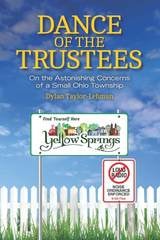
Dance of the Trustees
On the Astonishing Concerns of a Small Ohio TownshipDylan Taylor-Lehman
The Ohio State University Press, 2018
This quaint debate represents just one of many fascinating problems the trustees deal with on a daily basis. While Miami Township is small, the concerns are myriad—from cemeteries filled with unknown remains to a fire department to oversee to legal action required against properties clogged with junk. The responsibilities are doubly impressive considering no trustees have backgrounds in public office.
This book combines entertaining nonfiction vignettes with well-researched township history—including a history of religious cults and the possibility that Lee Harvey Oswald was once in town—and elucidates the processes behind an entire civic division. Dance of the Trustees documents twenty-first-century small-town life with humor, warmth, and erudition.

Dance with the Bear
The Joe Rosenblatt StoryNorman Rosenblatt
University of Utah Press, 2013
The “Little Hoover Commission” was modeled after the 1947 initiative of President Harry Truman, who created the Commission on Organization of the Executive Branch of Government to recommend administrative changes and appointed former president Herbert Hoover to chair it. Rosenblatt, a perceptive and outspoken figure, brought a much-needed dose of urgency and pragmatism to the Utah process and formulated a number of far-reaching suggestions to the legislature—many of which were adopted and still exist to this day. His work with the commission coupled with his later role on the San Francisco Federal Reserve Board did much to modernize Utah. Rosenblatt’s legacy as a perpetual champion of the community is further exemplified by his role as cultural conduit between Salt Lake’s Jewish community and the leaders of the Church of Jesus Christ of Latter-day Saints.
This readable work will serve as an integral addition to Utah business and political history, enriching the library of anyone looking for an engaging story of a remarkable and transformative figure.
Dangerous Counsel
Accountability and Advice in Ancient GreeceMatthew Landauer
University of Chicago Press, 2019
With Dangerous Counsel, Matthew Landauer analyzes the sometimes ferocious and unpredictable politics of accountability in ancient Greece and offers novel readings of ancient history, philosophy, rhetoric, and drama. In comparing the demos to a tyrant, thinkers such as Herodotus, Plato, Isocrates, and Aristophanes were attempting to work out a theory of the badness of unaccountable power; to understand the basic logic of accountability and why it is difficult to get right; and to explore the ways in which political discourse is profoundly shaped by institutions and power relationships. In the process they created strikingly portable theories of counsel and accountability that traveled across political regime types and remain relevant to our contemporary political dilemmas.
Dangerous Frames
How Ideas about Race and Gender Shape Public OpinionNicholas J. G. Winter
University of Chicago Press, 2008
Dangerous Friendship
Stanley Levison, Martin Luther King Jr., and the Kennedy BrothersBen Kamin
Michigan State University Press, 2014
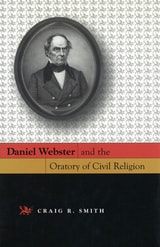
Daniel Webster and the Oratory of Civil Religion
Craig R. Smith
University of Missouri Press, 2005
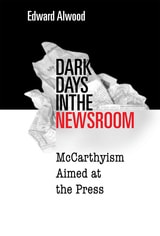
Dark Days in the Newsroom
McCarthyism Aimed at the PressEdward Alwood
Temple University Press, 2007
Dark Days in the Newsroom traces how journalists became radicalized during the Depression era, only to become targets of Senator Joseph McCarthy and like-minded anti-Communist crusaders during the 1950s. Edward Alwood, a former news correspondent describes this remarkable story of conflict, principle, and personal sacrifice with noticeable élan. He shows how McCarthy's minions pried inside newsrooms thought to be sacrosanct under the First Amendment, and details how journalists mounted a heroic defense of freedom of the press while others secretly enlisted in the government's anti-communist crusade.
Relying on previously undisclosed documents from FBI files, along with personal interviews, Alwood provides a richly informed commentary on one of the most significant moments in the history of American journalism. Arguing that the experiences of the McCarthy years profoundly influenced the practice of journalism, he shows how many of the issues faced by journalists in the 1950s prefigure today's conflicts over the right of journalists to protect their sources.
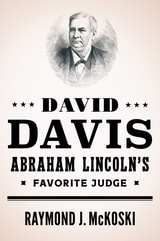
David Davis, Abraham Lincoln's Favorite Judge
Raymond J. McKoski
University of Illinois Press, 2025
One of Abraham Lincoln’s staunchest and most effective allies, Judge David Davis masterminded the floor fight that gave Lincoln the presidential nomination at the 1860 Republican National Convention. This history-changing event emerged from a long friendship between the two men. It also altered the course of Davis’s career, as Lincoln named him to the U.S. Supreme Court in 1862.
Raymond J. McKoski offers a biography of Davis’s public life, his impact on the presidency and judiciary, and his personal, professional, and political relationships with Lincoln. Davis lent his vast network of connections, organizational and leadership abilities, and personal persuasiveness to help Lincoln’s political rise. When Davis became a judge, he honed an ability to hear each case with complete impartiality, a practice that endeared him to Lincoln but one day put him at odds with the president over important Civil War–era rulings. McKoski details these cases while providing an in-depth account of Davis’s role in Lincoln’s two unsuccessful campaigns for U.S. Senate and the fateful run for the presidency.
David Duke and the Politics of Race in the South
John C. Kuzenski
Vanderbilt University Press, 1995
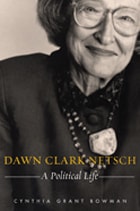
Dawn Clark Netsch
A Political LifeCynthia Grant Bowman
Northwestern University Press, 2010
Illinois Democratic politics has recently produced the most skilled and inspirational politician in memory . . . and has also reminded us of the need for further reform. It is fitting, then, that the latest installment of the Chicago Lives series turns to Dawn Clark Netsch, a leading reformer of Illinois politics since the 1950s and the first woman major party nominee for governor of Illinois.
Netsch was a pioneer, or the first of her gender, in almost every endeavor she undertook. From the very beginning of her career, when she led the move to desegregate Northwestern University's undergraduate dorms, her passion for social justice extended beyond the rights of women to rights for racial minorities and those of all sexual orientations. Bowman charts Dawn Clark Netsch's remarkable political career, from her work behind the scenes as assistant to Governor Otto Kerner and as a participant in the 1970 Constitutional Convention to her later service in elected office, first as Illinois state senator for eighteen years and later as Illinois comptroller, and culminating in her historic run for governor in 1994. Throughout, Netsch lost neither her genteel yet unpretentious demeanor, nor her passion for progressive politics as exemplified by her early mentor, Governor Adlai E. Stevenson.
De-Stalinisation Reconsidered
Persistence and Change in the Soviet UnionEdited by Thomas M. Bohn, Rayk Einax, and Michel Abeßer
Campus Verlag, 2014
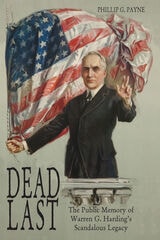
Dead Last
The Public Memory of Warren G. Harding’s Scandalous LegacyPhillip G. Payne
Ohio University Press, 2008
If George Washington and Abraham Lincoln are the saints in America’s civil religion, then the twenty-ninth president, Warren G. Harding, is our sinner. Prior to the Nixon administration, the Harding scandals were the most infamous of the twentieth century. Harding is consistently judged a failure, ranking dead last among his peers.
By examining the public memory of Harding, Phillip G. Payne offers the first significant reinterpretation of his presidency in a generation. Rather than repeating the old stories, Payne examines the contexts and continued meaning of the Harding scandals for various constituencies. Payne explores such topics as Harding’s importance as a midwestern small-town booster, his rumored black ancestry, the role of various biographers in shaping his early image, the tension between public memory and academic history, and, finally, his status as an icon of presidential failure in contemporary political debates. Harding was a popular president and was widely mourned when he died in office in 1923; but with his death began the construction of his public memory and his fall from political grace.
In Dead Last, Payne explores how Harding’s name became synonymous with corruption, cronyism, and incompetence and how it is used to this day as an example of what a president should not be.
Debating American Identity
Southwestern Statehood and Mexican ImmigrationLinda C. Noel
University of Arizona Press, 2014
In Debating American Identity, Linda C. Noel examines several nation-defining events—the proposed statehood of Arizona and New Mexico, the creation of a temporary worker program during the First World War, immigration restriction in the 1920s, and the repatriation of immigrants in the early 1930s. Noel uncovers the differing ways in which Americans argued about how newcomers could fit within the nation-state, in terms of assimilation, pluralism, or marginalization, and the significance of class status, race, and culture in determining American identity.
Noel shows not only how the definition of American was contested, but also how the economic and political power of people of Mexican descent, their desire to incorporate as Americans or not, and the demand for their territory or labor by other Americans played an important part in shaping decisions about statehood and national immigration policies. Debating American Identity skillfully shows how early twentieth century debates over statehood influenced later ones concerning immigration; in doing so, it resonates with current discussions, resulting in a well-timed look at twentieth century citizenship.
Debating the Past
Modern Bulgarian Historiography—From Stambolov to ZhivkovRoumen Daskalov
Central European University Press, 2011
Decentering the Regime
Ethnicity, Radicalism, and Democracy in Juchitán, MexicoJeffrey W. Rubin
Duke University Press, 1997
Employing an interdisciplinary approach, Rubin shows that the Juchitecos’ ability to organize and sustain a radical political movement grew out of a century-long history of negotiation of political rule. He argues that factors outside the realm of formal politics—such as ethnicity, language, gender, and religion—play an important part in the dynamics of regional political struggles and relationships of power. While offering a detailed view of the Zapotec community and its interactions, Rubin reconceptualizes democracy by considering the question of how meaningful autonomy, self-government, cultural expression, and material well-being can be forged out of violence and repression.
Decisiveness and Fear of Disorder
Political Decision-Making in Times of CrisisJulius Maximilian Rogenhofer
University of Michigan Press, 2024
Rogenhofer shows how his theoretical approach allows us to reinterpret a range of crisis situations beyond the irregular migration context, including democracies’ initial responses to Covid-19, the European Sovereign Debt Crisis, and United States climate politics. These additional case studies help position concerns with decisiveness amid the challenges that populism and technocracy increasingly pose to representative democracies.
Decolonization and Independence in Kenya, 1940–1993
B. A. Ogot
Ohio University Press, 1995
This is a sharply observed assessment of the history of the last half century by a distinguished group of historians of Kenya. At the same time the book is a courageous reflection in the dilemmas of African nationhood.
Professor B. A. Ogot says:
“The main purpose of the book is to show that decolonization does not only mean the transfer of alien power to sovereign nationhood; it must also entail the liberation of the worlds of spirit and culture, as well as economics and politics.
“The book also raises a more fundamental question, that is: How much independence is available to any state, national economy or culture in today’s world? It asks how far are Africa’s miseries linked to the colonial past and to the process of decolonization?
“In particular the book raises the basic question of how far Kenya is avoidably neo-colonial? And what does neo-colonial dependence mean? The book answers these questions by discussing the dynamic between the politics of decolonization, the social history of class formation and the economics of dependence. The book ends with a provocative epilogue discussing the transformation of the post-colonial state from a single-party to a multi-party system.”
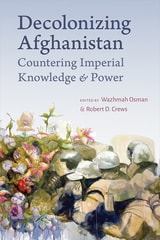
Decolonizing Afghanistan
Countering Imperial Knowledge and PowerWazhmah Osman and Robert D. Crews, editors
Duke University Press, 2025
Contributors. Matthieu Aikins, Dawood Azami, Purnima Bose, Paula Chakravartty, Robert D. Crews, Marya Hannun, Ali Karimi, Nivi Manchanda, Sabauon Nasseri, Tausif Noor, Wazhmah Osman, Hosai Qasmi, Zohra Saed, Gazelle Samizay, Morwari Zafar, Helena Zeweri

Decolonizing Independence
Statecraft in Nigeria’s First Republic and Israeli InterventionsLynn Schler
Michigan State University Press, 2022
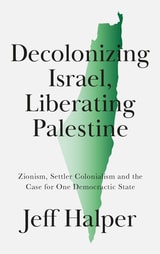
Decolonizing Israel, Liberating Palestine
Zionism, Settler Colonialism, and the Case for One Democratic StateJeff Halper
Pluto Press, 2021
For decades we have spoken of the 'Israel-Palestine conflict', but what if our understanding of the issue has been wrong all along? This book explores how the concept of settler colonialism provides a clearer understanding of the Zionist movement's project to establish a Jewish state in Palestine, displacing the Palestinian Arab population and marginalizing its cultural presence.
Jeff Halper argues that the only way out of a colonial situation is decolonization: the dismantling of Zionist structures of domination and control and their replacement by a single democratic state, in which Palestinians and Israeli Jews forge a new civil society and a shared political community.
To show how this can be done, Halper uses the 10-point program of the One Democratic State Campaign as a guide for thinking through the process of decolonization to its post-colonial conclusion. Halper's unflinching reframing will empower activists fighting for the rights of the Palestinians and democracy for all.
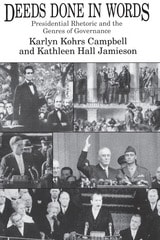
Deeds Done in Words
Presidential Rhetoric and the Genres of GovernanceKarlyn Kohrs Campbell and Kathleen Hall Jamieson
University of Chicago Press, 1990
"Deeds Done in Words is a thoughtful survey of how a democracy uses language to transact its business. Based on an enlivened understanding of genre theory and on numerous pieces of original criticism, Campbell and Jamieson vividly show how central public discourse has become the lifeblood of the American polity."—Roderick Hart, author of The Sound of Leadership
"The rhetoric that issues from the White House is becoming an ever more salient part of what the presidency means and does. This acute inquiry provides a great many insights into the forms, meanings, and functions of presidential discourse. It is an enlightening contribution to our understanding of American politics."—Murray Edelman, author of Constructing the Political Spectacle

Deep Mexico, Silent Mexico
An Anthropology of NationalismClaudio Lomnitz
University of Minnesota Press, 2001
In Mexico, as elsewhere, the national space, that network of places where the people interact with state institutions, is constantly changing. How it does so, how it develops, is a historical process-a process that Claudio Lomnitz exposes and investigates in this book, which develops a distinct view of the cultural politics of nation building in Mexico. Lomnitz highlights the varied, evolving, and often conflicting efforts that have been made by Mexicans over the past two centuries to imagine, organize, represent, and know their country, its relations with the wider world, and its internal differences and inequalities. Firmly based on particulars and committed to the specificity of such thinking, this book also has broad implications for how a theoretically informed history can and should be done.
An exploration of Mexican national space by way of an analysis of nationalism, the public sphere, and knowledge production, Deep Mexico, Silent Mexico brings an original perspective to the dynamics of national cultural production on the periphery. Its blending of theoretical innovation, historical inquiry, and critical engagement provides a new model for the writing of history and anthropology in contemporary Mexico and beyond.
Public Worlds Series, volume 9
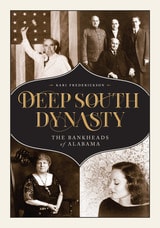
Deep South Dynasty
The Bankheads of AlabamaKari Frederickson
University of Alabama Press, 2022
WINNER OF THE GULF SOUTH HISTORICAL ASSOCIATION'S MICHAEL V. R. THOMASON BOOK AWARD
Family, influence, and the making of Southern power.
From Reconstruction through the end of World War II, the Bankheads served as the principal architects of the political, economic, and cultural framework of Alabama and the greater South. As a family, they were instrumental in fashioning the New South and the twentieth century American political economy, but now the Bankhead name is largely associated only with place names.
Deep South Dynasty: The Bankheads of Alabama is a deeply researched epic family biography that reflects the complicated and evolving world inhabited by three generations of the extremely accomplished—if problematic—Bankhead family of northwest Alabama. Kari Frederickson’s expertly crafted account traces the careers of five members of the family—John Hollis Bankhead; his sons, John Hollis Bankhead Jr. and William Brockman Bankhead; his daughter, Marie Bankhead Owen; and his granddaughter, Tallulah Brockman Bankhead.
A Confederate veteran and son of a slaveholder, John Hollis Bankhead held political office almost continuously from 1865 until his death in 1920, first in state-level positions and ultimately in Congress–in the House then in the Senate–for thirty-three years. Two of his three sons, John Jr. and William, followed in their father’s political footsteps. John Jr., a successful corporate attorney, was elected to the state legislature and then to the US Senate in 1930; William was elected to the House of Representatives in 1916 and chosen Speaker of the House in 1936. Together, father and sons played key roles in crafting and maintaining a conservative political culture, legal code, and economic system that facilitated economic opportunities for cotton farmers, coal barons, and emerging industries in Alabama and across the South while perpetuating White supremacy.
Daughter Marie Bankhead Owen extended the family’s cultural power during her thirty-five-year tenure as director of the Alabama Department of Archives and History. From this position and through her work with groups like the United Daughters of the Confederacy, she embraced and disseminated a historical narrative steeped in Lost Cause mythology that validated the power and privilege of White elites and naturalized the second-class status of African Americans. William’s daughter, actress Tallulah Bankhead, benefited from her family’s rich political bloodlines and in turn lent them a touch of glamour and made the Bankheads modern. Frederickson’s meticulously researched examination of this once-powerful but now largely forgotten southern family is a sweeping and complex story of the region and its relationship with the wider world over the course of eight decades, from the wreckage of the Civil War to the dawn of the nuclear age.

Deep in the Piney Woods
Southeastern Alabama from Statehood to the Civil War, 1800–1865Tommy Craig Brown
University of Alabama Press, 2018
Beyond the backwoods—uncovering the Civil War legacy of Alabama’s forgotten frontier.
Much of Alabama’s written history concentrates on the Tennessee Valley, the hill counties, and the Black Belt, while the piney woods of south central and southeastern Alabama, commonly known as the wiregrass region today, is one of the most understudied areas in Alabama history. Deep in the Piney Woods: Southeastern Alabama from Statehood to the Civil War, 1800–1865 offers a comprehensive and long overdue account of a historically rich region of the state, challenging many commonly held assumptions about the area’s formation and settlement, economy, politics, race relations, and its role in both the secession of the state and the Civil War.
Historians routinely depict this part of the state as an isolated, economically backward wilderness filled with poor whites who showed little interest in supporting the Confederacy once civil war erupted in 1861. Tommy Craig Brown challenges those traditional interpretations, arguing instead that many white Alabamians in this territory participated in the market economy, supported slavery, favored secession, and supported the Confederate war effort for the bulk of the conflict, sending thousands of soldiers to fight in some of the bloodiest campaigns of the war.
This thorough and expansive account of southeastern Alabama’s role in the Civil War also discusses its advocacy for state secession in January 1861; the effects of Confederate conscription on the home front; the economic devastation wrought on the area; and the participation of local military companies in key campaigns in both the eastern and western theaters, including Shiloh, the Peninsula Campaign, the Overland Campaign, Atlanta, and Franklin-Nashville. Brown argues that the lasting effects of the war on the region’s politics, identity, economy, and culture define it in ways that are still evident today.
Deepening the Dialogue
Jewish-Americans and Israelis Envisioning the Jewish-Democratic StateRabbi Stanley M. Davids
Central Conference of American Rabbis, 2020
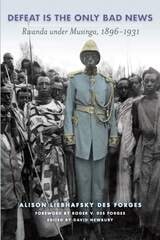
Defeat Is the Only Bad News
Rwanda under Musinga, 1896–1931Alison Des Forges
University of Wisconsin Press, 2011
A Rwandan proverb says “Defeat is the only bad news.” For Rwandans living under colonial rule, winning called not only for armed confrontation, but also for a battle of wits—and not only with foreigners, but also with each other. In Defeat Is the Only Bad News Alison Des Forges recounts the ambitions, strategies, and intrigues of an African royal court under Yuhi Musinga, the Rwandan ruler from 1896 to 1931. These were turbulent years for Rwanda, when first Germany and then Belgium pursued an aggressive plan of colonization there. At the time of the Europeans’ arrival, Rwanda was also engaged in a succession dispute after the death of one of its most famous kings. Against this backdrop, the Rwandan court became the stage for a drama of Shakespearean proportions, filled with deceit, shrewd calculation, ruthless betrayal, and sometimes murder.
Defending the Republic
Constitutional Monarchy in a Time of Crisis: Essays in Honor of George W. CareyBruce Frohnen
Catholic University of America Press, 2022

Defining Latvia
Recent Explorations in History, Culture, and PoliticsMatthew Kott
Central European University Press, 2022
In just over a century, Latvia has transitioned from imperial periphery to nation-state, then Soviet republic, and finally following the collapse of the Soviet Union to an independent republic. Defining Latvia brings together the latest research on the multiple social, political, and cultural contexts of Latvia throughout this turbulent period. Its ten chapters are written by leading political scientists, historians, and area studies specialists from across Europe and North America.
The volume moves beyond an exclusively political context to incorporate a variety of social and cultural perspectives, ranging from the experiences of Latvian mapmakers in the Russian Empire, to the participation of Latvians in the Wehrmacht and Red Army during World War II, Latvian national communism, and the development of extremist politics following Latvia’s accession to the European Union. Other chapters address developing trends in the fields of history and political science, including the history of antisemitism, memory, language politics, photography, and political extremism.
Based on the book’s temporal span from the nineteenth century to the present, the authors and editors of Defining Latvia understand the construction of Latvian identity as a continuous and interconnected process across significant political and ideological ruptures.
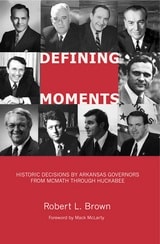
Defining Moments
Historic Decisions by Arkansas Governors from McMath through HuckabeeRobert L. Brown
University of Arkansas Press, 2010

Dehexing Sex
Russian Womanhood During and After GlasnostHelena Goscilo
University of Michigan Press, 1996
Deliberate Acts
Changing Hopi Culture Through the Oraibi SplitPeter M. Whiteley
University of Arizona Press, 1988
Drawing on oral accounts from Hopi consultants and on contemporary documents, Peter M. Whiteley argues that the split was in fact the result of a conspiracy among Hopi politico-religious leaders from both the “hostile” and “friendly” factions, a revolution to overturn the allegedly corrupt Oraibi religious order. A crucial element of Whiteley’s thesis is that, contrary to established theory, Hopi society was not egalitarian but was controlled by a ruling elite, the pavansinom, who clandestinely planned such events as the destruction of Awatovi because of its reacceptance of Franciscan priests.
Through an analysis of Bacavi social structure, Whiteley demonstrates how one fragment of a well-established society went about creating a new social order after the old one drastically fragmented. His detailed portrait of the history and social organization of a Hopi village represents an unusually rich resource for students of Hopi culture and history.
Deliberating Ghana
Postcolonial Rhetorics, Culture, and DemocracyStephen Kwame Dadugblor
Michigan State University Press, 2025

Democracy After Pinochet
Politics, Parties, and Elections in ChileAlan Angell
University of London Press, 2007
Democracy Ancient and Modern
Finley, M. I.
Rutgers University Press, 1985
The two new essays, "Athenian Dialogues" and "Censorship in Classical Antiquity" combine with "Leaders and Followers," "Democracy, Consensus, and the National Interest," "Socrates and After" to make this book an unusual inquiry. Few contemporary writers are able to bring to the subject the depth of learning and the persuasive power of language that Sir M. I. Finley brings.
Democracy Ancient and Modern
Finley, M. I.
Rutgers University Press, 2019
This classic study of democratic principles is thus now more relevant than ever. A renowned historian of antiquity and political philosophy, Sir M.I. Finley offers a comparative analysis of Greek and modern conceptions of democracy. As he puts the ancient Greeks in dialogue with their contemporary counterparts, Finley tackles some of the most pressing issues of our day, including public apathy, partisanship, consensus politics, distrust of professional politicians, and the limits of free speech.
Including three lectures that Finley delivered at Rutgers University, plus two additional essays that further illuminate his thinking, Democracy Ancient and Modern explores the dramatic differences between the close-knit civil society of the ancient Greeks and our own atomized mass societies. By mapping out democracy’s past and its present manifestations, this book helps us plot a course for democracy’s future.
Democracy Fatigue
An East European EpidemyCarlos García-Rivero
Central European University Press, 2023
Over the early 21st century, democracy worldwide has deteriorated significantly. At the same time, new populist forces have appeared that challenge democracies through legal reforms. The stark contrast between Eastern and Western Europe in this respect is the focus of this collection of essays.
The authors consider the 2008-2012 economic crisis to be at the root of the success of the populist parties and the rise of cultural backlash against liberal values. In turn, European governments’ responses to the crisis—mainly austerity measures demanded by IMF and the EU— help explain desenchantment with the European Union. These policies made the wider public feel that they were being left out of politics, and populist parties promised to return power to them.
The contributors argue that polarization of the electorate can set in motion a radicalization that strengthens authoritarians at the expense of democrats. They also demonstrate that Eastern and Western Europe differ in their attitudes to the decline in quality of democracy. The studies consider how satisfied people are with the political changes they witness, and argue that seemingly more authoritarian attitudes in the East explain why people feel more satisfied with a defective democracy that empowers the populist-authoritarian political actors that they support.

Democracy Needs Dispute
The Debate on the European ConstitutionEdited by Cornelia Brüll, Monika Mokre, and Markus Pausch
Campus Verlag, 2009
In 2005 hopes for closer European integration were dealt a potentially fatal blow when French and Dutch voters rejected the proposed new European Union constitution. Going beyond the instant analysis of journalists, which placed blame for the failed vote on the two nations’ internal politics, Democracy Needs Dispute examines a collection of media accounts of European policy debates to argue that the problem with the EU is its relative lack of vibrant political conflict. Democracy Needs Dispute offers both up-to-date analysis and a rich theoretical understanding of the problems facing further efforts at European integration.
Democracy Vouchers and the Promise of Fairer Elections in Seattle
Jennifer A. Heerwig and Brian J. McCabe
Temple University Press, 2024
Democracy Vouchers and the Promise of Fairer Elections in Seattle critically evaluates the success and impact of this program. Jennifer Heerwig and Brian J. McCabe emphasize how local elections now attract a much wider and more diverse field of both donors and candidates. They also consider external threats to the program, from litigation about the constitutionality of a voucher program to the rise of independent expenditures.
Offering important lessons on how other cities can adopt a similar program, this compelling case study also highlights the obstacles that will likely arise in its implementation.
Democracy against Development
Lower-Caste Politics and Political Modernity in Postcolonial IndiaJeffrey Witsoe
University of Chicago Press, 2013
Witsoe looks at the history of colonialism in India and its role in both shaping modern caste identities and linking locally powerful caste groups to state institutions, which has effectively created a postcolonial patronage state. He then looks at the rise of lower-caste politics in one of India’s poorest and most populous states, Bihar, showing how this increase in democratic participation has radically threatened the patronage state by systematically weakening its institutions and disrupting its development projects. By depicting democracy and development as they truly are in India—in tension—Witsoe reveals crucial new empirical and theoretical insights about the long-term trajectory of democratization in the larger postcolonial world.
Democracy and Development in Mali
R. James Bingen
Michigan State University Press, 2000
During the past twenty-five years, the scholarly research and applied development work of Michigan State University faculty and students in Mali represents the most significant combined, long-term, and continuing contribution of any group of university faculty in the United States or Europe to the study of Malian society, economy, and politics. The applied nature of much of this work has resulted in a significant number of working papers, reports, and conference presentations. This volume represents a coherent and connected set of essays from one American university with a widely known and highly respected role in African development. While the essays identify and review Mali's unique historical and contemporary path to democracy and development, they also contribute to the advancement of theoretical knowledge about African development.
Democracy and Dysfunction
Sanford Levinson and Jack M. Balkin
University of Chicago Press, 2019
Democracy and Dysfunction brings together two of the leading constitutional law scholars of our time, Sanford Levinson and Jack M. Balkin, in an urgently needed conversation that seeks to uncover the underlying causes of our current crisis and their meaning for American democracy. In a series of letters exchanged over a period of two years, Levinson and Balkin travel—along with the rest of the country—through the convulsions of the 2016 election and Trump’s first year in office. They disagree about the scope of the crisis and the remedy required. Levinson believes that our Constitution is fundamentally defective and argues for a new constitutional convention, while Balkin, who believes we are suffering from constitutional rot, argues that there are less radical solutions. As it becomes dangerously clear that Americans—and the world—will be living with the consequences of this pivotal period for many years to come, it is imperative that we understand how we got here—and how we might forestall the next demagogue who will seek to beguile the American public.
Democracy and Higher Education
Traditions and Stories of Civic EngagementScott J. Peters
Michigan State University Press, 2010
How are we to understand the nature and value of higher education's public purposes, mission, and work in a democratic society? How do-and how should-academic professionals contribute to and participate in civic life in their practices as scholars, scientists, and educators?
Democracy and Higher Education addresses these questions by combining an examination of several normative traditions of civic engagement in American higher education with the presentation and interpretation of a dozen oral history profiles of contemporary practitioners. In his analysis of these profiles, Scott Peters reveals and interprets a democratic-minded civic professionalism that includes and interweaves expert, social critic, responsive service, and proactive leadership roles.
Democracy and Higher Education contributes to a new line of research on the critically important task of strengthening and defending higher education's positive roles in and for a democratic society.
Democracy and Other Neoliberal Fantasies
Communicative Capitalism and Left PoliticsJodi Dean
Duke University Press, 2009
Dean’s critique ranges from her argument that the term democracy has become a meaningless cipher invoked by the left and right alike to an analysis of the fantasy of free trade underlying neoliberalism, and from an examination of new theories of sovereignty advanced by politicians and left academics to a look at the changing meanings of “evil” in the speeches of U.S. presidents since the mid-twentieth century. She emphasizes the futility of a politics enacted by individuals determined not to offend anyone, and she examines questions of truth, knowledge, and power in relation to 9/11 conspiracy theories. Dean insists that any reestablishment of a vital and purposeful left politics will require shedding the mantle of victimization, confronting the marriage of neoliberalism and democracy, and mobilizing different terms to represent political strategies and goals.

Democracy and Revolution
Latin America and Socialism TodayD. L. Raby
Pluto Press, 2006
Raby argues passionately that the way forward for progressives is not the dogmatic formulae of the Old Left, nor in the spontaneous autonomism of Antonio Negri. Instead, it is to be found in broad popular movements with bold leadership. Examining key leaders, including Hugo Chávez and the Sandinistas in Nicaragua, Raby shows that it is more necessary than ever to take power, peacefully where possible, but in all cases with the strength that comes from popular unity backed by force where necessary. In this way it is possible to build democratic power, which may or may not be socialist depending on one's definition, but which represent the real anti-capitalist alternative for the twenty-first century.
Democracy in America
Alexis de Tocqueville
University of Chicago Press, 2000
Alexis de Tocqueville (1805-59) came to America in 1831 to see what a great republic was like. What struck him most was the country's equality of conditions, its democracy. The book he wrote on his return to France, Democracy in America, is both the best ever written on democracy and the best ever written on America. It remains the most often quoted book about the United States, not only because it has something to interest and please everyone, but also because it has something to teach everyone.
Democracy in America?
What Has Gone Wrong and What We Can Do About ItBenjamin I. Page and Martin Gilens
University of Chicago Press, 2017
How did we get here? Through decades of dysfunctional government. In Democracy in America? veteran political observers Benjamin I. Page and Martin Gilens marshal an unprecedented array of evidence to show that while other countries have responded to a rapidly changing economy by helping people who’ve been left behind, the United States has failed to do so. Instead, we have actually exacerbated inequality, enriching corporations and the wealthy while leaving ordinary citizens to fend for themselves.
What’s the solution? More democracy. More opportunity for citizens to shape what their government does. To repair our democracy, Page and Gilens argue, we must change the way we choose candidates and conduct our elections, reform our governing institutions, and curb the power of money in politics. By doing so, we can reduce polarization and gridlock, address pressing challenges, and enact policies that truly reflect the interests of average Americans.
This book presents a damning indictment. But the situation is far from hopeless. With increased democratic participation as their guide, Page and Gilens lay out a set of proposals that would boost citizen participation, curb the power of money, and democratize the House and Senate. The only certainty is that inaction is not an option. Now is the time to act to restore and extend American democracy.
Democracy in America?
What Has Gone Wrong and What We Can Do About ItBenjamin I. Page and Martin Gilens
University of Chicago Press, 2020
What’s the solution? More democracy. More opportunities for citizens to shape what their government does. To repair our democracy, Page and Gilens argue, we must change the way we choose candidates and conduct our elections, reform our governing institutions, and curb the power of money in politics. By doing so, we can reduce polarization and gridlock, address pressing challenges, and enact policies that truly reflect the interests of average Americans.
Updated with new information, this book lays out a set of proposals that would boost citizen participation, curb the power of money, and democratize the House and Senate.
Democracy in Mexico
Attitudes and Perceptions of Citizens at National and Local LevelEdited by Salvador Marti i Puig, Reynaldo Yunuen Ortega Ortiz, M. Fernanda Somuano Ventura, and Claire Wright
University of London Press, 2014
Democracy in Print
The Best of The Progressive Magazine, 1909–2009Edited by Matthew Rothschild
University of Wisconsin Press, 2009
Readers will discover the vision of the magazine’s founder, Robert “Fighting Bob” La Follette, and his suffragist wife, Belle Case La Follette. They’ll find historic gems from the likes of Jane Addams, Carl Sandburg, Huey Long, and John Kenneth Galbraith, and profound essays by Theodore Dreiser, Barbara Ehrenreich, Noam Chomsky, Upton Sinclair, Arundhati Roy, James Baldwin, Edwidge Danticat, and Edward Said. The collection is leavened with humor from Kate Clinton, Will Durst, Michael Feldman, and Molly Ivins, and graced by poems from such writers as Mahmoud Darwish, Rita Dove, Martín Espada, Maxine Kumin, Adrienne Rich, and Sandra Cisneros. Fascinating interviews bring readers into conversations with prominent cultural figures, including Chuck D, the Dalai Lama, Allen Ginsberg, Amy Goodman, Harold Pinter, Patti Smith, Susan Sarandon, and Yevgeny Yevtushenko.
Eminently browsable, this book is for anyone concerned with American democracy, the global community, and the perils of the planet. With contributions by actors and Supreme Court justices, comedians and Nobel Prize-winners, Democracy in Print offers all readers nourishing food for thought.