Results by title
1214 books match the query 'Subjects & Themes' and 47 start with d

Daisy
PoemsRachel Feder
Northwestern University Press, 2025
A narrative-poetic retelling of The Great Gatsby from the perspective of a 1990s teen poet
Daisy: Poems is a captivating and imaginative take on The Great Gatsby that puts F. Scott Fitzgerald’s 1925 classic in the hands of a messy, ambitious, and possibly devious teen poet. From her privileged yet precarious perch in the roaring 1990s, Daisy navigates the expectations of her parents, boyfriend, and lover, alongside her own artistic ambitions, as she explores whether freedom is what she truly desires—and wonders if it’s even possible. Rachel Feder puts a new spin on beloved characters: Jay, longtime and secret lover; Nick, somewhat mysterious and always meddling cousin; and Jordyn, best friend and companion in doomed relationships. A meditation on juvenilia, constructions of femininity, the purity myth, and canonical literary silences, Daisy is told in sparse, evocative verse that pulsates with youthful passion and offers a new elegy for our lost American dreams.
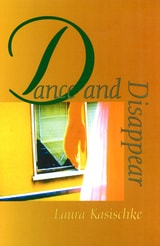
Dance and Disappear
Laura Kasischke
University of Massachusetts Press, 2002
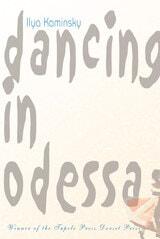
Dancing in Odessa
Ilya Kaminsky
Tupelo Press, 2004
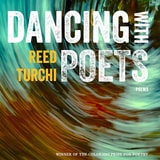
Dancing with Poets
Reed Turchi
University Press of Colorado, 2026
Reed Turchi’s debut collection, Dancing with Poets, explores what it means to make—and re-make—oneself amid a swirl of love, loss, and memory. In dive bars and art museums, baseball stadiums and blues clubs, Turchi summons his ghosts and invites them to sing their songs. A Grammy Award–winning musician as well as poet, Turchi is guided by finely honed rhythm and a singular sonic sensibility that coaxes music from poems that are narrative and lyric in turn. As a collection, Dancing with Poets remembers those the author has loved and lost, but avoids nostalgia, asking instead what futures may be built from grief and how love may grow on the other side of devastation. While the poems may swirl, their emotional truth remains crystalline: The characters, moments, and stories in each poem are infinitely recognizable—fantastic and quotidian in equal measure. Within these poems there are chicken tenders and high art, motorcycles and funerals—a familiar boyhood that happened to be spent surrounded by some of the finest American poets of the late twentieth century. In Dancing with Poets, Turchi invites his reader to join him—“to strut and spin” in grief and joy alike.
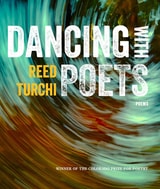
Dancing with Poets
Reed Turchi
University Press of Colorado, 2026
Reed Turchi’s debut collection, Dancing with Poets, explores what it means to make—and re-make—oneself amid a swirl of love, loss, and memory. In dive bars and art museums, baseball stadiums and blues clubs, Turchi summons his ghosts and invites them to sing their songs. A Grammy Award–winning musician as well as poet, Turchi is guided by finely honed rhythm and a singular sonic sensibility that coaxes music from poems that are narrative and lyric in turn. As a collection, Dancing with Poets remembers those the author has loved and lost, but avoids nostalgia, asking instead what futures may be built from grief and how love may grow on the other side of devastation. While the poems may swirl, their emotional truth remains crystalline: The characters, moments, and stories in each poem are infinitely recognizable—fantastic and quotidian in equal measure. Within these poems there are chicken tenders and high art, motorcycles and funerals—a familiar boyhood that happened to be spent surrounded by some of the finest American poets of the late twentieth century. In Dancing with Poets, Turchi invites his reader to join him—“to strut and spin” in grief and joy alike.
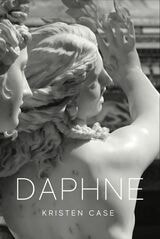
Daphne
Kristen Case
Tupelo Press, 2025
In dialogue with Wittgenstein's “On Certainty,” Ovid's Metamorphoses, Shakespeare's Hamlet, and Thomas Wyatt’s “Whoso List to Hunt,” among other works, Kristen Case's poems and lyric essays unearth the ways violence both disrupts and enables our ways of knowing—or approximating knowledge of—one another.
Data Mind
PoemsJoanna Fuhrman
Northwestern University Press, 2025
Wrestling with the experience of living online as a non-digital native
Joanna Fuhrman didn’t grow up online. Her generation entered the digital age as adults, with optimism about the possibilities it would bring for community building. In the alien landscape of the internet, they indeed found moments of joy and connection, but they also watched in anguish as what had been sold as a utopian space instead magnified the anti-democratic demons of necrocapitalism. In this darkly comic and surreal collection, Fuhrman lets herself fall into the internet wormhole of these conflicting realities. With titles ranging from “You Won’t Believe How Your Favorite Childhood Star Looks Now” to “We’ll Burn That Algorithm When We Get to It,” the feminist prose poems in Data Mind remix the tropes of digital life with the puckishness and embodied urgency for which Fuhrman is celebrated.
Daughters of Decadence
Women Writers of the Fin de SiecleShowalter, Elaine
Rutgers University Press, 1993
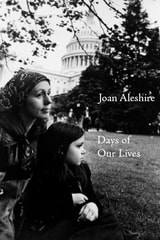
Days of Our Lives
Joan Aleshire
Four Way Books, 2019

Dear All,
Maggie Anderson
Four Way Books, 2017
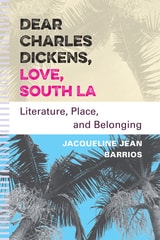
Dear Charles Dickens, Love, South LA
Literature, Place, and BelongingJacqueline Jean Barrios
University of Iowa Press, 2026
Jacqueline Jean Barrios confronts the cultural challenges that big canonical books pose to new generations of readers. Instead of erasing the differences between Dickens’s implied audiences and his current ones, Barrios demonstrates how youth can serve as the visionaries who bridge the gap. By placing literature in everyday surroundings, students at any school and in any location can learn from the embodied and the poetic and even question the universalism that masks unexamined reverence for the Western canon.
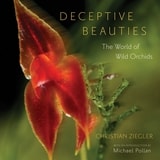
Deceptive Beauties
The World of Wild OrchidsChristian Ziegler
University of Chicago Press, 2011
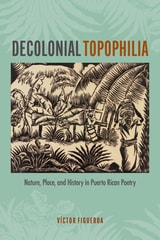
Decolonial Topophilia
Nature, Place, and History in Puerto Rican PoetryVíctor Figueroa
Bucknell University Press, 2026
Decolonial Topophilia: Nature, Place, and History in Puerto Rican Poetry examines how four major poets—Luis Lloréns Torres, Luis Palés Matos, Juan Antonio Corretjer, and Julia de Burgos—address the ecological and human consequences of colonial domination in early twentieth-century Puerto Rico. Their poetry raises questions about the capitalist transformation of land through monocultures like sugarcane, the reduction of nature to exploitable resources, and the ties between attachment to place and nationalism. In tracing these connections, this pathbreaking book reveals how poetic visions of place can challenge colonial histories and imagine more reciprocal ways of inhabiting the world.
Published by Bucknell University Press. Distributed worldwide by Rutgers University Press.
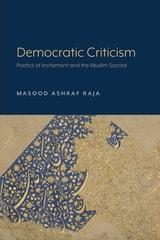
Democratic Criticism
Poetics of Incitement and the Muslim SacredMasood Raja
Lever Press, 2023
After the publication of Salman Rushdie’s The Satanic Verses (1988), the poetics of incitement— found in texts originating in the West containing themes and representations of Islam hurtful to Muslims—became an accepted method of textual production in the West. Production of such texts intensified after the attacks of 9/11. Democratic Criticism: Poetics of Incitement and the Muslim Sacred by Masood Ashraf Raja urges a new mode of reading, one that permits Western readers to transcend local reading practices in order to, as best as one can, read from the point of view of the Other.
Raja argues that the lack of understanding of Muslim responses to the poetics of incitement in the West is the result of a lack of cross-cultural knowledge. He claims metropolitan universities often do not teach the proper social, historical, and religious context required for effectively reading these texts with any form of cultural knowledge. To remedy this, Raja offers and theorizes “democratic reading practices” and new ways for students to engage with texts. A genealogy of the Muslim Sacred is included, thereby giving readers the history and specific knowledge that constitutes an average Muslim reader of these texts, a subject who should be imagined and empathized with when those in the West read works of the poetics of incitement.
Democratic Criticism encourages Western readers to develop a deeper understanding of the meaning-making processes of the Islamic world while at the same time encouraging the Muslim readers to read representations of the Islamic world with a more expansive understanding. It will be a helpful tool in creating reading practices that allow both teachers and students of literature to transcend their mode of reading as universal and to read from the perspective of the Other, and allow readers to engage meaningfully with these texts. Students and scholars of world literature, history, and religious studies will find this book insightful and valuable.
Des
Sati Mookherjee
Tupelo Press, 2027
In this formally inventive poetry collection, Sati Mookherjee resurrects a shared precolonial pan-South Asian identity, history, and culture in joyful defiance of the nationalist and sectarian movements of today.
This unusual poetry collection emerged from the author’s interviews of her Indian, Pakistani, and Bangladeshi immigrant family and friends in her native Pacific Northwest about their personal histories: of partition and childhood, immigration experiences, and religious and metaphysical beliefs. The resulting poems reflect the kaleidoscopic identity of the South Asian (“desi”) diaspora—the world’s largest diaspora. At this ugly historic moment, desi-ness offers a real-world model of a joyful, plural community, even as such tolerance is under grave threat from both today’s American right-wing anti-immigrant movement and the toxic nationalism and sectarianism of South Asian geopolitics. The poems themselves are a diaspora of forms: hybrid cross-pollinations of American tradition (Frost, Penn Warren), ancient Indo-Persian-Arabic forms, and self-invention. In a time when hatred of the other is normalized, this book holds love, celebrating a kinship tradition and shared homeland—a Des—that is both precolonial and extant, borderless, found not on any map, but held in the collective un/consciousness of the desi diaspora. In defiance of nationalist rhetoric that would see us divided by language, religion, and country of origin, Des joins the decentralized global movement of scholars, artists, activists, and young people reclaiming the beauty of a shared, precolonial composite culture.

Desert Jewels
Cactus Flowers of the Southwest and MexicoJohn P. Schaefer
University of Arizona Press, 2023
Stunning up-close images by a renowned desert photographer
Cactus flowers are jewels of the desert—they add brilliant pops of color to our arid surroundings. In this book, renowned Tucson photographer John P. Schaefer brings the exquisite and unexpected beauty of the cactus flower to the page. Hundreds of close-up photographs of cactus flowers native to the U.S. Southwest and Mexico offer a visual feast of color and texture, nuance and light.
These stunning photographs allow us to appreciate the spectacular range of color and form cactus flowers have to offer. For the cactus enthusiast, the book offers a comprehensive collection of high-quality flower photographs unlike any other. The photographs cover more than 250 cactus species organized by genus. The book starts with an introduction by the photographer that is both autobiographical and informative. It offers a glimpse into his process for capturing these elusive desert gems, resulting in photographs so beautiful they were featured as a book of stamps issued by the U.S. Postal Service.
This collection of cactus flowers in bloom is a one-of-a-kind work by a master photographer.
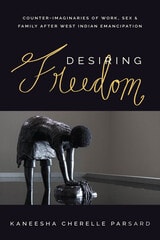
Desiring Freedom
Counter-Imaginaries of Work, Sex, and Family After West Indian EmancipationKaneesha Cherelle Parsard
University of Chicago Press, 2026
A groundbreaking account of concepts of freedom in West Indian literature and visual culture.
Desiring Freedom examines post-emancipation West Indian literature and visual culture to ask how they reimagine freedom. Ranging from emancipation in the 1830s to the arrival of independence in the 1960s, Kaneesha Cherelle Parsard analyzes a literary and visual repertoire through which West Indians and Britons cast doubt on wage labor and domesticity as freedom. Whereas freedom was traditionally conceived around narratives of the self-governing individual, Parsard unearths a diverse range of materials—fiction, poetry, painting, photography, imperial correspondence, social scientific discourse, and economic history—in which this plot breaks down, finding practices of freedom in hoarding, pleasure-seeking, hustling, and siphoning.
Parsard focuses on conceptions of freedom in Trinidad, British Guiana, and Jamaica. Along the way, she shows how indentured Indian women’s jewelry reveals contradictions in imperial capital, studies the short fiction of a 1930s Trinidadian literary collective called the Beacon group to reveal how women find both profit and pleasure in their affairs, and offers a fascinating reading of C. L. R. James’s only novel, Minty Alley—including a little-known alternative ending. In a key methodological contribution, Parsard develops proposition as a critical tool, drawing on its many valences—a sexual advance, a contract before its signing, and, in philosophy, the act of saying “this is how things stand.” Parsard’s own propositions show that West Indian culture offers new ways of seeing the relationships among race, labor, capital, gender, and sexuality after emancipation.
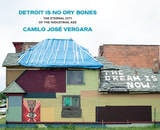
Detroit Is No Dry Bones
The Eternal City of the Industrial AgeCamilo José Vergara
University of Michigan Press, 2016
Detroit Resurgent
Howard Bossen
Michigan State University Press, 2014

Developing Animals
Wildlife and Early American PhotographyMatthew Brower
University of Minnesota Press, 2010
Developing Animals compellingly investigates the way photography changed our perception of animals. Brower analyzes how photographers created new ideas about animals as they moved from taking pictures of taxidermic specimens in so-called natural settings to the emergence of practices such as camera hunting, which made it possible to capture images of creatures in the wild.
By combining approaches in visual cultural studies and the history of photography, Developing Animals goes further to argue that photography has been essential not only to the understanding of wildlife but also to the conceptual separation of humans and animals.

Devonte Travels the Sorry Route
T.J. Anderson III
Omnidawn, 2019
As fantastical as this account seems, in these poems, T.J. Anderson III captures a critical aspect of the ways identity is formed through community and collective memory, particularly among the peoples of the African diaspora. The way the words expand across the page enacts this polyvocal coalescing, and the blank space in between evokes the vast oceans that first separated and continue to resonate in the collective imagination of the Black community. At the same time that he relates the difficulty of crossing vast expanses of time and space to connect with our history, in these gripping poems Anderson proposes that the past is never far off—in fact, like Devonte, it lives in our own personalities and experiences today.
Devotion
Three Inquiries in Religion, Literature, and Political ImaginationConstance M. Furey, Sarah Hammerschlag, and Amy Hollywood
University of Chicago Press, 2021
We are living in a time of radical uncertainty, faced with serious political, ecological, economic, epidemiological, and social problems. Scholars of religion Constance M. Furey, Sarah Hammerschlag, and Amy Hollywood come together in this volume with a shared conviction that what and how we read opens new ways of imagining our political futures and our lives.
Each essay in this book suggests different ways to characterize the object of devotion and the stance of the devout subject before it. Furey writes about devotion in terms of vivification, energy, and artifice; Hammerschlag in terms of commentary, mimicry, and fetishism; and Hollywood in terms of anarchy, antinomianism, and atopia. They are interested in literature not as providing models for ethical, political, or religious life, but as creating the site in which the possible—and the impossible—transport the reader, enabling new forms of thought, habits of mind, and ways of life. Ranging from German theologian Martin Luther to French-Jewish philosopher Sarah Kofman to American poet Susan Howe, this volume is not just a reflection on forms of devotion and their critical and creative import but also a powerful enactment of devotion itself.
Diary of Our Fatal Illness
Charles Bardes
University of Chicago Press, 2017
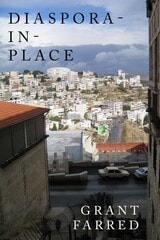
Diaspora-in-Place
Grant Farred
Temple University Press, 2027
“I was gone before I left,” writes Grant Farred in his compelling philosophical meditation, Diaspora-in-Place. Building on a concept he introduced in his critique The Perversity of Gratitude, Farred rethinks diaspora as not just physical deracination and relocation, but also a state of being in exile at home while remaining, visibly, in place. Partially the consequence of growing up in South Africa during apartheid, Farred extends the concept to “the Palestinian condition” of living in/out of place in Gaza.
Divided into a series of witty fragments, evocative epigrams, and sobering aphorisms, Diaspora-in-Place builds on thinkers ranging from Edward Said and Jacques Derrida, to the poetry of Olivia Elias, to musicians Bob Dylan, Miles Davis, and John Coltrane to examine how individuals process their national identity and subjecthood in a place where they feel out of place.
Farred writes eloquently about this expansive but not universal contradiction as being “a mobile immobility” or “an immobile mobility.” In doing so, he offers an entirely new and provocative way of conceiving how we understand diaspora.

Dickey Chapelle Under Fire
Photographs by the First American Female War Correspondent Killed in ActionJohn Garofolo
Wisconsin Historical Society Press, 2026
Striking photographs and stories from more than two decades on the frontlines by a groundbreaking photojournalist—and the first female American war correspondent to be killed in action.
In 1941, twenty-two-year-old Georgette "Dickey" Chapelle sold her first photo essay to Look magazine. A year later, with World War II underway, she was photographing American soldiers in combat training in Panama. By the end of the war, she had captured the devastation at Iwo Jima and Okinawa, and in the ensuing decades, Dickey and her camera were on the scene at many of the world’s hotspots—from Cuba and the Dominican Republic to Algeria and Lebanon to Vietnam and Laos. Dickey Chapelle Under Fire exposes her remarkable story and shares over 150 stunning images from her extraordinary career as a photojournalist.
In the male-dominated world of war journalism, Chapelle fought to be taken seriously. She eventually earned the respect of many of her male colleagues and broke down barriers for future generations of female journalists. She embedded herself with military units on frontlines around the globe, capturing not only the horrors of war but also the camaraderie and everyday routines of service men and women.
Always one to follow the action, Chapelle traveled with Algerian rebels across the North African desert and with Fidel Castro through the jungles of Cuba. She spent two months in a Hungarian prison after being caught smuggling aid to refugees fleeing a Soviet invasion. Beginning in 1961, Chapelle set her lens and viewfinder on Southeast Asia, capturing the growing conflict there, until she was killed while on patrol with marines in Vietnam in April 1965—making her the first female American war correspondent to be killed in action.
For twenty-five years, Chapelle's photographs graced the pages of National Geographic, the National Observer, Life, and other major publications. Despite her tragic end, Chapelle’s tenacity, courage, and compassion shine throughout her work, highlighting the human impact of war while revealing the larger stories beyond the battlefield. Her legacy lives on through this powerful collection.
Differential Diagnosis
PoemsCavar
Northwestern University Press, 2026
Undoing traditional psychiatric narratives in this innovative and bold first collection
Drawing from queer, trans, disabled, and Mad poetic traditions, Differential Diagnosis introduces a deeply entangled transMad approach, investigating ways of knowing, loving, and living not legible to the normative eye. This collection challenges the architecture of institutional psychiatry and its popular “wellness” analogues, offering instead a counternarrative of forced institutionalization, disorderly embodiment, and transMad self-determination.
At once jarring and joyful, Differential Diagnosis interrogates psychiatric power and locates capacities for disabled and/or transMad resistance in the oblique, the speculative, and the “nonsensical.” Cavar’s inventive full-length debut defamiliarizes cis, sane, abled existence through linguistic play and speculative imagery, offering Madness not only as poetic content, but also as craft technique and, ultimately, as a new way of being in the normative world.
Disoriented Disciplines
China, Latin America, and the Shape of World LiteratureRosario Hubert
Northwestern University Press, 2024
In the absence of specialized programs of study, abstract discussions of China in Latin America took shape in contingent critical infrastructures built at the crossroads of the literary market, cultural diplomacy, and commerce. As Rosario Hubert reveals, modernism flourishes comparatively, in contexts where cultural criticism is a creative and cosmopolitan practice.
Disoriented Disciplines: China, Latin America, and the Shape of World Literature understands translation as a material act of transfer, decentering the authority of the text and connecting seemingly untranslatable cultural traditions. In this book, chinoiserie, “coolie” testimonies, Maoist prints, visual poetry, and Cold War memoirs compose a massive archive of primary sources that cannot be read or deciphered with the conventional tools of literary criticism. As Hubert demonstrates, even canonical Latin American authors, including Jorge Luis Borges, Octavio Paz, and Haroldo de Campos, write about China from the edges of philology, mediating the concrete as well as the sensorial.
Advocating for indiscipline as a core method of comparative literary studies, Disoriented Disciplines challenges us to interrogate the traditional contours of the archives and approaches that define the geopolitics of knowledge.
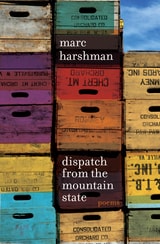
Dispatch from the Mountain State
PoemsMarc Harshman
West Virginia University Press, 2025
This collection of over forty poems sings with a fluid voice and dazzles with imagery that surprises and rings true, often underlain by and intertwined with the darker threads of our common living and dying as contemporary Appalachians. It is rare to find a poet like Harshman, who is deeply connected to the life of rural America and yet writes poetry untouched by any sentiment for the old ways found there.
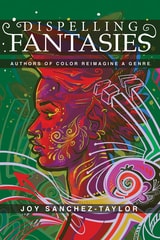
Dispelling Fantasies
Authors of Color Reimagine a GenreJoy Sanchez-Taylor
The Ohio State University Press, 2025
In Dispelling Fantasies, Joy Sanchez-Taylor examines how authors of color, such as R. F. Kuang, N. K. Jemisin, Nnedi Okorafor, Tomi Adeyemi, Tasha Suri, Aiden Thomas, Nghi Vo, and Marlon James, among others, offer critical counterpoints to the history of white-dominated, Eurocentric fantasy. The traditional fantasy that these authors are writing against reinforces Christian virtues and colonial, white supremacist structures; Sanchez-Taylor argues that its racial tropes are tied to a history of colonization and Christian missionary practices, with popular fantasy narratives often depicting Indigenous groups as primitive, deviant peoples in need of salvation. Such representations are based on a Western binary of rational versus magical and are influenced by tenets of Christianity, ultimately contributing to depictions of “the dark fantastic” or fantasy worlds where dark and othered characters are implicitly portrayed as evil and irredeemable. Organized around four Christian ideals that appear frequently in Western fantasy texts—virtue, envy, patriarchy, and salvation—Dispelling Fantasies demonstrates how non-Eurocentric fantasy worlds offer alternative versions of morality, race, gender, and sexuality and make space for authors to move away from hierarchical, binary systems of good and evil.
Dissonance
Kristin Dykstra
University of Chicago Press, 2025
In Dissonance, translator Kristin Dykstra’s first book of original poetry, the author leads us to inner worlds shaped partly by the New England countryside, tracking shifts in the region’s nature, infrastructure, and people, while sharing observations on borders and climate catastrophe that reverberate globally. Dykstra condenses signs of urban expansion, economic division, and battles over democracy into an innovative meditation. With a dynamic approach to form, musicality, and scope, Dissonance explores ways of experiencing regional landscapes and imagined communities in the twenty-first century.
Through her extended sequence of prose poems, photographs, and lyric fragments, Dykstra merges clips from documents and dialogues with observations drawn from two local libraries and her daily walks down a dirt road through Vermont’s foothills. As she moves down this public road, which lies within the nation’s federally designated hundred-mile border zone, she finds a daily convergence of tensions. Dissonance asks how poetry can unsettle impressions of a place, and how that process, in turn, disturbs impressions of self, of others, and of time itself.
Dissonance is the recipient of the third annual Phoenix Emerging Poet Book Prize.
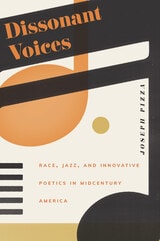
Dissonant Voices
Race, Jazz, and Innovative Poetics in Midcentury AmericaJoseph Pizza
University of Iowa Press, 2023

Ditch Memory
New and Selected PoemsTodd Davis
Michigan State University Press, 2024

Divine Presence in Spain and Western Europe 1500–1960
Visions, Religious Images and PhotographsWilliam A. Christian Jr.
Central European University Press, 2012

Dodging
Charles Bernstein
University of Chicago Press, 0
A new, expansive collection by one of the most provocative and inventive poets of our time.
In Dodging, Charles Bernstein pushes his poetics toward new kinds of formal and tonal attentions. This multifaceted work brings together comic velocity, pointed political critique, and passages of lyric intensity. Bernstein calls these poems “too late”: written late in life as irreversibility presses against reflection, regret, and renewed resistance—a situation in which dodging is not evasion but survival, a way of moving through political catastrophe and personal loss without being silenced by either.
The collection unfolds in three interrelated “fits”—a term suggesting bursts of composition, rhythmic surges, and formal groupings—titled “Dodging,” “Struggle,” and “Reflection.” These sections move from a series of flashes and fragments, then to assembled riffs and collaborations with poet Tracie Morris, and finally turn to refractions and aphorisms that embrace active contradiction. Together they trace a shifting field of contrasts: between satire and elegy, volatility and concentration, comedy and grief.
Both fundamentally true to Bernstein’s voice and radically radiant in its range, Dodging is a work that moves restlessly across forms and tones—by turns sly, searching, and unguarded, where humor and grief occupy the same ground.
Domestications
American Empire, Literary Culture, and the Postcolonial LensHosam Aboul-Ela
Northwestern University Press, 2018
Domestications traces a genealogy of American global engagement with the Global South since World War II. Hosam Aboul-Ela reads American writers contrapuntally against intellectuals from the Global South in their common—yet ideologically divergent—concerns with hegemony, world domination, and uneven development. Using Edward Said’s Culture and Imperialism as a model, Aboul-Ela explores the nature of U.S. imperialism’s relationship to literary culture through an exploration of five key terms from the postcolonial bibliography: novel, idea, perspective, gender, and space.
Within this framework the book examines juxtapositions including that of Paul Bowles’s Morocco with North African intellectuals’ critique of Orientalism, the global treatment of Vietnamese liberation movements with the American narrative of personal trauma in the novels of Tim O’Brien and Hollywood film, and the war on terror’s philosophical idealism with Korean and post-Arab nationalist materialist archival fiction.
Domestications departs from other recent studies of world literature in its emphases not only on U.S. imperialism but also on intellectuals working in the Global South and writing in languages other than English and French. Although rooted in comparative literature, its readings address issues of key concern to scholars in American studies, postcolonial studies, literary theory, and Middle Eastern studies.
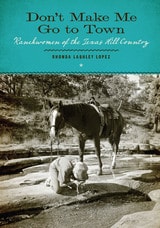
Don’t Make Me Go to Town
Ranchwomen of the Texas Hill CountryBy Rhonda Lashley Lopez
University of Texas Press, 2011
Many people dream of "someday buying a small quaint place in the country, to own two cows and watch the birds," in the words of Texas ranchwoman Amanda Spenrath Geistweidt. But only a few are cut out for the unrelenting work that makes a family ranching operation successful. Don't Make Me Go to Town presents an eloquent photo-documentary of eight women who have chosen to make ranching in the Texas Hill Country their way of life. Ranging from young mothers to elderly grandmothers, these women offer vivid accounts of raising livestock in a rugged land, cut off from amenities and amusements that most people take for granted, and loving the hard lives they've chosen.
Rhonda Lashley Lopez began making photographic portraits of Texas Hill Country ranchwomen in 1993 and has followed their lives through the intervening years. She presents their stories through her images and the women's own words, listening in as the ranchwomen describe the pleasures and difficulties of raising sheep, Angora goats, and cattle on the Edwards Plateau west of Austin and north of San Antonio. Their stories record the struggles that all ranchers face—vagaries of weather and livestock markets, among them—as well as the extra challenges of being women raising families and keeping things going on the home front while also riding the range. Yet, to a woman, they all passionately embrace family ranching as a way of life and describe their efforts to pass it on to future generations.

Down to the River
Portraits of Iowa MusiciansSandra Louise Dyas
University of Iowa Press, 2007
Dyas’s photographs present both the sweaty intensity of live performances and the more contemplative moments of individual portraits. They are complemented by Chris Offutt’s empathetic essay, which also encapsulates the experience of connecting with a new home through its music. A companion CD with eighteen tracks by Iowa’s finest singer/songwriters, including Dave Moore, Greg Brown, Bo Ramsey, David Zollo, and Pieta Brown, add up to an unmatched perspective on Iowa music and musicians.
CD Tracks
1. Iowa Crawl, Joe Price
2. Poor Back Slider, Greg Brown
3. Parnell, David Zollo
4. #807, Pieta Brown
5. Wheels of Steel, Radoslav Lorkovic
6. Down to the River, Dave Moore
7. Lucy and Andy Drive to Arkansas, Kevin Gordon
8. Chuck Brown, Mike and Amy Finders
9. Nobody But You, Joe Price
10. Earleton, BeJae Fleming
11. Ceremonial Child, High and Lonesome
12. Sidetrack Lounge, Bo Ramsey
13. On the Edge, Pieta Brown
14. One Wrong Turn, Greg Brown
15. Not in Iowa, Kelly Pardekooper
16. Living in a Cornfield, Bo Ramsey
17. ’57 Chevy, Tom Jessen’s Dimestore Outfit
18. Roll on John, the Pines
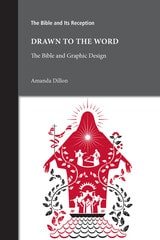
Drawn to the Word
The Bible and Graphic DesignAmanda Dillon
SBL Press, 2021
A unique study of lectionaries and graphic design as a site of biblical reception
How artists portrayed the Bible in large canvas paintings is frequently the subject of scholarly exploration, yet the presentation of biblical texts in contemporary graphic designs has been largely ignored. In this book Amanda Dillon engages multimodal analysis, a method of semiotic discourse, to explore how visual composition, texture, color, directionality, framing, angle, representations, and interactions produce potential meanings for biblical graphic designs. Dillon focuses on the artworks of two American graphic designers—the woodcuts designed by Meinrad Craighead for the Roman Catholic Sunday Missal and Nicholas Markell’s illustrations for the worship books of the Evangelical Lutheran Church in America—to present the merits of multimodal analysis for biblical reception history.
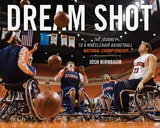
Dream Shot
The Journey to a Wheelchair Basketball National ChampionshipJosh Birnbaum
University of Illinois Press, 2017
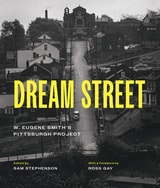
Dream Street
W. Eugene Smith's Pittsburgh ProjectW. Eugene Smith
University of Chicago Press, 2023
In 1955, having just resigned from his high-profile but stormy career with Life Magazine, W. Eugene Smith was commissioned to spend three weeks in Pittsburgh and produce one hundred photographs for noted journalist and author Stefan Lorant’s book commemorating the city’s bicentennial. Smith ended up staying a year, compiling twenty thousand images for what would be the most ambitious photographic essay of his life. But only a fragment of this work was ever seen, despite Smith's lifelong conviction that it was his greatest collection of photographs.
In 2001, Sam Stephenson published for the first time an assemblage of the core images from this project, selections that Smith asserted were the “synthesis of the whole,” presenting not only a portrayal of Pittsburgh but of postwar America. This new edition, updated with a foreword by the poet Ross Gay, offers a fresh vision of Smith's masterpiece.
Dreams of Archives Unfolded
Absence and Caribbean Life WritingJocelyn Fenton Stitt
Rutgers University Press, 2021
Dulce
PoemsMarcelo Hernandez Castillo
Northwestern University Press, 2018
The poems in Dulce are at once confession and elegy that admit the speaker’s attempt and possible failure to reconcile intimacy toward another and toward the self. The collection asks: what’s the point in any of this?—meaning, what’s the use of longing beyond pleasure; what’s the use of looking for an origin if we already know the ending?
Surreal and deeply imagistic, the poems map a parallel between the landscape of the border and the landscape of sexuality. Marcelo Hernandez Castillo invites the reader to confront and challenge the distinctions of borders and categories, and in doing so, he obscures and negates such divisions. He allows for the possibility of an and in a world of either/or.
These poems enact a prescient anxiety of what is to come, “I want to say all of this is true / but we both know it isn’t. . . . We already know what’s at the other end of this.” Dulce is truly a lyrical force rife with the rich language of longing and regret that disturbs even the most serene quiet.
Dusk, Empire
New and SelectedDaniel Tobin
Four Way Books, 2026
Dusk, Empire: New and Selected Poems 1987-2024 is a panoramic collection of Daniel Tobin’s most exemplary, ambitious, and accomplished poems from nearly forty years at work in the art. These range from his award-winning first book, Where the World is Made, through successive volumes that reveal a progressive deepening of his essential themes even as the poems evolve to an ever more refined technical risk and mastery. These themes include the unflinching encounter with time, suffering, and mortality, as well as what one earlier reviewer called “a quest for transcendence, a search for the sacred.” They seek, in short, to do, as another reviewer observed, what Yeats said was “one ideal for poetry: to hold justice and reality in a single thought.” In so doing, Tobin’s poems probe the individual life in relation to the pressures of history, including his own family’s perilous and traumatic immigration from famine in the 19th century—a backstory he explores in The Narrows, which he has called “a mural in verse.” At the same time, his “Homage to Bartolomeo de las Casas” delves into the fraught early colonial history of the Americas through the eyes of the eponymous friar, a repentant colonizer.
These earlier works establish Tobin’s mastery of the poetic sequence, among a wide variety of other formal displays, all amply evident in the books that follow, including the lyrically meditative orchestrations of Second Things, the award-winning poems of Belated Heavens, The Net, and Blood Labors, characterized at once by their compendious erudition, their sense of intellectual and cultural history, as well as their emotional urgency and formal variousness. This generous selection from Tobin’s work is intended to be a companion volume to The Mansions, his trilogy of book-length poems that explore twentieth century history, and the counter claims of science and religion, through three exemplary lives, which reviewers said inspired genuine awe. Finally, Dusk, Empire leads with a gripping selection of new work that engages the enormous pressures and troubles of the present historical moment, set in dialogue with Tobin’s characteristic passion for what would transcend it. Or as he asks in “The Sand Painting,” “What is that joyous singing inside the rock / Though each intricate, lovely thing will be erased?”
Dutch Marine Painting in the Nineteenth Century
Cécile Bosman
Amsterdam University Press, 2026
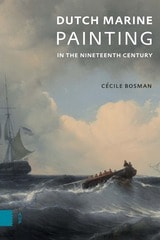
It turns out that throughout the nineteenth century, marine painting was seen in Dutch art circles as a vehicle for patriotism. This kind of cultural nationalism was rooted in the country's historical connection with the water and, in particular, the glorification of the Netherlands as a seafaring nation. An enduring myth that is now the subject of intense public debate. This beautifully illustrated book fills a gap in art and cultural-historical knowledge of marine painting, while offering an insightful look at the still influential nineteenth century.
Dwelling in American
Dissent, Empire, and GlobalizationJohn Muthyala
Dartmouth College Press, 2012
Dwelling in Fiction
Poetics of Place and the Experimental Novel in Latin AmericaAshley R. Brock
Northwestern University Press, 2023
The radical formal experiments undertaken by writers across Latin America in the mid-twentieth century introduced friction, opacity, and self-reflexivity to the very act of reading. Dwelling in Fiction: Poetics of Place and the Experimental Novel in Latin America explores the limitations and the possibilities of literature for conveying place-specific forms of life. Focusing on authors such as José María Arguedas, João Guimarães Rosa, and Juan José Saer, who are often celebrated for universalizing regional themes, Ashley R. Brock brings a new critical lens to Latin American writers who were ambivalent toward their era’s “boom.”
Beyond mere resistance to or critique of the commodification and political instrumentalization of rural topics and types, this countertrend of critical regionalism positions readers themselves as outsiders, pushing them to engage their senses, to train their attention, and to learn to dwell in unknown textual landscapes. Dwelling in Fiction draws on a transnational community of thinkers and writers to show how their midcentury aesthetic practices of sensorial pedagogy anticipate contemporary turns toward affect, embodiment, decoloniality, and ecological thought.
Dystopias of Infamy
Insult and Collective Identity in Early Modern SpainJavier Irigoyen-García
Bucknell University Press, 2022