Results by title
441 books match the query 'Women and literature' and 15 start with d
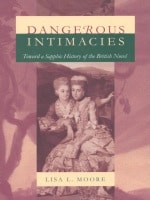
Dangerous Intimacies
Toward a Sapphic History of the British NovelLisa L. Moore
Duke University Press, 1997
Moore demonstrates that intimacy between women was vividly imagined in the British eighteenth century as not only chaste and virtuous, but also insistently and inevitably sexual. She looks at instances of sapphism in such novels as Millenium Hall, Memoirs of a Woman of Pleasure, Belinda, and Emma and analyzes how the new literary form of the novel made the bourgeois heroine’s successful negotiation of female friendship central to the establishment of her virtue. Moore also examines representations of sapphism through the sweeping economic and political changes of the period and claims that middle-class readers’ identifications with the heroine’s virtue helped the novel’s bourgeois audience justify the violent bases of their new prosperity, including slavery, colonialism, and bloody national rivalry.
In revealing the struggle over sapphism at the heart of these novels of female friendship—and at the heart of England’s national identity—Moore shows how feminine sexual agency emerged as an important cultural force in post-Enlightenment England
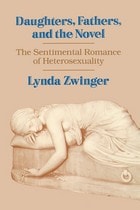
Daughters, Fathers, and the Novel
The Sentimental Romance of HeterosexualityLynda Zwinger
University of Wisconsin Press, 1991
Daughters, Fathers, and the Novel is a provocative study of the father-daughter story—a neglected dimension of the family romance. It has important implications for the history of the novel, for our understanding of key texts in that history, and for theories concerning the representation of gender, family relations, and heterosexuality in Western culture.
In the English and American novel, argues Lynda Zwinger, “the good woman” . . . is a father’s daughter, . . . constructed to the very particular specifications of an omnipresent and unvoiced paternal desire.” Zwinger supports her case with an analysis of both “high-brow” and “low-brow” novels and with ingenious textual analyses of five novels: Clarissa Harlowe, Dombey and Son, Little Women, The Golden Bowl, and The Story of O.
In the dominant discourse of Anglo-American culture, the father’s daughter provides the cornerstone for the patriarchal edifice of domesticity and the alibi for patriarchal desire. Zwinger’s analysis of the sexual politics embodied in the figure of this sentimental daughter raises compelling critical and cultural issues. Zwinger shows how different readings of Clarissa’s story form a sentimental composite that makes her available in perpetuity to heterosexual desire. Dombey and Son illuminates the erotic dimension of the sentimental, the titillation always inherent in the spectacle of virtue in distress. Zwinger’s analysis of Little Women in the context of Louisa May Alcott’s own life-text focuses upon the problems of a daughter trying to write the filial romance. The Golden Bowl deploys the daughter of sentiment as a “cover story” for a feminine version of the Oedipal story, founded on the daughter who can’t say yes, but doesn’t say no. The Story of O reveals the pornographic dimension in romantic and sentimental love.
In her conclusion, Zwinger offers an overview of the nineteenth-century novel, asking what difference it makes when the writer is a daughter. She shows how the daughter’s family romance pictures the father as inadequate, ironically requiring the sentimental daughter as a patriarchal prop. She develops a useful concept of hysteria and argues that generic “disorder” and hysterical “intrusions” mark the family romance novels of Jane Austen, Emily and Charlotte Brontë, and George Eliot. And finally, she makes the case that the daughter’s choice to stay home is not necessarily an act of simple complicity, for by staying home she comes as close as she can to disrupting the father-daughter romance.
Dehexing Sex
Russian Womanhood During and After GlasnostHelena Goscilo
University of Michigan Press, 1996

Desire and Truth
Functions of Plot in Eighteenth-Century English NovelsPatricia Meyer Spacks
University of Chicago Press, 1990
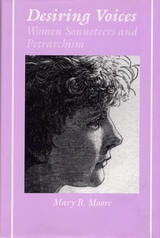
Desiring Voices
Women Sonneteers and PetrarchismMary B. Moore
Southern Illinois University Press, 2000
“How do I love thee? Let me count the ways,” wrote Elizabeth Barrett Browning in her Sonnets from the Portuguese.Desiring Voices: Women Sonneteers and Petrarchism proposes that we attend to the ways that women poets from the sixteenth through the twentieth centuries have both echoed and transformed the literary and erotic conventions that strongly influenced their fates as women, wives, and lovers.
Mary B. Moore analyzes and provides context for love sonnet sequences by Italian, French, English, and American women poets in the light of current knowledge concerning attitudes towards women at the time they wrote. Through close readings of the poems combined with theory and criticism about constructs of women, historical events, and biographical contexts, Moore reveals patterns of revision among women poets that shed further light on the poets themselves, on Petrarchism as a convention, and on ideas about women. She focuses on Petrarchan sonnet sequences by women because the poems serve both as works of art and as documents that illuminate the range and limitations of female roles as erotic subjects (agents of speech, action, knowledge, and desire) as well as their more usual roles as erotic objects.
Combining theory with close reading, Moore enhances the value of many generally neglected poems by women. After a thorough discussion of the Petrarchan sonnet tradition, she analyzes the work of Gaspara Stampa, Louise Labé, Lady Mary Wroth, Charlotte Smith, Elizabeth Barrett Browning, and Edna St. Vincent Millay.

Dialogics of the Oppressed
Peter Hitchcock
University of Minnesota Press, 1992
Dialogics of the Oppressed was first published in 1992. Minnesota Archive Editions uses digital technology to make long-unavailable books once again accessible, and are published unaltered from the original University of Minnesota Press editions.
Formulated within and against the context of Russian formalism that became the backbone of semiotics, Mikhail Bakhtin's work has enabled contemporary critical theories to return to specific sociopolitical and historical moments that had been closed off by formalist abstractions. In Dialogics of the Oppressed, Peter Hitchcock looks through the lens of Bakhtin's theory of dialogism for an analysis of subaltern writing. Rather than assume an integral "subaltern subject" as the object of analysis, Hitchcock - in case studies of four global feminists, Nawal el Saadawi, Pat Barker, Zhang Jie, and Agnes Smedley - emphasizes the cultural agency of the subaltern and shows the political implications this agency might have for literary analysis in general and cultural studies in particular.
"Presents a provocative set of readings-through the Bakhtinian model of dialogism-of texts by four women writers of the twentieth century. . . instructive and compelling." Barbara Harlow, University of Texas
Dialogics of the Oppressed argues from an internationalistic perspective to underline that the heterogeneity of dialogic feminism itself constitutes a significant array of discursive resistance to the hegemony of disciplines and so-called area studies operative in the metropolitan First World academy. Hitchcock demonstrates through dialogic analyses of the writings of these four feminists that a form of multicultural materialism can itself disrupt the restrictive logics and practices of literary studies in the Western academy, and that indeed, there is a counterlogic in the culture of the subaltern. Hitchcock's underlying objective is the development of a powerful critique of the epistemological bases of the academy that marginalize and devalorize certain cultural productions and subjects, as well as a cognitive mapping of the politics of pedagogy in current transformations of disciplinarity.
Peter Hitchcock is professor of English at Baruch College of the City University of New York. He is the author of Working-Class Fiction in Theory and Practice and has published essays on radical writing, multiculturalism, film, and Third World fiction.
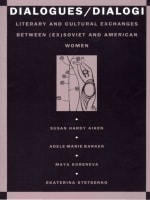
Dialogues/Dialogi
Literary and Cultural Exchanges Between (Ex)Soviet and American WomenSusan Hardy Aiken, Adele Barker, Maya Koreneva, and Ekaterina Stetsenko
Duke University Press, 1993
Dialogues/Dialogi pairs stories by Tillie Olsen, Toni Cade Bambara, Jayne Anne Phillips, and Leslie Marmon Silko (reprinted here in full) with Russian stories by I. Grekova, Liudmila Petrushevskaya, Elena Makarova, and Anna Nerkagi, many of them appearing here for the first time in English. Exquisite in their stylistic and thematic variety, suggestive of the range of women's experience and fiction in both countries, each story is the subject of paired interpretive essays by an American and an (ex)Soviet critic from among the book's authors.
A colloquy of diverse voices speaking together in multiple, mutually illuminating exchanges, Dialogues/Dialogi testifies to the possibility of evolving relationships among women across borders once considered impassable.

Dickinson and the Boundaries of Feminist Theory
Mary Loeffelholz
University of Illinois Press, 1991
"Mary Loeffelholz has written a book that actually performs what it promises. . . . It illuminates our understanding of Emily Dickinson with readings both elegant and useful, and as importantly suggests modified direction for feminist-psychoanalytic theory."
-- Diana Hume George, author of Oedipus Anne: The Poetry of Anne Sexton
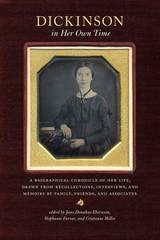
Dickinson in Her Own Time
A Biographical Chronicle of Her Life, Drawn from Recollections, Interviews, and Memoirs by Family, Friends, and AssociatesJane Donahue Eberwein, Stephanie Farrar, and Cristanne Miller
University of Iowa Press, 2015
In addition, promotional items, reviews, and correspondence relating to early publications are included, as well as some later documents that reveal the changing assessments of Dickinson’s poetry in response to evolving critical standards. These documents provide evidence that counters many popular conceptions of her life and reception, such as the belief that the writer best known for poems focused on loss, death, and immortality was herself a morose soul. In fact, those who knew her found her humorous, playful, and interested in other people.
Dickinson maintained literary and personal correspondence with major representatives of the national literary scene, developing a reputation as a remarkable writer even as she maintained extreme levels of privacy. Evidence compiled here also demonstrates that she herself made considerable provision for the survival of her poems and laid the groundwork for their eventual publication. Dickinson in Her Own Time reveals the poet as her contemporaries knew her, before her legend took hold.
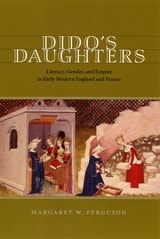
Dido's Daughters
Literacy, Gender, and Empire in Early Modern England and FranceMargaret W. Ferguson
University of Chicago Press, 2003
Our common definition of literacy is the ability to read and write in one language. But as Margaret Ferguson reveals in Dido's Daughters, this description is inadequate, because it fails to help us understand heated conflicts over literacy during the emergence of print culture. The fifteenth through seventeenth centuries, she shows, were a contentious era of transition from Latin and other clerical modes of literacy toward more vernacular forms of speech and writing.
Fegurson's aim in this long-awaited work is twofold: to show that what counted as more valuable among these competing literacies had much to do with notions of gender, and to demonstrate how debates about female literacy were critical to the emergence of imperial nations. Looking at writers whom she dubs the figurative daughters of the mythological figure Dido—builder of an empire that threatened to rival Rome—Ferguson traces debates about literacy and empire in the works of Marguerite de Navarre, Christine de Pizan, Elizabeth Cary, and Aphra Behn, as well as male writers such as Shakespeare, Rabelais, and Wyatt. The result is a study that sheds new light on the crucial roles that gender and women played in the modernization of England and France.
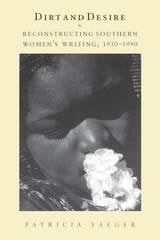
Dirt and Desire
Reconstructing Southern Women's Writing, 1930-1990Patricia Yaeger
University of Chicago Press, 2000
For Yaeger, works by black and white southern women writers reveal a shared obsession with monstrosity and the grotesque and with the strange zones of contact between black and white, such as the daily trauma of underpaid labor and the workings of racial and gender politics in the unnoticed yet all too familiar everyday. Yaeger also excavates a southern fascination with dirt—who owns it, who cleans it, and whose bodies are buried in it.
Yaeger's brilliant, theoretically informed readings of Zora Neale Hurston, Harper Lee, Carson McCullers, Toni Morrison, Flannery O'Connor, Alice Walker, and Eudora Welty (among many others) explode the mystifications of southern literary tradition and forge a new path for southern studies.
The book won the Barbara Perkins and George Perkins Award given by the Society for the Study of Narrative Literature.
Disarming the Nation
Women's Writing and the American Civil WarElizabeth Young
University of Chicago Press, 1999
Combining literary analysis, cultural history, and feminist theory, Disarming the Nation argues that the Civil War functioned in women's writings to connect female bodies with the body politic. Women writers used the idea of "civil war" as a metaphor to represent struggles between and within women—including struggles against the cultural prescriptions of "civility." At the same time, these writers also reimagined the nation itself, foregrounding women in their visions of America at war and in peace. In a substantial afterword, Young shows how contemporary black and white women—including those who crossdress in Civil War reenactments—continue to reshape the meanings of the war in ways startlingly similar to their nineteenth-century counterparts.
Learned, witty, and accessible, Disarming the Nation provides fresh and compelling perspectives on the Civil War, women's writing, and the many unresolved "civil wars" within American culture today.
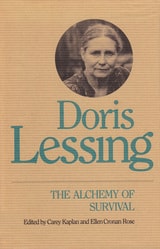
Doris Lessing
The Alchemy of SurvivalCarey Kaplan
Ohio University Press, 1988
Long neglected by the academic world because of her rejection of belletristic values and resistance to convenient literary taxonomy, Doris Lessing has nonetheless built an international following of serious, dedicated readers. Acknowledging the difficulties posed by the multiple dimensions of Lessing’s work, Kaplan and Rose have gathered eleven essays that address her artistic, philosophical, political, and psychological complexity, and so provide a welcome introduction to the extraordinary depth and diversity of this important contemporary novelist.
Lessing has been described as an “alchemical” writer, in that her work is directed toward changing people’s lives and perceptions rather than simply recording experience. Accordingly, the contributors examine her various postures and tactics for the purpose of discovering how the alchemical elements inform her various personae. Frederick C. Stern discusses Lessing’s commitment to radical humanist thought, while Carey Kaplan examines how Lessing’s imperialist past has shaped her futuristic fiction. Elizabeth Abel offers a feminist interpretation of the pattern of brother-sister incest in Lessing’s work, showing how Lessing has established Antigone as a female alternative to the Oedipal myth of male incest. Particularly insightful is Eve Bertelsen’s report of her interview with Lessing, demonstrating how Lessing’s often evasive style of adversarial dialogue works in concert with her refusal to be conveniently pigeonholed by academic analysis.
For those readers new to her work, Doris Lessing: The Alchemy of Survival will serve as a useful introduction to Lessing’s concerns and techniques. Those who have long admired her writing will find in this collection new keys to understanding Lessing’s philosophical, political, and psychological complexity.
Doris Lessing
The Poetics of ChangeGayle Greene
University of Michigan Press, 1997
Doris Lessing has been a chronicler of our age for nearly half a century, and a study of her writing career does not yield easy generalizations. Difficult though she is to categorize, she is always concerned with change, with a search for "something new" against "the nightmare repetition" of history. The feminist quest she articulated in The Children of Violence and The Golden Notebook entered the culture with the force of a new myth: these books changed lives. The Golden Notebook--together with such works as The Second Sex and The Feminine Mystique--raised the consciousness of a generation of women readers and played a major part in making the second wave of feminism. It is the power of Lessing's novels to change people's lives, the effect she had raising the consciousness of a generation of women and the effect she continues to have on young readers, that is the subject of this book.
Gayle Greene employs an eclectic range of approaches (psychoanalytic, Marxist, biographical, historical, intertextual, formalist, feminist) to shed new light on Lessing's remarkable achievement. She sees Lessing as a feminist writer, not in offering strong female role models who climb top the top of existing social structures, but in envisioning, and indeed helping to bring about, a transformation of those structures. Lessing critiques Western values of individualism, competition, and materialism in terms similar to those developed by feminism; and, in getting us to view our culture from without, in teaching us to read cultural constructs as systems, her novels perform the deconstructing and demystifying work of feminism.
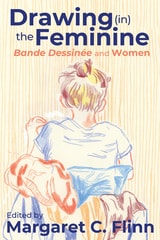
Drawing (in) the Feminine
Bande Dessinée and WomenEdited by Margaret C. Flinn
The Ohio State University Press, 2024
Winner, Eisner Award for Best Academic/Scholarly Work 2025
Finalist, Comics Studies Society Edited Book Prize 2025
Drawing (in) the Feminine celebrates and examines the richness of contemporary women's production in French and Francophone comics art and considers the history of representations made by both dominant and marginalized creators. Bridging historical and contemporary comics output, these essays illuminate the interfaces among genre, gender, and cultural history. Contributors from both sides of the Atlantic, and across a variety of methodologies and disciplinary orientations, challenge prevailing claims about the absence of women creators, characters, and readers in bande dessinée, arguing that women have always been part of its history. While still far from achieving parity with their male counterparts, female creators are occupying an increasingly significant portion of the French-language comics publishing industry, and creators of all genders are putting forth stories that reflect on the diversity and richness of women's and gender-nonconforming people's experiences. In the essays collected here, contributors push back against the ways in which the marginalization of women within bande dessinée history has overshadowed their significant contributions, extending avenues for further exploring the true diversity of a flourishing contemporary production.
Contributors:
Armelle Blin-Rolland, Véronique Bragard, Michelle Bumatay, Benoît Crucifix, Isabelle Delorme, Jacques Dürrenmatt, Margaret C. Flinn, Alexandra Gueydan-Turek, Jennifer Howell, Jessica Kohn, Sylvain Lesage, Catriona MacLeod, Mark McKinney