Results by title
22279 books match the query 'Social Science' and 859 start with d
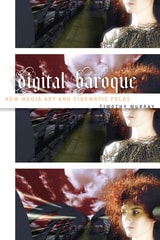
Digital Baroque
New Media Art and Cinematic FoldsTimothy Murray
University of Minnesota Press, 2008
A surprising and original application of theories of new media art
In this intellectually groundbreaking work, Timothy Murray investigates a paradox embodied in the book’s title: What is the relationship between digital, in the form of new media art, and baroque, a highly developed early modern philosophy of art? Making an exquisite and unexpected connection between the old and the new, Digital Baroque analyzes the philosophical paradigms that inform contemporary screen arts.
Examining a wide range of art forms, Murray reflects on the rhetorical, emotive, and social forces inherent in the screen arts’ dialogue with early modern concepts. Among the works discussed are digitally oriented films by Peter Greenaway, Jean-Luc Godard, and Chris Marker; video installations by Thierry Kuntzel, Keith Piper, and Renate Ferro; and interactive media works by Toni Dove, David Rokeby, and Jill Scott. Sophisticated readings reveal the electronic psychosocial webs and digital representations that link text, film, and computer. Murray puts forth an innovative Deleuzian psychophilosophical approach—one that argues that understanding new media art requires a fundamental conceptual shift from linear visual projection to nonlinear temporal folds intrinsic to the digital form.
Digital Cinema
Stephen Prince
Rutgers University Press, 2019
Stephen Prince offers a clear, concise account of how digital cinema both extends longstanding traditions of filmmaking and challenges some fundamental assumptions about film. It is essential reading for anyone interested in understanding how movies are shot, produced, distributed, and consumed in the twenty-first century.
Digital Demagogue
Authoritarian Capitalism in the Age of Trump and TwitterChristian Fuchs
Pluto Press, 2018
This book delves into new political-economic structures as expressed through political communication to explain the rise of authoritarian capitalism, nationalism and right-wing ideology throughout the world. Christian Fuchs does this through updating Marxist theory and the Frankfurt School's critical theory. He re-invigorates the works on authoritarianism of Franz L. Neumann, Theodor W. Adorno, Erich Fromm, Herbert Marcuse, Max Horkheimer, Wilhelm Reich, Leo Lowenthal and Klaus Theweleit in the age of Trump and Twitter.
In the age of big data and social media, Digital Demagogue studies the expressions of ideology, nationalism and authoritarianism today and discusses prospects for overcoming capitalism and renewing the Left.
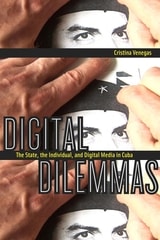
Digital Dilemmas
The State, the Individual, and Digital Media in CubaVenegas, Cristina
Rutgers University Press, 2010
Digital Dilemmas views Cuba from the Soviet Union's demise to the present, to assess how conflicts over media access play out in their both liberating and repressive potential. Drawing on extensive scholarship and interviews, Cristina Venegas questions myths of how Internet use necessarily fosters global democracy and reveals the impact of new technologies on the country's governance and culture. She includes film in the context of broader media history, as well as artistic practices such as digital art and networks of diasporic communities connected by the Web. This book is a model for understanding the geopolitic location of power relations in the age of digital information sharing.
Digital Divisions
How Schools Create Inequality in the Tech EraMatthew H. Rafalow
University of Chicago Press, 2020
While teachers praise affluent White students for being “innovative” when they bring preexisting and sometimes disruptive tech skills into their classrooms, less affluent students of color do not receive such recognition for the same behavior. Digital skills exhibited by middle class, Asian American students render them “hackers,” while the creative digital skills of working-class, Latinx students are either ignored or earn them labels troublemakers. Rafalow finds in his study of three California middle schools that students of all backgrounds use digital technology with sophistication and creativity, but only the teachers in the school serving predominantly White, affluent students help translate the digital skills students develop through their digital play into educational capital. Digital Divisions provides an in-depth look at how teachers operate as gatekeepers for students’ potential, reacting differently according to the race and class of their student body. As a result, Rafalow shows us that the digital divide is much more than a matter of access: it’s about how schools perceive the value of digital technology and then use them day-to-day.

Digital Energetics
Anne Pasek
University of Minnesota Press, 2023
Exploring the connections between energy and media—and what those connections mean for our current moment
Energy and media are the entangled middles of social life—and also of each other. This volume traces the contours of both a media analytic of energy and an energy analytic of media across the cultural, environmental, and economic relations they undergird. Digital Energetics argues that media and energy require joint theorization—not only in their potential to universalize but also in the many contingent and intermeshed relations that they bind together across contemporary informational and fossil regimes. Focusing specifically on digital operations, the coauthors analyze how data and energy have jointly modulated the character of the materiality and labor of digital systems in a warming world.
Anne Pasek provides a brief energy history of the bit, tracing how the electrification and digitization of American computing propelled a turn toward efficiency as both a solution and instigator of parallel crises in the workforce and the climate. Zane Griffin Talley Cooper traces these concerns within cryptographic proof-of-work systems and the heat they necessarily produce and seek to manage. Following heat through the twinned histories of thermodynamics and information theory, he argues that such systems are best approached as a paradigmatic, rather than exceptional, example of computing infrastructures. Cindy Kaiying Lin focuses on the practical and political frictions created as database and management designs move from the Global North to South, illustrating how the energy constraints and software cultures of Indonesia open new spaces of autonomy within environmental governance. Finally, Jordan B. Kinder offers a theorization of “platform energetics,” demonstrating how public energy discourses and settler land claims are entangled in the digital infrastructures of data colonialism in Canada.
Digital Ethnography
Anthropology, Narrative, and New MediaBy Natalie M. Underberg and Elayne Zorn
University of Texas Press, 2013
Digital ethnography can be understood as a method for representing real-life cultures through storytelling in digital media. Enabling audiences to go beyond absorbing facts, computer-based storytelling allows for immersion in the experience of another culture. A guide for anyone in the social sciences who seeks to enrich ethnographic techniques, Digital Ethnography offers a groundbreaking approach that utilizes interactive components to simulate cultural narratives.
Integrating insights from cultural anthropology, folklore, digital humanities, and digital heritage studies, this work brims with case studies that provide in-depth discussions of applied projects. Web links to multimedia examples are included as well, including projects, design documents, and other relevant materials related to the planning and execution of digital ethnography projects. In addition, new media tools such as database development and XML coding are explored and explained, bridging the literature on cyber-ethnography with inspiring examples such as blending cultural heritage with computer games.
One of the few books in its field to address the digital divide among researchers, Digital Ethnography guides readers through the extraordinary potential for enrichment offered by technological resources, far from restricting research to quantitative methods usually associated with technology. The authors powerfully remind us that the study of culture is as much about affective traits of feeling and sensing as it is about cognition—an approach facilitated (not hindered) by the digital age.

Digital Exhaustion
Burnout, Fatigue and Overload in the Age of Constant ConnectivityEdited by A.R.E. Taylor
Intellect Books, 2026
Unpacking the affective toll of constant connectivity, this book reframes digital exhaustion as a defining experience of our times.
Overflowing inboxes. Back-to-back Zoom meetings. Nonstop notifications.
Daily life in digital culture can be exhausting.
This timely and urgent edited collection introduces ‘digital exhaustion’ as a conceptual lens to critically examine the ever-expanding presence of digital technologies in our personal and professional lives. Drawing on interdisciplinary perspectives, this book explores how digital exhaustion is experienced, felt, and articulated in our hyper-connected culture – through burnout, brain rot, binge-watching, data extraction, energy consumption, and social media compulsion. Digital exhaustion emerges as a key structure of feeling in an era of constant connectivity and algorithmic demands.
Accessible yet theoretically grounded, this collection is an essential resource for scholars in cultural and technology studies, while also speaking to broader debates in anthropology, psychology, digital geography, urban studies, and consumer research. Responsive to the urgent need to engage in sustained dialogue about digital futures, this book offers fresh insights into how we might understand – and rethink – digital wellbeing, social media addiction, and the growing demand for a right to disconnect.
Digital Fiction and the Unnatural
Transmedial Narrative Theory, Method, and AnalysisAstrid Ensslin and Alice Bell
The Ohio State University Press, 2021
Digital Futures and the City of Today
New Technologies and Physical SpacesEdited by Glenda Amayo Caldwell, Carl Smith, and Edward Clift
Intellect Books, 2016
Digital Futures of Graduate Study in the Humanities
Gabriel Hankins
University of Minnesota Press, 2024
A resource for planning, reimagining, and participating in the digital transformation of graduate study in the humanities
How are the humanities adapting to the rise of digital technologies, and what are some of the tried and tested ways that postsecondary institutions are proving the importance of humanities training at the graduate level? Bringing together a diverse group of scholars and students, Digital Futures of Graduate Study in the Humanities invites a reimagining of current models of graduate education to address ongoing challenges to the humanities and to create sustainable and humane pedagogies, classes, and institutions.
The essays cover a wide range of topics, including the skills required to learn and practice digital methods, the resources needed to support students and faculty in this enterprise, the lack of meaningful credit for undertaking this time-intensive work, and the diminished employment possibilities within academia for graduate students who emerge with these skills. Mapping the broad terrain through which to address and intervene in these particular issues and beyond, this book offers deep insights into the digital futures of graduate studies in the humanities.
Contributors: Maria José Afanador-Llach, U de los Andes, Bogotá; Maria K. Alberto, U of Utah; Agnieszka Backman; Travis M. Bartley, CUNY Graduate Center; Peggy Bockwinkel, U Stuttgart; Alison Booth, U of Virginia; Donna Alfano Bussell, U of Illinois Springfield; Joshua Casmir Catalano, Clemson U; Laura Crossley, George Mason U; Quinn Dombrowski, Stanford U; Stuart Dunn, King’s College London; Jennifer Edmond, Trinity College Dublin; Natalia Ermolaev, Princeton U; Laura Estill, St. Francis Xavier U; Malte Gäckle-Heckelen; Vicky Garnett, Trinity College Dublin; Daniel Gorman Jr., U of Rochester; Sabrina T. Grimberg, Stanford U; Tena L. Helton, U of Illinois Springfield; Jeanelle Horcasitas; Melissa A. Hosek, Stanford U; Hoyeol Kim; Brady Krien, U of Iowa; Benjamin Charles Germain Lee, U of Washington; Pamela E. Mack, Clemson U; Meredith Martin, Princeton U; Germán Camilo Martínez Peñaloza, U de los Andes, Bogotá; E. L. Meszaros, Brown U; Sara Mohr, Hamilton College; Sethunya Mokoko, U of Virginia; Rebecca Munson; Erin Francisco Opalich; Olivia Quintanilla, MiraCosta College; Cecily Raynor, McGill U; Amanda E. Regan, Clemson U; Heather Richards-Rissetto, U of Nebraska–Lincoln; Jacob D. Richter, George Washington U; Stephen Robertson, George Mason U; Katina L. Rogers; Claus-Michael Schlesinger, Humboldt U Berlin; Douglas Seefeldt, Clemson U; Kayla Shipp, Yale Digital Humanities Lab; Serenity Sutherland, SUNY Oswego; Toma Tasovac, Belgrade Center for Digital Humanities; Hannah Taylor, Duke U; Manfred Thaller, U of Cologne; Madeline Ullrich, U of Rochester; Ted Underwood, U of Illinois Urbana-Champaign; Gabriel Viehhauser, U Stuttgart; Brandon Walsh, U of Virginia Library; Sean Weidman, Lycoming College; Alex Wermer-Colan, Temple U; Adrian S. Wisnicki, U of Nebraska–Lincoln; Alexander J. Zawacki, U Göttingen.
Retail e-book files for this title are screen-reader friendly with images accompanied by short alt text and/or extended descriptions.
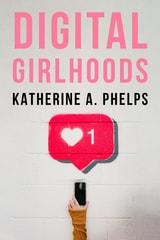
Digital Girlhoods
Katherine A. Phelps
Temple University Press, 2025
Featuring in-depth interviews with a cross section of tween girls, Phelps allows them to give meanings to their relationships with social media and their peers in their own words. As tween girls embody and negotiate the many contradictions of American girlhoods through social media participation (for example, the “Pretty or Ugly” YouTube trend), Phelps asks, how are tween girls living and experiencing girlhoods in the digital age?
The processes of experiencing and enacting tweenhood and girlhood online are explicitly gendered. Digital Girlhoods thoughtfully considers what tween girlhoods look and feel like in America today.

Digital Legend and Belief
The Slender Man, Folklore, and the MediaAndrew Peck
University of Wisconsin Press, 2023
Peck argues that the story of the Slender Man is really a story about the changing nature of belief in the age of the internet. Widely adopted digital technologies, from smartphones to social media, offer vast potential for extending traditional and expressive social behaviors in new ways. As such, understanding the online landscape of contemporary folklore is crucial for grasping the formation and circulation of belief in the digital age. Ultimately, Peck argues that advancing our comprehension of legends online can help us better understand how similar belief genres—like fake news, conspiracy theories, hoaxes, rumors, meme culture, and anti-expert movements—are enabled by digital media.
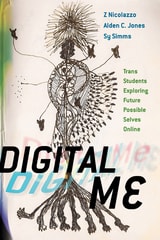
Digital Me
Trans Students Exploring Future Possible Selves OnlineZ Nicolazzo
Rutgers University Press, 2023
Digital Memory and the Archive
Wolfgang Ernst
University of Minnesota Press, 2012
In the popular imagination, archives are remote, largely obsolete institutions: either antiquated, inevitably dusty libraries or sinister repositories of personal secrets maintained by police states. Yet the archive is now a ubiquitous feature of digital life. Rather than being deleted, e-mails and other computer files are archived. Media software and cloud storage allow for the instantaneous cataloging and preservation of data, from music, photographs, and videos to personal information gathered by social media sites.
In this digital landscape, the archival-oriented media theories of Wolfgang Ernst are particularly relevant. Digital Memory and the Archive, the first English-language collection of the German media theorist’s work, brings together essays that present Ernst’s controversial materialist approach to media theory and history. His insights are central to the emerging field of media archaeology, which uncovers the role of specific technologies and mechanisms, rather than content, in shaping contemporary culture and society.
Ernst’s interrelated ideas on the archive, machine time and microtemporality, and the new regimes of memory offer a new perspective on both current digital culture and the infrastructure of media historical knowledge. For Ernst, different forms of media systems—from library catalogs to sound recordings—have influenced the content and understanding of the archive and other institutions of memory. At the same time, digital archiving has become a contested site that is highly resistant to curation, thus complicating the creation and preservation of cultural memory and history.
Digital Music Videos
Shaviro, Steven
Rutgers University Press, 2017
As these videos have proliferated online, they have become more widely accessible than ever before. In Digital Music Videos, Steven Shaviro examines the ways that music videos interact with and change older media like movies and gallery art; the use of technologies like compositing, motion control, morphing software, and other digital special effects in order to create a new organization of time and space; how artists use music videos to project their personas; and how less well known musicians use music videos to extend their range and attract attention.
Surveying a wide range of music videos, Shaviro highlights some of their most striking innovations while illustrating how these videos are creating a whole new digital world for the music industry.
Digital Objects, Digital Subjects
Interdisciplinary Perspectives on Capitalism, Labour and Politics in the Age of Big DataDavid Chandler and Christian Fuchs
University of Westminster Press, 2019
This volume explores activism, research and critique in the age of digital subjects and objects and Big Data capitalism after a digital turn said to have radically transformed our political futures. Optimists assert that the ‘digital’ promises: new forms of community and ways of knowing and sensing, innovation, participatory culture, networked activism, and distributed democracy. Pessimists argue that digital technologies have extended domination via new forms of control, networked authoritarianism and exploitation, dehumanization and the surveillance society. Leading international scholars present varied interdisciplinary assessments of such claims – in theory and via dialogue – and of the digital’s impact on society and the potentials, pitfalls, limits and ideologies, of digital activism. They reflect on whether computational social science, digital humanities and ubiquitous datafication lead to digital positivism that threatens critical research or lead to new horizons in theory and society.
An electronic version of this book is freely available, thanks to the support of libraries working with Knowledge Unlatched. KU is a collaborative initiative designed to make high quality books Open Access for the public good. More information about the initiative and details about KU’s Open Access programme can be found at www.knowledgeunlatched.org.
Digital Paper
A Manual for Research and Writing with Library and Internet MaterialsAndrew Abbott
University of Chicago Press, 2014
Abbott tells what every senior researcher knows: that research is not a mechanical, linear process, but a thoughtful and adventurous journey through a nonlinear world. He breaks library research down into seven basic and simultaneous tasks: design, search, scanning/browsing, reading, analyzing, filing, and writing. He moves the reader through the phases of research, from confusion to organization, from vague idea to polished result. He teaches how to evaluate data and prior research; how to follow a trail to elusive treasures; how to organize a project; when to start over; when to ask for help. He shows how an understanding of scholarly values, a commitment to hard work, and the flexibility to change direction combine to enable the researcher to turn a daunting mass of found material into an effective paper or thesis.
More than a mere how-to manual, Abbott’s guidebook helps teach good habits for acquiring knowledge, the foundation of knowledge worth knowing. Those looking for ten easy steps to a perfect paper may want to look elsewhere. But serious scholars, who want their work to stand the test of time, will appreciate Abbott’s unique, forthright approach and relish every page of Digital Paper.
Digital Platforms and Algorithmic Subjectivities
Emiliana Armano, Marco Briziarelli and Elisabetta Risi
University of Westminster Press, 2022
Digital Platforms and the Press
James Meese
Intellect Books, 2023
Platform dependence is a concept that is used to describe what happens when businesses or an entire sector become reliant on one or more digital platforms for their survival. Digital Platforms and the Press argues that we face a major risk of a platform-dependent press—a development that threatens liberal democracies across the world. As James Meese shows, the situation is occurring across the news industry, to the extent that it is difficult to imagine the production, distribution, and long-term survival of news in liberal democracies without the involvement of platforms. As governments, regulators, and citizens become increasingly concerned about platform power, Digital Platforms and the Press is the first book to highlight the long-term economic and social consequences of platform dependence for the news sector.
Digital Poetics
Hypertext, Visual-Kinetic Text and Writing in Programmable MediaLoss Pequeño Glazier
University of Alabama Press, 2001
Glazier investigates the ways in which computer technology has influenced and transformed the writing and dissemination of poetry.
In Digital Poetics, Loss Pequeño Glazier argues that the increase in computer technology and accessibility, specifically the World Wide Web, has created a new and viable place for the writing and dissemination of poetry. Glazier’s work not only introduces the reader to the current state of electronic writing but also outlines the historical and technical contexts out of which electronic poetry has emerged and demonstrates some of the possibilities of the new medium.
Glazier examines three principal forms of electronic textuality: hypertext, visual/kinetic text, and works in programmable media. He considers avant-garde poetics and its relationship to the on-line age, the relationship between web “pages” and book technology, and the way in which certain kinds of web constructions are in and of themselves a type of writing. With convincing alacrity, Glazier argues that the materiality of electronic writing has changed the idea of writing itself. He concludes that electronic space is the true home of poetry and, in the 20th century, has become the ultimate “space of poesis.”
Digital Poetics will attract a readership of scholars and students interested in contemporary creative writing and the potential of electronic media for imaginative expression.
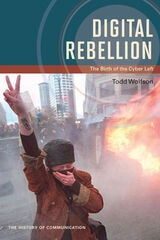
Digital Rebellion
The Birth of the Cyber LeftTodd Wolfson
University of Illinois Press, 2014
Todd Wolfson reveals how aspects of the mid-1990s Zapatistas movement--network organizational structure, participatory democratic governance, and the use of communication tools as a binding agent--became essential parts of Indymedia and other Cyber Left organizations. From there he uses oral interviews and other rich ethnographic data to chart the media-based think tanks and experiments that continued the Cyber Left's evolution through the Independent Media Center's birth around the 1999 WTO protests in Seattle.
Melding virtual and traditional ethnographic practice to explore the Cyber Left's cultural logic, Wolfson maps the social, spatial and communicative structure of the Indymedia network and details its operations on the local, national and global level. He looks at the participatory democracy that governs global social movements and the ways democracy and decentralization have come into tension, and how "the switchboard of struggle" conducts stories from the hyper-local and disperses them worldwide. As he shows, understanding the intersection of Indymedia and the Global Social Justice Movement illuminates their foundational role in the Occupy struggle and other emergent movements that have re-energized radical politics.

Digital Repertoires
Embedded and Everyday Technologies in Later LifeEdited by Riitta Hänninen, Sakari Taipale, and Laura Haapio-Kirk
University College London, 2025
As digital technologies further embed themselves in everyday life, how do older adults navigate and adapt to these tools? Digital Repertoires introduces the concept of the “digital repertoire” to investigate the evolving ways older people engage with technology across cultural and social contexts. Based on global research, this work confronts typical stereotypes of aging and digital exclusion and emphasizes the agency, creativity, and new challenges older adults experience in their digital interactions.
Including voices of scholars from anthropology, sociology, gerontology, communication studies, and design, this book offers theoretical depth as well as empirical breadth, making it essential reading for researchers, practitioners, and policymakers working at the intersection of aging and technology.
Digital Rhetoric
Theory, Method, PracticeDouglas Eyman
University of Michigan Press, 2015
Digital Rights at the Periphery
Making Brazil's Marco CivilGuy T. Hoskins
University of Illinois Press, 2025
Signed into law in 2014, the Marco Civil da Internet (Brazilian Civil Rights Framework for the Internet) appeared to offer pioneering legislation for a digital bill of rights that addressed issues like network neutrality and privacy. Guy T. Hoskins chronicles the Marco Civil’s development and its failure to confront the greatest concentration of power in the digital age: informational capitalism. Combining interviews with discourse and political-economic analysis, Hoskins reveals why the legislation fell short while examining the implications of its emergence in Brazil, which remains on the margins of the global system of informational capitalism. Hoskins places collectivist and public service principles at the core of any framework’s effectiveness. He also shows why we must create systems sensitive to the sociocultural and political-economic contexts that will shape digital rights and their usefulness.
Compelling and contrarian, Digital Rights at the Periphery looks at communications policy and internet governance in the Global South and the lessons they provide for the rest of the world.
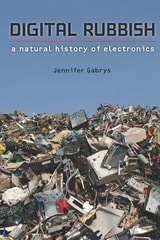
Digital Rubbish
A Natural History of ElectronicsJennifer Gabrys
University of Michigan Press, 2013
This is a study of the material life of information and its devices; of electronic waste in its physical and electronic incarnations; a cultural and material mapping of the spaces where electronics in the form of both hardware and information accumulate, break down, or are stowed away. Electronic waste occurs not just in the form of discarded computers but also as a scatter of information devices, software, and systems that are rendered obsolete and fail. Where other studies have addressed "digital" technology through a focus on its immateriality or virtual qualities, Gabrys traces the material, spatial, cultural, and political infrastructures that enable the emergence and dissolution of these technologies. In the course of her book, she explores five interrelated "spaces" where electronics fall apart: from Silicon Valley to Nasdaq, from containers bound for China to museums and archives that preserve obsolete electronics as cultural artifacts, to the landfill as material repository. All together, these sites stack up into a sedimentary record that forms the "natural history" of this study.
Digital Rubbish: A Natural History of Electronics describes the materiality of electronics from a unique perspective, examining the multiple forms of waste that electronics create as evidence of the resources, labor, and imaginaries that are bundled into these machines. By drawing on the material analysis developed by Walter Benjamin, this natural history method allows for an inquiry into electronics that focuses neither on technological progression nor on great inventors but rather considers the ways in which electronic technologies fail and decay. Ranging across studies of media and technology, as well as environments, geography, and design, Jennifer Gabrys pulls together the far-reaching material and cultural processes that enable the making and breaking of these technologies.
Jennifer Gabrys is Senior Lecturer in Design and Convener of the Masters in Design and Environment in the Department of Design, Goldsmiths, University of London.
Jacket image: Computer dump ©iStockphoto/Lya_Cattel.
digitalculturebooks is an imprint of the University of Michigan Press and the Scholarly Publishing Office of the University of Michigan Library dedicated to publishing innovative and accessible work exploring new media and their impact on society, culture, and scholarly communication. Visit the website at www.digitalculture.org.
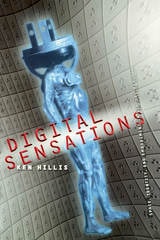
Digital Sensations
Space, Identity, And Embodiment In Virtual RealityKen Hillis
University of Minnesota Press, 1999
Considers the cultural and philosophical assumptions underlying virtual reality, and how the technology affects the real world.
Virtual reality is in the news and in the movies, on TV and in the air. Why is the technology-or the idea—so prevalent precisely now? What does it mean—what does it do—to us? Digital Sensations looks closely at how the “lived” world is affected by representational forms generated by communication technologies, especially digital and optical virtual technologies.
Virtual reality, or VR, is a technological reproduction of the process of perceiving the real, yet that process is filtered through the social realities and embedded cultural assumptions about human bodies and space held by the technology’s creators. Through critical histories of the technologies of vision, light, space, and embodiment, Ken Hillis traces the often contradictory intellectual and metaphysical impulses behind the Western transcendental wish to achieve an ever more perfect copy of the real. He advocates that current and proposed virtual technologies reflect a Western desire to escape the body. Because virtual technologies are new, these histories also address unintended and underconsidered consequences flowing from their rapid dissemination, such as commodifications and the alienation of new forms of surveillance. Exploring topics from VR and other, earlier visual technologies, Hillis’s penetrating perspective on the cultural power of place and space broadens our view of the interplay between social relations and technology.
Digital Technology and Democratic Theory
Edited by Lucy Bernholz, Hélène Landemore, and Rob Reich
University of Chicago Press, 2021
To understand these transformations, this book brings together contributions by scholars from multiple disciplines to wrestle with the question of how digital technologies shape, reshape, and affect fundamental questions about democracy and democratic theory. As expectations have whiplashed—from Twitter optimism in the wake of the Arab Spring to Facebook pessimism in the wake of the 2016 US election—the time is ripe for a more sober and long-term assessment. How should we take stock of digital technologies and their promise and peril for reshaping democratic societies and institutions? To answer, this volume broaches the most pressing technological changes and issues facing democracy as a philosophy and an institution.
Digital Theory
M. Beatrice Fazi
University of Minnesota Press, 2025
Proposes a powerful new theoretical approach to the concept of the digital
Digital Theory argues that the digital is theoretical and should be understood not uniquely in terms of consumer electronics but rather more broadly as a form of mediation using discrete units. Building on this definition, the three essays in this volume explore digitality’s relation to thinking, signs, and difference.
M. Beatrice Fazi begins the discussion by way of three propositions on the ontological reach and epistemological scope of digital theory. Alexander R. Galloway then defines the necessary conditions for any symbolic order of the digital type, specifying a series of ten simple mathemes. Matthew Handelman and Leif Weatherby conclude by characterizing digital theory through the dialectical relation between quality and quantity. Taken together, these works expound productively and provocatively on the digital’s far-reaching theoretical potential.
Retail e-book files for this title are screen-reader friendly with image accompanied by short alt text and/or extended description.
Digital Tools in Urban Schools
Mediating a Remix of LearningJabari Mahiri
University of Michigan Press, 2011
"Today there is massive interest in how digital tools and popular culture are transforming learning out of school and lots of dismay at how digitally lost our schools are. Jabari Mahiri works his usual magic and here shows us how to cross this divide in a solidly grounded and beautifully written book."
---James Paul Gee, Fulton Presidential Professor of Literacy Studies, Arizona State University
"Digital Tools in Urban Schools is a profoundly sobering yet inspiring depiction of the potential for committed educators to change the lives of urban youth, with the assistance of a new set of technical capabilities."
---Mimi Ito, Professor in Residence and MacArthur Foundation Chair in Digital Media and Learning, Departments of Informatics and Anthropology, University of California, Irvine
"An uplifting book that addresses a critical gap in existing literature by providing rich and important insights into ways teachers, administrators, and members of the wider community can work together with students previously alienated---even excluded---from formal education to enhance classroom learning with appropriate digital tools and achieve inspiring results under challenging circumstances."
---Colin Lankshear, James Cook University, and Michele Knobel, Montclair State University
Digital Tools in Urban Schools demonstrates significant ways in which high school teachers in the complex educational setting of an urban public high school in northern California extended their own professional learning to revitalize learning in their classrooms. Through a novel research collaboration between a university and this public school, these teachers were supported and guided in developing the skills necessary to take greater advantage of new media and new information sources to increase student learning while making connections to their relevant experiences and interests. Jabari Mahiri draws on extensive qualitative data---including blogs, podcasts, and other digital media---to document, describe, and analyze how the learning of both students and teachers was dramatically transformed as they utilized digital media in their classrooms. Digital Tools in Urban Schools will interest instructional leaders and participants in teacher preparation and professional development programs, education and social science researchers and scholars, graduate and undergraduate programs and classes emphasizing literacy and learning, and those focused on urban education issues and conditions.
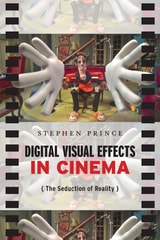
Digital Visual Effects in Cinema
The Seduction of RealityPrince, Stephen
Rutgers University Press, 2012
Avatar. Inception. Jurassic Park. Lord of the Rings. Ratatouille. Not only are these some of the highest-grossing films of all time, they are also prime examples of how digital visual effects have transformed Hollywood filmmaking. Some critics, however, fear that this digital revolution marks a radical break with cinematic tradition, heralding the death of serious realistic movies in favor of computer-generated pure spectacle.
Digital Visual Effects in Cinema counters this alarmist reading, by showing how digital effects–driven films should be understood as a continuation of the narrative and stylistic traditions that have defined American cinema for decades. Stephen Prince argues for an understanding of digital technologies as an expanded toolbox, available to enhance both realist films and cinematic fantasies. He offers a detailed exploration of each of these tools, from lighting technologies to image capture to stereoscopic 3D. Integrating aesthetic, historical, and theoretical analyses of digital visual effects, Digital Visual Effects in Cinema is an essential guide for understanding movie-making today.
Digital and Social Media in Africa
Edited by Henri-Count Evans, Ruth Teer-Tomaselli, and Tinashe Mawere
University of Westminster Press, 2025
Further, the book examines the human rights challenges posed by state control and monitoring of digital and social media forms of communication. In the context of a digital surveillance state, it questions how digital and social media can possibly enhance the democratisation of both the communicative and political spaces.
The book focuses on questions of censorship and control of digital and social media in ‘supposedly’ democratic societies. It discusses regulation and how governments have imposed their state power by ‘switching off’ the internet and blocking social media sites under the guise of national security and order maintenance.
Digitize and Punish
Racial Criminalization in the Digital AgeBrian Jefferson
University of Minnesota Press, 2020
Tracing the rise of digital computing in policing and punishment and its harmful impact on criminalized communities of color
The U.S. Bureau of Justice Statistics estimates that law enforcement agencies have access to more than 100 million names stored in criminal history databases. In some cities, 80 percent of the black male population is registered in these databases. Digitize and Punish explores the long history of digital computing and criminal justice, revealing how big tech, computer scientists, university researchers, and state actors have digitized carceral governance over the past forty years—with devastating impact on poor communities of color.
Providing a comprehensive study of the use of digital technology in American criminal justice, Brian Jefferson shows how the technology has expanded the wars on crime and drugs, enabling our current state of mass incarceration and further entrenching the nation’s racialized policing and punishment. After examining how the criminal justice system conceptualized the benefits of computers to surveil criminalized populations, Jefferson focuses on New York City and Chicago to provide a grounded account of the deployment of digital computing in urban police departments.
By highlighting the intersection of policing and punishment with big data and web technology—resulting in the development of the criminal justice system’s latest tool, crime data centers—Digitize and Punish makes clear the extent to which digital technologies have transformed and intensified the nature of carceral power.
Digitizing Race
Visual Cultures of the InternetLisa Nakamura
University of Minnesota Press, 2007
In the nineties, neoliberalism simultaneously provided the context for the Internet’s rapid uptake in the United States and discouraged public conversations about racial politics. At the same time many scholars lauded the widespread use of text-driven interfaces as a solution to the problem of racial intolerance. Today’s online world is witnessing text-driven interfaces such as e-mail and instant messaging giving way to far more visually intensive and commercially driven media forms that not only reveal but showcase people’s racial, ethnic, and gender identity.
Lisa Nakamura, a leading scholar in the examination of race in digital media, uses case studies of popular yet rarely examined uses of the Internet such as pregnancy Web sites, instant messaging, and online petitions and quizzes to look at the emergence of race-, ethnic-, and gender-identified visual cultures.
While popular media such as Hollywood cinema continue to depict nonwhite nonmales as passive audiences or consumers of digital media rather than as producers, Nakamura argues the contrary—with examples ranging from Jennifer Lopez music videos; films including the Matrix trilogy, Gattaca, and Minority Report; and online joke sites—that users of color and women use the Internet to vigorously articulate their own types of virtual community, avatar bodies, and racial politics.
Lisa Nakamura is associate professor of speech communication and Asian American studies at the University of Illinois, Urbana-Champaign. She is the author of Cybertypes: Race, Ethnicity, and Identity on the Internet and coeditor, with Beth Kolko and Gilbert Rodman, of Race in Cyberspace.

Dignity and Health
Nora Jacobson
Vanderbilt University Press, 2012
Dignity and Health examines the processes and structures of dignity violation and promotion, traces their consequences for individual and collective health, and uses the model developed to imagine how we might reform our systems of health and social care.
With its focus on the dignity experiences of those often excluded from the mainstream--people who are poor, or homeless, or dealing with mental health problems--as well as on vulnerabilities like age or sickness or unemployment that threaten to make us all feel "less than," Dignity and Health recognizes dignity as a moral matter embedded in the choices we make every day.

Dignity
Bob Moses and the Civil Rights MovementAlan Draper
University of Illinois Press, 2027
Challenging entrenched accounts, Alan Draper reveals that Moses could pursue either “Freedom Now” or develop local leaders, but not both. Rich with new details, Dignity follows Bob Moses from his early years through his death in 2021, presenting a clear-eyed view of his personality and achievements. Draper describes how Moses pursued Black voter registration in Mississippi and then in a second career devoted himself to math education. Just as dignity for Blacks in the twentieth century required voting rights, so did Moses believe that dignity for Blacks in the next century required math skills.

Dignity
Lower Income Women Tell of Their Lives and StrugglesFran Leeper Buss
University of Michigan Press, 1985

Dilemma of Duties
The Conflicted Role of Juvenile DefendersAnne M. Corbin
Southern Illinois University Press, 2018
In Dilemma of Duties, Corbin outlines patterns of role conflict that defenders experience, details its impact on counselors and clients in the juvenile justice system, and addresses the powerful influence of the juvenile court culture and the lack of resources for defenders. Tasked with guiding these children, counselors frequently must contend with and manage their clients’ general distrust of adults as they attempt to serve as their voices to the court.
Understanding how juvenile defenders define their role and experience role conflict provides valuable insights into our juvenile justice system, especially its role in upholding due process rights. Such knowledge points to the importance of the training and practices of juvenile court functionaries and the efficacy, credibility, and legitimacy of the juvenile justice system itself.
Dilemmas Of American Self
John P. Hewitt
Temple University Press, 1991
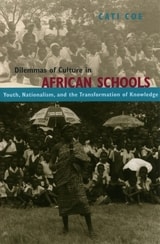
Dilemmas of Culture in African Schools
Youth, Nationalism, and the Transformation of KnowledgeCati Coe
University of Chicago Press, 2005
Coe identifies the state's limitations in teaching cultural knowledge and discusses how Ghanaians negotiate the tensions raised by the competing visions of modernity that nationalism and Christianity have created. She reveals how cultural curricula affect authority relations in local social organizations—between teachers and students, between Christians and national elite, and between children and elders—and raises several questions about educational processes, state-society relations, the production of knowledge, and the making of Ghana's citizenry.
Dilemmas of Difference
Indigenous Women and the Limits of Postcolonial Development PolicySarah A. Radcliffe
Duke University Press, 2015

Dime Novel Roundup
Annotated Index, 1931–1981Michael L. Cook
University of Wisconsin Press, 1983
This book includes a chronological listing of issues of the Dime Novel Roundup, which was published for over fifty years. It also features an index to the contents of the Dime Novel Roundup.

Dimensions Of Forgiveness
A Research ApproachEverett L. Worthington
Templeton Press, 1999
The scientific study of forgiveness is a new approach to an age-old problem. For thousands of years, people have practiced forgiveness within religious systems. Now, the field of scholarly research of forgiveness reveals the beneficial aspects of the process.
p>Contributors include Elliot Dorff and Martin Marty discussing religious interpretations, followed by social implications explained by Kenneth Pargament and Mark Rye. Roy Baumeister, Julie Exline, and Kristin Sommer present the victim's point of view. Other contributors focusing on the forgiveness research are: Everett Worthington, Robert Enright, Catherine Coyle, Carl Thoresen, Frederic Luskin, and Alex Harris. An annotated bibliography by Michael McCullough, Julie Exline, and Roy Baumeister, covers the empirical literature on the subject. Lewis Smedes concludes with the four steps necessary for forgiveness: moving from estrangement to forgiveness to reconciliation to hope.

Dimensions Of Forgiveness
A Research ApproachEverett L. Worthington
Templeton Press, 0
The scientific study of forgiveness is a new approach to an age-old problem. For thousands of years, people have practiced forgiveness within religious systems. Now, the field of scholarly research of forgiveness reveals the beneficial aspects of the process.
p>Contributors include Elliot Dorff and Martin Marty discussing religious interpretations, followed by social implications explained by Kenneth Pargament and Mark Rye. Roy Baumeister, Julie Exline, and Kristin Sommer present the victim's point of view. Other contributors focusing on the forgiveness research are: Everett Worthington, Robert Enright, Catherine Coyle, Carl Thoresen, Frederic Luskin, and Alex Harris. An annotated bibliography by Michael McCullough, Julie Exline, and Roy Baumeister, covers the empirical literature on the subject. Lewis Smedes concludes with the four steps necessary for forgiveness: moving from estrangement to forgiveness to reconciliation to hope.
Diminished Faculties
A Political Phenomenology of ImpairmentJonathan Sterne
Duke University Press, 2021

Dining in a Classical Context
William J. Slater, Editor
University of Michigan Press, 1991

Dinner Roles
American Women and Culinary CultureSherrie A. Inness
University of Iowa Press, 2001
Who cooks dinner in American homes? It's no surprise that “Mom” remains the overwhelming answer. Cooking and all it entails, from grocery shopping to chopping vegetables to clearing the table, is to this day primarily a woman's responsibility. How this relationship between women and food developed through the twentieth century and why it has endured are the questions Sherrie Inness seeks to answer in Dinner Roles: American Women and Culinary Culture.
By exploring a wide range of popular media from the first half of the twentieth century, including cookbooks, women's magazines, and advertisements, Dinner Roles sheds light on the network of sources that helped perpetuate the notion that cooking is women's work. Cookbooks and advertisements provided valuable information about the ideals that American society upheld. A woman who could prepare the perfect Jell-O mold, whip up a cake with her new electric mixer, and still maintain a spotless kitchen and a sunny disposition was the envy of other housewives across the nation.
Inness begins her exploration not with women but with men-those individuals often missing from the kitchen who were taught their own set of culinary values. She continues with the study of juvenile cookbooks, which provided children with their first cooking lessons. Chapters on the rise of electronic appliances, ethnic foods, and the 1950s housewife all add to our greater understanding of women's evolving roles in American culinary culture.

Dinner in Camelot
The Night America's Greatest Scientists, Writers, and Scholars Partied at the Kennedy White HouseJoseph A. Esposito
University Press of New England, 2018
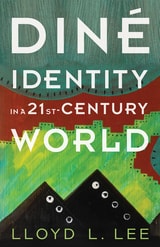
Diné Identity in a Twenty-First-Century World
Lloyd L. Lee
University of Arizona Press, 2020
Diné identity in the twenty-first century is distinctive and personal. It is a mixture of traditions, customs, values, behaviors, technologies, worldviews, languages, and lifeways. It is a holistic experience. Diné identity is analogous to Diné weaving: like weaving, Diné identity intertwines all of life’s elements together.
In this important new book, Lloyd L. Lee, a citizen of the Navajo Nation and an associate professor of Native American studies, takes up and provides insight on the most essential of human questions: who are we? Finding value and meaning in the Diné way of life has always been a hallmark of Diné studies. Lee’s Diné-centric approach to identity gives the reader a deep appreciation for the Diné way of life. Lee incorporates Diné baa hane’ (Navajo history), Sa’ą́h Naagháí Bik’eh Hózhǫ́ǫ́n (harmony), Diné Bizaad (language), K’é (relations), K’éí (clanship), and Níhi Kéyah (land) to address the melding of past, present, and future that are the hallmarks of the Diné way of life.
This study, informed by personal experience, offers an inclusive view of identity that is encompassing of cultural and historical diversity. To illustrate this, Lee shares a spectrum of Diné insights on what it means to be human. Diné Identity in a Twenty-First-Century World opens a productive conversation on the complexity of understanding and the richness of current Diné identities.