Results by title
18284 books match the query 'United States' and 684 start with d
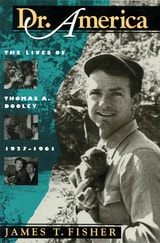
Dr. America
The Lives of Thomas A. Dooley, 1927-1961James T. Fisher
University of Massachusetts Press, 1997
This book chronicles the life of Tom Dooley, the American doctor whose much-publicized exploits in Vietnam and Laos during the 1950s helped lay the ideological groundwork for the U.S. military intervention a decade later. The scion of an upper-middle-class St. Louis family, Dooley was an enormously complex and fascinating individual. He was a devoutly religious Roman Catholic as well as a self-styled playboy socialite, a devoted physician to the poor and a tireless propagandist for the “Vietnam Lobby,” a shameless self-promoter and a closeted homosexual, a victim of Navy persecution and a beneficiary of CIA support. Dooley first gained notoriety as a young Navy doctor charged with overseeing the evacuation of Catholic refugees from North Vietnam in the wake of the 1954 Geneva Accords. His celebrity grew after his book Deliver Us from Evil, a fervently anticommunist account of his experiences, was serialized in Reader's Digest. By the end of the decade, as his name became associated (albeit mistakenly) with a ballad popularized by the Kingston Trio, he had achieved the status of “America's first pop star saint.” In addition to exposing the roots of the Vietnam War, Dooley's story illuminates a broad range of developments in post-World War II United States culture—from the “Americanization” of Catholicism to the rise of the mass media.
Dr. Benjamin Church, Spy
A Case of Espionage on the Eve of the American RevolutionJohn A. Nagy
Westholme Publishing, 2013

Dr. Charles David Spivak
A Jewish Immigrant and the American Tuberculosis MovementJeanne Abrams
University Press of Colorado, 2009
Born in Russia in 1861, Spivak immigrated to the United States in 1882 and received his medical degree from Philadelphia's Jefferson Medical College by 1890. In 1896, his wife's poor health brought them to Colorado. Determined to find a cure, Spivak became one of the most charismatic and well-known leaders in the American Tuberculosis Movement. His role as director of Denver's Jewish Consumptives' Relief Society sanatorium allowed his personal philosophies to strongly influence policies. His unique blend of Yiddishkeit, socialism, and secularism - along with his belief in treating the "whole" patient - became a model for integrating medical, social, and rehabilitation services that was copied across the country.
Not only a national leader in the crusade against tuberculosis but also a luminary in the American Jewish community, Dr. Charles Spivak was a physician, humanitarian, writer, linguist, journalist, administrator, social worker, ethnic broker, and medical, public health, and social crusader. Abrams's biography will be a welcome addition to anyone interested in the history of medicine, Jewish life in America, or Colorado history.
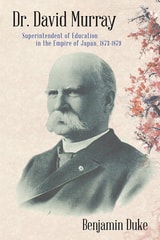
Dr. David Murray
Superintendent of Education in the Empire of Japan, 1873-1879Duke, Benjamin
Rutgers University Press, 2018
Benjamin Duke has compiled this comprehensive biography of David Murray to showcase Murray’s work, both in assisting around 100 samurai students in their studies at Rutgers, and in his unprecedented role in early Japanese-American relations. This fascinating story uncovers a little-known link between Rutgers University and Japan, and it is the only book to conclude that Rutgers made a greater contribution to the development of modern education in the early Meiji Era than any other non-Japanese college or university in the world.
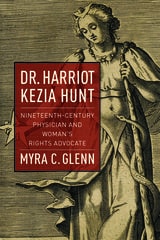
Dr. Harriot Kezia Hunt
Nineteenth-Century Physician and Woman’s Rights AdvocateMyra C. Glenn
University of Massachusetts Press, 2018
Harriot Kezia Hunt was a pioneer in a number of ways. The first woman to establish a successful medical practice in the United States, she began seeing patients in Boston in 1835 and promoted a new method of treatment by listening to women's troubles or their “heart histories.” Her unsuccessful efforts to attend lectures at Harvard's Medical School galvanized her activism in the woman's rights movement. During the 1850s she played a prominent role in the annual woman's rights conventions and was the first woman in Massachusetts to publicly protest the injustice of taxing propertied women while denying them the franchise.
In this first comprehensive, full-length biography of Hunt, Myra C. Glenn shows how this single woman from a working-class Boston home became a successful physician and noted reformer, illuminating the struggle for woman's rights and the fractious and gendered nature of medicine in antebellum America.
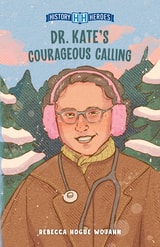
Dr. Kate’s Courageous Calling
Rebecca Hogue Wojahn
Wisconsin Historical Society Press, 2027
Meet the trailblazing doctor whose determination, compassion, and vision helped to save lives and inspired a generation to make history.
As a child in the late 1800s, young Kate Pelham knew she wanted to have a career when she grew up, even though that wasn’t expected of women at the time. After losing her mother and then her fiancée at a young age, she decided to dedicate her life to becoming a doctor—a career path then largely closed to women. But Kate would not be deterred, and before long she was known throughout the Wisconsin Northwoods as, simply, Dr. Kate.
Written for ages 8–11, Dr. Kate’s Courageous Calling shares the remarkable story of a woman who challenged expectations, transformed her community, and inspired thousands through a lifetime of service. Readers will journey alongside Kate Pelham-Newcomb as she traverses snowy back roads—sometimes on snowshoes—to care for patients. They will discover how, as the local health officer, she established community health standards and helped improve water and milk sanitation throughout the Northwoods region.
The story reaches an unforgettable climax with the extraordinary Million Penny Campaign, led by local high school students—many of whom Dr. Kate had delivered as babies—to raise money for a desperately needed hospital. Their efforts attracted contributions from tens of thousands of people around the world, bringing in more than enough to build the Lakeland Memorial Hospital in Woodruff, Wisconsin.
Dr. Kate’s Courageous Calling is a story of perseverance, leadership, sacrifice, and a community that joined together to make a difference. Combining women’s history, local history, and a remarkable true story of civic engagement, this book celebrates a pioneering physician who healed her neighbors and inspired the world.
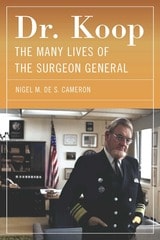
Dr. Koop
The Many Lives of the Surgeon GeneralNigel M. de S. Cameron
University of Massachusetts Press, 2025
The first full biography of Reagan's famous Surgeon General, who put science before politics—cutting smoking by 25%, leading the fight against AIDS, and shocking both liberals and conservatives on abortion.
When Ronald Reagan chose C. Everett Koop to be Surgeon General of the United States in 1981, liberal politicians, women's groups, and even the public health community opposed the nomination because of his conservative social views and strong anti-abortion beliefs. By the time he left office in 1989, the same people who had vilified him as “Dr. Kook” were singing his praises, and many conservative politicians and activists who had championed his nomination were criticizing him as a traitor. He had also become “the only surgeon general [who was] a household name,” according to the Associated Press, because of his ubiquitous media exposure around the HIV/AIDS crisis, his unique look, and his savvy with the press. How had Koop remade himself and this once major government office, which sounded grand but in the 1960s had been stripped to a minor advisory role?
As Nigel M. de S. Cameron shows, Koop was, above all, guided in his decisions by his unwavering physician’s commitment to saving lives. Even in the face of political pressures and what many expected to be his personal beliefs, he focused on science and public health. On smoking, abortion, and AIDS he openly defied Republican politicians and alienated New Right conservatives because his reading of the science did not support their ideologies. It was this adherence to science, health, and office that led him to refuse to campaign on abortion, seek compromise on the disabled “Baby Doe” case, relentlessly go after Big Tobacco, and finally reach out to the gay community as AIDS and fear of AIDS exploded. Both supporters and detractors consistently misjudged him.
This first full biography of Koop draws on thousands of documents and hundreds of interviews with family, friends, and colleagues to tell the story of the precocious boy from Brooklyn who was already the world’s most celebrated pediatric surgeon when he became Surgeon General and one of the most recognizable public figures in late-20th century America. Koop remains a sterling example—to both left and right—of how public officials should conduct themselves.

Dr. Martha Hughes Cannon
Suffragist, Senator, Plural WifeConstance L. Lieber
Signature Books, 2022
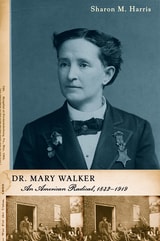
Dr. Mary Walker
An American Radical, 1832-1919Harris, Sharon M
Rutgers University Press, 2009
Perhaps more telling about her life are the words of an 1866 London Anglo-American Times reporter, "Her strange adventures, thrilling experiences, important services and marvelous achievements exceed anything that modern romance or fiction has produced. . . . She has been one of the greatest benefactors of her sex and of the human race."
In this biography Sharon M. Harris steers away from a simplistic view and showcases Walker as a Medal of Honor recipient, examining her work as an activist, author, and Civil War surgeon, along with the many nineteenth-century issues she championed:political, social, medical, and legal reforms, abolition, temperance, gender equality, U.S. imperialism, and the New Woman.
Rich in research and keyed to a new generation, Dr. Mary Walker captures its subject's articulate political voice, public self, and the realities of an individual whose ardent beliefs in justice helped shape the radical politics of her time.
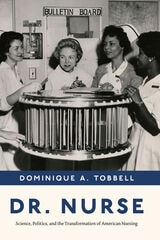
Dr. Nurse
Science, Politics, and the Transformation of American NursingDominique A. Tobbell
University of Chicago Press, 2022
Nurses represent the largest segment of the U.S. health care workforce and spend significantly more time with patients than any other member of the health care team. Dr. Nurse probes their history to examine major changes that have taken place in American health care in the second half of the twentieth century. The book reveals how federal and state health and higher education policies shaped education within health professions after World War II.
Starting in the 1950s, academic nurses sought to construct a science of nursing—distinct from that of the related biomedical or behavioral sciences—that would provide the basis for nursing practice. Their efforts transformed nursing’s labor into a valuable site of knowledge production and proved how the application of their knowledge was integral to improving patient outcomes. Exploring the knowledge claims, strategies, and politics involved as academic nurses negotiated their roles and nursing’s future, Dr. Nurse highlights how state-supported health centers have profoundly shaped nursing education and health care delivery.
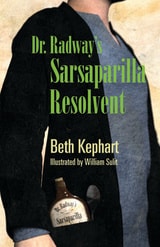
Dr. Radway's Sarsaparilla Resolvent
Beth Kephart
Temple University Press, 2013
Flavored by the oddities of historic personalities and facts, Dr. Radway’s Sarsaparilla Resolvent is set in Bush Hill, Philadelphia, 1871—home to the Baldwin Locomotive Works and a massive, gothic prison. Acclaimed writer Beth Kephart captures the rhythms and smells of an extraordinary era as William Quinn and his Ma, Essie, grapple with life among terrible accidents, miraculous escapes, and shams masquerading as truth.
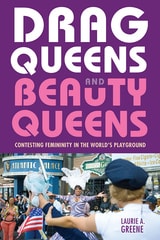
Drag Queens and Beauty Queens
Contesting Femininity in the World's PlaygroundLaurie Greene
Rutgers University Press, 2021
Drag Queens and Beauty Queens presents a vivid ethnography of the Miss’d America pageant and the gay neighborhood from which it emerged in the early 1990s as a moment of campy celebration in the midst of the AIDS crisis. It examines how the pageant strengthened community bonds and activism, as well as how it has changed now that Rupaul’s Drag Race has brought many of its practices into the cultural mainstream. Comparing the Miss’d America pageant with its glitzy cisgender big sister, anthropologist Laurie Greene discovers how the two pageants have influenced each other in unexpected ways.
Drag Queens and Beauty Queens deepens our understanding of how femininity is performed at pageants, exploring the various ways that both the Miss’d America and Miss America pageants have negotiated between embracing and critiquing traditional gender roles. Ultimately, it celebrates the rich tradition of drag performance and the community it engenders.
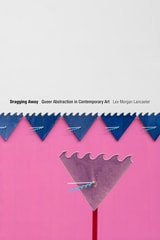
Dragging Away
Queer Abstraction in Contemporary ArtLex Morgan Lancaster
Duke University Press, 2022
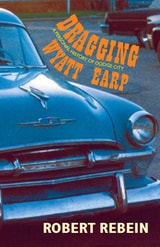
Dragging Wyatt Earp
A Personal History of Dodge CityRobert Rebein
Ohio University Press, 2013
In Dragging Wyatt Earp essayist Robert Rebein explores what it means to grow up in, leave, and ultimately return to the iconic Western town of Dodge City, Kansas. In chapters ranging from memoir to reportage to revisionist history, Rebein contrasts his hometown’s Old West heritage with a New West reality that includes salvage yards, beefpacking plants, and bored teenagers cruising up and down Wyatt Earp Boulevard.
Along the way, Rebein covers a vast expanse of place and time and revisits a number of Western myths, including those surrounding Francisco Vasquez de Coronado, the Cheyenne chief Black Kettle, George Armstrong Custer, and of course Wyatt Earp himself. Rebein rides a bronc in a rodeo, spends a day as a pen rider at a local feedlot, and attempts to “buck the tiger” at Dodge City’s new Boot Hill Casino and Resort.
Funny and incisive, Dragging Wyatt Earp is an exciting new entry in what is sometimes called the nonfiction of place. It is a must- read for anyone interested in Western history, contemporary memoir, or the collision of Old and New West on the High Plains of Kansas.
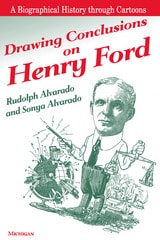
Drawing Conclusions on Henry Ford
Rudolph Alvarado and Sonya Alvarado
University of Michigan Press, 2001
For years political cartoons have shaped the often unflattering popular view of public figures. One of the most-often-portrayed figures of the twentieth century was the automobile manufacturer Henry Ford. Through editorial drawings, a vivid picture of Ford was presented that became the source of myths that surrounded him and continue even to this day.
Drawing Conclusions on Henry Ford is the first and only collection that brings together in one volume these editorial cartoons. They date back as far as the time Ford introduced the Model T in 1908 and extend forward to the introduction of the Model A and subsequent V8 engines in the 1930s. They illustrate the emergence of many of the popular myths surrounding Henry Ford, as seen and understood by the average citizen during the opening decades of the twentieth century. With 150 illustrations, the reader is able to trace the evolving images of Ford from a time period when caricature images of public figures were a primary source of information about those persons. Sometimes funny, sometimes sharp and critical, these cartoons are entertaining in themselves. Viewed as a whole, they create anew view of the Henry Ford story.
Rudolph V. Alvarado is a freelance writer and museum consultant, as well as the former programs leader for the Henry Ford Museum and Greenfield Village. Sonya Y. Alvarado is an instructor of English, at Eastern Michigan University and a former adjunct faculty member, Wayne State University.

Drawing Theories Apart
The Dispersion of Feynman Diagrams in Postwar PhysicsDavid Kaiser
University of Chicago Press, 2005
Drawing on rich archival materials, interviews, and more than five hundred scientific articles from the period, Drawing Theories Apart uses the Feynman diagrams as a means to explore the development of American postwar physics. By focusing on the ways young physicists learned new calculational skills, David Kaiser frames his story around the crafting and stabilizing of the basic tools in the physicist's kit—thus offering the first book to follow the diagrams once they left Feynman's hands and entered the physics vernacular.
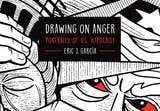
Drawing on Anger
Portraits of U.S. HypocrisyEric J. García
The Ohio State University Press, 2018
For over a decade García has been serving up inked visuals with the sharpest of political critiques through a Chicano lens. If you’re looking for funny punch lines, these aren’t the cartoons for you. But if you want to pull down Uncle Sam’s pants and see what’s really going on, this is your book.

Dream Factories of a Former Colony
American Fantasies, Philippine CinemaJosé B. Capino
University of Minnesota Press, 2010
By tracking American fantasies in Philippine movies from the postindependence period to the present, José B. Capino offers an innovative account of cinema's cultural work in decolonization and globalization. Capino examines how a third world nation's daydreams both articulate empire and mobilize against it, provide imaginary maps and fables of identity for its migrant workers and diasporan subjects, pose challenges to the alibis of patriarchy and nationalism, and open up paths for participating in the cultures of globality.
Through close readings of more than twenty Philippine movies, Capino demonstrates the postcolonial imagination's vital role in generating pragmatic and utopian visions of living with empire. Illuminating an important but understudied cinema, he creates a model for understanding the U.S. image in the third world.
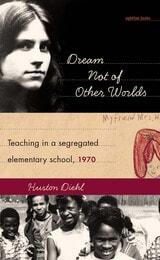
Dream Not of Other Worlds
Teaching in a Segregated Elementary School, 1970Huston Diehl
University of Iowa Press, 2007
When Huston Diehl began teaching a fourth-grade class in a "Negro" elementary school in rural Louisa County, Virginia, the school's white superintendent assured her that he didn't expect her to teach "those children" anything. She soon discovered how these low expectations, widely shared by the white community, impeded her students' ability to learn. With its overcrowded classrooms, poorly trained teachers, empty bookshelves, and meager supplies, her segregated school was vastly inferior to the county's white elementary schools, and the message it sent her students was clear: "dream not of other worlds."
In her often lyrical memoir, Diehl reveals how, in the intimacy of the classroom, her students reached out to her, a young white northerner, and shared their fears, anxieties, and personal beliefs. Repeatedly surprised and challenged by her students, Diehl questions her long-standing middle-class assumptions and confronts her own prejudices. In doing so, she eloquently reflects on what the students taught her about the hurt of bigotry and the humiliation of poverty as well as dignity, courage, and resiliency.
Set in the waning days of the Jim Crow South, Dream Not of Other Worlds chronicles an important moment in American history. Diehl examines the history of black education in the South and narrates the dramatic struggle to integrate Virginia's public schools. Meeting with some of her former students and colleagues and visiting the school where she once taught, she considers what has—and has not—changed after more than thirty years of integrated schooling. This provocative book raises many issues that are of urgent concern today: the continuing social consequences of segregated schools, the role of public education in American society, and the challenges of educating minority and poor children.
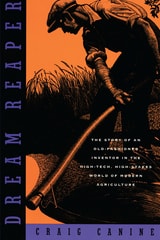
Dream Reaper
The Story of an Old-Fashioned Inventor in the High-Tech, High-Stakes World of Modern AgricultureCraig Canine
University of Chicago Press, 1997
"This intriguing tale weaves together the creativity and ingenuity of an inventor and the hurdles he and his partner face in selling and producing what appears to be an amazingly efficient Bi-Rotor combine."—Science News
"Canine writes with style and flourish. . . Dream Reaper is a riveting journey into America's heartland, where necessity is the mother of invention—and hard work, conviction, and sacrifice are its lifeblood."—People Magazine
"Canine deftly interweaves the story of the two men's struggles with a history of the mechanization of agriculture. This lively account of men working under pressure, improvising repairs and demonstrating the new machine, is also a story of courage that illustrates the barriers facing an independent inventor."—Publishers Weekly
"Craig Canine's Dream Reaper is a delight. It's an important book, rich with history and stories. It brings our most essential industry—farming—into new perspective. Reading it made me want to get out a crop."—Bobbie Ann Mason
A volume in the Sloan Technology Series. The series presents to a general audience highly readable accounts of the development of 20th century technologies and the ways these have shaped and are shaped by society.
Dream Trippers
Global Daoism and the Predicament of Modern SpiritualityDavid A. Palmer and Elijah Siegler
University of Chicago Press, 2017
Dream Trippers draws on more than a decade of ethnographic work with Daoist monks and Western seekers to trace the spread of Westernized Daoism in contemporary China. David A. Palmer and Elijah Siegler take us into the daily life of the monastic community atop the mountain of Huashan and explore its relationship to the socialist state. They follow the international circuit of Daoist "energy tourism," which connects a number of sites throughout China, and examine the controversies around Western scholars who become practitioners and promoters of Daoism. Throughout are lively portrayals of encounters among the book’s various characters—Chinese hermits and monks, Western seekers, and scholar-practitioners—as they interact with each other in obtuse, often humorous, and yet sometimes enlightening and transformative ways. Dream Trippers untangles the anxieties, confusions, and ambiguities that arise as Chinese and American practitioners balance cosmological attunement and radical spiritual individualism in their search for authenticity in a globalized world.
Dream of Justice
The Story of Keyes v. Denver Public Schoolsby Pat Pascoe
University Press of Colorado, 2023
Pascoe details Denver’s desegregation battle, beginning with the citizen studies that exposed the inequities of segregated schools and Rachel Noel’s resolution to integrate the system, followed by the momentous pro-integration Benton-Pascoe campaign of Ed Benton and Monte Pascoe for the school board in 1969. When segregationists won that election and reversed the integration plan for northeast Denver, Black, white, and Latino parents filed Keyes v. School District No. 1. This book follows the arguments in the case through briefs, transcripts, and decisions from district court to the Supreme Court of the United States and back, to its ultimate order to desegregate all Denver schools “root and branch.” It was the first northern city desegregation suit to be brought before the Supreme Court. However, with the end of court-ordered busing in 1995, schools quickly resegregated and are now more segregated than before Keyes was filed.
Pascoe asserts that school integration is a necessary step toward eliminating systemic racism in our country and should be the objective of every school board. A Dream of Justice will appeal to students, scholars, and readers interested in the history of civil rights in America, Denver history, and the history of US education.
Dreamer Nation
Immigration, Activism, and NeoliberalismAna Milena Ribero
University of Alabama Press, 2023
Dreamer Nation tells the story of how Dreamers in the Obama era creatively confronted a complex sociopolitical landscape to advocate for immigrant rights and empower undocumented youth to proudly represent their lives and identities, all while under the ever-present threat of detention and deportation. Contributing to rhetorical studies of social movements, immigration, and minoritized rhetorics, Ribero argues that even though Dreamer rhetorics were reflective of the discursive limits of the neoliberal milieu, they also worked to disrupt neoliberal constraints through activism that troubled the primacy of the nation-state and citizenship, refused to adhere to respectability politics, forwarded embodied identity and transnational belonging, and looked for liberation in community—not solely in legislative action.
Each chapter presents a different rhetorical situation within the US “crisis” of immigration and the rhetoric that Dreamers used to respond to it. Organized chronologically, the chapters document Dreamer activism during the Obama presidency, from the 2010 hunger strikes advocating for the DREAM Act to undocuqueer “artivism” responding to Trump’s presidential campaign. The author draws not only on the methods and theories of rhetorical studies but also on women of color feminisms, ethnic studies, critical theory, and queer theory. In this way, the book looks across disciplines to illustrate the rhetorical savvy of one of the most important US social movements of our time.

Dreaming Revolution
Transgression in the Development of American RomanceScott Bradfield
University of Iowa Press, 1993
Dreaming Revolution usefully employs current critical theory to address how the European novel of class revolt was transformed into the American novel of imperial expansion. Bradfield shows that early American romantic fiction—including works by William Godwin, Charles Brockden Brown, James Fenimore Cooper, and Edgar Allan Poe—can and should be considered as part of a genre too often limited to the nineteenth-century European novel. In a spirited discussion of the works from these four authors, Bradfield argues that Americans take the class dynamics of the European psychological novel and apply them to the American landscape, reimagining psychological spaces as geographical ones.
Dreaming in French
The Paris Years of Jacqueline Bouvier Kennedy, Susan Sontag, and Angela DavisAlice Kaplan
University of Chicago Press, 2012
All three women would go on to become icons, key figures in American cultural, intellectual, and political life, but when they embarked for France, they were young, little-known, uncertain about their future, and drawn to the culture, sophistication, and drama that only Paris could offer. Yet their backgrounds and their dreams couldn’t have been more different. Jacqueline Bouvier was a twenty-year-old debutante, a Catholic girl from a wealthy East Coast family. Susan Sontag was twenty-four, a precocious Jewish intellectual from a North Hollywood family of modest means, and Paris was a refuge from motherhood, a failing marriage, and graduate work in philosophy at Oxford. Angela Davis, a French major at Brandeis from a prominent African American family in Birmingham, Alabama, found herself the only black student in her year abroad program—in a summer when all the news from Birmingham was of unprecedented racial violence.
Kaplan takes readers into the lives, hopes, and ambitions of these young women, tracing their paths to Paris and tracking the discoveries, intellectual adventures, friendships, and loves that they found there. For all three women, France was far from a passing fancy; rather, Kaplan shows, the year abroad continued to influence them, a significant part of their intellectual and cultural makeup, for the rest of their lives. Jackie Kennedy carried her love of France to the White House and to her later career as a book editor, bringing her cultural and linguistic fluency to everything from art and diplomacy to fashion and historic restoration—to the extent that many, including Jackie herself, worried that she might seem “too French.” Sontag found in France a model for the life of the mind that she was determined to lead; the intellectual world she observed from afar during that first year in Paris inspired her most important work and remained a key influence—to be grappled with, explored, and transcended—the rest of her life. Davis, meanwhile, found that her Parisian vantage strengthened her sense of political exile from racism at home and brought a sense of solidarity with Algerian independence. For her, Paris was a city of political commitment, activism, and militancy, qualities that would deeply inform her own revolutionary agenda and soon make her a hero to the French writers she had once studied.
Kaplan, whose own junior year abroad played a prominent role in her classic memoir, French Lessons, spins these three quite different stories into one evocative biography, brimming with the ferment and yearnings of youth and shot through with the knowledge of how a single year—and a magical city—can change a whole life. No one who has ever dreamed of Paris should miss it.
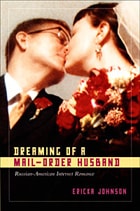
Dreaming of a Mail-Order Husband
Russian-American Internet RomanceEricka Johnson
Duke University Press, 2007
Each chapter presents one woman’s story and then links it to a discussion of gender roles, the mail-order bride industry, and the severe economic and social constraints of life in Russia. The transitional economy has often left people, after a month’s work, either unpaid or paid unexpectedly with a supply of sunflower oil or toilet paper. Women over twenty-three are considered virtually unmarriageable in Russian society. Russia has a large population of women who are single, divorced, or widowed, who would like to be married yet feel that they have no chance finding a Russian husband. Grim realities such as these motivate women to seek better lives abroad. For many of those seeking a mail-order husband, children or parents play significant roles in the search for better lives, and they play a role in Johnson’s account as well. In addition to her research in the former Soviet Union, Johnson conducted interviews in the United States, and she shares the insights—about dating, marriage, and cross-cultural communication—of a Russian-American married couple who met via the Internet.
Dreams Derailed
Undocumented Youths in the Trump EraWilliam A. Schwab
University of Arkansas Press, 2018
During the 2016 presidential campaign millions of voters, concerned about the economic impact of illegal immigration, rallied behind the notion of a border wall between the United States and Mexico. Well into the Trump presidency, immigration endures as a hotly contested issue in United States politics.
In Dreams Derailed sociologist William A. Schwab shares the stories of immigration reform advocates and follows up on stories told in his 2013 book Right to DREAM, which argued in favor of the DREAM Act that would have provided conditional residency for undocumented youth brought to the United States as children, a version of which was later enacted by executive order and referred to as DACA (Deferred Action for Childhood Arrivals).
Taking as its focal point the Trump administration’s decision to rescind Obama-era DACA protection, Dreams Derailed delves into the economic, political, and social factors that inform the public conversation about immigration, making a clear case for the many benefits of inclusive policies and the protection of undocumented youths. Schwab also takes a close look at the factors that carried Donald Trump to the White House, demonstrates how economic upheaval and the issue of immigration influenced the 2016 presidential election, analyzes current immigration laws, and suggests next steps for reform.

Dreams and Ideas
The Artistry of Costume Designer Winn MortonMyra Walker
University of North Texas Press, 2026
Dreams in Double Time
On Race, Freedom, and BebopJonathan Leal
Duke University Press, 2023

Dreiser and Veblen, Saboteurs of the Status Quo
Clare Virginia Eby
University of Missouri Press, 1999
In this important interdisciplinary study, Clare Eby argues that the writings of Theodore Dreiser and Thorstein Veblen form a neglected chapter in the history of United States cultural criticism that is especially relevant today.
This study leaves behind the narrow frameworks through which most of Veblen's and Dreiser's writings have been interpreted, covering a wide range of both authors' major and minor works. Moving beyond Veblen's The Theory of the Leisure Class and Dreiser's Sister Carrie, Eby shows how the two writers, as saboteurs of the status quo, anticipated many preoccupations of cultural critics today: the cultural role of the intellectual, the relationship of science to society, the place of consumption in modern life, and the intersection of class, gender, and power.
Eby uses cultural criticism as a unifying concept that shows how Veblen fuses satire, sociology, economics, history, psychology, anthropology, political science, and philosophy; and how Dreiser connects fiction, travelogue, literary manifesto, occasional essay, autobiography, biography, and philosophy. By reading Veblen through Dreiser, and Dreiser through Veblen, Eby illustrates the striking parallels between their works, demonstrating how literature and social science can merge in cultural criticism.
Although Dreiser's interest in the natural and social sciences has often been noted, this study provides the only extended analysis of how his works actually resemble, and strive to become, critically informed social science. Similarly, despite the singularity of Veblen's rhetoric, the centrality of literary devices to his works has never been systematically examined. By placing the works of Veblen and Dreiser into dialogue, this study contributes significantly to the recent attempts to bring together the concerns of literary analysts and social scientists.
Dreiser and Veblen, Saboteurs of the Status Quo makes an important contribution not only to Dreiser and Veblen studies but also to cultural criticism itself.
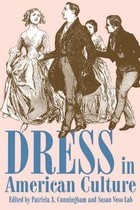
Dress in American Culture
Edited by Patricia A. Cunningham and Susan Voso Lab
University of Wisconsin Press, 1993
The contributors reveal the politics, or power, of dress, especially in its function as a symbol of American ideals, and examine changes in clothing behavior that occurred as Americans faced new experiences.

Dressed for Freedom
The Fashionable Politics of American FeminismEinav Rabinovitch-Fox
University of Illinois Press, 2021
A fascinating account of clothing as an everyday feminist practice, Dressed for Freedom brings fashion into discussions of American feminism during the long twentieth century.
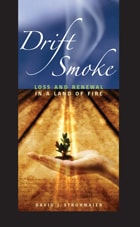
Drift Smoke
Loss and Renewal in a Land of FireDavid J. Strohmaier
University of Nevada Press, 2009
David Strohmaier’s long career as a firefighter has given him intimate knowledge of wildfire and its complex role in the natural world of the American West. It has also given him rare understanding of the painful losses that are a consequence of fire. Strohmaier addresses our ambivalence about fire and the realities of loss to it—of life, human and animal, of livelihoods, of beloved places. He also examines the process of renewal that is yet another consequence of fire, from the infusion of essential nutrients into the soil, to the sprouting of seeds that depend on fire for germination, to the renewal of species as the land restores itself. Ultimately, according to Strohmaier, living with fire is a matter of choices, of “seeing the connection between loss on a personal scale and loss on a landscape scale: in relationship with persons, and in relationship to and with the land.” We must cultivate a longer perspective, he says, accepting that loss is a part of life and that “humility and empathy and care are not only core virtues between humans but are also essential virtues in our attitudes and actions toward the earth.” Drift Smoke is a powerful and moving meditation on wildfire by someone who has seen it in all its terror and beauty, who has lost colleagues and beloved terrain to its ferocity, and who has also seen the miracle of new life sprouting in the ashes. The debate over the role and control of fire in the West will not soon end, but Strohmaier’s contribution to the debate will help all of us better appreciate both the complexity of the issues and the possibilities of hitherto unconsidered solutions that will allow us to inhabit a place where fire is a natural, and needed, part of life.
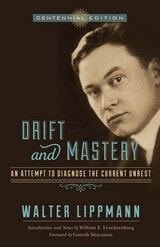
Drift and Mastery
An Attempt to Diagnose the Current UnrestWalter Lippmann, Introduction and notes by William E. Leuchtenburg, Foreword by Ganesh Sitaraman
University of Wisconsin Press, 2015
Lippman’s Drift and Mastery became one of the most important and influential documents of the Progressive Movement. It remains a valuable text for understanding the political thought of early twentieth-century America and a lucid exploration of timeless themes in American government and politics. Distinguished historian Walter Leuchtenberg’s 1986 introduction and notes are retained in this edition.
Drilled to Write
Becoming a Cadet Writer at a Senior Military Collegeby J. Michael Rifenburg
Utah State University Press, 2022
Drilled to Write offers a rich account of US Army cadets navigating the unique demands of Army writing at a senior military college. In this longitudinal case study, J. Michael Rifenburg follows one cadet, Logan Blackwell, for four years and traces how he conceptualizes Army writing and Army genres through immersion in military science classes, tactical exercises in the Appalachian Mountains, and specialized programs like Airborne School.
Drawing from research on rhetorical genre studies, writing transfer, and materiality, Drilled to Write speaks to scholars in writing studies committed to capturing how students understand their own writing development. Collectively, these chapters articulate four ways Blackwell leveraged resources through ROTC to become a cadet writer at this military college. Each chapter is dedicated to one year of his undergraduate experience with focus on curricular writing for his business management major and military science classes as well as his extracurricular writing, like his Ballroom Dance Club bylaws and a three-thousand-word short story.
In Drilled to Write, Rifenburg invites readers to see how cadets are positioned between civilian and military life—a curiously liminal space where they develop as writers. Using Army ROTC as an entry into genre theory and larger conversations about the role higher education plays in developing Army officers, he shows how writing students develop genre awareness and flexibility while forging a personal identity.

Drinkers, Drivers, and Bartenders
Balancing Private Choices and Public AccountabilityFrank A. Sloan, Emily M. Stout, Kathryn Whetten-Goldstein, and Lan Liang
University of Chicago Press, 2000
Extraordinary in scope and exacting in detail, Drinkers, Drivers, and Bartenders: Balancing Private Choices and Public Accountability links alcohol problems, deterrence, and serving practices in a way no other work has been able to do and is certain to become a crucial reference point for researchers and policymakers alike.
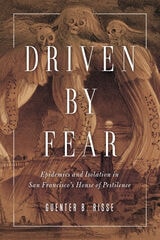
Driven by Fear
Epidemics and Isolation in San Francisco's House of PestilenceGuenter B. Risse
University of Illinois Press, 2015
Filling a significant gap in contemporary scholarship, Driven by Fear looks at the past to offer critical lessons for our age of bioterror threats and emerging infectious diseases.
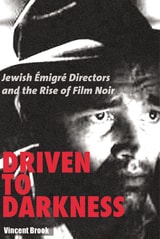
Driven to Darkness
Jewish Emigre Directors and the Rise of Film NoirBrook, Vincent
Rutgers University Press, 2009
Driven to Darkness explores the influence of Jewish TmigrT directors and the development of this genre. While filmmakers such as Fritz Lang, Billy Wilder, Otto Preminger, and Edward G. Ulmer have been acknowledged as crucial to the noir canon, the impact of their Jewishness on their work has remained largely unexamined until now. Through lively and original analyses of key films, Vincent Brook penetrates the darkness, shedding new light on this popular film form and the artists who helped create it.
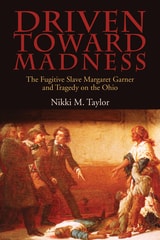
Driven toward Madness
The Fugitive Slave Margaret Garner and Tragedy on the OhioNikki M. Taylor
Ohio University Press, 2016
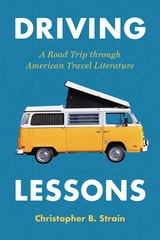
Driving Lessons
A Road Trip through American Travel LiteratureChristopher B. Strain
University of Alabama Press, 2025
Weaves the author’s own four-month cross-country sojourn in a VW van with thoughts on travel narratives across the history of American literature
In Driving Lessons, Christopher B. Strain sets out on a quintessential American road trip, exploring not just the roads and byways of the country but the road trip’s place in American culture. Strain dives into the well of American travel writing, illuminating fascinating aspects of the road trip, such as how race, class, and gender shape the experiences of road trippers.
In the summer of 1998, amid a professional crisis of confidence, Strain settled on a plan to reconnect with both himself and the country he studies. He purchased a 1972 Volkswagen Westfalia van and set off on his own cross-country odyssey. In the weeks that followed, he ruminated on his own ongoing journey alongside great journeys from the past and how they reveal the heart of the traveler as well as the landscape of the nation.
Visiting archives and landmarks across the United States, Strain's journey became a parallel to the stories he studied—an opportunity to see and experience the cities, national parks, and monuments that define US history. Driving Lessons is a compelling blend of literary analysis and memoir, offering readers an insightful and heartfelt reflection on the enduring power of the American road trip.
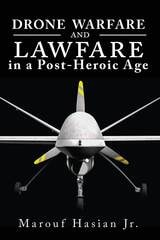
Drone Warfare and Lawfare in a Post-Heroic Age
Marouf Hasian Jr.
University of Alabama Press, 2016
With a growing fleet of more than 7,500 drones, these emblems of what one commentary has dubbed “push-button, bloodless wars” comprise as much as a third of the US aircraft force. Their use is hotly debated, some championing air power that doesn’t risk the lives of pilots, others arguing that drone strikes encourage cycles of violence against the United States, its allies, and interests.
In this landmark study, Hasian illuminates both the discursive and visual argumentative strategies that drone supporters and critics both rely on. He comprehensively reviews how advocates and detractors parse and re-contextualize drone images, casualty figures, governmental “white papers,” NGO reports, documentaries, and blogs to support their points of view. He unpacks the ideological reflexes and assumptions behind these legal, ethical, and military arguments.
Visiting both formal legal language used by legislators, political leaders, and policy makers as well as public, vernacular commentaries about drones, Drone Warfare and Lawfare in a Post-Heroic Age dispassionately illuminates the emotive, cognitive, and behavioral strategies partisans use to influence public and official opinion.

Drones and Support for the Use of Force
James Igoe Walsh and Marcus Schulzke
University of Michigan Press, 2018
Drones and Support for the Use of Force uses experimental research to analyze the effects of combat drones on Americans’ support for the use of force. The authors’ findings—that drones have had important but nuanced effects on support for the use of force—have implications for democratic control of military action and civil-military relations and provide insight into how the proliferation of military technologies influences foreign policy.
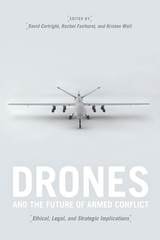
Drones and the Future of Armed Conflict
Ethical, Legal, and Strategic ImplicationsEdited by David Cortright, Rachel Fairhurst, and Kristen Wall
University of Chicago Press, 2015
Presenting a robust conversation among leading scholars in the areas of international legal standards, counterterrorism strategy, humanitarian law, and the ethics of force, Drones and the Future of Armed Conflict takes account of current American drone campaigns and the developing legal, ethical, and strategic implications of this new way of warfare. Among the contributions to this volume are a thorough examination of the American government’s legal justifications for the targeting of enemies using drones, an analysis of American drone campaigns’ notable successes and failures, and a discussion of the linked issues of human rights, freedom of information, and government accountability.
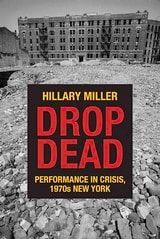
Drop Dead
Performance in Crisis, 1970s New YorkHillary Miller
Northwestern University Press, 2016
Winner, 2017 American Theater and Drama Society John W. Frick Book Award
Winner, 2017 ASTR Barnard Hewitt Award for Outstanding Research in Theater History
Hillary Miller’s Drop Dead: Performance in Crisis, 1970s New York offers a fascinating and comprehensive exploration of how the city’s financial crisis shaped theater and performance practices in this turbulent decade and beyond.
New York City’s performing arts community suffered greatly from a severe reduction in grants in the mid-1970s. A scholar and playwright, Miller skillfully synthesizes economics, urban planning, tourism, and immigration to create a map of the interconnected urban landscape and to contextualize the struggle for resources. She reviews how numerous theater professionals, including Ellen Stewart of La MaMa E.T.C. and Julie Bovasso, Vinnette Carroll, and Joseph Papp of The Public Theater, developed innovative responses to survive the crisis.
Combining theater history and close readings of productions, each of Miller’s chapters is a case study focusing on a company, a production, or an element of New York’s theater infrastructure. Her expansive survey visits Broadway, Off-, Off-Off-, Coney Island, the Brooklyn Academy of Music, community theater, and other locations to bring into focus the large-scale changes wrought by the financial realignments of the day.
Nuanced, multifaceted, and engaging, Miller’s lively account of the financial crisis and resulting transformation of the performing arts community offers an essential chronicle of the decade and demonstrates its importance in understanding our present moment.

Droppin Science
William Perkins
Temple University Press, 1996
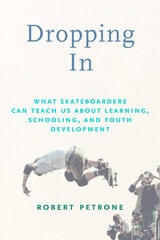
Dropping In
What Skateboarders Can Teach Us about Learning, Schooling, and Youth DevelopmentRobert Petrone
University of Massachusetts Press, 2023
The die-hard local skateboarders of Franklin Skatepark—a group of working-class, Latino and white young men in the rural Midwest—are typically classified by schools and society as “struggling,” “at-risk,” “failing,” and “in crisis.” But at the skatepark, they thrive and succeed, not only by landing tricks but also by finding meaning and purpose in their lives.
In Dropping In, Robert Petrone draws from multiple years of ethnographic research to bring readers into this rich environment, exploring how and why these young men engage more with skateboarding and its related cultural communities than with school. For them, it is in these alternative communities and spaces that they meet their intellectual, literate, and learning needs; cultivate meaningful and supportive relationships; and develop a larger understanding of their place in the world. By looking at what these skateboarders can teach us about what is right and working in their lives, Petrone asks educators and others committed to youth development to rethink schooling structures and practices to provide equitable education for all students.
Drug Cartels Do Not Exist
Narcotrafficking in US and Mexican CultureOswaldo Zavala
Vanderbilt University Press, 2022
Yet the realities of violence in Mexico and along the border are obscured by the books, films, and TV series we consume. In truth, works like Sicario, The Queen of the South, and Narcos hide Mexico's political realities. Alongside these examples, Zavala discusses Charles Bowden, 2666 by Roberto Bolaño, and other important Latin American writers as examples of those who do capture the realities of the drug war.
Translated into English by William Savinar, Drug Cartels Do Not Exist will be useful for journalists, political scientists, philosophers, and writers of any kind who wish to break down the constructed barriers—physical and mental—created by those in power around the reality of the Mexican drug trade.

Drugs for Life
How Pharmaceutical Companies Define Our HealthJoseph Dumit
Duke University Press, 2012

Drunk Driving
An American DilemmaJames B. Jacobs
University of Chicago Press, 1989
Dry Place
Landscapes Of Belonging And ExclusionPatricia L. Price
University of Minnesota Press, 2004
Gathers tales from the Southwestern United States and Northern Mexico to understand the relationship between people and place in a borderland
Landscape is the space of negotiation between human beings and the physical world, and rarely are the negotiations more complex and subtle than those conducted through the desert landscape along the Mexico-U.S. border.
Patricia L. Price views the shaping of the landscape on and around the border through various narratives that have sought to establish claims to these dry lands. Most prominent are the accounts of Anglo-American expansionism and Manifest Destiny juxtaposed with the Chicano nationalist tale of Aztlán in the twentieth century, all constituting collective, contending claims to the U.S. Southwest. Demonstrating how stories can become vehicles for changing places and identities, Price considers characters old and new who inhabit the contemporary borderlands between Mexico and the United States—ranging from longstanding manifestations of good and evil in the figures of the Virgin of Guadalupe and the Devil to a collection of lay saints embodying current concerns. Dry Place weaves together theoretical insights with field-based inquiry, autobiography, and creative writing to arrive at a textured understanding of the bordered landscape of late modern subjectivity.