Results by title
4413 books match the query 'Anthropology' and 158 start with d
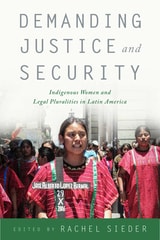
Demanding Justice and Security
Indigenous Women and Legal Pluralities in Latin AmericaSieder, Rachel
Rutgers University Press, 2017
Featuring chapters on Bolivia, Colombia, Ecuador, Guatemala, and Mexico, the contributors to Demanding Justice and Security include both leading researchers and community activists. From Kichwa women in Ecuador lobbying for the inclusion of specific clauses in the national constitution that guarantee their rights to equality and protection within indigenous community law, to Me’phaa women from Guerrero, Mexico, battling to secure justice within the Inter-American Court of Human Rights for violations committed in the context of militarizing their home state, this book is a must-have for anyone who wants to understand the struggle of indigenous women in Latin America.
Demands of the Day
On the Logic of Anthropological InquiryPaul Rabinow and Anthony Stavrianakis
University of Chicago Press, 2013
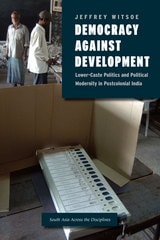
Democracy against Development
Lower-Caste Politics and Political Modernity in Postcolonial IndiaJeffrey Witsoe
University of Chicago Press, 2013
Witsoe looks at the history of colonialism in India and its role in both shaping modern caste identities and linking locally powerful caste groups to state institutions, which has effectively created a postcolonial patronage state. He then looks at the rise of lower-caste politics in one of India’s poorest and most populous states, Bihar, showing how this increase in democratic participation has radically threatened the patronage state by systematically weakening its institutions and disrupting its development projects. By depicting democracy and development as they truly are in India—in tension—Witsoe reveals crucial new empirical and theoretical insights about the long-term trajectory of democratization in the larger postcolonial world.
Demographic Avant-Garde
Jews in Bohemia between the Enlightenment and the ShoahJana Vobecká
Central European University Press, 2013
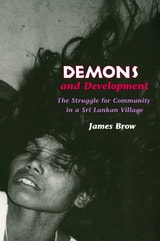
Demons and Development
The Struggle for Community in a Sri Lankan VillageJames Brow
University of Arizona Press, 1996
James Brow witnessed these possession trances and sorcery accusations as they occurred, enabling him to convey this richly textured story interweaving political factionalism and troubled spirits. Official projects of development have proceeded apace in Sri Lanka, but until now there have been few accounts of their tendency to tear apart the fabric of rural society. Demons and Development combines an engaging narrative of how development was experienced in one particular village with an original contribution to theories of hegemony, the social anthropology of South Asia, the ethnography of nationalism, and the sociology of development.
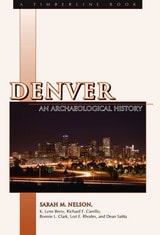
Denver
An Archaeological HistorySarah M. Nelson
University Press of Colorado, 2008
Around 12,000 B.C., groups of leather-clad Paleoindians passed through the juncture of the South Platte River and Cherry Creek, following the herds of mammoth or buffalo they hunted. In the Archaic period, people rested under the shade of trees along the riverbanks, with baskets full of plums as they waited for rabbits to be caught in their nearby snares. In the early Ceramic period, a group of mourners adorned with yellow pigment on their faces and beads of eagle bone followed Cherry Creek to the South Platte to attend a funeral at a neighboring village. And in 1858, the area was populated by the crude cottonwood log shacks with dirt floors and glassless windows, the homes of Denver's first inhabitants.
For at least 10,000 years, Greater Denver has been a collection of diverse lifeways and survival strategies, a crossroads of interaction, and a locus of cultural coexistence. Setting the scene with detailed descriptions of the natural environment, summaries of prehistoric sites, and archaeologists' knowledge of Denver's early inhabitants, Nelson and her colleagues bring the region's history to life. From prehistory to the present, this is a compelling narrative of Denver's cultural heritage that will fascinate lay readers, amateur archaeologists, professional archaeologists, and academic historians alike.

Derivatives and the Wealth of Societies
Edited by Benjamin Lee and Randy Martin
University of Chicago Press, 2016
To answer that question, the contributors to this book draw upon their deep backgrounds in finance, social science, art, and the humanities to create a new way of understanding derivative finance that does justice to its social and cultural dimensions. They offer a two-pronged analysis. First, they develop a social understanding of the derivative that casts it in the light of anthropological concepts such as the gift, ritual, play, dividuality, and performativity. Second, they develop a derivative understanding of the social, using financial concepts such as risk, hedging, optionality, and arbitrage to uncover new dimensions of contemporary social reality. In doing so, they construct a necessary, renewed vision of derivative finance as a deeply embedded aspect not just of our economics but our culture.
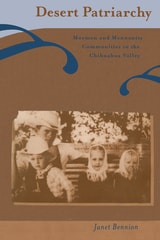
Desert Patriarchy
Mormon and Mennonite Communities in the Chihuahua ValleyJanet Bennion
University of Arizona Press, 2004
Janet Bennion has lived and worked among these people, and in this book she introduces a new paradigm—"desert patriarchy"—to explain their way of life. This perspective sheds light not only on these particular communities but also on the role of the desert environment in the development and maintenance of fundamentalist ideology in other parts of the United States and around the globe.
Making new connections between the arid environment, opposition to technology, and gender ideology, Bennion shows that it is the interplay of the desert and the unique social traditions and gender dynamics embedded in Anglo patriarchal fundamentalism that accounts for the successful longevity of the Mexican colonies. Her model defines the process by which male supremacy, female autonomous networking, and religious fundamentalism all facilitate successful adaptation to the environment.
More than a theoretical analysis, Desert Patriarchy provides an intimate glimpse into the daily lives of these people, showing how they have taken refuge in the desert to escape religious persecution, the forced secular education of their children, and economic and political marginalization. It particularly sheds light on the ironic autonomy of women within a patriarchal system, showing how fundamentalist women in Chihuahua are finding numerous creative ways to access power and satisfaction in a society structured to subordinate and even degrade them.
Desert Patriarchy richly expands the literature on nontraditional religious movements as it enhances our understanding of how environment can shape society. It offers unique insights into women's status in patriarchal communities and provides a new way of looking at similar communities worldwide.
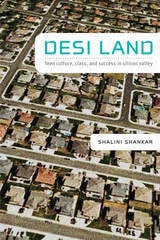
Desi Land
Teen Culture, Class, and Success in Silicon ValleyShalini Shankar
Duke University Press, 2008
Whether discussing instant messaging or arranged marriages, Desi bling or the pressures of the model minority myth, Shankar foregrounds the teens’ voices, perspectives, and stories. She investigates how Desi teens interact with dialogue and songs from Bollywood films as well as how they use their heritage language in ways that inform local meanings of ethnicity while they also connect to a broader South Asian diasporic consciousness. She analyzes how teens negotiate rules about dating and reconcile them with their longer-term desire to become adult members of their communities. In Desi Land Shankar not only shows how Desi teens of different socioeconomic backgrounds are differently able to succeed in Silicon Valley schools and economies but also how such variance affects meanings of race, class, and community for South Asian Americans.
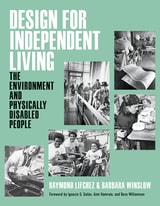
Design for Independent Living
The Environment and Physically Disabled PeopleRaymond Lifchez
University of Minnesota Press, 2027
A new edition of the classic and innovative resource that relies on personal lived experience to guide accessible design
In 1979, University of California architecture professors Raymond Lifchez and Barbara Winslow published this account of ongoing collaborations with members of a robust disability community in Berkeley, California. In the first attempt by architects to know disabled people and to design from their perspective, they employed an empathetic approach that differed from typical accessible design guidelines.
Instead of presenting architectural designs to resolve existing barriers, Design for Independent Living turns to disabled people to tell their own stories through interviews and photographs of their own homes, workplaces, and lives in public. The disabled informants of the project were members of the Independent Living movement—the activists who shaped the disability rights movement in the late twentieth century in the United States—and their contributions demonstrate the necessity of liberating design from ableist, restrictive ways of thinking about personal and public life.
Now with a new foreword by three scholars of design and disability history, Design for Independent Living is an indispensable resource for architecture and design experts who seek a socially informed practice that looks to the people most affected by design to understand its potentials and its shortcomings.
Retail e-book files for this title are screen-reader friendly with images accompanied by short alt text and/or extended descriptions.
Designing Experimental Research in Archaeology
Examining Technology through Production and UseJeffrey R. Ferguson
University Press of Colorado, 2010
Each chapter addresses a particular classification of material culture-ceramics, stone tools, perishable materials, composite hunting technology, butchering practices and bone tools, and experimental zooarchaeology-detailing issues that must be considered in the development of experimental archaeology projects and discussing potential pitfalls. The experiments follow coherent and consistent research designs and procedures and are placed in a theoretical context, and contributors outline methods that will serve as a guide in future experiments. This degree of standardization is uncommon in traditional archaeological research but is essential to experimental archaeology.
The field has long been in need of a guide that focuses on methodology and design. This book fills that need not only for undergraduate and graduate students but for any archaeologist looking to begin an experimental research project.

Designing Human Practices
An Experiment with Synthetic BiologyPaul Rabinow and Gaymon Bennett
University of Chicago Press, 2012
In 2006 anthropologists Paul Rabinow and Gaymon Bennett set out to rethink the role that human sciences play in biological research, creating the Human Practices division of the Synthetic Biology Engineering Research Center—a facility established to create design standards for the engineering of new enzymes, genetic circuits, cells, and other biological entities—to formulate a new approach to the ethical, security, and philosophical considerations of controversial biological work. They sought not simply to act as watchdogs but to integrate the biosciences with their own discipline in a more fundamentally interdependent way, inventing a new, dynamic, and experimental anthropology that they could bring to bear on the center’s biological research.
Designing Human Practices is a detailed account of this anthropological experiment and, ultimately, its rejection. It provides new insights into the possibilities and limitations of collaboration, and diagnoses the micro-politics which effectively constrained the potential for mutual scientific flourishing. Synthesizing multiple disciplines, including biology, genetics, anthropology, and philosophy, alongside a thorough examination of funding entities such as the National Science Foundation, Designing Human Practices pushes the social study of science into new and provocative territory, utilizing a real-world experience as a springboard for timely reflections on how the human and life sciences can and should transform each other.
Designs for an Anthropology of the Contemporary
Paul Rabinow, George E. Marcus with James D. Faubion and Tobias Rees
Duke University Press, 2008
Both Rabinow and Marcus participated in the milestone collection Writing Culture: The Poetics and Politics of Ethnography. Published in 1986, Writing Culture catalyzed a reassessment of how ethnographers encountered, studied, and wrote about their subjects. In the opening conversations of Designs for an Anthropology of the Contemporary, Rabinow and Marcus take stock of anthropology’s recent past by discussing the intellectual scene in which Writing Culture intervened, the book’s contributions, and its conceptual limitations. Considering how the field has developed since the publication of that volume, they address topics including ethnography’s self-reflexive turn, scholars’ increased focus on questions of identity, the Public Culture project, science and technology studies, and the changing interests and goals of students. Designs for an Anthropology of the Contemporary allows readers to eavesdrop on lively conversations between anthropologists who have helped to shape their field’s recent past and are deeply invested in its future.
Designs for the Pluriverse
Radical Interdependence, Autonomy, and the Making of WorldsArturo Escobar
Duke University Press, 2018
Designs on the Contemporary
Anthropological TestsPaul Rabinow and Anthony Stavrianakis
University of Chicago Press, 2014
The authors continue their prior explorations of the contemporary in past works: How to conceptualize, test, and give form to breakdowns of truth and conduct, as well as how to open up possibilities for the remediation of such breakdowns. They offer a surprising and contrasting pair of case studies of two figures who engaged with contemporary breakdowns: Salman Rushdie and Gerhard Richter. Approaching Richter’s artistic struggles with form and technique in the long wake of modernism and Rushdie’s struggles to find a narrative form—as well as a form for living—to respond to the Iranian fatwa issued against him, they show how both men formulated different new approaches to anthropology for the twenty-first century.
Desire Work
Ex-Gay and Pentecostal Masculinity in South AfricaMelissa Hackman
Duke University Press, 2018
Desiring China
Experiments in Neoliberalism, Sexuality, and Public CultureLisa Rofel
Duke University Press, 2007
Drawing on her research over the past two decades among urban residents and rural migrants in Hangzhou and Beijing, Rofel analyzes the meanings that individuals attach to various public cultural phenomena and what their interpretations say about their understandings of post-socialist China and their roles within it. She locates the first broad-based public debate about post-Mao social changes in the passionate dialogues about the popular 1991 television soap opera Yearnings. She describes how the emergence of gay identities and practices in China reveals connections to a transnational network of lesbians and gay men at the same time that it brings urban/rural and class divisions to the fore. The 1999–2001 negotiations over China’s entry into the World Trade Organization; a controversial women’s museum; the ways that young single women portray their longings in relation to the privations they imagine their mothers experienced; adjudications of the limits of self-interest in court cases related to homoerotic desire, intellectual property, and consumer fraud—Rofel reveals all of these as sites where desiring subjects come into being.
Destroy Them Gradually
Displacement as AtrocityAndrew R. Basso
Rutgers University Press, 2024
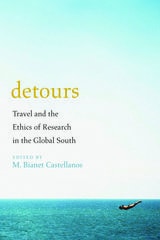
Detours
Travel and the Ethics of Research in the Global SouthEdited by M. Bianet Castellanos
University of Arizona Press, 2019
Influenced by the works of anthropologists Ruth Behar and Renato Rosaldo, the scholars and journalists in this volume consider how first encounters—those initial, awkward attempts to learn about a culture and a people—evolved into enduring and critical engagements. Contemplating the ethics and racial politics of traveling and doing research abroad, they call attention to the power and privilege that permit researchers to enter people’s lives, ask intimate questions, and publish those disclosures. Focusing on Latin America and the Caribbean, they ask, Why this place? What keeps us coming back? And what role do we play in producing narratives of inequality, uneven development, and global spectacle?
The book examines the “politics of return”—the experiences made possible by revisiting a field site over extended periods of time—of scholars and journalists who have spent decades working in and writing about Latin America and the Caribbean. Contributors aren’t telling a story of enlightenment and goodwill; they focus instead on the slippages and conundrums that marked them and raised questions of their own intentions and intellectual commitments.
Speaking from the intersection of race, class, and gender, the contributors explore the hubris and nostalgia that motivate returning again and again to a particular place. Through personal stories, they examine their changing ideas of Latin America and the Caribbean and how those places have shaped the people they’ve become, as writers, as teachers, and as activists.
Development of Arab-American Identity
Ernest McCarus, Editor
University of Michigan Press, 1994
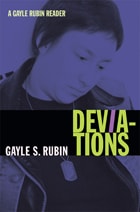
Deviations
A Gayle Rubin ReaderGayle S. Rubin
Duke University Press, 2012
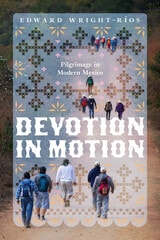
Devotion in Motion
Pilgrimage in Modern MexicoEdward Wright-Ríos
University of Chicago Press, 2025
For many, pilgrimage conjures ideas about ancient traditions and somber journeys of self-discovery—an escape from modern life. In Devotion in Motion, Edward Wright-Ríos argues that we misunderstand pilgrimage (past and present) if we ignore its dynamic relationship with the rhythms of daily life and community.
Through the story of a centuries-old, ever-changing Catholic shrine to Our Lady of Juquila in Oaxaca, Mexico, Wright-Ríos reveals how tradition, innovation, marketing, and devotion coexist and interact in pilgrimage. Devotees, he shows, are not dissuaded by the embeddedness of the sacred site in the complexities, hierarchies, or conflicts of their lives. In fact, the truckers, accountants, and health-care workers we meet in this book actively seek new resources (including social media) to aid and share their devotion. Part microhistory, part ethnography, Devotion in Motion is a celebration of pilgrimage as a living experience in every generation.
Diagnosing America
Anthropology and Public EngagementShepard Forman, Editor
University of Michigan Press, 1995
Debunking the notion of anthropology as a "value-free" science, the authors argue forcefully for an anthropology expressly committed to cultural pluralism and democratic participation.
At the same time, individual essays demonstrate the applicability of standard anthropological methods to the study of contemporary U.S. society and culture as they investigate contested values, community politics, middle-class economics, and workplace culture or describe the psychophysiological stress effects of exclusion on African- Americans and the coping mechanisms of Mexican-Americans along the border.
Diagnosing America and the challenging "Statement to the Profession" that concludes it call for anthropologists to reach beyond the parochialism of their own discipline and to engage history, economics, sociology, and the policy sciences. It will be of interest to scholars in each of these fields who are concerned with the study and resolution of contemporary social problems in the United States and to students of American culture in this country and abroad.
Shepard Forman is Director of the International Affairs Program of the Ford Foundation and a former Professor of Anthropology, University of Michigan.

Dialogue at the Margins
Whorf, Bakhtin, and Linguistic RelativityEmily A. Schultz
University of Wisconsin Press, 1990
The “linguistic relativity principle” of pioneering American linguist Benjamin Whorf has been a focus of controversy among scholars of language for half a century. Many claim that this principle amounts to Whorf’s assertion that language determines thought and culture, while others vigorously reject such a claim. Emily Schultz rereads Whorf in terms of Russian theorist Mikhail Bakhtin, and argues that the Whorfian controversy is rooted in the polyphonic character of his best known texts. By combining Whorfian and Bakhtinian insights concerning variation within and across languages, Schultz offers a new dialogic interpretation of linguistic relativity that has profound implications for students and scholars of anthropology, linguistics, cognitive psychology, philosophy of language, and literary and art criticism.
Dialogue with Europe, Dialogue with the Past
Colonial Nahua and Quechua Elites in Their Own WordsJustyna Olko
University Press of Colorado, 2018
In each chapter a particular document is transcribed exactly as it appears in the original manuscript or colonial printed document, with the editor placing it in historical context and considering the degree of European influence. These texts show the nobility through documents they themselves produced or caused to be produced—such as wills, land deeds, and petitions—and prioritize indigenous ways of expression, perspectives, and concepts. Together, the chapters demonstrate that native elites were independent actors as well as agents of social change and indigenous sustainability in colonial society. Additionally, the volume diversifies the commonly homogenous term “cacique” and recognizes the differences in elites throughout Mesoamerica and the Andes.
Showcasing important and varied colonial genres of indigenous writing, Dialogue with Europe, Dialogue with the Past reveals some of the realities, needs, strategies, behaviors, and attitudes associated with the lives of the elites. Each document and its accompanying commentary provide additional insight into how the nobility negotiated everyday life. The book will be of great interest to students and researchers of Mesoamerican and Andean history, as well as those interested in indigenous colonial societies in the Spanish Empire.
Contributors: Agnieszka Brylak, Maria Castañeda de la Paz, Katarzyna Granicka, Gregory Haimovich, Anastasia Kalyuta, Julia Madajczak, Patrycja Prządka-Giersz
Dialogues in Cuban Archaeology
Edited by L. Antonio Curet, Shannon Lee Dawdy, and Gabino La Rosa Corzo
University of Alabama Press, 2005
A critical, dialogic examination of Cuban and Caribbean archaeology, advancing contemporary interpretations of heritage and identity.
Many Americans are aware of the political, economic, and personal impacts of the U.S. embargo on Cuba. But the communication blockade between scholars has also affected the historical course of academic disciplines and research in general. With the easing of restrictions in the 1990s, academics are now freer to conduct research in Cuba, and the Cuban government has been more receptive to collaborative projects.
This volume provides a forum for the principal Cuban and American archaeologists to update the current state of Cuban archaeological research--from rock art and potsherds to mortuary practices and historical renovation--thereby filling in the information gap created by the political separation. Each group of researchers brings significant new resources to the effort, including strong conservation regulations, innovative studies of lithic and shell assemblages, and transculturation theories. Cuban research on the hacienda system, slavery, and urban processes has in many ways anticipated developments in North American archaeology by a decade or more. Of special interest are the recent renovation projects in Old Havana that fully integrate the work of historians, architects, and archaeologists--a model project conducted by agreement between the Cuban government and UNESCO.
The selection of papers for this collection is based on a desire to answer pressing research questions of interest for North American Caribbeanists and to present a cross-section of Cuban archaeological work. With this volume, then, the principal players present results of recent collaborations and begin a renewed conversation, a dialogue, that can provide a foundation for future coordinated efforts.
Diaspora Without Displacement
The Coloniality and Promise of Capoeira in SenegalCelina de Sá
Duke University Press, 2025
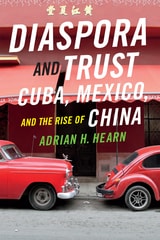
Diaspora and Trust
Cuba, Mexico, and the Rise of ChinaAdrian H. Hearn
Duke University Press, 2016
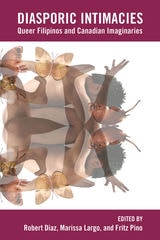
Diasporic Intimacies
Queer Filipinos and Canadian ImaginariesEdited by Robert Diaz, Marissa Largo, and Fritz Pino
Northwestern University Press, 2018
Addressing a wide range of issues beyond the academy, the authors present a rich and under-studied archive of personal reflections, in-depth interviews, creative works, and scholarly essays. Their trandsdisciplinary approach highlights the need for queer, transgressive, and utopian practices that render visible histories of migration, empire building, settler colonialism, and globalization.
Timely, urgent, and fascinating, Diasporic Intimacies offers an accessible entry point for readers who seek to pursue critically engaged community work, arts education, curatorial practice, and socially inflected research on sexuality, gender, and race in this ever-changing world.
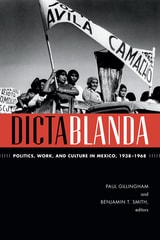
Dictablanda
Politics, Work, and Culture in Mexico, 1938–1968Paul Gillingham and Benjamin T. Smith, eds.
Duke University Press, 2014
This deliberately heterodox volume brings together social historians, anthropologists, sociologists, and political scientists to offer a radical new understanding of the emergence and persistence of the modern Mexican state. It also proposes bold, multidisciplinary approaches to critical problems in contemporary politics. With its blend of contested elections, authoritarianism, and resistance, Mexico foreshadowed the hybrid regimes that have spread across much of the globe. Dictablanda suggests how they may endure.
Contributors. Roberto Blancarte, Christopher R. Boyer, Guillermo de la Peña, María Teresa Fernández Aceves, Paul Gillingham, Rogelio Hernández Rodríguez, Alan Knight, Gladys McCormick, Tanalís Padilla, Wil G. Pansters, Andrew Paxman, Jaime Pensado, Pablo Piccato, Thomas Rath, Jeffrey W. Rubin, Benjamin T. Smith, Michael Snodgrass
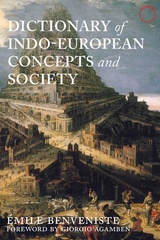
Dictionary of Indo-European Concepts and Society
Émile Benveniste
HAU, 2016
This book has famously inspired a wealth of thinkers, including Roland Barthes, Claude Lévi-Strauss, Pierre Bourdieu, Jacques Derrida, Umberto Eco, Giorgio Agamben, François Jullien, and many others. In this new volume, Benveniste’s masterpiece on the study of language and society finds new life for a new generation of scholars. As political fictions continue to separate and reify differences between European, Middle Eastern, and South Asian societies, Benveniste reminds us just how historically deep their interconnections are and that understanding the way our institutions are evoked through the words that describe them is more necessary than ever.
Differences in Medicine
Unraveling Practices, Techniques, and BodiesMarc Berg and Annemarie Mol, eds.
Duke University Press, 1998
Combining theoretical work with interviews and direct observation of the activities and interactions of doctors, nurses, technicians, and patients, the contributors to this volume provide comparative studies of specific cases. Individual chapters explore topics such as the contested domain of fetal surgery in a California hospital, the construction of gender identity before transsexual surgery in Germany, and differences in the treatment and definition of pain by two clinics in France. Differences in Medicine advances earlier studies on medicine’s social diversity and regional variations to expose significant differences in the presumptions and decisions that affect patients’ lives, and marks a dramatic development in both the study of medicine and in science studies generally.
Revealing the ways in which the bodies and lives of people are constructed as medical objects by practitioners, technologies, and textbooks, this collection calls for and initiates new, more textured investigations and theories of the body in medicine and the practice of science. It will open new discussions among medical and healthcare professionals as well as scholars in medical anthropology, science studies, sociology, philosophy, and the history of medicine.
Contributors. Isabelle Baszanger, Marc Berg, Geoffrey C. Bowker, Monica J. Casper, Charis M. Cussins, Nicolas Dodier, Stefan Hirschauer, Annemarie Mol, Vicky Singleton, Susan Leigh Star, Stefan Timmermans, Dick Willems
Difficult Attachments
Anxieties of Kinship and CareKathryn E. Goldfarb
Rutgers University Press, 2025

Digging New Jersey's Past
Historical Archaeology in the Garden StateVeit, Richard F
Rutgers University Press, 2002
Richard Veit takes readers on a well-organized guided tour through four hundred years of Garden State development as seen through archaeology in Digging New Jerseys Past. This illustrated guidebook takes readers to some of the states most interesting discoveries and tells us what has been learned or is being learned from them. The diverse array of archaeological sites, drawn from all parts of the state, includes a seventeenth-century Dutch trading post, the site of the Battle of Monmouth, the gravemarkers of freed slaves, and a 1920s railroad roundhouse, among others.
Veit begins by explaining what archaeologists do: How do they know where to dig? What sites are likely to yield important information? How do archaeologists excavate a site? How are artifacts cataloged, stored, and interpreted? He then moves through the states history, from the contact of first peoples and explorers, to colonial homesteads, Revolutionary War battlefields, cemeteries, railroads, and factories. Veit concludes with some thoughts about the future of archaeological research in New Jersey and with suggestions on ways that interested individuals can become involved in the field.

Digging for Hope
A Feminist Ethnography in the Land of Mass GravesR. Aída Hernández Castillo
University of Arizona Press, 2026
Through physical and spiritual practices such as exhumation, mourning, and poetic remembrance, these women reclaim dignity for the dead and challenge a society that has normalized disappearance. At the heart of this book is a profound exploration of what Hernández Castillo calls a “pedagogy of love”—a political and ethical framework rooted in care, solidarity, and the refusal to forget. These women are not only searching for bodies; they are building emotional communities, crafting new languages of justice, and offering a reimagining of what it means to resist violence. Their practices, often overlooked by traditional scholarship, restore humanity and dignify the disappeared.
Digging for Hope is essential reading for anyone seeking to understand the gendered dimensions of violence and the grassroots movements that rise in response. With clarity and compassion, Hernández Castillo brings readers into the intimate spaces of grief and resistance, offering a model for feminist ethnography that is both rigorous and deeply humane.

Digging into Popular Culture
Theories and Methodologies in Archeology, Anthropology, and Other FieldsPat Browne
University of Wisconsin Press, 1991
This volume presents archeological studies in conjunction with cultural anthropological studies as a means to enhance popular culture studies. Scholar Malcolm K. Shuman points out that the study of archeology must be careful to chart the total human content of an artifact, because archeology “is a profoundly human (and humanizing) endeavor that cannot be divorced from the matrix of human life.” The other ten essays cover aspects of archeology and cultural anthropology, and the authors are meticulous in studying their subject in context.
Digital Ethnography
Anthropology, Narrative, and New MediaBy Natalie M. Underberg and Elayne Zorn
University of Texas Press, 2013
Digital ethnography can be understood as a method for representing real-life cultures through storytelling in digital media. Enabling audiences to go beyond absorbing facts, computer-based storytelling allows for immersion in the experience of another culture. A guide for anyone in the social sciences who seeks to enrich ethnographic techniques, Digital Ethnography offers a groundbreaking approach that utilizes interactive components to simulate cultural narratives.
Integrating insights from cultural anthropology, folklore, digital humanities, and digital heritage studies, this work brims with case studies that provide in-depth discussions of applied projects. Web links to multimedia examples are included as well, including projects, design documents, and other relevant materials related to the planning and execution of digital ethnography projects. In addition, new media tools such as database development and XML coding are explored and explained, bridging the literature on cyber-ethnography with inspiring examples such as blending cultural heritage with computer games.
One of the few books in its field to address the digital divide among researchers, Digital Ethnography guides readers through the extraordinary potential for enrichment offered by technological resources, far from restricting research to quantitative methods usually associated with technology. The authors powerfully remind us that the study of culture is as much about affective traits of feeling and sensing as it is about cognition—an approach facilitated (not hindered) by the digital age.

Digital Exhaustion
Burnout, Fatigue and Overload in the Age of Constant ConnectivityEdited by A.R.E. Taylor
Intellect Books, 2026
Unpacking the affective toll of constant connectivity, this book reframes digital exhaustion as a defining experience of our times.
Overflowing inboxes. Back-to-back Zoom meetings. Nonstop notifications.
Daily life in digital culture can be exhausting.
This timely and urgent edited collection introduces ‘digital exhaustion’ as a conceptual lens to critically examine the ever-expanding presence of digital technologies in our personal and professional lives. Drawing on interdisciplinary perspectives, this book explores how digital exhaustion is experienced, felt, and articulated in our hyper-connected culture – through burnout, brain rot, binge-watching, data extraction, energy consumption, and social media compulsion. Digital exhaustion emerges as a key structure of feeling in an era of constant connectivity and algorithmic demands.
Accessible yet theoretically grounded, this collection is an essential resource for scholars in cultural and technology studies, while also speaking to broader debates in anthropology, psychology, digital geography, urban studies, and consumer research. Responsive to the urgent need to engage in sustained dialogue about digital futures, this book offers fresh insights into how we might understand – and rethink – digital wellbeing, social media addiction, and the growing demand for a right to disconnect.

Digital Repertoires
Embedded and Everyday Technologies in Later LifeEdited by Riitta Hänninen, Sakari Taipale, and Laura Haapio-Kirk
University College London, 2025
As digital technologies further embed themselves in everyday life, how do older adults navigate and adapt to these tools? Digital Repertoires introduces the concept of the “digital repertoire” to investigate the evolving ways older people engage with technology across cultural and social contexts. Based on global research, this work confronts typical stereotypes of aging and digital exclusion and emphasizes the agency, creativity, and new challenges older adults experience in their digital interactions.
Including voices of scholars from anthropology, sociology, gerontology, communication studies, and design, this book offers theoretical depth as well as empirical breadth, making it essential reading for researchers, practitioners, and policymakers working at the intersection of aging and technology.
Dilemmas of Culture in African Schools
Youth, Nationalism, and the Transformation of KnowledgeCati Coe
University of Chicago Press, 2005
Coe identifies the state's limitations in teaching cultural knowledge and discusses how Ghanaians negotiate the tensions raised by the competing visions of modernity that nationalism and Christianity have created. She reveals how cultural curricula affect authority relations in local social organizations—between teachers and students, between Christians and national elite, and between children and elders—and raises several questions about educational processes, state-society relations, the production of knowledge, and the making of Ghana's citizenry.
Dilemmas of Difference
Indigenous Women and the Limits of Postcolonial Development PolicySarah A. Radcliffe
Duke University Press, 2015
Diplomas and Thatch Houses
Asserting Tradition in a Changing MicronesiaJuliana Flinn
University of Michigan Press, 1992
Disability Worlds
Faye Ginsburg and Rayna Rapp
Duke University Press, 2024
Disability, the Environment, and Colonialism
Edited by Tatiana Konrad
Temple University Press, 2024
The editor and contributors provide a careful analysis of the intersection of disability, the environment, and colonialism to understand issues such as eco-ableism, environmental degradation, homogenized approaches to environmentalism, and climate change. They also look at the body as a site of colonial oppression and environmental exploitation.
Contributors: Holly Caldwell, Matthew J. C. Cella, John Gulledge, Memona Hossain, Nancy J. Hirschmann, Iain Hutchison, Andrew B. Jenks, Suha Kudsieh, Gordon M. Sayre, Jessica A. Schwartz, Anna Stenning, Aubrey Tang, Alice Wexler, and the editor.
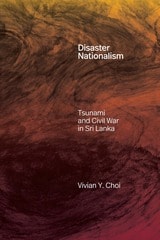
Disaster Nationalism
Tsunami and Civil War in Sri LankaVivian Y. Choi
Duke University Press, 2025

Discordant Development
Global Capitalism and the Struggle for Connection in BangladeshKaty Gardner
Pluto Press, 2012
What happens when a vast multinational mining company operates a gas plant situated close to four densely populated villages in rural Bangladesh? How does its presence contribute to local processes of ‘development’? And what do corporate claims of ‘community engagement’ involve? Drawing from author Katy Gardner’s longstanding relationship with the area, Discordant Development reveals the complex and contradictory ways that local people attempt to connect to, and are disconnected by, foreign capital.
Everyone has a story to tell: whether of dispossession and scarcity, the success of Corporate Social Responsibility, or imperialist exploitation and corruption. Yet as Gardner argues, what really matters in the struggles over resources is which of these stories are heard, and the power of those who tell them.
Based around the discordant narratives of dispossessed land owners, urban activists, mining officials and the rural landless, Discordant Development touches on some of the most urgent economic and political questions of our time, including resource ownership and scarcity, and the impact of foreign investment and industrialisation on global development.

Discourse and Destruction
The City of Philadelphia versus MOVERobin Wagner-Pacifici
University of Chicago Press, 1993
How did this struggle between the city and MOVE go from memos and meetings to tear gas and bombs? And how does the mandate to defend public order become a destructive force? Sifting through the hearings that followed the deadly encounter, Robin Wagner-Pacifici reconstructs the conflict between MOVE and the city of Philadelphia. Against this richly nuanced account, in which the participants—from the mayor and the police officers to members of MOVE and their neighbors—offer opposing versions of their aims, assumptions, and strategies, Wagner-Pacifici develops a compelling analysis of the relation between definition and action, between language and violence.
Was MOVE simply a radical, black separatist group with an alternative way of life? Or was it a terrorist cult that held a neighborhood and politicians hostage to its offensive language and bizarre behavior? Wagner-Pacifici shows how competing definitions of MOVE led to different strategies for managing the conflict. In light of the shockingly similar, and even more deadly, 1993 Branch Davidian disaster in Waco, Texas, such an analysis becomes imperative. Indeed, for those who hope to understand—and, finally, to forestall—the moment when language and violence are inexorably drawn together, this book demands attention.
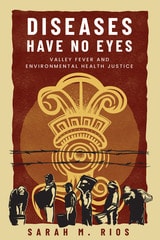
Diseases Have No Eyes
Valley Fever and Environmental Health JusticeSarah M. Rios
Temple University Press, 2026
Diseases Have No Eyes investigates how communities in Central Valley, California deal with Valley Fever, a painful illness caused by a soil fungus. The airborne disease’s symptoms can last from two months to a patient’s lifetime and may be fatal. Nearly a third of the national cases are reported in California, where those infected are disproportionately farmworkers and people incarcerated in the region. Poverty, pollution, and prison expose these groups to cumulative environmental and health risks that deny Valley Fever patients adequate medical treatment.
Sarah M. Rios examines how these populations face racial health disparities and develop strategies of care. She connects environmental justice activists as well as prison advocates and abolitionists who mobilize protests and issue calls to action to the past and ongoing efforts for medical autonomy and healthy communities. Diseases Have No Eyes emphasizes that vulnerable groups have developed an expertise and understanding of Valley Fever out of necessity. In the process, these community members offer an alternative public health response that extends beyond the individual body.
In the series Insubordinate Spaces

Disenchanted Lives
Apostasy and Ex-Mormonism among the Latter-day SaintsBrooks, E. Marshall
Rutgers University Press, 2018
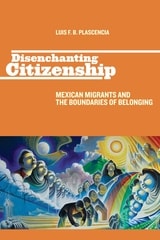
Disenchanting Citizenship
Mexican Migrants and the Boundaries of BelongingLuis F. B. Plascencia
Rutgers University Press, 2012
The book explores the meaning of U.S. citizenship through the experience of a unique group of Mexican migrants who were granted Temporary Status under the “legalization” provisions of the 1986 IRCA, attained Lawful Permanent Residency, and later became U.S. citizens. Plascencia integrates an extensive and multifaceted collection of interviews, ethnographic fieldwork, ethno-historical research, and public policy analysis in examining efforts that promote the acquisition of citizenship, the teaching of citizenship classes, and naturalization ceremonies. Ultimately, he unearths citizenship’s root as a Janus-faced construct that encompasses a simultaneous process of inclusion and exclusion. This notion of citizenship is mapped on to the migrant experience, arguing that the acquisition of citizenship can lead to disenchantment with the very status desired. In the end, Plascencia expands our understanding of the dynamics of U.S. citizenship as a form of membership and belonging.