Results by title
3388 books match the query 'Fiction' and 125 start with d

Deep in Alaska
Christine Johnson
University of Alaska Press, 2013
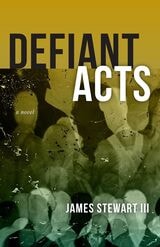
Defiant Acts
A NovelJames Stewart III
Acre Books, 2025
James Stewart III’s powerful debut novel documents the life of a working-class interracial couple and their children in a Chicago suburb in the early 1990s. The father, Jim, is a Black man married to Connie, a white woman with two white sons from a previous marriage. Connie and Jim have three more children together, and the entire family lives in a cramped two-bedroom apartment in a well-to-do, predominantly white community.
Defiant Acts follows the Stewarts through a year in which Jim fights to earn a promotion, the adolescent boys struggle to find themselves, one of the younger children becomes gravely ill, and the parents try to stay afloat in a shaky economy. Within the walls of the Stewarts’ home, race doesn’t factor, but when the family interacts with the outside world, it is inescapable, a basis for identity and inclusion as well as a spur for exclusion and abuse.
Rooted in the tradition of Black authors from Chicago and drawing on the author’s own experiences, Defiant Acts eschews a conventional plot, presenting a series of captured moments—past and present—and multiple perspectives to build a mosaic of the family’s lives. In clear, concise prose, Stewart focuses on the complexities of human relationships and on race relations both in and outside the domestic space, placing emphasis on the values that bind this tight-knit family together: solidarity, care, and hope.

Delia's Doctors; or, A Glance behind the Scenes
Hannah Gardner Creamer
University of Illinois Press, 2002
This early feminist novel is a wickedly funny slice of mid-nineteenth-century Americana peppered with details of the era’s freakish medical tactics and leavened with a smart and sassy commentary about the societal restraints on women’s physical and intellectual abilities.
First published in 1852, Delia’s Doctors is one of four known novels by Hannah Gardner Creamer, an American writer whose life and career have been all but absent from the annals of American history. In the book, eighteen-year-old Delia Thornton is ill. Her condition, more psychological than physical, worsens during the bitter winter, even as doctor after doctor attempts to cure her.
As Delia typifies the female heroine whose sickness is aggravated by listlessness and inactivity, her brother’s fiancée, Adelaide Wilmot, is Delia’s more robust counterpart. Adelaide thinks she could do anything, if only she were a man, and she dreams of being a physician. Quick to point out the shortcomings of male doctors in treating female illnesses, Adelaide saves Delia and delivers a series of arguments against New England patriarchy.
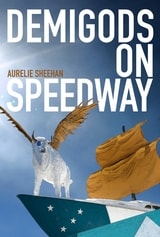
Demigods on Speedway
Aurelie Sheehan
University of Arizona Press, 2014
In the tradition of Joyce’s Dubliners, Demigods on Speedway is a portrait of a city that reflects the recession-era Southwest. Inspired by tales from Greek mythology, these gritty heroes and heroines struggle to find their place in the cosmos. Each of these linked stories develops the extremes of the modern psyche: an executive struggling to understand his wife’s illness even as he compulsively cheats on her, a teenage runaway whose attraction to her “twin” is bound to fail, an overweight boy vicariously experiencing true love through the tales of his trainer, a car-wash attendant with outsized dreams of Hollywood.
Characters with mythical-sounding names like Dagfinn and Zero plot their courses through a sky riddled with flawed constellations. Sheehan’s edgy language aptly reveals her characters as they lurch toward the next day’s irreverent beginning. As the characters’ lives overlap, their stories carry mythology out of the past and into a very modern dilemma: the cumulative sense that here is a city with its own demigods, individuals struggling to survive under siege while passionately seeking to make something immortal in their lives.
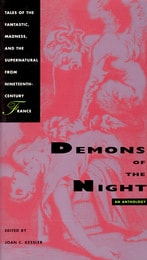
Demons of the Night
Tales of the Fantastic, Madness, and the Supernatural from Nineteenth-Century FranceEdited by Joan C. Kessler
University of Chicago Press, 1995
The anthology opens with "Smarra, or the Demons of the Night," Nodier's 1821 tale of nightmare, vampirism, and compulsion, acclaimed as the first work in French literature to explore in depth the realm of dream and the unconscious. Other stories include Balzac's "The Red Inn," in which a crime is committed by one person in thought and another in deed, and Mérimée's superbly crafted mystery, "The Venus of Ille," which dramatizes the demonic power of a vengeful goddess of love emerging out of the pagan past. Gautier's protagonist in "The Dead in Love" develops an obsessive passion for a woman who has returned from beyond the grave, while the narrator of Maupassant's "The Horla" imagines himself a victim of psychic vampirism.
Joan Kessler has prepared new translations of nine of the thirteen tales in the volume, including Gérard de Nerval's odyssey of madness, "Aurélia," as well as two tales that have never before appeared in English. Kessler's introduction sets the background of these tales—the impact of the French Revolution and the Terror, the Romantics' fascination with the subconscious, and the influence of contemporary psychological and spiritual currents. Her essay illuminates how each of the authors in this collection used the fantastic to articulate his own haunting obsessions as well as his broader vision of human experience.
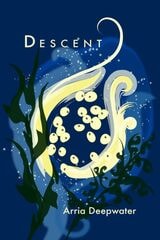
Descent
Arria Deepwater
Omnidawn, 2025
Arria Deepwater’s Descent is a modern fairy tale exploring the vulnerability and strength that come with living in an unconventional body, especially for those living with the experience of disabilities, chronic illness, hyper-medicalization, objectification, and 2SLGBTQIA+ identities. The reader is invited to become an observer of isolation, violation, and the magic of secret joy. Descent moves through entangled connections and dissolving boundaries between humanity and the natural world as it seeks to weave a spell of protection for those whose bodies do not conform, for whom existence is a radical act of rebellion and creativity.
Exploring boundaries of intimacy, fluidity, and grief, Deepwater brings an eco-feminist speculative twist to the growing canon of writers with marginalized identities. Deepwater considers the fractured reality of living in a queer disabled body and how we might find freedom, safety, and spiritual healing despite grief.
Descent is the winner of Omnidawn’s 2022 Fabulist Fiction Contest, chosen by Michelle Ruiz Keil.

Desert Gothic
Don Waters
University of Iowa Press, 2007
Set in bars, mortuaries, nursing homes, truck stops, and the “poverty motels that encircled downtown’s casino corridor,” Waters’s ten stories are full of misfit transients like Julian, a crematorium worker who decorates abandoned urns to create a “lush underground island,” and the instant Mormon missionary Eli, a hapless divorcé who “always likes people better when they’re a little broken.” Limo drivers, ultra-marathoners, vagabonds, and a distraught novelist-to-be populate the pages of these gritty stories.
Desert Mementos
Stories of Iraq and NevadaCaleb S. Cage
University of Nevada Press, 2017
Cage captures similarities in the respective desert landscapes of both Iraq and Nevada, but it is not just a study in contrasting landscapes. The inter-connected stories explore similarities and differences in human needs from the perspectives of vastly different cultures. Specifically, the stories deftly capture the overlap in the respective desert landscapes of each region, the contrasting cultures and worldviews, and the common need for hope. Taken together, the stories represent the arc of a year-long deployment by young soldiers. Cage’s stories are bound together by the soldier’s searing experiences in the desert, bookended by leaving and returning home to Nevada, which in many ways can be just as disorienting as patrolling the Iraq desert.

Desert sonorous
StoriesSean Bernard
University of Massachusetts Press, 2015
Desert sonorous is a unique and energetic debut collection, blending realism with flashes of experimentation. Contemporary issues—immigration, drought, shootings—hover above a cast of memorable characters in search of life's deeper meanings. As they struggle along, comic and resigned, intelligent and quiet, sad and frustrated, their strivings resound because their lives are in so many ways our own.
Deserters
A NovelJerry Gabriel
Acre Books, 2026
It is fall 1864, and Robert Riley has deserted his Army of the Potomac unit outside Petersburg, Virginia. Exhausted from years of war and worried about his motherless sons in Ohio, he returns to collect thirteen-year-old Michael and Sean, three years older, and flees to the Western territories. Along the way, he encounters Janey, an orphan at sixteen, who is also eager to go West. When Riley sees in her a quickness of mind, a brand of cunning that mirrors his own, he is persuaded to take her along.
Crossing the lower Midwest on horseback with little money and few possessions, the four are pursued by a wily private detective after the reward for turning in Riley. He manages to thwart the ragtag group, who abandon their plan of crossing the plains. They slip away by train to Chicago, and there, in that cold, stinking, dangerous metropolis, just before the 1864 election, they meet with problems beyond Riley’s ability to resolve. All four find themselves alone, at the mercy of fortune . . . and the fortune hunter, who finally gets the chance to face down his nemesis.
Deserters alternates between the perspectives of the four major characters as their relationships grow and shift, and as each of them strives to forge their way forward in the late war’s murky upheaval. A book whose antecedents include Charles Portis’s True Grit and Paulette Jiles’s News of the World, Gabriel’s immersive novel is an adventure story with psychological intricacy, emotional intensity, and historical heft.
Design Flaw
StoriesHugh Sheehy
Acre Books, 2022
These are tales of seekers, often damaged, who find themselves caught up in skewed realities, facing lurking threats, violent deaths, strange entities, and alienating technologies. Confronted with unsettling, escalating, circumstances, the disparate cast of characters are driven toward self-revelation and perverse moments of poignancy.
A troubled high schooler traps a peer in an underground storage space. A traumatized felon returns home to rob the man who molested him as a child. A videogame help-line operator suspects a regular caller, obsessed with a disturbing role-playing game, of real-life misdeeds. In the title story, an unhappy couple adopts a “designer animal,” a genetic hybrid created to be the perfect pet. But the “grot” makes trouble in the neighborhood, becoming emblematic of a deeper problem. “Something is wrong with the world,” the narrator’s husband explains. “A design flaw. It’s so thoroughly corrupted, I’m not sure how to fix it.”
Inventive and unpredictable, these thirteen stories are wholly immersive, showing Sheehy at his captivating best.

Design and Debris
A Chaotics of Postmodern American FictionJoseph Conte
University of Alabama Press, 2002
Reading eight major contemporary authors through the lens of chaos theory, Conte offers new and original interpretations of works that have been the subject of much critical debate
Design and Debris discusses the relationship between order and disorder in the works of John Hawkes, Harry Mathews, John Barth, Gilbert Sorrentino, Robert Coover, Thomas Pynchon, Kathy Acker, and Don DeLillo. In analyzing their work, Joseph Conte brings to bear a unique approach adapted from scientific thought: chaos theory. His chief concern is illuminating those works whose narrative structures locate order hidden in disorder (whose authors Conte terms “proceduralists”), and those whose structures reflect the opposite, disorder emerging from states of order (whose authors Conte calls “disruptors”).Documenting the paradigm shift from modernism, in which artists attempted to impose order on a disordered world, to postmodernism, in which the artist portrays the process of “orderly disorder,” Conte shows how the shift has led to postmodern artists' embrace of science in their treatment of complex ideas. Detailing how chaos theory interpenetrates disciplines as varied as economics, politics, biology, and cognitive science, he suggests a second paradigm shift: from modernist specialization to postmodern pluralism. In such a pluralistic world, the novel is freed from the purely literary and engages in a greater degree of interactivity-between literature and science, and between author and reader. Thus, Conte concludes, contemporary literature is a literature of flux and flexibility.
Desire of the Moth
a novelChampa Bilwakesh
UpSet Press, 2017
Hear Champa Bilwakesh reading from Desire of the Moth here: http://voicethread.com/myvoice/#thread/5863247/30058528/31699244
Detonator
StoriesPeter Mountford
Four Way Books, 2025
In “One More Night Behind Walls,” set against the early 1980s-onset of Sri Lanka’s civil war, the young protagonist observes, “Some say the grown-ups used the war as an excuse to let go, but I think it’s more like the war forced them together, and that’s what made them go off the rails.” Soon, the interpersonal dramas of the expat community beget casual debauchery and fatal consequences during a drunken New Year’s Party.
In other stories, an American consultant faces personal and professional ruin after fateful decisions concerning Ecuador's post-revolution economy. A divorcee in her forties finds unexpected chemistry with her ex-husband’s girlfriend after a Scottish Highland funeral. A married suburban feminist experiments with the escape of a dangerous love affair in Washington, D.C.
With remarkable sensitivity and psychological acuity, Mountford positions his characters not at the center of historical events, but at their peripheries — witnesses to momentous changes they can only partially comprehend.
“Our minds were frail, troubled by old wounds that kept calling for help, and we were forever confused and looking in the wrong direction,” says the character of the title story, “Detonator,” about a man who blows up his life, again. And again.
Rather than rendering them insignificant, this perspective reveals their profound humanity as they navigate desire, grief, and meaning against political instability and social transformation.
Mountford illuminates each character with stunning humanity — free from condescension — as consequences swirl through even the purest intentions. With striking precision, he captures the visceral authenticity of emotions as characters gather fragmented understandings of their place in the world. Each story traces a unique path along the plane curve of history, honoring the messy, beautiful complexity of lifetimes unspooled and most of all — lived.

Dexterity
A NovelDouglas Bauer
University of Iowa Press, 2014
This darkly poetic novel is imbued with the same tough and tender understanding of the emotional lives of real people that distinguishes Bauer’s subsequent novels, The Very Air and The Book of Famous Iowans.

Dialogic Novels of Malcolm Bradbury and David Lodge
Robert A. Morace
Southern Illinois University Press, 1989
Morace analyzes the novels of Malcolm Bradbury and David Lodge together because they provide a dialogue of conflicting views, styles, and forms of the contemporary novel. This dialogue parallels the views of these two British novelists as critics.
Beginning as realists, as novelists of manners, as writers of campus novels, Bradbury and Lodge explore the possibilities and the limitations of realistic writing. Bradbury and Lodge, however, are not only heirs of English literary tradition. Both are also literary critics with a keen interest in recent critical theories. Morace shows us how the debate between Bradbury and Lodge over the nature and purpose of fiction and criticism has found its way into their novels. The realistic conflicts between civilian and military, English and American, pre- and post-Vatican II values gradually give way to an exploration of the semiotics behind such conflicts.
Morace finds Bradbury’s and Lodge’s works far more open-ended than the "doggedly indeterminate fictions" of many contemporary writers. Using Mikhail Bakhtin’s theory of dialogism, he identifies the ways in which language and values simultaneously compete with and support one another in their novels.
This first book-length study of Bradbury or Lodge deals with all of their novels, including Changing Places, How Far Can You Go?, and Small World by Lodge, as well as Bradbury’s The History of Man and Rates of Exchange.

Dialogues in Paradise
Can Xue
Northwestern University Press, 1989

Dickens The Novelist
Leavis, F. R.
Rutgers University Press, 1979
Digenis Akritas
The Two-Blood Border Lord—The Grottaferrata VersionDenison B. Hull
Ohio University Press, 1986
Before The Song of Roland, before El Cid, and centuries before today's fascination with warrior legends and frontier worlds, there was Digenis Akritas: the great epic of Byzantium and one of the earliest masterpieces of medieval Greek literature. Rooted in the turbulent borderlands between the Byzantine Empire and the Arab world, this remarkable poem brings to life a society where cultures met, clashed, and transformed one another. Based on traditions that emerged from the Byzantine eastern frontier and preserved in medieval manuscripts, Digenis Akritas remains the most celebrated surviving heroic epic of the Byzantine world.
At its center stands Basil, known as Digenis Akritas, the “two-blood border lord.” Born of a union between an Arab emir and a Byzantine noblewoman, he embodies the complex cultural landscape of the medieval eastern Mediterranean. Gifted with extraordinary strength and courage, Digenis grows into an unparalleled warrior, defending the empire's frontier against raiders, outlaws, and rival champions while forging his own legend along the banks of the Euphrates.
Blending action, romance, folklore, and faith, the poem follows Digenis through daring adventures, dramatic combats, encounters with marvels, and a passionate love story. Yet beyond its heroic exploits lies a vivid portrait of frontier life in the medieval Byzantine world, where Christian and Muslim, Greek and Arab, imperial power and local tradition intersected in unexpected ways. The result is an epic that is at once a thrilling tale of adventure and a window into a fascinating civilization.
This acclaimed English verse translation restores a foundational work of medieval literature for modern readers. Supported by scholarly commentary, a bibliography, and maps, it offers an accessible introduction to one of history's great heroic traditions and to the legendary figure who became the archetypal hero of Byzantine folklore.
Digital Fiction and the Unnatural
Transmedial Narrative Theory, Method, and AnalysisAstrid Ensslin and Alice Bell
The Ohio State University Press, 2021
Dinarzad's Children
An Anthology of Contemporary Arab American FictionPauline Kaldas
University of Arkansas Press, 2009
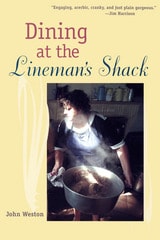
Dining at the Lineman's Shack
John Weston
University of Arizona Press, 2003
The place is Skull Valley in central Arizona, the time the 1930s. Taking food as his theme, Weston paints an instructive and often hilarious portrait of growing up, of rural family life under difficult circumstances, and of a remote Arizona community trying to hold body and soul together during tough times. His book recalls life in a lineman's shack, interlaced with "disquisitions on swamp life, rotting water, and the complex experience of finding enough to eat during the Great Depression."
Central to Weston's account is his mother Eloine, a valiant woman rearing a large brood in poverty with little help from her husband. Eloine cooks remarkably well—master of a small repertory from which she coaxes ideas surprising even to herself—and feeds her family on next to nothing. She is a woman whose first instinct is to cry out "Lord, what am I going to feed them" whenever visitors show up close to mealtime. Recalls Weston, "Her strength lay in a practical- and poverty-born sense that there must be more edible food in the world than most people realized," and he swears that six out of seven meals were from parts of four or five previous meals coming round again, like the buckets on a Ferris wheel.
Although Weston evokes a fond remembrance of a bygone era that moves from Depression-era Skull Valley to wartime Prescott, rest assured: food—its acquisition, its preparation, its wholehearted enjoyment—is the foundation of this book. "I did not have a deprived childhood, despite its slim pickings," writes Weston. "If I recall a boiling pig's head now and then, it is not to be read as some Jungian blip from Lord of the Flies but simply a recurring flicker of food-memory." Whether remembering his father's occasional deer poaching or his community's annual Goat Picnic, Weston laces his stories with actual recipes—even augmenting his instructions for roasted wild venison with tips for preparing jerky.
Dining at the Lineman's Shack teems with sparkling allusions, both literary and culinary, informed by Weston's lifetime of travels. Even his nagging memory of desperate boyhood efforts to trade his daily peanut-butter sandwich for bacon-and-egg, baloney, jelly, or most anything else is tempered by his acquaintance with "the insidious sa-teh sauce in Keo Sananikone's hole-in-the-wall restaurant on Kapahulu Street"—a peanut-butter-based delicacy for which he obligingly provides the ingredients (and which he promises will keep, refrigerated in a jar, for several weeks before baroque things begin to grow on it).
Through this tantalizing smorgasbord of memories, stories, and recipes, John Weston has fashioned a wholly captivating commentary on American culture, both in an earlier time and in our own. Dining at the Lineman's Shack is a book that will satisfy any reader's hunger for the unusual—and a book to savor, in every sense of the word.

Direct Sunlight
StoriesChristine Sneed
Northwestern University Press, 2023
The stories in Direct Sunlight, award-winning author Christine Sneed’s latest, are inspired by the memorable strangeness of everyday life. The characters in these topically diverse tales experience events that bring the terms of their day-to-day lives and their relationships into focus in a way hitherto foreign to them.
The title story features two adult children learning of their father’s second family long after his death in the 9/11 terrorist attacks. “Mega Millions” explores the aftermath of a small-town midwestern factory employee’s enormous lottery win. In “Dear Kelly Bloom,” a young journalist takes on the role of advice columnist at a faltering Chicago newspaper around the time of the 2008 financial meltdown and soon finds himself tasked with replying to his own mother’s letter requesting guidance on family matters. In “The Monkey’s Uncle Louis,” a contentedly childless man tries to make sense of his sister’s decision to adopt a capuchin monkey after she and her husband find themselves unable to conceive a baby of their own.
The stories in Direct Sunlight rely on humor but are balanced by Sneed’s clear-eyed sobriety about the sorrows inherent in the human condition.
Dirty Money
A Parker NovelRichard Stark
University of Chicago Press, 2017
Richard Stark's Parker novels are the hardest of hard-boiled, classic crime novels where the heists are huge, the body counts are high, and the bad guys usually win.
The Parker novels have been a huge influence on countless writers and filmmakers, including Quentin Tarantino, Stephen King, George Pelecanos, Colson Whitehead, Lucy Sante, John Banville, and many more. Their stripped-down language and hard-as-nails amorality create an unforgettable world where the next score could be the big one, but your next mistake could also be your last. There's nothing else like them.
In this, the final Parker novel, Parker’s got a new fence and a new plan to get the loot back from a botched job in Dirty Money, but a bounty hunter, the FBI, and the local cops are on his tail. Only his brains, his cool, and the help of his lone longtime dame, Claire, can keep him one step ahead of the cars and the guns. One of the best books in the whole series, full of action and surprises, Diry Money closes Parker's career with a bang. (And with a perfect final line.)
Written over the course of almost sixty years, the Parker novels are pure artistry, adrenaline, and logic both brutal and brilliant. Join Parker on his jobs and read them all again or for the first time. But don’t talk to the law.

Disability
A NovellaCris Mazza
University of Alabama Press, 2026
Redefining strength, one truth at a time.
Told in a broken shorthand voice, Mazza's language is acute, evoking a place where the patients, the caregivers, and the system are all disabled. Teri and Cleo are minimum-wage nurse-aides at a state ward for severely retarded and physically handicapped children. They are expected to feed, bathe, clothe, and carry out the required therapies for their patients in a 4-hour shift. They're working within a system where money for therapy is only continued if therapy shows improvement--and yet the state-paid therapists who oversee the ward know the patients will never show any improvement. To keep the money coming in, it is up to the minimum-wage caregivers to "see" and chart important improvements, thus keeping the therapy program alive.
Blinded in their own way by their pet-like adoption of favorite patients, Teri and Cleo struggle to remain both optimistic and realistic. As their personal failures mount--and even transpose or emulate the travesties within the state ward--Teri and Cleo, with their own unseen "disabilities" in dealing with their lives and pasts, react harshly to the breakdown in the emotional balancing act.
Discipline
Debra Spark
Four Way Books, 2024
How does art mirror and shape our lives? Can it transcend the boundaries of time, wealth, and circumstance? Debra Spark—whose previous work the Washington Post described as "richly imaginative" and "real world magic"—explores these themes in her new novel Discipline. With a trio of important paintings missing, the book weaves together three narratives that span almost a century. From an inhumane boarding school in Maine in the late 1970s to a contemporary Boston art appraiser struggling with raising a teen to the long-lost love letters between a painter and his wife, Discipline is a propulsive literary mystery about family strife and devotion, ambition and authorship, and the abiding and mysterious power of art.
Inspired by the life and family of Walt Kuhn (the painter responsible for the 1913 Armory Show that introduced Americans to modernism) and the scandal-ridden Elan boarding school that was forced to shut down in 2011, this richly drawn, suspenseful novel shows Spark at her most masterful.
Discovering Fiction
Yan Lianke
Duke University Press, 2022

Dismembering the American Dream
The Life and Fiction of Richard YatesKate Charlton-Jones
University of Alabama Press, 2014
Since his death in Alabama in 1992, the work of American writer Richard Yates has enjoyed a renaissance, culminating in director Sam Mendes’s adaption of the novel Revolutionary Road (starring Leonardo DiCaprio and Kate Winslet). Dismembering the American Dream is the first book-length critical study of Yates’s fiction.
Kate Charlton-Jones argues that to read Yates’s tales of disordered lives is to uncover not misery, though the lives he describes are sad ones, but a profound, enriching, and humorous understanding of human weakness and vulnerability. Yates’s narratives absorb his readers so entirely, mirroring their own emotional highs and lows with such skill, that reading becomes recognition. Yates demonstrates his ability to tease powerful human drama out of the most ordinary, quotidian moments. At the same time, Yates’s fiction displays an object lesson in the art of fine prose writing, so it is no surprise that many early fans of Yates were also established writers.
Charlton-Jones explores how Yates extends the realist form and investigates three main recurring themes of his fiction: observations about performative behavior, which are at the heart of all his fictions; his conception of the writer’s role in society; and how he envisages the development of social and sexual relationships. Furthermore, Charlton-Jones illustrates how Yates incorporates some of the concerns and methods of postmodernist writers but how, nevertheless, he resists their ontological challenges.
Drawing on the author’s personal papers and with a foreword by DeWitt Henry and an afterword by Richard Yates’s daughter Monica, Dismembering the American Dream provides an extended critical examination of the often neglected but important work of this gifted and accomplished author.
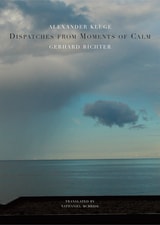
Dispatches from Moments of Calm
Alexander Kluge and Gerhard Richter
Seagull Books, 2019
That calm was the work of Gerhard Richter, who had been granted control over Die Welt for that single day, taking over and imprinting all thirty pages of the newspaper with his personal stamp: images from quiet moments amid unquiet times, the demotion of politics from its primary position, the privileging of the private and personal over the public, and, above all, artful, moving contrasts between sharpness and softness. He had created an unprecedented work of mass art.
Among the many people to praise the work was writer Alexander Kluge, who instantly began writing stories to accompany Richter’s images. This book, the second collaboration between Kluge and Richter, brings their stories and images together, along with new words and artworks created specifically for this volume. The result, Dispatches from Moments of Calm, is a beautiful, meditative interval in the otherwise unremitting press of everyday life, a masterpiece by two acclaimed artists working at the height of their powers.
Displacing Homophobia
Ronald R. Butters, John M. Clum, and Michael Moon, eds.
Duke University Press, 1989
Distorture
Rob Hardin
University of Alabama Press, 1997
A woman is buried by a musician who has sworn to protect her. A narcoleptic is found, still dreaming, with cryptic symbols engraved into her back. In an elegant loft, a silver-haired man studies the torso of a comatose surfer, and the bodies of the two men are transformed into an intricate work of art. These are only a few of the tortous stories of Rob Hardin, a veteran studio musician and stylist whose work has been called "impeccable" by Dennis Cooper.
Distorture is a fiercely modern book full of jeweled descriptions of violent eroticism. In Distorture, his first book of stories, Rob Hardin subverts nineteenth century romanticism and redefines the aesthetics of excess. Distorture splices the digital and the autumnal with the drive of the dark ambient music and the elegance of a late Liszt Sonata.

Dita Saxova
Arnost Lustig
Northwestern University Press, 1993
Divergent Trajectories
Interviews with Innovative Fiction WritersFlore Chevaillier
The Ohio State University Press, 2017
Including interviews with R. M. Berry, Debra Di Blasi, Percival Everett, Thalia Field, Renee Gladman, Bhanu Kapil, Lance Olsen, Michael Martone, Carole Maso, Joseph McElroy, Christina Milletti, Alan Singer, and Steve Tomasula, Divergent Trajectories provides a framework that allows innovative authors to discuss in some depth their works, backgrounds, formal research, thematic preferences, genre treatment, aesthetic philosophies, dominant linguistic expressions, cultural trends, and the literary canon. Through an examination of these concepts, writers ask what “traditional” and “innovative” writing is, and most of all, what fiction is today.
Diversity Quota
Ranjan Adiga
University of Wisconsin Press, 2024
In these stories, the lines between “winners” and “losers” in a rapidly globalizing world become frayed and warped. A Nepali migrant’s worst fears materialize in “Leech.” A couple in “Denver” tries to acclimate to a new social class. A middle-aged man is attracted to his barber in “Haircut and Massage.” A Nepali professor is captivated by a white American student in “The Diversity Committee.” In often unexpected ways, Adiga captures moments of survival amid worlds colored by precarity.
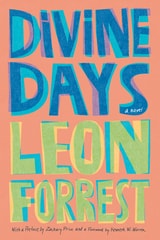
Divine Days
A NovelLeon Forrest; Foreword by Kenneth W. Warren, Preface by Zachary Price
Northwestern University Press, 2023
“I have an awful memory for faces, but an excellent one for voices,” muses Joubert Jones, the aspiring playwright at the center of Divine Days. A kaleidoscopic whorl of characters, language, music, and Black experience, this saga follows Jones for one week in 1966 as he pursues the lore and legends of fictional Forest County, a place resembling Chicago’s South Side. Joubert is a veteran, recently returned to the city, who works for his aunt Eloise’s newspaper and pours drinks at her Night Light Lounge. He wants to write a play about Sugar-Groove, a drifter, “eternal wunderkind,” and local folk hero who seems to have passed away. Sugar-Groove’s disappearance recalls the subject of one of Joubert’s earlier writing attempts—W. A. D. Ford, a protean, diabolical preacher who led a religious sect known as “Divine Days.” Joubert takes notes as he learns about both tricksters, trying to understand their significance.
Divine Days introduces readers to a score of indelible characters: Imani, Joubert’s girlfriend, an artist and social worker searching for her lost siblings and struggling to reconcile middle class life with her values and Black identity; Eloise, who raised Joubert and whose influence is at odds with his writerly ambitions; (Oscar) Williemain, a local barber, storyteller, and founder of the Royal Rites and Righteous Ramblings Club; and the Night Light’s many patrons. With a structure inspired by James Joyce and jazz, Leon Forrest folds references to African American literature and cinema, Shakespeare, the Bible, and classical mythology into a heady quest that embraces life in all its tumult and adventure.
This edition brings Forrest’s masterpiece back into print, incorporating hundreds of editorial changes that the author had requested from W. W. Norton, but were not made for their editions in 1993 and 1994. Much of the inventory from the original printing of the book by Another Chicago Press in 1992 had been destroyed in a disastrous warehouse fire.
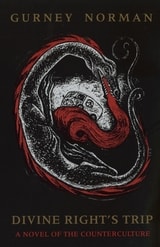
Divine Right's Trip
A Novel of the CountercultureGurney Norman
Ohio University Press, 1990
This first Gnomon Press edition was published in 1990.
Divine Right’s Trip is a countercultural classic that captures the spirit of the 1960s and early 1970s. The novel follows Divine Right (D. R.) Davenport, a restless young man on a journey of self-discovery, as he embarks on a cross-country road trip in his beloved but unreliable old Volkswagen bus, Urge. Accompanied at times by his free-spirited girlfriend, Estelle, D. R. embarks on an odyssey that takes him through communes, small towns, and encounters with eccentric characters, each offering insights into D. R.’s own struggles with identity, freedom, and belonging.
Originally published as a serial in the Last Whole Earth Catalog in 1971, Divine Right’s Trip is both a road novel and a coming-of-age story, reflecting the era’s tensions between individualism and community, rebellion and responsibility. Gurney Norman’s writing is infused with humor, sharp social observation, and a deep appreciation for the landscapes and people of Appalachia, where D. R. ultimately finds himself confronting his roots.
A defining work of Appalachian literature and the countercultural movement, Divine Right’sTrip remains a thought-provoking exploration of personal growth, societal change, and the search for meaning in an ever-shifting world.

Dixiecrats and Democrats
Alabama PoliticsWilliam D. Barnard
University of Alabama Press, 1984
A pivotal in the study of history and politics, not only in Alabama but in the other states of the South
Barnard’s account is elegantly concise, the labor of conspicuous scholarship. In an effort to analyze Alabama’s political bedrock, the author has tapped virtually every source. What results is a cogent and harmonious theme.
Djinns
Fatma Aydemir, Translated by Jon Cho-Polizzi
University of Wisconsin Press, 2024
In this epic tale, Fatma Aydemir explores the lives of characters who could not be more different from one another—except in their insatiable desires to be understood. Rather than a seamless narrative, the novel circles around suppressed memories, unspoken trauma, and buried pasts. Turning expectations and stereotypes of the immigrant experience on their side, Aydemir shows how we all grapple with power and beauty, the holes in our lives, and the demons that hover just out of sight.
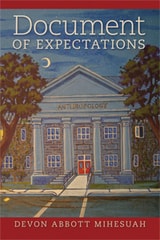
Document of Expectations
Devon Abbott Mihesuah
Michigan State University Press, 2011
When Hopi/White Mountain Apache anthropologist Tony M. Smokerise is found murdered in his office at Central Highlands University, the task of solving the crime falls to jaded Choctaw detective Monique Blue Hawk and her partner Charles T. Clarke. A seemingly tolerant and amicable office of higher education, the university, Monique soon learns, harbors parties determined to destroy the careers of Tony and his best friend, the volatile Oglala anthropologist Roxanne Badger. In the course of her investigation, Monique discovers that the scholars who control Tony’s department are also overseeing the excavation of a centuries-old tribal burial site that was uncovered during the construction of a freeway. Tony’s role in the project, she realizes, might be the key to identifying his murderer. This virtuosic mystery novel explores, in engrossing detail, the complex motives for a killing within the sometimes furtive and hermetic setting of academia.
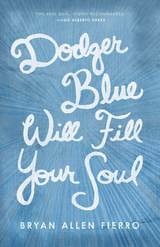
Dodger Blue Will Fill Your Soul
Bryan Allen Fierro
University of Arizona Press, 2016
In Dodger Blue Will Fill Your Soul, Bryan Allen Fierro brings to life the people and places that form the fragile heart of the East Los Angeles community. In the title story, a father’s love of Dodger baseball is matched only by the disconnect he must bridge with his young son. In another story, a young widower remembers his wedding day with his father-in-law. The boys and men in this collection challenge masculine stereotypes, while the girls and women defy gender roles. Hope and faith in their own community defines the characters, and propels them toward an awareness of their own personal responsibility to themselves and to their families, even as they eschew those closest to them in pursuit of a different future.
Dodger Blue Will Fill Your Soul is a tour de force—the first collection of an authentic new voice examining community with humor, hope, and brutal honesty.
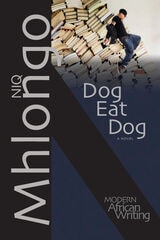
Dog Eat Dog
A NovelNiq Mhlongo
Ohio University Press, 2012

Dog Star
Nabarun Bhattacharya
Seagull Books, 2025
A city on edge and a reckoning long overdue—Dogstar is a searing fable of vengeance and the limits of human empathy. Nabarun Bhattacharya’s novella unfolds in Calcutta, where the city’s dogs, brutalized and unseen, rise in defiant revolt against their human oppressors. As the streets turn into battlegrounds, history itself bleeds through—echoes of past atrocities and ancient mythologies intertwining with the raw immediacy of the present.
With his signature blend of dark humor and sharp political critique, Bhattacharya crafts a hypnotic tale that forces us to confront a chilling question: Who, in the end, is truly human? Blurring the boundaries between the real and the mythic, Dogstar is a dystopian allegory as disorienting as it is revelatory. For readers drawn to Orwellian fables and narratives that unsettle and illuminate in equal measure, this is a read that will haunt and provoke long after the final page.

Domesticity, Imperialism, and Emigration in the Victorian Novel
Diana C. Archibald
University of Missouri Press, 2002
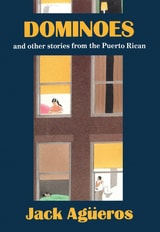
Dominoes and Other Stories from the Puerto Rican
Jack Agüeros
Northwestern University Press, 1995
These stories convey hard, sometimes brutal, often bittersweet, experiences, but throughout Agüeros writes with artistry and unyielding compassion. Richly detailed, wry, and matter-of-fact, Dominoes and Other Stories from the Puerto Rican is an important achievement by an accomplished American writer.
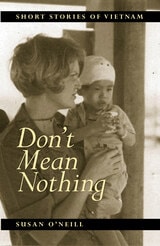
Don't Mean Nothing
Short Stories of VietnamSusan O'Neill
University of Massachusetts Press, 2004
For American nurses in Vietnam, and the men among whom they worked and lived, a common defense against the steady onslaught of dead and dying, wounded and maimed, was a feigned indifference—the irony of the powerless. With the assistance of alcohol, drugs, and casual sex, "Don't mean nothing" became their mantra, a means of coping with the other war—the war against total mental breakdown.
Each or these tales offers new and profound insight into the ways the war in Vietnam forever changed the lives of everyone who served there.

Don't Whisper Too Much and Portrait of a Young Artiste from Bona Mbella
Ekotto, Frieda
Bucknell University Press, 2019
Published by Bucknell University Press. Distributed worldwide by Rutgers University Press.
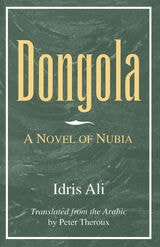
Dongola
A Novel of NubiaIdris Ali
University of Arkansas Press, 1998
The University of Arkansas Press Award for Arabic Literature in Translation, 1997
In this, the first Nubian novel ever translated, Awad Shalali, a Nubian worker in modern Egypt, dreams of Dongola—the capital of medieval Nubia, now lost to the flood waters of the Aswan High Dam. In Dongola, the Nubians reached their zenith. They defeated and dominated Upper Egypt, and their archers, deadly accurate in battle, were renowned as “the bowman of the glance.
Helima, Awad’s wife, must deal with the reality of today’s Nubia, a poverty-stricken bottomland. Men like Awad now work in Cairo for good wages while the women remain at home in squalor, dominated by the Islam of their conquerors and ignorant of the glory now covered by the Nile’s water. Left to tend Awad’s sick mother and his dying country, Halima grows despondent and learns the truths behind the Upper Egyptian lyric: “Time, you are a traitor—what have you done with my love?
Through his characters’ pain and suffering, Idris Ali paints in vibrant detail, with wit and a keen sense of history’s absurdities, the story of cultures and hearts divided, of lost lands, impossible dreams, and abandoned lives.
Doomi Golo—The Hidden Notebooks
Boubacar Boris Diop
Michigan State University Press, 2016
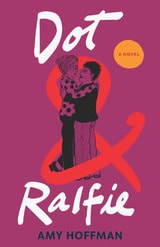
Dot & Ralfie
Amy Hoffman
University of Wisconsin Press, 2022
Dot is caring but hides hurtful secrets. Ralfie’s gruffness masks the physical and emotional pain she endures. Friends and relatives don’t necessarily offer appealing role models for their third act. Dot’s sister Susan is pushing them toward a stuffy “55 or better” community out in the ’burbs, populated by aging straights who mistake the butch Ralfie for a frumpy old man. Eighty-year-old Viola—Dot’s friend and sometime lover—lives alone and refuses help, even as she experiences a devastating fall. Rife with Hoffman’s characteristic wit, Dot & Ralfie takes a hard, sometimes painful look at elder care in the LGBTQ+ community, and the unique struggles that come with getting older outside of heteronormative structures.
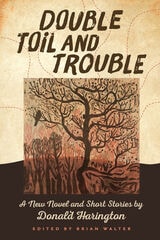
Double Toil and Trouble
A New Novel and Short Stories by Donald HaringtonDonald Harington
University of Arkansas Press, 2020
Edited by longtime Harington scholar Brian Walter, Double Toil and Trouble also includes an appendix featuring the author’s spirited correspondence with the editor who originally inspired the title novel, providing an insider’s look at the American literary scene and Harington’s own early assessment of his work. Spanning several decades of the author’s career, this volume gives readers a Harington who is at once familiar and fresh as he experiments with new formal possibilities, only to once again endear the vagaries of love, life, and folk language to us.