Results by title
4127 books match the query 'Science' and 117 start with d
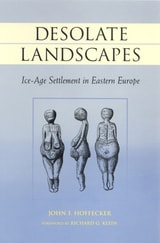
Desolate Landscapes
Ice-Age Settlement in Eastern EuropeJohn F. Hoffecker
Rutgers University Press, 2002
Ice-Age Eastern Europe was an inhospitable place, isolated from the moderating influence of oceans. Unlike Western Europe, which was settled over half a million years ago, Eastern Europe remained largely unoccupied until the appearance of the cold-adapted Neanderthals. When modern humans arrived from southern latitudes, they were anatomically less suited to colder climates, but successfully colonized Eastern Europe with the aid of innovative technologies that their Neanderthal predecessors lacked.
John F. Hoffecker provides an overview of Pleistocene or Ice-Age settlement in Eastern Europe with a heavy focus on the adaptations of Neanderthals and modern humans to this harsh environmental setting. Hoffecker argues that the Eastern European record reveals a stark contrast between Neanderthals and modern humans with respect to technology and social organization, both of which are tied to the development of language and the use of symbols. Desolate Landscapes will bring readers up to date with the rich archaeological record in this significant region and its contribution to our understanding of one of our most important events in human evolution - the rise of modern humans and the extinction of the Neanderthals.
The book is divided into seven chapters. The first discusses general anthropological principles and theories pertaining to human adaptation and development in cold environments. The second outlines the environmental conditions of the specific area under study in the book.
The next two chapters focus on Neanderthal finds in the area. The following two chapters discuss the replacement of the local Neanderthal population by the Cro-magnons, and the development of their way of life in the cold Loess Steppe environment. The final chapter summarizes the discussion and is followed by an extremely valuable and extensive bibliography, more than half of which consists of non-English (primarily Russian) sources.
Developing to Scale
Technology and the Making of Global HealthHeidi Morefield
University of Chicago Press, 2023
In 1973, economist E. F. Schumacher published Small Is Beautiful, which introduced a mainstream audience to his theory of “appropriate technology”: the belief that international development projects in the Global South were most sustainable when they were small-scale, decentralized, and balanced between the traditional and the modern. His theory gained widespread appeal, as cuts to the foreign aid budget, the national interests of nations seeking greater independence, postcolonial activism, and the rise of the United States’ tech sector drove stakeholders across public and private institutions toward cheaper tools. In the ensuing decades, US foreign assistance shifted away from massive modernization projects, such as water treatment facilities, toward point-of-use technologies like village water pumps and oral rehydration salts. This transition toward the small scale had massive implications for the practice of global health.
Developing to Scale tells the history of appropriate technology in international health and development, relating the people, organizations, and events that shaped this consequential idea. Heidi Morefield examines how certain technologies have been defined as more or less “appropriate” for the Global South based on assumptions about gender, race, culture, and environment. Her study shows appropriate technology to be malleable, as different constituencies interpreted its ideas according to their own needs. She reveals how policymakers wielded this tool to both constrain aid to a scale that did not threaten Western interests and to scale the practice of global health through the development and distribution of technical interventions.
Developing to Scale
Technology and the Making of Global HealthHeidi Morefield
University of Chicago Press, 2023
The first critical book on “appropriate technology,” Developing to Scale shows how global health came to be understood as a problem to be solved with the right technical interventions.
In 1973, economist E. F. Schumacher published Small Is Beautiful, which introduced a mainstream audience to his theory of “appropriate technology”: the belief that international development projects in the Global South were most sustainable when they were small-scale, decentralized, and balanced between the traditional and the modern. His theory gained widespread appeal, as cuts to the foreign aid budget, the national interests of nations seeking greater independence, postcolonial activism, and the rise of the United States’ tech sector drove stakeholders across public and private institutions toward cheaper tools. In the ensuing decades, US foreign assistance shifted away from massive modernization projects, such as water treatment facilities, toward point-of-use technologies like village water pumps and oral rehydration salts. This transition toward the small scale had massive implications for the practice of global health.
Developing to Scale tells the history of appropriate technology in international health and development, relating the people, organizations, and events that shaped this consequential idea. Heidi Morefield examines how certain technologies have been defined as more or less “appropriate” for the Global South based on assumptions about gender, race, culture, and environment. Her study shows appropriate technology to be malleable, as different constituencies interpreted its ideas according to their own needs. She reveals how policymakers wielded this tool to both constrain aid to a scale that did not threaten Western interests and to scale the practice of global health through the development and distribution of technical interventions.
Devils Hole Pupfish
The Unexpected Survival of an Endangered Species in the Modern American WestKevin C. Brown
University of Nevada Press, 2021
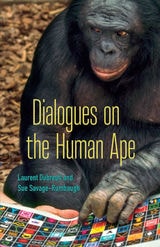
Dialogues on the Human Ape
Laurent Dubreuil
University of Minnesota Press, 2018
A primatologist and a humanist together explore the meaning of being a “human animal”
Humanness is typically defined by our capacity for language and abstract thinking. Yet decades of research led by the primatologist Sue Savage-Rumbaugh has shown that chimpanzees and bonobos can acquire human language through signing and technology.
Drawing on this research, Dialogues of the Human Ape brings Savage-Rumbaugh into conversation with the philosopher Laurent Dubreuil to explore the theoretical and practical dimensions of what being a “human animal” means. In their use of dialogue as the primary mode of philosophical and scientific inquiry, the authors transcend the rigidity of scientific and humanist discourses, offering a powerful model for the dissemination of speculative hypotheses and open-ended debates grounded in scientific research.
Arguing that being human is an epigenetically driven process rather than a fixed characteristic rooted in genetics or culture, this book suggests that while humanness may not be possible in every species, it can emerge in certain supposedly nonhuman species. Moving beyond irrational critiques of ape consciousness that are motivated by arrogant, anthropocentric views, Dialogues on the Human Ape instead takes seriously the continuities between the ape mind and the human mind, addressing why language matters to consciousness, free will, and the formation of the “human animal” self.
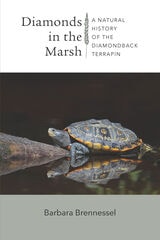
Diamonds in the Marsh
A Natural History of the Diamondback TerrapinBarbara Brennessel
Brandeis University Press, 2021
She’s the mascot for the University of Maryland’s sports teams and her ancestors were nearly driven to extinction by Victorians who indulged in turtle soup. But as she buries herself in the mud every night to sleep, the diamondback terrapin knows none of this. The size of a dinner plate and named for the beautiful concentric rings on her shell, she can live at least forty years and is the only turtle in North America who can live in brackish and salty waters. Several diamondback populations have been the subjects of ecological studies in recent years, but most of that information was buried in scientific literature and various state and federal reports—until this book.
Synthesizing all known research on this remarkable animal, Diamonds in the Marsh is the first full-scale natural history of the diamondback terrapin. Focusing on the northern diamondback, Barbara Brennessel examines its evolution, physiology, adaptations, behavior, growth patterns, life span, genetic diversity, land use, reproduction, and early years. She also discusses its relationship to humans, first as an important food source from colonial times through the nineteenth century, and more recently as a cultural icon, frequently depicted in Native American art and design. She concludes with a look at contemporary hazards to the terrapin and urges continued study of this marvelous creature. Updated with a new introduction by Brennessel, and with a foreword by Bob Prescott, former executive director of Massachusett’s Audubon Wellfleet Bay Sanctuary, Diamonds of the Marsh is perfect for those interested in the conservation of a species.
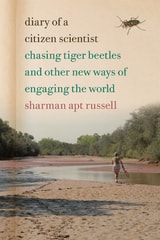
Diary of a Citizen Scientist
Chasing Tiger Beetles and Other New Ways of Engaging the WorldSharman Apt-Russell
Oregon State University Press, 2014
In the exploding world of citizen science, hundreds of thousands of volunteers are monitoring climate change, tracking bird migrations, finding stardust for NASA, and excavating mastodons. The sheer number of citizen scientists, combined with new technology, has begun to shape how research gets done. Non-professionals become acknowledged experts: dentists turn into astronomers and accountants into botanists.
Diary of a Citizen Scientist is a timely exploration of the phenomenon of citizen science, told through the lens of nature writer Sharman Apt Russell’s yearlong study of a little-known species, the Western red-bellied tiger beetle. In a voice both humorous and lyrical, Russell recounts her persistent and joyful tracking of an insect she calls “charismatic,” “elegant,” and “fierce.” Patrolling the Gila River in southwestern New Mexico, collector’s net in hand, she negotiates the realities of climate change even as she celebrates the beauty of a still-wild and rural landscape.
Russell’s self-awareness—of her occasionally-misplaced confidence, her quest to fill in “that blank spot on the map of tiger beetles,” and her desire to become newly engaged in her life—creates a portrait not only of the tiger beetle she tracks, but of the mindset behind self-driven scientific inquiry. Falling in love with the diversity of citizen science, she participates in crowdsourcing programs that range from cataloguing galaxies to monitoring the phenology of native plants, applauds the growing role of citizen science in environmental activism, and marvels at the profusion of projects around the world.
Diary of a Citizen Scientist offers its readers a glimpse into the transformative properties of citizen science—and documents the transformation of the field as a whole.
Diet for a Large Planet
Industrial Britain, Food Systems, and World EcologyChris Otter
University of Chicago Press, 2020
We are facing a world food crisis of unparalleled proportions. Our reliance on unsustainable dietary choices and agricultural systems is causing problems both for human health and the health of our planet. Solutions from lab-grown food to vegan diets to strictly local food consumption are often discussed, but a central question remains: how did we get to this point?
In Diet for a Large Planet, Chris Otter goes back to the late eighteenth century in Britain, where the diet heavy in meat, wheat, and sugar was developing. As Britain underwent steady growth, urbanization, industrialization, and economic expansion, the nation altered its food choices, shifting away from locally produced plant-based nutrition. This new diet, rich in animal proteins and refined carbohydrates, made people taller and stronger, but it led to new types of health problems. Its production also relied on far greater acreage than Britain itself, forcing the nation to become more dependent on global resources. Otter shows how this issue expands beyond Britain, looking at the global effects of large agro-food systems that require more resources than our planet can sustain. This comprehensive history helps us understand how the British played a significant role in making red meat, white bread, and sugar the diet of choice—linked to wealth, luxury, and power—and shows how dietary choices connect to the pressing issues of climate change and food supply.

Diffraction of Electromagnetic Waves by Small Apertures
Applications to transmission, absorption, and scattering resonancesYoung Ki Cho
The Institution of Engineering and Technology, 2024
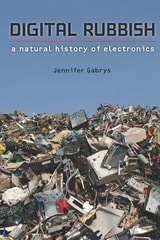
Digital Rubbish
A Natural History of ElectronicsJennifer Gabrys
University of Michigan Press, 2013
This is a study of the material life of information and its devices; of electronic waste in its physical and electronic incarnations; a cultural and material mapping of the spaces where electronics in the form of both hardware and information accumulate, break down, or are stowed away. Electronic waste occurs not just in the form of discarded computers but also as a scatter of information devices, software, and systems that are rendered obsolete and fail. Where other studies have addressed "digital" technology through a focus on its immateriality or virtual qualities, Gabrys traces the material, spatial, cultural, and political infrastructures that enable the emergence and dissolution of these technologies. In the course of her book, she explores five interrelated "spaces" where electronics fall apart: from Silicon Valley to Nasdaq, from containers bound for China to museums and archives that preserve obsolete electronics as cultural artifacts, to the landfill as material repository. All together, these sites stack up into a sedimentary record that forms the "natural history" of this study.
Digital Rubbish: A Natural History of Electronics describes the materiality of electronics from a unique perspective, examining the multiple forms of waste that electronics create as evidence of the resources, labor, and imaginaries that are bundled into these machines. By drawing on the material analysis developed by Walter Benjamin, this natural history method allows for an inquiry into electronics that focuses neither on technological progression nor on great inventors but rather considers the ways in which electronic technologies fail and decay. Ranging across studies of media and technology, as well as environments, geography, and design, Jennifer Gabrys pulls together the far-reaching material and cultural processes that enable the making and breaking of these technologies.
Jennifer Gabrys is Senior Lecturer in Design and Convener of the Masters in Design and Environment in the Department of Design, Goldsmiths, University of London.
Jacket image: Computer dump ©iStockphoto/Lya_Cattel.
digitalculturebooks is an imprint of the University of Michigan Press and the Scholarly Publishing Office of the University of Michigan Library dedicated to publishing innovative and accessible work exploring new media and their impact on society, culture, and scholarly communication. Visit the website at www.digitalculture.org.
Dinner with Darwin
Food, Drink, and EvolutionJonathan Silvertown
University of Chicago Press, 2017
A delectable concoction of coevolution and cookery, gut microbiomes and microherbs, and both the chicken and its egg, Dinner with Darwin reveals that our shopping lists, recipe cards, and restaurant menus don’t just contain the ingredients for culinary delight. They also tell a fascinating story about natural selection and its influence on our plates—and palates. Digging deeper, Silvertown’s repast includes entrées into GMOs and hybrids, and looks at the science of our sensory interactions with foods and cooking—the sights, aromas, and tastes we experience in our kitchens and dining rooms. As is the wont of any true chef, Silvertown packs his menu with eclectic components, dishing on everything from Charles Darwin’s intestinal maladies to taste bud anatomy and turducken.
Our evolutionary relationship with food and drink stretches from the days of cooking cave dwellers to contemporary crêperies and beyond, and Dinner with Darwin serves up scintillating insight into the entire, awesome span. This feast of soup, science, and human society is one to savor. With a wit as dry as a fine pinot noir and a cache of evolutionary knowledge as vast as the most discerning connoisseur’s wine cellar, Silvertown whets our appetites—and leaves us hungry for more.
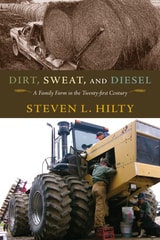
Dirt, Sweat, and Diesel
A Family Farm in the Twenty-first CenturySteven L. Hilty
University of Missouri Press, 2016
With very few people engaged in agriculture today, it is no surprise that most Americans have little understanding of the challenges that modern farmers face. This book provides readers a glimpse into life on a modern Missouri farm where a variety of grains, grass seed, corn, and cattle are produced. All of the conversations, events, and descriptions are drawn from the author’s experience working alongside and observing this father and son family farm operation during the course of a year.
Farming today is technologically complex and requires a broad set of skills that range from soil conservation, animal husbandry, and mechanics to knowledge of financial markets and computer technology. The focus on skills, in addition to the size of the financial risks, and the number of unexpected challenges along the way provides readers with a new perspective and appreciation for modern farm life.
Dirt
A Love StoryEdited by Barbara Richardson
University Press of New England, 2015
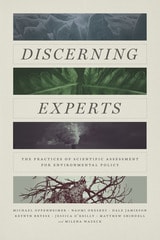
Discerning Experts
The Practices of Scientific Assessment for Environmental PolicyMichael Oppenheimer, Naomi Oreskes, Dale Jamieson, Keynyn Brysse, Jessica O’Reilly, Matthew Shindell, and Milena Wazeck
University of Chicago Press, 2019
Discerning Experts uncovers factors that can generate systematic bias and error, and recommends how the process can be improved. As the first study of the internal workings of large environmental assessments, this book reveals their strengths and weaknesses, and explains what assessments can—and cannot—be expected to contribute to public policy and the common good.
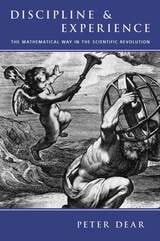
Discipline and Experience
The Mathematical Way in the Scientific RevolutionPeter Dear
University of Chicago Press, 1995
Peter Dear investigates the nature of the change that occurred during this period, focusing particular attention on evolving notions of experience and how these developed into the experimental work that is at the center of modern science. He examines seventeenth-century mathematical sciences—astronomy, optics, and mechanics—not as abstract ideas, but as vital enterprises that involved practices related to both experience and experiment. Dear illuminates how mathematicians and natural philosophers of the period—Mersenne, Descartes, Pascal, Barrow, Newton, Boyle, and the Jesuits—used experience in their argumentation, and how and why these approaches changed over the course of a century. Drawing on mathematical texts and works of natural philosophy from all over Europe, he describes a process of change that was gradual, halting, sometimes contradictory—far from the sharp break with intellectual tradition implied by the term "revolution."
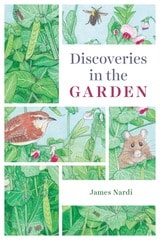
Discoveries in the Garden
James B. Nardi
University of Chicago Press, 2018
Leading us through the garden gate, Nardi reveals the extraordinary daily lives and life cycles of a quick-growing, widely available, and very accommodating group of study subjects: garden plants. Through close observations and simple experiments we all can replicate at home, we learn the hidden stories behind how these plants grow, flower, set seeds, and produce fruits, as well as the vital role dead and decomposing plants play in nourishing the soil. From pollinators to parasites, plant calisthenics to the wisdom of weeds, Nardi’s tale also introduces us to our fellow animal and microbial gardeners, the community of creatures both macro- and microscopic with whom we share our raised beds. Featuring a copse of original, informative illustrations that are as lush as the garden plants themselves, Discoveries in the Garden is an enlightening romp through the natural history, science, beauty, and wonder of these essential green places.
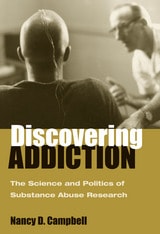
Discovering Addiction
The Science and Politics of Substance Abuse ResearchNancy D. Campbell
University of Michigan Press, 2007
Discovering Addiction brings the history of human and animal experimentation in addiction science into the present with a wealth of archival research and dozens of oral-history interviews with addiction researchers. Professor Campbell examines the birth of addiction science---the National Academy of Sciences's project to find a pharmacological fix for narcotics addiction in the late 1930s---and then explores the human and primate experimentation involved in the succeeding studies of the "opium problem," revealing how addiction science became "brain science" by the 1990s.
Psychoactive drugs have always had multiple personalities---some cause social problems; others solve them---and the study of these drugs involves similar contradictions. Discovering Addiction enriches discussions of bioethics by exploring controversial topics, including the federal prison research that took place in the 1970s---a still unresolved debate that continues to divide the research community---and the effect of new rules regarding informed consent and the calculus of risk and benefit. This fascinating volume is both an informative history and a thought-provoking guide that asks whether it is possible to differentiate between ethical and unethical research by looking closely at how science is made.

Discovering Alvarez
Selected Works of Luis W. Alvarez with Commentary by His Students and ColleaguesEdited by Peter Trower
University of Chicago Press, 1987
Discovering Alvarez collects articles by this innovative physicist, documenting his outstanding contributions. The articles, which span his career, are accompanied by a remarkable collection of commentary by the colleagues and students who worked closely with Alvarez on each project or discovery.
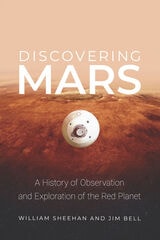
Discovering Mars
A History of Observation and Exploration of the Red PlanetWilliam Sheehan and Jim Bell
University of Arizona Press, 2021
Historian William Sheehan and astronomer and planetary scientist Jim Bell combine their talents to tell a unique story of what we’ve learned by studying Mars through evolving technologies. What the eye sees as a mysterious red dot wandering through the sky becomes a blurry mirage of apparent seas, continents, and canals as viewed through Earth-based telescopes. Beginning with the Mariner and Viking missions of the 1960s and 1970s, space-based instruments and monitoring systems have flooded scientists with data on Mars’s meteorology and geology, and have even sought evidence of possible existence of life-forms on or beneath the surface. This knowledge has transformed our perception of the Red Planet and has provided clues for better understanding our own blue world.
Discovering Mars vividly conveys the way our understanding of this other planet has grown from earliest times to the present. The story is epic in scope—an Iliad or Odyssey for our time, at least so far largely without the folly, greed, lust, and tragedy of those ancient stories. Instead, the narrative of our quest for the Red Planet has showcased some of our species’ most hopeful attributes: curiosity, cooperation, exploration, and the restless drive to understand our place in the larger universe. Sheehan and Bell have written an ambitious first draft of that narrative even as the latest chapters continue to be added both by researchers on Earth and our robotic emissaries on and around Mars, including the latest: the Perseverance rover and its Ingenuity helicopter drone, which set down in Mars’s Jezero Crater in February 2021.
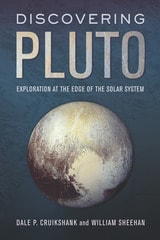
Discovering Pluto
Exploration at the Edge of the Solar SystemDale P. Cruikshank and William Sheehan
University of Arizona Press, 2018
Telling the tale of Pluto’s discovery, the authors recount the grand story of our unfolding knowledge of the outer Solar System, from William Herschel’s serendipitous discovery of Uranus in 1781, to the mathematical prediction of Neptune’s existence, to Percival Lowell’s studies of the wayward motions of those giant planets leading to his prediction of another world farther out. Lowell’s efforts led to Clyde Tombaugh’s heroic search and discovery of Pluto—then a mere speck in the telescope—at Lowell Observatory in 1930.
Pluto was finally recognized as the premier body in the Kuiper Belt, the so-called third zone of our Solar System. The first zone contains the terrestrial planets (Mercury through Mars) and the asteroid belt; the second, the gas-giant planets Jupiter through Neptune. The third zone, holding Pluto and the rest of the Kuiper Belt, is the largest and most populous region of the solar system.
Now well beyond Pluto, New Horizons will continue to wend its lonely way through the galaxy, but it is still transmitting data, even today. Its ultimate legacy may be to inspire future generations to uncover more secrets of Pluto, the Solar System, and the Universe.
Discovering the Desert
The Legacy of the Carnegie Desert Botanical LaboratoryWilliam G. McGinnies
University of Arizona Press, 1981
Discovery and Explanation in Biology and Medicine
Kenneth F. Schaffner
University of Chicago Press, 1993
Although traditional philosophy of science has regarded scientific discovery—the questions of creativity in science—as a subject for psychological rather than philosophical study, Schaffner argues that recent work in cognitive science and artificial intelligence enables researchers to rationally analyze the nature of discovery. As a philosopher of science who holds an M.D., he has examined biomedical work from the inside and uses detailed examples from the entire range of the life sciences to support the semantic approach to scientific theories, addressing whether there are "laws" in the life sciences as there are in the physical sciences. Schaffner's novel use of philosophical tools to deal with scientific research in all of its complexity provides a distinctive angle on basic questions of scientific evaluation and explanation.
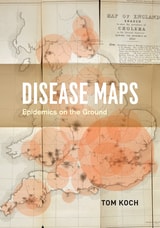
Disease Maps
Epidemics on the GroundTom Koch
University of Chicago Press, 2011
In the seventeenth century, a map of the plague suggested a radical idea—that the disease was carried and spread by humans. In the nineteenth century, maps of cholera cases were used to prove its waterborne nature. More recently, maps charting the swine flu pandemic caused worldwide panic and sent shockwaves through the medical community. In Disease Maps, Tom Koch contends that to understand epidemics and their history we need to think about maps of varying scale, from the individual body to shared symptoms evidenced across cities, nations, and the world.
Disease Maps begins with a brief review of epidemic mapping today and a detailed example of its power. Koch then traces the early history of medical cartography, including pandemics such as European plague and yellow fever, and the advancements in anatomy, printing, and world atlases that paved the way for their mapping. Moving on to the scourge of the nineteenth century—cholera—Koch considers the many choleras argued into existence by the maps of the day, including a new perspective on John Snow’s science and legacy. Finally, Koch addresses contemporary outbreaks such as AIDS, cancer, and H1N1, and reaches into the future, toward the coming epidemics. Ultimately, Disease Maps redefines conventional medical history with new surgical precision, revealing that only in maps do patterns emerge that allow disease theories to be proposed, hypotheses tested, and treatments advanced.
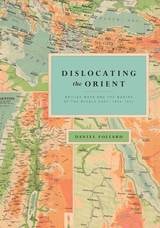
Dislocating the Orient
British Maps and the Making of the Middle East, 1854-1921Daniel Foliard
University of Chicago Press, 2017
Using a wide variety of primary texts and historical maps to show how the idea of the Middle East came into being, Dislocating the Orient will interest historians of the Middle East, the British empire, cultural geography, and cartography.
Displacing Territory
Syrian and Palestinian Refugees in JordanKaren Culcasi
University of Chicago Press, 2023
Based on fieldwork with Palestinian and Syrian refugees in Jordan, Displacing Territory explores how the lived realities of refugees are deeply affected by their imaginings of what constitutes territory and their sense of belonging to different places and territories. Karen Culcasi shows how these individual conceptualizations about territory don’t always fit the Western-centric division of the world into states and territories, thus revealing alternative or subordinated forms and scales of territory. She also argues that disproportionate attention to “refugee crises” in the Global North has diverted focus from other parts of the world that bear the responsibility of protecting the majority of the world’s refugees. By focusing on Jordan, a Global South state that hosts the world’s second-largest number of refugees per capita, this book provides insights to consider alternate ways to handle the situation of refugees elsewhere. In the process, Culcasi brings the reader into refugees’ diverse realities through their own words, inherently arguing against the tendency of many people in the Global North to see refugees as aberrant, burdensome, or threatening.
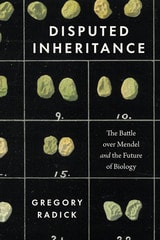
Disputed Inheritance
The Battle over Mendel and the Future of BiologyGregory Radick
University of Chicago Press, 2023
In 1900, almost no one had heard of Gregor Mendel. Ten years later, he was famous as the father of a new science of heredity—genetics. Even today, Mendelian ideas serve as a standard point of entry for learning about genes. The message students receive is plain: the twenty-first century owes an enlightened understanding of how biological inheritance really works to the persistence of an intellectual inheritance that traces back to Mendel’s garden.
Disputed Inheritance turns that message on its head. As Gregory Radick shows, Mendelian ideas became foundational not because they match reality—little in nature behaves like Mendel’s peas—but because, in England in the early years of the twentieth century, a ferocious debate ended as it did. On one side was the Cambridge biologist William Bateson, who, in Mendel’s name, wanted biology and society reorganized around the recognition that heredity is destiny. On the other side was the Oxford biologist W. F. R. Weldon, who, admiring Mendel's discoveries in a limited way, thought Bateson's "Mendelism" represented a backward step, since it pushed growing knowledge of the modifying role of environments, internal and external, to the margins. Weldon's untimely death in 1906, before he could finish a book setting out his alternative vision, is, Radick suggests, what sealed the Mendelian victory.
Bringing together extensive archival research with searching analyses of the nature of science and history, Disputed Inheritance challenges the way we think about genetics and its possibilities, past, present, and future.

Distributed Feedback Semiconductor Lasers
John Carroll
The Institution of Engineering and Technology, 1998

Distribution of Illinois Vascular Plants
Robert H. Mohlenbrock and Douglas M. Ladd
Southern Illinois University Press, 1978
There are 251 pages of distribution maps included in this book. The plants are arranged alphabetically by genus, and under each genus alphabetically by species. The nomenclature follows Mohlenbrock, Guide to the Vascular Flora of Illinois (1975).
In addition, a list of synonyms applied to Illinois taxa by Fernald (1950), Gleason (1952), and Jones (1963) follows the distribution maps.
Finally, in order to gain an understanding of relationships of the plants in the Illinois flora, all 3,001 taxa are arranged in a phylogenetic sequence at the end of the book.
Diversifying STEM
Multidisciplinary Perspectives on Race and GenderEbony O. McGee
Rutgers University Press, 2020
Research frequently neglects the important ways that race and gender intersect within the complex structural dynamics of STEM. Diversifying STEM fills this void, bringing together a wide array of perspectives and the voices of a number of multidisciplinary scholars. The essays cover three main areas: the widely-held ideology that science and mathematics are “value-free,” which promotes pedagogies of colorblindness in the classroom as well as an avoidance of discussions around using mathematics and science to promote social justice; how male and female students of color experience the intersection of racist and sexist structures that lead to general underrepresentation and marginalization; and recognizing that although there are no quick fixes, there exists evidence-based research suggesting concrete ways of doing a better job of including individuals of color in STEM. As a whole this volume will allow practitioners, teachers, students, faculty, and professionals to reimagine STEM across a variety of educational paradigms, perspectives, and disciplines, which is critical in finding solutions that broaden the participation of historically underrepresented groups within the STEM disciplines.
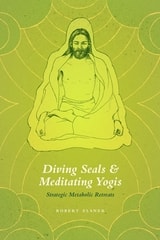
Diving Seals and Meditating Yogis
Strategic Metabolic RetreatsRobert Elsner
University of Chicago Press, 2015
As Elsner reveals, survival in extreme conditions such as those faced by seals is often not about running for cover or coming up for air, but rather about working within the confines of an environment and suppressing normal bodily function. Animals in this withdrawn state display reduced resting metabolic rates and are temporarily less dependent upon customary levels of oxygen. For diving seals—creatures especially well-adapted to prolonged submergence in the ocean’s cold depths—such periods of rest lengthen dive endurance. But while human divers share modest, brief adjustments of suppressed metabolism with diving seals, it is the practiced response achieved during deep meditation that is characterized by metabolic rates well below normal levels, sometimes even approaching those of non-exercising diving seals. And the comparison does not end here: hibernating animals, infants during birth, near-drowning victims, and clams at low tide all also display similarly reduced metabolisms.
By investigating these states—and the regulatory functions that help maintain them—across a range of species, Elsner offers suggestive insight into the linked biology of survival and well-being.
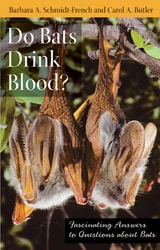
Do Bats Drink Blood?
Fascinating Answers to Questions about BatsSchmidt-French, Barbara A
Rutgers University Press, 2009
Highly beneficial animals, bats are critical to global ecological, economic, and public health. Do Bats Drink Blood? illuminates the role bats play in the ecosystem, their complex social behavior, and how they glide through the night sky using their acute hearing: echolocation skills that have helped in the development of navigational aids for the blind. Personal in voice with the perspective of a skilled bat researcher, this book explores wide-ranging topics as well as common questions people have about bats, providing a trove of fascinating facts.
Featuring rare color and black-and-white photographs, including some by renowned biologist, photographer, and author Merlin Tuttle, Do Bats Drink Blood? provides a comprehensive resource for general readers, students, teachers, zoo and museum enthusiasts, farmers and orchardists, or anyone who may encounter or be fascinated by these extraordinary animals.
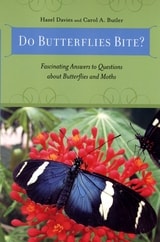
Do Butterflies Bite?
Fascinating Answers to Questions about Butterflies and MothsDavies, Hazel
Rutgers University Press, 2008
Every year, thousands of people visit butterfly conservatories to stand in quiet awe of the simple beauty displayed by these magical creatures. Hazel Davies and Carol A. Butler capture the sense of wonderment and curiosity experienced by adults and children alike in this book about butterflies and their taxonomic cousins, the moths and the skippers. Beautifully illustrated with color and black and white photographs, and drawings by renowned artist William Howe, this book is an essential resource for parents, teachers, students, or anyone who has ever been entranced by these fascinating, fluttering creatures.
Covering everything from their basic biology to their complex behaviors at every stage of life to issues in butterfly conservation, Davies and Butler explore wide-ranging topics and supply a trove of intriguing facts. You'll find tips on how to attract more butterflies to your garden, how to photograph them, and even how to raise them in your own home. Arranged in a question and answer format, the book provides detailed information written in an accessible style that brings to life the science and natural history of these insects. In addition, sidebars throughout the book detail an assortment of butterfly trivia, while extensive appendices direct you to organizations, web sites, and more than 200 indoor and outdoor public exhibits, where you can learn more or connect with other lepidopterophiles (butterfly lovers).
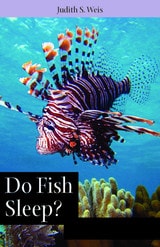
Do Fish Sleep?
Fascinating Answers to Questions about FishesWeis, Judith S
Rutgers University Press, 2011
From the fifty-one-foot whale shark Rhincodon typus to a less-than-one-half-inch fish in the minnow family--the tiny Paedocypris progenetica--fish certainly carry a lot of weight . . . or do they?
A fish's heft in water may vary, but these diverse aquatic animals certainly carry a lot of weight in our ecosystems and environment. From freshwater to ocean habitats, Judith S. Weis offers a fascinating look at these deceptively simple creatures. Fishes may appear to live a dull existence, but appearances change once we understand more about how they survive. These wonders actually possess attributes that would make us superpowers--they can change color, sex, produce light and electricity, regenerate injured fins, prevent themselves from sinking, and some can even walk on land.
Do Fish Sleep? is organized in an easy-to-read and accessible question-and-answer format, filled with more than 55 photographs and over 100 interesting facts from fish biology basics to the importance of preserving and restoring fish diversity and healthy populations. A captivating read for fish enthusiasts of all ages--naturalists, environmentalists, aquarists, scuba divers, and students--this is also the perfect primer for those just about to get their feet wet. Dive in!
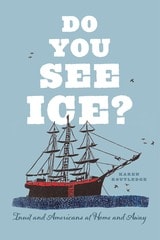
Do You See Ice?
Inuit and Americans at Home and AwayKaren Routledge
University of Chicago Press, 2018
Routledge vividly depicts the experiences of American whalers and explorers in Inuit homelands. Conversely, she relates stories of Inuit who traveled to the northeastern United States and were similarly challenged by the norms, practices, and weather they found there. Standing apart from earlier books of Arctic cultural research—which tend to focus on either Western expeditions or Inuit life—Do You See Ice? explores relationships between these two groups in a range of northern and temperate locations. Based on archival research and conversations with Inuit Elders and experts, Routledge’s book is grounded by ideas of home: how Inuit and Americans often experienced each other’s countries as dangerous and inhospitable, how they tried to feel at home in unfamiliar places, and why these feelings and experiences continue to resonate today.
The author intends to donate all royalties from this book to the Elders’ Room at the Angmarlik Center in Pangnirtung, Nunavut.
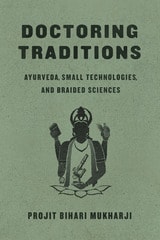
Doctoring Traditions
Ayurveda, Small Technologies, and Braided SciencesProjit Bihari Mukharji
University of Chicago Press, 2016
Rather, Mukharji reveals, what instigated those changes were a number of small technologies that were introduced in the period by Ayurvedic physicians, men who were simultaneously Victorian gentlemen and members of a particular Bengali caste. The introduction of these devices, including thermometers, watches, and microscopes, Mukharji shows, ultimately led to a dramatic reimagining of the body. By the 1930s, there emerged a new Ayurvedic body that was marked as distinct from a biomedical body. Despite the protestations of difference, this new Ayurvedic body was largely compatible with it. The more irreconcilable elements of the old Ayurvedic body were then rendered therapeutically indefensible and impossible to imagine in practice. The new Ayurvedic medicine was the product not of an embrace of Western approaches, but of a creative attempt to develop a viable alternative to the Western tradition by braiding together elements drawn from internally diverse traditions of the West and the East.
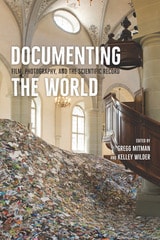
Documenting the World
Film, Photography, and the Scientific RecordEdited by Gregg Mitman and Kelley Wilder
University of Chicago Press, 2016
Documenting the World is about the material and social life of photographs and film made in the scientific quest to document the world. Drawing on scholars from the fields of art history, visual anthropology, and science and technology studies, the chapters in this book explore how this documentation—from the initial recording of images, to their acquisition and storage, to their circulation—has altered our lives, our ways of knowing, our social and economic relationships, and even our surroundings. Far beyond mere illustration, photography and film have become an integral, transformative part of the world they seek to show us.
Does Science Need a Global Language?
English and the Future of ResearchScott L. Montgomery
University of Chicago Press, 2013
In Does Science Need a Global Language?, Scott L. Montgomery seeks to answer this question by investigating the phenomenon of global English in science, how and why it came about, the forms in which it appears, what advantages and disadvantages it brings, and what its future might be. He also examines the consequences of a global tongue, considering especially emerging and developing nations, where research is still at a relatively early stage and English is not yet firmly established.
Throughout the book, he includes important insights from a broad range of perspectives in linguistics, history, education, geopolitics, and more. Each chapter includes striking and revealing anecdotes from the front-line experiences of today’s scientists, some of whom have struggled with the reality of global scientific English. He explores topics such as student mobility, publication trends, world Englishes, language endangerment, and second language learning, among many others. What he uncovers will challenge readers to rethink their assumptions about the direction of contemporary science, as well as its future.
Does the Earth Care?
Indifference, Providence, and Provisional EcologyMick Smith
University of Minnesota Press, 2022
Rethinking our relationship with Earth in a time of environmental emergency
The world is changing. Progress no longer has a future but any earlier sense of Earth as “providential” seems of merely historical interest. The apparent absence of Earthly solicitude is a symptom and consequence of these successive Western modes of engagement with the Earth, now exemplified in global capitalism. Within these constructs, Earth can only appear as constitutively indifferent to the fate of all its inhabitants. The “provisional ecology” outlined in Does the Earth Care?—drawing on a variety of literary and philosophical sources from Richard Jefferies and Robert Macfarlane to Martin Heidegger and Gaia theory—fundamentally challenges that assumption, while offering an Earthly alternative to either cold realism or alienated despair in the face of impending ecological disaster.
Forerunners is a thought-in-process series of breakthrough digital works. Written between fresh ideas and finished books, Forerunners draws on scholarly work initiated in notable blogs, social media, conference plenaries, journal articles, and the synergy of academic exchange. This is gray literature publishing: where intense thinking, change, and speculation take place in scholarship.
Dolly Mixtures
The Remaking of GenealogySarah Franklin
Duke University Press, 2007
Franklin combines wide-ranging sources—from historical accounts of sheep-breeding, to scientific representations of cloning by nuclear transfer, to popular media reports of Dolly's creation and birth—as she draws on gender and kinship theory as well as postcolonial and science studies. She argues that there is an urgent need for more nuanced responses to the complex intersections between the social and the biological, intersections which are literally reshaping reproduction and genealogy. In Dolly Mixtures, Franklin uses the renowned sheep as an opportunity to begin developing a critical language to identify and evaluate the reproductive possibilities that post-Dolly biology now faces, and to look back at some of the important historical formations that enabled and prefigured Dollys creation.
Dolphin Confidential
Confessions of a Field BiologistMaddalena Bearzi
University of Chicago Press, 2012
In this intimate narrative, Bearzi recounts her experiences at sea, tracing her own evolution as a woman and a scientist from her earliest travails to her transformation into an advocate for conservation and dolphin protection. These compelling, in-depth descriptions of her fieldwork also present a captivating look into dolphin social behavior and intelligence. The central part of the book is devoted to the metropolitan bottlenose dolphins of California, as Bearzi draws on her extensive experience to offer insights into the daily lives of these creatures—as well as the difficulties involved in collecting the data that transforms hunches into hypotheses and eventually scientific facts. The book closes by addressing the critical environmental and conservation problems facing these magnificent, socially complex, highly intelligent, and emotional beings.
An honest, down-to-earth analysis of what it means to be a marine biologist in the field today, Dolphin Confidential offers an entertaining, refreshingly candid, and always informative description of life among the dolphins.
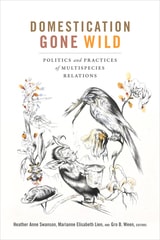
Domestication Gone Wild
Politics and Practices of Multispecies RelationsHeather Anne Swanson, Gro B. Ween, and Marianne E. Lien, editors
Duke University Press, 2018
Contributors. Inger Anneberg, Natasha Fijn, Rune Flikke, Frida Hastrup, Marianne Elisabeth Lien, Knut G. Nustad, Sara Asu Schroer, Heather Anne Swanson, Anna Lowenhaupt Tsing, Mette Vaarst, Gro B. Ween, Jon Henrik Ziegler Remme
Don't Look, Don't Touch, Don't Eat
The Science Behind RevulsionValerie Curtis
University of Chicago Press, 2013
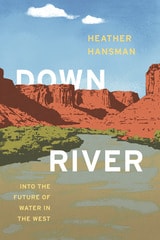
Downriver
Into the Future of Water in the WestHeather Hansman
University of Chicago Press, 2019
The Green River, the most significant tributary of the Colorado River, runs 730 miles from the glaciers of Wyoming to the desert canyons of Utah. Over its course, it meanders through ranches, cities, national parks, endangered fish habitats, and some of the most significant natural gas fields in the country, as it provides water for 33 million people. Stopped up by dams, slaked off by irrigation, and dried up by cities, the Green is crucial, overused, and at-risk, now more than ever.
Fights over the river’s water, and what’s going to happen to it in the future, are longstanding, intractable, and only getting worse as the West gets hotter and drier and more people depend on the river with each passing year. As a former raft guide and an environmental reporter, Heather Hansman knew these fights were happening, but she felt driven to see them from a different perspective—from the river itself. So she set out on a journey, in a one-person inflatable pack raft, to paddle the river from source to confluence and see what the experience might teach her. Mixing lyrical accounts of quiet paddling through breathtaking beauty with nights spent camping solo and lively discussions with farmers, city officials, and other people met along the way, Downriver is the story of that journey, a foray into the present—and future—of water in the West.
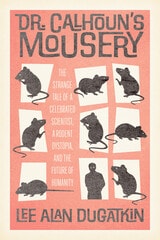
Dr. Calhoun's Mousery
The Strange Tale of a Celebrated Scientist, a Rodent Dystopia, and the Future of HumanityLee Alan Dugatkin
University of Chicago Press, 2024
A bizarre and compelling biography of a scientist and his work, using rodent cities to question the potential catastrophes of human overpopulation.
It was the strangest of experiments. What began as a utopian environment, where mice had sumptuous accommodations, had all the food and water they could want, and were free from disease and predators, turned into a mouse hell. Science writer and animal behaviorist Lee Alan Dugatkin introduces readers to the peculiar work of rodent researcher John Bumpass Calhoun. In this enthralling tale, Dugatkin shows how an ecologist-turned-psychologist-turned-futurist became a science rock star embedded in the culture of the 1960s and 1970s. As interest grew in his rodent cities, Calhoun was courted by city planners and his work was reflected in everything from Tom Wolfe’s hard-hitting writing to the children’s book Mrs. Frisby and the Rats of NIMH. He was invited to meetings with the Royal Society and the pope and taken seriously when he proposed a worldwide cybernetic brain—a decade before others made the internet a reality.
Readers see how Calhoun’s experiments—rodent apartment complexes like “Mouse Universe 25”—led to his concept of “behavioral sinks” with real effects on public policy discussions. Overpopulation in Calhoun’s mouse (and rat) complexes led to the loss of sex drive, the absence of maternal care, and a class of automatons that included “the beautiful ones,” who spent their time grooming themselves while shunning socialization. Calhoun—and those who followed his work—saw the collapse of this mouse population as a harbinger of the ill effects of an overpopulated human world.
Drawing on previously unpublished archival research and interviews with Calhoun’s family and former colleagues, Dugatkin offers a riveting account of an intriguing scientific figure. Considering Dr. Calhoun’s experiments, he explores the changing nature of scientific research and delves into what the study of animal behavior can teach us about ourselves.
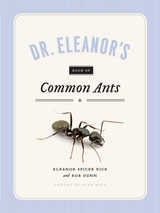
Dr. Eleanor's Book of Common Ants
Eleanor Spicer Rice, Alex Wild, and Rob Dunn
University of Chicago Press, 2017
No longer! In this witty, accessible, and beautifully illustrated guide, Eleanor Spicer Rice, Alex Wild, and Rob Dunn metamorphose creepy-crawly revulsion into myrmecological wonder. Emerging from Dunn’s ambitious citizen science project Your Wild Life (an initiative based at North Carolina State University), Dr. Eleanor’s Book of Common Ants provides an eye-opening entomological overview of the natural history of species most noted by project participants—and even offers tips on keeping ant farms in your home. Exploring species from the spreading red imported fire ant to the pavement ant, and featuring Wild’s stunning photography, this guide will be a tremendous resource for teachers, students, and scientists alike. But more than this, it will transform the way we perceive the environment around us by deepening our understanding of its littlest inhabitants, inspiring everyone to find their inner naturalist, get outside, and crawl across the dirt—magnifying glass in hand.
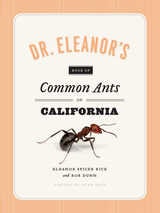
Dr. Eleanor's Book of Common Ants of California
Eleanor Spicer Rice, Alex Wild, and Rob Dunn
University of Chicago Press, 2017
No longer! In this witty, accessible, and beautifully illustrated guide, Eleanor Spicer Rice, Alex Wild, and Rob Dunn metamorphose creepy-crawly revulsion into myrmecological wonder. Emerging from Dunn’s ambitious citizen science project Your Wild Life (an initiative based at North Carolina State University) and the work of Brian Fisher with the California Academy of Sciences, Dr. Eleanor’s Book of Common Ants of California provides an eye-opening entomological overview of the natural history of California’s species most noted by project participants—and even offers tips on keeping ant farms in your home. Exploring species from the high noon and harvester ants to the honeypot and acrobat ants, and featuring Wild’s stunning photography, this guide will be a tremendous resource for teachers, students, and scientists alike. But more than this, it will transform the way Californians perceive the environment around them by deepening their understanding of its littlest inhabitants, inspiring everyone to find their inner naturalist, get outside, and crawl across the dirt—magnifying glass in hand.
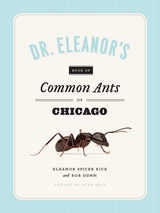
Dr. Eleanor's Book of Common Ants of Chicago
Eleanor Spicer Rice, Alex Wild, and Rob Dunn
University of Chicago Press, 2017
No longer! In this witty, accessible, and beautifully illustrated guide, Eleanor Spicer Rice, Alex Wild, and Rob Dunn metamorphose creepy-crawly revulsion into myrmecological wonder. Emerging from Dunn’s ambitious citizen science project Your Wild Life (an initiative based at North Carolina State University), Dr. Eleanor’s Book of Common Ants of Chicago provides an eye-opening entomological overview of the natural history of Chicago’s species most noted by project participants—and even offers tips on keeping ant farms in your home. Exploring species from the hobbit ant to the tiny trapjaw ant, and featuring contributions from E. O. Wilson and Field Museum ant scientist Corrie Moreau as well as Wild’s stunning photography, this guide will be a tremendous resource for teachers, students, and scientists alike. But more than this, it will transform the way Chicagoans perceive the environment around them by deepening their understanding of its littlest inhabitants, inspiring everyone to find their inner naturalist, get outside, and crawl across the dirt—magnifying glass in hand.
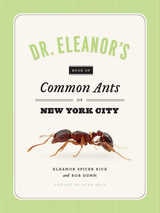
Dr. Eleanor's Book of Common Ants of New York City
Eleanor Spicer Rice, Alex Wild, and Rob Dunn
University of Chicago Press, 2017
No longer! In this witty, accessible, and beautifully illustrated guide, Eleanor Spicer Rice, Alex Wild, and Rob Dunn metamorphose creepy-crawly revulsion into myrmecological wonder. Emerging from Dunn’s ambitious citizen science project Your Wild Life (an initiative based at North Carolina State University), Dr. Eleanor’s Book of Common Ants of New York City provides an eye-opening entomological overview of the natural history of New York’s species most noted by project participants—and even offers insight into the ant denizens of the city’s subways and Central Park. Exploring species from the honeyrump ant to the Japanese crazy ant, and featuring Wild’s stunning photography as well as tips on keeping ant farms in your home, this guide will be a tremendous resource for teachers, students, and scientists alike. But more than this, it will transform the way New Yorkers perceive the environment around them by deepening their understanding of its littlest inhabitants, inspiring everyone to find their inner naturalist, get outside, and crawl across the dirt—magnifying glass in hand.
Dr. Eleanor's Book of Common Spiders
Christopher M. Buddle and Eleanor Spicer Rice
University of Chicago Press, 2018
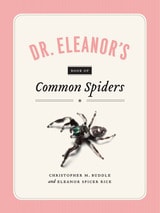
No longer! In this witty, accessible, and beautifully illustrated guide, Christopher M. Buddle and Eleanor Spicer Rice metamorphose creepy-crawly revulsion into spider wonder. Emerging from ambitious citizen science project Your Wild Life (an initiative based at North Carolina State University), Dr. Eleanor's Book of Common Spiders provides an eye-opening arachnological overview of the natural history of species most noted by project participants, showcasing some of the fascinating spiders found in our attics and tents, front lawns and forests—and even introducing us to spiders that fish. Exploring species from the tiny (but gymnastic) zebra jumping spider to the naturally shy and woefully misunderstood black widow, this guide will be a tremendous resource for teachers, students, and scientists alike. But more than this, it will transform the way we perceive the environment around us by deepening our understanding of its littlest inhabitants, inspiring all of us to find our inner naturalist, get outside, and crawl across the dirt—magnifying glass in hand.
Dr. Golem
How to Think about MedicineHarry Collins and Trevor Pinch
University of Chicago Press, 2005
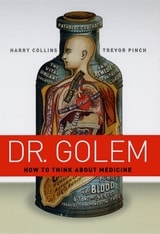
Dr. Golem explores some of the mysteries and complexities of medicine while untangling the inherent conundrums of scientific research and highlighting its vagaries. Driven by the question of what to do in the face of the fallibility of medicine, Dr. Golem encourages a more inquisitive attitude toward the explanations and accounts offered by medical science. In eight chapters devoted to case studies of modern medicine, Collins and Pinch consider the prevalence of tonsillectomies, the placebo effect and randomized control trials, bogus doctors, CPR, the efficacy of Vitamin C in fighting cancer, chronic fatigue syndrome, AIDS cures, and vaccination. They also examine the tension between the conflicting faces of medicine: medicine as science versus medicine as a source of succor; the interests of an individual versus the interests of a group; and the benefits in the short term versus success rates in the long term. Throughout, Collins and Pinch remind readers that medical science is an economic as well as a social consideration, encapsulated for the authors in the timeless struggle to balance the good health of the many—with vaccinations, for instance—with the good health of a few—those who have adverse reactions to the vaccine.
In an age when the deaths of research subjects, the early termination of clinical trials, and the research guidelines for stem cells are front-page news, Dr. Golem is a timely analysis of the limitations of medicine that never loses sight of its strengths.