Results by title
22279 books match the query 'Social Science' and 859 start with d

Dancing with the Devil
Society and Cultural Poetics in Mexican-American South TexasJose Limon
University of Wisconsin Press, 1994
Combining shrewd applications of current cultural theory with compelling autobiography and elegant prose, José E. Limón works at the intersection of anthropology, folklore, popular culture, history, and literary criticism. A native of South Texas, he renders a historical and ethnographic account of its rich Mexican-American folk culture. This folk culture, he shows—whether expressed through male joking rituals, ballroom polka dances, folk healing, or eating and drinking traditions—metaphorically dances with the devil, both resisting and accommodating the dominant culture of Texas.
Critiquing the work of his precursors— John Gregory Bourke, J. Frank Dobie, Jovita Gonzalez, and Americo Paredes—Limón deftly demonstrates that their accounts of Mexican-Americans in South Texas contain race, class, and gender contradictions, revealed most clearly in their accounts of the folkloric figure of the devil. Limón's own field-based ethnography follows, and again the devil appears as a recurrent motif, signaling the ideological contradictions of folk practices in a South Texas on the verge of postmodernity.
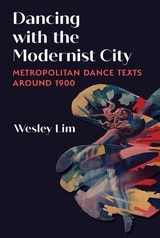
Dancing with the Modernist City
Metropolitan Dance Texts around 1900Wesley Lim
University of Michigan Press, 2024
Drawing on cultural, literary, dance, performance, and queer studies, Dancing with the Modernist City analyzes an array of material from 1896 to 1914—essays, novels, short stories, poetry, newspaper articles, photographs, posters, drawings, and early film. It argues that these writers and artists created a genre called the metropolitan dance text, which depicts dancing figures not on a traditional stage, but with the streets, advertising pillars, theaters, cafes, squares, and even hospitals of an urban setting. Breaking away from the historically male, heteronormative view, this posthumanist mode of writing highlights the visual and episodic unexpectedness of urban encounters. These literary depictions question traditional conceptualizations of space and performance by making the protagonist and the reader feel like they embody the dancer and the movement. In doing so, they upset the conventional depictions of performance and urban spaces in ways paralleling modern dance.

Danes and Icelanders in Michigan
Howard L. Nicholson
Michigan State University Press, 2013
Immigration of Danes and Icelanders to Michigan began in the 1850s and continued well into the twentieth century. Beginning with their origins, this book takes a detailed look at their arrival and settlement in Michigan, answering some key questions: What brought Danes and Icelanders to Michigan? What challenges did they face? How did they adjust and survive here? Where did they settle? What kind of lasting impact have they had on Michigan’s economic and cultural landscape? Extensively researched, this book examines the public and private lives of Danish and Icelandic immigrants in Michigan, drawing from both individual and institutional histories. Shedding new light on the livelihood, traditions, religion, social life, civic organizations, and mutual benefit societies, this thorough, insightful book highlights a small but important population within Michigan’s borders.
Danger Cave
Anthropological Papers Number 27Jesse D Jennings
University of Utah Press, 1999

Dangerous Dames
Women and Representation in Film Noir and the Weimar Street FilmJans B. Wager
Ohio University Press, 1999
Both film noir and the Weimar street film hold a continuing fascination for film spectators and film theorists alike. The female characters, especially the alluring femmes fatales, remain a focus for critical and popular attention. In the tradition of such attention, Dangerous Dames focuses on the femme fatale and her antithesis, the femme attrapée.
Unlike most theorists, Jans Wager examines these archetypes from the perspective of the female spectator and rejects the persistence of vision that allows a reading of these female characters only as representations of unstable postwar masculinity. Professor Wager suggests that the woman in the audience has always seen and understood these characters as representations of a complex aspect of her existence.
Dangerous Dames looks at the Weimar street films The Street, Variety, Asphalt, and M and the film noir movies The Maltese Falcon, Gun Crazy, and The Big Heat. This book opens the doors to spectators and theorists alike, suggesting cinematic pleasures outside the bounds of accepted readings and beyond the narrow categorization of film noir and the Weimar street film as masculine forms.

Dangerous Donations
Northern Philanthropy and Southern Black Education, 1902-1930Eric Anderson & Alfred A. Moss, Jr.
University of Missouri Press, 1999
Eric Anderson and Alfred A. Moss, Jr., offer a new examination of the impact of northern philanthropy on southern black education, giving special attention to the "Ogden movement," the General Education Board, the Rosenwald Fund, and the Episcopal American Church Institute for Negroes. Anderson and Moss present significant reinterpretations of key figures in African American education, including Booker T. Washington, William H. Baldwin, Jr., George Foster Peabody, and Thomas Jesse Jones.
Dangerous Donations explores both the great influence of the philanthropic foundations and the important limitations on their power. White racial radicals were suspicious that the northern agencies sought to undermine the southern system of race relations, "training negroes in the vain hope of social equality with whites." This criticism forced the philanthropists and their agents to move cautiously, seeking white southern cooperation whenever possible. Despite repeated compromises, northern philanthropists maintained a vision of race relations and black potential significantly different from that held by the South’s white majority.
Blacks challenged the foundations, expressing their own educational agendas in a variety of ways, including demands for black teachers, resistance to any distinctive racial curricula, and, in some cases, support for independent black schools. The millions of dollars in self-help philanthropy contributed by African Americans also indicated their refusal to give complete control of their schools to either the white South or distant philanthropists in the North.
No other scholars, according to Louis R. Harlan, "have examined the controversial role of philanthropy with the same coolness, analytical skill, and persistent search for the truth as Eric Anderson and Alfred Moss... [they] have made an outstanding contribution to the history of education for both races in the segregated South of 1900 to 1930."

Dangerous Earth
What We Wish We Knew about Volcanoes, Hurricanes, Climate Change, Earthquakes, and MoreEllen Prager
University of Chicago Press, 2020
Today, we know more than ever before about the powerful forces that can cause catastrophe, but significant questions remain. Why can’t we better predict some natural disasters? What do scientists know about them already? What do they wish they knew? In Dangerous Earth, marine scientist and science communicator Ellen Prager explores the science of investigating volcanoes, earthquakes, tsunamis, hurricanes, landslides, rip currents, and—maybe the most perilous hazard of all—climate change. Each chapter considers a specific hazard, begins with a game-changing historical event (like the 1980 eruption of Mt. St. Helens or the landfall and impacts of Hurricane Harvey), and highlights what remains unknown about these dynamic phenomena. Along the way, we hear from scientists trying to read Earth’s warning signs, pass its messages along to the rest of us, and prevent catastrophic loss.
A sweeping tour of some of the most awesome forces on our planet—many tragic, yet nonetheless awe-inspiring—Dangerous Earth is an illuminating journey through the undiscovered, unresolved, and in some cases unimagined mysteries that continue to frustrate and fascinate the world’s leading scientists: the “wish-we-knews” that ignite both our curiosity and global change.

Dangerous Exits
Escaping Abusive Relationships in Rural AmericaDeKeseredy, Walter
Rutgers University Press, 2009
Strikingly, scant attention has focused on the victimization of women who want to leave their hostile partners. This groundbreaking work challenges the perception that rural communities are safe havens from the brutality of urban living. Identifying hidden crimes of economic blackmail and psychological mistreatment, and the complex relationship between patriarchy and abuse, Walter S. DeKeseredy and Martin D. Schwartz propose concrete and effective solutions, giving voice to women who have often suffered in silence.
Dangerous Frames
How Ideas about Race and Gender Shape Public OpinionNicholas J. G. Winter
University of Chicago Press, 2008

Dangerous Fun
The Social Lives of Big Wave SurfersUgo Corte
University of Chicago Press, 2022
Straight from the beaches of Hawaii comes an exciting new ethnography of a community of big-wave surfers. Oahu’s Waimea Bay attracts the world’s best big wave surfers—men and women who come to test their physical strength, courage, style, knowledge of the water, and love of the ocean. Sociologist Ugo Corte sees their fun as the outcome of social interaction within a community. Both as participant and observer, he examines how mentors, novices, and peers interact to create episodes of collective fun in a dangerous setting; how they push one another’s limits, nourish a lifestyle, advance the sport and, in some cases, make a living based on their passion for the sport.
In Dangerous Fun, Corte traces how surfers earn and maintain a reputation within the field, and how, as innovations are introduced, and as they progress, establish themselves and age, they modify their strategies for maximizing performance and limiting chances of failure.
Corte argues that fun is a social phenomenon, a pathway to solidarity rooted in the delight in actualizing the self within a social world. It is a form of group cohesion achieved through shared participation in risky interactions with uncertain outcomes. Ultimately, Corte provides an understanding of collective effervescence, emotional energy, and the interaction rituals leading to fateful moments—moments of decision that, once made, transform one’s self-concept irrevocably.

Dangerous Gifts
Gender and Exchange in Ancient GreeceBy Deborah Lyons
University of Texas Press, 2012
Deianeira sends her husband Herakles a poisoned robe. Eriphyle trades the life of her husband Amphiaraos for a golden necklace. Atreus’s wife Aerope gives away the token of his sovereignty, a lamb with a golden fleece, to his brother Thyestes, who has seduced her. Gifts and exchanges always involve a certain risk in any culture, but in the ancient Greek imagination, women and gifts appear to be a particularly deadly combination.
This book explores the role of gender in exchange as represented in ancient Greek culture, including Homeric epic and tragedy, non-literary texts, and iconographic and historical evidence of various kinds. Using extensive insights from anthropological work on marriage, kinship, and exchange, as well as ethnographic parallels from other traditional societies, Deborah Lyons probes the gendered division of labor among both gods and mortals, the role of marriage (and its failure) in transforming women from objects to agents of exchange, the equivocal nature of women as exchange-partners, and the importance of the sister-brother bond in understanding the economic and social place of women in ancient Greece. Her findings not only enlarge our understanding of social attitudes and practices in Greek antiquity but also demonstrate the applicability of ethnographic techniques and anthropological theory to the study of ancient societies.

Dangerous Intimacies
Toward a Sapphic History of the British NovelLisa L. Moore
Duke University Press, 1997
Moore demonstrates that intimacy between women was vividly imagined in the British eighteenth century as not only chaste and virtuous, but also insistently and inevitably sexual. She looks at instances of sapphism in such novels as Millenium Hall, Memoirs of a Woman of Pleasure, Belinda, and Emma and analyzes how the new literary form of the novel made the bourgeois heroine’s successful negotiation of female friendship central to the establishment of her virtue. Moore also examines representations of sapphism through the sweeping economic and political changes of the period and claims that middle-class readers’ identifications with the heroine’s virtue helped the novel’s bourgeois audience justify the violent bases of their new prosperity, including slavery, colonialism, and bloody national rivalry.
In revealing the struggle over sapphism at the heart of these novels of female friendship—and at the heart of England’s national identity—Moore shows how feminine sexual agency emerged as an important cultural force in post-Enlightenment England

Dangerous Knowledge
Art Simon
Temple University Press, 1996
Dangerous Liaisons
Gender, Nation, and Postcolonial PerspectivesAnne Mcclintock
University of Minnesota Press, 1997
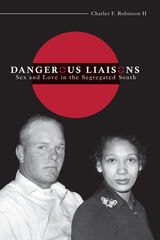
Dangerous Liaisons
Sex and Love in the Segregated SouthCharles F. Robinson II
University of Arkansas Press, 2003
In the tumultuous decades after the Civil War, as the southern white elite reclaimed power, “racial mixing” was the central concern of segregationists who strove to maintain “racial purity.” Segregation—and race itself—was based on the idea that interracial sex posed a biological threat to the white race. In this groundbreaking study, Charles Robinson examines how white southerners enforced anti-miscegenation laws. His findings challenge conventional wisdom, documenting a pattern of selective prosecution under which interracial domestic relationships were punished even more harshly than transient sexual encounters. Robinson shows that the real crime was to suggest that black and white individuals might be equals, a notion which undermined the legitimacy of the economic, political, and social structure of white male supremacy.
Robinson examines legal cases from across the South, considering both criminal prosecutions brought by states and civil disputes over marital and family assets. He also looks at U.S. Supreme Court decisions, debates in state legislatures, comments in the U.S. Congressional Record, and newspaper editorials. He not only shows the hardening of racial categories but assesses the attitudes of African Americans about anti-miscegenation laws and intermarriage. The epilogue concerns “The Demise of Anti-miscegenation Law” including the case of Richard and Mildred Loving.
Dangerous Liaisons vividly documents the regulation of intimacy and its fundamental role in the construction of race.

Dangerous Masculinity
Fatherhood, Race, and Security Inside America's PrisonsAnna Curtis
Rutgers University Press, 2019

Dangerous Migration
Mexican Labor and the Fight for Immigrant RightsEladio B. Bobadilla
University of Illinois Press, 2026
Beginning with Mexican American opposition to the Bracero Program, Eladio Bobadilla traces the movement’s fault lines that formed around the issue of undocumented workers. Bobadilla reveals how internationalist and human rights discourse influenced the rise of the Chicano movement and its defense of Mexican undocumented immigrants. As time passed, anti-Mexican social, political, and legislative forces produced a nativist backlash that put immigration at the center of the United States’ culture wars and created the fantasy of undocumented workers as an existential threat.
Engaging and vivid, Dangerous Migration illuminates the history of debates over Mexican labor, the emergence of the immigrant rights activism, and the nativist movements that united Latinos with right-wing white Americans.
Dangerous Occupations
Archaeologies of Structural Violence, Immigrants, and Resilience in Early CaliforniaMarco G. Meniketti
University of Alabama Press, 2026
Addresses structural violence through history and archaeology of immigrant workers
Dangerous Occupations: Archaeologies of Structural Violence, Immigrants, and Resilience in Early California is an impactful work of historical archaeology combined with social history that addresses structural violence in key California industries from the Gold Rush in 1849 until 1920. Monopolistic industries, such as railroading, mining, timbering, explosive manufacturing, lime production, meatpacking, textile milling, and fishing/whaling, relied on immigrant laborers who were recruited and perceived as expendable. Restrictive laws and lack of employment opportunities based on bigotry often forced immigrants into the most dangerous occupations. In the days before workmen’s compensation insurance and strict labor safety laws, laborers often risked their health and even their lives for employment.
Marco G. Meniketti’s analysis comes from examining excavation of labor camps and housing, landscape studies, bioarchaeological data, architectural footprints, and archival sources. Each chapter offers a case study of industries to exemplify structural violence and its broader consequences among various immigrant labor groups, such as Chinese, Scandinavian, Irish, Italian, Chilean, Cornish, and Portuguese. The narrative includes a historical overview of the industries, identifies who the immigrant laborers were and how they came to be there, examines the dangers and health risks of their jobs, and details their living conditions and daily life, including foodways, leisure, and efforts to treat their job-inflicted maladies. Dangerous Occupations introduces a new generation of readers to how immigrants built the West Coast and at what great cost.
Dangerous Subjects
James D. Saules and the Rise of Black Exclusion in OregonKenneth R. Coleman
Oregon State University Press, 2017
In Oregon, Saules encountered a multiethnic population already transformed by colonialism—in particular, the fur industry and Protestant missionaries. Once the Oregon Trail emigrants began arriving in large numbers, in 1843, Saules had to adapt to a new reality in which Anglo-American settlers persistently sought to marginalize and exclude black residents from the region. Unlike Saules, who adapted and thrived in Oregon’s multiethnic milieu, the settler colonists sought to remake Oregon as a white man’s country. They used race as shorthand to determine which previous inhabitants would be included and which would be excluded. Saules inspired and later had to contend with a web of black exclusion laws designed to deny black people citizenship, mobility, and land.
In Dangerous Subjects, Kenneth Coleman sheds light on a neglected chapter in Oregon’s history. His book will be welcomed by scholars in the fields of western history and ethnic studies, as well as general readers interested in early Oregon and its history of racial exclusion.

Dante in Deutschland
An Itinerary of Romantic MythDaniel DiMassa
Bucknell University Press, 2022
Danzón Days
Age, Race, and Romance in MexicoHettie Malcomson
University of Illinois Press, 2023
Winner of the 2024 BFE Book Prize (British Forum for Ethnomusicology)
Older people negotiating dance routines, intimacy, and racialized differences provide a focal point for an ethnography of danzón in Veracruz, the Mexican city closely associated with the music-dance genre. Hettie Malcomson draws upon on-site research with semi-professional musicians and amateur dancers to reveal how danzón connects, and does not connect, to blackness, joyousness, nostalgia, ageing, and romance. Challenging pervasive utopian views of danzón, Malcomson uses the idea of ambivalence to explore the frictions and opportunities created by seemingly contrary sentiments, ideas, sensations, and impulses. Interspersed with experimental ethnographic vignettes, her account takes readers into black and mestizo elements of local identity in Veracruz, nostalgic and newer styles of music and dance, and the friendships, romances, and rivalries at the heart of regular danzón performance and its complex social world.
Fine-grained and evocative, Danzón Days journeys to one of the genre’s essential cities to provide new perspectives on aging and romance and new explorations of nostalgia and ambivalence.
Dardanelle and the Bottoms
Environment, Agriculture, and Economy in an Arkansas River Community, 1819-1970Mildred D. Gleason
University of Arkansas Press, 2017
A reciprocal relationship between the town and the Bottoms formed the economic backbone on which the area’s well-being was balanced. The country people came to town on Saturdays to buy their groceries and supplies, to shop and take in a movie or visit the pool halls or barbershops. Merchants relied heavily on this country trade and had a long history of extending credit, keeping prices reasonable, and offering respect and appreciation to their customers.
This interdependence, stable for decades, began to unravel in the late 1940s with changes in farming, particularly the cotton industry. In Dardanelle and the Bottoms, Mildred Diane Gleason explores this complex rural/town dichotomy, revealing and analyzing key components of each area, including aspects of race, education, the cotton economy and its demise, the devastation of floods and droughts, leisure, crime, and the impact of the Great Depression.

Darfur Allegory
Rogaia Mustafa Abusharaf
University of Chicago Press, 2021
Elaborated in colonial times and enshrined in policy afterwards, such binary categories have been adopted by the media to explain the civil war in Darfur. The narratives that circulate internationally are thus highly fraught and cover over—to counterproductive effect—forms of Darfurian activism that have emerged in the conflict’s wake. Darfur Allegory marries the analytical precision of a committed anthropologist with an insider’s view of Sudanese politics at home and in the diaspora, laying bare the power of words to heal or perpetuate civil conflict.
Darger's Resources
Michael Moon
Duke University Press, 2012

Daring To Be Bad
Radical Feminism in America 1967-1975Alice Echols
University of Minnesota Press, 1989

Daring to Care
American Nursing and Second-Wave FeminismSusan Gelfand Malka
University of Illinois Press, 2007
Dark Continent Of Our Bodies
Black Feminism & Politics Of RespectabilityE. Frances White
Temple University Press, 2001
White's powerful introduction draws on oral narratives from her own family history to illuminate the nature of narrative, both what is said and what is left unsaid. She then sets the historical stage with a helpful history of the inception and development of black feminism and a critique of major black feminist writings. In the three chapters that follow, she addresses the obstacles black feminism has already surmounted and must continue to traverse. Confronting what White calls "the politics of respectability," these chapters move the reader from simplistic views of race and gender in the nineteenth century through black nationalism and the radical movements of the sixties, and their relationship to feminist thought, to the linkages between race, gender, and sexuality in the works of such giants as Toni Morrison and James Baldwin. No one who finishes Dark Continent of Our Bodies will look at race and gender in the same way again.

Dark Continents
Psychoanalysis and ColonialismRanjana Khanna
Duke University Press, 2003
bringing psychoanalysis, colonialism, and women together can become the starting point of a postcolonial feminist theory. Psychoanalysis brings to light, Khanna argues, how nation-statehood for the former colonies of Europe institutes the violence of European imperialist history. Far from rejecting psychoanalysis, Dark Continents reveals its importance as a reading practice that makes visible the psychical strife of colonial and
postcolonial modernity. Assessing the merits of various models of nationalism, psychoanalysis, and colonialism, it refashions colonial melancholy as a transnational feminist ethics.
Khanna traces the colonial backgrounds of psychoanalysis from its beginnings in the late nineteenth century up to the present. Illuminating Freud’s debt to the languages of archaeology and anthropology throughout his career, Khanna describes how Freud altered his theories of the ego as his own political status shifted from Habsburg loyalist to Nazi victim. Dark Continents explores how psychoanalytic theory was taken up in Europe and its colonies in the period of decolonization following World War II, focusing on its use by a range of writers including Jean-Paul Sartre, Simone de Beauvoir, Octave Mannoni, Aimé and Suzanne Césaire, René Ménil, Frantz Fanon, Albert Memmi, Wulf Sachs, and Ellen Hellman. Given the multiple gendered and colonial contexts of many of these writings, Khanna argues for the necessity of a postcolonial, feminist critique of
decolonization and postcoloniality.
Dark Designs and Visual Culture
Michele Wallace
Duke University Press, 2004
Beginning with a new introduction in which Wallace reflects on her life and career, this volume includes other autobiographical essays; articles focused on popular culture, the arts, and literary theory; and explorations of issues in black visual culture. Wallace discusses growing up in Harlem; how she dealt with the media attention and criticism she received for Black Macho and the Myth of the Superwoman, which was published when she was just twenty-seven years old; and her relationship with her family, especially her mother, the well-known artist Faith Ringgold. The many articles devoted to black visual culture range from the historical tragedy of the Hottentot Venus, an African woman displayed as a curiosity in nineteenth-century Europe, to films that sexualize the black body—such as Watermelon Woman, Gone with the Wind, and Paris Is Burning. Whether writing about the Anita Hill–Clarence Thomas hearings, rap music, the Million Man March, Toshi Reagon, multiculturalism, Marlon Riggs, or a nativity play in Bedford Stuyvesant, Wallace is a bold, incisive critic. Dark Designs and Visual Culture brings the scope of her career and thought into sharp focus.
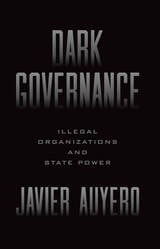
Dark Governance
Illegal Organizations and State PowerJavier Auyero
University of Chicago Press, 2027
A revelatory account of the ways covert, nefarious relationships between state officials and criminal groups shape daily life for all.
Far too often, the line between legal and illegal action is crossed by actors and organizations on both sides of the law. From the old Chicago Machine getting rich off criminal activity to Mexican drug cartels placing politicians in office, these relationships between criminals and the government coordinate forms of power in ways that affect where people live, what opportunities they can pursue, how they spend money, and how they treat one another. In Dark Governance, sociologist Javier Auyero describes how this kind of governance works and what it means for civic life.
Auyero analyzes instances of dark governance, including gangs in Ecuador and paramilitaries in Colombia who exert territorial control through violent specialists and government actors. He then turns to the less-studied case of the “colectivos” in Venezuela to show the scope of political work clandestine connections can achieve by thwarting grassroots organizations. In El Salvador and Honduras, the ties between gang members on the one hand, and politicians and elected officials on the other, serve to illustrate the impact dark governance has on urban spatial arrangements and on electoral campaigns. Dark Governance also offers an in-depth study of police-trafficker collusion in Argentina, which allows Auyero to identify the ways covert connections between state actors and drug traffickers operate in marginalized communities, affecting interpersonal violence. In addition to these examples in Latin America, Auyero also shares case studies in the United States and China. Dark governance can be seen in US organizations that patrol the borders and assert their control over migrants through their illicit connections with state authorities. In China, land expropriation and development projects are sometimes delayed when some households refuse to leave their properties. Enter the thugs-for-hire frequently contracted by local governments across the country to coerce residents into complying with government orders.
Demonstrating the very real effects of dark governance, Auyero argues that though the organizations involved in these dark arrangements differ, their collaboration results in a singular effect: the ability to control populations. But when these relationships come out of the shadows, collective action can bring them down.
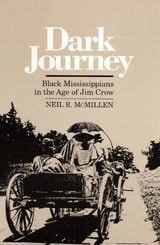
Dark Journey
Black Mississippians in the Age of Jim CrowNeil R. McMillen
University of Illinois Press, 1989
"Dark Journey is a superb piece of scholarship, a book that all students of southern and African-American history will find valuable and informative."--David J. Garrow, Georgia Historical Quarterly

Dark Laughter
Spanish Film, Comedy, and the NationJuan F. Egea
University of Wisconsin Press, 2013
Egea begins his analysis with General Franco's dictatorship in the 1960s—a regime that opened the country to new economic forces while maintaining its repressive nature—exploring key works by Luis García Berlanga, Marco Ferreri, Fernando Fernán-Gómez, and Luis Buñuel. Dark Laughter then moves to the first films of Pedro Almodóvar in the early 1980s during the Spanish political transition to democracy before examining Alex de la Iglesia and the new dark comedies of the 1990s. Analyzing this younger generation of filmmakers, Egea traces dark comedy to Spain's displays of ultramodernity such as the Universal Exposition in Seville and the Barcelona Olympic Games.
At its core, Dark Laughter is a substantial inquiry into the epistemology of comedy, the intricacies of visual modernity, and the relationship between cinema and a wider framework of representational practices.
Dark Matter of the Mind
The Culturally Articulated UnconsciousDaniel L. Everett
University of Chicago Press, 2016
Everett sketches a blank-slate picture of human cognition that focuses not on what is in the mind but, rather, what the mind is in—namely, culture. He draws on years of field research among the Amazonian people of the Pirahã in order to carefully scrutinize various theories of cognitive instinct, including Noam Chomsky’s foundational concept of universal grammar, Freud’s notions of unconscious forces, Adolf Bastian’s psychic unity of mankind, and works on massive modularity by evolutionary psychologists such as Leda Cosmides, John Tooby, Jerry Fodor, and Steven Pinker. Illuminating unique characteristics of the Pirahã language, he demonstrates just how differently various cultures can make us think and how vital culture is to our cognitive flexibility. Outlining the ways culture and individual psychology operate symbiotically, he posits a Buddhist-like conception of the cultural self as a set of experiences united by various apperceptions, episodic memories, ranked values, knowledge structures, and social roles—and not, in any shape or form, biological instinct.
The result is fascinating portrait of the “dark matter of the mind,” one that shows that our greatest evolutionary adaptation is adaptability itself.
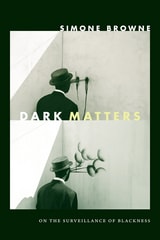
Dark Matters
On the Surveillance of BlacknessSimone Browne
Duke University Press, 2015

Dark Shamans
Kanaimà and the Poetics of Violent DeathNeil L. Whitehead
Duke University Press, 2002
Neil L. Whitehead tells of his own involvement with kanaimà—including an attempt to kill him with poison—and relates the personal testimonies of kanaimà shamans, their potential victims, and the victims’ families. He then goes on to discuss the historical emergence of kanaimà, describing how, in the face of successive modern colonizing forces—missionaries, rubber gatherers, miners, and development agencies—the practice has become an assertion of native autonomy. His analysis explores the ways in which kanaimà mediates both national and international impacts on native peoples in the region and considers the significance of kanaimà for current accounts of shamanism and religious belief and for theories of war and violence.
Kanaimà appears here as part of the wider lexicon of rebellious terror and exotic horror—alongside the cannibal, vampire, and zombie—that haunts the western imagination. Dark Shamans broadens discussions of violence and of the representation of primitive savagery by recasting both in the light of current debates on modernity and globalization.
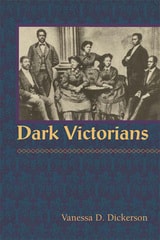
Dark Victorians
Vanessa D. Dickerson
University of Illinois Press, 2007

Dark Voyage
An American Privateer's War on Britain's African Slave TradeChristian M. McBurney
Westholme Publishing, 2026
One privateer was given an extraordinary task: to sail across the Atlantic to attack British slave trading posts and ships on the coast of West Africa. Based on a little-known contemporary primary source, The Journal of the Good Ship Marlborough, the story of this remarkable voyage is told here for the first time and will have a major impact on our understanding of the Atlantic slave trade and the American Revolution. The voyage of the Marlborough was the brainchild of John Brown, a prominent Rhode Island merchant—and an investor in two slave trading voyages himself. The motivation was not altruistic. The officers and crew of the Marlborough wanted to advance the cause of independence from Britain through harming Britain’s economy, but they also desired to enrich themselves by selling the plunder they captured—including enslaved Africans.
The work of the Marlborough and other American privateers was so disruptive that it led to an unintended consequence: virtually halting the British slave trade. British slave merchants, alarmed at losing money from their ships being captured, invested in many fewer slave voyages. As a result tens of thousands of Africans were not forced onto slave ships, transported to the New World, and consigned to a lifetime of slavery or an early death.
In Dark Voyage: An American Privateer’s War on Britain’s African Slave Trade, veteran researcher and writer Christian McBurney recreates the harrowing voyage of the Marlborough, while placing it in the context of Atlantic World slavery. In Africa, Marlborough’s officers come across an array of African and European slave traders willing to assist them in attacking the British. This book is also the first study to detail the many captures American privateers made of British slave ships during the Revolutionary War.
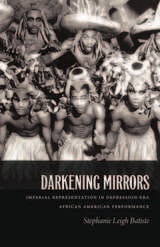
Darkening Mirrors
Imperial Representation in Depression-Era African American PerformanceStephanie Leigh Batiste
Duke University Press, 2012

Darktown Strutters
A NovelWesley Brown
University of Massachusetts Press, 2000
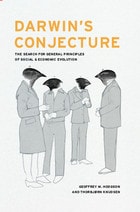
Darwin's Conjecture
The Search for General Principles of Social and Economic EvolutionGeoffrey M. Hodgson and Thorbjørn Knudsen
University of Chicago Press, 2010
Of paramount importance to the natural sciences, the principles of Darwinism, which involve variation, inheritance, and selection, are increasingly of interest to social scientists as well. But no one has provided a truly rigorous account of how the principles apply to the evolution of human society—until now.
In Darwin’s Conjecture, Geoffrey Hodgson and Thorbjørn Knudsen reveal how the British naturalist’s core concepts apply to a wide range of phenomena, including business practices, legal systems, technology, and even science itself. They also critique some prominent objections to applying Darwin to social science, arguing that ultimately Darwinism functions as a general theoretical framework for stimulating further inquiry. Social scientists who adopt a Darwinian approach, they contend, can then use it to frame and help develop new explanatory theories and predictive models.
This truly pathbreaking workat long last makes the powerful conceptual tools of Darwin available to the social sciences and will be welcomed by scholars and students from a range of disciplines.

Darwin's Footprint
Cultural Perspectives on Evolution in Greece (1880–1930s)Maria Zarimis
Central European University Press, 2015
Darwin’s Footprint examines the impact of Darwinism in Greece, investigating how it has shaped Greece in terms of its cultural and intellectual history, and in particular its literature.
The book demonstrates that in the late 19th to early 20th centuries Darwinism and associated science strongly influenced celebrated Greek literary writers and other influential intellectuals, which fueled debate in various areas such as ‘man’s place in nature’, eugenics, the nature-nurture controversy, religion, as well as class, race and gender.
In addition, the study reveals that many of these individuals were also considering alternative approaches to these issues based on Darwinian and associated biological post-Darwinian ideas. Their concerns included the Greek “race” or nation, its culture, language and identity; also politics and gender equality.
Zarimis’s monograph devotes considerable space to Xenopoulos (1867-1951), notable novelist, journalist and playwright.
Das Arkansas Echo
A Year in the Life of Germans in the Nineteenth-Century SouthKathleen Condray
University of Arkansas Press, 2020
“Das Arkansas Echo”: A Year in the Life of Germans in the Nineteenth-Century South examines topics the newspaper covered during its inaugural year. Kathleen Condray illuminates the newspaper’s crusade against Prohibition, its advocacy for the protection of German schools and the German language, and its promotion of immigration. We also learn about aspects of daily living, including food preparation and preservation, religion, recreation, the role of women in the family and society, health and wellness, and practical housekeeping. And we see how the paper assisted German speakers in navigating civic life outside their immigrant community, including the racial tensions of the post-Reconstruction South.
“Das Arkansas Echo”: A Year in the Life of Germans in the Nineteenth-Century South offers a fresh perspective on the German speakers who settled in a modernizing Arkansas. Mining a valuable newspaper archive, Condray sheds light on how these immigrants navigated their new identity as southern Americans.
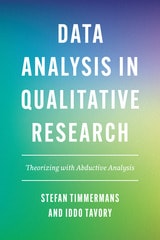
Data Analysis in Qualitative Research
Theorizing with Abductive AnalysisStefan Timmermans and Iddo Tavory
University of Chicago Press, 2022
In Data Analysis in Qualitative Research, Iddo Tavory and Stefan Timmermans provide a how-to guide filled with tricks of the trade for researchers who hope to take excellent qualitative data and transform it into powerful scholarship. In their previous book, Abductive Analysis: Theorizing Qualitative Research, Timmermans and Tavory offered a toolkit for innovative theorizing in the social sciences. In this companion, they go one step further to show how to uncover the surprising revelations that lie waiting in qualitative data—in sociology and beyond.
In this book, they lay out a series of tools designed to help both novice and expert scholars see and understand their data in surprising ways. Timmermans and Tavory show researchers how to “stack the deck” of qualitative research in favor of locating surprising findings that may lead to theoretical breakthroughs, whether by engaging with theory, discussing research strategies, or walking the reader through the process of coding data. From beginning to end of a research project, Data Analysis in Qualitative Research helps social scientists pinpoint the most promising paths to take in their approach.
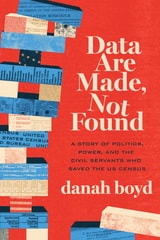
Data Are Made, Not Found
A Story of Politics, Power, and the Civil Servants Who Saved the US Censusdanah boyd
University of Chicago Press, 2026
An eye-opening story of the people who make the census, the United States’ largest and most consequential dataset, and the growing threats to their crucial work.
By many measures, the US census is the government’s largest non-wartime operation, and one of the world’s oldest and biggest data-making endeavors. The 2020 census required more than a decade of planning and technical work—not to mention managing nearly a quarter of a million temporary workers simultaneously—to collect data about the American public. That data was then processed to count each of 331,449,281 residents once—and only once—and in the right place. The operation is also one of the country’s most consequential. Census data determine how political power and federal funding are allocated. Census data make politics, and consequently, politics make census data. In this urgent book, danah boyd explores what it took for the Census Bureau to make the 2020 census, amidst a global pandemic and natural disasters, and while navigating political forces that constrained the budget, micro-managed the schedule, and attacked statisticians’ methods.
With rare insider access to the Census Bureau, boyd observed and interviewed hundreds of government civil servants who made the 2020 census. By documenting the perspectives of government workers, Data Are Made, Not Found provides a rare glimpse into what it takes to make democracy’s data. Each chapter reveals a different challenge—ranging from the last-minute fights about a citizenship question to the not-so-helpful help of well-intended stakeholders to avoid undercounts—and shows how civil servants responded to each problem, controversy, and hurdle. Boyd shows how many of the challenges that the Census Bureau faced in 2020 resulted from decades of political operatives, data users, and various stakeholders playing what boyd calls “Jenga politics,” weakening the administrative state for short-term political gains by removing support and adding more requirements.
Civil servants saved the 2020 census, but future censuses—and other data-making efforts related to elections, health, and the economy—are precarious. Boyd’s message is clear and compelling: protecting democracy means protecting the people and institutions that produce this data.

Data Dating
Love, Technology, DesireEdited by Ania Malinowska and Valentina Peri
Intellect Books, 2021
Data Dating is a collection of eleven academic essays accompanied by eleven works of media art that provide a comprehensive insight into the construction of love and its practices in the time of digitally mediated relationships. The essays come from recognized researchers in the field of media and cultural studies.
Data Fluencies
Philippa R. Adams
University of Minnesota Press, 2027
Creating communities of care in the digital world
Data Fluencies offers a model for enacting theories of data justice, methods of community engagement, and practical approaches to disrupting institutions and infrastructures that have diminished the capacities of everyday digital technology users. Combining humanities-based critical thinking, computational data analyses, arts-based research cocreation, and media making, data fluencies offer creative and imaginative approaches to investigating and countering algorithmic discrimination, digital surveillance, mis- and disinformation, and deep fake versions of reality.
Not fixed or static, data fluencies move with, through, and against data streams to build the worlds we want, not the ones algorithms push on us. Presenting real-world examples, the authors demonstrate how data fluencies transcend difference and counter the proliferation of hate and toxicity online. As they outline visions for disrupting the past to reimagine the future, the authors guide the way in devising new ways to think, act, and imagine—to influence and reshape the currents that flow through our data-driven world.
Distributed for meson press.
Retail e-book files for this title are screen-reader friendly with images accompanied by short alt text and/or extended descriptions.
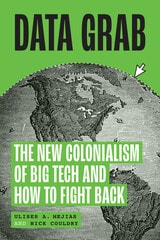
Data Grab
The New Colonialism of Big Tech and How to Fight BackUlises A. Mejias and Nick Couldry
University of Chicago Press, 2024
Large technology companies like Meta, Amazon, and Alphabet have unprecedented access to our daily lives, collecting information when we check our email, count our steps, shop online, and commute to and from work. Current events are concerning—both the changing owners (and names) of billion-dollar tech companies and regulatory concerns about artificial intelligence underscore the sweeping nature of Big Tech’s surveillance and the influence such companies hold over the people who use their apps and platforms.
As trusted tech experts Ulises A. Mejias and Nick Couldry show in this eye-opening and convincing book, this vast accumulation of data is not the accidental stockpile of a fast-growing industry. Just as nations stole territories for ill-gotten minerals and crops, wealth, and dominance, tech companies steal personal data important to our lives. It’s only within the framework of colonialism, Mejias and Couldry argue, that we can comprehend the full scope of this heist.
Like the land grabs of the past, today’s data grab converts our data into raw material for the generation of corporate profit against our own interests. Like historical colonialism, today’s tech corporations have engineered an extractive form of doing business that builds a new social and economic order, leads to job precarity, and degrades the environment. These methods deepen global inequality, consolidating corporate wealth in the Global North and engineering discriminatory algorithms. Promising convenience, connection, and scientific progress, tech companies enrich themselves by encouraging us to relinquish details about our personal interactions, our taste in movies or music, and even our health and medical records. Do we have any other choice?
Data Grab affirms that we do. To defy this new form of colonialism we will need to learn from previous forms of resistance and work together to imagine entirely new ones. Mejias and Couldry share the stories of voters, workers, activists, and marginalized communities who have successfully opposed unscrupulous tech practices. An incisive discussion of the digital media that’s transformed our world, Data Grab is a must-read for anyone concerned about privacy, self-determination, and justice in the internet age.

Data Mind
PoemsJoanna Fuhrman
Northwestern University Press, 2025
Wrestling with the experience of living online as a non-digital native
Joanna Fuhrman didn’t grow up online. Her generation entered the digital age as adults, with optimism about the possibilities it would bring for community building. In the alien landscape of the internet, they indeed found moments of joy and connection, but they also watched in anguish as what had been sold as a utopian space instead magnified the anti-democratic demons of necrocapitalism. In this darkly comic and surreal collection, Fuhrman lets herself fall into the internet wormhole of these conflicting realities. With titles ranging from “You Won’t Believe How Your Favorite Childhood Star Looks Now” to “We’ll Burn That Algorithm When We Get to It,” the feminist prose poems in Data Mind remix the tropes of digital life with the puckishness and embodied urgency for which Fuhrman is celebrated.
Data on the Abnormal Hemoglobins and Glucose-6-Phosphate Dehydrogenase Deficiency in Human Populations, 1967–1973
Frank B. Livingstone
University of Michigan Press, 1973

Data-Centric Biology
A Philosophical StudySabina Leonelli
University of Chicago Press, 2016
Leonelli is the first scholar to use a study of contemporary data-intensive science to provide a philosophical analysis of the epistemology of data. In analyzing the rise, internal dynamics, and potential impact of data-centric biology, she draws on scholarship across diverse fields of science and the humanities—as well as her own original empirical material—to pinpoint the conditions under which digitally available data can further our understanding of life. Bridging the divide between historians, sociologists, and philosophers of science, Data-Centric Biology offers a nuanced account of an issue that is of fundamental importance to our understanding of contemporary scientific practices.