Results by title
3027 books match the query 'Sociology' and 132 start with d
Design, Control, Predict
Logistical Governance in the Smart CityAaron Shapiro
University of Minnesota Press, 2020
An in-depth look at life in the “smart” city
Technology has fundamentally transformed urban life. But today’s “smart” cities look little like what experts had predicted. Aaron Shapiro shows us the true face of the revolution in urban technology, taking the reader on a tour of today’s smart city. Along the way, he develops a new lens for interpreting urban technologies—logistical governance—to critique an urban future based on extraction and rationalization.
Through ethnographic research, journalistic interviews, and his own hands-on experience, Shapiro helps us peer through cracks in the smart city’s facade. He investigates the true price New Yorkers pay for “free,” ad-funded WiFi, finding that it ultimately serves the ends of commercial media. He also builds on his experience as a bike courier for a food delivery startup to examine how promises of “flexible employment” in the gig economy in fact pave the way for strict managerial control. And he turns his eye toward hot-button debates around police violence and new patrol technologies, asking whether algorithms are really the answer to reforming our cities’ ongoing crises of criminal justice.
Through these gripping accounts of the new technological urbanism, Design, Control, Predict makes vital contributions to conversations around data privacy and algorithmic governance. Shapiro brings much-needed empirical research to a field that has often relied on “10,000-foot views.” Timely, important, and expertly researched, Design, Control, Predict doesn’t just help us comprehend urbanism today—it advances strategies for critiquing and resisting a dystopian future that can seem inevitable.

Designed for Play
Children’s Playgrounds and the Politics of Urban Space, 1840–2010Jon Winder
University of London Press, 2024
This book is an original and accessible history of the modern playground in Britain and beyond, charting its journey from marginal obscurity to popular ubiquity. Tracing the playground’s history from the mid-nineteenth century to 2010, Designed for Play demonstrates how a diverse set of actors across the philanthropic, voluntary, state, and commercial sectors all sought to reimagine and reshape the urban landscape to improve childhood outcomes.
Designed to Fail
Why Racial Equity in School Funding Is So Hard to AchieveRoseann Liu
University of Chicago Press, 2024
For people who care about urban school districts like Philadelphia’s, addressing the challenges that these schools face often boils down to the need for more money. But why are urban districts that serve Black and Brown students still so perennially underfunded compared to majority-white ones? Why is racial equity in school funding so hard to achieve?
In Designed to Fail, Roseann Liu provides an inside look at the Pennsylvania state legislature and campaigns for fair funding to show how those responsible for the distribution of school funding work to maintain the privileges of majority-white school districts. Liu analyzes how colorblind policies, political structures, and the maintenance of the status quo by people in power perpetuate wide and deepening racial disparities in education funding. Taking a lesson from community organizers fighting for a racially equitable school funding system, Liu’s work is a bold call to address structural racism at the root and organize from a place of abundant justice.
Designing Experiments in Education and the Social Sciences
Larry V. Hedges
Russell Sage Foundation, 2026
Randomized experiments—often referred to as the gold standard of research design—are generally accepted as the type of studies that provide the strongest evidence about cause and effect. There has been a wide adoption of experimental methods in agriculture, medicine, industrial design, and laboratory social sciences, such as experimental psychology, where conditions can be controlled. Since then, there has been an increase in the use of field experiments to provide evidence of cause and effect beyond the laboratory. However, the social settings in which these studies take place complicate the design and evaluation of experiments because their social contexts must be taken into account in order for the experiment to provide useful and unambiguous results. In Designing Experiments in Education and the Social Sciences, statistician Larry V. Hedges details how to design educational and social science field experiments that are sensitive enough to provide clear-cut evidence on the effects of social interventions.
Hedges draws on one hundred years of statistical theory and classic experimental design in Designing Experiments in Education and the Social Sciences. Highlighting the social-structural information embedded in field experiments, he links this history with contemporary statistical methods in the social sciences to explain how to design social experiments that are adequately sensitive to determine the influence of an intervention. He covers the four basic research designs—and 39 elaborations of those designs—that are used most often in social experiments while also introducing additional, more complex, designs. He brings together, in the same notation, work on experimental design, design sensitivity, and optimal design of experiments for the most frequently used research designs in education and the social sciences, emphasizing their conceptual consistency. Hedges also discusses the practical problems of how to recruit and maintain a sample throughout the duration of an experiment.
Designing Experiments in Education and the Social Sciences is an essential resource for researchers planning educational and social field experiments and graduate students.
Destination London
The Expansion of the Visitor EconomyAndrew Smith and Anne Graham
University of Westminster Press, 2019
“A welcome addition to the field of urban tourism research... its content could prove useful not only to students and academic, but also to policymakers interested in better understanding the implications of tourism development and the expansion of the visitor economy in large cities.” - https://www.sciencedirect.com/science/article/abs/pii/S0261517719301785
London is one of the world’s most popular destinations and visitors contribute approximately £14.9 billion of expenditure to the city every year. Its tourism and events sectors are growing and over the last few years London has received more visitors than ever before. However, detailed accounts of the city’s visitor economy are conspicuously absent.
This book analyses how the capital is developing as a destination through the expansion of tourism and events into new urban spaces. The book outlines how parts of London not previously regarded as tourist territory are now subject to the visitor gaze with tourism spreading beyond established central zones into peripheral, suburban and residential areas – in part propelled by a big rise in peer to peer accommodation use. Simultaneously, London’s airports and sports stadiums and their surrounds are becoming destinations in their own right. New vantage points have been created, allowing tourists to explore the city: from above, at night-time or through tours given by the homeless; via the opening up of the River Thames; or through the transformation of local parks into eventscapes.
The book explores these trends and shows how urban destinations expand. In doing so, it enhances our understanding of London and highlights the growing significance of tourism and events in global cities.

Destinies of the Disadvantaged
The Politics of Teen ChildbearingFrank F. Furstenberg
Russell Sage Foundation, 2007

Detroit Divided
Reynolds Farley
Russell Sage Foundation, 2000

Detroit Lives
Robert Mast
Temple University Press, 1994
Detroit Resurgent
Howard Bossen
Michigan State University Press, 2014
Detroit
Race and Uneven DevelopmentJoe T. Darden, Richard Child Hill, June Thomas and Richard Thomas
Temple University Press, 1990
Hub of the American auto industry and site of the celebrated Riverfront Renaissance, Detroit is also a city of extraordinary poverty, unemployment, and racial segregation. This duality in one of the mightiest industrial metropolises of twentieth-century North America is the focus of this study. Viewing the Motor City in light of sociology, geography, history, and planning, the authors examine the genesis of modern Detroit. They argue that the current situation of metropolitan Detroit—economic decentralization, chronic racial and class segregation, regional political fragmentation—is a logical result of trends that have gradually escalated throughout the post-World War II era. Examining its recent redevelopment policies and the ensuing political conflicts, Darden, Hill, Thomas, and Thomas, discuss where Detroit has been and where it is going.
In the series Comparative American Cities, edited by Joe T. Darden.
Developing Through Relationships
Alan Fogel
University of Chicago Press, 1993
Fogel explores the origins of communication, personal identity, and cultural participation and argues that from birth communication, self, and culture are inseparable. He shows that the ability to participate as a human being in the world does not come about only with the acquisition of language, as many scholars have thought, but begins during an infant's earliest nonverbal period. According to Fogel, the human mind and sense of self start to develop at birth through communication and relationships between individuals.
Fogel weaves together theory and research from a variety of disciplines, including psychology, biology, linguistics, philosophy, anthropology, and cognitive science. He rejects the objectivist perspective on development in favor of a relational perspective: to treat the mind as an objective, mechanical thing, Fogel contends, is to ignore the interactive character of thinking. He argues that the life of the mind is a dialogue between imagined points of view, like a dialogue between two different people, and he uses this view to explain his relational theory of human development.
Developing through Relationships makes a substantial contribution not only to developmental psychology but also to the fields of communication, cognitive science, linguistics, and biology.
Developing a Sense of Place
The Role of the Arts in Regenerating CommunitiesEdited by Tamara Ashley and Alexis Weedon
University College London, 2020
Developing a Sense of Place offers a range of viewpoints, including those of the arts strategist, the academic, the practice-researcher, and the artist. Through its innovative models, from performing arts to architectural design, the book serves diverse interests, such as the arts and cultural policy managers, master planners, and arts workers, as well as students of human geography, cultural planning, business and the creative industries, and arts administration, at the undergraduate and postgraduate levels.
Developing the City
Community Development, Power, and Urban Democracy in U.S. CitiesEdited by Ashley E. Nickels and Zachary D. Wood
Temple University Press, 2027
Developing the City investigates the forms, levels, and spaces of power (visible, hidden, and invisible) involved in community development ecosystems. The editors and contributors, a mix of embedded activists, academics, and community leaders, provide a series of diverse case studies that evaluate the local dynamics that shape urban policy.
Chapters address racialized power dynamics in Cleveland, OH, community development funding in Memphis, TN, economic growth and inclusion in Newark, NJ, housing policies in Denver and Colorado Springs, CO, and participatory governance in Reno, NV among other topics. They reflect the unique manifestations of power within each local context, shaped by distinctive histories and sociopolitical dynamics.
In addition to exploring how various dimensions of power influence decision-making, resource allocation, democratic engagement, and civic participation, Developing the City provides a systematic framework for understanding and questioning these power dynamics, and advocates for a power-conscious approach to foster more equitable and democratic urban futures with respect to economic, racial, social, and environmental justice.
Contributors: Nakeefa Cilicia Bernard, Prentiss A. Dantzler, Caraline Feairheller, Austin Harrison, Brad A. M. Johnson, Katherine Lambert-Pennington, Eric Stokan, Robert Stoker, Jill Yordy, and the editors
Development of Arab-American Identity
Ernest McCarus, Editor
University of Michigan Press, 1994

Deviance and Medicalization
From Badness to SicknessPeter Conrad and Joseph W. Schneider
Temple University Press, 1992
Diagnosing America
Anthropology and Public EngagementShepard Forman, Editor
University of Michigan Press, 1995
Debunking the notion of anthropology as a "value-free" science, the authors argue forcefully for an anthropology expressly committed to cultural pluralism and democratic participation.
At the same time, individual essays demonstrate the applicability of standard anthropological methods to the study of contemporary U.S. society and culture as they investigate contested values, community politics, middle-class economics, and workplace culture or describe the psychophysiological stress effects of exclusion on African- Americans and the coping mechanisms of Mexican-Americans along the border.
Diagnosing America and the challenging "Statement to the Profession" that concludes it call for anthropologists to reach beyond the parochialism of their own discipline and to engage history, economics, sociology, and the policy sciences. It will be of interest to scholars in each of these fields who are concerned with the study and resolution of contemporary social problems in the United States and to students of American culture in this country and abroad.
Shepard Forman is Director of the International Affairs Program of the Ford Foundation and a former Professor of Anthropology, University of Michigan.
Dialogic Education
Conversation About Ideas and Between PersonsRonald C. Arnett
Southern Illinois University Press, 1993
Diasporic Mediations
Between Home and LocationRajagopalan Radhakrishnan
University of Minnesota Press, 1996
A series of meditations on the relationship between theory and practice.
In the heated, often rancorous debates that are the “culture wars,” identity politics has been at the center of both popular and academic discussion. In this series of meditations on the relationship between theory and practice, R. Radhakrishnan probes the intersections of poststructuralism and postcoloniality that lie at the heart of contemporary controversies over identity and difference.
Diasporic Mediations records Radhakrishnan's attempt to make theory accountable to the world, even while eschewing narrow methodologies or “isms.” Rather than embracing one totalizing point of view, these essays move in the spaces “between” to establish a productive dialogue between different disciplines and critical practices-to elaborate what the author calls “common ground.” Considering issues of location, language, tradition, gender, ethnicity, nationalism, colonialism, culture, and history, Radhakrishnan reclaims poststructuralism as a tool for both understanding postcolonial reality and working for social change. Diasporic location functions in this book as a perennially negotiated borderland-a real and symbolic space that adjudicates between solidarity and critique. Radhakrishnan's engagement with theory is always motivated by a desire both to build bridges with other communities of color and to engage in meaningful and constructive dialogue. He is particularly concerned with coalition, with overcoming compartmentalization and drawing fragmented movements together into if not a common cause, at least a common set of concerns. Radhakrishnan is adept at synthesizing current debates, reframing questions raised by them so that practical issues can be better understood. Momentous and wise, Diasporic Mediations provides thought-provoking considerations of contemporary issues surrounding identity, serving as a map of the postcolonial condition, or, in the author's words, of how to be “both past- and future-oriented within the history of the present.”Rajagopalan Radhakrishnan is professor in the Department of English at the University of Massachusetts, Amherst. In the heated, often rancorous debates that are the “culture wars,” identity politics has been at the center of both popular and academic discussion. In this series of meditations on the relationship between theory and practice, R. Radhakrishnan probes the intersections of poststructuralism and postcoloniality that lie at the heart of contemporary controversies over identity and difference.Diasporic Mediations records Radhakrishnan's attempt to make theory accountable to the world, even while eschewing narrow methodologies or “isms.” Rather than embracing one totalizing point of view, these essays move in the spaces “between” to establish a productive dialogue between different disciplines and critical practices-to elaborate what the author calls “common ground.” Considering issues of location, language, tradition, gender, ethnicity, nationalism, colonialism, culture, and history, Radhakrishnan reclaims poststructuralism as a tool for both understanding postcolonial reality and working for social change. Momentous and wise, Diasporic Mediations provides thought-provoking considerations of contemporary issues surrounding identity, serving as a map of the postcolonial condition, or, in the author's words, of how to be “both past- and future-oriented within the history of the present.”
Difficult Attachments
Anxieties of Kinship and CareKathryn E. Goldfarb
Rutgers University Press, 2025
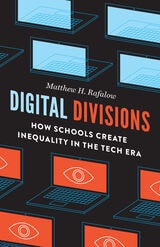
Digital Divisions
How Schools Create Inequality in the Tech EraMatthew H. Rafalow
University of Chicago Press, 2020
While teachers praise affluent White students for being “innovative” when they bring preexisting and sometimes disruptive tech skills into their classrooms, less affluent students of color do not receive such recognition for the same behavior. Digital skills exhibited by middle class, Asian American students render them “hackers,” while the creative digital skills of working-class, Latinx students are either ignored or earn them labels troublemakers. Rafalow finds in his study of three California middle schools that students of all backgrounds use digital technology with sophistication and creativity, but only the teachers in the school serving predominantly White, affluent students help translate the digital skills students develop through their digital play into educational capital. Digital Divisions provides an in-depth look at how teachers operate as gatekeepers for students’ potential, reacting differently according to the race and class of their student body. As a result, Rafalow shows us that the digital divide is much more than a matter of access: it’s about how schools perceive the value of digital technology and then use them day-to-day.

Digital Futures and the City of Today
New Technologies and Physical SpacesEdited by Glenda Amayo Caldwell, Carl Smith, and Edward Clift
Intellect Books, 2016
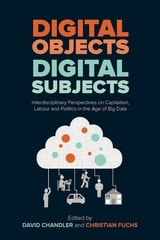
Digital Objects, Digital Subjects
Interdisciplinary Perspectives on Capitalism, Labour and Politics in the Age of Big DataDavid Chandler and Christian Fuchs
University of Westminster Press, 2019
This volume explores activism, research and critique in the age of digital subjects and objects and Big Data capitalism after a digital turn said to have radically transformed our political futures. Optimists assert that the ‘digital’ promises: new forms of community and ways of knowing and sensing, innovation, participatory culture, networked activism, and distributed democracy. Pessimists argue that digital technologies have extended domination via new forms of control, networked authoritarianism and exploitation, dehumanization and the surveillance society. Leading international scholars present varied interdisciplinary assessments of such claims – in theory and via dialogue – and of the digital’s impact on society and the potentials, pitfalls, limits and ideologies, of digital activism. They reflect on whether computational social science, digital humanities and ubiquitous datafication lead to digital positivism that threatens critical research or lead to new horizons in theory and society.
An electronic version of this book is freely available, thanks to the support of libraries working with Knowledge Unlatched. KU is a collaborative initiative designed to make high quality books Open Access for the public good. More information about the initiative and details about KU’s Open Access programme can be found at www.knowledgeunlatched.org.
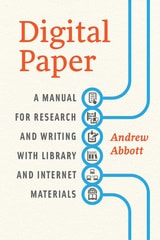
Digital Paper
A Manual for Research and Writing with Library and Internet MaterialsAndrew Abbott
University of Chicago Press, 2014
Abbott tells what every senior researcher knows: that research is not a mechanical, linear process, but a thoughtful and adventurous journey through a nonlinear world. He breaks library research down into seven basic and simultaneous tasks: design, search, scanning/browsing, reading, analyzing, filing, and writing. He moves the reader through the phases of research, from confusion to organization, from vague idea to polished result. He teaches how to evaluate data and prior research; how to follow a trail to elusive treasures; how to organize a project; when to start over; when to ask for help. He shows how an understanding of scholarly values, a commitment to hard work, and the flexibility to change direction combine to enable the researcher to turn a daunting mass of found material into an effective paper or thesis.
More than a mere how-to manual, Abbott’s guidebook helps teach good habits for acquiring knowledge, the foundation of knowledge worth knowing. Those looking for ten easy steps to a perfect paper may want to look elsewhere. But serious scholars, who want their work to stand the test of time, will appreciate Abbott’s unique, forthright approach and relish every page of Digital Paper.
Digital Platforms and Algorithmic Subjectivities
Emiliana Armano, Marco Briziarelli and Elisabetta Risi
University of Westminster Press, 2022
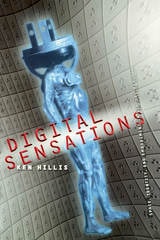
Digital Sensations
Space, Identity, And Embodiment In Virtual RealityKen Hillis
University of Minnesota Press, 1999
Considers the cultural and philosophical assumptions underlying virtual reality, and how the technology affects the real world.
Virtual reality is in the news and in the movies, on TV and in the air. Why is the technology-or the idea—so prevalent precisely now? What does it mean—what does it do—to us? Digital Sensations looks closely at how the “lived” world is affected by representational forms generated by communication technologies, especially digital and optical virtual technologies.
Virtual reality, or VR, is a technological reproduction of the process of perceiving the real, yet that process is filtered through the social realities and embedded cultural assumptions about human bodies and space held by the technology’s creators. Through critical histories of the technologies of vision, light, space, and embodiment, Ken Hillis traces the often contradictory intellectual and metaphysical impulses behind the Western transcendental wish to achieve an ever more perfect copy of the real. He advocates that current and proposed virtual technologies reflect a Western desire to escape the body. Because virtual technologies are new, these histories also address unintended and underconsidered consequences flowing from their rapid dissemination, such as commodifications and the alienation of new forms of surveillance. Exploring topics from VR and other, earlier visual technologies, Hillis’s penetrating perspective on the cultural power of place and space broadens our view of the interplay between social relations and technology.
Digital Tools in Urban Schools
Mediating a Remix of LearningJabari Mahiri
University of Michigan Press, 2011
"Today there is massive interest in how digital tools and popular culture are transforming learning out of school and lots of dismay at how digitally lost our schools are. Jabari Mahiri works his usual magic and here shows us how to cross this divide in a solidly grounded and beautifully written book."
---James Paul Gee, Fulton Presidential Professor of Literacy Studies, Arizona State University
"Digital Tools in Urban Schools is a profoundly sobering yet inspiring depiction of the potential for committed educators to change the lives of urban youth, with the assistance of a new set of technical capabilities."
---Mimi Ito, Professor in Residence and MacArthur Foundation Chair in Digital Media and Learning, Departments of Informatics and Anthropology, University of California, Irvine
"An uplifting book that addresses a critical gap in existing literature by providing rich and important insights into ways teachers, administrators, and members of the wider community can work together with students previously alienated---even excluded---from formal education to enhance classroom learning with appropriate digital tools and achieve inspiring results under challenging circumstances."
---Colin Lankshear, James Cook University, and Michele Knobel, Montclair State University
Digital Tools in Urban Schools demonstrates significant ways in which high school teachers in the complex educational setting of an urban public high school in northern California extended their own professional learning to revitalize learning in their classrooms. Through a novel research collaboration between a university and this public school, these teachers were supported and guided in developing the skills necessary to take greater advantage of new media and new information sources to increase student learning while making connections to their relevant experiences and interests. Jabari Mahiri draws on extensive qualitative data---including blogs, podcasts, and other digital media---to document, describe, and analyze how the learning of both students and teachers was dramatically transformed as they utilized digital media in their classrooms. Digital Tools in Urban Schools will interest instructional leaders and participants in teacher preparation and professional development programs, education and social science researchers and scholars, graduate and undergraduate programs and classes emphasizing literacy and learning, and those focused on urban education issues and conditions.
Dignity
Lower Income Women Tell of Their Lives and StrugglesFran Leeper Buss
University of Michigan Press, 1985
Dilemmas Of American Self
John P. Hewitt
Temple University Press, 1991
Disability and Passing
Blurring the Lines of IdentityJeffrey A Brune
Temple University Press, 2013
Passing—an act usually associated with disguising race—also relates to disability. Whether a person classified as mentally ill struggles to suppress aberrant behavior to appear "normal" or a person falsely claims a disability to gain some advantage, passing is a pervasive and much discussed phenomenon. Nevertheless, Disability and Passing is the first anthology to examine this issue.
The editors and contributors to this volume explore the intersections of disability, race, gender, and sexuality as these various aspects of identity influence each other and make identity fluid. They argue that the line between disability and normality is blurred, discussing disability as an individual identity and as a social category. And they discuss the role of stigma in decisions about whether or not to pass.
Focusing on the United States from the nineteenth century to the present, the essays in Disability and Passing speak to the complexity of individual decisions about passing and open the conversation for broader discussion.
Contributors include: Dea Boster, Allison Carey, Peta Cox, Kristen Harmon, David Linton, Michael Rembis, and the editors.
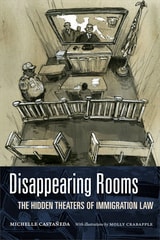
Disappearing Rooms
The Hidden Theaters of Immigration LawMichelle Castañeda
Duke University Press, 2023
Duke University of Press Scholars of Color First Book Award Recipient

Discipline and Indulgence
College Football, Media, and the American Way of Life during the Cold WarMontez de Oca, Jeffrey
Rutgers University Press, 2013
The early Cold War (1947–1964) was a time of optimism in America. Flushed with confidence by the Second World War, many heralded the American Century and saw postwar affluence as proof that capitalism would solve want and poverty. Yet this period also filled people with anxiety. Beyond the specter of nuclear annihilation, the consumerism and affluence of capitalism’s success were seen as turning the sons of pioneers into couch potatoes.
In Discipline and Indulgence, Jeffrey Montez de Oca demonstrates how popular culture, especially college football, addressed capitalism’s contradictions by integrating men into the economy of the Cold War as workers, warriors, and consumers. In the dawning television age, college football provided a ritual and spectacle of the American way of life that anyone could participate in from the comfort of his own home. College football formed an ethical space of patriotic pageantry where men could produce themselves as citizens of the Cold War state. Based on a theoretically sophisticated analysis of Cold War media, Discipline and Indulgence assesses the period’s institutional linkage of sport, higher education, media, and militarism and finds the connections of contemporary sport media to today’s War on Terror.
Disciplining the Poor
Neoliberal Paternalism and the Persistent Power of RaceJoe Soss, Richard C. Fording, and Sanford F. Schram
University of Chicago Press, 2011
Disciplining the Poor explains the transformation of poverty governance over the past forty years—why it happened, how it works today, and how it affects people. In the process, it clarifies the central role of race in this transformation and develops a more precise account of how race shapes poverty governance in the post–civil rights era. Connecting welfare reform to other policy developments, the authors analyze diverse forms of data to explicate the racialized origins, operations, and consequences of a new mode of poverty governance that is simultaneously neoliberal—grounded in market principles—and paternalist—focused on telling the poor what is best for them. The study traces the process of rolling out the new regime from the federal level, to the state and county level, down to the differences in ways frontline case workers take disciplinary actions in individual cases. The result is a compelling account of how a neoliberal paternalist regime of poverty governance is disciplining the poor today.

Disconnect
Facebook's Affective BondsTero Karppi
University of Minnesota Press, 2018
An urgent examination of the threat posed to social media by user disconnection, and the measures websites will take to prevent it
No matter how pervasive and powerful social media websites become, users always have the option of disconnecting—right? Not exactly, as Tero Karppi reveals in this disquieting book. Pointing out that platforms like Facebook see disconnection as an existential threat—and have undertaken wide-ranging efforts to eliminate it—Karppi argues that users’ ability to control their digital lives is gradually dissipating.
Taking a nonhumancentric approach, Karppi explores how modern social media platforms produce and position users within a system of coded relations and mechanisms of power. For Facebook, disconnection is an intense affective force. It is a problem of how to keep users engaged with the platform, but also one of keeping value, attention, and desires within the system. Karppi uses Facebook’s financial documents as a map to navigate how the platform sees its users. Facebook’s plans to connect the entire globe through satellites and drones illustrates the material webs woven to keep us connected. Karppi analyzes how Facebook’s interface limits the opportunity to opt-out—even continuing to engage users after their physical death. Showing how users have fought to take back their digital lives, Karppi chronicles responses like Web2.0 Suicide Machine, an art project dedicated to committing digital suicide.
For Karppi, understanding social media connectivity comes from unbinding the bonds that stop people from leaving these platforms. Disconnection brings us to the limit of user policies, algorithmic control, and platform politics. Ultimately, Karppi’s focus on the difficulty of disconnection, rather than the ease of connection, reveals how social media has come to dominate human relations.

Discretionary Justice
Looking Inside a Juvenile Drug CourtPaik, Leslie
Rutgers University Press, 2011
Juvenile drug courts are on the rise in the United States, as a result of a favorable political climate and justice officials' endorsement of the therapeutic jurisprudence movement--the concept of combining therapeutic care with correctional discipline. The goal is to divert nonviolent youth drug offenders into addiction treatment instead of long-term incarceration. Discretionary Justice overviews the system, taking readers behind the scenes of the juvenile drug court. Based on fifteen months of ethnographic fieldwork and interviews at a California court, Leslie Paik explores the staff's decision-making practices in assessing the youths' cases, concentrating on the way accountability and noncompliance are assessed. Using the concept of "workability," Paik demonstrates how compliance, and what is seen by staff as "noncompliance," are the constructed results of staff decisions, fluctuating budgets, and sometimes questionable drug test results.
While these courts largely focus on holding youths responsible for their actions, this book underscores the social factors that shape how staff members view progress in the court. Paik also emphasizes the perspectives of children and parents. Given the growing emphasis on individual responsibility in other settings, such as schools and public welfare agencies, Paik's findings are relevant outside the juvenile justice system.
Discrimination, Jobs, and Politics
The Struggle for Equal Employment Opportunity in the United States since the New DealPaul Burstein
University of Chicago Press, 1985
"This is an important, well-researched book. . . . Burstein has had the courage to break through narrow specializations within sociology . . . and even to address the types of acceptable questions usually associated with three different disciplines (political science, sociology, and economics). . . . This book should be read by all professionals interested in political sociology and social movements."—Donald Tomaskovic-Devey, Social Forces
"Discrimination, Jobs and Politics [is] satisfying because it tells a more complete story . . . than does most sociological research. . . . I find myself returning to it when I'm studying the U.S. women's movement and recommending it to students struggling to do coherent research."—Rachel Rosenfeld, Contemporary Sociology

Disease Prevention as Social Change
The State, Society, and Public Health in the United States, France, Great Britain, and CanadaConstance A. Nathanson
Russell Sage Foundation, 2007
Disorders Of Desire
Janice Irvine
Temple University Press, 1991
This revised and expanded edition features new chapters addressing:
- The diagnosis of "sex addiction"in the 1970s and its social and political implications.
- New developments within the field of sexology, including the "Viagra Revolution" that began in the 1990s.
- The pharmaceutical industry's role in the development of sexual enhancements and the search for the female equivalent of Viagra.
Disorders Of Desire Rev
Sexuality And Gender In Modern American SexologyJanice Irvine
Temple University Press, 2005
This revised and expanded edition features new chapters addressing:
•The diagnosis of "sex addiction"in the 1970s and its social and political implications.
•New developments within the field of sexology, including the "Viagra Revolution" that began in the 1990s.
•The pharmaceutical industry's role in the development of sexual enhancements and the search for the female equivalent of Viagra.
Displacing Whiteness
Essays in Social and Cultural CriticismRuth Frankenberg, ed.
Duke University Press, 1997
Approaching whiteness as a plural rather than singular concept, the essays describe, for instance, African American, Chicana/o, European American, and British experiences of whiteness. The contributors offer critical readings of theory, literature, film and popular culture; ethnographic analyses; explorations of identity formation; and examinations of racism and political process. Essays examine the alarming epidemic of angry white men on both sides of the Atlantic; far-right electoral politics in the UK; underclass white people in Detroit; whiteness in "brownface" in the film Gandhi; the engendering of whiteness in Chicana/o movement discourses; "whiteface" literature; Roland Barthes as a critic of white consciousness; whiteness in the black imagination; the inclusion and exclusion of suburban "brown-skinned white girls"; and the slippery relationships between culture, race, and nation in the history of whiteness. Displacing Whiteness breaks new ground by specifying how whiteness is lived, engaged, appropriated, and theorized in a range of geographical locations and historical moments, representing a necessary advance in analytical thinking surrounding the burgeoning study of race and culture.
Contributors. Rebecca Aanerud, Angie Chabram-Dernersesian, Phil Cohen, Ruth Frankenberg, John Hartigan Jr., bell hooks, T. Muraleedharan, Chéla Sandoval, France Winddance Twine, Vron Ware, David Wellman
Displaying Death and Animating Life
Human-Animal Relations in Art, Science, and Everyday LifeJane C. Desmond
University of Chicago Press, 2016
Desmond, a pioneer in the field of animal studies, builds the book on a number of case studies. She conducts research on-site at major museums, taxidermy conventions, pet cemeteries, and even at a professional conference for writers of obituaries. She goes behind the scenes at zoos, wildlife clinics, and meetings of pet cemetery professionals. We journey with her as she meets Kanzi, the bonobo artist, and a host of other animal-artists—all of whom are preparing their artwork for auction. Throughout, Desmond moves from a consideration of the visual display of unindividuated animals, to mourning for known animals, and finally to the marketing of artwork by individual animals. The first book in the new Animal Lives series, Displaying Death and Animating Life is a landmark study, bridging disciplines and reaching across divisions from the humanities and social sciences to chart new territories of investigation.

Disrupted Childhoods
Children of Women in PrisonSiegel, Jane A
Rutgers University Press, 2011
Millions of children in the United States have a parent who is incarcerated and a growing number of these nurturers are mothers. Disrupted Childhoods explores the issues that arise from a mother's confinement and provides first-person accounts of the experiences of children with moms behind bars. Jane A. Siegel offers a perspective that recognizes differences over the long course of a family's interaction with the criminal justice system.
Presenting an unparalleled view into the children's lives both before and after their mothers are imprisoned, this book reveals the many challenges they face from the moment such a critical caregiver is arrested to the time she returns home from prison. Based on interviews with nearly seventy youngsters and their mothers conducted at different points of their parent's involvement in the process, the rich qualitative data of Disrupted Childhoods vividly reveals the lived experiences of prisoners' children, telling their stories in their own words. Siegel places the mother's incarceration in context with other aspects of the youths' experiences, including their family life and social worlds, and provides a unique opportunity to hear the voices of a group that has been largely silent until now.
Disruptive Situations
Fractal Orientalism and Queer Strategies in BeirutGhassan Moussawi
Temple University Press, 2020
Disruptive Situations challenges representations of contemporary Beirut as an exceptional space for LGBTQ people by highlighting everyday life in a city where violence is the norm. Ghassan Moussawi, a Beirut native, seeks to uncover the underlying processes of what he calls “fractal orientalism,” a relational understanding of modernity and cosmopolitanism that illustrates how transnational discourses of national and sexual exceptionalism operate on multiple scales in the Arab world.
Moussawi’s intrepid ethnography features the voices of women, gay men and genderqueers in Beirut to examine how queer individuals negotiate life in this uncertain region. He examines “al-wad’,” or “the situation,” to understand the practices that form these strategies and to raise questions about queer-friendly spaces in and beyond Beirut.
Disruptive Situations alsoshows how LGBTQ Beirutis resist reconciliation narratives and position their identities and visibility at different times as ways of simultaneously managing their multiple positionalities and al-wad’. Moussawi argues that the daily survival strategies in Beirut are queer—and not only enacted by LGBTQ people—since Beirutis are living amidst an already queer situation of ongoing precarity.
Disruptive Voices
The Possibilities of Feminist ResearchMichelle Fine
University of Michigan Press, 1992

Dissent in Dangerous Times
Austin Sarat, Editor
University of Michigan Press, 2004
While dissent has played a central role in our national history and in the American cultural imagination, it is usually dangerous to those who practice it, and always unpalatable to its targets. War does not encourage the tolerance of opposition at home any more than it does on the front: if the War on Terror is to be a permanent war, then the consequences for American political freedoms cannot be overestimated.
"Dissent in Dangerous Times examines the nature of political repression in liberal societies, and the political and legal implications of living in an environment of fear. This profound, incisive, at times even moving volume calls upon readers to think about, and beyond, September 11, reminding us of both the fragility and enduring power of freedom."
--Nadine Strossen, President, American Civil Liberties Union, and Professor of Law, New York Law School.
Contributors to this volume
Lauren Berlant
Wendy Brown
David Cole
Hugh Gusterson
Nancy L. Rosenblum
Austin Sarat

Distant Parents
Climo, Jacob
Rutgers University Press, 1992
The adult children he interviewed live at least 200 miles from their parents. In most ways they are similar to the millions of other professionals whose careers have led them to move away from their parents. We hear their voices, as they speak frankly about the advantages, pains, and challenges of separation.
Climo considers distant relationships to be different from other relationships and to be a growing social problem. Distant living complicates communications by shaping and restricting both phone calls and visits. His description of the typical phone call and typical seasonal visit, with their patterns and limitations, will sound familiar to many of us. In addition to affecting communications, distance affects memories of past parent-child relationships in ways that influence present relationships. Memories, which take on great weight, tend to determine current behavior. Most seriously, distance limits the kinds of assistance children can provide when their parents become ill, resulting in frustration, anger, guilt, and a sense of powerlessness.
Climo urges us to be more aware of distant living as a growing social problem. The percentage of children who move away from their parents will continue to increase. Once adult children acknowledge the challenges distance creates, they can learn to develop better communications and to deal with their feelings of ambivalence.

Distinguishing Disability
Parents, Privilege, and Special EducationColin Ong-Dean
University of Chicago Press, 2009
Students in special education programs can have widely divergent experiences. For some, special education amounts to a dumping ground where schools unload their problem students, while for others, it provides access to services and accommodations that drastically improve chances of succeeding in school and beyond. Distinguishing Disability argues that this inequity in treatment is directly linked to the disparity in resources possessed by the students’ parents.
Since the mid-1970s, federal law has empowered parents of public school children to intervene in virtually every aspect of the decision making involved in special education. However, Colin Ong-Dean reveals that this power is generally available only to those parents with the money, educational background, and confidence needed to make effective claims about their children’s disabilities and related needs. Ong-Dean documents this class divide by examining a wealth of evidence, including historic rates of learning disability diagnosis, court decisions, and advice literature for parents of disabled children. In an era of expanding special education enrollment, Distinguishing Disability is a timely analysis of the way this expansion has created new kinds of inequality.
Divergent Social Worlds
Neighborhood Crime and the Racial-Spatial DivideRuth D. Peterson
Russell Sage Foundation, 2010
Diversity and Disparities
America Enters a New CenturyJohn Logan is professor of sociology and director of the Research Initiative on Spatial Structures in the Social Sciences at Brown University and editor of Diversity and Disparities: America Enters a New Century.
Russell Sage Foundation, 2014

Divide & Conquer
Race, Gangs, Identity, and ConflictRobert D. Weide
Temple University Press, 2022
Hyper-criminalization and the normalization of violence was an integral aspect of Robert Weide’s formative years growing up in Los Angeles in the 1980s and 1990s, where Sureño, Crip, and Blood gangs maintained a precarious coexistence, often punctuated by racialized gang violence. His insider status informs Divide & Conquer, which considers how the capitalist economy, the race concept, and nationalist ideology have made gang members the instruments of their own oppression, resulting in racialized sectarian conflicts spanning generations between African American and Latino gangs in Los Angeles and California’s prisons.
While gang members may fail to appreciate the deeper historical and conceptual foundations of these conflicts, they rarely credit naked bigotry as the root cause. As Weide asserts, they divide themselves according to inherited groupist identities, thereby turning them against one another in protracted blood feuds across gang lines and racial lines.
Weide explores both the historical foundations and the conceptual and cultural boundaries and biases that divide gang members across racial lines, detailing case studies of specific racialized gang conflicts between Sureño, Crip, and Blood gangs. Weide employs mixed-methods research, having spent nearly a decade on ethnographic fieldwork and conducted over one hundred formal interviews with gang members and gang enforcement officers concerning taboo subjects like prison and gang politics, and transracial gang membership.
Divide & Conquer concludes with encouraging developments in recent years, as gang members themselves, on their own volition, have intervened to build solidarity and bring racialized gang conflicts between them to an end.
Divided Bodies
Lyme Disease, Contested Illness, and Evidence-Based MedicineAbigail A. Dumes
Duke University Press, 2020