Results by title
4413 books match the query 'Anthropology' and 158 start with d
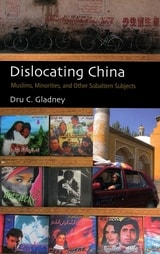
Dislocating China
Muslims, Minorities, and Other Subaltern SubjectsDru C. Gladney
University of Chicago Press, 2004
Gladney locates China and Chinese culture not in some unchanging, essential "Chinese-ness," but in the context of historical and contemporary multicultural complexity. He investigates how this complexity plays out among a variety of places and groups, examining representations of minorities and majorities in art, movies, and theme parks; the invention of folklore and creation myths; the role of pilgrimages in constructing local identities; and the impact of globalization and economic reforms on non-Han groups such as the Muslim Hui. In the end, Gladney argues that just as peoples in the West have defined themselves against ethnic others, so too have the Chinese defined themselves against marginalized groups in their own society.
Disorienting Disability
Michele Friedner and Karen Weingarten, special issue editors
Duke University Press, 2020
Drawing on feminist studies, critical race studies, and queer studies, the contributors probe the meanings of the term disability and consider disability in relation to other categories of difference such as race, gender, and class. Essays challenge the historicity of disability; push disability studies to consider questions of loss, pain, and trauma; question the notion of disability as another form of diversity; and expand arguments about the ethics of care to consider communities not conventionally defined as disabled.
Contributors. Christina Crosby, Lisa Diedrich, Arseli Dokumaci, Michele Friedner, Cassandra Hartblay, Talia Schaffer, Margrit Shildrick, Karen Weingarten
Displacement, Diaspora, and Geographies of Identity
Smadar Lavie and Ted Swedenburg, eds.
Duke University Press, 1996
This volume exemplifies a cross-disciplinary cultural studies and a concept of culture rooted in lived experience as well as textual readings. Anthropologists and scholars from related fields deploy a range of methodologies and styles of writing to blur and complicate conventional dualisms between authors and subjects of research, home and away, center and periphery, and first and third world. Essays discuss topics such as Rai, a North African pop music viewed as westernized in Algeria and as Arab music in France; the place of Sephardic and Palestinian writers within Israel’s Ashkenazic-dominated arts community; and the use and misuse of the concept “postcolonial” as it is applied in various regional contexts.
In exploring histories of displacement and geographies of identity, these essays call for the reconceptualization of theoretical binarisms such as modern and postmodern, colonial and postcolonial. It will be of interest to a broad spectrum of scholars and students concerned with postmodern and postcolonial theory, ethnography, anthropology, and cultural studies.
Contributors. Norma Alarcón, Edward M. Bruner, Nahum D. Chandler, Ruth Frankenberg, Joan Gross, Dorinne Kondo, Kristin Koptiuch, Smadar Lavie, Lata Mani, David McMurray, Kirin Narayan, Greg Sarris, Ted Swedenburg
Displacing Whiteness
Essays in Social and Cultural CriticismRuth Frankenberg, ed.
Duke University Press, 1997
Approaching whiteness as a plural rather than singular concept, the essays describe, for instance, African American, Chicana/o, European American, and British experiences of whiteness. The contributors offer critical readings of theory, literature, film and popular culture; ethnographic analyses; explorations of identity formation; and examinations of racism and political process. Essays examine the alarming epidemic of angry white men on both sides of the Atlantic; far-right electoral politics in the UK; underclass white people in Detroit; whiteness in "brownface" in the film Gandhi; the engendering of whiteness in Chicana/o movement discourses; "whiteface" literature; Roland Barthes as a critic of white consciousness; whiteness in the black imagination; the inclusion and exclusion of suburban "brown-skinned white girls"; and the slippery relationships between culture, race, and nation in the history of whiteness. Displacing Whiteness breaks new ground by specifying how whiteness is lived, engaged, appropriated, and theorized in a range of geographical locations and historical moments, representing a necessary advance in analytical thinking surrounding the burgeoning study of race and culture.
Contributors. Rebecca Aanerud, Angie Chabram-Dernersesian, Phil Cohen, Ruth Frankenberg, John Hartigan Jr., bell hooks, T. Muraleedharan, Chéla Sandoval, France Winddance Twine, Vron Ware, David Wellman
Displaying Death and Animating Life
Human-Animal Relations in Art, Science, and Everyday LifeJane C. Desmond
University of Chicago Press, 2016
Desmond, a pioneer in the field of animal studies, builds the book on a number of case studies. She conducts research on-site at major museums, taxidermy conventions, pet cemeteries, and even at a professional conference for writers of obituaries. She goes behind the scenes at zoos, wildlife clinics, and meetings of pet cemetery professionals. We journey with her as she meets Kanzi, the bonobo artist, and a host of other animal-artists—all of whom are preparing their artwork for auction. Throughout, Desmond moves from a consideration of the visual display of unindividuated animals, to mourning for known animals, and finally to the marketing of artwork by individual animals. The first book in the new Animal Lives series, Displaying Death and Animating Life is a landmark study, bridging disciplines and reaching across divisions from the humanities and social sciences to chart new territories of investigation.

Disputing Discipline
Child Protection, Punishment, and Piety in Zanzibar SchoolsFranziska Fay
Rutgers University Press, 2021
Disrupting Savagism
Intersecting Chicana/o, Mexican Immigrant, and Native American Struggles for Self-RepresentationArturo J. Aldama
Duke University Press, 2001
Arturo J. Aldama begins by presenting a genealogy of the term “savage,” looking in particular at the work of American ethnologist Lewis Henry Morgan and a sixteenth-century debate between Juan Ginés de Sepúlveda and Bartolomé de las Casas. Aldama then turns to more contemporary narratives, examining ethnography, fiction, autobiography, and film to illuminate the historical ideologies and ethnic perspectives that contributed to identity formation over the centuries. These works include anthropologist Manuel Gamio’s The Mexican Immigrant: His Life Story, Leslie Marmon Silko’s Ceremony, Gloria Anzaldúa’s Borderlands/La Frontera, and Miguel Arteta’s film Star Maps. By using these varied genres to investigate the complex politics of racialized, subaltern, feminist, and diasporic identities, Aldama reveals the unique epistemic logic of hybrid and mestiza/o cultural productions.
The transcultural perspective of Disrupting Savagism will interest scholars of feminist postcolonial processes in the United States, as well as students of Latin American, Native American, and literary studies.
Dissident Women
Gender and Cultural Politics in ChiapasEdited by Shannon Speed, R. Aída Hernández Castillo, and Lynn M. Stephen
University of Texas Press, 2006
Yielding pivotal new perspectives on the indigenous women of Mexico, Dissident Women: Gender and Cultural Politics in Chiapas presents a diverse collection of voices exploring the human rights and gender issues that gained international attention after the first public appearance of the Zapatista National Liberation Army (EZLN) in 1994.
Drawing from studies on topics ranging from the daily life of Zapatista women to the effect of transnational indigenous women in tipping geopolitical scales, the contributors explore both the personal and global implications of indigenous women's activism. The Zapatista movement and the Women's Revolutionary Law, a charter that came to have tremendous symbolic importance for thousands of indigenous women, created the potential for renegotiating gender roles in Zapatista communities. Drawing on the original research of scholars with long-term field experience in a range of Mayan communities in Chiapas and featuring several key documents written by indigenous women articulating their vision, Dissident Women brings fresh insight to the revolutionary crossroads at which Chiapas stands—and to the worldwide implications of this economic and political microcosm.
Dissociated Identities
Ethnicity, Religion, and Class in an Indonesian SocietyRita Smith Kipp
University of Michigan Press, 1996
Diversity in Open-Air Site Structure across the Pleistocene/Holocene Boundary
Kristen A. Carlson
University Press of Colorado, 2021
Open-air sites are difficult for researchers to locate and, because of depositional processes, often more difficult to interpret; they contain many superimposed events but often show evidence of only the most recent. Working to overcome the limitations of data and poor preservation, using decades of prior research and new analytical tools, and diverging from a one-size-fits-all mode of interpretation, the contributors to this volume offer fresh insight into the formation and taphonomy of open-air sites.
Contributors: Douglas B. Bamforth, Ian Buvit, Brian J. Carter, Robin Cordero, Robert Dello-Russo, George C. Frison, Kelly E. Graf, Bruce B. Huckell, Michael A. Jochim, Joshua D. Kapp, Robert L. Kelly, Aleksander V. Konstantinov, Banks Leonard, Madeline E. Mackie, Christopher W. Merriman, Matthew J. O’Brien, Spencer Pelton, Neil N. Puckett, Beth Shapiro, Todd A. Surovell, Karisa Terry, Steve Teteak, Robert Yohe
Divided Bodies
Lyme Disease, Contested Illness, and Evidence-Based MedicineAbigail A. Dumes
Duke University Press, 2020
Divided Korea
Toward a Culture of ReconciliationRoland Bleiker
University of Minnesota Press, 2005
In 2002, North Korea precipitated a major international crisis when it revealed the existence of a secret nuclear weapons program and announced its withdrawal from the Nuclear Nonproliferation Treaty. Earlier in the year, George W. Bush had declared North Korea part of the “axis of evil,” and soon afterward his administration listed the country as a potential target of a preemptive nuclear strike. Pyongyang’s angry reaction ensured the complete deterioration of relations on the Korean peninsula, where only two years before the leaders of North and South Korea had come together in a historic summit meeting.
Few international conflicts are as volatile, protracted, or seemingly insoluble as the one in Korea, where mutual mistrust, hostile Cold War attitudes, and the possibility of a North Korean economic collapse threaten the security of the entire region. For Roland Bleiker, this persistently recurring pattern suggests profound structural problems within and between the two Koreas that have not been acknowledged until now. Expanding the discussion beyond geopolitics and ideology, Bleiker places peninsular tensions in the context of an ongoing struggle over competing forms of Korean identity. Divided Korea examines both domestic and international attitudes toward Korean identity, the legacy of war, and the possibilities for-and anxieties about-unification.
Divided Korea challenges the prevailing logic of confrontation and deterrence, embarking on a fundamental reassessment of both the roots of the conflict and the means to achieve a more stable political environment and, ultimately, peace. In order to realize a lasting solution, Bleiker concludes, the two Koreas and the international community must first show a willingness to accept difference and contemplate forgiveness as part of a broader reconciliation process.
Roland Bleiker is professor of international relations at the University of Queensland. From 1986 to 1988 he served as chief of office for the Swiss delegation to the Neutral Nations Supervisory Commission in Panmunjom.
Divided Peoples
Policy, Activism, and Indigenous Identities on the U.S.-Mexico BorderChristina Leza
University of Arizona Press, 2019
Divided Peoples addresses the impact border policies have on traditional lands and the peoples who live there—whether environmental degradation, border patrol harassment, or the disruption of traditional ceremonies. Anthropologist Christina Leza shows how such policies affect the traditional cultural survival of Indigenous peoples along the border. The author examines local interpretations and uses of international rights tools by Native activists, counterdiscourse on the U.S.-Mexico border, and challenges faced by Indigenous border activists when communicating their issues to a broader public.
Through ethnographic research with grassroots Indigenous activists in the region, the author reveals several layers of division—the division of Indigenous peoples by the physical U.S.-Mexico border, the divisions that exist between Indigenous perspectives and mainstream U.S. perspectives regarding the border, and the traditionalist/nontraditionalist split among Indigenous nations within the United States. Divided Peoples asks us to consider the possibilities for challenging settler colonialism both in sociopolitical movements and in scholarship about Indigenous peoples and lands.
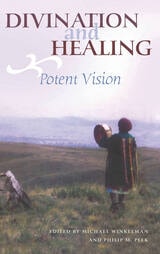
Divination and Healing
Potent VisionEdited by Michael Winkelman and Philip M. Peek
University of Arizona Press, 2004

Divine Presence in Spain and Western Europe 1500–1960
Visions, Religious Images and PhotographsWilliam A. Christian Jr.
Central European University Press, 2012
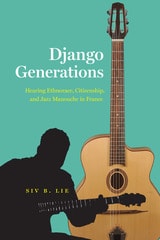
Django Generations
Hearing Ethnorace, Citizenship, and Jazz Manouche in FranceSiv B. Lie
University of Chicago Press, 2021
Jazz manouche—a genre known best for its energetic, guitar-centric swing tunes—is among France’s most celebrated musical practices of the twentieth and twenty-first centuries. It centers on the recorded work of famed guitarist Django Reinhardt and is named for the ethnoracial subgroup of Romanies (also known, often pejoratively, as “Gypsies”) to which Reinhardt belonged. French Manouches are publicly lauded as bearers of this jazz tradition, and many take pleasure and pride in the practice while at the same time facing pervasive discrimination. Jazz manouche uncovers a contradiction at the heart of France’s assimilationist republican ideals: the music is portrayed as quintessentially French even as Manouches themselves endure treatment as racial others.
In this book, Siv B. Lie explores how this music is used to construct divergent ethnoracial and national identities in a context where discussions of race are otherwise censured. Weaving together ethnographic and historical analysis, Lie shows that jazz manouche becomes a source of profound ambivalence as it generates ethnoracial difference and socioeconomic exclusion. As the first full-length ethnographic study of French jazz to be published in English, this book enriches anthropological, ethnomusicological, and historical scholarship on global jazz, race and ethnicity, and citizenship while showing how music can be an important but insufficient tool in struggles for racial and economic justice.
Documents
Artifacts of Modern KnowledgeEdited by Annelise Riles
University of Michigan Press, 2006
Documents are everywhere in modern life, from the sciences to bureaucracy to law; at the same time, fieldworkers document social realities by collecting, producing, and exchanging documents of their own. Capping off a generation of reflection and critique about the promises and pitfalls of ethnographic methods, the contributors explore how ethnographers conceive, grasp, appreciate, and see patterns, demonstrating that the core of the ethnographic method now lies in the way ethnographers respond to, and increasingly share the professional passions and problems of, their subjects.
"Sophisticated and provocative. The original and unique focus of this volume effectively opens up a new arena of critique that will move ethnography and qualitative inquiry forward in a way that few other works do."
—George Marcus, Department of Anthropology, Rice University
"This edited collection asks how an understanding of documentary forms sheds light on the creation and circulation of modern forms of knowledge, expertise, and governance. This is a major intervention in how we understand the everyday practice and techne of the documentary impulse and documentary apparatuses of law, bureaucratic review, and other institutions of modernity, as well as linguistic anthropology, literary theory, and law. The topic of Documents is not just of interest because of epistemological quandaries in the human sciences over textualization and interpretation, but also because the domains to which we increasingly turn our attention are themselves auto-documentary."
Contributors: Mario Biagioli, Donald Brenneis, Carol Heimer, Hirokazu Miyazaki, Adam Reed, Annelise Riles, and Marilyn Strathern.
Annelise Riles is Professor of Law and Anthropology at Cornell University.
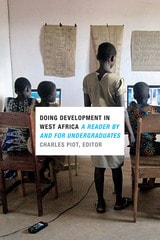
Doing Development in West Africa
A Reader by and for UndergraduatesCharles Piot
Duke University Press, 2016
Doing Emotions History
Edited by Susan Matt and Peter N. Stearns
University of Illinois Press, 2013
Doing Style
Youth and Mass Mediation in South IndiaConstantine V. Nakassis
University of Chicago Press, 2016
As Nakassis shows, while signs of the global, modern world are everywhere in post-liberalization India, for most of these young people this world is still very distant—a paradox that results in youth’s profound sense of being in between. This in-betweenness manifests itself in the ambivalent quality of style, the ways in which stylish objects are necessarily marked as counterfeit, mixed, or ironical. In order to show how this in-betweenness materializes in particular media, Nakassis explores the entanglements between youth peer groups and the sites where such stylish media objects are produced, arguing that these entanglements deeply condition the production and circulation of the media objects themselves. The result is an important and timely look at the tremendous forces of youth culture, globalization, and mass media as they interact in the vibrancy of a rapidly changing India.
Doing Time on the Outside
Incarceration and Family Life in Urban AmericaDonald Braman
University of Michigan Press, 2004
-Katherine S. Newman
"Doing Time on the Outside brings to life in a compelling way the human drama, and tragedy, of our incarceration policies. Donald Braman documents the profound economic and social consequences of the American policy of massive imprisonment of young African American males. He shows us the link between the broad-scale policy changes of recent decades and the isolation and stigma that these bring to family members who have a loved one in prison. If we want to understand fully the impact of current criminal justice policies, this book should be required reading."
-Mark Mauer, Assistant Director, The Sentencing Project
"Through compelling stories and thoughtful analysis, this book describes how our nation's punishment policies have caused incalculable damage to the fabric of family and community life. Anyone concerned about the future of urban America should read this book."
-Jeremy Travis, The Urban Institute
In the tradition of Elijah Anderson's Code of the Street and Katherine Newman's No Shame in My Game, this startling new ethnography by Donald Braman uncovers the other side of the incarceration saga: the little-told story of the effects of imprisonment on the prisoners' families.
Since 1970 the incarceration rate in the United States has more than tripled, and in many cities-urban centers such as Washington, D.C.-it has increased over five-fold. Today, one out of every ten adult black men in the District is in prison and three out of every four can expect to spend some time behind bars. But the numbers don't reveal what it's like for the children, wives, and parents of prisoners, or the subtle and not-so-subtle effects mass incarceration is having on life in the inner city.
Author Donald Braman shows that those doing time on the inside are having a ripple effect on the outside-reaching deep into the family and community life of urban America. Braman gives us the personal stories of what happens to the families and communities that prisoners are taken from and return to. Carefully documenting the effects of incarceration on the material and emotional lives of families, this groundbreaking ethnography reveals how criminal justice policies are furthering rather than abating the problem of social disorder. Braman also delivers a number of genuinely new arguments.
Among these is the compelling assertion that incarceration is holding offenders unaccountable to victims, communities, and families. The author gives the first detailed account of incarceration's corrosive effect on social capital in the inner city and describes in poignant detail how the stigma of prison pits family and community members against one another. Drawing on a series of powerful family portraits supported by extensive empirical data, Braman shines a light on the darker side of a system that is failing the very families and communities it seeks to protect.
Dollar, Dove, and Eagle
One Hundred Years of Palestinian Migration to HondurasNancie L. Gonzalez
University of Michigan Press, 1993
Domestic Economies
Women, Work, and the American Dream in Los AngelesSusanna Rosenbaum
Duke University Press, 2017
Domesticating Democracy
The Politics of Conflict Resolution in BoliviaSusan Helen Ellison
Duke University Press, 2018

Domesticating Organ Transplant
Familial Sacrifice and National Aspiration in MexicoMegan Crowley-Matoka
Duke University Press, 2016
Domestication Gone Wild
Politics and Practices of Multispecies RelationsHeather Anne Swanson, Gro B. Ween, and Marianne E. Lien, editors
Duke University Press, 2018
Contributors. Inger Anneberg, Natasha Fijn, Rune Flikke, Frida Hastrup, Marianne Elisabeth Lien, Knut G. Nustad, Sara Asu Schroer, Heather Anne Swanson, Anna Lowenhaupt Tsing, Mette Vaarst, Gro B. Ween, Jon Henrik Ziegler Remme
Domination and Cultural Resistance
Authority and Power Among an Andean PeopleRoger Neil Rasnake
Duke University Press, 1988
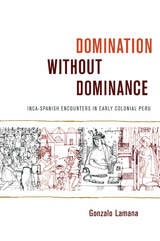
Domination without Dominance
Inca-Spanish Encounters in Early Colonial PeruGonzalo Lamana
Duke University Press, 2008
Lamana’s redefinition of the order of things reveals that, contrary to the conquerors’ accounts, what the Spanairds achieved was a “domination without dominance.” This conclusion undermines common ideas of Spanish (and Western) superiority. It shows that casting order as a by-product of military action rests on a pervasive fallacy: the translation of military superiority into cultural superiority. In constant dialogue with critical thinking from different disciplines and traditions, Lamana illuminates how this new interpretation of the conquest of the Incas revises current understandings of Western colonialism and the emergence of still-current global configurations.

Don't Kill in Our Names
Families of Murder Victims Speak Out against the Death PenaltyKing, Rachel
Rutgers University Press, 2003
Could you forgive the murderer of your husband? Your mother? Your son?
Families of murder victims are often ardent and very public supporters of the death penalty. But the people whose stories appear in this book have chosen instead to forgive their loved ones’ murderers, and many have developed personal relationships with the killers and have even worked to save their lives. They have formed a nationwide group, Murder Victims’ Families for Reconciliation (MVFR), to oppose the death penalty.
MVFR members are often treated as either saints or lunatics, but the truth is that they are neither. They are ordinary people who have responded to an extraordinary and devastating tragedy with courage and faith, choosing reconciliation over retribution, healing over hatred. Believing that the death penalty is a form of social violence that only repeats and perpetuates the violence that claimed their loved one’s lives, they hold out the hope of redemption even for those who have committed the most hideous crimes.
Weaving third-person narrative with wrenching first-hand accounts, King presents the stories of ten MVFR members. Each is a heartrending tale of grief, soul searching, and of the challenge to choose forgiveness instead of revenge. These stories, which King sets in the context of the national discussion over the death penalty debate and restorative versus retributive justice, will appeal not only to those who oppose the death penalty, but also to those who strive to understand how people can forgive the seemingly unforgivable.

Don't Look, Don't Touch, Don't Eat
The Science Behind RevulsionValerie Curtis
University of Chicago Press, 2013

Doomed by Hope
Essays on Arab TheatreEdited by Eyad Houssami and Elias Khoury
Pluto Press, 2012
Doomed by Hope is a beautifully presented collection of essays by writers and artists which traces the history of contemporary Arab theatre and its relationship to social change.
With contributors from Syria, Egypt, Lebanon, Palestine, Kuwait and Yemen, this book includes both academic discussions and personal narratives, alongside a number of specially commissioned portraits of contemporary Arab theatre artists. The essays revolve around the legacy of the late Syrian dramatist Saadallah Wannous, whose monumental plays incited audiences to rise up against tyranny decades ago.
This unique book is one of the first English language volumes on Arab theatre. In a highly topical manner following the Arab Spring, it explores cultural practices – from reading plays in a classroom to performing in a security state and directing in theatres, prisons, and international festivals – in times of revolt.
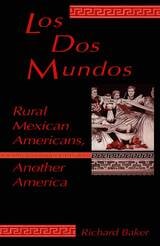
Dos Mundos
Rural Mexican Americans, Another AmericaRichard Baker
Utah State University Press, 1995
Mexican Americans make up the largest minority in Idaho, yet they seemingly live in a different world from the dominant Anglo population, and because of pervasive stereotypes and exclusive policies, their participation in the community's social, economic, and political life is continually impeded.
This unique ethnographic study of a small Idaho community with a large Hispanic population examines many dimensions of the impact race relations have on everyday life for rural Mexican Americans.
Double Passage
The Lives of Caribbean Migrants Abroad and Back HomeGeorge Gmelch
University of Michigan Press, 1993
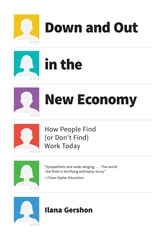
Down and Out in the New Economy
How People Find (or Don’t Find) Work TodayIlana Gershon
University of Chicago Press, 2017
Finding a job used to be simple. Now . . . well, it’s complicated. In today’s economy, you can’t just be an employee looking to get hired—you have to market yourself as a business, one that can help another business achieve its goals.
That’s a radical transformation in how we think about work and employment, says Ilana Gershon. And with Down and Out in the New Economy, she digs deep into that change and what it means, not just for job seekers, but for businesses and our very culture. In telling this story, Gershon covers all parts of the employment spectrum: she interviews hiring managers about how they assess candidates; attends personal branding seminars; talks with managers at companies around the United States to suss out regional differences—like how Silicon Valley firms look askance at the lengthier employment tenures of applicants from the Midwest. And she finds that not everything has changed: though the technological trappings may be glitzier, in a lot of cases, who you know remains more important than what you know.
Rich in the voices of people deeply involved with all parts of the employment process, Down and Out in the New Economy offers a snapshot of the quest for work today—and a pointed analysis of its larger meaning.

Downed by Friendly Fire
Black Girls, White Girls, and Suburban SchoolingSignithia Fordham
University of Minnesota Press, 2016
Most Americans would never willingly revisit their high school experiences; the nation’s school systems reflect the broader society’s hierarchical emphasis on race, class, and gender. While schools purport to provide equal opportunities for all students, this rarely happens in actuality—particularly for girls.
In Downed by Friendly Fire, Signithia Fordham unmasks and examines female-centered bullying in schools, arguing that it is essential to unmask female aggression, bullying, and competition, all of which directly relate to the structural violence embedded in the racialized and gendered social order. For two and a half years, Fordham conducted field research at “Underground Railroad High School,” a suburban high school in upstate New York. Through a series of composite student profiles, she examines the girls’ relationships to academic achievement, social competition, and aggression toward one another. Fordham argues that girls academically “compete to lose,” which only perpetuates their subordination through the misrecognition of their own competitive behaviors. She goes further to expand the meaning of violence to include what is seen as normal, including suffering, humiliation, and social and economic abuse.
Using the concept “symbolic violence,” Fordham theorizes the psychological and social damage suffered especially by black girls in schools. The five narratives in Downed by Friendly Fire ultimately highlight the pain and suffering this violence produces as well as the ways in which it promotes inequality, exclusion, and marginalization among girls.
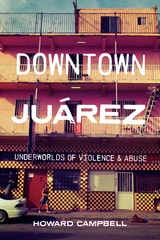
Downtown Juárez
Underworlds of Violence and AbuseHoward Campbell
University of Texas Press, 2021
At least 200,000 people have died in Mexico’s so-called drug war, and the worst suffering has been in Ciudad Juárez, across the border from El Paso, Texas. How did it get so bad? After three decades studying that question, Howard Campbell doesn’t believe there is any one answer. Misguided policies, corruption, criminality, and the borderland economy are all factors. But none of these reasons explain how violence in downtown Juárez has become heartbreakingly “normal.”
A rigorous yet moving account, Downtown Juárez is informed by the sex workers, addicts, hustlers, bar owners, human smugglers, migrants, and down-and-out workers struggling to survive in an underworld where horrifying abuses have come to seem like the natural way of things. Even as Juárez’s elite northeast section thrives on the profits of multinational corporations, and law-abiding citizens across the city mobilize against crime and official malfeasance, downtown’s cantinas, barrios, and brothels are tyrannized by misery.
Campbell’s is a chilling perspective, suggesting that, over time, violent acts feed off each other, losing their connection to any specific cause. Downtown Juárez documents this banality of evil—and confronts it—with the stories of those most affected.
Downtown Ladies
Informal Commercial Importers, a Haitian Anthropologist and Self-Making in JamaicaGina A. Ulysse
University of Chicago Press, 2008
Both by-products of and participants in globalization, ICIs operate on multiple levels and, since their emergence in the 1970s, have made significant contributions to the regional, national, and global economies. Gina Ulysse carefully explores how ICIs, determined to be self-employed, struggle with government regulation and other social tensions to negotiate their autonomy. Informing this story of self-fashioning with reflections on her own experience as a young Haitian anthropologist, Ulysse combines the study of political economy with the study of individual and collective identity to reveal the uneven consequences of disrupting traditional class, color, and gender codes in individual societies and around the world.

Downwardly Global
Women, Work, and Citizenship in the Pakistani DiasporaLalaie Ameeriar
Duke University Press, 2017
Drama of Democracy
Political Representation in MumbaiLisa Björkman
University of Minnesota Press, 2025
The performative arts of political communication and representation in Mumbai
In an era of global political passions, many have wondered whether some sort of natural affinity exists between political style and substance. Does liberal democracy speak the language of rationality and sincerity while political emotion, imagery, and embodiment properly belong to authoritarianism? Taking an ethnographic approach to the relationship between political form and political content, Drama of Democracy explores the material substance of representations (things like heady crowds and rousing images) together with language-based forms of political communication, such as public oration and community meetings.
Drawing on a decade of research in the city of Mumbai, Lisa Björkman shows that embodied performance is the very site and substance of representation and demonstrates how Mumbaikars evaluate performative bids to represent. The ethnographic accounts demonstrate the extraordinary fluency in this evaluative work in Mumbai, where people from all walks of life are remarkably astute at navigating and assessing political signs and representations, endlessly discussing and debating possible meanings of the city’s dense material-semiotic ecologies—whether words or images, cash or crowds, flyers or flowers.
In Mumbai, Björkman argues, the evaluative criterion of representation is not whether something is sign or substance, or even whether people are deemed to utter truths or falsehoods. Rather, what matters is whether and how a performance activates and actuates the social relations and political subjectivities that it professes to display. Drama of Democracy highlights Mumbaikars’ communicative fluency and theatrical acumen to offer a conceptual toolbox through which contemporary political churnings around the globe might be understood.
Dramas of Nationhood
The Politics of Television in EgyptLila Abu-Lughod
University of Chicago Press, 2004
Representing a decade's worth of research, Dramas of Nationhood makes a case for the importance of studying television to answer larger questions about culture, power, and modern self-fashionings. Abu-Lughod explores the elements of developmentalist ideology and the visions of national progress that once dominated Egyptian television—now experiencing a crisis. She discusses the broadcasts in rich detail, from the generic emotional qualities of TV serials and the depictions of authentic national culture, to the debates inflamed by their deliberate strategies for combating religious extremism.
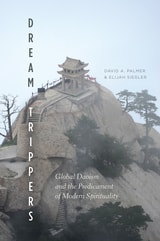
Dream Trippers
Global Daoism and the Predicament of Modern SpiritualityDavid A. Palmer and Elijah Siegler
University of Chicago Press, 2017
Dream Trippers draws on more than a decade of ethnographic work with Daoist monks and Western seekers to trace the spread of Westernized Daoism in contemporary China. David A. Palmer and Elijah Siegler take us into the daily life of the monastic community atop the mountain of Huashan and explore its relationship to the socialist state. They follow the international circuit of Daoist "energy tourism," which connects a number of sites throughout China, and examine the controversies around Western scholars who become practitioners and promoters of Daoism. Throughout are lively portrayals of encounters among the book’s various characters—Chinese hermits and monks, Western seekers, and scholar-practitioners—as they interact with each other in obtuse, often humorous, and yet sometimes enlightening and transformative ways. Dream Trippers untangles the anxieties, confusions, and ambiguities that arise as Chinese and American practitioners balance cosmological attunement and radical spiritual individualism in their search for authenticity in a globalized world.
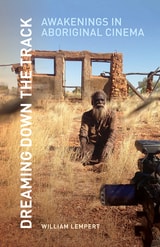
Dreaming Down the Track
Awakenings in Aboriginal CinemaWilliam Lempert
University of Minnesota Press, 2025
What can Aboriginal filmmaking reveal about Indigenous presence and futures?
The product of years of embedded fieldwork within Indigenous film crews in Northwestern Australia, Dreaming Down the Track delves deeply into Aboriginal cinema as a transformative community process. It follows the social lives of projects throughout their production cycles, from planning and editing to screening, broadcasting, and after-images. Across its narrative sweep, this ethnography engages the film career of Kukatja elder Mark Moora to demonstrate the impact of filmmaking on how Aboriginal futures are collectively imagined and called forth.
William Lempert highlights a series of awakenings through which Moora ultimately came to view cinema as a process for catalyzing his family’s return to their home country of Mangkayi. This biographical media journey paints an intimate portrait of the inspiring possibilities and sobering limitations of Indigenous envisioning within settler states. Lempert traces how Moora’s life and films convey a multiplicity of Aboriginal experiences across time and space, from colonial contact to contemporary life in communities like Balgo, including the continued governmental attempts to undermine them.
Amid ongoing negotiations to establish the first treaties between Indigenous nations and Australian states, Dreaming Down the Track illustrates what is at stake in how Aboriginal–State relations are represented and understood, both within communities and for the broader public. Lempert stays true to Moora’s insight that film can preserve community stories for generations to come, toward the aim of enacting sovereign futures.
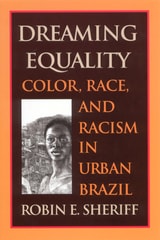
Dreaming Equality
Color, Race, and Racism in Urban BrazilSheriff, Robin E.
Rutgers University Press, 2001
This myth contrasts starkly with the realities of a pernicious racial inequality that permeates every aspect of Brazilian life. To study the grip of this myth on African Brazilians’ views of themselves and their nation, Robin E. Sheriff spent twenty months in a primarily black shantytown in Rio de Janeiro, studying the inhabitants’s views of race and racism. How, she asks, do poor African Brazilians experience and interpret racism in a country where its very existence tends to be publicly denied? How is racism talked about privately in the family and publicly in the community—or is it talked about at all?
Sheriff’s analysis is particularly important because most Brazilians live in urban settings, and her examination of their views of race and racism sheds light on common but underarticulated racial attitudes. This book is the first to demonstrate that urban African Brazilians do not subscribe to the racial democracy myth and recognize racism as a central factor shaping their lives.

Dreaming a Paradise
Migrations and the Story of Buland MasjidChitvan Gill
Seagull Books, 2023
In Dreaming a Paradise, Chitvan Gill draws on years of research and photographic reportage to unveil the tales of individuals driven to escape poverty, violence, and despair in search of happiness and a place to call home. At the heart of this book lies Buland Masjid, an unauthorized colony on the Yamuna riverbank in Delhi, India, which thrives with restless industry even under the unyielding grip of poverty. The women and men of this colony recycle scrap, repair machines, manufacture clothes, run schools, and sell delicious food, breathing new energy into a once-desolate economy. However, beneath the surface lies a tale of urban planning gone awry, reflecting the comprehensive failure of those in power. Delving into the lives of those cast aside and walled off from India’s vast wealth, this book highlights the huge divide between modern India’s haves and have-nots, and the inherent contradictions in a nation grappling with its identity.
In a compelling exploration of humanity’s journey, Dreaming a Paradise reveals the triumphs, tragedies, hopes, and hardships of resilient souls seeking their own patch of heaven amidst chaos. From the eternal cycles of loss and discovery, we witness the formation of civilizations and the timeless yearning that defines the human condition.
Dreaming and Historical Consciousness in Island Greece
Charles Stewart
University of Chicago Press, 2017
Charles Stewart tells the story of the inhabitants of Kóronos, on the Greek island of Naxos, who, in the 1830s, began experiencing dreams in which the Virgin Mary instructed them to search for buried Christian icons nearby and build a church to house the ones they found. Miraculously, they dug and found several icons and human remains, and at night the ancient owners of them would speak to them in dreams. The inhabitants built the church and in the years since have experienced further waves of dreams and startling prophesies that shaped their understanding of the past and future and often put them at odds with state authorities. Today, Kóronos is the site of one of the largest annual pilgrimages in the Mediterranean. Telling this fascinating story, Stewart draws on his long-term fieldwork and original historical sources to explore dreaming as a mediator of historical change, while widening the understanding of historical consciousness and history itself.

Drones, Tones, and Timbres
Sounding Place among Nomads of the Inner Asian Mountain-SteppesCarole Pegg
University of Illinois Press, 2024
Based on more than twenty years of collaborative research, Carole Pegg’s long-awaited participatory ethnography explores how Indigenous nomadic peoples of Russia’s southern Siberian republics (Altai, Khakassia, Tyva) sound multiphonies of place in a post-Soviet global world. Inspired by the mountain-steppe ecology and pathways of nomadism, soundscapes created in performative ritual events cross political and multiple-world boundaries in a shamanic-animist universe, enabling human and spirit actor interactions in a series of sensuous worlds. As with the “throat-singing” for which Indigenous Altai-Sayan peoples are famous, senses of place involve sonic relations, rootedness, movement, and plurality. Pegg echoes their drone-partials musical and ontological models in an innovative theoretical entwinement. Three strands form the book’s multivocal drone, the partials of which sound in each chapter: ontological sonicality and musicality that enables emplacement and movement; the importance of shamanism-animism--at the core of Indigenous spiritual practices--for personhood and community; and the agency of sonic performances. Sounding place, Pegg demonstrates, is essential to the identities, ways of life, and very senses of being of Indigenous Altai-Sayan peoples.

Drug War Zone
Frontline Dispatches from the Streets of El Paso and JuárezBy Howard Campbell
University of Texas Press, 2009
Winner, Southwest Book Award, Border Regional Library Association, 2011
Thousands of people die in drug-related violence every year in Mexico. Ciudad Juárez, Chihuahua, adjacent to El Paso, Texas, has become the most violent city in the Mexican drug war. Much of the cocaine, marijuana, and methamphetamine consumed in the United States is imported across the Mexican border, making El Paso/Juárez one of the major drug-trafficking venues in the world.
In this anthropological study of drug trafficking and anti-drug law enforcement efforts on the U.S.-Mexico border, Howard Campbell uses an ethnographic perspective to chronicle the recent Mexican drug war, focusing especially on people and events in the El Paso/Juárez area. It is the first social science study of the violent drug war that is tearing Mexico apart.
Based on deep access to the drug-smuggling world, this study presents the drug war through the eyes and lives of direct participants. Half of the book consists of oral histories from drug traffickers, and the other half from law enforcement officials. There is much journalistic coverage of the drug war, but very seldom are the lived experiences of traffickers and "narcs" presented in such vivid detail. In addition to providing an up-close, personal view of the drug-trafficking world, Campbell explains and analyzes the functioning of drug cartels, the corruption that facilitates drug trafficking, the strategies of smugglers and anti-narcotics officials, and the perilous culture of drug trafficking that Campbell refers to as the "Drug War Zone."

Drugs for Life
How Pharmaceutical Companies Define Our HealthJoseph Dumit
Duke University Press, 2012
Drugs, Labor and Colonial Expansion
William Jankowiak
University of Arizona Press, 2003
This book explores how Europeans introduced and used drugs in colonial contexts for the exploitation and placation of indigenous labor. Combining history and anthropology, it examines the role of drugs in trade and labor during the age of western colonial expansion. From considering the introduction of alcohol in the West African slave trade to the use of coca as a labor enhancer in the Andes, these original contributions examine both the encouragement of drug use by colonial powers and the extent to which local peoples' previous experience with psychoactive substances shaped their use of drugs introduced by Europeans.
The authors show that drugs possessed characteristics that made them a particularly effective means for propagating trade or increasing the extent and intensity of labor. In the early stages of European expansion, drugs were introduced to draw people, quite literally, into relations of dependency with European trade partners. Over time, the drugs used to intensify the amount and duration of labor shifted from alcohol, opium, and marijuana—which were used to overcome the drudgery and discomfort of physical labor—to caffeine-based stimulants, which provided a more alert workforce.
Valuable not only for its ethnographic detail but also for its broader insight into the nature of capitalist expansion, this collection reveals the surprising consistency of drug use in the colonial process. Drugs, Labor and Colonial Expansion is a book rich with cross-cultural insights that ranges widely across disciplines to provide a new and needed look at the colonial experience.

Dubai, the City as Corporation
Ahmed Kanna
University of Minnesota Press, 2010
Exposing local struggles over power and meaning in the making and representation of Dubai, Kanna examines the core questions of what gets built and for whom. His work, unique in its view of the interconnectedness of cultural identity, the built environment, and politics, offers an instructive picture of how different factions—from local and non-Arab residents and expatriate South Asians to the cultural and economic elites of the city—have all participated in the creation and marketing of Dubai. The result is an unparalleled account of the ways in which the built environment shapes and is shaped by the experience of globalization and neoliberalism in a diverse, multinational city.