Results by title
8812 books match the query 'Political Science' and 352 start with d
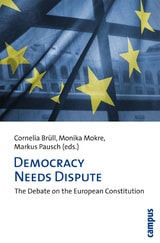
Democracy Needs Dispute
The Debate on the European ConstitutionEdited by Cornelia Brüll, Monika Mokre, and Markus Pausch
Campus Verlag, 2009
In 2005 hopes for closer European integration were dealt a potentially fatal blow when French and Dutch voters rejected the proposed new European Union constitution. Going beyond the instant analysis of journalists, which placed blame for the failed vote on the two nations’ internal politics, Democracy Needs Dispute examines a collection of media accounts of European policy debates to argue that the problem with the EU is its relative lack of vibrant political conflict. Democracy Needs Dispute offers both up-to-date analysis and a rich theoretical understanding of the problems facing further efforts at European integration.
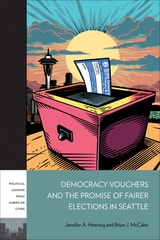
Democracy Vouchers and the Promise of Fairer Elections in Seattle
Jennifer A. Heerwig and Brian J. McCabe
Temple University Press, 2024
Democracy Vouchers and the Promise of Fairer Elections in Seattle critically evaluates the success and impact of this program. Jennifer Heerwig and Brian J. McCabe emphasize how local elections now attract a much wider and more diverse field of both donors and candidates. They also consider external threats to the program, from litigation about the constitutionality of a voucher program to the rise of independent expenditures.
Offering important lessons on how other cities can adopt a similar program, this compelling case study also highlights the obstacles that will likely arise in its implementation.
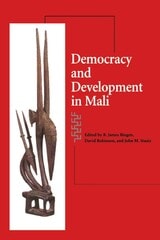
Democracy and Development in Mali
R. James Bingen
Michigan State University Press, 2000
During the past twenty-five years, the scholarly research and applied development work of Michigan State University faculty and students in Mali represents the most significant combined, long-term, and continuing contribution of any group of university faculty in the United States or Europe to the study of Malian society, economy, and politics. The applied nature of much of this work has resulted in a significant number of working papers, reports, and conference presentations. This volume represents a coherent and connected set of essays from one American university with a widely known and highly respected role in African development. While the essays identify and review Mali's unique historical and contemporary path to democracy and development, they also contribute to the advancement of theoretical knowledge about African development.
Democracy and Dysfunction
Sanford Levinson and Jack M. Balkin
University of Chicago Press, 2019
Democracy and Dysfunction brings together two of the leading constitutional law scholars of our time, Sanford Levinson and Jack M. Balkin, in an urgently needed conversation that seeks to uncover the underlying causes of our current crisis and their meaning for American democracy. In a series of letters exchanged over a period of two years, Levinson and Balkin travel—along with the rest of the country—through the convulsions of the 2016 election and Trump’s first year in office. They disagree about the scope of the crisis and the remedy required. Levinson believes that our Constitution is fundamentally defective and argues for a new constitutional convention, while Balkin, who believes we are suffering from constitutional rot, argues that there are less radical solutions. As it becomes dangerously clear that Americans—and the world—will be living with the consequences of this pivotal period for many years to come, it is imperative that we understand how we got here—and how we might forestall the next demagogue who will seek to beguile the American public.
Democracy and Higher Education
Traditions and Stories of Civic EngagementScott J. Peters
Michigan State University Press, 2010
How are we to understand the nature and value of higher education's public purposes, mission, and work in a democratic society? How do-and how should-academic professionals contribute to and participate in civic life in their practices as scholars, scientists, and educators?
Democracy and Higher Education addresses these questions by combining an examination of several normative traditions of civic engagement in American higher education with the presentation and interpretation of a dozen oral history profiles of contemporary practitioners. In his analysis of these profiles, Scott Peters reveals and interprets a democratic-minded civic professionalism that includes and interweaves expert, social critic, responsive service, and proactive leadership roles.
Democracy and Higher Education contributes to a new line of research on the critically important task of strengthening and defending higher education's positive roles in and for a democratic society.
Democracy and Imperialism
Irving Babbitt and Warlike DemocraciesWilliam S. Smith
University of Michigan Press, 2019
Following costly U.S. engagement in two wars in the Middle East, questions about the appropriateness of American military interventions dominate foreign policy debates. Is an interventionist foreign policy compatible with the American constitutional tradition?
This book examines critic Irving Babbitt’s (1865–1933) unique contribution to understanding the quality of foreign policy leadership in a democracy. Babbitt explored how a democratic nation’s foreign policy is a product of the moral and cultural tendencies of the nation’s leaders, arguing that the substitution of expansive, sentimental Romanticism for the religious and ethical traditions of the West would lead to imperialism.
The United States’ move away from the restraint and order of sound constitutionalism to involve itself in the affairs of other nations will inevitably cause a clash with the “civilizational” regions that have emerged in recent decades. Democracy and Imperialism uses the question of soul types to address issues of foreign policy leadership, and discusses the leadership qualities that are necessary for sound foreign policy.

Democracy and Institutions
The Life Work of Arend LijphartMarkus M. L. Crepaz, Thomas A. Koelble, and David Wilsford, Editors
University of Michigan Press, 2000

Democracy and Lobbying in the European Union
Karolina Karr
Campus Verlag, 2007
Democracy and Other Neoliberal Fantasies
Communicative Capitalism and Left PoliticsJodi Dean
Duke University Press, 2009
Dean’s critique ranges from her argument that the term democracy has become a meaningless cipher invoked by the left and right alike to an analysis of the fantasy of free trade underlying neoliberalism, and from an examination of new theories of sovereignty advanced by politicians and left academics to a look at the changing meanings of “evil” in the speeches of U.S. presidents since the mid-twentieth century. She emphasizes the futility of a politics enacted by individuals determined not to offend anyone, and she examines questions of truth, knowledge, and power in relation to 9/11 conspiracy theories. Dean insists that any reestablishment of a vital and purposeful left politics will require shedding the mantle of victimization, confronting the marriage of neoliberalism and democracy, and mobilizing different terms to represent political strategies and goals.

Democracy and Revolution
Latin America and Socialism TodayD. L. Raby
Pluto Press, 2006
Raby argues passionately that the way forward for progressives is not the dogmatic formulae of the Old Left, nor in the spontaneous autonomism of Antonio Negri. Instead, it is to be found in broad popular movements with bold leadership. Examining key leaders, including Hugo Chávez and the Sandinistas in Nicaragua, Raby shows that it is more necessary than ever to take power, peacefully where possible, but in all cases with the strength that comes from popular unity backed by force where necessary. In this way it is possible to build democratic power, which may or may not be socialist depending on one's definition, but which represent the real anti-capitalist alternative for the twenty-first century.
Democracy and Trade Policy in Developing Countries
Bumba Mukherjee
University of Chicago Press, 2016
Mukherjee offers the first comprehensive cross-national framework for identifying the specific economic conditions that influence trade policy in developing countries. Laying out the causes of variation in trade policy in four developing or recently developed countries—Brazil, India, Indonesia, and South Africa—he argues persuasively that changing political interactions among parties, party leaders, and the labor market are often key to trade policy outcome. For instance, if workers are in a position to benefit from opening up to trade, party leaders in turn support trade reforms by decreasing tariffs and other trade barriers.
At a time when discussions about the stability of new democracies are at the forefront, Democracy and Trade Policy in Developing Countries provides invaluable insight into the conditions needed for a democracy to survive in the developing world in the context of globalization.
Democracy and the Culture of Skepticism
The Politics of Trust in Argentina and MexicoMatthew R. Cleary
Russell Sage Foundation, 2006
Democracy and the Left
Social Policy and Inequality in Latin AmericaEvelyne Huber and John D. Stephens
University of Chicago Press, 2012
Although inequality in Latin America ranks among the worst in the world, it has notably declined over the last decade, offset by improvements in health care and education, enhanced programs for social assistance, and increases in the minimum wage.
Democracy at Risk
How Terrorist Threats Affect the PublicJennifer L. Merolla and Elizabeth J. Zechmeister
University of Chicago Press, 2009
How do threats of terrorism affect the opinions of citizens? Speculation abounds, but until now no one had marshaled hard evidence to explain the complexities of this relationship. Drawing on data from surveys and original experiments they conducted in the United States and Mexico, Jennifer Merolla and Elizabeth Zechmeister demonstrate how our strategies for coping with terrorist threats significantly influence our attitudes toward fellow citizens, political leaders, and foreign nations.
The authors reveal, for example, that some people try to restore a sense of order and control through increased wariness of others—especially of those who exist outside the societal mainstream. Additionally, voters under threat tend to prize “strong leadership” more highly than partisan affiliation, making some politicians seem more charismatic than they otherwise would. The authors show that a wary public will sometimes continue to empower such leaders after they have been elected, giving them greater authority even at the expense of institutional checks and balances. Having demonstrated that a climate of terrorist threat also increases support for restrictive laws at home and engagement against terrorists abroad, Merolla and Zechmeister conclude that our responses to such threats can put democracy at risk.
Democracy for Busy People
Kevin J. Elliott
University of Chicago Press, 2023
How do we make democracy more equal? Although in theory, all citizens in a democracy have the right to participate in politics, time-consuming forms of participation often advantage some groups over others. Where some citizens may have time to wait in long lines to vote, to volunteer for a campaign, to attend community board meetings, or to stay up to date on national, state, and local news, other citizens struggle to do the same. Since not all people have the time or inclination to devote substantial energy to politics, certain forms of participation exacerbate existing inequalities.
Democracy for Busy People takes up the very real challenge of how to build a democracy that empowers people with limited time for politics. While many plans for democratic renewal emphasize demanding forms of political participation and daunting ideals of democratic citizenship, political theorist Kevin J. Elliott proposes a fundamentally different approach. He focuses instead on making democratic citizenship undemanding so that even busy people can be politically included. This approach emphasizes the core institutions of electoral democracy, such as political parties, against deliberative reforms and sortition. Timely and action-focused, Democracy for Busy People is necessary reading.
Democracy in America
Alexis de Tocqueville
University of Chicago Press, 2000
Alexis de Tocqueville (1805-59) came to America in 1831 to see what a great republic was like. What struck him most was the country's equality of conditions, its democracy. The book he wrote on his return to France, Democracy in America, is both the best ever written on democracy and the best ever written on America. It remains the most often quoted book about the United States, not only because it has something to interest and please everyone, but also because it has something to teach everyone.
Democracy in America
Alexis de Tocqueville
University of Chicago Press, 2000
This is an auto-narrated audiobook edition of this book.
Democracy in America?
What Has Gone Wrong and What We Can Do About ItBenjamin I. Page and Martin Gilens
University of Chicago Press, 2017
How did we get here? Through decades of dysfunctional government. In Democracy in America? veteran political observers Benjamin I. Page and Martin Gilens marshal an unprecedented array of evidence to show that while other countries have responded to a rapidly changing economy by helping people who’ve been left behind, the United States has failed to do so. Instead, we have actually exacerbated inequality, enriching corporations and the wealthy while leaving ordinary citizens to fend for themselves.
What’s the solution? More democracy. More opportunity for citizens to shape what their government does. To repair our democracy, Page and Gilens argue, we must change the way we choose candidates and conduct our elections, reform our governing institutions, and curb the power of money in politics. By doing so, we can reduce polarization and gridlock, address pressing challenges, and enact policies that truly reflect the interests of average Americans.
This book presents a damning indictment. But the situation is far from hopeless. With increased democratic participation as their guide, Page and Gilens lay out a set of proposals that would boost citizen participation, curb the power of money, and democratize the House and Senate. The only certainty is that inaction is not an option. Now is the time to act to restore and extend American democracy.
Democracy in America?
What Has Gone Wrong and What We Can Do About ItBenjamin I. Page and Martin Gilens
University of Chicago Press, 2020
What’s the solution? More democracy. More opportunities for citizens to shape what their government does. To repair our democracy, Page and Gilens argue, we must change the way we choose candidates and conduct our elections, reform our governing institutions, and curb the power of money in politics. By doing so, we can reduce polarization and gridlock, address pressing challenges, and enact policies that truly reflect the interests of average Americans.
Updated with new information, this book lays out a set of proposals that would boost citizen participation, curb the power of money, and democratize the House and Senate.
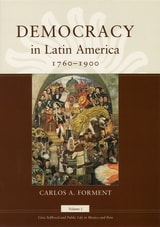
Democracy in Latin America, 1760-1900
Volume 1, Civic Selfhood and Public Life in Mexico and PeruCarlos A. Forment
University of Chicago Press, 2003
This first volume of Democracy in Latin America considers the development of democratic life in Mexico and Peru from independence to the late 1890s. Forment traces the emergence of hundreds of political, economic, and civic associations run by citizens in both nations and shows how these organizations became models of and for democracy in the face of dictatorship and immense economic hardship. His is the first book to show the presence in Latin America of civic democracy, something that gave men and women in that region an alternative to market- and state-centered forms of life.
In looking beneath institutions of government to uncover local and civil organizations in public life, Forment ultimately uncovers a tradition of edification and inculcation that shaped democratic practices in Latin America profoundly. This tradition, he reveals, was stronger in Mexico than in Peru, but its basic outlines were similar in both nations and included a unique form of what Forment calls Civic Catholicism in order to distinguish itself from civic republicanism, the dominant political model throughout the rest of the Western world.

Democracy in Mexico
Attitudes and Perceptions of Citizens at National and Local LevelEdited by Salvador Marti i Puig, Reynaldo Yunuen Ortega Ortiz, M. Fernanda Somuano Ventura, and Claire Wright
University of London Press, 2014
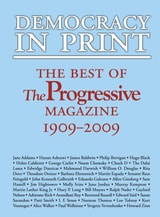
Democracy in Print
The Best of The Progressive Magazine, 1909–2009Edited by Matthew Rothschild
University of Wisconsin Press, 2009
Readers will discover the vision of the magazine’s founder, Robert “Fighting Bob” La Follette, and his suffragist wife, Belle Case La Follette. They’ll find historic gems from the likes of Jane Addams, Carl Sandburg, Huey Long, and John Kenneth Galbraith, and profound essays by Theodore Dreiser, Barbara Ehrenreich, Noam Chomsky, Upton Sinclair, Arundhati Roy, James Baldwin, Edwidge Danticat, and Edward Said. The collection is leavened with humor from Kate Clinton, Will Durst, Michael Feldman, and Molly Ivins, and graced by poems from such writers as Mahmoud Darwish, Rita Dove, Martín Espada, Maxine Kumin, Adrienne Rich, and Sandra Cisneros. Fascinating interviews bring readers into conversations with prominent cultural figures, including Chuck D, the Dalai Lama, Allen Ginsberg, Amy Goodman, Harold Pinter, Patti Smith, Susan Sarandon, and Yevgeny Yevtushenko.
Eminently browsable, this book is for anyone concerned with American democracy, the global community, and the perils of the planet. With contributions by actors and Supreme Court justices, comedians and Nobel Prize-winners, Democracy in Print offers all readers nourishing food for thought.
Democracy in a Pandemic
Participation in Response to CrisisGraham Smith, Tim Hughes, Lizzie Adams and Charlotte Obijiaku
University of Westminster Press, 2021
Covid-19 has highlighted limitations in our democratic politics – but also lessons for how to deepen our democracy and more effectively respond to future crises. In the face of an emergency, the working assumption all too often is that only a centralised, top-down response is possible. This book exposes the weakness of this assumption, making the case for deeper participation and deliberation in times of crises. During the pandemic, mutual aid and self-help groups have realised unmet needs. And forward-thinking organisations have shown that listening to and working with diverse social groups leads to more inclusive outcomes.
Participation and deliberation are not just possible in an emergency. They are valuable, perhaps even indispensable.
This book draws together a diverse range of voices of activists, practitioners, policy makers, researchers and writers. Together they make visible the critical role played by participation and deliberation during the pandemic and make the case for enhanced engagement during and beyond emergency contexts.
Another, more democratic world can be realised in the face of a crisis. The contributors to this book offer us meaningful insights into what this could look like.

Democracy in the Headwinds
The Rise, Erosion, and Defence of Liberal DemocracyAndreas Busch
Haus Publishing, 2026
In Democracy in the Headwinds, Andreas Busch examines the growing threats to democracy worldwide and outlines the principles needed to safeguard it.
A mob storms the United States Capitol. A Hungarian strongman hollows out courts, media, and civil society for sixteen years, then is voted out in a landslide. Brexit exposes the fragility of a constitution built on unwritten conventions. In Germany, one in five voters chooses a party classified by the state’s own security apparatus as a suspected threat to the democratic order. What is going on—and should it concern us?
Drawing on evidence from the United States, the United Kingdom, Germany, Hungary, Poland, and the wider democratic world, Andreas Busch tells the story of liberal democracy’s rise, its erosion by elected leaders who dismantle institutions from within, and the defenses that hold it together. He traces how economic dislocation, digital disruption, and the polarization of political life have converged to put mature democracies under pressure they were assumed to have outgrown.
At the heart of the book lies a deceptively simple argument: the procedural core of democracy—free and fair elections and the peaceful transfer of power—is the foundation on which everything else rests. Protect the mechanics, and everything else can be rebuilt. Lose them, and nothing can.
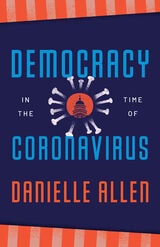
Democracy in the Time of Coronavirus
Danielle Allen
University of Chicago Press, 2022
The COVID-19 pandemic has demonstrated some of the strengths of our society, including the rapid development of vaccines. But the pandemic has also exposed its glaring weaknesses, such as the failure of our government to develop and quickly implement strategies for tracing and containing outbreaks as well as widespread public distrust of government prompted by often confusing and conflicting choices—to mask, or not to mask. Even worse is that over half a million deaths and the extensive economic devastation could have been avoided if the government had been prepared to undertake comprehensive, contextually-sensitive policies to stop the spread of the disease.
In Democracy in the Time of Coronavirus, leading political thinker Danielle Allen untangles the US government’s COVID-19 victories and failures to offer a plan for creating a more resilient democratic polity—one that can better respond to both the present pandemic and future crises. Looking to history, Allen also identifies the challenges faced by democracies in other times that required strong government action. In an analysis spanning from ancient Greece to the Reconstruction Amendments and the present day, Allen argues for the relative effectiveness of collaborative federalism over authoritarian compulsion and for the unifying power of a common cause. But for democracy to endure, we—as participatory citizens—must commit to that cause: a just and equal social contract and support for good governance.
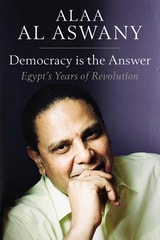
Democracy is the Answer
Egypt's Years of RevolutionAlaa Al Aswany
Gingko, 2014
This book presents, for the first time in English, all of Al-Aswany’s columns from the period, a comprehensive account of the turmoil of the post-revolutionary years, and a portrait of a country and a people in flux. Each column is presented along with a context-setting introduction, as well as notes and a glossary, all designed to give non-Egyptian readers the background they need to understand the events and figures that Al-Aswany chronicles. The result is a definitive portrait of Egypt today—how it got here, and where it might be headed.

Democracy on a Tightrope
Politics and Bureaucracy in BrazilPedro Abramovay
Central European University Press, 2026
Democracy without Associations
Transformation of the Party System and Social Cleavages in IndiaPradeep K. Chhibber
University of Michigan Press, 2001
Democracy's Education
Public Work, Citizenship, and the Future of Colleges and UniversitiesHarry C. Boyte
Vanderbilt University Press, 2015
Democracy's Education grows from the American Commonwealth Partnership, a year-long project to revitalize the democratic narrative of higher education that began with an invitation to Harry Boyte from the White House to put together a coalition aimed at strengthening higher education as a public good. The project was launched at the beginning of 2012 to mark the 150th anniversary of the Morrill Act, which created land grant colleges.
Beginning with an essay by Harry C. Boyte, "Reinventing Citizenship as Public Work," which challenges educators and their partners to claim their power to shape the story of higher education and the civic careers of students, the collection brings world-famous scholars, senior government officials, and university presidents together with faculty, students, staff, community organizers, and intellectuals from across the United States and South Africa and Japan. Contributors describe many constructive responses to change already taking place in different kinds of institutions, and present cutting-edge ideas like "civic science," "civic studies," "citizen professionalism," and "citizen alumni." Authors detail practical approaches to making change, from new faculty and student roles to changes in curriculum and student life and strategies for everyday citizen empowerment. Overall, the work develops a democratic story of education urgently needed to address today's challenges, from climate change to growing inequality.
Democracy's Hidden Heroes
Fitting Policy to People and PlaceDavid C. Campbell
Temple University Press, 2024
David Campbell recounts compelling stories of the workarounds, sidesteps, informal agreements, and grantor–grantee negotiations that help policy initiatives succeed as intended. The settings include schools, human services departments, workforce development agencies, and community-based organizations. He explains why it is difficult, though necessary, to translate locally attuned implementation dynamics into accountability metrics for distant funders.
Drawing on 2,000 interviews, Democracy’s Hidden Heroes is the culmination of decades spent talking to people who must reconcile bureaucratic and community cultures. Campbell’s grounded approach and balanced perspective bring fresh insights to the analysis of policy implementation, public management, and results accountability, while offering both cautionary advice and a hopeful prognosis.
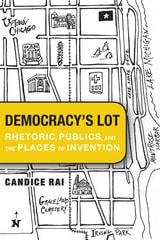
Democracy's Lot
Rhetoric, Publics, and the Places of InventionCandice Rai
University of Alabama Press, 2016
Candice Rai’s Democracy’s Lot is an incisive exploration of the limitations and possibilities of democratic discourse for resolving conflicts in urban communities. Rai roots her study of democratic politics and publics in a range of urban case studies focused on public art, community policing, and urban development. These studies examine the issues that erupted within an ethnically and economically diverse Chicago neighborhood over conflicting visions for a vacant lot called Wilson Yard. Tracing how residents with disparate agendas organized factions and deployed language, symbols, and other rhetorical devices in the struggle over Wilson Yard’s redevelopment and other contested public spaces, Rai demonstrates that rhetoric is not solely a tool of elite communicators, but rather a framework for understanding the agile communication strategies that are improvised in the rough-and-tumble work of democratic life.
Wilson Yard, a lot eight blocks north of Wrigley Field in Chicago’s gentrifying Uptown neighborhood, is a diverse enclave of residents enlivened by recent immigrants from Guatemala, Mexico, Vietnam, Ethiopia, and elsewhere. The neighborhood’s North Broadway Street witnesses a daily multilingual hubbub of people from a wide spectrum of income levels, religions, sexual identifications, and interest groups. When a fire left the lot vacant, this divided community projected on Wilson Yard disparate and conflicting aspirations, the resolution of which not only determined the fate of this particular urban space, but also revealed the lot of democracy itself as a process of complex problem-solving. Rai’s detailed study of one block in an iconic American city brings into vivid focus the remarkable challenges that beset democratic urban populations anywhere on the globe—and how rhetoric supplies a framework to understand and resolve those challenges.
Based on exhaustive field work, Rai uses rhetorical ethnography to study competing publics, citizenship, and rhetoric in action, exploring “rhetorical invention,” the discovery or development by individuals of the resources or methods of engaging with and persuading others. She builds a case for democratic processes and behaviors based not on reflexive idealism but rather on the hard work and practice of democracy, which must address apathy, passion, conflict, and ambivalence.
Democracy's Meanings
How the Public Understands Democracy and Why It MattersNicholas T. Davis, Keith Gåddie, and Kirby Goidel
University of Michigan Press, 2022
Democracy’s Meanings challenges conventional wisdom regarding how the public thinks about and evaluates democracy. Mining both political theory and more than 75 years of public opinion data, the book argues that Americans think about democracy in ways that go beyond voting or elected representation. Instead, citizens have rich and substantive views about the material conditions that democracy should produce, which draw from their beliefs about equality, fairness, and justice.
The authors construct a typology of views about democracy. Procedural views of democracy take a minimalistic quality. While voting and fair treatment are important to this vision of democracy, ideas about equality are mostly limited to civil liberties. In contrast, social views of democracy incorporate both civil and economic equality; according to people with these views, democracy ought to meet the basic social and material needs of citizens. Complementing these two groups are moderate and indifferent views about democracy. While moderate views sit somewhere in between procedural and social perspectives regarding the role of democracy in producing social and economic equality, indifferent views of democracy involve disaffection toward it. For a small group of apathetic citizens, democracy is an ambiguous and ill-defined concept.
Democracy's News
A Primer on Journalism for Citizens Who Care about DemocracyG. Michael Killenberg and Rob Anderson
University of Michigan Press, 2023
Since the Founding, America’s faith in a democratic republic has depended on citizens who could be trusted to be communicators. Vigorous talk about equality, rights, and collaboration fueled the revolution, the Declaration of Independence, and the Constitution with its amendments. In a republic, the people set the terms for their lives not individually, but in community. The genius of keeping it alive exists in how everyday citizens talk and listen, write and read, for a common good. Dialogue and deliberation—rather than an accumulation of individual preferences—sustains a republic, yet a diminished and scarred institution of journalism jeopardizes citizens’ access to shared and truthful information. A disturbing “what’s in it for me?” attitude has taken over many citizens, and a creeping, autocratic sense of dismissive accusation too often characterizes the political style of elected officials.
The basic fuel for democracy is the willingness of informed citizens to take each other seriously as they talk about political choices. Once we begin to clam up, build walls, and dismiss each other, we unravel the threads tying us to the Founders’ vision of a republic. A free press and free speech become meaningless if not supported by sustained listening to multiple positions. There are those who profit by dividing citizens into two camps: a comfortable “us” versus a scary “them.” They make their case with accusations and often with lies. They warp the very meaning of communication, hoping citizens never truly discover each other’s humanity. Democracy’s News discusses today’s problems of public communication in the context of history, law, and interpersonal life. News should not be something to dread, mistrust, or shun. Aided by reliable, factual journalism, citizens can develop a community-based knowledge to cope with social issues great and small. They come to treat neighbors and strangers as more than stereotypes or opponents. They become collaborators with whom to identify and sustain a working republic where news, citizenship, and public discourse merge.
Democracy's Promise
Immigrants and American Civic InstitutionsJanelle S. Wong
University of Michigan Press, 2006
Given the massive demographic changes in the United States during the past few decades, understanding the place of immigrants in the public sphere has never been more critical. Democracy's Promise examines both the challenges and opportunities posed to American civic institutions by the presence of increasing numbers of immigrants. Author Janelle Wong argues that the low levels of political participation among contemporary immigrants are not due to apathy or preoccupation with their homeland, but to the inability of American political parties and advocacy organizations to mobilize immigrant voters. Wong's rich study of Chinese and Mexican immigrants in New York and Los Angeles complements traditional studies of political behavior and civic institutions while offering a nuanced examination of immigrants' political activity.
Democracy's Promise will appeal to a broad spectrum of social scientists and ethnic studies scholars who study or teach immigration, racial and ethnic politics, political participation, civic engagement, and American political institutions. In addition, it will appeal to community organizers and party activists who are interested in issues of race and ethnicity, immigration, political participation, and political mobilization.
Janelle Wong is Assistant Professor of Political Science and American Studies and Ethnicity at the University of Southern California.
--Jennifer L. Hochschild, Harvard University
"Wong draws on the Latino and Asian immigrant experience, with specific examples from the Chinese and Mexican communities of New York and Los Angeles, to show how the political parties have largely failed to organize these groups and why labor unions and immigrant advocacy organizations have stepped in to take their place. Far from 'disuniting' America, she clearly shows that bringing these groups into the political fray is central to the project of renewing American democracy."
--John Mollenkopf, CUNY Graduate Center
"A scathing critique of the role of parties in the mobilization of new immigrants and an invaluable analysis of alternative pathways of mobilization through community organizations."
--Michael Jones-Correa, Cornell University
"By employing multiple empirical methods, including in-depth interviews and sophisticated survey analyses, Janelle Wong provides a compelling account of the political activities and allegiances of America's Asian and Latino immigrants that challenges much conventional wisdom. Often the political parties are failing to reach out to these groups, and often immigrants remain concerned about their home countries; but they are nonetheless increasingly active in American politics, in ways that may do much to shape the course of American political development in the 21st century. Democracy's Promise is a major contribution to our understanding of this crucial dimension of American politics."
--Rogers M. Smith, University of Pennsylvania
"Democracy's Promise challenges political parties to reexamine their priorities for mobilizing new voters, and identifies the critical role civic institutions play in invigorating participation among immigrant citizens. Wong's analysis is at once precise and expansive; illuminating the contours of Latino and Asian American political incorporation and provoking thoughtful debate on inclusion in democratic theory."
--Jane Junn, Rutgers University
Democracy's Rebirth
The View from ChicagoDick Simpson. Foreword by Lori Lightfoot
University of Illinois Press, 2022
With a foreword by Mayor Lori E. Lightfoot.
Democracy, Dictatorship, and Term Limits
Alexander Baturo
University of Michigan Press, 2014
A national constitution or other statute typically specifies restrictions on executive power, often including a limit to the number of terms the chief executive may hold office. In recent decades, however, some presidents of newly established democracies have extended their tenure by various semilegal means, thereby raising the specter—and in some cases creating the reality—of dictatorship.
Alexander Baturo tracks adherence to and defiance of presidential term limits in all types of regimes (not only democratic regimes) around the world since 1960. Drawing on original data collection and fieldwork to investigate the factors that encourage playing by or manipulating the rules, he asks what is at stake for the chief executive if he relinquishes office. Baturo finds that the income-generating capacity of political office in states where rent-seeking is prevalent, as well as concerns over future immunity and status, determines whether or not an executive attempts to retain power beyond the mandated period. Democracy, Dictatorship, and Term Limitswill appeal to scholars of democratization and executive power and also to political theorists.
Democracy, Electoral Systems, and Judicial Empowerment in Developing Countries
Vineeta Yadav and Bumba Mukherjee
University of Michigan Press, 2014
Moving next to de facto independence, Yadav and Mukherjee bring together data from 103 democracies in the developing world, complemented by case studies of Brazil, India, and Indonesia. Honing in on the effects of electoral institutions, the authors find that, when faced with short time horizons, governments that operate in personal vote electoral systems are likely to increase de facto judicial independence whereas governments in party-centered systems are likely to reduce it.

Democracy, Governance, and Growth
Stephen Knack, Editor
University of Michigan Press, 2003
The difference between developmental success and failure in this view has little to do with natural resource availability, climate, aid, or developed nations' policies. Rather, it is largely a function of whether incentives within a given society steer wealth-maximizing individuals toward producing new wealth or toward diverting it from others. The chapters, seminal essays written by Mancur Olson and his IRIS Center colleagues, provide theoretical and/or empirical underpinnings for the emerging consensus that differences in the way governments and societies are organized have enormous implications for the structure of incentives faced by politicians, bureaucrats, investors, and workers, which in turn determines the level of a nation's material well-being.
Overall this volume applies tools and concepts from the "New Institutional Economics" to some of the major issues in economic development. It will be of interest to scholars and students of various disciplines--including political science, law, and sociology as well as economics--interested in the determinants of economic development and global economic change. The book will also be of interest to many aid practitioners, particularly those working in anticorruption and public sector reform issues.
Stephen Knack is Senior Research Economist, Development Research Group, the World Bank.
Democracy, Inequality, and Representation in Comparative Perspective
Pablo Beramendi
Russell Sage Foundation, 2008
Democracy, Militarism, and Nationalism in Argentina, 1930–1966
An InterpretationBy Marvin Goldwert
University of Texas Press, 1972
Until 1930, Argentina was one of the great hopes for stable democracy in Latin America. Argentines themselves believed in the destiny of their nation to become the leading Latin American country in wealth, power, and culture. But the revolution of 1930 unleashed the scourges of modern militarism and chronic instability in the land. Between 1930 and 1966, the Argentine armed forces, or factions of the armed forces, overthrew the government five times.
For several decades, militarism was the central problem in Argentine political life. In this study, Marvin Goldwert interprets the rise, growth, and development of militarism in Argentina from 1930 to 1966. The tortuous course of Argentine militarism is explained through an integrating hypothesis. The army is viewed as a “power factor,” torn by a permanent dichotomy of values, which rendered it incapable of bringing modernization to Argentina. Caught between conflicting drives for social order and modernization, the army was an ambivalent force for change. First frustrated by incompetent politicians (1916–1943), the army was later driven by Colonel Juan D. Perón into an uneasy alliance with labor (1943–1955). Peronism initially represented the means by which army officers could have their cake—nationalistic modernization—and still eat it in peace, with the masses organized in captive unions tied to an authoritarian state.
After 1955, when Perón was overthrown, a deeply divided army struggled to contain the remnants of its own dictatorial creation. In 1966, the army, dedicated to staunch anti-Peronism, again seized the state and revived the dream of reconciling social order and modernization through military rule.
Although militarism has been a central problem in Argentine political life, it is also the fever that suggests deeper maladies in the body politic. Marvin Goldwert seeks to relate developments in the military to the larger political, social, and economic developments in Argentine history. The army and its factions are viewed as integral parts of the whole political spectrum during the period under study.
Democracy’s Destruction? Changing Perceptions of the Supreme Court, the Presidency, and the Senate after the 2020 Election
Changing Perceptions of the Supreme Court, the Presidency, and the Senate after the 2020 ElectionJames L. Gibson
Russell Sage Foundation, 2024
Focusing on the U.S. Supreme Court, the presidency, and the U.S. Senate, Gibson reveals that how people assessed the election, the insurrection, and even the second Trump impeachment has little connection to their willingness to view American political institutions as legitimate. Instead, legitimacy is grounded in more general commitments to democratic values and support for the rule of law. On most issues of institutional legitimacy, those who denied the election results and supported the insurrection were not more likely to be alienated from political institutions and to consider them illegitimate.
Gibson also investigates whether Black people might have responded differently to the events of the 2020 election and its aftermath. He finds that in comparison to the White majority, Black Americans were less supportive of America’s democratic institutions and of democratic values, such as reverence for the rule of law, because they often have directly experienced unfair treatment by legal authorities. But he emphasizes that the actions of Trump and his followers are not the cause of those weaker commitments.
Democracy’s Destruction? offers rigorous analysis of the effect of the Trump insurrection on the state of U.S. democracy today. While cautioning that Trump and many Republicans may be devising schemes to subvert the next presidential election more effectively, the book attests to the remarkable endurance of American political institutions.

Democratic Laboratories
Policy Diffusion among the American StatesAndrew Karch
University of Michigan Press, 2010
"Observers have long marveled at the spread of ideas and policies from state to state in American democracy. But why and how do politicians, professionals, and citizens in one state take inspiration from national policy debates and imitate, resist, and rework legislative models from other states? For the first time in this important new book, Andrew Karch analyzes in depth the process of policy 'diffusion' across the states, offering a nuanced and powerful framework to explain one of the most important and recurrent features of U.S. politics."
---Theda Skocpol, Victor S. Thomas Professor of Government and Sociology, Harvard University
"Karch does two things with remarkable skill. First, he makes sense of the copious literature on policy diffusion and extends that literature in a very fruitful way. Second, he conducts the most thorough and methodologically sound empirical study of policy diffusion to date, using both qualitative and quantitative analysis. This book is so well written and thoughtful that it will likely stimulate a whole new wave of study of state policy and its diffusion."
---Chris Mooney, editor of State Politics and Policy Quarterly
"Democratic Laboratories goes beyond standard 'diffusion of innovation' approaches to analyze the complex interaction of interstate and intrastate political forces that shapes policy change. The book is a major contribution to the study of American federalism---and a very good read."
---Kent Weaver, Brookings Institution
---Virginia Gray, University of North Carolina, Chapel Hill
"Democratic Laboratories is the seminal work on policy diffusion among the American states. Rigorously designed and well written, it is the new starting place for anyone interested in this important topic. The findings are copious and loaded with insights into the future of this valuable research."
---Harrell Rodgers, Professor and Chair, Department of Political Science, University of Houston
Andrew Karch is Assistant Professor of Government at the University of Texas at Austin.
Democratic Peace
A Political BiographyPiki Ish-Shalom
University of Michigan Press, 2015
The Democratic Peace Thesis holds that democracies rarely make war on other democracies. Political scientists have advanced numerous theories attempting to identify precisely which elements of democracy promote this mutual peace, often hoping that Democratic Peace could be the final and ultimate antidote to war. However, as the theories were taken up by political figures, the immediate outcomes were war and the perpetuation of hostilities.
Political theorist Piki Ish-Shalom sketches the origins and early academic development of the Democratic Peace Thesis. He then focuses on the ways in which various Democratic Peace Theories were used by Bill Clinton and George W. Bush both to shape and to justify U.S. foreign policy, particularly the U.S. stance on the Israeli-Palestinian situation and the War in Iraq. In the conclusion, Ish-Shalom boldly confronts the question of how much responsibility theoreticians must bear for the political uses—and misuses—of their ideas.
Democratic Purgatory
Failure of Consolidated Democracies in Latin America and East-Central EuropeChristopher M. Brown
Central European University Press, 2026
Rather than structural inevitability, these breakdowns stem from contingent choices: negotiated transitions, successor party dominance, and technocratic insulation created fertile ground for popularism, a top-down appropriation of populist rhetoric to dismantle liberal norms. From Orbán’s Hungary to Chávez’s Venezuela, the analysis reveals how democratic procedures can hollow out democracy itself.
In an era of global democratic backsliding, this book offers a timely framework for understanding the fragility of liberal democracy and the decisive role of political agency in preventing breakdown or enabling renewal.
Democratic Theorizing from the Margins
Marla Brettschneider
Temple University Press, 2007
Democratic Vistas
The Original Edition in FacsimileWhitman, Walt
University of Iowa Press, 2010
Written in the aftermath of the American Civil War during the ferment of national Reconstruction, Walt Whitman’s Democratic Vistas remains one of the most penetrating analyses of democracy ever written. Diagnosing democracy’s failures as well as laying out its vast possibilities, Whitman offers an unflinching assessment of the ongoing social experiment known as the United States. Now available for the first time in a facsimile of the original 1870–1871 edition, with an introduction and annotations by noted Whitman scholar Ed Folsom that illuminate the essay’s historical and cultural context, this searing analysis of American culture offers readers today the opportunity to argue with Whitman over the nature of democracy and the future of the nation.
Living in Washington, D.C., where Congress granted male African Americans the right to vote nearly five years before the fifteenth amendment extended that right across the nation, and working for the office charged with enforcing the new civil rights amendments to the Constitution, Whitman was at the volatile center of his nation’s massive attempt to reconstruct and redefine itself after the tumultuous years of civil war. In the enduring cultural document that Democratic Vistas has become, the great poet of democracy analyzes the role that literature plays in the development of a culture, the inevitable tensions between the “democratic individual” and the “democratic nationality,” and the corrosive effects of materialism on the democratic spirit.
His own conflicting racial biases notwithstanding, Whitman in Democratic Vistas offers his most eloquent and extended articulation of the beckoning American democratic future. At a time when the nation has elected a president whom Whitman could never have imagined, his controversial and provocative book is a timely reminder of those occasions when we experience the expansion of America’s democratic dream.

Democratization and Islamic Law
The Sharia Conflict in NigeriaJohannes Harnischfeger
Campus Verlag, 2007
When democracy was introduced to Nigeria in 1999, one third of its federal states declared that they would be governed by sharia, or Islamic law. In Democratization and Islamic Law, Johannes Harnischfeger argues that such a break with secular constitutional traditions in a multi-religious country can have disastrous consequences. The efforts by Islamic politicians to assert their own religious laws, Harnischfeger contends, have driven Muslims and Christians to confrontation. This book is an essential contribution to debates surrounding the increasingly fraught relationship between religion and politics.
Democratization and the Politics of Constitution-Making in Turkey
Ömer Faruk Gençkaya
Central European University Press, 2009
Democratization by Institutions
Argentina's Transition Years in Comparative PerspectiveLeslie E. Anderson
University of Michigan Press, 2016
In this pioneering study of democratization in Argentina, Leslie Anderson challenges Robert Putnam’s thesis that democracy requires high levels of social capital. She demonstrates in Democratization by Institutions that formal institutions (e.g., the executive, the legislature, the courts) can serve not only as operational parts within democracy but as the driving force toward democracy.
As Anderson astutely observes, the American founders debated the merits of the institutions they were creating. Examining how, and how well, Argentina’s American-style institutional structure functions, she considers the advantages and risks of the separation of powers, checks and balances, legislative policymaking, and strong presidential power. During the democratic transition, the Argentinian state has used institutions to address immediate policy challenges in ways responsive to citizens and thereby to provide a supportive environment in which social capital can develop.
By highlighting the role that institutions can play in leading a nation out of authoritarianism, even when social capital is low, Anderson begins a new conversation about the possibilities of democratization. Democratization by Institutions has much to say not only to Latin Americanists and scholars of democratization but also to those interested in the U.S. constitutional structure and its application in other parts of the world.
Democratization in the Nordic World
David Delfs Erbo Andersen
University of Wisconsin Press, 2024
Rather, Scandinavia’s peaceful process of democratization owed itself to the development of a penetrative bureaucracy in the early modern period and the activism of cooperative associations, first of farmers in the early nineteenth century and then of industrialized workers in the late nineteenth and early twentieth centuries. Thanks to the gradual, relatively consensual adoption of political reforms and social norms, the history of “Nordic democratic exceptionalism” today helps account for the ongoing stability of the Scandinavian countries.