Results by title
8812 books match the query 'Political Science' and 352 start with d
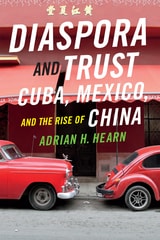
Diaspora and Trust
Cuba, Mexico, and the Rise of ChinaAdrian H. Hearn
Duke University Press, 2016
Diasporas in the New Media Age
Identity, Politics, and CommunityAndoni Alonso
University of Nevada Press, 2010
The explosion of digital information and communication technologies has influenced almost every aspect of contemporary life. Diasporas in the New Media Age is the first book-length examination of the social use of these technologies by emigrants and diasporas around the world. The eighteen original essays in the book explore the personal, familial, and social impact of modern communication technology on populations of European, Asian, African, Caribbean, Middle Eastern, and Latin American emigrants. It also looks at the role and transformation of such concepts as identity, nation, culture, and community in the era of information technology and economic globalization. The contributors, who represent a number of disciplines and national origins, also take a range of approaches—empirical, theoretical, and rhetorical—and combine case studies with thoughtful analysis. Diasporas in the New Media Age is both a discussion of the use of communication technologies by various emigrant groups and an engaging account of the immigrant experience in the contemporary world. It offers important insights into the ways that dispersed populations are using digital media to maintain ties with their families and homeland, and to create new communities that preserve their culture and reinforce their sense of identity. In addition, the book is a significant contribution to our understanding of the impact of technology on society in general.
Dictators and the Higher Education Dilemma
State Power and the University in Modern IranSaeid Golkar
Rutgers University Press, 0
Dictators and the Higher Education Dilemma explores a powerful contradiction at the heart of modern authoritarian regimes: While universities are essential for producing skilled labor and projecting national progress, they also cultivate critical thinkers who can challenge state power. Drawing on Iran’s modern history, from the Pahlavi monarchy to the Islamic Republic, Saeid Golkar shows how dictators use universities not only to train technocrats and showcase development but also as tools for shaping ideology, suppressing dissent, and co-opting academics. In authoritarian systems, education becomes a double-edged sword, essential for growth yet dangerous when it empowers independent thought. Golkar reveals how regimes manipulate admissions, censor curricula, and reward loyalty to create compliant intellectuals and loyal elites. Blending personal experience with rich historical and political analysis, this book exposes the tactics used to turn universities into instruments of social control. It speaks to a growing trend worldwide, offering vital insights into the clash between authoritarian power and academic freedom from Iran to China, Russia, and beyond.

Dictatorship in the Modern World
Guy Ford
University of Minnesota Press, 1935
Diet and the Disease of Civilization
Adrienne Rose Bitar
Rutgers University Press, 2017
Diet books contribute to a $60-billion industry as they speak to the 45 million Americans who diet every year. Yet these books don’t just tell readers what to eat: they offer complete philosophies about who Americans are and how we should live. Diet and the Disease of Civilization interrupts the predictable debate about eating right to ask a hard question: what if it’s not calories—but concepts—that should be counted?
Cultural critic Adrienne Rose Bitar reveals how four popular diets retell the “Fall of Man” as the narrative backbone for our national consciousness. Intensifying the moral panic of the obesity epidemic, they depict civilization itself as a disease and offer diet as the one true cure.
Bitar reads each diet—the Paleo Diet, the Garden of Eden Diet, the Pacific Island Diet, the detoxification or detox diet—as both myth and manual, a story with side effects shaping social movements, driving industry, and constructing fundamental ideas about sickness and health. Diet and the Disease of Civilization unearths the ways in which diet books are actually utopian manifestos not just for better bodies, but also for a healthier society and a more perfect world.
Difference without Domination
Pursuing Justice in Diverse DemocraciesEdited by Danielle Allen and Rohini Somanathan
University of Chicago Press, 2020
Using examples from the United States, India, Germany, and Cameroon, the contributors offer paradigm-changing approaches to the concepts of justice, identity, and social groups while also taking a fresh look at the idea that the demographic make-up of institutions should mirror the make-up of a populace as a whole. After laying out the conceptual framework, the volume turns to a number of provocative topics, among them the pernicious tenacity of implicit bias, the logical contradictions inherent to the idea of universal human dignity, and the paradoxes and problems surrounding affirmative action. A stimulating blend of empirical and interpretive analyses, Difference without Domination urges us to reconsider the idea of representation and to challenge what it means to measure equality and inequality.
Differences and Changes in Wage Structures
Edited by Richard B. Freeman and Lawrence F. Katz
University of Chicago Press, 1995
Focusing on labor market institutions and the supply and demand forces that affect wages, the papers compare patterns of earnings inequality and pay differentials in the United States, Australia, Korea, Japan, Western Europe, and the changing economies of Eastern Europe. Cross-country studies examine issues such as managerial compensation, gender differences in earnings, and the relationship of pay to regional unemployment.
From this rich store of data, the contributors attribute changes in relative wages and unemployment among countries both to differences in labor market institutions and training and education systems, and to long-term shifts in supply and demand for skilled workers. These shifts are driven in part by skill-biased technological change and the growing internationalization of advanced industrial economies.
Digital Activism in the Mexican Nations
Resistance, Catharsis, TransformationDavid S. Dalton
Rutgers University Press, 2026
Digital Activism in the Mexican Nations analyzes Mexico’s rich history of digital activism, which is among the most vibrant of any country in the Hispanic world. The book begins with a discussion of the Zapatista uprising of 1994—which is widely understood as the first digital social movement in the history of the world—and ends with a discussion of the digital strategies of migrant communities trekking through Mexico into the present.
Conceptualizing (digital) activism as a type of performance, the book opens a dialogue with Brecht’s binary of cathartic and transformative performance. As such, it suggests that activist movements centered on expressive manifestations of emotion tend to stifle a social movement’s revolutionary potential by stifling their ability to resonate with potential allies outside their community. At the same time, it argues that the most successful digital social movements seek strategies to build connections with allies who can help them to shift state policy.

Digital Demagogue
Authoritarian Capitalism in the Age of Trump and TwitterChristian Fuchs
Pluto Press, 2018
This book delves into new political-economic structures as expressed through political communication to explain the rise of authoritarian capitalism, nationalism and right-wing ideology throughout the world. Christian Fuchs does this through updating Marxist theory and the Frankfurt School's critical theory. He re-invigorates the works on authoritarianism of Franz L. Neumann, Theodor W. Adorno, Erich Fromm, Herbert Marcuse, Max Horkheimer, Wilhelm Reich, Leo Lowenthal and Klaus Theweleit in the age of Trump and Twitter.
In the age of big data and social media, Digital Demagogue studies the expressions of ideology, nationalism and authoritarianism today and discusses prospects for overcoming capitalism and renewing the Left.
Digital Objects, Digital Subjects
Interdisciplinary Perspectives on Capitalism, Labour and Politics in the Age of Big DataDavid Chandler and Christian Fuchs
University of Westminster Press, 2019
This volume explores activism, research and critique in the age of digital subjects and objects and Big Data capitalism after a digital turn said to have radically transformed our political futures. Optimists assert that the ‘digital’ promises: new forms of community and ways of knowing and sensing, innovation, participatory culture, networked activism, and distributed democracy. Pessimists argue that digital technologies have extended domination via new forms of control, networked authoritarianism and exploitation, dehumanization and the surveillance society. Leading international scholars present varied interdisciplinary assessments of such claims – in theory and via dialogue – and of the digital’s impact on society and the potentials, pitfalls, limits and ideologies, of digital activism. They reflect on whether computational social science, digital humanities and ubiquitous datafication lead to digital positivism that threatens critical research or lead to new horizons in theory and society.
An electronic version of this book is freely available, thanks to the support of libraries working with Knowledge Unlatched. KU is a collaborative initiative designed to make high quality books Open Access for the public good. More information about the initiative and details about KU’s Open Access programme can be found at www.knowledgeunlatched.org.
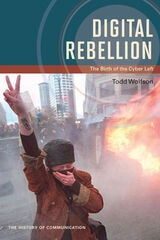
Digital Rebellion
The Birth of the Cyber LeftTodd Wolfson
University of Illinois Press, 2014
Todd Wolfson reveals how aspects of the mid-1990s Zapatistas movement--network organizational structure, participatory democratic governance, and the use of communication tools as a binding agent--became essential parts of Indymedia and other Cyber Left organizations. From there he uses oral interviews and other rich ethnographic data to chart the media-based think tanks and experiments that continued the Cyber Left's evolution through the Independent Media Center's birth around the 1999 WTO protests in Seattle.
Melding virtual and traditional ethnographic practice to explore the Cyber Left's cultural logic, Wolfson maps the social, spatial and communicative structure of the Indymedia network and details its operations on the local, national and global level. He looks at the participatory democracy that governs global social movements and the ways democracy and decentralization have come into tension, and how "the switchboard of struggle" conducts stories from the hyper-local and disperses them worldwide. As he shows, understanding the intersection of Indymedia and the Global Social Justice Movement illuminates their foundational role in the Occupy struggle and other emergent movements that have re-energized radical politics.

Digital Rights at the Periphery
Making Brazil's Marco CivilGuy T. Hoskins
University of Illinois Press, 2025
Signed into law in 2014, the Marco Civil da Internet (Brazilian Civil Rights Framework for the Internet) appeared to offer pioneering legislation for a digital bill of rights that addressed issues like network neutrality and privacy. Guy T. Hoskins chronicles the Marco Civil’s development and its failure to confront the greatest concentration of power in the digital age: informational capitalism. Combining interviews with discourse and political-economic analysis, Hoskins reveals why the legislation fell short while examining the implications of its emergence in Brazil, which remains on the margins of the global system of informational capitalism. Hoskins places collectivist and public service principles at the core of any framework’s effectiveness. He also shows why we must create systems sensitive to the sociocultural and political-economic contexts that will shape digital rights and their usefulness.
Compelling and contrarian, Digital Rights at the Periphery looks at communications policy and internet governance in the Global South and the lessons they provide for the rest of the world.
Digital Technology and Democratic Theory
Edited by Lucy Bernholz, Hélène Landemore, and Rob Reich
University of Chicago Press, 2021
To understand these transformations, this book brings together contributions by scholars from multiple disciplines to wrestle with the question of how digital technologies shape, reshape, and affect fundamental questions about democracy and democratic theory. As expectations have whiplashed—from Twitter optimism in the wake of the Arab Spring to Facebook pessimism in the wake of the 2016 US election—the time is ripe for a more sober and long-term assessment. How should we take stock of digital technologies and their promise and peril for reshaping democratic societies and institutions? To answer, this volume broaches the most pressing technological changes and issues facing democracy as a philosophy and an institution.

Dignity and Health
Nora Jacobson
Vanderbilt University Press, 2012
Dignity and Health examines the processes and structures of dignity violation and promotion, traces their consequences for individual and collective health, and uses the model developed to imagine how we might reform our systems of health and social care.
With its focus on the dignity experiences of those often excluded from the mainstream--people who are poor, or homeless, or dealing with mental health problems--as well as on vulnerabilities like age or sickness or unemployment that threaten to make us all feel "less than," Dignity and Health recognizes dignity as a moral matter embedded in the choices we make every day.

Dilemmas of Political Change in Mexico
Edited by Kevin J. Middlebrook
University of London Press, 2004
They examine: (1) changes affecting the party system, electoral institutions, and voting behavior; (2) the evolving role of the armed forces, organized labor, big business, and rural producers; (3) the new importance of civil society, the mass media, and cross-border social coalitions; (4) and key issues of political representation and governance, including executive-legislative relations, judicial performance, federalism, the constitutional rights of indigenous peoples, and the political role of Mexicans resident in the United States.

Dinner in Camelot
The Night America's Greatest Scientists, Writers, and Scholars Partied at the Kennedy White HouseJoseph A. Esposito
University Press of New England, 2018

Diplomacy and War at NATO
The Secretary General and Military Action After the Cold WarRyan C. Hendrickson
University of Missouri Press, 2006

Diplomatic Material
Affect, Assemblage, and Foreign PolicyJason Dittmer
Duke University Press, 2017

Direct Action
Radical Pacifism from the Union Eight to the Chicago SevenJames Tracy
University of Chicago Press, 1996
Taking us through the Vietnam war protests, this detailed treatment of radical pacifism reveals the strengths and limitations of American individualism in the modern era.

Dirt, Sweat, and Diesel
A Family Farm in the Twenty-first CenturySteven L. Hilty
University of Missouri Press, 2016
With very few people engaged in agriculture today, it is no surprise that most Americans have little understanding of the challenges that modern farmers face. This book provides readers a glimpse into life on a modern Missouri farm where a variety of grains, grass seed, corn, and cattle are produced. All of the conversations, events, and descriptions are drawn from the author’s experience working alongside and observing this father and son family farm operation during the course of a year.
Farming today is technologically complex and requires a broad set of skills that range from soil conservation, animal husbandry, and mechanics to knowledge of financial markets and computer technology. The focus on skills, in addition to the size of the financial risks, and the number of unexpected challenges along the way provides readers with a new perspective and appreciation for modern farm life.

Dirty Waters
Confessions of Chicago's Last Harbor BossR. J. Nelson
University of Chicago Press, 2016
In 1987, the city of Chicago hired a former radical college chaplain to clean up rampant corruption on the waterfront. R. J. Nelson thought he was used to the darker side of the law—he had been followed by federal agents and wiretapped due to his antiwar stances in the sixties—but nothing could prepare him for the wretched bog that constituted the world of a Harbor Boss. Dirty Waters is the wry, no-holds-barred memoir of Nelson’s time controlling some of the city’s most beautiful spots while facing some of its ugliest traditions. Nelson takes us through Chicago's beloved “blue spaces” and deep into the city’s political morass, revealing the different moralities underlining three mayoral administrations and navigating the gritty mechanisms of the city’s political machine. Ultimately, Dirty Waters is a tale of morality, of what it takes to be a force for good in the world and what struggles come from trying to stay ethically afloat in a sea of corruption.
Disability and Social Justice in Kenya
Scholars, Policymakers, and Activists in ConversationNina Berman and Rebecca Monteleone, Editors
University of Michigan Press, 2022
Disability in Africa has received significant attention as a dimension of global development and humanitarian initiatives. Little international attention is given, however, to the ways in which disability is discussed and addressed in specific countries in Africa. Little is known also about the ways in which persons with disabilities have advocated for themselves over the past one hundred years and how their needs were or were not met in locations across the continent. Kenya has been on the forefront of disability activism and disability rights since the middle of the twentieth century. The country was among the first African states to create a legal framework addressing the rights of persons with disabilities, namely the Persons with Disabilities Act of 2003. Kenya, however, has a much longer history of institutions and organizations that are dedicated to addressing the specific needs of persons with disabilities, and substantial developments have occurred since the introduction of the legal framework in 2003.
Disability and Social Justice in Kenya: Scholars, Policymakers, and Activists in Conversation is the first interdisciplinary and multivocal study of its kind to review achievements and challenges related to the situation of persons with disabilities in Kenya today, in light of the country’s longer history of disability and the wide range of local practices and institutions. It brings together scholars, activists, and policymakers who comment on topics including education, the role of activism, the legal framework, culture, the impact of the media, and the importance of families and the community.
Disability, Civil Rights, and Public Policy
The Politics of ImplementationStephen L. Percy
University of Alabama Press, 1989
Following on the heels of other Civil Rights movements, disability rights laws emerged in the late 1960s and early 1970s. Often these laws were more symbolic than precise in terms of objectives and strategies to guide the implementation of antidiscrimination policies. Policy refinement, the process of translating legislative mandates into strategies and procedures to govern administrative action, is both dynamic and controversial.
The premise of Disability, Civil Rights, and Public Policy is that implementation policies in these areas evolved through protracted political struggles among a variety of persons and groups affected by disability rights laws. Efforts to influence policies extended far beyond the process of legislative enactment and resulted in struggles that were played out in the courts and in the executive branch. Included within this examination of federal disability rights laws are the role of symbolic politics, the strengths and weaknesses of contemporary models used for the study of policy implementation, and the politics of administrative policymaking.

Disabled State
Deborah Stone
Temple University Press, 1986

Disabling Relations
Wounded Bodyminds and Transnational PraxisSona Kazemi
Temple University Press, 2026
Kazemi focuses on the disabled dissidents who were incarcerated and tortured by the Islamic regime in the aftermath of the 1979 revolution in Iran, the disabled veterans and civilians wounded during and after the Iran–Iraq War, the disabled survivors of state-sanctioned punitive limb amputation, and the disabled women survivors of acid attacks as a form of gender-based violence. Disabling Relations explains how disabled bodyminds are produced and sustained through the violence of patriarchal, capitalist-imperialist, nationalist, and theocratic social relations. Kazemi uses the theoretical concept of “wounding” as a historical process of becoming and remaining disabled mediated by unequal power relations and “disability consciousness” to show how these survivors come to terms with their disability.
Thinking about critical disability theory in a new way, Kazemi investigates how disability is produced transnationally and the impact that this new theorization can make globally.
In the series Dis/color
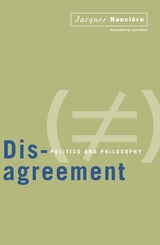
Disagreement
Politics And PhilosophyJacques Ranciere
University of Minnesota Press, 2004
“Is there any such thing as political philosophy?” So begins this provocative book by one of the foremost figures in Continental thought. Here, Jacques Rancière brings a new and highly useful set of terms to the vexed debate about political effectiveness and “the end of politics.”
What precisely is at stake in the relationship between “philosophy” and the adjective “political”? In Disagreement, Rancière explores the apparent contradiction between these terms and reveals the uneasy meaning of their union in the phrase “political philosophy”—a juncture related to age-old attempts in philosophy to answer Plato’s devaluing of politics as a “democratic egalitarian” process.
According to Rancière, the phrase also expresses the paradox of politics itself: the absence of a proper foundation. Politics, he argues, begins when the “demos” (the “excessive” or unrepresented part of society) seeks to disrupt the order of domination and distribution of goods “naturalized” by police and legal institutions. In addition, the notion of “equality” operates as a game of contestation that constantly substitutes litigation for political action and community. This game, Rancière maintains, operates by a primary logic of “misunderstanding.” In turn, political philosophy has always tried to substitute the “politics of truth” for the politics of appearances.
Disagreement investigates the various transformations of this regime of “truth” and their effects on practical politics. Rancière then distinguishes what we mean by “democracy” from the practices of a consensual system in order to unravel the ramifications of the fashionable phrase “the end of politics.” His conclusions will be of interest to readers concerned with political questions from the broadest to the most specific and local.

Disarmed Democracies
Domestic Institutions and the Use of ForceDavid P. Auerswald
University of Michigan Press, 2000

Disarming Doomsday
The Human Impact of Nuclear Weapons since HiroshimaBecky Alexis-Martin
Pluto Press, 2019
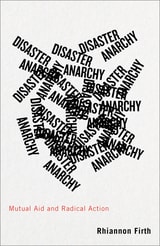
Disaster Anarchy
Mutual Aid and Radical ActionRhiannon
Pluto Press, 2022
As disasters become more commonplace, we need to think of alternatives for relief.
'Commendable - a book that prepares us to think about and react to system failures' - Peter Gelderloos
Anarchists have been central in helping communities ravaged by disasters, stepping in when governments wash their hands of the victims. Looking at Hurricane Sandy, Covid-19, and the social movements that mobilized relief in their wake, Disaster Anarchy is an inspiring and alarming book about collective solidarity in an increasingly dangerous world.
As climate change and neoliberalism converge, mutual aid networks, grassroots direct action, occupations, and brigades have sprung up in response to this crisis with considerable success. Occupy Sandy was widely acknowledged to have organized relief more effectively than federal agencies or NGOs, and following Covid-19 the term ‘mutual aid’ entered common parlance.
However, anarchist-inspired relief has not gone unnoticed by government agencies. Their responses include surveillance and co-option, extending at times to violent repression involving police brutality. Arguing that disaster anarchy is one of the most important political phenomena to emerge in the 21st century, Rhiannon Firth shows through her research on and within these movements that anarchist theory and practice are needed to protect ourselves from the disasters of our unequal and destructive economic system.

Disaster Capitalism
Or Money Can't Buy You Love - Three PlaysRick Mitchell
Intellect Books, 2011
Disaster capitalism is an increasingly popular critical paradigm for contextualizing and understanding life in the twenty-first century. This book includes three full-length plays by award-winning dramatist Rick Mitchell: Shadow Anthropology, a dark comedy about the US occupation of Afghanistan; Through the Roof, a Faustian trip through the social history of natural disaster in New Orleans; and Celestial Flesh, a sacrilegious romp through the 1980s sanctuary movement. Placing the plays in historical and thematic context, the author introduces the collection with an essay examining catastrophe, capitalism, and what he calls “Apocalypse Theater for the Twenty-First Century.”
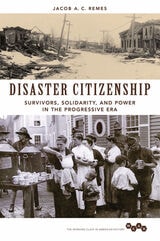
Disaster Citizenship
Survivors, Solidarity, and Power in the Progressive EraJacob Remes
University of Illinois Press, 2015
In Disaster Citizenship, Jacob A. C. Remes draws on histories of the Salem and Halifax events to explore the institutions--both formal and informal--that ordinary people relied upon in times of crisis. He explores patterns and traditions of self-help, informal order, and solidarity and details how people adapted these traditions when necessary. Yet, as he shows, these methods--though often quick and effective--remained illegible to reformers. Indeed, soldiers, social workers, and reformers wielding extraordinary emergency powers challenged these grassroots practices to impose progressive "solutions" on what they wrongly imagined to be a fractured social landscape.
Disaster Nationalism
Tsunami and Civil War in Sri LankaVivian Y. Choi
Duke University Press, 2025
Disasters and Social Reproduction
Crisis Response between the State and CommunityPeer Illner
Pluto Press, 2020
Following the long economic crisis of the 1970s, disaster relief has become increasingly reliant on the unwaged reproductive labor of ordinary people, allowing the US state to cut back on social spending, a shift that has fundamentally reconfigured the responsibilities of the state and civil society. As sea levels rise, climate change worsens and we see an increase in disaster relief led by communities, this analysis of the interrelations between state, society and grassroots initiatives, including Occupy Sandy and the American Black Cross, will prove indispensable.

Discerning Experts
The Practices of Scientific Assessment for Environmental PolicyMichael Oppenheimer, Naomi Oreskes, Dale Jamieson, Keynyn Brysse, Jessica O’Reilly, Matthew Shindell, and Milena Wazeck
University of Chicago Press, 2019
Discerning Experts uncovers factors that can generate systematic bias and error, and recommends how the process can be improved. As the first study of the internal workings of large environmental assessments, this book reveals their strengths and weaknesses, and explains what assessments can—and cannot—be expected to contribute to public policy and the common good.

Discipline and History
Political Science in the United StatesJames Farr and Raymond Seidelman, Editors
University of Michigan Press, 1993
James Farr and Raymond Seidelman bring new historical reflection to the "state of the discipline" debate in political science. This anthology offers a panorama of views about the state of the discipline that have been sketched by leading political scientists and disciplinary historians from the late nineteenth century to the past.
The essays in this volume explore four distinct periods in the development of the discipline, with special emphasis on the subfields of American politics and political theory, revealing that the identity of the discipline is constituted not so much by agreements over fundamental principles as by the history of debates about the meaning of politics, the methods of science, the theories of behavioralism and the state, and the responsibilities of public professionals and civic educators.
Contributors are Terence Ball, Charles A. Beard, John W. Burgess, Robert A. Dahl, David Easton, John G. Gunnell, Norman Jacobson, Harold D. Lasswell, Francis Lieber, Charles E. Merriam, David M. Ricci, William H. Riker, Dorothy Ross, Helene Silverberg, Leonard D. White, Woodrow Wilson, and W.W. Willoughby.
Its unprecedented treatment of the history of political science makes Discipline and History essential reading for political scientists and their students. Historians of the social sciences will also find much to consider.
Disciplining the Poor
Neoliberal Paternalism and the Persistent Power of RaceJoe Soss, Richard C. Fording, and Sanford F. Schram
University of Chicago Press, 2011
Disciplining the Poor explains the transformation of poverty governance over the past forty years—why it happened, how it works today, and how it affects people. In the process, it clarifies the central role of race in this transformation and develops a more precise account of how race shapes poverty governance in the post–civil rights era. Connecting welfare reform to other policy developments, the authors analyze diverse forms of data to explicate the racialized origins, operations, and consequences of a new mode of poverty governance that is simultaneously neoliberal—grounded in market principles—and paternalist—focused on telling the poor what is best for them. The study traces the process of rolling out the new regime from the federal level, to the state and county level, down to the differences in ways frontline case workers take disciplinary actions in individual cases. The result is a compelling account of how a neoliberal paternalist regime of poverty governance is disciplining the poor today.
Disconnected
Call Center Workers Fight for Good Jobs in the Digital AgeDebbie J. Goldman
University of Illinois Press, 2024
Call center employees once blended skill and emotional intelligence to solve customer problems while the workplace itself encouraged camaraderie and job satisfaction. Ten years after telecom industry deregulation, management had isolated the largely female workforce in cubicles, imposed quotas to sell products, and installed surveillance systems that tracked every call and keystroke.
Debbie J. Goldman explores how call center employees and their union fought for good, humane jobs in the face of degraded working conditions and lowered wages. As the workforce coalesced to resist the changes, it demanded the Communications Workers of America (CWA) fight for safe and secure good-paying jobs. But trends in technology, capitalism, and corporate governance--combined with the decline of unions--narrowed the negotiating options for workers. Goldman describes how the actions of workers, management, and policymakers shaped the social impact of the new digital technologies and gave new form to the telecommunications industry in a time of momentous change.
Perceptive and nuanced, Disconnected tells an overlooked story of service workers in a time of change.
Disconnected
Haves and Have-Nots in the Information AgeWresch, William
Rutgers University Press, 1996
In the Information Age, information is power. Who produces all that information, how does it move around, who uses it, to what ends, and under what constraints? Who gets that power? And what happens to the people who have no access to it?
Disconnected begins with a striking vignette of two men: One is the thriving manager of a company selling personal computers and computer services. The other is just one among thousands of starving laborers. He has no way to find the information that might help him find a job, he cannot afford newspapers, rarely sees television, cannot understand the dialect of local radio broadcasts, will probably never touch a computer. These two men happen to live in Windhoek, Namibia, but this is not a story about Africa––it is a story that could be repeated almost anywhere in the world, even next door.
With vivid anecdotes and data, William Wresch contrasts the opportunities of the information-rich with the limited prospects of the information-poor. Surveying the range of information––personal, public, organizational, commercial––that has become the currency of exchange in today’s world, he shows how each represents a form of power. He analyzes the barriers that keep people information-poor: geography, tyranny, illiteracy, psychological blinders, “noise,” crime. Technology alone, he demonstrates, is not the answer. Even the technology-rich do not always get access to important information––or recognize its value.
Wresch spells out the grim consequences of information inequity for individuals and society. Yet he ends with reasons for optimism and stories of people who are working to pull down the impediments to the flow of information.

Discourse on the Origins of Inequality (Second Discourse), Polemics, and Political Economy
Jean-Jacques Rousseau
Dartmouth College Press, 1993

Discourses on Livy
Niccolò Machiavelli
University of Chicago Press, 1998
"[Machiavelli] found in Livy the means to inspire scholars for five centuries. Within the Discourses, often hidden and sometimes unintended by their author, lie the seeds of modern political thought. . . . [Mansfield and Tarcov's] translation is careful and idiomatic."—Peter Stothard, The Times
"Translated with painstaking accuracy—but also great readability."—Weekly Standard
"A model of contemporary scholarship and a brave effort at Machiavelli translation that allows the great Florentine to speak in his own voice."—Choice
Discourses on Sustainable Urban Mobility
Robin Hickman
University College London, 2025
From reducing car dependency and expanding EVs to promoting public transport, sustainable mobility has been a hot topic in urban planning and the transportation sector. Arriving at this timely moment, Discourses on Sustainable Urban Mobility challenges the dominant discourses of motorization and the ineffective implementation of sustainable mobility. It argues that transport planning history is not merely a record of successful projects but a reflection of how transport has been provided, including who and what has been included or excluded. Using discourse analysis, the book examines physical transport infrastructure against the socially constructed realities in transport planning across a variety of international case studies, including Oxford, Bogotá, Chongqing, Rio de Janeiro, Copenhagen, and Delhi. In each case, the discursive frameworks surrounding transport and urban planning point toward promising pathways for achieving greater sustainability in transportation.
Discovering the Scottish Revolution 1692-1746
Neil Davidson
Pluto Press, 2003
Davidson explores the political and economic changes of these years, revealing how social and economic power was transferred from one class to another. He describes how Scotland was transformed from a backward and feudal economy to a new centre of emergent capitalism. He traces the economic and social crisis that led to Scotland's incorporation into the Union in 1707, but argues that the Union did not lead to the transformation of Scottish society. The decisive period was instead the aftermath of the last Jacobite revolt in 1746, whose failure was integral to the survival and consolidation of British, and ultimately global capitalism.
'His opinions are bound to cause controversy and discussion ... a good thing as Scottish history desperately needs the airing and voicing of new approaches.'
John R Young, Albion.
‘What is so good about Neil Davidson’s brave study is that he brings a Marxist perspective to bear on Scottish history in very clear and readable prose. Quotations and statistics drawn from uncannily wide reading will make this book of great value even to those who disagree with it.’
Angus Calder, author of Revolutionary Empire and Revolving Culture: Notes from the Scottish Republic

Discriminating Taste
How Class Anxiety Created the American Food RevolutionFinn, S. Margot
Rutgers University Press, 2017
For the past four decades, increasing numbers of Americans have started paying greater attention to the food they eat, buying organic vegetables, drinking fine wines, and seeking out exotic cuisines. Yet they are often equally passionate about the items they refuse to eat: processed foods, generic brands, high-carb meals. While they may care deeply about issues like nutrition and sustainable agriculture, these discriminating diners also seek to differentiate themselves from the unrefined eater, the common person who lives on junk food.
Discriminating Taste argues that the rise of gourmet, ethnic, diet, and organic foods must be understood in tandem with the ever-widening income inequality gap. Offering an illuminating historical perspective on our current food trends, S. Margot Finn draws numerous parallels with the Gilded Age of the late nineteenth century, an era infamous for its class divisions, when gourmet dinners, international cuisines, slimming diets, and pure foods first became fads.
Examining a diverse set of cultural touchstones ranging from Ratatouille to The Biggest Loser, Finn identifies the key ways that “good food” has become conflated with high status. She also considers how these taste hierarchies serve as a distraction, leading middle-class professionals to focus on small acts of glamorous and virtuous consumption while ignoring their class’s larger economic stagnation. A provocative look at the ideology of contemporary food culture, Discriminating Taste teaches us to question the maxim that you are what you eat.
Discrimination in Modern Japan
Case Studies in Identity PoliticsJ. Mark Ramseyer
University of Chicago Press, 2023
In this book, J. Mark Ramseyer, a noted authority on Japan looks at discrimination against groups in Japanese society, focusing on the Korean, Okinawan, and Burakumin groups. Ramseyer asks why they experience discrimination in Japan, an unusually homogeneous society. Is it because of some prejudice on the part of the majority that prevents their integration into mainstream Japanese society? Or is it because some of the dynamics within the group create incentives for the group to stay together and to be on the fringes of society?
Ramseyer argues that the real explanation is the latter, and each of these three groups has been victimized by its own leadership. Precisely because the groups are dysfunctional, members of the group cannot control members who would appoint themselves group leaders. The result has been the capture of leadership positions by people who manipulate the group to their own private advantage and to the detriment of the group as a whole.
Discrimination, Jobs, and Politics
The Struggle for Equal Employment Opportunity in the United States since the New DealPaul Burstein
University of Chicago Press, 1985
"This is an important, well-researched book. . . . Burstein has had the courage to break through narrow specializations within sociology . . . and even to address the types of acceptable questions usually associated with three different disciplines (political science, sociology, and economics). . . . This book should be read by all professionals interested in political sociology and social movements."—Donald Tomaskovic-Devey, Social Forces
"Discrimination, Jobs and Politics [is] satisfying because it tells a more complete story . . . than does most sociological research. . . . I find myself returning to it when I'm studying the U.S. women's movement and recommending it to students struggling to do coherent research."—Rachel Rosenfeld, Contemporary Sociology

Discussing Hitler
Advisers of U.S. Diplomacy in Central Europe, 1934-41Tibor Frank
Central European University Press, 2003

Disease Prevention as Social Change
The State, Society, and Public Health in the United States, France, Great Britain, and CanadaConstance A. Nathanson
Russell Sage Foundation, 2007

Disease and Diplomacy
Weaponizing Medical Aid to Syrian Refugees in JordanSigrid Lupieri
University of Michigan Press, 2026
When millions of Syrians fled civil war after 2011, international donors and humanitarian organizations mobilized to provide assistance to neighboring countries. Focusing on Jordan—one of the world’s largest refugee hosting states—Disease and Diplomacy investigates how medical aid to refugees operates as an instrument of diplomacy and control within the global refugee system. It argues that health, far from being an apolitical humanitarian good, is a bargaining tool that states commodify to extract resources and concessions.
Drawing on years of field research, interviews, and policy analysis, the book shows how the Jordanian government, international donors, and humanitarian agencies turned healthcare for refugees into a tool for negotiating power, resources, and responsibility. In these cases, refugees, caught within these negotiations, often found their access to care determined not by medical need, but by political calculation. Developing the concept of the weaponization of medical aid, the book extends theories of migration diplomacy and refugee rentierism to show how global power dynamics shape who receives healthcare. The analysis identifies a self-reinforcing “crisis loop” that privileges short-term, highly visible responses while neglecting chronic and long-term needs. Disease and Diplomacy advances an interdisciplinary framework for understanding how humanitarian practices reinforce global inequalities and argues for more equitable approaches to refugee health and responsibility-sharing in the international system.