Results by title
18284 books match the query 'United States' and 684 start with d
Democracy's Education
Public Work, Citizenship, and the Future of Colleges and UniversitiesHarry C. Boyte
Vanderbilt University Press, 2015
Democracy's Education grows from the American Commonwealth Partnership, a year-long project to revitalize the democratic narrative of higher education that began with an invitation to Harry Boyte from the White House to put together a coalition aimed at strengthening higher education as a public good. The project was launched at the beginning of 2012 to mark the 150th anniversary of the Morrill Act, which created land grant colleges.
Beginning with an essay by Harry C. Boyte, "Reinventing Citizenship as Public Work," which challenges educators and their partners to claim their power to shape the story of higher education and the civic careers of students, the collection brings world-famous scholars, senior government officials, and university presidents together with faculty, students, staff, community organizers, and intellectuals from across the United States and South Africa and Japan. Contributors describe many constructive responses to change already taking place in different kinds of institutions, and present cutting-edge ideas like "civic science," "civic studies," "citizen professionalism," and "citizen alumni." Authors detail practical approaches to making change, from new faculty and student roles to changes in curriculum and student life and strategies for everyday citizen empowerment. Overall, the work develops a democratic story of education urgently needed to address today's challenges, from climate change to growing inequality.
Democracy's Meanings
How the Public Understands Democracy and Why It MattersNicholas T. Davis, Keith Gåddie, and Kirby Goidel
University of Michigan Press, 2022
Democracy’s Meanings challenges conventional wisdom regarding how the public thinks about and evaluates democracy. Mining both political theory and more than 75 years of public opinion data, the book argues that Americans think about democracy in ways that go beyond voting or elected representation. Instead, citizens have rich and substantive views about the material conditions that democracy should produce, which draw from their beliefs about equality, fairness, and justice.
The authors construct a typology of views about democracy. Procedural views of democracy take a minimalistic quality. While voting and fair treatment are important to this vision of democracy, ideas about equality are mostly limited to civil liberties. In contrast, social views of democracy incorporate both civil and economic equality; according to people with these views, democracy ought to meet the basic social and material needs of citizens. Complementing these two groups are moderate and indifferent views about democracy. While moderate views sit somewhere in between procedural and social perspectives regarding the role of democracy in producing social and economic equality, indifferent views of democracy involve disaffection toward it. For a small group of apathetic citizens, democracy is an ambiguous and ill-defined concept.
Democracy's Promise
Immigrants and American Civic InstitutionsJanelle S. Wong
University of Michigan Press, 2006
Given the massive demographic changes in the United States during the past few decades, understanding the place of immigrants in the public sphere has never been more critical. Democracy's Promise examines both the challenges and opportunities posed to American civic institutions by the presence of increasing numbers of immigrants. Author Janelle Wong argues that the low levels of political participation among contemporary immigrants are not due to apathy or preoccupation with their homeland, but to the inability of American political parties and advocacy organizations to mobilize immigrant voters. Wong's rich study of Chinese and Mexican immigrants in New York and Los Angeles complements traditional studies of political behavior and civic institutions while offering a nuanced examination of immigrants' political activity.
Democracy's Promise will appeal to a broad spectrum of social scientists and ethnic studies scholars who study or teach immigration, racial and ethnic politics, political participation, civic engagement, and American political institutions. In addition, it will appeal to community organizers and party activists who are interested in issues of race and ethnicity, immigration, political participation, and political mobilization.
Janelle Wong is Assistant Professor of Political Science and American Studies and Ethnicity at the University of Southern California.
--Jennifer L. Hochschild, Harvard University
"Wong draws on the Latino and Asian immigrant experience, with specific examples from the Chinese and Mexican communities of New York and Los Angeles, to show how the political parties have largely failed to organize these groups and why labor unions and immigrant advocacy organizations have stepped in to take their place. Far from 'disuniting' America, she clearly shows that bringing these groups into the political fray is central to the project of renewing American democracy."
--John Mollenkopf, CUNY Graduate Center
"A scathing critique of the role of parties in the mobilization of new immigrants and an invaluable analysis of alternative pathways of mobilization through community organizations."
--Michael Jones-Correa, Cornell University
"By employing multiple empirical methods, including in-depth interviews and sophisticated survey analyses, Janelle Wong provides a compelling account of the political activities and allegiances of America's Asian and Latino immigrants that challenges much conventional wisdom. Often the political parties are failing to reach out to these groups, and often immigrants remain concerned about their home countries; but they are nonetheless increasingly active in American politics, in ways that may do much to shape the course of American political development in the 21st century. Democracy's Promise is a major contribution to our understanding of this crucial dimension of American politics."
--Rogers M. Smith, University of Pennsylvania
"Democracy's Promise challenges political parties to reexamine their priorities for mobilizing new voters, and identifies the critical role civic institutions play in invigorating participation among immigrant citizens. Wong's analysis is at once precise and expansive; illuminating the contours of Latino and Asian American political incorporation and provoking thoughtful debate on inclusion in democratic theory."
--Jane Junn, Rutgers University
Democracy's Rebirth
The View from ChicagoDick Simpson. Foreword by Lori Lightfoot
University of Illinois Press, 2022
With a foreword by Mayor Lori E. Lightfoot.
Democracy, Inc.
The Press and Law in the Corporate Rationalization of the Public SphereDavid S. Allen
University of Illinois Press, 2005
Allen utilizes historical, philosophical, sociological, and legal sources to trace America's gradual embrace of corporate values. He argues that such values, including winning, efficiency, and profitability actually limit democratic involvement by devaluing discursive principles, creating an informed yet inactive public. Through an examination of professionalization in both the press and the law, corporate free speech rights, and free speech as property, Democracy, Inc. demonstrates that today's democracy is more about trying to control and manage citizens than giving them the freedom to participate. Allen not only calls on institutions to reform the way they understand and promote citizenship but also asks citizens to adopt a new ethic of public discourse that values understanding rather than winning.
Democracy’s Destruction? Changing Perceptions of the Supreme Court, the Presidency, and the Senate after the 2020 Election
Changing Perceptions of the Supreme Court, the Presidency, and the Senate after the 2020 ElectionJames L. Gibson
Russell Sage Foundation, 2024
Focusing on the U.S. Supreme Court, the presidency, and the U.S. Senate, Gibson reveals that how people assessed the election, the insurrection, and even the second Trump impeachment has little connection to their willingness to view American political institutions as legitimate. Instead, legitimacy is grounded in more general commitments to democratic values and support for the rule of law. On most issues of institutional legitimacy, those who denied the election results and supported the insurrection were not more likely to be alienated from political institutions and to consider them illegitimate.
Gibson also investigates whether Black people might have responded differently to the events of the 2020 election and its aftermath. He finds that in comparison to the White majority, Black Americans were less supportive of America’s democratic institutions and of democratic values, such as reverence for the rule of law, because they often have directly experienced unfair treatment by legal authorities. But he emphasizes that the actions of Trump and his followers are not the cause of those weaker commitments.
Democracy’s Destruction? offers rigorous analysis of the effect of the Trump insurrection on the state of U.S. democracy today. While cautioning that Trump and many Republicans may be devising schemes to subvert the next presidential election more effectively, the book attests to the remarkable endurance of American political institutions.
Democratic Art
The New Deal's Influence on American CultureSharon Ann Musher
University of Chicago Press, 2015
In Democratic Art, Sharon Musher explores these questions and uses them as a springboard for an examination of the role art can and should play in contemporary society. Drawing on close readings of government-funded architecture, murals, plays, writing, and photographs, Democratic Art examines the New Deal’s diverse cultural initiatives and outlines five perspectives on art that were prominent at the time: art as grandeur, enrichment, weapon, experience, and subversion. Musher argues that those engaged in New Deal art were part of an explicitly cultural agenda that sought not just to create art but to democratize and Americanize it as well. By tracing a range of aesthetic visions that flourished during the 1930s, this highly original book outlines the successes, shortcomings, and lessons of the golden age of government funding for the arts.
Democratic Discourses
The Radical Abolition Movement and Antebellum American LiteratureBennett, Michael
Rutgers University Press, 2005
Ever since the hallowed statement, "All men are created equal," was penned in the Declaration of Independence, it has become a historical tenet that freedom and equality were brought to American shores by the so-called Founding Fathers.
In this path-breaking study, Michael Bennett departs from tradition to argue that the democratic ideal of equality and the actual ways in which it has been practiced are grounded less in the fledgling government documents written by a handful of white men than in the actions and writings of the radical abolitionists of the nineteenth century. Bringing together key texts of both African American and European American authors, Democratic Discourses shows the important ways that abolitionist writing shaped a powerful counterculture within a slave-holding society. Bennett offers fresh new analysis through unusual pairings of authors, including Frederick Douglass with Henry David Thoreau, Frances Ellen Watkins Harper with Walt Whitman, and Margaret Fuller with Sojourner Truth. These rereadings avoid the tendency to view antebellum writing as a product primarily of either European American or African American influences and, instead, illustrate the interconnections of white and black literature in the creation and practice of democracy.
Drawing on discourses about race, the body, gender, economics, and aesthetics, this unique study encourages readers to reconsider the reality and roots of freedoms experienced in the United States today.

Democratic Laboratories
Policy Diffusion among the American StatesAndrew Karch
University of Michigan Press, 2010
"Observers have long marveled at the spread of ideas and policies from state to state in American democracy. But why and how do politicians, professionals, and citizens in one state take inspiration from national policy debates and imitate, resist, and rework legislative models from other states? For the first time in this important new book, Andrew Karch analyzes in depth the process of policy 'diffusion' across the states, offering a nuanced and powerful framework to explain one of the most important and recurrent features of U.S. politics."
---Theda Skocpol, Victor S. Thomas Professor of Government and Sociology, Harvard University
"Karch does two things with remarkable skill. First, he makes sense of the copious literature on policy diffusion and extends that literature in a very fruitful way. Second, he conducts the most thorough and methodologically sound empirical study of policy diffusion to date, using both qualitative and quantitative analysis. This book is so well written and thoughtful that it will likely stimulate a whole new wave of study of state policy and its diffusion."
---Chris Mooney, editor of State Politics and Policy Quarterly
"Democratic Laboratories goes beyond standard 'diffusion of innovation' approaches to analyze the complex interaction of interstate and intrastate political forces that shapes policy change. The book is a major contribution to the study of American federalism---and a very good read."
---Kent Weaver, Brookings Institution
---Virginia Gray, University of North Carolina, Chapel Hill
"Democratic Laboratories is the seminal work on policy diffusion among the American states. Rigorously designed and well written, it is the new starting place for anyone interested in this important topic. The findings are copious and loaded with insights into the future of this valuable research."
---Harrell Rodgers, Professor and Chair, Department of Political Science, University of Houston
Andrew Karch is Assistant Professor of Government at the University of Texas at Austin.
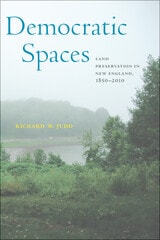
Democratic Spaces
Land Preservation in New England, 1850–2010Richard W. Judd
University of Massachusetts Press, 2023
Winner of the 2024 Forest History Society Charles A. Weyerhaeuser Book Award
A contemporary map of New England, scaled to the township level, brings to light a dense pattern of protected areas ringing almost every town and city in the region. Big and small, rural and urban, these green spaces represent more than a century of preservation efforts on the part of philanthropic foundations, planning professionals, state agencies, and most importantly, community-based conservation organizations. Taken together, they highlight one of the most significant advances in land stewardship in US history.
Democratic Spaces explains how these protected places came into being and what they represent for New Englanders and the nation at large. While early New Englanders worked to save local fish, timber, and game resources from outside exploitation, no land-stewardship organizations existed before the founding of the Trustees of Public Reservations in Boston in 1891. Across a century of dramatic change, New England preservationists through this and other, smaller community-based land trusts preserved open spaces for an ever-widening circle of citizens.
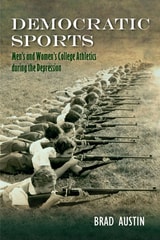
Democratic Sports
Men's and Women's College Athletics during the Great DepressionBrad Austin
University of Arkansas Press, 2015
University leaders used their athletic programs to combat this crisis and to preserve “traditional” American values and institutions, prescribing different models for men and women. Educators emphasized the competitive nature of men’s athletics, seeking to inculcate male college athletes (and their audiences) with individualistic, masculine values in order to reinforce the existing American political and economic systems.
In stark contrast, the prevailing model of women’s college athletics taught a communal form of democracy. Strongly supported by almost all female athletic leaders, this “a girl for every game, and a game for every girl” model had replaced the more competitive model that had been popular until the 1920s. The new programs denied women individual attention and high-level competition, and they promoted the development of what was considered proper femininity.
Whatever larger purposes these programs were intended to serve, they could not have survived without vocal supporters. Democratic Sports tells the important story of how men’s and women’s college athletic programs survived, and even thrived, during the most challenging decade of the twentieth century.
Democratic Theorizing from the Margins
Marla Brettschneider
Temple University Press, 2007
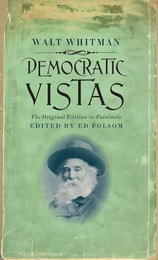
Democratic Vistas
The Original Edition in FacsimileWhitman, Walt
University of Iowa Press, 2010
Written in the aftermath of the American Civil War during the ferment of national Reconstruction, Walt Whitman’s Democratic Vistas remains one of the most penetrating analyses of democracy ever written. Diagnosing democracy’s failures as well as laying out its vast possibilities, Whitman offers an unflinching assessment of the ongoing social experiment known as the United States. Now available for the first time in a facsimile of the original 1870–1871 edition, with an introduction and annotations by noted Whitman scholar Ed Folsom that illuminate the essay’s historical and cultural context, this searing analysis of American culture offers readers today the opportunity to argue with Whitman over the nature of democracy and the future of the nation.
Living in Washington, D.C., where Congress granted male African Americans the right to vote nearly five years before the fifteenth amendment extended that right across the nation, and working for the office charged with enforcing the new civil rights amendments to the Constitution, Whitman was at the volatile center of his nation’s massive attempt to reconstruct and redefine itself after the tumultuous years of civil war. In the enduring cultural document that Democratic Vistas has become, the great poet of democracy analyzes the role that literature plays in the development of a culture, the inevitable tensions between the “democratic individual” and the “democratic nationality,” and the corrosive effects of materialism on the democratic spirit.
His own conflicting racial biases notwithstanding, Whitman in Democratic Vistas offers his most eloquent and extended articulation of the beckoning American democratic future. At a time when the nation has elected a president whom Whitman could never have imagined, his controversial and provocative book is a timely reminder of those occasions when we experience the expansion of America’s democratic dream.
Democratizing Urban Development
Community Organizations for Housing across the United States and BrazilMaureen M. Donaghy
Temple University Press, 2018
Rising housing costs put secure and decent housing in central urban neighborhoods in peril. How do civil society organizations (CSOs) effectively demand accountability from the state to address the needs of low-income residents? In her groundbreaking book, Democratizing Urban Development, Maureen Donaghy charts the constraints and potential opportunities facing these community organizations. She assesses the various strategies CSOs engage to influence officials and ensure access to affordable housing through policies, programs, and institutions.
Democratizing Urban Development presents efforts by CSOs in four cities across the hemispheric divide: Rio de Janeiro, São Paulo, Washington, DC, and Atlanta. Donaghy studies the impact and outcomes that ensue from these efforts, noting that CSOs must sometimes shift their own ideology or adapt to the political environment in which they operate to ensure access to housing and support the goals of an inclusive city.
Demographic Angst
Cultural Narratives and American Films of the 1950sNadel, Alan
Rutgers University Press, 2017
Demographic Angst argues that mandated normativity—as a political agenda and a social ethic—precluded explicit expression of the anxiety produced by America’s radically reconfigured postwar population. Alan Nadel explores influential non-fiction books, magazine articles, and public documents in conjunction with films such as Singin’ in the Rain, On the Waterfront, Sunset Boulevard, and Sayonara, to examine how these films worked through fresh anxieties that emerged during the 1950s.
Demolition Means Progress
Flint, Michigan, and the Fate of the American MetropolisAndrew R. Highsmith
University of Chicago Press, 2015
In one of the most comprehensive works yet written on the history of inequality and metropolitan development in modern America, Andrew R. Highsmith uses the case of Flint to explain how the perennial quest for urban renewal—even more than white flight, corporate abandonment, and other forces—contributed to mass suburbanization, racial and economic division, deindustrialization, and political fragmentation. Challenging much of the conventional wisdom about structural inequality and the roots of the nation’s “urban crisis,” Demolition Means Progress shows in vivid detail how public policies and programs designed to revitalize the Flint area ultimately led to the hardening of social divisions.
Demon of the Lost Cause
Sherman and Civil War HistoryWesley Moody
University of Missouri Press, 2011

Demonstrating Results
Using Outcome Measurement in Your LibraryRhea Joyce Rubin
American Library Association, 2006
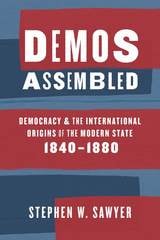
Demos Assembled
Democracy and the International Origins of the Modern State, 1840–1880Stephen W. Sawyer
University of Chicago Press, 2018
Previous studies have covered in great detail how the modern state slowly emerged from the early Renaissance through the seventeenth century, but we know relatively little about the next great act: the birth and transformation of the modern democratic state. And in an era where our democratic institutions are rife with conflict, it’s more important now than ever to understand how our institutions came into being.
Stephen W. Sawyer’s Demos Assembled provides us with a fresh, transatlantic understanding of that political order’s genesis. While the French influence on American political development is well understood, Sawyer sheds new light on the subsequent reciprocal influence that American thinkers and politicians had on the establishment of post-revolutionary regimes in France. He argues that the emergence of the stable Third Republic (1870–1940), which is typically said to have been driven by idiosyncratic internal factors, was in fact a deeply transnational, dynamic phenomenon. Sawyer’s findings reach beyond their historical moment, speaking broadly to conceptions of state formation: how contingent claims to authority, whether grounded in violence or appeals to reason and common cause, take form as stateness.

Demystifying Online Instruction in Libraries
People, Process, and ToolsDominique Turnbow and Amanda Roth
American Library Association, 2019
The design of information literacy instruction and the building of it are two distinct skillsets and processes; yet all too often everything gets mashed together, creating needless confusion and stress. In this book Turnbow, an instructional designer, and Roth, an instructional technologist, suggest a better way to organize the work. They shed light on the people, processes, and resources required to create a sustainable portfolio of online instruction. With the goal of fostering conversations in your library about the most streamlined and effective ways to get the work done, they provide guidance on such topics as
- design and development processes, complete with “I.D. in Action” examples and sample design documents;
- thumbnail descriptions of ADDIE, SAM, and design thinking methods;
- creating learning objects;
- types of software tools and how to evaluate them;
- crafting the best documentation of your work for efficient maintenance and reuse;
- adapting assessment to your learning outcomes and purpose;
- when to design for performance support, an underutilized method in libraries; and
- starting points for those interested in developing instructional design and development skills.
Demystifying the instructional design and development process used to create online learning objects, this book will help you understand how instructional design principles and approaches can benefit your learners.
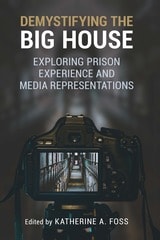
Demystifying the Big House
Exploring Prison Experience and Media RepresentationsEdited by Katherine A. Foss
Southern Illinois University Press, 2018
Scholars from cultural and critical studies, feminist studies, queer studies, African American studies, media studies, sociology, and psychology offer critical analysis of media depictions of prison, bridging the media’s portrayals of incarcerated lives with actual experiences and bringing to light forgotten voices in prison narratives.
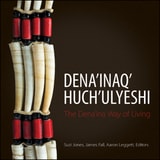
Dena'inaq' Huch'ulyeshi
The Dena'ina Way of LivingEdited by Suzi Jones, James Fall, and Aaron Leggett
University of Alaska Press, 2013
Lavishly illustrated with more than six hundred photographs, maps, and drawings, Dena’inaq’ Huch’ulyeshi contains 469 entries on Dena’ina objects in European and American collections. It is enriched with examples of traditional Dena’ina narratives, first-person accounts, and interviews. Thirteen essays on the history and culture of the Athabascan people put the pieces into a larger historical context. This catalog is a comprehensive reference that will also accompany a large-scale exhibition running September 2013 through January 2014 at the Anchorage Museum.
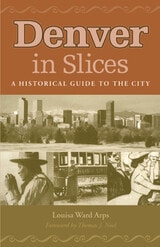
Denver In Slices
A Historical Guide to the CityLouisa Ward Arps
Ohio University Press, 1983
The Old West has been viewed from many perspectives, from the scornful to the uncritically romantic. But seldom has it been treated with the honest nostalgia of the wonderful accounts and pictures gathered in Denver in Slices.
Ohio University Press/Swallow Press is proud to reissue this Western classic, which includes a brief survey of all Denver history, some slices depicting the most fascinating places and characters. The City Ditch, Cherry Creek, River Front Park, the Denver Mint, the Tabors, the Windsor Hotel, the Baron of Montclair, Overland Park, Buffalo Bill, Elitch's Gardens, and Eugene Field—they're all here. Illustrating these stories is an array of nearly one hundred pictures of the people, buildings, and street scenes: a fascinating panorama of the gold rush camp that became the Rocky Mountain metropolis.
With a new foreword by renowned Denver historian Thomas J. Noel, this classic will once again help preserve Denver's lively past.

Denver Inside and Out
Jeanne E. Colorado Historical Society
University Press of Colorado, 2011
In Denver Inside and Out, eleven authors illustrate how pioneers built enduring educational, medical, and transportation systems; how Denver's social and political climate contributed to the elevation of women; how Denver residents wrestled with-and exploited-the city's natural features; and how diverse cultural groups became an essential part of the city's fabric. By showing how the city rose far above its humble roots, the authors illuminate the many ways that Denver residents have never stopped imagining a great city.
Published in time for the opening of the new History Colorado Center in Denver in 2012, Denver Inside and Out hints at some of the social, economic, legal, and environmental issues that Denverites will have to consider over the next 150 years. Finalist for the 2012 Colorado Book Awards
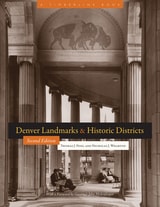
Denver Landmarks and Historic Districts
Thomas J. Noel
University Press of Colorado, 2016
Denver Landmarks and Historic Districts, Second Edition is the newest, most thorough guide to Denver’s 51 historic districts and more than 331 individually landmarked properties. This lavishly illustrated volume celebrates Denver’s oldest banks, churches, clubs, hotels, libraries, schools, restaurants, mansions, and show homes.
Denver is unusually fortunate to retain much of its significant architectural heritage. The Denver Landmark Preservation Commission (1967), Historic Denver, Inc. (1970), Colorado Preservation, Inc. (1984), and History Colorado (1879) have all worked to identify and preserve Denver buildings notable for architectural, geographical, or historical significance. Since the 1970s, Denver has designated more landmarks than any other US city of comparable size. Many of these landmarks, both well-known and obscure, are open to the public. These landmarks and districts have helped make Denver one of the healthiest and most attractive core cities in the United States, transforming what was once Skid Row into the Lower Downtown Historic District of million-dollar lofts and $7 craft beers.
Entries include the Daniels & Fisher Tower, the Brown Palace Hotel, Red Rocks Outdoor Amphitheatre, Elitch Theatre, Fire Station No. 7, the Richthofen Castle, the Washington Park Boathouse and Pavilion, and the Capitol Hill, Five Points, and Highlands historic districts. Denver Landmarks and Historic Districts highlights the many officially designated buildings and neighborhoods of note. This crisply written guide serves as a great starting point for rubbernecking around Denver, whether by motor vehicle, by bicycle, or afoot.
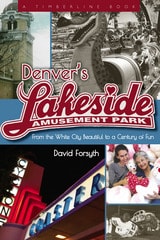
Denver's Lakeside Amusement Park
From the White City Beautiful to a Century of FunDavid Forsyth
University Press of Colorado, 2016
Once nicknamed White City in part for its glittering display of more than 100,000 lights, the park opened in 1908 in conjunction with Denver's participation in the national City Beautiful movement. It was a park for Denver elites, with fifty different forms of amusement, including the Lakeshore Railway and the Velvet Coaster, a casino, a ballroom, a theater, a skating rink, and avenues decorated with Greek statues. But after metropolitan growth, technological innovation, and cultural shifts in Denver, it began to cater to a working-class demographic as well. Additions of neon and fluorescent lighting, roller coasters like the Wild Chipmunk, attractions like the Fun House and Lakeside Speedway, and rides like the Scrambler, the Spider, and most recently the drop tower Zoom changed the face and feel of Lakeside between 1908 and 2008. The park also has weathered numerous financial and structural difficulties but continues to provide Denverites with affordable, family-friendly amusement today.
To tell Lakeside's story, Forsyth makes use of various primary and secondary sources, including Denver newspapers, Denver's official City Beautiful publication Municipal Facts, Billboard magazine, and interviews with people connected to the park throughout its history. Denver's Lakeside Amusement Park is an important addition to Denver history that will appeal to anyone interested in Colorado history, urban history, entertainment history, and popular culture, as well as to amusement park aficionados.
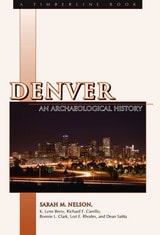
Denver
An Archaeological HistorySarah M. Nelson
University Press of Colorado, 2008
Around 12,000 B.C., groups of leather-clad Paleoindians passed through the juncture of the South Platte River and Cherry Creek, following the herds of mammoth or buffalo they hunted. In the Archaic period, people rested under the shade of trees along the riverbanks, with baskets full of plums as they waited for rabbits to be caught in their nearby snares. In the early Ceramic period, a group of mourners adorned with yellow pigment on their faces and beads of eagle bone followed Cherry Creek to the South Platte to attend a funeral at a neighboring village. And in 1858, the area was populated by the crude cottonwood log shacks with dirt floors and glassless windows, the homes of Denver's first inhabitants.
For at least 10,000 years, Greater Denver has been a collection of diverse lifeways and survival strategies, a crossroads of interaction, and a locus of cultural coexistence. Setting the scene with detailed descriptions of the natural environment, summaries of prehistoric sites, and archaeologists' knowledge of Denver's early inhabitants, Nelson and her colleagues bring the region's history to life. From prehistory to the present, this is a compelling narrative of Denver's cultural heritage that will fascinate lay readers, amateur archaeologists, professional archaeologists, and academic historians alike.

Denver
Mining Camp to MetropolisStephen J. Leonard
University Press of Colorado, 1990
In retelling the tale of conquest and city building, the authors explore the role of previously neglected peoples--notably women, ethnic minorities, and the working class--while weaving several key themes throughout the book: Denver's persistent reliance on natural resources, the important role of transportation to overcome the city's isolation, and the city's emphasis on privatization rather than on the public, common good. Denver: Mining Camp to Metropolis will fascinate and educated students and scholars, as well as all readers curious about the boom-and-bust metropolis of the Rockies.
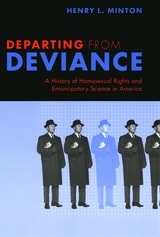
Departing from Deviance
A History of Homosexual Rights and Emancipatory Science in AmericaHenry L. Minton
University of Chicago Press, 2001
Department and Discipline
Chicago Sociology at One HundredAndrew Abbott
University of Chicago Press, 1999
Abbott analyzes the shifts in social scientific inquiry and discloses the intellectual rivalry and faculty politics that characterized different stages of the Chicago School. Along the way, he traces the rich history of the discipline's main journal, the American Journal of Sociology.
Embedded in this analysis of the school and its practices is a broader theoretical argument, which Abbott uses to redefine social objects as a sequence of interconnected events rather than as fixed entities. Abbott's theories grow directly out of the Chicago School's insistence that social life be located in time and place, a tradition that has been at the heart of the school since its founding one hundred years ago.

Dependent States
The Child's Part in Nineteenth-Century American CultureKaren Sánchez-Eppler
University of Chicago Press, 2005
Dependent States examines the ties between children's literacy training and the growing cultural prestige of the novel; the way children functioned rhetorically in reform literature to enforce social norms; the way the risks of death to children shored up emotional power in the home; how Sunday schools socialized children into racial, religious, and national identities; and how class identity was produced, not only in terms of work, but also in the way children played. For Sánchez-Eppler, nineteenth-century childhoods were nothing less than vehicles for national reform. Dependent on adults for their care, children did not conform to the ideals of enfranchisement and agency that we usually associate with historical actors. Yet through meticulously researched examples, Sánchez-Eppler reveals that children participated in the making of social meaning. Her focus on childhood as a dependent state thus offers a rewarding corrective to our notions of autonomous individualism and a new perspective on American culture itself.

Deployed
How Reservists Bear the Burden of IraqMichael Musheno and Susan M. Ross
University of Michigan Press, 2008
"Deployed is an important and deeply moving book. Here, in this story, the heroic tradition of the American citizen-soldier lives on."
---Andrew J. Bacevich, Professor, Boston University, and author of The New American Militarism: How Americans Are Seduced by War
"Whatever your feelings about Iraq, Deployed is an important and compelling work that illuminates the real human cost of the war, and gives voice to those compelled to fight it."
---Ken Wells, Senior Editor, Condé Nast Portfolio
"Currently, there are few to no books dealing with the sociology of Iraq, and even fewer have empirical data on the experiences of American soldiers. More important, this work provides a strong and needed voice for soldiers---their words are compelling, rich, and moving."
---Morten Ender, Professor of Sociology, United States Military Academy at West Point
"This is a unique book that weaves historical, ethnographic, and organizational approaches for a study of Iraq-War military reservists. . . . the authors' findings challenge the pervading wisdom on reservists' motivations for service; the chemistry between family, reserve duty, and relations with regular military; and the effect that service in Iraq had on them."
---Jerry Lembcke, Associate Professor of Sociology, Holy Cross College
What is it like to be one of the citizen-soldiers summoned to duty in Iraq and Afghanistan? The events of 9/11 were a call to arms for many reservists, as shock, anger, and fear propelled large numbers to volunteer for the opportunity to serve their country in the Middle East. Even the most patriotic, however, had not expected that the wars would last so long or that the Army Reserve would supply so much of the manpower.
Using the soldiers' own voices, Deployed draws upon the life stories of members of an Army Reserve MP Company, who were called to extraordinary service after September 11. The book explores how and why they joined the Army Reserve, how they dealt with the seismic changes in their lives during and after deployment, the evolution of their relationships inside and outside their military unit, and their perspectives on the U.S. Army.
Musheno and Ross uncover five pathways that led these citizens to join the reserves, showing how basic needs and cultural idioms combined to stimulate enlistments. Whatever path led to enlistment, the authors find that citizen-soldiers fall into three distinct categories: adaptive reservists who adjust quickly to the huge changes in their lives abroad and at home, struggling reservists whose troubles are more a product of homegrown circumstances than experiences specific to serving in a war zone, and reservists who are dismissive of military life while they live it and oppose the war even as they fight it. Perhaps most important, Deployed challenges the prevailing stereotype of returning soldiers as war-damaged citizens.
Jacket photograph: AP Photo/Hutchinson News, Travis Morisse.

Deported Americans
Life after Deportation to MexicoBeth Caldwell
Duke University Press, 2019

Deportes
The Making of a Sporting Mexican DiasporaJosé M Alamillo
Rutgers University Press, 2020
These sporting achievements were not theirs alone, an entire cadre of supporters—families, friends, coaches, managers, promoters, sportswriters, and fans—rallied around them and celebrated their athletic success. The Mexican nation and community, at home or abroad, elevated Mexican athletes to sports hero status with a deep sense of cultural and national pride. Alamillo argues that Mexican-origin males and females in the United States used sports to empower themselves and their community by developing and sustaining transnational networks with Mexico. Ultimately, these athletes and their supporters created a “sporting Mexican diaspora” that overcame economic barriers, challenged racial and gender assumptions, forged sporting networks across borders, developed new hybrid identities and raised awareness about civil rights within and beyond the sporting world.
Deregulating Desire
Flight Attendant Activism, Family Politics, and Workplace JusticeRyan Patrick Murphy
Temple University Press, 2016
In 1975, National Airlines was shut down for 127 days when flight attendants went on strike to protest long hours and low pay. Activists at National and many other U.S. airlines sought to win political power and material resources for people who live beyond the boundary of the traditional family. In Deregulating Desire, Ryan Patrick Murphy, a former flight attendant himself, chronicles the efforts of single women, unmarried parents, lesbians and gay men, as well as same-sex couples to make the airline industry a crucible for social change in the decades after 1970.
Murphy situates the flight attendant union movement in the history of debates about family and work. Each chapter offers an economic and a cultural analysis to show how the workplace has been the primary venue to enact feminist and LGBTQ politics.
From the political economic consequences of activism to the dynamics that facilitated the rise of what Murphy calls the “family values economy” to the Airline Deregulation Act of 1978, Deregulating Desire emphasizes the enduring importance of social justice for flight attendants in the twenty-first century.
Derelict Paradise
Homelessness and Urban Development in Cleveland, OhioDaniel R. Kerr
University of Massachusetts Press, 2011
Seeking answers to the question, “Who benefits from homelessness?” this book takes the reader on a sweeping tour of Cleveland's history from the late nineteenth-century through the early twenty-first. Daniel Kerr shows that homelessness has deep roots in the shifting ground of urban labor markets, social policy, downtown development, the criminal justice system, and corporate power. Rather than being attributable to the illnesses and inadequacies of the unhoused themselves, it is a product of both structural and political dynamics shaping the city. Kerr locates the origins of today's shelter system in the era that followed the massive railroad rebellions of 1877. From that period through the Great Depression, business and political leaders sought to transform downtown Cleveland to their own advantage. As they focused on bringing business travelers and tourists to the city and beckoned upper-income residents to return to its center, they demolished two downtown working-class neighborhoods and institutionalized a shelter system to contain and control the unhoused and unemployed. The precedents from this period informed the strategies of the post–World War II urban renewal era as the "new urbanism" of the late twentieth century. The efforts of the city's elites have not gone uncontested. Kerr documents a rich history of opposition by people at the margins of whose organized resistance and everyday survival strategies have undermined the grand plans crafted by the powerful and transformed the institutions designed to constrain the lives of the homeless.
Desegregating Comics
Debating Blackness in the Golden Age of American ComicsQiana Whitted
Rutgers University Press, 2023
Shortlisted for the Best Academic / Scholarly Work Eisner Award
Honorable Mention for the Harry Shaw and Katrina Hazzard-Donald Award for Outstanding Work in African-American Popular Culture Studies from the Popular Culture Association
Some comics fans view the industry’s Golden Age (1930s-1950s) as a challenging time when it comes to representations of race, an era when the few Black characters appeared as brutal savages, devious witch doctors, or unintelligible minstrels. Yet the true portrait is more complex and reveals that even as caricatures predominated, some Golden Age comics creators offered more progressive and nuanced depictions of Black people.
Desegregating Comics assembles a team of leading scholars to explore how debates about the representation of Blackness shaped both the production and reception of Golden Age comics. Some essays showcase rare titles like Negro Romance and consider the formal innovations introduced by Black comics creators like Matt Baker and Alvin Hollingsworth, while others examine the treatment of race in the work of such canonical cartoonists as George Herriman and Will Eisner. The collection also investigates how Black fans read and loved comics, but implored publishers to stop including hurtful stereotypes. As this book shows, Golden Age comics artists, writers, editors, distributors, and readers engaged in heated negotiations over how Blackness should be portrayed, and the outcomes of those debates continue to shape popular culture today.
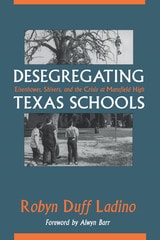
Desegregating Texas Schools
Eisenhower, Shivers, and the Crisis at Mansfield HighBy Robyn Duff Ladino
University of Texas Press, 1996
In the famous Brown v. the Board of Education decisions of 1954 and 1955, the United States Supreme Court ruled that "separate but equal" schools for black and white students were unconstitutional. Yet history records that it took more than a decade of legal battles, civil rights protests, and, tragically, violent confrontations before black students gained full access to previously white schools.
Mansfield, Texas, a small community southeast of Fort Worth, was the scene of an early school integration attempt. In this book, Robyn Duff Ladino draws on interviews with surviving participants, media reports, and archival research to provide the first full account of the Mansfield school integration crisis of 1956.
Ladino explores how power politics at the local, state, and federal levels ultimately prevented the integration of Mansfield High School in 1956. Her research sheds new light on the actions of Governor Allan Shivers—who, in the eyes of the segregationists, actually validated their cause by his political actions—and it underscores President Dwight Eisenhower's public passivity toward civil rights during his first term of office.
Despite the short-term failure, however, the Mansfield school integration crisis helped pave the way for the successful integration of Central High School in Little Rock, Arkansas, in 1957. Thus, it deserves a permanent place in the history of the civil rights movement, which this book amply provides.
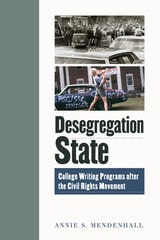
Desegregation State
College Writing Programs after the Civil Rights MovementAnnie S. Mendenhall
Utah State University Press, 2021
Formerly segregated state university systems crafted desegregation plans that gave them more control over policies for admissions, remediation, and retention. These plans created literacy requirements—admissions and graduation tests, remedial classes, and even writing centers and writing across the curriculum programs—that reshaped the landscape of college writing instruction and denied the demands of Black students, civil rights activists, and historically Black colleges and universities for major changes to university systems. This history details the profound influence of desegregation—and resistance to desegregation—on the ways that writing is taught and assessed in colleges today.
Desegregation State provides WPAs and writing teachers with a disciplinary history for understanding racism in writing assessment and writing programs. Mendenhall brings emerging scholarship on the racialization of institutions into the field, showing why writing studies must pay more attention to how writing programs have institutionalized racist literacy ideologies through arguments about student placement, individualized writing instruction, and writing assessment.

Desert Duty
On the Line with the U.S. Border PatrolBy Bill Broyles and Mark Haynes
University of Texas Press, 2010
While politicians and pundits endlessly debate immigration policy, U.S. Border Patrol agents put their lives on the line to enforce immigration law. In a day's work, agents may catch a load of narcotics, apprehend groups of people entering the country illegally, and intercept a potential terrorist. Their days often include rescuing aliens from death by thirst or murder by border bandits, preventing neighborhood assaults and burglaries, and administering first aid to accident victims, and may involve delivering an untimely baby or helping stranded motorists. As Bill Broyles and Mark Haynes sum it up, "Border Patrol is a hero job," one that too often goes unrecognized by the public.
Desert Duty puts a human face on the Border Patrol. It features interviews with nineteen active-duty and retired agents who have worked at the Wellton, Arizona, station that watches over what is arguably the most perilous crossing along the border—a sparsely populated region of the Sonoran Desert with little water and summer temperatures that routinely top 110°F. The agents candidly discuss the rewards and frustrations of holding the line against illegal immigrants, smugglers, and other criminals—while often having to help the very people they are trying to thwart when they get into trouble in the desert. As one agent explains, "The thrill is tracking 'em up before they die. It's a rough ol' way to go—run outta water in this desert."

Desert Mementos
Stories of Iraq and NevadaCaleb S. Cage
University of Nevada Press, 2017
Cage captures similarities in the respective desert landscapes of both Iraq and Nevada, but it is not just a study in contrasting landscapes. The inter-connected stories explore similarities and differences in human needs from the perspectives of vastly different cultures. Specifically, the stories deftly capture the overlap in the respective desert landscapes of each region, the contrasting cultures and worldviews, and the common need for hope. Taken together, the stories represent the arc of a year-long deployment by young soldiers. Cage’s stories are bound together by the soldier’s searing experiences in the desert, bookended by leaving and returning home to Nevada, which in many ways can be just as disorienting as patrolling the Iraq desert.

Desert Rose
The Life and Legacy of Coretta Scott KingEdythe Scott Bagley with Joe Hilley
University of Alabama Press, 2012
An intimate biography illuminating the life, leadership, and legacy of Coretta Scott King within the American Civil Rights Movement.
Coretta Scott King—noted author, human rights activist, and wife and partner of famed Civil Rights Movement leader Martin Luther King Jr.—grew up in the rural Alabama Black Belt with her older sister, Edythe Scott Bagley. Bagley chronicles the sisters’ early education together at the Crossroads School and later at the progressive Lincoln School in Marion. She describes Coretta’s burgeoning talent for singing and her devotion to musical studies, and the sisters’ experiences matriculating at Antioch College, an all-white college far from the rural South. Bagley provides vivid insights into Coretta’s early passion for racial and economic justice, which lead to her involvement in the Peace Movement and the National Association for the Advancement of Colored People.
As Coretta’s older sister, Edythe shared in almost all of Coretta’s many trials and tribulations. Desert Rose charts Coretta’s hesitance about her romance with Martin Luther King and the prospect of having to sacrifice her dream of a career in music to become a minister’s wife. Ultimately, Coretta chose to utilize her artistic gifts and singing voice for the Movement through the development and performance of Freedom Concerts. This book also charts Coretta’s own commitment and dedication, in the years that followed King’s death, to the causes of international civil rights, the antiapartheid movement, and the establishment of the King Center in Atlanta and the national King Holiday. Coretta’s devotion to activism, motherhood, and the movement led by her husband, and her courageous assumption of the legacy left in the wake of King’s untimely assassination, are wonderfully detailed in this intimate biography.
Deserted
Life Without Local News in Rural AmericaNick Mathews
University of Illinois Press, 2026
The devastation of local news organizations has left rural areas of the US marooned in information deserts. Nick Mathews offers a boots-on-the-ground examination of the human toll of local news’s erosion by the winds of de-localization and corporate indifference.
It is no secret that ownership transfers, corporate mergers, and hedge fund takeovers have relentlessly consolidated and closed local news organizations. Mathews exposes the impact of that process on journalism, journalists, and news consumers hungry for outlets that tell their stories. A fundamental breakdown within journalism itself, the abandonment of community news has left disgruntled and disconnected locals to piece together news and information themselves. Mathews draws on the personal experiences of news gatherers and consumers to illuminate why local news cannot be scaled. Mass-produced content inevitably severs ties to communities while distant ownership is indifferent to local concerns.
Nuanced and sympathetic, <i>Deserted</i> provides a vivid portrait of the people and places forsaken by journalism’s corporate owners.

Design and Debris
A Chaotics of Postmodern American FictionJoseph Conte
University of Alabama Press, 2002
Reading eight major contemporary authors through the lens of chaos theory, Conte offers new and original interpretations of works that have been the subject of much critical debate
Design and Debris discusses the relationship between order and disorder in the works of John Hawkes, Harry Mathews, John Barth, Gilbert Sorrentino, Robert Coover, Thomas Pynchon, Kathy Acker, and Don DeLillo. In analyzing their work, Joseph Conte brings to bear a unique approach adapted from scientific thought: chaos theory. His chief concern is illuminating those works whose narrative structures locate order hidden in disorder (whose authors Conte terms “proceduralists”), and those whose structures reflect the opposite, disorder emerging from states of order (whose authors Conte calls “disruptors”).Documenting the paradigm shift from modernism, in which artists attempted to impose order on a disordered world, to postmodernism, in which the artist portrays the process of “orderly disorder,” Conte shows how the shift has led to postmodern artists' embrace of science in their treatment of complex ideas. Detailing how chaos theory interpenetrates disciplines as varied as economics, politics, biology, and cognitive science, he suggests a second paradigm shift: from modernist specialization to postmodern pluralism. In such a pluralistic world, the novel is freed from the purely literary and engages in a greater degree of interactivity-between literature and science, and between author and reader. Thus, Conte concludes, contemporary literature is a literature of flux and flexibility.
Design and Feminism
Re-visioning Spaces, Places, and Everyday ThingsJoan Rothschild
Rutgers University Press, 1999
The interdisciplinary essays reflect the writers' diverse fields- architecture, planning, industrial and graphic design, and architectural, urban, and design history. Essays cover such subject as rethinking the American city, graphic design and the urban landscape, working at home, theories of women and design, and a trio of essays on industrial designs. A review essay of the literature in these fields- the first of its kind- rounds out the collection.
Contributors are Amelia Amon, Wendy E. Brawer, Cheryl Buckley, Sue Cavanagh, Alethea Cheng, Roberta M. Feldman, Etain Fitzpatrick, Alice T. Friedman, Dolores Hayden, Ghislaine Hermanuz, Barbara Knecht, Ellen Lupton, Maggie Mahboubian, Francine Monaco, Nancy Perkins, Victoria Rosner, Joan Rothschild, Susana Torre, Lynne Walker, and Leslie Kanes Weismann.
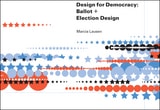
Design for Democracy
Ballot and Election DesignMarcia Lausen
University of Chicago Press, 2007
Handsomely designed itself, this volume showcases adaptable design models that can improve almost every part of the election process by maximizing the clarity and usability of ballots, registration forms, posters and signs, informational brochures and guides, and even administrative materials for poll workers. Design for Democracy also lays out specific guidelines—covering issues of color palette, typography, and image use—that anchor the comprehensive election design system devised by the group of design specialists from whose name the book takes its title. Part of a major AIGA strategic program, this group's prototypes and recommendations have already been used successfully in major Illinois and Oregon elections and, collected here, are likely to spread across the country as more people become aware of the myriad benefits and broad applicability of improved election design.
An essential tool for designers and election officials, lawmakers and citizens, Design for Democracy harnesses the power of design to increase voter confidence, promote government transparency, and, perhaps most important, create an informed electorate.
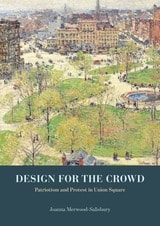
Design for the Crowd
Patriotism and Protest in Union SquareJoanna Merwood-Salisbury
University of Chicago Press, 2019
In this sweeping history of an iconic urban square, Merwood-Salisbury gives us a review of American political activism, philosophies of urban design, and the many ways in which a seemingly stable landmark can change through public engagement and design.
Published with the support of Furthermore: a program of the J. M. Kaplan Fund.
Design in the Age of Darwin
From William Morris to Frank Lloyd WrightStephen F Eisenman
Northwestern University Press, 2008
Charles Darwin’s monumental The Origin of Species, published in 1859, forever changed the landscape of natural science. The scientific world of the time had already established the principle of the “intelligent design” of a Creator; the art world had spent centuries devoting itself to the celebration of such a Designer’s creation. But the language of the book, and its implications, were stunning, and the ripples Darwin made when he rocked the boat spread outward: if he could question the Designer, what effect might there be on the art world, and on mortal designers’ renderings of Creation.
Published in partnership with the Mary and Leigh Block Museum of Art to accompany its exhibit, this catalog of essays and more than fifty color exhibition plates invokes these two senses of “intelligent design”—one from the debates between science and theology and the other from the world of art, particularly architecture and the decorative arts. The extensive exhibition includes furniture, metalware, glassware, textiles, and designs on loan from public and private collections in the United States and England. Among the artwork included are items from William Morris, C. R. Ashbee, Christopher Dresser, C. F. A. Voysey, Frank Lloyd Wright, and Louis Sullivan. Through these pieces and the accompanying examinations, the book explores how popular conceptions of the theory of evolution were used or rejected by British and American artists in the years that followed Darwin’s publication.
Designed to Fail
Why Racial Equity in School Funding Is So Hard to AchieveRoseann Liu
University of Chicago Press, 2024
For people who care about urban school districts like Philadelphia’s, addressing the challenges that these schools face often boils down to the need for more money. But why are urban districts that serve Black and Brown students still so perennially underfunded compared to majority-white ones? Why is racial equity in school funding so hard to achieve?
In Designed to Fail, Roseann Liu provides an inside look at the Pennsylvania state legislature and campaigns for fair funding to show how those responsible for the distribution of school funding work to maintain the privileges of majority-white school districts. Liu analyzes how colorblind policies, political structures, and the maintenance of the status quo by people in power perpetuate wide and deepening racial disparities in education funding. Taking a lesson from community organizers fighting for a racially equitable school funding system, Liu’s work is a bold call to address structural racism at the root and organize from a place of abundant justice.
Designing Democratic Government
Making Institutions WorkMargaret Levi
Russell Sage Foundation, 2008