Results by title
1677 books match the query 'Archaeology' and 59 start with e
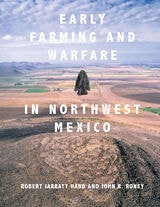
Early Farming and Warfare in Northwest Mexico
Robert J. Hard and John R. Roney
University of Utah Press, 2019
The authors place their work in a regional and theoretical context, providing detailed analyses of radiocarbon dates, structures, features, and artifacts. Authors Hard and Roney, and their contributors, present innovative analyses of plant and animal remains, ground stone, chipped stone, and landscape evolution. Through comparisons with a global cross-cultural probe of hilltop sites and a detailed examination of the features and artifacts of Cerro Juanaqueña, Hard and Roney argue that these cerros de trincheras sites are the earliest fortified defensive sites in the region. Readers with interests in ancient agriculture, warfare, village formation, and material culture will find this to be a foundational volume.
Early Formative Pottery of the Valley of Oaxaca
Kent V. Flannery and Joyce Marcus with technical ceramic analysis by William O. Payne
University of Michigan Press, 1994
Early Neolithic Settlement and Society at Olszanica
Sarunas Milisauskas
University of Michigan Press, 1986
Early Pottery
Technology, Function, Style, and Interaction in the Lower SoutheastEdited by Rebecca Saunders and Christopher T. Hays
University of Alabama Press, 2004
A synthesis of research on earthenware technologies of the Late Archaic Period in the southeastern U.S.
Information on social groups and boundaries, and on interaction between groups, burgeons when pottery appears on the social landscape of the Southeast in the Late Archaic period (ca. 5000-3000 years ago). This volume provides a broad, comparative review of current data from "first potteries" of the Atlantic and Gulf coastal plains and in the lower Mississippi River Valley, and it presents research that expands our understanding of how pottery functioned in its earliest manifestations in this region.
Included are discussions of Orange pottery in peninsular Florida, Stallings pottery in Georgia, Elliot's Point fiber-tempered pottery in the Florida panhandle, and the various pottery types found in excavations over the years at the Poverty Point site in northeastern Louisiana. The data and discussions demonstrate that there was much more interaction, and at an earlier date, than is often credited to Late Archaic societies. Indeed, extensive trade in pottery throughout the region occurs as early as 1500 B.C.
These and other findings make this book indispensable to those involved in research into the origin and development of pottery in general and its unique history in the Southeast in particular.
Early Puebloan Occupations at Tesuque By-Pass and in the Upper Rio Grande Valley
Charles H. McNutt
University of Michigan Press, 1969
Early Settlement and Irrigation on the Deh Luran Plain
Village and Early State Societies in Southwestern IranJames A. Neely and Henry T. Wright with a foreword by Kent V. Flannery and contributions by Robert E. Dewar and Pierre de Miroschedji
University of Michigan Press, 1994
Early Settlement and Subsistence in the Casma Valley, Peru
Shelia Pozorski
University of Iowa Press, 1987
Early Stages in the Evolution of Mesopotamian Civilization
Soviet Excavations in Northern IraqEdited by Norman Yoffee and Jeffery J. Clark
University of Arizona Press, 1993
Early State Formation in Central Madagascar
An Archaeological Survey of Western AvaradranoEdited by Henry T. Wright
University of Michigan Press, 2007
Earth Ovens and Desert Lifeways
10,000 Years of Indigenous Cooking in the Arid Landscapes of North AmericaEdited by Charles W. Koenig and Myles R. Miller
University of Utah Press, 2023
For over 10,000 years, earth ovens (semi-subterranean, layered arrangements of heated rocks, packing material, and food stuffs capped by earth) have played important economic and social roles for Indigenous peoples living across the arid landscapes of western North America. From hunter-gatherers to formative horticulturalists, sedentary farmers, and contemporary Indigenous groups, earth ovens have been used to convert inedible plants into digestible food, fiber, and beverages.
The remains of earth ovens range from tight, circular clusters of burned rocks, generally labeled “hearths” by archaeologists, to the massive accumulations of fire-cracked rock referred to as earth oven facilities, roasting pits, or burned rock middens. Remnants of these oven forms are common across the arid and semi-arid landscapes that stretch from Texas to California and south into Mexico. Despite the ubiquity of earth ovens from late Paleoindian times until today, and their broad spatial and cultural distribution, these features remain an under-studied aspect of Indigenous lifeways.
This edited volume explores the longevity and diversity of earth oven baking and examines the subsistence strategies, technological paradigms, and social contexts within which earth ovens functioned. It is the first study to cover such a broad geographic area, reflecting an array of promising research that highlights ongoing efforts to understand the archaeological record of earth ovens.
Economic and Social Organization of a Complex Chiefdom
The Halelea District, Kaua’i, HawaiiTimothy Earle
University of Michigan Press, 1978
Edward Palmer's Arkansaw Mounds
Edited and preface by Marvin D. Jeter
University of Alabama Press, 2010
"This thoroughly researched volume is highly recommended to anyone—at any level—who is interested in the archaeology of the Southeast." —CHOICE
During the 1880s a massive scientific effort was launched by the Smithsonian Institution to discover who had built the prehistoric burial mounds found throughout the United States. Arkansaw Mounds tells the story of this exploration and of Edward Palmer, one of the nineteenth century’s greatest natural historians and archaeologists, who was recruited to lead the research project. Arkansas was unusually rich in prehistoric remains, especially mounds, and became a major focus of the study. Palmer and his team of researchers discovered that the mounds had been built by the ancestors of the historic North American Indians, shattering the then-popular theory that a lost non-Indian race had built them.
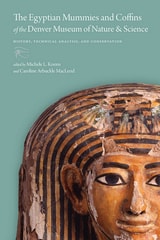
Egyptian Mummies and Coffins of the Denver Museum of Nature & Science
History, Technical Analysis, and ConservationMichele L. Koons
University Press of Colorado, 2020
This interdisciplinary volume provides a history of the mummies’ discovery and relocation to Colorado. It guides the reader through various analytical techniques, detailing past research and introducing new data and best practices for future conservation efforts. The new analysis includes more accurate radiocarbon dating, fully comprehensive data from updated CT scans, examples of Egyptian blue and yellow pigments on the coffins uncovered by non-invasive x-ray fluorescence, unprecedented analysis of the coffin wood, updated translations and stylistic analysis of the text and imagery on the coffins, gas chromatography of the paints and resins, linen analysis, and much more.
The Egyptian Mummies and Coffins of the Denver Museum of Nature & Science provides replicable findings and consistent terminology for institutions performing holistic studies on extant museum collections of a range of material types. It will add substantially to what we know about the effective conservation of Egyptian mummies and coffins.
Contributors: Christopher H. Baisan, Hans Barnard, Bonnie Clark, Pearce Paul Creasman, Farrah Cundiff, Jessica M. Fletcher, Kari L. Hayes, Kathryn Howley, Stephen Humphries, Keith Miller, Vanessa Muros, Robyn Price, David Rubinstein, Judith Southward, Jason Weinman
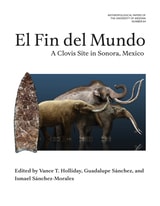
El Fin del Mundo
A Clovis Site in Sonora, MexicoVance T. Holliday, Guadalupe Sánchez, and Ismael Sánchez-Morales
University of Arizona Press, 2024
El Fin del Mundo presents and synthesizes the archaeological, geological, paleontological, and paleoenvironmental records of an important Clovis site.
Contributors
Joaquín Arroyo-Cabrales
Jordan Bright
James K. Feathers
Edmund P. Gaines
Thanairi Gamez
Gregory W. L. Hodgins
Vance T. Holliday
Susan M. Mentzer
Carmen Isela Ortega-Rosas
Manuel R. Palacios-Fest
Guadalupe Sánchez
Ismael Sánchez-Morales
Kayla B. Worthey
Kristen Wroth
Elamite and Achaemenid Settlement on the Deh Luran Plain
Towns and Villages of the Early Empires in Southwestern IranEdited by Henry T. Wright and James A. Neely
University of Michigan Press, 2010
Elements for an Anthropology of Technology
Pierre Lemonnier
University of Michigan Press, 1992
Emil W. Haury's Prehistory of the American Southwest
Edited by J. Jefferson Reid and David E. Doyel
University of Arizona Press, 1986

Encounter with the Plumed Serpent
Drama and Power in the Heart of MesoamericaMaarten Jansen
University Press of Colorado, 2007
By analyzing and cross-referencing the codices, which have been fragmented and dispersed in far-flung archives, the authors attempt to reconstruct Mixtec history. Their synthesis here builds on long examination of the ancient manuscripts. Adding useful interpretation and commentary, Jansen and Pérez Jiménez synthesize the large body of surviving documents into the first unified narrative of Mixtec sacred history.
Archaeologists and other scholars as well as readers with an interest in Mesoamerican cultures will find this lavishly illustrated volume a compelling and fascinating history and a major step forward in knowledge of the Mixtec.
Enduring Monuments
Formative Period Transformations at Pukara, PeruElizabeth A. Klarich
University Press of Colorado, 2025
In the early twentieth century, Peruvian scholars Luis E. Valcárcel and Julio C. Tello visited Pukara and shared images of its multicolored pottery and unique stone sculptures with colleagues across the world. A number of both small-scale and multiyear field projects have followed, with goals of refining Lake Titicaca Basin cultural chronologies, tracking Pukara-style material culture in the south-central Andes, restoring the structural integrity of the Qalasaya, and documenting the reoccupations of Pukara by Colla, Inca, and early Spanish colonial populations. Enduring Monuments synthesizes the findings of these diverse projects and shares the results of fieldwork and artifact analysis by the Pukara Archaeological Project since 2000.
Using a “building biography” approach that tracks initial construction, major remodeling, and subsequent expansion efforts during the Middle and Late Formative periods (400 BC–AD 200), Klarich highlights transformations in material culture, settlement patterns, social hierarchy, and daily practices at Pukara and contemporaneous sites across the Titicaca Basin and situates Formative period Pukara within the vast anthropological and archaeological literature addressing monumentality, ritual practice, and incipient urbanism in complex societies in South America and beyond.
Enduring Motives
The Archaeology of Tradition and Religion in Native AmericaLinea Sundstrom
University of Alabama Press, 2012
Wesley Bernardini / James S. Brown Jr. / Cheryl Claassen / John E. Clark / ArleneColman / Warren DeBoer /
Engaged Anthropology
Research Essays on North American Archaeology, Ethnobotany, and MuseologyEdited by Michelle Hegmon and B. Sunday Eiselt
University of Michigan Press, 2005
Engaged Archaeology in the Southwestern United States and Northwestern Mexico
Kelley A. Hays-Gilpin
University Press of Colorado, 2021
Organized around the theme of interdisciplinary perspectives, the book highlights collaborations with those who have other ways of knowing the past, from the traditional and proprietary knowledge of communities to new scientific methods, and considers the social context of archaeological practice and the modern relationships that inform interpretations of the past. Chapters show how cutting-edge practices lead to new archaeological understandings when archaeologists work in partnership with descendant and stakeholder communities and across international and disciplinary borders. Authors work across anthropological subfields and with the sciences, demonstrating that anthropological archaeology’s methods are starting points for investigation that allow for the expansion of understanding by incorporating long-remembered histories with innovative analytic methods.
Engaged Archaeology in the Southwestern United States and Northwestern Mexico identifies current and near-future trends in archaeological practice in the US Southwest and northwestern Mexico, including repatriation, community engagement, and cross-disciplinary approaches, and focuses on Native American archaeologists and their communities, research, collaborations, and interests. It will be of interest to archaeologists and anthropologists working in the Southwest and to any researchers interested in interdisciplinary approaches to archaeology, heritage studies, and the natural sciences.
Contributors: Christopher Caseldine, Chip Colwell, Guillermo Córdova Tello, Patrick Cruz, T. J. Ferguson, Cécile R. Ganteaume, Vernelda Grant, Neysa Grider-Potter, Christopher Grivas, Michael Heilen, Jane H. Hill, Leigh J. Kuwanwisiwma, Teresita Majewski, Debra L. Martin, Estela Martínez Mora, John A. McClelland, Emiliano Ricardo Melgar Tísoc, Darsita R. North, Scott Ortman, Peter J. Pilles Jr., Susan Sekaquaptewa, Arleyn W. Simon, Kimberly Spurr, Sarah Striker, Kerry F. Thompson, John A. Ware, Peter M. Whiteley, Lisa C. Young
Engendering Households in the Prehistoric Southwest
Edited by Barbara J. Roth
University of Arizona Press, 2010
Now Southwestern archaeologists have begun to delve into the task of “engendering” their sites. Using a “close to the ground” approach, the contributors to this book seek to engender the prehistoric Southwest by examining evidence at the household level.
Focusing on gendered activities in household contexts throughout the southwestern United States, this book represents groundbreaking work in this area. The contributors view households as a crucial link to past activities and behavior, and by engendering these households, we can gain a better understanding of their role in prehistoric society. Gender-structured household activities, in turn, can offer insight into broader-scale social and economic factors. The chapters offer a variety of theoretical and methodological approaches to engendering households and examine topics such as the division of labor, gender relations, household ritual, ceramic and ground stone production and exchange, and migration.
Engendering Households in the Prehistoric Southwest ultimately addresses broader issues of interest to many archaeologists today, including households and their various forms, identity and social boundary formation, technological style, and human agency. Focusing on gendered activities in household contexts throughout the southwestern United States, this book represents groundbreaking work in this area. The contributors view households as a crucial link to past activities and behavior, and by engendering these households, we can gain a better understanding of their role in prehistoric society. Gender-structured household activities, in turn, can offer insight into broader-scale social and economic factors.
Engineering Mountain Landscapes
An Anthropology of Social InvestmentLaura L. Scheiber and María N. Zedeño
University of Utah Press, 2015
Entering America
Northeast Asia and Beringia Before the Last Glacial MaximumDavid B. Madsen
University of Utah Press, 2004
Where did the first Americans come from and when did they get here? That basic question of American archaeology, long thought to have been solved, is re-emerging as a critical issue as the number of well-excavated sites dating to pre-Clovis times increases. It now seems possible that small populations of human foragers entered the Americas prior to the creation of the continental glacial barrier. While the archaeological and paleoecological aspects of a post-glacial entry have been well studied, there is little work available on the possibility of a pre-glacial entry.
Entering America seeks to fill that void by providing the most up-to-date information on the nature of environmental and cultural conditions in northeast Asia and Beringia (the Bering land bridge) immediately prior to the Last Glacial Maximum. Because the peopling of the New World is a question of international archaeological interest, this volume will be important to specialists and nonspecialists alike.

Environmental Change and Human Adaptation in the Ancient American Southwest
Doyel and Dean
University of Utah Press, 2006
Epicurus in Lycia
The Second-Century World of Diogenes of OenoandaPamela Gordon
University of Michigan Press, 1996
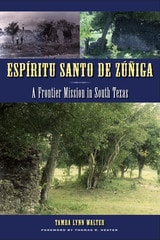
Espíritu Santo de Zúñiga
A Frontier Mission in South TexasBy Tamra Lynn Walter
University of Texas Press, 2007
San Antonio Conservation Society Citation, 2009
In the early part of the eighteenth century, the Spanish colonial mission Espíritu Santo de Zúñiga was relocated from far south Texas to a site along the Guadalupe River in Mission Valley, Victoria County. This mission, along with a handful of others in south Texas, was established by the Spaniards in an effort to Christianize and civilize the local Native American tribes in the hopes that they would become loyal Spanish citizens who would protect this new frontier from foreign incursions.
With written historical records scarce for Espíritu Santo, Tamra Walter relies heavily on material culture recovered at this site through a series of recent archaeological investigations to present a compelling portrait of the Franciscan mission system. By examining findings from the entire mission site, including the compound, irrigation system, quarry, and kiln, she focuses on questions that are rarely, if ever, answered through historical records alone: What was daily life at the mission like? What effect did the mission routine have on the traditional lifeways of the mission Indians? How were both the Indians and the colonizers changed by their frontier experiences, and what does this say about the missionization process?
Walter goes beyond simple descriptions of artifacts and mission architecture to address the role these elements played in the lives of the mission residents, demonstrating how archaeology is able to address issues that are not typically addressed by historians. In doing so, she presents an accurate portrait of life in South Texas at this time. This study of Mission Espíritu Santo will serve as a model for research at similar early colonial sites in Texas and elsewhere.
Essays on Archaeological Methods
Edited by James B. Griffin
University of Michigan Press, 1951
Essential Tensions in Archaeological Method and Theory
Todd L. Vanpool
University of Utah Press, 2003
In that spirit of plurality, contributors to this volume identify an important theoretical or methodological problem and present an argument regarding its solution. They also provide a critical evaluation of the current state of archaeological method and theory, illustrating that such recurrent issues as the role of agency and the importance of social considerations in the formation of archaeological research dominate current theoretical development.
By presenting both the range of important questions and a variety of answers, this volume contributes to the 'essential tension' that will further the growth of archaeological theory.
Ethics in Action
Case Studies in Archaeological DilemmasChip Colwell-Chanthaphonh
University Press of Colorado, 2008
Ethnic Identity in Nahua Mesoamerica
The View from Archaeology, Art History, Ethnohistory, and Contemporary EthnographyFrances F Berdan
University of Utah Press, 2008
This book is the first to analyze ethnicity in a single place over a span that covers prehistory, colonial history, and contemporary life. The authors bring to their various case studies data, methodologies, and concepts of their respective fields to show how Nahuan concepts of ethnic identity are not based on the notion of shared descent but rather on conceptions of shared place of origin and common history.
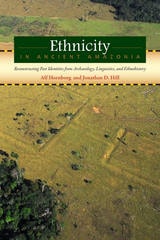
Ethnicity in Ancient Amazonia
Reconstructing Past Identities from Archaeology, Linguistics, and EthnohistoryAlf Hornborg
University Press of Colorado, 2011
Hornborg and Hill argue that the tendency to link language, culture, and biology--essentialist notions of ethnic identities--is a Eurocentric bias that has characterized largely inaccurate explanations of the distribution of ethnic groups and languages in Amazonia. The evidence, however, suggests a much more fluid relationship among geography, language use, ethnic identity, and genetics. In Ethnicity in Ancient Amazonia, leading linguists, ethnographers, ethnohistorians, and archaeologists interpret their research from a unique nonessentialist perspective to form a more accurate picture of the ethnolinguistic diversity in this area.
Revealing how ethnic identity construction is constantly in flux, contributors show how such processes can be traced through different ethnic markers such as pottery styles and languages. Scholars and students studying lowland South America will be especially interested, as will anthropologists intrigued by its cutting-edge, interdisciplinary approach.
Ethnobiology at the Millennium
Past Promise and Future ProspectsEdited by Richard I. Ford
University of Michigan Press, 2001
European Metals in Native Hands
Rethinking Technological Change 1640-1683Kathleen L. Ehrhardt
University of Alabama Press, 2005
The first detailed analysis of Native metalworking in the Protohistoric/Contact Period
From the time of their earliest encounters with European explorers and missionaries, Native peoples of eastern North America acquired metal trinkets and utilitarian items and traded them to other aboriginal communities. As Native consumption of European products increased, their material culture repertoires shifted from ones made up exclusively of items produced from their own craft industries to ones substantially reconstituted by active appropriation, manipulation, and use of foreign goods. These material transformations took place during the same time that escalating historical, political, economic, and demographic influences (such as epidemics, new types of living arrangements, intergroup hostilities, new political alliances, missionization and conversion, changes in subsistence modes, etc.) disrupted Native systems.
Ehrhardt's research addresses the early technological responses of one particular group, the Late Protohistoric Illinois Indians, to the availability of European-introduced metal objects. To do so, she applied a complementary suite of archaeometric methods to a sample of 806 copper-based metal artifacts excavated from securely dated domestic contexts at the Illiniwek Village Historic Site in Clark County, Missouri.
Ehrhardt's scientific findings are integrated with observations from historical, archaeological, and archival research to place metal use by this group in a broad social context and to critique the acculturation perspective at other Contact Period sites. In revealing actual Native practice, from material selection and procurement to ultimate discard, the author challenges technocentric explanations for Native material and cultural change at contact.
Evolutionary Archaeology - Paper
Michael J O'Brien
University of Utah Press, 1996
The application of Darwinian theory to archaeological phenomena has always been a difficult concept. In its most modern form, this approach has only gained currency since the 1980s. Perhaps the greatest hurdle to incorporating scientific evolutionism into archaeology is the necessary development of more than a rudimentary understanding of Darwinian evolution itself. Failure to recognize the conflict of anthropological terms such as "adaptation" and "fitness" with standard biological usage is fatal to any attempt to apply scientific evolutionism to the material record. Even more problematic are the outdated notions that human culture has allowed us to escape the effects of selection, that culture evolves, and that it does so in a progressive manner.
This volume assembles what might be considered the benchmark articles in evolutionary archaeology — articles that show how to apply scientific evolutionism to the study of variation in the archaeological record. It delineates an approach to the past in which artifacts are viewed as parts of human phenotypes and thus are subject to selection in the same manner as any somatic feature.
Evolutionary Archaeology: Theory and Application is aimed at archaeologists who want to understand the basics of evolutionary archaeology and who wish to do so from the beginning.
Evolutionary Archaeology
Methodological IssuesPatrice A. Teltser
University of Arizona Press, 1994
Evolutionary archaeologists argue that Darwinian natural selection acts on human behavior, resulting in the persistence of alternative human behaviors and the material products of those behaviors. The contributors address the methodological requirements of evolutionary theory as it may apply to the nature of archaeological data. Several contributors evaluate the methodological implications of basic evolutionary principles, including the structure of explanations, the units of evolution and analysis, and the measurement of information transmission. Others explore the role of specific analytic approaches such as seriation, raw material sourcing, and comparative and engineering analyses. Still others confront the issue of reformulating archaeological problems from the point of view of evolutionary theory.
By focusing on the methodological requirements of evolutionary theory, these essays go far in meeting the challenge of building new archaeological method. The work contributes to a better understanding of cultural evolution and builds toward a new, logical framework to explain variation in the archaeological record.
Evolutionary Ecology and Archaeology
Applications to Problems in Human Evolution and PrehistoryJack M Broughton
University of Utah Press, 2009
Each of the twenty-four contributions represents a key benchmark in the field. Chapters are grouped by substantive topic and/or time period. Each of the following sections includes an introduction by the editors:
• Early Hominid Evolution and Behavior
• Pleistocene Foragers and Colonists
• Post-Glacial Adaptations
• Food Production Strategies
• Cooperation and Competition in Complex Societies
This volume’s broad range of research will foster sustained development of evolutionary ecology, and like Darwin’s work nearly 150 years ago will open wide fields of understanding of human prehistory.
Excavating Asian History
Interdisciplinary Studies in Archaeology and HistoryNorman Yoffee
University of Arizona Press, 2006
Excavating Asian History contains case studies and theoretical articles that show how archaeologists have been investigating historical, social, and economic organizations and that explore the relationship between history and archaeology in the study of pre-modern Asia. These contributions consider biases in both historical and archaeological data that have occasioned rival claims to knowledge in the two disciplines. Ranging widely across the region from the Levant to China and from the third millennium BC to the second millennium AD, they demonstrate that archaeological and historical studies can complement each other and should be used in tandem.
The contributors are leading historians and archaeologists of Asia who present data, issues, and debates revolving around the most recent research on the ancient Near East, early Islam, India, China, and Southeast Asian states. Their chapters illustrate the benefits of interdisciplinary investigations and show in particular how archaeology is changing our understanding of history. Commentary chapters by Miriam Stark and Philip Kohl add new perspectives to the findings.
By showing the evolving relationship between those who study archaeological material and those who investigate textual data, Excavating Asian History offers practical demonstrations of how research has been and must continue to be structured.
Excavation Of The Donner Reed
Bruce Hawkins
University of Utah Press, 1990
Excavation at San José Mogote 1
The Household ArchaeologyKent V. Flannery and Joyce Marcus with a multidimensional scaling of houses by Robert G. Reynolds
University of Michigan Press, 2005
Excavations at Cerro Tilcajete
A Monte Albán II Administrative Center in the Valley of OaxacaChristina Elson
University of Michigan Press, 2007
Excavations at Nantack Village, Point of Pines, Arizona
David A. Breternitz
University of Arizona Press, 1959
Excavations at Punta de Agua in the Santa Cruz River Basin, Southeastern Arizona
J. Cameron Greenleaf
University of Arizona Press, 1975
Excavations at Quachilco
A Report on the 1977 Season of the Palo Blanco Project in the Tehuacan ValleyRobert D. Drennan
University of Michigan Press, 1978
Excavations at San José Mogote 2
The Cognitive ArchaeologyKent V. Flannery and Joyce Marcus with contributions by Chris L. Moser, Ronald Spores, Dudley M. Varner, Judith Francis Zeitlin, and Robert N. Zeitlin
University of Michigan Press, 2005
Excavations at Santo Domingo Tomaltepec
Evolution of a Formative Community in the Valley of Oaxaca, MexicoMichael E. Whalon
University of Michigan Press, 1981
Excavations at Snaketown
Material CultureHarold S. Gladwin, Emil W. Haury, E. B. Sayles, and Nora Gladwin
University of Arizona Press, 1965
"The reprint will come as a blessing to many archaeologists who have sought in vain to obtain a copy of the original volume. It now stands as a body of data easily accessible to all workers, and we look forward to a new phase of synthesis of Hohokam archaeology."—American Antiquity

Excavations at Tel Michal, Israel
Ze’ev Herzog, Ora Negbi, and George Rapp Jr., Editors
University of Minnesota Press, 1989
Excavations at Tel Michal, Israel was first published in 1989. Minnesota Archive Editions uses digital technology to make long-unavailable books once again accessible, and are published unaltered from the original University of Minnesota Press editions.
The archaeological site known today as Tel Michal lies north of Tel Aviv on Israel's coastal plain, high on a barren windswept cliff overlooking the Mediterranean. Lacking the arable soil that might have encouraged permanent settlement - most of the region is covered with sand dunes - Tel Michael was probably a maritime station for military or commercial use during its period of occupation, which extended intermittently from the Canaanite Period (Middle Bronze Age II, about 2000 B.C.) through the Early Arab Period (ninth century A.D.). The site's archaeological remains are not confined to a single ancient tel or mound but are dispersed over five hills, where, despite severe erosion, seventeen strata have been excavated, yielding particularly rich and extensive finds in the Persian period.
The excavations at Tel Michal were conducted over a period of four summers, from 1977 through 1980, by a consortium that included Tel Aviv University and the University of Minnesota. As the first phase in a much broader regional project, Tel Michal drew together a multinational group of scholars and students in a cooperative, interdisciplinary effort like that pioneered in Greek archaeology by the Minnesota Messenia Expedition. Experts in traditional archaeological fields—pottery, architecture, numismatics—were joined by geologists, metallurgists, botanists, zoologists, and materials scientists; 43 of these participants have contributed to this full report of the excavations.
The book first traces the historical geography and settlement patterns of Tel Michal and its environs, then covers the stratigraphy and architecture of its settlements during the Bronze and Iron ages and the Persian, Hellenistic, and Arab periods. Included in this historical section are chapters on pottery and on special finds like the Iran Age winepresses, the Persian cemetery, and the Roman fortress. Subsequent chapters deal with the region's geology and its botanical and skeletal remains; with computerized, petrographic, and chemical modes of analysis; and with metal and flint objects, numismatics, and small finds like seals, glass artifacts, beads and pendants. Illustrated throughout with line drawings and tables, by photographs of the excavation site and many of the artifacts found there.
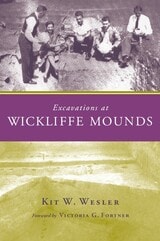
Excavations at Wickliffe Mounds
Kit W. Wesler, with a foreword by Victoria G. Fortner
University of Alabama Press, 2001
Wesler provides an impressive and definitive compilation of more than 70 years of archaeological excavations at one of the most important
archaeological sites in Kentucky.
The Wickliffe Mounds site is located on a bluff overlooking the Mississippi River in Ballard County, Kentucky, about three miles south of the mouth of the Ohio River. Around A.D. 1100, Mississippian people--farmers and traders with a culture closely related to the historic cultures of the Southeast (Chickasaw, Choctaw, Creek, and others)—created a settlement there on which they lived for approximately 250 years before moving on.
In 1930 road construction cut a channel through the site, revealing archaeological deposits and bringing the area to the attention of Fain King, a local lumberman and entrepreneur. King bought the site in hopes of turning it into an attraction for the education and entertainment of the public, and not incidentally for his own profit. For more than 50 years the area was subjected to excavations ranging from looting to professional research efforts. In 1983, the site was finally turned over to Murray State University to be developed into an academic facility dedicated to research, student training, public education, and preservation of the site and its collections. Fortunately, the Wickliffe collections include all the early excavation records as well as more than 85,000 artifacts, 90% of which had been catalogued. Between 1984 and 1996 excavations were conducted specifically to affirm questionable data and/or fill in gaps in the Wickliffe archaeological record.
In this volume, Wesler and his colleagues have compiled data from almost seven decades of excavations at Wickliffe Mounds, providing the first comprehensive study of this important site. The paperback version of the book is accompanied by a CD-ROM that contains contributions from a wide range of archaeological specialists and includes archaeological data, site maps, database files, plats of excavations, artifact descriptions, and photographs, compiling in one place the entire archaeological record for this very important eastern North American site.