Results by title
5550 books match the query 'Biography & Autobiography' and 172 start with e

E. Franklin Frazier Reconsidered
Platt, Anthony M
Rutgers University Press, 1991

E.A. Robinson - American Writers 17
University of Minnesota Pamphlets on American WritersLouis O. Coxe
University of Minnesota Press, 1962
E.A. Robinson - American Writers 17 was first published in 1962. Minnesota Archive Editions uses digital technology to make long-unavailable books once again accessible, and are published unaltered from the original University of Minnesota Press editions.
E.E. Cummings - American Writers 87
University of Minnesota Pamphlets on American WritersEve Triem
University of Minnesota Press, 1969
E.E. Cummings - American Writers 87 was first published in 1969. Minnesota Archive Editions uses digital technology to make long-unavailable books once again accessible, and are published unaltered from the original University of Minnesota Press editions.

EMBASSY GIRLS
JULIA DAVIS
West Virginia University Press, 1992
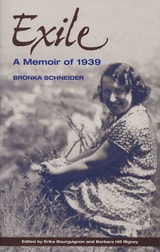
EXILE
A MEMOIR OF 1939Bronka Schneider Edited with forewords by Erika Bourguignon and Barbara Hill Rigney
The Ohio State University Press, 1998
Bronka Schneider and her husband, Joseph, were two of the thirty thousand Austrian Jews admitted as refugees to Great Britain between March 1938 and 2 September 1939. It was not until 1960, however, that Schneider wrote her memoir about the year she spent as a housekeeper, with Joseph as a butler, in a Scottish castle.
Schneider tells of daily encounters—with her employers, the English lady and her husband, a retired British civil servant who had spent many years in India; the village locals; other refugees; and a family of evacuees from the slums of Glasgow.
The editors have divided this memoir into chapters, adding headlines from the London Times as epigraphs. These headlines, reporting the escalating events of World War II, are in stark contrast to daily activities of the residents of this isolated region of Scotland. A commentary by Erika Bourguignon provides historical, political, and cultural background of this period.
Each One Teach One
Up and Out of Poverty, Memoirs of a Street ActivistRon Casanova and Stephen Blackburn
Northwestern University Press, 2010
Underlying Each One Teach One, with its vivid cast of characters and intimate descriptions of Harlem and other urban areas, is the profound sense that no matter what your circumstance, you can use your past experience to help others. Ultimately, Casanova's story is a message of hope for the future and for the possibility of self-sufficiency and self-empowerment for each individual.
Each One Teach One
Up and Out of Poverty; Memoirs of a Street ActivistRon Casanova as told to Stephen Blackburn
Northwestern University Press, 1996
Each One Teach One recounts Ron Casanova’s struggle out of poverty, homelessness, and drug addiction to find dignity and purpose in life. Through his own awakening, this Black Puerto Rican activist ultimately finds his salvation in helping other people. Placed in an orphanage on Staten Island at the age of three, Casanova faced overwhelming odds. His story illuminates significant twentieth-century protests, including the 1988 riot at Tompkins Square Park in Manhattan, the “Housing Now” march of the homeless on Washington, DC, in 1989, and community takeovers of housing in Kansas City, New York, and Philadelphia.
Underlying Each One Teach One, with its vivid cast of characters and intimate descriptions of Harlem, the Lower East Side, and Tent City, is the profound sense that, no matter what your circumstance, you can use your experience to help others. Ultimately, Casanova’s story demonstrates the possibility of self-sufficiency and self-empowerment. Amid today’s economic crisis and rising homelessness, Casanova’s story brings a message of hope.
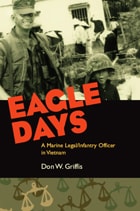
Eagle Days
A Marine Legal/Infantry Officer in VietnamDonald W. Griffis
University of Alabama Press, 2007
A rare Vietnam memoir from the crossroads of combat and military justice.
Much has been written about America’s war in Vietnam, and an enduring and troubling subtext is the composition of the body of soldiers that made up the U.S. troop deployment: from the initially well-trained and disciplined group of largely elite units that served in the mid-sixties to what has been termed an “armed mob” by the end of that decade and into the early 1970s. Drug use, insubordination, racial antagonism that often became violent, theft and black market dealing, and even “fragging” (murder of officers and senior noncoms by disgruntled troops) marred the record of the U.S. military presence. Don Griffis served in the twin roles of legal officer charged at various times with the task of both defending and prosecuting servicemen, while at the same time leading combat patrols in “search and destroy” missions against the Viet Cong and North Vietnamese enemy. Eagle Days is a remarkable account of Griffis’ personal record of experiencing what the military should do best—meet, engage, and defeat the enemy—and what it becomes when esprit de corps, discipline, and a sense of purpose decay.
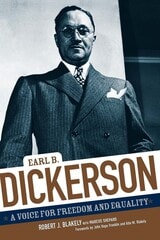
Earl B. Dickerson
A Voice for Freedom and EqualityRobert J. Blakely
Northwestern University Press, 2006
At fifteen, Earl Burrus Dickerson stowed away on a train in Canton, Mississippi, fleeing the racial oppression of his native South. But Chicago, the boy's destination, was no haven of racial fairness and equality. His flight north was in fact the beginning of a journey that would last a lifetime--and would forever pit Dickerson against the forces of racial injustice. Earl B. Dickerson's story, told here for the first time, is one of courage and character, of remarkable accomplishment in the face of terrible odds; it is also emblematic of the twentieth-century struggle for civil rights--a crucial chapter of African American history as it was lived by one uncompromising individual.
In this book, Robert J. Blakely tells how Dickerson (1891-1986) worked his way through preparatory schools and college, a segregated officer's training school, and law school at the University of Chicago. The story follows Dickerson's career as general counsel to the first insurance company owned and operated by African Americans; the first African American Democratic alderman elected to the Chicago City Council; a member of FDR's first Fair Employment Practices Committee; leader of the movement that broke the color barrier to membership in the Illinois Bar Association; and, perhaps most famously, the power behind Hansberry v. Lee, the U.S. Supreme Court case that marked the beginning of the end of restrictive real estate covenants--one of the most pernicious legal tools of segregation in the North. Blakely gives us a sense of the man behind the achievements, the life that defied conventions and statistics, and the world in which "the dean of Chicago's black lawyers" became a pioneering architect for equal opportunity in American life.
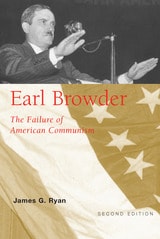
Earl Browder
The Failure of American CommunismJames G. Ryan
University of Alabama Press, 2005
Earl Browder, the preeminent 20th-century Communist party leader in the United States, steered the CPUSA through the critical years of the Great Depression and World War II. A Kansas native and veteran of numerous radical movements, he was peculiarly fitted by circumstance and temperament to head the cause during its heyday.
Serving as a bridge between American Communism’s secret and public worlds, Browder did more than anyone to attempt to explain the Soviet Union’s shifting policies to the American people in a way that would serve the interests of the CPUSA. A proud and loyal follower of Joseph Stalin, Browder nevertheless sought to move the party into the U.S. political mainstream. He used his knowledge of domestic politics to persuade the Communist International to modify Popular Front (1935-1939) tactics for the United States.
Despite his rise in the hierarchy, he possessed an independent streak that ultimately proved his undoing. Imprisonment as he neared age 50 left permanent psychological damage. After being released with the approval of President Franklin D. Roosevelt, Browder lost his perspective and began entertaining delusions of grandeur about his status in American politics and in the world Communist movement. Still, he could never quite bring legitimacy to the CPUSA because he lacked the vision and moral courage to separate himself totally from the Soviet Union. Ryan concludes that Browder was not so much insincere as deluded. His failure contributed to the demise of the popularity of the Communist party in the United States.
In preparation for this book, the author consulted the Browder Papers at Syracuse University and U.S. Government documents, particularly the F.B.I. files. In addition, he traveled to Russia for research in the Soviet Archives when recently opened to Western scholars, including the records of the former Communist International and a collection of American Communist party files, 1919-1944, shipped secretly to Moscow long ago. Indeed, until 1992, the existence of the CPUSA collection was only rumored.
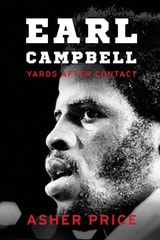
Earl Campbell
Yards after ContactBy Asher Price
University of Texas Press, 2019
Earl Campbell was a force in American football, winning a state championship in high school, rushing his way to a Heisman trophy for the University of Texas, and earning MVP as he took the Houston Oilers to the brink of the Super Bowl. An exhilarating blend of biography and history, Earl Campbell chronicles the challenges and sacrifices one supremely gifted athlete faced in his journey to the Hall of Fame. The story begins in Tyler, Texas, and features his indomitable mother, a crusading judge, and a newly integrated high school, then moves to Austin, home of the University of Texas (infamously, the last all-white national champion in college football), where legendary coach Darrell Royal stakes his legacy on recruiting Campbell. Later, in booming, Luv-Ya-Blue Houston, Campbell reaches his peak with beloved coach Bum Phillips, who celebrates his star runner’s bruising style even as it takes its toll on Campbell’s body.
Drawing on new interviews and research, Asher Price reveals how a naturally reticent kid from the country who never sought the spotlight struggled with complex issues of race and health. In an age when concussion revelations and player protest against racial injustice rock the NFL, Campbell’s life is a timely story of hard-earned success—and heart-wrenching sacrifice.
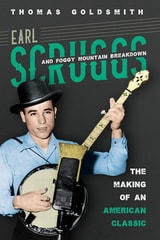
Earl Scruggs and Foggy Mountain Breakdown
The Making of an American ClassicThomas Goldsmith
University of Illinois Press, 2019
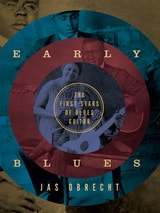
Early Blues
The First Stars of Blues GuitarJas Obrecht
University of Minnesota Press, 2015
Winner of the 2016 Living Blues Award for Blues Book of the Year
The complete history of early blues guitar, with portraits of its first stars—now in paperback
Since the early 1900s, blues and the guitar have traveled side by side. This book tells the story of their pairing from the first reported sightings of blues musicians, to the rise of nationally known stars, to the onset of the Great Depression, when blues recording virtually came to a halt.
Like the best music documentaries, Early Blues: The First Stars of Blues Guitar interweaves musical history, quotes from celebrated musicians (B.B. King, John Lee Hooker, Ry Cooder, and Johnny Winter, to name a few), and a spellbinding array of life stories to illustrate the early days of blues guitar in rich and resounding detail. In these chapters, you’ll meet Sylvester Weaver, who recorded the world’s first guitar solos, and Paramount Records artists Papa Charlie Jackson, Blind Lemon Jefferson, and Blind Blake, the “King of Ragtime Blues Guitar.” Blind Willie McTell, the Southeast’s superlative twelve-string guitar player, and Blind Willie Johnson, street-corner evangelist of sublime gospel blues, also get their due, as do Lonnie Johnson, the era’s most influential blues guitarist; Mississippi John Hurt, with his gentle, guileless voice and syncopated fingerpicking style; and slide guitarist Tampa Red, “the Guitar Wizard.”
Drawing on a deep archive of documents, photographs, record company ads, complete discographies, and up-to-date findings of leading researchers, this is the most comprehensive and complete account ever written of the early stars of blues guitar—an essential chapter in the history of American music.
Early Christian Biographies
Catholic University of America Press, 1952
Ears, Eyes, and Hands
Reflections on Language, Literacy, and LinguisticsDeborah L. Wolter
Gallaudet University Press, 2018
Wolter reveals and rectifies the impact of deficit mindsets in the educational system regarding race, ethnicity, economic status, gender, and disability. As a literacy specialist, she works with students who fall through the cracks in a system that strives to embrace the diverse backgrounds and abilities found in the classroom. Her passion for engaging students and cultivating literacy shines in the stories she tells, which serve as parables that allow readers to evaluate their own attitudes and assumptions. Educators, parents, and community members will benefit from Wolter’s examination of sociolinguistics and language privilege as she identifies how ethnocentrism and ableism are contributing to negative educational outcomes for some students. With humor and warmth, she offers a path toward approaching language and listening as a gateway to connection and understanding, both inside the classroom and beyond.
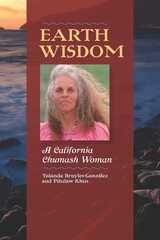
Earth Wisdom
A California Chumash WomanYolanda Broyles-González and Pilulaw Khus
University of Arizona Press, 2011
The 1978 Point Conception Occupation was a turning point in Pilulaw Khus’s life. In that year excavation began for a new natural gas facility at Point Conception, near Santa Barbara, California. To the Chumash tribal people of the central California coast, this was desecration of sacred land. In the Chumash cosmology, it was the site of the Western Gate, a passageway for spirits to enter the next world. Frustrated by unfavorable court hearings, the Chumash and their allies mobilized a year-long occupation of the disputed site, eventually forcing the energy company to abandon its plan. The Point Conception Occupation was a landmark event in the cultural revitalization of the Chumash people and a turning point in the life of Pilulaw Khus, the Chumash activist and medicine woman whose firsthand narrations comprise this volume.
Scholar Yolanda Broyles-González provides an extensive introductory analysis of Khus’s narrative. Her analysis explores “re-Indianization” and highlights the newly emergent Chumash research of the last decade.
In the world of book publishing, this volume from a traditional Chumash woman elder is a first. It puts a 20th (and 21st) century face, name, identity, humanity, personality, and living voice on the term Chumash.
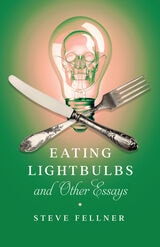
Eating Lightbulbs and Other Essays
Steve Fellner
The Ohio State University Press, 2021
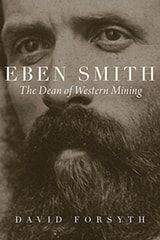
Eben Smith
The Dean of Western MiningDavid Forsyth
University Press of Colorado, 2021
The mining teams Smith formed with Chaffee and with industrialist David Moffat were among the most successful and respected in Colorado, and many in the state held Smith in high regard. Yet despite the credit he received during his lifetime for establishing Colorado’s mining industry, Smith has not received much attention from historians, perhaps because he was content to leave public-facing duties to his partners while he concerned himself with managing mine operations.
From Smith’s early years and his labor in the mines to his rise to prominence as an investor and developer, Forsyth shows how Smith used the mining and milling knowledge he acquired in California to become a leader in technological innovation in Colorado’s mining industry.
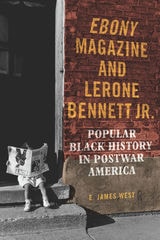
Ebony Magazine and Lerone Bennett Jr.
Popular Black History in Postwar AmericaE. James West
University of Illinois Press, 2020
E. James West's fresh and fascinating exploration of Ebony’s political, social, and historical content illuminates the intellectual role of the iconic magazine and its contribution to African American scholarship. He also uncovers a paradox. Though Ebony provided Bennett with space to promote a militant reading of black history and protest, the magazine’s status as a consumer publication helped to mediate its representation of African American identity in both past and present.
Mixing biography, cultural history, and popular memory, West restores Ebony and Bennett to their rightful place in African American intellectual, commercial, and political history.

Echoes of Cabrini-Green
Letters to My MotherRudolph Elliot Willis
Southern Illinois University Press, 2026
A powerful memoir of love, survival, and resilience, told through intimate letters
In Echoes of Cabrini-Green, Rudolph Elliot Willis tells the story of his journey from Chicago’s most notorious public housing project to the halls of academia and medicine. Framed as heartfelt letters written after his mother’s death, this deeply personal narrative reflects on a childhood shaped by systemic poverty, racism, and uncertainty, showing how faith, education, and resilience can remake lives.
Willis recalls the daily struggles of growing up Black in a family of ten children in Cabrini-Green—hunger, fear, and the constant threat of violence—alongside glimpses of neighborly solidarity, faith, and perseverance. He watched his father, a decorated veteran, retreat into silence and alcoholism while his mother’s frustration flared into anger. Throughout it all, she remained a moral compass. Her faith in God, unwavering work ethic, and quiet dignity gave her children a vision of something better.
A summer at a Christian camp introduced Willis to serenity and the grounding power of faith. A passion for reading and a gift for learning propelled him to an elite high school, where he wrestled with the dissonance between two worlds. But because of his mother’s enduring belief in education as a shield against the harsh realities of the world, he was ultimately able to thrive.
Willis went on to graduate from Northwestern University and earn a medical degree, eventually becoming an oncologist and scientific researcher. In these letters, he shares with his mother his successes and setbacks, the triumphs and struggles of his siblings, his grief following their deaths, and the haunting demolition of Cabrini-Green—the place that shaped him and so many others. Past, present, and future collapse: the crisp white coats and hallowed halls of medical school give way to the stained cinderblocks and echoing gunshots of Cabrini-Green. Willis looks into the eyes of patients and finds his siblings staring back at him. He realizes Cabrini-Green is not simply a memory—it is part of his identity, the crucible that formed him into who he is.
With lyrical prose and unflinching honesty, Echoes of Cabrini-Green is an invitation to imagine change in communities too often defined only by hardship; a testament to the power of faith, education, and personal resolve to transform lives; and a call to recognize the dignity and potential that endure even in the most neglected places.
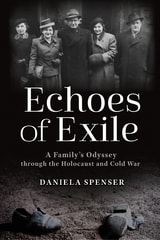
Echoes of Exile
A Family’s Odyssey through the Holocaust and Cold WarDaniela Spenser
University of Alabama Press, 2025
A sweeping exploration of survival, resilience, and the fate of one family amid Europe’s most turbulent century.
Echoes of Exile reveals the seismic disruptions of twentieth-century European history through the intimate lens of one family’s struggle to survive. Setting out to record the life of her mother, Ruth, Daniela Spenser unearthed personal facts and stories that additionally illuminate the shared traumas and experiences of millions of Czech, Polish, and German Jews who died in the Holocaust, as well as the stories of those who survived and lived under Communism and the Cold War. Her resulting work is a fascinating hybrid that combines family letters and interviews with deeply researched political history spanning from the collapse of the Austro-Hungarian Empire to the fall of the Berlin Wall.
Spenser’s fascinating work reveals the difficult choices her mother and family faced, the tests to their loves and loyalties, and the lingering scars of exile. More than a family history, it weaves personal and historical narratives with mundane and momentous threads to create a fresh, distinctive fabric. Spenser recovers fragments of the past that contribute to a map of the present and possibilities for the future. An engrossing account of survival, resilience, and the enduring human spirit amid the maelstrom of Europe’s savage twentieth century, Echoes of Exile will interest readers who value firsthand accounts of significant events and who seek to understand the complexities of survival, identity, and political change through intimate, lived experiences.
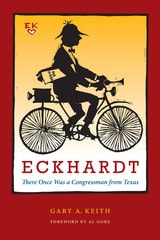
Eckhardt
There Once Was a Congressman from TexasBy Gary A. Keith
University of Texas Press, 2007
Runner-up, Violet Crown Award, Writer's League of Texas, 2008
Renowned for his "brilliant legislative mind" and political oratory—as well as for bicycling to Congress in a rumpled white linen suit and bow tie—U.S. Congressman Bob Eckhardt was a force to reckon with in Texas and national politics from the 1940s until 1980. A liberal Democrat who successfully championed progressive causes, from workers' rights to consumer protection to environmental preservation and energy conservation, Eckhardt won the respect of opponents as well as allies. Columnist Jack Anderson praised him as one of the most effective members of Congress, where Eckhardt was a national leader and mentor to younger congressmen such as Al Gore.
In this biography of Robert Christian Eckhardt (1913-2001), Gary A. Keith tells the story of Eckhardt's colorful life and career within the context of the changing political landscape of Texas and the rise of the New Right and the two-party state. He begins with Eckhardt's German-American family heritage and then traces his progression from labor lawyer, political organizer, and cofounder of the progressive Texas Observer magazine to Texas state legislator and U.S. congressman. Keith describes many of Eckhardt's legislative battles and victories, including the passage of the Open Beaches Act and the creation of the Big Thicket National Preserve, the struggle to limit presidential war-making ability through the War Powers Act, and the hard fight to shape President Carter's energy policy, as well as Eckhardt's work in Texas to tax the oil and gas industry.
The only thorough recounting of the life of a memorable, important, and flamboyant man, Eckhardt also recalls the last great era of progressive politics in the twentieth century and the key players who strove to make Texas and the United States a more just, inclusive society.
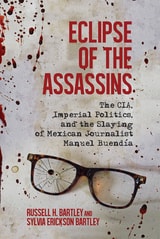
Eclipse of the Assassins
The CIA, Imperial Politics, and the Slaying of Mexican Journalist Manuel BuendíaRussell H. Bartley and Sylvia Erickson Bartley
University of Wisconsin Press, 2015
Authors Russell and Sylvia Bartley shed new light on the U.S.-instigated “dirty wars” that ravaged all of Latin America in the 1960s, ’70s, and ’80s and reveal—for the first time—how Mexican officials colluded with Washington in its proxy contra war against the Sandinista government of Nicaragua. They draw together the strands of a clandestine web linking:
- the assassination of prominent Mexican journalist Manuel Buendía
- the torture and murder of U.S. Drug Enforcement Administration agent Enrique Camarena
- the Iran-Contra scandal
- a major DEA sting against key CIA-linked Bolivian, Panamanian, and Mexican drug traffickers
- CIA-orchestrated suppression of investigative journalists
- criminal collusion of successive U.S. and Mexican administrations that has resulted in the unprecedented power of drug kingpins like “El Chapo” Guzmán.
Best books for public & secondary school libraries from university presses, American Library Association
Economists Lives
Biography and Autobiography in the History of Economics, Volume 39E. Roy Weintraub and Evelyn L. Forget, eds.
Duke University Press, 0
Contributors to this collection question whether biography is essential to understanding the history of economic ideas and consider how autobiographical materials should be read and interpreted by historians. Articles consider the treatment of autobiographical materials such as conversations and testimonies, the construction of heroes and villains, the relationship between scientific biography and literary biography, and concerns related to living subjects. Several essays address the role of biography and autobiography in the study of economists such as F. A. Hayek, Harry Johnson, Alfred Marshall, John Maynard Keynes, Oskar Morgenstern, and François Quesnay, concluding with several accounts of the interconnection of the historians’ projects with their own autobiographies.
All 2007 subscribers to History of Political Economy will receive a copy of “Economists’ Lives: Biography and Autobiography in the History of Economics” as part of their subscription.
Contributors
Roger E. Backhouse
Bruce Caldwell
Loïc Charles
William Coleman
Robert W. Dimand
Paul John Eakin
Ross B. Emmett
Evelyn L. Forget
Craufurd D. Goodwin
Peter Groenewegen
Malachi Haim Hacohen
Jan-Otmar Hesse
Patricia Laurence
Frederic S. Lee
Robert Leonard
Tiago Mata
D. E. Moggridge
Jeremy D. Popkin
Mike Reay
Christine Théré
E. Roy Weintraub
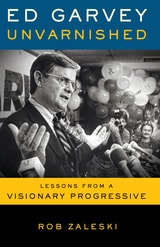
Ed Garvey Unvarnished
Lessons from a Visionary ProgressiveRob Zaleski
University of Wisconsin Press, 2019
Shortly before he died, Garvey expressed his views on everything in a series of detailed, no-holds-barred interviews with journalist Rob Zaleski. In his trademark witty, blunt, and often abrasive style, he offered his impressions of the political climate, worries about the environment, and Act 10 protests on Capitol Square. Garvey's candor during these conversations provides deeper insight into the personal highs and lows he experienced over his rich life. Diehard followers will fondly remember his energetic campaigns, but they may be surprised to learn of his long-simmering disappointment after those losses. Ever timely and meaningful, Garvey's words offer a path for how the Democratic Party, both within Wisconsin and nationally, can regain its soul.
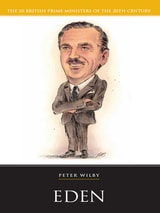
Eden
Peter Wilby
Haus Publishing, 2006
Edgar Allan Poe - American Writers 89
University of Minnesota Pamphlets on American WritersRoger Asselineau
University of Minnesota Press, 1970
Edgar Allan Poe - American Writers 89 was first published in 1970. Minnesota Archive Editions uses digital technology to make long-unavailable books once again accessible, and are published unaltered from the original University of Minnesota Press editions.
Edgar Gardner Murphy
Gentle ProgressiveHugh C. Bailey
University of Alabama Press, 2002
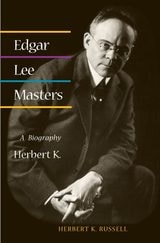
Edgar Lee Masters
A BIOGRAPHYHerbert K. Russell
University of Illinois Press, 2001
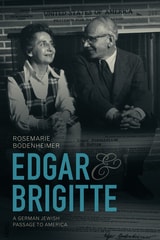
Edgar and Brigitte
A German Jewish Passage to AmericaRosemarie Bodenheimer
University of Alabama Press, 2016
The couple’s encounters with the strange new dynamics of race, religion, and the workplace in their new American home offer a compelling account of the struggles that faced many immigrants with deep German roots. It is also an intimate portrait of a now-vanished German Jewish culture as it played out in the lives of Bodenheimer’s parents and her grandparents from the 1920s to the late 1960s, a story of emigration, assimilation, and the private struggles that accompany those forced shifts in orientation.
The Bodenheimers’ letters and journals offer engaging perspectives into their personal lives that retrospective memories cannot match. Braiding intimate biography together with history and memoir, Edgar and Brigitte will appeal both to historians of the European Jewish diaspora and to readers interested in the struggles and resilience of people whose lives were upended by Hitler.
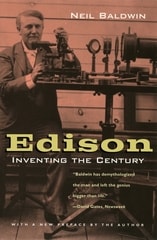
Edison
Inventing the CenturyNeil Baldwin
University of Chicago Press, 2001
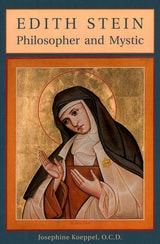
Edith Stein
Philosopher and MysticJosephine Koeppel O.C.D.
University of Scranton Press, 2007
The twentieth anniversary of the beatification of Edith Stein (1891–1942), the accomplished Jewish philosopher who made a spiritual journey from atheism to agnosticism before eventually converting to Catholicism, will be celebrated in 2007. In Edith Stein: Philosopher and Mystic, Josephine Koeppel chronicles the life of this influential saint from her secular youth and entrance into a German monastery to her tragic death at Auschwitz. This accessible work will reward readers of all faiths interested in the life of a remarkable woman who changed the modern conception of sainthood.
Edith Wharton - American Writers 12
University of Minnesota Pamphlets on American WritersLouis Auchincloss
University of Minnesota Press, 1961
Edith Wharton - American Writers 12 was first published in 1961. Minnesota Archive Editions uses digital technology to make long-unavailable books once again accessible, and are published unaltered from the original University of Minnesota Press editions.
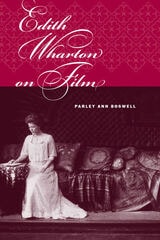
Edith Wharton on Film
Parley Ann Boswell
Southern Illinois University Press, 2007
Edith Wharton (1862–1937), who lived nearly half of her life during the cinema age when she published many of her well-known works, acknowledged that she disliked the movies, characterizing them as an enemy of the imagination. Yet her fiction often referenced film and popular Hollywood culture, and she even sold the rights to several of her novels to Hollywood studios.
Edith Wharton on Film explores these seeming contradictions and examines the relationships among Wharton’s writings, the popular culture in which she published them, and the subsequent film adaptations of her work (three from the 1930s and four from the 1990s). Author Parley Ann Boswell examines the texts in which Wharton referenced film and Hollywood culture and evaluates the extant films adapted from Wharton’s fiction.
The volume introduces Wharton’s use of cinema culture in her fiction through the 1917 novella Summer, written during the nation’s first wave of feminism, in which the heroine Charity Royall is moviegoer and new American woman, consumer and consumable. Boswell considers the source of this conformity and entrapment, especially for women. She discloses how Wharton struggled to write popular stories and then how she revealed her antipathy toward popular movie culture in two late novels.
Boswell describes Wharton’s financial dependence on the American movie industry, which fueled her antagonism toward Hollywood culture, her well-documented disdain for popular culture, and her struggles to publish in women’s magazines.
This first full-length study that examines the film adaptations of Wharton’s fiction covers seven films adapted from Wharton’s works between 1930 and 2000 and the fifty-year gap in Wharton film adaptations. The study also analyzes Sophy Viner in The Reef as pre-Hollywood ingénue, characters in Twilight Sleep and The Children and the real Hollywood figures who might have inspired them, and The Sheik and racial stereotypes.
Boswell traces the complicated relationship of fiction and narrative film, the adaptations and cinematic metaphors of Wharton’s work in the 1990s, and Wharton’s persona as an outsider. Wharton’s fiction on film corresponds in striking ways to American noir cinema, says Boswell, because contemporary filmmakers recognize and celebrate the subversive qualities of Wharton’s work.
Edith Wharton on Film, which includes eleven illustrations, enhances Wharton’s stature as a major American author and provides persuasive evidence that her fiction should be read as American noir literature.
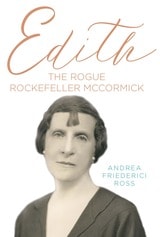
Edith
The Rogue Rockefeller McCormickAndrea Friederici Ross
Southern Illinois University Press, 2021
WINNER, 2021 Chicago Writers Association Book of the Year in Traditional Nonfiction!
Chicago’s quirky patron saint
This thrilling story of a daughter of America’s foremost industrialist, John D. Rockefeller, is complete with sex, money, mental illness, and opera divas—and a woman who strove for the independence to make her own choices. Rejecting the limited gender role carved out for her by her father and society, Edith Rockefeller McCormick forged her own path, despite pushback from her family and ultimate financial ruin.
Young Edith and her siblings had access to the best educators in the world, but the girls were not taught how to handle the family money; that responsibility was reserved for their younger brother. A parsimonious upbringing did little to prepare Edith for life after marriage to Harold McCormick, son of the Reaper King Cyrus McCormick. The rich young couple spent lavishly. They purchased treasures like the jewels of Catherine the Great, entertained in grand style in a Chicago mansion, and contributed to the city’s cultural uplift, founding the Chicago Grand Opera. They supported free health care for the poor, founding and supporting the John R. McCormick Memorial Institute for Infectious Diseases. Later, Edith donated land for what would become Brookfield Zoo.
Though she lived a seemingly enviable life, Edith’s disposition was ill-suited for the mores of the time. Societal and personal issues—not least of which were the deaths of two of her five children—caused Edith to experience phobias and panic attacks. Dissatisfied with rest cures, she ignored her father’s expectations, moved her family to Zurich, and embarked on a journey of education and self-examination. Edith pursued analysis with then-unknown Carl Jung. Her generosity of spirit led Edith to become Jung’s leading patron. She also supported up-and-coming musicians, artists, and writers, including James Joyce as he wrote Ulysses.
While Edith became a Jungian analyst, her husband, Harold, pursued an affair with an opera star. After returning to Chicago and divorcing Harold, Edith continued to deplete her fortune. She hoped to create something of lasting value, such as a utopian community and affordable homes for the middle class. Edith’s goals caused further difficulties in her relationship with her father and are why he and her brother cut her off from the family funds even after the 1929 stock market crash ruined her. Edith’s death from breast cancer three years later was mourned by thousands of Chicagoans.
Respectful and truthful, Andrea Friederici Ross presents the full arc of this amazing woman’s life and expertly helps readers understand Edith’s generosity, intelligence, and fierce determination to change the world
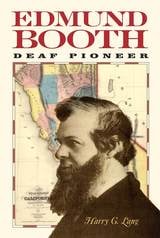
Edmund Booth
Deaf PioneerHarry G. Lang
Gallaudet University Press, 2004
Edmund Booth was born in 1810 and died in 1905, and during the 94 years of his life, he epitomized virtually everything that characterized an American legend of that century. In his prime, Booth stood 6 feet, 3 inches tall, weighed in at 210 pounds, and wore a long, full beard. He taught school in Hartford, CT, then followed his wife-to-be Mary Ann Walworth west to Anamosa, Iowa, where in 1840, he built the area’s first frame house. He pulled up stakes nine years later to travel the Overland Trail on his way to join the California Gold Rush. After he returned to Iowa in 1854, he became the editor of the Anamosa Eureka, the local newspaper. Edmund Booth fit perfectly the mold of the ingenious pioneer of 19th-century America, except for one unusual difference — he was deaf.
Edmund Booth: Deaf Pioneer follows the amazing career of this American original and his equally amazing wife in fascinating detail. Author Harry G. Lang vividly portrays Booth and his wife by drawing from a remarkable array of original material. A prolific writer, Booth corresponded with his fiancé from the American School for the Deaf in Hartford, and he kept a journal during his days on the California trail, parts of which have been reproduced here. He also wrote an autobiographical essay when he was 75, and his many newspaper articles through the years bore first-hand witness to the history of his times, from the Civil War to the advent of the 20th century.
Edmund Booth depicts a larger-than-life man in larger-than-life times, but perhaps its greatest contribution derives from its narrative about pioneer days as seen through Deaf eyes. Booth became a respected senior statesman of the American Deaf community, and blended with his stories of the era’s events are anecdotes and issues vital to Deaf people and their families. His story proves again that extraordinary people vary in many ways, but they often possess a common motive in acting to enhance their own communities.
Edmund Husserl
Philosopher of Infinite TasksMaurice Natanson
Northwestern University Press, 1973
The product of many years of reflection on phenomenology, this book is a comprehensive and creative introduction to the philosophy of Edmund Husserl. Natanson uses Husserl's later work as a clue to the meaning of his entire intellectual career, showing how his earlier methodological work evolved into the search for transcendental roots and developed into a philosophy of the life-world. Phenomenology, for Natanson, emerges as a philosophy of origin, a transcendental discipline concerned with consciousness, history, and world rather than with introspection and traditional metaphysical warfare.
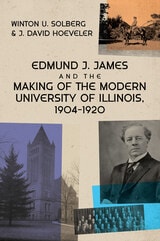
Edmund J. James and the Making of the Modern University of Illinois, 1904-1920
Winton U. Solberg and J. David Hoeveler
University of Illinois Press, 2024
In 1904, Edmund J. James inherited the leadership of an educational institution in search of an identity. His sixteen-year tenure transformed the University of Illinois from an industrial college to a major state university that fulfilled his vision of a center for scientific investigation.
Winton U. Solberg and J. David Hoeveler provide an account of a pivotal time in the university’s evolution. A gifted intellectual and dedicated academic reformer, James began his tenure facing budget battles and antagonists on the Board of Trustees. But as time passed, he successfully campaigned to address the problems faced by women students, expand graduate programs, solidify finances, create a university press, reshape the library and faculty, and unify the colleges of liberal arts and sciences. Combining narrative force with exhaustive research, the authors illuminate the political milieu and personalities around James to draw a vivid portrait of his life and times.
The authoritative conclusion to a four-part history, Edmund J. James and the Making of the Modern University of Illinois, 1904–1920 tells the story of one man’s mission to create a university worthy of the state of Illinois.
Edmund Wilson - American Writers 67
University of Minnesota Pamphlets on American WritersWarner Berthoff
University of Minnesota Press, 1968
Edmund Wilson - American Writers 67 was first published in 1968. Minnesota Archive Editions uses digital technology to make long-unavailable books once again accessible, and are published unaltered from the original University of Minnesota Press editions.
Edna St. Vincent Millay
University of Minnesota Pamphlets on American WritersJames Gray
University of Minnesota Press, 1967
Edna St. Vincent Millay was first published in 1967. Minnesota Archive Editions uses digital technology to make long-unavailable books once again accessible, and are published unaltered from the original University of Minnesota Press editions.
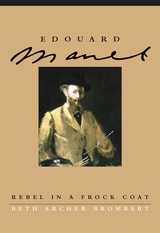
Edouard Manet
Rebel in a Frock CoatBeth Archer Brombert
University of Chicago Press, 1997
"One of the pleasures of reading her is to follow the way she weaves life, art and history into a smooth tapestry. The art emerges from the life, and in the broadest possible context: in terms of its creator's life and concerns and in terns of its historical and cultural setting."—Eric Gibson, The Washington Times Books
"Richly detailed and informative . . . [this biography] exposes the character of an artist who maintained a sharply defined duality between his public and private personas."—Edward J. Sozanski, Philadelphia Inquirer
"Brombert's reading of important canvasses . . . shine, as do her accounts of the changing social and political environment in which Manet worked. . . . Well researched, complexly conceived, and clearly written."—Kirkus Reviews
"Brilliant . . . [this book] grants us a far deeper understanding of why [Manet's] paintings outraged so many of his peers, and why these same masterpieces resonate so richly in our psyches a century later."—Booklist, starred review
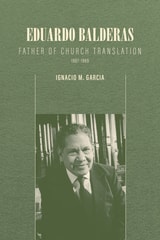
Eduardo Balderas
Father of Church Translation, 1907-1989Ignacio M. Garcia
Signature Books, 2024
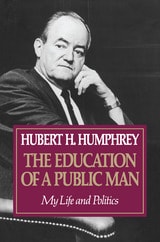
Education Of A Public Man
My Life and PoliticsHubert Humphrey
University of Minnesota Press, 1991
A candid look into the private and political life of Minnesota's native son.
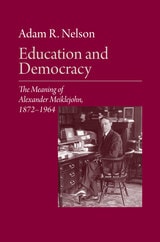
Education and Democracy
The Meaning of Alexander Meiklejohn, 1872–1964Adam R. Nelson
University of Wisconsin Press, 2001
This definitive biography of the charismatic Alexander Meiklejohn tracks his turbulent career as an educational innovator at Brown University, Amherst College, and Wisconsin’s “Experimental College” in the early twentieth century and his later work as a civil libertarian in the Joe McCarthy era. The central question Meiklejohn asked throughout his life’s work remains essential today: How can education teach citizens to be free?
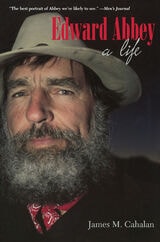
Edward Abbey
A LifeJames M. Cahalan
University of Arizona Press, 2001
It separates fact from fiction, showing that much of the myth surrounding Abbey—such as his birth in Home, Pennsylvania, and later residence in Oracle, Arizona—was self-created and self-perpetuated. It also shows that Abbey cultivated a persona both in his books and as a public speaker that contradicted his true nature: publicly racy and sardonic, he was privately reserved and somber. Author James Cahalan studied all of Abbey’s works and private papers and interviewed many people who knew him—including the models for characters in The Brave Cowboy and The Monkey Wrench Gang—to create a complete picture of the writer’s life. He examines Abbey’s childhood roots in the East and his love affair with the West, his personal relationships and tempestuous marriages, and his myriad jobs in continually shifting locations—including sixteen national parks and forests.
He also explores Abbey’s writing process, his broad intellectual interests, and the philosophical roots of his politics. For Abbey fans who assume that his “honest novel,” The Fool’s Progress, was factual or that his public statements were entirely off the cuff, Cahalan’s evenhanded treatment will be an eye-opener.
More than a biography, Edward Abbey: A Life is a corrective that stands the test of time, showing that Abbey was neither simply a countercultural cowboy hero nor an unprincipled troublemaker, but instead a complex and multifaceted person whose legacy continues to be appreciated. The book contains thirty photographs, capturing scenes ranging from Abbey’s childhood to his burial site.
Edward Albee - American Writers 77
University of Minnesota Pamphlets on American WritersRuby Cohn
University of Minnesota Press, 1969
Edward Albee - American Writers 77 was first published in 1969. Minnesota Archive Editions uses digital technology to make long-unavailable books once again accessible, and are published unaltered from the original University of Minnesota Press editions.
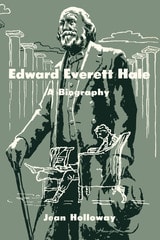
Edward Everett Hale
By Jean Holloway
University of Texas Press, 1956
Edward Everett Hale is remembered by millions as the author of The Man Without a Country. This popular and gifted nineteenth-century writer was an outstanding and prolific contributor to the fields of journalism, fiction, essay, and history. He wrote more than 150 books and pamphlets (one novel sold more than a million copies in his lifetime) and was intimately associated with the publication of many of the early American journals, among them the North American Review, Atlantic Monthly, and Christian Examiner. He served as editor of Old and New and was a frequent contributor to the foremost newspapers and periodicals of his time.
Yet the writings of this “journalist with a touch of genius” were only incidental to Hale’s Christian ministry in New England and in Washington, D.C., where he was for five years Chaplain of the Senate. His literary creed reflected that of his ministry, for Hale’s interpretation of the social gospel comprised an active concern with all phases of human affairs.
Confidant of poets and editors, friend to diplomats and statesmen, Hale helped mold public opinions in economics, sociology, history, and politics through three-quarters of what he called “a most extraordinary century in history.” In recounting Hale’s life and times, Holloway vividly portrays this fascinating and often turbulent era.
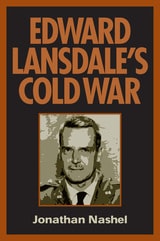
Edward Lansdale's Cold War
Jonathan Nashel
University of Massachusetts Press, 2005
The man widely believed to have been the model for Alden Pyle in Graham Greene's The Quiet American, Edward G. Lansdale (1908–1987) was a Cold War celebrity. A former advertising executive turned undercover CIA agent, he was credited during the 1950s with almost single-handedly preventing a communist takeover of the Philippines and with helping to install Ngo Dinh Diem as president of the American-backed government of South Vietnam. Adding to his notoriety, during the Kennedy administration Lansdale was put in charge of Operation Mongoose, the covert plot to overthrow the government of Cuba's Fidel Castro by assassination or other means.
In this book, Jonathan Nashel reexamines Lansdale's role as an agent of American Cold War foreign policy and takes into account both his actual activities and the myths that grew to surround him. In contrast to previous portraits, which tend to depict Lansdale either as the incarnation of U.S. imperialist ambitions or as a farsighted patriot dedicated to the spread of democracy abroad, Nashel offers a more complex and nuanced interpretation. At times we see Lansdale as the arrogant “ugly American,” full of confidence that he has every right to make the world in his own image and utterly blind to his own cultural condescension. This is the Lansdale who would use any conceivable gimmick to serve U.S. aims, from rigging elections to sugaring communist gas tanks. Elsewhere, however, he seems genuinely respectful of the cultures he encounters, open to differences and new possibilities, and willing to tailor American interests to Third World needs.
Rather than attempting to reconcile these apparently contradictory images of Lansdale, Nashel explores the ways in which they reflected a broader tension within the culture of Cold War America. The result is less a conventional biography than an analysis of the world in which Lansdale operated and the particular historical forces that shaped him—from the imperatives of anticommunist ideology and the assumptions of modernization theory to the techniques of advertising and the insights of anthropology.
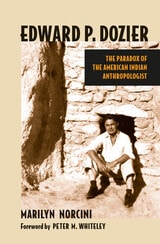
Edward P. Dozier
The Paradox of the American Indian AnthropologistMarilyn Norcini
University of Arizona Press, 2007
Based on archival research, ethnographic fieldwork at Santa Clara Pueblo, and extensive interviews, this intellectual biography traces Dozier’s education from a Bureau of Indian Affairs day school through the University of New Mexico on federal reimbursable loans and graduate school on the GI Bill. Dozier was the first graduate of the new post–World War II doctoral program in anthropology at the University of California at Los Angeles in 1952. Beginning with his multicultural and linguistic heritage, the book interprets pivotal moments in his career, including the impact of Pueblo kinship on his indigenous research at Tewa Village (Hano); his rising academic standing and Indian advocacy at Northwestern University; his achievement of full academic status after he conducted non-indigenous fieldwork with the Kalinga in the Philippines; and his leadership in establishing American Indian Studies at the University of Arizona. Norcini interprets Dozier’s career within the contexts of the history of American anthropology and Pueblo Indian culture. In the final analysis, Dozier is positioned as a transitional figure who helped transform the historical paradox of an American Indian anthropologist into the contemporary paradigm of indigenous scholarship in the academy.
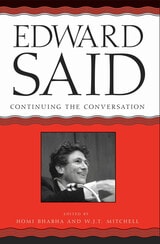
Edward Said
Continuing the ConversationEdited by Homi K. Bhabha and W. J. T. Mitchell
University of Chicago Press, 2005
The essays, imagining and recalling the cadences of Said's conversation, take various forms, including elaborations on his ideas, applications of his thought to new problems, and recollections of the indescribable electricity that made conversation with him intense and memorable. This lively, personal tone is a direct result of editors Homi Bhabha and W. J. T. Mitchell urging contributors to write in the spirit of a conversation interrupted, a call on hold, a letter waiting for a reply, a question hanging in the air. This is a work of immense imaginative and intellectual force and compelling candor, honoring Said's legacy as an activist intellectual.
This collection includes essays by Lila Abu-Lughod, Daniel Barenboim, Akeel Bilgrami, Paul Bové, Timothy Brennan, Noam Chomsky, Ranajit Guha, Harry Harootunian, Saree Makdisi, Aamir Mufti, Roger Owen, Gyan Prakash, Dan Rabinowitz, Jacqueline Rose, and Gayatri Spivak.