Results by title
1038 books match the query 'Economic conditions' and 33 start with e
Early Settlement and Subsistence in the Casma Valley, Peru
Shelia Pozorski
University of Iowa Press, 1987
Earthmoving
Extractivism, War, and Visuality in Northern KurdistanEray Çayli
University of Texas Press, 2025
Focuses on contemporary art and media to examine the role of visuals in environmental violence and war in Northern Kurdistan.
Extractivism—exploiting the earth for resources—has long driven racial capitalism and colonialism. And yet, how does extractivism operate in a world where ecological and humanitarian sensibilities are unprecedentedly widespread? Eray Çaylı argues it does so by mobilizing these sensibilities in new ways. Extractivism is no longer only about moving the earth—displacing peoples, fossils, minerals, and waters—but also leaving those who witness this violent displacement sentimentally moved.
Earthmoving conceptualizes this duality. Derived from Çaylı’s years-long work in Northern Kurdistan, home to the world’s largest stateless nation—rendered stateless by colonial policies since the nineteenth century—Earthmoving focuses on the 2010s, a decade that began with peace talks between Turkey and the Kurdish liberation movement but ended with war. The decade saw extractivism intensify in the region and images of its harm proliferate across art and media. Together with contemporary artists, Çaylı shows that images challenge extractivism both by making its harm visible and by fostering self-reflexive and reciprocal collaboration that breaks with its valuation of the colonized and the racialized only in quantifiable and marketable terms.
East Of Eden, West Of Zion
Essays On NevadaWilbur S. Shepperson
University of Nevada Press, 1989
A collection of essays in which a dozen historians and novelists present their impressions and concerns about "end of the century Nevada." Human expectations and illusions are seen as a backdrop for today's Nevada as a new human frontier. As an overview of Nevada society, this study deals with culture as well as economics, with tradition as well as rapid population growth. The essayists inquire whether the friction between acquisition and preservation, quick wealth and refined sensitivity, will build a more humane and enlightened society.
Ecology Control and Economic Development in East African History
The Case of Tanganyika, 1850–1950Helge Kjekshus
Ohio University Press, 1995
The book puts people at the centre of events. It thus serves as a modification to nationalist history with its emphasis on leaders. It presents environmental factors that had been underestimated; for instance, it points to the critical importance of the rinderpest outbreak.
Helge Kjekshus provides evidence to suggest that the nineteenth century was a period of relative prosperity with well-developed trade. He questions the view that warfare was pervasive and that the slave trade led to depopulation. He points to a balance between man and the environment.
This book is reissued at the same time as the first publication of Custodians of the Land: Ecology and Culture in the History of Tanzania edited by Gregory Maddox, James I. Giblin and Isaria N. Kimambo. The footnotes in that book point to the importance of the work of Helge Kjekshus.

Economic & Social Origins of Mau Mau, 1945–1953
Eastern African StudiesDavid Throup
Ohio University Press, 1990
This story of Kenya in the decade before the outbreak of the Mau Mau emergency presents an integrated view of imperial government as well as examining the social and economic causes of the Kikuyu revolt. Dr. Throup combines traditional Imperial History with its emphasis on the high politics of “The Official Mind” in the Colonial Office or in Government House with the new African historiography that concentrates on the people themselves.
Sir Philip Mitchell was the proconsul chosen to reassert metropolitan authority. Under Kenyatta’s leadership the Kenya African Union mobilized a popular constituency among the peasantry. In Nairobi the Kikuyu street gangs linked up with the militant Kikuyu trade unions, led by Fred Kubai and Bildad Kaggia, to challenge Kenyatta’s leadership.
The Mau Mau movement, as it was called by the government, was an alliance between three groups of discontented Kikuyu: the urban unemployed and destitute, the dispossessed squatters from the White Highlands and the tenants and members of the junior clans in the Kikuyu reserves.
The revolt was a dominating factor in convincing the conservative imperial government that the cost of repression in the African colonies was not worth the troops and resources.
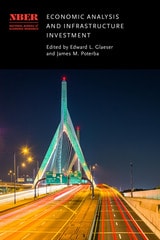
Economic Analysis and Infrastructure Investment
Edited by Edward L. Glaeser and James M. Poterba
University of Chicago Press, 2021
Economic Analysis and Infrastructure Investment explores the links between infrastructure investment and economic outcomes, analyzing key economic issues in the funding and management of infrastructure projects. It includes new research on the short-run stimulus effects of infrastructure spending, develops new estimates of the stock of US infrastructure capital, and explores incentive aspects of public-private partnerships with particular attention to their allocation of risk. The volume provides a reference for researchers seeking to study infrastructure issues and for policymakers tasked with determining the appropriate level and allocation of infrastructure spending.

Economic Behaviour in Adversity
Jack Hirshleifer
University of Chicago Press, 1988
Part I, "Disaster and Recovery," contains previously unpublished studies of major historical catastrophes, among them the Black Death of the fourteenth century, the Civil War in Russia that followed the Bolshevik revolution, and the mass bombing of Germany and of Japan during World War II. Accompanying the historical studies are several analytical papers that interpret the disaster experience.
The essays in Part II, "Cooperation and Conflict," represent innovative theoretical analyses based on a common theme—that cooperation and conflict are alternative strategies whereby individuals, groups, and different forms of social organization struggle with one another for evolutionary survival. Ultimately, these essays indicate, the political economy of the human species is an instance of Darwin's "economy of nature."

Economic Change in Precolonial Africa
Supplementary EvidencePhilip D. Curtin
University of Wisconsin Press, 0
Economic Citizens
A Narrative of Asian American VisibilityChristine So
Temple University Press, 2009
In the past fifty years, according to Christine So, the narratives of many popular Asian American books have been dominated by economic questions-what money can buy, how money is lost, how money is circulated, and what labor or objects are worth. Focusing on books that have achieved mainstream popularity, Economic Citizens unveils the logic of economic exchange that determined Asian Americans’ transnational migrations and national belonging.
With penetrating insight, So examines literary works that have been successful in the U.S. marketplace but have been read previously by critics largely as narratives of alienation or assimilation, including Fifth Chinese Daughter, Flower Drum Song, Falling Leaves and Turning Japanese. In contrast to other studies that have focused on the marginalization of Asian Americans, Economic Citizens examines how Asian Americans have entered into the public sphere.
Economic Exchange and Social Interaction in Southeast Asia
Perspectives from Prehistory, History, and EthnographyKarl L. Hutterer, Editor
University of Michigan Press, 1978
Yet in social science research in Southeast Asia, the area of economic studies has lagged behind, despite the great study potential represented by the tremendous diversity of its physical and human environment. Economic Exchange and Social Interaction in Southeast Asia attempts to take advantage of that opportunity. As a number of the contributions to this volume show, many if not most of the systems organized on very different levels of integration interact with each other. Taken as a whole, they provide evidence of the incredible diversity of economic and social systems that may be investigated in Southeast Asia.

Economic Organizations and Social Systems
Robert A. Solo
University of Michigan Press, 2000
Economic Performance in the Nordic World
Torben M. Andersen
University of Wisconsin Press, 2021
Economist Torben M. Andersen shows how the Nordic model rests on two pillars: the social safety net, which offers income compensation to the majority of those unable to support themselves, and the provision of services like education, childcare, and healthcare to all. The Nordic model can be characterized as one of employment, since its financial viability rests on a high labor participation rate with few working poor.
Andersen lays out the structure of the model and highlights factors important for understanding its economic performance. He then looks into specific policy areas based on Denmark's experiences regarding labor market policies (flexicurity), pension systems, and preparation for an aging population; and addresses the challenges arising from new technologies and globalization.
Economic Reforms in Chile
From Dictatorship to DemocracyRicardo Ffrench-Davis
University of Michigan Press, 2002
Written in accessible and readable prose, Economic Reforms in Chile begins with an overview of the Chilean economy during the last fifty years. This historical time frame is divided into three periods of economic reform. The first period covers the Pinochet regime, during which the more orthodox neoliberalism was implemented. The second period includes the Pinochet dictatorship, during which economic policy shifted toward pragmatism, particularly in the areas of trade and finance; it also includes the crisis of 1982 and its effects. The third period begins in 1990 with the return to democratic elections and the significant reforms to prior reforms. This section also examines the search for growth-with-equity, success in investment and growth performance, macroeconomic sustainability, and the reduction of poverty. Ffrench-Davis addresses several "paradoxes," or results that defy the expectations of policymakers, in order to analyze the significance of comprehensive macroeconomic equilibrium and its implications for sustainable stability, growth, and equity.
Economic Reforms in Chile will be of interest to economists, political scientists, and policymakers involved with the economies of emerging and developing countries.
Ricardo Ffrench-Davis is Principal Regional Advisor, ECLAC, Santiago, and Professor of Economics, University of Chile.
Economic Women
Essays on Desire and Dispossession in Nineteenth-Century British CultureEdited by Lana L. Dalley and Jill Rappoport
The Ohio State University Press, 2013
Economic and Monetary Sovereignty in 21st Century Africa
Maha Ben Gadha
Pluto Press, 2021
Over forty years after the formal end of colonialism, suffocating ties to Western financial systems continue to prevent African countries from achieving any meaningful monetary sovereignty.
Economic and Monetary Sovereignty in 21st Century Africa traces the recent history of African monetary and financial dependencies, looking at the ways African nations are resisting colonial legacies. Using a comparative, multi-disciplinary approach, this book uncovers what went wrong after the Pan-African approaches that defined the early stages of independence, and how most African economies fell into the firm grip of the IMF, World Bank, and the EU’s strict neoliberal policies.
This collection is the first to offer a wide-ranging, comparative and historical look at how African societies have attempted to increase their policy influence and move beyond neoliberal orthodoxy and US-dollar dependency. Economic and Monetary Sovereignty in 21st Century Africa is essential reading for anyone interested in the African quest for self-determination in a turbulent world of recurring economic and financial crises.
Economics and Elections
The Major Western DemocraciesMichael S. Lewis-Beck
University of Michigan Press, 1990
Economics and Politics
The Calculus of SupportHelmut Norpoth, Michael S. Lewis-Beck, and Jean-Dominique Lafay, Editors
University of Michigan Press, 1991
Economics and World History
Myths and ParadoxesPaul Bairoch
University of Chicago Press, 1993
In Economics and World History, Paul Bairoch clearly and succinctly debunks a number of commonly held beliefs about economic history and the causes and consequences of important events around the world. Taking on twenty commonly held misconceptions, including that free trade and population growth have historically led to periods of economic growth; that a move away from free trade caused the Great Depression; and that colonial powers in the nineteenth and early twentieth centuries became rich through the exploitation of the Third World, Bairoch shows in each case where the mistaken belief originated and why deeper knowledge of economics shows it to b wrong. The resulting book is a treasury for free thinkers, a book that will simultaneously clear up mistakes and help readers avoid making new ones.

Educated Out
How Rural Students Navigate Elite Colleges—And What It Costs ThemMara Casey Tieken
University of Chicago Press, 2025
A former third-grade teacher in rural Tennessee, education researcher Mara Casey Tieken watched as her former students graduated high school. She was shocked at how few were heading to college—and none were going to elite four-year schools. These students were representative of a larger national phenomenon: In 2021, 31 percent of rural adults aged twenty-five and older held a postsecondary degree, compared to 45 percent of urban adults, and rural students are especially unlikely to pursue degrees from private, selective schools. Why, Tieken wondered? And what happens to the handful of rural students who do attend elite colleges, colleges that may feel worlds away from home?
Tieken addresses these questions in Educated Out—a study that shows how geography shapes rural, first-generation students’ access to college, their college experiences, and their postgraduation plans and opportunities. Tieken closely follows a group of nine students for their college years and beyond at an elite New England private school that she calls Hilltop. Interviews with these students reveal the critical moments in the students’ educational careers when their rural origins mattered most: when applying to college, she shows how students are hindered by limited college counseling resources. Once on campus, they learn that many of the school’s opportunities are not available to them: they cannot access spring break trips, job networks, or low-pay-but-important internships. These students discover that home and college are very different worlds with different academic, social, and political climates—and, over time, they start to question both. As they near graduation and navigate a job market in which the highest-paying and most prestigious opportunities are located in urban centers, they begin to feel the complicated burden of their schooling: they’ve been “educated out.” Their stories show the costs of college for rural students: If they do not pursue higher education, they lose the opportunity for social mobility; if they do, they face a more permanent departure. These costs are individual, but rural families and communities also suffer—they lose young people with talent and skills.
In addition to advocating for a higher education landscape that truly includes rural students, Tieken critiques a system that requires people to leave their rural homes in search of opportunities. Our current economy depends on inexpensive rural labor. Without meaningful change, some students will have to make the impossible decision to leave home—and far more will remain there, undereducated and overlooked.
Both engaging and accessible, Educated Out presents important and timely questions about rurality, identity, education, and inequality.
Egalitarian Capitalism
Jobs, Incomes, and Growth in Affluent CountriesLane Kenworthy
Russell Sage Foundation, 2004
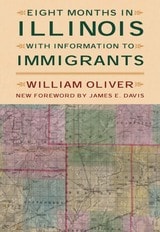
Eight Months in Illinois
With Information to ImmigrantsWilliam Oliver. Foreword by James E. Davis
Southern Illinois University Press, 2002
The Illinois frontier offered abundant opportunity, noted English traveler William Oliver after his journey to America in 1841–42, but life there was hard. Accordingly, Oliver advised the wealthy and comfortable to remain in England and counseled the unprosperous to seek their fortunes in America. Written for the poor who would migrate and published in 1843, his Eight Months in Illinois: With Information to Immigrants sought only to provide pertinent, valid, and practical information about what people might encounter in the frontier state. What Oliver actually accomplished, however, was much more: he imparted invaluable insights into and analyses of American life during an era of sweeping social, economic, and political change.
In his new foreword to this edition, James E. Davis stresses Oliver’s sincere desire to help British immigrants succeed in America. Oliver, Davis notes, “devoted dozens of pages of advice on numerous matters: various routes to Illinois and their advantages and disadvantages, processes of settling, qualities of western houses, costs of obtaining a new farm.” Oliver discussed other practical matters, such as the importance of having sons. He also assured his intended readership that “in the West, distinction of classes is little known and seldom recognized.”
As a document covering the middle west in the 1840s, Eight Months in Illinois: With Information to Immigrants has few equals. Its portrayal of farming and trade in relatively primitive times is historically accurate. It paints a plain picture, laying out the essential facts and presenting the typical incidents that enable us to trace the course of a settler’s simple, diligent, laborious day-to-day life. According to Davis, Oliver depicted “accurate and balanced slices of life in Illinois and America, including nasty insects, crude conditions, and the necessity of work.” And he did so without a trace of anti-American bias.
Eight Months in Illinois with Information to Immigrants was reprinted with emendations in 1924 by Walter Hill.
Elites and Economic Development
Comparative Studies on the Political Economy of Latin American CitiesBy John Walton
University of Texas Press, 1977
This book is a detailed comparative analysis of development politics in four urban regions of Latin America, two in Mexico and two in Colombia. John Walton has based his studies on the assumption that the problems of economic growth are essentially political, that is, are problems of choice, decision-making, and the exercise of power. His fundamental purpose has been to discover how elites of different kinds are more and less successful in the promotion of economic development, which he defines as a process in the organization of a society leading not only to higher levels of efficient output but also to a more equitable distribution of benefits.
At the time, the four cities compared were the second- and third-largest metropolitan areas in each country, Guadalajara and Monterrey in Mexico, Medellín and Cali in Colombia. This selection allows the author to pair, across countries, cases of early and large-scale industrialization (Monterrey and Medellín) with cases of more recent industrial growth in agricultural-commercial centers (Guadalajara and Cali). Walton presents historical introductions to each of the regions and integrates these with original fieldwork and interviews with more than three hundred members of the political and economic elites.
The findings are extensive, but in general they demonstrate that where political and economic power is more broadly distributed, where elites are more open and accessible, and where organizational life is more active and coordinated, regions tend to develop qualitatively as well as quantitatively, showing increases both in productivity and in such benefits as public services, housing, education, and a more balanced distribution of income. If these characteristics are absent, regions may be industrialized but do not provide a broad sharing of the benefits. Walton places a good deal of emphasis on the role of foreign investments, demonstrating that the more penetrated regions are also the less developed.
Finally, the results of these studies are used to evaluate and advance theories of underdevelopment and particularly of economic dependency.

Elites, Masses, and Modernization in Latin America, 1850–1930
By E. Bradford Burns and Thomas E. Skidmore
University of Texas Press, 1979
The interactions between the elites and the lower classes of Latin America are explored from the divergent perspectives of three eminent historians in this volume. The result is a counterbalance of viewpoints on the urban and the rural, the rich and the poor, and the Europeanized and the traditional of Latin America during the late nineteenth and early twentieth centuries.
E. Bradford Burns advances the view that two cultures were in conflict in nineteenth-century Latin America: that of the modernizing, European-oriented elite, and that of the “common folk” of mixed racial background who lived close to the earth. Thomas E. Skidmore discusses the emerging field of labor history in twentieth-century Latin America, suggesting that the historical roots of today’s exacerbated tensions lie in the secular struggle of army against workers that he describes. In the introduction, Richard Graham takes issue with both authors on certain basic premises and points out implications of their essays for the understanding of North American as well as Latin American history.
Embodied Engineering
Gendered Labor, Food Security, and Taste in Twentieth-Century MaliLaura Ann Twagira
Ohio University Press, 2021
Empire State-Building
War and Welfare in Kenya, 1925–1952Joanna Lewis
Ohio University Press, 2001
This history of administrative thought and practice in colonial Kenya looks at the ways in which white people tried to engineer social change.
It asks four questions:
- Why was Kenya’s welfare operation so idiosyncratic and spartan compared with that of other British colonies?
- Why did a transformation from social welfare to community development produce further neglect of the very poor?
- Why was there no equivalent to the French tradition of community medicine?
- If there was a transformatory element of colonial rule that sought to address poverty, where and why did it fall down?
The answers offer revealing insight into the dynamics of rule in the late colonial period in Kenya.

Empire of the Periphery
Russia and the World SystemBoris Kagarlitsky
Pluto Press, 2007
Leading writer Boris Kagarlitsky offers an ambitious account of 1000 years of Russian history. Encompassing all key periods in Russia's dramatic development, the book covers everything from early settlers, through medieval decline, Ivan the Terrible - the 'English Tsar', Peter the Great, the Crimean War and the rise of capitalism, the revolution, the Soviet period, finally ending with the return of capitalism after 1991.
Setting Russia within the context of the 'World System', as outlined by Wallerstein, this is a major work of historical Marxist theory that is set to become a future classic.
Entrepreneurial Seoulite
Culture and Subjectivity in Hongdae, SeoulMihye Cho
University of Michigan Press, 2019
Recent research on Korean culture approaches the K-wave phenomenon from the perspectives of cultural consumption, media analysis, and cultural management and policy. Meanwhile, studies on Seoul have centered on its transformation as a global, creative city. Rather than examining the K-wave or the city itself, this book explores the experience of living through the city-in-transition, focusing on the relationship between “the ideology that justified engagement in capitalism” and the “subjectification process.” The book aims to understand the project to institutionalize a cultural district in Hongdae as a demonstration of the coevolution of ideologies and citizenship in a society undergoing rapid liberalization—politically, culturally, and economically.
A cultural turn took place in Korea during the 1990s, amid the economic prosperity driven by state-led industrialization and the collapse of the military dictatorship due to democratization movements. Cultural critiques, emerging as an alternative to social movements, proliferated to assert the freedom and autonomy of individuals against regulatory systems and institutions. The nation was hit by the Asian financial crisis in 1997, and witnessed massive economic restructuring including layoffs, stakeouts, and a prevalence of contingent employment. As a result, the entire nation had to find new engines of economic growth while experiencing a creative destruction. At the center of this national transformation, Seoul has sought to recreate itself from a mega city to a global city, equipped with cutting-edge knowledge industries and infrastructures.
By juxtaposing the cultural turn and cultural/creative city-making, Entrepreneurial Seoulite interrogates the formation of new citizen subjectivity, namely the enterprising self, in post-Fordist Seoul. What kinds of logic guide individuals in the engagement of new urban realities in rapidly liberalized Seoul—culturally and economically? In order to explore this query, Mihye Cho draws on Weber’s concept of “the spirit of capitalism” on the formation of a new economic agency focusing on the re-configuration of meanings, and seeks to capture a transformative moment detailing when and how capitalism requests a different spirit and lifestyle of its participants. Likewise, this book approaches the enterprising self as the new spirit of post-Fordist Seoul and explores the ways in which people in Seoul internalize and negotiate this new enterprising self.
Ethnicity, Markets, and Migration in the Andes
At the Crossroads of History and AnthropologyBrooke Larson, Olivia Harris, and Enrique Tandeter, eds.
Duke University Press, 1995
Bringing together the work of outstanding scholars in Andean history, anthropology, and ethnohistory, these pioneering essays show how, from the very earliest period of Spanish rule, Andean peasants and their rulers embraced the new economic opportunities and challenged or subverted the new structures introduced by the colonial administration. They also convincingly explain why in the twentieth century the mistaken idea developed that Andean peasants were conservative and unable to participate effectively in different markets, and reveal how closely ethnic inequalities were tied to evolving market relations. Inviting a critical reconsideration of ethnic, class, and gender issues in the context of rural Andean markets, this book will revise the prevailing view of Andean history and provide a more fully informed picture of the complex mercantile activities of Andean peasants.
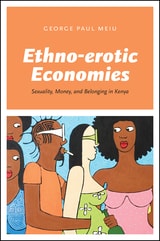
Ethno-erotic Economies
Sexuality, Money, and Belonging in KenyaGeorge Paul Meiu
University of Chicago Press, 2017
George Paul Meiu uses his deep familiarity with the communities these men come from to explore the long-term effects of markets of ethnic culture and sexuality on a wide range of aspects of life in rural Kenya, including kinship, ritual, gender, intimate affection, and conceptions of aging. What happens to these communities when young men return with such surprising wealth? And how do they use it to improve their social standing locally? By answering these questions, Ethno-erotic Economies offers a complex look at how intimacy and ethnicity come together to shape the pathways of global and local trade in the postcolonial world.
Ethnography #9
Alan Klima
Duke University Press, 2019

Every Day We Live Is the Future
Surviving in a City of DisastersBy Douglas Haynes
University of Texas Press, 2017
When she was only nine, Dayani Baldelomar left her Nicaraguan village with nothing more than a change of clothes. She was among tens of thousands of rural migrants to Managua in the 1980s and 1990s. After years of homelessness, Dayani landed in a shantytown called The Widows, squeezed between a drainage ditch and putrid Lake Managua. Her neighbor, Yadira Castellón, also migrated from the mountains. Driven by hope for a better future for their children, Dayani, Yadira, and their husbands invent jobs in Managua’s spreading markets and dumps, joining the planet’s burgeoning informal economy. But a swelling tide of family crises and environmental calamities threaten to break their toehold in the city.
Dayani’s and Yadira’s struggles reveal one of the world’s biggest challenges: by 2050, almost one-third of all people will likely live in slums without basic services, vulnerable to disasters caused by the convergence of climate change and breakneck urbanization. To tell their stories, Douglas Haynes followed Dayani’s and Yadira’s families for five years, learning firsthand how their lives in the city are a tightrope walk between new opportunities and chronic insecurity. Every Day We Live Is the Future is a gripping, unforgettable account of two women’s herculean efforts to persevere and educate their children. It sounds a powerful call for understanding the growing risks to new urbanites, how to help them prosper, and why their lives matter for us all.
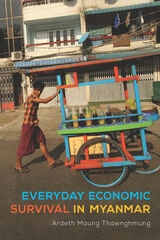
Everyday Economic Survival in Myanmar
Ardeth Maung Thawnghmung
University of Wisconsin Press, 2022
Thawnghmung conducted in-depth interviews and surveys of 372 individuals from all walks of life and across geographical locations in Myanmar between 2008 and 2015. To frame her analysis, she provides context from countries with comparable political and economic situations. Her findings will be welcomed by political scientists and policy analysts, as well by journalists and humanitarian activists looking for substantive, reliable information about everyday life in a country that remains largely in the shadows.
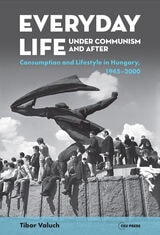
Everyday Life under Communism and After
Lifestyle and Consumption in Hungary, 1945–2000Tibor Valuch
Central European University Press, 2022
By providing a survey of consumption and lifestyle in Hungary during the second half of the twentieth century, this book shows how common people lived during and after tumultuous regime changes. After an introduction covering the late 1930s, the study centers on the communist era, and goes on to describe changes in the post-communist period with its legacy of state socialism.
Tibor Valuch poses a series of questions. Who could be called rich or poor and how did they live in the various periods? How did living, furnishings, clothing, income, and consumption mirror the structure of the society and its transformations? How could people accommodate their lifestyles to the political and social system? How specific to the regime was consumption after the communist takeover, and how did consumption habits change after the demise of state socialism? The answers, based on micro-histories, statistical data, population censuses and surveys help to understand the complexities of daily life, not only in Hungary, but also in other communist regimes in east-central Europe, with insights on their antecedents and afterlives.