Results by title
1993 books match the query 'Latin America' and 71 start with e
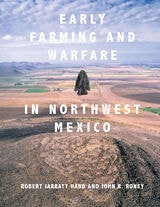
Early Farming and Warfare in Northwest Mexico
Robert J. Hard and John R. Roney
University of Utah Press, 2019
The authors place their work in a regional and theoretical context, providing detailed analyses of radiocarbon dates, structures, features, and artifacts. Authors Hard and Roney, and their contributors, present innovative analyses of plant and animal remains, ground stone, chipped stone, and landscape evolution. Through comparisons with a global cross-cultural probe of hilltop sites and a detailed examination of the features and artifacts of Cerro Juanaqueña, Hard and Roney argue that these cerros de trincheras sites are the earliest fortified defensive sites in the region. Readers with interests in ancient agriculture, warfare, village formation, and material culture will find this to be a foundational volume.
Early Formative Pottery of the Valley of Oaxaca
Kent V. Flannery and Joyce Marcus with technical ceramic analysis by William O. Payne
University of Michigan Press, 1994
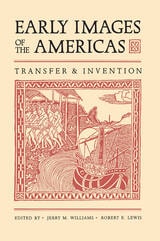
Early Images of the Americas
Transfer and InventionEdited by Jerry M. Williams and Robert E. Lewis
University of Arizona Press, 1993
Early Settlement and Subsistence in the Casma Valley, Peru
Shelia Pozorski
University of Iowa Press, 1987
Early Spanish American Narrative
By Naomi Lindstrom
University of Texas Press, 2004
The world discovered Latin American literature in the twentieth century, but the roots of this rich literary tradition reach back beyond Columbus's discovery of the New World. The great pre-Hispanic civilizations composed narrative accounts of the acts of gods and kings. Conquistadors and friars, as well as their Amerindian subjects, recorded the clash of cultures that followed the Spanish conquest. Three hundred years of colonization and the struggle for independence gave rise to a diverse body of literature—including the novel, which flourished in the second half of the nineteenth century.
To give everyone interested in contemporary Spanish American fiction a broad understanding of its literary antecedents, this book offers an authoritative survey of four centuries of Spanish American narrative. Naomi Lindstrom begins with Amerindian narratives and moves forward chronologically through the conquest and colonial eras, the wars for independence, and the nineteenth century. She focuses on the trends and movements that characterized the development of prose narrative in Spanish America, with incisive discussions of representative works from each era. Her inclusion of women and Amerindian authors who have been downplayed in other survey works, as well as her overview of recent critical assessments of early Spanish American narratives, makes this book especially useful for college students and professors.
Earth Beings
Ecologies of Practice across Andean WorldsMarisol de la Cadena
Duke University Press, 2015
Earth Politics
Religion, Decolonization, and Bolivia's Indigenous IntellectualsWaskar Ari
Duke University Press, 2014
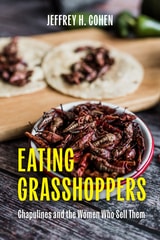
Eating Grasshoppers
Chapulines and the Women Who Sell ThemJeffrey H. Cohen
University of Texas Press, 2025
An approachable ethnography of how grasshoppers are harvested, sold, and consumed in Oaxaca.
Chapulines (toasted grasshoppers) are not a delicacy in Oaxaca. They are just food—good food—and a protein-rich seasonal snack that is the product of a long-standing industry based overwhelmingly on the labor of women. Jeffrey Cohen has interviewed dozens of these chapulineras, who harvest insects from corn and alfalfa fields, prepare them, and sell them in urban and rural marketplaces. An accessible ethnography, Eating Grasshoppers tells their story alongside the broader history of chapulines.
For tourists, chapulines are an experience—a gateway to the “real” Oaxaca. For locals, they are ordinary fare, but also a reminder of Indigenous stability and rural survival. In a sense, eating chapulines is a declaration of independence from a government that has condemned eating insects as backward. Yet, while chapulines are a generations-old favorite, eating them is not an act of preservation. Cohen shows that the business of this traditional food is thoroughly modern and ever evolving, with entrepreneurial chapulineras responding nimbly to complex and dynamic markets. From alfalfa fields to online markets, Eating Grasshoppers takes readers inside one of the world’s most fascinating food cultures.
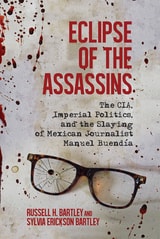
Eclipse of the Assassins
The CIA, Imperial Politics, and the Slaying of Mexican Journalist Manuel BuendíaRussell H. Bartley and Sylvia Erickson Bartley
University of Wisconsin Press, 2015
Authors Russell and Sylvia Bartley shed new light on the U.S.-instigated “dirty wars” that ravaged all of Latin America in the 1960s, ’70s, and ’80s and reveal—for the first time—how Mexican officials colluded with Washington in its proxy contra war against the Sandinista government of Nicaragua. They draw together the strands of a clandestine web linking:
- the assassination of prominent Mexican journalist Manuel Buendía
- the torture and murder of U.S. Drug Enforcement Administration agent Enrique Camarena
- the Iran-Contra scandal
- a major DEA sting against key CIA-linked Bolivian, Panamanian, and Mexican drug traffickers
- CIA-orchestrated suppression of investigative journalists
- criminal collusion of successive U.S. and Mexican administrations that has resulted in the unprecedented power of drug kingpins like “El Chapo” Guzmán.
Best books for public & secondary school libraries from university presses, American Library Association

Ecologics
Wind and Power in the AnthropoceneCymene Howe
Duke University Press, 2019
In her volume, Ecologics, Howe narrates how an antidote to the Anthropocene became both failure and success. Tracking the development of what would have been Latin America's largest wind park, Howe documents indigenous people's resistance to the project and the political and corporate climate that derailed its renewable energy potential. Using feminist and more-than-human theories, Howe demonstrates how the dynamics of energy and environment cannot be captured without understanding how human aspirations for energy articulate with nonhuman beings, technomaterial objects, and the geophysical forces that are at the heart of wind and power.
Ejidos and Regions of Refuge in Northwestern Mexico
Edited by N. Ross Crumrine and Phil C. Weigand
University of Arizona Press, 1987
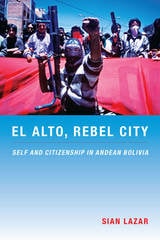
El Alto, Rebel City
Self and Citizenship in Andean BoliviaSian Lazar
Duke University Press, 2007
Drawing on ethnographic fieldwork conducted between 1997 and 2004, Lazar contends that in El Alto, citizenship is a set of practices defined by one’s participation in a range of associations, many of them collectivist in nature. Her argument challenges Western liberal notions of the citizen by suggesting that citizenship is not only individual and national but in many ways communitarian and distinctly local, constituted through different kinds of affiliations. Since in El Alto these affiliations most often emerge through people’s place of residence and their occupational ties, Lazar offers in-depth analyses of neighborhood associations and trade unions. In so doing, she describes how the city’s various collectivities mediate between the state and the individual. Collective organization in El Alto and the concept of citizenship underlying it are worthy of attention; they are the basis of the city’s formidable power to mobilize popular protest.
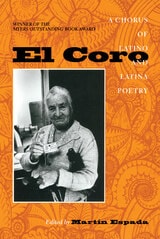
El Coro
A Chorus of Latino and Latina PoetryMartin Espada
University of Massachusetts Press, 1997
Here we find the open expression of anger and grief, self-mocking humor, the music of protest, the quiet assertion of dignity, and the raucous celebration of survival. There are poems about stoop labor and welfare offices and housing projects, but also poems about the Four Horsemen of the Apocalypse and the Minotaur.
Among the poets are former farm workers and gang members, a practicing physician, an ex-tenant lawyer, two professional chefs, and a Vietnam veteran. One poet was a political prisoner for six years; another staged a famous hunger strike; still another was indicted for her work with Central American refugees. In many ways this collection of poets comprises a chorus. Their song humanizes in the face of dehumanization.
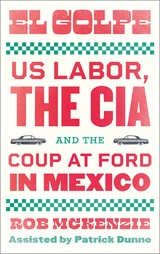
El Golpe
US Labor, the CIA, and the Coup at Ford in MexicoRob McKenzie
Pluto Press, 2022
'Early in my research, a friend with excellent knowledge of the United Auto Workers internal operations told me, "Don't give up. They are hiding something"…'
It's 1990, and US labor is being outsourced to Mexico. Rumors of a violent confrontation at the Mexican Ford Assembly plant on January 8 reach the United Auto Workers (UAW) union in the US: nine employees had been shot by a group of drunken thugs and gangsters, in an act of political repression which changed the course of Mexican and US workers' rights forever.
Rob McKenzie was working at the Ford Twin Cities Assembly plant in Minnesota when he heard of the attack. He didn't believe the official story, and began a years-long investigation to uncover the truth. His findings took him further than he expected - all the way to the doors of the CIA.
Virtually unknown outside of Mexico, the full story of 'El Golpe', or 'The Coup', is a dark tale of political intrigue that still resonates today.
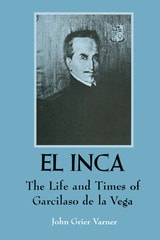
El Inca
The Life and Times of Garcilaso de la VegaBy John Grier Varner
University of Texas Press, 1968
Garcilaso de la Vega, the great chronicler of the Incas and the conquistadors, was born in Cuzco in 1539. At the age of twenty, he sailed to Spain to acquire an education, and he remained there until his death at Córdoba in 1616. As the natural son of a noble conquistador and an Indian woman of royal blood, he took immense pride in both his Spanish and Inca heritage, and, living as he did during a bewildering but stimulating epoch, he personally witnessed the last gasp of the dying Inca empire, the fratricidal conflicts that accompanied the Conquest, and the literary growth as well as the political decline of the Spain of Philip II and Philip III.
Garcilaso left for posterity one of the earliest accounts of the ancient Incas, a reliable though admittedly biased chronicle of Spanish conquests in Andean America and a glowing story of Hernando de Soto’s exploration of North America. Though he never lost pride in his Spanish heritage, continued rebuffs in caste-conscious Spain strengthened his pride in his Indian heritage and his sympathy for his mother’s people. Thus his histories, while ennobling Spaniards, also ennobled the Incas, and eventually were to have some influence in the struggle of South Americans for political independence from Spain. In both blood and character El Inca Garcilaso was a true mestizo. He is generally considered to have been the first native-born American to attain the honor of publication.
This was the life, and these were the times, that Varner has evoked so richly in his narrative. It rings and glitters with the sounds and colors of festivals, pageantry, and battle; it listens to the murmur of prayers, the defeated mutter of the Incas, the scratch of the scholar’s quill; it pictures both highlights and shadows. For the reader already acquainted with Garcilaso’s chronicles, this book will be a welcome complement; for those who are meeting El Inca here for the first time, it will be a rewarding and satisfying introduction.
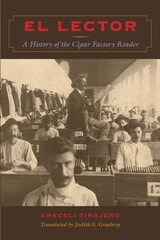
El Lector
A History of the Cigar Factory ReaderBy Araceli Tinajero
University of Texas Press, 2009
The practice of reading aloud has a long history, and the tradition still survives in Cuba as a hard-won right deeply embedded in cigar factory workers' culture. In El Lector, Araceli Tinajero deftly traces the evolution of the reader from nineteenth-century Cuba to the present and its eventual dissemination to Tampa, Key West, Puerto Rico, and Mexico. In interviews with present-day and retired readers, she records testimonies that otherwise would have been lost forever, creating a valuable archive for future historians.
Through a close examination of journals, newspapers, and personal interviews, Tinajero relates how the reading was organized, how the readers and readings were selected, and how the process affected the relationship between workers and factory owners. Because of the reader, cigar factory workers were far more cultured and in touch with the political currents of the day than other workers. But it was not only the reading material, which provided political and literary information that yielded self-education, that influenced the workers; the act of being read to increased the discipline and timing of the artisan's job.
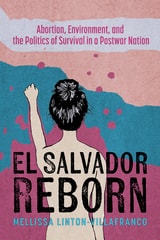
El Salvador Reborn
Abortion, Environment, and the Politics of Survival in a Postwar NationMellissa Linton-Villafranco
University of Arizona Press, 2026
El Salvador Reborn examines the nation’s efforts to reshape its identity after the Peace Accords amid declining Cold War tensions. The book explores the criminalization of abortion and environmental activism in postwar El Salvador by focusing on two key organizations, Agrupación Ciudadana por la Despenalización del Aborto and Foro del Agua, highlighting their political strategies during a critical moment in El Salvador’s formation.
Author Mellissa Linton-Villafranco critically analyzes the political shift under the right-wing party, which sought to redefine notions of life and sovereignty. Historically associated with death squads, the right repositioned itself as a pro-life force by criminalizing abortion, amending the constitution to declare life begins at conception, and imposing penalties of up to thirty years. These measures marginalized women’s autonomy, creating a repressive legal environment centered on fetal rights. In response, feminist groups mobilized through protests, online campaigns, transnational alliances, and public art, advocating for reproductive justice that encompasses gender-based violence, health, and environmental sustainability.
Linton-Villafranco makes the case for a holistic conception of life that integrates land, body, and community sovereignty, weaving reproductive justice with environmental activism to promote a broader, interconnected understanding of life and rights in El Salvador.
El derecho en español
terminología y habilidades jurídicas para un ejercicio legal exitosoBy Katia Fach Gómez
University of Texas Press, 2014
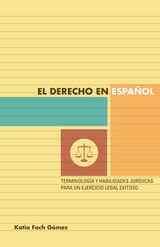
El español es el segundo idioma más hablado en el mundo. Un número creciente de personas en los Estados Unidos y en otros países son conocedores de este idioma y además lo utilizan profesionalmente en el ámbito jurídico. No obstante, a muchos de ellos les gustaría mejorar su comprensión idiomática y jurídica del mismo. En la actualidad existen pocos recursos didácticos y profesionales a los que recurrir. El derecho en español: Terminología y habilidades jurídicas para un ejercicio legal exitoso es el único libro actualmente en el mercado que ofrece al mismo tiempo instrucción avanzada en español jurídico e información selecta sobre los marcos legales contemporáneos en los que este idioma se utiliza.
Este libro monolingüe en español puede ser utilizado en el aula y también como herramienta de auto-aprendizaje por parte de universitarios y profesionales que posean un nivel intermedio de conocimiento del idioma. El libro contiene diez lecciones, cada una de ellas dedicada a un área clave del derecho: constitucional, contratos, actividades bancarias, penal, familia, inmigración, derechos humanos, litigios internacionales y arbitraje. Todas estas lecciones presentan un vocabulario escogido sobre el tema jurídico abordado en ellas, y después ofrecen una serie de ejercicios basados en documentos jurídicos reales procedentes de diversos países de habla hispana. El último capítulo es una guía para facilitar la comprensión de varias películas que contienen interesantes cuestiones legales y que pueden ser utilizadas para el análisis contextual de los temas abordados en las lecciones precedentes. A través de todos estos materiales de capacitación, los lectores aprenderán a utilizar el vocabulario español jurídico en su contexto operativo adecuado, y podrán entender las diferencias lingüísticas y conceptuales entre los distintos países de América Latina y España. Al mismo tiempo se familiarizarán con las disposiciones y los documentos más utilizados en la práctica jurídica en español. Finalmente, también podrán mejorar sus habilidades de escucha y de redacción jurídica.
Electrifying Mexico
Technology and the Transformation of a Modern CityBy Diana J. Montaño
University of Texas Press, 2021
2022 Alfred B. Thomas Book Award, Southeastern Council of Latin American Studies (SECOLAS)
2022 Bolton-Johnson Prize, Conference on Latin American History (CLAH)
2022 Best Book in Non-North American Urban History, Urban History Association (Co-winner)
2023 Honorable Mention, Best Book in the Humanities, Latin American Studies Association Mexico Section
2023 Turriano Book Prize, International Committee for the History of Technology
2023 Michael C. Meyer Award for Best Book on Mexican History in a Five-Year Period, Rocky Mountain Council for Latin American Studies
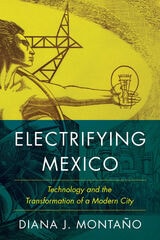
Many visitors to Mexico City’s 1886 Electricity Exposition were amazed by their experience of the event, which included magnetic devices, electronic printers, and a banquet of light. It was both technological spectacle and political messaging, for speeches at the event lauded President Porfirio Díaz and bound such progress to his vision of a modern order.
Diana J. Montaño explores the role of electricity in Mexico’s economic and political evolution, as the coal-deficient country pioneered large-scale hydroelectricity and sought to face the world as a scientifically enlightened “empire of peace.” She is especially concerned with electrification at the social level. Ordinary electricity users were also agents and sites of change. Montaño documents inventions and adaptations that served local needs while fostering new ideas of time and space, body and self, the national and the foreign. Electricity also colored issues of gender, race, and class in ways specific to Mexico. Complicating historical discourses in which Latin Americans merely use technologies developed elsewhere, Electrifying Mexico emphasizes a particular national culture of scientific progress and its contributions to a uniquely Mexican modernist political subjectivity.

Elena Poniatowska
An Intimate BiographyMichael K. Schuessler; Foreword by Carlos Fuentes
University of Arizona Press, 2007
With his subject’s complete cooperation (she granted him access to fifty years of personal files), Michael Schuessler provides the first critical biography of Poniatowska’s life and work. She is perhaps best known outside of Mexico as the author of Massacre in Mexico (La noche de Tlatelolco) and Here’s to You, Jesusa! (Hasta no verte, Jesús mío). But her body of published books is vast, beginning with the 1954 publication of Lilus Kikus, a collection of short stories. And she is still writing today.
Schuessler, who befriended Poniatowska more than fifteen years ago, is a knowledgeable guide to her engrossing life and equally engaging work. As befits her, his portrait is itself a literary collage, a “living kaleidoscope” that is constantly shifting to include a multiplicity of voices—those of fellow writers, literary critics, her nanny, her mother, and the writer herself—easily accessible to general readers and essential to scholars.
Available in English for the first time, this insightful book includes 40 photographs and drawings and an annotated bibliography of Poniatowska’s works—those that have already been translated into English and those awaiting translation.
Elites and Economic Development
Comparative Studies on the Political Economy of Latin American CitiesBy John Walton
University of Texas Press, 1977
This book is a detailed comparative analysis of development politics in four urban regions of Latin America, two in Mexico and two in Colombia. John Walton has based his studies on the assumption that the problems of economic growth are essentially political, that is, are problems of choice, decision-making, and the exercise of power. His fundamental purpose has been to discover how elites of different kinds are more and less successful in the promotion of economic development, which he defines as a process in the organization of a society leading not only to higher levels of efficient output but also to a more equitable distribution of benefits.
At the time, the four cities compared were the second- and third-largest metropolitan areas in each country, Guadalajara and Monterrey in Mexico, Medellín and Cali in Colombia. This selection allows the author to pair, across countries, cases of early and large-scale industrialization (Monterrey and Medellín) with cases of more recent industrial growth in agricultural-commercial centers (Guadalajara and Cali). Walton presents historical introductions to each of the regions and integrates these with original fieldwork and interviews with more than three hundred members of the political and economic elites.
The findings are extensive, but in general they demonstrate that where political and economic power is more broadly distributed, where elites are more open and accessible, and where organizational life is more active and coordinated, regions tend to develop qualitatively as well as quantitatively, showing increases both in productivity and in such benefits as public services, housing, education, and a more balanced distribution of income. If these characteristics are absent, regions may be industrialized but do not provide a broad sharing of the benefits. Walton places a good deal of emphasis on the role of foreign investments, demonstrating that the more penetrated regions are also the less developed.
Finally, the results of these studies are used to evaluate and advance theories of underdevelopment and particularly of economic dependency.
Elites, Masses, and Modernization in Latin America, 1850–1930
By E. Bradford Burns and Thomas E. Skidmore
University of Texas Press, 1979
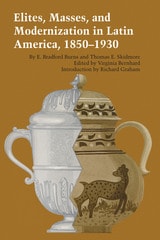
The interactions between the elites and the lower classes of Latin America are explored from the divergent perspectives of three eminent historians in this volume. The result is a counterbalance of viewpoints on the urban and the rural, the rich and the poor, and the Europeanized and the traditional of Latin America during the late nineteenth and early twentieth centuries.
E. Bradford Burns advances the view that two cultures were in conflict in nineteenth-century Latin America: that of the modernizing, European-oriented elite, and that of the “common folk” of mixed racial background who lived close to the earth. Thomas E. Skidmore discusses the emerging field of labor history in twentieth-century Latin America, suggesting that the historical roots of today’s exacerbated tensions lie in the secular struggle of army against workers that he describes. In the introduction, Richard Graham takes issue with both authors on certain basic premises and points out implications of their essays for the understanding of North American as well as Latin American history.
Elusive Justice
Women, Land Rights, and Colombia's Transition to PeaceDonny Meertens
University of Wisconsin Press, 2019
Drawing on decades of research, Elusive Justice demonstrates how these women continue to face numerous adverse circumstances, including geographical isolation, encroaching capitalist enterprises, and a dearth of social and institutional support. Donny Meertens contends that women's advocacy organizations must have a prominent role in overseeing these transitional policies in order to create a more just society. By bringing together the underresearched topic of property repayment and the pursuit of gender justice in peacebuilding, these findings have broad significance elsewhere in the world.
Emancipating the Female Sex
The Struggle for Women's Rights in Brazil, 1850–1940June E. Hahner
Duke University Press, 1990
Hahner traces the history of Brazilian women’s fight for emancipation from its earliest manifestations in the mid-nineteenth century to the successful conclusion of the suffrage campaign in the 1930s. Drawing on interviews with surviving Brazilian suffragists and contemporary feminists as well as manuscripts and printed documents, Hahner explores the strategies and ideological positions of Brazilian feminists. In focusing on urban upper- and middle-class women, from whose ranks the leadership for change arose, she examines the relationship between feminism and social change in Brazil’s complex and highly stratified society.
Embers of the Past
Essays in Times of DecolonizationJavier Sanjinés C.
Duke University Press, 2013
Embodied Protests
Emotions and Women's Health in BoliviaMaria Tapias
University of Illinois Press, 2015
Evocative and compassionate, Embodied Protests gives voice to the human costs of the ongoing neoliberal experiment.
Embodying the Sacred
Women Mystics in Seventeenth-Century LimaNancy E. van Deusen
Duke University Press, 2018
Emergency
Reading the Popol Vuh in a Time of CrisisEdgar Garcia
University of Chicago Press, 2022
Written during the lockdown in Chicago in the depths of the COVID-19 pandemic, these essays consider the Popol Vuh as a work that was also written during a time of feverish social, political, and epidemiological crisis as Spanish missionaries and colonial military deepened their conquest of indigenous peoples and cultures in Mesoamerica. What separates the Popol Vuh from many other creation texts is the disposition of the gods engaged in creation. Whereas the book of Genesis is declarative in telling the story of the world’s creation, the Popol Vuh is interrogative and analytical: the gods, for example, question whether people actually need to be created, given the many perfect animals they have already placed on earth.
Emergency uses the historical emergency of the Popol Vuh to frame the ongoing emergencies of colonialism that have surfaced all too clearly in the global health crisis of COVID-19. In doing so, these essays reveal how the authors of the Popol Vuh—while implicated in deep social crisis—nonetheless insisted on transforming emergency into scenes of social, political, and intellectual emergence, translating crisis into creativity and world creation.
Eminent Maricones
Arenas, Lorca, Puig, and MeJaime Manrique
University of Wisconsin Press, 2001
Jaime Manrique weaves into his own memoir the lives of three important twentieth-century Hispanic writers: the Argentine Manuel Puig, author of Kiss of the Spider Woman; the Cuban Reinaldo Arenas, author of Before Night Falls; and Spanish poet and playwright Federico García Lorca. Manrique celebrates the lives of these heroic writers who were made outcasts for both their homosexuality and their politics.
"Manrique's double vision yields insights into Puig, Arenas, and Lorca unavailable to a writer less attuned to the complex interplay of culture and sexuality, as well as that of race and class in Latino and Anglo societies."—George DeStefano, The Nation
"A splendid memoir of Manuel Puig. It evokes him—how he really was—better than anything I've read."—Susan Sontag
"Where Manrique's tale differs from others is in its unabashed and sensitive treatment of sexuality. One reads his autobiographical account with pleasure and fascination."—Jose Quiroga, George Washington University
"Manrique's voice is wise, brave, and wholly original. This chronicle of self-discovery and literary encounters is heartening and deep."—Kennedy Fraser
"In this charmingly indiscreet memoir, Jaime Manrique writes with his customary humor and warm sympathy, engaging our delighted interest on every page. He has the rare gift of invoking and inviting intimacy, in this case a triangulated intimacy between himself, his readers, and his memories. These are rich double portraits."—Phillip Lopate

Emmanuel Appadocca; or, Blighted Life
A Tale of the BoucaneersMaxwell Philip
University of Massachusetts Press, 1997
This 1854 novel traces a mulatto son's quest for vengeance against his white father, a sugar planter who abandoned him and his mother. Intent on redeeming his mother's honor and outraged by the cruelty and greed that slavery has engendered Appadocca sails the seas with a band of ruthless pirates on a ship named the Black Schooner. The novel, written by the important activist and intellectual Michel Maxwell Philip (1829–1888) deals with themes, symbols, and literary techniques that are reminiscent of other major authors such as Melville, Douglass, and Stowe. This new edition with scholarly commentaries and annotations will reorient our understanding of the development of Caribbean literature in relation to English and American literary production.
Empire and Dissent
The United States and Latin AmericaFred Rosen, ed.
Duke University Press, 2008
Several essays provide historical perspective on contemporary U.S.–hemispheric relations. These include an analysis of the nature and dynamics of imperial domination, an assessment of financial relations between the United States and Latin America since the end of World War II, an account of Native American resistance to colonialism, and a consideration of the British government’s decision to abolish slavery in its colonies. Other essays focus on present-day conflicts in the Americas, highlighting various modes of domination and dissent, resistance and accommodation. Examining southern Mexico’s Zapatista movement, one contributor discusses dissent in the era of globalization. Other contributors investigate the surprisingly conventional economic policies of Brazil’s president, Luiz Inácio Lula da Silva; Argentina’s recovery from its massive 2001 debt default; the role of coca markets in the election of Bolivia’s first indigenous president, Evo Morales; and the possibilities for extensive social change in Venezuela. A readers’ guide offers a timeline of key events from 1823 through 2007, along with a list of important individuals, institutions, and places.
Contributors: Daniel A. Cieza, Gregory Evans Dowd, Steve Ellner, Neil Harvey, Alan Knight, Carlos Marichal, John Richard Oldfield, Silvia Rivera, Fred Rosen, Jeffrey W. Rubin
Empire of Sand
The Seri Indians and the Struggle for Spanish Sonora, 1645–1803Compiled and edited by Thomas E. Sheridan
University of Arizona Press, 1999
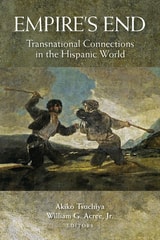
Empire's End
Transnational Connections in the Hispanic WorldAkiko Tsuchiya
Vanderbilt University Press, 2015
Empire's End showcases the work of scholars of literature, cultural studies, and history, centering on four interrelated issues crucial to understanding the end of the Spanish empire: the mappings of the Hispanic Atlantic, race, human rights, and the legacies of empire.
Encounters in Video Art in Latin America
Elena Shtromberg
J. Paul Getty Trust, The, 2023
The emergence of video art in Latin America is marked by multiple points of development, across more than a dozen artistic centers, over a period of more than twenty-five years. When it was first introduced during the 1960s, video was seen as empowering: the portability of early equipment and the possibility of instant playback allowed artists to challenge and at times subvert the mainstream media. Video art in Latin America was—and still is—closely related to the desire for social change. Themes related to gender, ethnic, and racial identity as well as the consequences of social inequality and ecological disasters have been fundamental to many artists’ practices.
This compendium explores the history and current state of artistic experimentation with video throughout Latin America. Departing from the relatively small body of existing scholarship in English, much of which focuses on individual countries, this volume approaches the topic thematically, positioning video artworks from different periods and regions throughout Latin America in dialogue with each other. Organized in four broad sections—Encounters, Networks and Archives, Memory and Crisis, and Indigenous Perspectives—the book’s essays and interviews encourage readers to examine the medium of video across varied chronologies and geographies.
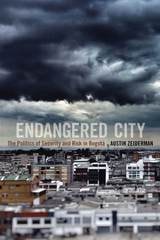
Endangered City
The Politics of Security and Risk in BogotáAustin Zeiderman
Duke University Press, 2016
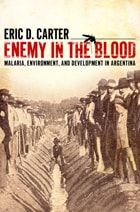
Enemy in the Blood
Malaria, Environment, and Development in ArgentinaEric D. Carter
University of Alabama Press, 2012
Tracing the Fight Against Malaria and the Making of Modern Argentina.
Enemy in the Blood: Malaria, Environment, and Development in Argentina examines the dramatic yet mostly forgotten history of malaria control in northwest Argentina. Carter traces the evolution of malaria science and policy in Argentina from the disease’s emergence as a social problem in the 1890s to its effective eradication by 1950. Malaria-control proponents saw the campaign as part of a larger project of constructing a modern identity for Argentina. Insofar as development meant building a more productive, rational, and hygienic society, the perceptions of a culturally backwards and disease-ridden interior prevented Argentina from joining the ranks of “modern” nations. The path to eradication, however, was not easy due to complicated public health politics, inappropriate application of foreign malaria control strategies, and a habitual misreading of the distinctive ecology of malaria in the northwest, especially the unique characteristics of the local mosquito vector. Homegrown scientific expertise, a populist public health agenda, and an infusion of new technologies eventually brought a rapid end to malaria’s scourge, if not the cure for regional underdevelopment.
Enemy in the Blood sheds light on the often neglected history of northwest Argentina’s interior, adds to critical perspectives on the history of development and public health in modern Latin America, and demonstrates the merits of integrative social-environmental research.
Energopolitics
Wind and Power in the AnthropoceneDominic Boyer
Duke University Press, 2019
In his volume, Energopolitics, Boyer examines the politics of wind power and how it is shaped by myriad factors, from the legacies of settler colonialism and indigenous resistance to state bureaucracy and corporate investment. Drawing on interviews with activists, campesinos, engineers, bureaucrats, politicians, and bankers, Boyer outlines the fundamental impact of energy and fuel on political power. Boyer also demonstrates how large conceptual frameworks cannot adequately explain the fraught and uniquely complicated conditions on the isthmus, illustrating the need to resist narratives of anthropocenic universalism and to attend to local particularities.
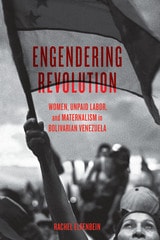
Engendering Revolution
Women, Unpaid Labor, and Maternalism in Bolivarian VenezuelaBy Rachel Elfenbein
University of Texas Press, 2019
In 1999, Venezuela became the first country in the world to constitutionally recognize the socioeconomic value of housework and enshrine homemakers’ social security. This landmark provision was part of a larger project to transform the state and expand social inclusion during Hugo Chávez’s presidency. The Bolivarian revolution opened new opportunities for poor and working-class—or popular—women’s organizing. The state recognized their unpaid labor and maternal gender role as central to the revolution. Yet even as state recognition enabled some popular women to receive public assistance, it also made their unpaid labor and organizing vulnerable to state appropriation.
Offering the first comprehensive analysis of this phenomenon, Engendering Revolution demonstrates that the Bolivarian revolution cannot be understood without comprehending the gendered nature of its state-society relations. Showcasing field research that comprises archival analysis, observation, and extensive interviews, these thought-provoking findings underscore the ways in which popular women sustained a movement purported to exalt them, even while many could not access social security and remained socially, economically, and politically vulnerable.
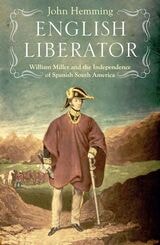
English Liberator
William Miller and the Independence of Spanish South AmericaJohn Hemming
Haus Publishing, 2025
During Admiral Thomas Cochrane’s demolition of imperial Spain’s naval presence in the Pacific amid the revolutionary wars for Spanish South America, all the raids were carried out by his marines under a young officer called William Miller. One of three sons of a baker in a small village in Kent, with no family influence, money, or even secondary education, he came from nowhere, but he went on to have a meteoric rise in the armies that liberated the nations of Chile and Peru. By the time of Ayacucho in 1824, the large battle that ended Spanish rule in South America, there were seven generals in the royalist Spanish army and five on the patriot side. Eleven of these generals were Hispanic; Miller was the only foreigner.
Set in the context of the great European powers’ weakening grip over their global empires and the ensuing wars of independence in Spanish South America, John Hemming’s gripping narrative spans Miller’s time as a teenage soldier in Wellington’s Peninsular War, his contribution to the liberation of the new nations Chile and Peru, and his years in diplomacy thereafter. Drawing on written accounts by many of Miller’s contemporaries in addition to a wealth of modern research, Hemming casts the anti-imperialist, anti-slavery soldier as highly regarded by all the leaders of independence and popular with ordinary people and peasant farmers due to his own humble origins—a legacy evidenced by his burial in the Pantheon of founding fathers of Peru decades after the battles in which he made his name.

Entranced Earth
Art, Extractivism, and the End of LandscapeJens Andermann
Northwestern University Press, 2023
A sweeping analysis of the lasting effects of neocolonial extractivism in Latin American aesthetic modernity from 1920 to the present
Looking to the extractive frontier as a focal point of Latin American art, literature, music, and film, Jens Andermann asks what emerges at the other end of landscape. Art in the Global South has long represented and interrogated “insurgent nature”—organic and inorganic matter, human and nonhuman life, thrown into turmoil.
In Entranced Earth: Art, Extractivism, and the End of Landscape, Andermann traces the impact of despaisamiento—world-destroying un-landscaping—throughout the Latin American modernist archive. At the same time, he explores innovative, resilient modes of allyship forged between diverse actors through their shared experiences of destruction. From the literary regionalism of the 1930s to contemporary bio art, from modernist garden architecture to representations of migration and displacement in sound art and film, Entranced Earth tracks the crisis of landscape and environmental exhaustion beyond despair toward speculative, experimental forms of survival.
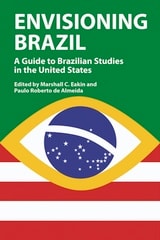
Envisioning Brazil
A Guide to Brazilian Studies in the United StatesEdited by Marshall C. Eakin and Paulo Roberto de Almeida
University of Wisconsin Press, 2005
Envisioning Brazil is a comprehensive and sweeping assessment of Brazilian studies in the United States. Focusing on synthesis and interpretation and assessing trends and perspectives, this reference work provides an overview of the writings on Brazil by United States scholars since 1945.
"The Development of Brazilian Studies in the United States," provides an overview of Brazilian Studies in North American universities. "Perspectives from the Disciplines" surveys the various academic disciplines that cultivate Brazilian studies: Portuguese language studies, Brazilian literature, art, music, history, anthropology, Amazonian ethnology, economics, politics, and sociology. "Counterpoints: Brazilian Studies in Britain and France" places the contributions of U.S. scholars in an international perspective. "Bibliographic and Reference Sources" offers a chronology of key publications, an essay on the impact of the digital age on Brazilian sources, and a selective bibliography.

Epidemic Disease in Mexico City, 1761–1813
An Administrative, Social, and Medical StudyBy Donald B. Cooper
University of Texas Press, 1965
Five deadly epidemics, chiefly typhus and smallpox, struck Mexico City in the years between 1761 and 1813, claiming a minimum of fifty thousand lives. Mexico City was at that time the major metropolis of the New World and the capital of New Spain—by far the richest and most sophisticated city in that vast empire. It had the best medicines, the best doctors, and the best hospitals of the New World. What caused these devastating epidemics?
Donald B. Cooper here makes a thorough study of the problem. Based almost entirely on unpublished manuscript materials from the national archives of Mexico and the municipal archives of Mexico City, his work represents the first detailed study of the impact of epidemic disease on the history of New Spain, primarily of its capital. The course of each epidemic, its inclusive dates, the mortality it caused, and its effect upon the community are fully described.
At the time a major epidemic was in progress, the author says, all levels of government, national and local, secular and ecclesiastical, became involved in varying degrees in providing resources and leadership. The Church, wealthy corporations, and private citizens contributed the main funds. During the actual time of crisis, an outbreak could be prosecuted with remarkable success and cooperation.
Once an epidemic was over, however, little was done to prevent another. No single person or agency in Mexico City was sufficiently cognizant of the diverse problems involved to cope with them within a national or regional range—not even the viceroy. Such vital public works as aqueducts, waterlines, roads, and canals were inadequately maintained. Such essential municipal services as cleaning streets and canals, collecting garbage and refuse, and caring for the muddy, shallow cemeteries were poor if not nonexistent. Government officials, as well as the populace, were insufficiently concerned with the relation between sanitation and disease.
The practice of medicine in eighteenth-century Mexico had few scientific or professional aspects. The close relation of medicine and theology tended to inhibit experimentation that might have effectively broadened the frontiers of medical knowledge. Traditionalism acted as a barrier to the adoption of innovations. In the epidemic of 1779, for instance, inoculation—which could have saved innumerable lives—was totally rejected; in the outbreak of 1797 it was accepted only by the small upper class; when vaccination came to Mexico in 1803 it met the same militant opposition. The wonder, then, is not that so many died of disease, but that so many lived.
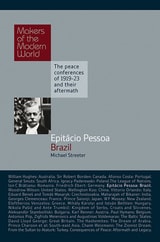
Epitacio Pessoa
BrazilMichael Streeter
Haus Publishing, 2010

Errant Modernism
The Ethos of Photography in Mexico and BrazilEsther Gabara
Duke University Press, 2008
Gabara argues that Brazilian and Mexican modernists deliberately made photography err: they made this privileged medium of modern representation simultaneously wander and work against its apparent perfection. They flouted the conventions of mainstream modernism so that their aesthetics registered an ethical dimension. Their photographic modernism strayed, dragging along the baggage of modernity lived in a postcolonial site. Through their “errant modernism,” avant-garde writers and photographers critiqued the colonial history of Latin America and its twentieth-century formations.
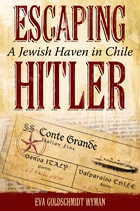
Escaping Hitler
A Jewish Haven in ChileEva Goldschmidt Wyman
University of Alabama Press, 2013
A family’s flight from Nazi terror to an unexpected refuge in Chile.
Escaping Hitler is the personal story of Eva Wyman and her family’s escape from Nazi Germany to Chile in the sociohistorical context of 1930s and 1940s, a time when the Chilean Nazi party had an active presence in the country’s major institutions.
Based primarily on interviews with German Jewish refugees and family correspondence, Eva Goldschmidt Wyman provides an intimate account of Jews in Germany in the 1930s as Nazi controls tightened and family members were taken to Riga concentration camp. Wyman recounts Kristallnacht in Stuttgart, where her father was principal of the Jewish school, his imprisonment in Dachau, and his release and immigration to Great Britain. Escaping Hitler details the family’s escape from Germany and subsequent life in Chile, providing an intimate look at daily life on the steam ship Conte Grande during the voyage from Italy to Chile in 1939, Nazi espionage and anti-Semitic activity in Chile, and the Nazi influence in South America in general.
Recounted in an intimate and personal style, Escaping Hitler immerses the reader in an extraordinary chapter of contemporary Jewish history both inside Germany and South America.
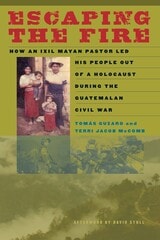
Escaping the Fire
How an Ixil Mayan Pastor Led His People Out of a Holocaust During the Guatemalan Civil WarBy Tomás Guzaro and Terri Jacob McComb
University of Texas Press, 2010
During the height of the Guatemalan civil war, Tomás Guzaro, a Mayan evangelical pastor, led more than two hundred fellow Mayas out of guerrilla-controlled Ixil territory and into the relative safety of the government army's hands. This exodus was one of the factors that caused the guerrillas to lose their grip on the Ixil, thus hastening the return of peace to the area.
In Escaping the Fire, Guzaro relates the hardships common to most Mayas and the resulting unrest that opened the door to civil war. He details the Guatemalan army's atrocities while also describing the Guerrilla Army of the Poor's rise to power in Ixil country, which resulted in limited religious freedom, murdered church leaders, and threatened congregations. His story climaxes with the harrowing vision that induced him to guide his people out of their war-torn homeland.
Guzaro also provides an intimate look at his spiritual pilgrimage through all three of Guatemala's main religions. The son of a Mayan priest, formerly a leader in the Catholic Church, and finally a convert to Protestantism, Guzaro, in detailing his religious life, offers insight into the widespread shift toward Protestantism in Latin America over the past four decades.
Riveting and highly personal, Escaping the Fire ultimately provides a counterpoint to the usual interpretation of indigenous agency during the Guatemalan civil war by documenting the little-studied experiences of Protestants living in guerrilla-held territory.
Ethnic Entrepreneurs, Crony Capitalism, and the Making of the Franco-Mexican Elite
José Galindo
University of Alabama Press, 2021
A groundbreaking historical narrative of corruption and economic success in Mexico.
Ethnic Entrepreneurs, Crony Capitalism, and the Making of the Franco-Mexican Elite provides a new way to understand the scope and impact of crony capitalism on institutional development in Mexico. Beginning with the Porfiriato, the period between 1876 and 1911 named for the rule of President Porfirio Díaz, José Galindo identifies how certain behavioral patterns of the Mexican political and economic elite have repeated over the years, and analyzes aspects of the political economy that have persisted, shaping and at times curtailing Mexico’s economic development.
Strong links between entrepreneurs and politicians have allowed elite businessmen to receive privileged support, such as cheap credit, tax breaks, and tariff protection, from different governments and to run their companies as monopolies. In turn, successive governments have obtained support from businesses to implement public policies, and, on occasion, public officials have received monetary restitution. Galindo notes that Mexico’s early twentieth-century institutional framework was weak and unequal to the task of reining in these systematic abuses. The cost to society was high and resulted in a lack of fair market competition, unequal income distribution, and stunted social mobility.
The most important investors in the banking, commerce, and manufacturing sectors at the beginning of the twentieth century in Mexico were of French origin, and Galindo explains the formation of the Franco-Mexican elite. This Franco-Mexican narrative unfolds largely through the story of one of the richest families in Mexico, the Jeans, and their cotton textile empire. This family has maintained power and wealth through the current day as Emilio Azcárraga Jean, a great-grandson of one of the members of the first generation of the Jean family to arrive in Mexico, owns Televisa, a major mass media company with one of the largest audiences for Spanish-language content in the world.
Ethnic Eye
Latino Media ArtsChon Noriega
University of Minnesota Press, 1996
The first in-depth treatment of Latino film and video.
This groundbreaking volume is the first to examine the range of Latino media arts, from independent feature production to documentary to experimental video. The essays explore the work of Chicano, Puerto Rican, Cuban American, and Latino film and video artists and address avant-garde practices, queer media, and performance art as well as more conventional film and video representations.
Contributors to The Ethnic Eye provide close readings of a wide variety of films and videos, including Stand and Deliver, American Me, Bedhead, El Mariachi, Carmelita Tropicana, Improper Conduct, Welcome to America’s Finest Tourist Plantation, Border Brujo, Mérida Proscrita, and Spitfire. The essays are unified by a concern with the creation of a common ground for Latino media arts, one that is pan-ethnic rather than narrowly transcribed by race, ethnicity, or national heritage. The volume also provides the first in-depth treatment of such artists as Robert Rodriquez, Ela Troyano, Raphael Montañez Ortiz, and Frances Salomé España. Eclectic in the range of media artists and works considered, The Ethnic Eye is unique in its inclusion of site-specific public art, as well as performance-based works. Contributors: Marcos Becquer; Charles Ramírez Berg, U of Texas; C. Ondine Chavoya; Marvin D’Lugo, Clark U; Claire F. Fox, Stanford U; Ilene S. Goldman; Carmen Huaco-Nuzum, U of California, Davis; Lillian Jiménez; Alisa Lebow; Scott MacDonald, Utica College; José Esteban Muñoz, New York U; Frances Negrón-Muntaner; Kathleen Newman, U of Iowa; Christopher Ortiz.
Ethnicity, Markets, and Migration in the Andes
At the Crossroads of History and AnthropologyBrooke Larson, Olivia Harris, and Enrique Tandeter, eds.
Duke University Press, 1995
Bringing together the work of outstanding scholars in Andean history, anthropology, and ethnohistory, these pioneering essays show how, from the very earliest period of Spanish rule, Andean peasants and their rulers embraced the new economic opportunities and challenged or subverted the new structures introduced by the colonial administration. They also convincingly explain why in the twentieth century the mistaken idea developed that Andean peasants were conservative and unable to participate effectively in different markets, and reveal how closely ethnic inequalities were tied to evolving market relations. Inviting a critical reconsideration of ethnic, class, and gender issues in the context of rural Andean markets, this book will revise the prevailing view of Andean history and provide a more fully informed picture of the complex mercantile activities of Andean peasants.

Everyday Anarchism
Prefiguring Utopia in Spain and Argentina, 1890-1930Nathaniel Andrews
University of Illinois Press, 2027
In Spain and Argentina during the late nineteenth and early twentieth centuries, anarchists sought to build their ideal society in the present rather than wait for the revolution. These radicals built their daily lives around their beliefs—a far-sighted cultural project that shaped education, family life, leisure time, and moral values.
Nathaniel Andrews looks at life in four communities to explore how anarchists fused radical politics with the everyday. As Andrews shows, anarchists created networks across the Atlantic that not only shared people and ideas, but practices, too. Small actions—picnics, childrearing, using time differently—became a part of pursuing larger political goals. But these practices also revealed tensions within the movement by highlighting the gap separating ideas and actions, particularly in matters of gender.
Vivid and surprising, <i>Everyday Anarchism</i> reveals a daring program to model a radical society within the very world anarchism hoped to transform.