Results by title
1668 books match the query 'Popular culture' and 56 start with e
E Pluribus Barnum
The Great Showman and the Making of U.S. Popular CultureBluford Adams
University of Minnesota Press, 1997
The first book to consider the career of P. T. Barnum from a cultural studies perspective.
Phineas Taylor Barnum lived from 1810 until 1891, and in the eighty-one years of his life he created show business as we know it. In E Pluribus Barnum, Bluford Adams investigates the influence Barnum had on American popular culture of the nineteenth century, and expands our understanding of the ways he continues to influence us today.
Beginning with a discussion of Barnum’s early shows, Adams demonstrates the dynamic interplay between Barnum’s increasingly “respectable” aspirations for his entertainments and his active cultivation of middle-class sensibilities in his audiences. In his discussion of the 1850-51 concert tour of the “Swedish Nightingale” Jenny Lind, Adams explores the role played by women’s rights and class issues in Barnum’s management of these concerts. Barnum’s American Museum and the “moral dramas” presented in its theater (which included a play of Uncle Tom’s Cabin) are examined in the context of debates about slavery and temperance. The later circuses are discussed in terms of their international pageants and their staging of orientalism through racial exhibitions. Adams relates the rise of Barnum to the emergence of a new U.S. society, one riven by conflicts over slavery, feminism, immigration, and capitalism. He documents Barnum’s efforts to negotiate those conflicts by steadily remaking his amusements and his public image. E Pluribus Barnum examines Barnum’s shifting political allegiances for what they tell us about American culture at the time, examines the audiences he created, and considers his career as a crucial moment in the ongoing struggle over the politics of U.S. commercial entertainments.
EC Comics
Race, Shock, and Social ProtestQiana Whitted
Rutgers University Press, 2019
Entertaining Comics Group (EC Comics) is perhaps best-known today for lurid horror comics like Tales from the Crypt and for a publication that long outlived the company’s other titles, Mad magazine. But during its heyday in the early 1950s, EC was also an early innovator in another genre of comics: the so-called “preachies,” socially conscious stories that boldly challenged the conservatism and conformity of Eisenhower-era America.
EC Comics examines a selection of these works—sensationally-titled comics such as “Hate!,” “The Guilty!,” and “Judgment Day!”—and explores how they grappled with the civil rights struggle, antisemitism, and other forms of prejudice in America. Putting these socially aware stories into conversation with EC’s better-known horror stories, Qiana Whitted discovers surprising similarities between their narrative, aesthetic, and marketing strategies. She also recounts the controversy that these stories inspired and the central role they played in congressional hearings about offensive content in comics.
The first serious critical study of EC’s social issues comics, this book will give readers a greater appreciation of their legacy. They not only served to inspire future comics creators, but also introduced a generation of young readers to provocative ideas and progressive ideals that pointed the way to a better America.
Early French Cookery
Sources, History, Original Recipes and Modern AdaptationsD. Eleanor Scully and Terence Scully
University of Michigan Press, 2002
Chapters include an overview of early French culinary traditions, foodstuffs that were used, and methods of preparation. Early French Cookery also discusses the equipment of the kitchens and dining rooms that were used, and characterizes those who prepared the food and those who consumed it.
The recipes are set out in a modern format, with quantities given in both metric and standard U.S. measurements. Recipes are grouped by category: appetizers, vegetables, fish dishes, desserts, and so forth.
Early French Cookery concludes with a fascinating look at a day in the life of a contemporary master chef at a duke's court. We watch Master Chiquart organize the purchase, storage, preparation, and serving of the food consumed by a duke and his dozens of family members, courtiers, staff and servants--and all done without benefit of grocery stores, refrigeration, labor-saving electric appliances, or running water.
Early French Cookery will be of interest to a wide variety of people, from those who like to hold unusual parties to those who are interested in the economics of the middle ages.
D. Eleanor Scully is an occasional lecturer at the Stratford Chef School and advisor to Wilfrid Laurier University on Medieval and Renaissance cooking and customs. Terence Scully is Professor of French Language and Literature, Wilfrid Laurier University, Waterloo, Ontario.
Earthmoving
Extractivism, War, and Visuality in Northern KurdistanEray Çayli
University of Texas Press, 2025
Focuses on contemporary art and media to examine the role of visuals in environmental violence and war in Northern Kurdistan.
Extractivism—exploiting the earth for resources—has long driven racial capitalism and colonialism. And yet, how does extractivism operate in a world where ecological and humanitarian sensibilities are unprecedentedly widespread? Eray Çaylı argues it does so by mobilizing these sensibilities in new ways. Extractivism is no longer only about moving the earth—displacing peoples, fossils, minerals, and waters—but also leaving those who witness this violent displacement sentimentally moved.
Earthmoving conceptualizes this duality. Derived from Çaylı’s years-long work in Northern Kurdistan, home to the world’s largest stateless nation—rendered stateless by colonial policies since the nineteenth century—Earthmoving focuses on the 2010s, a decade that began with peace talks between Turkey and the Kurdish liberation movement but ended with war. The decade saw extractivism intensify in the region and images of its harm proliferate across art and media. Together with contemporary artists, Çaylı shows that images challenge extractivism both by making its harm visible and by fostering self-reflexive and reciprocal collaboration that breaks with its valuation of the colonized and the racialized only in quantifiable and marketable terms.
East of East
The Making of Greater El MonteRomeo Guzmán
Rutgers University Press, 2020
Easy Living
The Rise of the Home OfficeElizabeth A Patton
Rutgers University Press, 2020
Easy
A Hard Look at Soft RockTimothy Gray
University of Iowa Press, 2026

Ecomusicology
Rock, Folk, and the EnvironmentMark Pedelty
Temple University Press, 2012
Can musicians really make the world more sustainable? Anthropologist Mark Pedelty, joined an eco-oriented band, the Hypoxic Punks, to find out. In his timely and exciting book, Ecomusicology, Pedelty explores the political ecology of rock, from local bands to global superstars. He examines the climate change controversies of U2's 360 Degrees stadium tour—deemed excessive by some—and the struggles of local folk singers who perform songs about the environment. In the process, he raises serious questions about the environmental effects and meanings on music.
Ecomusicology examines the global, national, regional, and historical contexts in which environmental pop is performed. Pedelty reveals the ecological potentials and pitfalls of contemporary popular music, in part through ethnographic fieldwork among performers, audiences, and activists. Ultimately, he explains how popular music dramatically reflects both the contradictions and dreams of communities searching for sustainability.
Edith Wharton and the Making of Fashion
Katherine Joslin
University of New Hampshire Press, 2011
Edith Wharton and the Making of Fashion places the iconic New York figure and her writing in the context of fashion history and shows how dress lies at the very center of her thinking about art and culture. The study traces American patronage of the Paris couture houses from Worth and Doucet through Poiret and Chanel and places Wharton's characters in these establishments and garments to offer fresh readings of her well-known novels. Less known are Wharton's knowledge of and involvement in the craft of garment making in her tales of seamstresses, milliners, and textile workers, as well as in her creation of workshops in Paris during the First World War to employ Belgian and French seamstresses and promote the value of handmade garments in a world given to machine-driven uniformity of design and labor. Pointing the way toward further research and inquiry, Katherine Joslin has produced a truly interdisciplinary work that combines the best of literary criticism with an infectious love and appreciation of material culture.
Effeminism
The Economy of Colonial DesireRevathi Krishnaswamy
University of Michigan Press, 2011

Effeminism
The Economy of Colonial DesireRevathi Krishnaswamy
University of Michigan Press, 1999
Electronic Monuments
Gregory Ulmer
University of Minnesota Press, 2005
From a do-it-yourself Mount Rushmore to an automated tribute to the devastating annual toll of traffic deaths in the United States, Electronic Monuments describes commemoration as a fundamental experience, joining individual and collective identity, and adapting both to the emerging apparatus of “electracy,” or digital literacy. Concerns about the destruction of civic life caused by the society of the spectacle are refocused on the question of how a collectivity remembers who or what it is.
Ulmer proposes that the Internet makes it possible for monumentality to become a primary site of self-knowledge, one that supports a new politics, ethics, and dimension of education. The Internet thus holds the promise of bringing citizens back into the political equation as witnesses and monitors.
Gregory L. Ulmer is professor of English and media studies at the University of Florida, Gainesville.
Elena, Princesa of the Periphery
Disney’s Flexible Latina GirlDiana Leon-Boys
Rutgers University Press, 2023
2024 National Communication Association's Critical and Cultural Communication Studies Division (CCSD) Book of the year award
2023 National Communication Association's Feminist and Gender Studies Division Bonnie Ritter Outstanding Feminist Book Award
In the summer of 2016, Disney introduced its first Latina princess, Elena of Avalor. Princesa of the Periphery explores this Disney property using multiple case studies to understand its approach to girlhood and Latinidad. Following the circuit of culture model, author Diana Leon-Boys teases out moments of complex negotiations by Disney, producers, and audiences as they navigate Elena’s circulation. Case studies highlight how a flexible Latinidad is deployed through corporate materials, social media pages, theme park experiences, and the television series to create a princess who is both marginal to Disney’s normative vision of princesshood and central to Disney’s claims of diversification. This multi-layered analysis of Disney’s mediated Latina girlhood interrogates the complex relationship between the U.S.’s largest ethnic minority and a global conglomerate that stands in for the U.S. on the global stage.
Elevator Music
A Surreal History of Muzak, Easy-Listening, and Other Moodsong; Revised and Expanded EditionJoseph Lanza
University of Michigan Press, 2004
Musical cognoscenti decry its insipid content; regular folk -- if they notice -- bemoan its pervasiveness; while hipsters and campsters celebrate its retro chic. Mindful of the many voices, Joseph Lanza's Elevator Music sings seriously, with tongue in cheek, the praises of this venerable American institution.
Lanza addresses the criticisms of elites who say that Muzak and its ilk are dehumanized, vapid, or cheesy. These reactions, he argues, are based more on cultural prejudices than honest musical appraisal.
Says Lanza, today's so-called mood music is the inheritor of a long tradition of mood-altering music stretching back to the ancients; Nero's fiddle and the sirens of Odysseus being two famous examples. Contemporary atmospheric music, Lanza argues, not only serves the same purpose, it is also the inevitable background for our media-dominated age.
One of Lanza's premises, to quote Mark Twain, is that this music is "better than it sounds." "This book will have succeeded in its purpose," he writes, "if I can help efface...the distinction between one person's elevator music and another's prized recording."
Joseph Lanza is an author, producer, and music historian. His most recent book is Russ Columbo and the Crooner Mystique.
Elizabethan Popular Culture
Leonard R. N. Ashley
University of Wisconsin Press, 1988

Eloquent Obsessions
Writing Cultural CriticismMarianna Torgovnick, ed.
Duke University Press, 1994
This collection explores a wide range of issues at the intersection of personal and social history—from growing up in the South to exploring a love for France or Japan, from coming of age as a feminist to mapping the history of National Geographic, from examining the cultural "we" to diagnosing class structures in Israel or showing how photography deals with AIDS. The authors here bring writerly genres—autobiography, memoir, or travel narrative—to intellectual tasks such as textual readings or investigating the histories of institutions. Continuing a tradition of cultural criticism established by writers such as Samuel Johnson, Zora Neale Hurston, Edmund Wilson, Hannah Arendt, or Raymond Williams, these essays seek to make a difference, to have an impact, and are based on the fundamental premise that writers have something to say about society. Simply put, this collection offers models for writing eloquently about culture—models that are intellectually and socially responsible, but attuned to the critic’s voice and the reader’s ear.
Aimed not just at academics but also at a more general audience alive to the concerns and interests of society today, Eloquent Obsessions, a revised and expanded version of a special issue of South Atlantic Quarterly (Winter 1992), will extend beyond the academy contemporary ways of writing about culture.
Contributors. Jane Collins, Cathy N. Davidson, Virginia R. Dominguez, Mark Edmundson, Gerald Graff, Richard Inglis, Aldona Jonaitis, Alice Yaeger Kaplan, Catherine Lutz, Nancy K. Miller, Linda Orr, Andrew Ross, Henry M. Sayre, Jane Tompkins, Marianna Torgovnick

Elusion Aforethought
The Life and Writing of Anthony Berkeley CoxMalcolm J. Turnbull
University of Wisconsin Press, 1996
Elvis, Marilyn, and the Space Aliens
Icons on Screen in NevadaRobin Holabird
University of Nevada Press, 2017
Elvis Presley, Marilyn Monroe, and space aliens like the Transformers share a surprising connection along with James Bond, Indiana Jones, and Rocky Balboa. These beloved icons played active roles in movie and television projects set in the state of Nevada. Long time state film commissioner and movie reviewer Holabird explores the blending of icons and Nevada, along with her personal experiences of watching movies, talking with famous people, and showing off a diverse range of stunning and iconic locations like Las Vegas, Reno, Lake Tahoe, and Area 51.
Holabird shows how Nevada’s flash, flair, and fostering of the forbidden provided magic for singers, sexpots, and strange creatures from other worlds. She also gives readers an insider’s look into moviemaking in Nevada by drawing on her extensive experience as a film commissioner. This is a unique take on film history and culture, and Holabird explores eighteen film genres populated by one-of-a-kind characters with ties to Nevada. Along with being a film history of the state of Nevada written by a consummate insider, the book is a fun mixture of research, personal experiences, and analysis about how Nevada became the location of choice for a broad spectrum of well-known films and characters.
Embattled Memories
Contested Meanings in Korean War MemorialsSuhi Choi
University of Nevada Press, 2014
Embodying American Slavery in Contemporary Culture
Lisa Woolfork
University of Illinois Press, 2008
Embodying Technesis
Technology beyond WritingMark Hansen
University of Michigan Press, 2000
Embodying Technesis examines how technological changes have rendered obsolete notions of technology as machine and as text. Voicing a sustained plea for rethinking the technological, Hansen argues that radical technological changes--from the steam engine to the internet and virtual reality--have fundamentally altered conditions of perception and, in so doing, changed the prevailing structures of modern experience. By emphasizing the dynamic interaction between technologies and bodies, between the diffuse effects of technological shifts and the collective embodied experiences of contemporary agents, Hansen opens the path for a radical revision of our understanding of the technological.
Mark Hansen is Assistant Professor of English, Princeton University.
Emergent Genders
Living Otherwise in Tokyo's Pink EconomiesMichelle H. S. Ho
Duke University Press, 2025

Emily Dickinson and the Labor of Clothing
Daneen Wardrop
University of New Hampshire Press, 2009
Emo
How Fans Defined a SubcultureJudith May Fathallah
University of Iowa Press, 2020
For many, the word “emo” calls to mind angsty teenagers, shaggy black haircuts, and skinny jeans. A popular music phenomenon in the early 2000s, emo is short for “emotional hardcore,” and refers to both a music genre and a youth scene notable for its androgynous style. Judith May Fathallah pushes beyond the stereotypes and social stigma to explore how online fandom has shaped the definition of emo, with significant implications both for millennial constructs of gender and for contemporary fan studies.
First laying out the debate over what emo is, Fathallah walks superfans and newcomers through the culture surrounding thegenre’s major bands, including the emo holy trinity: My Chemical Romance, Fall Out Boy, and Panic! At the Disco. Next she examines fans’ main mode of participation in the emo subculture—online communities such as LiveJournal, Tumblr, MySpace, and band websites. Taking a hard look at the gender politics that dominated those spaces, she unearths a subculture that simultaneously defines itself by its sensitivity and resistance to traditional forms of masculinity, yet ruthlessly enforces homophobic and sexist standards. Fathallah demonstrates fandom’s key role in defining emo as a concept and genre after 2001, with probing insight into its implications for gender constructions through popular music.
Empire of the Superheroes
America’s Comic Book Creators and the Making of a Billion-Dollar IndustryBy Mark Cotta Vaz
University of Texas Press, 2021
Superman may be faster than a speeding bullet, but even he can't outrun copyright law. Since the dawn of the pulp hero in the 1930s, publishers and authors have fought over the privilege of making money off of comics, and the authors and artists usually have lost. Jerry Siegel and Joe Shuster, the creators of Superman, got all of $130 for the rights to the hero.
In Empire of the Superheroes, Mark Cotta Vaz argues that licensing and litigation do as much as any ink-stained creator to shape the mythology of comic characters. Vaz reveals just how precarious life was for the legends of the industry. Siegel and Shuster—and their heirs—spent seventy years battling lawyers to regain rights to Superman. Jack Kirby and Joe Simon were cheated out of their interest in Captain America, and Kirby's children brought a case against Marvel to the doorstep of the Supreme Court. To make matters worse, the infant comics medium was nearly strangled in its crib by censorship and moral condemnation. For the writers and illustrators now celebrated as visionaries, the "golden age" of comics felt more like hard times.
The fantastical characters that now earn Hollywood billions have all-too-human roots. Empire of the Superheroes digs them up, detailing the creative martyrdom at the heart of a pop-culture powerhouse.

Empowered
Popular Feminism and Popular MisogynySarah Banet-Weiser
Duke University Press, 2018
Empty Moments
Cinema, Modernity, and DriftLeo Charney
Duke University Press, 1998
Empty Moments creates a catalytic dialogue among those who, at the time of the invention of film, attempted to define the experience of the fleeting present. Interspersing philosophical discussions with stylistically innovative prose, Charney mingles Proust’s conception of time/memory with Cubism’s attempt to interpret time through perspective and Surrealism’s exploration of subliminal representations of the present. Other topics include Husserl’s insistence that the present can only be fantasy or fabrication and the focus on impossibility, imperfection, and loss in Kelvin’s laws of thermodynamics. Ultimately, Charney’s work hints at parallels among such examples, the advent and popularity of cinema, and early film theory.
A book with a structural modernity of its own, Empty Moments will appeal to those interested in cinema and its history, as well as to other historians, philosophers, literary, and cultural scholars of modernity.
Enacting History
Edited by Scott Magelssen and Rhona Justice-Malloy
University of Alabama Press, 2011
Where performance meets the past: exploring how we stage, shape, and experience history.
Enacting History is a collection of new essays exploring the world of historical performances. The volume focuses on performances outside the traditional sphere of theatre, among them living history museums, battle reenactments, pageants, renaissance festivals, and adventure-tourism destinations. This volume argues that the recent surge in such performances have raised significant questions about the need for, interest in, and value of such nontraditional theater. Many of these performances claim a greater or lesser degree of historical "accuracy" or "authenticity," and the authors tease out the representational and historiographic issues related to these arguments. How, for instance, are issues of race, ethnicity, and gender dealt with at museums that purport to be accurate windows into the past? How are politics and labor issues handled in local- or state-funded institutions that rely on volunteer performers? How do tourists' expectations shape the choices made by would-be purveyors of the past? Where do matters of taste or censorship enter in when reconciling the archival evidence with a family-friendly mission?
Essays in the collection address, among other subjects, reenactments of period cookery and cuisine at a Maryland renaissance festival; the roles of women as represented at Minnesota's premiere living history museum, Historic Fort Snelling; and the Lewis and Clark bicentennial play as cultural commemoration. The editors argue that historical performances like these-regardless of their truth-telling claims-are an important means to communicate, document, and even shape history, and allow for a level of participation and accessibility that is unique to performance. Enacting History is an entertaining and informative account of the public's fascination with acting out and watching history and of the diverse methods of fulfilling this need.
Endquote
Sots-Art Literature and Soviet Grand StyleMarina Balina, Nancy Condee, and Evgeny Dobrenko
Northwestern University Press, 1999
Enduring Images
A Future History of New Left CinemaMorgan Adamson
University of Minnesota Press, 2018
An integrated look at the political films of the 1960s and ’70s and how the New Left transformed cinema
A timely reassessment of political film culture in the 1960s and ’70s, Enduring Images examines international cinematic movements of the New Left in light of sweeping cultural and economic changes of that era. Looking at new forms of cinematic resistance—including detailed readings of particular films, collectives, and movements—Morgan Adamson makes a case for cinema’s centrality to the global New Left.
Enduring Images details how student, labor, anti-imperialist, Black Power, and second-wave feminist movements broke with auteur cinema and sought to forge local and international solidarities by producing political essay films, generating new ways of being and thinking in common. Adamson produces a comparative and theoretical account of New Left cinema that engages with discussions of work, debt, information, and resistance. Enduring Images argues that the cinemas of the New Left are sites to examine, through the lens of struggle, the reshaping of global capitalism during the pivotal moment in which they were made, while at the same time exploring how these movements endure in contemporary culture and politics.
Including in-depth discussions of Third Cinema in Argentina, feminist cinema in Italy, Newsreel movements in the United States, and cybernetics in early video, Enduring Images is an essential examination of the political films of the 1960s and ’70s.
Engaging the Emotions in Spanish Culture and History
Luisa Elena Delgado
Vanderbilt University Press, 2016
The collection ranges across topics such as eighteenth-century sensibility, nineteenth-century concerns with the transmission of emotions, early twentieth-century cinematic affect, and the contemporary mobilization of political emotions including those regarding nonstate national identities. The complexities and effects of emotions are explored in a variety of forms—political rhetoric, literature, personal letters, medical writing, cinema, graphic art, soap opera, journalism, popular music, digital media—with attention paid to broader European and transatlantic implications.
Engines of Anxiety
Academic Rankings, Reputation, and Accountabilityespeland
Russell Sage Foundation, 2016
Students and the public routinely consult various published college rankings to assess the quality of colleges and universities and easily compare different schools. However, many institutions have responded to the rankings in ways that benefit neither the schools nor their students. In Engines of Anxiety, sociologists Wendy Espeland and Michael Sauder delve deep into the mechanisms of law school rankings, which have become a top priority within legal education. Based on a wealth of observational data and over 200 in-depth interviews with law students, university deans, and other administrators, they show how the scramble for high rankings has affected the missions and practices of many law schools.
Engines of Anxiety tracks how rankings, such as those published annually by the U.S. News & World Report, permeate every aspect of legal education, beginning with the admissions process. The authors find that prospective law students not only rely heavily on such rankings to evaluate school quality, but also internalize rankings as expressions of their own abilities and flaws. For example, they often view rejections from “first-tier” schools as a sign of personal failure. The rankings also affect the decisions of admissions officers, who try to balance admitting diverse classes with preserving the school’s ranking, which is dependent on factors such as the median LSAT score of the entering class. Espeland and Sauder find that law schools face pressure to admit applicants with high test scores over lower-scoring candidates who possess other favorable credentials.
Engines of Anxiety also reveals how rankings have influenced law schools’ career service departments. Because graduates’ job placements play a major role in the rankings, many institutions have shifted their career-services resources toward tracking placements, and away from counseling and network-building. In turn, law firms regularly use school rankings to recruit and screen job candidates, perpetuating a cycle in which highly ranked schools enjoy increasing prestige. As a result, the rankings create and reinforce a rigid hierarchy that penalizes lower-tier schools that do not conform to the restrictive standards used in the rankings. The authors show that as law schools compete to improve their rankings, their programs become more homogenized and less accessible to non-traditional students.
The ranking system is considered a valuable resource for learning about more than 200 law schools. Yet, Engines of Anxiety shows that the drive to increase a school’s rankings has negative consequences for students, educators, and administrators and has implications for all educational programs that are quantified in similar ways.
Entertaining History
The Civil War in Literature, Film, and SongEdited by Chris Mackowski
Southern Illinois University Press, 2020
From Ulysses S. Grant’s Memoirs to Abraham Lincoln: Vampire Hunter, from Roots to Ken Burns’s The Civil War, from “Dixie” to “Ashokan Farewell,” and from Civil War photography to the Gettysburg Cyclorama, trendy and well-loved depictions of the Civil War are the subjects of twenty contributors who tell how they and the general public have been influenced by them. Sarah Kay Bierle examines the eternal appeal of Gone with the Wind and asks how it is that a protagonist who so opposed the war has become such a figurehead for it. H. R. Gordon talks with New York Times–bestselling novelist Jeff Shaara to discuss the power of storytelling. Paul Ashdown explores ColdMountain’s value as a portrait of the war as national upheaval, and Kevin Pawlak traces a shift in cinema’s depiction of slavery epitomized by 12 Years a Slave. Tony Horwitz revisits his iconic Confederates in the Attic twenty years later.
The contributors’ fresh analysis articulates a shared passion for history’s representation in the popular media. The variety of voices and topics in this collection coalesces into a fascinating discussion of some of the most popular texts in the genres. In keeping with the innovative nature of this series, web-exclusive material extends the conversation beyond the book.
Environmentalism in Popular Culture
Gender, Race, Sexuality, and the Politics of the NaturalNoël Sturgeon
University of Arizona Press, 2009
Although there are other books that examine questions of culture and environment, this is the first book to employ a global feminist environmental justice analysis to focus on how racial inequality, gendered patterns of work, and heteronormative ideas about the family relate to environmental questions. Beginning in the late 1980s and moving to the present day, Sturgeon unpacks a variety of cultural tropes, including ideas about Mother Nature, the purity of the natural, and the allegedly close relationships of indigenous people with the natural world. She investigates the persistence of the “myth of the frontier” and its extension to the frontier of space exploration. She ponders the popularity (and occasional controversy) of penguins (and penguin family values) and questions assumptions about human warfare as “natural.”
The book is intended to provoke debates—among college students and graduate students, among their professors, among environmental activists, and among all citizens who are concerned with issues of environmental quality and social equality.
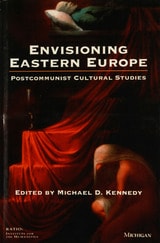
Envisioning Eastern Europe
Postcommunist Cultural StudiesMichael D. Kennedy, Editor
University of Michigan Press, 1994
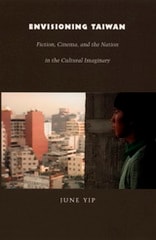
Envisioning Taiwan
Fiction, Cinema, and the Nation in the Cultural ImaginaryJune Yip
Duke University Press, 2004
Yip traces a distinctly Taiwanese sense of self vis-à-vis China, Japan, and the West through two of the island’s most important cultural movements: the hsiang-t’u (or “nativist”) literature of the 1960s and 1970s, and the Taiwanese New Cinema of the 1980s and 1990s. At the heart of the book are close readings of the work of the hsiang-t’u writer Hwang Chun-ming and the New Cinema filmmaker Hou Hsiao-hsien. Key figures in Taiwan’s assertion of a national identity separate and distinct from China, both artists portray in vibrant detail daily life on the island. Through Hwang’s and Hou’s work and their respective artistic movements, Yip explores “the imagining of a nation” on the local, national, and global levels. In the process, she exposes a perceptible shift away from traditional models of cultural authenticity toward a more fluid, postmodern hybridity—an evolution that reflects both Taiwan’s peculiar multicultural reality and broader trends in global culture.
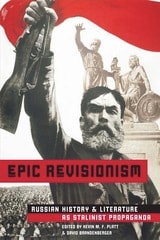
Epic Revisionism
Russian History and Literature as Stalinist PropagandaEdited by Kevin M. F. Platt and David Brandenberger
University of Wisconsin Press, 2006
Focusing on a number of historical and literary personalities who were regarded with disdain in the aftermath of the 1917 revolution—figures such as Peter the Great, Ivan the Terrible, Alexander Pushkin, Leo Tolstoy, and Mikhail Lermontov—Epic Revisionism tells the fascinating story of these individuals’ return to canonical status during the darkest days of the Stalin era.
An inherently interdisciplinary project, Epic Revisionism features pieces on literary and cultural history, film, opera, and theater. This volume pairs scholarly essays with selections drawn from Stalin-era primary sources—newspaper articles, unpublished archival documents, short stories—to provide students and specialists with the richest possible understanding of this understudied phenomenon in modern Russian history.“These scholars shed a great deal of light not only on Stalinist culture but on the politics of cultural production under the Soviet system.”—David L. Hoffmann, Slavic Review
Erotic Innocence
The Culture of Child MolestingJames R. Kincaid
Duke University Press, 1998
Drawing on a number of wide-ranging and well-publicized cases as well as scandals involving such celebrities as Michael Jackson and Woody Allen, Kincaid looks at issues surrounding children’s testimonies, accusations against priests and day-care centers, and the horrifying yet persistently intriguing rumors of satanic cults and “kiddie porn” rings. In analyzing the particular form of popularity shared by such child stars such Shirley Temple and Macaulay Culkin, he exposes the strategies we have devised to deny our own role in the sexualization of children. Finally, Kincaid reminds us how other forms of abuse inflicted on children—neglect, abandonment, inadequate nutrition, poor education—are often overlooked in favor of the sensationalized sexual abuse coverage in the news, on daytime TV talk shows, and in the elevators and cafeterias of America each day.
This bold and critically enlightened book will interest readers across a wide range of disciplines as well as a larger general audience interested in American culture.
Eternity in the Ether
A Mormon Media HistoryGavin Feller
University of Illinois Press, 2023
Intriguing and original, Eternity in the Ether blends communications history with a religious perspective to examine the crossroads where mass media met Mormonism in the twentieth century.
Ethnic Drag
Performing Race, Nation, Sexuality in West GermanyKatrin Sieg
University of Michigan Press, 2002
Using engaging case studies, Ethnic Drag traces the classical and travestied traditions of Jewish impersonation from the eighteenth century onward to construct a pre-history of postwar ethnic drag. It examines how, shortly after World War II, mass culture and popular practices facilitated the repression and refashioning of Nazi racial precepts. During a time when American occupation authorities insisted on remembrance and redress for the Holocaust, the Wild West emerged as a displaced theater of the racial imagination, where the roles of victim, avenger, and perpetrator of genocide were reassigned.
Ethnic Drag is an accessible and sophisticated, critical and entertaining book that examines the phenomenon of cultural masquerade in order to examine racial feeling, thought, and behavior in postwar German culture. Contributing to considerations of drag in postcolonial, feminist, and queer scholarships, this book will be of interest to people in German studies, theater performance, ethnic studies, and women's/queer studies.
Katrin Sieg is Associate Professor, Department of German and Center for German and European Studies, Georgetown University.
Ethnic Drag
Performing Race, Nation, Sexuality in West GermanyKatrin Sieg
University of Michigan Press, 2002
Ethnicity and the American Cemetery
Richard Meyer
University of Wisconsin Press, 1993
Contributors examine the material objects found within the cemeteries, as well as the customary practices bound to them. Contributors are from the fields of folklore, cultural history, historical archaeology, landscape architecture, and philosophy. Heavily illustrated, the volume also features an extensive annotated bibliography.

Ethno Music Gatherings
Pedagogy Experience, ImpactEdited by Lee Higgins and Sarah Jane Gibson
Intellect Books, 2024
This book presents key findings from a four-year project that sought to understand Ethno, an organized residential folk, world, and traditional music program for young people ranging in age from eighteen to thirty. First held in Sweden in 1990, Ethno now hosts gatherings in more than forty countries. The authors examine the complexity of an Ethno music experience with three focuses: pedagogy and professional development, participant experience, and impact beyond the gathering.
Drawing on data from participant observations, interviews, social media analysis, onsite and video observations, surveys, and questionnaires, the authors ask critical questions concerning Ethno’s history, ethos, pedagogy, and philosophical ideals. Considering its history and current practices, the following themes are explored: non-formal music making, personal authenticity, holistic praxis, musical possible selves, intercultural music exchange, sustainability, social media engagement, song sharing, and future practices. As a collection of integrated thought, the book’s purpose is to illuminate new understandings of what Ethno does and in so doing present synergies and divergencies with the wider field of music education.
Europe and Love in Cinema
Edited by Luisa Passerini, Jo Labanyi, and Karen Diehl
Intellect Books, 2012
Europe and Love in Cinema explores the relationship between love and Europeanness in a wide range of films from the 1920s to the present. A critical look at the manner in which love—in its broadest sense—is portrayed in cinema from across Europe and the United States, this volume exposes constructed notions of "Europeanness" that both set Europe apart and define some parts of it as more "European" than others. Through the international distribution process, these films in turn engage with ideas of Europe from both outside and within, while some, treated extensively in this volume, even offer alternative models of love. A bracing collection of essays from top film scholars, Europe and Love in Cinema demonstrates the centrality of desire to film narrative and explores multiple models of love within Europe's frontiers.
Everybody Hurts
Transitions, Endings, and Resurrections in Fan CulturesRebecca Williams
University of Iowa Press, 2018
Have you ever been a fan of a show that was canceled abruptly or that killed off a beloved character unexpectedly? Or perhaps it was rebooted after a long absence and now you’re worried it won’t be as good as the original? Anyone who has ever followed entertainment closely knows firsthand that such transitions can be jarring.
Indeed, for truly loyal fans, the loss can feel very real—even throwing their own identity into question. Examining how fans respond to and cope with transitions, endings, or resurrections in everything from band breakups (R.E.M.) to show cancellations (Hannibal) to closing down popular amusement park rides, this collection brings together an eclectic mix of scholars to analyze the various ways fans respond to change. Essays explore practices such as fan discussion and creating alternative fan fictions, as well as cases where fans abandon their objects of interest completely and move on to new ones. Shedding light on how fans react, both individually and as a community, the contributors also trace the commonalities and differences present in fandoms across a range of media, and they pay close attention to the ways fandom operates across paratexts and transmedia forms including films, comics, and television.
This fascinating approach promises to make an important contribution to the fields of fan, media, and cultural studies, and should appeal widely to students, scholars, and anyone else with a genuine interest in understanding why these transitions can have such a deep impact on fans’ lives.
Contributors: Stuart Bell, Anya Benson, Lucy Bennett, Paul Booth, Joseph Brennan, Kristina Busse, Melissa A. Click, Ruth Deller, Evelyn Deshane, Nichola Dobson, Simone Driessen, Emily Garside, Holly Willson Holladay, Bethan Jones, Nicolle Lamerichs, Kathleen Williams, Rebecca Williams
Everybody Knows
Cynicism in AmericaWilliam Chaloupka
University of Minnesota Press, 2001
A witty take on what’s wrong--and right--with cynicism today, now in paperback!
We are now living in the midst of the most cynical era in American history. Disaffection from government institutions is at an all-time high. Ordinary citizens perceive political leaders to be more manipulative and jaded than ever. Skepticism pervades our cultural and social attitudes and interactions, and is prominently featured in the films we see, the books we read, and the media we experience. In this biting and controversial analysis, William Chaloupka scrutinizes the cynicism that is our common condition, examining both its uses in the politics of backlash and resentment and its surprisingly positive aspects.
Everybody Knows traces cynicism from its classical origins but emphasizes its recent emergence in American culture and politics, following a trajectory from H. L. Mencken to Richard Nixon to Bill Clinton to Fargo. Cutting neatly across ideological divisions, Chaloupka discusses the ways in which cynicism is rooted in all democratic politics and analyzes the role of the media-in particular, television news, political ads and speeches, and books such as E. J. Dionne’s Why Americans Hate Politics and William Bennett’s The Book of Virtues-in dissecting and encouraging cynicism.Chaloupka describes mass cynicism, which permeates popular culture; outsider cynicism, capable of cranky, even violent disruption; and the cynicism of those in power. He argues that those who issue broad pleas for civility or a renewal of community spirit usually misunderstand the cynicism they wish to treat. He also discusses the value of a cheeky, subversive “kynicism” to evoke the lively democratic practice American society must foster.Early reviews call Everybody Knows “original and compelling,” “pithy, engaging, and funny,” and “the best book on American politics in quite a while.” Sure to be widely read and debated, this entertaining book will inspire readers to take a new look at the cynicism prevalent in contemporary American society.
Everyday Apocalypse
Art, Empire, and the End of the WorldDavid Dark
Vanderbilt University Press, 2025
This revised edition of the book includes a foreword by Hanif Abdurraqib, an extensive afterword, updates in light of the passage of time since its publication, and new insights from the author, whose outspokenness has placed him outside of circles in which he was once supported and celebrated.
Everyday English 1500-1700
A ReaderBridget Cusack, Editor
University of Michigan Press, 1998
This unique source book of essential documents designed for courses on Early Modern English is designed as a teaching text with full guidance to each text, including glossary, explanatory and background notes, and suggested topics for linguistic evaluation. Everyday English takes an up-to-the-minute approach by focusing on language as it was used and spoken at the time.
This wide-ranging collection for the first time makes available to students a corpus of examples of the ordinary, nonstandard language of the man and woman in the street, coming from areas as diverse as England, Scotland, and America. The emphasis throughout is on providing as much assistance as possible to the reader to aid understanding and appreciation of both the linguistic features and the everyday lifestyles of the time.
"The only book a really conscientious teacher of the history and structure of Early Modern English would use for source texts." --Roger Lass, University of Cape Town
Bridget Cusack was lecturer in English Language, University of Edinburgh.
Everything Is Permitted
On Assassin's CreedCameron Kunzelman
University of Minnesota Press, 2025
An entertaining deep dive into the world, gameplay, and evolution of the hugely successful Assassin’s Creed video game franchise
A hooded figure stands in a bell tower overlooking medieval Jerusalem, surveying his prey. Parkour-style, he leaps down into the square to kill his target before vanishing into the crowd . . .
Released in fall 2007, Assassin’s Creed transformed video gaming. Across more than a dozen franchise entries, players engage with the eternal conflict between the Order of Assassins and the nefarious Templar Order, carrying out missions in a series of painstakingly rendered historical settings, from the Holy Lands during the Third Crusade to Renaissance Italy, the Age of Piracy, the French Revolution, and Victorian London. Everything is Permitted is an analysis of the development, evolution, gameplay, and world-building of this sprawling and distinctive franchise.
Cameron Kunzelman examines key themes and concepts that connect the games in the series. Combining close readings of the games themselves with discussion of the broader landscape of video game franchises since its initial release, he uncovers what it means for a game to be part of the Assassin’s Creed franchise. Kunzelman maps the elements that contribute to the immersiveness and continual playability of the games, showing how historically inflected conspiracies and science fictional premises ground the fantastical stories the games tell on a massive scale.
Diving into the real-world histories and ideas that the game designers used for inspiration, Kunzelman argues that the virtual conflicts between the franchise’s opposing sides offer intriguing insights into actual reality, from ethical dilemmas to the roles of freedom and fate. He demonstrates how, by incorporating themes of means and ends, control and freedom into its gameplay, the franchise engages with profound questions in a sustained, long-form way that is unique among video games. As the Assassins say, “Nothing is true, everything is permitted.”
Retail e-book files for this title are screen-reader friendly with images accompanied by short alt text and/or extended descriptions.
Evolution and Culture
Marshall D. Sahlins and Elman R. Service, Editors
University of Michigan Press, 1960