Results by title
4741 books match the query 'Religion' and 158 start with e
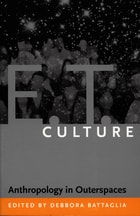
E.T. Culture
Anthropology in OuterspacesDebbora Battaglia, ed.
Duke University Press, 2005
Drawing on social science, science studies, linguistics, popular and expressive culture, and social and intellectual history, the writers of E.T. Culture unsettle the boundaries of science, magic, and religion as well as those of technological and human agency. They consider the ways that sufferers of “unmarked” diseases such as Chronic Fatigue Syndrome come to feel alien to both the “healthy” world and the medical community incapable of treating them; the development of alien languages like Klingon; attempts to formulate a communications technology—such as that created for the spaceship Voyager—that will reach alien beings; the pilgrimage spirit of UFO seekers; the out-of-time experiences of Nobel scientists; the embrace of the alien within Japanese animation and fan culture; and the physical spirituality of the Raëlian religious network.
Contributors. Debbora Battaglia, Richard Doyle, Joseph Dumit, Mizuko Ito, Susan Lepselter, Christopher Roth, David Samuels
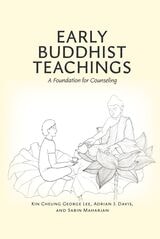
Early Buddhist Teachings
A Foundation for CounselingKin Cheung George Lee, Adrian J. Davis, and Sabin Maharjan
Hong Kong University Press, 2025
As mindfulness and meditation become mainstream therapeutic tools, their deep Buddhist roots are often stripped away and limit their effectiveness for clients from Buddhist cultural backgrounds. Early Buddhist Teachings: A Theoretical Foundation for Counseling restores these practices to their original context, offering a culturally congruent counseling model grounded in Pali scriptures and core Buddhist principles.
This informative volume explores key Buddhist concepts including dependent co-arising, non-self, and impermanence, and places them in conversation with Western psychological theories. Supplemented with practical assessment tools and intervention techniques, this work provides mental health professionals with a new framework for integrating Buddhist teachings into counseling.
For therapists, students, and counselors seeking to expand their approach, Early Buddhist Teachings offers a vital resource at the intersection of Buddhism and psychotherapy, offering a more holistic and effective model of mental health care.
Early Christians and Their Art
Mikeal C. Parsons
SBL Press, 2023
Early Jewish Writings
Eileen Schuller
SBL Press, 2017
New from the Bible and Women Series
This collection of essays deals with aspects of women and gender relations in early Judaism (during the Persian, Greek, and Roman empires). Some essays focus on specific writings: the Greek (Septuagint) version of Esther, Judith, Joseph and Aseneth, and the Letter of Jeremiah. Others explore how certain biblical texts are reinterpreted: Eve in the Life of Adam and Eve, the mixing of the sons of God with the daughters of men from Genesis 6:1–4, the Egyptian princess at the birth of Moses, and how Josephus retells biblical stories. The third group of essays explore specific social contexts: Philo's views of women in the Roman empire, the Sectarian Dead Sea Scrolls, and women philosophers of the Therapeutae in Egyptian Alexandria.
Features
- An International team of contributors from Europe and North America
- A breadth of materials covered, including many lesser-known early Jewish writings
- Focus is on a gendered perspective and gender specific questions
Early Judaism and Its Modern Interpreters
Matthias Henze
SBL Press, 2020
An essential resource for scholars and students
Since the publication of the first edition of Early Judaism and Its Modern Interpreters in 1986, the field of early Judaism has exploded with new data, the publication of additional texts, and the adoption of new methods. This new edition of the classic resource honors the spirit of the earlier volume and focuses on the scholarly advances in the past four decades that have led to the study of early Judaism becoming an academic discipline in its own right. Essays written by leading scholars in the study of early Judaism fall into four sections: historical and social settings; methods, manuscripts, and materials; early Jewish literatures; and the afterlife of early Judaism.

Early Letters to the Crown and Council of the Indies, 1516-1531
Primeras cartas para Las IndiasBartolome de la Casas
Catholic University of America Press, 2026
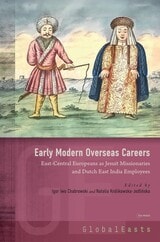
Early Modern Overseas Careers
East-Central Europeans as Jesuit Missionaries and Dutch East India EmployeesIgor Chabrowski
Central European University Press, 2026
The book examines the complexities of this early modern globalization: its scope, limits, importance, social, ethnic, and political ramifications. It researches how these networks reached out to the region of Central and Eastern Europe. The authors argue that the region was hardly considered peripheral from the perspective of Rome (and the Jesuits) or the Netherlands (and the colonial traders). They do, however, explore whether there were "glass ceilings," or limits of reach within the two networks for individuals from the Polish-Lithuanian Commonwealth or the former Kingdom of Hungary.
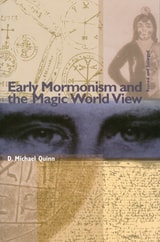
Early Mormonism and the Magic World View
D. Michael Quinn
Signature Books, 1987
This thoroughly researched examination into occult traditions surrounding Smith, his family, and other founding Mormons cannot be understated. Among the practices no longer a part of Mormonism are the use of divining rods for revelation, astrology to determine the best times to conceive children and plant crops, the study of skull contours to understand personality traits, magic formula utilized to discover lost property, and the wearing of protective talismans. Ninety-four photographs and illustrations accompany the text.
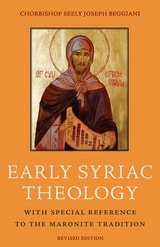
Early Syriac Theology
Chorbishop Seely Joseph Beggiani
Catholic University of America Press, 2014
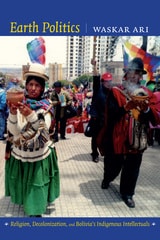
Earth Politics
Religion, Decolonization, and Bolivia's Indigenous IntellectualsWaskar Ari
Duke University Press, 2014
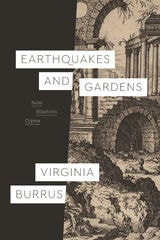
Earthquakes and Gardens
Saint Hilarion’s CyprusVirginia Burrus
University of Chicago Press, 2023
In Jerome’s Life of Saint Hilarion, a fourth-century saint briefly encounters the ruins of an earthquake-toppled city and a haunted garden in Cyprus. From these two fragmentary passages, Virginia Burrus delivers a series of sweeping meditations on our experience of place and the more-than-human worlds—the earth and its gods—that surround us. Moving between the personal and geological, Earthquakes and Gardens ruminates on destruction and resilience, ruination and resurgence, grief and consolation in times of disaster and loss. Ultimately, Burrus’s close readings reimagine religion as a practice that unsettles certainty and develops mutual flourishing.
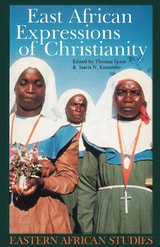
East African Expressions of Christianity
Of ChristianityThomas Spear
Ohio University Press, 1998
Christianity has been spread in Africa by Africans. It is the story of peoples seizing control of their own spiritual destinies—rather than the commonplace notion that the continent’s Christian churches represent colonial and capitalist powers that helped subdue Africans to European domination. In short, once introduced, Christianity took on a powerful life of its own and spun out of the control of those who would retain ownership of doctrine and practice. East African Expressions of Christianity examines the experiences of African Christians as they explored the new faith, interpreted it in the context of their own values, appropriated it for themselves, and forged their own distinctive churches. Prominent Tanzanian and American historians, anthropologists, political scientists, and church people examine the translation of religious meanings across cultural boundaries; the religious and social appeal of the new faith; and the vital roles played by African evangelists, teachers, and translators in the spread of Christianity and the development of an African church.
Eastern Catholic Theology in Action
Essays in Liturgy, Ecclesiology, and EcumenismAndrew J. Summerson
Catholic University of America Press, 2024
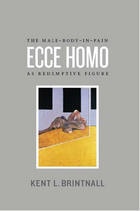
Ecce Homo
The Male-Body-in-Pain as Redemptive FigureKent L. Brintnall
University of Chicago Press, 2011
Acknowledging that representations of men confronting violence and pain can reinforce ideas of manly tenacity, Kent L. Brintnall also argues that they reveal the vulnerability of men’s bodies and open them up to eroticization. Locating the roots of our cultural fascination with male pain in the crucifixion, he analyzes the way narratives of Christ’s death and resurrection both support and subvert cultural fantasies of masculine power and privilege. Through stimulating readings of works by Georges Bataille, Kaja Silverman, and more, Brintnall delineates the redemptive power of representations of male suffering and violence.
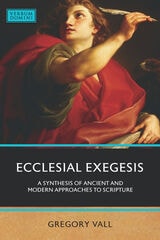
Ecclesial Exegesis
A Synthesis of Ancient and Modern Approaches to ScriptureGregory Vall
Catholic University of America Press, 2022
Ecclesiastical History, Books 1–5
Catholic University of America Press, 1953
Ecclesiastical History, Books 6–10
Catholic University of America Press, 1955
Ecclesiology
Guy Mansini, OSB
Catholic University of America Press, 2021
Ecology and the Environment
The Mechanisms, Marrings, and Maintenance of NatureR. J. Berry
Templeton Press, 2011
Ecology and the Environment: The Mechanisms, Marring, and Maintenance of Nature is the ninth title published in the Templeton Science and Religion Series, in which scientists from a wide range of fields distill their experience and knowledge into brief tours of their respective specialties. In this volume, R. J. Berry, a well-known leader in the field of ecology, describes the basic concepts of ecology and seeks to put them into a general context for a reader who lacks any scientific background.
Ecology and the Sacred
Engaging the Anthropology of Roy A. RappaportEllen Messer and Michael Lambek, Editors
University of Michigan Press, 2001
At a time when anthropology is fractured by debates over whether it is a science or a humanistic tradition, theoretical or applied, this festschrift testifies that a unified anthropology is both possible and necessary for the understanding of humanity and global transformations. The volume will be of interest not only to anthropologists, but to geographers, sociologists, scholars in science-studies, historians, and experts and practitioners in religious studies, as well.
Ellen Messer is Visiting Associate Professor, Tufts University. Michael Lambek is Professor of Anthropology, University of Toronto.
Economic Origins of Roman Christianity
Robert B. Ekelund Jr. and Robert D. Tollison
University of Chicago Press, 2011
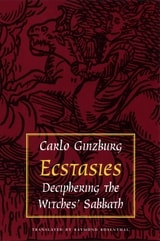
Ecstasies
Deciphering the Witches' SabbathCarlo Ginzburg
University of Chicago Press, 1991
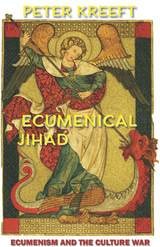
Ecumenical Jihad
Ecumenism and the Culture WarPeter Kreeft
St. Augustine's Press, 2015
Aware of the deep theological differences of these monotheistic faiths, Kreeft calls for a moratorium on our polemics against one another so that we can form an alliance to fight together to save Western civilization.

Edgar and Brigitte
A German Jewish Passage to AmericaRosemarie Bodenheimer
University of Alabama Press, 2016
The couple’s encounters with the strange new dynamics of race, religion, and the workplace in their new American home offer a compelling account of the struggles that faced many immigrants with deep German roots. It is also an intimate portrait of a now-vanished German Jewish culture as it played out in the lives of Bodenheimer’s parents and her grandparents from the 1920s to the late 1960s, a story of emigration, assimilation, and the private struggles that accompany those forced shifts in orientation.
The Bodenheimers’ letters and journals offer engaging perspectives into their personal lives that retrospective memories cannot match. Braiding intimate biography together with history and memoir, Edgar and Brigitte will appeal both to historians of the European Jewish diaspora and to readers interested in the struggles and resilience of people whose lives were upended by Hitler.
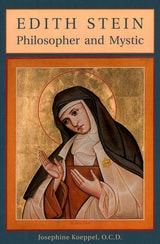
Edith Stein
Philosopher and MysticJosephine Koeppel O.C.D.
University of Scranton Press, 2007
The twentieth anniversary of the beatification of Edith Stein (1891–1942), the accomplished Jewish philosopher who made a spiritual journey from atheism to agnosticism before eventually converting to Catholicism, will be celebrated in 2007. In Edith Stein: Philosopher and Mystic, Josephine Koeppel chronicles the life of this influential saint from her secular youth and entrance into a German monastery to her tragic death at Auschwitz. This accessible work will reward readers of all faiths interested in the life of a remarkable woman who changed the modern conception of sainthood.
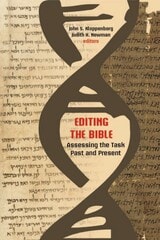
Editing the Bible
Assessing the Task Past and PresentJohn S. Kloppenborg
SBL Press, 2012
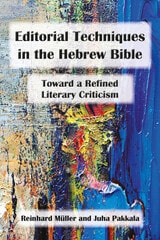
Editorial Techniques in the Hebrew Bible
Toward a Refined Literary CriticismReinhard Müller
SBL Press, 2022
Editorial Techniques in the Hebrew Bible: Toward a Refined Literary Criticism presents and applies a model for understanding and reconstructing the diachronic development of the Hebrew Bible through historical criticism (or the historical-critical method). Reinhard Müller and Juha Pakkala refine the methodologies of literary and redaction criticism through a systematic investigation of the evidence of additions, omissions, replacements, and transpositions that are documented by divergent ancient textual traditions. At stake is not only historical criticism but also the Hebrew Bible as a historical source, for historical criticism has been and continues to be the only method to unwind those scribal changes that left no traces in textual variants.
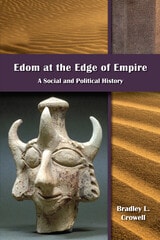
Edom at the Edge of Empire
A Social and Political HistoryBradley L. Crowell
SBL Press, 2021
A comprehensive history of a state on Judah’s border
Edom at the Edge of Empire combines biblical, epigraphic, archaeological, and comparative evidence to reconstruct the history of Judah's neighbor to the southeast. Crowell traces the material and linguistic evidence, from early Egyptian sources that recall conflicts with nomadic tribes to later Assyrian texts that reference compliant Edomite tribal kings, to offer alternative scenarios regarding Edom's transformation from a collection of nomadic tribes and workers in the Wadi Faynan as it relates to the later polity centered around the city of Busayra in the mountains of southern Jordan. This is the first book to incorporate the important evidence from the Wadi Faynan copper mines into a thorough account of Edom's history, providing a key resource for students and scholars of the ancient Near East and the Hebrew Bible.
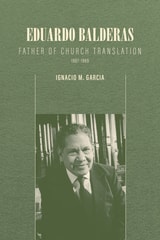
Eduardo Balderas
Father of Church Translation, 1907-1989Ignacio M. Garcia
Signature Books, 2024
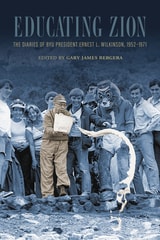
Educating Zion
The Diaries of BYU President Ernest L. Wilkinson, 1952–1971Gary James Bergera
Signature Books, 2025
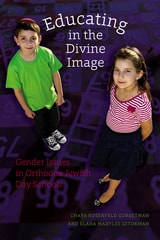
Educating in the Divine Image
Gender Issues in Orthodox Jewish Day SchoolsChaya Rosenfeld Gorsetman and Elana Maryles Sztokman
Brandeis University Press, 2013
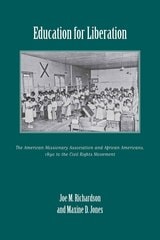
Education for Liberation
The American Missionary Association and African Americans, 1890 to the Civil Rights MovementJoe M. Richardson
University of Alabama Press, 2009
Even after the optimism of Reconstruction was shattered by violence, fraud, and intimidation and the white South relegated African Americans to segregated and disfranchised second-class citizenship, the AMA never abandoned its claim that blacks were equal in God’s sight, that any “backwardness” was the result of circumstance rather than inherent inferiority, and that blacks could and should become equal citizens with other Americans. The organization went farther in recognition of black ability, humanity, and aspirations than much of 19th and 20th century white America by publicly and consistently opposing lynching, segregation, disfranchisement, and discrimination.
Edward Palmer's Arkansaw Mounds
Edited and preface by Marvin D. Jeter
University of Alabama Press, 2010
"This thoroughly researched volume is highly recommended to anyone—at any level—who is interested in the archaeology of the Southeast." —CHOICE
During the 1880s a massive scientific effort was launched by the Smithsonian Institution to discover who had built the prehistoric burial mounds found throughout the United States. Arkansaw Mounds tells the story of this exploration and of Edward Palmer, one of the nineteenth century’s greatest natural historians and archaeologists, who was recruited to lead the research project. Arkansas was unusually rich in prehistoric remains, especially mounds, and became a major focus of the study. Palmer and his team of researchers discovered that the mounds had been built by the ancestors of the historic North American Indians, shattering the then-popular theory that a lost non-Indian race had built them.
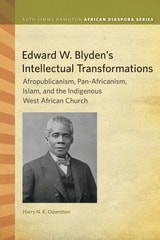
Edward W. Blyden's Intellectual Transformations
Afropublicanism, Pan-Africanism, Islam, and the Indigenous West African ChurchHarry N. K. Odamtten
Michigan State University Press, 2019
Egyptian Oedipus
Athanasius Kircher and the Secrets of AntiquityDaniel Stolzenberg
University of Chicago Press, 2013
Eight Myths of the Great Apostasy
Gregor McHardy
Signature Books, 2022
McHardy’s careful, astute examination leads to a realization that Jesus’s prediction that “the gates of hell shall not prevail” against the organization Peter led was accurate. With that understanding, today’s Latter-day Saints can craft more positive, engaging statements about the nature and meaning of their Restoration.
Eighty-three Different Questions
Saint Augustine
Catholic University of America Press, 1982
Einstein, Polanyi, and the Laws of Nature
Lydia Jaeger
Templeton Press, 2010
What is the relationship between religious belief and the study of nature, between theology and science? This is the fundamental preoccupation of the three different studies in Einstein, Polanyi, and the Laws of Nature.
By exploring the highly original yet little-known thought of Michael Polanyi, Jaeger highlights the inherent personal investment in any quest for knowledge, including the scientific enterprise, thus raising the question of the objectivity of human knowledge. Considered to be the most incredible mind of the twentieth century, Albert Einstein saw scientific research as the fruit of the “cosmic religion.” His response to the question of the relationship between faith and science also receives the close analysis it deserves. Finally, Jaeger is interested in science’s propensity to use the concept of laws of nature, an idea also found in the Bible. She paves the way for interdisciplinary dialogue by examining the similarities and differences.
The synthesis of these three complementary studies brings out the collaboration between belief and knowledge, thus establishing a bridge between two noble human activities: faith and scientific research. It will interest all serious followers of the ongoing science and religion dialogue.
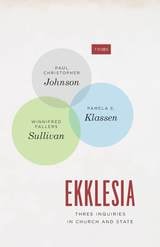
Ekklesia
Three Inquiries in Church and StatePaul Christopher Johnson, Pamela E. Klassen, and Winnifred Fallers Sullivan
University of Chicago Press, 2018
The first of a closely linked trio of essays is by Paul Johnson, and offers a new interpretation of the Brazilian community gathered at Canudos and its massacre in 1896–97, carried out as a joint churchstate mission and spectacle. In the second essay, Pamela Klassen argues that the colonial churchstate relationship of Canada came into being through local and national practices that emerged as Indigenous nations responded to and resisted becoming “possessions” of colonial British America. Finally, Winnifred Sullivan’s essay begins with reflection on the increased effort within the United States to ban Bibles and scriptural references from death penalty courtrooms and jury rooms; she follows with a consideration of the political theological pressure thereby placed on the jury that decides between life and death. Through these three inquiries, Ekklesia takes up the familiar topos of “church and state” in order to render it strange.
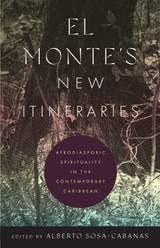
El Monte's New Itineraries
Afrodiasporic Spirituality in the Contemporary CaribbeanAlberto Sosa-Cabanas
Rutgers University Press, 2025
El Monte's New Itineraries is the first book fully devoted to the study of Cuban author and ethnographer Lydia Cabrera’s El Monte (1954), one of the most influential books in Caribbean cultural history. Highly referenced, if understudied, El Monte is a comprehensive work that intertwines ethnobotany, popular orality, and Afro-Cuban traditions. Its pages have enjoyed a transnational influence, enriching domains such as ethnography, politics, theater, and even science fiction literature in the Caribbean, and the knowledge contained in it lies at the heart of Afrodiasporic spirituality and ethnomedicinal practices across Hispanic Caribbean cultures and beyond.
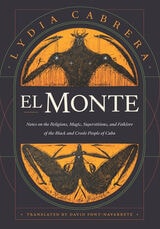
El Monte
Notes on the Religions, Magic, and Folklore of the Black and Creole People of CubaLydia Cabrera
Duke University Press, 2023
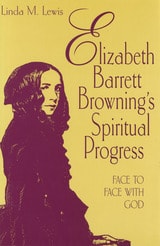
Elizabeth Barrett Browning's Spiritual Progress
Face to Face With GodLinda M. Lewis
University of Missouri Press, 1997
Elizabeth Barrett Browning believed that "Christ's religion is essentially poetry—poetry glorified." In Elizabeth Barrett Browning's Spiritual Progress, Linda M. Lewis studies Browning's religion as poetry, her poetry as religion. The book interprets Browning's literary life as an arduous spiritual quest—the successive stages being a rejection of Promethean pride for Christ-like humility, affirmation of the gospels of suffering and of work, internalization of the doctrine of Apocalypse, and ascent to divine love and truth.
Lewis follows this religious crusade from the poet's childhood to her posthumous Last Poems--including such topics as her Bible reading, her introduction to the Greek church fathers and the English Protestant reformers, the theological debates in which she participated, her quarrel with the theology of Paradise Lost, and her scandalous involvement in mesmerism and Swedenborgianism. Using insights from contemporary feminist thought, Lewis argues that Browning's religious assumptions and insights range from the conventional to the iconoclastic and that women's spirituality is, for Browning as well as for other Victorian women writers, separate from orthodox patriarchy. Lewis demonstrates that Browning's political and social ideology--often labeled inconsistent and illogical—really makes sense in light of this spiritual quest, which leads her to confront her God "face to face."
Elizabeth Barrett Browning's Spiritual Progress examines not only Browning's most admired works, such as Sonnets from the Portuguese and Aurora Leigh, but also her large body of political works and her important early poems—The Seraphim and A Drama of Exile. This intertextual book compares Browning's ideology to that of feminists such as Margaret Fuller, Harriet Martineau, and Florence Nightingale; influential conservatives such as Thomas Carlyle; and those most esteemed of Victorian poets, Alfred Lord Tennyson and Robert Browning.
Concluding with an examination of religion as a central focus of Victorian women poets, Lewis clarifies the ways in which Browning differs from Christina Rossetti, Felicia Hemans, Dora Greenwell, Jean Ingelow, and Mary Howitt. Elizabeth Barrett Browning's Spiritual Progress maintains that Browning's peculiar face-to-face struggle with the patristic and poetic tradition—as well as with God—sets her work apart.
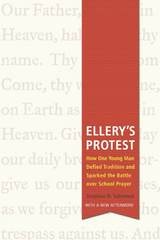
Ellery's Protest
How One Young Man Defied Tradition and Sparked the Battle over School PrayerStephen D. Solomon
University of Michigan Press, 2010
“Solomon’s fascinating and sweeping history of the legal fight over mandatory school prayers is compelling, judicious, and elegantly written. Fabulous!”
—David Rudenstine, Dean, Benjamin N. Cardozo School of Law, Yeshiva University
“Stephen Solomon’s Ellery’s Protest provides a brilliant analysis of a major Supreme Court decision that redefined the relationship between church and state almost a half century ago. This study goes well beyond simply offering a gripping account of the course of litigation that brought before the Justices the contentious issue of prayer and Bible reading in public schools, though the thoroughness of that account would merit careful reading by itself. Especially impressive is the author’s deep probing of hitherto neglected sources, and invaluable primary material including extensive direct contact with the plaintiff, the ‘Ellery’ of the book’s title. Finally, and perhaps most impressive, is Solomon’s careful placement of the issue and the case in a far broader context that is as critical to national life and policy today as it was four and a half decades ago when the high Court first tackled these questions.”
—Robert O’Neil, Professor of Law, University of Virginia
Great legal decisions often result from the heroic actions of average citizens. Ellery’s Protest is the story of how one student’s objection to mandatory school prayer and Bible reading led to one of the most controversial court cases of the twentieth century—and a decision that still reverberates in the battle over the role of religion in public life.
Abington School District v. Schempp began its journey through the nation’s courts in 1956, when sixteen-year-old Ellery Schempp protested his public school’s compulsory prayer and Bible-reading period by reading silently from the Koran. Ejected from class for his actions, Schempp sued the school district. The Supreme Court’s decision in his favor was one of the most important rulings on religious freedom in our nation’s history. It prompted a conservative backlash that continues to this day, in the skirmishes over school prayer, the teaching of creationism and intelligent design, and the recitation of the Pledge of Allegiance with the phrase “under God.”
Author Stephen D. Solomon tells the fascinating personal and legal drama of the Schempp case: the family’s struggle against the ugly reactions of neighbors, and the impassioned courtroom clashes as brilliant lawyers on both sides argued about the meaning of religious freedom. But Schempp was not the only case challenging religious exercises in the schools at the time, and Ellery’s Protest describes the race to the Supreme Court among the attorneys for four such cases, including one involving the colorful atheist Madalyn Murray.
Solomon also explores the political, cultural, and religious roots of the controversy. Contrary to popular belief, liberal justices did not kick God out of the public schools. Bitter conflict over school Bible reading had long divided Protestants and Catholics in the United States. Eventually, it was the American people themselves who removed most religious exercises from public education as a more religiously diverse nation chose tolerance over sectarianism. Ellery’s Protest offers a vivid account of the case that embodied this change, and a reminder that conservative justices of the 1950s and 60s not only signed on to the Schempp decision, but strongly endorsed the separation of church and state.
Embodying Black Religions in Africa and Its Diasporas
Yolanda Covington-Ward and Jeanette S. Jouili, editors
Duke University Press, 2021
Contributors. Rachel Cantave, Youssef Carter, N. Fadeke Castor, Yolanda Covington-Ward, Casey Golomski, Elyan Jeanine Hill, Nathanael J. Homewood, Jeanette S. Jouili, Bertin M. Louis Jr., Camee Maddox-Wingfield, Aaron Montoya, Jacob K. Olupona, Elisha P. Renne
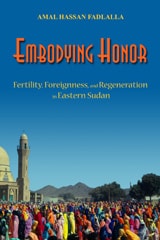
Embodying Honor
Fertility, Foreignness, and Regeneration in Eastern SudanAmal Hassan Fadlalla
University of Wisconsin Press, 2007
In Embodying Honor Amal Hassan Fadlalla finds that the female body is the locus of anxieties about foreign dangers and diseases, threats perceived to be disruptive to morality, feminine identities, and social well-being. As a “northern Sudanese” viewed as an outsider in this region of her native country, Fadlalla presents an intimate portrait and thorough analysis that offers an intriguing commentary on the very notion of what constitutes the “foreign.” Fadlalla shows how Muslim Hadendowa women manage health and reproductive suffering in their quest to become “responsible” mothers and valued members of their communities. Her historically grounded ethnography delves into women’s reproductive histories, personal narratives, and ritual logics to reveal the ways in which women challenge cultural understandings of gender, honor, and reproduction.
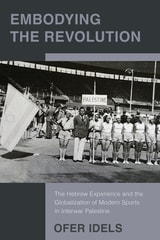
Embodying the Revolution
The Hebrew Experience and the Globalization of Modern Sports in Interwar PalestineOfer Idels
Rutgers University Press, 2026
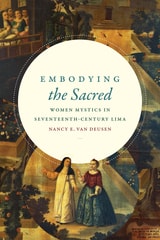
Embodying the Sacred
Women Mystics in Seventeenth-Century LimaNancy E. van Deusen
Duke University Press, 2018
Embracing Age
How Catholic Nuns Became Models of Aging WellAnna I. Corwin
Rutgers University Press, 2021
Embracing Age: How Catholic Nuns Became Models of Aging Well examines a community of individuals whose aging trajectories contrast mainstream American experiences. In mainstream American society, aging is presented as a “problem,” a state to be avoided as long as possible, a state that threatens one’s ability to maintain independence, autonomy, control over one’s surroundings. Aging “well” (or avoiding aging) has become a twenty-first century American preoccupation. Embracing Age provides a window into the everyday lives of American Catholic nuns who experience longevity and remarkable health and well-being at the end of life. Catholic nuns aren’t only healthier in older age, they are healthier because they practice a culture of acceptance and grace around aging. Embracing Age demonstrates how aging in the convent becomes understood by the nuns to be a natural part of the life course, not one to be feared or avoided. Anna I. Corwin shows readers how Catholic nuns create a cultural community that provides a model for how to grow old, decline, and die that is both embedded in American culture and quite distinct from other American models.
Instructor's Guide is available at no cost (https://www.rutgersuniversitypress.org/media/wysiwyg/documents/corwin_instructor_guide_final.pdf).
Open access edition funded by the National Endowment for the Humanities.
The text of this book is licensed under a Creative Commons Attribution NonCommercial-NoDerivatives 4.0 International License: https://creativecommons.org/licenses/by-nc-nd/4.0/
Download open access ebook here (https://www.rutgersuniversitypress.org/media/wysiwyg/documents/embracing_age_open_access.pdf).
Embracing the Nonhuman in the Gospel of Mark
Dong Hyeon Jeong
SBL Press, 2023
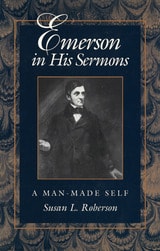
Emerson in His Sermons
A Man-Made SelfSusan L. Roberson
University of Missouri Press, 1994
Ralph Waldo Emerson is universally recognized as one of America's most influential authors and thinkers. Before achieving eminence as lecturer, essayist, and poet, though, he was a Unitaarian preacher. Emerson in His Sermons is the first major study of the sermons since the publication of The Complete Sermons of Ralph Waldo Emerson. Susan Roberson examines Emerson's ministerial career from 1826 to 1832, shedding new light on those early, crucial years in Emerson's personal and intellectual development.
Treating the sermons extensively as an autobiographical text, Roberson establishes that Emerson's years in the pulpit were pivotal and that his sermons are key texts in revealing the essential development of his thought. Central to Roberson's explication of the sermons is Emerson's conception of self-reliance, his invention of a new hero for a new age, and his merging of his own identity with that heroic idea.
Roberson focuses on Emerson's reaction to what was perhaps the most signifcant event in his personal life: the death of his young wife, Ellen, of tuberculosis in 1831, after only sixteen months of marriage. Roberson's correlation of the sermons written during that time with the complexity of Emerson's emotional and intellectual response to the tragedy of Ellen's illness and death is the most detailed and sophisticated treatment of that material to date.
Roberson understands Emerson's emergence from the ministry as his rejection of ready-made institutions and sytems of thought. Through her careful readings of the sermons, Roberson finds that Emerson's objective was less the translation of his life into writing than the translation of his life through writing. By considering the sermons in this way, Roberson is able to enrich our understanding of the private and passionte impulses of this seminal thinker.
Emerson in His Sermons offers the first real look at how the sermons fit into Emerson's own development and will have a far-reaching impact on Emerson scholarship. Anyone concerned with the cultural and religious history of America will find this book invaluable.