Results by title
28164 books match the query 'History' and 842 start with e

Environmental Politics and the Creation of a Dream
Establishing the Apostle Islands National LakeshoreHarold C. Jordahl
University of Wisconsin Press, 2011
The Apostle Islands National Lakeshore is a breathtakingly beautiful archipelago of twenty-two islands in Lake Superior, just off the tip of northern Wisconsin. For years, the national park has been a favorite destination for tourists and locals alike, but the remarkable story behind its creation is little known. In Environmental Politics and the Creation of a Dream, Harold Jordahl, one of the primary advocates for designating the islands as a national park, discloses the full story behind the effort to preserve their natural beauty for posterity. He describes in detail the political and bureaucratic complexities of the national lakeshore campaign, augmented by his own personal recollections and those of such prominent figures as Wisconsin Senator Gaylord Nelson and President John F. Kennedy. Writing in collaboration with Annie Booth, Jordahl recounts how activists, legislators, media, local residents, and other players shaped the islands’ future establishment as a national park.
Envisioning African Intersex
Challenging Colonial and Racist Legacies in South African MedicineAmanda Lock Swarr
Duke University Press, 2023
All author royalties from Envisioning African Intersex will be donated to Intersex South Africa.
Envisioning Asia
On Location, Travel, and the Cinematic Geography of U.S. OrientalismJeanette Roan
University of Michigan Press, 2010
"Whereas some other scholars read selected films mainly to illustrate political arguments, Roan never loses sight of the particularities of film as a distinctive cultural form and practice. Her drive to see 'cinema as a mechanism of American orientalism' results in not just a textual analysis of these films, but also a history of their material production and distribution."
---Josephine Lee, University of Minnesota
"Envisioning Asia offers an exciting new contribution to our understandings of the historical developments of American Orientalism. Jeannette Roan deftly situates changing cinematic technologies within the context of U.S. imperial agendas in this richly nuanced analysis of 'shooting on location' in Asia in early 20th century American cinema."
---Wendy Kozol, Oberlin College
"Through her vivid illustration of the role of American cinema in the material, visual, and ideological production of Asia, Jeanette Roan takes the reader on a journey to Asia through a very different route from the virtual travel taken by the viewers of the films she discusses."
---Mari Yoshihara, University of Hawai'i at Manoa
The birth of cinema coincides with the beginnings of U.S. expansion overseas, and the classic Hollywood era coincides with the rise of the United States as a global superpower. In Envisioning Asia, Jeanette Roan argues that throughout this period, the cinema's function as a form of virtual travel, coupled with its purported "authenticity," served to advance America's shifting interests in Asia. Its ability to fulfill this imperial role depended, however, not only on the cinematic representations themselves but on the marketing of the films' production histories---and, in particular, their use of Asian locations. Roan demonstrates this point in relation to a wide range of productions, offering an engaging and useful survey of a largely neglected body of film. Not only that, by focusing on the material practices involved in shooting films on location---that is, the actual travels, negotiations, and labor of making a film---she moves beyond formal analysis to produce a richly detailed history of American interests, attitudes, and cultural practices during the first half of the twentieth century.
Jeanette Roan is Adjunct Professor of Visual Studies at California College of the Arts and author of "Exotic Explorations: Travels to Asia and the Pacific in Early Cinema" in Re/collecting Early Asian America: Essays in Cultural History (2002).
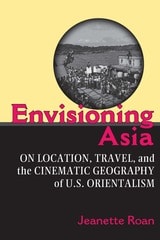
Cover art: Publicity still, Tokyo File 212 (Dorrell McGowan and Stuart McGowan, 1951). The accompanying text reads: "Hundreds of spectators gather on the sidelines as technicians prepare to photograph a parade scene in 'Tokyo File 212,' a Breakston-McGowan Production filmed in Japan for RKO Radio distribution." Courtesy of the Academy of Motion Picture Arts and Sciences.

Envisioning Brazil
A Guide to Brazilian Studies in the United StatesEdited by Marshall C. Eakin and Paulo Roberto de Almeida
University of Wisconsin Press, 2005
Envisioning Brazil is a comprehensive and sweeping assessment of Brazilian studies in the United States. Focusing on synthesis and interpretation and assessing trends and perspectives, this reference work provides an overview of the writings on Brazil by United States scholars since 1945.
"The Development of Brazilian Studies in the United States," provides an overview of Brazilian Studies in North American universities. "Perspectives from the Disciplines" surveys the various academic disciplines that cultivate Brazilian studies: Portuguese language studies, Brazilian literature, art, music, history, anthropology, Amazonian ethnology, economics, politics, and sociology. "Counterpoints: Brazilian Studies in Britain and France" places the contributions of U.S. scholars in an international perspective. "Bibliographic and Reference Sources" offers a chronology of key publications, an essay on the impact of the digital age on Brazilian sources, and a selective bibliography.
Envisioning Emancipation
Black Americans and the End of SlaveryDeborah Willis
Temple University Press, 2017
The Emancipation Proclamation is one of the most important documents in American history. As we commemorate its 150th anniversary, what do we really know about those who experienced slavery?
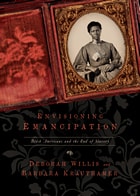
In their pioneering book, Envisioning Emancipation, renowned photographic historian Deborah Willis and historian of slavery Barbara Krauthamer have amassed 150 photographs—some never before published—from the antebellum days of the 1850s through the New Deal era of the 1930s. The authors vividly display the seismic impact of emancipation on African Americans born before and after the Proclamation, providing a perspective on freedom and slavery and a way to understand the photos as documents of engagement, action, struggle, and aspiration.
Envisioning Emancipation illustrates what freedom looked like for black Americans in the Civil War era. From photos of the enslaved on plantations and African American soldiers and camp workers in the Union Army to Juneteenth celebrations, slave reunions, and portraits of black families and workers in the American South, the images in this book challenge perceptions of slavery. They show not only what the subjects emphasized about themselves but also the ways Americans of all colors and genders opposed slavery and marked its end.
Filled with powerful images of lives too often ignored or erased from historical records, Envisioning Emancipation provides a new perspective on American culture.
Envisioning New Jersey
An Illustrated History of the Garden StateLurie, Maxine N
Rutgers University Press, 2016
Winner of the 2017 New Jersey Studies Academic Alliance Author Award
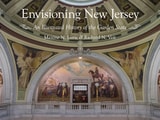
See New Jersey history as you read about it! Envisioning New Jersey brings together 650 spectacular images that illuminate the course of the state’s history, from prehistoric times to the present. Readers may think they know New Jersey’s history—the state’s increasing diversity, industrialization, and suburbanization—but the visual record presented here dramatically deepens and enriches that knowledge.
Compiled by the authors of New Jersey: A History of the Garden State, this volume is intended as an illustrated companion to that earlier volume. Envisioning New Jersey also stands on its own because essays synthesizing each era accompany the illustrations. A fascinating gold mine of images from the state’s past, Envisioning New Jersey is the first illustrated book on the Garden State that covers its complete history, capturing the amazing transformation of New Jersey over time.
View sample pages (http://issuu.com/rutgersuniversitypress/docs/lurie_veit_envisioning_sample)
Thanks to the New Jersey Historical Commission, the New Jersey Council for the Humanities, and generous individual donors for making this project possible.
Envisioning Socialism
Television and the Cold War in the German Democratic RepublicHeather L. Gumbert
University of Michigan Press, 2014
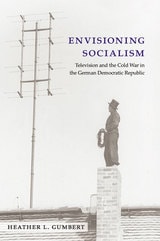
Envisioning Socialism examines television and the power it exercised to define the East Germans’ view of socialism during the first decades of the German Democratic Republic. In the first book in English to examine this topic, Heather L. Gumbert traces how television became a medium prized for its communicative and entertainment value. She explores the difficulties GDR authorities had defining and executing a clear vision of the society they hoped to establish, and she explains how television helped to stabilize GDR society in a way that ultimately worked against the utopian vision the authorities thought they were cultivating.
Gumbert challenges those who would dismiss East German television as a tool of repression that couldn’t compete with the West or capture the imagination of East Germans. Instead, she shows how, by the early 1960s, television was a model of the kind of socialist realist art that could appeal to authorities and audiences. Ultimately, this socialist vision was overcome by the challenges that the international market in media products and technologies posed to nation-building in the postwar period.
A history of ideas and perceptions examining both real and mediated historical conditions, Envisioning Socialism considers television as a technology, an institution, and a medium of social relations and cultural knowledge. The book will be welcomed in undergraduate and graduate courses in German and media history, the history of postwar Socialism, and the history of science and technologies.
Envisioning Taiwan
Fiction, Cinema, and the Nation in the Cultural ImaginaryJune Yip
Duke University Press, 2004
Yip traces a distinctly Taiwanese sense of self vis-à-vis China, Japan, and the West through two of the island’s most important cultural movements: the hsiang-t’u (or “nativist”) literature of the 1960s and 1970s, and the Taiwanese New Cinema of the 1980s and 1990s. At the heart of the book are close readings of the work of the hsiang-t’u writer Hwang Chun-ming and the New Cinema filmmaker Hou Hsiao-hsien. Key figures in Taiwan’s assertion of a national identity separate and distinct from China, both artists portray in vibrant detail daily life on the island. Through Hwang’s and Hou’s work and their respective artistic movements, Yip explores “the imagining of a nation” on the local, national, and global levels. In the process, she exposes a perceptible shift away from traditional models of cultural authenticity toward a more fluid, postmodern hybridity—an evolution that reflects both Taiwan’s peculiar multicultural reality and broader trends in global culture.
Envoy to the Archives
Ruth Anna Fisher and Hidden Transatlantic HistoryWilliam L. Fox
University of Massachusetts Press, 2026
How a pioneering manuscript librarian and intellectual uncovered buried records that reshaped America’s past
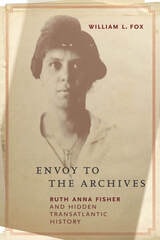
As the London-based agent of the US Library of Congress, Ruth Anna Fisher (1886–1975) profoundly shaped the field of US history. Working at the British Museum and Public Record Office between the world wars, she was responsible for a vast program of identifying and copying up to a million documents related to American history, with prescient attention to the transatlantic slave trade. This monumental achievement has provided countless scholars access to source materials that might have remained hidden in repositories throughout Britian without Fisher’s brilliant discernment and tireless labor.
In Envoy to the Archives, William L. Fox offers the first full-length biography of this remarkable American intellectual. Born to a prominent African American family in northern Ohio, Fisher was keenly aware of racial issues throughout her life. She was associated with key thinkers in the Harlem Renaissance and the twentieth century transatlantic world, including W. E. B. Du Bois, Harold Laski, and J. Franklin Jameson. A trailblazer in historical research, Fisher was among a small group of Black women who first joined the ranks of professional library work, and her efforts in London coincided with the creation and consolidation of the US National Archives in the 1930s. She also mastered technologies that were new at the time, including photostat reproduction and microfilm—precursors to the many historical digitization projects of our own era.
This engrossing biography adds to the growing body of work centered on Black women archivists, librarians, and curators. Fox draws on a wide range of archival sources, including the personal papers of prominent Black thinkers (Fisher’s were destroyed in the bombing of London in 1940), and various institutional records at the Library of Congress and the Carnegie Institution of Washington. Fox also knew Fisher personally, adding warmth and insight into this captivating portrait.

Ephemeral Bounty
Wickiups, Trade Goods, and the Final Years of the Autonomous UteCurtis Martin
University of Utah Press, 2016
The Colorado Wickiup Project is documenting ephemeral wooden features such as wickiups, tree-platforms, and brush horse corrals that remain scattered throughout the mesas, canyons, and mountains of the state. They date from when European newcomers first arrived with a bounty of new things—horses, metal knives and axes, guns, and brightly colored glass beads—which were readily adopted by the Utes.
The Project is unique in using the techniques of metal detection, historic trade ware analysis, and tree-ring dating of metal ax–cut wickiup poles to distinguish the Ute sites from historic Euro–American ones. Through this analysis, researchers have demonstrated that not all Utes left Colorado for the reservations in Utah during the “final removal” in 1881, as has been generally believed. A significant number remained on their homelands well into the early decades of the twentieth century, building brush shelters and living much as they had for generations, but with new tools and weapons.
Appendix B Form: Aboriginal Wooden Feature Component Form
Ephemeral City
A People's History of Chicago's Century of Progress World's FairLindsay Fullerton
University of Illinois Press, 2025
Less celebrated than the 1893 Chicago World’s Fair, the 1933–1934 Century of Progress Exposition brought visitors face-to-face with gleaming American consumerism in the midst of the Great Depression. Lindsay Fullerton draws on a wealth of personal photographs, scrapbooks, oral histories, and writings to illuminate the wildly different experiences of fairgoers against the backdrop of a city steeped in poverty and segregation.
The Exposition took place amidst massive changes sparked by expansion of mass media, Franklin Roosevelt’s election, the repeal of Prohibition, and the Great Migration. A diverse cross-section of Chicagoans informs Fullerton’s history of the event in the context of the fast-changing America of the interwar era. These personal accounts tell stories of how attendees interpreted their own experiences while being surrounded by whiz-bang products and full-throated evangelism on the benefits of progress.
A colorful people’s history, Ephemeral City takes readers inside the other Chicago World’s Fair and how visitors interacted with a pivotal moment in American history.
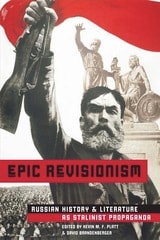
Epic Revisionism
Russian History and Literature as Stalinist PropagandaEdited by Kevin M. F. Platt and David Brandenberger
University of Wisconsin Press, 2006
Focusing on a number of historical and literary personalities who were regarded with disdain in the aftermath of the 1917 revolution—figures such as Peter the Great, Ivan the Terrible, Alexander Pushkin, Leo Tolstoy, and Mikhail Lermontov—Epic Revisionism tells the fascinating story of these individuals’ return to canonical status during the darkest days of the Stalin era.
An inherently interdisciplinary project, Epic Revisionism features pieces on literary and cultural history, film, opera, and theater. This volume pairs scholarly essays with selections drawn from Stalin-era primary sources—newspaper articles, unpublished archival documents, short stories—to provide students and specialists with the richest possible understanding of this understudied phenomenon in modern Russian history.“These scholars shed a great deal of light not only on Stalinist culture but on the politics of cultural production under the Soviet system.”—David L. Hoffmann, Slavic Review
Epicurus in Lycia
The Second-Century World of Diogenes of OenoandaPamela Gordon
University of Michigan Press, 1996
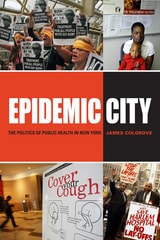
Epidemic City
The Politics of Public Health in New YorkJames Colgrove
Russell Sage Foundation, 2011

Epidemic Disease in Mexico City, 1761–1813
An Administrative, Social, and Medical StudyBy Donald B. Cooper
University of Texas Press, 1965
Five deadly epidemics, chiefly typhus and smallpox, struck Mexico City in the years between 1761 and 1813, claiming a minimum of fifty thousand lives. Mexico City was at that time the major metropolis of the New World and the capital of New Spain—by far the richest and most sophisticated city in that vast empire. It had the best medicines, the best doctors, and the best hospitals of the New World. What caused these devastating epidemics?
Donald B. Cooper here makes a thorough study of the problem. Based almost entirely on unpublished manuscript materials from the national archives of Mexico and the municipal archives of Mexico City, his work represents the first detailed study of the impact of epidemic disease on the history of New Spain, primarily of its capital. The course of each epidemic, its inclusive dates, the mortality it caused, and its effect upon the community are fully described.
At the time a major epidemic was in progress, the author says, all levels of government, national and local, secular and ecclesiastical, became involved in varying degrees in providing resources and leadership. The Church, wealthy corporations, and private citizens contributed the main funds. During the actual time of crisis, an outbreak could be prosecuted with remarkable success and cooperation.
Once an epidemic was over, however, little was done to prevent another. No single person or agency in Mexico City was sufficiently cognizant of the diverse problems involved to cope with them within a national or regional range—not even the viceroy. Such vital public works as aqueducts, waterlines, roads, and canals were inadequately maintained. Such essential municipal services as cleaning streets and canals, collecting garbage and refuse, and caring for the muddy, shallow cemeteries were poor if not nonexistent. Government officials, as well as the populace, were insufficiently concerned with the relation between sanitation and disease.
The practice of medicine in eighteenth-century Mexico had few scientific or professional aspects. The close relation of medicine and theology tended to inhibit experimentation that might have effectively broadened the frontiers of medical knowledge. Traditionalism acted as a barrier to the adoption of innovations. In the epidemic of 1779, for instance, inoculation—which could have saved innumerable lives—was totally rejected; in the outbreak of 1797 it was accepted only by the small upper class; when vaccination came to Mexico in 1803 it met the same militant opposition. The wonder, then, is not that so many died of disease, but that so many lived.
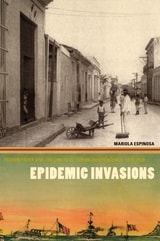
Epidemic Invasions
Yellow Fever and the Limits of Cuban Independence, 1878-1930Mariola Espinosa
University of Chicago Press, 2009
In the early fall of 1897, yellow fever shuttered businesses, paralyzed trade, and caused tens of thousand of people living in the southern United States to abandon their homes and flee for their lives. Originating in Cuba, the deadly plague inspired disease-control measures that not only protected U.S. trade interests but also justified the political and economic domination of the island nation from which the pestilence came. By focusing on yellow fever, Epidemic Invasions uncovers for the first time how the devastating power of this virus profoundly shaped the relationship between the two countries.
Yellow fever in Cuba, Mariola Espinosa demonstrates, motivated the United States to declare war against Spain in 1898, and, after the war was won and the disease eradicated, the United States demanded that Cuba pledge in its new constitution to maintain the sanitation standards established during the occupation. By situating the history of the fight against yellow fever within its political, military, and economic context, Espinosa reveals that the U.S. program of sanitation and disease control in Cuba was not a charitable endeavor. Instead, she shows that it was an exercise in colonial public health that served to eliminate threats to the continued expansion of U.S. influence in the world.

Epidemics
The Story of South Africa’s Five Most Lethal Human DiseasesHoward Phillips
Ohio University Press, 2012
This is the first history of epidemics in South Africa, lethal episodes that significantly shaped this society over three centuries. Focusing on five devastating diseases between 1713 and today—smallpox, bubonic plague, “Spanish influenza,” polio, and HIV/AIDS—the book probes their origins, their catastrophic courses, and their consequences in both the short and long terms. The impacts of these epidemics ranged from the demographic—the “Spanish flu,” for instance, claimed the lives of six percent of the country’s population in six weeks—to the political, the social, the economic, the spiritual, the psychological, and the cultural. Moreover, as each of these epidemics occurred at crucial moments in the country’s history—such as during the South African War and World War I—the book also examines how these processes affected and were affected by the five epidemics. To those who read this book, history will not look the same again.

Epiphanius of Cyprus
Imagining an Orthodox WorldYoung Richard Kim
University of Michigan Press, 2015
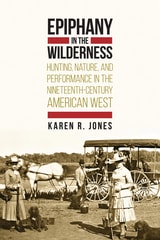
Epiphany in the Wilderness
Hunting, Nature, and Performance in the Nineteenth-Century American WestKaren R. Jones
University Press of Colorado, 2016
Whether fulfilling subsistence needs or featured in stories of grand adventure, hunting loomed large in the material and the imagined landscape of the nineteenth-century West. Epiphany in the Wilderness explores the social, political, economic, and environmental dynamics of hunting on the frontier in three “acts,” using performance as a trail guide and focusing on the production of a “cultural ecology of the chase” in literature, art, photography, and taxidermy.
Using the metaphor of the theater, Jones argues that the West was a crucial stage that framed the performance of the American character as an independent, resourceful, resilient, and rugged individual. The leading actor was the all-conquering masculine hunter hero, the sharpshooting man of the wilderness who tamed and claimed the West with each provident step. Women were also a significant part of the story, treading the game trails as plucky adventurers and resilient homesteaders and acting out their exploits in autobiographical accounts and stage shows.
Epiphany in the Wilderness informs various academic debates surrounding the frontier period, including the construction of nature as a site of personal challenge, gun culture, gender adaptations and the crafting of the masculine wilderness hero figure, wildlife management and consumption, memorializing and trophy-taking, and the juxtaposition of a closing frontier with an emerging conservation movement.
The University Press of Colorado gratefully acknowledges the generous support of the Charles Redd Center for Western Studies at Brigham Young University toward the publication of this book.

Epistle to Marguerite de Navarre and Preface to a Sermon by John Calvin
Marie Dentière
University of Chicago Press, 2004
Dentière's Very Useful Epistle (1539) is the first explicit statement of reformed theology by a woman to appear in French. Addressed to Queen Marguerite of Navarre, sister of the French king Francis I, the Epistle asks the queen to help those persecuted for their religious beliefs. Dentière offers a stirring defense of women and asserts their right to teach the word of God in public. She defends John Calvin against his enemies and attacks the hierarchy of the Roman Catholic Church. Her Preface (1561) to one of Calvin's sermons criticizes immodesty and extravagance in clothing and warns the faithful to be vigilant. Undaunted in the face of suppression and ridicule, this outspoken woman persisted as an active voice in the Reformation.
Epistolary Responses
The Letter in Twentieth-Century American Fiction and CriticismAnne Bower
University of Alabama Press, 1996
Epistolary Responses explores the transformative nature of epistolary fiction and criticism in letter form from a largely feminist perspective. While most scholarly work to date has focused on 17th- and 18th-century manifestations of this genre, Bower's study concentrates on epistolary fiction by contemporary American writers published between 1912 and 1988. The novels discussed, all featuring women letter writers, include: Lee Smith's Fair and Tender Ladies, John Barth's LETTERS, Alice Walker's The Color Purple, John Updike's S., Jean Webster's Daddy-Long-Legs, Upton Sinclair's Another Pamela, and Ana Castillo's The Mixquiahuala Letters.
Bower explores the influence letters have on the act of writing and writing as act, their encoded desire for reply, their incompleteness as units of narrative information, their play on ideas of absence and presence, their apparently personal and private nature, and their foregrounding of the writer's agency and authority, all of which make letters a most useful genre both for novelists and for scholars. Several of the book's "fiction" chapters include a letter from the author of the text (sometimes a critic) that complements and supplements Bower's analysis. The final part of the book explores how seven scholars--men and women--have applied letters to their own critical writing, finding that this formal move allows them to question issues of public and private discourse, the authority of signature, and the "feminine" location.

Epitacio Pessoa
BrazilMichael Streeter
Haus Publishing, 2010

Equal Before the Law
How Iowa Led Americans to Marriage EqualityTom Witosky, Marc Hansen
University of Iowa Press, 2015
The court’s decision in Varnum v. Brien made Iowa only the third state in the nation to permit same-sex couples to wed—moderate, midwestern Iowa, years before such left-leaning coastal states as California and New York. And unlike the earlier decisions in Massachusetts and Connecticut, Varnum v. Brien was unanimous and unequivocal. It catalyzed the unprecedented and rapid shift in law and public opinion that continues today.
Equal Before the Law tells the stories behind this critical battle in the fight for marriage equality and traces the decision’s impact. The struggle began in 1998 with the easy passage of Iowa’s Defense of Marriage Act and took a turn, surprising to many, in 2005, when six ordinary Iowa couples signed on to Lambda Legal’s suit against the law. Their triumph in 2009 sparked a conservative backlash against the supreme court justices, three of whom faced tough retention elections that fall.
Longtime, award-winning reporters Tom Witosky and Marc Hansen talked with and researched dozens of key figures, including opponent Bob Vander Plaats, proponents Janelle Rettig and Sharon Malheiro, attorneys Roger Kuhle, Dennis Johnson, and Camilla Taylor, and politicians Matt McCoy, Mary Lundby, and Tom Vilsack, who had to weigh their careers against their convictions. Justice Mark Cady, who wrote the decision, explains why the court had to rule in favor of the plaintiffs. At the center of the story are the six couples who sacrificed their privacy to demand public respect for their families.
Through these voices, Witosky and Hansen show that no one should have been surprised by the 2009 decision. Iowans have a long history of leadership on civil rights. Just a year after Iowa became a state, its citizens adopted as their motto the phrase, “Our liberties we prize and our rights we will maintain.” And they still do today.
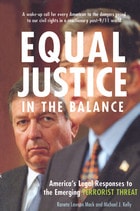
Equal Justice in the Balance
America's Legal Responses to the Emerging Terrorist ThreatRaneta Lawson Mack and Michael J. Kelly
University of Michigan Press, 2004
-Michael Ratner, President, Center for Constitutional Rights, from the foreword
"A compelling and sophisticated critique of the U.S. government's post-9/11 actions. Mack and Kelly set the stage with the historical perspective on America's response to terrorism and the assessment of terrorist threats, before launching into a comprehensive analysis of the USA Patriot Act. Their hard-hitting approach and easy-to-read style makes for a fascinating treatment of the government's legislative and executive response to the attacks."
-Michael P. Scharf, Case Western Reserve University School of Law
With its sweeping critique of the USA Patriot Act and the Bush administration's maneuvers in pursuit of terrorists, Equal Justice in the Balance is a sobering and exacting look at American legal responses to terrorism, both before and after 9/11.
The authors detail wide-ranging and persuasive evidence that American antiterrorism legislation has led to serious infringements of our civil rights. They show us how deviations from our fundamental principles of fairness and justice in times of heightened national anxiety-whether the Red Scare, World War II, or the War on Terrorism-have resulted in overreaction and excess, later requiring apologies and reparations to those victimized by a paranoia-driven justice system.
While terrorist attacks-especially on a large scale and on American soil-damage our national pride and sense of security, the authors offer powerful arguments for why we must allow our judicial infrastructure, imperfect as it is, to respond without undue interference from the politics of anger and vengeance.

Equal Play
Title IX and Social ChangeNancy Hogshead-Makar
Temple University Press, 2007
One of the least-understood issues in federal sports policy, Title IX of the Educational Amendments of 1972 reflects the nation's aspirational belief that girls and boys, women and men, deserve equal educational opportunities in athletics. Equal Play shows how this ideal has been implemented-and thwarted-by actions in every branch of the federal government.
This reader addresses issues in sports before Title IX and the backlash that has resulted from the policy being instituted. The editors have collected the best scholarly writing on the landmark events of the last four decades and couples these with new original essays, primary documents from court cases, administrative regulations, and relevant supporting sources. The result is the most comprehensive single-volume work on the subject.
Equal Play includes essays by many well-known sports journalists who discuss how government actions have shaped, supported, and hindered the goal of gender equality in school athletics. They discuss the history of women in sports, analyze the meaning of "equal opportunity" for female athletes, and examine shifts in arguments for and against Title IX. Equal Play will interest anyone who is concerned with gender issues in American athletics and the growth of college sports.
Contributors include: Susan Cahn, Donna de Varona, Julie Foudy, Jessica Gavora, Bil Gilbert, Christine Grant, Mariah Burton Nelson, Gary R. Roberts, Don Sabo, Larry Schwartz, Michael Sokolove, Welch Suggs, Nancy Williamson, and the editors.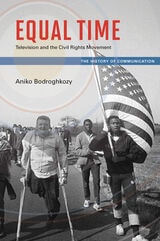
Equal Time
Television and the Civil Rights MovementAniko Bodroghkozy
University of Illinois Press, 2013
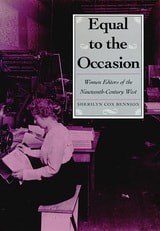
Equal To The Occasion
Women Editors On The Nineteenth-Century WestSherilyn Cox Bennion
University of Nevada Press, 1990
Bennion provides in-depth portraits of nineteenth-century women editors of the West and their diverse publications. The book's title takes its name from an 1898 editorial in the Wasatch Wave which described Piute Pioneer editor Candace Alice De Witt as a "maiden fair, fully equal to the occasion."Equal to the Occasion delves into the lives, publications, and historical contexts in which approximately thirty-five female editors of newspapers and other periodicals worked in the nineteenth-century West. The book covers the period from 1854, when the West's first woman editor began her work, through the turn of the century; it includes research gathered from thirteen western states. With its in-depth portraits of pioneering women editors and its appendix listing more than two hundred women and the major repositories where their extant publications are kept, Equal to the Occasion rescues from obscurity a whole panoply of nineteenth-century western women.
Equal in Monastic Profession
Religious Women in Medieval FrancePenelope D. Johnson
University of Chicago Press, 1991
Johnson researched more than two dozen nunneries in northern France from the eleventh century through the thirteenth century, balancing a qualitative reading of medieval monastic documents with a quantitative analysis of a lengthy thirteenth-century visitation record which allows an important comparison of nuns and monks. A fascinating look at the world of medieval spirituality, this work enriches our understanding of women's role in premodern Europe and in church history.
Equaliberty in the Dutch Caribbean
Ways of Being Non/SovereignYvon van der Pijl
Rutgers University Press, 2022
Equals in Learning and Piety
Muslim Women Scholars in Nigeria and North AmericaBeverly Mack
University of Wisconsin Press, 2023
Mack shows how women scholars instructed rural Hausa and Fulani women in Muslim ethics, doctrine, traditions, and behavior that followed and replaced the traumatic experience of warfare unleashed by the Jihad. She shows that these unique social engagements shaped people’s agency in the dynamic process of social change throughout the nineteenth century. Women imaginatively reconciled Muslim reformist doctrines and traditional practices in Nigeria, and these doctrines have continued to be influential in the diaspora, especially among Black American Muslims in the United States in the twenty-first century. With this major investigation of a little-studied phenomenon, Mack demonstrates the importance of women to the religious, political, and social transformation of Nigerian Muslim society.
Equestrian Cultures
Horses, Human Society, and the Discourse of ModernityEdited by Kristen Guest and Monica Mattfeld
University of Chicago Press, 2019
Kristen Guest and Monica Mattfeld place the modern period front and center in this collection, illuminating the largely untold story of how the horse has responded to the accelerated pace of modernity. The book’s contributors explore equine cultures across the globe, drawing from numerous interdisciplinary sources to show how horses have unexpectedly influenced such distinctively modern fields as photography, anthropology, and feminist theory. Equestrian Cultures boldly steps forward to redefine our view of the most recent developments in our long history of equine partnership and sets the course for future examinations of this still-strong bond.
Equity and the Constitution
The Supreme Court, Equitable Relief, and Public PolicyGary L. McDowell
University of Chicago Press, 1982
In this volume, Gary McDowell considers the equity power created by Article III of the Constitution, on which the most controversial decisions of the Supreme Court have rested. He points out the equity was originally understood as an extraordinary means of offering relief to individuals in cases of fraud, accident, mistake, or trust and as a means of "confining the operation of unjust and partial laws." It has now been stretched to offer relief to broadly defined social classes. This "sociological" understanding, in McDowell's view, has undermined equity as a substantive body of law. He urges a return to the former definition as a means of restraining the reach of federal jurisdiction.
Equivocal Beings
Politics, Gender, and Sentimentality in the 1790s--Wollstonecraft, Radcliffe, Burney, AustenClaudia L. Johnson
University of Chicago Press, 1995
Demonstrating the interrelationships among politics, gender, and feeling in the fiction of this period, Johnson provides detailed readings of Wollstonecraft, Radcliffe, and Burney, and treats the qualities that were once thought to mar their work—grotesqueness, strain, and excess—as indices of ideological conflict and as strategies of representation during a period of profound political conflict. She maintains that the reactionary reassertion of male sentimentality as a political duty displaced customary gender roles, rendering women, in Wollstonecraft's words, "equivocal beings."

Erasing Iraq
The Human Costs of CarnageMichael Otterman, Richard Hil, Paul Wilson, and Dahr Jamail
Pluto Press, 2010
For nearly two decades, the US and its allies have prosecuted war and aggression in Iraq. Erasing Iraq shows in unparalleled detail the devastating human cost of the war in Iraq.
Western governments and the mainstream media continue to ignore or play down the human costs of the war on Iraqi citizens This has allowed them to present their role as the benign guardians of Iraqi interests. The authors deconstruct this narrative by presenting a portrait of the total carnage in Iraq today. From Iraqi refugees in Syria, Jordan and the West, to civilians left behind, and other witnesses, this the story of the war told by those who experienced it firsthand.

Erasmus and the Jews
Shimon Markish
University of Chicago Press, 1986
Erasmus and the Jews discusses Erasmus' critique of Mosaic law and his view of the conflict between "Judaism" as legalistic morality and Jesus' teaching; his judgment on the Pharisees of Jesus' time; his emphasis on the importance of the study of Hebrew; and his opinions of sixteenth-century Jews. This meticulous analysis reveals an Erasmus who defended his vision of true piety by rejecting "Judaizing" Christians more than Jews and who saw the Old Testament as integral to the Christian worldview. As a Christian, he regretted nonbelief and pitied unbelievers, without vicious hostility toward any single people. His theological opposition to a form of religious thought which he identified with Judaism was not translated into crude prejudice against actual Jews. In general, his calm consideration of the strange and the foreign and his willingness to restrict his judgments to the philosophical realm were, Markish argues, early and significant steps toward enlightened toleration.
Markish's discussion of Erasmus is supplemented with an Afterword by theologian and philosopher Arthur A. Cohen, who offers a variant interpretation of Erasmus' writings and attitudes. The juxtaposed arguments of the two scholars make this an especially illuminating work for any student of Erasmus and his influence. Erasmus and the Jews also gives a necessary clarity to our understanding of the meaning of anti-Semitism and the history of religious toleration. Markish's profound knowledge of Erasmus allows him to demonstrate the fundamental importance of putting arguments and terminology in the context of a thinker's work and his own time.

Erasmus's Life of Origen
Thomas P. Scheck
Catholic University of America Press, 2016
Eric Voegelin and the Problem of Christian Political Order
Jeffrey C. Herndon
University of Missouri Press, 2007
Although some critics of Eric Voegelin’s later work have faulted his failure to deal with the historical Jesus and to address the implications of Christianity for social and political life, the recent publication of Voegelin’s History of Political Ideas has allowed a more complete assessment of his position regarding the Christian political order. This book addresses that criticism through an analysis of Voegelin’s early work.
In Eric Voegelin and the Problem of Christian Political Order, Jeffrey C. Herndon analyzes the development of Voegelin’s thought regarding the origins of Christianity in the person of Jesus, the development of the church in the works of Paul, and the relationship between an immanent institutional order symbolizing the divine presence and the struggle for social and political order. Focusing on the tension between a spiritual phenomenon based on Pauline faith and the institutionalization of that experience in the church, Herndon offers one of the first examinations of the relationship of the History of Political Ideas to Voegelin’s larger body of work.
In his wide-ranging study, Herndon explores Voegelin’s examination of the problem of Christian political order from the inception of Christianity through the Great Reformation. He also presents a clarification of Voegelin’s theory of civilizational foundation and of Voegelin’s philosophy of history with regard to Christianity and Western political order.
Herndon addresses not only the nagging problem in Voegelin scholarship regarding his relationship with the historical Jesus but also the “Pauline compromises with the world” that enabled Christianity to become the instrument by which the West was civilized. He also shows that Voegelin’s interpretation of the historical pressures released by the Great Reformation is important to an understanding of his later work regarding the negative effect of Christian symbols in the creation of ideological disorder.
Eric Voegelin and the Problem of Christian Political Order clarifies issues in Voegelin studies regarding the intersection between political theory and Christian concerns, addressing the relation of religious experience to the public sphere of political life in the West and helping to explain Voegelin’s contention that the death of the spirit is the price of progress. It offers scholars a perspective heretofore lacking in Voegelin scholarship and a clearer view of Voegelin’s understanding of the Christian dispensation and its influence on the course of Western development, history, and philosophy.
Eric Voegelin's Dialogue with the Postmoderns
Searching for FoundationsEdited & Intro by Peter A. Petrakis & Cecil L. Eubanks
University of Missouri Press, 2004
This collection of essays endeavors to generate a dialogue between Eric Voegelin and other prominent twentieth-century thinkers and explore some of the more perplexing issues in contemporary political theory. Each essay rests on the underlying question: is it possible or desirable to construct or discover political foundations without resorting to metaphysical or essentialist constructs? The introduction focuses on the two nineteenth-century thinkers, Nietzsche and Husserl, who have framed the debate about modernity and postmodernity; thereafter, the book examines Voegelin's ideas as compared to those of other twentieth-century thinkers.
Discussed within the volume are Levinas and the precedence of ethics, Ricoeur's theory of narrative representation, Deleuze and the philosophy of immanence, Voegelin's relationship to a speech- dimension theory of human behavior, and Patocka's theory of pre- metaphysical transcendence in Socrates. What will impress scholars most about this collection is the provocative dialogue created between Voegelin and other major thinkers of postmodernism that addresses the issue of establishing foundations without foundationalism.
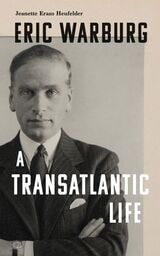
Eric Warburg
A Transatlantic LifeJeanette Erazo Heufelder
Haus Publishing, 2025
In Eric Warburg, Jeanette Erazo Heufelder tells the story of the nephew of the art historian Aby Warburg, whose world-famous library Eric saved from the Nazis. He was a Jew, a banker, a helper of escapees, an intelligence officer in the US Army, a transatlantic bridge builder, and a Cold Warrior. With the help of the cooperation channels he set up, West German and US social groups were aligned with the West amidst the turmoil of postwar Europe.
The history of the transatlantic partnership has become highly topical; since the Russian invasion of Ukraine on February 24, 2022, it has been invoked in Europe as a key reassurance. Eric Warburg’s life, and that of Aby Warburg’s library, tells the story of Europe's twentieth century, the legacy of which continues to inform and inspire the transatlantic partnership today.

Ernst Jünger and Germany
Into the Abyss, 1914-1945Thomas R. Nevin
Duke University Press, 1996
Ernst Jünger is in many ways Germany’s conscience, and much of the controversy surrounding him is at its source measured by his relation to the Nazis and Nazi culture. But as Nevin suggests, Jünger can more specifically and properly be regarded as the still living conscience of a Germany that existed before Hitler. Although his memoir of service as a highly decorated lieutenant in World War I made him a hero to the Nazis, he refused to join the party. A severe critic of the Weimar Republic, he has often been denounced as a fascist who prepared the way for the Reich, but in 1939 he published a parable attacking despotism. Close to the men who plotted Hitler’s assassination in 1944, he narrowly escaped prosecution and death. Drawing largely on Jünger’s untranslated work, much of which has never been reprinted in Germany, Nevin reveals Jünger’s profound ambiguities and examines both his participation in and resistance to authoritarianism and the cult of technology in the contexts of his Wilhelmine upbringing, the chaos of Weimar, and the sinister culture of Nazism.
Winner of Germany’s highest literary awards, Ernst Jünger is regularly disparaged in the German press. His writings, as this book indicates, put him at an unimpeachable remove from the Nazis, but neo-Nazi rightists in Germany have rushed to embrace him. Neither apology, whitewash, nor vilification, Ernst Jünger and Germany is an assessment of the complex evolution of a man whose work and nature has been viewed as both inspiration and threat.
Eros and Inwardness in Vienna
Weininger, Musil, DodererDavid S. Luft
University of Chicago Press, 2003
According to Luft, Otto Weininger viewed human beings as bisexual and applied this theme to issues of creativity and morality. Robert Musil developed a creative ethics that was closely related to his open, flexible view of sexuality and gender. And Heimito von Doderer portrayed his own sexual obsessions as a way of understanding the power of total ideologies, including his own attraction to National Socialism. For Luft, the significance of these three writers lies in their understandings of eros and inwardness and in the roles that both play in ethical experience and the formation of meaningful relations to the world-a process that continues to engage artists, writers, and thinkers today.
Eros and Inwardness in Vienna will profoundly reshape our understanding of Vienna's intellectual history. It will be important for anyone interested in Austrian or German history, literature, or philosophy.
Eros and Magic in the Renaissance
Ioan P. Couliano
University of Chicago Press, 1987
Renaissance magic, according to Ioan Couliano, was a scientifically plausible attempt to manipulate individuals and groups based on a knowledge of motivations, particularly erotic motivations. Its key principle was that everyone (and in a sense everything) could be influenced by appeal to sexual desire. In addition, the magician relied on a profound knowledge of the art of memory to manipulate the imaginations of his subjects. In these respects, Couliano suggests, magic is the precursor of the modern psychological and sociological sciences, and the magician is the distant ancestor of the psychoanalyst and the advertising and publicity agent.
In the course of his study, Couliano examines in detail the ideas of such writers as Giordano Bruno, Marsilio Ficino, and Pico della Mirandola and illuminates many aspects of Renaissance culture, including heresy, medicine, astrology, alchemy, courtly love, the influence of classical mythology, and even the role of fashion in clothing.
Just as science gives the present age its ruling myth, so magic gave a ruling myth to the Renaissance. Because magic relied upon the use of images, and images were repressed and banned in the Reformation and subsequent history, magic was replaced by exact science and modern technology and eventually forgotten. Couliano's remarkable scholarship helps us to recover much of its original significance and will interest a wide audience in the humanities and social sciences.
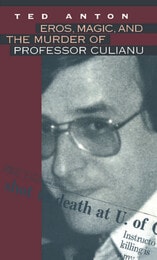
Eros, Magic, and the Murder of Professor Culianu
Ted Anton
Northwestern University Press, 1996
Winner of 1997 Carl Sandburg Award
On May 21, 1991, University of Chicago professor Ioan Culianu was murdered execution-style on campus. The crime stunned the school, terrified students, and mystified the FBI. The case remains unsolved. In Eros, Magic, and the Murder of Professor Culianu, award-winning investigative reporter Ted Anton shows that the murder is what Culianu's friends suspected all along: the first political assassination of a professor on American soil.
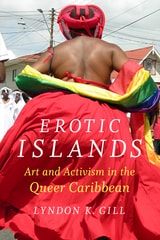
Erotic Islands
Art and Activism in the Queer CaribbeanLyndon K. Gill
Duke University Press, 2018
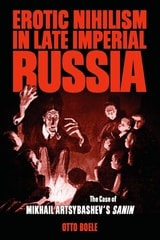
Erotic Nihilism in Late Imperial Russia
The Case of Mikhail Artsybashev's SaninOtto Boele
University of Wisconsin Press, 2009
Who were the Saninists, and what was their “teaching” all about? Delving into police reports, newspaper clippings, and amateur plays, Otto Boele finds that Russian youth were not at all swept away by the self-indulgent lifestyle of the novel’s hero. In fact, Saninism was more smoke than fire—a figment of the public imagination triggered by anxieties about the revolution of 1905 and the twilight of the Russian empire. The reception of the novel, Boele shows, reflected much deeper worries caused by economic reforms, an increase in social mobility, and changing attitudes toward sexuality.
Showing how literary criticism interacts with the age-old medium of rumor, Erotic Nihilism in Late Imperial Russia offers a meticulous analysis of the scandal’s coverage in the provincial press and the reactions of young people who appealed to their peers to resist the novel’s nihilistic message. By examining the complex dialogue between readers and writers, children and parents, this study provides fascinating insights into Russian culture on the eve of World War I.
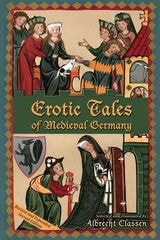
Erotic Tales of Medieval Germany
Translated by Albrecht Classen
Arizona Center for Medieval and Renaissance Studies, 2007
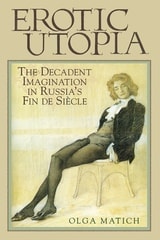
Erotic Utopia
The Decadent Imagination in Russia's Fin de SiecleOlga Matich
University of Wisconsin Press, 2007
The first generation of Russian modernists experienced a profound sense of anxiety resulting from the belief that they were living in an age of decline. What made them unique was their utopian prescription for overcoming the inevitability of decline and death both by metaphysical and physical means. They intertwined their mystical erotic discourse with European degeneration theory and its obsession with the destabilization of gender. In Erotic Utopia, Olga Matich suggests that same-sex desire underlay their most radical utopian proposal of abolishing the traditional procreative family in favor of erotically induced abstinence.
“Offers a fresh perspective and a wealth of new information on early Russian modernism. . . . It is required reading for anyone interested in fin-de-siècle Russia and in the history of sexuality in general.”—Bernice Glatzer Rosenthal, Slavic and East European Journal
“Thoroughly entertaining.”—Avril Pyman, Slavic Review
Errand into the Wilderness of Mirrors
Religion and the History of the CIAMichael Graziano
University of Chicago Press, 2021
Michael Graziano’s intriguing book fuses two landmark titles in American history: Perry Miller’s Errand into the Wilderness (1956), about the religious worldview of the early Massachusetts colonists, and David Martin’s Wilderness of Mirrors (1980), about the dangers and delusions inherent to the Central Intelligence Agency. Fittingly, Errand into the Wilderness of Mirrors investigates the dangers and delusions that ensued from the religious worldview of the early molders of the Central Intelligence Agency. Graziano argues that the religious approach to intelligence by key OSS and CIA figures like “Wild” Bill Donovan and Edward Lansdale was an essential, and overlooked, factor in establishing the agency’s concerns, methods, and understandings of the world. In a practical sense, this was because the Roman Catholic Church already had global networks of people and safe places that American agents could use to their advantage. But more tellingly, Graziano shows, American intelligence officers were overly inclined to view powerful religions and religious figures through the frameworks of Catholicism. As Graziano makes clear, these misconceptions often led to tragedy and disaster on an international scale. By braiding the development of the modern intelligence agency with the story of postwar American religion, Errand into the Wilderness of Mirrors delivers a provocative new look at a secret driver of one of the major engines of American power.
Errand to the World
American Protestant Thought and Foreign MissionsWilliam R. Hutchison
University of Chicago Press, 1987

Errands into the Metropolis
New England Dissidents in Revolutionary LondonJonathan Beecher Field
Dartmouth College Press, 2012