Results by title
3027 books match the query 'Sociology' and 115 start with e

Engaging Mbembe
Sindre Bandstad and Bjørn Enge Bertelsen, editors. Foreword by Arjun Appadurai.
Duke University Press, 2027
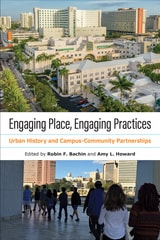
Engaging Place, Engaging Practices
Urban History and Campus-Community PartnershipsEdited by Robin F. Bachin and Amy L. Howard
Temple University Press, 2023
Colleges and universities in urban centers have often leveraged their locales to appeal to students while also taking a more active role in addressing local challenges. They embrace civic engagement, support service-learning, tailor courses to local needs, and even provide university-community collaborations such as lab schools and innovation hubs. Engaging Place, Engaging Practices highlights the significant role the academy, in general, and urban history, in particular, can play in fostering these critical connections.
The editors and contributors to this volume address topics ranging from historical injustices and affordable housing and land use to climate change planning and the emergence of digital humanities. These case studies reveal the intricate components of a city’s history and how they provide context and promote a sense of cultural belonging.
This timely book appreciates and emphasizes the critical role universities must play as intentional—and humble—partners in addressing the past, present, and future challenges facing cities through democratic community engagement.
Engaging the Intersection of Housing and Health
Volume ThreeEdited by Mina Silberberg
University of Minnesota Press, 2021
Researchers often hope that their work will inform social change. The questions that motivate them to pursue research careers in the first place often stem from observations about gaps between the world as we wish it to be and the world as it is, accompanied by a deep curiosity about how it might be made different. Researchers view their profession as providing important information about what is, what could be, and how to get there. However, if research is to inform social change, we must first change the way in which research is done.
Engaging the Intersection of Housing and Health offers case studies of research that is interdisciplinary, stakeholder-engaged and intentionally designed for “translation” into practice. There are numerous ways in which housing and health are intertwined. This intertwining—which is the focus of this volume—is lived daily by the children whose asthma is exacerbated by mold in their homes, the adults whose mental illness increases their risk for homelessness and whose homelessness worsens their mental and physical health, the seniors whose home environment enhances their risk of falls, and the families who must choose between paying for housing and paying for healthcare.
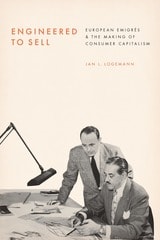
Engineered to Sell
European Émigrés and the Making of Consumer CapitalismJan L. Logemann
University of Chicago Press, 2019
Engineering Culture
Control and Commitment in a High-Tech CorporationGideon Kunda
Temple University Press, 2006
Engines of Anxiety
Academic Rankings, Reputation, and Accountabilityespeland
Russell Sage Foundation, 2016
Students and the public routinely consult various published college rankings to assess the quality of colleges and universities and easily compare different schools. However, many institutions have responded to the rankings in ways that benefit neither the schools nor their students. In Engines of Anxiety, sociologists Wendy Espeland and Michael Sauder delve deep into the mechanisms of law school rankings, which have become a top priority within legal education. Based on a wealth of observational data and over 200 in-depth interviews with law students, university deans, and other administrators, they show how the scramble for high rankings has affected the missions and practices of many law schools.
Engines of Anxiety tracks how rankings, such as those published annually by the U.S. News & World Report, permeate every aspect of legal education, beginning with the admissions process. The authors find that prospective law students not only rely heavily on such rankings to evaluate school quality, but also internalize rankings as expressions of their own abilities and flaws. For example, they often view rejections from “first-tier” schools as a sign of personal failure. The rankings also affect the decisions of admissions officers, who try to balance admitting diverse classes with preserving the school’s ranking, which is dependent on factors such as the median LSAT score of the entering class. Espeland and Sauder find that law schools face pressure to admit applicants with high test scores over lower-scoring candidates who possess other favorable credentials.
Engines of Anxiety also reveals how rankings have influenced law schools’ career service departments. Because graduates’ job placements play a major role in the rankings, many institutions have shifted their career-services resources toward tracking placements, and away from counseling and network-building. In turn, law firms regularly use school rankings to recruit and screen job candidates, perpetuating a cycle in which highly ranked schools enjoy increasing prestige. As a result, the rankings create and reinforce a rigid hierarchy that penalizes lower-tier schools that do not conform to the restrictive standards used in the rankings. The authors show that as law schools compete to improve their rankings, their programs become more homogenized and less accessible to non-traditional students.
The ranking system is considered a valuable resource for learning about more than 200 law schools. Yet, Engines of Anxiety shows that the drive to increase a school’s rankings has negative consequences for students, educators, and administrators and has implications for all educational programs that are quantified in similar ways.

England's Discontents
Political Cultures and National IdentitiesMike Wayne
Pluto Press, 2018
Examining five political ideologies at play in England—conservatism, liberalism, economic liberalism, social democracy, and socialism—Mike Wayne unearths the historical rationale for their relationship to cultural identities, including rural England, gentlemanly capitalism, industrialism, and Empire. By revealing how national identity, class, and political economy intersect, Wayne is able to elucidate England’s enduring attachment to the neoliberal economic system.
Grounding his cultural and material perspective in Gramscian and Marxist theory, Wayne illuminates the cultural dimensions of English political life in the last century.
England's Great Transformation
Law, Labor, and the Industrial RevolutionMarc W. Steinberg
University of Chicago Press, 2016
Building his argument on three case studies—the Hanley pottery industry, Hull fisheries, and Redditch needlemakers—Steinberg employs both local and national analyses to emphasize the ways in which these master-servant laws allowed employers to use the criminal prosecutions of workers to maintain control of their labor force. Steinberg provides a fresh perspective on the dynamics of labor control and class power, integrating the complex pathways of Marxism, historical institutionalism, and feminism, and giving readers a subtle yet revelatory new understanding of workplace control and power during England’s Industrial Revolution.
Environmental Activism and the Urban Crisis
Baltimore, St. Louis, ChicagoRobert Gioielli
Temple University Press, 2015
Environmental Activism and the Urban Crisis focuses on the wave of environmental activism and grassroots movements that swept through America's older, industrial cities during the late 1960s and early 1970s. Robert Gioielli offers incisive case studies of Baltimore, St. Louis, and Chicago to show how urban activism developed as an impassioned response to a host of racial, social, and political conflicts. As deindustrialization, urban renewal, and suburbanization caused the decline of the urban environment, residents--primarily African Americans and working-class whites--organized to protect their families and communities from health threats and environmental destruction.
Gioielli examines various groups' activism in response to specific environmental problems caused by the urban crisis in each city. In doing so, he forms concrete connections between environmentalism, the African American freedom struggle, and various urban social movements such as highway protests in Baltimore and air pollution activism in Chicago. Eventually, the efforts of these activists paved the way for the emergence of a new movement-environmental justice.
Envisioning Eastern Europe
Postcommunist Cultural StudiesMichael D. Kennedy, Editor
University of Michigan Press, 1994
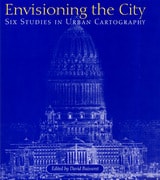
Envisioning the City
Six Studies in Urban CartographyEdited by David Buisseret
University of Chicago Press, 1998
Whether a Chinese vertical city plan from the first millennium B.C. or a bird's-eye view appended to a fifteenth-century edition of Ptolemy's Geography, the type of plan chosen and its focus reflected the aspects of a city that the map's creators wished to highlight. For instance, maps of seventeenth-century cities emphasized impregnable fortifications as a deterrent to potential attackers. And Daniel Burnham's famous 1909 Plan of Chicago used a distinct representational style to "sell" his version of the new Chicago.
Although city plans are among the oldest maps known, few books have been devoted to them. Historians of cartography and geography, architects, and urban planners will all enjoy this profusely illustrated volume.
Ephemeral Territories
Representing Nation, Home, and Identity in CanadaErin Manning
University of Minnesota Press, 2003
Explores questions of identity and belonging through the lens of Canadian cultural production
What does it mean to be at home? In a critical engagement with notions of territory, identity, racial difference, separatism, multiculturalism, and homelessness, this book delves into the question of what it means to belong—in particular, what it means to be at home in Canada. Ephemeral Territories weaves together many narratives and representations of Canadian identity—from political philosophy and cultural theory to art and films such as Srinivas Krishna’s Lulu, Clement Virgo’s Rude, and Charles Biname’s Eldorado—to develop and complicate familiar views of identity and selfhood.
Canadian identity has historically been linked to a dual notion of culture traceable to the French and English strains of Canada’s colonial past. Erin Manning subverts this binary through readings that shift our attention from nationalist constructions of identity and territory to a more radical and pluralizing understanding of the political. As she brings together issues specific to Canada (such as Quebec separatism and Canadian landscape painting) and concerns that are more transnational (such as globalization and immigration), Manning emphasizes the truly cross-cultural nature of the problems of racism, gender discrimination, and homelessness. Thus this impassioned reading of Canadian texts also makes an important contribution to philosophical, cultural, and political discourses across the globe.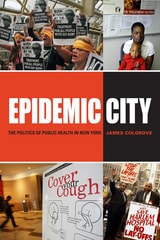
Epidemic City
The Politics of Public Health in New YorkJames Colgrove
Russell Sage Foundation, 2011
Equaliberty
Political EssaysÉtienne Balibar
Duke University Press, 2014

Equality in the City
Imaginaries of the Smart FutureEdited by Susan Flynn and Graham Cairns
Intellect Books, 2022
Equality in the City engenders a timely debate about what future cities might look like and what their concerns should be. Using a multi-disciplinary perspective, it features acclaimed scholars whose work investigates the proposed networked, digital technologies that ostensibly affect planning policies, control infrastructures, and deliver and manage city services and systems. The contributors offer insights into how future cities might be envisaged, planned, and executed in order to be more equal.

Equity Engines
The Overlooked Colleges Delivering on Higher Education’s PromiseBecca Spindel Bassett
University of Chicago Press, 0
Shares novel insights into American colleges and universities that deliberately support the success of their first-generation, low-income students.
In American higher education, universities that prioritize inclusivity and equity over exclusivity and prestige are penalized rather than rewarded, both in terms of status and resources. Consequently, very few colleges and universities both enroll large shares of low-income students and graduate them at high rates. This is terrible news, both for the first-generation, low-income students with big aspirations and for a democratic society that relies on an educated citizenry and a representative government to function.
In Equity Engines, Becca Spindel Bassett shines a light on a small group of colleges that are quietly achieving the improbable. These “equity engines” open their doors widely to low-income students and graduate them at remarkably high rates. Immersing herself in two distinct institutions, a small private liberal arts university and a large regional public university, Bassett offers a window into the unseen mindsets and policies that drive universities toward equitable outcomes. By culturally and structurally centering first-generation, low-income students and challenging the superiority of exclusive, research-oriented cultures, the faculty, staff, and administrators of both institutions achieve extraordinary results.
Combining ethnography with sociological analysis, Equity Engines presents a detailed and nuanced depiction of the people and practices that power equity engines, the pressures that challenge their operation, and how we can transform American higher education to promote a more democratic and equitable society.

Erotic Innocence
The Culture of Child MolestingJames R. Kincaid
Duke University Press, 1998
Drawing on a number of wide-ranging and well-publicized cases as well as scandals involving such celebrities as Michael Jackson and Woody Allen, Kincaid looks at issues surrounding children’s testimonies, accusations against priests and day-care centers, and the horrifying yet persistently intriguing rumors of satanic cults and “kiddie porn” rings. In analyzing the particular form of popularity shared by such child stars such Shirley Temple and Macaulay Culkin, he exposes the strategies we have devised to deny our own role in the sexualization of children. Finally, Kincaid reminds us how other forms of abuse inflicted on children—neglect, abandonment, inadequate nutrition, poor education—are often overlooked in favor of the sensationalized sexual abuse coverage in the news, on daytime TV talk shows, and in the elevators and cafeterias of America each day.
This bold and critically enlightened book will interest readers across a wide range of disciplines as well as a larger general audience interested in American culture.
Escape Routes
Control and Subversion in the Twenty-First CenturyDimitris Papadopoulos, Niamh Stephenson, and Vassilis Tsianos
Pluto Press, 2008
Illegal migrants who evade detection, creators of value in insecure and precarious working conditions and those who refuse the constraints of sexual and biomedical classifications: these are the people who manage to subvert power and to craft unexpected sociabilities and experiences. Escape Routes shows how people can escape control and create social change by becoming imperceptible to the political system of Global North Atlantic societies.
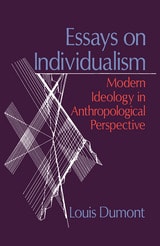
Essays on Individualism
Modern Ideology in Anthropological PerspectiveLouis Dumont
University of Chicago Press, 1986
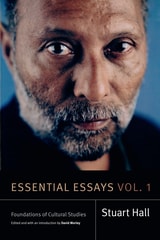
Essential Essays, Volume 1
Foundations of Cultural StudiesStuart Hall
Duke University Press, 2018
Volume 1: Foundations of Cultural Studies focuses on the first half of Hall's career, when he wrestled with questions of culture, class, representation, and politics. This volume's stand-out essays include his field-defining “Cultural Studies and Its Theoretical Legacies"; the prescient “The Great Moving Right Show,” which first identified the emergent mode of authoritarian populism in British politics; and “Encoding and Decoding in the Television Discourse,” one of his most influential pieces of media criticism. As a whole, Volume 1 provides a panoramic view of Hall's fundamental contributions to cultural studies.
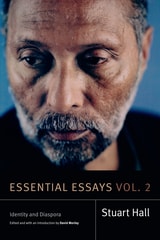
Essential Essays, Volume 2
Identity and DiasporaStuart Hall
Duke University Press, 2018
Volume 2: Identity and Diaspora draws from Hall's later essays, in which he investigated questions of colonialism, empire, and race. It opens with “Gramsci's Relevance for the Study of Race and Ethnicity,” which frames the volume and finds Hall rethinking received notions of racial essentialism. In addition to essays on multiculturalism and globalization, black popular culture, and Western modernity's racial underpinnings, Volume 2 contains three interviews with Hall, in which he reflects on his life to theorize his identity as a colonial and diasporic subject.
Ethnic Diversity and the Control of Natural Resources in Southeast Asia
A. Terry Rambo, Kathleen Gillogly, and Karl L. Hutterrer, Editors
University of Michigan Press, 1988
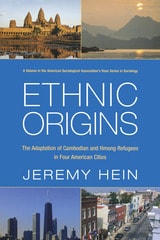
Ethnic Origins
The Adaptation of Cambodian and Hmong Refugees in Four American CitiesJeremy Hein
Russell Sage Foundation, 2006
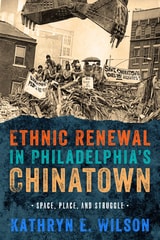
Ethnic Renewal in Philadelphia's Chinatown
Space, Place, and StruggleKathryn Wilson
Temple University Press, 2015
In Ethnic Renewal in Philadelphia’s Chinatown. Kathryn Wilson charts the unique history of this neighborhood. After 1945, a new generation of families began to shape Chinatown’s future. As plans for urban renewal—ranging from a cross-town expressway and commuter rail in the 1960s to a downtown baseball stadium in 2000—were proposed and developed, “Save Chinatown” activists rose up and fought for social justice.
Wilson chronicles the community’s efforts to save and renew itself through urban planning, territorial claims, and culturally specific rebuilding. She shows how these efforts led to Chinatown’s growth and its continued ability to serve as a living community for subsequent waves of new immigration.
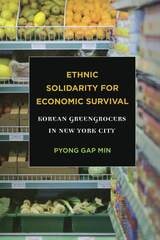
Ethnic Solidarity for Economic Survival
Korean Greengrocers in New York CityPyong Gap Min
Russell Sage Foundation, 2008
Ethnographers In The Field
The Psychology of ResearchJohn L. Wengle
University of Alabama Press, 1988
A study of how doing field research submerged in a different culture impacts one's sense of identity.
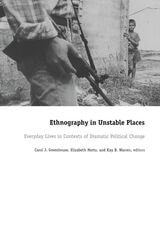
Ethnography in Unstable Places
Everyday Lives in Contexts of Dramatic Political ChangeCarol J. Greenhouse, Elizabeth Mertz, and Kay B. Warren, eds.
Duke University Press, 2002
Using grounded ethnographic detail to explore the challenges to the anthropological imagination that are posed by modern uncertainties, the contributors confront the ambiguities and paradoxes that exist across the spectrum of human cultures and geographies. The collection is framed by introductory and concluding chapters that highlight different dimensions of the book’s interrelated themes—agency and ethnographic reflexivity, identity and ethics, and the inseparability of political economy and interpretivism.
Ethnography in Unstable Places will interest students and specialists in social anthropology, sociology, political science, international relations, and cultural studies.
Contributors. Eve Darian-Smith, Howard J. De Nike, Elizabeth Faier, James M. Freeman, Robert T. Gordon, Carol J. Greenhouse, Nguyen Dinh Huu, Carroll McC. Lewin, Elizabeth Mertz, Philip C. Parnell, Nancy Ries, Judy Rosenthal, Kay B. Warren, Stacia E. Zabusky
Evacuation
The Politics and Aesthetics of Movement in EmergencyPeter Adey
Duke University Press, 2024
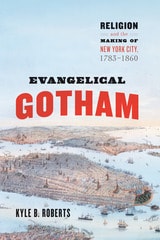
Evangelical Gotham
Religion and the Making of New York City, 1783–1860Kyle B. Roberts
University of Chicago Press, 2016

Evangelical Identity and Gendered Family Life
Gallagher, Sally K
Rutgers University Press, 2003
Evangelical Identity and Gendered Family Life provides a sociological and historical analysis of gender, family, and work among evangelical Protestants. In this innovative study, Sally Gallagher traces two lines of gender ideals—one of husbands’ authority and leadership, the other of mutuality and partnership in marriage—from the Puritans to the Promise Keepers into the lives of ordinary evangelicals today. Rather than simply reacting against or accommodating themselves to “secular society,” Gallagher argues that both traditional and egalitarian evangelicals draw on longstanding beliefs about gender, human nature, and the person of God.
The author bases her arguments on an analysis of evangelical family advice literature, data from a large national survey and personal interviews with over 300 evangelicals nationwide. No other work in this area draws on such a range of data and methodological resources. Evangelical Identity and Gendered Family Life establishes a standard for future research by locating the sources, strategies, and meaning of gender within evangelical Protestantism.
Every Goddamn Day
A Highly Selective, Definitely Opinionated, and Alternatingly Humorous and Heartbreaking Historical Tour of ChicagoNeil Steinberg
University of Chicago Press, 2022
Every day in Chicago is a day to remember. In a city so rich with history, every day is the anniversary of some storied historical or cultural moment, whether it’s the dedication of the Pablo Picasso sculpture downtown on August 15, or the arrest of Rod Blagojevich at his Ravenswood home on December 9, or a fire that possibly involved a cow on October 8.
In Every Goddamn Day, acerbic Chicago Sun-Times columnist Neil Steinberg takes the story of the city, pares away the dull, eat-your-peas parts, and provides 366 captivating daily readings in what makes Chicago Chicago and America America. It calls upon a wide cast of characters, from Oscar Wilde to Muhammad Ali, from Emma Goldman to Teddy Roosevelt, and from Richard M. Daley to Fred Hampton, to create a compelling narrative that can be read at a sitting or in a yearlong series of daily doses.
From New Year’s Day to New Years’ Eve, Steinberg takes us on a vivid and entertaining tour, illuminating the famous, obscure, tragic, and hilarious elements that make each day in Chicago memorable.
Everybody Knows
Cynicism in AmericaWilliam Chaloupka
University of Minnesota Press, 2001
A witty take on what’s wrong--and right--with cynicism today, now in paperback!
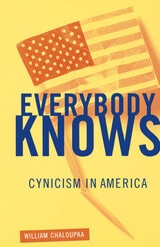
We are now living in the midst of the most cynical era in American history. Disaffection from government institutions is at an all-time high. Ordinary citizens perceive political leaders to be more manipulative and jaded than ever. Skepticism pervades our cultural and social attitudes and interactions, and is prominently featured in the films we see, the books we read, and the media we experience. In this biting and controversial analysis, William Chaloupka scrutinizes the cynicism that is our common condition, examining both its uses in the politics of backlash and resentment and its surprisingly positive aspects.
Everybody Knows traces cynicism from its classical origins but emphasizes its recent emergence in American culture and politics, following a trajectory from H. L. Mencken to Richard Nixon to Bill Clinton to Fargo. Cutting neatly across ideological divisions, Chaloupka discusses the ways in which cynicism is rooted in all democratic politics and analyzes the role of the media-in particular, television news, political ads and speeches, and books such as E. J. Dionne’s Why Americans Hate Politics and William Bennett’s The Book of Virtues-in dissecting and encouraging cynicism.Chaloupka describes mass cynicism, which permeates popular culture; outsider cynicism, capable of cranky, even violent disruption; and the cynicism of those in power. He argues that those who issue broad pleas for civility or a renewal of community spirit usually misunderstand the cynicism they wish to treat. He also discusses the value of a cheeky, subversive “kynicism” to evoke the lively democratic practice American society must foster.Early reviews call Everybody Knows “original and compelling,” “pithy, engaging, and funny,” and “the best book on American politics in quite a while.” Sure to be widely read and debated, this entertaining book will inspire readers to take a new look at the cynicism prevalent in contemporary American society.
Everyday Equalities
Making Multicultures in Settler Colonial CitiesRuth Fincher
University of Minnesota Press, 2019
A timely new look at coexisting without assimilating in multicultural cities
If city life is a “being together of strangers,” what forms of being together should we strive for in cities with ethnic and racial diversity? Everyday Equalities seeks evidence of progressive political alternatives to racialized inequality that are emerging from everyday encounters in Los Angeles, Melbourne, Sydney, and Toronto—settler colonial cities that, established through efforts to dispossess and eliminate indigenous societies, have been destinations for waves of immigrants from across the globe ever since.
Everyday Equalities finds such alternatives being developed as people encounter one another in the process of making a home, earning a living, moving around the city, and forming collective actions or communities. Here four leading scholars in critical urban geography come together to deliver a powerful and cohesive message about the meaning of equality in contemporary cities. Drawing on both theoretical reflection and urban ethnographic research, they offer the formulation “being together in difference as equals” as a normative frame to reimagine the meaning and pursuit of equality in today’s urban multicultures.
As the examples in Everyday Equalities indicate, much emotional labor, combined with a willingness to learn from each other, negotiate across differences, and agitate for change goes into constructing environments that foster being together in difference as equals. Importantly, the authors argue, a commitment to equality is not only a hope for a future city but also a way of being together in the present.

Everyday Erotics
Older Chinese Women and Same-Sex DesireDenise Tse-Shang Tang
Duke University Press, 2026
Everyday Genius
Self-Taught Art and the Culture of AuthenticityGary Alan Fine
University of Chicago Press, 2004
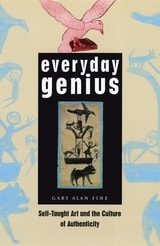
Fine considers the differences among folk art, outsider art, and self-taught art, explaining the economics of this distinctive art market and exploring the dimensions of its artistic production and distribution. Interviewing dealers, collectors, curators, and critics and venturing into the backwoods and inner-city homes of numerous self-taught artists, Fine describes how authenticity is central to the system in which artists—often poor, elderly, members of a minority group, or mentally ill—are seen as having an unfettered form of expression highly valued in the art world. Respected dealers, he shows, have a hand in burnishing biographies of the artists, and both dealers and collectors trade in identities as much as objects.
Revealing the inner workings of an elaborate and prestigious world in which money, personalities, and values affect one another, Fine speaks eloquently to both experts and general readers, and provides rare access to a world of creative invention-both by self-taught artists and by those who profit from their work.

Everyday Harm
Domestic Violence, Court Rites, and Cultures of ReconciliationMindie Lazarus-Black
University of Illinois Press, 2007
Exposing the powerful contradictions between empowering rights and legal rites
By investigating the harms routinely experienced by the victims and survivors of domestic violence, both inside and outside of law, Everyday Harm studies the limits of what domestic violence law can--and cannot--accomplish. Combining detailed ethnographic research and theoretical analysis, Mindie Lazarus-Black illustrates the ways persistent cultural norms and ingrained bureaucratic procedures work to unravel laws designed to protect the safety of society’s most vulnerable people.
Lazarus-Black’s fieldwork in Trinidad traces a story with global implications about why and when people gain the right to ask the court for protection from violence, and what happens when they pursue those rights in court. Why is itthat, in spite of laws designed to empower subordinated people, so little results from that legislation? What happens in and around courts that makes it so difficult for people to obtain their legally available rights and protections? In the case of domestic violence law, what can such legislation mean for women’s empowerment, gender equity, and protection? How do cultural norms and practices intercept the law?
Everyday Las Vegas
Local Life in a Tourist TownRex J. Rowley
University of Nevada Press, 2014
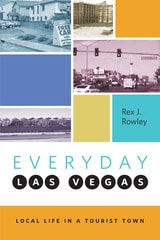
Rowley considers such topics as why people move to Las Vegas, the nature of their work and personal lives, the impact of growth and rapid change, and interaction with the overwhelmingly touristic side of the city. He also considers the benefits and perils of living in a nonstop twenty-four-hour city rich in entertainment options and easy access to gambling, drugs, and other addictions. His examination includes the previously unstudied role of neighborhood casinos patronized by locals rather than tourists and the impact that a very mobile population has on schools, churches, and community life.
Rowley considers the very different ways people perceive a place as insiders or outsiders, a dichotomy that arises when tourism is a mainstay of the local economy. His work offers insights into what Las Vegas can teach us about other cities and American culture in general. It also contributes to our understanding of how people relate to places and how the personality of a place influences the lives of people who live there.
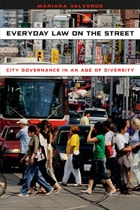
Everyday Law on the Street
City Governance in an Age of DiversityMariana Valverde
University of Chicago Press, 2012
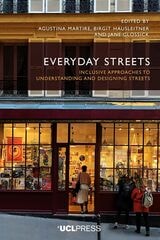
Everyday Streets
Inclusive Approaches to Understanding and Designing StreetsEdited by Agustina Martire, Birgit Hausleitner, and Jane Clossick
University College London, 2023
Everyday streets are both the most used and most undervalued of cities’ public spaces. They are places of social aggregation, bringing together people of different classes, genders, ages, ethnicities, and nationalities. They comprise not just the familiar outdoor spaces that we move through and interact in but also urban blocks, interiors, depths, and hinterlands, which are integral to streets’ nature and contribute to their vitality. Everyday Streets offers an inclusive approach to understanding and designing these streets through an analysis of them as found in cities around the globe. From the regular rectilinear urban blocks of Montreal to the carefully regulated narrow alleyways of Naples, and from the resilient market streets of London to the crammed commercial streets of Chennai, the streets in this book were all conceived with a certain level of control. Everyday Streets is a palimpsest of methods, perspectives, and recommendations that together provide a solid understanding of everyday streets, their degree of inclusiveness, and to what extent they could be more inclusive.
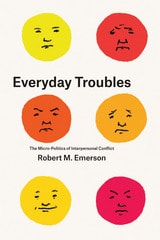
Everyday Troubles
The Micro-Politics of Interpersonal ConflictRobert M. Emerson
University of Chicago Press, 2015
To examine these issues, Emerson draws on interviews with college roommates, diaries documenting a wide range of irritation with others, conversations with people caring for family members suffering from Alzheimer’s, studies of family interactions, neighborly disputes, and other personal accounts. He considers how people respond to everyday troubles: in non-confrontational fashion, by making low-visibility, often secretive, changes in the relationship; more openly by directly complaining to the other person; or by involving a third party, such as friends or family. He then examines how some relational troubles escalate toward extreme and even violent responses, in some cases leading to the involvement of outside authorities like the police or mental health specialists.
By calling attention to the range of possible reactions to conflicts in interpersonal relationships, Emerson also reminds us that extreme, even criminal actions often result when people fail to find ways to deal with trouble in moderate, non-confrontational ways. Innovative and insightful, Everyday Troubles is an illuminating look at how we deal with discord in our relationships.
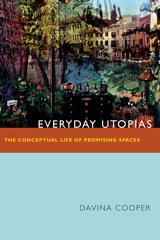
Everyday Utopias
The Conceptual Life of Promising SpacesDavina Cooper
Duke University Press, 2013
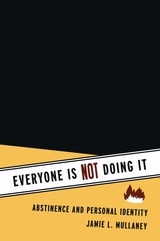
Everyone Is NOT Doing It
Abstinence and Personal IdentityJamie L. Mullaney
University of Chicago Press, 2005
Based on interviews with individuals who abstain from habits as diverse as sex, cigarettes, sugar, and technology, Everyone Is NOT Doing It identifies four different types of abstainers: quitters; those who have never done something and never will; those who haven't done something yet, but might in the future; and those who are not doing something temporarily. Mullaney assesses the commonalities that bind abstainers, as well as how perceptions of abstinence change according to social context, age, and historical era. In contrast to such earlier forms of abstinence as social protest, entertainment, or an instrument of social stratification, not doing something now gives people a more secure sense of self by offering a more affordable and manageable identity in a world of ever-expanding options.

Everyone Loves Live Music
A Theory of Performance InstitutionsFabian Holt
University of Chicago Press, 2020
For decades, millions of music fans have gathered every summer in parks and fields to hear their favorite bands at festivals such as Lollapalooza, Coachella, and Glastonbury. How did these and countless other festivals across the globe evolve into glamorous pop culture events, and how are they changing our relationship to music, leisure, and public culture? In Everyone Loves Live Music, Fabian Holt looks beyond the marketing hype to show how festivals and other institutions of musical performance have evolved in recent decades, as sites that were once meaningful sources of community and culture are increasingly subsumed by corporate giants.
Examining a diverse range of cases across Europe and the United States, Holt upends commonly-held ideas of live music and introduces a pioneering theory of performance institutions. He explores the fascinating history of the club and the festival in San Francisco and New York, as well as a number of European cities. This book also explores the social forces shaping live music as small, independent venues become corporatized and as festivals transform to promote mainstream Anglophone culture and its consumerist trappings. The book further provides insight into the broader relationship between culture and community in the twenty-first century. An engaging read for fans, industry professionals, and scholars alike, Everyone Loves Live Music reveals how our contemporary enthusiasm for live music is more fraught than we would like to think.
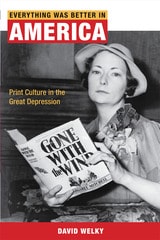
Everything Was Better in America
Print Culture in the Great DepressionDavid Welky
University of Illinois Press, 2007

Evicted from Eternity
The Restructuring of Modern RomeMichael Herzfeld
University of Chicago Press, 2009
Modern Rome is a city rife with contradictions. Once the seat of ancient glory, it is now often the object of national contempt. It plays a significant part on the world stage, but the concerns of its residents are often deeply parochial. And while they live in the seat of a world religion, Romans can be vehemently anticlerical. These tensions between the past and the present, the global and the local, make Rome fertile ground to study urban social life, the construction of the past, the role of religion in daily life, and how a capital city relates to the rest of the nation.
Michael Herzfeld focuses on Rome’s historic Monti district and the wrenching dislocation caused by rapid economical, political, and social change. Evicted from Eternity tells the story of the gentrification of Monti—once the architecturally stunning home of a community of artisans and shopkeepers now displaced by an invasion of rapacious real estate speculators, corrupt officials, dithering politicians, deceptive clerics, and shady thugs. As Herzfeld picks apart the messy story of Monti’s transformation, he ranges widely over many aspects of life there and in the rest of the city, richly depicting the uniquely local landscape of globalization in Rome.

Evidence
Howard S. Becker
University of Chicago Press, 2017
Becker has for seventy years been mulling over the problem of evidence. He argues that social scientists don’t take questions about the usefulness of their data as evidence for their ideas seriously enough. For example, researchers have long used the occupation of a person’s father as evidence of the family’s social class, but studies have shown this to be a flawed measure—for one thing, a lot of people answer that question too vaguely to make the reasoning plausible. The book is filled with examples like this, and Becker uses them to expose a series of errors, suggesting ways to avoid them, or even to turn them into research topics in their own right. He argues strongly that because no data-gathering method produces totally reliable information, a big part of the research job consists of getting rid of error. Readers will find Becker’s newest guidebook a valuable tool, useful for social scientists of every variety.

Evoking Newark
Fifty YearsCamilo José Vergara
Rutgers University Press, 2027
Evoking Newark is a systematic photographic documentation of Newark, NJ, from 1977-2024. This project creates a flexible framework for tracing Newark’s evolution. In this ambitious volume, award-winning photographer Camilo José Vergara creates an indelible record of the city, beginning along its most important commercial thoroughfares, such as Broad, Market, Springfield Ave., Clinton Ave., Central Ave., and MLK Jr. Blvd. He also takes a closer look at landmarks as well as more modest buildings whose folksy character caught his eye. As an urban documentary photographer, Vergara frequently returned to re-photograph Newark in order to track changes over time. For almost fifty years, he identified multiple street intersections that were particularly revealing settings for charting developments in the city.
Vergara examines in particular the slow renewal of these main thoroughfares, the demolition of high-rise housing projects, the ruination and clearing of industrial sites, the building of multi-family houses in once-vacant lots, and the construction of skyscrapers and cultural institutions. To complete the project, he added photos of graffiti and murals that comment on local and national events celebrating African American and Hispanic heroes and heroines and memorials remembering the dead. With these efforts at careful documentation, Brick City demonstrates the usefulness of a time-based documentary approach to the study of post-industrial urban areas. The photographs are accompanied by detailed captions about the locations portrayed, and in many cases by Vergara's own observations and transcripts of his interviews with local people as well as overheard conversations. The photos and captions are one way of telling us that “this happened,” and a means of refreshing the memories of viewers who have experienced Newark generations ago--recollections that contribute to their sense of identity.
Exclusionary Violence
Antisemitic Riots in Modern German HistoryChristhard Hoffmann, Werner Bergmann, and Helmut Walser Smith, Editors
University of Michigan Press, 2002
Exile and Creativity
Signposts, Travelers, Outsiders, Backward GlancesSusan Rubin Suleiman, ed.
Duke University Press, 1998
In essays that range chronologically from the Renaissance to the 1990s, geographically from the Danube to the Andes, and historically from the Inquisition to the Holocaust, the complexities and tensions of exile and the diversity of its experiences are examined. Recognizing exile as an interior experience as much as a physical displacement, this collection discusses such varied topics as intellectual exile and seventeenth-century French literature; different versions of home and of the novel in the writings of Bakhtin and Lukács; the displacement of James Joyce and Clarice Lispector; a young journalist’s meeting with James Baldwin in the south of France; Jean Renoir’s Hollywood years; and reflections by the descendents of European emigrés. Strikingly, many of the essays are themselves the work of exiles, bearing out once more the power of the personal voice in scholarship.
With the exception of the contribution by Henry Louis Gates Jr., these essays were originally published in a special double issue of Poetics Today in 1996. Exile and Creativity will engage a range of readers from those whose specific interests include the problems of displacement and diaspora and the European Holocaust to those whose broad interests include art, literary and cultural studies, history, film, and the nature of human creativity.
Contributors. Zygmunt Bauman, Janet Bergstrom, Christine Brooke-Rose, Hélène Cixous, Tibor Dessewffy, Marianne Hirsch, Denis Hollier, Henry Louis Gates Jr., Linda Nochlin, Leo Spitzer, Susan Rubin Suleiman, Thomas Pavel, Doris Sommer, Nancy Huston, John Neubauer, Ernst van Alphen, Alicia Borinsky, Svetlana Boym, Jacqueline Chénieux-Gendron
Exotic No More
Anthropology on the Front LinesEdited by Jeremy MacClancy
University of Chicago Press, 2002
In Exotic No More, an initiative of the Royal Anthropological Institute, some of today's most respected anthropologists demonstrate, in clear, unpretentious prose, the tremendous contributions that anthropology can make to contemporary society. They cover issues ranging from fundamentalism to forced migration, child labor to crack dealing, human rights to hunger, ethnicity to environmentalism, intellectual property rights to international capitalisms. But Exotic No More is more than a litany of gloom and doom; the essays also explore topics usually associated with leisure or "high" culture, including the media, visual arts, tourism, and music. Each author uses specific examples from their fieldwork to illustrate their discussions, and 62 photographs enliven the text.
Throughout the book, the contributors highlight anthropology's commitment to taking people seriously on their own terms, paying close attention to what they are saying and doing, and trying to understand how they see the world and why. Sometimes this bottom-up perspective makes the strange familiar, but it can also make the familiar strange, exposing the cultural basis of seemingly "natural" behaviors and challenging us to rethink some of our most cherished ideas—about gender, "free" markets, "race," and "refugees," among many others.
Contributors:
William O. Beeman
Philippe Bourgois
John Chernoff
E. Valentine Daniel
Alex de Waal
Judith Ennew
James Fairhead
Sarah Franklin
Michael Gilsenan
Faye Ginsburg
Alma Gottlieb
Christopher Hann
Faye V. Harrison
Richard Jenkins
Melissa Leach
Margaret Lock
Jeremy MacClancy
Jonathan Mazower
Ellen Messer
A. David Napier
Nancy Scheper-Hughes
Jane Schneider
Parker Shipton
Christopher B. Steiner