Results by title
8113 books match the query 'Literary Criticism' and 280 start with e
Embodying Technesis
Technology beyond WritingMark Hansen
University of Michigan Press, 2000
Embodying Technesis examines how technological changes have rendered obsolete notions of technology as machine and as text. Voicing a sustained plea for rethinking the technological, Hansen argues that radical technological changes--from the steam engine to the internet and virtual reality--have fundamentally altered conditions of perception and, in so doing, changed the prevailing structures of modern experience. By emphasizing the dynamic interaction between technologies and bodies, between the diffuse effects of technological shifts and the collective embodied experiences of contemporary agents, Hansen opens the path for a radical revision of our understanding of the technological.
Mark Hansen is Assistant Professor of English, Princeton University.
Emergency Writing
Irish Literature, Neutrality, and the Second World WarAnna Teekell
Northwestern University Press, 2018
Taking seriously Ireland’s euphemism for World War II, “the Emergency,” Anna Teekell’s Emergency Writing asks both what happens to literature written during a state of emergency and what it means for writing to be a response to an emergency.
Anchored in close textual analysis of works by Samuel Beckett, Elizabeth Bowen, Flann O’Brien, Louis MacNeice, Denis Devlin, and Patrick Kavanagh, and supported by archival material and historical research, Emergency Writing shows how Irish late modernism was a response to the sociopolitical conditions of a newly independent Irish Free State and to a fully emerged modernism in literature and art. What emerges in Irish writing in the wake of Independence, of the Gaelic Revival, of Yeats and of Joyce, is a body of work that invokes modernism as a set of discursive practices with which to counter the Free State’s political pieties.
Emergency Writing provides a new approach to literary modernism and to the literature of conflict, considering the ethical dilemma of performing neutrality—emotionally, politically, and rhetorically—in a world at war.
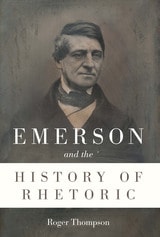
Emerson and the History of Rhetoric
Roger Thompson
Southern Illinois University Press, 2017
Moving beyond dominant literary critical thinking, Thompson argues that for Emerson, rhetoric was both imaginative and nonsystematic. This book covers the influences of rhetoricians from a range of periods on Emerson’s model of rhetoric. Drawing on Emerson’s manuscript notes, journal entries, and some of his rarely discussed essays and lectures as well as his more famous works, the author bridges the divide between literary and rhetorical studies, expanding our understanding of this iconic nineteenth-century man of letters.
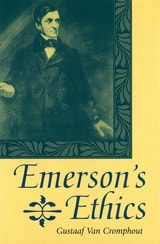
Emerson's Ethics
Gustaaf Van Cromphout
University of Missouri Press, 1999
Everyone knows that Emerson was a moralist, but what does that really mean? In an attempt to answer that question, Gustaaf Van Cromphout provides in Emerson's Ethics a detailed and philosophically grounded discussion of Emerson's moral thought. In this first comprehensive study of Emerson's ethics in the broader context of ethical theory, Van Cromphout explores Emerson's answers to what he considered the basic question facing any thinking human being: "How should I live?"
Van Cromphout begins by examining Emerson's college essays on ethics—essays that reflect his response to the moral thought prevailing in his intellectual environment. He then discusses the mature Emerson's attempt to establish ethics on a surer foundation than the religion inherited from his forebears, showing that Emerson was influenced significantly by Kant's moral thought.
He goes on to examine Emerson's search for a morally competent self in an age when the very notion of "self" was under serious threat. The ethical dimension of Emerson's politics and his theories of friendship and love, as well as the quest for a life worth living in the modern world, are also addressed. The last chapters are devoted to nature and literature. Van Cromphout explores Emerson's understanding of nature as a focus of ethical responsibility, and he examines the corruptibility of language, the ethics of self- expression, and the moral responsibilities of writers toward their audiences. Emerson believed that ethics permeated every aspect of human life. By examining Emerson's understanding of ethics and his contribution to ethical thought, Emerson's Ethics shows one of the truly great minds in American culture confronting issues of fundamental relevance to all human beings. Filling an important gap in Emerson studies, this book will appeal not only to readers interested in Emerson and his significance in American thought and literature but also to readers concerned with ethics and, more generally, with the interrelations of literature and philosophy.
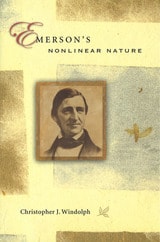
Emerson's Nonlinear Nature
Christopher J. Windolph
University of Missouri Press, 2007
In this provocative study, Christopher Windolph analyzes Emersonian naturalism from the standpoint of nonlinearity, offering new ways of reading and thinking about Emerson’s stance toward naturalism and the influence of science on his thought. Drawing on ideas in perspective theory, architecture, and nonlinear dynamics to argue that Emerson’s natural philosophy follows from his analysis of the development of organic forms, Windolph breaks new ground in Emerson studies by exploring how considerations of shape and the act of seeing underpin all of Emerson’s theories about nature.
Bringing to his study a focused attention to the history of Western science and philosophy, Windolph reexamines Emerson’s understanding of how the act of seeing occurs and of the eye’s ability to see through appearances to organizing principles, showing how Emerson’s naturalism extends beyond the narrow confines of traditional linear science. Through extensive readings of Emerson’s journals, essays, and lectures, Windolph shows that Emerson was an empirical idealist who integrated a scientific approach to nature with an exploration of nonlinear principles, revealing him to be more prescient in his writings about certain recent developments in scientific thought than has been realized.
This work makes a major contribution to the ongoing study of Emerson and science, expanding Emerson’s role as a major American philosopher while rebutting those who see him primarily as a rhetorician or poetic propagandist. Emerson’s Nonlinear Nature opens new ways of thinking about Emerson’s work in its nineteenth-century contexts, reassesses his reception in twentieth-century criticism, and makes a strong case for his continuing relevance in the century ahead.
Emerson, Romanticism, and Intuitive Reason
The Transatlantic "Light of All Our Day"Patrick J. Keane
University of Missouri Press, 2005
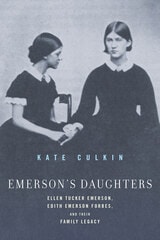
Emerson’s Daughters
Ellen Tucker Emerson, Edith Emerson Forbes, and Their Family LegacyKate Culkin
University of Massachusetts Press, 2025
Longlisted for the 2026 Plutarch Award
Ellen Tucker Emerson and Edith Emerson Forbes, the daughters of Lidian Jackson and Ralph Waldo Emerson, grew up in the heart of Concord, Massachusetts’s famed literary community. In a culture that celebrated self-reliance, Ellen and Edith formed a partnership that only strengthened as their paths diverged, with Ellen remaining in the family home and Edith marrying William Forbes, moving to Milton, Massachusetts, and having eight children. The partnership allowed them to tend to the demands and opportunities created by their father’s career, including serving as his secretaries and editors, and helped them shape his posthumous image. It also enabled them to adapt to historical developments stretching from the Civil War to American imperialism as well as personal ones, including Edith’s growing family and travel and study abroad, and inevitable ones brought on by the aging processes of their parents and themselves.
Emerson’s Daughters is a biography of a sisterhood, the first full-length study of Ellen’s and Edith’s lives. Building on archival research into the extensive correspondence between the sisters, it adds to the growing body of work on women’s contribution to Transcendentalism while opening a window onto the rich, and understudied, family life of the “Sage of Concord.”
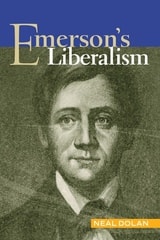
Emerson’s Liberalism
Neal Dolan
University of Wisconsin Press, 2009
Neal Dolan offers the first comprehensive and historically informed exposition of all of Ralph Waldo Emerson’s writings as a contribution to the theory and practice of liberal culture. Rather than projecting twentieth-century viewpoints onto the past, he restores Emerson’s great body of work to the classical liberal contexts that most decisively shaped its general political-cultural outlook—the libertarian-liberalism of John Locke, the Scottish Enlightenment, the American founders, and the American Whigs.
In addition to in-depth consideration of Emerson’s journals and lectures, Dolan provides original commentary on many of Emerson’s most celebrated published works, including Nature, the “Divinity School Address,” “History,” “Compensation,” “Experience,” the political addresses of the early 1840s, “An Address . . . on . . . The Emancipation of the Negroes in the British West Indies,” Representative Men, English Traits, and The Conduct of Life. He considers Emerson’s distinctive elaborations of foundational liberal values—progress, reason, work, property, limited government, rights, civil society, liberty, commerce, and empiricism. And he argues that Emerson’s ideas are a morally bracing and spiritually inspiring resource for the ongoing sustenance of American culture and civilization, reminding us of the depth, breadth, and strength of our common liberal inheritance.

Emily Dickinson and the Labor of Clothing
Daneen Wardrop
University of New Hampshire Press, 2009
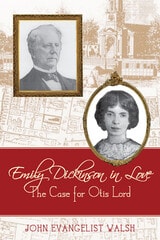
Emily Dickinson in Love
The Case for Otis LordWalsh, John Evangelist
Rutgers University Press, 2012
From the award-winning author of Poe the Detective: The Curious Circumstances Behind "The Mystery of Marie Roget" comes a compelling argument for the identity of Emily Dickinson’s true love
Proud of my broken heart
Since thou didst break it,
Proud of the pain I
Did not feel till thee . . .
Those words were written by Emily Dickinson to a married man. Who was he?
For a century or more the identity of Emily Dickinson’s mysterious “Master” has been eagerly sought, especially since three letters from her to him were found and published in 1955. In Emily Dickinson in Love, John Evangelist Walsh provides the first book-length treatment of this fascinating subject, offering a solution based wholly on documented facts and the poet’s own writings.
Crafting the affair as a love story of rare appeal, and writing with exquisite attention to detail, in Part I Walsh reveals and meticulously proves the Master to be Otis Lord, a friend of the poet’s father and a man of some reputation in law and politics. Part II portrays the full dimensions of their thirty-year romance, most of it clandestine, including a series of secret meetings in Boston.
After uncovering and confirming the Master’s identity, Walsh fits that information into known events of Emily’s life to make sense of facts long known but little understood—Emily’s decision to dress always in white, for instance, or her extreme withdrawal from a normal existence when she had previously been an active, outgoing friend to many men and women.
In a lengthy section of Notes and Sources, Walsh presents his proofs in abundant detail, demonstrating that the evidence favors one man so irresistibly that there is left no room for doubt. Each reader will decide if he has truly succeeded in making the case for Otis Lord.
Emily Dickinson's Approving God
Divine Design and the Problem of SufferingPatrick J. Keane
University of Missouri Press, 2008
Emily Dickinson's Music Book and the Musical Life of an American Poet
George Boziwick
University of Massachusetts Press, 2022
After years of studying piano as a young woman in her family home in Amherst, Massachusetts, Emily Dickinson curated her music book, a common practice at the time. Now part of the Dickinson Collection in the Houghton Library of Harvard University, this bound volume of 107 pieces of published sheet music includes the poet’s favorite instrumental piano music and vocal music, ranging from theme and variation sets to vernacular music, which was also enjoyed by the family’s servants.
Offering a fresh historical perspective on a poetic voice that has become canonical in American literature, this original study brings this artifact to life, documenting Dickinson’s early years of musical study through the time her music was bound in the early 1850s, which tellingly coincided with the writing of her first poems. Using Dickinson’s letters and poems alongside newspapers and other archival sources, George Boziwick explores the various composers, music sellers, and publishers behind this music and Dickinson’s attendance at performances, presenting new insights into the multiple layers of meaning that music held for her.
Emily Dickinson's Open Folios
Scenes of Reading, Surfaces of WritingMarta L. Werner
University of Michigan Press, 1996
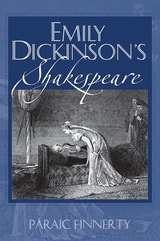
Emily Dickinson's Shakespeare
Paraic Finnerty
University of Massachusetts Press, 2006
Páraic Finnerty clarifies the essential role that Shakespeare had in Dickinson's life by locating her allusions to his writings within a nineteenth-century American context and by treating reading as a practice that is shaped, to a large extent, by culture. In the process, he throws new light on Shakespeare's multifaceted presence in Dickinson's world: in education, theater, newspapers, public lectures, reading clubs, and literary periodicals.
Through analysis of letters, journals, diaries, records, periodicals, newspapers, and marginalia, Finnerty juxtaposes Dickinson's engagement with Shakespeare with the responses of her contemporaries. Her Shakespeare emerges as an immoral dramatist and highly moral poet; a highbrow symbol of class and cultivation and a lowbrow popular entertainer; an impetus behind the emerging American theater criticism and an English author threatening American creativity; a writer culturally approved for women and yet one whose authority women often appropriated to critique their culture. Such a context allows the explication of Dickinson's specific references to Shakespeare and further conjecture about how she most likely read him.
Finnerty also examines those of Dickinson's responses to Shakespeare that deviated from what might have been expected and approved of by her culture. Imaginatively departing from the commonplace, Dickinson chose to admire three of Shakespeare's most powerful and transgressive female characters—Cleopatra, Queen Margaret, and Lady Macbeth—instead of his more worthy and virtuous heroines. More startling, although the poet found resonance for her own life in Hamlet, Romeo and Juliet, and Macbeth, she chose, in the racially charged atmosphere of nineteenth-century America, to identify with Shakespeare's most controversial character, Othello, thereby defying expectations once again.
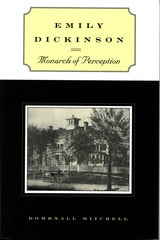
Emily Dickinson
Monarch of PerceptionDomhnall Mitchell
University of Massachusetts Press, 2000
Emily Dickinson has often been pictured as a sensitive but isolated poet—someone who published very little in her lifetime and limited herself to lyrics, considered to be the kind of poems most removed from social and political life. In recent years, scholars have challenged that view, and this book extends the discussion in valuable new directions.
Domhnall Mitchell begins by focusing on three historical phenomena—the railroad, the Dickinson homestead, and horticulture—and argues that poems about trains, home, and flowers engage with their meanings in ways that extend beyond the confines of the aesthetic. He shows how Dickinson's poems and letters reveal the full complexity of her position as a woman situated within a larger social and economic class.
In the second half of the book, Mitchell considers the ideological, textual, and editorial implications of Dickinson's strategic privatization of her art. He relates the particular forms of her manuscripts' appearance, distribution, and collation to aspects of her social as well as her literary consciousness. In a chapter that is certain to provoke debate, he explores what it means to read individual poems and letters in manuscript versions rather than in printed editions. By paying close attention to textual evidence, he makes the case that various features of the manuscripts are actually matters of accident or immediate convenience rather than the visual markers of a new aesthetic principle.
Mitchell closes by using the theories of Mikhail Bakhtin to explore the contradictions of a “private” poetry that engages verbally in multiple areas of nineteenth-century life and discourse. By attending to the contemporaneous particularities of recurrent words and images, he demonstrates that Dickinson could stay at home and still be at home in history, too.
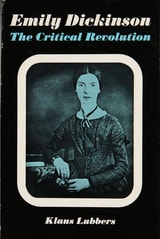
Emily Dickinson
The Critical RevolutionKlaus Lubbers
University of Michigan Press, 2025
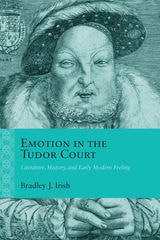
Emotion in the Tudor Court
Literature, History, and Early Modern FeelingBradley J. Irish
Northwestern University Press, 2018
Spanning the sixteenth century, Emotion in the Tudor Court explores Cardinal Thomas Wolsey and Henrician satire; Henry Howard, Earl of Surrey, and elegy; Sir Philip Sidney and Elizabethan pageantry; and Robert Devereux, Earl of Essex, and factional literature. It demonstrates how the dynamics of disgust,envy, rejection, and dread, as they are understood in the modern affective sciences, can be seen to guide literary production in the early modern court.
By combining Renaissance concepts of emotion with modern research in the social and natural sciences, Emotion in the Tudor Court takes a transdisciplinary approach to yield fascinating and robust ways to illuminate both literary studies and cultural history.
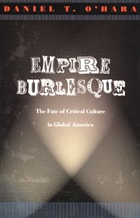
Empire Burlesque
The Fate of Critical Culture in Global AmericaDaniel T. O Hara
Duke University Press, 2003
Empire Burlesque presents several interrelated analyses through readings of a range of writers and cultural figures including Henry James, Freud, Said, De Man, Derrida, and Cordwainer Smith (an academic, spy, and classic 1950s and 1960s science fiction writer). It describes the debilitating effects of globalization on the university in general and the field of literary studies in particular, it critiques literary studies’ embrace of globalization theory in the name of a blind and vacant modernization, and it meditates on the ways critical reading and writing can facilitate an imaginative alternative to institutionalized practices of modernization. Drawing on Lacanian psychoanalytical theory, it diagnoses contemporary American Studies as typically driven by the mindless abjection and transference of professional identities.
A provocative commentary on contemporary cultural criticism, Empire Burlesque will inform debates on the American university across the humanities, particularly among those in literary criticism, cultural studies, and American studies.
Empire Islands
Castaways, Cannibals, and Fantasies of ConquestRebecca Weaver-Hightower
University of Minnesota Press, 2007
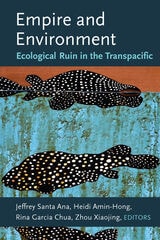
Empire and Environment
Ecological Ruin in the TranspacificJeffrey Santa Ana, Heidi Amin-Hong, Rina Garcia Chua, Zhou Xiaojing, Editors
University of Michigan Press, 2022
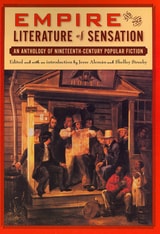
Empire and The Literature of Sensation
An Anthology of Nineteenth-Century Popular FictionAlemán, Jesse
Rutgers University Press, 2007
Most of the accounts, although widely distributed in nineteenth-century newspapers, pamphlets, or dime store novels, have long been out of print. Reprinted here for the first time are novelettes by two superstars of the cheap fiction industry, Ned Buntline and George Lippard. Also included are selections from one of the first dime novels as well as the narratives of Leonora Siddons and Sophia Delaplain, both who claim in their autobiographical pamphlets to have cross-dressed as men and participated in the Texas rebellion and Cuban filibustering.
Originally written for entertainment and enormously popular in their day, these sensational thrillers reveal for today's audiences how the rhetoric of empire was circulated for mass consumption and how imperialism generated domestic and cultural instability during the period of the American literary renaissance.
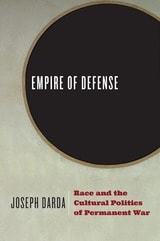
Empire of Defense
Race and the Cultural Politics of Permanent WarJoseph Darda
University of Chicago Press, 2019
From the formation of the DOD to the long wars of the twenty-first century, the United States rebranded war as the defense of Western liberalism from first communism, then crime, authoritarianism, and terrorism. Officials learned to frame state violence against Asians, Black and brown people, Arabs, and Muslims as the safeguarding of human rights from illiberal beliefs and behaviors. Through government documents, news media, and the writing and art of Joseph Heller, June Jordan, Trinh T. Minh-ha, I. F. Stone, and others, Darda shows how defense remade and sustained a weakened color line with new racial categories (the communist, the criminal, the authoritarian, the terrorist) that cast the state’s ideological enemies outside the human of human rights. Amid the rise of anticolonial and antiracist movements the world over, defense secured the future of war and white dominance.
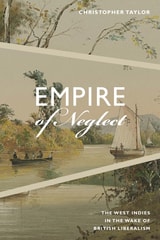
Empire of Neglect
The West Indies in the Wake of British LiberalismChristopher Taylor
Duke University Press, 2018
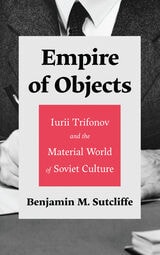
Empire of Objects
Iurii Trifonov and the Material World of Soviet CultureBenjamin M. Sutcliffe
University of Wisconsin Press, 2023
Scholars have both neglected Trifonov in recent years and focused their limited attention on the author’s most famous works, produced in the 1960s through 1980s. Yet almost half of his output was written before then. In Empire of Objects, Benjamin Sutcliffe takes care to consider the author’s entire oeuvre. Trifonov’s work reflects the paradoxes of a culture that could neither honestly confront the past nor create a viable future, one that alternated between trying to address and attempting to obscure the trauma of Stalinism. He became increasingly incensed by what he perceived as the erosion of sincerity in public and private life, by the impact of technology, and by the state’s tacit support of greed and materialism. Trifonov’s work, though fictional, offers a compelling window into Soviet culture.
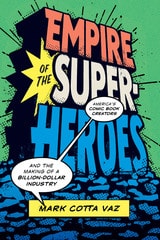
Empire of the Superheroes
America’s Comic Book Creators and the Making of a Billion-Dollar IndustryBy Mark Cotta Vaz
University of Texas Press, 2021
Superman may be faster than a speeding bullet, but even he can't outrun copyright law. Since the dawn of the pulp hero in the 1930s, publishers and authors have fought over the privilege of making money off of comics, and the authors and artists usually have lost. Jerry Siegel and Joe Shuster, the creators of Superman, got all of $130 for the rights to the hero.
In Empire of the Superheroes, Mark Cotta Vaz argues that licensing and litigation do as much as any ink-stained creator to shape the mythology of comic characters. Vaz reveals just how precarious life was for the legends of the industry. Siegel and Shuster—and their heirs—spent seventy years battling lawyers to regain rights to Superman. Jack Kirby and Joe Simon were cheated out of their interest in Captain America, and Kirby's children brought a case against Marvel to the doorstep of the Supreme Court. To make matters worse, the infant comics medium was nearly strangled in its crib by censorship and moral condemnation. For the writers and illustrators now celebrated as visionaries, the "golden age" of comics felt more like hard times.
The fantastical characters that now earn Hollywood billions have all-too-human roots. Empire of the Superheroes digs them up, detailing the creative martyrdom at the heart of a pop-culture powerhouse.
Empire's Companion
Virgilian Epics from Colonial IberoamericaErika Valdivieso
University of Chicago Press, 2026
A study of how Latin poetry shaped colonial aspirations in sixteenth- to eighteenth-century South and Central America.
Accompanying Iberian colonizers to the Americas, Virgil’s Aeneid inspired generations of colonial elites to write their own epic poems in Latin—priming imaginations for Spanish and Portuguese rule in the Americas. In Empire’s Companion, Erika Valdivieso recovers this lost strain of poetry for classicists and early Americanists alike. Each chapter introduces readers to a new poem that adapts Virgil for a different geographic context. These epics, Valdivieso argues, show elites working to reshape the New World in their own image, drawing on Virgil to think about the conquest of Indigenous peoples, to form new ideas about the globe, and to consider the shifting power dynamics between America and Europe. A powerful corrective to prevailing ideas about the reception of Virgil in the Americas, Empire’s Companion reveals the imperial potential of the Aeneid in the hands of governing elites.
Empowering Latina Narratives
Navigating the Education/Educación Conflict in the Third SpaceMargaret Cantú-Sánchez
University of Arizona Press, 2025
In this groundbreaking book, author Margaret Cantú-Sánchez takes on the U.S. educational system. Cantú-Sánchez introduces the concept of the education/educación conflict, where Latinas navigate the clash between home and school epistemologies under Anglocentric, assimilationist pedagogies.
By analyzing literature, such as Barbara Renaud González’s Golondrina, Why Did You Leave Me?, and education testimonios from seminal works like This Bridge Called My Back and Telling to Live, Cantú-Sánchez reveals how Latina/Chicana protagonists and students negotiate this conflict through a mestizaje of epistemologies—blending elements of both home and school cultures within the third space of education.
Cantú-Sánchez utilizes an interdisciplinary approach, deploying critical race theory, Chicana third-space feminism, and other pedagogical theories like sentipensante (a sensing/thinking) pedagogy employed by education scholar Laura Rendon, among others. By providing pivotal insights and strategies, she demonstrates how educators can implement culturally relevant pedagogies in their classrooms from K–12 through higher education, fostering environments where Latina/Chicana students can thrive without forsaking their cultural identities.
Empowering Latina Narratives not only identifies the challenges Latina/Chicana students face but also offers a roadmap for overcoming them, making this book an essential resource for scholars, educators, and students committed to culturally inclusive education.
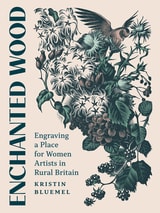
Enchanted Wood
Engraving a Place for Women Artists in Rural BritainKristin Bluemel
University of Minnesota Press, 2025
How women wood engravers helped reshape the visual and literary landscape of modern Britain
Amid the austerities of Depression-era publishing in Britain, urban editors and women artists recognized a unique opportunity to make and sell popular books illustrated with wood engravings. Enchanted Wood focuses on four of these artists—Gwen Raverat, Agnes Miller Parker, Clare Leighton, and Joan Hassall—weaving together their lives and work to tell a compelling and little-known story about a modern art that transformed the lives of both urban and rural women.
In this richly illustrated book, Kristin Bluemel demonstrates how women engravers used wood engraving to redraw professional and personal boundaries for themselves and other women. Depicting realistic scenes of country life, these illustrations are reminiscent of the aesthetic of eighteenth-century artist, naturalist, and print innovator Thomas Bewick even as they present distinctly modern reflections on gender, age, marriage, and motherhood. Reproducing and analyzing white-line engravings, pen and ink drawings, and rare color engravings from these four artists’ books for children and adults, Enchanted Wood reveals the magnified power and meaning of gentle arts for everyday people and for national patterns of work and play.
Integrating vignettes from Bewick’s natural history with formal, thematic, and cultural analysis of the women’s art as she recovers their medium, oeuvres, and stories, Bluemel shows how wood engraving led Raverat, Miller Parker, Leighton, and Hassall to achieve professional stature, public affirmation, and personal independence. A visually rich history of collective achievement, Enchanted Wood establishes these women engravers as important modern artists and literary figures in their own right.
Retail e-book files for this title are screen-reader friendly with images accompanied by short alt text and/or extended descriptions.
Encountering the Sovereign Other
Indigenous Science FictionMiriam C. Brown Spiers
Michigan State University Press, 2021
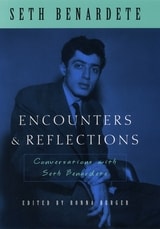
Encounters and Reflections
Conversations with Seth BenardeteSeth Benardete
University of Chicago Press, 2002
The first part of the book discloses vignettes about fellow students, colleagues, and acquaintances of Benardete's who later became major figures in the academic and intellectual life of twentieth-century America. We glimpse the student days of Allan Bloom, Stanley Rosen, George Steiner, and we discover the life of the mind as lived by well-known scholars such as David Grene, Jacob Klein, and Benardete's mentor Leo Strauss. We also encounter a number of other learned, devoted, and sometimes eccentric luminaries, including T.S. Eliot, James Baldwin, Werner Jaeger, John Davidson Beazley, and Willard Quine. In the book's second part, Benardete reflects on his own intellectual growth and on his ever-evolving understanding of the texts and ideas he spent a lifetime studying. Revisiting some of his recurrent themes—among them eros and the beautiful, the city and the law, and the gods and the human soul—Benardete shares his views on thinkers such as Plato, Homer, and Heidegger, as well as the relations between philosophy and science and between Christianity and ancient Roman thought.
Engaging and informative, Encounters and Reflections brings Benardete's thought to life to enlighten and inspire a new generation of thinkers.

Encounters with Kenneth Burke
William H. Rueckert
University of Illinois Press, 1994
1963 study, Kenneth Burke and the Drama of Human Relations, is often
credited with bringing the field of Burke studies into existence. Here, Rueckert
has gathered his "encounters" with Burke over the past thirty years--brieft
talks, position papers, rethinking and reformation of earlier ideas, and detailed
analyses of individual texts--into one volume that offers readers the best of
Burkean criticism.
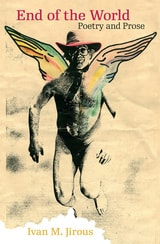
End of the World
Poetry and ProseIvan M. Jirous
Karolinum Press, 2020
End of the World is the first major collection in English of the works of this legendary Czech “madman.” Although nicknamed for his aggressive and rebellious behavior, Jirous’s writing reveal a refined, sophisticated, and even tender sensibility. Translated in part by Paul Wilson, an original member of the Plastic People, the book gathers his poems and letters from prison, as well as his book-length prose work, The True Story of the Plastic People, alongside critical essays on Jirous’s life and work. End of the World is an ideal introduction to the raucous writer who playwright Tom Stoppard referred to as one of the most interesting personalities in modern Czech history.
Endquote
Sots-Art Literature and Soviet Grand StyleMarina Balina, Nancy Condee, and Evgeny Dobrenko
Northwestern University Press, 1999
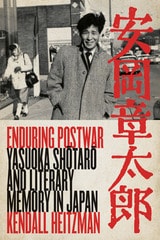
Enduring Postwar
Yasuoka Shotaro and Literary Memory in JapanKendall Heitzman
Vanderbilt University Press, 2019
For a long period, Yasuoka was at the center of the Japanese literary establishment, serving on prize committees and winning the major literary prizes of the era: the Akutagawa, the Noma, the Yomiuri, and the Kawabata. But what makes Yasuoka fascinating as a writer is the way that he consciously, deliberately resisted accepted narratives of modern Japanese history through his approach to personal and collective memory.
In Enduring Postwar, the first literary and biographical study of Yasuoka in English, Kendall Heitzman explores the element of memory in Yasuoka's work in the context of his life and evolving understanding of postwar Japan.
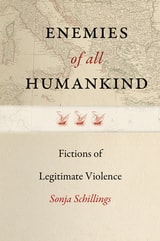
Enemies of All Humankind
Fictions of Legitimate ViolenceSonja Schillings
Dartmouth College Press, 2016
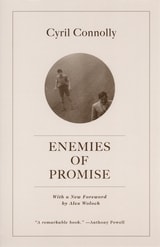
Enemies of Promise
Cyril Connolly
University of Chicago Press, 2008
“Whom the gods wish to destroy,” writes Cyril Connolly, “they first call promising.” First published in 1938 and long out of print, Enemies of Promise, an “inquiry into the problem of how to write a book that lasts ten years,” tests the boundaries of criticism, journalism, and autobiography with the blistering prose that became Connolly’s trademark. Connolly here confronts the evils of domesticity, politics, drink, and advertising as well as novelists such as Joyce, Proust, Hemingway, and Faulkner in essays that remain fresh and penetrating to this day.
“A fine critic, compulsive traveler, and candid autobiographer. . . . [Connolly] lays down the law for all writers who wanted to count. . . . He had imagination and decisive images flashed with the speed of wit in his mind.”—V. S. Pritchett, New York Review of Books
“Anyone who writes, or wants to write, will find something on just about every single page that either endorses a long-held prejudice or outrages, and that makes it a pretty compelling read. . . . You end up muttering back at just about every ornately constructed pensée that Connolly utters, but that’s one of the joys of this book.”—Nick Hornby, The Believer
“A remarkable book.”—Anthony Powell
Enemies of the People
The Destruction of Soviet Literary, Theater, and FKatherine Bliss Eaton
Northwestern University Press, 2002
Enemy Within
Culture Wars and Political Identity in Novels of the French Third RepublicGilbert D. Chaitin
The Ohio State University Press, 2008
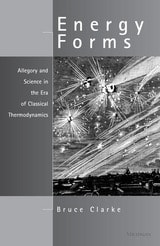
Energy Forms
Allegory and Science in the Era of Classical ThermodynamicsBruce Clarke
University of Michigan Press, 2001
The book begins with an overview of the interconnections between allegory in literature and allegory in science, then analyzes the interaction between energy and entropy and their personification in the literature of the times. Energy Forms draws on the writing of well-known literary and scientific authors including H. G. Wells, Camille Flammarion, Charles Howard Hinton and D. H. Lawrence, among others. The focus then shifts to the broad cultural tension between thermodynamic malaise and electromagnetic aspiration. Energy Forms uncovers the works of important but overlooked authors in the fields of science and literature and will appeal especially to those who are intrigued by interdisciplinary studies.
Bruce Clarke is Professor of English,Texas Tech University. He is the author of Dora Marsden and Early Modernism: Gender, Individualism, Science; Allegories of Writing: The Subject of Metamorphosis; and editor of The Body and the Text: Comparative Essays in Literature and Medicine.
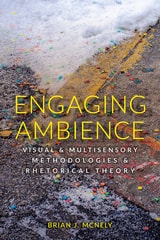
Engaging Ambience
Visual and Multisensory Methodologies and Rhetorical TheoryBrian McNely
Utah State University Press, 2024
By articulating theoretically sound methodologies and methods for the empirical study of rhetoric conceived as originary, immanent, and enveloping, Brian McNely contributes a methodological perspective that furthers new materialist theories of rhetoric. McNely demonstrates how scholars’ emergent theories of rhetoric call for new methodologies that can extend their reach, and in the process, he proposes a new conception of visual rhetoric. Engaging Ambience delineates methodologies and methods that help researchers in rhetoric and writing studies discover the ambient environments that condition and support everyday communication in all its forms.
Engaging Ambiencedetails and demonstrates visual and multisensory methodologies and methods for exploring the wondrous complexity of everyday communication. It will appeal to scholars and students of rhetorical theory, visual and multisensory rhetorics, and composition and writing studies.
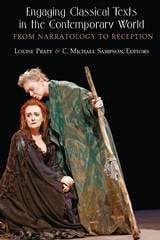
Engaging Classical Texts in the Contemporary World
From Narratology to ReceptionLouise Pratt and C. Michael Sampson, Editors
University of Michigan Press, 2018
This volume considers perennial favorites of classical literature—the Iliad and Odyssey, Greek tragedy, Roman comedy, the Argonautica, and Ovid’s Metamorphoses—and their influence on popular entertainment from Shakespeare’s plays to Hollywood’s toga films. It also engages with unusual and intriguing texts across the centuries, including a curious group of epigrams by Artemidorus found on the island sanctuary of Thera, mysterious fragments of two Aeschylean tragedies, and modern-day North African novels. These essays engage an array of theoretical approaches from other fields—narratology, cognitive literary theory, feminist theory, New Historicist approaches to gender and sexuality, and politeness theory—without forsaking more traditional philological methods. A new look at hospitality in the Argonautica shows its roots in the changed historical circumstances of the Hellenistic world. The doubleness of Helen and her phantom in Euripides’ Helen is even more complex than previously noted. Particularly illuminating is the recurrent application of reception studies, yielding new takes on the ancient reception of Homer by Apollonius and of Aeschylus by Macrobius, the reception of Plautus by Shakespeare, and more contemporary examples from the worlds of cinema and literature.
Students and scholars of classics will find much in these new interpretations and approaches to familiar texts that will expand their intellectual horizons. Specialists in other fields, particularly English, comparative literature, film studies, and gender and sexuality studies, will also find these essays directly relevant to their work.
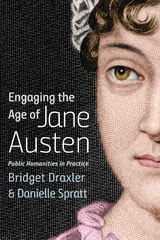
Engaging the Age of Jane Austen
Public Humanities in PracticeBridget Draxler and Danielle Spratt
University of Iowa Press, 2018
Humanities scholars, in general, often have a difficult time explaining to others why their work matters, and eighteenth-century literary scholars are certainly no exception. To help remedy this problem, literary scholars Bridget Draxler and Danielle Spratt offer this collection of essays to defend the field’s relevance and demonstrate its ability to help us better understand current events, from the proliferation of media to ongoing social justice battles.
The result is a book that offers a range of approaches to engaging with undergraduates, non-professionals, and broader publics into an appreciation of eighteenth-century literature. Essays draw on innovative projects ranging from a Jane Austen reading group held at the public library to students working with an archive to digitize an overlooked writer’s novel.
Reminding us that the eighteenth century was an exhilarating age of lively political culture—marked by the rise of libraries and museums, the explosion of the press, and other platforms for public intellectual debates—Draxler and Spratt provide a book that will not only be useful to eighteenth-century scholars, but can also serve as a model for other periods as well. This book will appeal to librarians, archivists, museum directors, scholars, and others interested in digital humanities in the public life.
Contributors: Gabriela Almendarez, Jessica Bybee, Nora Chatchoomsai, Gillian Dow, Bridget Draxler, Joan Gillespie, Larisa Good, Elizabeth K. Goodhue, Susan Celia Greenfield, Liz Grumbach, Kellen Hinrichsen, Ellen Jarosz, Hannah Jorgenson, John C. Keller, Naz Keynejad, Stephen Kutay, Chuck Lewis, Nicole Linton, Devoney Looser, Whitney Mannies, Ai Miller, Tiffany Ouellette, Carol Parrish, Paul Schuytema, David Spadafora, Danielle Spratt, Anne McKee Stapleton, Jessica Stewart, Colleen Tripp, Susan Twomey, Nikki JD White, Amy Weldon
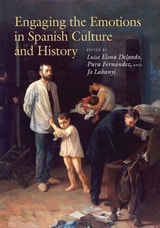
Engaging the Emotions in Spanish Culture and History
Luisa Elena Delgado
Vanderbilt University Press, 2016
The collection ranges across topics such as eighteenth-century sensibility, nineteenth-century concerns with the transmission of emotions, early twentieth-century cinematic affect, and the contemporary mobilization of political emotions including those regarding nonstate national identities. The complexities and effects of emotions are explored in a variety of forms—political rhetoric, literature, personal letters, medical writing, cinema, graphic art, soap opera, journalism, popular music, digital media—with attention paid to broader European and transatlantic implications.
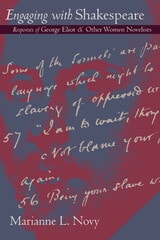
Engaging with Shakespeare
Responses of George Eliot and other Women NovelistsMarianne L. Novy
University of Iowa Press, 1998

England in 1819
The Politics of Literary Culture and the Case of Romantic HistoricismJames Chandler
University of Chicago Press, 1998
"1819? At first sight, it might not seem a 'hot date'; but as James Chandler argues in his powerful book, it would be a mistake to overlook a year of such exceptional political conflagration and literary pyrotechnics in British history. Chandler's study is a wide-ranging, enormously ambitious, densely packed, closely argued work."—John Brewer, New Republic
"The book's largest argument, and the source of its considerable revelations, is that late twentieth-century practices of cultural history-writing have their roots in the peculiar Romantic historicism born in post-Waterloo Britain."—Jon Klancher, Times Literary Supplement
"A monumental work of scholarship."—Terry Eagleton, The Independent
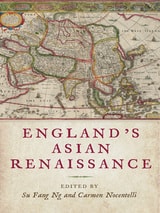
England's Asian Renaissance
Su Fang Ng
University of Delaware Press, 2022
Published by the University of Delaware Press. Distributed worldwide by Rutgers University Press.
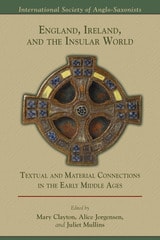
England, Ireland, and the Insular World
Textual and Material Connections in the Early Middle AgesMary Clayton
Arizona Center for Medieval and Renaissance Studies, 2017
ISAS Dublin 2013. England, Ireland and the Insular World: Textual and Material Connections in the Early Middle Ages is a collection of twelve essays related to the theme of the 2013 conference of the International Society of Anglo-Saxonists, ‘Insular Cultures’. Contributors cover a broad range of topics, from early medieval agriculture in Ireland and England, to sculpture, manuscript illumination and script, homilies, hagiography, aristocratic gift-giving, relics, calendars, Beowulf, and Anglo-Saxon perceptions of the Celtic peoples, considering connections, parallels and differences between Anglo-Saxon England and its insular neighbors. The volume will be of interest to all those working on Early Medieval history, literature, archaeology, liturgy, art, and manuscripts.
English Literary Renaissance, volume 52 number 1 (Winter 2022)
The University of Chicago Press
University of Chicago Press Journals, 2022
English Literary Renaissance, volume 52 number 2 (Spring 2022)
The University of Chicago Press
University of Chicago Press Journals, 2022
English Literary Renaissance, volume 52 number 3 (Autumn 2022)
The University of Chicago Press
University of Chicago Press Journals, 2022