Results by title
8812 books match the query 'Political Science' and 246 start with e
Environmental Politics and Policy in the West, Revised Edition
Zachary A. Smith
University Press of Colorado, 2007
Zachary A. Smith and John Freemuth bring together a roster of top scholars to explicate the issues noted above as well as other key questions in this new edition of Environmental Politics and Policy in the West, which was first published in 1993. This thoroughly revised and updated edition offers a comprehensive and current survey.
Contributors address the policy process as it affects western states, how bureaucracy and politics shape environmental dialogues in the West, how western states innovate environmental policies independently of Washington, and how and when science is involved (or ignored) in management of the West's federal lands. Experts in individual resource areas explore multifaceted issues such as the politics of dam removal and restoration, wildlife resource concerns, suburban sprawl and smart growth, the management of hard-rock mining, and the allocation of the West's tightly limited water resources. Contributors include: Leslie R. Alm, Carolyn D. Baber, Walter F. Baber, Robert V. Bartlett, Hugh Bartling, Matthew A. Cahn, R. McGreggor Cawley, Charles Davis, Sandra Davis, John C. Freemuth, Sheldon Kamieniecki, Matt Lindstrom, William R. Mangun, Denise McCain-Tharnstrom, Daniel McCool, Jaina L. Moan, and Zachary A. Smith.
Environmental Politics and Policy in the West, Third Edition
Zachary A. Smith
University Press of Colorado, 2016
In the third edition of Environmental Politics and Policy in the West, Zachary A. Smith and John C. Freemuth bring together a roster of top scholars to explicate the key issues involved. The volume has been completely updated to cover rapidly changing developments in the West, including climate change, land management politics and policy, science controversies, western water and river restoration, tribal sovereignty issues, the management of endangered species, and renewable energy development. Contributors also address how bureaucracy and politics shape environmental dialogues and explore multifaceted issues such as the politics of dam removal and restoration, wildlife resource concerns, suburban sprawl and smart growth, the management of renewable resources, public land reform and science, tribal sovereignty and energy, and the allocation of the West’s tightly limited water resources.
This timely new edition offers a comprehensive and current survey of influential western policy and environmental issues. It will be of great use to students of environmental studies and also public and environmental policy, as well as activists and professionals working in the environmental arena.
Contributors: Leslie R. Alm, Carolyn D. Baber, Walter F. Baber, Robert V. Bartlett, Hugh Bartling, Matthew A. Cahn, R. McGreggor Cawley, Charles Davis, Sandra Davis, John C. Freemuth, Sheldon Kamieniecki, Matt Lindstrom, William R. Mangun, Denise McCain-Tharnstrom, Daniel McCool, Jaina L. Moan, Zachary A. Smith
Environmental Security
Concepts, Challenges, and Case StudiesEdited by John M. Lanicci, Elisabeth Hope Murray, and James D. Ramsay
American Meteorological Society, 2019
The purpose of text is to better address the many aspects of environmental security and to represent this major area of academic research in an introductory text format that can be used in the rapidly growing number of homeland security studies programs as well as related degree programs. The concepts, challenges, and case studies in this text vitally extended such curricula, giving students a deeper appreciation for the critical role environmental security plays in overall state security, as well as for our nation, our way of life, and indeed for the human race at large.

Environmentality
Technologies of Government and the Making of SubjectsArun Agrawal
Duke University Press, 2005
Agrawal brings environment and development studies, new institutional economics, and Foucauldian theories of power and subjectivity to bear on his ethnographical and historical research. He visited nearly forty villages in Kumaon, where he assessed the state of village forests, interviewed hundreds of Kumaonis, and examined local records. Drawing on his extensive fieldwork and archival research, he shows how decentralization strategies change relations between states and localities, community decision makers and common residents, and individuals and the environment. In exploring these changes and their significance, Agrawal establishes that theories of environmental politics are enriched by attention to the interconnections between power, knowledge, institutions, and subjectivities.
Envisioning Eastern Europe
Postcommunist Cultural StudiesMichael D. Kennedy, Editor
University of Michigan Press, 1994

Envisioning Global LGBT Human Rights
(Neo)colonialism, Neoliberalism, Resistance and HopeEdited by Nancy Nicol, Adrian Jjuuko, Richard Lusimbo, Nick Mulé, Susan Ursel, Amar Wahab, and Phyllis Waugh
University of London Press, 2018
Envisioning the Faculty for the Twenty-First Century
Moving to a Mission-Oriented and Learner-Centered ModelKezar, Adrianna
Rutgers University Press, 2016
Ephemeral Territories
Representing Nation, Home, and Identity in CanadaErin Manning
University of Minnesota Press, 2003
Explores questions of identity and belonging through the lens of Canadian cultural production
What does it mean to be at home? In a critical engagement with notions of territory, identity, racial difference, separatism, multiculturalism, and homelessness, this book delves into the question of what it means to belong—in particular, what it means to be at home in Canada. Ephemeral Territories weaves together many narratives and representations of Canadian identity—from political philosophy and cultural theory to art and films such as Srinivas Krishna’s Lulu, Clement Virgo’s Rude, and Charles Biname’s Eldorado—to develop and complicate familiar views of identity and selfhood.
Canadian identity has historically been linked to a dual notion of culture traceable to the French and English strains of Canada’s colonial past. Erin Manning subverts this binary through readings that shift our attention from nationalist constructions of identity and territory to a more radical and pluralizing understanding of the political. As she brings together issues specific to Canada (such as Quebec separatism and Canadian landscape painting) and concerns that are more transnational (such as globalization and immigration), Manning emphasizes the truly cross-cultural nature of the problems of racism, gender discrimination, and homelessness. Thus this impassioned reading of Canadian texts also makes an important contribution to philosophical, cultural, and political discourses across the globe.
Epic Revisionism
Russian History and Literature as Stalinist PropagandaEdited by Kevin M. F. Platt and David Brandenberger
University of Wisconsin Press, 2006
Focusing on a number of historical and literary personalities who were regarded with disdain in the aftermath of the 1917 revolution—figures such as Peter the Great, Ivan the Terrible, Alexander Pushkin, Leo Tolstoy, and Mikhail Lermontov—Epic Revisionism tells the fascinating story of these individuals’ return to canonical status during the darkest days of the Stalin era.
An inherently interdisciplinary project, Epic Revisionism features pieces on literary and cultural history, film, opera, and theater. This volume pairs scholarly essays with selections drawn from Stalin-era primary sources—newspaper articles, unpublished archival documents, short stories—to provide students and specialists with the richest possible understanding of this understudied phenomenon in modern Russian history.“These scholars shed a great deal of light not only on Stalinist culture but on the politics of cultural production under the Soviet system.”—David L. Hoffmann, Slavic Review
Epidemic Empire
Colonialism, Contagion, and Terror, 1817–2020Anjuli Fatima Raza Kolb
University of Chicago Press, 2021
Terrorism is a cancer, an infection, an epidemic, a plague. For more than a century, this metaphor has figured insurgent violence as contagion in order to contain its political energies. In Epidemic Empire, Anjuli Fatima Raza Kolb shows that this trope began in responses to the Indian Mutiny of 1857 and tracks its tenacious hold through 9/11 and beyond. The result is the first book-length study to approach the global War on Terror from a postcolonial literary perspective.
Raza Kolb assembles a diverse archive from colonial India, imperial Britain, French and independent Algeria, the postcolonial Islamic diaspora, and the neoimperial United States. Anchoring her book are studies of four major writers in the colonial-postcolonial canon: Rudyard Kipling, Bram Stoker, Albert Camus, and Salman Rushdie. Across these sources, she reveals the tendency to imagine anticolonial rebellion, and Muslim insurgency specifically, as a virulent form of social contagion. Exposing the long history of this broken but persistent narrative, Epidemic Empire is a major contribution to the rhetorical history of our present moment.
Equal Freedom
Stephen Darwall, Editor
University of Michigan Press, 1995
Equal Justice in the Balance
America's Legal Responses to the Emerging Terrorist ThreatRaneta Lawson Mack and Michael J. Kelly
University of Michigan Press, 2004
-Michael Ratner, President, Center for Constitutional Rights, from the foreword
"A compelling and sophisticated critique of the U.S. government's post-9/11 actions. Mack and Kelly set the stage with the historical perspective on America's response to terrorism and the assessment of terrorist threats, before launching into a comprehensive analysis of the USA Patriot Act. Their hard-hitting approach and easy-to-read style makes for a fascinating treatment of the government's legislative and executive response to the attacks."
-Michael P. Scharf, Case Western Reserve University School of Law
With its sweeping critique of the USA Patriot Act and the Bush administration's maneuvers in pursuit of terrorists, Equal Justice in the Balance is a sobering and exacting look at American legal responses to terrorism, both before and after 9/11.
The authors detail wide-ranging and persuasive evidence that American antiterrorism legislation has led to serious infringements of our civil rights. They show us how deviations from our fundamental principles of fairness and justice in times of heightened national anxiety-whether the Red Scare, World War II, or the War on Terrorism-have resulted in overreaction and excess, later requiring apologies and reparations to those victimized by a paranoia-driven justice system.
While terrorist attacks-especially on a large scale and on American soil-damage our national pride and sense of security, the authors offer powerful arguments for why we must allow our judicial infrastructure, imperfect as it is, to respond without undue interference from the politics of anger and vengeance.
Equaliberty in the Dutch Caribbean
Ways of Being Non/SovereignYvon van der Pijl
Rutgers University Press, 2022
Equaliberty
Political EssaysÉtienne Balibar
Duke University Press, 2014
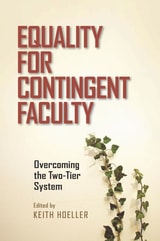
Equality for Contingent Faculty
Overcoming the Two-Tier SystemKeith Hoeller
Vanderbilt University Press, 2014
Equality for Contingent Faculty brings together eleven activists from the United States and Canada to describe the problem, share case histories, and offer concrete solutions. The book begins with three accounts of successful organizing efforts within the two-track system. The second part describes how the two-track system divides the faculty into haves and have-nots and leaves the majority without the benefit of academic freedom or the support of their institutions. The third part offers roadmaps for overcoming the deficiencies of the two-track system and providing equality for all professors, regardless of status or rank.
Equality in the Nordic World
Carsten Jensen
University of Wisconsin Press, 2021
The four types of equality have their origins in unique political compromises made in the twentieth century. The resulting social market economies of these countries affect their growth and levels of equality even today.
Equality of Permission
The Politics of Feasible LiberalismDeirdre Nansen McCloskey
University of Chicago Press, 2026
From a revered public intellectual, an essential argument for the political preconditions of a liberal society.
Liberalism has always suffered from messaging challenges. It simultaneously implies a pursuit of individual liberty and social equality, two projects often regarded as at odds. Or: Liberal means the opposite of conservative. Except when it doesn’t. The list goes on.
Liberal bard Deirdre Nansen McCloskey understands these rhetorical troubles. Equality of Permission is her stirring and career-defining intervention on this essentially contested yet critical topic—a forceful case for liberalism as our best hope, and an essential vision of the political conditions necessary for its survival. McCloskey prescribes a liberalism built around liberty from the bottom up: “equality before the law and equality of political and economic permissions,” lightly administered.
The state, McCloskey argues, is increasingly the source of our discontents—an illiberal institution, hindered by a quixotic fixation on pursuing equality of wealth or opportunity. Equality of Permission evangelizes for a better, and earlier, version of liberalism—that of John Locke, Adam Smith, Mary Wollstonecraft, and Henry David Thoreau—as against a top-down quest for an unattainable utopia. McCloskey shows that statism in pursuit of a chimerical general will, even when well-intentioned, leads to tyranny.
Brimming with energy and erudition, drawing on wisdoms from Alexis de Tocqueville to Mae West, Equality of Permission is McCloskey at the peak of her powers—brilliant, lacerating, garrulous, funny, worldly, and warm. Amid intense debate over the use and abuse of government institutions, McCloskey shares her singular vision for a true democracy, one grounded in respect and conducive to universal human flourishing.
Equality of Permission
The Politics of Feasible LiberalismDeirdre Nansen McCloskey
University of Chicago Press, 2026
From a revered public intellectual, an essential argument for the political preconditions of a liberal society.
Liberalism has always suffered from messaging challenges. It simultaneously implies a pursuit of individual liberty and social equality, two projects often regarded as at odds. Or: Liberal means the opposite of conservative. Except when it doesn’t. The list goes on.
Liberal bard Deirdre Nansen McCloskey understands these rhetorical troubles. Equality of Permission is her stirring and career-defining intervention on this essentially contested yet critical topic—a forceful case for liberalism as our best hope, and an essential vision of the political conditions necessary for its survival. McCloskey prescribes a liberalism built around liberty from the bottom up: “equality before the law and equality of political and economic permissions,” lightly administered.
The state, McCloskey argues, is increasingly the source of our discontents—an illiberal institution, hindered by a quixotic fixation on pursuing equality of wealth or opportunity. Equality of Permission evangelizes for a better, and earlier, version of liberalism—that of John Locke, Adam Smith, Mary Wollstonecraft, and Henry David Thoreau—as against a top-down quest for an unattainable utopia. McCloskey shows that statism in pursuit of a chimerical general will, even when well-intentioned, leads to tyranny.
Brimming with energy and erudition, drawing on wisdoms from Alexis de Tocqueville to Mae West, Equality of Permission is McCloskey at the peak of her powers—brilliant, lacerating, garrulous, funny, worldly, and warm. Amid intense debate over the use and abuse of government institutions, McCloskey shares her singular vision for a true democracy, one grounded in respect and conducive to universal human flourishing.

Erasing Iraq
The Human Costs of CarnageMichael Otterman, Richard Hil, Paul Wilson, and Dahr Jamail
Pluto Press, 2010
For nearly two decades, the US and its allies have prosecuted war and aggression in Iraq. Erasing Iraq shows in unparalleled detail the devastating human cost of the war in Iraq.
Western governments and the mainstream media continue to ignore or play down the human costs of the war on Iraqi citizens This has allowed them to present their role as the benign guardians of Iraqi interests. The authors deconstruct this narrative by presenting a portrait of the total carnage in Iraq today. From Iraqi refugees in Syria, Jordan and the West, to civilians left behind, and other witnesses, this the story of the war told by those who experienced it firsthand.
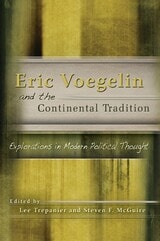
Eric Voegelin and the Continental Tradition
Explorations in Modern Political ThoughtEdited by Lee Trepanier & Steven F. McGuire
University of Missouri Press, 2011
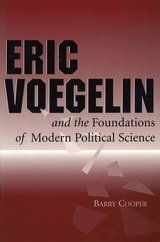
Eric Voegelin and the Foundations of Modern Political Science
Barry Cooper
University of Missouri Press, 1999
This important new work is a major analysis of the foundation of Eric Voegelin's political science. Barry Cooper maintains that the writings Voegelin undertook in the 1940s provide the groundwork for the brilliant book that is one of his best known, The New Science of Politics. At the time of that book's publication, however, few were aware of the enormous knowledge and accomplished scholarship that lay behind its illuminating, although sometimes baffling, formulations.
By focusing on several of the key chapters in Voegelin's eight- volume History of Political Ideas, especially the studies of Bodin, Vico, and Schelling, Cooper shows how those studies provide the basis for Voegelin's thought. Investigating Voegelin's study of Oriental influences on Western political "ideas," especially Mongol constitutional law, and his study of Toynbee, Cooper seeks to demonstrate the vast range of materials Voegelin used.
Cooper contends that, as with other great thinkers, political crisis, specifically the world war of 1939-1945, stimulated Voegelin's intellectual and spiritual achievement. He provides an analysis of Voegelin's immediate concern with the course of World War II, his ability to understand those dramatic events in a large context, and his ability to provide an insightful account of the causes, the significance, and the consequences of the spiritual and political disorder that was evident all around him.
In Eric Voegelin and the Foundations of Modern Political Science, Cooper makes the connection between Voegelin's political writings of the 1940s and the meditative interpretations that began to appear with the publication of Anamnesis and with the later volumes of Order and History much more intelligible than does any existing discussion of Voegelin. Scholars in intellectual history and political science will benefit enormously from this valuable new addition to Voegelin studies.
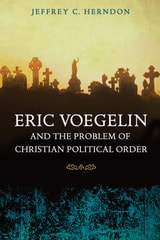
Eric Voegelin and the Problem of Christian Political Order
Jeffrey C. Herndon
University of Missouri Press, 2007
Although some critics of Eric Voegelin’s later work have faulted his failure to deal with the historical Jesus and to address the implications of Christianity for social and political life, the recent publication of Voegelin’s History of Political Ideas has allowed a more complete assessment of his position regarding the Christian political order. This book addresses that criticism through an analysis of Voegelin’s early work.
In Eric Voegelin and the Problem of Christian Political Order, Jeffrey C. Herndon analyzes the development of Voegelin’s thought regarding the origins of Christianity in the person of Jesus, the development of the church in the works of Paul, and the relationship between an immanent institutional order symbolizing the divine presence and the struggle for social and political order. Focusing on the tension between a spiritual phenomenon based on Pauline faith and the institutionalization of that experience in the church, Herndon offers one of the first examinations of the relationship of the History of Political Ideas to Voegelin’s larger body of work.
In his wide-ranging study, Herndon explores Voegelin’s examination of the problem of Christian political order from the inception of Christianity through the Great Reformation. He also presents a clarification of Voegelin’s theory of civilizational foundation and of Voegelin’s philosophy of history with regard to Christianity and Western political order.
Herndon addresses not only the nagging problem in Voegelin scholarship regarding his relationship with the historical Jesus but also the “Pauline compromises with the world” that enabled Christianity to become the instrument by which the West was civilized. He also shows that Voegelin’s interpretation of the historical pressures released by the Great Reformation is important to an understanding of his later work regarding the negative effect of Christian symbols in the creation of ideological disorder.
Eric Voegelin and the Problem of Christian Political Order clarifies issues in Voegelin studies regarding the intersection between political theory and Christian concerns, addressing the relation of religious experience to the public sphere of political life in the West and helping to explain Voegelin’s contention that the death of the spirit is the price of progress. It offers scholars a perspective heretofore lacking in Voegelin scholarship and a clearer view of Voegelin’s understanding of the Christian dispensation and its influence on the course of Western development, history, and philosophy.
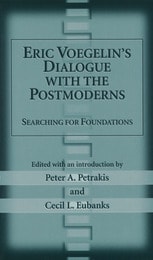
Eric Voegelin's Dialogue with the Postmoderns
Searching for FoundationsEdited & Intro by Peter A. Petrakis & Cecil L. Eubanks
University of Missouri Press, 2004
This collection of essays endeavors to generate a dialogue between Eric Voegelin and other prominent twentieth-century thinkers and explore some of the more perplexing issues in contemporary political theory. Each essay rests on the underlying question: is it possible or desirable to construct or discover political foundations without resorting to metaphysical or essentialist constructs? The introduction focuses on the two nineteenth-century thinkers, Nietzsche and Husserl, who have framed the debate about modernity and postmodernity; thereafter, the book examines Voegelin's ideas as compared to those of other twentieth-century thinkers.
Discussed within the volume are Levinas and the precedence of ethics, Ricoeur's theory of narrative representation, Deleuze and the philosophy of immanence, Voegelin's relationship to a speech- dimension theory of human behavior, and Patocka's theory of pre- metaphysical transcendence in Socrates. What will impress scholars most about this collection is the provocative dialogue created between Voegelin and other major thinkers of postmodernism that addresses the issue of establishing foundations without foundationalism.
Erotic Knowledge
Toward a Lesbian Feminist Political TheoryElena Gambino
Duke University Press, 2026
Errand into the Wilderness of Mirrors
Religion and the History of the CIAMichael Graziano
University of Chicago Press, 2021
Michael Graziano’s intriguing book fuses two landmark titles in American history: Perry Miller’s Errand into the Wilderness (1956), about the religious worldview of the early Massachusetts colonists, and David Martin’s Wilderness of Mirrors (1980), about the dangers and delusions inherent to the Central Intelligence Agency. Fittingly, Errand into the Wilderness of Mirrors investigates the dangers and delusions that ensued from the religious worldview of the early molders of the Central Intelligence Agency. Graziano argues that the religious approach to intelligence by key OSS and CIA figures like “Wild” Bill Donovan and Edward Lansdale was an essential, and overlooked, factor in establishing the agency’s concerns, methods, and understandings of the world. In a practical sense, this was because the Roman Catholic Church already had global networks of people and safe places that American agents could use to their advantage. But more tellingly, Graziano shows, American intelligence officers were overly inclined to view powerful religions and religious figures through the frameworks of Catholicism. As Graziano makes clear, these misconceptions often led to tragedy and disaster on an international scale. By braiding the development of the modern intelligence agency with the story of postwar American religion, Errand into the Wilderness of Mirrors delivers a provocative new look at a secret driver of one of the major engines of American power.
Escaping Kakania
Eastern European Travels in Colonial Southeast AsiaJan Mrázek
Central European University Press, 2024
Escaping Kakania is about fascinating characters—soldiers, doctors, scientists, writers, painters—who traveled from their eastern European homelands to colonial Southeast Asia. Their stories are told by experts on different countries in the two regions, who bring diverse approaches into a conversation that crosses disciplinary and national borders.
The 14 chapters deal with the diverse encounters of eastern Europeans with the many faces of colonial southeast Asia. Some essays directly engage with post-colonial studies, contributing to an ongoing critical re-evaluation of eastern European “semi-peripheral” (non-)involvement in colonialism. Other chapters disclose a range of perspectives and narratives that illuminate the plurality of the travelers’ positions while reflecting on the specificity of the eastern European experience.
The travellers moved—as do the chapter authors—between two regions that are off-centre, in-between, shiftingly “Eastern,” and disorientingly heterogeneous, thus complicating colonial and postcolonial notions of “Europe,” “East,” and East-West distinctions. Both at home and overseas, they navigated among a multiplicity of peoples, “races,” and empires, Occidents and Orients, fantasies of the Self and the Other, adopting/adapting/mimicking/rejecting colonialist identities and ideologies. They saw both eastern Europe and southeast Asia in a distinctive light, as if through each other—and so will the readers of Escaping Kakania.
Essay on Exoticism
An Aesthetics of DiversityVictor Segalen
Duke University Press, 2002
Written over the course of fourteen years between 1904 and 1918, at the height of the age of imperialism, Essay on Exoticism encompasses Segalen’s attempts to define “true Exoticism.” This concept, he hoped, would not only replace nineteenth-century notions of exoticism that he considered tawdry and romantic, but also redirect his contemporaries’ propensity to reduce the exotic to the “colonial.” His critique envisions a mechanism that appreciates cultural difference—which it posits as an aesthetic and ontological value—rather than assimilating it: “Exoticism’s power is nothing other than the ability to conceive otherwise,” he writes.
Segalen’s pioneering work on otherness anticipates and informs much of the current postcolonial critique of colonial discourse. As such Essay on Exoticism is essential reading for both cultural theorists or those with an interest in the politics of difference and diversity.
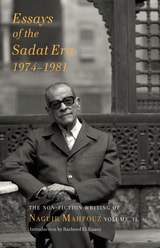
Essays of the Sadat Era
The Non-Fiction of Naguib Mahfouz: Volume IINaguib Mahfouz
Gingko, 2025
In these essays of the Sadat era, published in the state-owned Al-Ahram newspaper, Mahfouz seems an unreliable narrator. The tension between an author who rails against censorship, yet is bound within its confines, runs through this fascinating body of nonfiction writing. Nonetheless, Mahfouz’s own thoughts are unmistakably present. We gain his insight into diverse political topics, such as socioeconomic class, democracy and dictatorship, and Islam and extremism, topics which still seem highly pertinent to the situation in Egypt today.
A vital accompaniment to his literature, this collected work is contemporaneous with Mahfouz’s fictional works such as Karnak Café, The Harafish, and Arabian Nights and Days. Essays of the Sadat Era is the second of four volumes in which Mahfouz’s nonfiction work is translated into English for the first time.
Essays on Genocide and Humanitarian Intervention
Guenter Lewy
University of Utah Press, 2012
The essays in this book, written over a span of some twenty years but updated for this publication, discuss episodes of mass murder that are often considered instances of genocide: the large-scale killing of Armenians in Ottoman Turkey during World War I, the near-extinction of North America’s Indian population, the vicious persecution of the “Roma” or Gypsies under the Nazi regime. But in line with Article II of the Genocide Convention of 1948, Lewy stresses the crucial importance of looking closely at the intent of the perpetrators. In contrast to the Holocaust, the killers in the atrocities mentioned above did not seek to destroy an entire people, and so, these three large-scale killings do not deserve the label of genocide.
Lewy argues that affirming the distinctiveness of the Holocaust does not deny, downgrade, or trivialize the suffering of other people. The crimes against the Ottoman Armenians, the American Indians, and the Gypsies—even if they did not reach the threshold of genocide—involved horrendous suffering and a massive loss of life. The genocides of Cambodia and Rwanda that took place in the second half of the twentieth century remind us that man’s inhumanity to man can take many forms and is not the special prerogative of any particular group. The last essay of the collection deals with the complications of humanitarian intervention to prevent genocide. As the recent support of the Libyan rebels by NATO demonstrates, the issues raised here remain topical and controversial.

Essays on Kant's Political Philosophy
Edited by Howard Lloyd Williams
University of Chicago Press, 1992
overshadowed by his compatriots Hegel and Marx. With his
strong defense of the rights of the person and his deep
insight into the strengths and weaknesses of modern society
Kant, possibly more than any other political thinker,
anticipated the problems of the late twentieth century.
Kant's political philosophy, wedded as it is to rights,
reform and gradual progress, is emerging from the shadows
cast by Hegelian and Marxist thinking about the state.
In this volume, thirteen distinguished contributors from the
United States, Canada, Britain, and Germany cast light on
important aspects of Kant's liberal thinking. Key topics
covered include Kant's liberal reformism, his relation with
Hegel, his attitude to women, the use of reason, revolution,
Kant's optimism and his moral and legal rigorism.
Howard Williams is a reader in political theory in the
Department of International Politics, University College of
Wales, Aberystwyth. His previous publications include
Kant's Political Philosophy, Concepts of
Ideology, and Hegel, Heraclitus, and Marx's
Dialectic.
Essays on Liberalism and the Economy, Volume 18
F. A. Hayek
University of Chicago Press, 2022
Across seventeen volumes to date, the University of Chicago Press’s Collected Works of F. A. Hayek series has anthologized the diverse and prolific writings of the Austrian economist synonymous with classical liberalism. Essays on Liberalism and the Economy traces the author’s long and evolving writings on the cluster of beliefs he championed most: liberalism, its core tenets, and how its tradition represents the best hope for Western civilization.
This volume contains material from almost the entire span of Hayek’s career, the earliest from 1931 and the last from 1984. The works were written for a variety of purposes and audiences, and they include—along with conventional academic papers—encyclopedia entries, after-dinner addresses, a lecture for graduate students, a book review, newspaper articles, and letters to the editors of national newspapers. While many are available elsewhere, two have never appeared in print, and two others have not been published in English.
The varied formats collected here are enriched by Hayek’s changing voice at different stages of his life. Some of the pieces resonate as high-minded and noble; some are meant as cuts to “intellectuals” (a pejorative term when used by Hayek) like Keynes and Galbraith. All serve to distill important threads of his worldview.
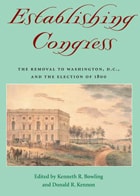
Establishing Congress
The Removal to Washington, D.C., and the Election of 1800Kenneth R. Bowling
Ohio University Press, 2005
Establishing Congress: The Removal to Washington, D.C., and the Election of 1800 focuses on the end of the 1790s, when, in rapid succession, George Washington died, the federal government moved to Washington, D.C., and the election of 1800 put Thomas Jefferson and the Democratic-Republican Party in charge of the federal government.
Establishing Congress dispels the myths and misinformation that surround the federal government’s move to Washington and demonstrates that the election of 1800 changed American party politics forever, establishing the success of the American experiment in government and completing the founding of the Republic. It also contends that the lame-duck session of Congress had far-reaching implications for the governance of the District of Columbia. Later chapters examine aspects of the political iconography of the Capitol—one illuminating Jefferson’s role in turning the building into a temple for the legislature and an instrument for nation-building, another analyzing the fascinating decades-long debate over whether to bury George Washington in the Capitol.
The book considers as well the political implications of social life in early Washington, examining the political lobbying by Washington women within a social context and detailing the social and political life in the city’s homes, hotels, boardinghouses, and eating messes. Establishing Congress is an invaluable reference work for anyone interested in these pivotal moments in American history.
Establishment and Meritocracy
Peter Hennessy
Haus Publishing, 2014
With its penetrating examination of the British school system and postwar trends, Establishment and Meritocracy is an important resource for those concerned about the link between education and later success, both for individuals and their societies.
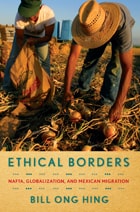
Ethical Borders
NAFTA, Globalization, and Mexican MigrationAuthored by Bill Ong Hing
Temple University Press, 2010
In his topical new book, Ethical Borders, Bill Ong Hing asks, why do undocumented immigrants from Mexico continue to enter the United States and, what would discourage this surreptitious traffic? An expert on immigration law and policy, Hing examines the relationship between NAFTA, globalization, and undocumented migration, and he considers the policy options for controlling immigration. He develops an ethical rationale for opening up the U.S./Mexican border, as well as improving conditions in Mexico so that its citizens would have little incentive to migrate.
In Ethical Borders Hing insists that reforming NAFTA is vital to ameliorating much of the poverty that drives undocumented immigration and he points to the European Union's immigration and economic development policies as a model for North America. Hing considers the world-wide economic crisis and the social problems that attend labor migration into homogenous countries, arguing for a spectrum of changes, including stricter border enforcement and more effective barriers; a path to citizenship for undocumented migrants; or a guest worker program.
Hing also situates NAFTA and its effects in the larger, and rapidly shifting, context of globalization—particularly the recent rise of China as the world's economic giant. Showing how NAFTA’s unforeseen consequences have been detrimental to Mexico, Hing passionately argues that the United States is ethically bound to address the problems in a way that puts prosperity within the grasp of all North Americans.

Ethical Principles for Social Policy
John Howie
Southern Illinois University Press, 1983
Abortion, euthanasia, racism, sexism, paternalism, the rights of children, the population explosion, and the dynamics of economic growth are examined in the light of ethical principles by leading philosophers in order to suggest reasonable judgments.
Originally prepared for the distinguished Wayne Leys Memorial Lecture Series at Southern Illinois University, Carbondale, the essayists have addressed themselves to the most pressing ethical questions being asked today. William K. Frankena, Professor Emeritus, University of Michigan, in “The Ethics of Respect for Life” argues for a qualified view of moral respect for human personality. From his viewpoint it is always prima facie wrong to shorten or prevent human life, but not always actually wrong as other moral conditions may counter the presumed wrong. The late William T. Blackstone in “Zero Population Growth and Zero Economic Growth” contends that justice will require the production of the maximal level of goods to fulfill basic human needs compatible with the avoidance of ecological catastrophe.
Richard Wasserstrom, Professor of Philosophy at the University of California, Santa Cruz, proposes an assimilationist ideal in “Racism, Sexism, and Preferential Treatment.” Gerald Dworkin, Professor of Philosophy at the University of Illinois, Chicago Circle, dares to ask “Is More Choice Better than Less?” Joel Feinberg, Professor of Philosophy at the University of Arizona, in “The Child’s Right to an Open Future,” offers a defense of “rights-in-trust” of children. Tom L. Beauchamp, Professor of Philosophy and Senior Research Scholar at the Kennedy Institute-Center for Bioethics of Georgetown University, considers the paternalism used to justify social policies in the practice of medicine and insists that it invariably involves a conflict between the ethical principles of beneficence and autonomy.
Ethics and the Orator
The Ciceronian Tradition of Political MoralityGary A. Remer
University of Chicago Press, 2017
Remer’s study is distinct from other works on political morality in that it turns to Cicero, not Aristotle, as the progenitor of an ethical rhetorical perspective. Contrary to many, if not most, studies of Cicero since the mid-nineteenth century, which have either attacked him as morally indifferent or have only taken his persuasive ends seriously (setting his moral concerns to the side), Ethics and the Orator demonstrates how Cicero presents his ideal orator as exemplary not only in his ability to persuade, but in his capacity as an ethical person. Remer makes a compelling case that Ciceronian values—balancing the moral and the useful, prudential reasoning, and decorum—are not particular only to the philosopher himself, but are distinctive of a broader Ciceronian rhetorical tradition that runs through the history of Western political thought post-Cicero, including the writings of Quintilian, John of Salisbury, Justus Lipsius, Edmund Burke, the authors of The Federalist, and John Stuart Mill.
Ethics of Citizenship
Immigration and Group Rights in GermanyWilliam A. Barbieri Jr.
Duke University Press, 1998
Although some of Germany’s foreign workers have gradually attained a degree of social and economic legitimacy, Barbieri explains how they remain effectively excluded from true German citizenship. Describing how this exclusion has occurred and assessing current attitudes toward political membership in Germany, he argues for a just and democratic policy toward the tax-paying, migrant worker minority, one that would combine the extension of the individual rights of citizenship with the establishment of certain group rights. Through a dissection of ongoing public “membership debates” over issues such as suffrage, dual citizenship, and immigration and refugee policy, Barbieri identifies a range of competing responses to the question of who “belongs” in Germany. After critiquing these views, he proposes an alternative ethic of membership rooted in an account of domination and human rights that seeks to balance individual and group rights within the context of a commitment to democracy and equal citizenship.
Indispensable for scholars of German studies, Ethics of Citizenship also raises questions that will attract moral philosophers, constitutional scholars, and those interested in the continuing, global problems associated with migration.
Ethnic Conflict
Religion, Identity, and PoliticsS. A. Giannakos
Ohio University Press, 2001
The outbreak of numerous and simultaneous violent conflicts around the globe in the past decade resulted in immense human suffering and countless lost lives. In part, both results were aided by inactivity or by belated and often misplaced responses by the international community to the embattled groups. The apparent inability of the international community to respond firmly and purposefully to violent conflicts can be attributed partially to a general confusion and misunderstanding of the root causes of such conflicts. In some cases, the international community argued that violent conflicts could be attributed to irreconcilable ethnic differences, which, like earthquakes, are impossible to prevent or control.
At other times, the argument was that such conflicts were the results of evil leaders capable of engineering mass violent acts. Ethnic Conflict presents an interdisciplinary and comparative effort to explain the root causes of ethnic conflicts in terms of political, economic, and social common denominators that characterize all such conflicts. It seeks to dispel misplaced assumptions about violent domestic conflicts and, by providing a clearer picture of the mechanics of such conflicts, it hopes to assist in the process of conflict resolution and prevention.
Ethnic Cues
The Role of Shared Ethnicity in Latino Political ParticipationMatt A. Barreto
University of Michigan Press, 2010
Ethnic Entrepreneurs, Crony Capitalism, and the Making of the Franco-Mexican Elite
José Galindo
University of Alabama Press, 2021
A groundbreaking historical narrative of corruption and economic success in Mexico.
Ethnic Entrepreneurs, Crony Capitalism, and the Making of the Franco-Mexican Elite provides a new way to understand the scope and impact of crony capitalism on institutional development in Mexico. Beginning with the Porfiriato, the period between 1876 and 1911 named for the rule of President Porfirio Díaz, José Galindo identifies how certain behavioral patterns of the Mexican political and economic elite have repeated over the years, and analyzes aspects of the political economy that have persisted, shaping and at times curtailing Mexico’s economic development.
Strong links between entrepreneurs and politicians have allowed elite businessmen to receive privileged support, such as cheap credit, tax breaks, and tariff protection, from different governments and to run their companies as monopolies. In turn, successive governments have obtained support from businesses to implement public policies, and, on occasion, public officials have received monetary restitution. Galindo notes that Mexico’s early twentieth-century institutional framework was weak and unequal to the task of reining in these systematic abuses. The cost to society was high and resulted in a lack of fair market competition, unequal income distribution, and stunted social mobility.
The most important investors in the banking, commerce, and manufacturing sectors at the beginning of the twentieth century in Mexico were of French origin, and Galindo explains the formation of the Franco-Mexican elite. This Franco-Mexican narrative unfolds largely through the story of one of the richest families in Mexico, the Jeans, and their cotton textile empire. This family has maintained power and wealth through the current day as Emilio Azcárraga Jean, a great-grandson of one of the members of the first generation of the Jean family to arrive in Mexico, owns Televisa, a major mass media company with one of the largest audiences for Spanish-language content in the world.
Ethnic Federalism
The Ethiopian Experience in Comparative PerspectiveDavid Turton
Ohio University Press, 2006
Since 1991, Ethiopia has gone further than any other country in using ethnicity as the fundamental organizing principle of a federal system of government. And yet this pioneering experiment in “ethnic federalism” has been largely ignored in the growing literature on democratization and ethnicity in Africa and on the accommodation of ethnic diversity in democratic states. Ethnic Federalism brings a much-needed comparative dimension to the discussion of this experiment in Ethiopia.
Ethnic Federalism closely examines aspects of the Ethiopean case and asks why the use of territorial decentralism to accommodate ethnic differences has been generally unpopular in Africa, while it is growing in popularity in the West.
The book includes case studies of Nigerian and Indian federalism and suggests how Ethiopia might learn from both the failures and successes of these older federations. In the light of these broader issues and cases, it identifies the main challenges facing Ethiopia in the next few years, as it struggles to bring political practice into line with constitutional theory and thereby achieve a genuinely federal division of powers.
Ethnic Relations in the Baltic Reconsidered
Bradley D. Woodworth
Central European University Press, 2026

Ethnicity and Conflict in the Horn of Africa
Katsuyoshi Fukui
Ohio University Press, 1994
Conflicts in the Horn have all too often dominated press coverage of Africa. This book exposes the subtle and ambiguous role ethnicity can plan in social conflict, a role that is nowhere as simple and direct as commonly assumed.
Social conflict is routinely attributed to ethnic differentiation because dividing lines between rival groups often follow ethnic contours and cultural symbolism has proved a potent ideological weapon. The purpose of this book is to examine the nature of the bond linking ethnicity to conflict in a variety of circumstances.
The diverse groups are involved in confrontations at different levels and varying intensity, ranging from elemental struggles for physical survival of groups at the margin of society, to contests for state power and control of resources at the center.
These ten studies from Sudan, Ethiopia, Uganda, and Kenya are based on primary research by anthropologists and historians who have long experience of the region. The insights gained from this comparative work help to refine common assumptions about conflict among ethnic groups.
Ethnicity and Democracy in Africa
Bruce Berman
Ohio University Press, 2004
The politics of identity and ethnicity will remain a fundamental characteristic of African modernity. For this reason, historians and anthropologists have joined political scientists in a discussion about the ways in which democracy can develop in multicultural societies. In Ethnicity and Democracy in Africa, the contributors address why ethnicity represents a political problem, how the problem manifests itself, and which institutional models offer ways of ameliorating the challenges that ethnicity poses to democratic nation-building.
Ethos Of Pluralization
William Connolly
University of Minnesota Press, 1995
A skeptical examination of the inclusiveness of pluralism.
How plural, really, is pluralism today? In this book a prominent political theorist reworks the traditional pluralist imagination, rendering it more inclusive and responsive to new drives to pluralization. Traditional pluralism, William E. Connolly shows, gives too much priority to past political settlements, allotments of public space and power relations already made and fixed. It deflates the politics of pluralization. The Ethos of Pluralization explores the constitutive tension between pluralism and pluralization, pursuing an ethos of politics that enables new forces of pluralization to find receptive responses in public life.
Connolly explores how contemporary drives to pluralize stir the reactionary forces of political fundamentalism and how fundamentalism generates the cultural fragmentation it purports to resist. The reluctance of traditional pluralists to address the tension between pluralism and pluralization plays into the hands of fundamentalist forces. The Ethos of Pluralization eventually ranges beyond the borders of the territorial state to explore relations between the globalization of economic life and a more adventurous pluralization of political identities. Engaging images of pluralism and nationalism advanced by Tocqueville, Schumpeter, Ricoeur, Walzer, Herz, and Kurth, Connolly draws selectively upon Nietzsche, Foucault, Butler and Deleuze to delineate an ethos of politics that makes for new identities while protecting conditions that make pluralism and governance possible.
Eugene V. Debs
Citizen and SocialistNick Salvatore
University of Illinois Press, 2007
Eugene Debs (1855-1926) is regarded by many as American history's premier labor advocate. He was the leader of the Socialist party, five-time Socialist candidate for president, outspoken on the rights of all workers, and a persistent defender of America's democratic traditions.
Nick Salvatore's acclaimed biography offers a major reevaluation of Debs, the movements he launched, and his belief in American Socialism as an extension of the nation's democratic traditions. He also shows the relationship between Debs's public image and his private life as child, sibling, husband, and lover. Salvatore's Debs--weaknesses intact--emerges as a complex man, frustrated and angered by the glaring inequities of a new economic order, and willing to risk his freedom to preserve the essence of democratic society.
Eurasian Integration and the Russian World
Regionalism as an Identitiary EnterpriseAliaksei Kazharski
Central European University Press, 2019
This volume examines Russian discourses of regionalism as a source of identity construction practices for the country's political and intellectual establishment. The overall purpose of the monograph is to demonstrate that, contrary to some assumptions, the transition trajectory of post-Soviet Russia has not been towards a liberal democratic nation state that is set to emulate Western political and normative standards. Instead, its foreign policy discourses have been constructing Russia as a supranational community which transcends Russia's current legally established borders.
The study undertakes a systematic and comprehensive survey of Russian official (authorities) and semi-official (establishment affiliated think tanks) discourse for a period of seven years between 2007 and 2013. This exercise demonstrates how Russia is being constructed as a supranational entity through its discourses of cultural and economic regionalism. These discourses associate closely with the political project of Eurasian economic integration and the "Russian world" and "Russian civilization" doctrines. Both ideologies, the geoeconomic and culturalist, have gained prominence in the post-Crimean environment. The analysis tracks down how these identitary concepts crystallized in Russia's foreign policies discourses beginning from Vladimir Putin's second term in power.
Europe and Its Shadows
Coloniality after EmpireHamid Dabashi
Pluto Press, 2019
Frantz Fanon’s assessment that 'Europe is literally the creation of the Third World' is still true today; but in more than one sense for the colonial has always been embedded in the capital, and the capital within the colonial. As the condition of coloniality shifts, so have the dividing lines between coloniser and colonised, and this shift calls for a reappraisal of our understanding of nationalism, xenophobia and sectarianism as the dangerous indices of the emerging worlds.
As the far-right populists captivate minds across Europe and Brexit upsets the balance of power in the European Union, this book, from a major scholar of postcolonial thought, is a timely and transformative intervention.
Europe's Alliance with Israel
Aiding the OccupationDavid Cronin
Pluto Press, 2010
In carefully crafted official statements, the European Union presents itself as an honest broker in the Middle East. In reality, however, the EU’s 27 governments have been engaged in a long process of accommodating Israel’s occupation of Palestinian territories.
Journalist David Cronin interrogates the relationship and its outcomes. A recent agreement for 'more intense, more fruitful, more influential co-operation' between the EU and Israel has meant that Israel has become a member state of the Union in all but name. Cronin shows that rather than using this relationship to encourage Israeli restraint, the EU has legitimised actions such as the ill-treatment of prisoners and the Gaza invasion.
Concluding his revealing and shocking account, Cronin calls for a continuation and deepening of international activism and protest to halt the EU's slide into complicity.