Results by title
22279 books match the query 'Social Science' and 684 start with e
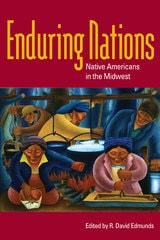
Enduring Nations
Native Americans in the MidwestEdited by R. David Edmunds
University of Illinois Press, 2007
Enduring Nations documents how tribal peoples have adapted to cultural change while shaping midwestern history. Examining the transformation of Native American communities, which often occurred in response to shifting government policy, the contributors explore the role of women, controversial tribal enterprises and economies, social welfare practices, and native peoples' frequent displacement to locations such as reservations and urban centers. Central to both past and contemporary discussions of Native American cultural change is whether Native American identity should be determined by genetics, shared cultural values, or a combination of the two.
Contributors are Bradley J. Birzer, Brenda J. Child, Thomas Burnell Colbert, Gregory Evans Dowd, R. David Edmunds, Brian Hosmer, Rebecca Kugel, James B. LaGrand, Melissa L. Meyer, Lucy Eldersveld Murphy, Alan G. Shackelford, Susan Sleeper-Smith, and Stephen Warren.
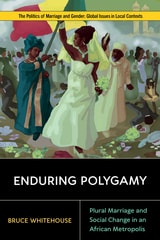
Enduring Polygamy
Plural Marriage and Social Change in an African MetropolisBruce Whitehouse
Rutgers University Press, 2023
Why hasn’t polygamous marriage died out in African cities, as experts once expected it would? Enduring Polygamy considers this question in one of Africa’s fastest-growing cities: Bamako, the capital of Mali, where one in four wives is in a polygamous marriage. Using polygamy as a lens through which to survey sweeping changes in urban life, it offers ethnographic and demographic insights into the customs, gender norms and hierarchies, kinship structures, and laws affecting marriage, and situates polygamy within structures of inequality that shape marital options, especially for young Malian women. Through an approach of cultural relativism, the book offers an open-minded but unflinching perspective on a contested form of marriage. Without shying away from questions of patriarchy and women’s oppression, it presents polygamy from the everyday vantage points of Bamako residents themselves, allowing readers to make informed judgments about it and to appreciate the full spectrum of human cultural diversity.
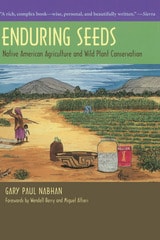
Enduring Seeds
Native American Agriculture and Wild Plant ConservationGary Paul Nabhan; Forewords by Wendell Berry and Miguel Altieri
University of Arizona Press, 2002
Gary Paul Nabhan here reveals the rich diversity of plants found in tropical forests and their contribution to modern crops, then tells how this diversity is being lost to agriculture and lumbering. He then relates "local parables" of Native American agriculture—from wild rice in the Great Lakes region to wild gourds in Florida—that convey the urgency of this situation and demonstrate the need for saving the seeds of endangered plants. Nabhan stresses the need for maintaining a wide gene pool, not only for the survival of these species but also for the preservation of genetic strains that can help scientists breed more resilient varieties of other plants.
Enduring Seeds is a book that no one concerned with our environment can afford to ignore. It clearly shows us that, as agribusiness increasingly limits the food on our table, a richer harvest can be had by preserving ancient ways.
This edition features a new foreword by Miguel Altieri, one of today's leading spokesmen for sustainable agriculture and the preservation of indigenous farming methods.
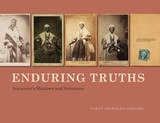
Enduring Truths
Sojourner's Shadows and SubstanceDarcy Grimaldo Grigsby
University of Chicago Press, 2015
Featuring the largest collection of Truth’s photographs ever published, Enduring Truths is the first book to explore how she used her image, the press, the postal service, and copyright laws to support her activism and herself. Darcy Grimaldo Grigsby establishes a range of important contexts for Truth’s portraits, including the strategic role of photography and copyright for an illiterate former slave; the shared politics of Truth’s cartes de visite and federal banknotes, which were both created to fund the Union cause; and the ways that photochemical limitations complicated the portrayal of different skin tones. Insightful and powerful, Enduring Truths shows how Truth made her photographic portrait worth money in order to end slavery—and also became the strategic author of her public self.
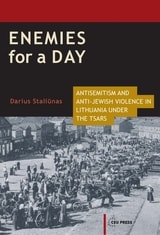
Enemies for a Day
Antisemitism and Anti-Jewish Violence in Lithuania under the TsarsDarius Staliunas
Central European University Press, 2015
It begins by illustrating how widespread anti-Jewish feelings were among the Christian population in 19 th century, focusing on blood libel accusations as well as describing the role of modern antisemitism. Secondly, it tries to identify the structural preconditions as well as specific triggers that turned anti-Jewish feelings into collective violence and analyzes the nature of this violence. Lastly, pogroms in Lithuania are compared to anti-Jewish violence in other regions of the Russian Empire and East Galicia.
This research is inspired by the cultural turn in social sciences, an approach that assumes that violence is filled with meaning, which is “culturally constructed, discursively mediated, symbolically saturated, and ritually regulated.” The author argues that pogroms in Lithuania instead followed a communal pattern of ethnic violence and was very different from deadly pogroms in other parts of the Russian Empire.
Enemies from the East?
V. S. Soloviev on Paganism, Asian Civilizations, and IslamEdited by Vladimir Wozniuk
Northwestern University Press, 2007
The six essays comprising this book span Soloviev’s publishing career, beginning with “The Mythological Process in Ancient Paganism,” written at the age of twenty, and ending with “Muhammad, His Life and Religious Teaching,” which appeared four years before Soloviev’s death at forty-seven. Throughout, Soloviev grapples with commonalities and differences apparent in the moral frameworks of civilizations since antiquity; and in religious and cultural practices, from Europe through the Middle East to Asia. His probing of the sources of religious morality and political authority in human history reinvigorated Russian intellectual interest in the East/West question in his time and still resonates powerfully in our own.
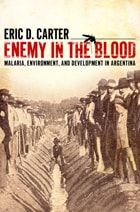
Enemy in the Blood
Malaria, Environment, and Development in ArgentinaEric D. Carter
University of Alabama Press, 2012
Tracing the Fight Against Malaria and the Making of Modern Argentina.
Enemy in the Blood: Malaria, Environment, and Development in Argentina examines the dramatic yet mostly forgotten history of malaria control in northwest Argentina. Carter traces the evolution of malaria science and policy in Argentina from the disease’s emergence as a social problem in the 1890s to its effective eradication by 1950. Malaria-control proponents saw the campaign as part of a larger project of constructing a modern identity for Argentina. Insofar as development meant building a more productive, rational, and hygienic society, the perceptions of a culturally backwards and disease-ridden interior prevented Argentina from joining the ranks of “modern” nations. The path to eradication, however, was not easy due to complicated public health politics, inappropriate application of foreign malaria control strategies, and a habitual misreading of the distinctive ecology of malaria in the northwest, especially the unique characteristics of the local mosquito vector. Homegrown scientific expertise, a populist public health agenda, and an infusion of new technologies eventually brought a rapid end to malaria’s scourge, if not the cure for regional underdevelopment.
Enemy in the Blood sheds light on the often neglected history of northwest Argentina’s interior, adds to critical perspectives on the history of development and public health in modern Latin America, and demonstrates the merits of integrative social-environmental research.
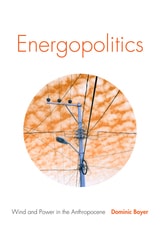
Energopolitics
Wind and Power in the AnthropoceneDominic Boyer
Duke University Press, 2019
In his volume, Energopolitics, Boyer examines the politics of wind power and how it is shaped by myriad factors, from the legacies of settler colonialism and indigenous resistance to state bureaucracy and corporate investment. Drawing on interviews with activists, campesinos, engineers, bureaucrats, politicians, and bankers, Boyer outlines the fundamental impact of energy and fuel on political power. Boyer also demonstrates how large conceptual frameworks cannot adequately explain the fraught and uniquely complicated conditions on the isthmus, illustrating the need to resist narratives of anthropocenic universalism and to attend to local particularities.
Energy Impacts
A Multidisciplinary Exploration of North American Energy DevelopmentJeffrey B. Jacquet
University Press of Colorado, 2020
Twelve chapters from respected scholars in a variety of disciplines present new ways to consider and analyze energy impact research. Focused on varied energy topics, geographies, and disciplines, each chapter includes a policy brief that summarizes the work and provides “key takeaways” to apply the findings to policy and public discourse.
Meaningful public engagement is critical in limiting the negative implications of energy development, and understanding the social influences on and of energy systems is a cornerstone of addressing the climate crisis. As such, Energy Impacts is a significant work for students, scholars, and professionals working in sociology, education, geography, environmental studies, and public health.
This material is based upon work supported by the National Science Foundation under Grant No. 1528422. Publication is also supported, in part, by Montana State University.
Contributors:
Ali Adil, Lisa Bailey-Davis, Nancy Bowen-Elizey, Morey Burnham, Weston Eaton, Heather Feldhaus, Felix Fernando, Emily Grubert, C. Clare Hinrichs, John Hintz, Richard Hirsh, Season Hoard, Tamara Laninga, Eric Larson, Achla Marathe, Natalie Martinkus, Seven Mattes, Ronald Meyers, Patrick Miller, Ethan Minier, Myra Moss, Jacob Mowery, Thomas Murphy, Sevda Ozturk Sari, John Parkins, Christopher Podeschi, Nathan Ratledge, Sanne Rijkhoff, Kelli Roemer, Todd Schenk, Anju Seth, Kate Sherren, Jisoo Sim, Marc Stern, Jessica Ulrich-Schad, Cameron Whitley, Laura Zachary

Energy Never Dies
Afro-Optimism and Creativity in ChicagoAyana Contreras
University of Illinois Press, 2021
Passionate and enlightening, Energy Never Dies uses the power of storytelling to show how optimism and courage fuel the dreams of Black Chicago.
Energy and Structure
A Theory of Social PowerBy Richard Newbold Adams
University of Texas Press, 1975
All social structures are essentially power structures dependent on energy. The concept of power and the role of energy in social organization are crucial and timely concerns, especially in light of the current apprehension about future energy resources. In Energy and Structure, Richard N. Adams argues that social power affects humanity's approach to ecological, economic, and political problems, directing people to seek solutions that are often deceptively shortsighted.
Adams, an anthropologist, proposes that social power is directly derived from control over energy processes. He identifies how power and mentalistic structures constitute fundamental determinants that shape the lives of people at all stages of cultural development, forcing them to accept alternatives often far removed from their desires. His central thesis is that the amount of power in any system varies with the amount of control exercised over the environment and that increasing power and control lead to increasing centralization of decision-making, social marginalization, and environmental despoliation. Thus the more highly developed societies, by virtue of their greater controls, are responsible for the greater ultimate subordination and destruction of human potential, as humanity combines technological advances with a growing inability to exercise good judgment with respect to our own survival.
Energy and Structure begins with an examination of the basic theory of social power—what it is and how it works. Adams defines and differentiates between the concepts of power and control, authority and legitimacy, power domains and levels. He then examines the underlying metatheory of energetic and mentalistic structures and provides an analytic model of the evolution of power, from the primitive band to modern nations. He predicts the emergence of supranational blocs and discusses other future possibilities. Throughout, his theoretical points are solidly supported by examples drawn from a wide range of cultures.

Energy without Conscience
Oil, Climate Change, and ComplicityDavid McDermott Hughes
Duke University Press, 2017
Engaged Anthropology
Research Essays on North American Archaeology, Ethnobotany, and MuseologyEdited by Michelle Hegmon and B. Sunday Eiselt
University of Michigan Press, 2005
Engaged Archaeology in the Southwestern United States and Northwestern Mexico
Kelley A. Hays-Gilpin
University Press of Colorado, 2021
Organized around the theme of interdisciplinary perspectives, the book highlights collaborations with those who have other ways of knowing the past, from the traditional and proprietary knowledge of communities to new scientific methods, and considers the social context of archaeological practice and the modern relationships that inform interpretations of the past. Chapters show how cutting-edge practices lead to new archaeological understandings when archaeologists work in partnership with descendant and stakeholder communities and across international and disciplinary borders. Authors work across anthropological subfields and with the sciences, demonstrating that anthropological archaeology’s methods are starting points for investigation that allow for the expansion of understanding by incorporating long-remembered histories with innovative analytic methods.
Engaged Archaeology in the Southwestern United States and Northwestern Mexico identifies current and near-future trends in archaeological practice in the US Southwest and northwestern Mexico, including repatriation, community engagement, and cross-disciplinary approaches, and focuses on Native American archaeologists and their communities, research, collaborations, and interests. It will be of interest to archaeologists and anthropologists working in the Southwest and to any researchers interested in interdisciplinary approaches to archaeology, heritage studies, and the natural sciences.
Contributors: Christopher Caseldine, Chip Colwell, Guillermo Córdova Tello, Patrick Cruz, T. J. Ferguson, Cécile R. Ganteaume, Vernelda Grant, Neysa Grider-Potter, Christopher Grivas, Michael Heilen, Jane H. Hill, Leigh J. Kuwanwisiwma, Teresita Majewski, Debra L. Martin, Estela Martínez Mora, John A. McClelland, Emiliano Ricardo Melgar Tísoc, Darsita R. North, Scott Ortman, Peter J. Pilles Jr., Susan Sekaquaptewa, Arleyn W. Simon, Kimberly Spurr, Sarah Striker, Kerry F. Thompson, John A. Ware, Peter M. Whiteley, Lisa C. Young
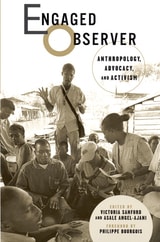
Engaged Observer
Anthropology, Advocacy, and ActivismSanford, Victoria
Rutgers University Press, 2006
Anthropology has long been associated with an ethos of “engagement.” The field’s core methods and practices involve long-term interpersonal contact between researchers and their study participants, giving major research topics in the field a distinctively human face. Can research findings be authentic and objective? Are anthropologists able to use their data to aid the participants of their study, and is that aid always welcome?
In Engaged Observer, Victoria Sanford and Asale Angel-Ajani bring together an international array of scholars who have been embedded in some of the most conflict-ridden and dangerous zones in the world to reflect on the role and responsibility of anthropological inquiry. They explore issues of truth and objectivity, the role of the academic, the politics of memory, and the impact of race, gender, and social position on the research process. Through ethnographic case studies, they offer models for conducting engaged research and illustrate the contradictions and challenges of doing so.
Engaged Spirituality
Social Change and American ReligionStanczak, Gregory C
Rutgers University Press, 2006
In Engaged Spirituality, Gregory C. Stanczak challenges this assumption, arguing that spirituality plays an important social role as well. Based on more than one hundred interviews with individuals of diverse faith traditions, the book shows how prayer, meditation, and ritual provide foundations for activism. Among the stories, a Buddhist monk in Los Angeles intimately describes the physical sensations of strength and compassion that sweep her body when she recites the Buddha’s name in times of selfless service, and a Protestant reverend explains how the calm serenity that she feels during retreats allows her to direct her multi-service agency in San Francisco to creative successes that were previously unimaginable.
In an age when Madonna studies Kabbalah and the internet is bringing Buddhism to the white middle-class, it is clear that formal religious affiliations are no longer enough. Stanczak’s critical examination of spirituality provides us with a way of discussing the factors that impel individuals into social activism and forces us to rethink the question of how “religion” and “spirituality” might be defined.
Engaging Cultural Differences
The Multicultural Challenge in Liberal DemocraciesRichard A., Shweder
Russell Sage Foundation, 2002

Engaging Humor
Elliott Oring
University of Illinois Press, 2002
Exploring the structure, motives, and meanings of humor in everyday life
In Engaging Humor, Elliott Oring asks essential questions concerning humorous expression in contemporary society, examining how humor works, why it is employed, and what its messages might be. This provocative book is filled with examples of jokes and riddles that reveal humor to be a meaningful--even significant--form of expression.Oring scrutinizes classic Jewish jokes, frontier humor, racist cartoons, blonde jokes, and Internet humor. He provides alternate ways of thinking about humorous expressions by examining their contexts--not just their contents. He also shows how the incongruity and absurdity essential to the production of laughter can serve serious communicative ends.
Engaging Humor examines the thoughts that underlie jokes, the question of racist motivation in ethnic humor, and the use of humor as a commentary on social interaction. The book also explores the relationship between humor and sentimentality and the role of humor in forging national identity. Engaging Humor demonstrates that when analyzed contextually and comparatively, humorous expressions emerge as communications that are startling, intriguing, and profound.

Engaging Mbembe
Sindre Bandstad and Bjørn Enge Bertelsen, editors. Foreword by Arjun Appadurai.
Duke University Press, 2027
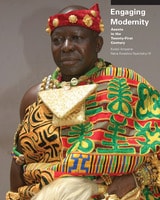
Engaging Modernity
Asante in the Twenty-First CenturyKwasi Ampene. Nana Kwadwo Nyantakyi III
Michigan Publishing Services, 2016
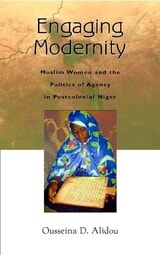
Engaging Modernity
Muslim Women and the Politics of Agency in Postcolonial NigerOusseina Alidou
University of Wisconsin Press, 2005
Engaging Modernity is Ousseina Alidou’s rich and compelling portrait of Muslim women in Niger as they confront the challenges and opportunities of the twentieth century. Contrary to Western stereotypes of passive subordination, these women are taking control of their own lives and resisting domination from indigenous traditions, westernization, and Islam alike.
Based on thorough scholarly research and extensive fieldwork—including a wealth of interviews—Alidou’s work offers insights into the meaning of modernity for Muslim women in Niger. Mixing biography with sociological data, social theory and linguistic analysis, this is a multilayered vision of political Islam, education, popular culture, and war and its aftermath. A gripping look at one of the Muslim world’s most powerful untold stories.
Runner-up for the Aidoo-Snyder Book Prize, Women’s Caucus of the African Studies Association
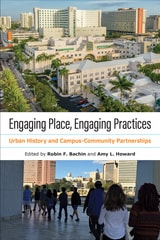
Engaging Place, Engaging Practices
Urban History and Campus-Community PartnershipsEdited by Robin F. Bachin and Amy L. Howard
Temple University Press, 2023
Colleges and universities in urban centers have often leveraged their locales to appeal to students while also taking a more active role in addressing local challenges. They embrace civic engagement, support service-learning, tailor courses to local needs, and even provide university-community collaborations such as lab schools and innovation hubs. Engaging Place, Engaging Practices highlights the significant role the academy, in general, and urban history, in particular, can play in fostering these critical connections.
The editors and contributors to this volume address topics ranging from historical injustices and affordable housing and land use to climate change planning and the emergence of digital humanities. These case studies reveal the intricate components of a city’s history and how they provide context and promote a sense of cultural belonging.
This timely book appreciates and emphasizes the critical role universities must play as intentional—and humble—partners in addressing the past, present, and future challenges facing cities through democratic community engagement.
Engaging Social Media in China
Platforms, Publics, and ProductionGuobin Yang
Michigan State University Press, 2021
Engaging Young People in Civic Life
James Youniss
Vanderbilt University Press, 2009
The thirteen original essays are based on research in schools and in settings beyond the schoolyard where civic life is experienced. One focus is on programs for those schools in poor communities that tend to overlook civic education. Another chapter reports on how two city governments—Hampton, Virginia, and San Francisco—have invited youth to participate on boards and in agencies. A cluster of chapters focuses on the civic education programs in Canada and Western Europe, where, as in the United States, immigration and income inequality raise challenges to civic life.
Engaging the Intersection of Housing and Health
Volume ThreeEdited by Mina Silberberg
University of Minnesota Press, 2021
Researchers often hope that their work will inform social change. The questions that motivate them to pursue research careers in the first place often stem from observations about gaps between the world as we wish it to be and the world as it is, accompanied by a deep curiosity about how it might be made different. Researchers view their profession as providing important information about what is, what could be, and how to get there. However, if research is to inform social change, we must first change the way in which research is done.
Engaging the Intersection of Housing and Health offers case studies of research that is interdisciplinary, stakeholder-engaged and intentionally designed for “translation” into practice. There are numerous ways in which housing and health are intertwined. This intertwining—which is the focus of this volume—is lived daily by the children whose asthma is exacerbated by mold in their homes, the adults whose mental illness increases their risk for homelessness and whose homelessness worsens their mental and physical health, the seniors whose home environment enhances their risk of falls, and the families who must choose between paying for housing and paying for healthcare.
Engaging the Past
The Uses of History Across the Social SciencesEric H. Monkkonen
Duke University Press, 1994
Each essay in Engaging the Past pays close attention to the unique problems and methods associated with its particular social scientific discipline. By exploring questions raised by both contemporary and more established works within each field, the authors show that some of the best and most innovative research in each of the social sciences includes a strong historical component. Thus, as Eric H. Monkkonen’s introduction shows, these essays taken together make it clear that historical research provides a significant key to many of the major issues in the social sciences.
Intended for the growing community of both social scientists and historians interested in reading or researching historically informed social science, Engaging the Past suggests future directions that might be taken by this work. Above all, by providing a set of user’s guides written by respected social scientists, it encourages future boundary crossings between history and each of the social sciences.
Contributors. Andrew Abbott, Richard Dennis, Susan Kellog, Eric H. Monkkonen, David Brian Robertson, Hugh Rockoff

Engaging with Reality
Documentary and GlobalizationIb Bondebjerg
Intellect Books, 2014
Engaging with Reality is framed by theories of globalization and delves into the development of a new global media culture. It also deals with theories of documentary genres and their social and cultural functions. It discusses cosmopolitanism and the role and forms of documentary in a new digital and global media culture. It will be essential reading for those looking to better understand documentary and the new transnational approach to modern media culture.
Engendering Households in the Prehistoric Southwest
Edited by Barbara J. Roth
University of Arizona Press, 2010
Now Southwestern archaeologists have begun to delve into the task of “engendering” their sites. Using a “close to the ground” approach, the contributors to this book seek to engender the prehistoric Southwest by examining evidence at the household level.
Focusing on gendered activities in household contexts throughout the southwestern United States, this book represents groundbreaking work in this area. The contributors view households as a crucial link to past activities and behavior, and by engendering these households, we can gain a better understanding of their role in prehistoric society. Gender-structured household activities, in turn, can offer insight into broader-scale social and economic factors. The chapters offer a variety of theoretical and methodological approaches to engendering households and examine topics such as the division of labor, gender relations, household ritual, ceramic and ground stone production and exchange, and migration.
Engendering Households in the Prehistoric Southwest ultimately addresses broader issues of interest to many archaeologists today, including households and their various forms, identity and social boundary formation, technological style, and human agency. Focusing on gendered activities in household contexts throughout the southwestern United States, this book represents groundbreaking work in this area. The contributors view households as a crucial link to past activities and behavior, and by engendering these households, we can gain a better understanding of their role in prehistoric society. Gender-structured household activities, in turn, can offer insight into broader-scale social and economic factors.
Engendering Revolution
Women, Unpaid Labor, and Maternalism in Bolivarian VenezuelaBy Rachel Elfenbein
University of Texas Press, 2019
In 1999, Venezuela became the first country in the world to constitutionally recognize the socioeconomic value of housework and enshrine homemakers’ social security. This landmark provision was part of a larger project to transform the state and expand social inclusion during Hugo Chávez’s presidency. The Bolivarian revolution opened new opportunities for poor and working-class—or popular—women’s organizing. The state recognized their unpaid labor and maternal gender role as central to the revolution. Yet even as state recognition enabled some popular women to receive public assistance, it also made their unpaid labor and organizing vulnerable to state appropriation.
Offering the first comprehensive analysis of this phenomenon, Engendering Revolution demonstrates that the Bolivarian revolution cannot be understood without comprehending the gendered nature of its state-society relations. Showcasing field research that comprises archival analysis, observation, and extensive interviews, these thought-provoking findings underscore the ways in which popular women sustained a movement purported to exalt them, even while many could not access social security and remained socially, economically, and politically vulnerable.

Engendering Song
Singing and Subjectivity at Prespa Albanian WeddingsJane C. Sugarman
University of Chicago Press, 1997
Combining photographs, song texts, and vibrant recordings of the music with her own evocative descriptions, ethnomusicologist Jane C. Sugarman focuses her account of Prespa weddings on notions of gendered identity, demonstrating the capacity of singing to generate and transform relations of power within Prespa society. Engendering Song is an innovative theoretical work, with a scholarly importance extending far beyond southeast European studies. It offers unique and timely contributions to the analysis of music and gender, music in diaspora cultures, and the social constitution of self and subjectivity.
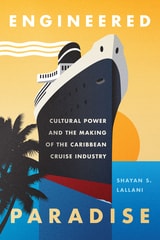
Engineered Paradise
Cultural Power and the Making of the Caribbean Cruise IndustryShayan S. Lallani
University of Illinois Press, 2027
We celebrate cruise ships as gateways to new cultures. However, over the past half a century, the mass-market cruise industry has increasingly relied on global supply chains, exploited maritime labor, and corporate control over the consumer experience to turn cultural contact into profit.
Shayan S. Lallani uncovers the historical scaffolding behind the cruise industry’s strategic co-opting of global cultures. Tracing the evolution of the modern mega-ship from its roots in postwar ocean liners to the floating cities of the twenty-first century, Lallani demonstrates how cruise lines paired commodified cultural referents with immersive spatial design and international labor to maximize guest spending. This corporate grip extended to Caribbean destinations, where companies steadily gained control of port enclaves and vetted shore excursions to manage contact with local communities while retaining the profits.
A sobering look at a vacation mainstay, <i>Engineered Paradise</i> explores where leisure becomes entangled with culture, capitalism, and power.
Engineered to Sell
European Émigrés and the Making of Consumer CapitalismJan L. Logemann
University of Chicago Press, 2019
Engineering Culture
Control and Commitment in a High-Tech CorporationGideon Kunda
Temple University Press, 2006
Engineering Mountain Landscapes
An Anthropology of Social InvestmentLaura L. Scheiber and María N. Zedeño
University of Utah Press, 2015
Engineering Stability
Rebuilding the State in Twenty-First Century Chinese UniversitiesYan Xiaojun
University of Michigan Press, 2024
Drawing on rich materials gathered from in-depth field research in China during the Xi Jinping era, Engineering Stability invites scholars of comparative politics, state theory, contentious politics, and political development to rethink and reimagine how what Yan calls “a compromised autocratic state” is rebuilt within and from itself after overcoming a traumatic moment of vulnerability. The book further details the four types of infrastructure — institutional, significative, regulatory, and incentivizing — that state rebuilders need to overhaul, and looks into the campaign of state rebuilding in post-Tiananmen Chinese universities and its implications for our understanding of politics in general.
Engines of Anxiety
Academic Rankings, Reputation, and Accountabilityespeland
Russell Sage Foundation, 2016
Students and the public routinely consult various published college rankings to assess the quality of colleges and universities and easily compare different schools. However, many institutions have responded to the rankings in ways that benefit neither the schools nor their students. In Engines of Anxiety, sociologists Wendy Espeland and Michael Sauder delve deep into the mechanisms of law school rankings, which have become a top priority within legal education. Based on a wealth of observational data and over 200 in-depth interviews with law students, university deans, and other administrators, they show how the scramble for high rankings has affected the missions and practices of many law schools.
Engines of Anxiety tracks how rankings, such as those published annually by the U.S. News & World Report, permeate every aspect of legal education, beginning with the admissions process. The authors find that prospective law students not only rely heavily on such rankings to evaluate school quality, but also internalize rankings as expressions of their own abilities and flaws. For example, they often view rejections from “first-tier” schools as a sign of personal failure. The rankings also affect the decisions of admissions officers, who try to balance admitting diverse classes with preserving the school’s ranking, which is dependent on factors such as the median LSAT score of the entering class. Espeland and Sauder find that law schools face pressure to admit applicants with high test scores over lower-scoring candidates who possess other favorable credentials.
Engines of Anxiety also reveals how rankings have influenced law schools’ career service departments. Because graduates’ job placements play a major role in the rankings, many institutions have shifted their career-services resources toward tracking placements, and away from counseling and network-building. In turn, law firms regularly use school rankings to recruit and screen job candidates, perpetuating a cycle in which highly ranked schools enjoy increasing prestige. As a result, the rankings create and reinforce a rigid hierarchy that penalizes lower-tier schools that do not conform to the restrictive standards used in the rankings. The authors show that as law schools compete to improve their rankings, their programs become more homogenized and less accessible to non-traditional students.
The ranking system is considered a valuable resource for learning about more than 200 law schools. Yet, Engines of Anxiety shows that the drive to increase a school’s rankings has negative consequences for students, educators, and administrators and has implications for all educational programs that are quantified in similar ways.

England's Discontents
Political Cultures and National IdentitiesMike Wayne
Pluto Press, 2018
Examining five political ideologies at play in England—conservatism, liberalism, economic liberalism, social democracy, and socialism—Mike Wayne unearths the historical rationale for their relationship to cultural identities, including rural England, gentlemanly capitalism, industrialism, and Empire. By revealing how national identity, class, and political economy intersect, Wayne is able to elucidate England’s enduring attachment to the neoliberal economic system.
Grounding his cultural and material perspective in Gramscian and Marxist theory, Wayne illuminates the cultural dimensions of English political life in the last century.
England's Great Transformation
Law, Labor, and the Industrial RevolutionMarc W. Steinberg
University of Chicago Press, 2016
Building his argument on three case studies—the Hanley pottery industry, Hull fisheries, and Redditch needlemakers—Steinberg employs both local and national analyses to emphasize the ways in which these master-servant laws allowed employers to use the criminal prosecutions of workers to maintain control of their labor force. Steinberg provides a fresh perspective on the dynamics of labor control and class power, integrating the complex pathways of Marxism, historical institutionalism, and feminism, and giving readers a subtle yet revelatory new understanding of workplace control and power during England’s Industrial Revolution.

English Lit
PoemsBernard Clay
Ohio University Press, 2021
Autobiographical poetry from one of Kentucky’s rising Affrilachian literary stars.
Bernard Clay’s autobiographical poetry debut, English Lit, juxtaposes the roots of Black male identity against an urban and rural Kentucky landscape. Hailed as one of the most authentic voices of his generation, Clay artfully renders coming-of-age in the predominately Black West End of Louisville, Kentucky. Balancing the spirited grit of a farmer and the careful lyricism of a poet, English Lit is a triumph of new Affrilachian—African American and Appalachian—literature.

English Rule in Gascony, 1199-1259
With Special Reference to the TownsFrank Burr Marsh, Ph.D.
University of Michigan Press, 1912

English-Basque Dictionary
Gorka Aulestia
University of Nevada Press, 1990
Enhancing Diversity
Educators with DisabilitiesRonald J. Anderson
Gallaudet University Press, 1998
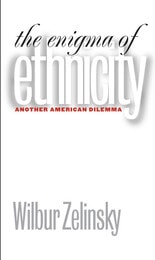
Enigma of Ethnicity
Another American DilemmaWilbur Zelinsky
University of Iowa Press, 2000
Zelinsky begins by examining the ways in which “ethnic groups” and “ethnicity” have been defined; his own definitions then become the basis for the rest of his study. He next focuses on the concepts of heterolocalism—the possibility that an ethnic community can exist without being physically merged—and personal identity—the relatively recent idea that one can concoct one's own identity. In his final chapter, which is also his most provocative, he concentrates on the multifaceted phenomenon of multiculturalism and its relationship to ethnicity. Throughout he includes a close look at African Americans, Hispanics, and Jews as well as such less-studied groups as suburbanized Japanese, Cubans in Washington, Koreans, Lithuanian immigrants in Chicago, Estonians in New Jersey, Danish Americans in Seattle, and Finns.
Reasonable, nonpolemical, and straightforward, Zelinsky's text is invaluable for readers wanting an in-depth overview of the literature on ethnicity in the United States as well as a well-thought-out understanding of the meanings and dynamics of ethnic groups, ethnicity, and multiculturalism.
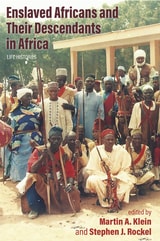
Enslaved Africans and Their Descendants in Africa
Life HistoriesMartin A. Klein and Stephen J. Rockel
Ohio University Press, 2025
An exploration of the resilient lives and legacies of enslaved Africans in Africa
Unlike narratives focused on enslaved people in the Americas, Europe, or the Middle East, this edited collection highlights the lives of African slaves and their descendants who remained in Africa. The contributors chronicle lives spanning the continent, from Sierra Leone, Burkina Faso, Nigeria, Chad, and Cameroon to Egypt, Ethiopia, Tanzania, and South Africa.
The collection explores various forms of slavery and diverse personal trajectories, with many stories beginning in childhood enslavement and evolving into adulthood with limited chances for education or personal advancement. Notably, the accounts include figures who managed to achieve prominent roles, such as a slave who became a general and administrator, a female slave who rose to be a village chief, and a woman who became a successful obstetrician in Muslim Africa.
The narratives underscore the resilience and agency of the enslaved individuals, many of whom created meaningful lives despite the constraints and stigma of both slavery and post-slavery. Some, like a medical missionary in Tanganyika and a slave convert who helped grow the Catholic Church in Burkina Faso, contributed significantly to their communities and religious institutions.
Accessing these stories required rigorous research due to limited documentation, social silence surrounding slavery, and stigma associated with slave ancestry. The contributors’ extensive research brings together fragmented knowledge and oral histories to provide an invaluable perspective and insight into the complex identities, struggles, and achievements of African slaves and their descendants.
Contributors:
Richard Anderson
Dadda Astabarka
Abdourahman Halirou
Martin A. Klein
George Michael La Rue
Adam Mahamat
Ricardo Marquez Garcia
Stephen J. Rockel
Ute Röschenthaler
Mohammed Bashir Salau
Moris Samen
Sandra Rowoldt Shell
Joseph Jules Sinang
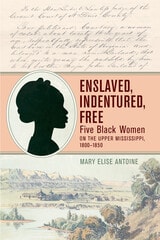
Enslaved, Indentured, Free
Five Black Women on the Upper Mississippi, 1800–1850Mary Elise Antoine
Wisconsin Historical Society Press, 2022
Focusing on these five women, Mary Elise Antoine explores the history of slavery in the Upper Mississippi River Valley, relying on legal documents, military records, court transcripts, and personal correspondence. Whether through perseverance, self-purchase, or freedom suits—including one suit that was used as precedent in Dred and Harriet Scott’s freedom suits years later—each of these women ultimately secured her freedom, thanks in part to the bonds they forged with one another.
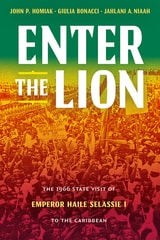
Enter the Lion
The 1966 State Visit of Emperor Haile Selassie I to the CaribbeanJohn P. Homiak, Giulia Bonacci, and Jahlani A. Niaah
Duke University Press, 2026
Entering America
Northeast Asia and Beringia Before the Last Glacial MaximumDavid B. Madsen
University of Utah Press, 2004
Where did the first Americans come from and when did they get here? That basic question of American archaeology, long thought to have been solved, is re-emerging as a critical issue as the number of well-excavated sites dating to pre-Clovis times increases. It now seems possible that small populations of human foragers entered the Americas prior to the creation of the continental glacial barrier. While the archaeological and paleoecological aspects of a post-glacial entry have been well studied, there is little work available on the possibility of a pre-glacial entry.
Entering America seeks to fill that void by providing the most up-to-date information on the nature of environmental and cultural conditions in northeast Asia and Beringia (the Bering land bridge) immediately prior to the Last Glacial Maximum. Because the peopling of the New World is a question of international archaeological interest, this volume will be important to specialists and nonspecialists alike.
Entering Transmasculinity
The Inevitability of Discoursematthew heinz
Intellect Books, 2016
Entering the Fray
Gender, Politics, and Culture in the New SouthEdited by Jonathan Daniel Wells & Sheila R. Phipps
University of Missouri Press, 2009
Entertaining History
The Civil War in Literature, Film, and SongEdited by Chris Mackowski
Southern Illinois University Press, 2020
From Ulysses S. Grant’s Memoirs to Abraham Lincoln: Vampire Hunter, from Roots to Ken Burns’s The Civil War, from “Dixie” to “Ashokan Farewell,” and from Civil War photography to the Gettysburg Cyclorama, trendy and well-loved depictions of the Civil War are the subjects of twenty contributors who tell how they and the general public have been influenced by them. Sarah Kay Bierle examines the eternal appeal of Gone with the Wind and asks how it is that a protagonist who so opposed the war has become such a figurehead for it. H. R. Gordon talks with New York Times–bestselling novelist Jeff Shaara to discuss the power of storytelling. Paul Ashdown explores ColdMountain’s value as a portrait of the war as national upheaval, and Kevin Pawlak traces a shift in cinema’s depiction of slavery epitomized by 12 Years a Slave. Tony Horwitz revisits his iconic Confederates in the Attic twenty years later.
The contributors’ fresh analysis articulates a shared passion for history’s representation in the popular media. The variety of voices and topics in this collection coalesces into a fascinating discussion of some of the most popular texts in the genres. In keeping with the innovative nature of this series, web-exclusive material extends the conversation beyond the book.