Results by title
239 books match the query 'Agriculture' and 18 start with f
Family and Farm in Pre-Famine Ireland
The Parish of KillashandraKevin O'Neill
University of Wisconsin Press, 1985
Now available in paperback, Kevin O’Neill’s highly praised study of rural Ireland in the years leading up to the "Great Hunger" of the 1840s explicates the social, economic, and demographic conditions of the era. He argues that overpopulation and deprivation were inextricably linked to a third variable—the rapid economic development of rural Ireland that was shaped by British interests.

Farm
A Multimodal ReaderJoyce Kinkead
Utah State University Press, 2020
The text guides the reader through the Jeffersonian idealism of the yeoman farmer (“cultivators of the earth are the chosen people of God”) to literature of the nineteenth and twentieth centuries (Thoreau’s “The Bean-Field,” Cather’s prairie trilogy, Steinbeck’s The Grapes of Wrath, and Carpenter’s Farm City). Contributors provide historical context for the literary texts, such as discussion of sharecropping vs. plantation systems, the rise of agribusiness and chemical farming, and Teddy Roosevelt’s Country Life Commission. Written, visual, and oral texts ask readers to consider the farm in art (Grant Wood), ecology (Rachel Carson’s Silent Spring), children’s and young adult literature (classic children’s books, YA novels, nonfiction, and poetry), advertising (from early boosterism to Chipotle videos), print culture (farmers’ market and victory garden posters from both world wars), folklore (food culture, vintners, and veterinarian practices), popular culture (Farm Aid concerts), and much more. Each reading is supported by activities, exercises, projects, and visual rhetorical elements that further connect students to agriculture and the essential work of farmers.

Farmers, Hunters, and Colonists
Interaction Between the Southwest and the Southern PlainsEdited by Katherine A. Spielmann
University of Arizona Press, 1991
Contributors:
Timothy G. Baugh
Judith A. Habicht-Mauche
Frances Levine
Christopher Lintz
David H. Snow
John D. Speth
Katherine A. Spielmann
David R. Wilcox
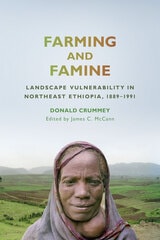
Farming and Famine
Landscape Vulnerability in Northeast Ethiopia, 1889–1991Donald E. Crummey; Edited by James C. McCann
University of Wisconsin Press, 2018
Crummey draws on photographs comparing identical landscapes in 1937 and 1997 as well as interviews with local farmers, among other sources. He reveals that forestation actually increased due to farmers' tree-planting initiatives. More broadly, he shows that, in the face of growing environmental stress, Ethiopian farmers have innovated and adapted. Yet the threat of famine remains because of constricted access to resources and erratic rainfall. To avoid future famines, Crummey suggests, Ethiopia's farmers must transform agricultural productivity, but they cannot achieve that on their own.

Farming, Hunting, and Fishing in the Olmec World
By Amber M. VanDerwarker
University of Texas Press, 2006
The Olmec who anciently inhabited Mexico's southern Gulf Coast organized their once-egalitarian society into chiefdoms during the Formative period (1400 BC to AD 300). This increase in political complexity coincided with the development of village agriculture, which has led scholars to theorize that agricultural surpluses gave aspiring Olmec leaders control over vital resources and thus a power base on which to build authority and exact tribute.
In this book, Amber VanDerwarker conducts the first multidisciplinary analysis of subsistence patterns at two Olmec settlements to offer a fuller understanding of how the development of political complexity was tied to both agricultural practices and environmental factors. She uses plant and animal remains, as well as isotopic data, to trace the intensification of maize agriculture during the Late Formative period. She also examines how volcanic eruptions in the region affected subsistence practices and settlement patterns. Through these multiple sets of data, VanDerwarker presents convincing evidence that Olmec and epi-Olmec lifeways of farming, hunting, and fishing were driven by both political and environmental pressures and that the rise of institutionalized leadership must be understood within the ecological context in which it occurred.
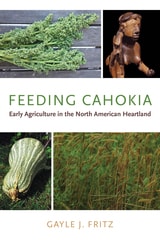
Feeding Cahokia
Early Agriculture in the North American HeartlandGayle J. Fritz
University of Alabama Press, 2019
WINNER OF THE 2020 SOCIETY FOR ECONOMIC BOTANY'S MARY W. KLINGER BOOK AWARD
An authoritative and thoroughly accessible overview of farming and food practices at Cahokia
Agriculture is rightly emphasized as the center of the economy in most studies of Cahokian society, but the focus is often predominantly on corn. This farming economy is typically framed in terms of ruling elites living in mound centers who demanded tribute and a mass surplus to be hoarded or distributed as they saw fit. Farmers are cast as commoners who grew enough surplus corn to provide for the elites.
Feeding Cahokia: Early Agriculture in the North American Heartland presents evidence to demonstrate that the emphasis on corn has created a distorted picture of Cahokia’s agricultural practices. Farming at Cahokia was biologically diverse and, as such, less prone to risk than was maize-dominated agriculture. Gayle J. Fritz shows that the division between the so-called elites and commoners simplifies and misrepresents the statuses of farmers—a workforce consisting of adult women and their daughters who belonged to kin groups crosscutting all levels of the Cahokian social order. Many farmers had considerable influence and decision-making authority, and they were valued for their economic contributions, their skills, and their expertise in all matters relating to soils and crops. Fritz examines the possible roles played by farmers in the processes of producing and preparing food and in maintaining cosmological balance.
This highly accessible narrative by an internationally known paleoethnobotanist highlights the biologically diverse agricultural system by focusing on plants, such as erect knotweed, chenopod, and maygrass, which were domesticated in the midcontinent and grown by generations of farmers before Cahokia Mounds grew to be the largest Native American population center north of Mexico. Fritz also looks at traditional farming systems to apply strategies that would be helpful to modern agriculture, including reviving wild and weedy descendants of these lost crops for redomestication. With a wealth of detail on specific sites, traditional foods, artifacts such as famous figurines, and color photos of significant plants, Feeding Cahokia will satisfy both scholars and interested readers.
Feeding the World as if People Mattered
How Small Farms Produce Value Beyond YieldsAndrew Flachs
University of Arizona Press, 2026
The dominant view of agriculture has focused only on what we produce. It sees value in terms of capital gains or yield efficiency, masking how our global food system produces tremendous amounts of food commodities while failing to feed people, support rural communities, or enhance ecological well-being. Feeding the World as if People Mattered asks us to look more deeply and more humanely at what we perceive to be most valuable in our agricultural systems.
This book draws on fifteen years of anthropological research, taking readers to fields in South India, Eastern Europe, and North America, where people are already feeding the future amid global change. From these fields, Flachs shows us how a radical rethinking of the value of small farms and farmers is already happening. Bringing together conversations in agriculture, economics, anthropology, and the environmental humanities, Flachs deftly shows how small farms reproduce social and ecological relationships that are the only sustainable path forward.
For anyone who is curious about the food on their plate and the people who helped to get it there, Feeding the World as if People Mattered will offer a new way to find value in the food we grow and the people who grow it.

Fishing for Gold
The Story of Alabama's Catfish IndustryKarni R. Perez
University of Alabama Press, 2006
A captivating story of the industry's rise in Alabama.
With a wonderful ear for dialogue and in flowing narrative style, Karni Perez weaves together oral histories collected from early hatchery owners, catfish farmers, processors, and researchers to recount the important contributions made by Alabamians to the channel catfish industry. Perez describes the struggles and glories of fish culture from its early days as an experimental venture to the thriving present-day commercial enterprise that supplies warmwater fish for the American food industry.
As Perez states, "The catfish industry started out in Alabama as a do-it-yourself and figure-it out-yourself kind of enterprise." We hear how men who were mostly cattle farmers learned to nudge male and female fish into spawning in crudely constructed aquaria, how growers discovered the dissolved oxygen needs of their "herd" when big die-offs occurred, how Lenson Montz and Otis Breland designed the first paddle aerator to remedy the problem, how farmers eventually trained a bottomfeeding species to rise to the water surface to eat so their numbers could be better estimated. In one dramatic story, we learn how a man experimenting with the first skinning machine lost a piece of his hand in front of a crowd of horrified locals. (After it was retrieved from the skin basket, it was reattached by a town doctor and healed perfectly.) Ironically, the man was a representative of the engineering firm tasked with designing the machine; he had never before seen a catfish in his life. The machine was modified and became an essential component of modern fish processing.
In addition to telling the remarkable stories of individual contributions by farmers and researchers, Perez explains the positive effects played by improved public infrastructure, continued biological research, state legislation, and federal recognition of aquaculture as agriculture.

Food Margins
Lessons from an Unlikely GrocerCathy Stanton
University of Massachusetts Press, 2024
Winner of the 2025 New England Society Book Award for Specialty Titles
Winner of the 2024 Readable Feast Award for Social Consciousness
Named one of Food Tank's 20 Food Systems Reads that Will Inspire You this Summer
In a food industry shaped by the abundance, cheapness, and convenience that giant corporations can offer, small-scale ventures struggle to survive, as anthropologist Cathy Stanton discovered when she joined the effort to save a small food co-op in a former mill town in western Massachusetts. On the margins of the dominant system, Stanton found herself reckoning with its deep racial and class inequities, and learning that making real change requires a fierce commitment to community and a willingness to change herself as well.
Part memoir and part history lesson, Food Margins traces the tangled economic and political histories of the plantation, the factory, and the supermarket through the life of one New England town. Stanton tells a complex and compelling story of a rural community imagining and creating a viable alternative to the mainstream in a time of increasingly urgent need to build a more socially and ecologically just food system.
Food Production in Native North America
An Archaeological PerspectiveKristen J. Gremillion
University Press of Colorado, 2018
Food Systems in an Unequal World
Pesticides, Vegetables, and Agrarian Capitalism in Costa RicaRyan E. Galt
University of Arizona Press, 2014
Food Systems in an Unequal World examines the agrochemical-dependent agriculture of Costa Rica and how its uneven regulation in export versus domestic markets affects Costa Rican vegetable farmers. Examining pesticide-dependent vegetable production within two food systems, the author shows that pesticide use is shaped by three main forces: agrarian capitalism, the governance of food systems throughout the commodity chain, and ecological dynamics driving local food production. Those processes produce unequal outcomes that disadvantage less powerful producers who have more limited choices than larger farmers, who usually have access to better growing environments and thereby can reduce pesticide use and production costs.

Food for Change
The Politics and Values of Social MovementsJeff Pratt and Pete Luetchford
Pluto Press, 2013
Concern about our food system is growing, from the costs of industrial farming to the dominant role of supermarkets and recurring scandals about the origins and content of what we eat.
Food for Change documents the way alternative food movements respond to these concerns by trying to create more closed economic circuits within which people know where, how, and by whom their food is produced.
Jeff Pratt, Peter Luetchford and other contributors explore the key political and economic questions of food through the everyday experience and vivid insights of farmers and consumers, using fieldwork from case studies in four European countries (France, Spain, Italy and England). Food for Change is an insightful consideration of connections between food and wider economic relations and draws on a rich vein of anthropological writing on the topic.
Food for the Few
Neoliberal Globalism and Biotechnology in Latin AmericaEdited by Gerardo Otero
University of Texas Press, 2008
Recent decades have seen tremendous changes in Latin America's agricultural sector, resulting from a broad program of liberalization instigated under pressure from the United States, the IMF, and the World Bank. Tariffs have been lifted, agricultural markets have been opened and privatized, land reform policies have been restricted or eliminated, and the perspective has shifted radically toward exportation rather than toward the goal of feeding local citizens. Examining the impact of these transformations, the contributors to Food for the Few: Neoliberal Globalism and Biotechnology in Latin America paint a somber portrait, describing local peasant farmers who have been made responsible for protecting impossibly vast areas of biodiversity, or are forced to specialize in one genetically modified crop, or who become low-wage workers within a capitalized farm complex. Using dozens of examples such as these, the deleterious consequences are surveyed from the perspectives of experts in diverse fields, including anthropology, economics, geography, political science, and sociology.
From Kathy McAfee's "Exporting Crop Biotechnology: The Myth of Molecular Miracles," to Liz Fitting's "Importing Corn, Exporting Labor: The Neoliberal Corn Regime, GMOs, and the Erosion of Mexican Biodiversity," Food for the Few balances disturbing findings with hopeful assessments of emerging grassroots alternatives. Surveying not only the Latin American conditions that led to bankruptcy for countless farmers but also the North's practices, such as the heavy subsidies implemented to protect North American farmers, these essays represent a comprehensive, keenly informed response to a pivotal global crisis.

For the Bees
A Handbook for Happy BeekeepingTara Dawn ChapmanIllustrations by Caroline Brown
University of Texas Press, 2024
A handbook for what to expect the first year of beekeeping and beyond.
The path to becoming a successful beekeeper begins with a deep understanding of the bees themselves. Taking an approach that is both holistic and practical, Tara Chapman, founder and operator of Austin’s beloved Two Hives Honey, begins with a primer on honey bee biology and nutrition as well as beehive architecture. (Did you ever wonder why honey combs are composed of tiny hexagons?) A little scientific knowledge goes a long way: a beekeeper who understands how these fascinating creatures work will be better equipped to recognize a particular colony’s needs, make sound decisions when the unexpected happens, and adapt their care regimen to changing conditions. Moving beyond the basics, Chapman shows potential beekeepers how to spot pests and diseases; manage swarms (those bees aren’t angry; they’re just looking for a good home); and, of course, harvest delicious homegrown honey.
Imbued with the joy of the beekeeping journey, For the Bees provides practical visual explanations through appealing illustrations, that, alongside Chapman’s own stories from the bee yard, share the charms of these essential insects.
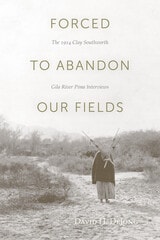
Forced to Abandon Our Fields
The 1914 Clay Southworth Gila River Pima InterviewsDavid H. DeJong
University of Utah Press, 2011
During the nineteenth century, upstream diversions from the Gila River decreased the arable land on the Gila River Indian Reservation to only a few thousand acres. As a result the Pima Indians, primarily an agricultural people, fell into poverty. Many Pima farmers and leaders lamented this suffering and in 1914 the United States Indian Irrigation Service assigned a 33-year-old engineer named Clay “Charles” Southworth to oversee the Gila River adjudication. As part of that process, Southworth interviewed 34 Pima elders, thus putting a face on the depth of hardships facing many Indians in the late nineteenth century.
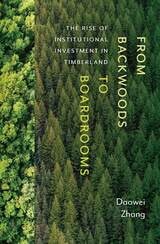
From Backwoods to Boardrooms
The Rise of Institutional Investment in TimberlandDaowei Zhang
Oregon State University Press, 2021
Through a historical examination of key events and players, prevailing management philosophies, public policy, and institutional factors, Daowei Zhang searches for an economic explanation and assesses the impact of these ownership revolutions with a three-pronged approach. First, he explains why industrial firms were able to profit from owning forestlands, and how the shift to institutional ownership came about. Second, he compares private timberland investments and public equity investments with respect to risk-adjusted returns and other dimensions of interest to investors and forest managers, including alignment of interests, capacity to exploit market inefficiencies, and their forest management and conservation records. Finally, he provides thoughtful commentary on the future of institutional timberland investments and global forest sustainability.
From Backwoods to Boardrooms is essential reading for forest managers, investors, and anyone interested in understanding the workings of the modern forest sector and the future of forest sustainability.
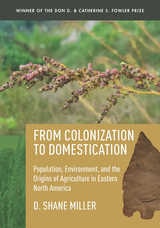
From Colonization to Domestication
Population, Environment, and the Origins of Agriculture in Eastern North AmericaD. Shane Miller
University of Utah Press, 2018
Eastern North America is one of only a handful of places in the world where people first discovered how to domesticate plants. In this book, anthropologist Shane Miller uses two common, although unconventional, sources of archaeological data—stone tools and the distribution of archaeological sites—to trace subsistence decisions from the initial colonization of the American Southeast at the end of the last Ice Age to the appearance of indigenous domesticated plants roughly 5,000 years ago.
Miller argues that the origins of plant domestication lie within the context of a boom/bust cycle that culminated in the mid-Holocene, when hunter-gatherers were able to intensively exploit shellfish, deer, oak, and hickory. After this resource “boom” ended, some groups shifted to other plants in place of oak and hickory, which included the suite of plants that were later domesticated. Accompanying these subsistence trends is evidence for increasing population pressure and declining returns from hunting. Miller contends, however, that the appearance of domesticated plants in eastern North America, rather than simply being an example of necessity as the mother of invention, is the result of individuals adjusting to periods of both abundance and shortfall driven by climate change.

From Market-Places to a Market Economy
The Transformation of Rural Massachusetts, 1750-1850Winifred Barr Rothenberg
University of Chicago Press, 1992
Rothenberg forcefully disputes recent historical interpretations of the preindustrial New England village as a so-called moral economy, insulated from the exigencies of the market. She discovers the simultaneous emergence of markets for farm produce, farm labor, and rural capital. Then, linking market integration to labor productivity growth and agricultural improvement, she confirms that market-led growth in Massachusetts agriculture lay at the origins of the American industrial revolution.