Results by title
375 books match the query 'Excavations (Archaeology)' and 16 start with f

Facts on the Ground
Archaeological Practice and Territorial Self-Fashioning in Israeli SocietyNadia Abu El-Haj
University of Chicago Press, 2002
Boldly uncovering an Israel in which science and politics are mutually constituted, this book shows the ongoing role that archaeology plays in defining the past, present, and future of Palestine and Israel.
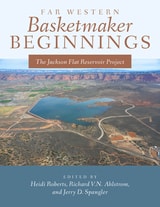
Far Western Basketmaker Beginnings
The Jackson Flat ProjectEdited by Heidi Roberts, Richard V. N. Ahlstrom, and Jerry D. Spangler
University of Utah Press, 2022
This volume, based on the results of excavations at Jackson Flat Reservoir south of Kanab, examines a litany of firsts: the earliest Archaic pithouses ever found in this region, evidence that maize farmers arrived here a thousand years earlier than previously reported, and the emergence of a complex Basketmaker farming and foraging culture. Specialists in Far Western Puebloan culture, architecture, settlement patterns, subsistence, chronometry, and prehistoric technologies make a compelling case that farming was introduced to the region by San Pedro immigrants, and that the blending of farmers with local foraging groups gave rise to a Basketmaker lifeway by 200 BC. This book marks a giant leap forward in archaeologists’ understanding of the earliest maize farmers north and west of the Colorado River.
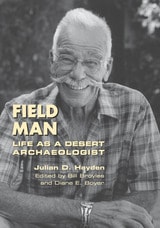
Field Man
Life as a Desert ArchaeologistJulian D. Hayden; Edited by Bill Broyles and Diane E. Boyer
University of Arizona Press, 2012
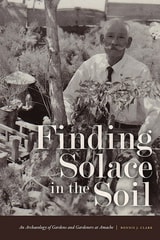
Finding Solace in the Soil
An Archaeology of Gardens and Gardeners at AmacheBonnie J. Clark
University Press of Colorado, 2022
Before incarceration, many at Amache had been farmers, gardeners, or nursery workers. Between 1942 and 1945, they applied their horticultural expertise to the difficult high plains landscape of southeastern Colorado. At Amache they worked to form microclimates, reduce blowing sand, grow better food, and achieve stability and preserve community at a time of dehumanizing dispossession. In this book archaeologist Bonnie J. Clark examines botanical data like seeds, garden-related artifacts, and other material evidence found at Amache, as well as oral histories from survivors and archival data including personal letters and government records, to recount how the prisoners of Amache transformed the harsh military setting of the camp into something resembling a town. She discusses the varieties of gardens found at the site, their place within Japanese and Japanese American horticultural traditions, and innovations brought about by the creative use of limited camp resources.
The gardens were regarded by the incarcerees as a gift to themselves and to each other. And they were also, it turns out, a gift to the future as repositories of generational knowledge where a philosophical stance toward nature was made manifest through innovation and horticultural skill. Framing the gardens and gardeners of Amache within the larger context of the incarceration of Japanese Americans and of recent scholarship on displacement and confinement, Finding Solace in the Soil will be of interest to gardeners, historical archaeologists, landscape archaeologists, cultural anthropologists, and scholars of Japanese American history and horticultural history.
Finding the People who Flaked the Stone at English Camp
Close, Angela E
University of Utah Press, 2006
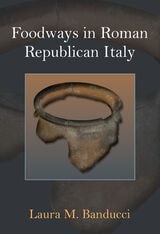
Foodways in Roman Republican Italy
Laura M. Banducci
University of Michigan Press, 2021
Foodways in Roman Republican Italy explores the production, preparation, and consumption of food and drink in Republican Italy to illuminate the nature of cultural change during this period. Traditionally, studies of the cultural effects of Roman contact and conquest have focused on observing changes in the public realm: that is, changing urban organization and landscape, and monumental construction. Foodways studies reach into the domestic realm: How do the daily behaviors of individuals express their personal identity, and How does this relate to changes and expressions of identity in broader society? Laura M. Banducci tracks through time the foodways of three sites in Etruria from about the third century BCE to the first century CE: Populonia, Musarna, and Cetamura del Chianti. All were established Etruscan sites that came under Roman political control over the course of the third and second centuries BCE. The book examines the morphology and use wear of ceramics used for cooking, preparing, and serving food in order to deduce cooking methods and the types of foods being prepared and consumed. Change in domestic behaviors was gradual and regionally varied, depending on local social and environmental conditions, shaping rather than responding to an explicitly “Roman” presence.
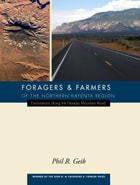
Foragers and Farmers of the Northern Kayenta Region
Excavations along the Navajo Mountain RoadPhil Geib
University of Utah Press, 2011
Foragers and Farmers of the Northern Kayenta Region presents the results of a major archaeological excavation project on Navajo tribal land in the Four Corners area and integrates this new information with existing knowledge of the archaeology of the northern Kayenta region. The excavation of thirty-three sites provides a cross section of prehistory from which Navajo Nation archaeologists retrieved a wealth of information about subsistence, settlement, architecture, and other aspects of past lifeways. The project’s most important contributions involve the Basketmaker and Archaic periods, and include a large number of radiocarbon dates on high-quality samples. Dating back to the early Archaic period (ca. 7000 BC) and ranging forward through the Basketmaker components to the Puebloan period, this volume is a powerful record of ancient peoples and their cultures. Detailed supplementary data will be available on the University of Utah Press Web site upon publication of this summary volume.
Volume 2: Archaic Site Descriptions
Volume 3: Basketmaker Site Descriptions
Volume 4: Puebloan Site Descriptions
Volume 5: Analyses and Interpretation
Appendix Volume

Foragers on America's Western Edge
The Archaeology of California's Pecho CoastTerry L. Jones and Brian F. Codding
University of Utah Press, 2018
The first people of the Pecho Coast were part-time residents who exploited shellfish, fish, and marine birds, including the flightless duck, Chendytes lawi, which sustained hunting drove to extinction ca. 2800 cal BP. This marked the only unequivocal case of prehistoric, human-caused extinction in western North America. Cold, productive seas allowed inhabitants to weather droughts of the Medieval Climatic Anomaly (950–600 cal BP), after which shell beads became increasingly abundant, representing either the initial appearance of Chumash-speaking peoples or attempts by Chumash leaders to consolidate power through gifting, reciprocal exchange, or forced conquest. During the mission era, fishing sustained the Native community as, for the first time, individuals became fully sedentary, foraging within a limited radius to avoid contact with the Spanish.
This record reveals a unique story of local adaptation, anthropogenic habitat change, social differentiation, and, ultimately, resistance to colonial invasion.
Foraging in the Tennessee River Valley
12,500 to 8,000 Years AgoKandace D. Hollenbach
University of Alabama Press, 2009
Framing Complexity in Formative Mesoamerica
Lisa Delance
University Press of Colorado, 2022
Contributors present multiple lines of evidence demonstrating the process of social complexity and reconsider a number of traditionally accepted models and presumed tenets as a result of the wealth of empirical data that has been gathered over the past four decades. Their chapters approach complexity as a process rather than a state of being by exploring social aggregation, the emergence of ethnic affiliations, and aspects of regional and macroregional variability.
Framing Complexity in Formative Mesoamerica presents some of the most recent data—and the implications of that data—for understanding the development of complex societies as human beings moved into urban environments. The book is an especially important volume for researchers and students working in Mesoamerica, as well as archaeologists taking a comparative approach to questions of complexity.
Contributors: Jaime J. Awe, Sarah B. Barber, Jeffrey S. Brezezinski, M. Kathryn Brown, Ryan H. Collins, Kaitlin Crow, Lisa DeLance, Gary M. Feinman, Sara Dzul Gongora, Guy David Hepp, Arthur A. Joyce, Rodrigo Martin Morales, George Micheletti, Deborah L. Nichols, Terry G. Powis, Zoe J. Rawski, Prudence M. Rice, Michael P. Smyth, Katherine E. South, Jon Spenard, Travis W. Stanton, Wesley D. Stoner, Teresa Tremblay Wagner
Free Black Communities and the Underground Railroad
The Geography of ResistanceCheryl Janifer LaRoche
University of Illinois Press, 2013
French Colonial Archaeology
The Illinois Country and the Western Great LakesEdited by John A. Walthall
University of Illinois Press, 1991
results of many of the investigations of French colonial sites made in
the mid-continent during the last decade. It includes work done at Fort
St. Louis, Fort de Chartres, Fort Massac, French Peoria, Cahokia, Prairie
du Pont, Prairie du Rocher, and other locations controlled by the French
during a time when their dominance in North America was more than twice
that of Britain and Spain combined.
Five of the book's fifteen chapters summarize major excavations at colonial
fortifications, four of which are public monuments that currently attract
thousands of visitors each year. Another five chapters deal with French
colonial villages, and the remainder of the book is devoted to diet, trade,
the role of historic documents in the reconstruction of life on the French
colonial frontier, and other topics.
From Colonization to Domestication
Population, Environment, and the Origins of Agriculture in Eastern North AmericaD. Shane Miller
University of Utah Press, 2018
Eastern North America is one of only a handful of places in the world where people first discovered how to domesticate plants. In this book, anthropologist Shane Miller uses two common, although unconventional, sources of archaeological data—stone tools and the distribution of archaeological sites—to trace subsistence decisions from the initial colonization of the American Southeast at the end of the last Ice Age to the appearance of indigenous domesticated plants roughly 5,000 years ago.
Miller argues that the origins of plant domestication lie within the context of a boom/bust cycle that culminated in the mid-Holocene, when hunter-gatherers were able to intensively exploit shellfish, deer, oak, and hickory. After this resource “boom” ended, some groups shifted to other plants in place of oak and hickory, which included the suite of plants that were later domesticated. Accompanying these subsistence trends is evidence for increasing population pressure and declining returns from hunting. Miller contends, however, that the appearance of domesticated plants in eastern North America, rather than simply being an example of necessity as the mother of invention, is the result of individuals adjusting to periods of both abundance and shortfall driven by climate change.
From Mountain Top to Valley Bottom
Understanding Past Land Use in the Northern Rio Grande Valley, New MexicoBradley J. Vierra
University of Utah Press, 2013
The essays in this collection are unified by three specific themes: landscape, movement, and technology. Landscape involves the ecological backdrop of the northern Rio Grande valley, including past and present environments. Movement refers to the positioning of people across the landscape along with the dynamic and fluid nature with which people—past and present—view their relationship with the “above” and “below.” Technology not only refers to the tools and facilities that past people may have used but to the organization of labor needed to cooperatively exploit a variety of subsistence resources and the exchange of products across the region. This volume provides both a cross section of current research from expert scholars and a broad perspective that seeks to integrate new data from lowland and upland contexts. From Mountain Top to Valley Bottom will appeal to those interested in obsidian source studies, geoarchaeology, past climatic regimes, foraging societies, early agriculture, ceramic technology, subsistence, early village formation, ethnogenesis, and historic multiethnic economies.

From Spaniard to Creole
The Archaeology of Cultural Formation at Puerto Real, HaitiCharles Robin Ewen
University of Alabama Press, 1991
Tracing the archaeological origins of Creole identity in the early colonial Caribbean.
While most studies of intercultural contact focus on the impact of the intrusive power on the native culture, this book examines the effects of the colonization process on the Spaniards in the New World during the 16th century. The site of Puerto Real on the north coast of Haiti serves as a case study. Based on the results of excavations at both Puerto Real and St. Augustine, Florida, this study suggests that the introduction of New World and African cultural elements into Spanish colonial culture began almost at contact. The model of acculturative processes, developed in St. Augustine and tested at Puerto Real, can serve to guide future Spanish colonial research. It can also be applied to non-Hispanic colonial sites in the New World. Did the French and British adapt to their new environments in a manner similar to the Spanish? Work done at Puerto Real demonstrates the utility of archaeology in the study of the effects of culture contact.
From the Land of Ever Winter to the American Southwest
Athapaskan Migrations, Mobility, and EthnogenesisDeni J. Seymour
University of Utah Press, 2012
The Athapaskan departure from the Canadian Subarctic centuries ago and their subsequent arrival in the American Southwest has remained the subject of continuous debate in anthropological research. This book examines archaeological, genetic, linguistic, and traditional oral history data and brings them together in fresh ways, in many cases for the first time. With a backdrop of these new and interrelated lines of evidence, each subfield must now reevaluate its approach and the forms of evidence it uses to construct arguments.
The contributors here include the most knowledgeable scholars in each of the above fields, collectively providing the most up-to-date research on early Athapaskans and their movements and migrations. Each chapter approaches Athapaskan migration with data obtained from different regions, providing clarity as to the basis for individual arguments. Often, entrenched regional visualizations and localized conventions are clarified only when placed in juxtaposition to those of other regions. Because of this, conclusions rest on sometimes widely divergent theoretical and methodological underpinnings, thus expressing preference for and conveying weight to certain types of evidence and lines of reasoning. The goal of this volume is to expose these arguments in order to clarify appropriate directions for future research, making advances possible.