Results by title
56 books match the query 'Fear' and 18 start with f
Faithful Finances 101
From the Poverty of Fear and Greed to the Riches of Spiritual InvestingGary Moore
Templeton Press, 2005
Faithful Finances 101 is a first-person narrative by an outspoken advocate of faith-based investing. A senior vice president of investments at Paine Webber before founding his own investment firm as "counsel to ethical and spiritual investors," Gary Moore warns that much of the economic advice emanating from some popular and influential evangelical authors and speakers is based on scare tactics and distortions of what the Bible has to say about finances. He draws on fifty years of studying the Bible, politics, and economics and presents insights for those who want to be faithful in their finances—to use 100 percent of the time, talent, and treasure with which they have been entrusted for the glory of God as well as for the benefit of others and themselves, and not just give 10 percent of their incomes to the church.

Fear Of A Queer Planet
Queer Politics and Social TheoryMichael Warner
University of Minnesota Press, 1993

Fear Of Math
How to Get Over It and Get on With Your Life!Zaslavsky, Claudia
Rutgers University Press, 1994
Claudia Zaslavsky has helped thousands of men and women understand why math made them miserable. Let her introduce you to real people who, like you, fled from anything to do with math. All of them--White, African American, Asian American, Latino, artist, homemaker, manager, teacher, teenager, or grandparent--came to see that their math troubles were not their fault. Social stereotypes, poor schools, and well-meaning parents had convinced them that they couldnÕt, or shouldnÕt, do math.
Claudia Zaslavsky shows you how the school math you dreaded is a far cry from the math you really need in life (and probably know better than you ever suspected)! She gives a host of reassuring methods, drawn from many cultures, for tackling real-world math problems. She explodes the myth that women and minorities are not good at math. With Claudia Zaslavsky’s help, you can see why math matters and how to get over the math barrier that has been holding you back from your goals in life.

Fear and Conventionality
Elsie Clews Parsons
University of Chicago Press, 1997
A modern mind at the turn of the century, Parsons challenged social conventions at a time when it was less than popular to do so. Witty, graceful, and impassioned, this book will be of interest to social and cultural historians and anyone interested in early twentieth-century America.
Elsie Clews Parsons (1874-1941) is the author of many books, including The Family, The Old-Fashioned Woman, Pueblo Indian Religion, and Mitla. Available from the University of Chicago Press is Elsie Clews Parsons: Constructing Sex and Culture in Modernist America, a biography by Desley Deacon.
Fear and the First Amendment
Controversial Cases of the Roberts CourtKevin A. Johnson and Craig R. Smith
University of Alabama Press, 2024
DISTINGUISHED PUBLICATION AWARD FOR THE NATIONAL COMMUNICATION ASSOCIATION'S COMMUNICATION AND LAW DIVISION
The First Amendment: protected by law, threatened by fear in the Roberts Supreme Court.
In Fear and the First Amendment: Controversial Cases of the Roberts Court, Kevin A. Johnson and Craig R. Smith offer a deeply considered examination of the ways fear figures in First Amendment questions. Bringing together literature on theories of fear in rhetorical and philosophical traditions, Johnson and Smith focus on the rulings from the Roberts Court, which form a pivotal era of dramatic precedents. Each chapter analyzes one or more First Amendment cases and a variety of related fears—whether evidentiary or not—that pertain to a given case.
These cases include Morse v. Frederick, which takes up the competing fears of school administrators’ loss of authority and students’ loss of free speech rights. The authors touch on corporate funding of elections in Citizens United v. Federal Elections Commission, from the fear of corporate influence on electoral politics to corporate fears of alienating their consumers by backing political candidates. They explore religious freedom and fears of homosexuality in Christian Legal Society v. Martinez. Similarly, in Snyder v. Phelps, the authors delve further into fears of God, death, emotional distress, failing as a parent, and losing one’s reputation. Next, they investigate parents’ anxieties about violence in video games in Brown v. Entertainment Merchants Association. Finally, Johnson and Smith examine the role of fear in indecent, obscene, and graphic communication in three cases: FCC v. Fox Television Stations, Ashcroft v. American Civil Liberties Union, and United States v. Stevens.
Together these cases reveal fear to be an endemic factor in the rhetoric of First Amendment cases. This fascinating and original work will appeal to current legal practitioners and students of law, rhetoric, philosophy, and the First Amendment.

Fear in the Middle of a Vast Field and Other Stories
Mustafa Taj Aldeen Almosa; translated by Maisaa Tanjour and Alice Holttum
University of Texas Press, 2025
Short stories by a celebrated playwright bare the horrors of the Syrian civil war.
A selection of stories by Syrian author and playwright Mustafa Taj Aldeen Almosa about characters enduring the horrors of the Syrian civil war. With exquisite wit and lightness of touch, Almosa portrays the internal world of characters facing great physical violence or psychological pressures. Using both realism and fantastic elements, Almosa weaves short stories that are strange, violent, and delicate at the same time. This collection is an invaluable attempt to denounce war, to exist, to love life in all its manifestations and to learn how to cope with loss and disappointment. It is a cry against fear and death as much as it is an ode and a homage to life and love in times of both war and peace.
Fear of Diversity
The Birth of Political Science in Ancient Greek ThoughtArlene W. Saxonhouse
University of Chicago Press, 1992
Saxonhouse opens up fresh understandings of such issues as the Greeks' fear of the feminine and their attempts to ignore the demands that gender, reproduction, and the family inevitably make on the individual.
Fear of Food
A History of Why We Worry about What We EatHarvey Levenstein
University of Chicago Press, 2012

Fear of Judging
Sentencing Guidelines in the Federal CourtsKate Stith and José A. Cabranes
University of Chicago Press, 1998
Fear of Judging is the first full-scale history, analysis, and critique of the new sentencing regime. The authors show that the present system has burdened the courts, dehumanized the sentencing process, and, by repressing judicial discretion, eroded the constitutional balance of powers. Eschewing ideological or politically oriented critiques of the Guidelines and offering alternatives to the current system, Stith and Cabranes defend a vision of justice that requires judges to perform what has traditionally been considered their central task—exercising judgment.

Fear of Small Numbers
An Essay on the Geography of AngerArjun Appadurai
Duke University Press, 2006
Fear of Small Numbers is Arjun Appadurai’s answer to that question. A leading theorist of globalization, Appadurai turns his attention to the complex dynamics fueling large-scale, culturally motivated violence, from the genocides that racked Eastern Europe, Rwanda, and India in the early 1990s to the contemporary “war on terror.” Providing a conceptually innovative framework for understanding sources of global violence, he describes how the nation-state has grown ambivalent about minorities at the same time that minorities, because of global communication technologies and migration flows, increasingly see themselves as parts of powerful global majorities. By exacerbating the inequalities produced by globalization, the volatile, slippery relationship between majorities and minorities foments the desire to eradicate cultural difference.
Appadurai analyzes the darker side of globalization: suicide bombings; anti-Americanism; the surplus of rage manifest in televised beheadings; the clash of global ideologies; and the difficulties that flexible, cellular organizations such as Al-Qaeda present to centralized, “vertebrate” structures such as national governments. Powerful, provocative, and timely, Fear of Small Numbers is a thoughtful invitation to rethink what violence is in an age of globalization.
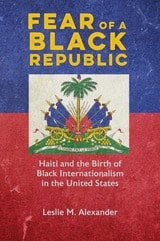
Fear of a Black Republic
Haiti and the Birth of Black Internationalism in the United StatesLeslie M. Alexander
University of Illinois Press, 2023
A bold exploration of Black internationalism’s origins, Fear of a Black Republic links the Haitian revolution to the global Black pursuit of liberation, justice, and social equality.

Fear of a Dead White Planet
More Worlds Collective. Joseph Masco, Tim Choy, Jake Kosek, M. Murphy
Duke University Press, 2025
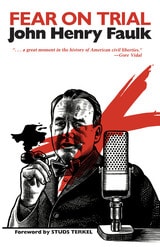
Fear on Trial
By John Henry Faulk
University of Texas Press, 1983
John Henry Faulk was a popular radio and television personality during the McCarthy era. He was host of his own radio program on WCBS in New York when he publicly challenged AWARE, Inc., an ultrapatriotic group engaged in the systematic blacklisting of entertainment personalities. In response, an AWARE bulletin accused Faulk himself of subversive associations. Angry and frightened by this accusation, Faulk brought suit against AWARE, charging conspiracy to libel him and to destroy his career. Thus began one of the great civil rights cases of the twentieth century.
John Henry Faulk recounts the story of this harrowing time in Fear on Trial, the dramatic account of his six years on the "blacklist"—an exile that began with the AWARE bulletin and ended with his vindication by a jury award of $3,500,000—the largest libel award in U.S. history at that time. The heart of the book is the trial of Faulk's libel action against AWARE, in which attorney Louis Nizer relentlessly exposed the blacklist for what it was—a cynical disdain of elementary decency couched in the rhetoric of patriotism.
Many of the people involved in the Faulk case were and are famous: attorneys Nizer and Roy Cohn; Edward R. Murrow and Charles Collingwood; Myrna Loy, Kim Hunter, Tony Randall, and Lee Grant; J. Frank Dobie; Ed Sullivan, David Susskind, and Mark Goodson. But the hero is Faulk himself, a man who—in the words of Studs Terkel—"faced the bastards and beat them down."

Fear the Future
Dystopia and Political Imagination in the Twentieth CenturyMatthew Benjamin Cole
University of Michigan Press, 2025
Offering a novel reading of major themes and thinkers, Fear the Future explores visions of the future from literary figures such as Yevgeny Zamyatin, Aldous Huxley, and George Orwell; political theorists such as Max Weber, Hannah Arendt, Herbert Marcuse, Jürgen Habermas, and Michel Foucault; and mid-century social scientists such as Erich Fromm, Max Horkheimer, Theodor Adorno, David Reisman, C. Wright Mills, and Jacques Ellul. It offers a comparative analysis of distinct intellectual and literary traditions, including modern utopianism and anti-utopianism, midcentury social science, Frankfurt School critical theory, and continental political philosophy. With detailed case studies of key thinkers from the Enlightenment to the late twentieth century, the book synthesizes secondary literature and research from a range of disciplinary areas, including in political theory, intellectual history, literary studies, and utopian studies. This wide-ranging reconstruction shows that while dystopian thinking has illustrated the dangers of domination and dehumanization, it has also illuminated new possibilities for freedom.

Fear, Anxiety, and National Identity
Immigration and Belonging in North America and Western Europesimon
Russell Sage Foundation, 2015
Fifty years of large-scale immigration has brought significant ethnic, racial, and religious diversity to North America and Western Europe, but has also prompted hostile backlashes. In Fear, Anxiety, and National Identity, a distinguished multidisciplinary group of scholars examine whether and how immigrants and their offspring have been included in the prevailing national identity in the societies where they now live and to what extent they remain perpetual foreigners in the eyes of the long-established native-born. What specific social forces in each country account for the barriers immigrants and their children face, and how do anxieties about immigrant integration and national identity differ on the two sides of the Atlantic?
Western European countries such as Germany, the Netherlands, and the United Kingdom have witnessed a significant increase in Muslim immigrants, which has given rise to nativist groups that question their belonging. Contributors Thomas Faist and Christian Ulbricht discuss how German politicians have implicitly compared the purported “backward” values of Muslim immigrants with the German idea of Leitkultur, or a society that values civil liberties and human rights, reinforcing the symbolic exclusion of Muslim immigrants. Similarly, Marieke Slootman and Jan Willem Duyvendak find that in the Netherlands, the conception of citizenship has shifted to focus less on political rights and duties and more on cultural norms and values. In this context, Turkish and Moroccan Muslim immigrants face increasing pressure to adopt “Dutch” culture, yet are simultaneously portrayed as having regressive views on gender and sexuality that make them unable to assimilate.
Religion is less of a barrier to immigrants’ inclusion in the United States, where instead undocumented status drives much of the political and social marginalization of immigrants. As Mary C. Waters and Philip Kasinitz note, undocumented immigrants in the United States. are ineligible for the services and freedoms that citizens take for granted and often live in fear of detention and deportation. Yet, as Irene Bloemraad points out, Americans’ conception of national identity expanded to be more inclusive of immigrants and their children with political mobilization and changes in law, institutions, and culture in the wake of the Civil Rights Movement. Canadians’ views also dramatically expanded in recent decades, with multiculturalism now an important part of their national identity, in contrast to Europeans’ fear that diversity undermines national solidarity.
With immigration to North America and Western Europe a continuing reality, each region will have to confront anti-immigrant sentiments that create barriers for and threaten the inclusion of newcomers. Fear, Anxiety, and National Identity investigates the multifaceted connections among immigration, belonging, and citizenship, and provides new ways of thinking about national identity.

Fear, Loathing, and Victorian Xenophobia
Edited by Marlene Tromp, Maria K. Bachman, and Heidi Kaufman
The Ohio State University Press, 2013

From Cape Charles to Cape Fear
The North Atlantic Blockading Squadron during the Civil WarRobert M. Browning
University of Alabama Press, 2003
A definitive study of Union naval power and the blockade that reshaped the Civil War.
In From Cape Charles to Cape Fear, acclaimed historian Robert M. Browning, Jr. offers a vivid and authoritative account of the Union Navy’s North Atlantic Blockading Squadron, a critical force in the American Civil War. Charged with enforcing the blockade along the Atlantic coastline from Virginia to North Carolina, the squadron played a decisive role in crippling the Confederacy’s economy and restricting its access to vital supplies.
Browning reveals the blockade as far more than a passive defensive strategy. Through detailed analysis of naval operations, coastal engagements, and strategic planning, he demonstrates how Union forces exerted control over key waterways and ports, including Norfolk and Wilmington. These contested hubs became focal points in a high-stakes struggle involving daring blockade runners, shifting naval tactics, and constant pressure on Southern trade networks.
Blending operational history with compelling narrative, Browning also captures the human dimension of naval warfare. Sailors and officers faced unpredictable weather, dangerous missions, and the relentless demands of maintaining control over an expansive coastline. Their experiences illuminate the challenges and complexities of maritime warfare during one of America’s defining conflicts.
Accessible yet richly researched, this book highlights the central importance of naval power in shaping Civil War outcomes. From Cape Charles to Cape Fear stands as an essential work for readers interested in Civil War history, naval strategy, and the enduring impact of maritime operations on the American past.

From Fear to Fraternity
A Russian Tale of Crime, Economy and ModernityPatricia Rawlinson
Pluto Press, 2010
The end of communism marked the re-emergence of a huge rise in organised crime across Russia and Eastern Europe. High-profile efforts to combat it have met with little success.
Patricia Rawlinson argues that burgeoning crime rates result not only from the failures of communism but also from the problems of free market economies.
Drawing on interviews with members of the Russian criminal underworld, the business community, journalists and the militia, she argues that organised crime provides us with a barometer of economic well-being, not just for Russia but for any market economy.