Results by title
329 books match the query 'Folklore & Mythology' and 38 start with f
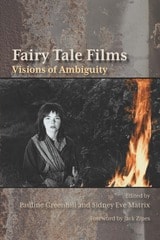
Fairy Tale Films
Visions of AmbiguityPauline Greenhill
Utah State University Press, 2010
This ISBN refers to the ebook edition of this text, available directly from the publisher. It has erroneously been listed as paperback by some online vendors. The true paperback edition is indeed available at online vendors. Paste this ISBN into the search box: 9780874217810.
In this, the first collection of essays to address the development of fairy tale film as a genre, Pauline Greenhill and Sidney Eve Matrix stress, "the mirror of fairy-tale film reflects not so much what its audience members actually are but how they see themselves and their potential to develop (or, likewise, to regress)." As Jack Zipes says further in the foreword, “Folk and fairy tales pervade our lives constantly through television soap operas and commercials, in comic books and cartoons, in school plays and storytelling performances, in our superstitions and prayers for miracles, and in our dreams and daydreams. The artistic re-creations of fairy-tale plots and characters in film—the parodies, the aesthetic experimentation, and the mixing of genres to engender new insights into art and life— mirror possibilities of estranging ourselves from designated roles, along with the conventional patterns of the classical tales.”
Here, scholars from film, folklore, and cultural studies move discussion beyond the well-known Disney movies to the many other filmic adaptations of fairy tales and to the widespread use of fairy tale tropes, themes, and motifs in cinema.
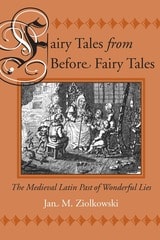
Fairy Tales from Before Fairy Tales
The Medieval Latin Past of Wonderful LiesJan M. Ziolkowski
University of Michigan Press, 2009
When did fairy tales begin? What qualifies as a fairy tale? Is a true fairy tale oral or literary? Or is a fairy tale determined not by style but by content? To answer these and other questions, Jan M. Ziolkowski not only provides a comprehensive overview of the theoretical debates about fairy tale origins but includes an extensive discussion of the relationship of the fairy tale to both the written and oral sources. Ziolkowski offers interpretations of a sampling of the tales in order to sketch the complex connections that existed in the Middle Ages between oral folktales and their written equivalents, the variety of uses to which the writers applied the stories, and the diverse relationships between the medieval texts and the expressions of the same tales in the "classic" fairy tale collections of the nineteenth century. In so doing, Ziolkowski explores stories that survive in both versions associated with, on the one hand, such standards of the nineteenth-century fairy tale as the Brothers Grimm, Hans Christian Andersen, and Carlo Collodi and, on the other, medieval Latin, demonstrating that the literary fairy tale owes a great debt to the Latin literature of the medieval period.

Faith and Meaning in the Southern Uplands
Loyal Jones
University of Illinois Press, 1999
In Faith and Meaning, one of Appalachian religion's most eloquent spokesmen reveals a people devoted to and thoughtful about their religion, and profoundly influenced by it. Loyal Jones's three decades of conversations and interviews, supplemented by documents such as sermons, testimonies, and articles of faith, articulate Southern Upland views on basic issues of the human condition—faith, God, the world, the Word, and the devil—as well as on community issues such as racial integration and women in the church. In their own voices these people describe their beliefs, their churches, and their lives, exposing a deep conviction tempered with humanity and humor.
Feminist Theory and the Study of Folklore
Edited by Susan Tower Hollis, Linda Pershing, and M. Jane Young
University of Illinois Press, 1994
Fifty Fables of La Fontaine
Jean de La Fontaine. Translated by Norman R. Shapiro. Illustrated by Alan James Robinson
University of Illinois Press, 1988

Flying Yoginis
Irwin Allan Sealy
Seagull Books, 2026
Irwin Allan Sealy—master chronicler of the Indian imagination—sets off on a singular quest: to follow in the wake of the yoginis, those fierce, flying, shape-shifting female adepts of yoga whose images were carved in stone a thousand years ago across India and who now sit, displaced, in American museums.
Part travelogue, part philosophical musing, part cultural excavation, Flying Yoginis is a meditation on art, power, devotion, and the subversive energy of women who step out of line. With wit and wonder, Sealy traces their transcontinental journey from lost temples near Kanchipuram to glass-walled galleries in Kansas City and Minneapolis—finding along the way unexpected kinship with rebels and visionaries, from Rosa Parks to Carson McCullers. Blending the spiritual with the personal, the mythic with the mundane, Sealy offers a dazzling, genre-defying reflection on how the sacred persists, how memory travels, and how history is always being rewritten by those bold enough to reclaim it.
Folk Culture in the Digital Age
The Emergent Dynamics of Human InteractionTrevor J. Blank
Utah State University Press, 2012
Smart phones, tablets, Facebook, Twitter, and wireless Internet connections are the latest technologies to have become entrenched in our culture. Although traditionalists have argued that computer-mediated communication and cyberspace are incongruent with the study of folklore, Trevor J. Blank sees the digital world as fully capable of generating, transmitting, performing, and archiving vernacular culture. Folklore in the Digital Age documents the emergent cultural scenes and expressive folkloric communications made possible by digital “new media” technologies.
New media is changing the ways in which people learn, share, participate, and engage with others as they adopt technologies to complement and supplement traditional means of vernacular expression. But behavioral and structural overlap in many folkloric forms exists between on- and offline, and emerging patterns in digital rhetoric mimic the dynamics of previously documented folkloric forms, invoking familiar social or behavior customs, linguistic inflections, and symbolic gestures.
Folklore in the Digital Age provides insights and perspectives on the myriad ways in which folk culture manifests in the digital age and contributes to our greater understanding of vernacular expression in our ever-changing technological world.
Folk Groups And Folklore Genres Reader
A Readeredited by Elliott Oring
Utah State University Press, 1989
Folk Groups And Folklore Genres
An Introductionedited by Elliott Oring
Utah State University Press, 1986
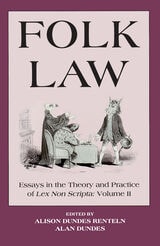
Folk Law
Essays in the Theory and Practice of Lex Non ScriptaAlison Dundes Renteln
University of Wisconsin Press, 1995
In every culture there exists unwritten law—obligations and prohibitions that are understood and passed on, and transgressions that are punished. Folk Law, a comprehensive two-volume collection of essays, examines this meeting place of folklore and jurisprudence. The contributors explore the historical significance and implications of folk law, its continuing influence around the globe, and the conflicts that arise when folk law diverges from official law.
The collection begins by defining various forms of “folk law,” drawing on examples from many cultures. The second section provides historical profiles of pioneering figures in the study of folk law. Following sections examine field research techniques used to identify folk laws; aspects of folk law within the realm of rituals, songs, and other forms of expressive culture; instances where folk law comes into conflict with national law, and the role of folk law in the international arena. The volumes also include description and analysis of two approaches to folk law—the rule approach, in which scholars dissect the codes that underlie folk law, and the case approach, in which researchers examine specific cases involving folk law.
Valuable for students and scholars of law, folklore, or anthropology, this extensive casebook marks a rare interdisciplinary approach to two important areas of research.

Folklore Fights the Nazis
Humor in Occupied Norway, 1940–1945Kathleen Stokker
University of Wisconsin Press, 1997
In relating this dramatic story, Kathleen Stokker draws upon her many interviews with survivors of the Occupation and upon the archives of the Norwegian Resistance Museum and the University of Oslo. Central to the book are four “joke notebooks” kept by women ranging in age from eleven to thirty, who found sufficient meaning in this humor to risk recording and preserving it. Stokker also cites details from wartime diaries of three other women from East, West, and North Norway. Placing the joking in historical, cultural, and psychological context, Stokker demonstrates how this seemingly frivolous humor in fact contributed to the development of a resistance mentality among an initially confused, paralyzed, and dispirited population, stunned by the German invasion of their neutral country.
For this paperback edition, Stokker has added a new preface offering a comparative view of resistance through humor in neighboring Denmark.
Folklore Genres
Edited by Dan Ben-Amos
University of Texas Press, 1976
The essays in Folklore Genres represent development in folklore genre studies, diverging into literary, ethnographic, and taxonomic questions. The study as a whole is concerned with the concept of genre and with the history of genre theory. A selective bibliography provides a guide to analytical and theoretical works on the topic.
The literary-oriented articles conceive of folklore forms, not as the antecedents of literary genres, but as complex, symbolically rich expressions. The ethnographically oriented articles, as well as those dealing with classification problems, reveal dimensions of folklore that are often obscured from the student reading the folklore text alone. It has long been known that the written page is but a pale reproduction of the spoken word, that a tale hardly reflects the telling. The essays in this collection lead to an understanding of the forms of oral literature as multidimensional symbols of communication and to an understanding of folklore genres as systematically related conceptual categories in culture. What kinship terms are to social structure, genre terms are to folklore. Since genres constitute recognized modes of folklore speaking, their terminology and taxonomy can play a major role in the study of culture and society.
The essays were originally published in Genre (1969–1971); introduction, bibliography, and index have been added to this edition.
Folklore Methodology
Formulated by Julius Krohn and Expanded by Nordic ResearchersBy Kaarle Krohn
University of Texas Press, 1971
Kaarle Krohn's Folklore Methodology was the first systematic attempt to state a method of studying folkloristic materials. For centuries scholars had collected folkloristic texts and had commented on them, but they had not tried to formulate a method of investigating folklore.
Folklore Methodology became the handbook for the great Finnish School of folklore research. It provided for its students a guide to the geographical research of traditional materials, a radical departure from the literary scholarship that had dominated folklore studies.
Krohn's book explores the causes and modes of folklore diffusion, development, and destruction; it outlines the influences that cause change in folklore; it provides valuable insights into the nature of folklore; and, finally, it develops geographic methods for analyzing, classifying, and reconstructing individual items from the folk repertoire.
While many developments have taken place since Krohn first published his guide, important new concepts of folklore research sprang from his efforts. For this reason, Folklore Methodology is mandatory reading for every serious student of folklore.
Folklore Rules
A Fun, Quick, and Useful Introduction to the Field of Academic Folklore StudiesS.
Utah State University Press, 2013
- What Is Folklore?
- What Do Folklorists Do
- Types of Folklore
- Types of Folk Groups;
- What Do I Do Now?
These chapters guide students toward a working understanding of the field, learn basic terms and techniques, and learn to perceive the knowledge base and discourse frame for materials used in folklore courses. Folklore Rules has become a classic text, serving instructors and students for a variety of courses, including introductory folklore and comparative studies as well as literature, anthropology, and composition classes that include a folklore component.
Folklore and Culture on the Texas-Mexican Border
By Américo Paredes
University of Texas Press, 1995
In an illustrious career spanning over forty years, Américo Paredes has often set the standard for scholarship and writing in folklore and Chicano studies. In folklore, he has been in the vanguard of important theoretical and methodological movements. In Chicano studies, he stands as one of the premier exponents.
Paredes's books are widely known and easily available, but his scholarly articles are not so familiar or accessible. To bring them to a wider readership, Richard Bauman has selected eleven essays that eloquently represent the range and excellence of Paredes's work. The hardcover edition of Folklore and Culture was published in 1993. This paperback edition will make the book more accessible to the general public and more practical for classroom use.
Folklore and Folklife
An IntroductionRichard M. Dorson
University of Chicago Press, 1982
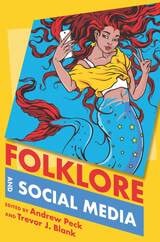
Folklore and Social Media
Andrew Peck
Utah State University Press, 2020
This book features twelve chapters ranging in topics from legend transmission and fake news to case studies of memes, joke cycles, and Twitter hashtag campaigns and offers fresh insights on digital heritage and web archiving. The editors and contributors take both the “digital” and “folklore” elements seriously because social media fundamentally changes folk practices in new, though often invisible, ways. Social media platforms encourage hybrid performances that appear informal and ordinary while also offering significant space to obfuscate backstage behaviors through editing and retakes. The result is that expression online becomes increasingly reminiscent of traditional forms of face-to-face interaction, while also hiding its fundamental differences.
Folklore and Social Media demonstrates various ways to refine methods and analyses in order to develop a better understanding of the informal and traditional dynamics that define an era of folklore and social media. It is an invaluable addition to the literature on digital folklore scholarship that will be of interest to students and scholars alike.
Contributors:
Sheila Bock, Peter M. Broadwell, Bill Ellis, Jeana Jorgensen, Liisi Laineste, John Laudun, Linda J. Lee, Lynne S. McNeill, Ryan M. Milner, Whitney Phillips, Vwani Roychowdhury, Timothy R. Tangherlini, Tok Thompson, Elizabeth Tucker, Kristiana Willsey
Folklore and the Internet
Vernacular Expression in a Digital WorldTrevor J. Blank
Utah State University Press, 2009
A pioneering examination of the folkloric qualities of the World Wide Web, e-mail, and related digital media. These stuidies show that folk culture, sustained by a new and evolving vernacular, has been a key, since the Internet's beginnings, to language, practice, and interaction online. Users of many sorts continue to develop the Internet as a significant medium for generating, transmitting, documenting, and preserving folklore.
In a set of new, insightful essays, contributors Trevor J. Blank, Simon J. Bronner, Robert Dobler, Russell Frank, Gregory Hansen, Robert Glenn Howard, Lynne S. McNeill, Elizabeth Tucker, and William Westerman showcase ways the Internet both shapes and is shaped by folklore
Folklore by the Fireside
Text and Context of the Tuscan VegliaBy Alessandro Falassi
University of Texas Press, 1980
For centuries, social life in rural Tuscany has centered around the veglia, an evening gathering of family and friends at the hearth. Folklore by the Fireside is a thorough and insightful study of this custom—from the tales, riddles, lullabies, and folk prayers performed as the small children are put to bed to the courtship songs and dances later in the evening to the anti-veglia male gossip, card games, and protest songs originating in the tavern.
Alessandro Falassi skillfully correlates the veglia to the rites of passage and family values of an agrarian society. Although the impact of mass media and other factors has tended to weaken the tradition, even today Tuscan children are taught to behave and adolescents are guided along the conventional path to adulthood, courtship, and marriage through veglia folklore.
This is the first work to deal systematically with Tuscan folklore from a semiotic and structural viewpoint and to examine the veglia as a means of handing down traditional values. It is important not only for its careful, detailed description but also for its rigorous methodology and theoretical richness.
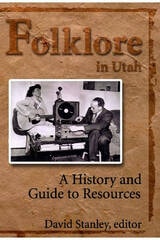
Folklore in Utah
A History and Guide to ResourcesDavid Stanley
Utah State University Press, 2004
Over thirty scholars examine the development of folklore studies through the lens of over one hundred years of significant activity in a state that has provided grist for the mills of many prominent folklorists. In the past the Folklore Society of Utah has examined the work of such scholars in biographical and other essays published in its newsletters. This book incorporates those essays and goes well beyond them to include many other topices, offering a thorough history of folklore studies and a guide to resources for those pursuing research in Utah now and in the future.
The essays survey the development and contributions of folklore studies in Utah from 1892 to 2004 but also represent developments in both academic and public-sector folklore throughout the United States. Following a thorough historical introduction, part I profiles the first folklorists working in the state, including Hector Lee, Thomas Cheney, Austin and Alta Fife, Wayland Hand, and Lester Hubbard. Part II looks at the careers of prominent Utah folklorists Jan Harold Brunvand, Barre Toelken, and William B. Wilson, as well as the works of the next, current generation of folklorists. Part III covers studies in major folklore genres, with essays on the study of material culture, vernacular architecture, and Mormon, ethnic, Native American, and Latino folklore. Part IV examines public folklore programs including organizations, conferences, and tourism. Back matter describes academic programs at Utah institutions of higher education, summarizes the holdings of the various folklore archives in the state, and provides a complete cross-indexed bibliography of articles, books, and recordings of Utah folklore.
Folklore in the Nordic World
Thomas A. DuBois
University of Wisconsin Press, 2024
From methods of preparing suovabiergu (smoked reindeer meat) in Sápmi, to celebrating graduation by “running the falls” at Uppsala University in Sweden, to massive folk music festivals in Finland and tales of supernatural visitors bestowing baby names in Iceland, folklore offers unique insights into the everyday life of Nordic society. The study of Nordic folklore began in the nineteenth century, when early folklorists imagined that the true character of a nation could be found among the tales of the peasantry. Today, the theories, tools, and institutions developed by influential folklorists in the Nordic region continue to lead the way in documentation, preservation, and analysis of folklore.
Folklore in the Public Square
How the Study of Traditional Culture Can Solve Contemporary Social ProblemsAndrea Kitta
Utah State University Press, 2026
Folklore is often positioned at the center of critical social issues. While folklorists have acknowledged this power and explored how folklore has been used for political ends, far less attention has been paid to the role folklorists and folklore scholarship can play in addressing contemporary social issues in public discourse. Folklore in the Public Square explores how folklorists apply their research to engage general audiences and address the challenging issues we face daily.
Folklore in the Public Square brings together folklorists working in the humanities and the social sciences committed to applying their research to help solve contemporary social challenges, formalizing an undercurrent of thought that has gained growing attention. Case studies apply ethical research to address pervasive questions about the environment, poverty, health and healthcare, political partisanship, war, tourism, stigma, racism, and conspiracy theories, among others. Building on conversations raised by folklorists who have contributed to public programming or conducted collaborative research in local communities, this book appeals to anyone interested in contemporary social issues, applied research, or collaborative and ethical fieldwork.
Folklore/Cinema
Popular Film as Vernacular CultureSharon R. Sherman and Mikel J. Koven
Utah State University Press, 2007
Interest in the conjunctions of film and folklore is stronger and more diverse than ever. Documentaries on folk life and expression remain a vital genre, but scholars such as Sharon Sherman and Mikel Koven also are exploring how folklore elements appear in, and merge with, popular cinema. They look at how movies, a popular culture medium, can as well be both a medium and type of folklore, playing cultural roles and conveying meanings customarily found in other folkloric forms. They thus use the methodology of folklore studies to analyze films made for commercial distribution.
The contributors to this book look at film and folklore convergences, showing how cinema conveys vernacular culture in traditional and popular venues. Folklore/Cinema will be of interest to scholars from many fields---folklore, film studies, popular culture, American studies, history, anthropology, and literature among them---and will help introduce students in various courses to intersections of film and culture.
Folkloresque
Reframing Folklore in a Popular Culture WorldMichael Dylan Foster
Utah State University Press, 2015
This volume introduces a new concept to explore the dynamic relationship between folklore and popular culture: the “folkloresque.” With “folkloresque,” Foster and Tolbert name the product created when popular culture appropriates or reinvents folkloric themes, characters, and images. Such manufactured tropes are traditionally considered outside the purview of academic folklore study, but the folkloresque offers a frame for understanding them that is grounded in the discourse and theory of the discipline.
Fantasy fiction, comic books, anime, video games, literature, professional storytelling and comedy, and even popular science writing all commonly incorporate elements from tradition or draw on basic folklore genres to inform their structure. Through three primary modes—integration, portrayal, and parody—the collection offers a set of heuristic tools for analysis of how folklore is increasingly used in these commercial and mass-market contexts.
The Folkloresque challenges disciplinary and genre boundaries; suggests productive new approaches for interpreting folklore, popular culture, literature, film, and contemporary media; and encourages a rethinking of traditional works and older interpretive paradigms.
Contributors: Trevor J. Blank, Chad Buterbaugh, Bill Ellis, Timothy H. Evans, Michael Dylan Foster, Carlea Holl-Jensen, Greg Kelley, Paul Manning, Daniel Peretti, Gregory Schrempp, Jeffrey A. Tolbert
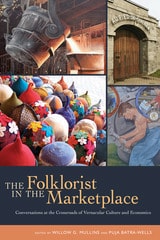
Folklorist in the Marketplace
Conversations at the Crossroads of Vernacular Culture and EconomicsWillow G. Mullins
Utah State University Press, 2019
As trade, technology, and geopolitics have led to a rapid increase in the global spread of cultural products like media, knowledge, objects, and folkways, there has been a concomitant rise in fear and anxiety about globalization’s dark other side—economic nativism, neocolonialism, cultural appropriation, and loss. Culture has become a resource and a currency in the global marketplace. This movement of people and forms necessitates a new textual consideration of how folklore and economics interweave. In The Folklorist in the Marketplace, contributors explore how the marketplace and folklore have always been integrally linked and what that means at this cultural and economic moment.
Covering a variety of topics, from creel boats to the history of a commune that makes hammocks, The Folklorist in the Marketplace goes far beyond the well-trod examinations of material culture to look closely at the historical and contemporary intersections of these two disciplines and to provoke cross-disciplinary conversation and collaboration.
Contributors:
William A. Ashton, Halle M. Butvin, James I. Deutsch, Christofer Johnson, Michael Lange, John Laudun, Julie M-A LeBlanc, Cassie Patterson, Rahima Schwenkbeck, Amy Shuman, Irene Sotiropoulou, Yuanhao Zhao
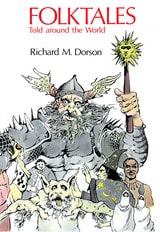
Folktales Told Around the World
Richard M. Dorson
University of Chicago Press, 1978
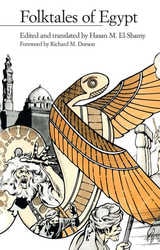
Folktales of Egypt
Hasan M. El-Shamy
University of Chicago Press, 1982
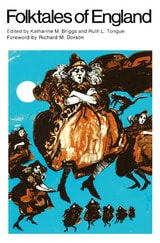
Folktales of England
Edited by Katharine M. Briggs and Ruth L. Tongue
University of Chicago Press, 1968
"This is a fine, homely feast, immediately intelligble. . . ."—Times Educational Supplement
". . . should be of special concern to Americans since many of the tales are parallel to or the source of our own folk stories."—Choice
"This is entertainment, to be sure, but is also part of man's attempts to comprehend his world."—Quartet
"Folktales of England is by all odds the most satisfactory general collection of folktales to come out of England since the advent of modern collection and classification techniques."—Ernest W. Baughman, Journal of American Folklore
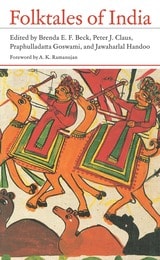
Folktales of India
Edited by Brenda E. F. Beck, Peter J. Claus, Praphulladatta Goswami, and Jawahar
University of Chicago Press, 1986

Folktales of India
Edited by Brenda E. F. Beck, Peter J. Claus, Praphulladatta Goswami, and Jawahar
University of Chicago Press, 1987
"This collection does an excellent job of representing India. . . . It is the type of book that can be enjoyed by all readers who love a well-told tale as well as by scholars of traditional narrative and scholars of India in general."—Hugh M. Flick, Jr., Asian Folklore Studies
"The stories collected here are representative, rich in structural subtlety, and endowed with fresh earthy humor."—Kunal Chakraborti, Contributions to Indian Sociology
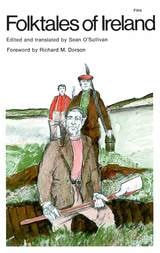
Folktales of Ireland
Edited by Sean O'Sullivan
University of Chicago Press, 1966
Folktales of Ireland
Edited by Sean O'Sullivan
University of Chicago Press, 1966
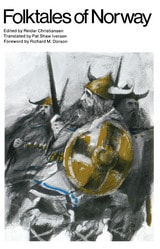
Folktales of Norway
Edited by Reidar Christiansen
University of Chicago Press, 1964
"The translation is excellent, retaining the traditional Norwegian style . . . the tales themselves will also appeal to the interested layman."—Library Journal
Following Tradition
Folklore in the Discourse of American CultureSimon J. Bronner
Utah State University Press, 1998
Following Tradition is an expansive examination of the history of tradition—"one of the most common as well as most contested terms in English language usage"—in Americans' thinking and discourse about culture. Tradition in use becomes problematic because of "its multiple meanings and its conceptual softness." As a term and a concept, it has been important in the development of all scholarly fields that study American culture. Folklore, history, American studies, anthropology, cultural studies, and others assign different value and meaning to tradition. It is a frequent point of reference in popular discourse concerning everything from politics to lifestyles to sports and entertainment. Politicians and social advocates appeal to it as prima facie evidence of the worth of their causes. Entertainment and other media mass produce it, or at least a facsimile of it. In a society that frequently seeks to reinvent itself, tradition as a cultural anchor to be reverenced or rejected is an essential, if elusive, concept. Simon Bronner's wide net captures the historical, rhetorical, philosophical, and psychological dimensions of tradition. As he notes, he has written a book "about an American tradition—arguing about it." His elucidation of those arguments makes fascinating and thoughtful reading. An essential text for folklorists, Following Tradition will be a valuable reference as well for historians and anthropologists; students of American studies, popular culture, and cultural studies; and anyone interested in the continuing place of tradition in American culture.
Foreword to The Past
A Cultural History of the Baltic PeopleEndre Bojtar
Central European University Press, 2000
Four Classic Mormon Village Studies
Howard M. Bahr
University of Utah Press, 2014
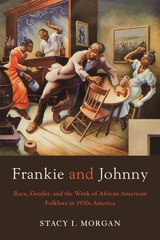
Frankie and Johnny
Race, Gender, and the Work of African American Folklore in 1930s AmericaBy Stacy I. Morgan
University of Texas Press, 2017
Winner, Wayland D. Hand Prize, American Folklore Society, 2018
Originating in a homicide in St. Louis in 1899, the ballad of “Frankie and Johnny” became one of America’s most familiar songs during the first half of the twentieth century. It crossed lines of race, class, and artistic genres, taking form in such varied expressions as a folk song performed by Huddie Ledbetter (Lead Belly); a ballet choreographed by Ruth Page and Bentley Stone under New Deal sponsorship; a mural in the Missouri State Capitol by Thomas Hart Benton; a play by John Huston; a motion picture, She Done Him Wrong, that made Mae West a national celebrity; and an anti-lynching poem by Sterling Brown.
In this innovative book, Stacy I. Morgan explores why African American folklore—and “Frankie and Johnny” in particular—became prized source material for artists of diverse political and aesthetic sensibilities. He looks at a confluence of factors, including the Harlem Renaissance, the Great Depression, and resurgent nationalism, that led those creators to engage with this ubiquitous song. Morgan’s research uncovers the wide range of work that artists called upon African American folklore to perform in the 1930s, as it alternately reinforced and challenged norms of race, gender, and appropriate subjects for artistic expression. He demonstrates that the folklorists and creative artists of that generation forged a new national culture in which African American folk songs featured centrally not only in folk and popular culture but in the fine arts as well.
From Ikaria to the Stars
Classical Mythification, Ancient and ModernBy Peter Green
University of Texas Press, 2004
"I hadn't, till I really started digging, gauged the fierce intensity of the need for myth in the human psyche, of any age, or sensed the variety of motives dictating that need," writes Peter Green in the introduction to this wide-ranging collection of essays on classical mythology and the mythic experience. Using the need for myth as the starting point for exploring a number of topics in Greek mythology and history, Green advances new ideas about why the human urge to make myths persists across the millennia and why the borderland between mythology and history can sometimes be hard to map.
Green looks at both specific problems in classical mythology and larger theoretical issues. His explorations underscore how mythic expression opens a door into non-rational and quasi-rational modes of thought in which it becomes possible to rewrite painful truths and unacceptable history—which is, Green argues, a dangerous enterprise. His study of the intersections between classical mythology and Greek history ultimately drives home a larger point, "the degree of mythification and deception (of oneself no less than of others) of which the human mind is capable."